


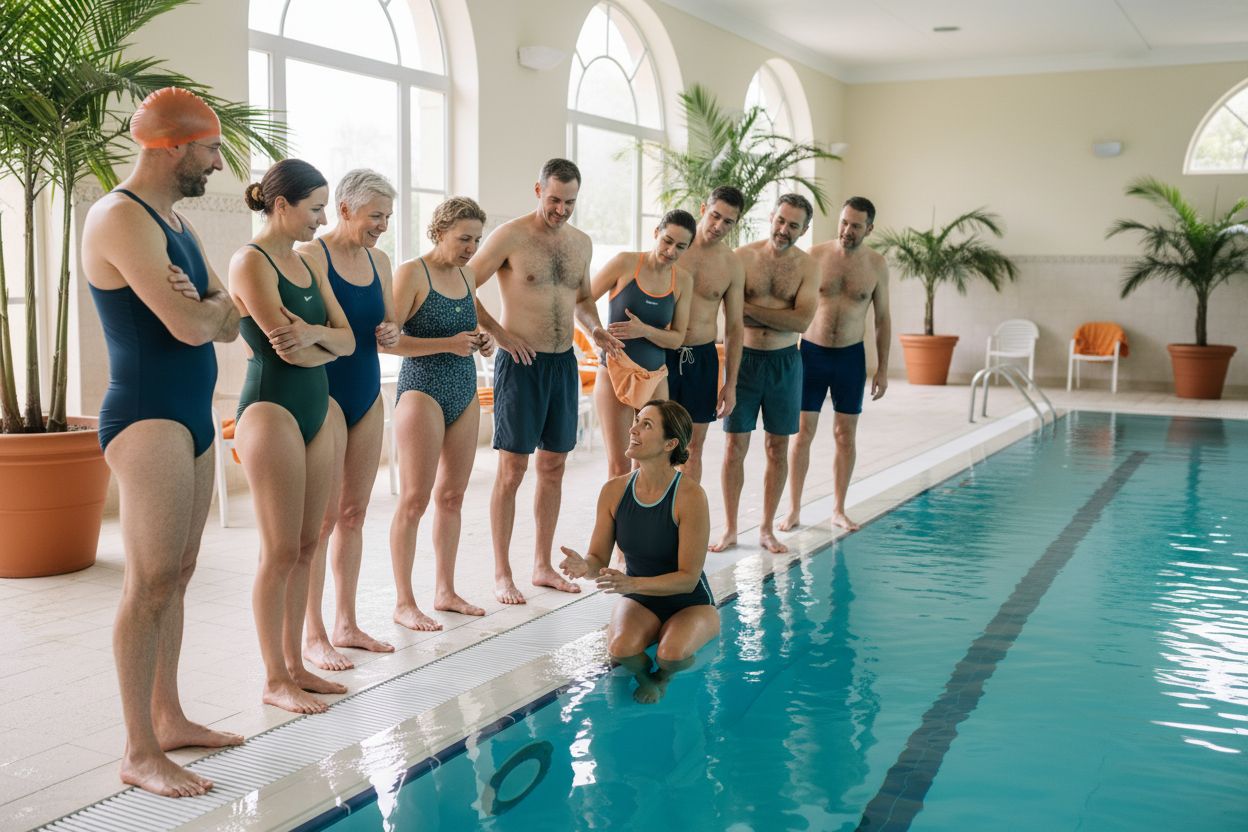
Learning to swim at any age: Clearly explained and easy to follow
Many adults think that learning to swim is for children and often feel insecure in the water. Suddenly, a fact comes as a surprise: Almost one in three adults in Germany cannot swim safely. However, what is much less known is that, especially in old age, learning this skill not only strengthens health but also brings new freedom and self-confidence.
Table of Contents
- What does "learning to swim at an older age" mean?
- Why is learning to swim important in old age?
- How does the learning process work in swimming?
- What challenges are there when learning to swim at an older age?
- What advantages does learning to swim offer at any age?
Quick Summary
| Takeaway | Explanation |
|---|---|
| Swimming is vital for safety | Being able to swim increases safety in water situations and reduces the risk of accidents. |
| Overcome water fears for personal growth | Learning to swim promotes self-confidence and helps to overcome deep-seated fears. |
| Swimming strengthens physical health | Regular swimming improves cardiovascular function and mobility, ideal for older adults. |
| Individual support is crucial | Professional swimming courses offer tailored support that meets the needs of adults. |
| Learning process requires patience and commitment | Adults must overcome mental barriers and are often slower in the learning process than children. |
What does "learning to swim at an older age" mean?
The concept of "learning to swim at an older age" describes an important process of personal development and safety for adults who have little or no swimming skills so far. It is not just about learning a sport, but about a vital skill that increases safety, health, and self-confidence.
The Importance of Learning to Swim in Adulthood
Learning to swim as an adult is more than just a sporting challenge. It is a way to overcome personal fears and expand one's own competencies. Many adults have not acquired swimming skills due to previous negative experiences or lack of opportunities.
The motivations for learning to swim in adulthood are diverse:
- Increasing personal water safety
- Improving physical fitness
- Reducing fear of water
- Expanding leisure opportunities
- Boosting self-confidence
Challenges and Opportunities
For adults, learning to swim can initially pose a great challenge. Unlike children, adults often have to overcome mental barriers such as shame, fear, or previous negative experiences. At the same time, adults bring important advantages: they have better concentration skills, can implement instructions more precisely, and have a stronger understanding of body movements.
Learning to swim in adulthood is an individual process that requires patience, support, and professional guidance. Modern swimming courses for adults are specifically tailored to the needs and challenges of older learners and offer a safe, respectful environment for acquiring this important skill.
Why is learning to swim important in old age?
Learning to swim in adulthood is a significant investment in one's own health and quality of life. It goes far beyond a simple sport and offers numerous health, physical, and psychological benefits.
Health Significance of Swimming
Swimming is a particularly gentle sport that trains the body holistically without overstraining the joints. Medical studies show that regular swimming in old age strengthens the cardiovascular system and significantly reduces the risk of falls.
The most important health benefits of swimming in old age include:

- Improved cardiovascular function
- Strengthening of muscles without joint strain
- Increased mobility and coordination
- Stress reduction and mental relaxation
- Promotion of balance sense
Safety and Self-Confidence
Being able to swim means more than just a sporting ability. It is a safety gain that significantly boosts self-confidence. People who can swim feel safer in water situations and can react more quickly and precisely in emergencies. Our guide to adult swimming courses offers helpful insights for anyone who wants to learn this important skill.
Additionally, learning to swim in old age helps to overcome long-held fears and discover new boundaries. It is a process of personal development that requires courage, perseverance, and openness to new things. With professional support and the right attitude, everyone can learn this valuable skill and benefit from its diverse advantages.
How does the learning process work in swimming?
The learning process of swimming is a complex interplay of physical and mental abilities, which proceeds differently in adults than in children. It is not just about technical movement sequences, but about a holistic understanding of water movement and one's own body.
Fundamentals of Learning to Swim
Professional swimming courses for adults develop learning concepts specifically tailored to the target group, which take psychological and physical aspects into account. Important basic principles include:
- Creating a trusting learning atmosphere
- Individual consideration of fears and prior experiences
- Gradual increase of water competence
- Focus on body awareness and movement perception
- Teaching safety techniques
Mental and Physical Learning Strategies
The swimming learning process in adults differs fundamentally from childhood learning approaches. Adults have cognitive abilities such as analytical thinking and concentration, which they can use purposefully. Mental preparation and overcoming water fears play a crucial role.
The development of swimming understanding takes place in several phases:
- Water comfort and posture
- Breathing techniques and water acclimation
- First movements and propulsion techniques
- Refining and stabilizing swimming technique
A holistic approach that combines technical skills with mental safety and body awareness is crucial. Everyone learns differently, which is why individual support and patience are essential.
What challenges are there when learning to swim at an older age?
Learning to swim in adulthood is a complex process associated with numerous unique challenges. Unlike children, adults must overcome multi-layered barriers that are both psychological and physical in nature.
Psychological Obstacles
Many adults struggle with deep-seated fears of water, often due to past negative experiences or a lack of swimming competence. These mental barriers can significantly complicate the learning process:
- Overcoming feelings of shame during learning
- Managing fears of loss of control in water
- Dealing with fear of failure
- Overcoming previous traumatic water experiences
- Building trust in one's own abilities
Physical Challenges
The adult body differs fundamentally from that of a child and brings its own physical challenges when learning to swim. Flexibility, strength, and endurance play a crucial role. Adults must develop more realistic expectations for their learning progress.
The most important physical aspects include:
- Lower body flexibility
- Slower muscle regeneration
- Reduced learning speed
- Greater inhibitions concerning physical movements
- Individual health limitations
An individually adapted approach, tailored to the specific needs of adults, is crucial.
The following table provides a compact overview of the central psychological and physical challenges when learning to swim in adulthood.
| Type of Challenge | Examples in Adulthood |
|---|---|
| Psychological Obstacles | Shame, fear, loss of control, fear of failure, previous negative experiences |
| Physical Challenges | Lower flexibility, slower regeneration, reduced learning speed, health limitations |
What advantages does learning to swim offer at any age?
Learning to swim is a skill that goes far beyond pure athletic competence. It is a vital competence that has positive effects on body, mind, and safety at every stage of life.
Health Benefits
Medical studies confirm the comprehensive health benefits of swimming for people of all ages. The most important physical benefits include:
- Improvement of cardiovascular function
- Strengthening of muscles without joint strain
- Promotion of coordination and mobility
- Support of the sense of balance
- Stress reduction and mental relief
Psychosocial Development
Learning to swim is more than a physical activity - it is a process of personal development. By learning this skill, people develop important competencies such as self-confidence, perseverance, and resilience.
The psychosocial benefits include:
- Boosting self-esteem
- Reducing fears
- Improving social interaction skills
- Developing resilience
- Expanding one's personal comfort zone
Moreover, learning to swim offers an important safety aspect. Our guide to swimming courses makes it clear that the ability to swim can be potentially life-saving. Whether on vacation, during leisure activities, or in emergency situations - swimming skills can be crucial for mastering dangers and protecting lives.
Make Your Swimming Success Visible - with Pimpertz
You have read in the article how important it is to learn to swim as an adult and to overcome personal fears and insecurities in the process. Especially the first steps in the water require courage and perseverance. Successes are often small at the beginning, but every overcome hurdle – from the first swimming stroke to a safe position in the water – is a milestone. Reward these advances and make your learning process visible and tangible.
At Pimpertz – your experienced partner for swimming badges and swimming accessories you will find originally certified swimming badges and certificates that not only motivate but also confirm real achievements. Especially for adults, we have developed individual badge sets and accessories that are ideal for personal learning goals. Show yourself and others what you have already achieved. Order now and start with full motivation – don't let your efforts go unnoticed. Your next milestone is already waiting at pimpertz.de.
Frequently Asked Questions
What does it mean to learn to swim at an older age?
Learning to swim at an older age refers to adults acquiring swimming skills who previously had little to no experience. It is an important process for personal safety and health.
What health benefits does swimming have at an older age?
Swimming offers numerous health benefits, including improved cardiovascular function, muscle strengthening, increased mobility, as well as stress reduction and mental relaxation.
What challenges are there when learning to swim for adults?
Adults often have to overcome mental barriers such as fears or shame. Physical challenges include reduced flexibility and slower regeneration. An individual approach is crucial to meet these challenges.
How does the learning process work for adults learning to swim?
The learning process involves several phases: from water acclimatization and breathing techniques to initial movements and refining the technique, considering mental safety and body awareness.