


DLRG Swimming Badges: From Bronze to Gold for All Swimmers
Introduction to DLRG Swimming Badges
DLRG swimming badges are a central component of swimming training and certify the skills and knowledge in swimming for people of all ages. Valid from 01.01.2020, these badges include various levels from Bronze to Gold, which progressively build upon each other and promote safety. Theoretical and practical examination performances are an integral part of each badge examination to ensure comprehensive understanding. These swimming badges are suitable for all age groups and strengthen self-confidence in the water through structured learning processes. The training follows nationwide guidelines that include topics such as lifesaving and first aid to prevent accidents and save lives.
Many swimmers start with basic skills and advance to more sophisticated techniques, keeping motivation high. The examination is conducted using standardized questionnaires for theoretical parts and practical demonstrations. Whether children or adults, DLRG swimming badges motivate continuous training and foster a lifelong passion for swimming. Through these badges, participants not only learn to swim but also to take responsibility in the water.
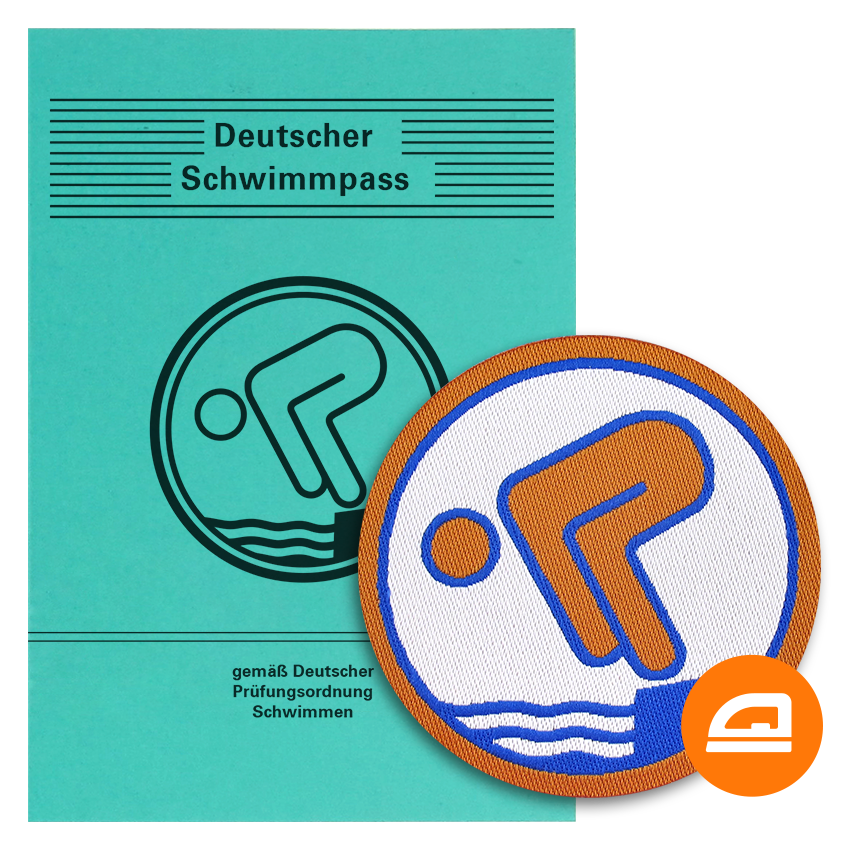
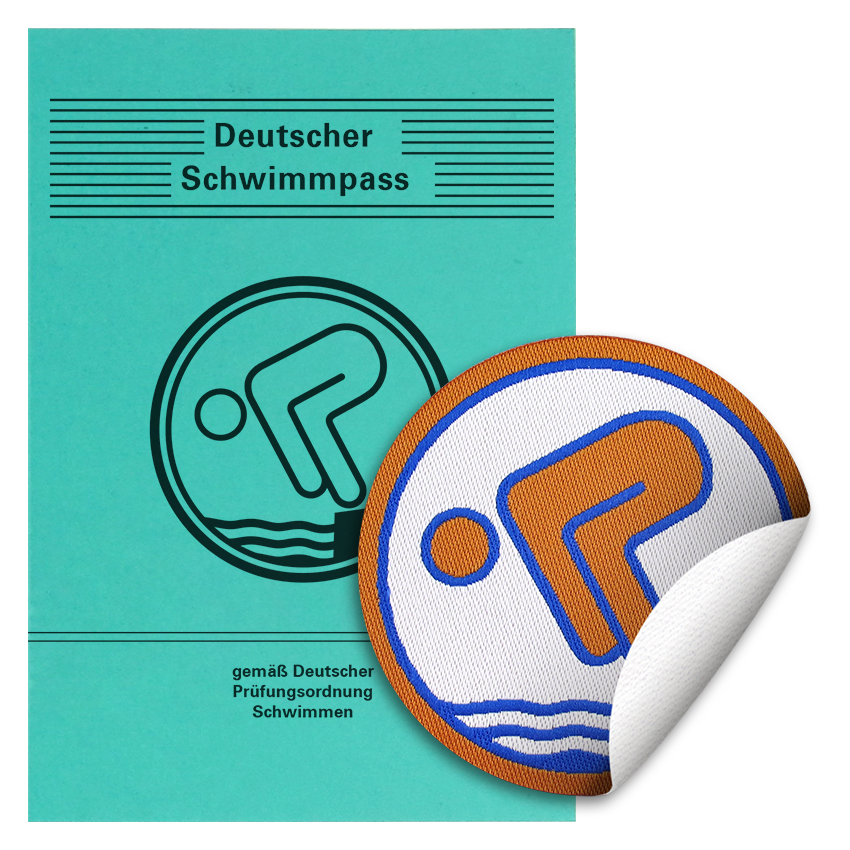
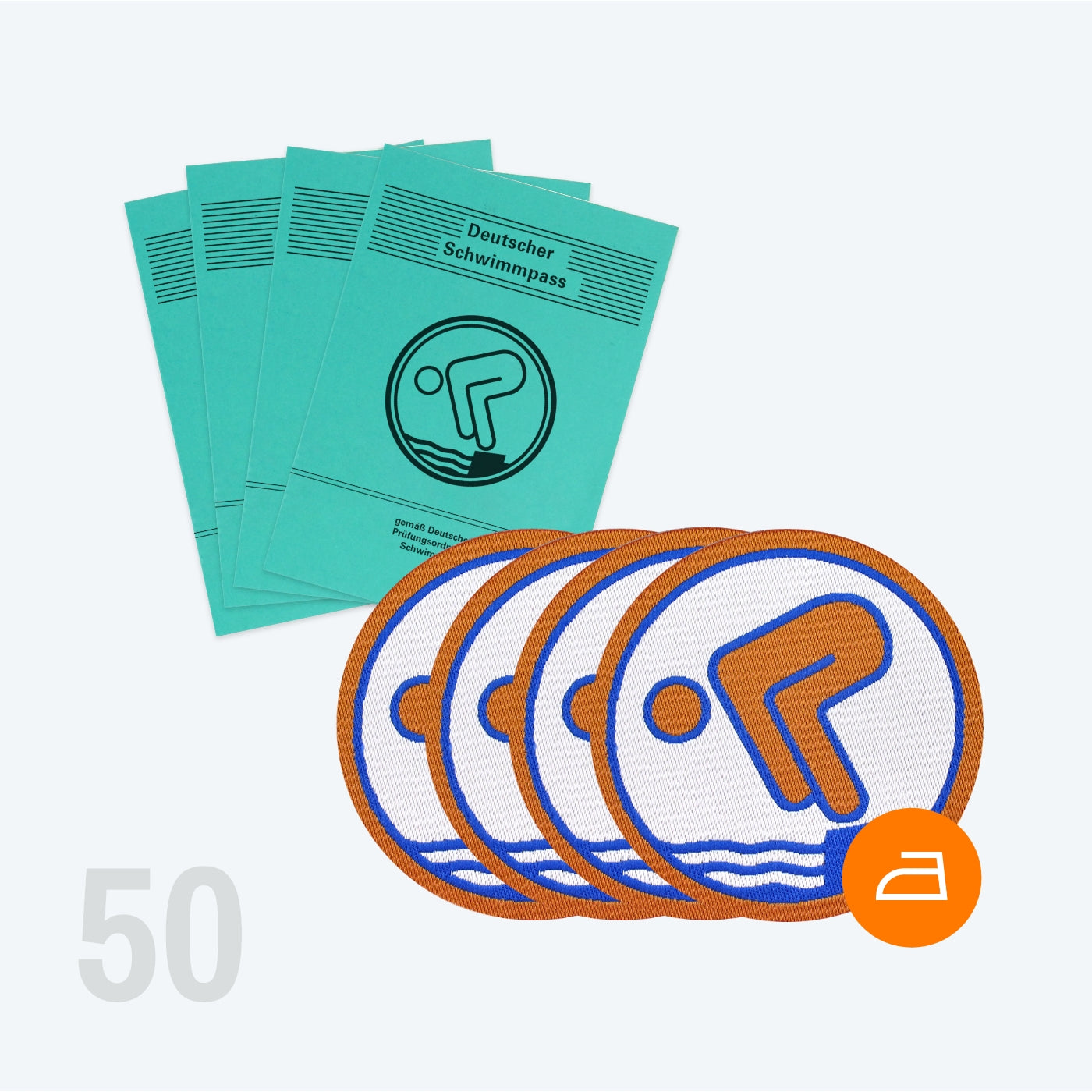
Official DLRG Bronze Swimming Badge from Pimpertz – Symbol of basic swimming skills.
The Importance of Swimming Badges for Safety
Swimming badges not only promote athletic performance but primarily prioritize safety in the water. Each level integrates self-rescue knowledge, such as how to act in case of exhaustion or cramps. Theoretical examination tasks include bathing rules and risks during swimming, boating, and ice accidents. Practical examination tasks, such as retrieving an object, e.g., a small diving ring, train real-life scenarios. These elements ensure that swimmers can act calmly and effectively in emergencies.
The DLRG emphasizes that swimming badges can save lives by teaching fundamental skills. This is especially important for children, as they are often careless. The examination assesses knowledge through structured tests that are standardized nationwide. This ensures that every graduate meets the same standards.
Swimming Badge Levels: Overview
The DLRG swimming badge levels range from Bronze to Gold and build upon each other. The German Swimming Badge Bronze is the entry level with basic swimming skills. The German Swimming Badge Silver requires advanced techniques and endurance. The German Swimming Badge Gold certifies comprehensive knowledge in swimming and lifesaving. Each level has specific examination tasks, such as swimming over distances or rescue exercises.
Bronze, Silver, and Gold are the core levels accessible to all swimmers. The requirements must be met in a specified order to ensure fairness. The theoretical examination is conducted using nationwide questionnaires and covers essential topics. Practical parts demand physical fitness and mental strength.
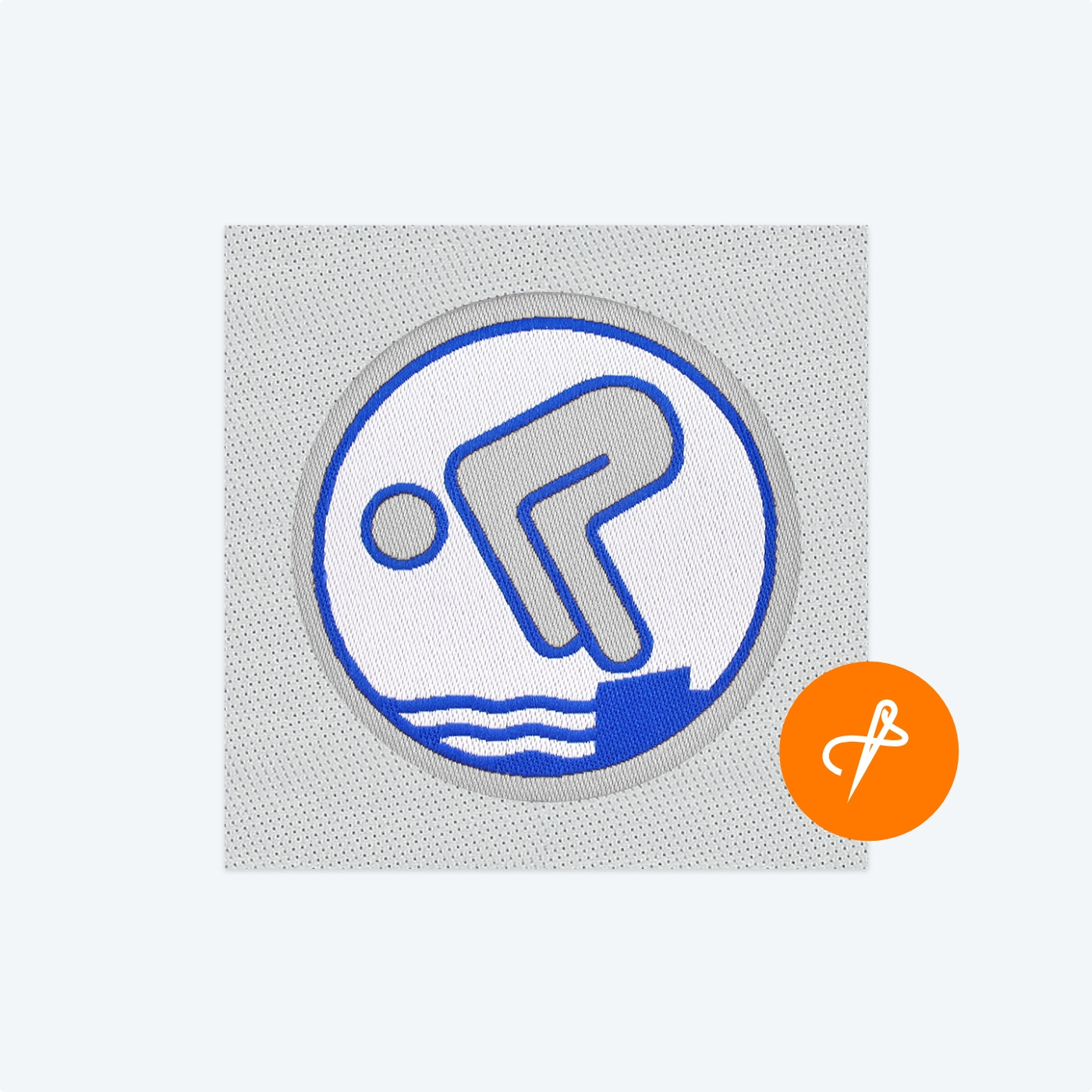
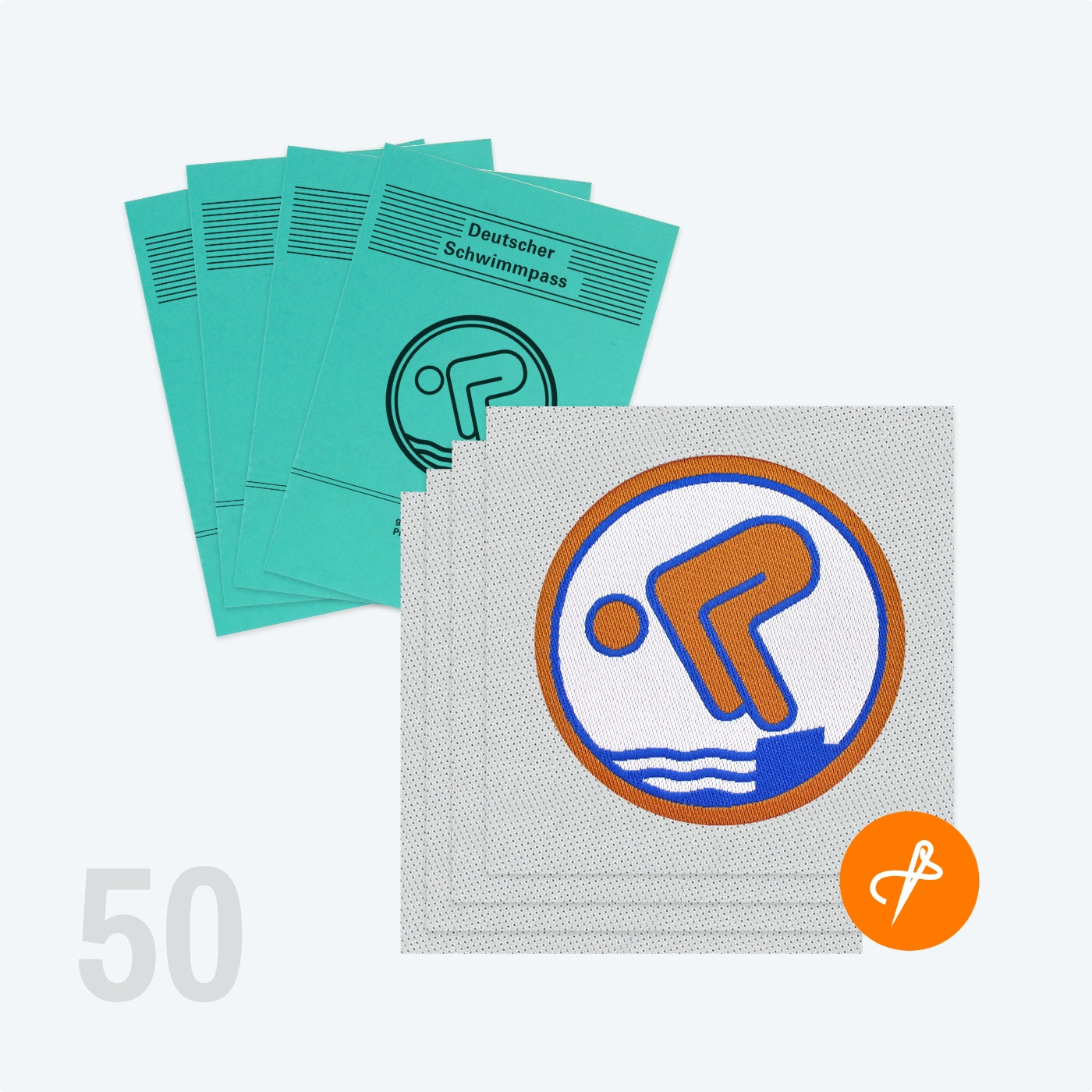
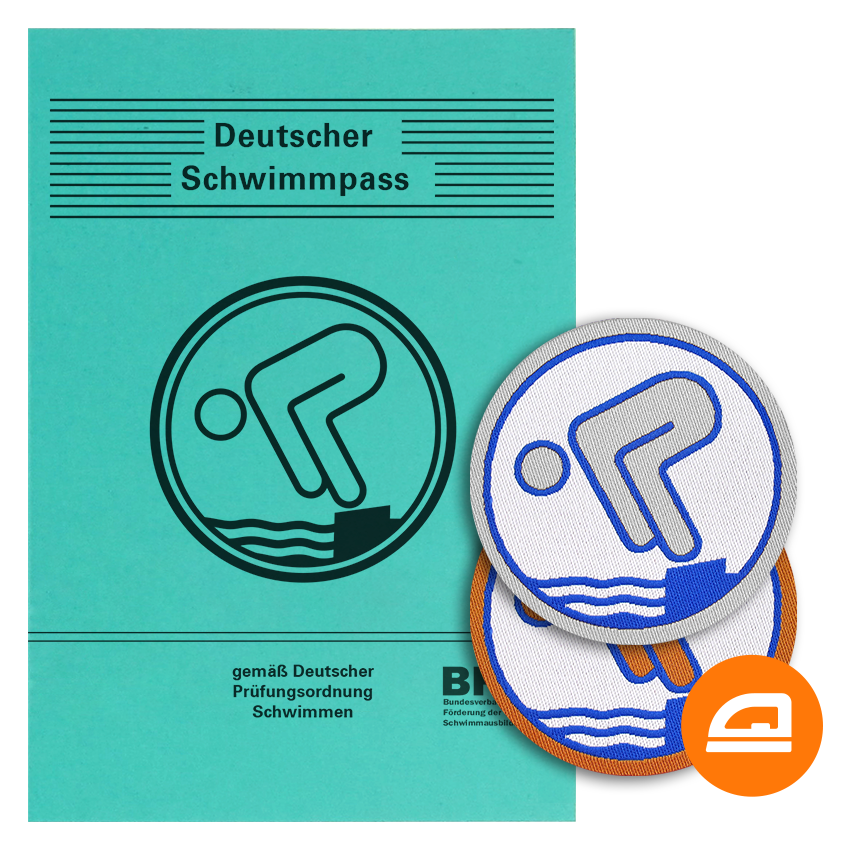
Official DLRG Silver Swimming Badge from Pimpertz – For advanced swimmers.
The German Swimming Badge Bronze: First Steps
The German Swimming Badge Bronze (Freischwimmer) begins with a head-first dive from the pool edge and 15 minutes of swimming. During this time, at least 200 m must be covered, of which 150 m are on the back and 50 m on the stomach. Deep diving from the water surface with retrieving an object, e.g., a small diving ring, within 3 minutes is required. 10 m underwater swimming with pushing off the pool edge completes the practical examination tasks. Knowledge of bathing rules is part of the theoretical examination.
This badge is ideal for children aged 5 and above and builds basic confidence. Changing body position while swimming in the lane without holding on is practiced. Practical examination tasks such as a head-first dive promote courage and technique. Many swimmers find this entry motivating and fun.
Tips for Preparing for Bronze
To prepare for the German Swimming Badge Bronze, swimmers should practice regularly. Focus on endurance in the water, such as swimming 200 m on your stomach or back. Practice deep diving from the water surface with retrieving an object. Knowledge of self-rescue, e.g., in case of exhaustion or cramps, is essential. Use nationwide questionnaires for the theory.
Coaches recommend starting with simple dives, such as from a 1 m board. The scissor kick without arm activity in backstroke strengthens the legs. Perform diving exercises in shoulder-deep water (shoulder depth relative to the examinee). This makes the examination an achievable goal.
The German Swimming Badge Silver: Advanced Skills
For the German Swimming Badge Silver , a head-first dive from the pool edge and 20 minutes of swimming are required. At least 400 m must be covered, of which 300 m are in one swimming style. Twice approx. 2 m deep diving from the water surface with retrieving an object, e.g., a small diving ring, within 3 minutes. 10 m underwater swimming and a dive from 3 m height or two different dives. The theoretical examination includes assistance in bathing, boating, and ice accidents, self-rescue, and simple rescue of others.
This level demands more endurance and precision. Changing body position in front crawl or backstroke (rough form) must be mastered. The examination is conducted using nationwide questionnaires and covers detailed knowledge. Many swimmers report increased self-confidence after obtaining it.
Exercises for Silver: Practical Tips
Practice swimming 400 m in varying styles, such as 50 m transport swimming (pushing or pulling). Focus on backstroke in a recognizable form. Dive into approx. 2 m deep and retrieve objects. Deepen knowledge of bathing rules through learning. Practice diving from 3 m height to overcome fears.
Regular training in the swimming lane without holding on helps. Integrate body position changes for flexibility. Prepare for the theoretical examination with official materials. This makes the transition to Silver effortless.
The German Swimming Badge Gold: Highest Level
The German Swimming Badge Gold requires a head-first dive from the pool edge and 30 minutes of swimming. At least 800 m of swimming, including starting dives and specific styles such as 25 m freestyle. Three times deep diving into 3-5 m with retrieving objects. 15 m underwater swimming with pushing off the pool edge. The theoretical examination covers knowledge of rescuing others and accidents.
Gold symbolizes expertise and is for ambitious swimmers. 300 m backstroke with scissor kick without arm activity. Assistance in bathing, boating, and ice accidents, self-rescue, simple rescue of others. Many achieve it after years of training.
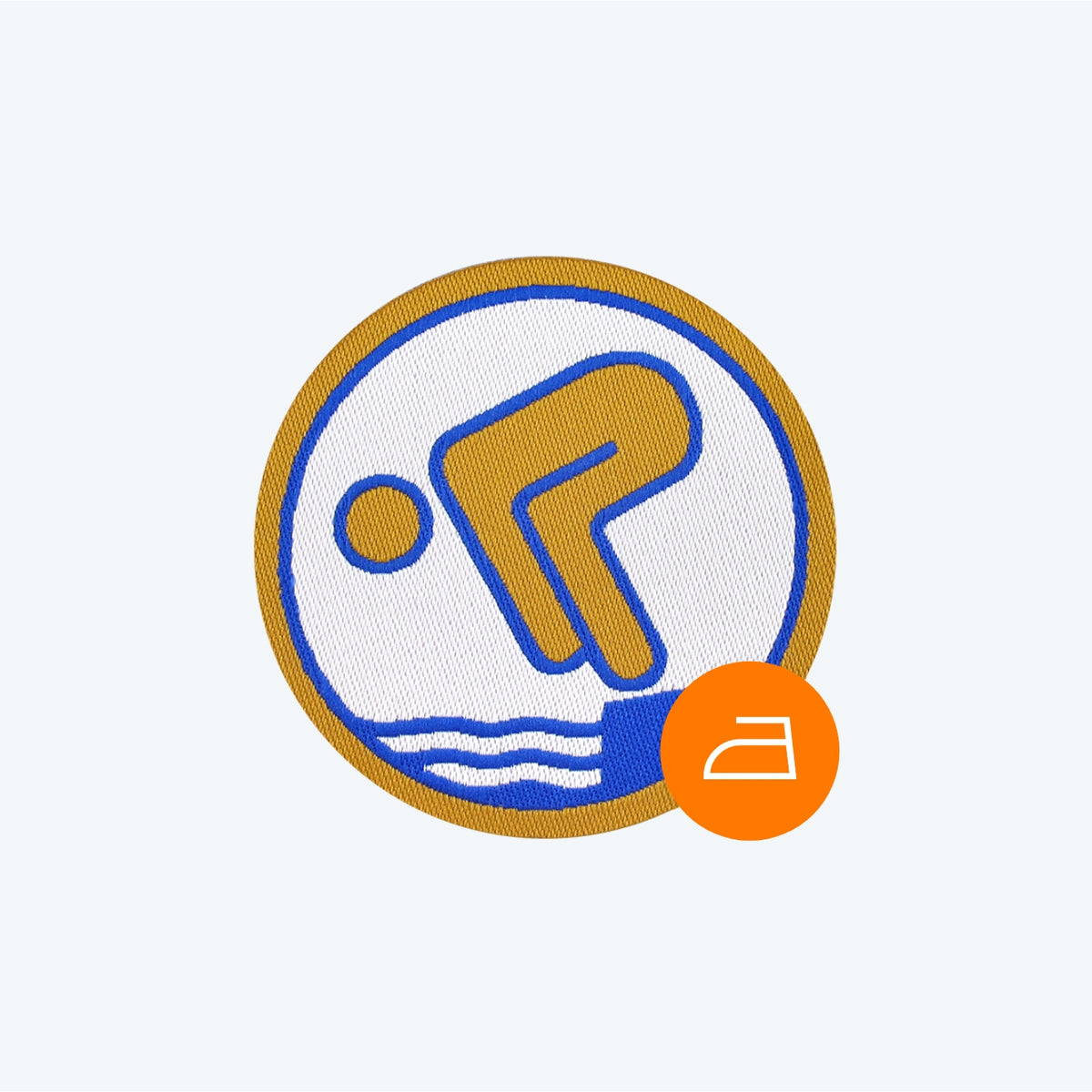
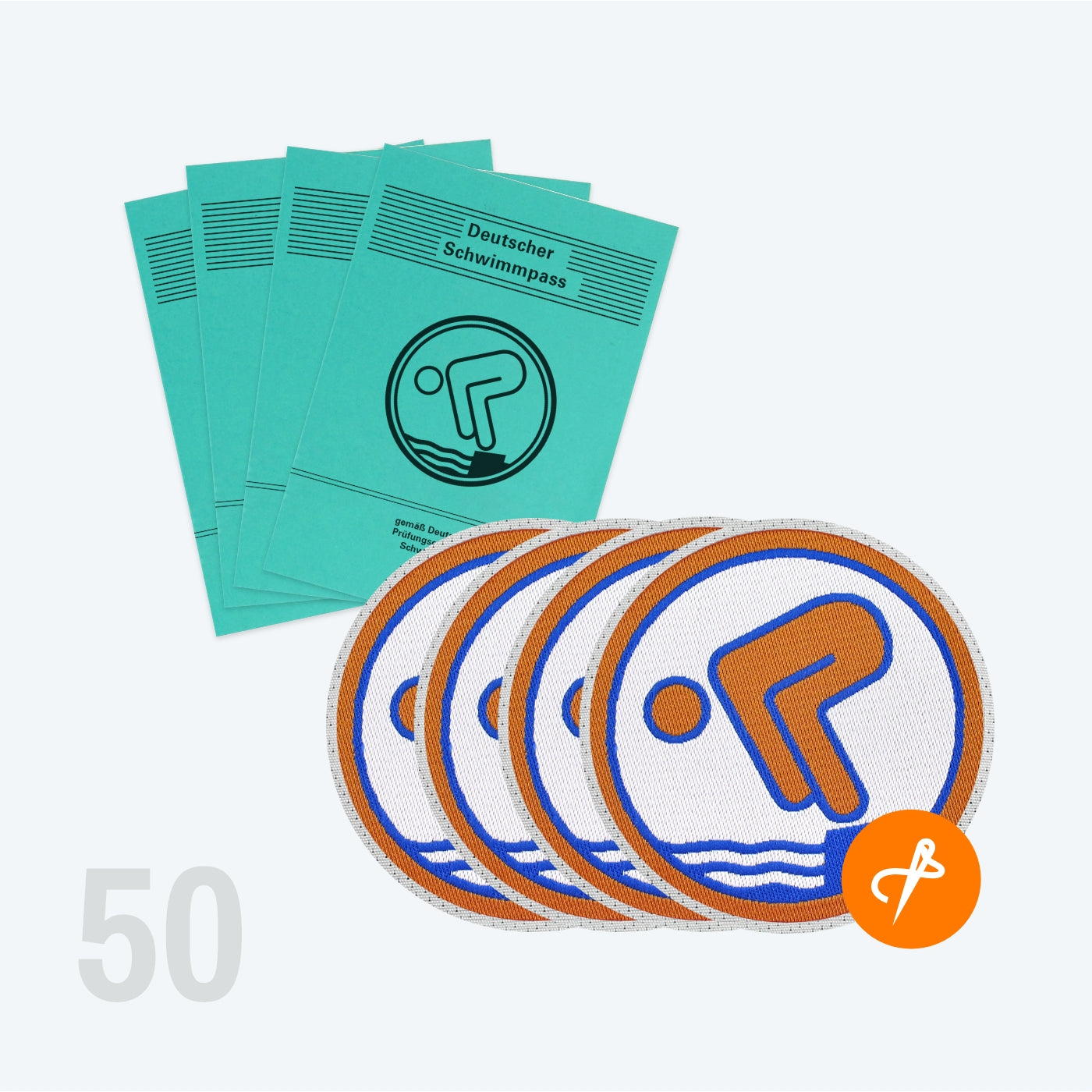
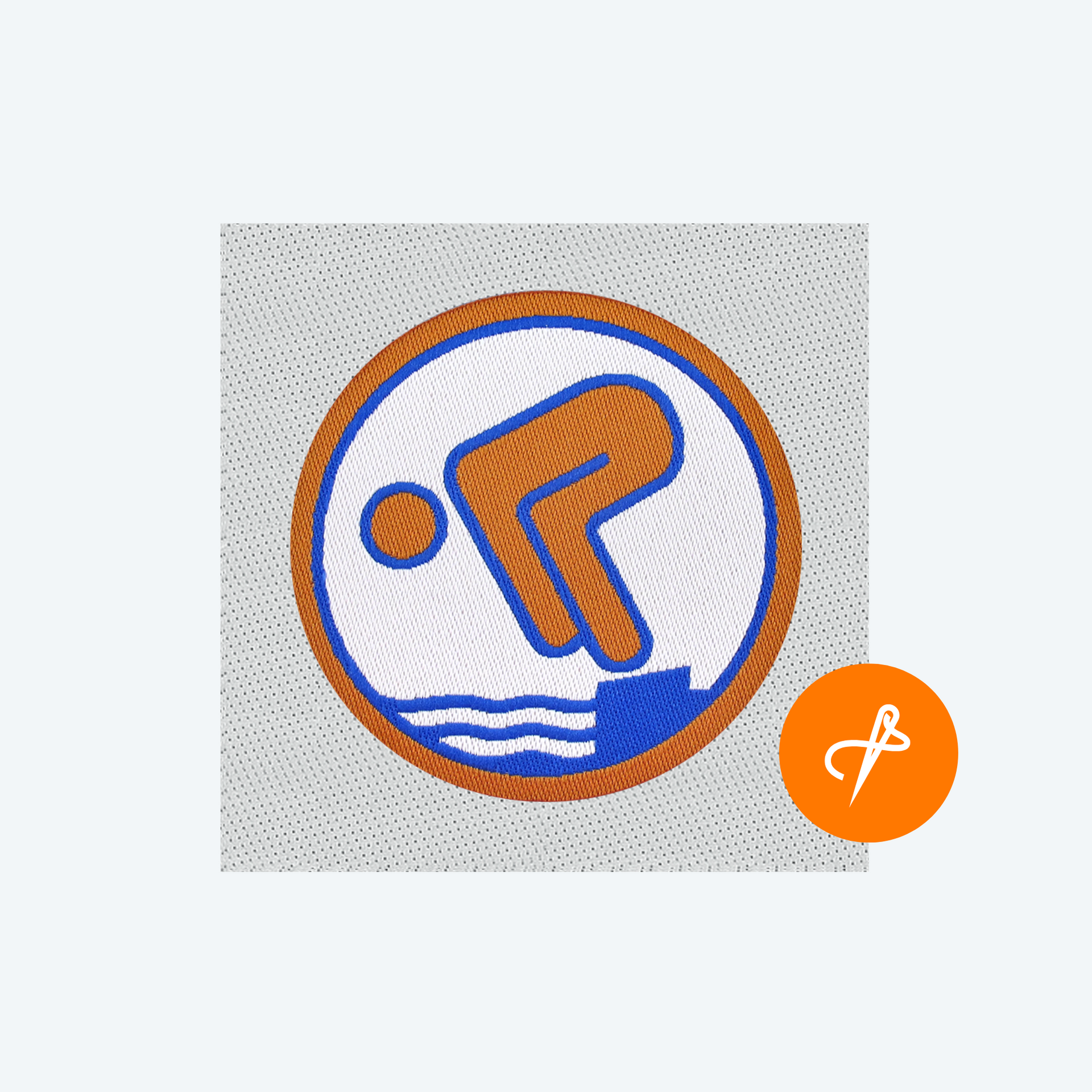
Official DLRG Gold Swimming Badge from Pimpertz – The highest award for swimming experts.
Masterful Techniques for Gold
For Gold, practice swimming 800 m with style changes. 50 m transport swimming (pushing or pulling a partner). 100 m towing a partner in clothes. Integrate knowledge of exhaustion, relieving cramps. Master a dive from 3 m height or two different ones.
Train in deeper water for diving exercises. Prepare for the theoretical examination with nationwide questionnaires. Focus on endurance and rescue techniques. Gold is the pinnacle of swimming art.
Special Swimming Badges: Seepferdchen for Beginners
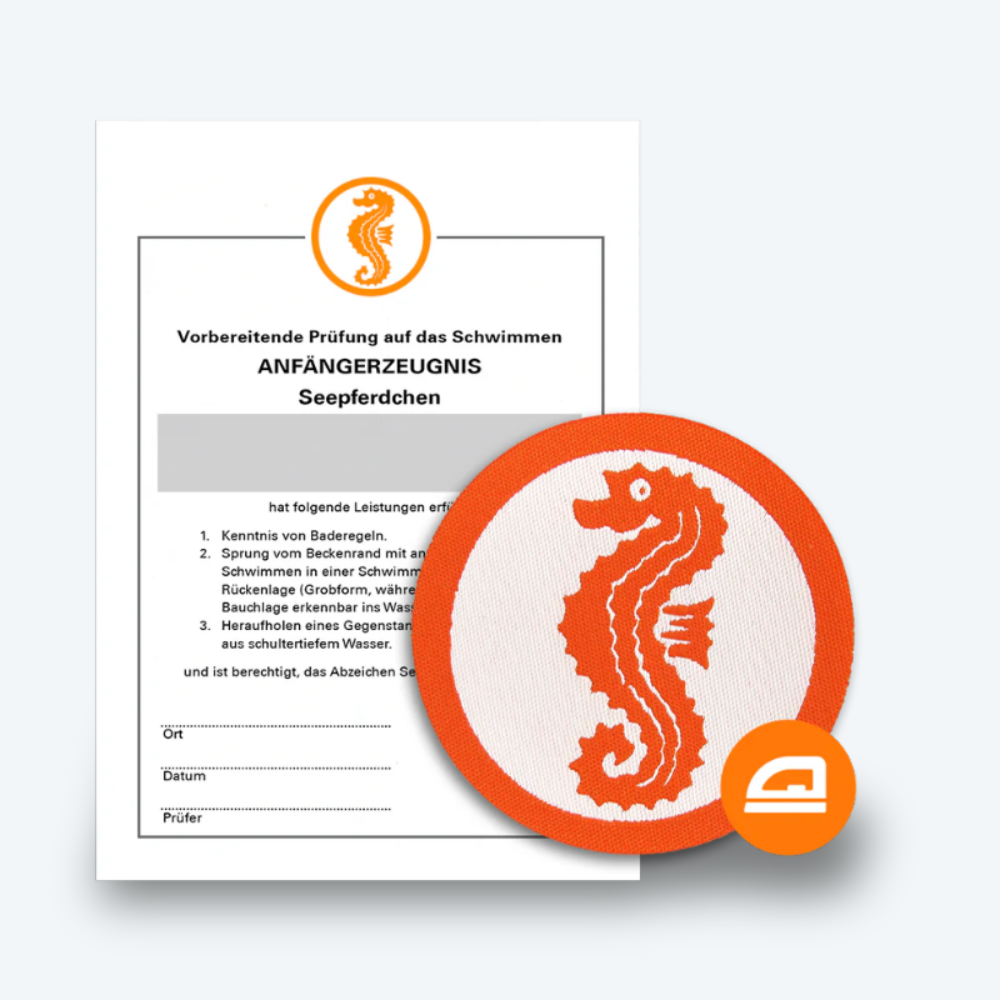
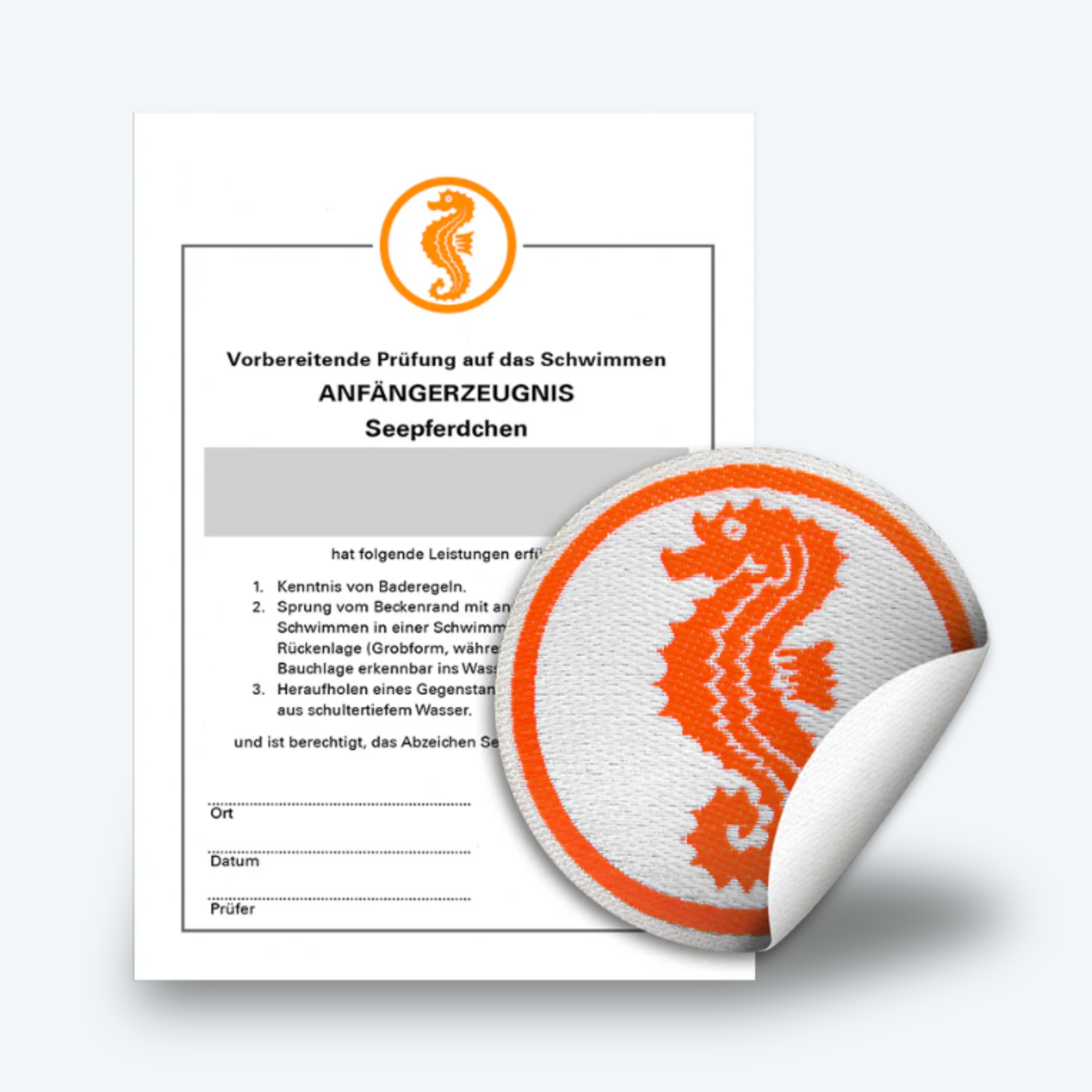
The Seepferdchen (Seahorse) is a special badge for children and beginners. It includes a jump from the pool edge and 25 m swimming on the stomach or back. Retrieving an object from shoulder-deep water. Knowledge of bathing rules. This badge motivates the youngest children to swim.
Many parents start with this to teach safety. Practical examination tasks are child-friendly. It promotes fun in the water. Seepferdchen is the entry into the world of badges.

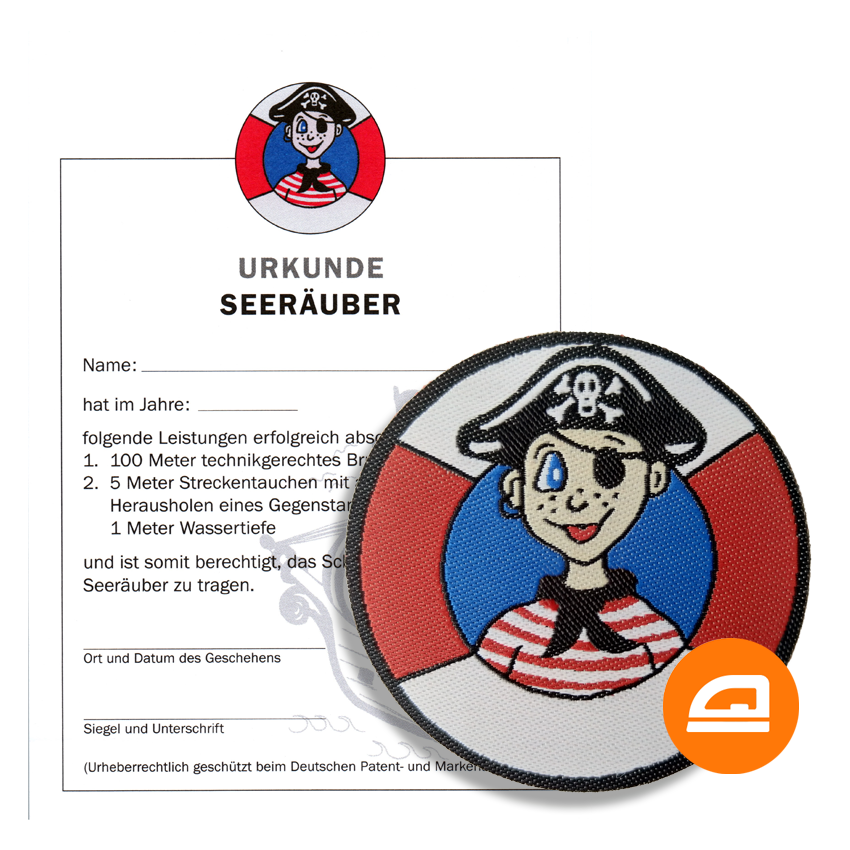
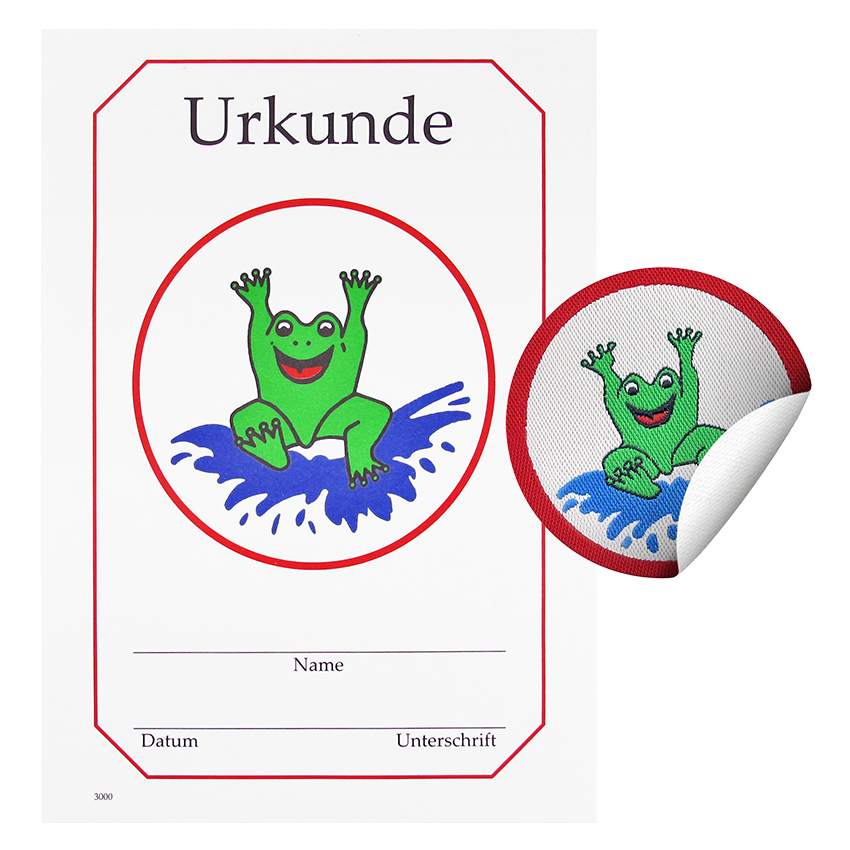
Official DLRG Seepferdchen Badge from Pimpertz – Ideal for starting swimming.
Junior Lifesaver: For Young Rescuers
The Junior Lifesaver badge teaches lifesaving knowledge for children and teenagers. 100 m swimming in various styles, 25 m transport swimming. Diving and rescue with equipment. Theoretical examination on rescue techniques. It prepares for higher levels.
Young swimmers learn responsibility. Examination tasks are age-appropriate. This badge strengthens teamwork. Many young people find their passion here.
German Lifesaving Badge: Comprehensive Rescue
The German Lifesaving Badge certifies skills in lifesaving and first aid. Levels from Bronze to Gold with increasing complexity. Examination tasks such as 200 m swimming in 10 minutes for Bronze. Rescuing people, freeing from holds. Theoretical parts on accidents.
It is essential for lifeguards. Practical exercises simulate real scenarios. Gold requires 300 m fin swimming. This badge saves lives.
Lifesaving: Core of Training
Lifesaving includes rescuing and recovering from the water. Examination tasks such as 50 m transport swimming (pushing or pulling). Training according to nationwide guidelines, including first aid. Examination by practical tests and questionnaires. It promotes safety for all.
Swimmers learn to stay calm. Topics like self-rescue are central. Lifesaving prevents tragedies. Regular training is key.
Snorkel Diving: A Special Discipline
Snorkel diving uses a snorkel to breathe on the surface. Training includes handling equipment. Examination tasks such as 600 m fin swimming. Diving exercises at various depths. Theoretical examination on safety.
It opens up underwater worlds. Practical tests demand endurance. Snorkel diving combines fun and learning. Many integrate it into vacations.
Training and Examination: The Path to the Badge
Training follows nationwide guidelines on swimming, rescue, and first aid. Examination tasks through practical exams and questionnaires. Suitable for all age groups, promotes self-confidence. Exercises such as swimming over distances or rescue maneuvers.
Coaches guide step-by-step. The examination is fair and standardized. Preparation takes weeks to months. Success brings pride.
Certification and Recognition by DLRG
Certification is provided by the DLRG with a diploma and registry entry. Nationally recognized by organizations. Important for safety and career. Recognition motivates further education.
Badges are valid for life. Certification confirms competence. Many use them professionally. It strengthens the network.
Focus on Safety and Risk Management
Safety includes dealing with dangers in the water. Training in first aid, self-rescue, lifesaving. Examination tasks such as rescue with equipment. Goal: prevent accidents.
Risk management teaches caution. Topics like ice accidents are included. Swimmers are sensitized. Safety is paramount.
Fees and Costs: What to Consider
Fees for swimming badges vary depending on the level and location. They include training, examination, and certification. Costs range between €5-120, depending on membership. Check before registering, e.g., with local DLRG groups.
Many places offer discounts for children. Fees cover materials. Find out more at pimpertz.de. Costs are an investment in safety.
Benefits of Acquiring Swimming Badges
Swimming badges boost fitness and self-confidence. They promote social contacts in courses. Lifesaving skills are taught. Accessible to all age groups.
Many find new hobbies. Badges open doors to sports. Motivation remains high through levels. A must for watersports enthusiasts. Practice for self-rescue behavior, e.g., in the sea.
Avoiding Common Mistakes in the Examination
Avoid rushing during diving exercises. Practice breathing techniques for endurance. Do not underestimate theory. Regular training minimizes errors. Practice body position changes.
Consistent practice helps. Get feedback from coaches. Stay calm during the examination. That's how you succeed.
A Motivating Story: A Young Swimmer's Journey
Imagine a child named Max starting with the Seepferdchen badge and mastering the head-first dive from the pool edge. Despite initial fear, he deep dives from the water surface, retrieving an object, e.g., a small diving ring, within 3 minutes. Through hard training, he achieves the German Swimming Badge Bronze, where he learns to swim 200 m on his stomach or back. His endurance grows, and soon he gets Silver, with knowledge of assistance in bathing, boating, and ice accidents. In the end, he conquers Gold, even rescuing a friend in the lake – a true hero in the water!
This story shows how swimming badges can change lives. Max's success inspires other children. With discipline, everyone becomes a strong swimmer. Get your badge today!
Anna had proudly earned her Seepferdchen badge and now dreamed of higher levels. Her coach introduced her to the theoretical examination tasks that were essential for the next level – including how to act in case of exhaustion and relieve cramps to stay safe in the water. Anna quickly learned how to breathe calmly and relax her body in such moments, which motivated her to dive deeper into the world of swimming. Soon came the practical part: the practical examination tasks challenged her with a head-first dive from the pool edge into the water, followed by intensive exercises.
She practiced deep diving from the water surface to master retrieving an object with her hands, bravely descending until she grasped the small ring. "In this time, at least three attempts are needed to achieve perfection," she thought, surfacing. For the Silver badge, she had to swim at least 400 meters, which tested her endurance. Anna practiced various dives from 1 meter height, including elegant head-first dives, and smoothly transitioned between body positions while gliding.
One day, during an exercise, she jumped from a 1 m height and glided into a 10 m underwater swim, using the pool edge in the water as a starting point. She mastered the underwater swim with precision, stretching her body and diving under the water surface. In a recognizable swimming style and 100 meters of front crawl, she built up speed, always focusing on retrieving the object at the end of the lane. The height of the dives varied, and she tried dives from 1m height to build courage before moving on to more challenging heights.
Through constant training, Anna learned to manage exhaustion by taking breaks and breathing deeply. Every dive became an adventure, and she switched body positions from stomach to back to remain versatile. At the end of the season, she passed the examination: with deep diving from the water surface and retrieving the object, she beamed with pride. Her journey showed that with dedication, any height is achievable – be it 1m height or the metaphorical height of success in swimming.
Call-to-Action: Discover more about swimming badges and order official badges at pimpertz.de, www.ebay.de/str/offizielleschwimmabzeichen or www.amazon.de/stores/page/A27B2578-5A4C-4281-ACA4-CC88AB0A025A. Start your journey to safety!
Facts at the End
The German Lifesaving Badge Bronze is accessible from age 12 and includes practical skills for self-rescue and rescuing others.
The Junior Lifesaver badge is intended for children aged 10 and above and imparts practical skills for self-rescue and rescuing others.
For the Swimming Badge Gold, 400 m of swimming in a maximum of 15 minutes and swimming in clothes are required.
The DLRG is the most important provider of swimming and lifesaving courses in Germany.
Those who have only acquired the Seepferdchen badge must still be intensely supervised while swimming.
Only with the swimming badges Bronze, Silver, and Gold do you prove that you can swim safely.
There has been no distinction between youth swimming badges and swimming badges since January 1, 2020.
Imagine a brave child named Anna, passionately aspiring to the early swimmer Seepferdchen badge, entering the swimming pool with a pounding heart. Her coach explains the theoretical examination tasks she must master to earn the badge. Anna quickly learns the knowledge of bathing rules and assistance in accidents, and the examination includes knowledge of topics such as how to act in case of exhaustion and relieve cramps. Soon, it's time for the practical examination tasks, where Anna practices the head-first dive from the pool edge into the water, followed by a subsequent 25 m swim. She deep dives from the water surface to perfect retrieving an object with her hands from shoulder-deep water.
Over time, Anna becomes more confident: she masters swimming in the lane without holding on and changing body position while swimming. Exhaling recognizably into the water while in the prone position helps her stay calm as she swims forward in a recognizable swimming style. For the Seepferdchen badge, she must demonstrate a jump from the pool edge followed by a 25 m swim on her stomach or back, and she practices swimming in a particular style with dedication. Her favorite technique is breaststroke, where she tightens her core and smoothly changes body position. Soon, she integrates self-rescue behavior, e.g., during cramps, and learns how to pause for a maximum of 1 minute to regain strength.
Next, she prepares for more advanced challenges: the pool edge and 20 minutes of swimming, during which at least 400 m must be covered, including 300 m on her stomach or back. She trains to cover at least 400 m to build endurance and practices twice deep diving approximately 2 m from the water surface, retrieving an object, e.g., a small diving ring. In a recognizable form of backstroke, she glides along, seamlessly switching to front crawl, and masters 300 m on her stomach or back (rough form) while swimming. The examination tasks also require 10 m of underwater swimming with pushing off the pool edge, and Anna manages to swim 100 m in a recognizable swimming style without getting tired.
One day, during the big examination, she bravely jumps: two different dives from 1 m height, followed by dives from 1 m or 3 m height or two different dives. She deep dives approximately 2 m and retrieves objects, demonstrating the retrieval, and changes body position effortlessly. The theoretical examination covers knowledge of bathing rules and behavior in bathing accidents, while the practical examination tasks include swimming in a recognizable prone position and 20 minutes of swimming. Anna demonstrates self-rescue behavior, e.g., by calm breathing, relieving tension, and masters covering 300 m of swimming on her stomach. She concludes with 100 m on her stomach or back and in a recognizable swimming style over 100 m.
At the end of the examination, when she receives the badge, Anna feels a pride that drives her. She has not only mastered the bathing rules and behavior but also deep diving, underwater swimming, and covering 300 m on her stomach. This journey has made her a strong swimmer who knows how to jump from any height – be it from 1 m height or higher – and stay calm in any body position while swimming. Anna's success inspires her friends: with discipline and joy in the water, anyone can master the examination tasks and become a true hero!