
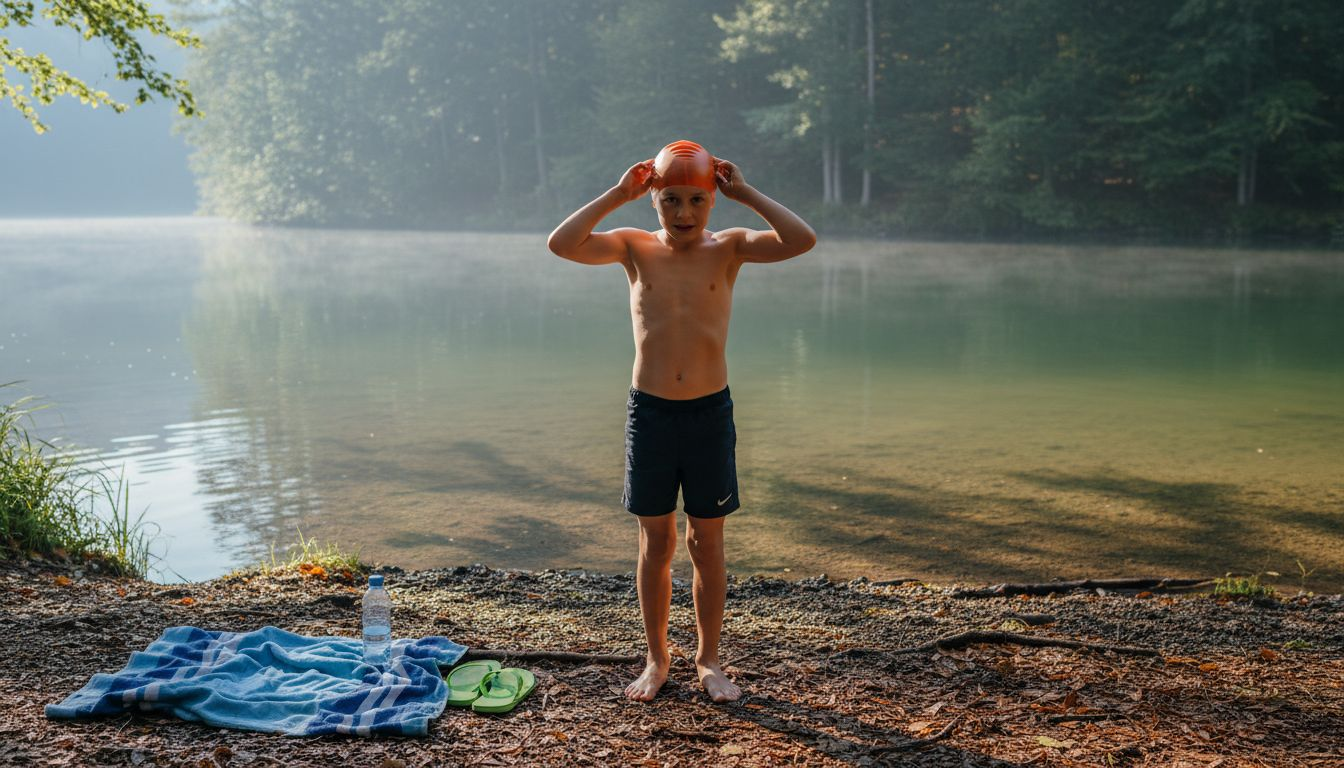
Calorie Consumption Swimming Cold Water - Effect for Children
Every family that takes the first plunge into cool water has a very special experience with their children. Especially for parents in Central Europe, it quickly becomes clear that swimming in cold water means far more than just cooling down – it challenges the entire organism and raises many questions. Those who want to understand how cold water swimming increases calorie consumption and strengthens the immune system will find well-founded answers here, as well as practical tips for safe and effective training.
Table of Contents
- What does swimming in cold water mean?
- How does cold affect calorie consumption?
- Swimming styles and their energy consumption
- Safety aspects for children in cold water
- Tips for optimal preparation and nutrition
Key Findings
| Point | Details |
|---|---|
| Cold water swimming has health benefits | It activates thermoregulation and strengthens children's immune system. |
| Safety precautions are essential | Children should never swim alone in cold water and require constant adult supervision. |
| Nutrition before swimming is crucial | An energy-rich meal 1-2 hours before swimming ensures sufficient energy during the activity. |
| Swimming styles affect calorie consumption | Different techniques burn different amounts of calories; vary styles for optimal muscle engagement. |
What does swimming in cold water mean?
Swimming in cold water is a fascinating activity with complex physiological effects on a child's body. It means more than just a dip in cool waters - it is a targeted challenge for the organism, which entails both risks and potential health benefits.
According to definitions from swimming associations, cold water swimming is defined as swimming in waters below 15°C. Specific methods of cold water swimming range from brief immersion to longer swimming sessions. The body reacts with a characteristic shock reaction, which significantly increases energy consumption.
The most important characteristics of cold water swimming for children include:
- Activation of thermoregulation
- Strengthening of the immune system
- Promotion of circulatory dynamics
- Development of mental resilience
Safety aspects play a crucial role. Ice swimming requires special precautions, such as a slow entry into the cold and supervision by experienced adults. Children should never swim alone in cold waters.
Pro-tip: Start with short, controlled cold water sessions and gradually increase the duration under professional guidance.
How does cold affect calorie consumption?
Swimming in cold water is an effective method to increase calorie consumption in children. The body activates complex physiological mechanisms to regulate body temperature and produce heat.
Cold water stimulates metabolism and leads to increased calorie burning. The cold stimulates brown adipose tissue, which plays a central role in heat generation. This process is called thermogenesis and is particularly active in children.
The most important factors for increased calorie consumption are:
- Activation of brown adipose tissue
- Increase in basal metabolic rate
- Improvement of insulin sensitivity
- Increase in metabolic activity
The effect of cold leads to a significant increase in energy consumption.
Swimming in cool water can further stimulate metabolism. The intensity and duration of swimming activity play a crucial role in calorie consumption. The longer and more intensively one swims, the more calories are burned.
Pro-tip: Combine cold water swimming with light swimming exercises to optimally increase calorie consumption.
Swimming styles and their energy consumption
Swimming offers children an excellent opportunity to burn calories while training the whole body. Different swimming styles vary significantly in energy consumption.
Energy consumption varies depending on swimming technique and intensity. While breaststroke burns about 531 calories per hour, ambitious swimmers can burn up to 900 calories per hour with freestyle. Backstroke also offers excellent training for abdominal and back muscles.
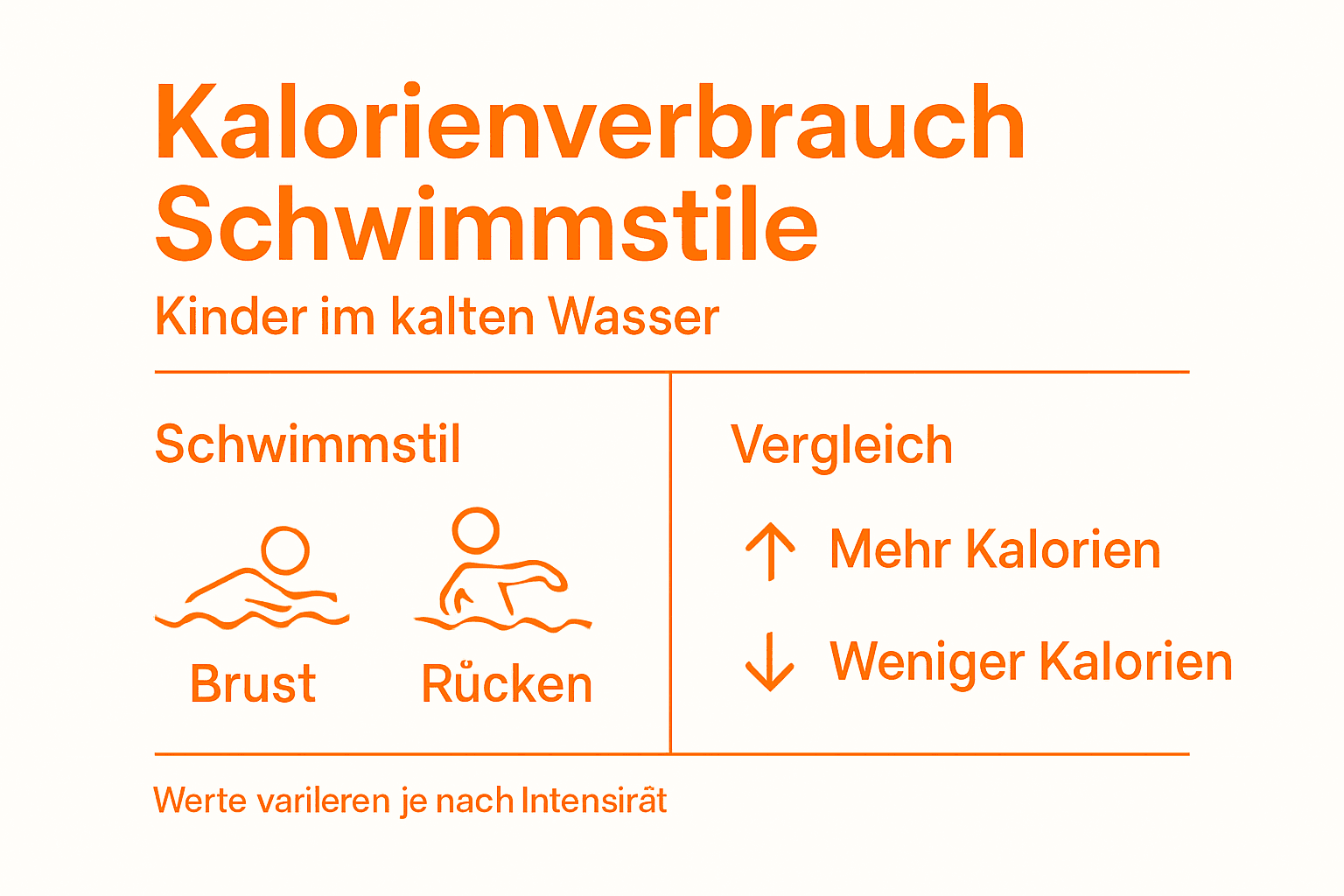
The ranking of swimming styles by calorie consumption:
The following table compares energy expenditure and muscle groups engaged in different swimming styles:
| Swimming Style | Calories burned per hour | Main Muscle Groups Engaged | Difficulty for Children |
|---|---|---|---|
| Butterfly | approx. 950 calories | Chest, back, shoulders, legs | Very high |
| Freestyle | approx. 900 calories | Arms, core, legs | High |
| Breaststroke | approx. 530 calories | Legs, chest, core | Medium |
| Backstroke | approx. 500 calories | Back, abs, shoulders | Medium |
- Butterfly (highest energy consumption)
- Freestyle
- Breaststroke
- Backstroke
The more intensely and quickly one swims, the more energy is consumed.
Swimming styles significantly influence calorie burning. In addition to technique, factors such as body weight, swimming intensity, and fitness level play a crucial role. Swimming trains almost all muscle groups and is a holistic fitness activity for children.
Pro-tip: Vary swimming styles to challenge different muscle groups and optimize calorie consumption.
Safety aspects for children in cold water
Safety while swimming in cold water requires a particularly careful approach with children. The physiological challenges of cold water differ fundamentally from familiar swimming pools and place specific demands on preparation.
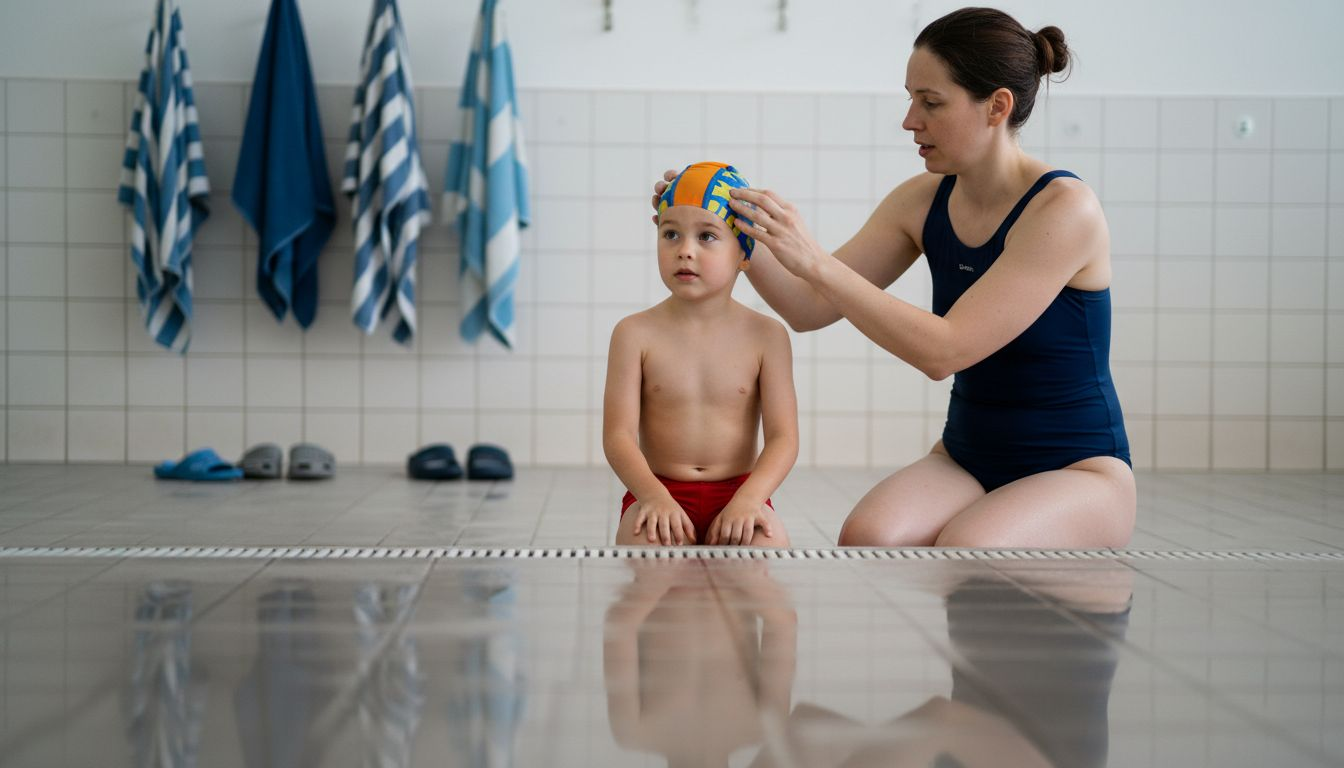
Cold shock is the biggest challenge for children. The body reacts to cold water with increased energy consumption, which affects breathing and heart rate. Children who have only learned to swim in warm indoor pools are often not sufficiently prepared for open water conditions.
Important safety aspects when swimming in cold water:
- Slow acclimatization to water temperatures
- Constant supervision by adults
- Gradual increase in swimming duration
- Wearing wetsuits for children
- Regular health checks
Cold can significantly impair children's physical performance.
Mental preparation is just as important as physical. Children must learn how to cope with the cold without being overwhelmed. Controlled training under professional guidance helps build safety and competence.
Pro-tip: Introduce children to cold waters slowly and playfully, and pay attention to individual reactions and limits.
Tips for optimal preparation and nutrition
For children who want to swim in cold water, careful preparation and a balanced diet are crucial. The right equipment and approach can significantly improve swimming success and safety.
The nutrition strategy before cold water swimming should be specifically geared towards the particular physiological requirements. Children need an energy-rich meal about 1-2 hours before swimming, containing carbohydrates, proteins, and healthy fats. This helps to meet the increased energy demand during cold water swimming.
Important preparation steps for children:
This overview presents the most important measures for greater safety and optimal preparation when swimming in cold water:
| Measure | Goal | Practical Recommendation |
|---|---|---|
| Medical Check | Identify health risks | Perform before the start of the season |
| Wetsuit Equipment | Minimize heat loss | Choose appropriate children's sizes |
| Breathing Technique Training | Control stress from cold | Practice regularly |
| Energy-boosting Meal | Maintain performance | 1-2 hours before swimming |
- Obtain medical clearance
- Acquire special cold protection equipment
- Wetsuit
- Neoprene swim cap
- Neoprene gloves and socks
- Practice breathing techniques
- Gradually acclimatize to cold temperatures
Slow habituation is the key to safe cold water swimming.
Equipment plays a crucial role. Wetsuits help regulate body temperature and minimize heat loss. After swimming, quick drying and warming up are essential to reduce the risk of hypothermia.
Pro-tip: Introduce cold water swimming playfully and in small steps, and constantly monitor the child's individual reaction.
More energy while swimming in cold water with Pimpertz
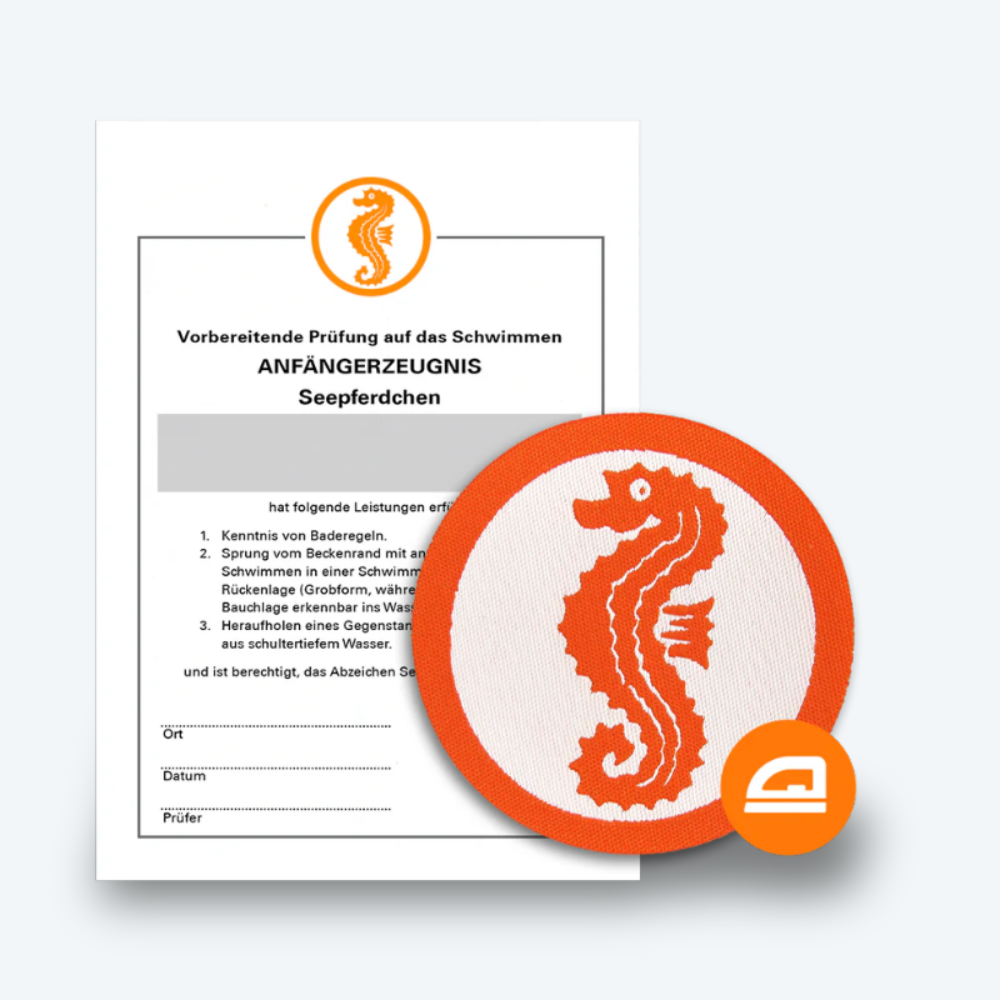
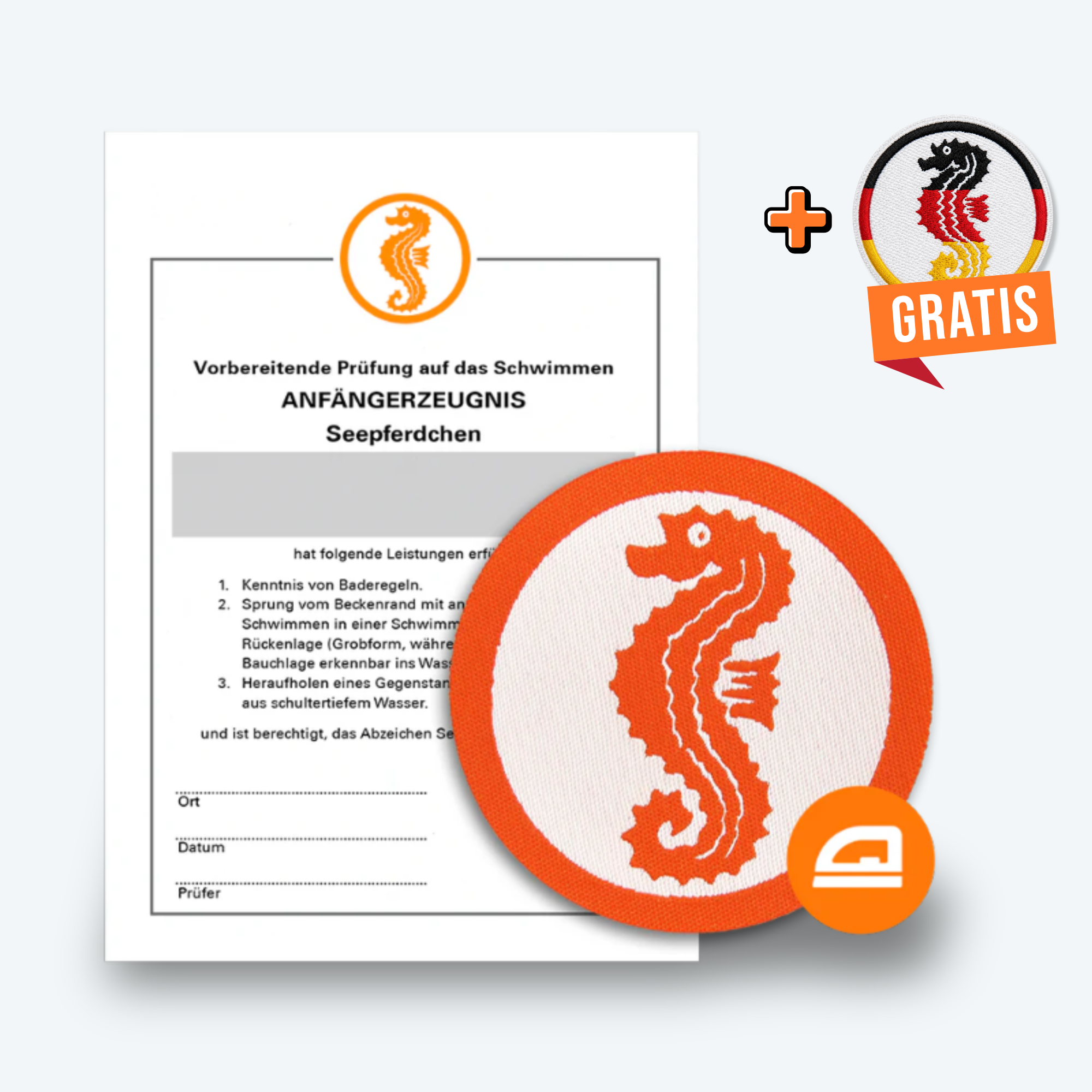
Swimming in cold water increases calorie consumption in children and challenges body and mind in a special way. Safety, the right equipment, and motivating incentives are crucial for a successful start and continuous progress. This is exactly where Pimpertz comes in. Our extensive range of original certified swimming badges and certificates rewards young swimmers for their efforts and sustainably promotes the joy of swimming.
Benefit from over 38 years of experience as an official partner of the DLRG and BFS. With high-quality badges, individually customizable sets, and practical accessories, we accompany children safely through training in cold water. Discover reliable quality and lightning-fast shipping for motivating awards that encourage children to keep going, now at Pimpertz. Experience how you can effectively increase calorie consumption with the right support while ensuring fun and safety.
Frequently Asked Questions
What are the health benefits of swimming in cold water for children?
Swimming in cold water can activate thermoregulation, strengthen the immune system, promote circulatory dynamics, and develop mental resilience.
How does cold water affect calorie consumption in children?
Cold water increases calorie consumption by stimulating metabolism and activating brown adipose tissue, which leads to increased heat production.
What safety measures should be observed when children swim in cold water?
Important safety measures include slow acclimatization to water temperatures, constant adult supervision, and wearing wetsuits for additional cold protection.
What does appropriate preparation for swimming in cold water look like?
Appropriate preparation includes a medical check, wearing suitable cold-protection gear, practicing breathing techniques, and gradually acclimating to cold temperatures.