


Pirate Requirements: 2025 Badge Guide
Around 60 percent of children underestimate their abilities in the water and often overestimate their swimming skills. This is precisely why clear swimming badges like the Pirate are so important for safety and development. Parents know how quickly the joy of splashing can turn into a real challenge when new skills and more responsibility are required. If you want to know exactly what requirements children face for the Pirate badge and how to prepare successfully, you'll find answers here regarding safety, endurance, and self-confidence in the water.
Table of Contents
- What are Pirate requirements in swimming?
- Exam content and procedure for the Pirate test
- Prerequisites and differences from the Seahorse badge
- Tips for preparing for the Pirate badge
- Common mistakes and recommended safety rules
Key Insights
| Point | Details |
|---|---|
| Safety Aspects | Children must master basic water safety techniques and be able to rescue themselves. |
| Swimming Techniques | Correct execution of breaststroke and backstroke is crucial for the badge. |
| Mental Strength | The test also requires mental strength and self-confidence, not just technical skills. |
| Preparation | Regular training and targeted exercises are necessary to successfully meet the requirements. |
What are Pirate requirements in swimming?
The Pirate is a special swimming badge that helps children develop important swimming skills and improve their water proficiency. It is typically aimed at children between 7 and 10 years old who already have basic swimming skills and want to further develop their abilities.
The Pirate requirements include several central elements of swimming education:
- Water safety: Children must master various safety techniques
- Swimming styles: Correct execution of breaststroke and backstroke
- Endurance: Must be able to swim at least 200 meters continuously
- Rescue techniques: Basic self-rescue knowledge
During the practical tests, participants are assessed by licensed swimming instructors. They must not only demonstrate technical skills but also water safety and mental strength. Pirate Badge Requirements provide a comprehensive overview of all details.
In addition to the athletic aspects, the Pirate badge also focuses on personal development. Children learn self-confidence, perseverance, and teamwork. This makes the badge more than just an athletic challenge - it is an important step in the development of young swimmers.
Exam content and procedure for the Pirate test
The Pirate test is a structured challenge for young swimmers who want to demonstrate their water competency. It consists of various elements that include both technical skills and water safety.
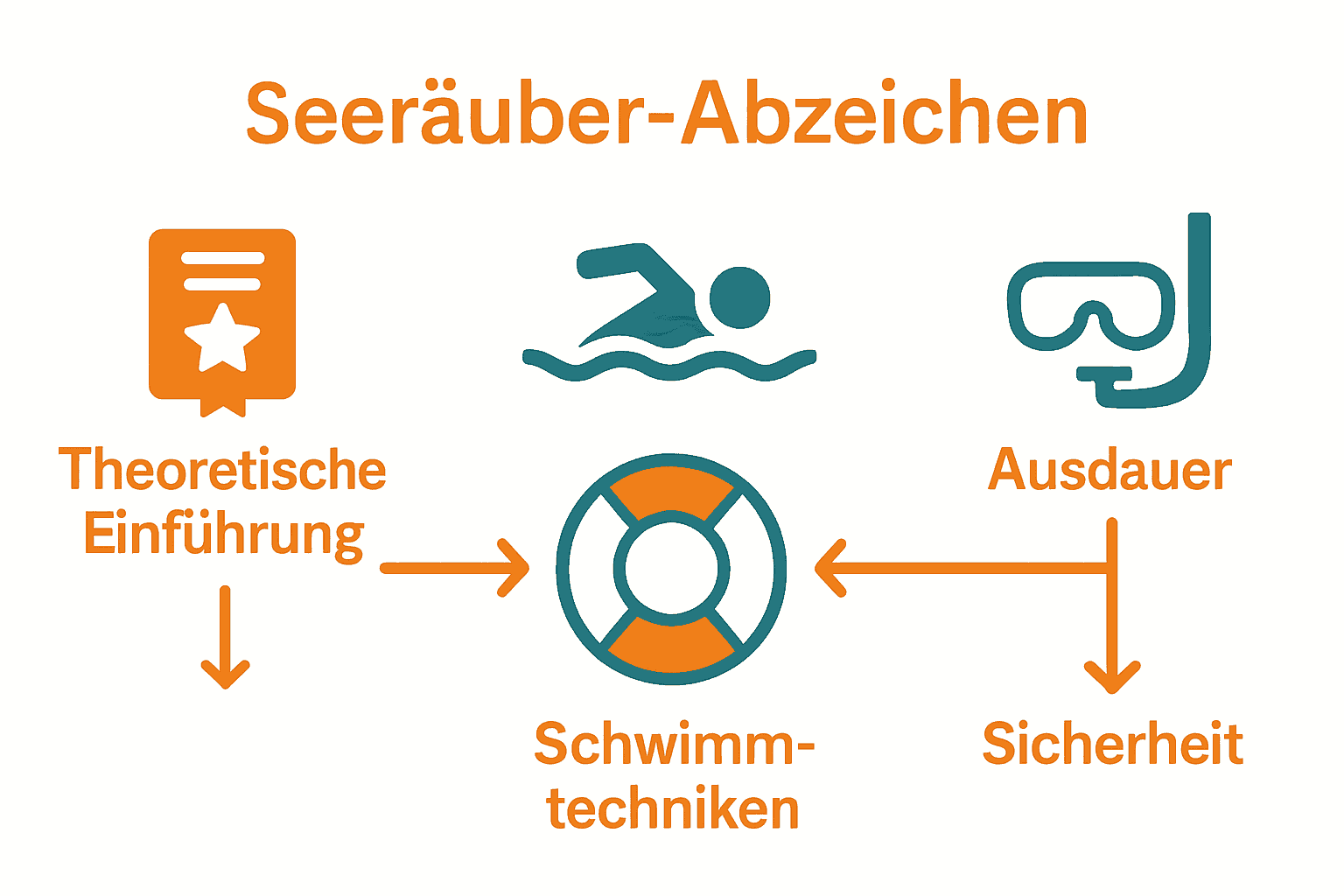
The typical procedure of the test is divided into several central stations:
- Theoretical introduction: Basics of water safety
- Swimming technique test: Breaststroke and backstroke
- Endurance test: Continuous swimming for 200 meters
- Practical safety exercises: Self-rescue and rules of conduct
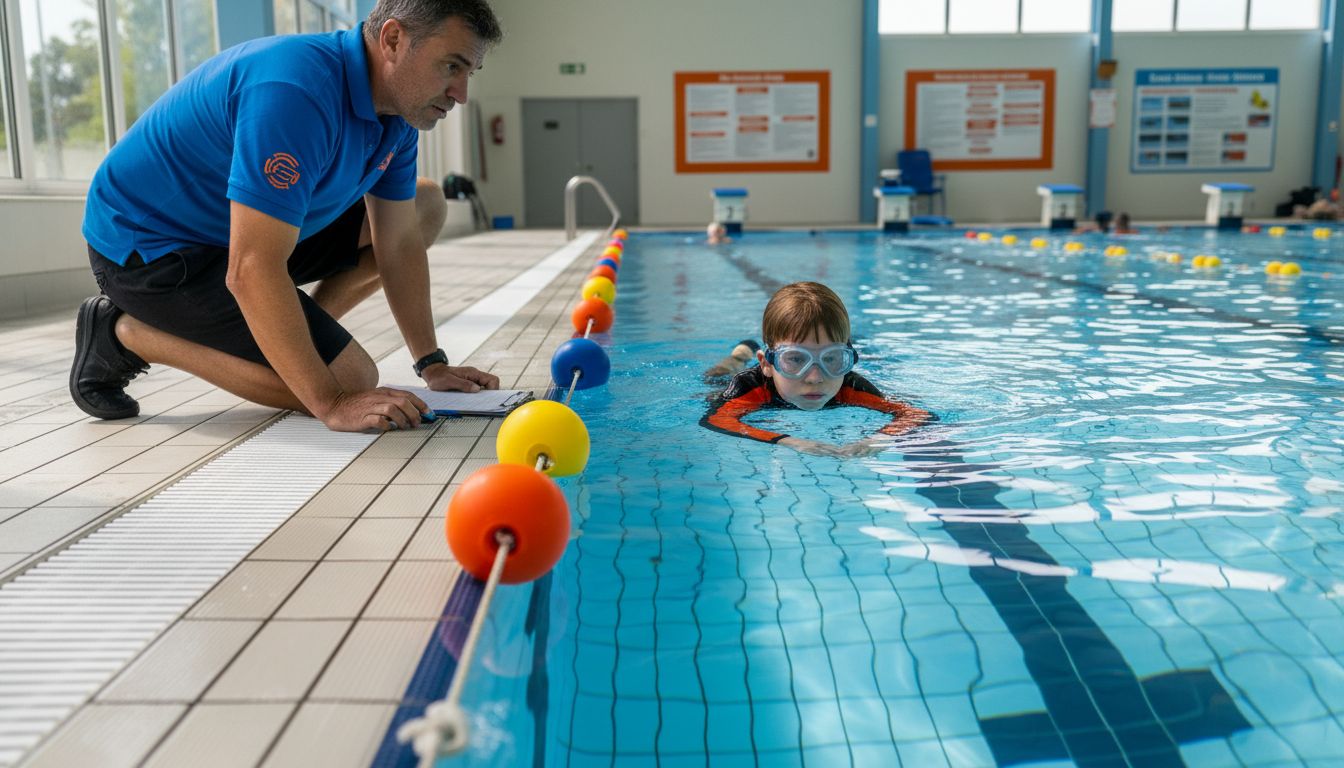
At each station, children are carefully observed and assessed by qualified swimming instructors. Not only the technical execution is important, but also mental strength and safety in the water. Buying a Pirate badge can be a great motivation for children to prepare for this test.
Upon successful completion, children receive not only a badge but also a certificate documenting their advanced swimming skills.
 This strengthens their self-confidence and motivates them to take on further athletic challenges.
Prerequisites and differences from the Seahorse badge
The Pirate badge is an important development after the Seahorse and places significantly higher demands on young swimmers. While the Seahorse teaches basic swimming skills, the Pirate badge aims for a more comprehensive water competency.
According to Schwimmschule Rülke, children must have already earned the Seahorse badge before attempting the Pirate badge. The requirements increase significantly:
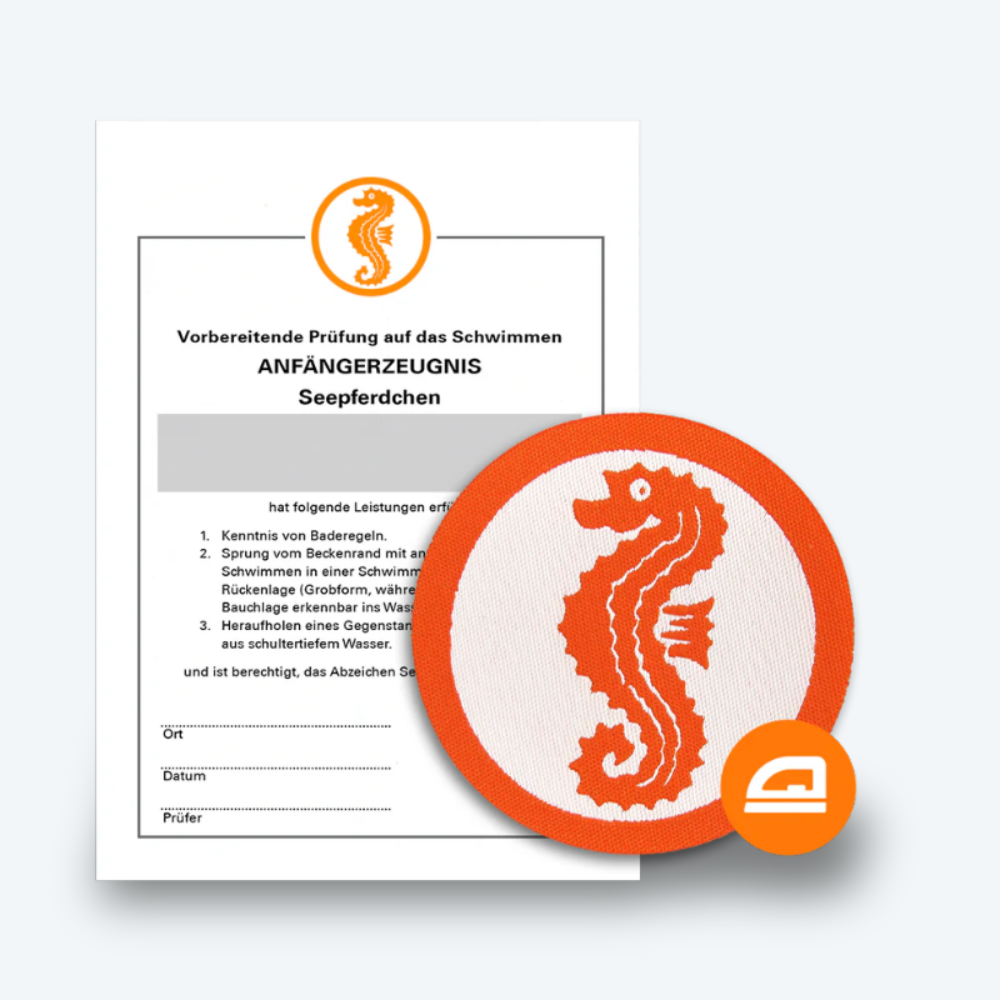
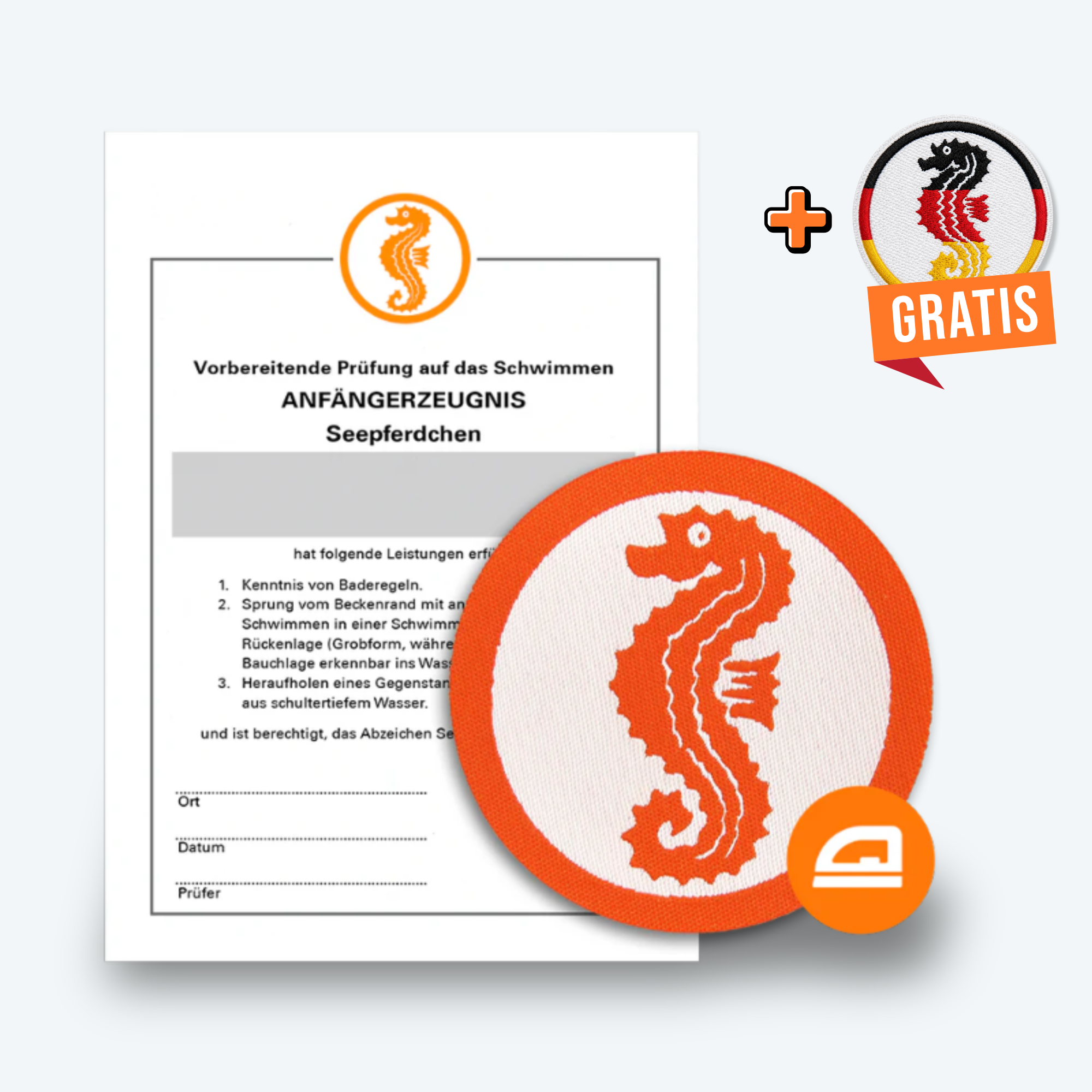
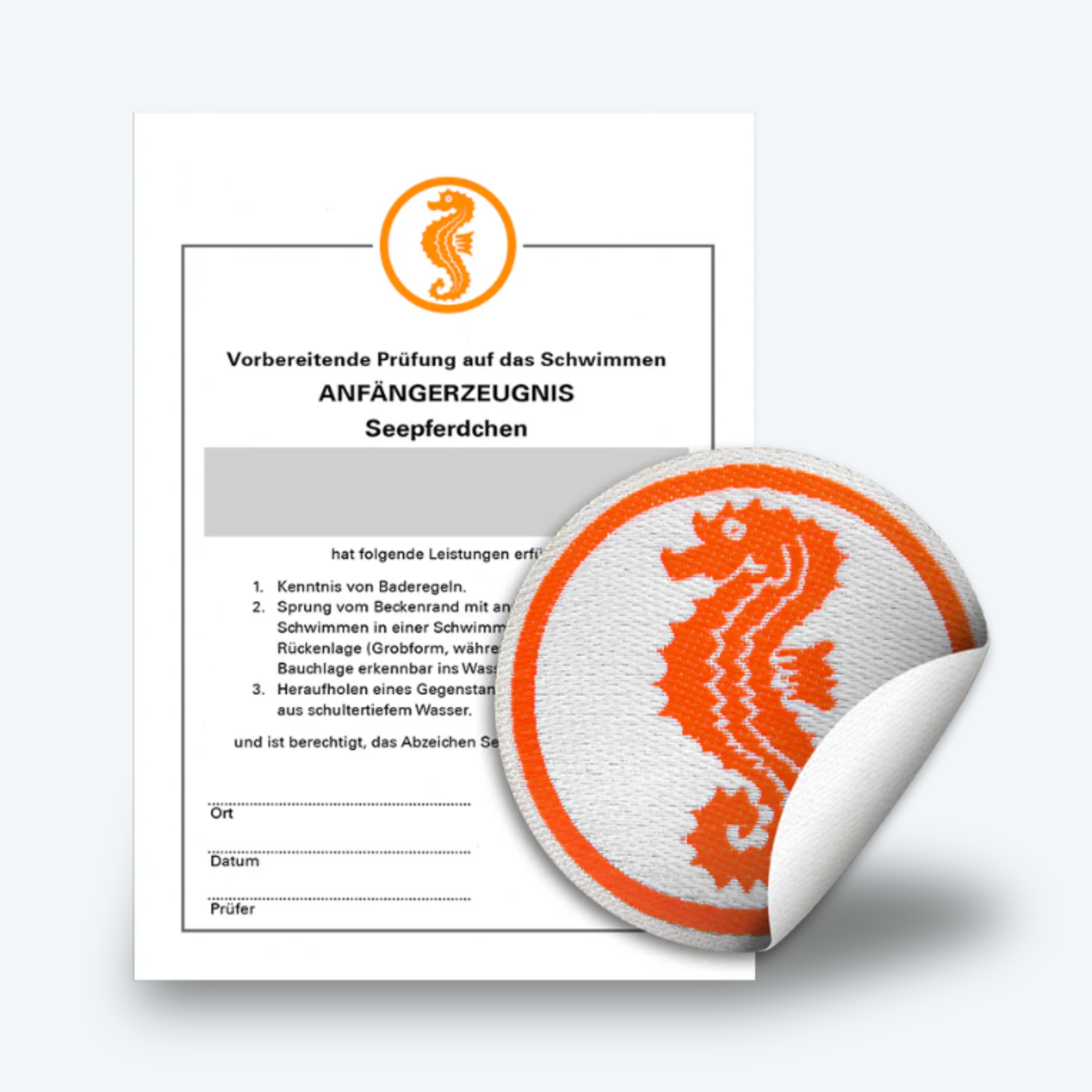
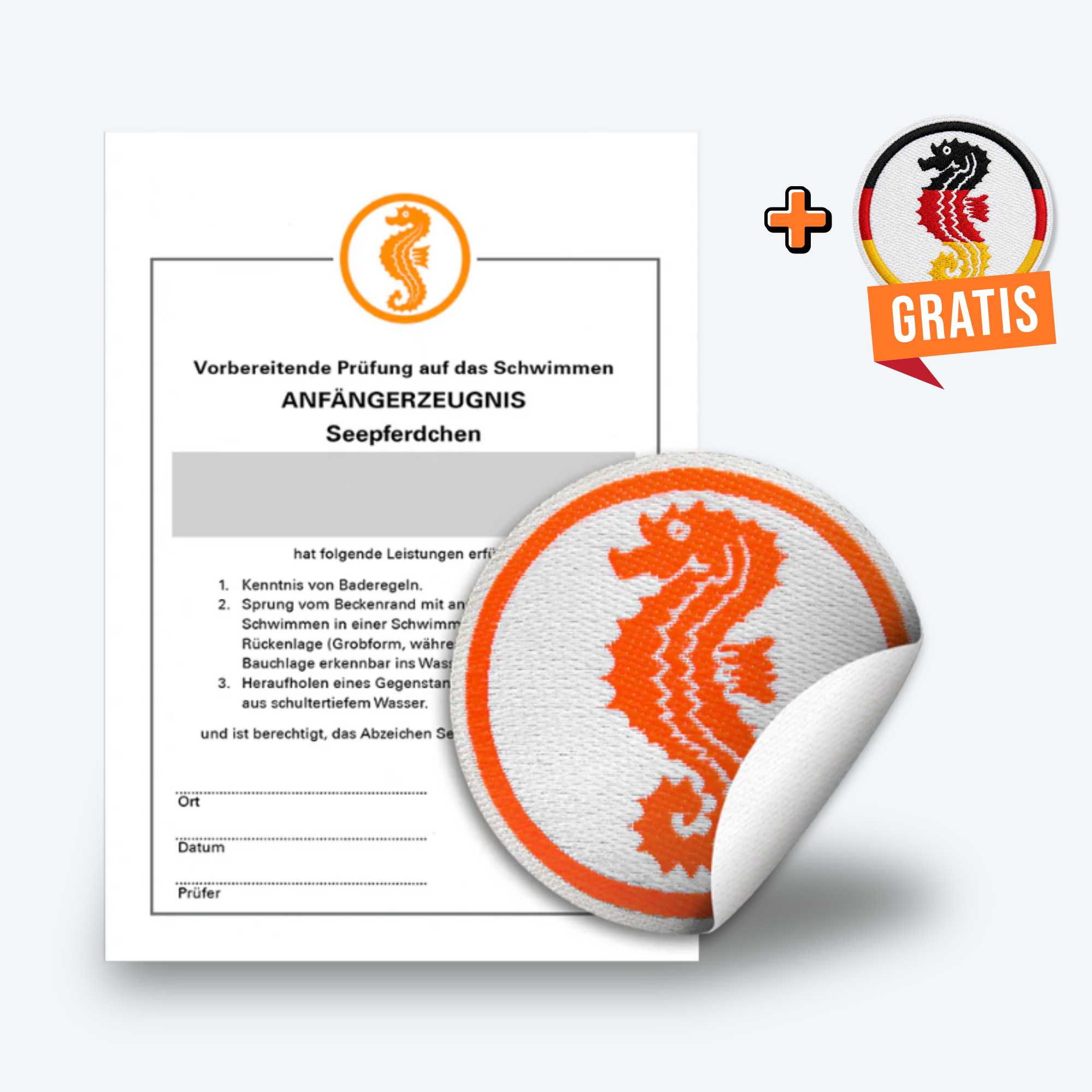
- Seahorse: Swim 25 meters, retrieve an object from shoulder-deep water
- Pirate: 100 meters of technically correct breaststroke
- Pirate: 5 meters of underwater swimming
- Pirate: Retrieve an object from at least 1 meter water depth
As confirmed by Sylter Swim Academy, this means a significant increase in difficulty. Seahorse requirements serve as a foundation, while the Pirate badge represents the next stage of development for young swimmers.
These increased requirements are intended not only to challenge children in their physical swimming abilities but also to develop their water safety, endurance, and mental strength.
 The badge is therefore more than just an athletic certificate - it is an important step in the development of young swimmers.
Tips for preparing for the Pirate badge
Preparing for the Pirate badge requires systematic training and targeted exercises that go far beyond basic swimming skills. Parents and swimming instructors play a crucial role in optimally preparing children for the challenges.
Here are the most important preparation strategies:
- Regular swim training: At least 2-3 times a week
- Technique training: Focus on correct breaststroke
- Endurance exercises: Gradual increase in swimming distance
- Diving exercises: Systematic training for underwater swimming
Swimming badges for children show that mental preparation is just as important as physical training. Children should build self-confidence and face challenges positively.
Psychological aspects are also important: Encourage your child to push boundaries without exerting pressure. Make the preparation playful, provide incentives, and celebrate small successes. The goal is not just the badge, but to develop joy and safety in the water.
Common mistakes and recommended safety rules
When acquiring the Pirate badge, there are typical mistakes that children and parents should avoid. Safety is always the top priority. Professional swimming instructors emphasize that careful preparation is crucial for success.
Here are the most common mistakes children make when swimming:
- Swimming too fast without correct technique
- Lack of body tension while swimming
- Insufficient breathing during swimming movements
- Overestimation of one's own swimming abilities
Swimming Learning Tips show how important professional guidance is. Safety rules must not only be understood but also consistently implemented.
The most important safety aspects are constant supervision, wearing swimming aids if necessary, and learning self-rescue techniques. Children should always swim with a qualified instructor and respect their limits. Fear is not an obstacle, but an important protection that must be channeled correctly.
Perfectly prepared for the Pirate badge with Pimpertz
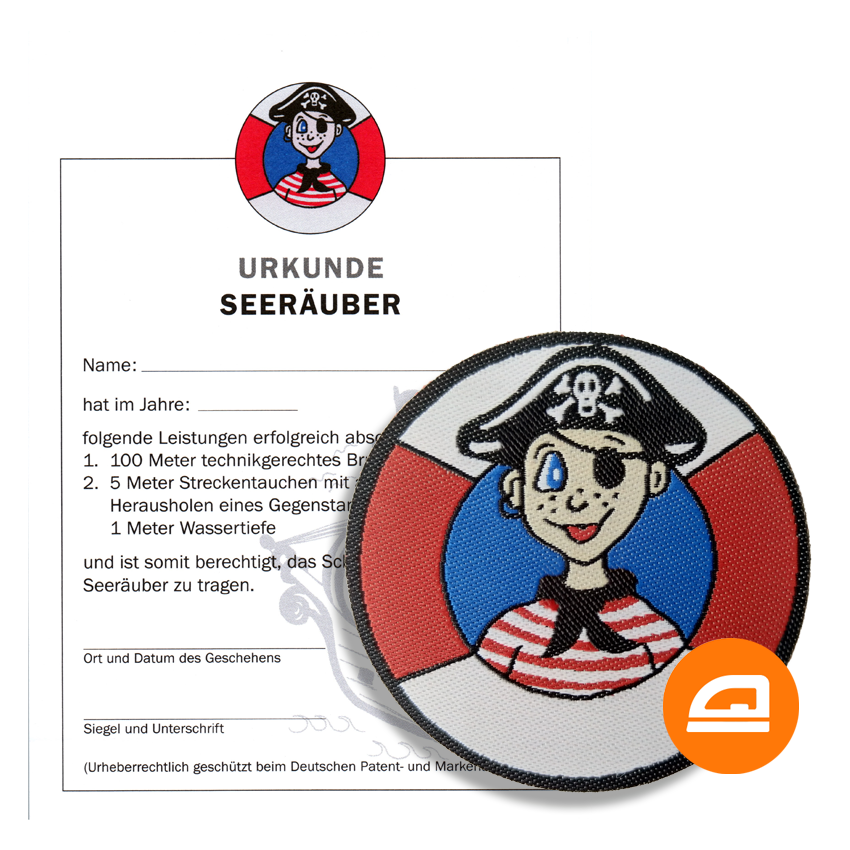
You want your child to safely master the demanding Pirate requirements while still enjoying the water? The challenge lies in perfecting not only technique but also strengthening endurance and rescue skills. This is exactly where our offer comes in, tailored specifically to the needs of young swimmers. Discover our child-friendly and officially certified swimming badges like the Pirat Pimpi® Swimming Badges & Certificates that encourage enthusiasm for training and significantly boost motivation.
Start now with high-quality materials and practical accessories that make preparing for the test easier. Rely on over 38 years of experience and the official partnership with the DLRG. Visit Pimpertz and get everything you need for successful and safe swimming. Don't miss the opportunity to equip your children with the best swimming badges and playfully strengthen their water competency. For more child-friendly badges, also check out our selection of Seestern Stella Swimming Badges & Certificates and find exactly what's right for your child.
Frequently Asked Questions
What are the requirements for the Pirate badge?
The requirements for the Pirate badge include mastering safety techniques, correct execution of breaststroke and backstroke, continuous swimming of at least 200 meters, and basic self-rescue techniques.
How does the test for the Pirate badge proceed?
The test consists of a theoretical introduction to water safety, a swimming technique test, an endurance test of 200 meters, and practical safety exercises, which are evaluated by qualified swimming instructors.
What are the differences between the Seahorse and Pirate badges?
The Seahorse promotes basic swimming skills such as swimming 25 meters and retrieving an object from shoulder-deep water, while the Pirate badge raises the requirements, including 100 meters of technically correct breaststroke and 5 meters of underwater swimming.
How can I optimally prepare my child for the Pirate badge?
Optimal preparation requires regular swim training, targeted technique training, endurance exercises, and diving training. Psychological aspects such as self-confidence and playful incentives are also important for success.


