
Article: From Seahorse to Gold: The Path to Swimming Badges
From Seahorse to Gold: The Path to Swimming Badges
Imagine the feeling of diving into the water for the first time and experiencing the freedom that each stroke offers. Swimming badges accompany us on this journey of self-discovery, from the first attempts at paddling to the majestic elegance of a seasoned swimmer. These badges are more than just symbols; they are milestones on a path to personal growth and safety in the water.
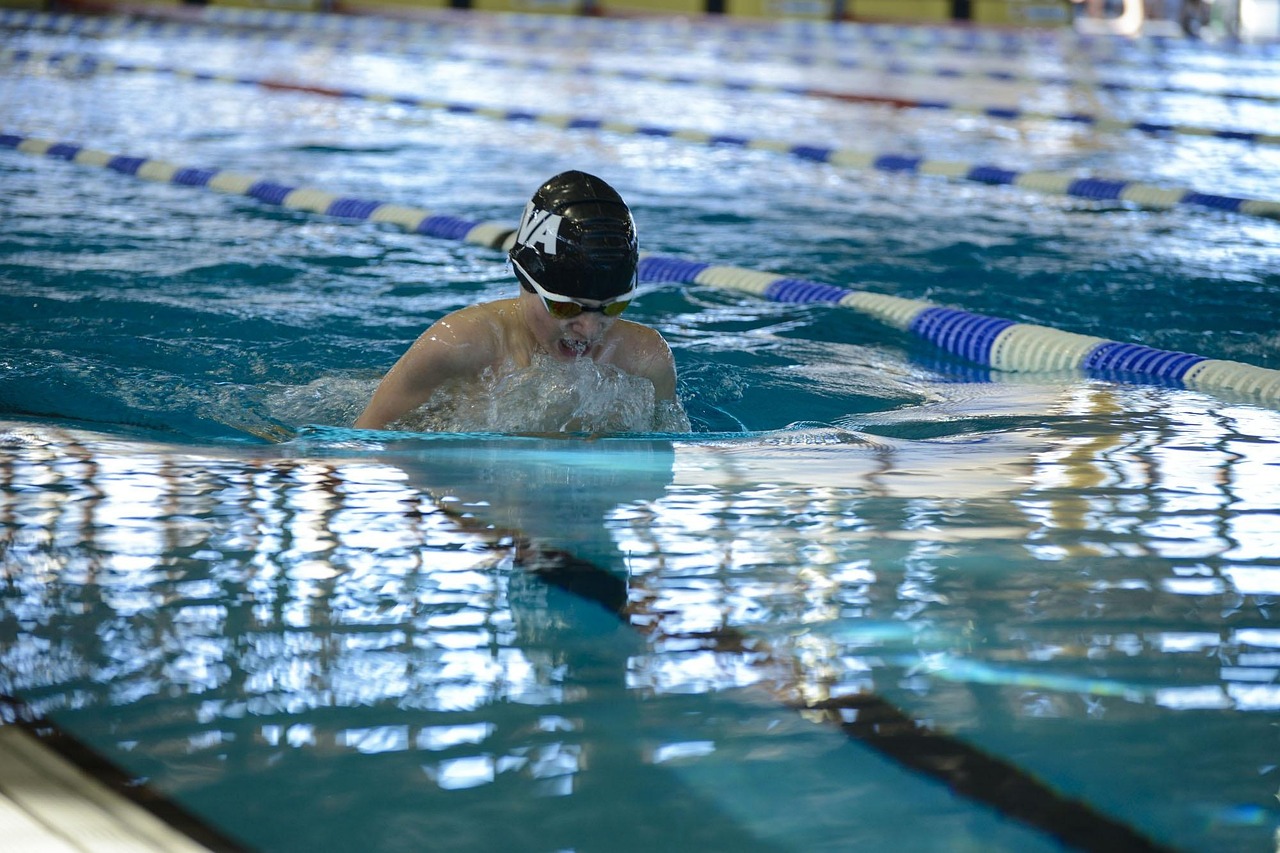
The journey from the Seepferdchen (Seahorse) to the golden badge may seem long, yet it is interspersed with valuable lessons and achievements. Each badge, whether Bronze, Silver, or Gold, challenges us to master new techniques and deepen our knowledge of water safety. Special badges like the "Seehund TRIXI" (Seal TRIXI) versatility badge and the "Hai" (Shark) competitive swimming badge offer additional incentives for those who strive for more.
In this article, we explore the different levels of swimming badges, the requirements and tests, as well as the historical and pedagogical significance they hold in swimming education. Let's dive together into the world of swimming badges and discover how they can shape us into safe and competent swimmers.
The Significance of Swimming Badges
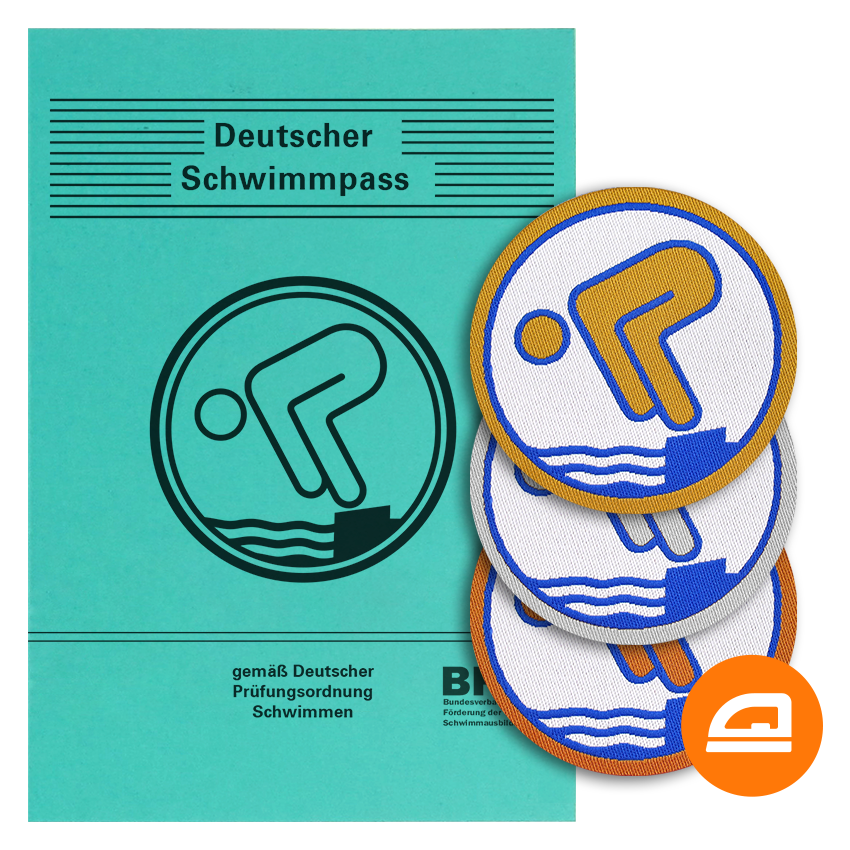
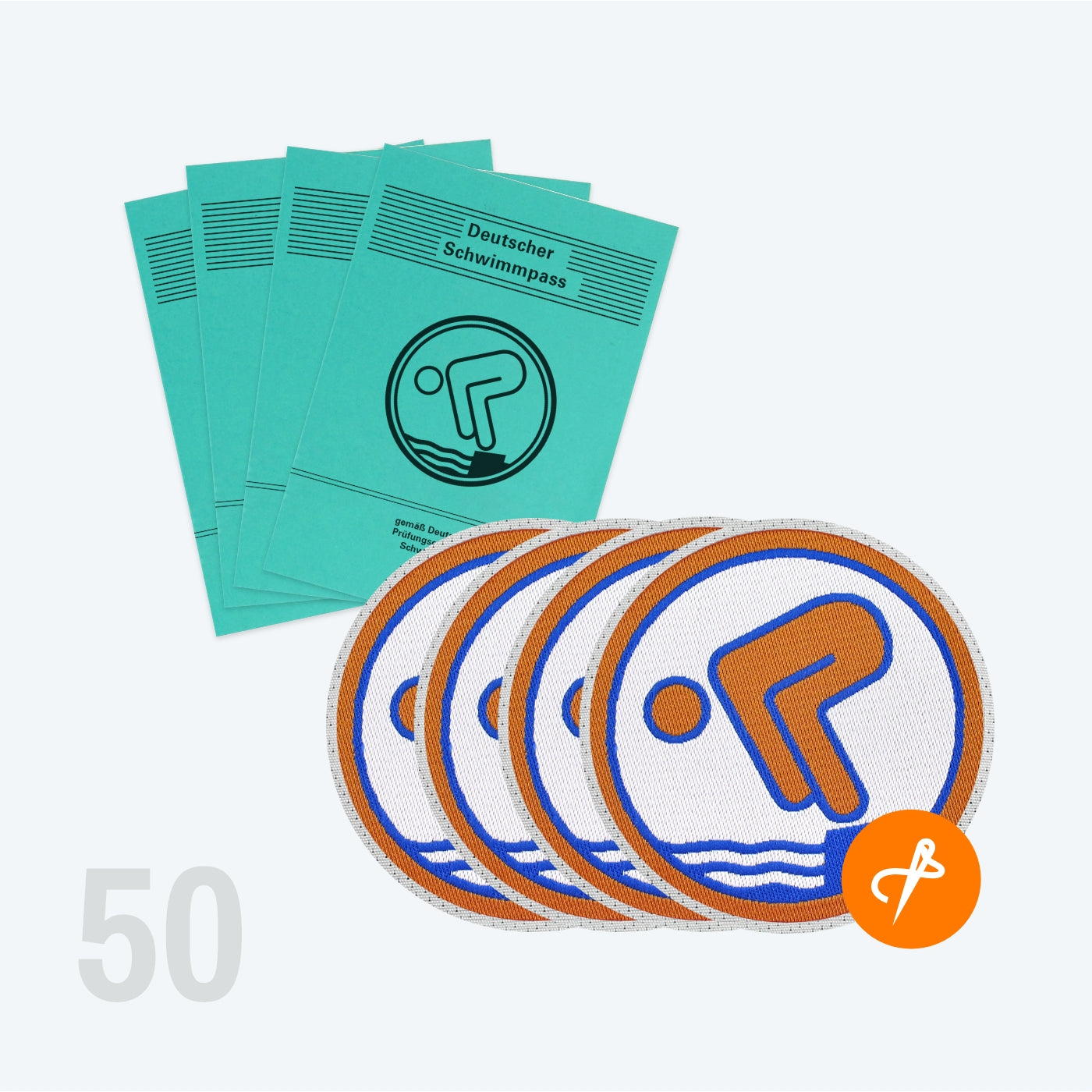
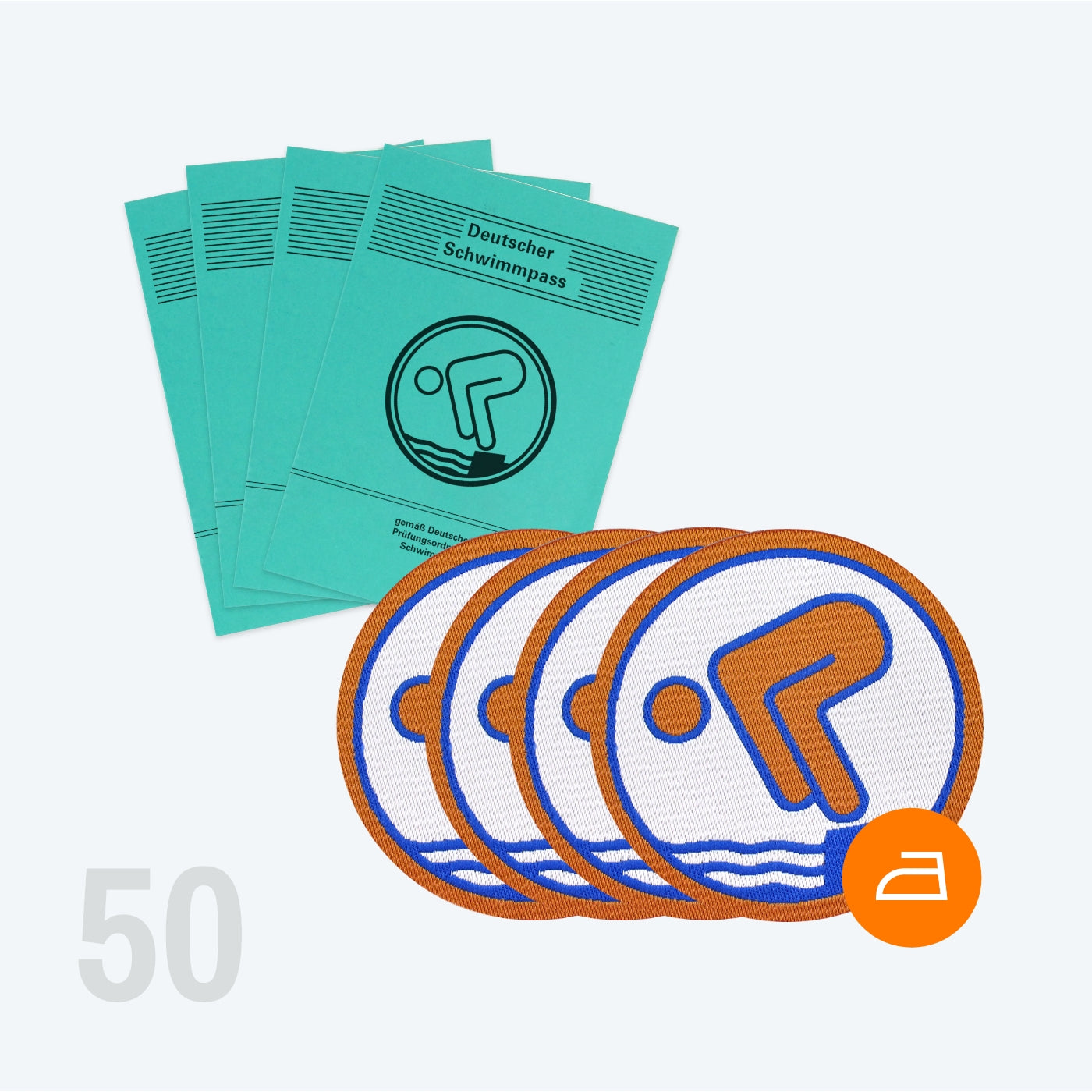
Swimming badges are far more than just colorful fabric patches. They symbolize progress and passion in the pursuit of water mastery. From the first strokes, starting with the Seahorse badge, to the pride of the German Swimming Badge Gold, they open doors to new possibilities.
Each badge presents a new challenge and teaches us essential skills: jumping from the edge of the pool, calmly swimming for minutes, or simple rescue of others. They promote water safety through comprehensive knowledge of swimming rules and train us to act safely in deep water.
Swimming Badge Discovery Journey:
|
Badge Type |
Key Requirements |
|---|---|
|
Seepferdchen (Seahorse) |
25 meters swimming, knowledge of swimming rules |
|
Bronze (Freischwimmer) |
200 meters breaststroke, 1m board |
|
Silver |
400 meters swimming, meters underwater swimming |
|
Gold |
600 meters swimming, demanding rescue exercises |
The significance of swimming badges extends far beyond physical achievements. They inspire discipline, dedication, and instill confidence in one's own abilities. Thus, swimming becomes a journey full of discoveries and transformations.
The Different Levels of Swimming Badges
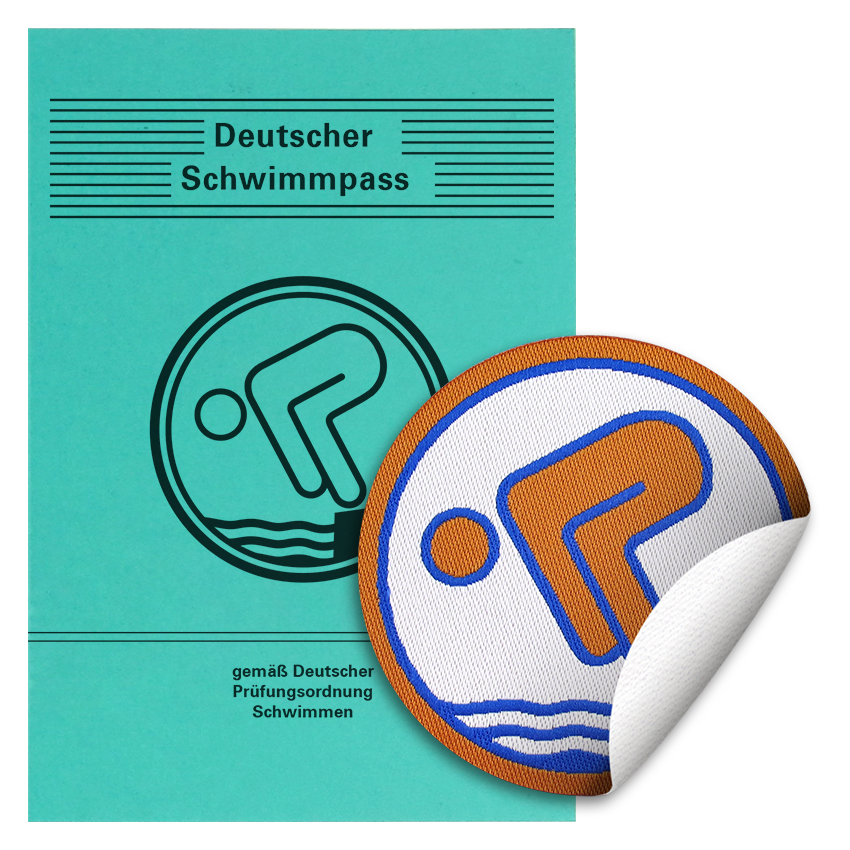
Swimming badges are guides to safety and mastery in the water. These badges not only promote the development of swimming techniques but also raise awareness of water and swimming safety. With each level, from the Seahorse to Gold, an opportunity arises to strengthen one's self-confidence and the ability for safe rescue and self-rescue. Before acquiring a swimming badge, thorough water acclimatization is crucial to meet the specific requirements of each level. The German Swimming Pass comprises three main levels: German Swimming Badge Bronze, Silver, and Gold. These vary in their difficulty and prepare swimmers of all ages for different aspects of water sports.
The Seahorse Badge
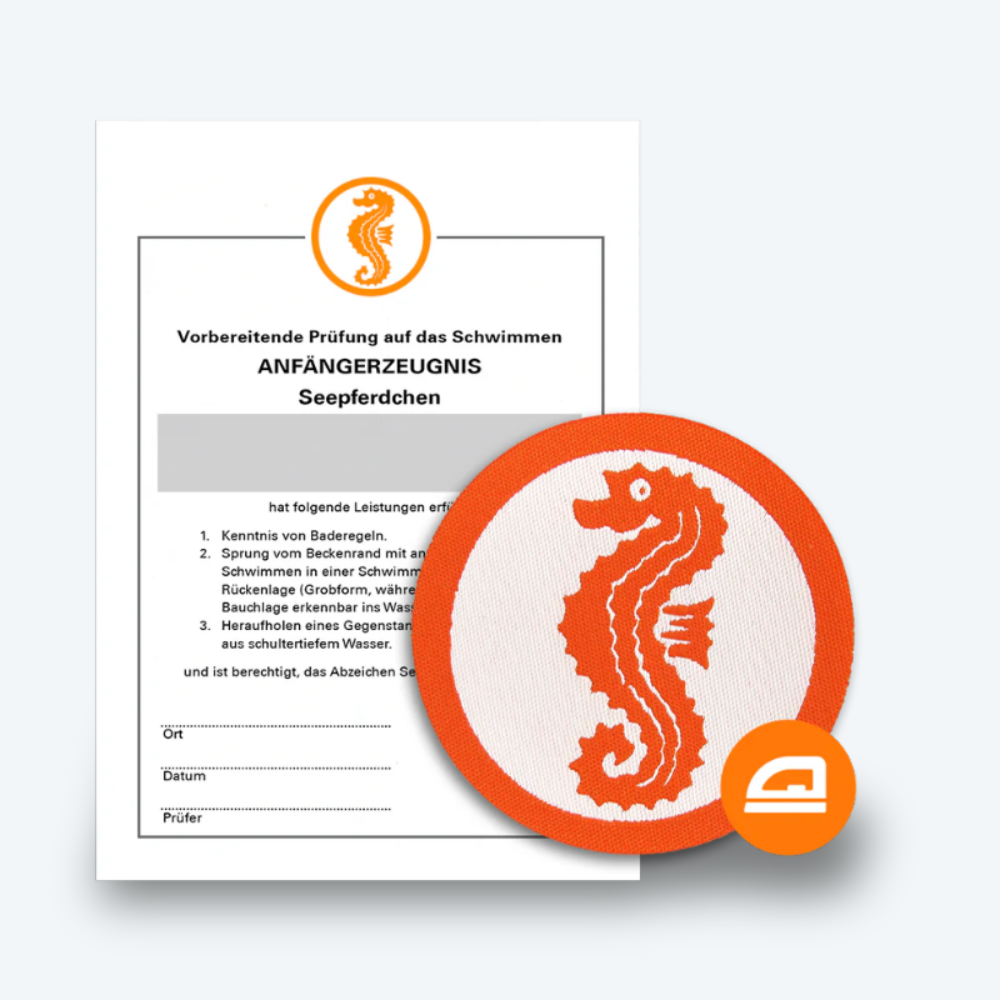
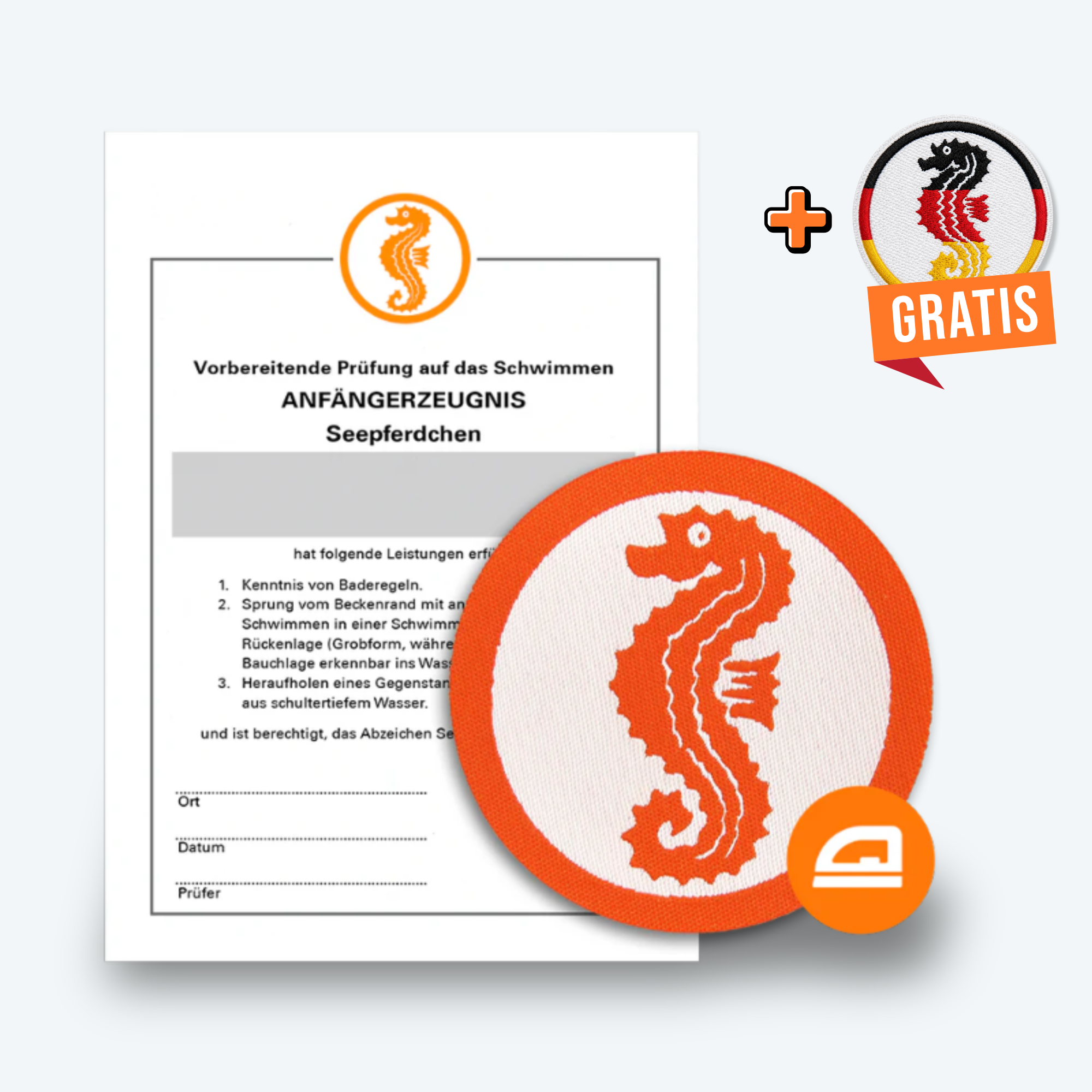
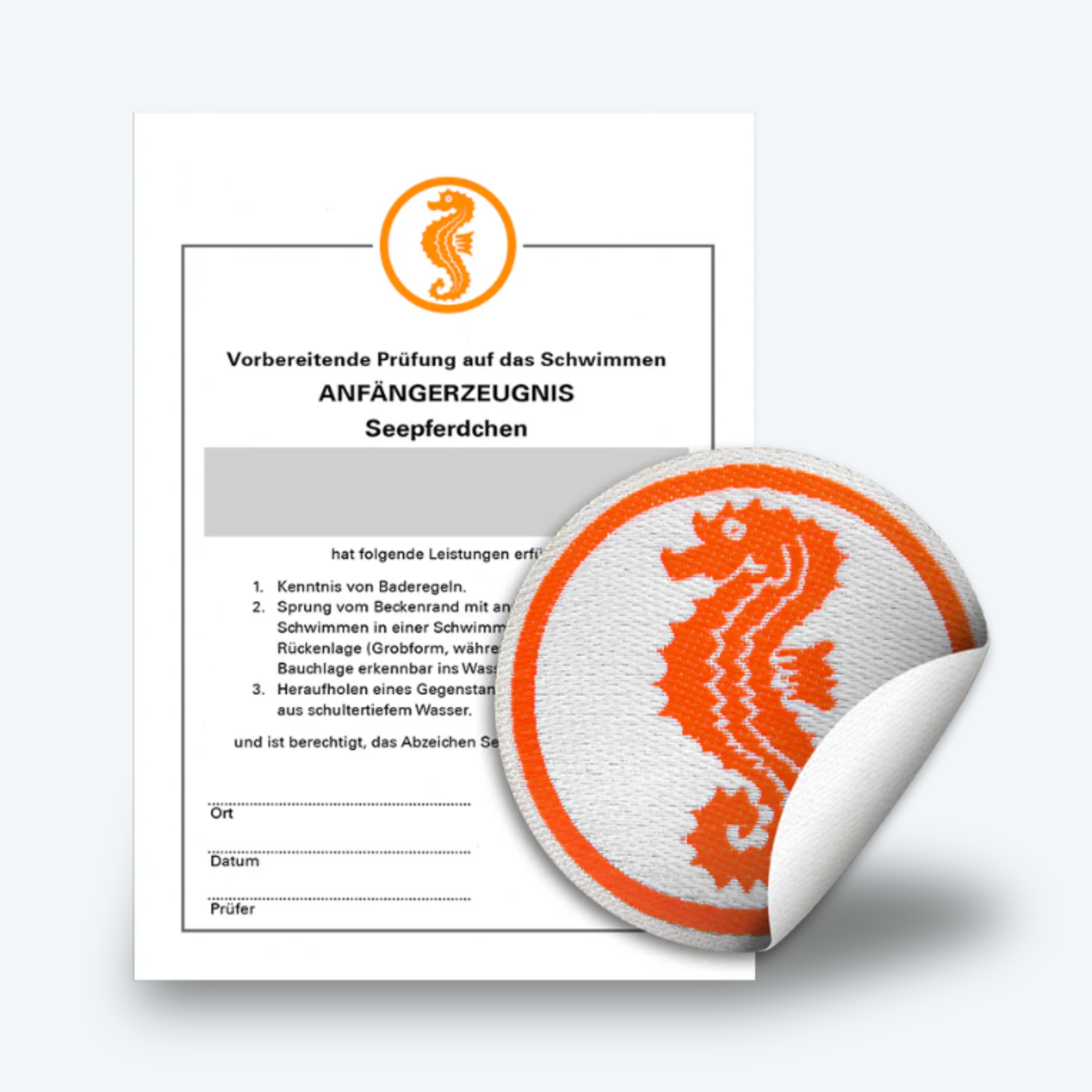
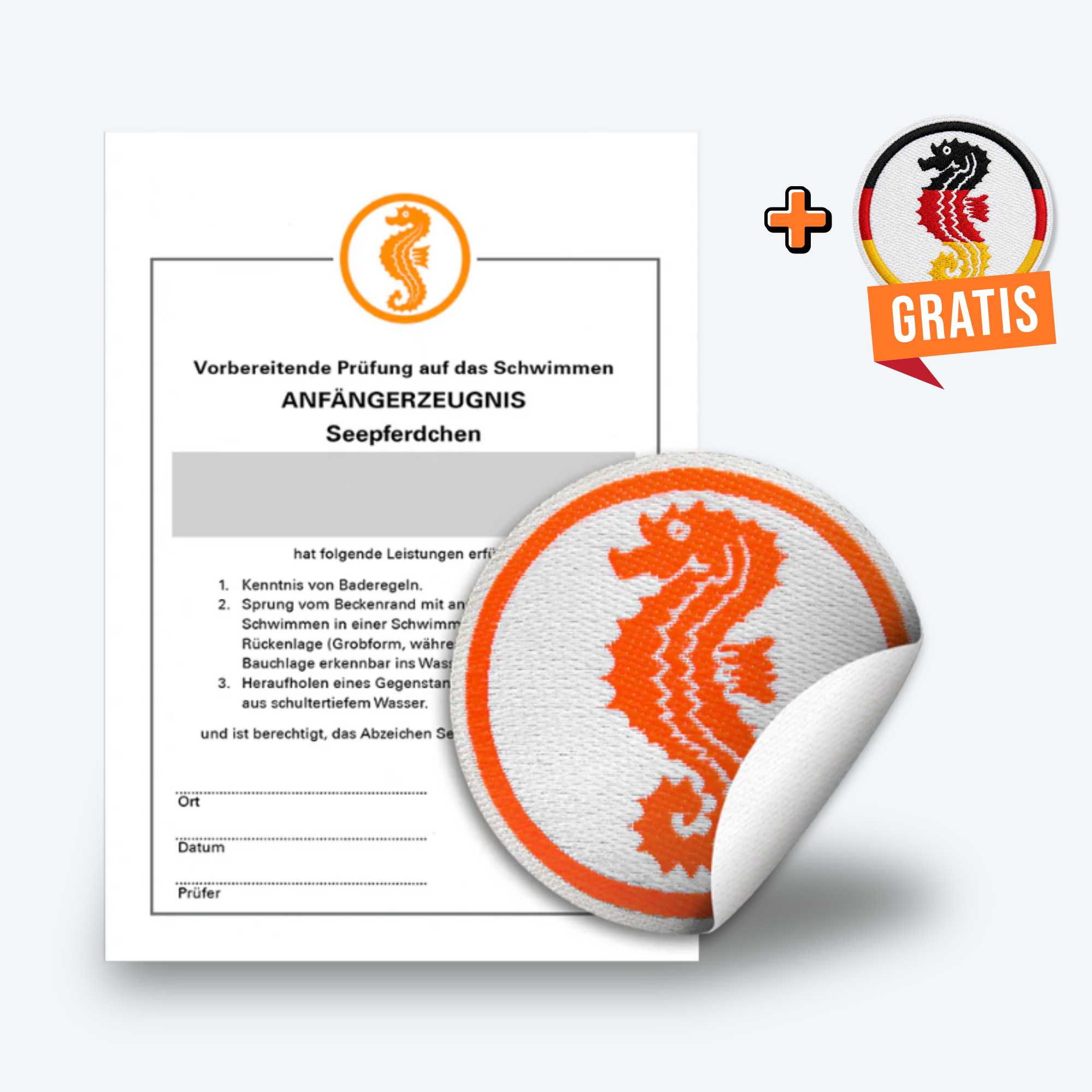
The Seahorse badge represents the first triumphant step into the world of swimming. It is specifically designed for children and provides a solid foundation in water handling and basic swimming techniques. To earn this badge, young swimmers must jump from the edge of the pool and swim 25 meters on their stomach or back. Additionally, they must retrieve an object from shoulder-deep water and demonstrate knowledge of basic swimming rules. These rules are taught playfully to encourage safe behavior in and around the water. While the Seahorse serves as an introduction to the world of swimming badges, it is not proof of safe swimming. Therefore, children should continue to swim under supervision even after earning the badge.

The Bronze Badge
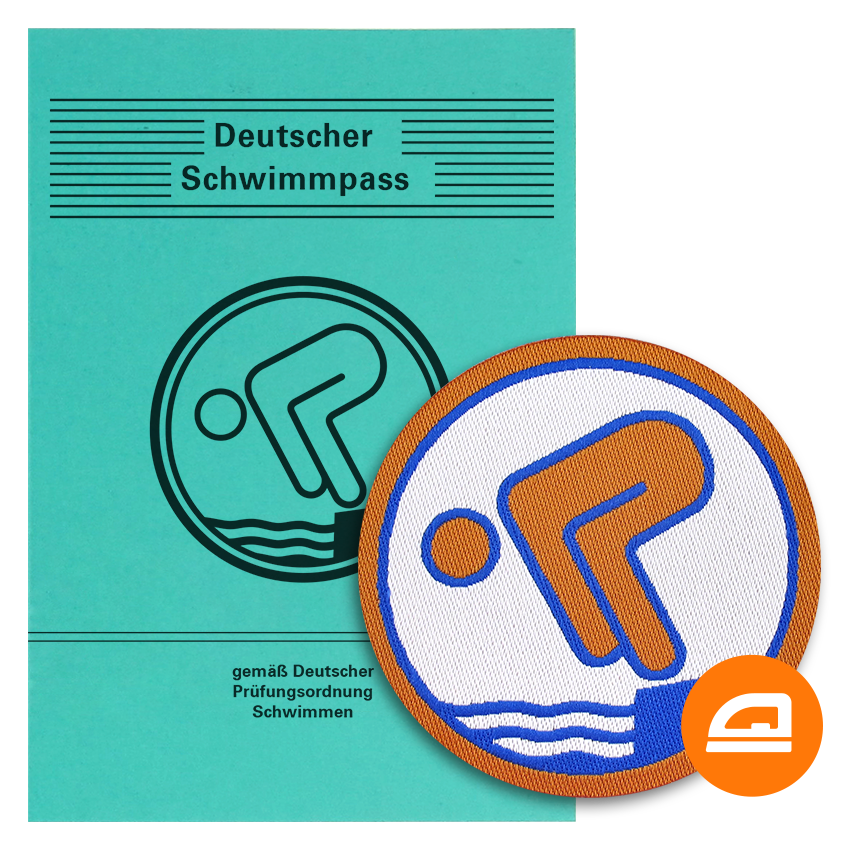
The next step on the swimming journey is the Bronze Badge, also known as the "Freischwimmer" (free swimmer). This badge deepens knowledge of safe practices in the water and expands technical skills. Requirements include a headfirst dive from the edge of the pool followed by 15 minutes of swimming. Of the total 200 meters, at least 150 meters must be swum on the stomach or back, and 50 meters in another body position. Furthermore, the test requires deep diving to approximately 2 meters to retrieve an object, as well as a package jump from the starting block or the 1-meter board. The Bronze Badge is a significant milestone that teaches discipline and an understanding of rescue techniques.

The Silver Badge
With the Silver Badge, the demands continue to increase, and the focus shifts to endurance and self-rescue. Swimmers must swim at least 400 meters in 20 minutes, with 300 meters performed on the stomach or back and 100 meters in another body position. Another element is the headfirst dive from the edge of the pool, which requires precision and control. Additionally, swimmers must demonstrate that they can change body positions while swimming without holding on. Knowledge of swimming rules and self-rescue techniques, such as dealing with exhaustion and cramps, are also required components of the test. The Silver Badge strengthens the connection between technical competence and safety in the water.

The Gold Badge
The Gold Badge represents the highest level of the German Swimming Badge and combines comprehensive knowledge of swimming technique and rescue competence. Swimmers must swim at least 800 meters within 30 minutes, starting with a headfirst dive. Further requirements include a starting dive followed by 25 meters of crawl swimming and 50 meters of backstroke with a scissor kick without arm activity or, alternatively, back crawl swimming. Additionally, swimmers must demonstrate their ability to rescue others in case of bathing, boating, and ice accidents. Earning this badge is considered proof of a successful swimming examination in endurance disciplines and, in the year of its issue, is evidence of the highest swimming competence. The Gold Badge is an encouraging goal for those who want to achieve perfection and safety in swimming.

Special Swimming Badges
Swimming is more than just a physical activity; it is a vital skill that provides safety and self-confidence. In Germany, there are a variety of swimming badges that promote different skills and knowledge in the water. These badges are not only milestones in a swimmer's life but also proof of continuous improvement and dedication. The early swimmer's badge "Seepferdchen" (Seahorse) forms the basis, but it is not considered proof of safe swimming. If one wants to demonstrate proper conduct and safe movement in the water, the subsequent badges are an ideal way to prove this. These swimming badges are offered by the Federal Association for the Promotion of Swimming Education (BFS). They build on each other, with each level bringing new, challenging requirements set out in the German Examination Regulations for Swimming/Lifesaving.
"Seehund TRIXI" Versatility Badge
After successfully completing the "Seepferdchen" badge, the "Seehund TRIXI" versatility badge awaits as the next challenge for young and eager swimmers. This badge was developed to further increase the joy of being in the water and to expand the participants' skills. While the foundation of breaststroke with 25 meters remains a central component, this badge now also challenges swimmers to swim 25 meters in backstroke or crawl style.
An exciting element of the test is dribbling a water polo ball over a distance of 15 meters, which promotes both skill and control. In addition, participants must also demonstrate a certain diving expertise by performing a seven-meter underwater swim. The completion of the test consists of an elegant headfirst dive, which demonstrates not only self-confidence but also technical understanding in the water. The "Seehund TRIXI" badge is thus a remarkable step on the swimming career ladder and an incentive to prepare for even greater challenges.
German Competitive Swimming Badge "Hai" (Shark)
For performance-oriented swimmers who want to take their skills to a new level, the German Competitive Swimming Badge "Hai" offers the perfect opportunity. This step requires courage, endurance, and technique – qualities that should be fostered by the Bronze swimming badge of the German Swimming Pass. With the "Hai" badge, every swimmer's ability is put to the test.
The requirements for the "Hai" badge are demanding and inspiring. A crucial part of the test is swimming 50 meters breaststroke in less than 60 seconds – a true test of speed and efficiency in the water. In addition, swimmers must prove themselves with a headfirst dive from the three-meter board or, alternatively, perform a forward somersault from the one-meter board. These exercises emphasize the need for courage and body control.
Additionally, the "Hai" badge includes dribbling a water polo ball over a distance of 25 meters, which requires skill and endurance. All these challenges make the "Hai" badge a coveted goal for dedicated swimmers – a source of pride and a sign of dedication and performance in the water.
Requirements for Each Badge
In the world of swimming badges, everything begins with the Seahorse. Here, swimmers must swim 25 meters, retrieve an object from shoulder-deep water, and know the swimming rules. It is the first big step on the way to becoming a safe and competent swimmer.
Requirements at a Glance:
|
Badge |
Distance |
Retrieval Depth |
Additional Requirements |
|---|---|---|---|
|
Seepferdchen (Seahorse) |
25 meters |
Shoulder-deep |
Swimming rules, simple jump |
|
Bronze |
200 meters (15 min.) |
2 meters |
Various jumps, swimming rules |
|
Silver |
400 meters (25 min.) |
2 meters (2 objects) |
Two different swimming styles |
|
Gold |
Extended requirements |
- |
Techniques and advanced safe swimmer skills |
The German Swimming Badge Bronze requires swimming 200 meters in 15 minutes, retrieving an object from a depth of 2 meters, and mastering the swimming rules.
For the Silver Badge, one must swim 400 meters in a maximum of 25 minutes and retrieve two objects from the deep.
German Swimming Badge Gold: For the Gold Badge, the requirements are the highest; in addition to mastering the distance, it also demands technical skills that make the swimmer a true water safety icon.
Practical Examinations and Techniques
The practical examinations for the various swimming badges are an inspiring guide for water safety and improved swimming skills. From the first jump from the edge of the pool to challenging long-distance swimming – each badge is a milestone.
Requirements at a Glance:
|
Swimming Badge |
Practical Examination |
Additional Skills |
|---|---|---|
|
Seepferdchen (Seahorse) |
- Jump from the edge of the pool |
- 25 meters swimming on stomach or back |
|
|
- Retrieve an object from shoulder-deep water |
|
|
Bronze |
- Jump from the edge of the pool |
- 200 meters swimming in 7 minutes |
|
Silver |
- As Bronze + knowledge of swimming rules |
- Self-rescue |
Swimming lessons are recommended to learn the correct technique, although the badges can also be obtained without formal instruction. The examinations are based on the German Examination Regulations for Swimming/Lifesaving and help build confidence in the water.
Use the path of swimming badges as inspiration to develop safe swimming skills and gain a proud, competent feeling in the water. Start your adventure with the Seahorse and climb the ladder to the German Swimming Badge Gold!
Theoretical Examinations and Safety
The theoretical examinations within the framework of swimming badges are an elementary building block for safety in the water. Whether for the early swimmer's Seahorse badge or the German Swimming Badge Bronze, basic knowledge of swimming rules is essential. They are a pillar of swimming safety and prepare aspiring swimmers to act responsibly in the water.
For the German Swimming Badge in Silver, it goes even a step further. Here, not only swimming rules but also knowledge of self-rescue behavior is tested. This promotes understanding and the ability to independently manage potential dangers.
Important Theoretical Topics:
- Swimming Rules: Adherence and significance
- Self-Rescue: Techniques and behavior
- Danger Awareness: Safe behavior in and around the water
The German Examination Regulations for Swimming/Lifesaving determine which theoretical skills swimming beginners must demonstrate. These examinations are more than just mandatory reading; they are the first step towards a safe and responsible approach to the aquatic world. By conveying the necessary knowledge, they make every participant a safe swimmer.
Age-Appropriate Promotion through Swimming Badges
Swimming badges in Germany are more than just colorful fabric badges – they are an inspiring way to encourage swimmers of all ages to improve their skills and overcome their fears. Since January 1, 2020, there is no longer a distinction between youth and adult swimming badges. Everyone, young or old, can earn the same badges.
The early swimmer's badge, the Seahorse, allows young swimmers to move safely in the water under supervision. But it's not just children who benefit; adults can also become safe swimmers through focused training.
The Bronze, Silver, and Gold swimming badges are testimonials to solid swimming skills. They prove mastery of key techniques such as breaststroke and crawl, as well as elementary safety aspects like the safe jump from the edge of the pool.
Benefits and Skills of Swimming Badges:
- Seepferdchen (Seahorse): Basics of swimming, confidence in the water
- Bronze: Basic skills, independent swimming
- Silver: Advanced technique, knowledge of swimming rules
- Gold: High water safety, simple rescue of others
These badges not only promote swimming technique but also strengthen confidence in one's own safety in deep water.
Historical Development of Swimming Badges
Swimming badges in Germany have a long and significant history. Until the post-war period and in the Federal Republic, they were an integral part of athletic activity. They demonstrably reflected swimming abilities and knowledge of water and safety techniques.
In the GDR (1949-1990), an independent system for swimming badges existed, which differed from the West German model.
Initially, a distinction was made between youth swimming badges and general swimming badges. However, since the introduction of the German Swimming Pass in 2021, this distinction has been abolished. This standardization makes it easier for swimmers of all ages to track their progress.
The Seahorse is often the first milestone for children. It marks not only the beginning of their swimming adventures but also awakens the joy and motivation to continue. Swimming badges offer a tangible goal and simultaneously serve as official proof of certain techniques and safety knowledge.
Table A (illustrative) could show the different levels and requirements of the swimming badges to illustrate the structural progress and growing abilities. These certificates foster the strong will to become a safe swimmer.
The Role of Swimming Badges in Swimming Education
Swimming badges play a central role in swimming education. They mark important milestones on the way to becoming safe swimmers, starting from the Seahorse to the German Swimming Badge Gold. Each badge is a testament to learned techniques and gained safety in the water.
Swimming Badges and their Requirements:
- Seepferdchen (Seahorse): Jump from the edge of the pool, 25 meters swimming, retrieve an object from shoulder-deep water.
- Bronze: 200 meters breaststroke, knowledge of swimming rules, 1 meter underwater swimming, simple rescue of others.
- Silver: 400 meters swimming (300 meters on stomach), 10 meters underwater swimming, 5 meters transport swimming.
- Gold: Comprehensive knowledge of swimming rules, 800 meters swimming (400 meters crawl), diving, jump from the 1-meter board.
These official swimming badges not only promote technical skills but also discipline and dedication. Even without mandatory swimming lessons, they can be taken, but swimming education is recommended for the correct technique.
Take on the challenge of jumping from the edge of the pool into the water and swimming every new meter with confidence and competence. Experience the freedom that increases with every moment of floating in deep water!
Benefits of Certification for Swimmers
Swimming badges offer swimmers of all ages a wonderful opportunity for personal development. From a young age, children and adults learn to master the challenges of the water and continuously improve their skills.
Benefits of Swimming Badges:
- Motivation and Improvement: With each new badge, swimmers are encouraged to refine their technique and learn new swimming styles.
- Self-Confidence and Safety: Earning badges strengthens confidence in one's own abilities and sharpens awareness of water and swimming safety.
- Awareness and Safety: Young swimmers develop an understanding of important swimming rules, which significantly reduces the risk of accidents.
- Endurance and Commitment: Each badge symbolizes perseverance and the will for continuous improvement.
- Discipline and Dedication: In achieving the badges, swimmers learn the important values of hard work and commitment.
Swimming badges awaken the joy of the sport and celebrate progress on the way to becoming a safe swimmer. The awards commemorate special moments in and around the water.
Tips for Preparing for Swimming Tests
Prepare optimally for the German swimming badges and discover the variety that ranges from the Seahorse to the German Swimming Badge Gold.
Start with water acclimatization to feel safe in deep and shoulder-deep water. For the Seahorse, it is important that children aged five and above explore their first strokes and master the jump from the edge of the pool. Knowledge of swimming rules lays the foundation for water safety.
If you want to expand your skills, aim for the German Swimming Badge Bronze. Here, 200 meters of swimming and simple rescue of others are the focus.
German Swimming Badge Silver: It additionally requires knowledge of breaststroke and crawl as well as underwater swimming.
Gold finally demands perfection: master versatile swimming techniques and demonstrate your rescue competence in water accidents.
|
Badge |
Requirements |
|---|---|
|
Seepferdchen (Seahorse) |
Jump from the edge of the pool, 25 meters swimming |
|
Bronze |
200 meters swimming, knowledge of swimming rules |
|
Silver |
400 meters swimming, 10 meters underwater swimming |
|
Gold |
600 meters swimming, advanced rescue skills |
With dedication and fun, you will achieve safe and confident swimming at every stage!
FAQs
Swimming tests are an exciting and important part of the learning process for many. They not only mark advanced swimmers but also strengthen confidence in one's own abilities in the water. Nevertheless, there are many questions and concerns that move parents and swimming enthusiasts. Whether it's about making the best preparation or avoiding common mistakes, these FAQs aim to provide clear and helpful answers. Let's start with some of the most pressing questions concerning swimmers and their families.
How can one best prepare for a swimming test?
Preparation for a swimming test should be approached holistically, as it includes both physical and theoretical elements. One of the most important steps is a thorough knowledge of swimming rules, which is not only required for the test but also of great importance for long-term safety in the water.
An essential aspect of preparation is water acclimatization. This should begin early to develop a familiar feeling in the water. Furthermore, training in basic swimming techniques in various positions, such as stomach and back, is crucial. Attending a swimming course can be very helpful here.
In addition, targeted training in the swimming pool under the guidance of a qualified swimming instructor is recommended. This not only helps to perfect the techniques but also optimally prepares for the practical requirements of the swimming badges.
What are common mistakes in swimming tests?
Taking a swimming test can be a challenging experience, especially when confronted with common mistakes that can be avoided. A common mistake is the technique for headfirst dives or starting dives, which is often not executed correctly. Poor diving technique not only affects test results but can also compromise safety.
Another common mistake occurs when swimmers have to cover longer distances. The required change of body positions is often not implemented correctly, which can lead to fatigue or technical mishaps. Often, correct underwater swimming without pushing off the edge of the pool is also a challenge, as it requires a specific technique.
In theory, many fail in conveying swimming rules and demonstrating emergency knowledge. There are often gaps in knowledge about assistance in bathing accidents, which can lead to point deductions. Thorough preparation for all aspects of the examination is therefore crucial to avoid such mistakes.
Why is the Seahorse badge so important?
The Seahorse badge represents a significant milestone in a young swimmer's journey. It is the first major success and the symbol that a child has acquired basic swimming skills, including swimming 25 meters and retrieving an object from shoulder-deep water. In addition, children must know the swimming rules, which is an important safety aspect.
Despite these achievements, children with the Seahorse badge are not yet considered safe swimmers. Rather, it is the starting point on which further skills can be built. Continuous supervision by adults remains essential, as the badge conveys more self-confidence than comprehensive safety.
Additionally, the Seahorse serves as important preparation for more advanced tests such as Bronze, Silver, and Gold. Children aged five often begin training, as they generally meet the physical and cognitive requirements for learning swimming techniques at that age. The badge helps motivate young swimmers and prepares them for the next step in their swimming career.
Conclusion: Becoming a Safe and Competent Swimmer
Becoming a safe and competent swimmer is a goal that can be achieved with dedication and determination. The various German swimming badges, from the Seahorse to the Gold badge, offer an inspiring journey to greater water safety.
Levels of Swimming Badges
|
Swimming Badge |
Prerequisites |
|---|---|
|
Seepferdchen (Seahorse) |
First experiences, meters swimming |
|
Deutsches Bronze (German Bronze) |
200 meters breaststroke, knowledge of swimming rules |
|
Deutsches Silber (German Silver) |
Meters crawl swimming, 1m board |
|
Deutsches Gold (German Gold) |
Meters underwater swimming, simple rescue of others |
Swimming badges not only increase water familiarity but also build self-confidence through constant challenges. While the Seahorse is an important first step, swimming safety is deepened with the Bronze badge.
Benefits of Training:
- Improvement of swimming technique
- Increase in endurance through minutes of swimming
- Overcoming fears of deep water
Almost one in two adults in Germany describes themselves as a poor swimmer. Training with the help of swimming badges can change this statistic. Through targeted training and dedication, everyone can experience the joy and safety in the water. Become a safe swimmer – the reward is immeasurable!
Would you like to buy swimming badges? Then you can find them here in the shop -->