
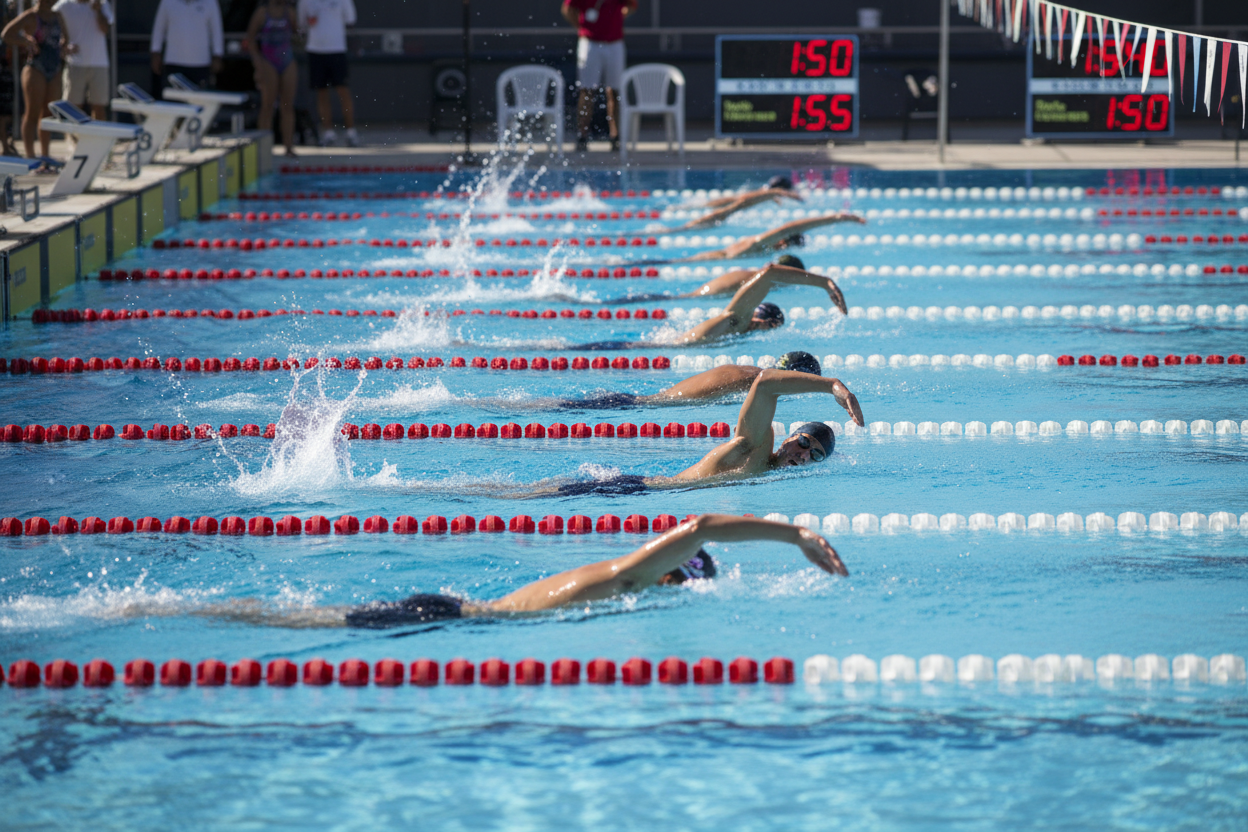
1 km Swim Time for Beginners: Realistic Times and Training Tips
Introduction
For beginners, a realistic time of 25-35 minutes for a 1 km swim is an achievable goal. This timeframe allows for completing the distance in breaststroke without overexertion. Many people underestimate the effort required for this distance or set unrealistic goals.
This guide includes
Realistic time targets for various swimming techniques, specific factors influencing your swim time, and a practical 8-week training plan. What this article does not cover: competition preparation for advanced swimmers or professional techniques for club sports.
Who this guide is for
This guide is aimed at swimming beginners and novices who want to complete their first 1000 meters or improve their time. Whether you are aiming for 1 km for the first time or already swim but want to optimize your performance, you will find concrete help and realistic expectations.
Why this is important
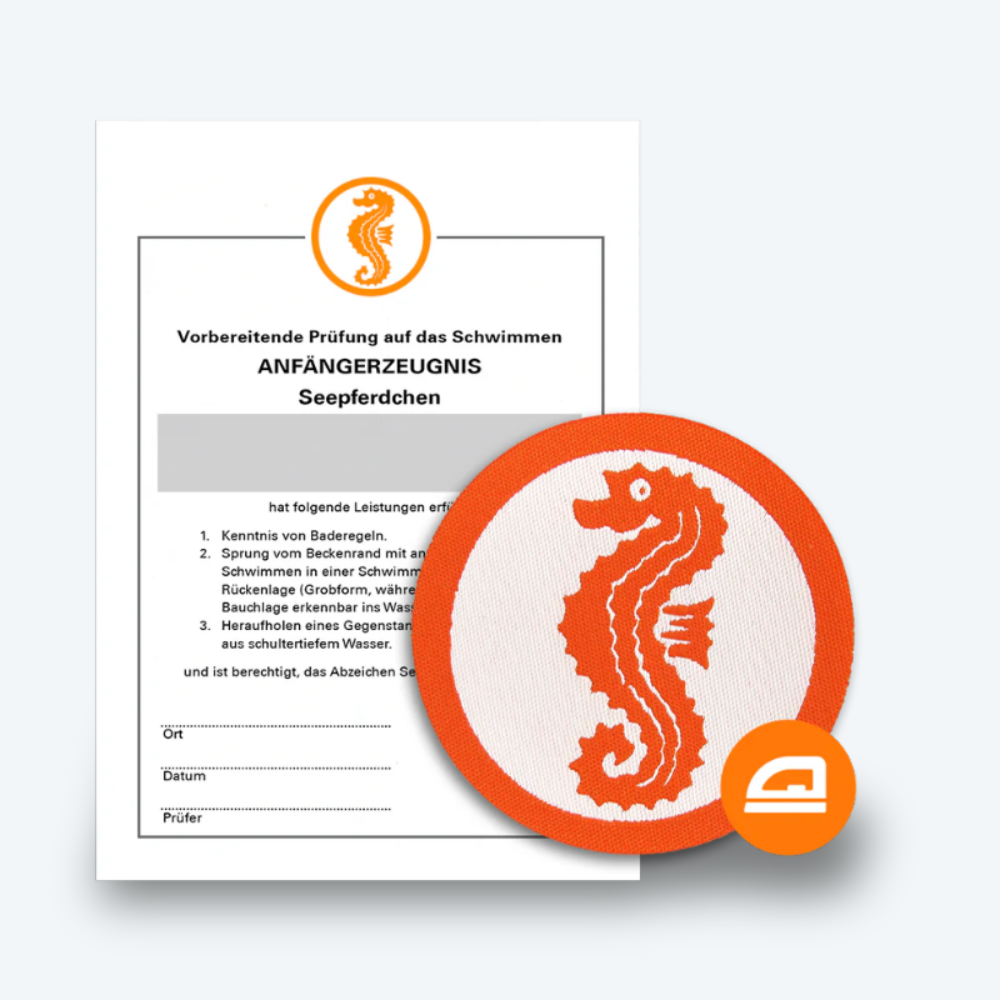
Setting realistic goals prevents frustration and promotes continuous progress. Many beginners give up because they set unrealistic times or do not understand what factors influence their swim time. With the right information and a structured plan, all adults can successfully master this distance and earn their swimming badge.
What you will learn:
-
Realistic time expectations for different swimming techniques
-
Factors influencing your 1 km swim time
-
A practical 8-week training plan for beginners
-
Solutions for common problems in distance swimming
Understanding Realistic Swim Times for 1 km as a Beginner
A time of 25-35 minutes for a 1 km swim is a realistic and achievable goal for beginners. This timeframe takes into account that most beginners initially prefer breaststroke and still need to develop their technique and endurance.
These times are realistic because they offer enough room for breaks, technical errors, and the natural learning process. Someone who is just starting regular swim training needs time to find the optimal body position and develop an efficient rhythm.
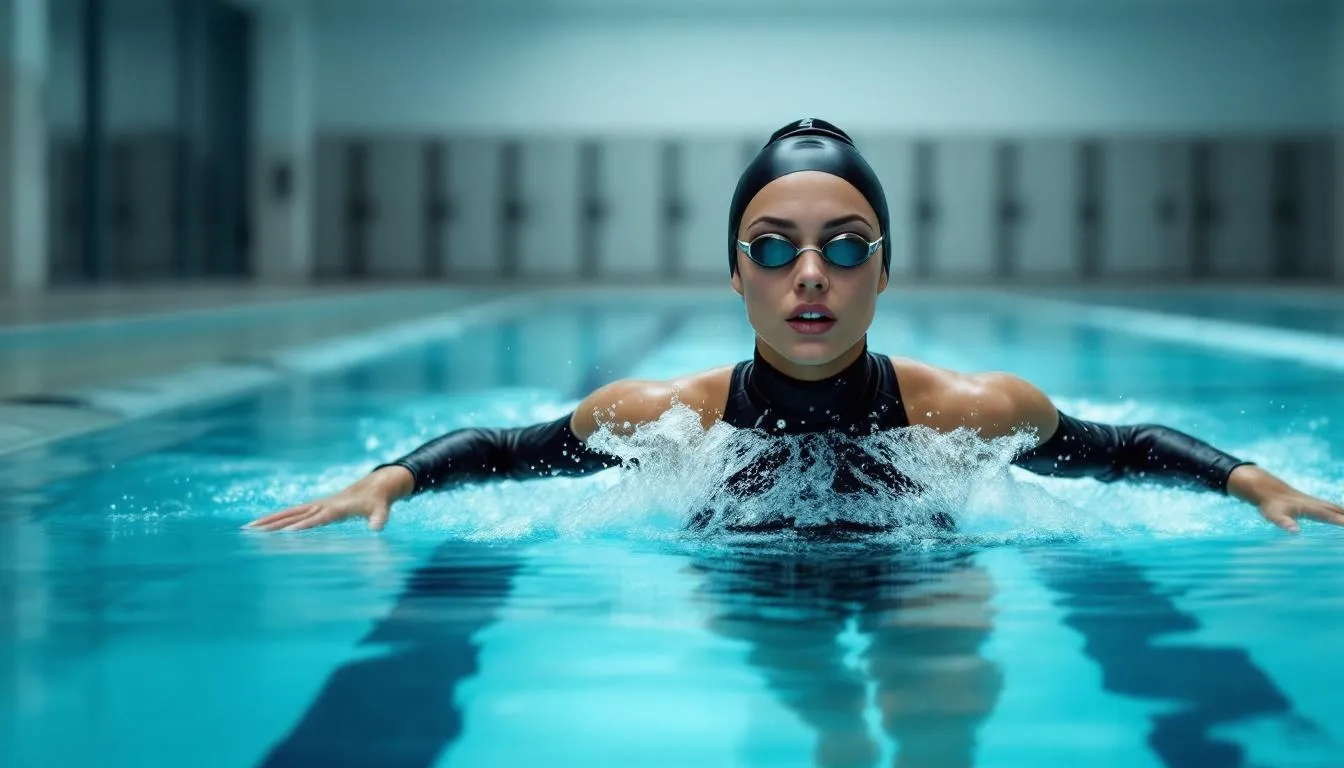
Times by Swimming Technique with Breaststroke and Front Crawl
Breaststroke: 30-35 minutes is the most common beginner technique, as the head usually stays above water and breathing is easier. The advantage lies in continuous oxygen supply while the body gets used to the new exertion.
Front Crawl: 20-28 minutes is achievable for beginners once they master the technique. Front crawl is more efficient but requires coordinated arm movements and rhythmic side breathing.
This is related to realistic time goals because swimming technique has the greatest influence on the time required. Beginners should initially stick to their familiar technique before switching to more efficient styles.
Benefits for Age Groups and Fitness Differences
20-30 years: 25-30 minutes with good basic fitness and quick adaptation to water training.
30-50 years: 28-35 minutes, as the body needs more time to adapt to unfamiliar exertion.
50+ years: 30-40 minutes, with the buoyancy of the water offering a special advantage for joint protection.
Building on the basic times, you need to develop realistic expectations based on your personal circumstances. Basic fitness particularly influences cardiovascular endurance, while age determines the speed of adaptation to new movement patterns.
Transition: However, these timeframes are only guidelines - various factors can significantly influence your individual swim time.
Factors Influencing Your 1 km Swim Time
While basic times offer initial guidance, specific factors determine your actual performance in the pool. Understanding these influencing factors helps you work specifically on improvements.
Swimming Technique and Efficiency
Body position and water position determine water resistance. A horizontal position significantly reduces resistance, while a sinking lower body slows down speed.
Breathing technique and rhythm influence the oxygen supply to the muscles. Regular, deep breathing prevents premature fatigue and maintains a constant pace.
Arm stroke and leg kick coordination determines the efficiency of each movement. Synchronous arms and legs (glide phase) in breaststroke or the alternating stroke in front crawl optimize propulsion with minimal effort.
Condition and Endurance
Cardiovascular fitness forms the basis for longer distances. The heart must supply oxygen to all working muscles, especially the arms, legs, and upper body.
Muscular endurance versus cardiovascular endurance require different training approaches. While interval training strengthens muscle power, continuous swimming improves heart endurance.
Unlike technique, endurance depends on training regularity and develops over weeks through repeated exertion in the water.
Training Regularity
2-3 sessions per week show measurable progress in beginners. The body needs this frequency to solidify new movement patterns and build endurance.
Recommended training frequency of at least 2 lane sessions weekly allows for continuous improvement without risking overtraining.
Key points:
-
Technique has the greatest influence on swim time
-
Endurance develops through regular training
-
2-3 training sessions per week are optimal for progress
Transition: With this understanding of the influencing factors, you can now develop a structured training plan that takes all aspects into account.
Practical Training Structure for 1 km Swimming
A systematic training plan builds on the identified success factors and gradually leads you to your goal. This approach prevents overwhelm and ensures measurable success.
Step-by-Step: 8-Week Training Plan
When to use this: For beginners with basic swimming skills who can already swim 100-200 meters continuously.
-
Week 1-2: 4x 100m with 2-3 minutes rest between lanes. Focus on relaxed technique and steady breathing.
-
Week 3-4: 3x 200m with 90 seconds rest. Swim longer distances continuously, maintaining controlled pace.
-
Week 5-6: 2x 400m with 60 seconds rest. Halving rest times while doubling the distance.
-
Week 7-8: 1x 1000m non-stop. Target distance in one go at a self-chosen, constant pace.
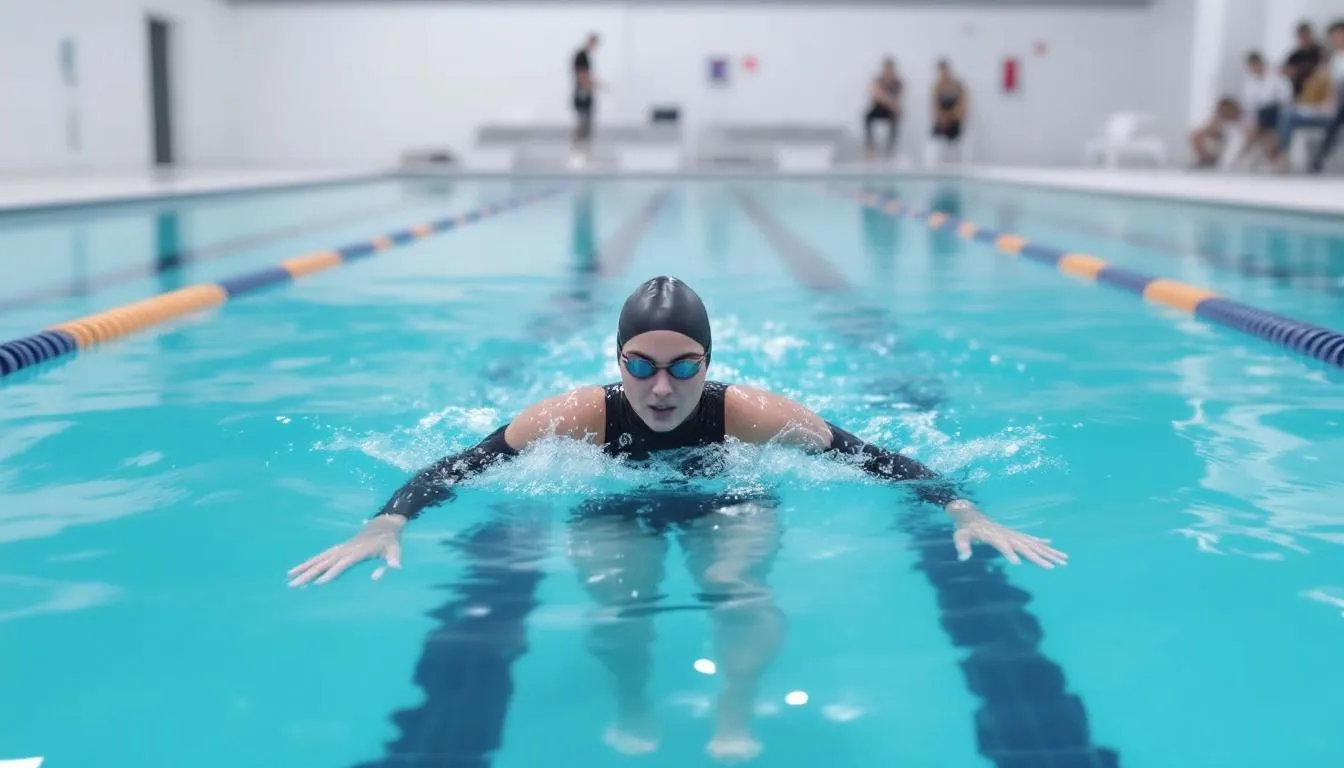
Comparison: Interval Training vs. Continuous Swimming
|
Feature |
Interval Training |
Continuous Swimming |
|---|---|---|
|
Time Improvement |
Fast progress due to intensity |
Slow, steady improvement |
|
Beginner-friendliness |
Breaks allow for recovery |
Can feel overwhelming |
|
Technique Development |
Concentration on short sections |
Technique can suffer from fatigue |
Interval training is particularly suitable for beginners, as breaks provide time for technique correction and recovery. You should only use continuous swimming once you can confidently swim 500-600 meters.
Transition: Even the best plan can encounter typical challenges that require targeted solutions.
Common Problems and Solutions
Every beginner encounters similar obstacles on the way to swimming 1 km. Recognizing and addressing these early on significantly accelerates your progress.
Problem 1: Quickly out of breath
Solution: Reduce your pace by 20-30% and focus on deep, regular breathing. Many people swim too fast at first.
Special breathing exercise for the pool: Swim 25 meters and consciously count each breath. Try to reduce this number by 1-2 breaths on the next lap.
Problem 2: Time plateau despite training
Solution: Analyze your technique with a coach or experienced swimmer. Often, small corrections to body position or arm stroke are key.
Training variation by switching between breaststroke and front crawl can provide new impulses. Professional help is useful if you no longer see any time improvement after 4-6 weeks.
Problem 3: Motivation with slow progress
Solution: Set intermediate goals every 100-200 meters and document your times in a training plan. Visible progress provides lasting motivation.
Realistic expectation: A time improvement of 2-5 minutes in 8 weeks is a success. Drastic improvements require time and patience.
Transition: With these solutions, you are well equipped to successfully achieve your 1 km swimming goal.
Conclusion and Next Steps
A realistic time of 25-35 minutes for a 1 km swim as a beginner is achievable if you train structurally and continuously improve your technique. The key lies in realistic expectations, regular training, and the willingness to make adjustments when problems arise.
To get started:
-
First Time Measurement: Swim a known distance (200-400m) and measure your current time as a starting point.
-
Start Training Plan: Begin with the 8-week plan according to your current level.
-
Check Technique: Have your swimming technique evaluated by an experienced swimmer or coach.
Related Topics: If you can confidently swim 1 km, you might be interested in 500m times, specific technique training for different swimming styles, or long-term competition preparation.
Additional Resources
Training aids: Pull buoys support leg work, fins can help with technique training but should be used sparingly to avoid dependency.
Swimming course recommendation: A structured swimming course offers professional guidance and helps correct mistakes early on, especially if you want to learn front crawl.
As a sport, swimming offers many advantages for someone who wants to get fit. With the right tips, you can also learn backstroke and specifically build your strength. The swimming badge is a good goal for beginners. Swimming badges can be obtained from pimpertz.
The leap into the cool water is gentle on your joints and relieves the spine. Here you will find answers to the most important questions about swim training.
Another reason for regular training: optimizing your technique on the water surface. From this perspective, shoulder movement is particularly important.
After training, you should have some fun and relax. Option B is a leisurely cool-down swim.
Elite swimmers can swim 2500m in 30 minutes, which corresponds to 1:12 min/100m. Advanced swimmers can do 1500m in 30 minutes, which corresponds to a pace of 2:00 min/100m. The pace chart for swimmers helps beginners find an appropriate swimming pace.
Good body position is crucial for efficiency in swimming. The more horizontal you lie in the water, the less resistance you create.
Swimming is a joint-friendly sport that strengthens the cardiovascular system. The buoyancy of the water relieves the spine and prevents postural damage. Swimming trains all major muscle groups and burns a lot of energy in a short time.
Swimming is ideal for people with joint problems or obesity to improve their fitness. Swimming can help reduce stress and promote mental health.
Before swimming, you should warm up thoroughly. Circle your arms and stretch your back to prevent injuries. Gliding after pushing off saves energy.
Paddles increase water resistance and strengthen arm, shoulder, and back muscles. Fins stabilize body position and help focus on arm technique.
Interval training combines fast sections with relaxed recovery phases and improves endurance and speed. The pull buoy helps keep the legs up and focus on the arms.
Breathing during swimming should be well coordinated to improve endurance. A goal of 1000 meters of continuous breaststroke is an aspiring goal for many beginners.
Using aids like pull buoys can help improve technique and increase endurance.