
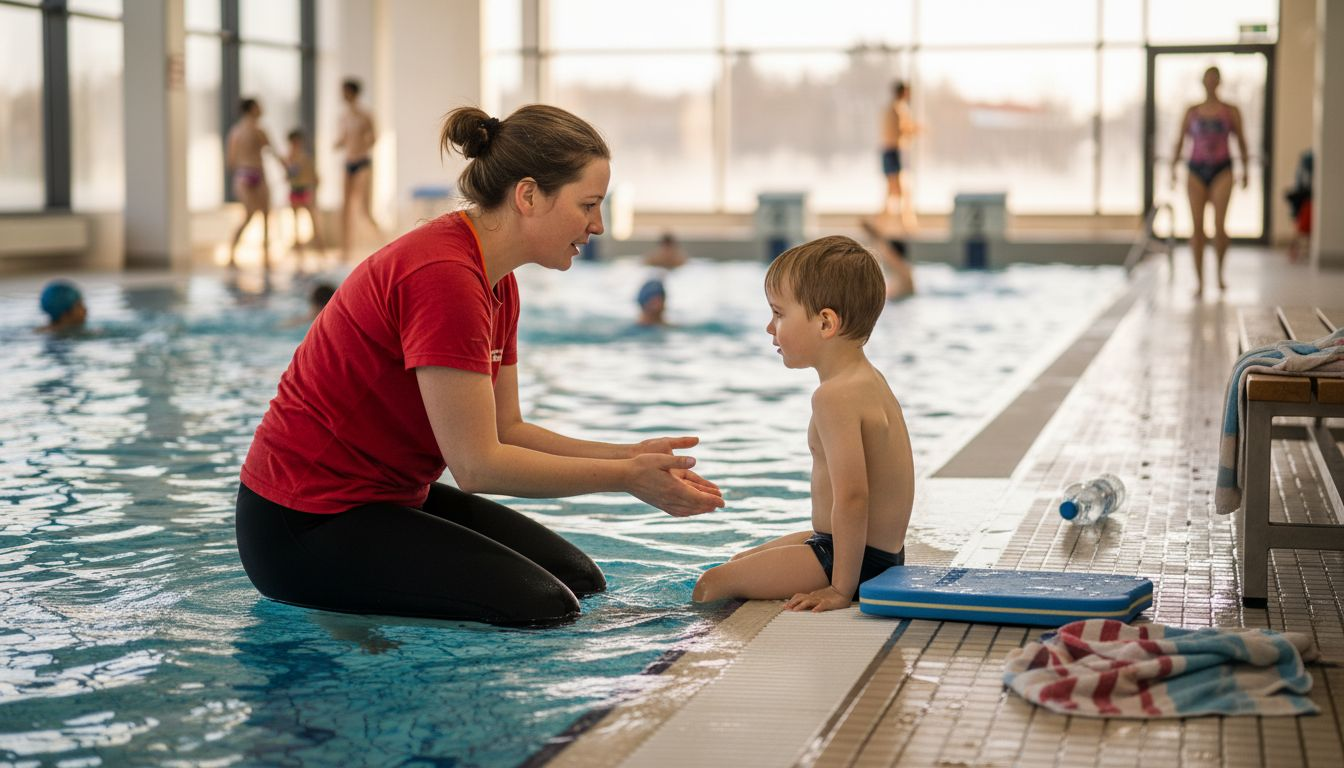
6 Best Practices for Swimming Lessons 2025: Tips for Parents
For many children, their first swimming lesson is a great adventure – and for parents, a real challenge. Choosing the right course determines whether your child will enjoy the water or develop anxieties. Then there are questions like: At what age does learning to swim make sense, and how do I recognize a good instructor?
The good news is: there are clear criteria that will help you make a decision. You will learn what really matters – from age-appropriate course design to certified instructors and practical tips for your role as a parent. This way, you can optimally prepare your child for learning to swim safely.
Look forward to proven recommendations that guarantee both learning success and joy in the water, accompanying your child step by step from the first contact to a proud swimming badge.
Table of Contents
- 1. Child-Friendly Course Selection: What Parents Should Look For
- 2. Choose Certified Swimming Instructors for Maximum Safety
- 3. Combination of Practice and Playful Elements
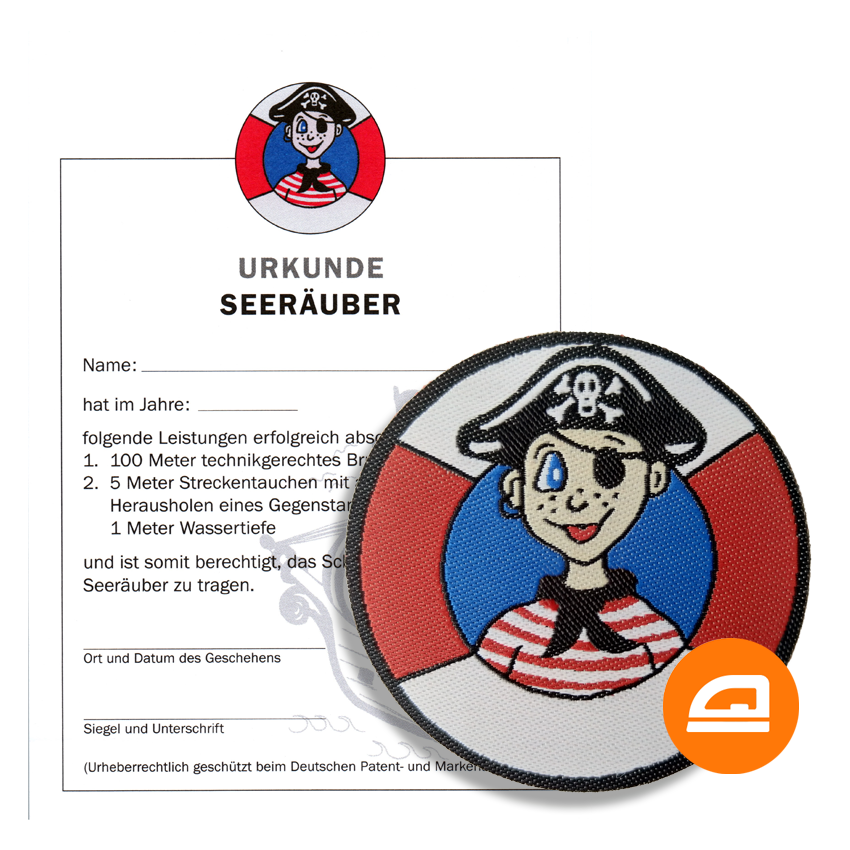
- 4. Strategically Use Motivation Through Badges and Certificates
- 5. Determine Optimal Course Duration and Group Size
- 6. Parental Involvement for Sustainable Learning Success
Brief Summary
| Key Insight | Explanation |
|---|---|
| 1. Enable early water familiarization | Children should be playfully introduced to water from infancy to reduce fears. |
| 2. Prefer small group sizes | Look for groups with a maximum of 6-8 children to ensure individual attention. |
| 3. Choose certified swimming instructors | Opt for instructors with official certifications to ensure a safe learning environment. |
| 4. Encourage playful learning | Combine swimming lessons with games for a stress-free learning atmosphere that supports learning. |
| 5. Actively involve parents | Your role as a supporter in the learning process and in practicing at home is crucial for your child's learning success. |
1. Child-Friendly Course Selection: What Parents Should Look For
Choosing the right swimming course is the first step towards a positive learning experience for your child. A well-chosen course makes the difference between enjoyment of water and unnecessary anxieties.
Your child's motor development is crucial. The German Swimming Federation recommends choosing swimming courses based on your child's individual development, as coordination skills are usually sufficient around the age of five.
A starting age of about five years is ideal, as motor skills are generally sufficiently developed by then.
However, even younger children can benefit from water familiarization. Playful water exercises in infancy pave the way and reduce fear of the element.
When choosing a course, you should pay attention to the following criteria:
- Small group sizes with a maximum of 5 to 8 children per instructor
- Certified and professional instructors with relevant training
- Playful methodology that combines fun and safety
- Age-appropriate content that matches the developmental stage
- Safe environment with appropriate water depth and temperature
Course duration and intensity also play a role. A course with too many hours per week can lead to overwhelming, while too few hours can delay progress. Ideally, 45 to 60 minutes per week for beginners.
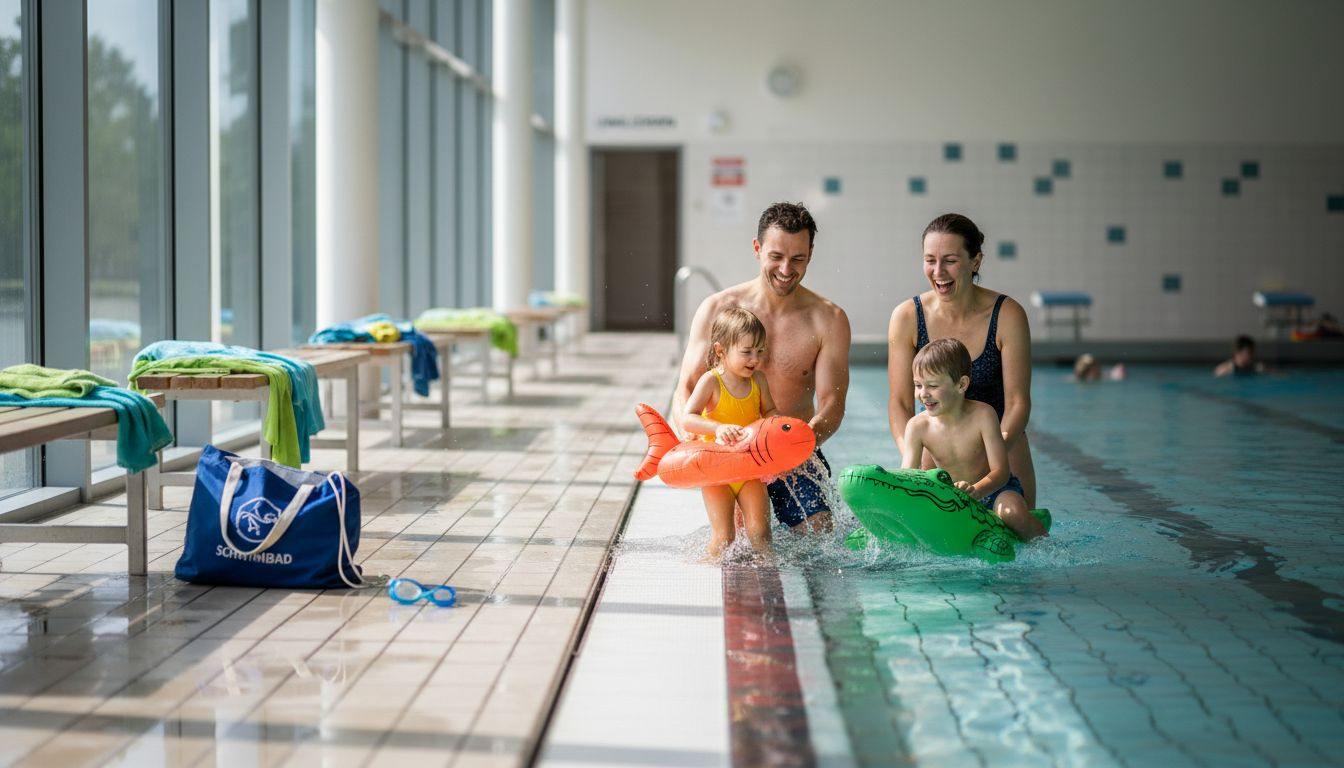
Preparation at home makes a big difference. Help your child get to know the water playfully. Bathing in the sea or a lake, a paddling pool at home, or simply splashing water on their face reduces anxiety before the first day of class.
Pro tip: Visit the course beforehand with your child so they can get to know the location, the pool, and the instructor – this builds security and confidence before the actual start of lessons.
2. Choose Certified Swimming Instructors for Maximum Safety
A certified swimming instructor is the foundation for safe and effective swimming lessons. The right choice of instructor protects your child and guarantees high-quality instruction.
Certification means more than just experience. The German Swimming Instructors' Association e.V. sets strict standards for training to ensure that instructors have the necessary competencies. Certified swimming instructors ensure a safe learning environment, pedagogically sound methods, and qualified guidance.
A good instructor combines rescue skills, first aid knowledge, and child-friendly didactics for maximum safety.
The certificate shows that the instructor has met specific requirements. Especially in children's swimming courses, rescue skills and emergency competence are crucial. These skills are developed only through formal training and regular further education.
What to look for when choosing:
- Certificate from the German Swimming Federation or the German Swimming Instructors' Association e.V.
- Current first aid certificate (not older than two years)
- Specialization in infant and toddler swimming or beginner courses
- Documented further training in the last two years
- Positive reviews from other parents
The course leadership for infant and toddler swimming is an important specialization. This qualification imparts sound knowledge about the physical and emotional development of young children as well as safe teaching techniques for this age group.
Actively ask the instructor about their qualifications. A professional instructor will be happy to disclose them. Do not hesitate to ask for certificates or to contact the institutions where the instructor was trained.
Investing in a certified instructor pays off with faster progress, more safety, and less anxiety for your child.
Pro tip: Ask the instructor about their last continuing education and the validity of their first aid certificate – this information should be readily available to the instructor.
3. Combination of Practice and Playful Elements
The best swimming education combines real swimming instruction with fun and games. Children learn faster and retain what they've learned longer when they enjoy it.
Learning through play is not a contradiction to serious instruction. A playful introduction to swimming without pressure enables fear reduction and individual support. Your child develops not only swimming techniques but also self-confidence and a joy for learning.
When children play, they learn naturally and without stress – this is the key to real success.
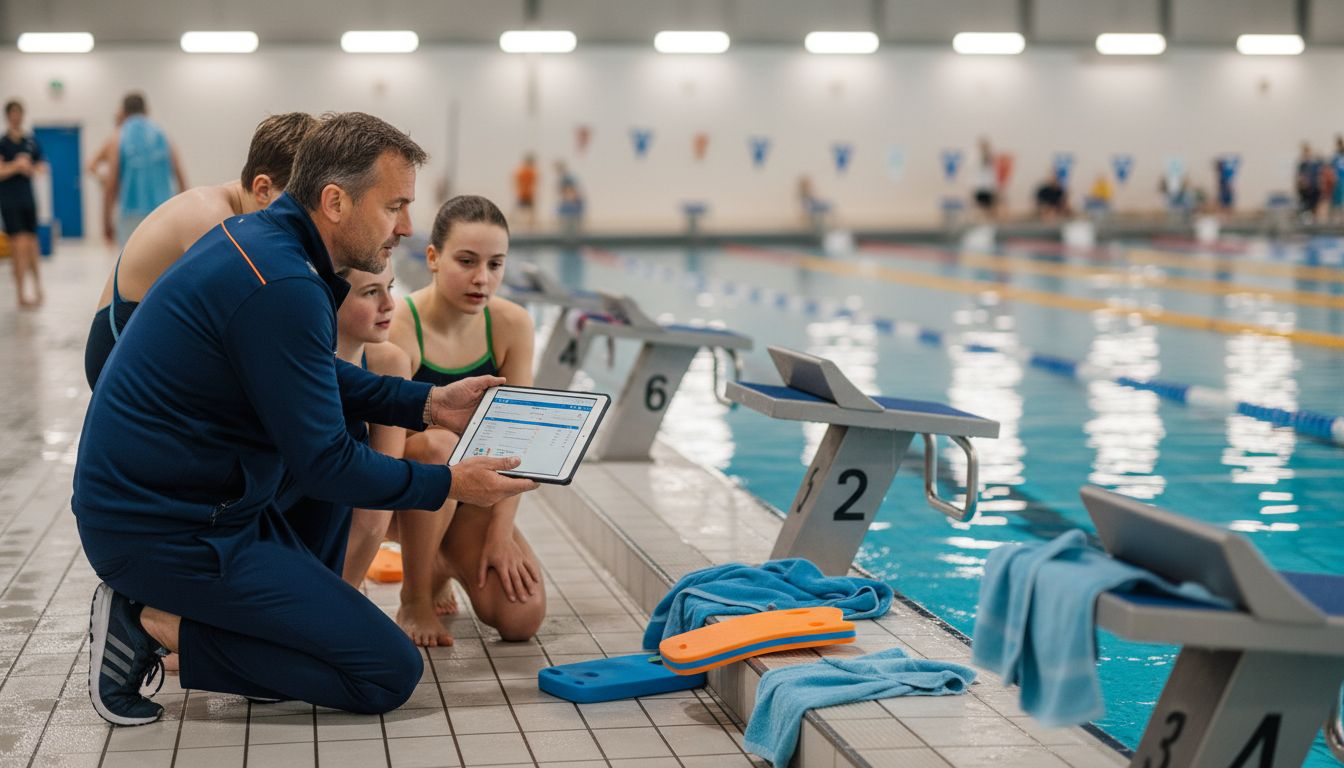
The structure of a good course is important. Pedagogically supervised small groups with a maximum of six children ensure that each child receives individual attention. The instructor can address the needs of each child.
How practice and play work together:
- Practical techniques are initially taught through structured exercises
- Playful elements reinforce what has been learned through repetition and fun
- Motivation without pressure leads to better results and less anxiety
- Swimming badges are offered as a motivating goal, not as exam stress
- Social competencies develop alongside through interaction
A practical example: The instructor demonstrates the breaststroke arm technique in a structured and technically correct manner. Afterwards, the children play a game where they apply this movement – for example, to collect imaginary objects. This way, the technique is playfully anchored in their memory.
Swimming badges should not be experienced as a stressful examination. They arise incidentally through regular training and are used as motivation. Your child receives the badge when they have met the requirements, not because they have passed a formal exam.
This approach also develops important social competencies. Children learn to be considerate of each other, help each other, and grow together as a group.
Pro tip: Observe the course beforehand and make sure that at least half of the time is dedicated to playful elements – this signals a balanced and child-friendly instruction.
4. Strategically Use Motivation Through Badges and Certificates
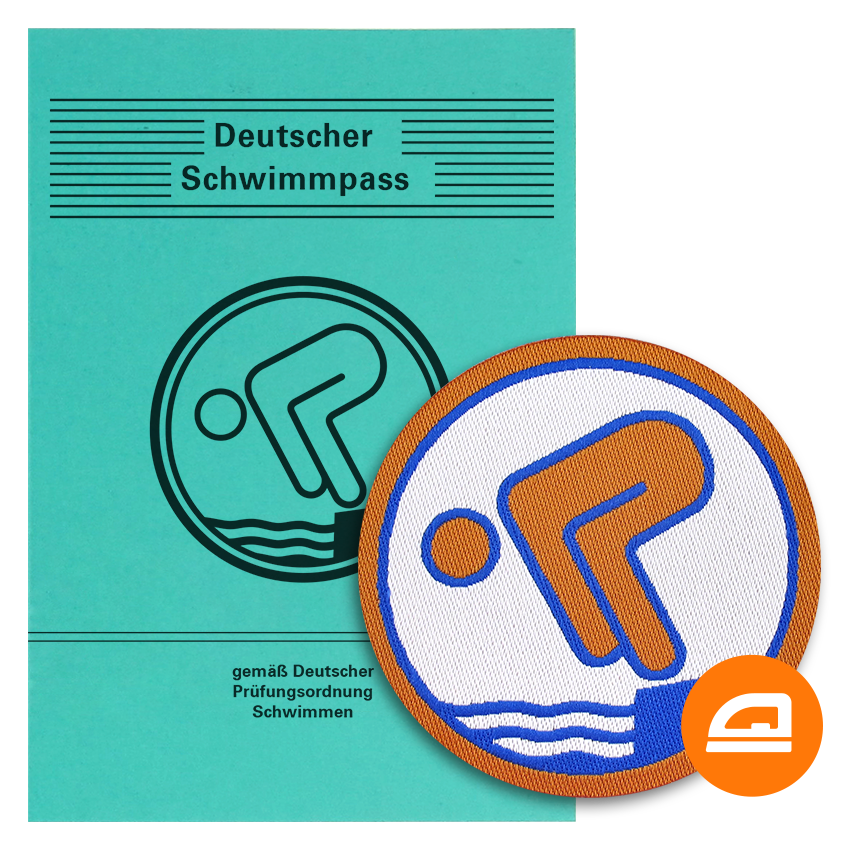
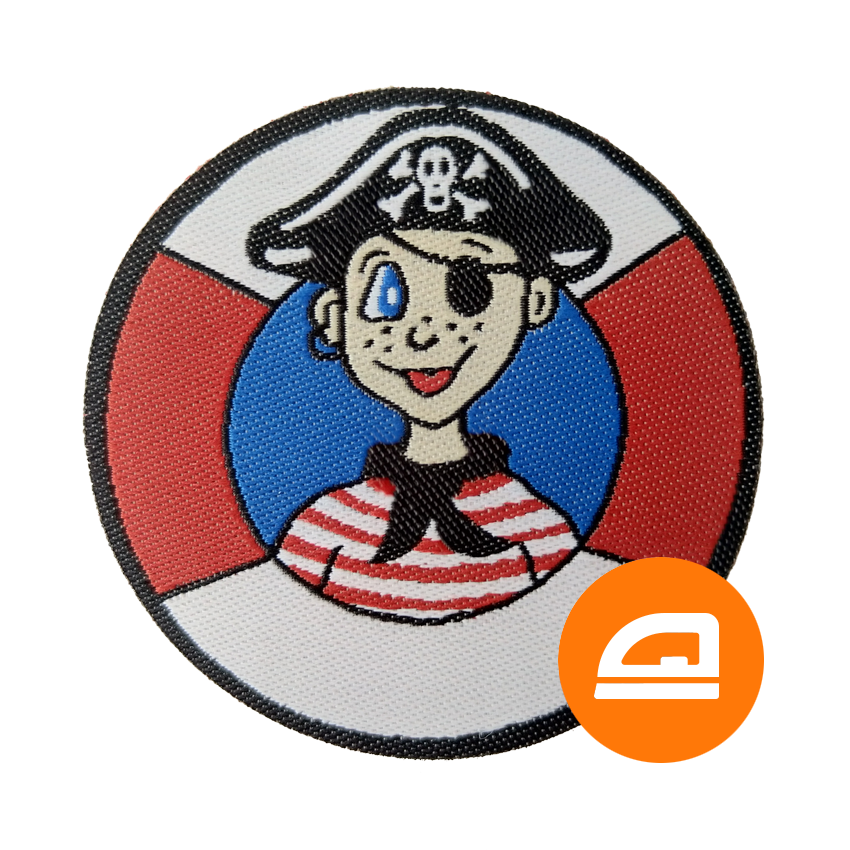
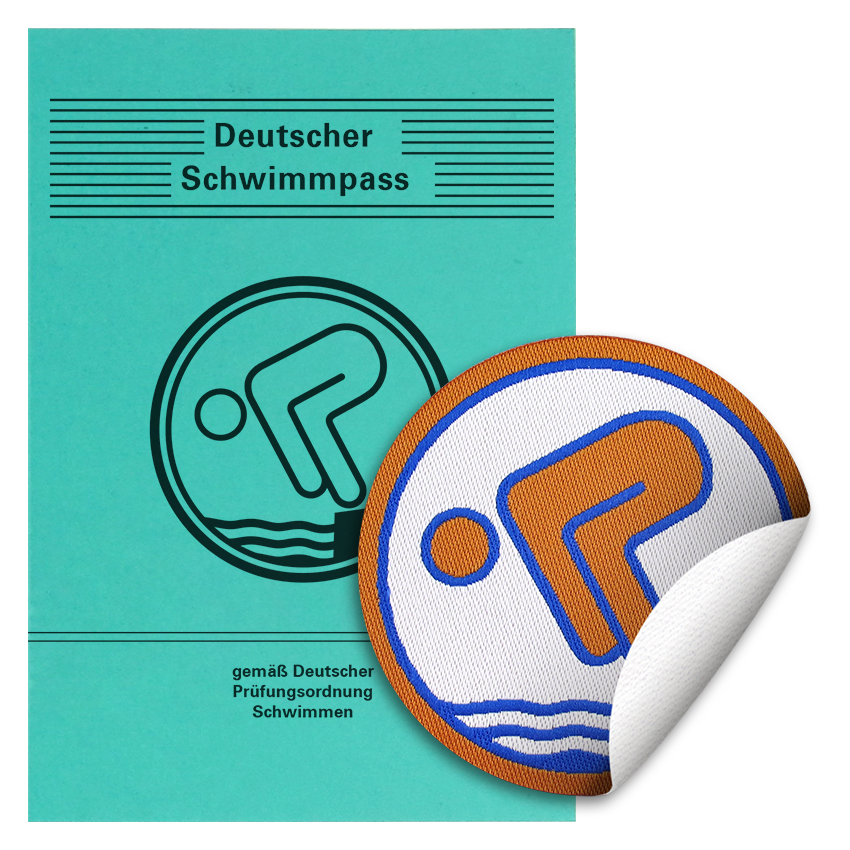
Swimming badges are more than just colorful pins. They are powerful motivational tools that encourage your child to continue and make their progress visible.
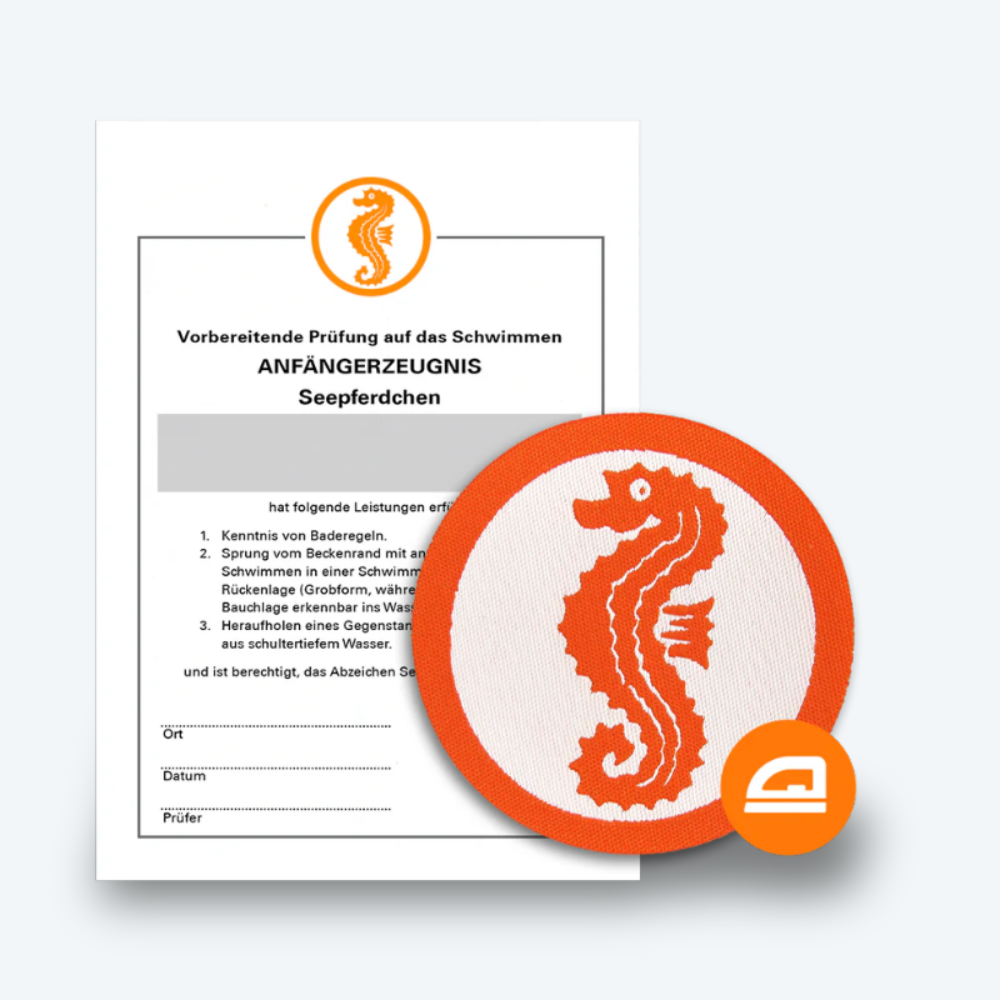
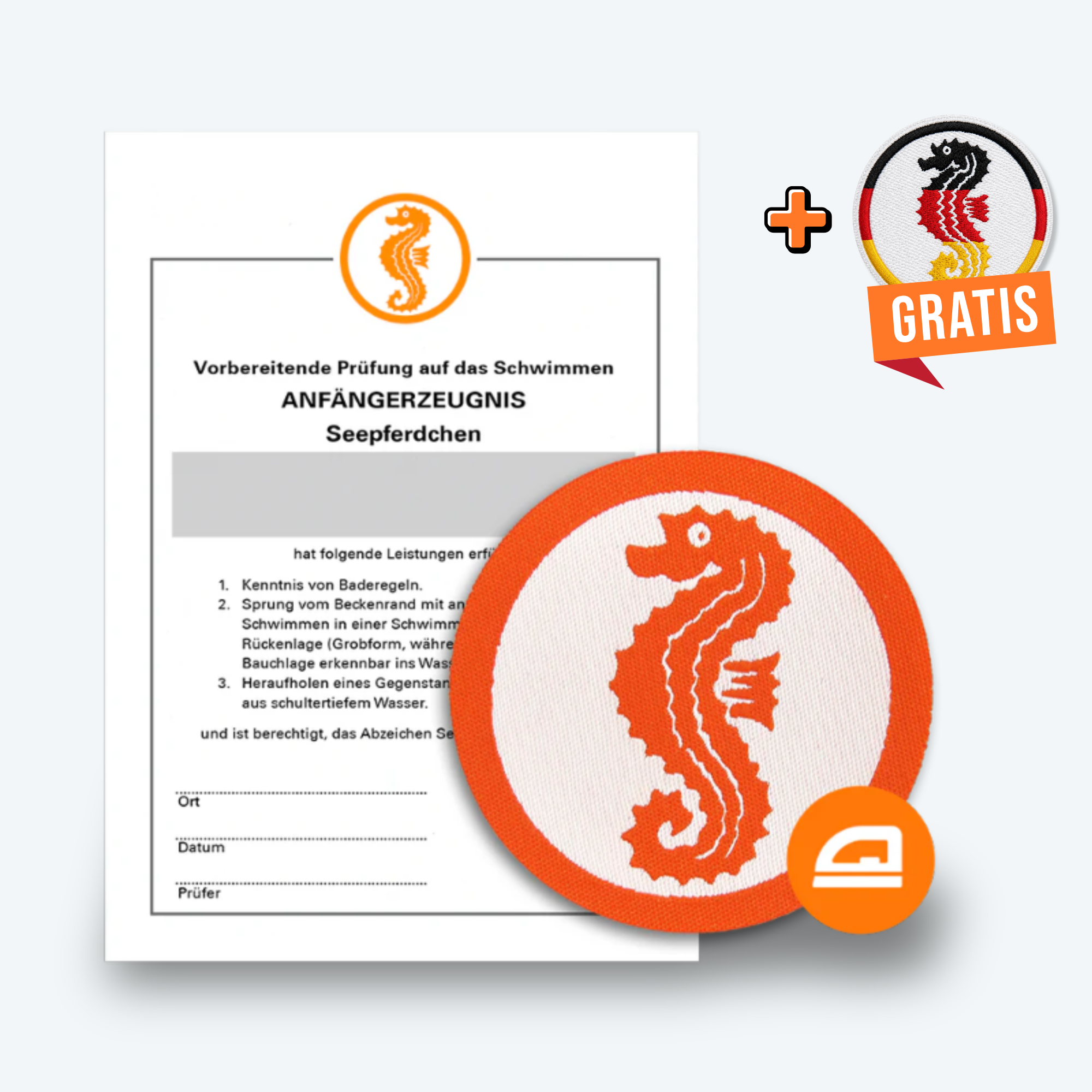
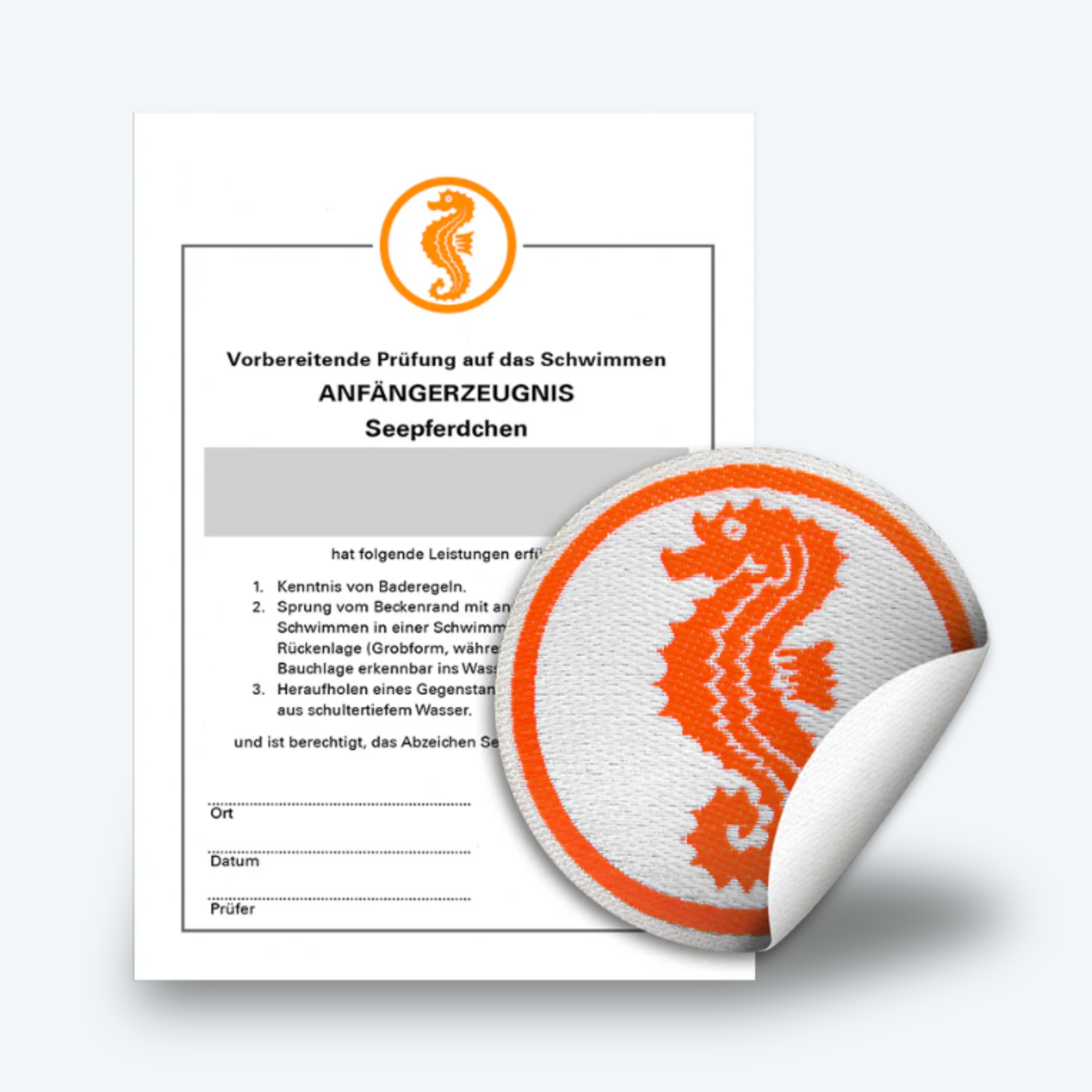
Badges create concrete goals. Instead of vaguely saying "You should swim better," there is a clear goal: to acquire the Seahorse or the Youth Swimming Badge. Children work more intensely towards tangible goals than abstract ideas.
The emotional impact is enormous. When your child receives a badge, they experience a moment of pride and recognition. This sense of achievement strengthens self-esteem and motivation for the next level. Motivation through badges works because they make achievement visible and honor it.
A badge on a tracksuit is daily proof that something has been accomplished.
How to use badges optimally:
- Show your child the different badge levels and explain the requirements
- Praise progress, not just completed achievement
- Hang the certificate in the children's room as a visible memento
- Create a collection album for all badges and certificates
- Let your child choose and pin on the badges themselves
- Celebrate every completion, even smaller intermediate stages
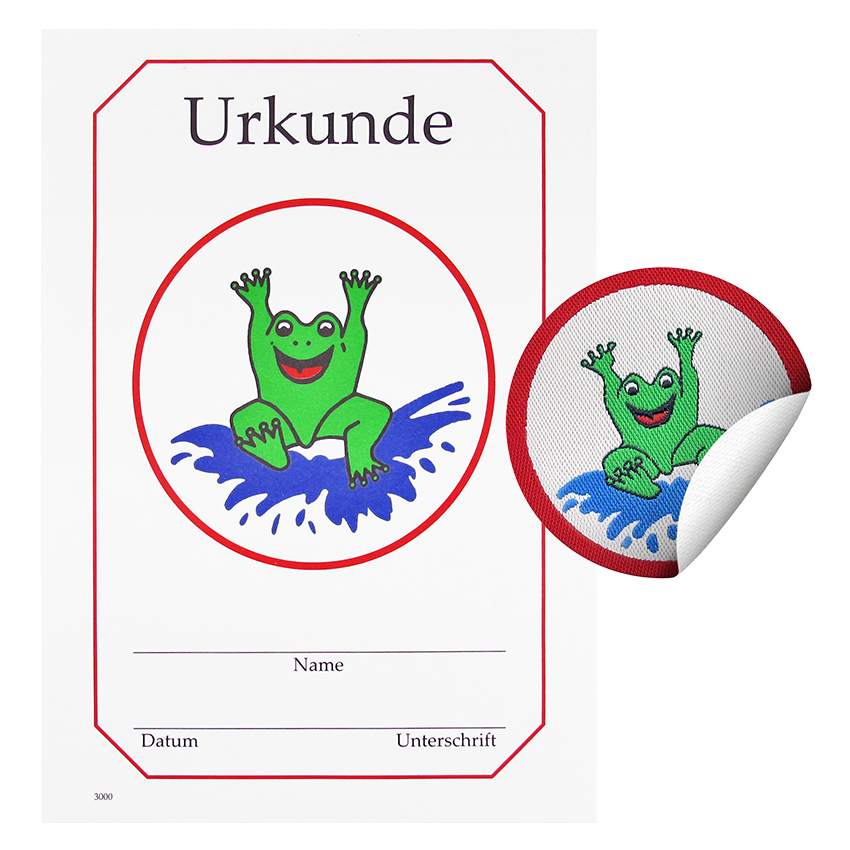
Certificates have a special power. They officially document that your child has acquired a skill. Unlike fleeting moments, a certificate records the achievement and can be viewed again at any time.
Preparation is important. Talk to the instructor about the requirements and help your child set realistic goals. A child who knows what they are working towards trains with more focus.
The collection should remain accessible. A collection album with all badges and certificates reminds your child of their success story. In times of frustration during difficult phases, they can look back at these achievements.
Pro tip: Take a photo of your child with their new badge or certificate and share it with family and friends – the additional social recognition significantly enhances the motivational effect.
5. Determine Optimal Course Duration and Group Size
The right course duration and group size significantly influence your child's learning progress. Too many children per instructor or units that are too long lead to frustration, while courses that are too short delay the learning process.
Group size is a critical factor for individual learning. Small groups of about 6 to 8 children allow each child to receive enough attention. The instructor can address individual needs and quickly identify and correct problems.
Larger groups have disadvantages. With more than 10 children per instructor, the quality of feedback decreases, and some children fall through the cracks. Your child needs regular, personal feedback to learn.
Six to eight children per instructor is the golden mean between a community experience and individual attention.
The course duration should match your child's age. A typical beginner course comprises 10 to 12 sessions of 30 to 45 minutes each. Longer sessions overwhelm young children, while shorter sessions do not provide enough learning time.
The ideal course structure looks like this:
- Age 3 to 4 years: 30-minute sessions, twice a week
- Age 4 to 5 years: 45-minute sessions, once or twice a week
- Age 5 to 6 years: 45 to 60-minute sessions, once a week
- Group size: Maximum 8 children with at least one instructor
- Course duration: 10 to 12 weeks for a beginner course
Consistency is more important than intensity. A child learns better with two shorter sessions per week than with one long session. The brain needs time to process new motor skills.
Parental involvement changes with age. For younger children, parents actively help in the water, while from about four years old, the instructor takes over. Ask the course about the role of parents.
Also, don't overlook the breaks between courses. A course with a Christmas break naturally extends. Continuous training over several weeks is more effective than interrupted training.
Pro tip: Choose a course with weekly sessions at the same time – this regular rhythm helps your child adjust to the lessons and promotes faster learning progress.
6. Parental Involvement for Sustainable Learning Success
Your child's success in swimming lessons doesn't just depend on the instructor. Your support and involvement are crucial for long-term learning success and safety in the water.
Parents are their child's co-coaches. What is learned in the course must be practiced and reinforced at home. A child who trains only once a week makes slower progress than one who practices playfully every day.
Emotional support is just as important as practical practice. Children sense whether their parents trust the water or fear it. A positive attitude of parents towards water promotes children's confidence and has a favorable effect on the learning process.
Your calmness and patience are contagious – if you trust, your child will trust too.
Water familiarization begins at home. By practicing early and playfully, you strengthen your child's motivation and confidence. Bathing with friends, a paddling pool in the garden, or simply splashing water on their face prepares them.
Active support in the swimming course:
- Regular exchange with the instructor about progress and challenges
- Observe the course to see where your child needs help
- Encouragement between courses through positive feedback
- Practice learned techniques during swimming holidays or in private pools
- Praise effort, not just success
- Avoid pressure or comparisons with other children
Communication with the instructor is central. Share fears, progress, or special circumstances. A good instructor adapts their lessons to feedback and enjoys working with engaged parents.
You can do a lot at home. Playful exercises like gliding in bathwater, opening eyes underwater, or simply going into the water without fear create confidence. These exercises should always be playful and stress-free.
Avoid putting too much pressure. Some parents push for learning success too aggressively. This is counterproductive. Regular, gentle practice leads to better learning success than intense, stressful training phases.
Pro tip: Schedule regular shared time in the water – not as formal training, but as fun for the whole family, so your child builds confidence in the water.
| Aspect | Description | Recommendations |
|---|---|---|
| Course Selection | Choose age-appropriate offerings based on the child's development. | Consider water familiarization and motor skills. |
| Swimming Instructor | Certified instructors with professional training are crucial. | Verify qualifications. |
| Learning Method | Combination of practice and playful elements promotes fast learning. | Combine technical exercises with motivating games. |
| Badges | Badges offer visible goals and promote motivation. | Make progress visible and reward it. |
| Course Structure | Duration and group size must be effective and individually adapted. | Choose small groups with a moderate schedule. |
Optimally Accompany Swimming Courses with the Right Badges from Pimpertz
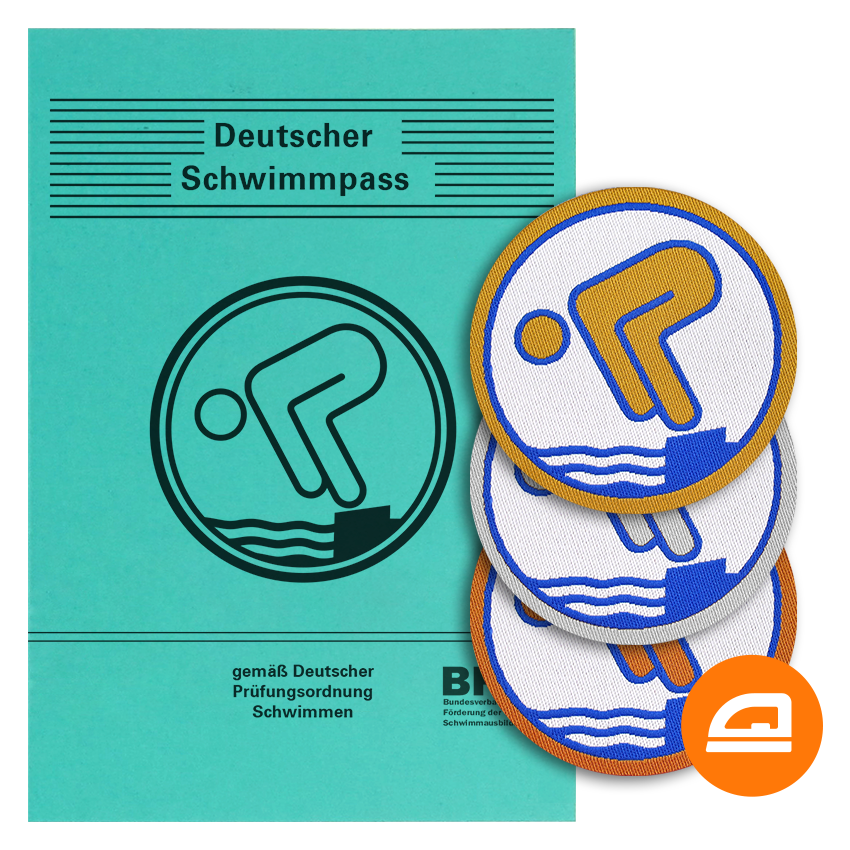
Parents wish for swimming courses for their children that are fun, offer safety, and guarantee lasting learning success. The article "6 Best Practices for Swimming Courses 2025" shows the importance of motivating swimming badges and child-friendly support for more self-confidence and joy in learning. This is exactly where Pimpertz, with over 38 years of experience, comes in. Our high-quality swimming badges and certificates are perfectly tailored to the different learning levels and motivate children to continuously keep going.
Use our child-friendly designs and official quality certificates as valuable companions for daily swimming course life. With durable materials and lightning-fast shipping, Pimpertz helps you make every success of your child visible and unforgettable. Discover practical collection albums and accessories that further boost motivation. Start your personal selection now at Pimpertz and strengthen your child's swimming fun and safety with the right badges.
Frequently Asked Questions
How do I choose the right swimming course for my child?
To choose the right swimming course, you should pay attention to your child's motor development, as well as the group size and the instructor. Inform yourself about offers in your area and choose a course with a maximum of 5 to 8 children per instructor.
Why is it important to choose a certified swimming instructor?
A certified swimming instructor ensures a safe learning environment and effective swimming methods. Ask the instructor for their certificate and for further training to ensure your child is in the best hands.
How can I prepare my child for swimming lessons?
Prepare your child playfully for swimming lessons by splashing around together in the bath or water. This helps to reduce fear of water and build confidence.
What is the optimal course duration for my child?
The optimal course duration for beginners is 30 to 60 minutes per week, depending on age. Make sure your child is not overwhelmed and choose regular sessions to allow for continuous progress.
How important is parental involvement in swimming courses?
Parental involvement is crucial for learning success, as children benefit from active support and positive feedback. Plan regular, playful water activities with your child to strengthen confidence and skills.
How can swimming badges boost my child's motivation?
Swimming badges set concrete goals and create a sense of achievement that strengthens your child's self-esteem. Celebrate every step of progress and help your child set realistic goals to foster their enthusiasm for learning.
Recommendation
- Swimming Course for 5-Year-Olds: Learning to Swim Safely in 2025
- Swimming Course from 4 Years Old: Learning to Swim Safely in 2025
- 6 New Trends in Swimming 2025 for Coaches and Clubs
- 7 Important Swimming Learning Tips for Parents and Coaches
- Sensitive Skin Care: Tips for Athletes 2025 – Kühlkern UG (haftungsbeschränkt)