
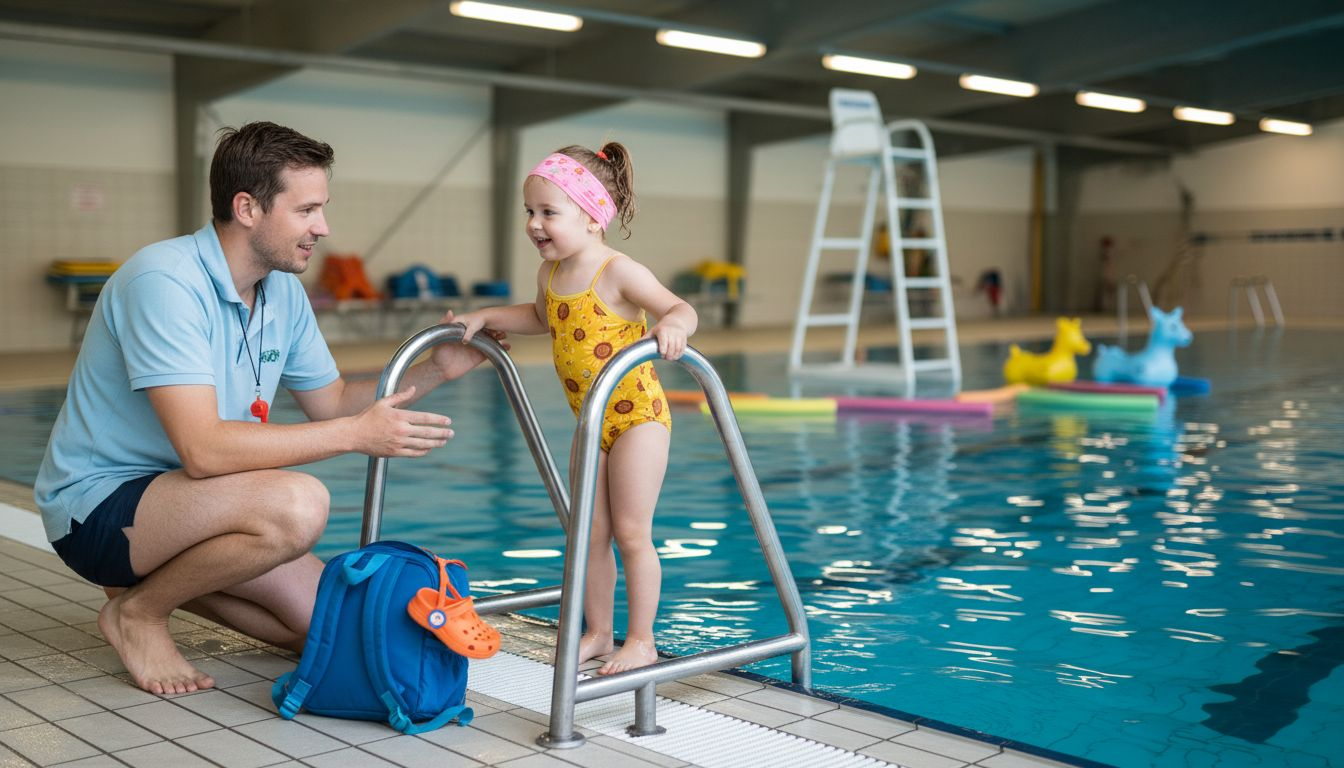
7 Funding Opportunities for Swimming Lessons for Preschoolers
A swimming course is often the first big step for your child towards more safety and self-confidence in the water. However, the fees and costs for swimming badges can pose real challenges for many parents. Many don't even know that there are numerous funding opportunities that address precisely this issue.
The beauty of it: Whether it's voucher programs in Bavaria, support from health insurance companies in North Rhine-Westphalia, or subsidies from sports clubs in the Rhineland – throughout Germany, there are concrete aids that can help you save a lot of money. You will get an overview of how to use these grants specifically to secure your child's swimming education.
Look forward to proven methods, smart saving tips, and little-known contact points. In the following, you will discover practical strategies that will not only relieve your wallet but also enable your child to have an optimal start in swimming.
Table of Contents
- 1. Subsidies from the city or municipality for swimming courses
- 2. Utilize cost coverage by health insurance companies
- 3. Support from sports clubs and swimming associations
- 4. Apply for the Education and Participation Package for families
- 5. Funding from foundations and non-profit organizations
- 6. Find discounts and bundle offers for swimming badges
- 7. Individual counseling by swimming schools and experts
Quick Overview
| Key Finding | Explanation |
|---|---|
| 1. Utilize city or municipality subsidies | Inquire with your city about financial support for swimming lessons for preschoolers. Many communities offer vouchers. |
| 2. Take advantage of health insurance benefits | Contact your health insurance company to find out if they reduce or fully cover the costs of swimming lessons. Many insurers have special programs. |
| 3. Use club offers | Enroll your child in a local swimming club, as many clubs receive funding from sports federations, making courses more affordable. |
| 4. Apply for the Education and Participation Package | Learn about the Education and Participation Package, which funds leisure activities for low-income families and covers swimming lessons. |
| 5. Inquire with foundations and non-profit organizations | Look for local foundations that financially support swimming lessons. Many provide straightforward grants. |
1. Subsidies from the city or municipality for swimming courses
Many parents don't even know that their city or municipality financially supports swimming courses for preschoolers. These subsidies are a great way to reduce the cost of lessons and introduce your child to water early on.
How do these subsidies work? Many municipalities distribute vouchers directly to preschoolers or their parents, which can then be redeemed at recognized providers. The goal is clear: every child should have the chance to learn to swim and ideally earn the Seepferdchen (seahorse badge), without financial hurdles standing in the way. Various federal states and cities have different regulations, so it's worth checking the local situation.
In Bavaria, for example, all preschoolers receive a €50 voucher for a swimming course before the summer holidays. If your child does not attend a daycare center, you can apply for the voucher at the district administration authority. The good news: The voucher works at swimming clubs, water rescue organizations (Wasserwacht), DLRG, private swimming schools, and municipal pools. This gives you a real choice and allows you to select the course that best suits your needs.
Cities like Bad Oeynhausen also show an exemplary approach. There, parents are directly supported with vouchers for swimming courses specifically intended for obtaining the Seepferdchen. If you do not automatically receive a voucher, you can apply for it at the youth welfare office. It is important to know this: Many vouchers are not distributed automatically but must be actively requested.
How do you proceed in practice? First, contact your youth welfare office or city administration and specifically ask about funding opportunities for swimming courses for preschoolers. Often there are information sheets or online forms. Then, bring the voucher or application form to the selected swimming school. Most established providers are familiar with these vouchers and can help you with the process.
An important point: These subsidies are time-limited. Inform yourself in good time before the application deadline, because missed deadlines mean that you cannot use the financial support. Most municipalities are guided by the school year or summer holidays.
Pro tip: _Ask your municipality which course offerings are approved for vouchers, and then register your child immediately after receiving the voucher, because popular courses fill up quickly.
2. Utilize cost coverage by health insurance companies
Your health insurance might do more for your child's swimming education than you think. Many statutory health insurance companies actively participate in financing swimming courses for children, especially if regional funding programs are available.
How does it come about that health insurance companies co-finance swimming courses? The idea behind it is simple and sensible: swimming ability is an important preventive measure against accidents in the water. Children who can swim well are safer and thus reduce the risk of bathing accidents. That is why health insurance companies are involved as partners in state funding programs. For you, this specifically means: The costs for your swimming course are significantly reduced because the health insurance company covers part or even the entire fee.
In North Rhine-Westphalia, there is a particularly impressive example of this. The funding program "NRW kann schwimmen!" (NRW can swim!) is financed by the state and financially supported by health insurance companies such as AOK NordWest and AOK Rheinland/Hamburg. The program has just been extended and topped up, which shows how important this area is. Parents, especially from socially disadvantaged families, can therefore attend swimming courses for their children at significantly reduced or even no personal cost.
How does this work for you in practice? First, inquire with your health insurance company whether it supports regional swimming promotion programs or participates in the costs for swimming courses. Many health insurance companies have their own pages on their website or informative brochures for this purpose. Contact your health insurance company and ask specifically: "Which swimming courses for preschoolers are supported by you?" The employees there can tell you exactly which offers in your region are eligible for funding.
Then it works like this: You register your child with a recognized course provider. This provider already knows the agreement with the health insurance companies and directly deducts the cost coverage. Your own contribution is thus significantly lower. In the "NRW kann schwimmen!" program, for example, the self-payments for families remain particularly low because the health insurance companies cover a large part of the costs.
What is important to know? Not all federal states and not all health insurance companies offer the same level of support. In some regions, such programs do not exist at all, in others they are very generous. This is no reason to despair, because you can use the programs where you find them. If you live in a region without a special funding program, it is still worth calling your health insurance company. Some offer voluntary subsidies, even without an official state program.
Another practical point: Make sure that the swimming course takes place with a recognized provider. Only certified swimming schools, clubs, and DLRG stations cooperate with health insurance companies. If in doubt, ask if the provider works with your health insurance company.
Pro tip: _Contact your health insurance company at least two months before the planned course and ask about all funding opportunities that apply to you to avoid surprises when registering.
3. Support from sports clubs and swimming associations
Sports clubs play an important role in financing swimming courses. If you enroll your child in a local swimming club, you often benefit from special funding programs provided by associations and sports federations.
How does this support work? Sports federations and swimming associations receive public funds to make swimming courses affordable for children. These associations pass on their subsidies to affiliated clubs, which can then reduce their course fees. For you, this specifically means: A child who learns to swim in a subsidized club often pays significantly less than in a private swimming school.
The Sportbund Rheinland (Rhineland Sports Federation) exemplifies how this system works. It actively promotes swimming courses for children and young people up to 14 years of age, which are conducted by qualified instructors. The subsidies can be used for training costs, pool fees, and material costs. The goal is clear: Swimming should be accessible to all children, regardless of the family's income.
Similarly, the Swimming Association of North Rhine-Westphalia supports clubs with financial means for course implementation. These associations think long-term and aim not only to impart swimming skills but also to encourage more children to participate in competitive swimming. Therefore, they invest specifically in beginner courses.
How do you use this support in practice? First, look for recognized swimming clubs in your area. These are members of regional sports federations or swimming associations. Inquire directly with the club about current course fees and what funding the club uses. Many clubs also offer discounts for families in difficult economic situations. Ask specifically if the club is funded by a sports federation or swimming association.
A big advantage of clubs is often the long-term perspective. If your child completes the swimming course and earns the Seepferdchen, they can continue training in the same club and strive for new badges. This creates a continuous relationship in which your child benefits from further funding opportunities.
What else should you know? Not all clubs have the same funding. It's worth comparing several clubs in your region. Some have more comprehensive grants than others. Also, make sure that the training times fit your family's daily schedule. An affordable course only helps if you can also regularly take your child there.
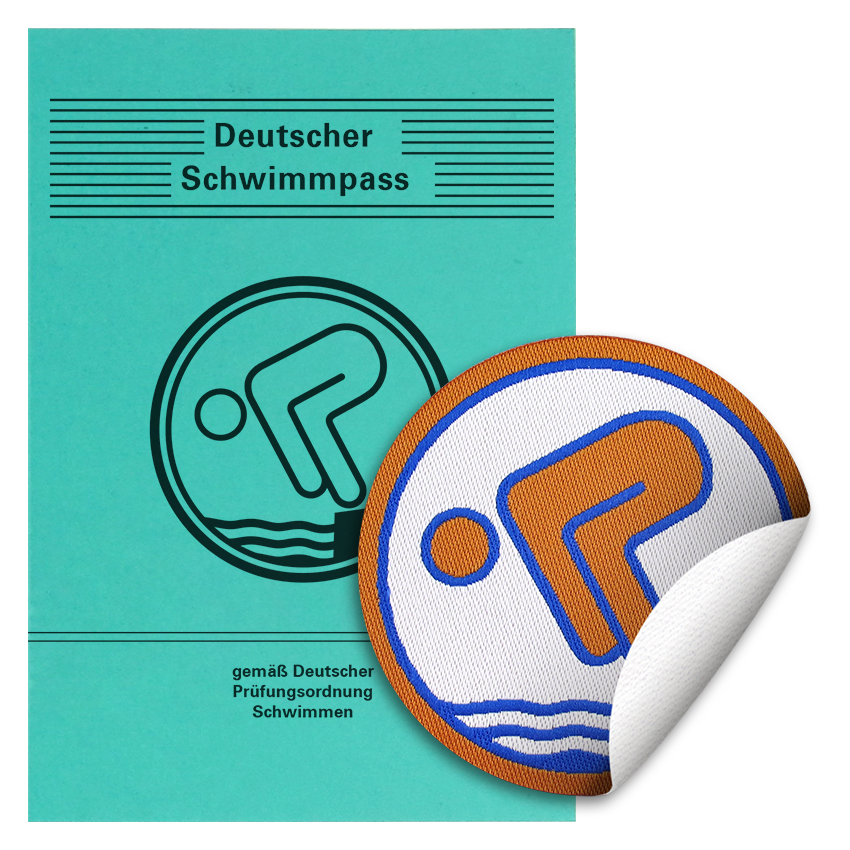
An important point: Many federations and clubs are also partners with established providers in obtaining high-quality swimming badges and certificates. This means that at the end of the course, your child will not only receive a badge but an officially recognized, certified swimming badge that documents their achievement.
Pro tip: _Contact your regional sports federation or swimming association directly and ask which clubs in your area receive the most funding. This information will save you time and lead you directly to the most cost-effective options.
4. Apply for the Education and Participation Package for families
The Education and Participation Package is a state support program specifically designed to enable children from low-income families to access leisure activities such as swimming lessons. Many parents are unaware that they can apply for this benefit.
How does the Education and Participation Package work? It is a nationwide program that helps children and young people up to the age of 25 to participate in educational and leisure activities. Swimming lessons explicitly fall under the category of leisure and cultural activities. The package pays not only for the course itself but also for travel costs to the course and necessary materials. This means for you specifically: If your family meets the income limits, you can get swimming lessons for your child almost free of charge.
Who is entitled to it? Families who receive benefits such as unemployment benefit II, social assistance, welfare, housing benefit, or child supplement are eligible to apply. Also, families whose income is below certain limits. The good news is that the income limits are generously calculated. It is worth applying even if you are not sure whether you are eligible.
How do you apply for the Education and Participation Package specifically? The application is submitted to your responsible municipality or city. Some municipalities have their own forms on their website, others accept applications at the youth welfare office. Simply call your city or municipality and ask where you can submit the application for benefits from the Education and Participation Package. The procedure is straightforward, and the employees are experienced with these inquiries.
What do you need to bring for the application? You need proof of your income, your current living situation, and possibly notices of benefits already received. Also, bring documents for the chosen swimming course so that the authority sees the exact costs. With these documents, processing will be faster.
An important point is timing. It is best to submit the application before registering for the swimming course, so that approval is available when you enroll. Some courses cannot wait until the application is processed. However, if you act in good time, you can reserve the course and have the costs reimbursed later.
What costs are covered? The package fully covers the participant fee for the swimming course. In addition, travel costs by public transport are covered if the course is not within walking distance. Even if your child needs material such as swimming trunks or towels, you can ask for support. Not everything is automatically paid for, but you can state it and have a chance.
A practical reality is that processing times vary. Some municipalities process applications within two weeks, others take longer. Therefore, it is smart to submit the application several weeks before the start of the swimming course. Ask how long the average processing time in your city takes.
What happens if the application is approved? The authority will inform you in writing about the approval. You can then book the swimming course and submit the invoice. Some municipalities pay directly to the swimming school, others reimburse you after submitting the invoice. When applying, ask what procedure is common in your city.
There is also something important to note. The Education and Participation Package is not limited in time. If your child needs several swimming courses in different years or registers for the next badge, you can submit further applications. The system is designed to support long-term access to education and leisure.
Pro tip: _Call your city and immediately ask which swimming courses are already recognized as eligible for funding to save research and choose a course that is guaranteed to be paid for.
5. Funding from foundations and non-profit organizations
In addition to state programs, there is an often overlooked source of financial support: foundations and non-profit organizations. These organizations specifically fund swimming courses for children to give them better opportunities.
How does the support from foundations work? Many foundations have dedicated themselves to the prevention of bathing accidents and the promotion of swimming skills. They view swimming lessons not only as leisure but as a life-saving skill. Therefore, they award scholarships, grants, or cover complete course fees for families with limited financial resources. The special thing is that this support is often less complicated than with state programs.
Which foundations support swimming courses? There are various foundations nationwide that deal specifically with water safety and swimming promotion. The German Life Saving Society (DLRG) has foundation funds to support swimming courses, especially for socially disadvantaged children. Local foundations in your city or region can also finance swimming courses without you knowing it. Check your city's website to see if there are foundations listed that are involved with children.
How do you find such foundations? The most important thing is to ask specifically. Contact the DLRG local chapter in your area and ask if foundation funds are available for swimming courses. Talk to the youth welfare office or the city administration. These institutions often know local foundations and can refer you specifically. Private swimming schools also often have contacts with foundations and can help you find funding.
What is important when applying? Most foundations have simple application procedures. Sometimes you only need to fill out a form and explain why financial support is necessary. Unlike government agencies, you often don't need extensive proof of your income. Foundations usually focus on the specific support of the individual child. If you can pay for the courses, you will be rejected. But if there are difficulties, help is usually provided.
A big advantage of non-profit organizations is that they sometimes offer swimming courses themselves. These organizations, such as local leisure associations or child welfare organizations, conduct swimming courses and finance them through donations and membership fees. For you, this specifically means: You pay less or nothing at all, and your child receives high-quality instruction from experienced trainers.
How do you identify reputable organizations? Make sure that the foundation or organization is recognized as non-profit. You can recognize this by registration with the tax office or in the foundation register. Reputable organizations have transparent websites where they explain their goals and funding criteria. Beware of scammers who demand money before granting support. Real foundations do not take money from applicants.
A practical strategy is to pursue multiple avenues. If you want to enroll your child in a swimming course for five-year-olds, simultaneously explore which foundations and organizations are active in your region. Apply to several organizations. The chances are high that at least one will grant support.
What happens if you receive support? The foundation either pays directly to the swimming school or reimburses you for the costs. Some foundations issue vouchers that you can redeem like a gift certificate at the swimming school. The process is usually faster than with government agencies. In many cases, you will have an answer within one to three weeks.
An important point is continuity. If your child earns their first swimming badge and wants to continue training, you can also apply for support for subsequent courses. Some foundations accompany a child over several years. So, build a relationship and regularly ask about funding opportunities.
Pro tip: _When first contacting a foundation or non-profit organization, ask if they have contacts to other funding organizations to build a whole network of potential supporters.
6. Find discounts and bundle offers for swimming badges
An often underestimated way to save money is through the swimming badges themselves. If you know where to find high-quality badges at reduced prices, you can save significant amounts, especially if several children in your family are learning to swim.
How do discounts for swimming badges work? Specialized providers grant discounts for certain order quantities. This means that if you don't just buy a Seepferdchen (seahorse badge) for one child, but, for example, for several siblings or order together with other parents, the price per badge drops significantly. Some providers also offer seasonal discounts or promotional weeks where prices are reduced.
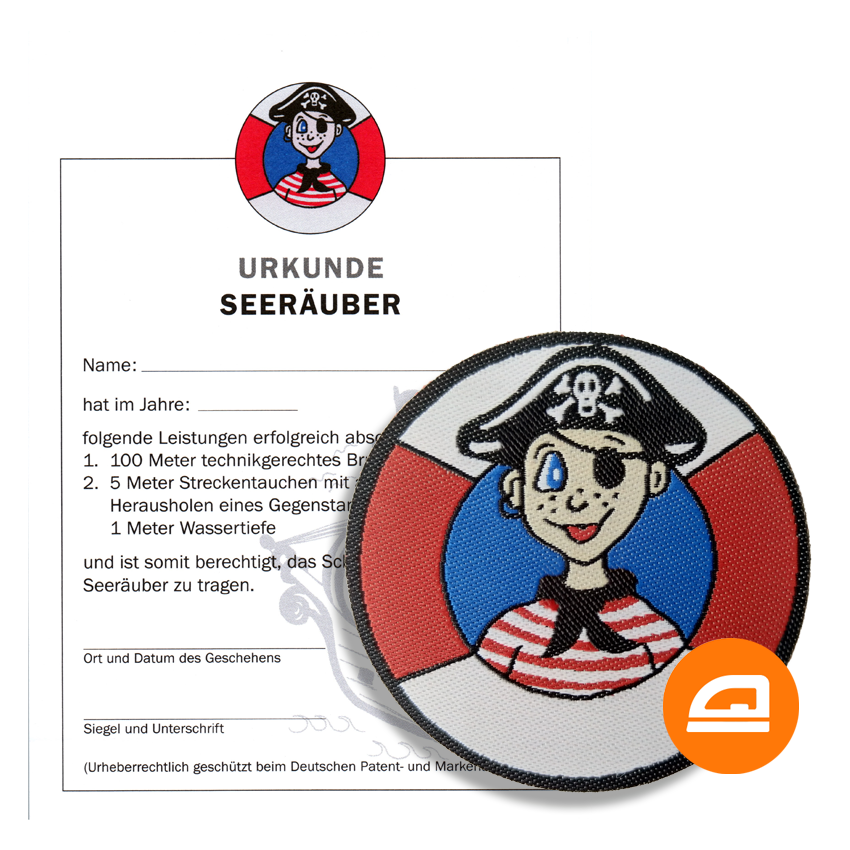
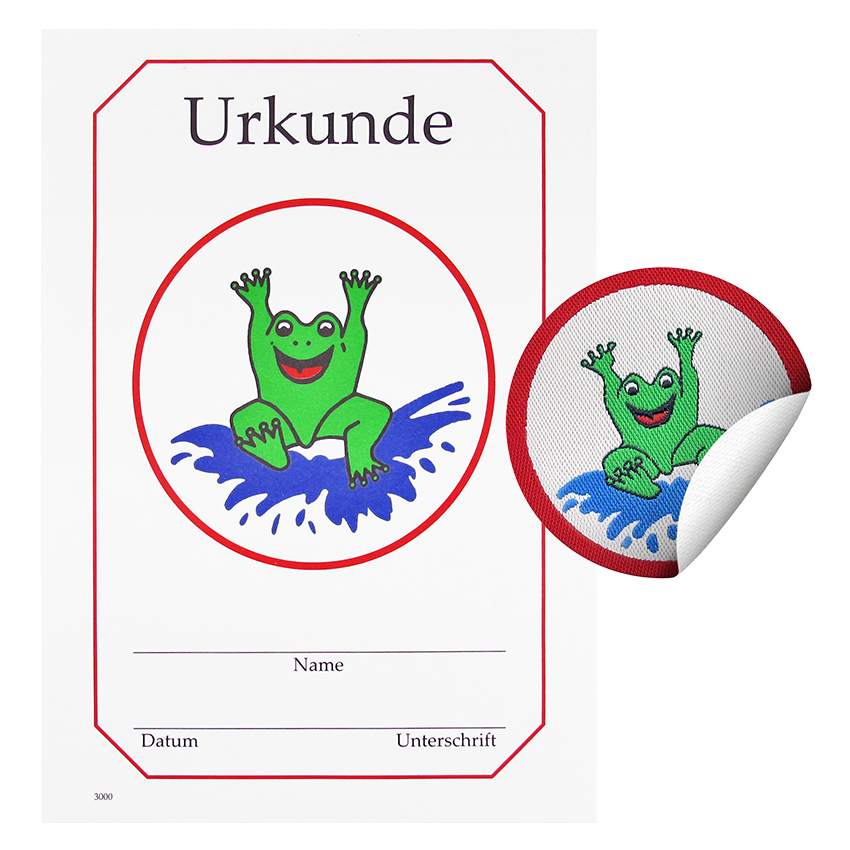
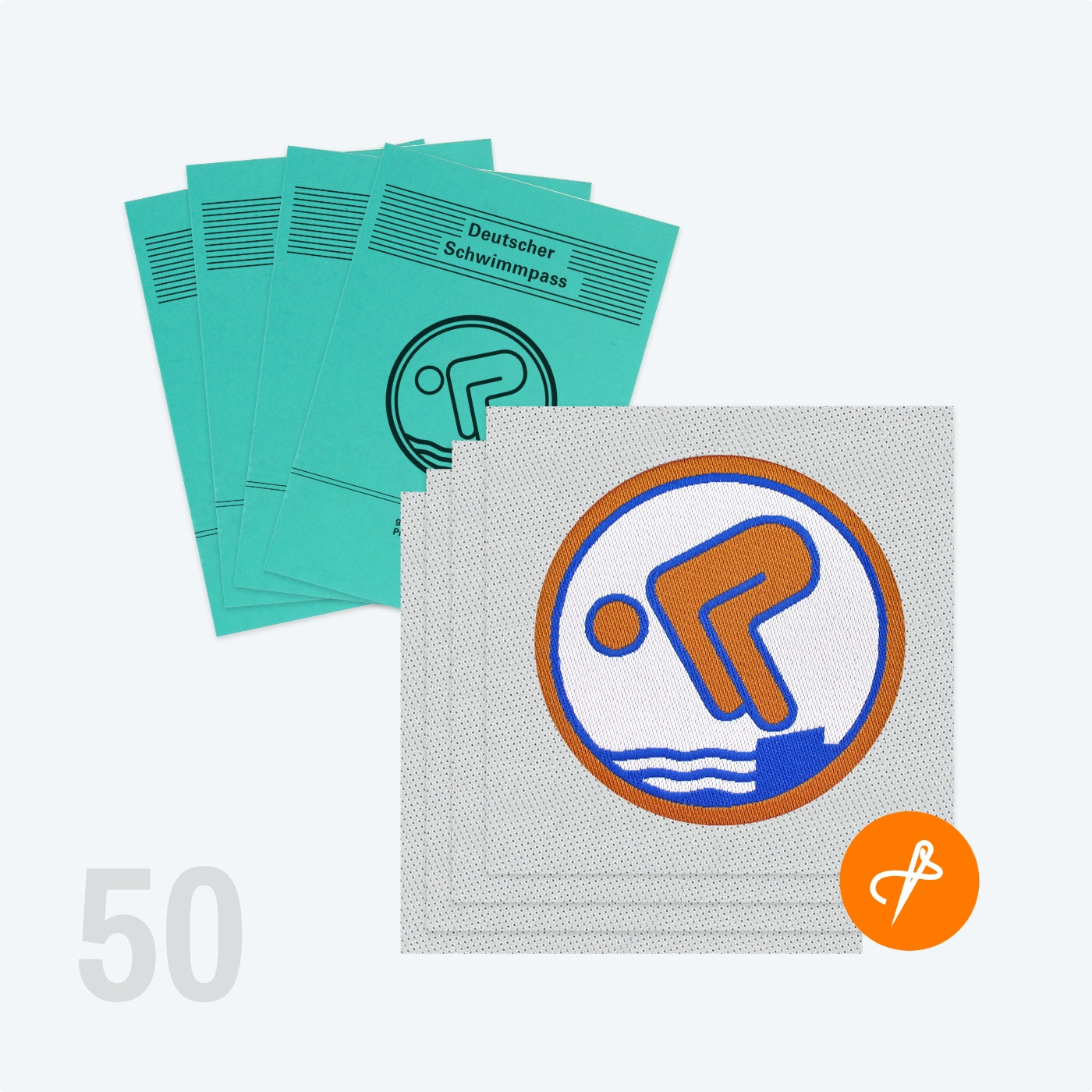
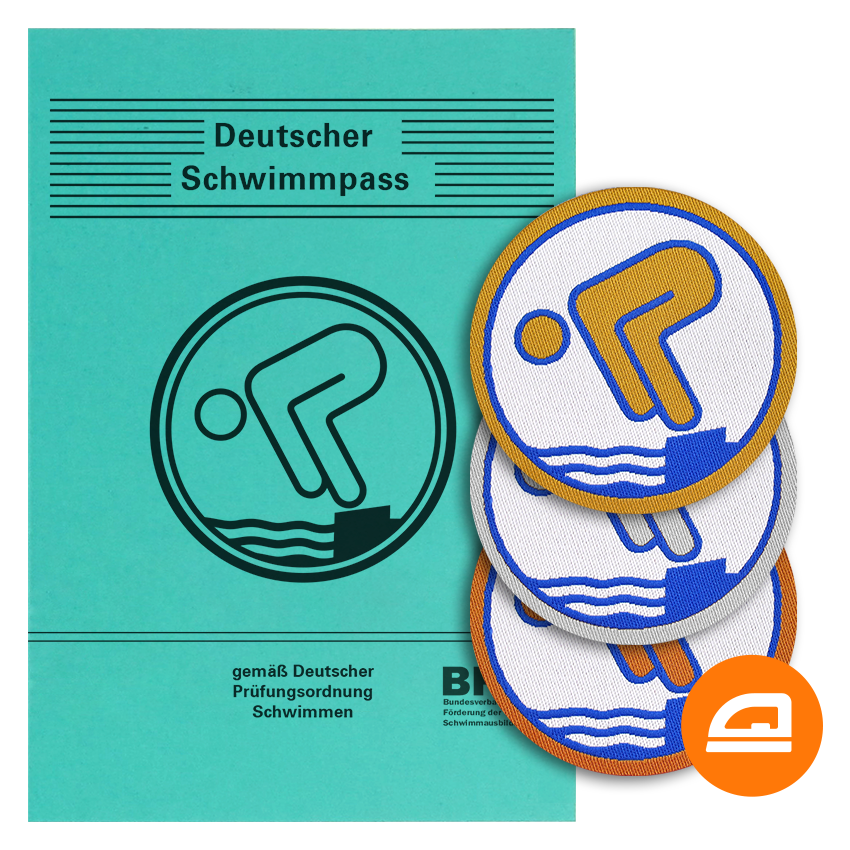
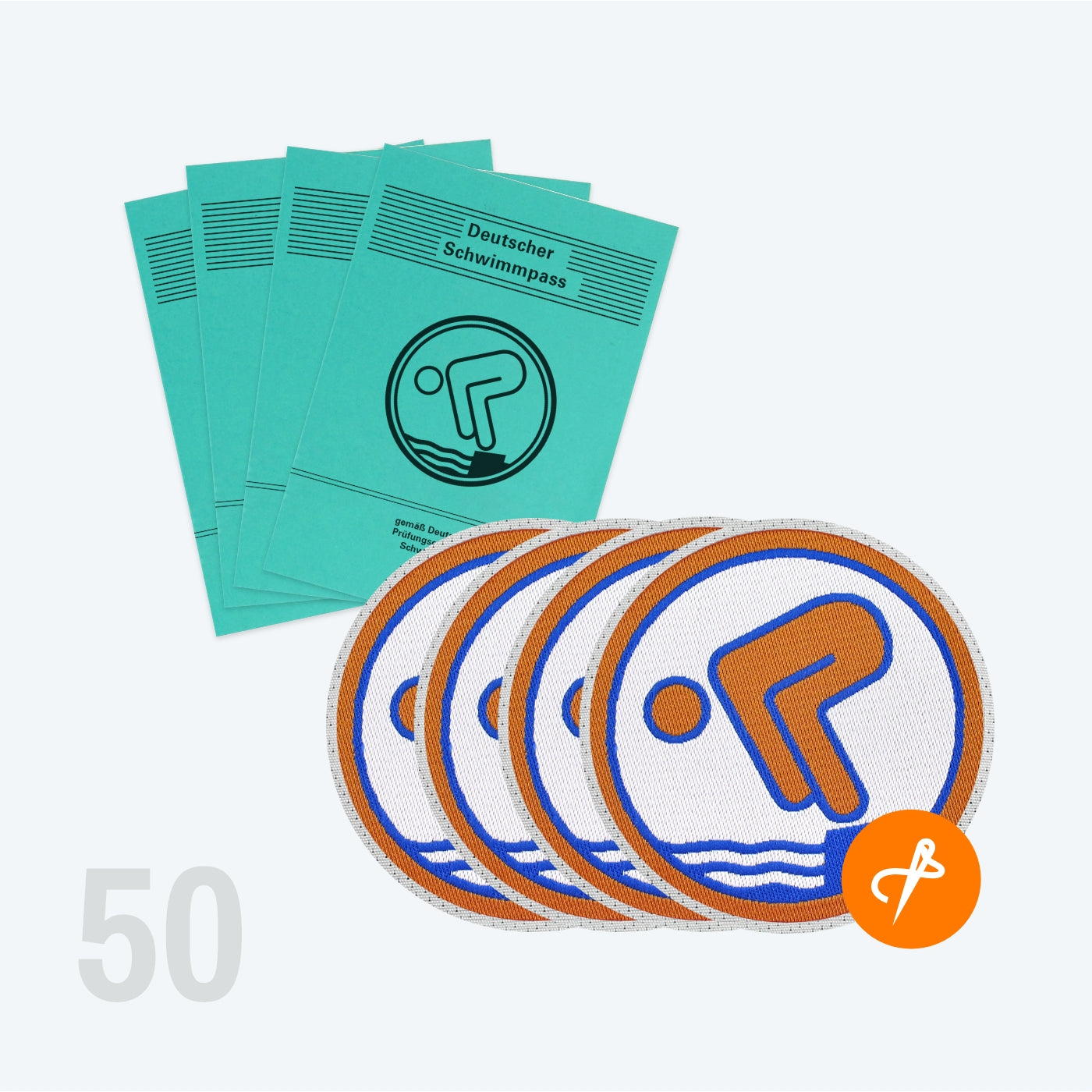
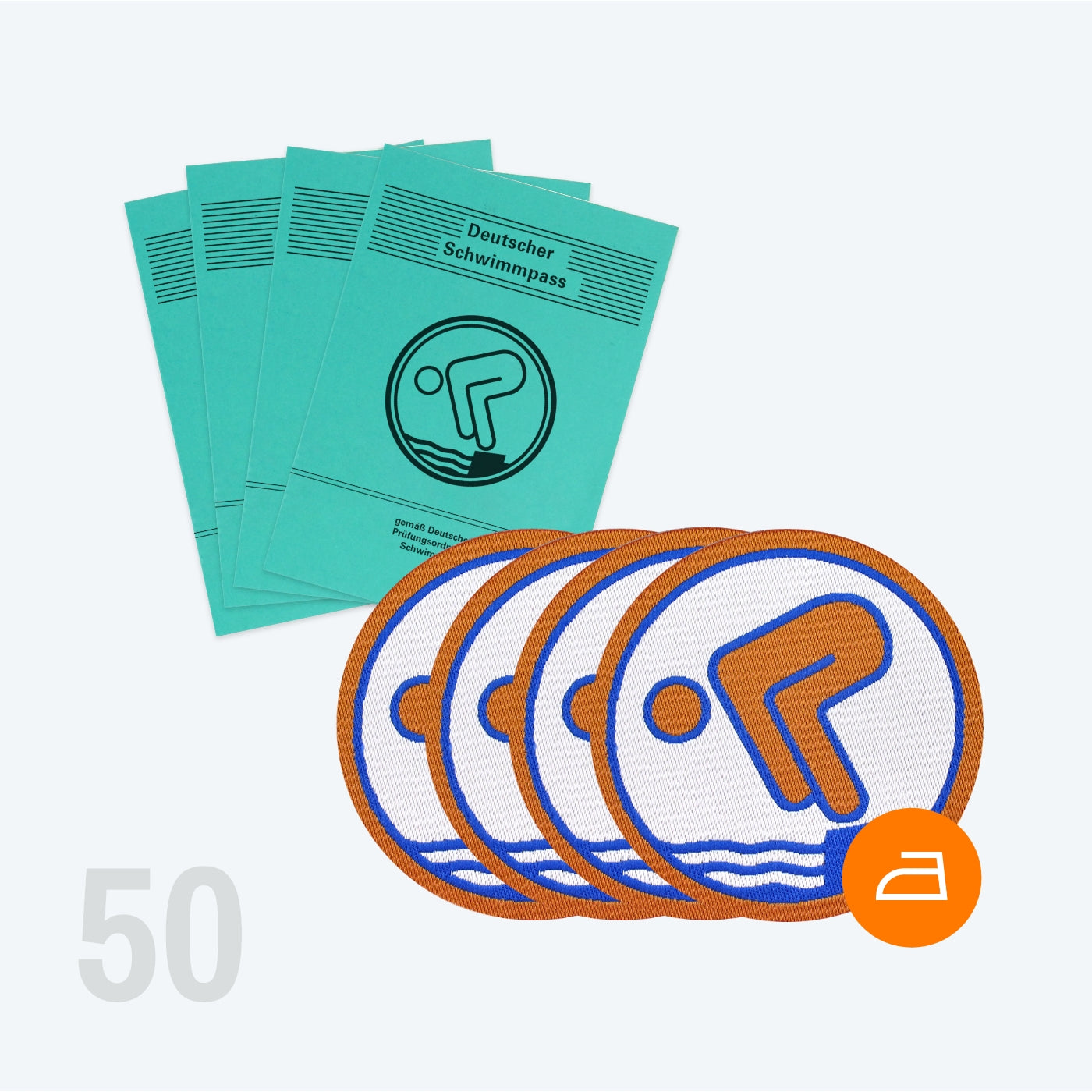
What discount models are available? The classic quantity discount model works like this: A single certificate might cost 2 to 3 Euros, but if you order ten, you might only pay 1.50 Euros per piece. Even better are bundle offers that offer certificates, badges, and accompanying media like collector cards in a package at a low price. These bundles are designed specifically for swimming courses or entire school classes and save up to 30 percent of individual prices.
Where can you find such offers? Specialized providers for swimming badges have these discounts as standard. Look online for providers who specialize in swimming badges and certificates. These companies know the needs of schools, clubs, and engaged parent groups and offer correspondingly favorable bulk options. Make sure you only buy official and certified badges that meet the standards of the German Life Saving Society.
A practical tip: Coordinate with other parents from your child's swimming class. If ten families from a group order together, each family benefits from the quantity discount. Meet after the course and collect the ordered quantity. Most shippers offer fast delivery times, so the badges arrive quickly before motivation wanes.
What should you consider when buying? Compare not only prices but also quality. Cheap badges that quickly fade or tear are not a real saving. Look for high-quality materials and brilliant colors. A certified swimming badge is a souvenir that your child will keep for many years. Read customer reviews to ensure that the provider is reliable.
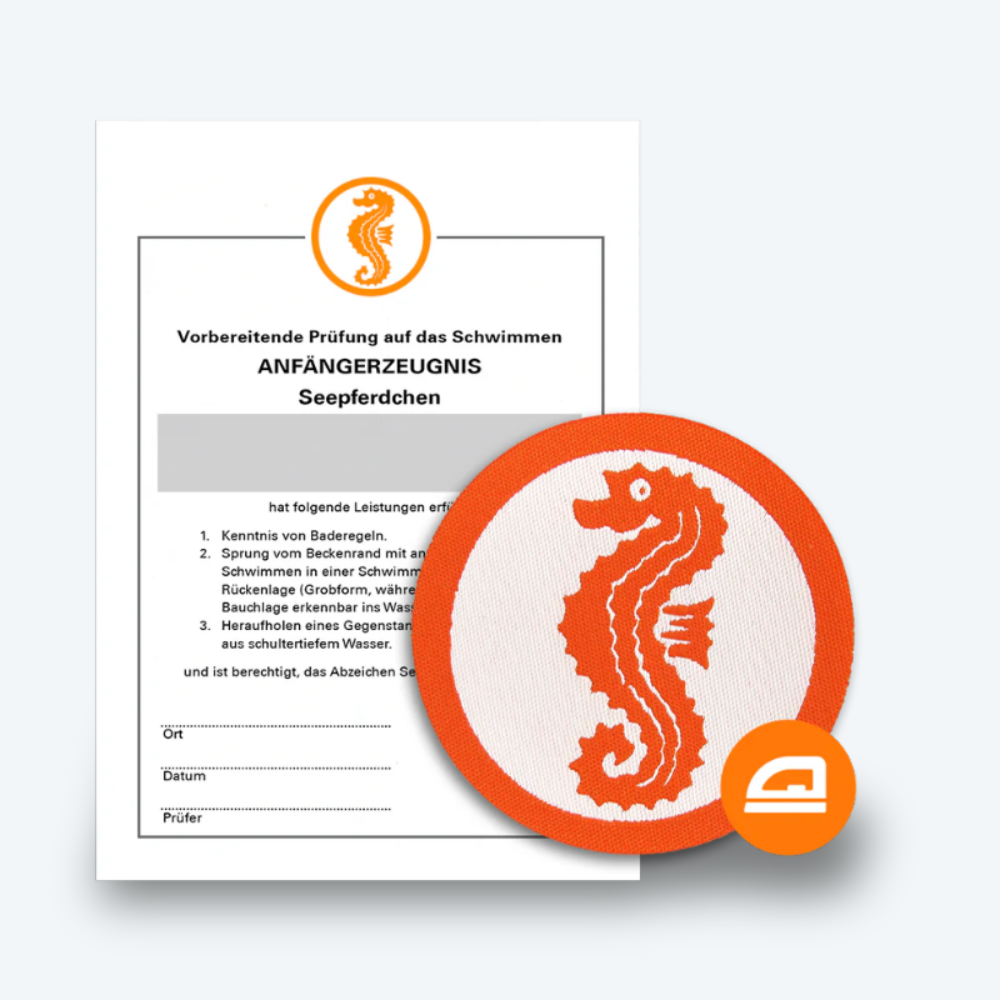
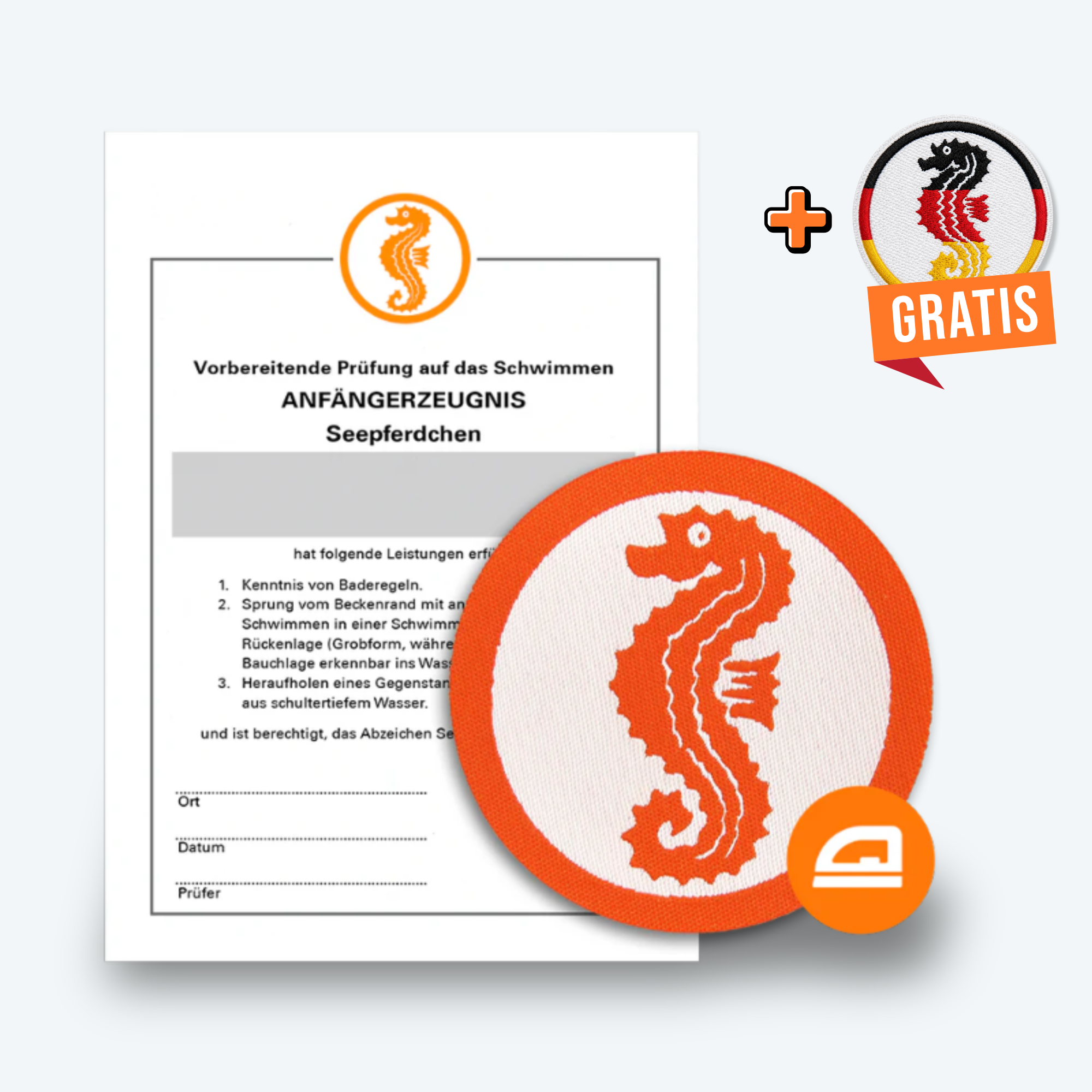
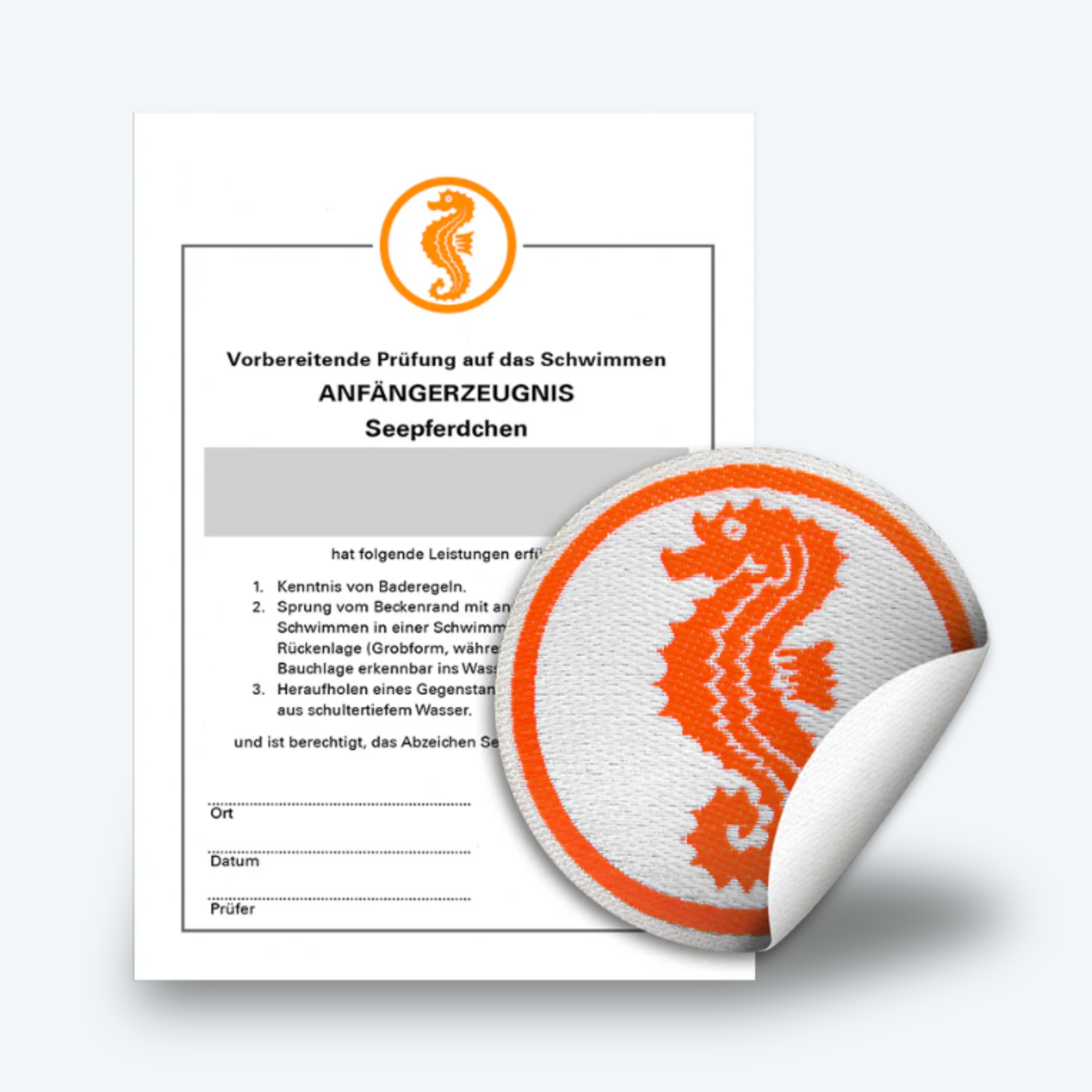
An important point is also that some providers have bundle offers that are specially put together for preschoolers. These packages often contain not only the seahorse badge, but also a certificate, a collector's card, and sometimes even a small gift set. These bundle offers for swimming badges are often cheaper than individual purchases and make passing the course a special moment.
How can swimming courses themselves benefit from discounts? If you are a swimming course instructor or work with trainers, you can negotiate directly with specialized providers. Many offer even better prices for courses that regularly need badges. Consider whether your course could offer a flat rate for all participants, where the badges are already included in the course price.
When should you order? Plan ahead. Don't order the badges only after the course, but before. This way, you have them available in time and can motivate your child immediately after passing the test. Some providers have discounts at certain times, for example, after school holidays. Subscribe to newsletters from providers to learn about promotions.
What other options are there to save? Some providers make it possible to order badges for clubs and benefit from special club discounts. If your child swims in a club, the club can order centrally for all members, thus saving costs that are then distributed among the individual families.
How do you compare offers effectively? Calculate the price per badge, not just the total price. If an offer includes ten badges for 15 Euros, each badge costs 1.50 Euros. With another offer of five badges for 12 Euros, the price is 2.40 Euros per piece. The first offer is significantly cheaper. Also, pay attention to shipping costs, which are sometimes hidden in cheap offers.
Pro tip: _Contact potential providers directly and ask what discounts are possible for bulk orders, as some negotiable prices are not listed online and can be even better upon request.
7. Individual counseling by swimming schools and experts
The best funding opportunity is often personal advice from experts who know exactly which options suit your situation. Swimming schools and specialized consultants can guide you specifically to financial aid and optimal course offerings.
How does this advice work? Professional swimming schools and specialized associations have deep knowledge of all local and regional funding opportunities. They know the pitfalls and opportunities of individual programs from daily experience. A consultant can tell you exactly which funding you should apply for, where you need to inquire, and what the chances of support are. This saves you months of research and frustration.
Where can you find such experts? Many federal states offer official counseling centers. For example, the Bavarian State Sports Association offers individual counseling for swimming schools and parents to ensure optimal funding and course participation for preschoolers. These experts provide concrete recommendations on providers, course formats, and financial aid. Other federal states have similar structures. Inquire with your state sports association or city administration about counseling services.
Established swimming schools are also valuable contacts. These schools often have years of experience with funding programs and know how to apply correctly. Many school directors regularly negotiate with authorities and foundations for funding. They can refer you directly if they notice that your family is eligible for funding. Some swimming schools even offer free initial consultations.
How does a typical consultation proceed? First, they ask about your needs and your situation. A good consultant will ask you specific questions: How old is your child? What is your family's economic situation? Which courses are you interested in? Then the consultant will recommend concrete funding opportunities. Ideally, you will also receive written information or links to application forms so that you can take action yourself.
What should you bring to the consultation? Bring information about your income situation, even if you don't want to disclose it in detail. State your child's exact age group and the type of course you are interested in. If you already receive other support, it's helpful to mention that. With this information, a consultant can quickly assess which programs are relevant to you.
What are the benefits of personal consultation? You save time by only pursuing programs that are actually suitable for you. You avoid rejections because you are correctly informed from the start. You often also learn about programs that are not widely advertised but exist. A consultant also knows tricks on how to formulate applications so that the chances of approval are higher.
Can counseling also take place online? Yes. Many associations and swimming schools now offer counseling by phone or video conference. This is particularly practical if you have little time. When you first contact them, ask if online counseling is possible. The quality is often just as good as in person, and you save on travel time.
What does individual counseling cost? Official consultations by state sports associations and government agencies are free of charge. Consultations by private swimming schools are generally also free when it comes to choosing a course. Some schools offer specialized counseling packages that cost something. Always ask beforehand if a consultation is subject to a fee.
What about trainer tips? If your child is already in a course, experienced trainers can also be valuable. Many trainers know parents they have already helped get funding. They can point you to new programs or tell you which offers, in their experience, work well. Build a relationship with the trainers and openly ask for tips.
How do you use counseling optimally? Prepare your questions. Write down what you want to know. The more precise your questions, the more helpful the answer. Also, write down the answers and ask for contact information for follow-up consultations. A good consultant will not just give you a one-time consultation but will offer you to ask questions later.
How can you combine important swimming learning tips with counseling? A consultant can not only help you with financing but also with choosing the right course type. They know which courses are good for anxious children and which for already experienced swimmers. This way, you get advice that is specifically tailored to your child.
Pro tip: _Contact several counseling centers at once and have conversations with two to three different experts to get a complete picture of all possible funding, because each consultant has something different to say.
NO_TABLE
Now cleverly finance and save on swimming badges
The article clearly shows how important it is for preschoolers to learn to swim safely and how challenging it often is for many families to find suitable funding opportunities. Whether it's city subsidies, health insurance support, or help from sports clubs, financing swimming lessons can be complicated and costs effort, time, and money. This is exactly where Pimpertz comes in, with over 38 years of experience as an official partner of the DLRG and the BFS.
Pimpertz offers high-quality and certified swimming badges as well as motivating certificates that your child will proudly collect. Take advantage of our exclusive bundle offers, discounts on bulk orders, and personalized sets specially tailored for swimming clubs and schools. This makes swimming lessons not only safe and effective but also affordable and exciting. To optimally utilize financial grants now, ask your course or club if swimming badges and certificates from Pimpertz are already in use. Discover our range with accessories and gift sets and benefit from lightning-fast shipping and expert advice.
Start now with Pimpertz and transform your child's swimming education into a motivating experience that is supported https://pimpertz.de. Take the next step and secure your child the appropriate swimming badge with the best quality and attractive discounts.
Frequently Asked Questions
What funding opportunities are available for preschool swimming lessons?
Numerous funding opportunities exist, including subsidies from cities and municipalities, financial support from health insurance companies, and funding programs from sports clubs. Inform yourself about the options in your area and check which ones are suitable for your family.
How do I apply for the subsidy for swimming courses with my municipality?
To apply for the subsidy, you must first contact your youth welfare office or the city administration and ask about the specific funding opportunities. Bring all necessary documents to speed up the process.
What requirements must parents meet to apply for the Education and Participation Package?
Families receiving benefits such as unemployment benefit II, social welfare, or housing benefit are eligible for the Education and Participation Package. Submit an application to your municipality and bring proof of your income situation.
How does health insurance support for swimming courses work?
Statutory health insurance companies often participate in the financing of swimming courses, especially if regional funding programs are available. Inquire with your health insurance company about the programs offered and check which swimming courses are supported.
How can I apply for support from a foundation or a non-profit organization?
Contact the foundation or organization directly and inquire about the application conditions. Fill out the required application form and explain why you need support.
How do I find the right swimming course for my preschooler?
Look for recognized swimming schools in your area that cater to your child's needs. Ask about course offerings, if there are special promotions, and what the swimming instructors' qualifications are.