
Learning to Swim Safely from Age 4: A Guide for Parents
Every mother and father knows the mix of anticipation and uncertainty when their child bravely enters the water for the first time. Learning to swim from age 4 is not just a matter of technique; it builds on trust and safety in dealing with water. By choosing high-quality swimming badges and well-designed accessories, you create the best conditions for your child to discover the joy of water without fear and to experience their own progress with pride.
Table of Contents
- Step 1: Prepare the Right Swimming Accessories
- Step 2: Choose a Suitable Swimming Course
- Step 3: Actively Support Your Child During the First Water Training
- Step 4: Foster Trust and Swimming Skills
- Step 5: Monitor Learning Progress with Swimming Badges
Quick Overview
| Important Point | Explanation |
|---|---|
| 1. Choose suitable swimming accessories | When purchasing, look for high-quality swimwear, swimming aids, and safety shoes. |
| 2. Select the right swimming course | Choose small swimming courses that cater individually to children and are age-appropriate. |
| 3. Active supervision during training | Support your child during their first water training with patience and a positive environment. |
| 4. Promote confidence and swimming skills | Provide positive feedback and help your child overcome their fear of water. |
| 5. Monitor learning progress with badges | Document your child's progress through swimming badges and celebrate successes together. |
Step 1: Prepare the Right Swimming Accessories
Before enrolling your child in swimming lessons, having the right equipment is crucial. Careful preparation of swimming accessories not only ensures safety but also makes it fun for the child. The selection ranges from practical swimming aids to comfortable swimwear.
First, choose high-quality swimwear. Look for a good fit and quick-drying material. For children aged 4 and up, tight-fitting swim trunks or swimsuits without loose fabric parts are recommended. Appropriate swimming gear prevents distractions during swimming lessons. Supplement the equipment with swimming goggles and a swimming cap to give your child more security and comfort.
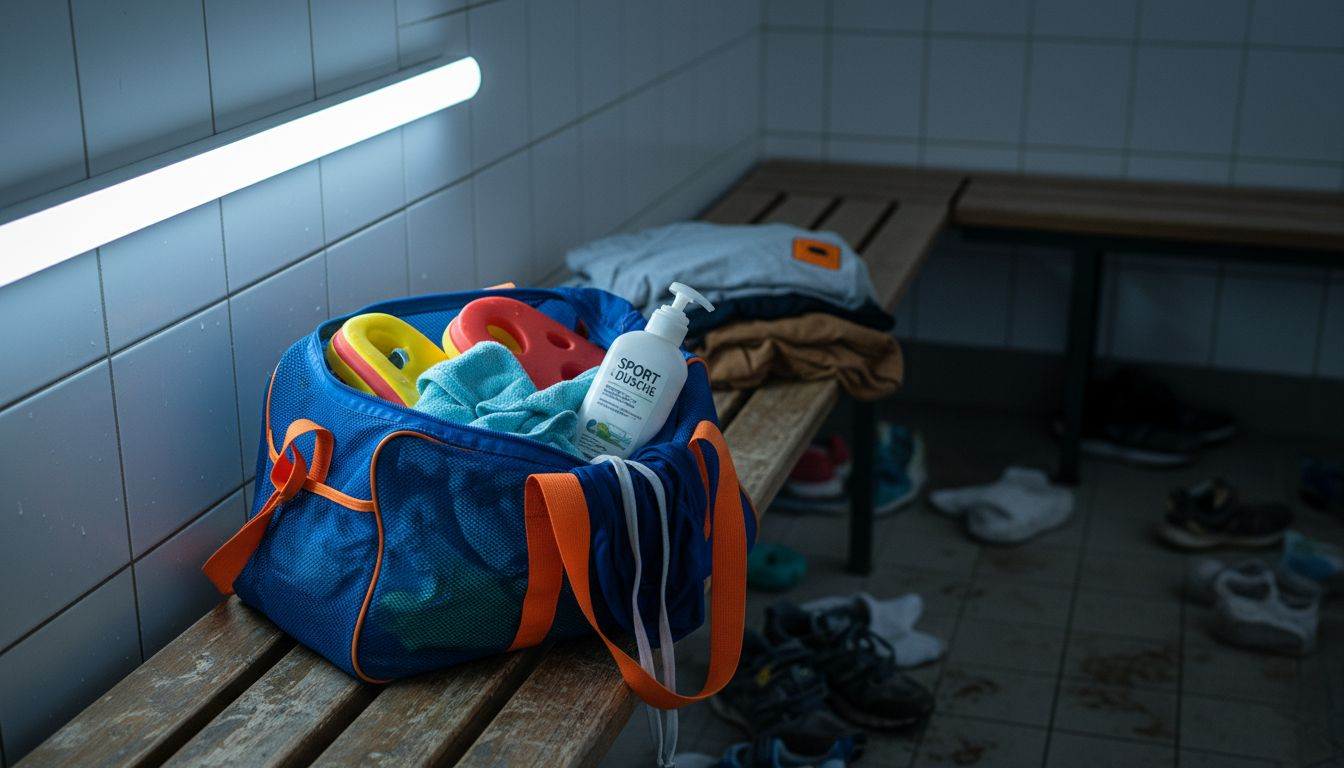
You will also need towels, showering essentials, and a waterproof bag for wet items. Make sure your child wears light and non-slip swimming shoes to walk safely along the poolside.
Pro-Tip: Wash new swimwear before the first use to remove chemical residues and increase wearing comfort.
Here's an overview of typical swimming accessories and their benefits for children:
| Accessory | Main Function | Recommended Age Group |
|---|---|---|
| Swimming Goggles | Protects eyes from chlorinated water | From 4 years |
| Swimming Cap | Keeps hair dry and clean | From 4 years |
| Snug-fitting swimwear | Improves freedom of movement | From 4 years |
| Swim Shoes | Prevents slipping by the pool | 3 to 7 years |
| Towel | Dries after swimming | From 1 year |
| Waterproof Bag | Transports wet swimming gear | For all age groups |
Step 2: Choose a Suitable Swimming Course
For children aged four and up, selecting the right swimming course is crucial. A good course not only teaches swimming techniques but also builds water confidence and safety awareness. You should consider various aspects when choosing a course.
First, pay attention to group size and supervision quality. Small swimming courses with a maximum of six children guarantee individual attention and allow the instructor to respond to the needs of each child. Look for courses that teach swimming techniques playfully and are specifically tailored for preschoolers. An age-appropriate course should reduce fear and awaken a love for water.
Important selection criteria also include the qualifications of the swimming instructors, the duration of the course, and the frequency of training sessions. Ideally, courses offer short training times of about 30 minutes to avoid overtaxing children's concentration.
Pro-Tip: Visit a trial lesson beforehand to get a feel for the atmosphere and methodology of the swimming instructor.
Step 3: Actively Support Your Child During the First Water Training
The first water training is a significant moment in your child's development. It's about building trust together and gaining positive experiences in the water. Your active support plays a crucial role in this.
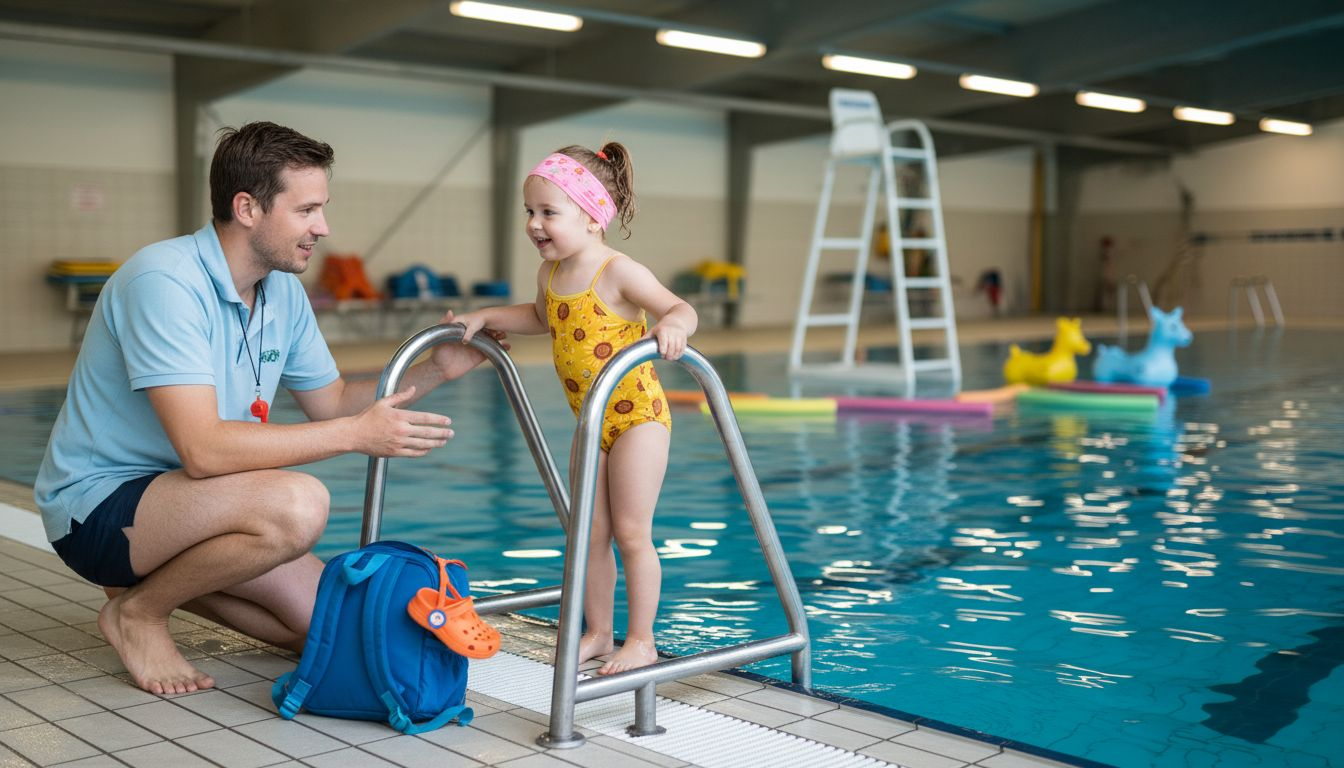
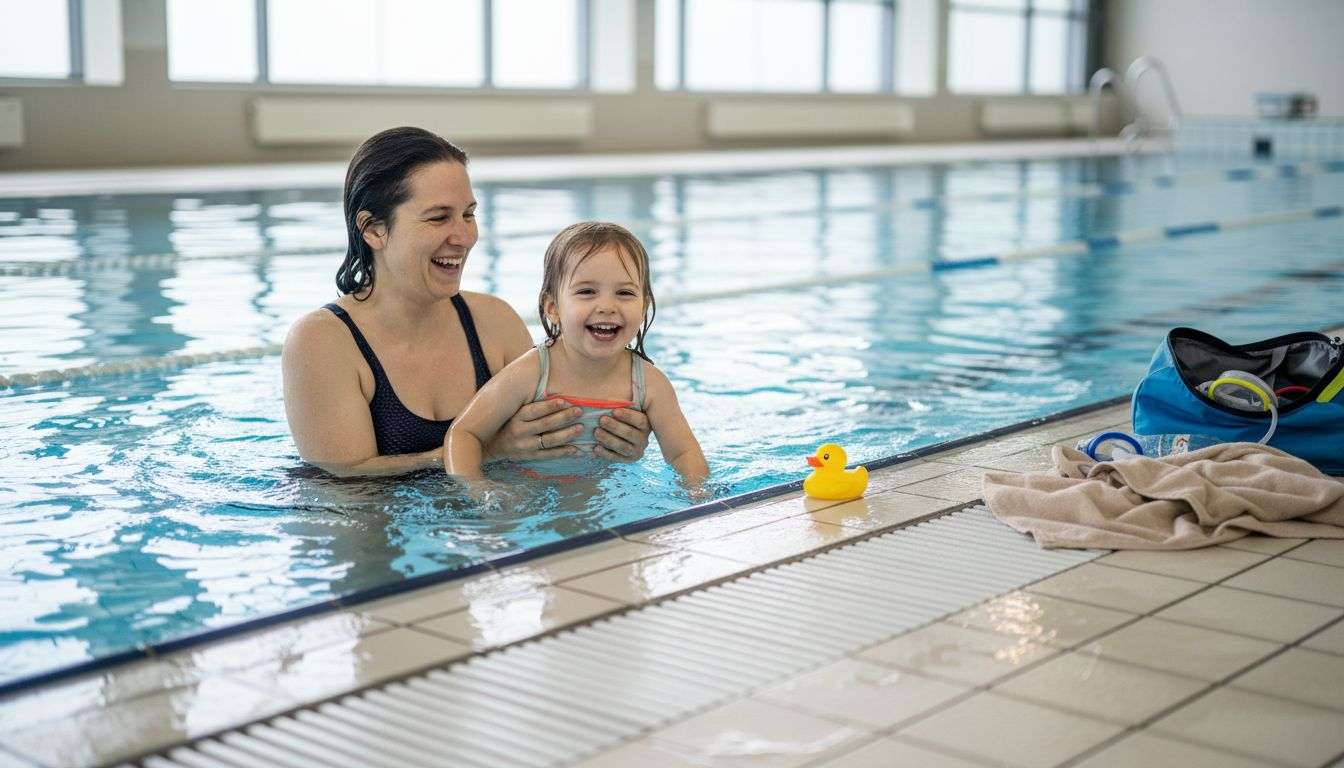
Parent-child swimming courses offer an excellent opportunity to explore the aquatic world together. Be patient and supportive – focus on creating a relaxed and playful atmosphere. It is important that your child can playfully discover the properties of water, such as buoyancy and temperature. Encourage them to make small movements and help them feel secure.
Pay special attention to non-verbal communication. Radiate calmness and confidence so your child does not develop fear. Take time to experiment and allow your child space for their own discoveries. Observe their reactions carefully and adjust your support accordingly.
Pro-Tip: Bring a favorite toy to make the first water experience positive and familiar.
Step 4: Foster Trust and Swimming Skills
Learning to swim is more than just an athletic skill. It's about instilling confidence and self-reliance in your child in the water. The process requires patience, empathy, and a well-thought-out approach.
Fundamental water skills such as diving, floating, and gliding are crucial for swimming success. Start with simple exercises that are fun and give your child a sense of accomplishment. Encourage small steps forward and praise every effort. Focus on developing a positive attitude towards water and playfully overcoming fears.
Closely observe your child's individual reactions and adjust the exercises accordingly. Sometimes progress means taking only small steps at first. It's important that your child feels safe and supported. Develop a foundation of trust that allows them to bravely take on new challenges.
Pro-Tip: Set realistic goals and celebrate every small progress as a great success.
Step 5: Monitor Learning Progress with Swimming Badges
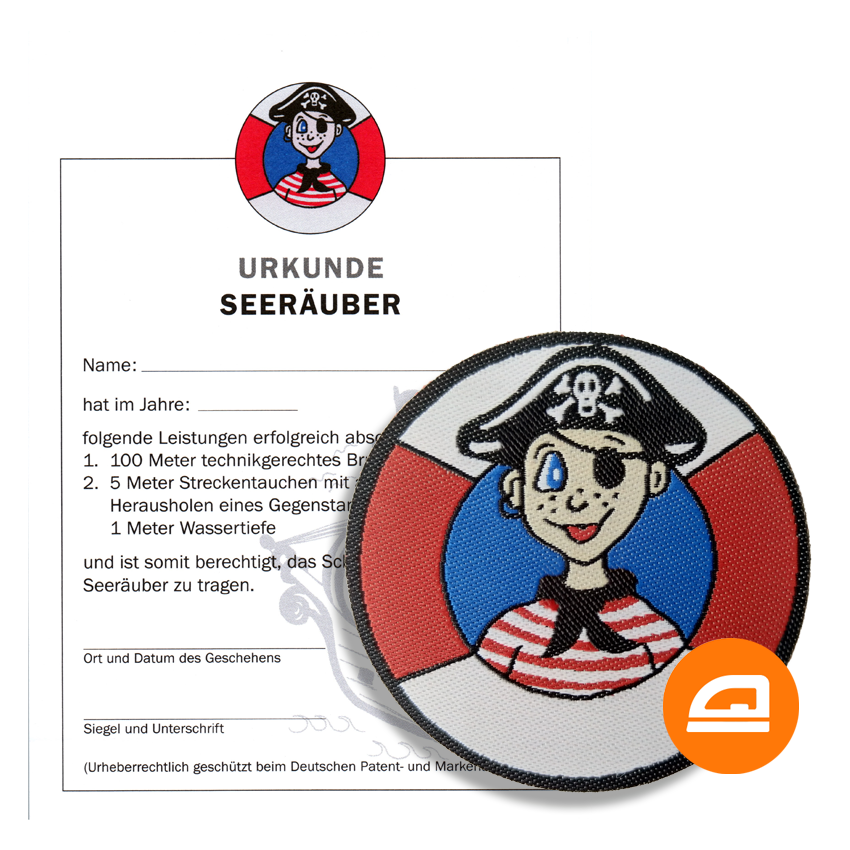
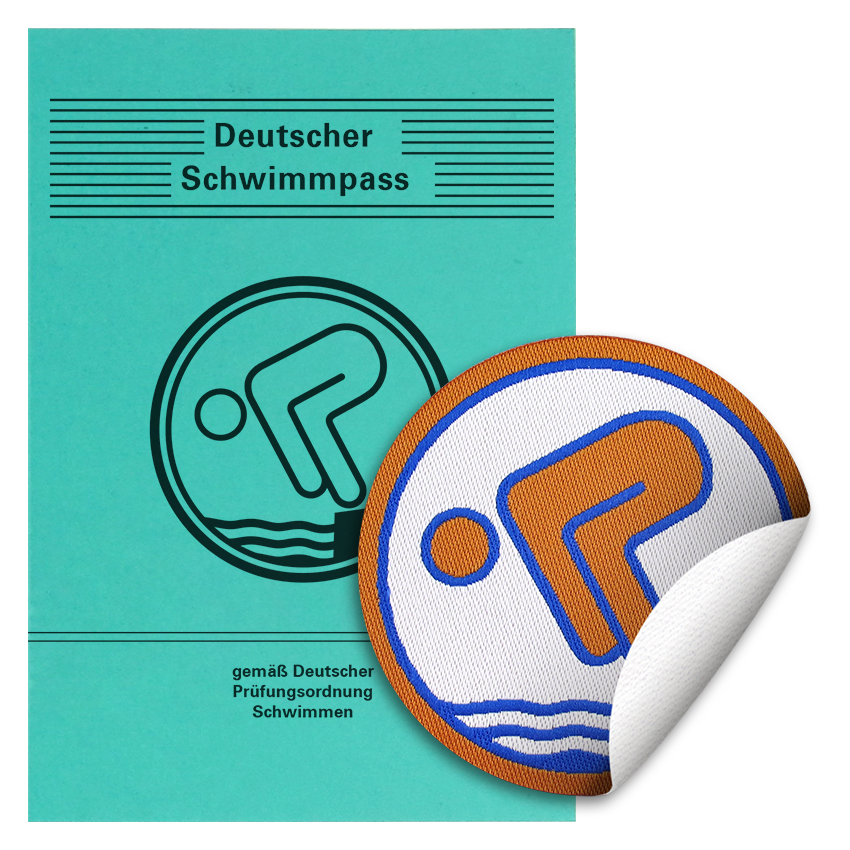
Swimming badges are more than just decorative awards. They document your child's systematic learning progress and motivate them to develop further swimming skills. A structured approach helps you to deliberately guide your child's development.
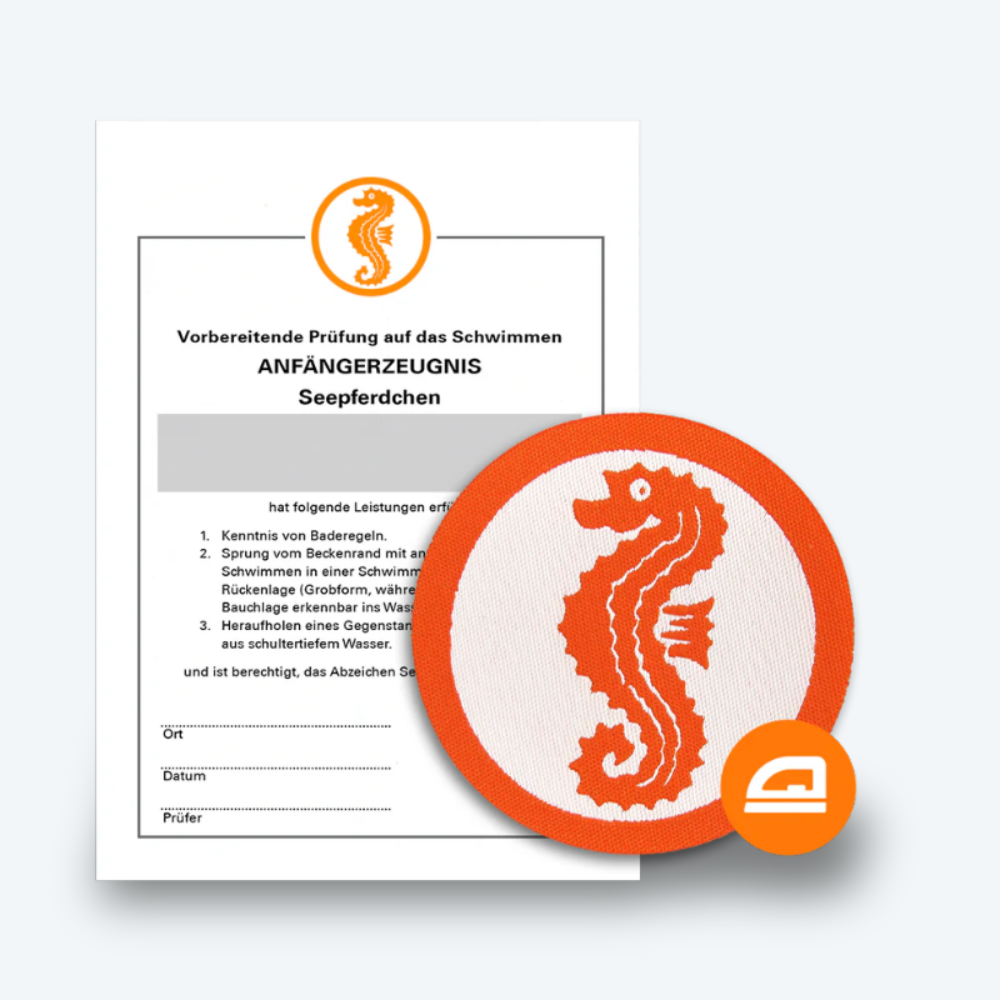
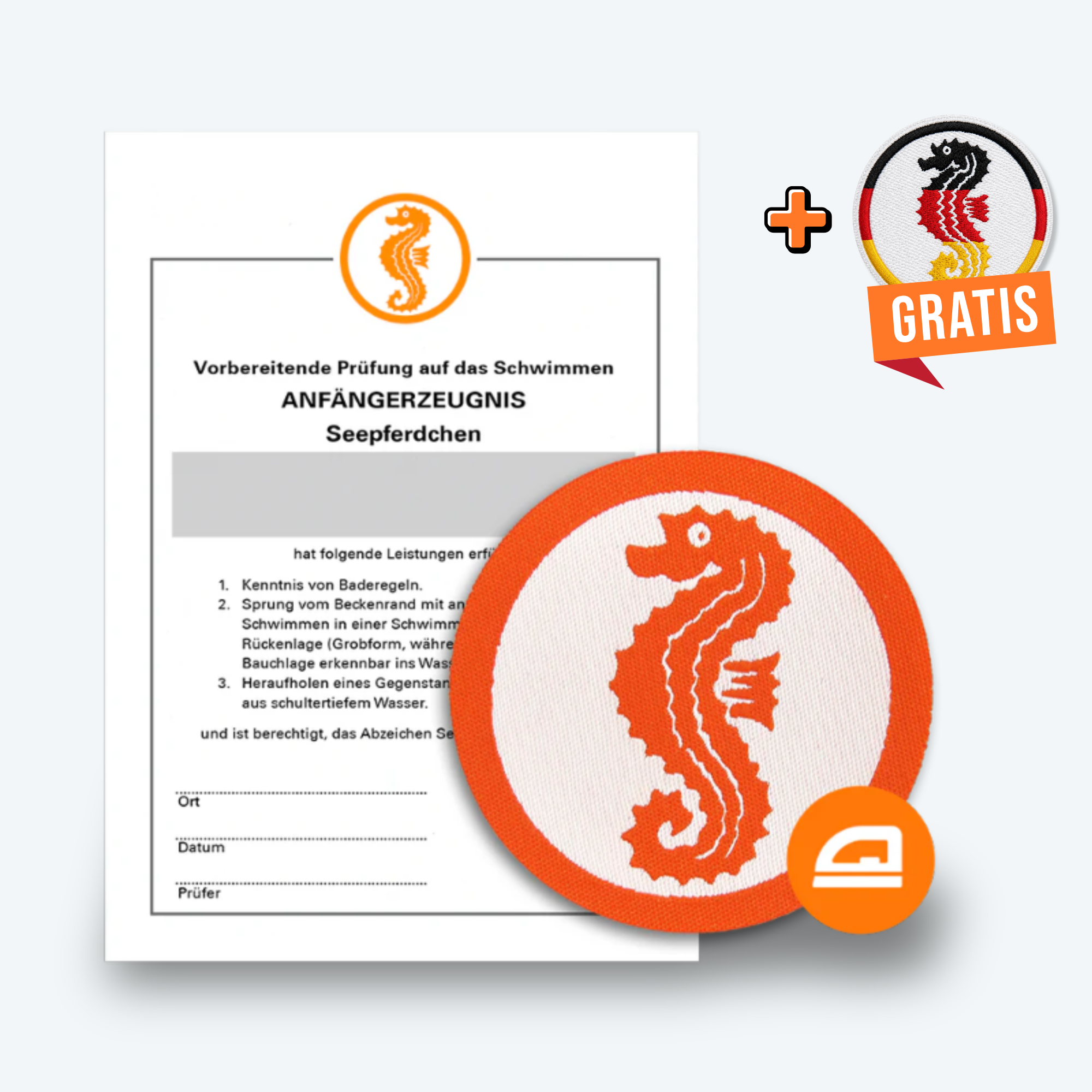
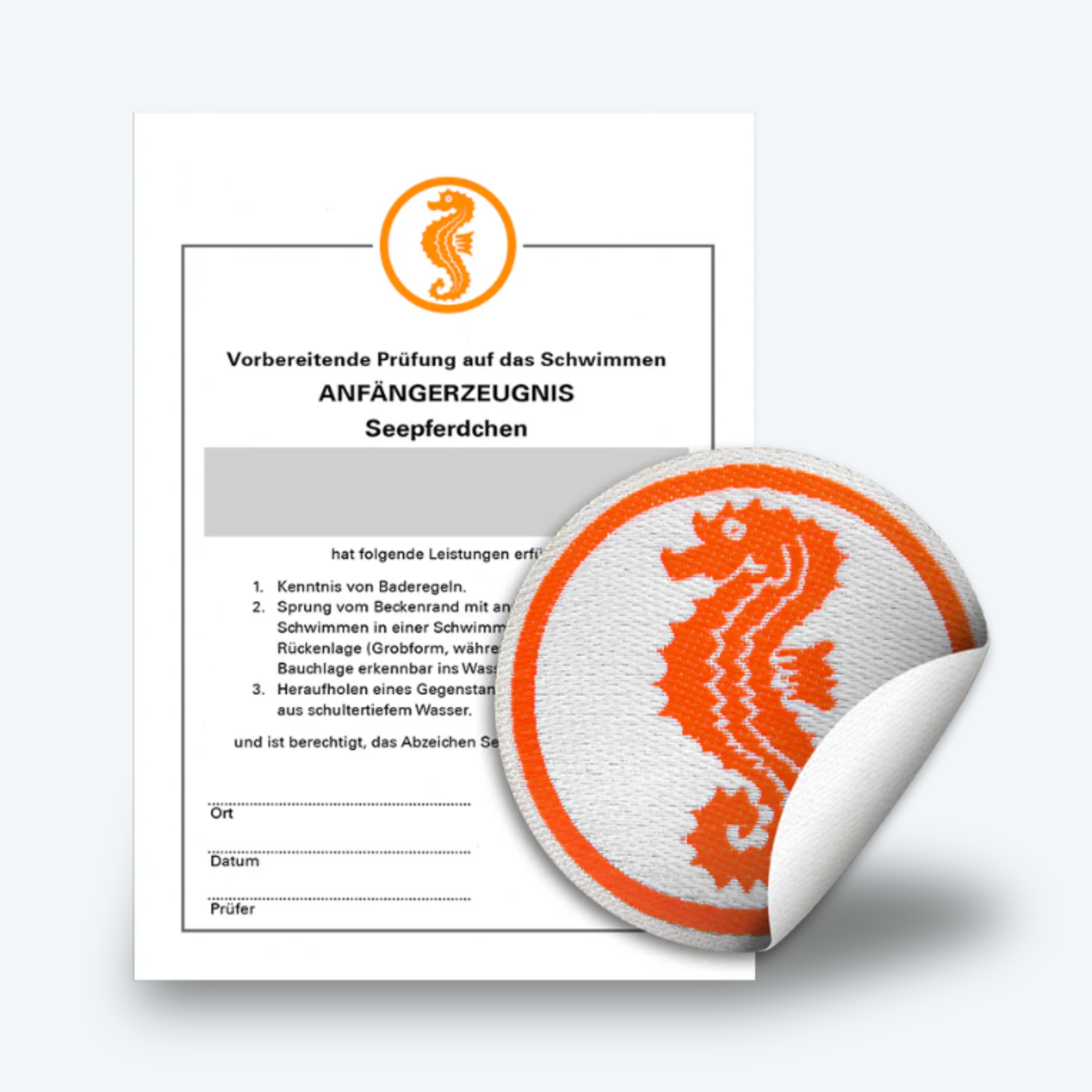
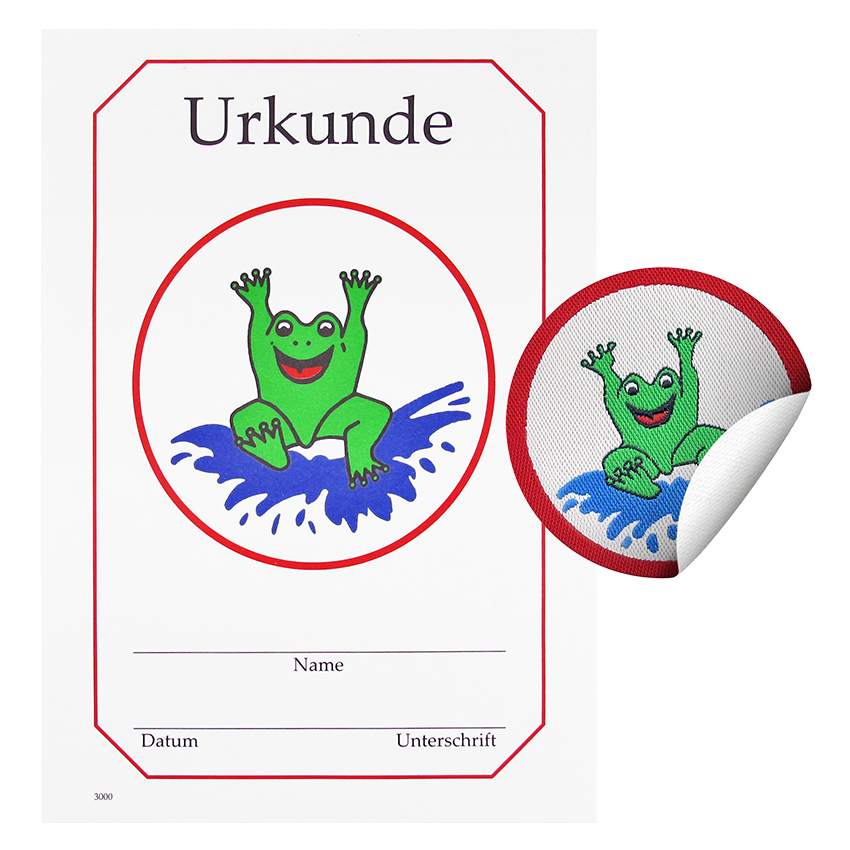
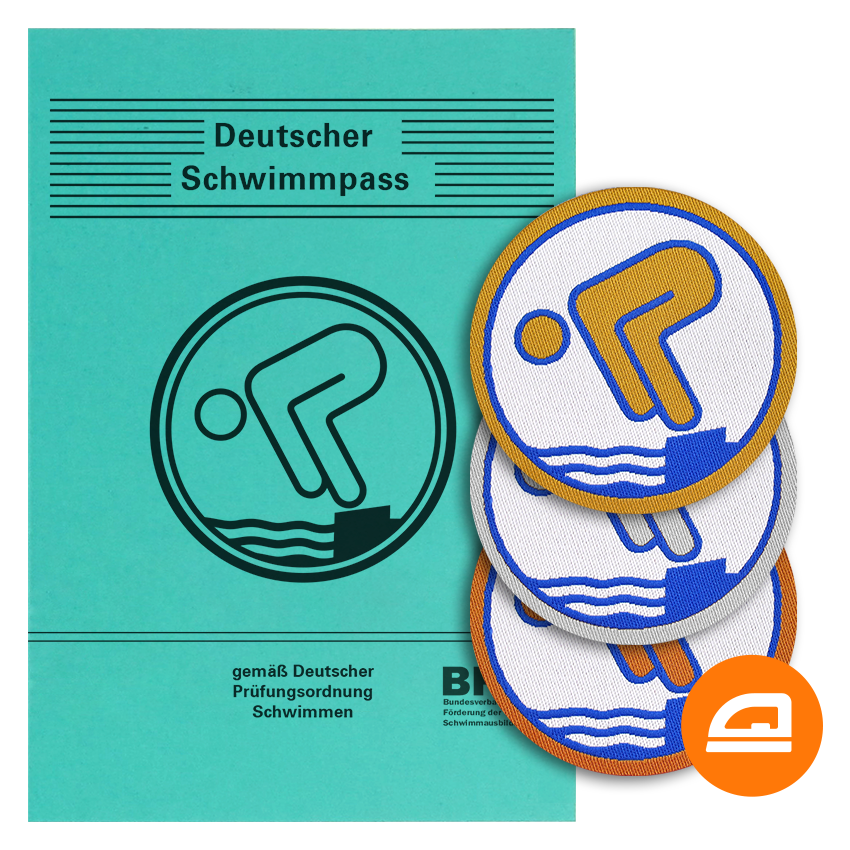
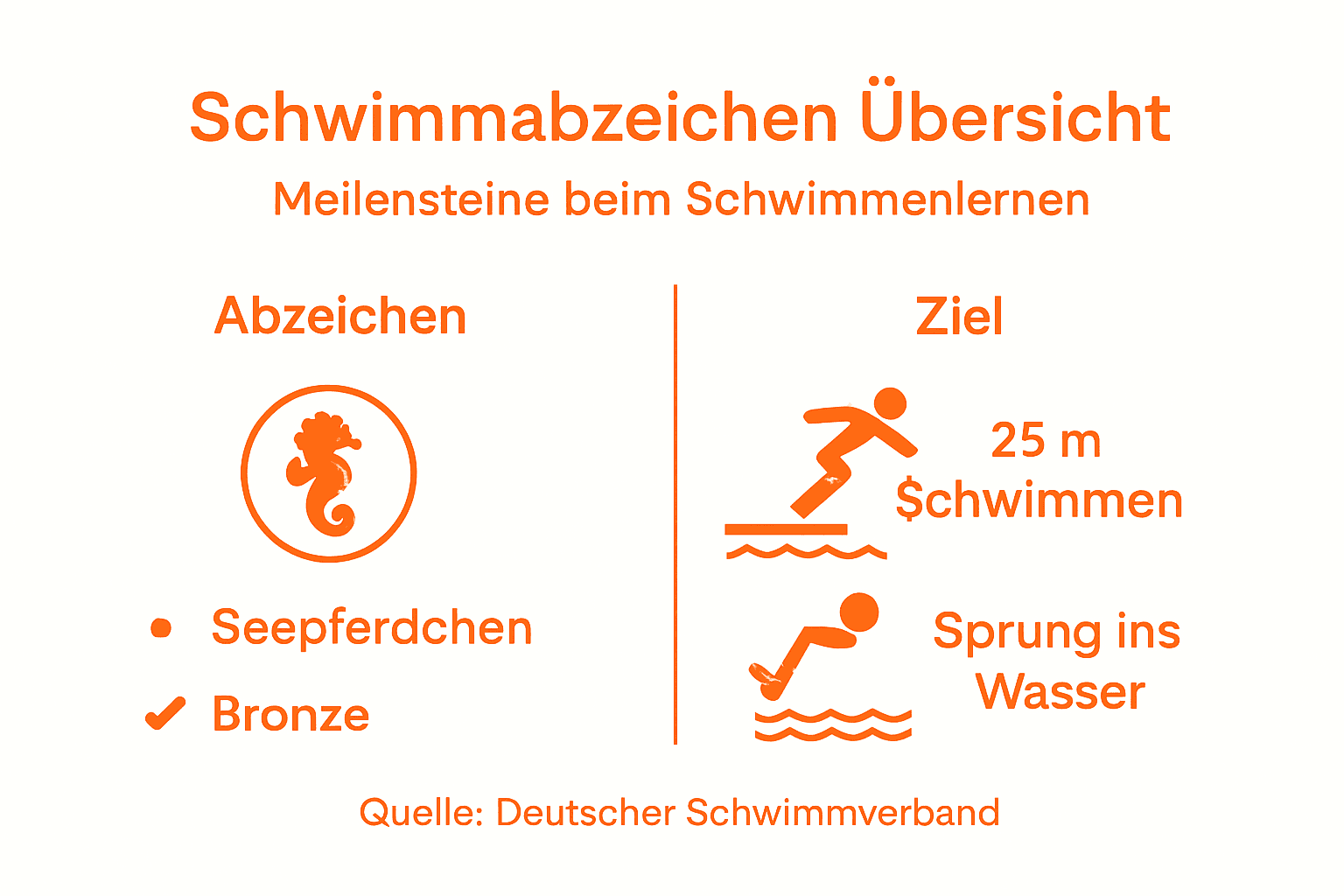
Start with the Seepferdchen badge, the first important milestone in learning to swim. This badge certifies basic water safety and initial swimming skills. Regularly discuss the development status with the swimming instructor and jointly set realistic goals. Ensure that your child perceives the challenges as motivating incentives and not as pressure.
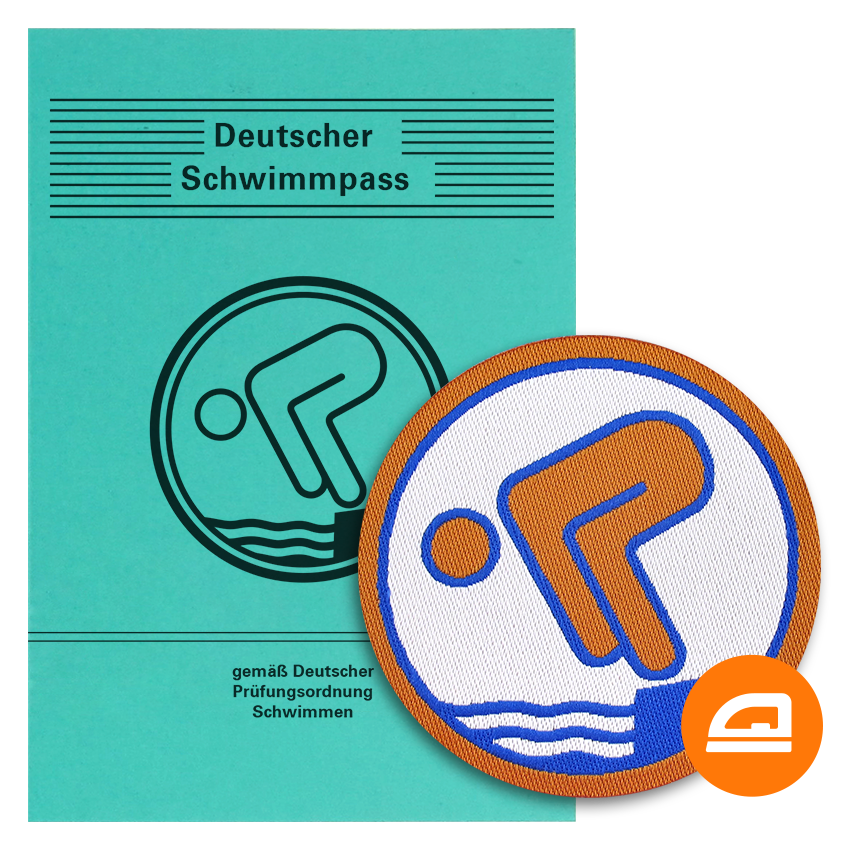
Each badge – Bronze, Silver, and Gold – marks a significant advancement in swimming techniques. Celebrate these successes together and show your child that you are proud of their achievements. The badges reflect not only technical skills but also growing self-confidence in dealing with water.
Pro-Tip: Keep the swimming badges in a special album to make your child's development journey visible.
This table shows key differences of German swimming badges for children:
| Badge | Main Requirement | Symbolic Value |
|---|---|---|
| Seepferdchen (Seahorse) | 25 m swimming, diving | First water safety certification |
| Bronze | 200 m swimming, deep diving | Strengthens endurance and technique |
| Silber (Silver) | 400 m swimming, jump | Advanced swimming knowledge |
| Gold | 600 m swimming, rescue exercise | High water competence |
Learning to Swim Safely from Age 4 with Pimpertz – Your Partner for Swimming Badges and Accessories
The challenge of learning to swim from age 4 lies in combining safety and joy in the water. Your child needs not only age-appropriate swimming equipment but also motivating goals such as achieving swimming badges. This is exactly where Pimpertz comes in. For over 38 years, we have supported parents and swimming instructors with high-quality swimming badges and practical accessories. Our officially certified certificates and badges make your child's progress visible and strengthen their self-confidence in the water.
Take advantage of our comprehensive offerings around swimming badges, personalized badge kits, and waterproof collection albums. Start a successful swimming career now with the right equipment and the coveted badges from Pimpertz. Discover our range on pimpertz.de and take the next step in your child's swimming adventure with swimming badges & certificates as well as swimming accessory recommendations. Trust in quality and experience for more safety and fun when learning to swim.
Frequently Asked Questions
When can I enroll my child in swimming lessons?
Your child can be enrolled in a swimming course from the age of 4. Choose a course specifically designed for preschoolers to reduce fear and foster a love for water.
Which swimming aids are suitable for children?
Suitable swimming aids include armbands, inflatable swim rings, and life vests. Ensure that these aids support your child's safety but do not replace supervision while swimming.
How do I find the right swimming course for my child?
When choosing a swimming course, pay attention to the group size, the supervision approach, and the qualifications of the instructors. Look for courses that take place in small groups and offer playful elements to make your child feel comfortable.
How can I support my child in learning to swim?
Support your child by actively accompanying them to swimming and creating a relaxed atmosphere. Encourage them to playfully learn various water movements and celebrate small successes along the way.
What is the Seepferdchen badge and how do I achieve it?
The Seepferdchen badge is an important first step in learning to swim, requiring 25 meters of swimming and diving for an object. Regularly check your child's progress and set small, achievable goals to keep motivation high.
How do I document my child's learning progress?
Swimming badges are an excellent way to document your child's learning progress. Celebrate every successful completion of a badge and store these awards in a special album to visually track developments.