
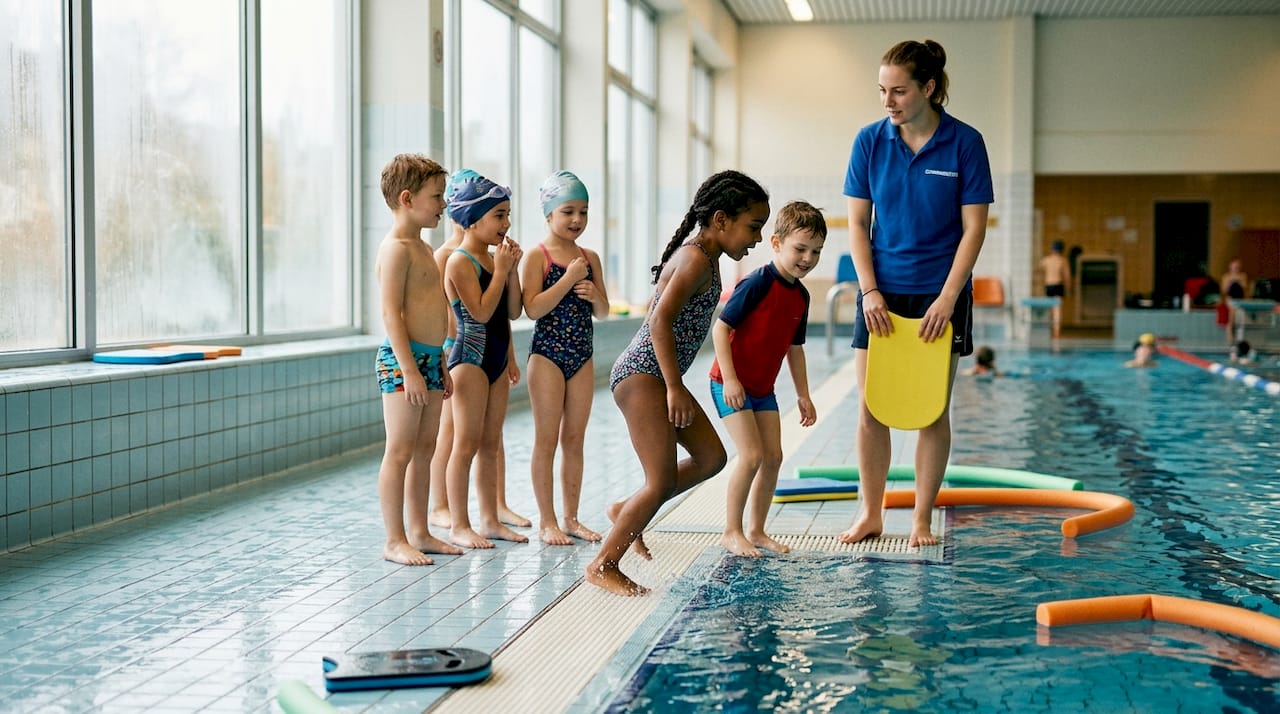
Examples of swimming badge practice drills
Many parents and swimming instructors face the challenge of finding suitable exercises for preparing for various swimming badges. The right combination of playful and targeted training methods determines whether children remain motivated and systematically develop their swimming skills. This article provides concrete exercise examples for the Seahorse badge, Bronze, Silver, and Gold, explains the respective requirements, and offers practical tips for age-appropriate implementation in swimming lessons.
Table of Contents
- Key takeaways
- Fundamentals and preparatory exercises for the Seahorse badge
- Endurance and technique exercises for the Bronze swimming badge
- Advanced exercises for Silver and Gold swimming badges
- Comparison of swimming badges using exercise examples
- Order swimming badge sets and certificates online
- Frequently asked questions
Key takeaways
| Point | Details |
|---|---|
| Seahorse Fundamentals | Seahorse requires water acclimatization and a first jump performance, as well as 25m swimming and knowledge of swimming rules. |
| Playful Motivation | Combine each exercise session with a playful element such as a treasure hunt or relay games to foster motivation and positive learning experiences. |
| Bronze Requirements | Bronze requires a compact jump, 2m deep diving, and 15 minutes of swimming with a total distance of at least 200 meters. |
| Endurance Training Bronze | Interval training with short intensive phases and recovery periods effectively increases endurance. |
| Preparing for Stroke Changes | Practice stroke changes only after separate training of front crawl and backstroke. |
Fundamentals and preparatory exercises for the Seahorse badge
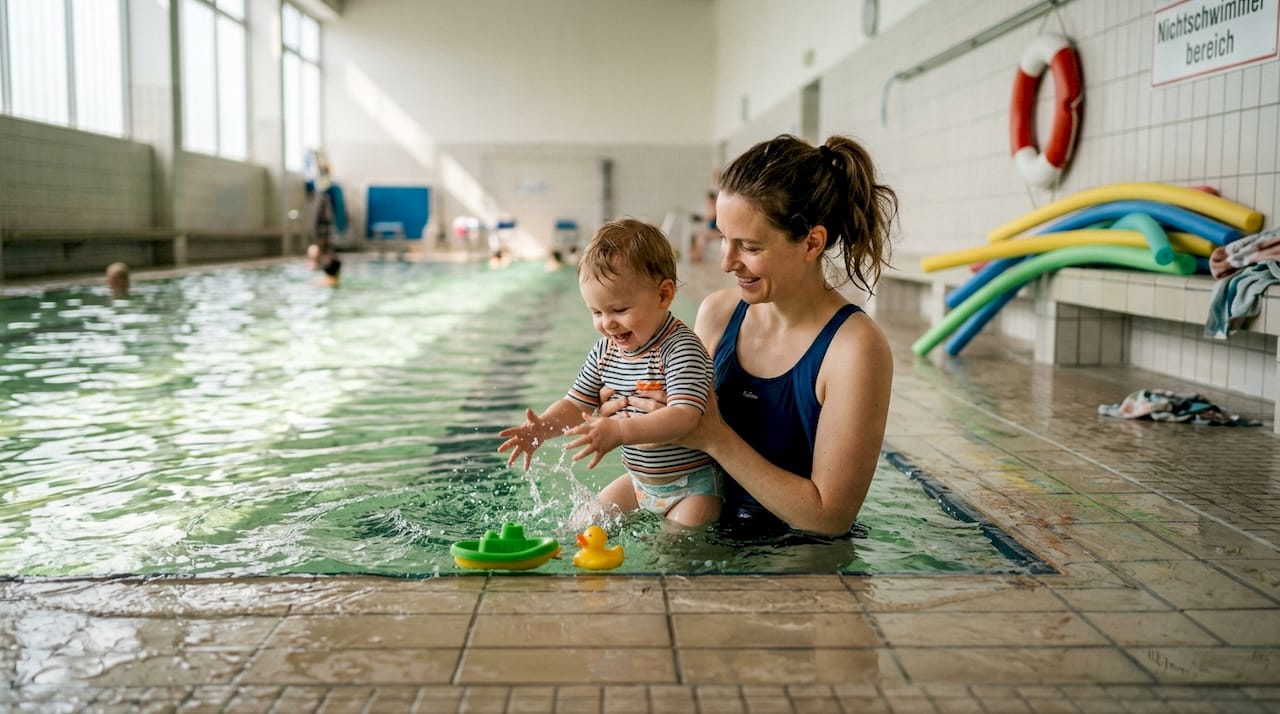
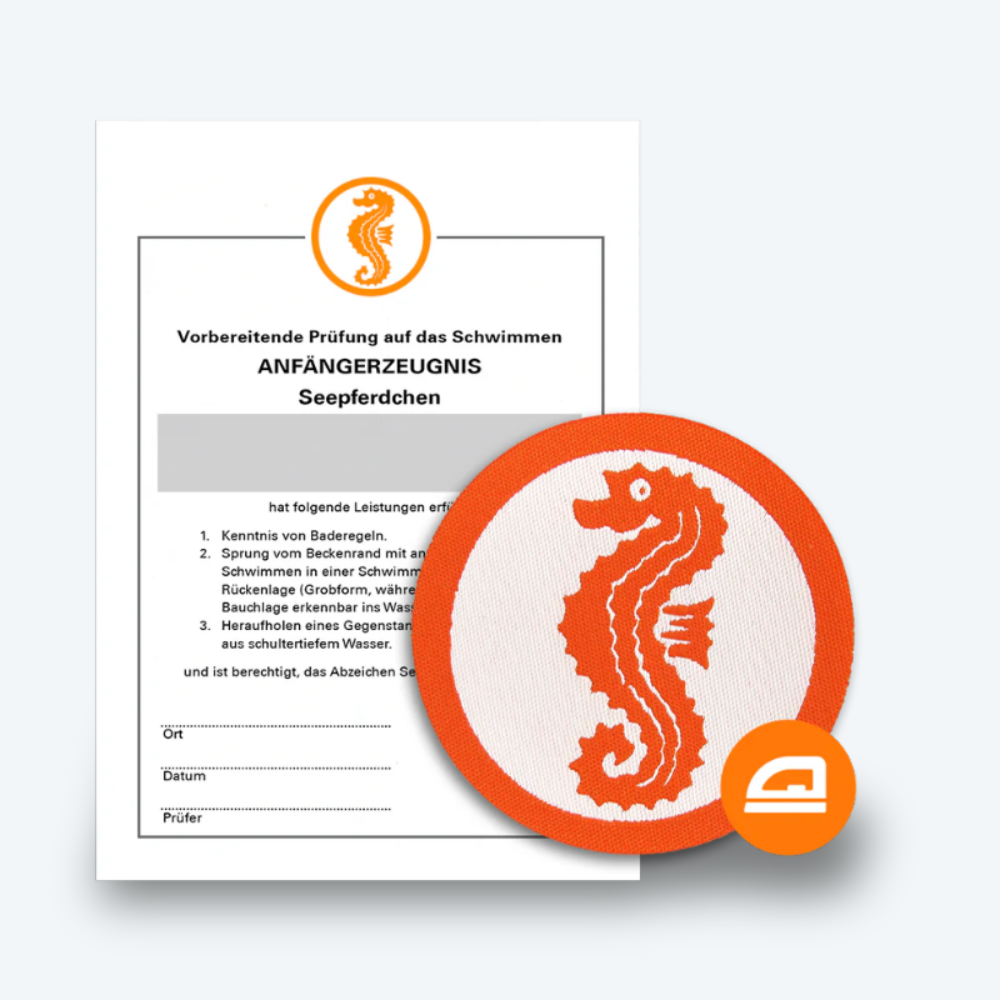
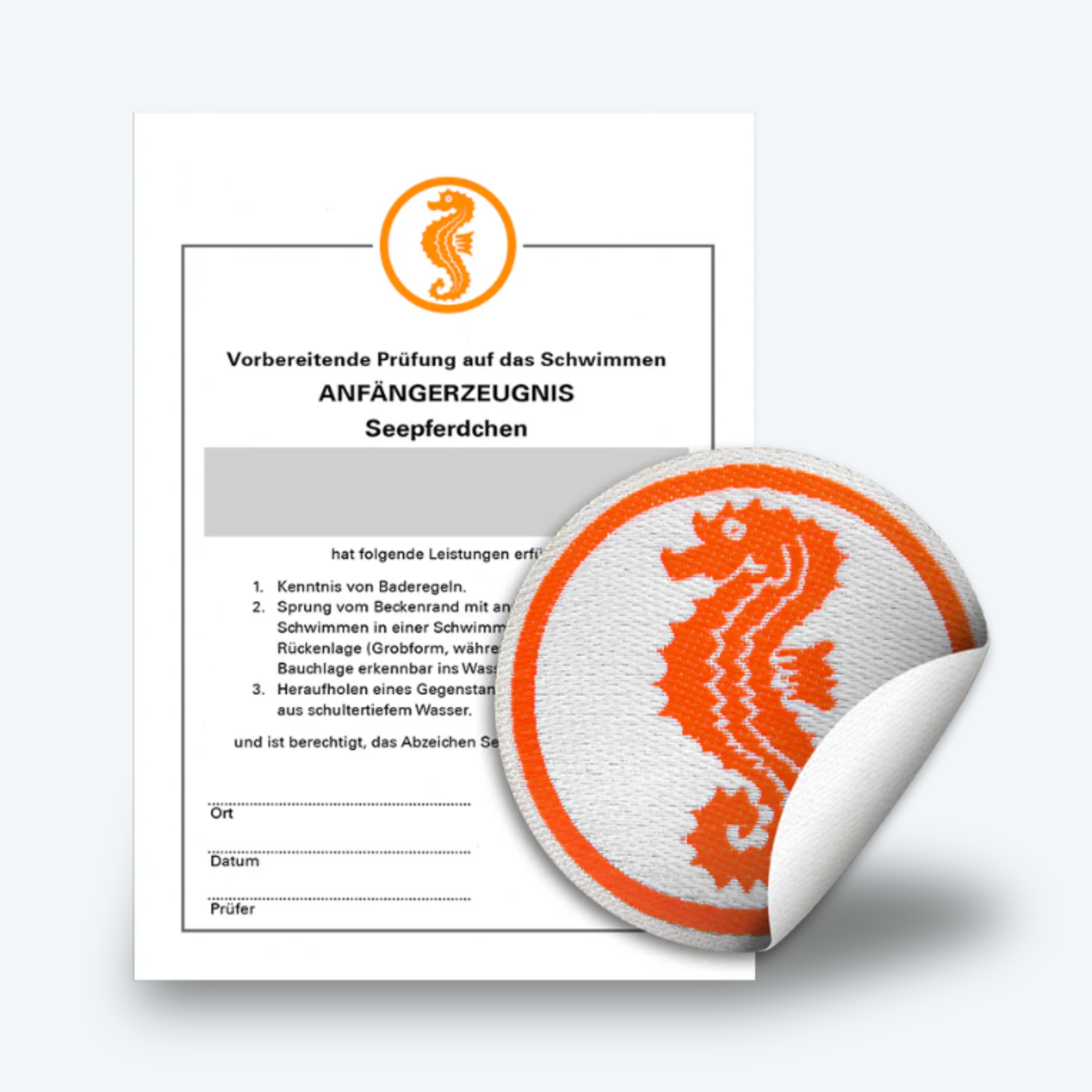
The Seahorse badge requires knowledge of swimming rules, retrieving an object, a jump, and 25m swimming and marks the first important milestone for young swimming beginners. Preparation begins with playful water acclimatization, where children first build confidence in the water element. Blowing bubbles into the water, submerging their face, and pushing off the pool edge are simple introductory exercises that reduce fears.
The following exercises are particularly suitable for technical preparation:
- Gliding exercises with a kickboard to stabilize body position in the water
- Leg kick training at the pool edge while holding on
- Arm stroke movements in shallow water with foot contact
- Short swimming distances of 5 to 10 meters with breaks
- Diving for colorful rings in waist-deep water
The Seahorse requirements also demand a jump from the pool edge. Children should learn this exercise gradually, first sitting, then squatting, and finally standing. It is important that they learn to keep their eyes open and swim back to the surface immediately after entering the water.
Pro Tip: Combine each exercise session with a playful element such as a treasure hunt or relay games. This keeps motivation high and children associate training with positive experiences instead of performance pressure.
The swimming rules are best taught through practical examples in the swimming pool. Show specifically where dangers lurk, why one should not push others into the water, and why non-swimmer areas are marked. Children understand rules better when they see a direct connection to their surroundings.
Endurance and technique exercises for the Bronze swimming badge
The Bronze badge requires a compact jump, 2m deep diving, and 15 minutes of swimming with at least 200m and places significantly higher demands on endurance and technical precision. Interval training has proven particularly effective for increasing endurance. Children alternate short intensive phases and active recovery phases.
A typical training plan for Bronze could look like this:
- Warm-up with 50 meters of relaxed swimming
- Four intervals of 25 meters of brisk swimming with 30 seconds rest
- Two intervals of 50 meters with 45 seconds rest
- Finally, 100 meters at a steady pace
- Cool-down with a slow 25 meters
The compact jump requires special attention, as children must learn to enter the water compactly. First, practice the correct body posture on land, with arms wrapped around the knees and chin tucked to the chest. In the water, start with low jump heights and gradually increase them.
The following exercises are helpful for deep diving:
- Diving for objects at increasing depths
- Underwater rolls for orientation
- Practicing pressure equalization by swallowing or yawning
- Repeated up and down between the bottom and the surface
Pro Tip: Many children initially have difficulty with pressure equalization during deep diving. Have them dive only to hip depth first and explain the pressure equalization technique precisely before going deeper.
The requirements of the Bronze badge also include various swimming strokes. Practice front crawl and backstroke separately before introducing stroke changes. Children should be able to swim at least 50 meters safely in each stroke before taking the test. The Bronze swimming badge is considered an important step towards water safety.
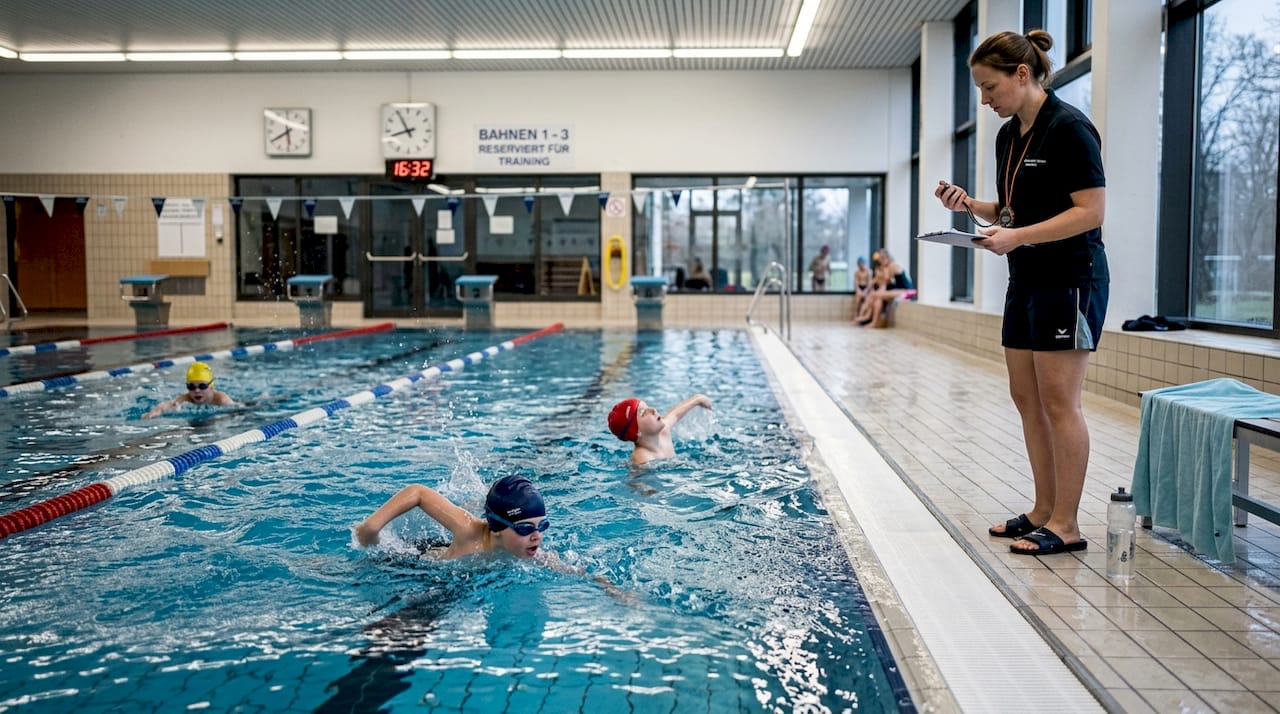
Advanced exercises for Silver and Gold swimming badges
The higher swimming badges require significantly more skill. Silver requires a jump from 3m, 10m underwater swimming, and 20 minutes of swimming with at least 400m, Gold requires 50m rescue swimming, 30 minutes of swimming with at least 800m, and swimming in clothes. These requirements prepare children for real emergency situations and impart comprehensive water competency.
For Silver, self-rescue exercises are in the foreground. Simulate various scenarios where children must help themselves:
- Assuming a back float position and calmly drifting
- Using clothing as a buoyancy aid
- Conserving energy through calm paddling
- Changing from prone to supine position without panic
Underwater swimming for 10 meters requires good breath control and body tension. Start with 3 to 5 meters and increase the distance by one meter weekly. Children should learn to push off the bottom underwater and move forward with minimal movements.
| Badge | Swimming Time | Distance | Special Techniques |
|---|---|---|---|
| Silver | 20 Minutes | min. 400m | 10m underwater swimming, self-rescue |
| Gold | 30 Minutes | min. 800m | 50m rescue swimming, swimming in clothes |
For Gold, the challenging rescue swimming is added. Here, children learn to safely pull another person through the water:
- Armpit grip for unconscious persons
- Head grip for cooperative persons
- Side pulling with one arm
- Backstroke with a held partner
Pro Tip: Swimming in clothes should only be practiced under the direct supervision of an experienced swimming instructor. Start with light clothing such as a T-shirt and shorts before moving on to jeans and a sweater. Explain to the children how wet clothing affects buoyancy and freedom of movement.
The test contents of the swimming badges build systematically upon one another. The Gold badge adds the ability to swim for 15 minutes without holding on, covering at least 200 meters in a prone position and 100 meters in a supine position. The procedure in elementary school is based on these standards. Safety is paramount in all advanced exercises.
Comparison of swimming badges using exercise examples
A direct comparison helps parents and coaches set realistic goals and choose the appropriate badge for the child's current performance level. The requirements vary significantly in terms of distance, jump heights, diving depths, and swimming times.
| Criterion | Seahorse | Bronze | Silver | Gold |
|---|---|---|---|---|
| Swimming Distance | 25m | 200m in 15 Min | 400m in 20 Min | 800m in 30 Min |
| Jump Height | Pool edge | 1m (compact jump) | 3m start jump | Start jump |
| Diving | Retrieve object | 2m deep diving | 10m underwater swimming | 2m deep diving |
| Special Features | Swimming rules | Knowledge of swimming rules | Self-rescue | 50m rescue swimming, swimming in clothes |
| Recommended Age | from 5 years | from 7 years | from 9 years | from 10 years |
The Seahorse serves as an entry point and confirms basic water safety, but does not replace the ability to swim safely. Only Bronze is considered true proof that a child can help themselves in the water. Silver expands these skills with self-rescue techniques that can be life-saving in emergencies.
Gold represents the highest requirement in the youth swimming badges and prepares for lifeguard badges. Children who achieve Gold possess comprehensive swimming competence and can also help others in dangerous situations. The overview of all swimming badges shows the complete progression.
When choosing the next goal, consider the child's individual developmental stage. Some children need more time for endurance, others have difficulty with diving. Adapt the training to these needs instead of rigidly following a schedule.
Order swimming badge sets and certificates online
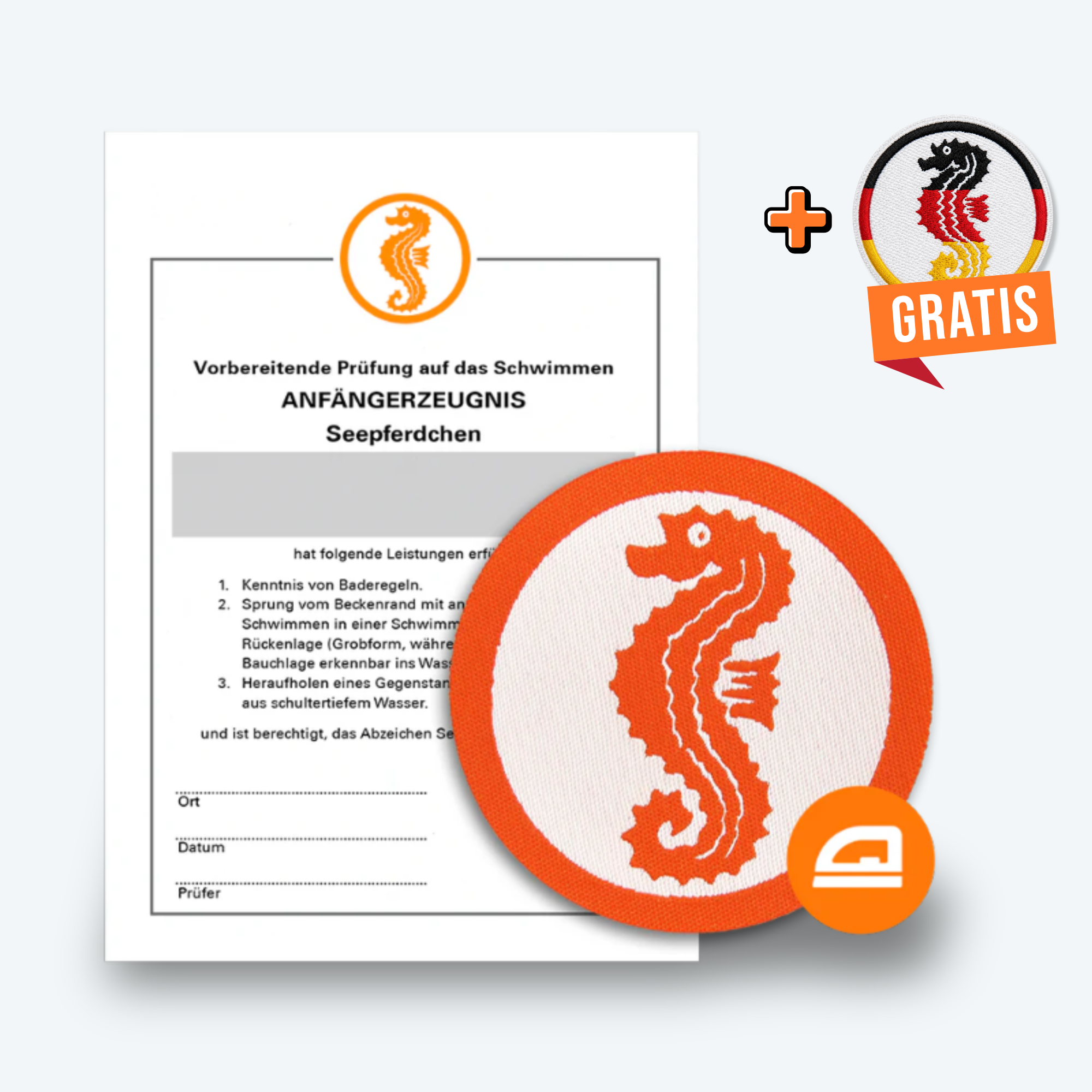
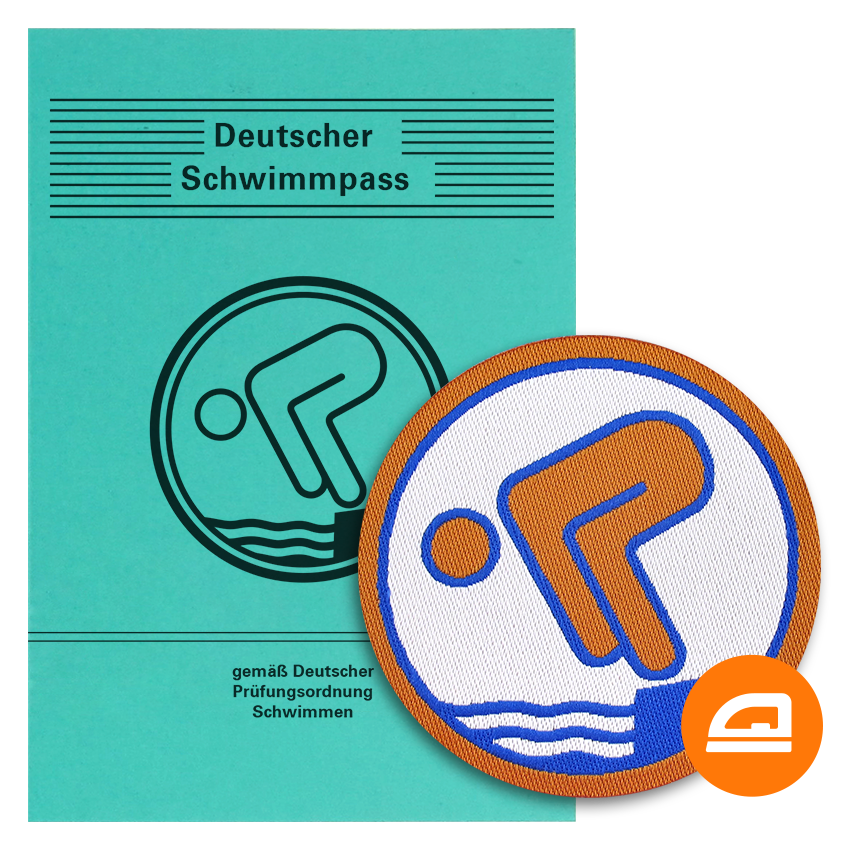
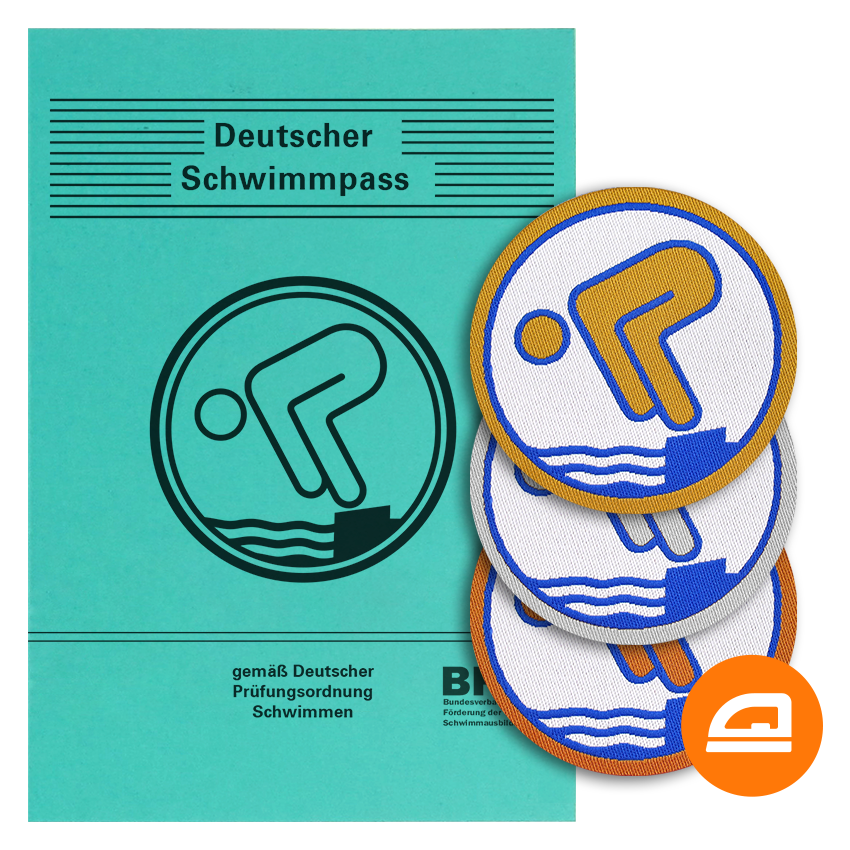
After a successful examination, the official award is an important moment for every child. At Pimpertz, you will find swimming badges from Bronze to Gold, including a swimming pass, which meet the highest quality standards and are recognized by DLRG and BFS. The badges are made with waterproof materials and last for years.
In addition to the badges, we offer official certificates that document success and show children how proud they can be of their achievement. For swimming schools and clubs, our swimming badge sets are particularly practical, as they contain all necessary components and offer volume discounts. With over 38 years of experience, Pimpertz guarantees fast delivery within 1 to 2 business days and expert advice for your individual requirements.
Frequently asked questions
What exercises are particularly suitable for the Seahorse badge?
For the Seahorse badge, water acclimatization games like submerging the face in water, blowing bubbles, and gliding with a kickboard are ideal. Short swimming distances of 5 to 10 meters with breaks help build the necessary endurance for 25 meters. Playful diving for colorful rings in shallow water prepares for retrieving an object.
How can endurance for the Bronze badge be effectively increased?
Interval training with short distances of 25 to 50 meters and active breaks builds endurance without overtaxing children. Gradually increase the total swimming time from 10 to 15 minutes over several weeks. Controlled breaks between intervals prevent exhaustion and enable high-quality training.
What safety aspects are important for Gold badge exercises?
All Gold badge exercises, especially swimming in clothes and rescue swimming, may only take place under the direct supervision of an experienced swimming instructor. Correct technique always takes precedence over speed, as incorrect movement patterns can be dangerous in emergency situations. Regularly review emergency knowledge and self-rescue techniques so that they can be automatically recalled in an emergency.
At what age should children begin preparing for the Bronze badge?
Most children are physically and mentally ready for Bronze preparation at 7 years old, provided they have mastered the Seahorse badge safely. The crucial factor is not age, but the ability to swim 25 meters without assistance and to feel comfortable in the water. Some children need another year of practice, while others are ready at 6 years old.
How often should one train per week for swimming badges?
For the Seahorse badge, one to two training sessions per week are sufficient to achieve steady progress. Bronze and Silver ideally require two to three sessions weekly for sufficient endurance development. Gold candidates benefit from three to four training sessions per week, with at least one rest day planned between intensive sessions.
Can children complete several badges in one year?
Basically yes, but only if the skills are solidly developed and there are no gaps. There should be at least three to six months between the Seahorse and Bronze badges to sufficiently consolidate endurance and technique. For Bronze to Silver or Gold, six to twelve months of intensive training are recommended, as the requirements become significantly more complex.