
Parent-Child Swimming: Benefits for Safe Learning
Many parents wonder how best to introduce their children to water without fear or insecurity dampening the fun. Parent-child swimming offers an ideal solution: it combines playful learning with intensive family bonding and creates a safe environment in which children gradually develop swimming skills. This article will show you the most important benefits, proven methods, and practical tips so that you and your child can celebrate successes in the water together.
Table of Contents
- Key Benefits of Parent-Child Swimming
- Important Criteria for Parent-Child Swimming
- Psychological and Health Benefits for Children and Parents
- Practical Methods and Experiences in Parent-Child Swimming
- Tips for Parents: How to Make Parent-Child Swimming a Success
- Discover Swimming Badges and Certificates for Children
- Frequently Asked Questions about Parent-Child Swimming
Key Insights
| Point | Details |
|---|---|
| Playful Water Acclimatization | Through playful splashing games and gentle frolicking, children develop confidence and joy in the water. |
| Parental Involvement is Crucial | Active parental support creates security and encourages independent movement in the water. |
| Regular Training is Important | Weekly training consolidates skills and prevents setbacks due to interruptions. |
| Enhanced Psychological Benefits | Swimming reduces anxiety and depression, strengthens self-confidence, and ensures emotional well-being. |
Important Criteria for Parent-Child Swimming
Following the summary, a detailed explanation of the most important decision criteria for parent-child swimming will be provided. These criteria will help you choose the right methods and provide optimal support for your child.
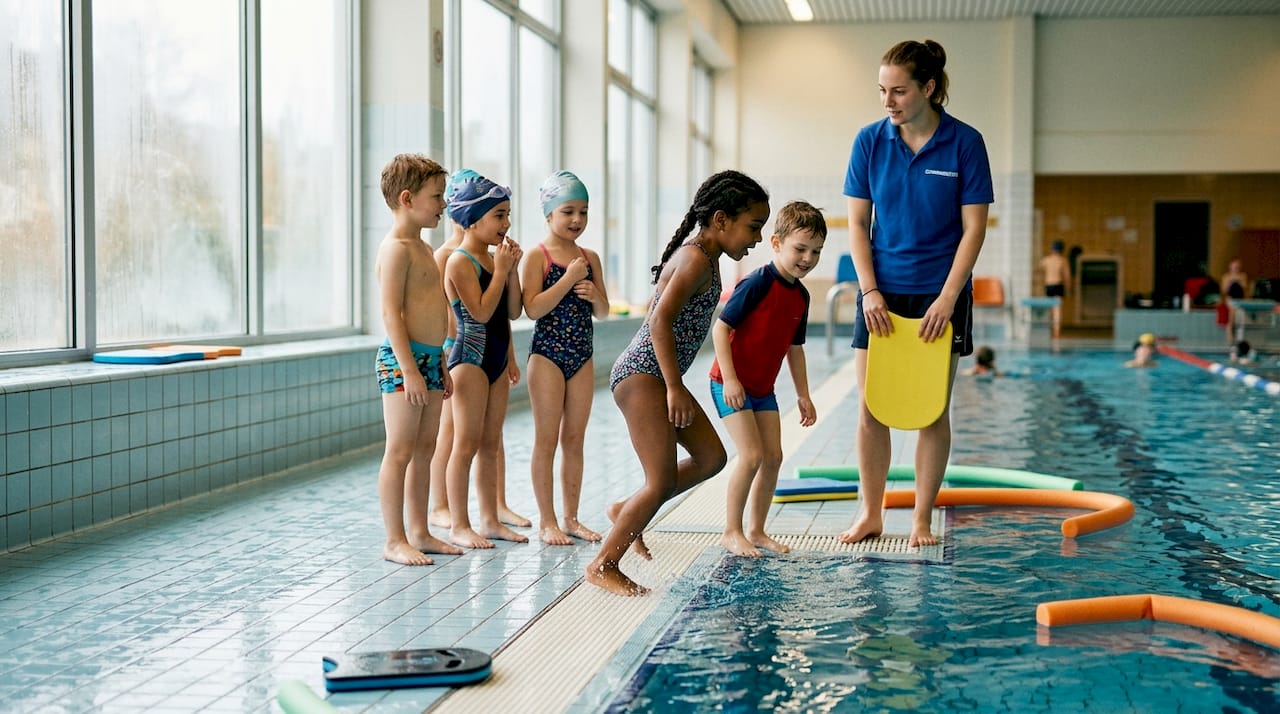
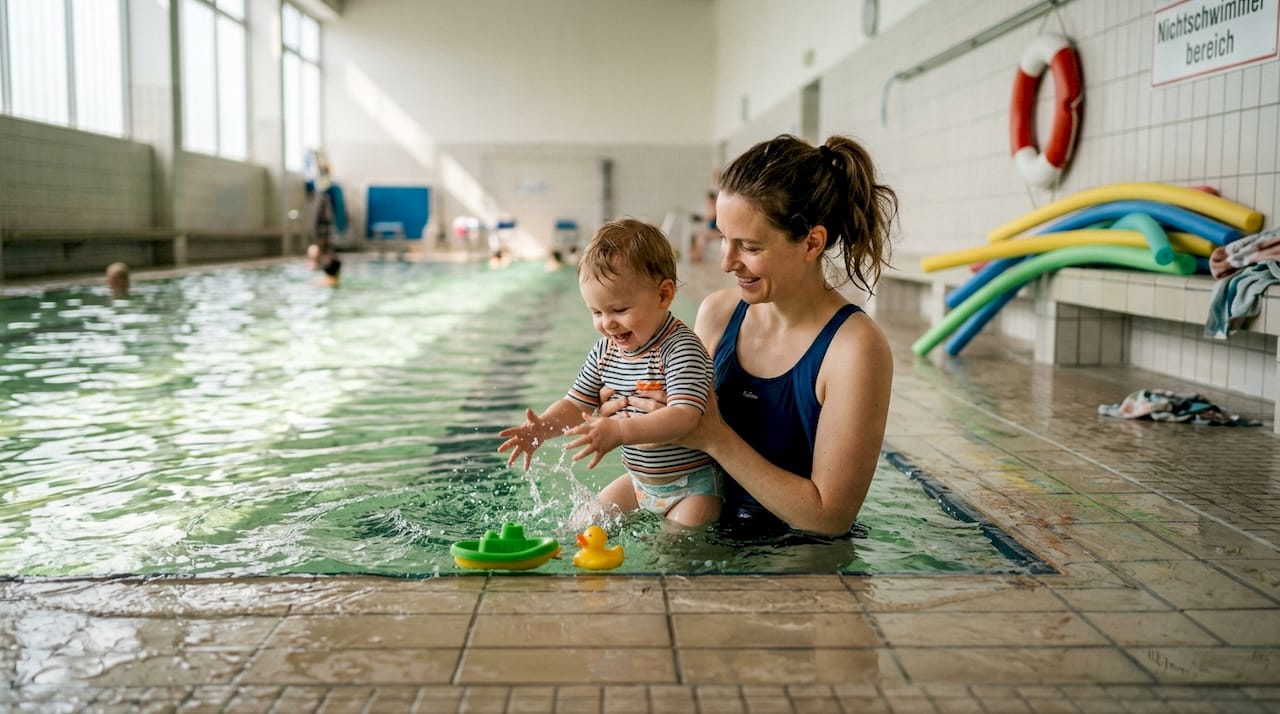
Water acclimatization for toddlers forms the foundation for successful swimming. Children should first playfully experience that water is not a threat, but a place for fun and discovery. Splashing games, gentle frolicking, and simple diving exercises build trust. Without this anxiety-free basis, technical swimming skills will be difficult to learn later.
Parents learn special gripping techniques and support methods that ensure safety. They hold the child correctly, stabilize the body while gliding, and provide exactly the help needed at each learning step. These techniques give the child a sense of security and simultaneously enable the first independent movements in the water. Learning to swim takes place in 9 steps, from water acclimatization to gliding and breathing, to coordinated arm and leg movements. Each step builds on the previous one, thus creating a solid foundation for safe swimming.
Key success factors at a glance:
- Playful water acclimatization without time pressure
- Learning safe gripping techniques by parents
- Gradual progression from gliding to swimming
- Weekly training for sustainable progress
- Positive reinforcement for every small success
Weekly training ensures long-term success and enjoyment. Regularity helps children consolidate what they have learned and continuously build new skills. Sporadic visits to the swimming pool often lead to setbacks and frustration. The benefits of learning to swim early are particularly evident with consistent practice.
Pro tip: Patience and positive reinforcement are crucial for children's joy of learning. Celebrate every progress, no matter how small it may seem. Children sense your enthusiasm and develop their own motivation as a result. Pressure or comparisons with other children will have the opposite effect and can increase water fear.
Psychological and Health Benefits for Children and Parents
These health benefits complement practical swimming skills with an important psychological aspect. Swimming demonstrably has a positive effect on emotional well-being and offers much more than just physical fitness.
Regular swimming demonstrably alleviates anxiety and depression in children. The rhythmic movements in the water have a calming effect on the nervous system. Children who swim regularly show fewer stress symptoms and can cope better with burdens. The natural water environment promotes emotional well-being through the so-called Blue Health Effect. This effect describes the positive impact of water experiences on the psyche, especially during outdoor activities.
Swimming strengthens self-confidence and systematically reduces water fears. Every mastered step in the water gives children the feeling of having achieved something difficult. This sense of accomplishment often transfers to other areas of life. The effect of swimming on the psyche is well-documented scientifically and shows long-term positive effects.
Important psychological benefits:
- Reduction of anxiety symptoms through rhythmic movement
- Improved emotional well-being through Blue Health
- Increased self-confidence after each learning success
- Reduction of water fears in a safe environment
- Stress reduction for children and parents alike
Parents also benefit from shared active time in the water. Physical activity has a relaxing effect, and intensive interaction with the child strengthens the bond. Water as a playful environment supports stress reduction and relaxation for the whole family. Unlike many other activities, when swimming, you are fully concentrated on your child, without distractions from smartphones or other obligations.
Practical Methods and Experiences in Parent-Child Swimming
After discussing the benefits and health aspects, practical method tips and a comparison table will follow. This information will help you find the right approach for your child and avoid common mistakes.
Nine steps from water acclimatization to independent swimming are systematically learned. Studies show positive effects despite methodological differences in swimming courses. However, the core principles remain constant: gentle introduction, gradual progression, and positive reinforcement.
Proven learning steps in practice:
- Water acclimatization through splashing games and frolicking
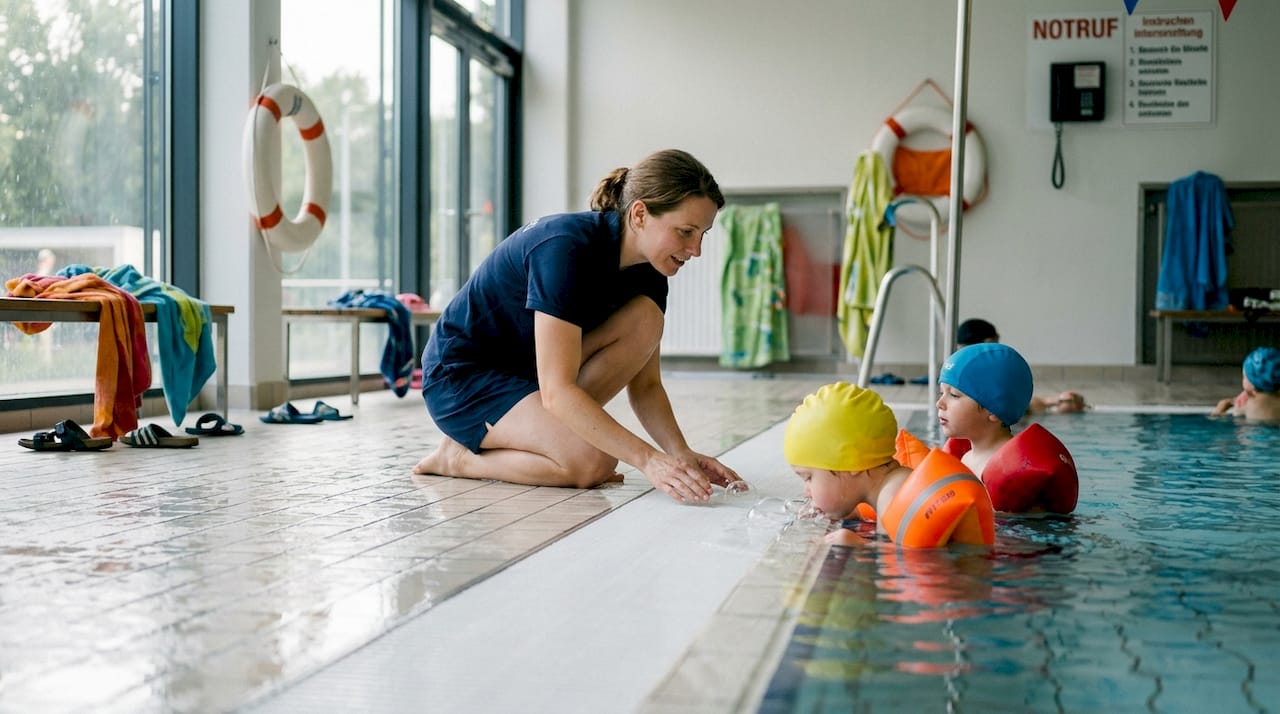
- Putting face in the water and blowing bubbles
- Practicing horizontal water position with support
- Gliding with outstretched arms and legs
- Coordinating rhythmic breathing in the water
- Practicing leg kicks in prone position while holding on
- Introducing arm strokes individually and slowly
- Combining arm and leg movements
- Swimming short distances independently
The following table shows various methods in comparison:
| Method | Approach | Advantages | Suitability |
|---|---|---|---|
| Playful | Fun and discovery | No fear, high motivation | All age groups |
| Video Feedback | Visual feedback | Faster learning curve | Older children from 4 years |
| Anxiety-focused | Gentle acclimatization | Ideal for water fear | Anxious children |
| Structured | Fixed learning steps | Clear progress | Goal-oriented families |
Tips for parents on teaching swimming emphasize the importance of individual adaptation. Every child learns at their own pace. Some need more time for water acclimatization, others master technical movements faster. Do not compare your child to others, but focus on their personal progress.
Pro tip: Video feedback uses visual feedback for better learning curves. Film your child while swimming and watch the recordings together. Children often understand better what they can improve when they see themselves. Be sure to discuss the videos positively and highlight successes, not just mistakes.
Tips for Parents: How to Make Parent-Child Swimming a Success
In summary, practical tips follow that make parent-child swimming more effective, fun, and safe. These recommendations are based on the experiences of successful swimming families and scientific findings.
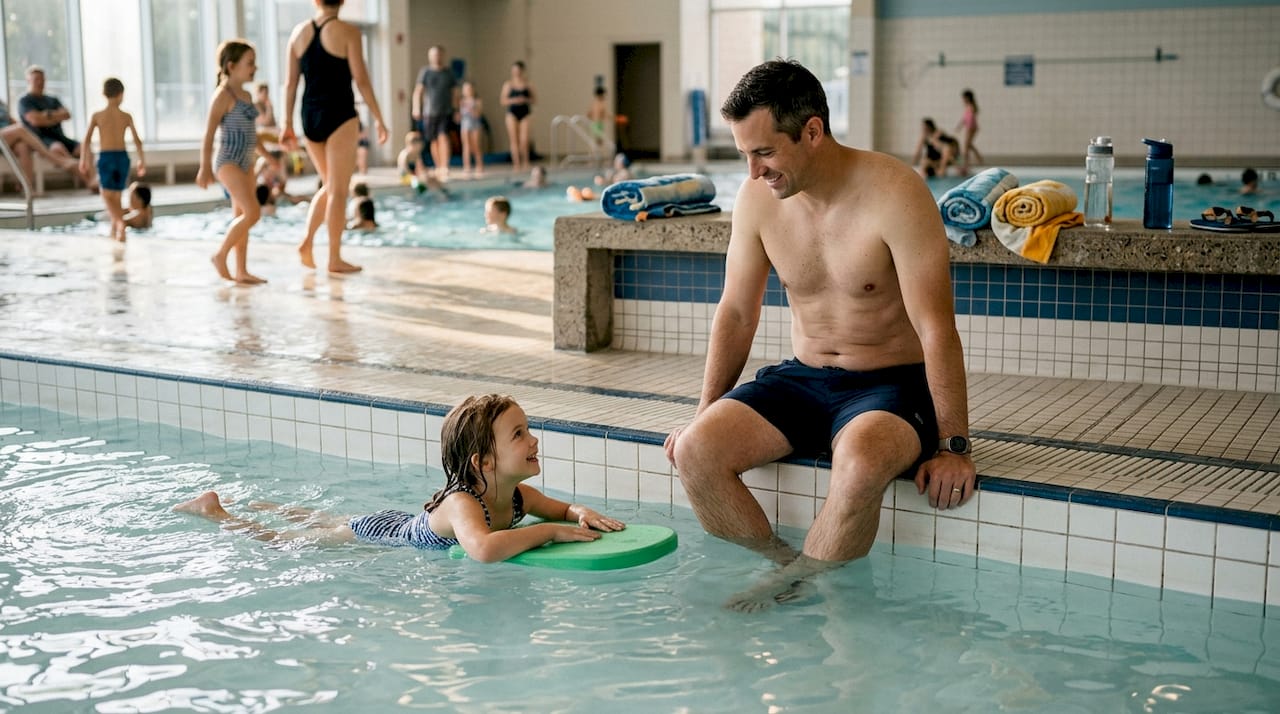
Parents regularly swimming themselves demonstrably motivates and strengthens their children. Parental swimming ability and encouragement statistically explain 53% of children's swimming abilities. When children see their parents enjoying swimming and moving safely in the water, they adopt this positive attitude. Your own behavior shapes your child's perception of water more than any verbal encouragement.
Positive reinforcement and an anxiety-free atmosphere significantly promote learning progress. Praise specific successes: "You dived three seconds longer today than last time!" is more effective than a general "Well done." Avoid statements that could increase fear, such as "You don't have to be afraid" or "It's not so bad." Such phrases draw attention to potential dangers.
Important implementation tips:
- Swim regularly yourself as a role model
- Give specific, positive feedback
- Practice in small steps with repetitions
- Choose the right time according to developmental stage
- Integrate games for more fun and motivation
Patience, small steps, and repetition are important during training. Children often need several attempts for a movement to stick. This is completely normal and not a sign of a lack of talent. The right time to start training depends on the child's age and developmental stage. Most children are ready for parent-child swimming between six months and four years, with the focus varying by age.
The best tips for safe children's swimming also emphasize the importance of water temperature and environment. Make sure the water is warm enough, especially for small children. Cold water quickly leads to discomfort and negative associations. Choose quiet times at the swimming pool when there is less hustle and bustle.
Pro tip: Shared play in the water improves bonding and makes learning easier. Invent small games like "catching fish," "underwater treasure hunt," or "water monster." Through playful elements, children forget that they are learning something new and move more naturally in the water. The emotional connection created through shared laughter and play also strengthens the trust between you and your child.
Discover Swimming Badges and Certificates for Children
Following the tips for promoting swimming, suitable awards as motivation are indicated. Visible successes through swimming badges significantly strengthen your child's motivation and make progress tangible.
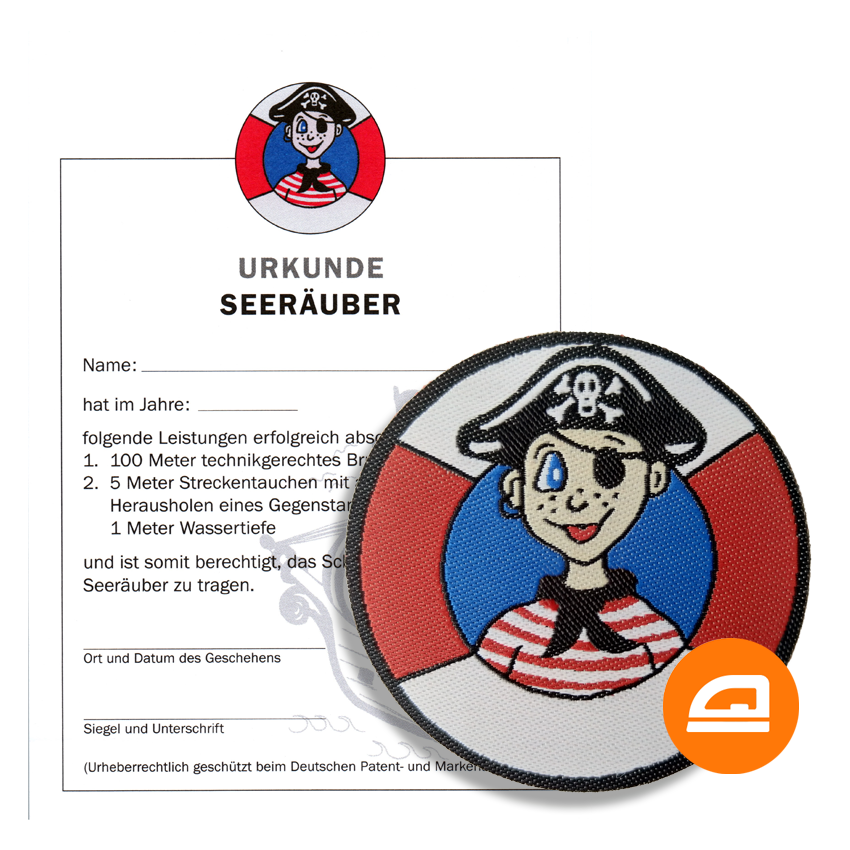
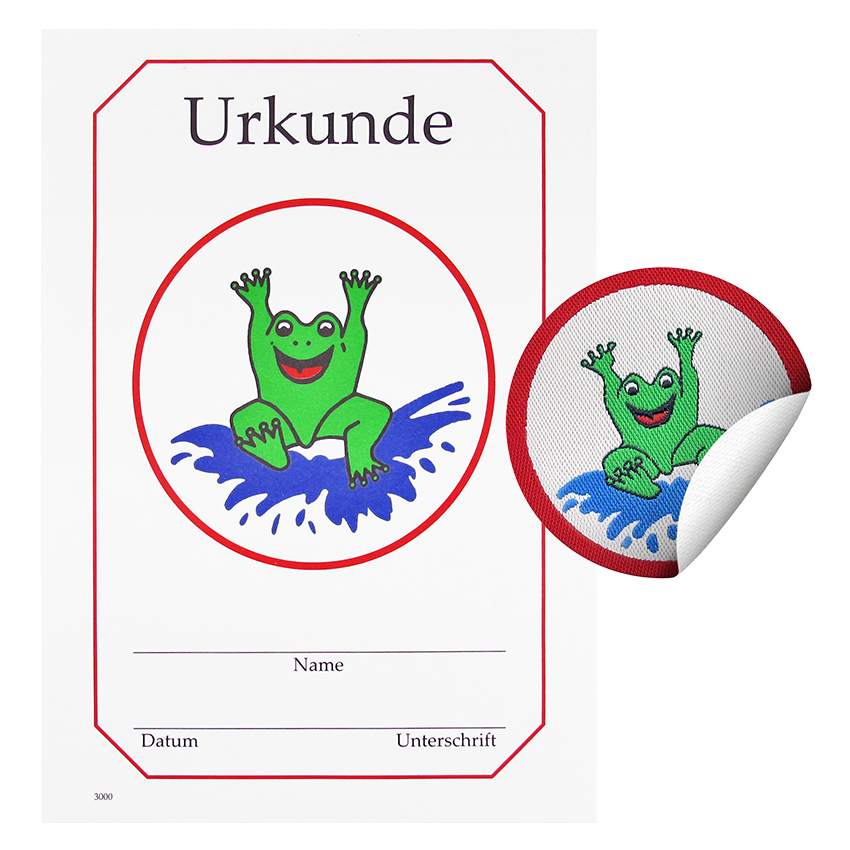
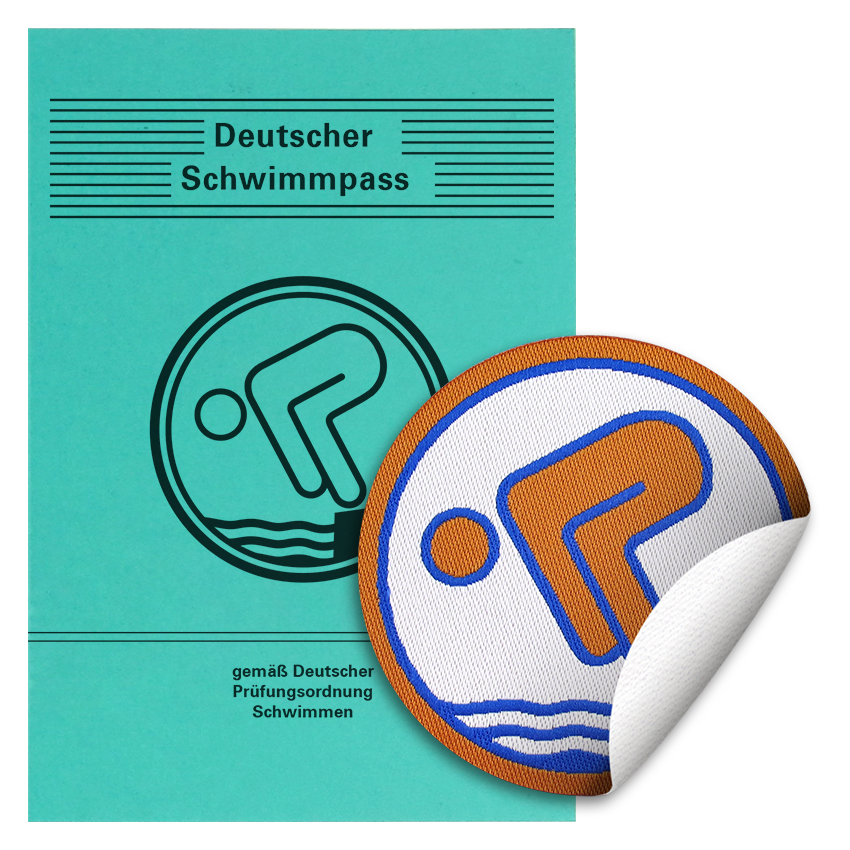
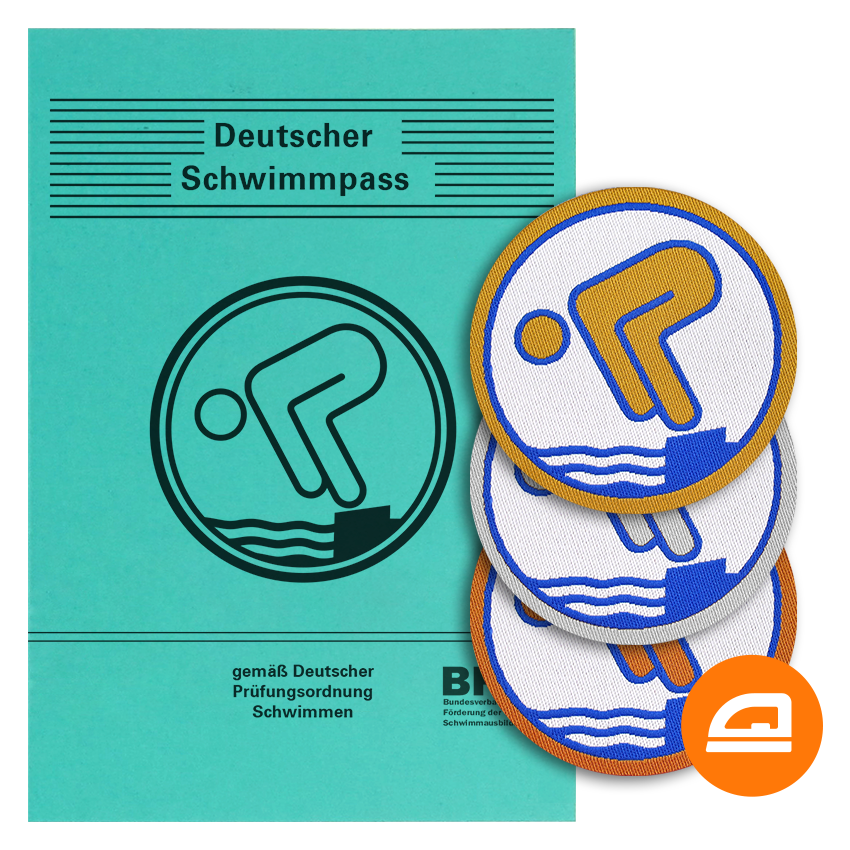
Children love to show off their achievements. A swimming badge on their swimsuit or a certificate on the wall makes them proud and encourages further success. At Pimpertz, you will find a variety of Bronze, Silver, and Gold swimming badges, as well as matching swimming passes to document all milestones. These officially recognized awards comply with the standards of the DLRG and the BFS.
Badges are ideal rewards and encourage continued enjoyment. After each learning goal achieved, you can choose the appropriate badge together. The colorful designs appeal to children and create positive associations with learning to swim. Additionally, certificates and swimming passes provide a lasting memory of every success. With over 38 years of experience, Pimpertz guarantees the highest quality, fast shipping, and child-friendly designs that bring long-lasting joy.
Frequently Asked Questions about Parent-Child Swimming
What is parent-child swimming?
Parent-child swimming is shared swimming learning and water experience with active parental involvement. Children learn basic swimming skills in a familiar environment while building a positive relationship with water. Parents act as supporters, safety personnel, and motivators simultaneously.
When can you start parent-child swimming?
Most programs start at an age of six months to four years. The ideal starting point depends on your child's individual development. Make sure your child can hold their head and neck steady and generally shows interest in water. Some children are ready at eight months, others only at two years.
How often should you practice parent-child swimming?
Weekly training is recommended for sustainable success. One session per week of 30 to 45 minutes is sufficient to achieve continuous progress. Additional bathing times at home or on holiday can consolidate what has been learned, but should not replace the structured exercise sessions.
How does parent-child swimming promote freedom from fear?
Through playful exercises and parental support, children experience water as a safe place. The familiar closeness of parents provides security while new experiences are made. Gradual progression without pressure allows children to develop confidence at their own pace and reduce fears.
What swimming badges are available for children?
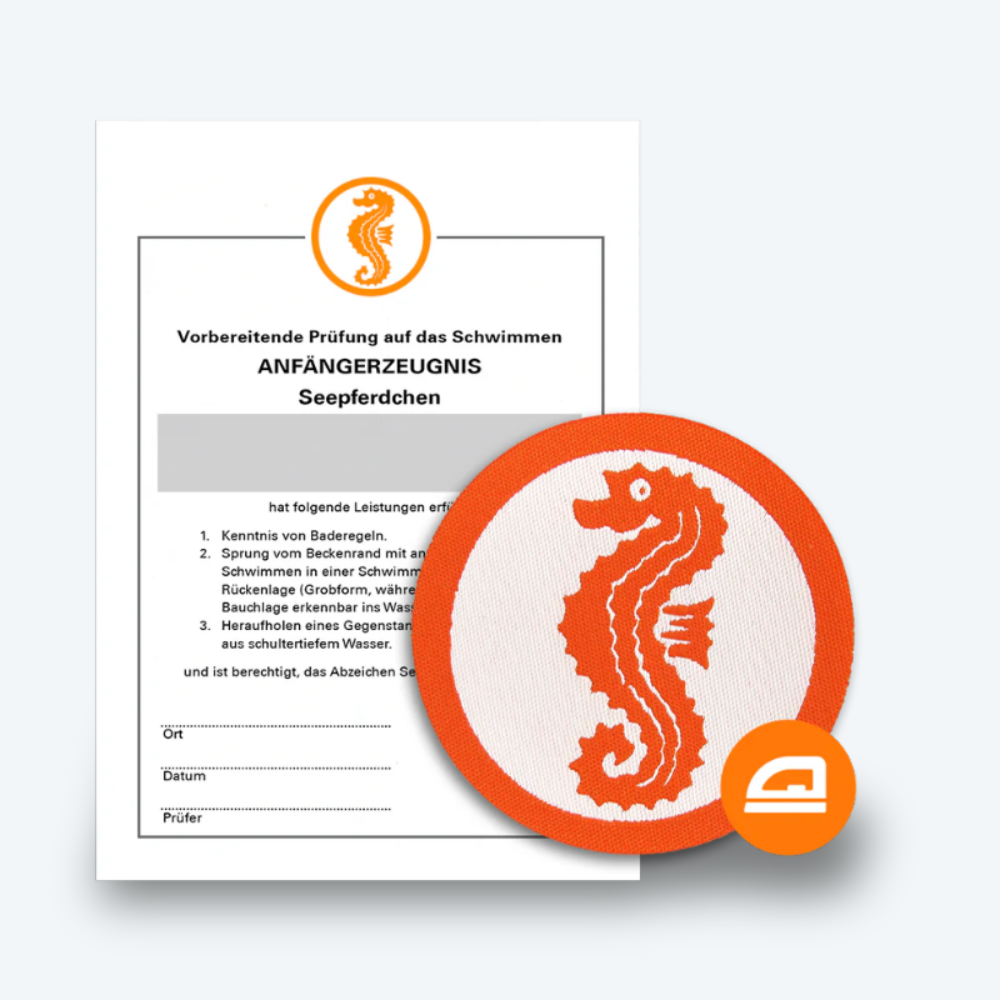
The most well-known entry-level badge is the "Seepferdchen" (Seahorse), followed by Bronze, Silver, and Gold. Each badge has defined requirements such as jumping from the edge of the pool, diving, or specific swimming distances. These gradations motivate children to continuously improve and achieve new goals. All badges are available with their own certificates and diplomas.
Do parents need good swimming skills themselves?
Basic swimming skills are helpful, but not a prerequisite for parent-child swimming. You should be able to move safely in the water and not be afraid. Most courses take place in shallow water where parents can stand. Your positive attitude towards water is more important than perfect swimming technique.