
Bronze Swimming Badge: Requirements and Tips for the Exam
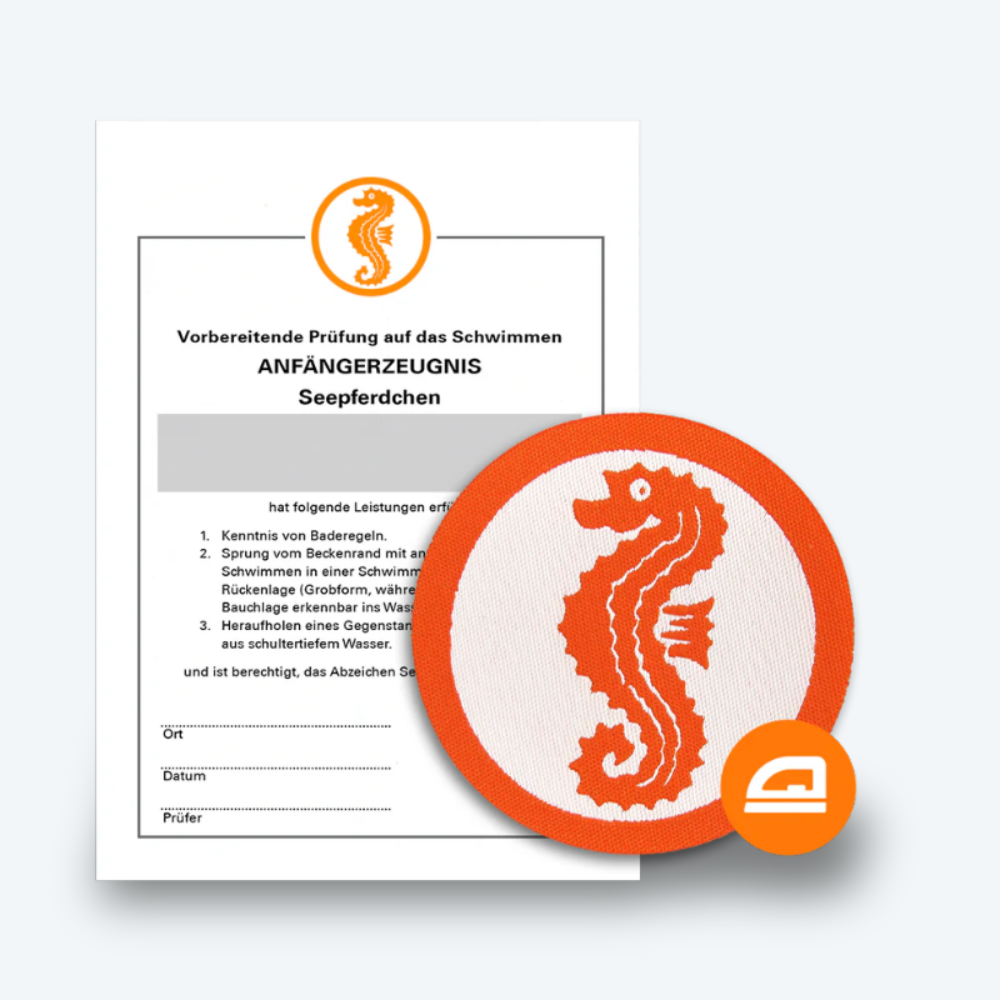
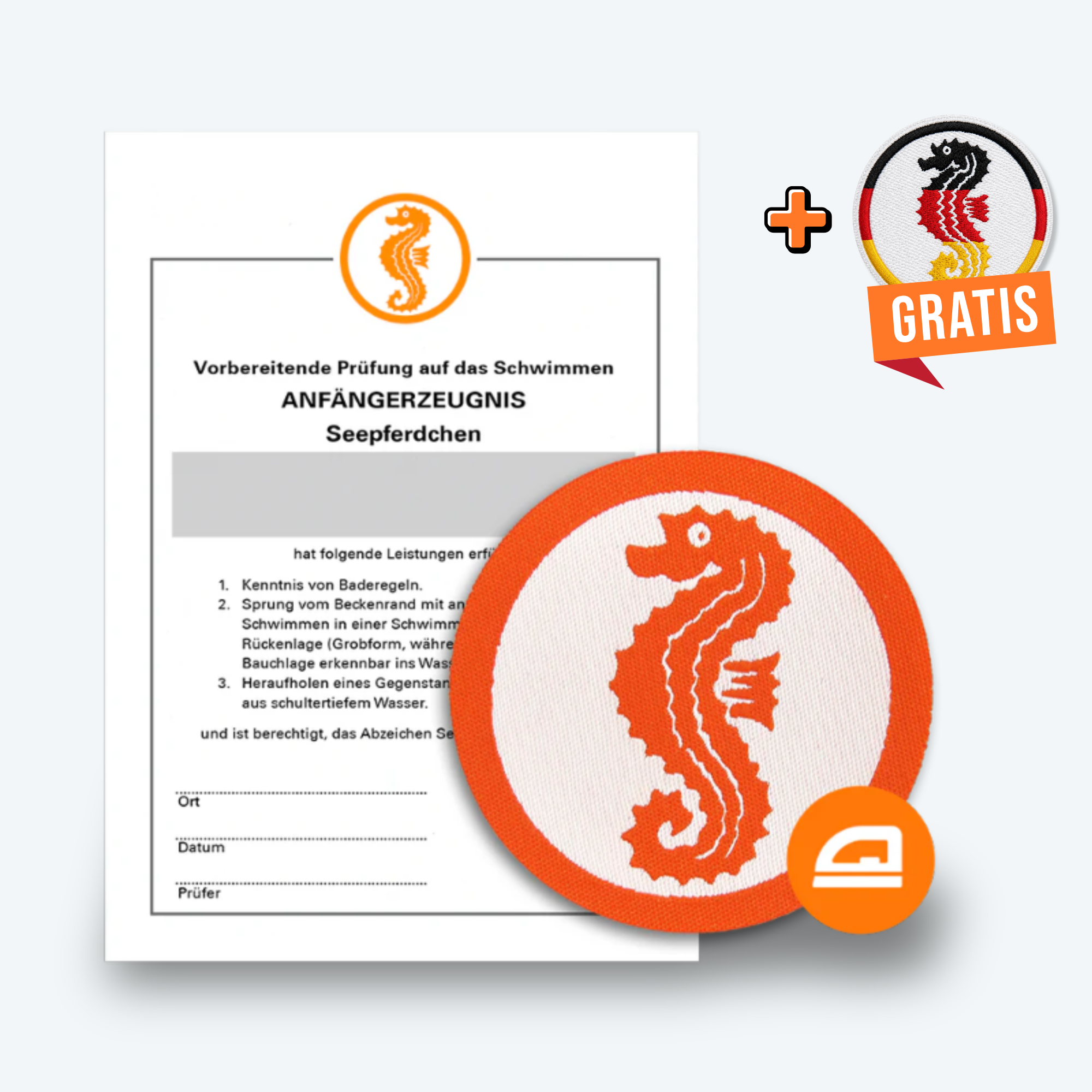
The Bronze Swimming Badge is an important step in swimming education. It is part of the German swimming badge system, which includes various performance levels such as Bronze, Silver, and Gold, and officially recognizes swimming skills. It requires swimming a certain distance, diving for objects, and mastering specific swimming techniques. The Bronze Badge is often also referred to as a "Freischwimmer" (free swimmer) and is considered proof of safe, independent swimming. For swimming beginners, the early swimmer badge (e.g., "Seepferdchen" - Seahorse) is the first step before aiming for the Bronze Badge. In this article, you will learn everything about the requirements, the test, and the best tips for preparation.
Introduction to Swimming Badges
Swimming badges are a central component of swimming education in Germany and accompany children and adults on their way to becoming safe swimmers. They serve as official proof of acquired skills and knowledge in the water and are available in several levels – from the Seepferdchen to the Bronze Swimming Badge , and up to Silver and Gold. Each level places new demands on swimmers and motivates them to continuously expand their knowledge and skills.
For children, achieving a swimming badge is often a significant step that not only strengthens self-confidence but also promotes the joy of swimming. Adults also benefit from structured swimming training, as they can specifically improve their technique and increase their safety in the water. Swimming badges are therefore an important milestone for anyone who wants to demonstrably expand and consolidate their swimming skills.
The most important at a glance
-
The Bronze Swimming Badge requires practical and theoretical knowledge, including swimming at least 200 m non-stop and mastering breaststroke technique. A minimum age of 8 years and fulfillment of minimum required swimming abilities are prerequisites.
-
The test includes various disciplines such as deep diving and retrieving an object from shoulder-deep water, where, for example, 2 meters must be dived non-stop, as well as learning swimming rules.
Requirements for the Bronze Badge
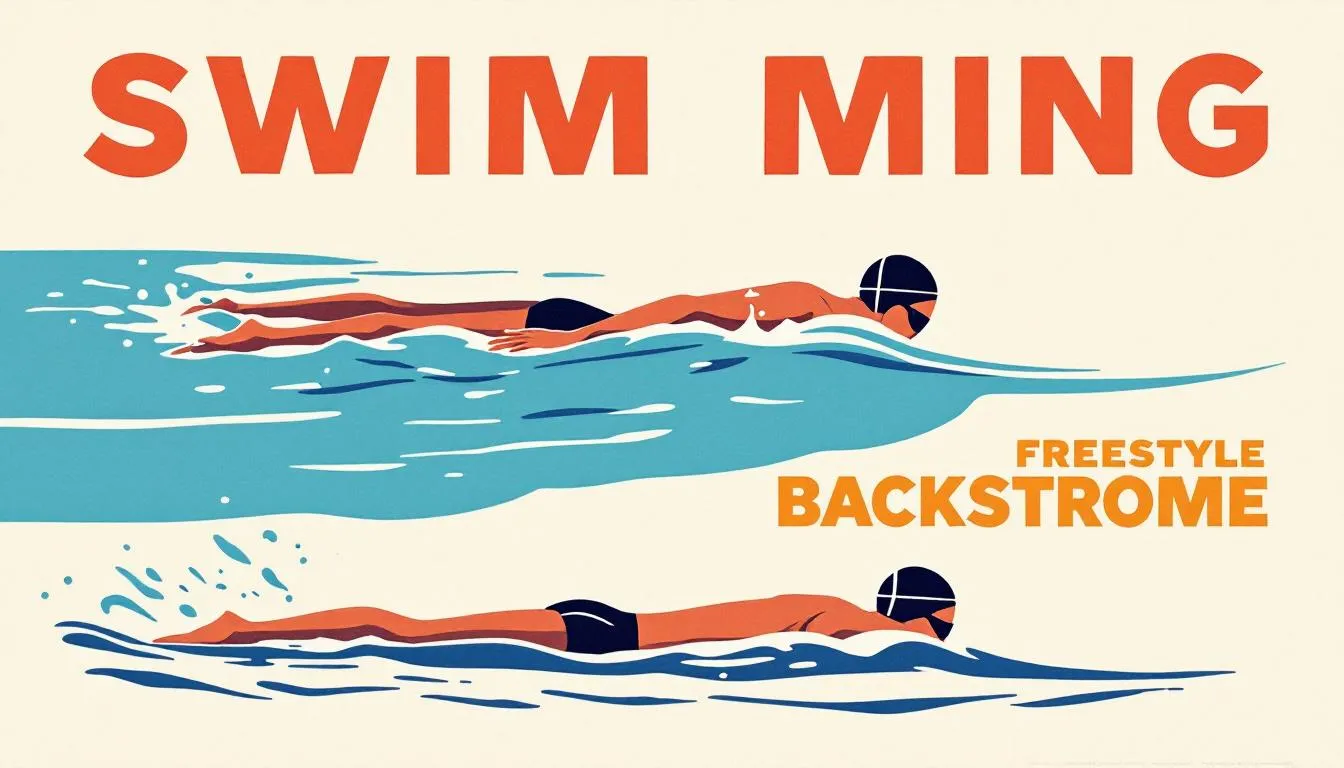
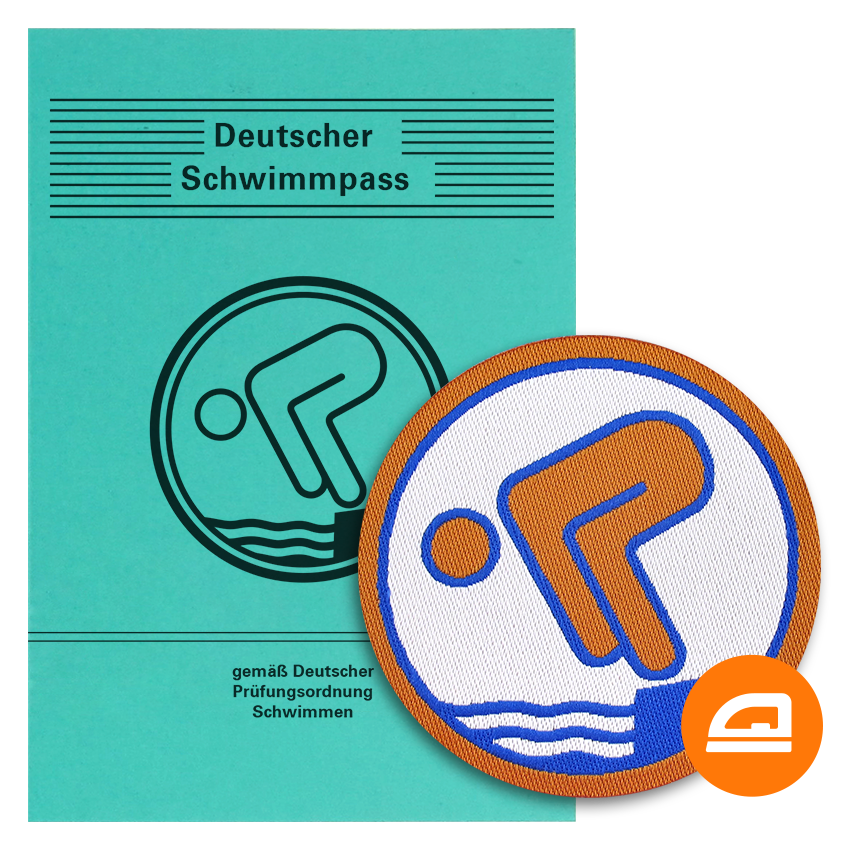
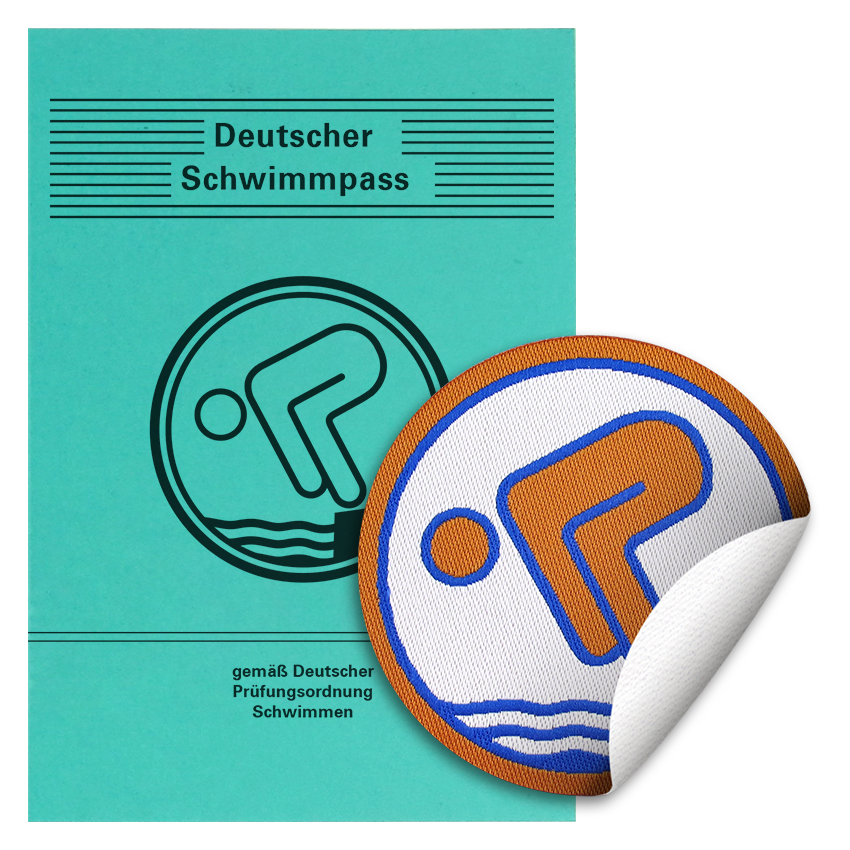
To obtain the Bronze Swimming Badge, certain requirements must be met. These are based on the guidelines of the German Swimming Examination Regulations and include both practical and theoretical aspects. The badge is an important step in swimming education and requires proof of basic swimming skills. The achieved swimming badges are documented in the swimming pass, which serves as official proof and motivation for further progress. The minimum requirements and technical skills necessary for the Bronze Badge are described in detail in the following sections. It should be noted that at least 150 meters must be swum in a recognizable swimming style, such as breaststroke or backstroke in a recognizable technique. These requirements ensure that swimmers can swim safely and efficiently. Swimming on the back in a recognizable swimming style also counts as proof of technique.
Minimum Requirements
-
Swimming a distance of at least 200 m, of which 150 meters must be in a recognizable body position, covering at least 200 m, of which 150 m.
-
The distance must be covered in a maximum of 15 minutes.
-
Performing a headfirst jump from the pool edge.
-
Diving approximately 2 meters deep to retrieve an object, e.g., a small diving ring.
During the swimming distance and especially when changing swimming styles, candidates must not hold onto the pool edge or aids. Further practical requirements include swimming in various swimming styles over a distance of 50 m and diving into shoulder-deep water to retrieve an object. These skills are crucial to meet the requirements of the test and obtain the Bronze Badge.
Technical Skills
The technical skills required for the Bronze Badge include mastering the breaststroke technique, which is a fundamental skill. It is important to regularly practice and refine breaststroke technique to succeed. Another important aspect is safely changing body position while swimming. This requires regular training and the ability to safely change body position while swimming in the lane. Choosing the right swimming style can be crucial.
The Role of the Coach or Teacher
An experienced coach or teacher is of great importance for success in acquiring a swimming pass. They not only impart the necessary knowledge and swimming techniques but also recognize the individual strengths and weaknesses of swimmers. Through targeted support and motivating encouragement, the coach helps to understand and master the requirements of the respective swimming badge. Furthermore, the coach ensures clear communication and explains the examination content understandably. They provide valuable tips on technique, body position while swimming, and safe behavior in the water. This ensures that swimmers are optimally prepared and can confidently apply the required knowledge.
German Swimming Badge Bronze: The Examination
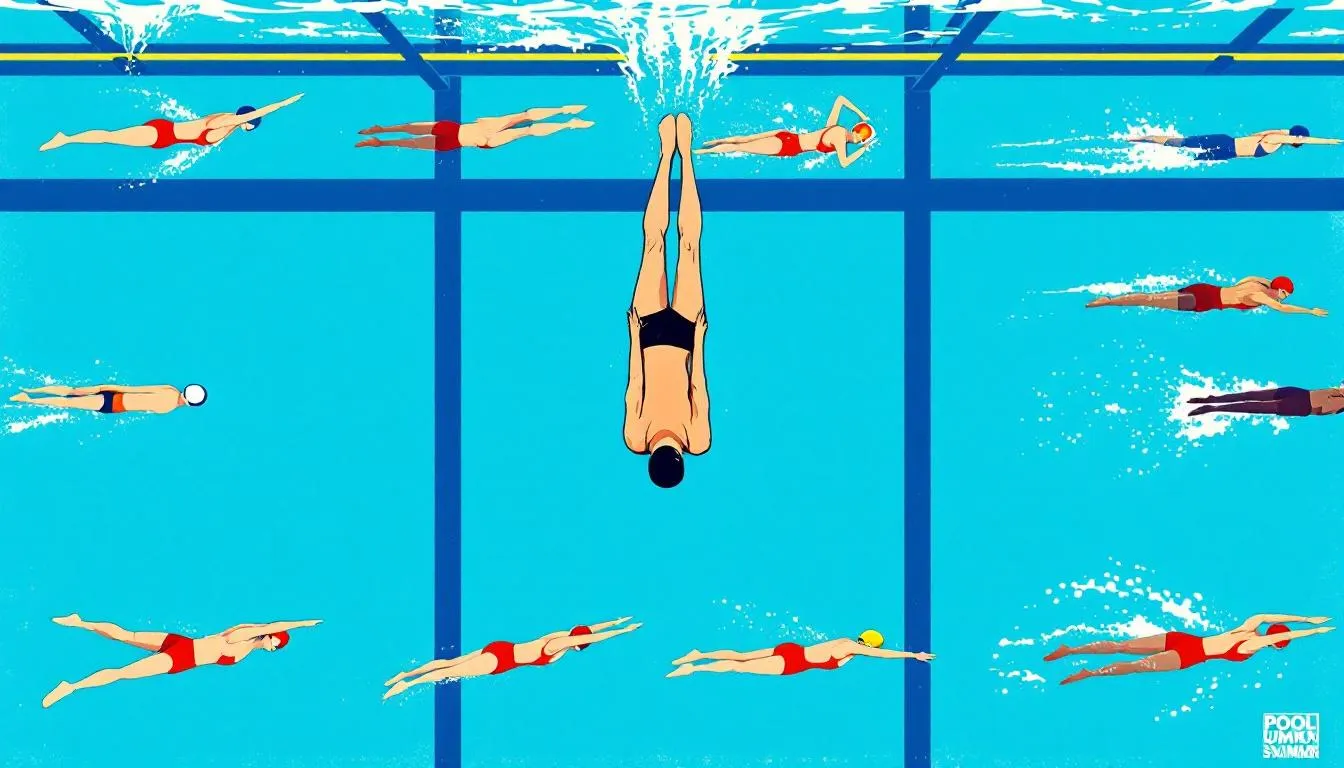
The examination for the Bronze Swimming Badge is important proof of safe swimming and promotes the development of basic swimming skills. This examination includes various disciplines that demonstrate that candidates can swim safely. The examinations take place in fixed course units offered in swimming schools and clubs. The examination content may also include various jumps, such as jumps from the pool edge or starting block. The following sections describe the specific examination content and the theoretical knowledge required to pass.
Examination Content
The practical examination content for the badge includes swimming 50 meters in a different body position. Other tasks include deep diving, where a diving ring must be retrieved from about two meters deep.
A jump from the starting block or a 1m board is also part of the examination. In addition, candidates must retrieve an object from shoulder-deep water and perform a compact jump from the starting block or 1m board while retrieving the object from the water surface.
After successfully passing the examination, the Bronze Badge is entered into the swimming pass to officially document progress.
Tips for Preparing for the Bronze Examination
Good preparation is crucial for passing the Bronze examination. It is recommended to register at a swimming school to receive professional preparation and targeted training for the examination. This includes not only swimming itself but also mental aspects such as overcoming test anxiety. Parents should ensure that their children can cope with excitement and stress during training, as these can affect swimming performance during the examination.
The following sections offer tips for creating a training plan and avoiding common mistakes during preparation.
Create a Training Plan
An effective training plan is crucial to meet the requirements of the Bronze Badge. The main goal of swimming training is to swim a longer distance. This should happen without much effort and without a break.
It is recommended to start with shorter swimming distances and gradually increase them to improve endurance and technique. Particular attention should be paid to breaststroke technique, as it is crucial for the examination process.
Avoid Common Mistakes
Common mistakes should be avoided during training and during the examination. Children should learn to dive directly from the water surface when deep diving, instead of first jumping into the water, to efficiently practice the technique.
When performing a compact jump, it is important to adopt the correct body posture to avoid injuries, whether in a prone or supine position. The correct execution of the compact jump can be learned through small exercises to ensure that no mistakes are made.
Courses and Training Opportunities
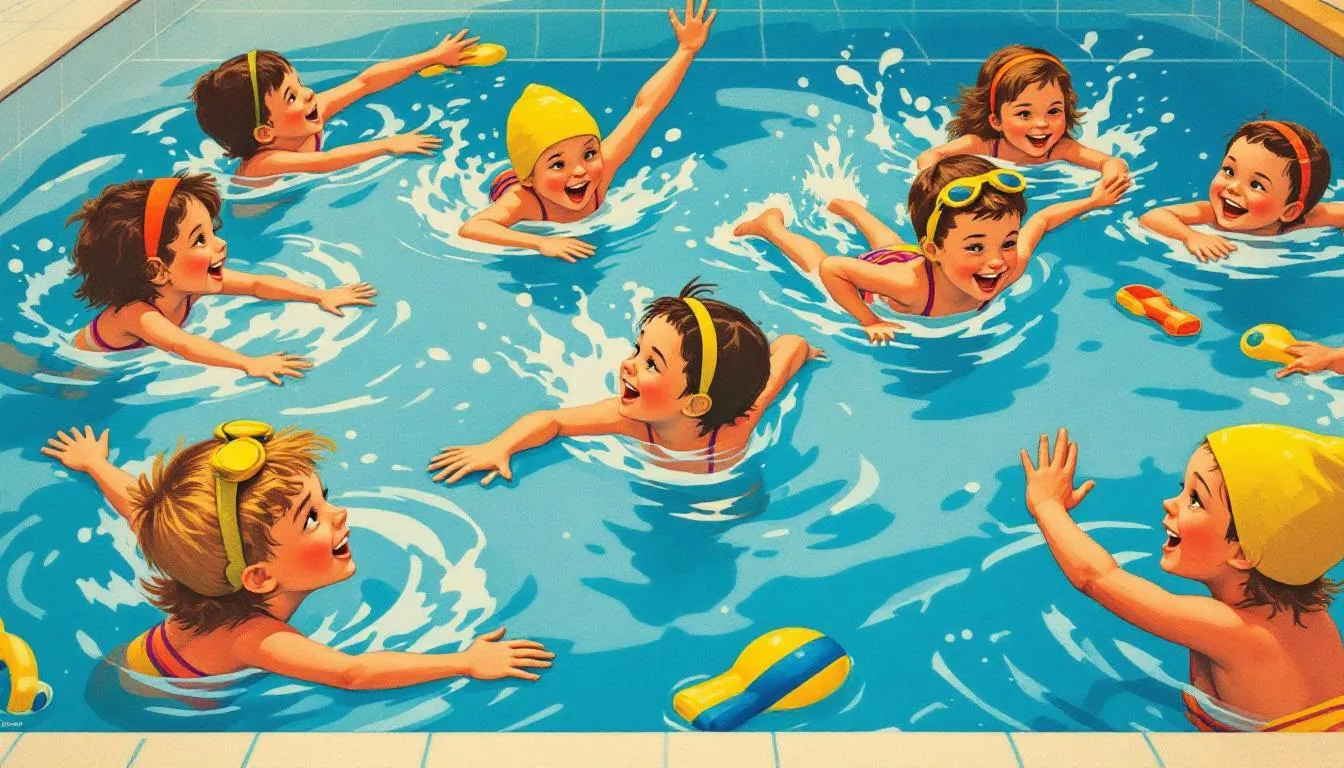
There are various courses and training opportunities to prepare for the Bronze Swimming Badge. These courses are available for both children and adults and offer structured training programs to meet the requirements of the badge.
The following sections provide an overview of special swimming courses for children and adults and how they can contribute to successful preparation.
Swimming Courses for Children
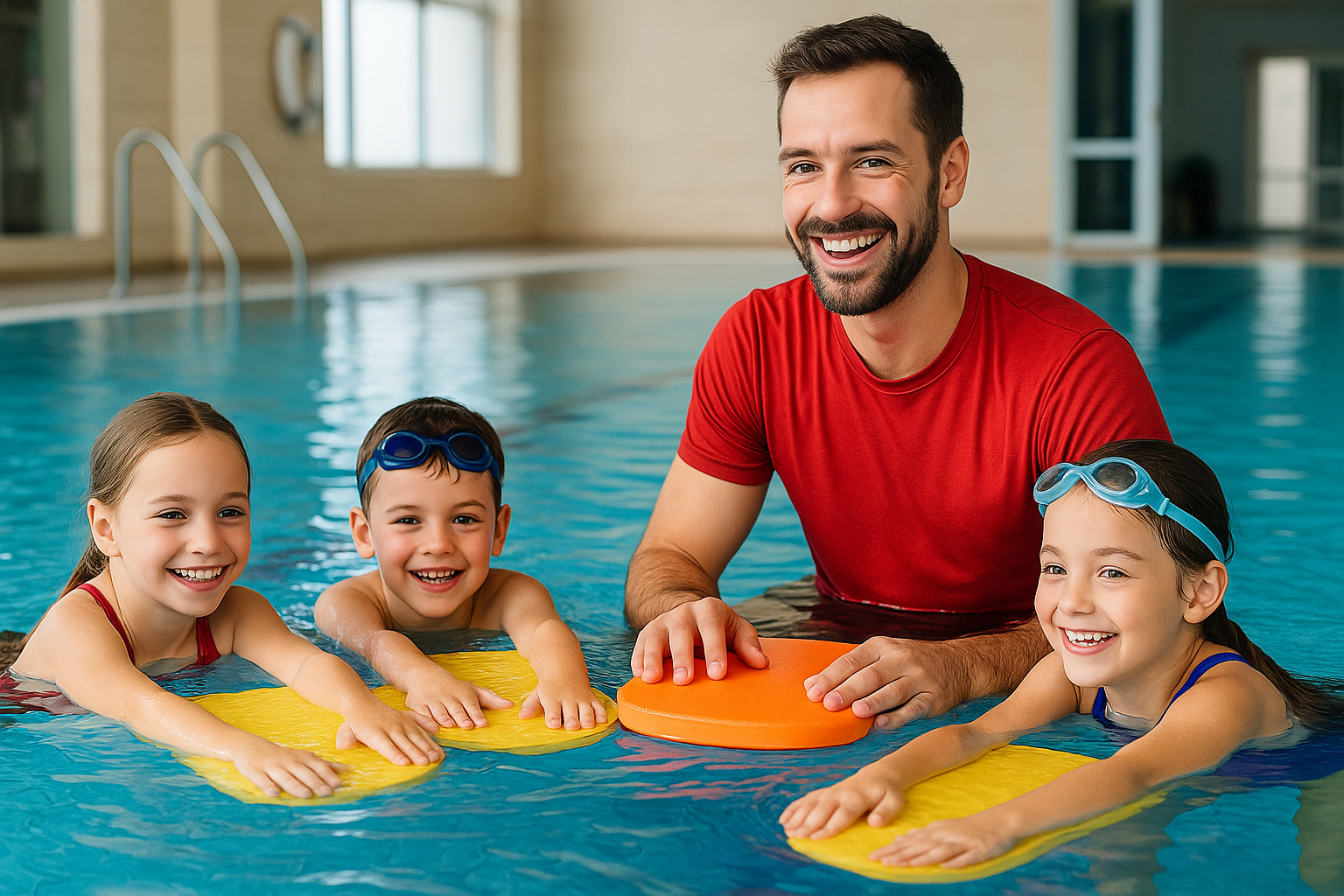
For children, there are special swimming courses designed to achieve the Bronze Badge and, in the past, also the Youth Swimming Badge . These courses are structured to progressively prepare children for the badge's requirements.
A specific swimming course for children often includes learning basic swimming techniques and leads to an improvement in swimming skills as well as strengthening the child's self-confidence.
Adult Courses
There are also special swimming courses for adults, tailored to the needs of adult swimming beginners. These courses offer programs to obtain the Bronze Swimming Badge and not only promote safety in the water but also strengthen self-confidence and motivation.
Obtaining the Bronze Badge for adults is an important step to improve one's swimming skills and gain self-confidence in the water.
The Significance of the Bronze Swimming Badge
The Bronze Swimming Badge is an important milestone in swimming education and promotes safety in the water. It signals that the swimmer has acquired basic safety and swimming skills and helps to prevent bathing accidents.
Motivation and Self-Confidence
Obtaining the Bronze Swimming Badge increases swimmers' self-confidence because it:
-
represents visible recognition of one's own abilities
-
offers a tangible goal
-
makes progress in swimming visible, which further strengthens self-confidence.
The Bronze Badge allows swimmers to improve their swimming skills and overcome challenges, which also contributes to increased self-confidence. This award is an important step on the path to personal development.
Foundation for Further Badges
The Bronze Swimming Badge forms the basis for achieving higher swimming badges such as Silver and Gold. It structures the learning path and motivates swimmers to further develop their skills.
Pimpertz.de Products: Seahorse, Bronze, Silver, and Gold
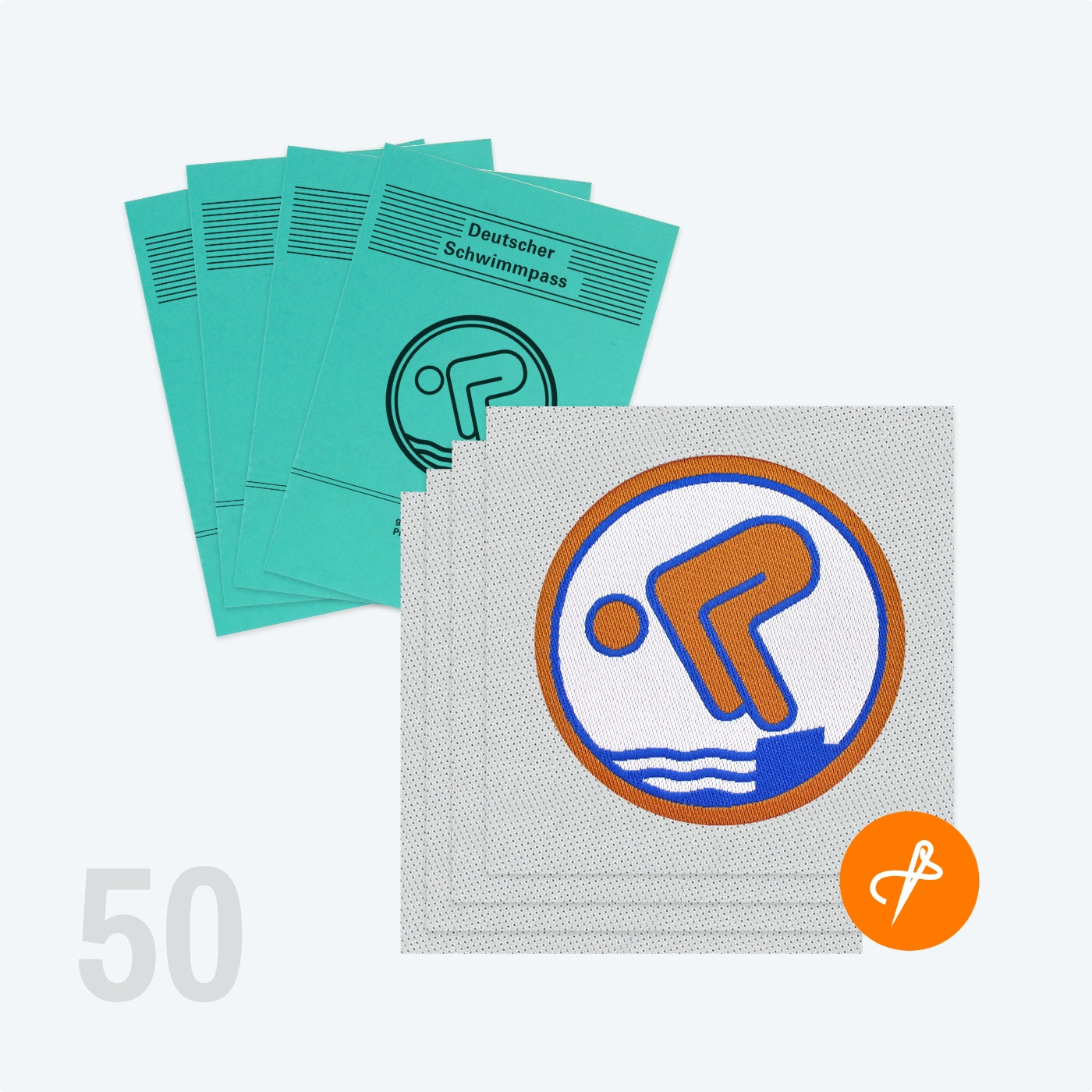
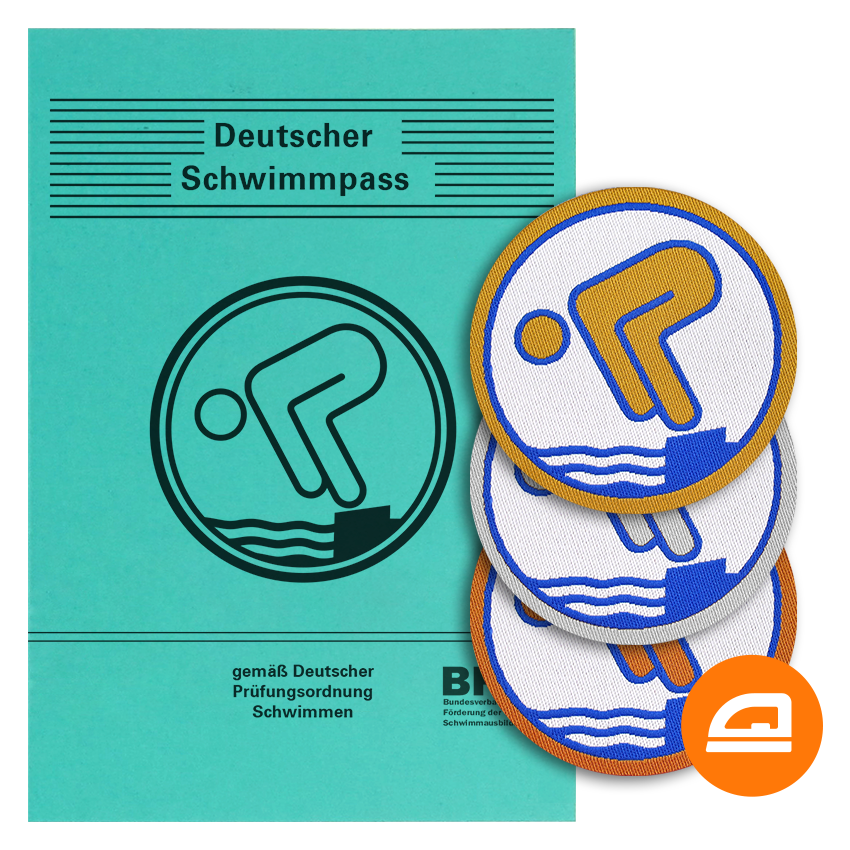
Pimpertz.de is the leading provider of official swimming badges in Germany and offers a wide range of swimming badges and products such as certificates and the swimming pass, which support swimming education. The assortment includes:
-
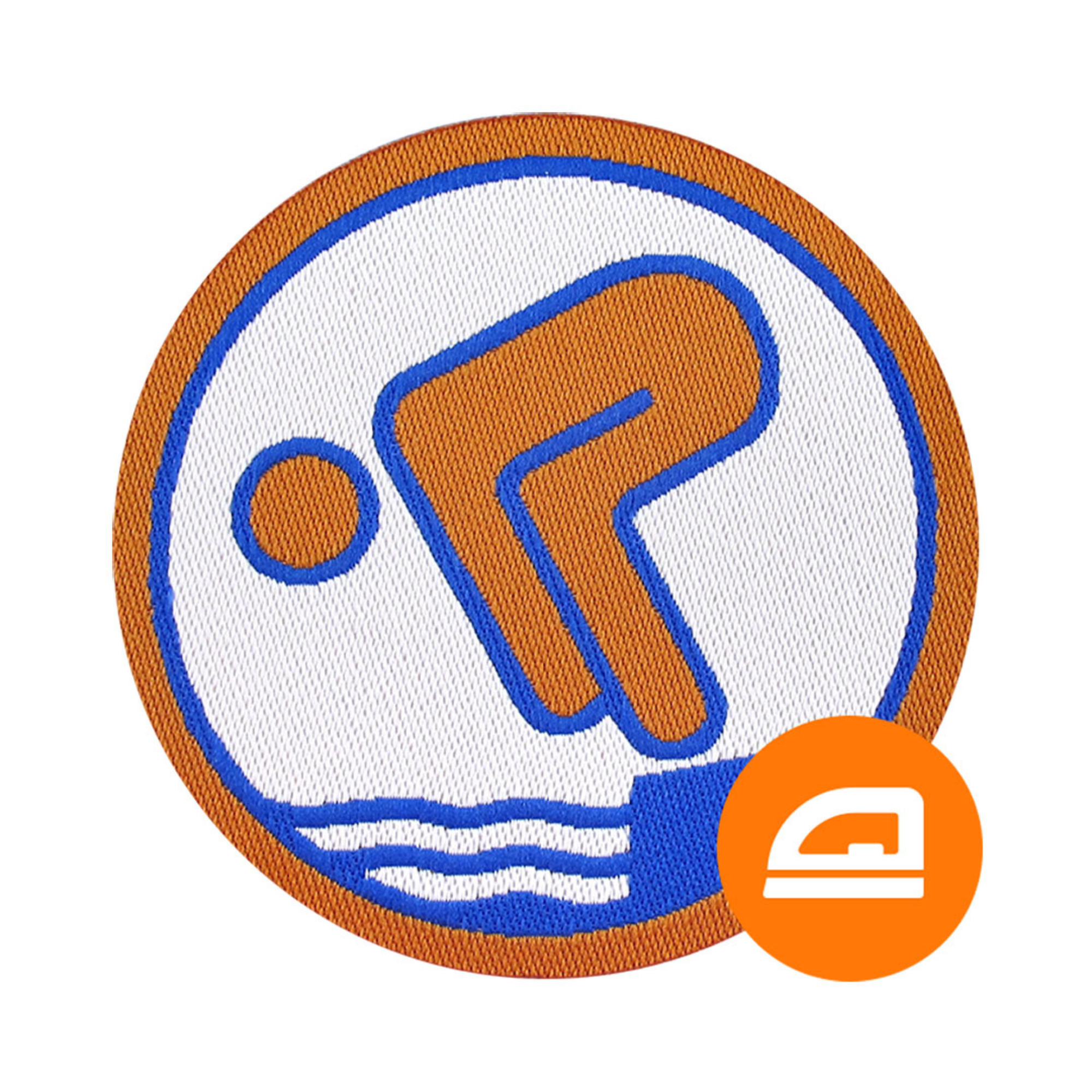
the German Swimming Badge in Bronze
-
the German Swimming Badge in Silver
-
the German Swimming Badge in Gold.
Variants of the Badges
Pimpertz.de swimming badges are available in various versions, including pimpertz-easy plus®, kinderleicht®, Totenkopf (skull), and classic. These badges offer different application possibilities and designs, which vary depending on the version. All pimpertz.de badges are Made in Germany and OEKO-TEX certified, guaranteeing their high quality and safety.
Bronze Swimming Badge: The Next Milestone
The Bronze Swimming Badge is part of the German Swimming Badge and builds upon the Seepferdchen (Seahorse). It marks the entry into advanced swimming education for children.
Requirements & Prerequisites
The examination requires at least 200 m swimming in a prone or supine position, of which 150 m must be in a clearly recognizable swimming style. A change of body position is required during swimming in the lane.
Jumps & Diving
Required are a headfirst jump from the pool edge or a compact jump from the starting block, as well as deep diving from the water surface to approx. 2 m. An e.g., small diving ring must be retrieved three times.
Safety & Swimming Rules
Knowledge of the swimming rules and basic knowledge about bathing, boating, and ice accidents are also part of the examination, as is safe swimming in a lane without holding on.
Further Badges
After Bronze, the Silver and Gold Swimming Badges follow. All achievements are documented in the swimming pass – ideal for long-term learning success and motivation in the course.
Highs and Lows: What Children Can Expect in the Swimming Test
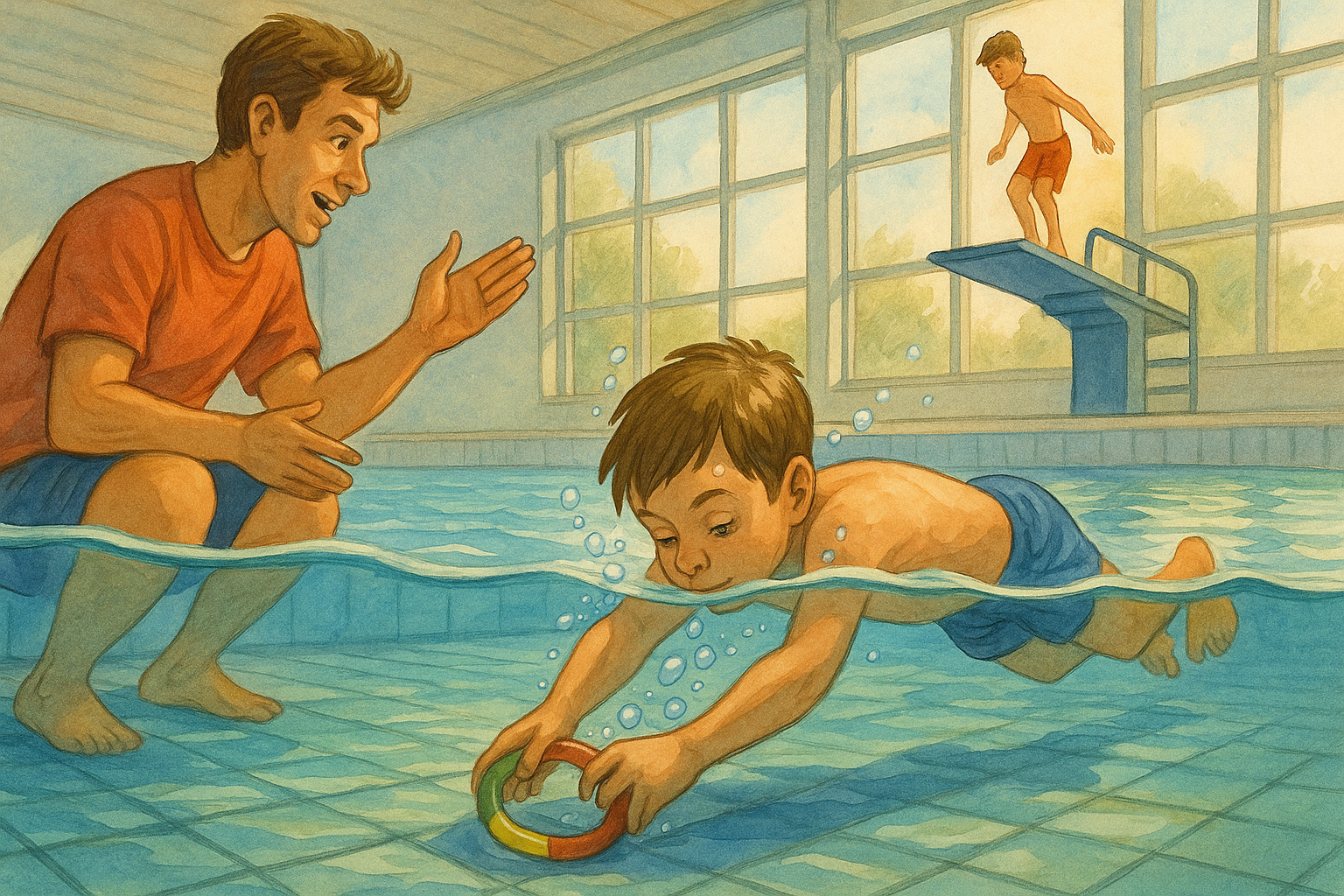
When taking the German Swimming Badge test, it's not just about swimming – deep diving and jumps from heights also play an important role. Typically, children must dive approximately 2m deep three times to retrieve an object, e.g., a small diving ring, from the pool bottom. Jumping is also tested: A jump from 3m height is among the requirements for higher badges like the Silver or Gold Badge. Those who manage to jump controllably from m height demonstrate self-confidence and body control. Even in younger partial tests, a jump from 1m height is often part of the swimming test. The combination of deep diving and swimming is also part of the test: For example, twice approximately 2m deep diving, combined with swimming m in a prone position, is among the typical tasks. These requirements show: Whoever masters highs and lows is well on their way to a successful swimming badge.