
The Penguin Swimming Badge: Tips and Tricks for Children
The swimming badge Penguin marks an exciting entry for children into the world of swimming badges. It motivates young aspiring swimmers to discover their abilities in the water. Many swimming badges, like the Penguin badge, help children swim safely. Parents and coaches at the swimming school support this journey. The badge promotes technique and understanding of swimming rules. Children overcome fears through playful exercises. Here's an overview of the path to the Penguin swimming badge with tips for success.
Why the Penguin badge is the perfect start
The Penguin badge is ideal for children aged five and older. It builds on basics and prepares for levels like the Seahorse. Compared to the Frog badge, it is one level higher. Children practice alternating leg kicks and arm movements. Motivation increases with celebrated successes. Swimming schools integrate water acclimatization into the swimming course. This fosters a love for swimming. The Penguin swimming badge greatly strengthens self-confidence.
The Significance of the Penguin Swimming Badge
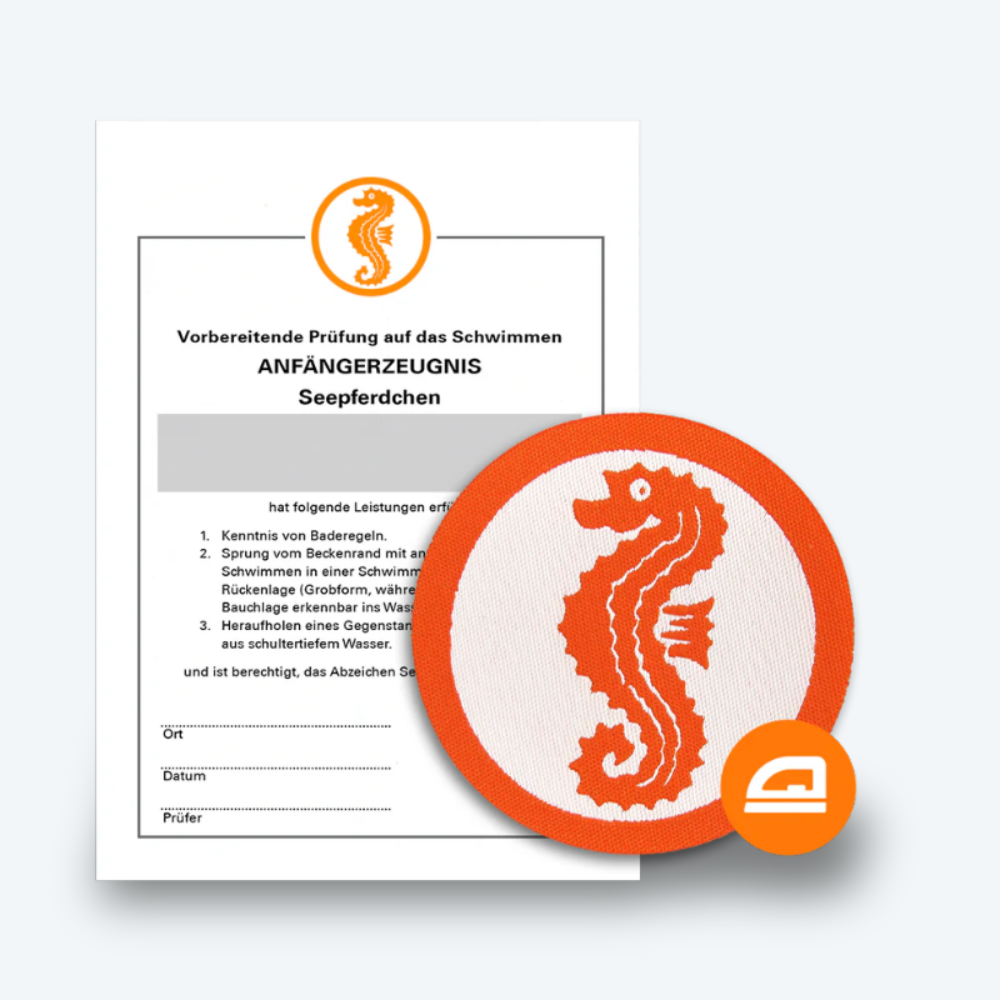
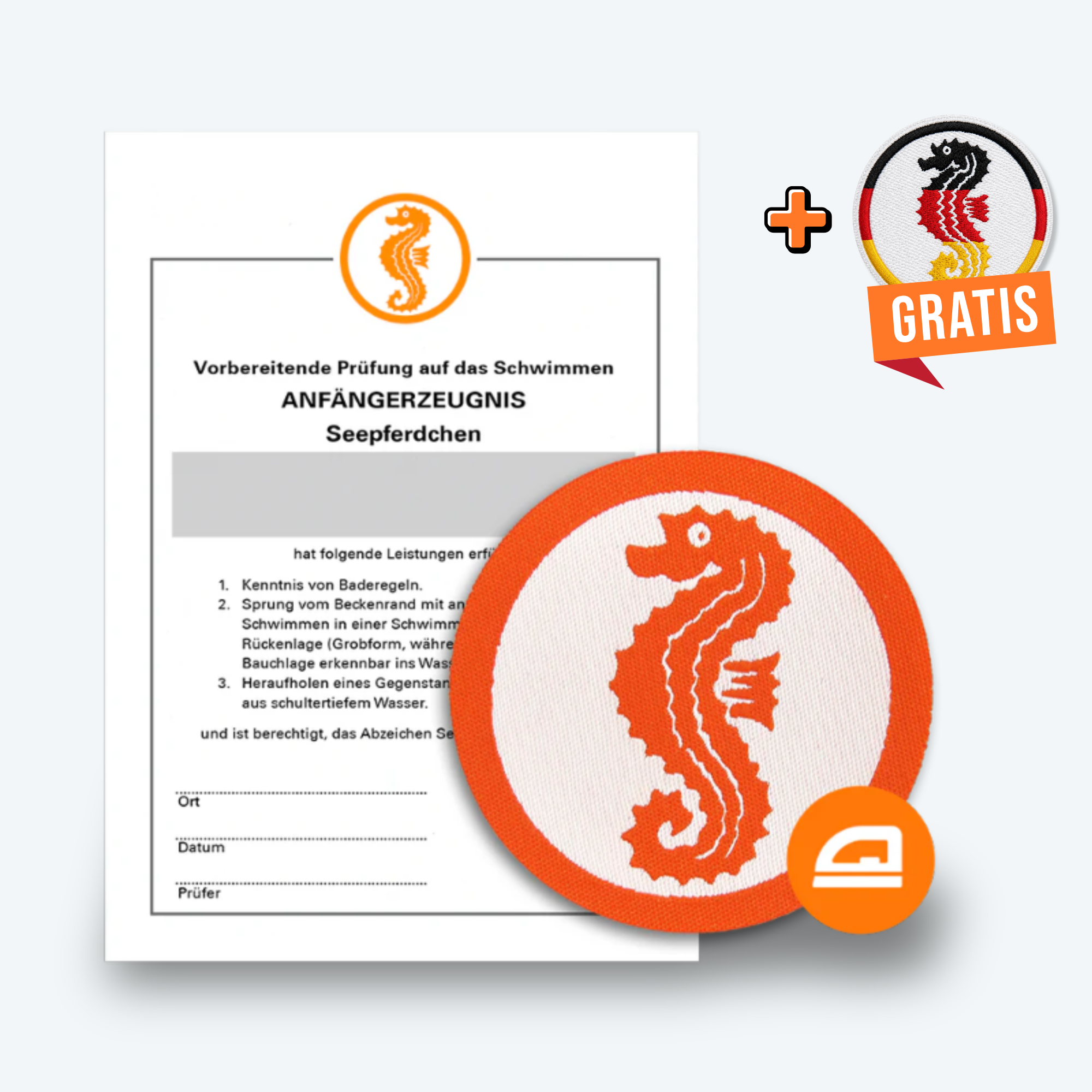
The Penguin badge symbolizes initial successes and safe behavior in the water. It teaches mastering prone and supine positions. Children gain a foundation for the Seahorse. Requirements include swimming styles and coordination. Parents observe their child's growth. It is a milestone towards advanced badges like the Seepferdchen-Abzeichen. Knowledge of self-rescue and orientation is integrated. This develops a deep understanding of swimming.
Benefits for young swimmers
Young swimmers benefit from the structure of the Penguin badge. It strengthens muscles through exercises and improves breathing. Children master challenges and maintain motivation. Training in clubs or swimming schools is playful. The badge documents progress. It reduces fears and awakens a desire for water adventures. Parents experience development directly. Swimming becomes family-friendly.
Preparation for swimming sports
Preparation for the Penguin badge starts with steps at the swimming school. Children practice jumping from the pool edge for courage. Leg kicks in the prone position strengthen legs. Breath control ensures relaxation. Trainers gradually increase demands. Fun remains central for motivation. Pool rules are taught early. This phase paves the way.
Basic exercises for beginners
For aspiring swimmers, exercises at the pool edge are suitable. Children train alternating leg kicks with aids like noodles. Arm propulsion in the prone position is created by paddling movements. Turns from prone to supine position promote coordination. Regular practice increases endurance. Trainers adapt to the pace. Confidence in the water grows. Basics are key to the Penguin swimming badge.
The requirements of the Penguin badge in detail
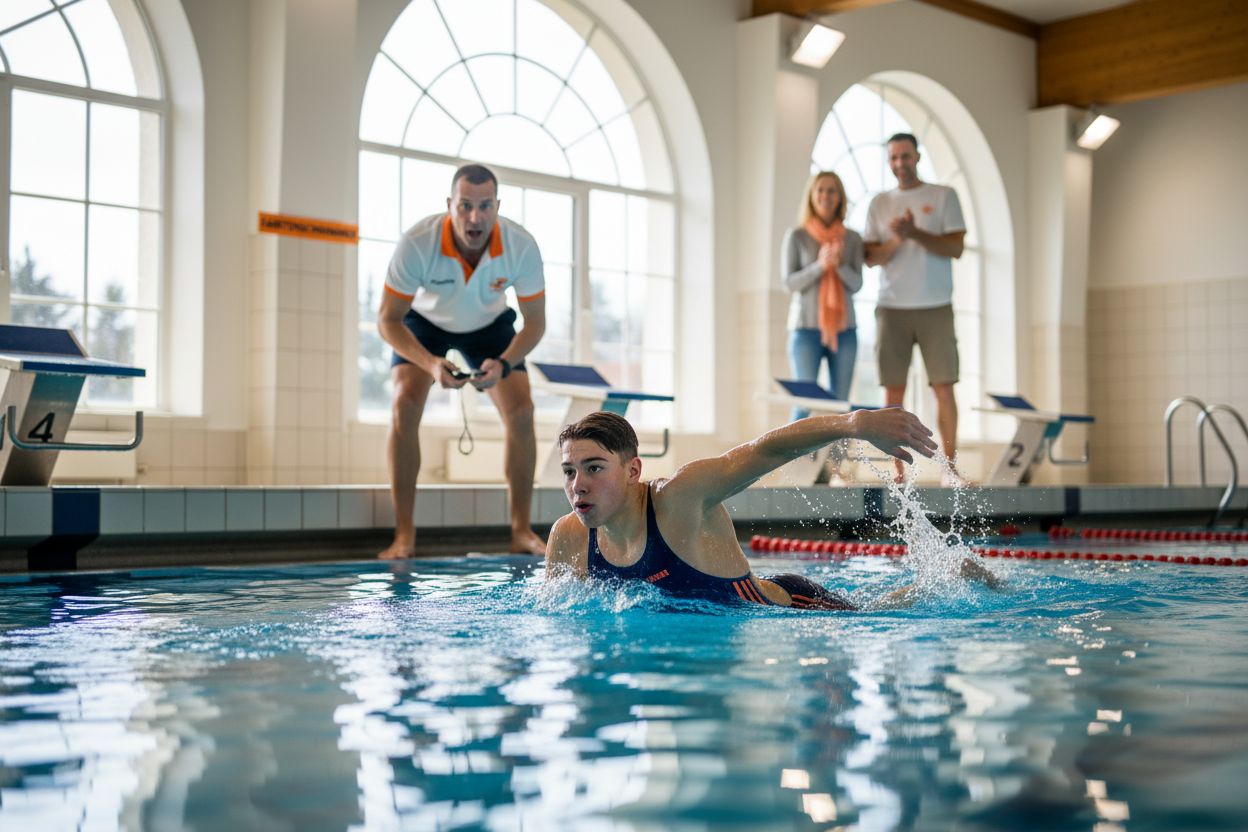
The test includes achievements such as swimming 10 meters without aids in any swimming style. Jumping from the pool edge tests balance. Retrieving an object promotes diving. Handstand with exhaling through the nose strengthens orientation. Alternating leg kicks in the supine position complete the requirements. These build on each other and create confident swimmers. Practicing in shoulder-deep water builds confidence.
10 meters swimming: Technique and tips
Swimming 10 meters requires consistent alternating leg kicks in the prone position. The arm in the high position stabilizes. Turn the head to breathe. Paddling movements generate propulsion. Distances are gradually increased at the swimming school. Parents motivate with games at home. Technique leads to independence. Success motivates further.
Jumping from the pool edge: Building courage
Jumping starts seated with trainer support. Children fall into arms and learn entry. From a squat, they practice pushing off with their legs. Soon they jump alone in a prone position. Coordination is trained. Fears are overcome through praise. Group exercises in clubs provide fun. Milestone strengthens self-confidence.
Retrieving an object: Diving exercises
To retrieve, children dive for a ring or diving ring in shoulder-deep water. Exhaling prevents panic. Exercises on stairs build deep diving skills. Grip strength and endurance grow. Trainers demonstrate slowly. Pride in success. Practice combines fun and learning. Essential for the Penguin badge.
Polar bear swimming: Paddling in prone position
Polar bear swimming involves moving 10-15 meters in a prone position with paddling movements in front of the head. Arm propulsion and alternating leg kicks propel forward. Exhale into the water. Arms glide underneath. Strengthens propulsive movements. At a lower depth, a swimming sensation develops. Trainers praise. Awakens a sense of adventure.
Backstroke: Relaxed gliding
Backstroke requires 15-25 meters in a supine position with alternating leg kicks. Arm propulsion with recovery phase outside. Keep head still. Promotes relaxation. Practice with feedback at swimming school. Prevents fatigue. Completes the Penguin badge.
Differences between different badges
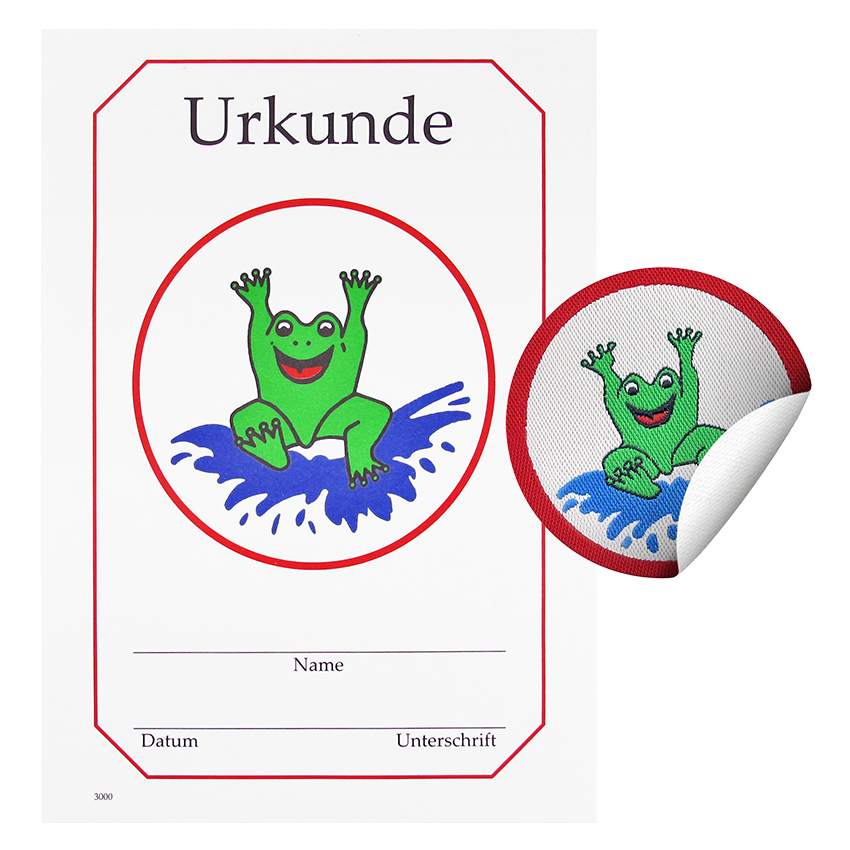
Penguin differs from Frog in higher coordination. Frog: 5 meters, Penguin: 10 meters. Seahorse: 25 meters, more complex. Levels are age-appropriate. Document progress. Gentle introduction to Bronze. Match abilities. Path remains motivating.
From Frog to Penguin: The transition
After Frog, training prepares for Penguin. Expand alternating leg kicks, learn turns. Motivation through successes. Games like hoop diving in swimming schools. Parents celebrate steps. Continuous joy. Lifelong swimming skills. Penguin marks progress.
Penguin versus Seahorse: Next step
Seahorse: Longer distances, breaststroke elements. Penguin: Basics like backstroke, jumping. Alternating leg kicks more intense with Seahorse. Strong foundation after Penguin. Trainers adapt to age. Progression keeps enthusiasm. Path to Dolphin, Bronze.
The importance of practice and training
Regular training is key to the Penguin badge. Strengthens arms, legs for arm propulsion. Coordinates movements, breathing. Incremental progress avoids frustration. Peers at swimming school motivate. Parents praise. Promotes skills, discipline. Success is tangible.
Weekly training plans for home
At home: Handstand at the edge, diving for a ring. Short sessions with turns in prone and supine positions. Observe progress. Discuss pool rules. Complements swimming course. Builds confidence, joy. Regularity leads to the goal.
Advanced exercises in swimming school
Underwater swimming with push-off from the edge. Refine propulsive movements. Side position optimizes rotation. Gentle correction. Group games add dynamism. Prepares for the test. Relax shoulders for gliding. Penguin approaches.
Overcoming challenges
Fear of diving is common with the Penguin badge. Overcome uncertainties gradually. Successes motivate. Support from parents, trainers. Strengthens character, skills. Fun mitigates fears. Every hurdle is a learning opportunity. Every child masters the path.
Tips against water shyness
Water acclimatization in shallow water, playful jumps. Praise for attempts. Visualize successes with stories. Aids like rings. Reduces fears, builds trust. Children more courageous. Jump easier. Preparation pays off.
The role of parents and swimming schools
Parents motivate for the Penguin badge. Accompany to class, celebrate with certificates. Swimming schools: Structure, safety. Individualized exercises. Supportive atmosphere. Clubs boost team spirit. Maximizes learning. Children love swimming.
How parents support at home
Prone exercises in the tub. Pool rules in books about swimmers. Small rewards. Boosts motivation. Children feel valued. Family project. Checks for overview. Success assured.
Pool rules and safety in focus
Pool rules are core to the Penguin swimming badge. Never swim alone, pay attention to lifeguards. Protects against dangers. Playful self-rescue. Explain with pictures. Lifelong knowledge. Safety before fun, yet harmonious. Responsible swimmers.
Self-rescue techniques for everyday life
Grabbing aids. Floating on back to rest. Orientation prevents panic. Saves lives, boosts confidence. Practical in swimming schools. Repeat at home. Conveys essentials. Safety Habit.
From Penguin to Dolphin: Long-term perspectives
After Penguin: Dolphin with more demanding tasks. Build on breaststroke. Motivation continues. Individual planning in swimming schools. Parents see perseverance. Makes swimming a passion. Levels: Challenges, joys. Entry pays off.
Maintaining motivation along the way
Vary exercises with games. Celebrate with peers. Parents share stories. Keeps enthusiasm alive. Next badge adventure. Endurance, team spirit. Long-term health benefits. Swimming accompanies for life.
A motivating success story about the Penguin swimming badge
In everything little Lisa, six years old, undertook, overcoming challenges was paramount - especially with the Penguin badge. At first, she shied away from jumping from the pool edge at chest height, but at the swimming school, she learned the alternating leg kick in the prone position and built courage. With parental help, she practiced retrieving a ring from near the wall, diving deeper and laughing during a handstand. Meanwhile, Anna earned her Seahorse badge. During polar bear swimming, she paddled with her legs forward, exhaled, and covered 15 meters. Today, Lisa proudly wears her Penguin swimming badge, swims backstroke in the supine position, and cheers about her entry into breaststroke. Her story shows: With exercises, motivation, and support, every child masters the requirements - the path to the Penguin badge leads to unforgettable successes!
Facts about the Penguin swimming badge
Children who wish to obtain the Penguin swimming badge usually also have to retrieve an object from shoulder-deep water.
For the Penguin swimming badge, children typically have to swim 10 meters independently.
The Penguin swimming badge can also be awarded by parents, not just by swimming schools.
Regular swimming sessions, ideally twice a week, improve endurance and technique.