
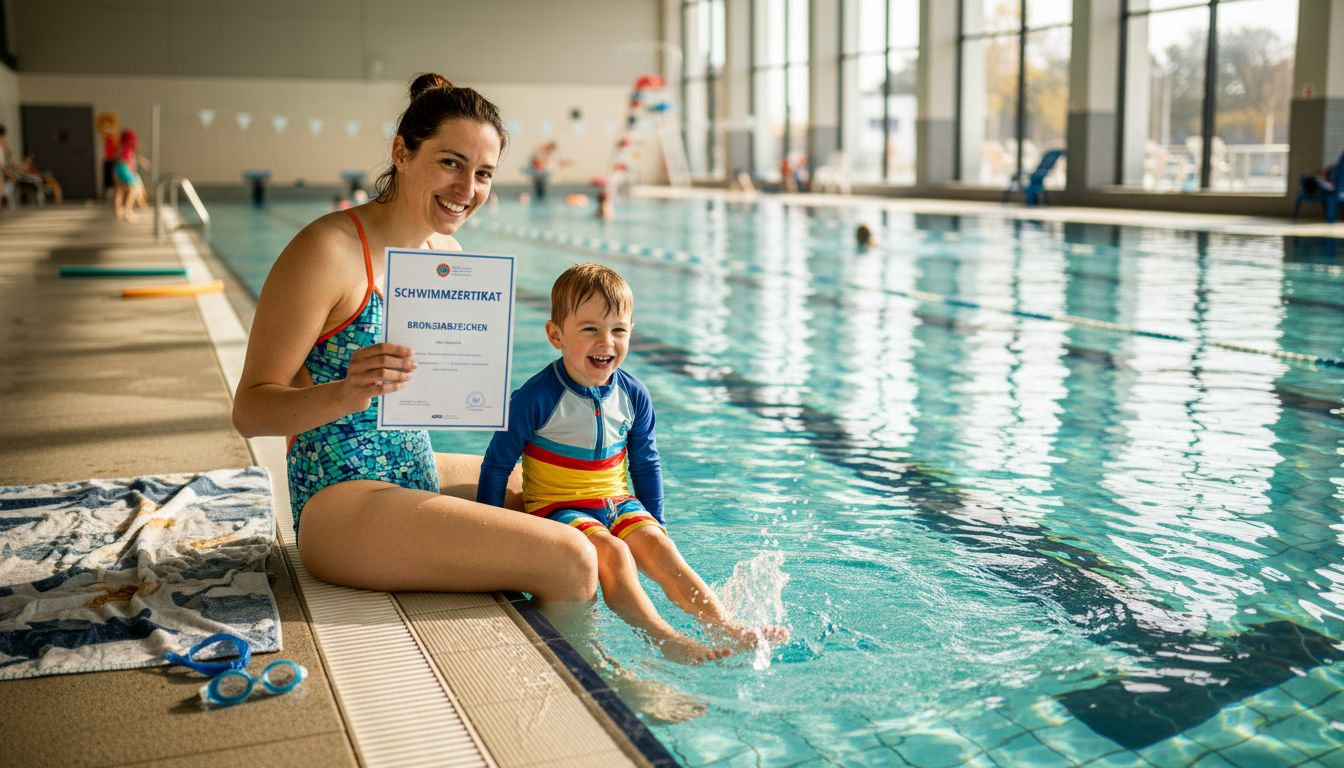
Internationally recognized swimming badges for parents 2026
Many parents believe that German swimming badges are universally valid worldwide. However, this is not correct. The international recognition of swimming certificates follows complex standards and bilateral agreements. This guide shows you which German swimming badges actually have international validity and how to make the right choice for your preschooler. You will learn what to look for when purchasing and how to optimally prepare your child for a safe swimming future.
Table of Contents
- Introduction: Importance of Internationally Recognized Swimming Badges
- German Swimming Badges with International Recognition
- How International Recognition Works: Standards and Norms
- Common Misconceptions about the International Recognition of Swimming Badges
Key Takeaways
| Point | Details |
|---|---|
| International Standards | DLRG and BFS certified badges meet European standards such as EN 15288-1 and are accepted in many countries. |
| Seepferdchen and Youth Swimming Badges | These certificates are considered core standards and are widely recognized by European swimming schools. |
| Personalization Increases Motivation | Individually designed badges promote learning success and offer flexible ordering options for parents. |
| Regional vs. Worldwide Validity | German swimming badges are primarily recognized in Europe; outside, other standards may apply. |
| Check Official Certification | Look for DLRG/BFS seals to ensure mobility and long-term safety. |
Introduction: Importance of Internationally Recognized Swimming Badges
Learning to swim is an important developmental step for preschoolers. A reliable swimming certificate not only documents learning progress but also provides safety during stays at home and abroad. However, not all swimming badges are equally accepted everywhere. International recognition depends on clear standards and official certifications.
In Germany, the DLRG (German Life Saving Association) and the BFS (Federal Sports Association for Swimming) play a central role. These organizations define the requirements and guarantee that badges comply with European standards. Many parents believe that German swimming badges are universally valid worldwide, but this is not correct. In fact, recognition is based on bilateral agreements and regional standards.
What makes a swimming badge internationally recognized? The following criteria are crucial:
- Fulfillment of European norms such as EN 15288-1
- Official certification by recognized associations (DLRG, BFS)
- Acceptance by European swimming schools and institutions
- Documentation of clearly defined swimming competencies
This guide explains which German swimming badges meet these requirements and how to choose the right certificate for your child. You will also learn how standards work and which misconceptions you should avoid. Our Swimming Badge ABC provides more orientation, summarizing all important basics.
German Swimming Badges with International Recognition
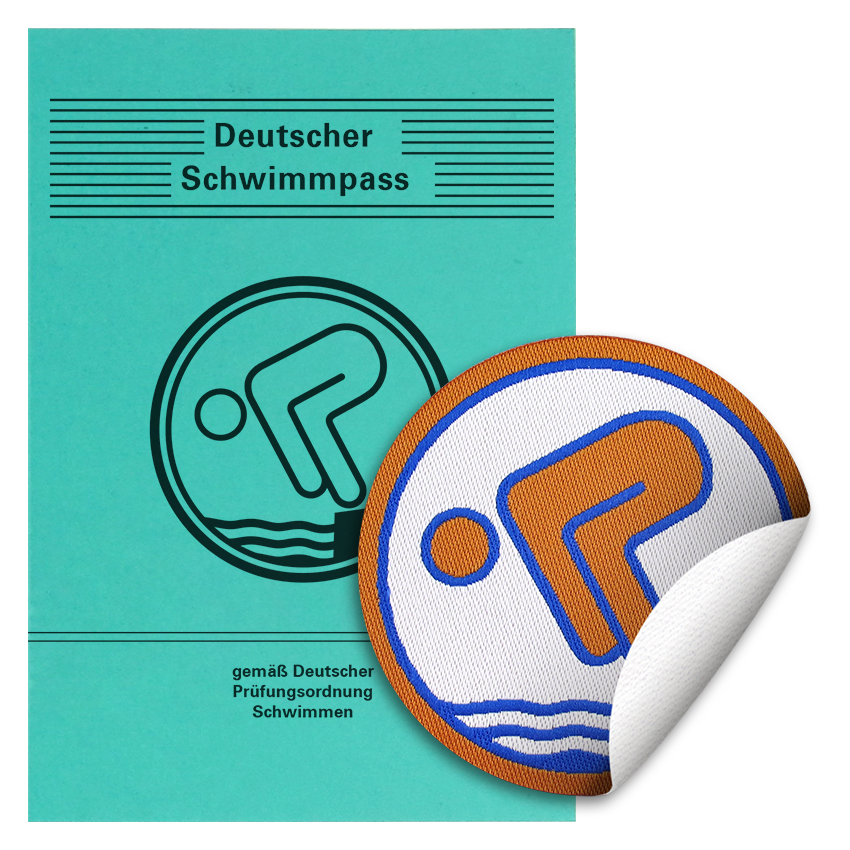
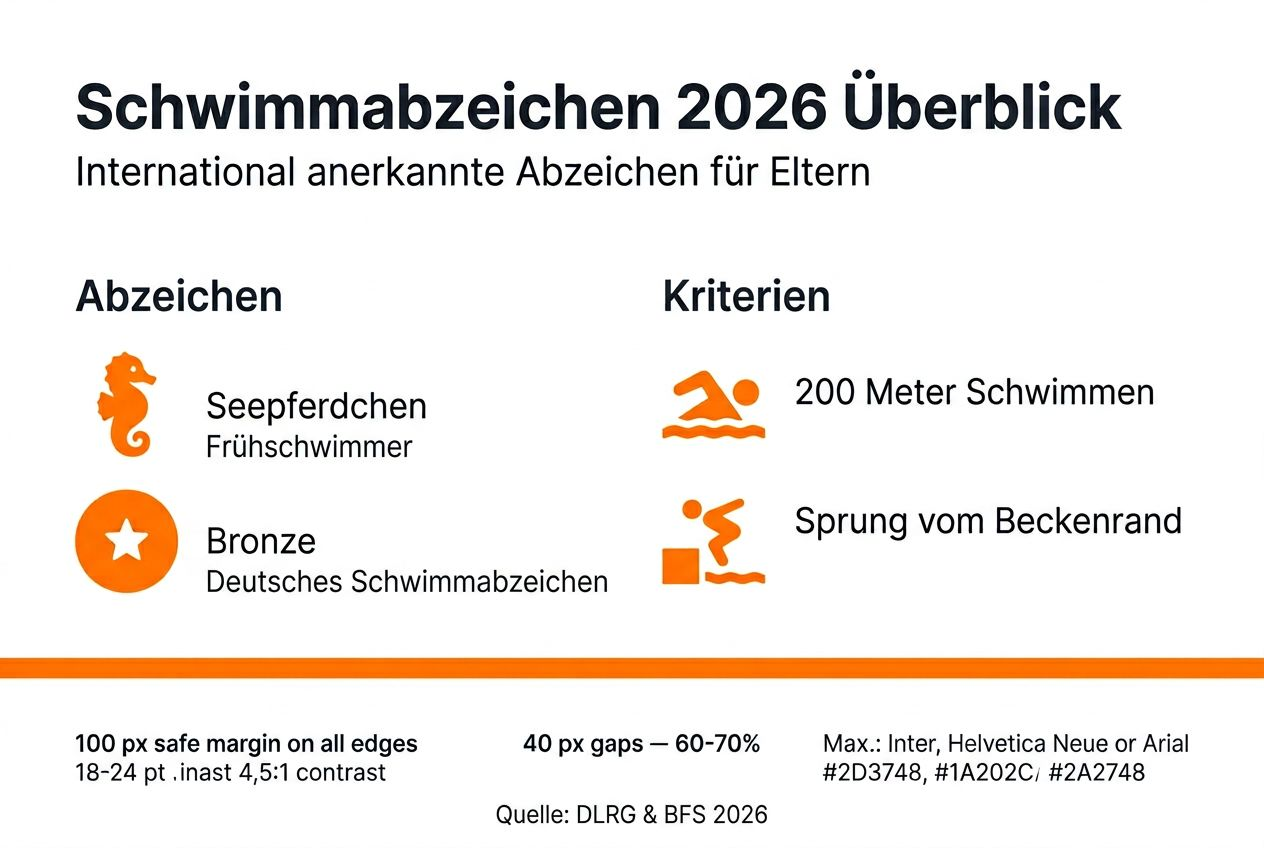
The most important German swimming badges for preschoolers are the Seepferdchen (Seahorse) and the Youth Swimming Badges in Bronze, Silver, and Gold. These certificates meet defined examination requirements and are recognized in many European countries.
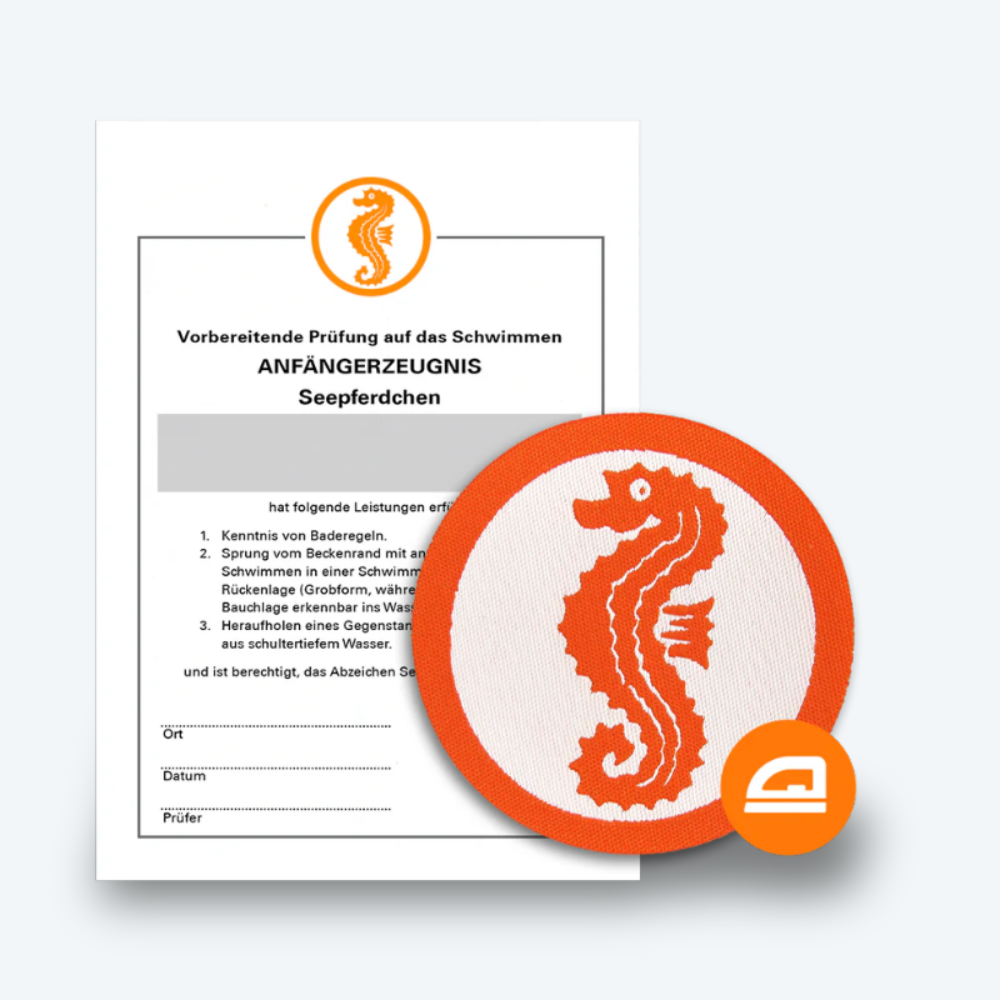
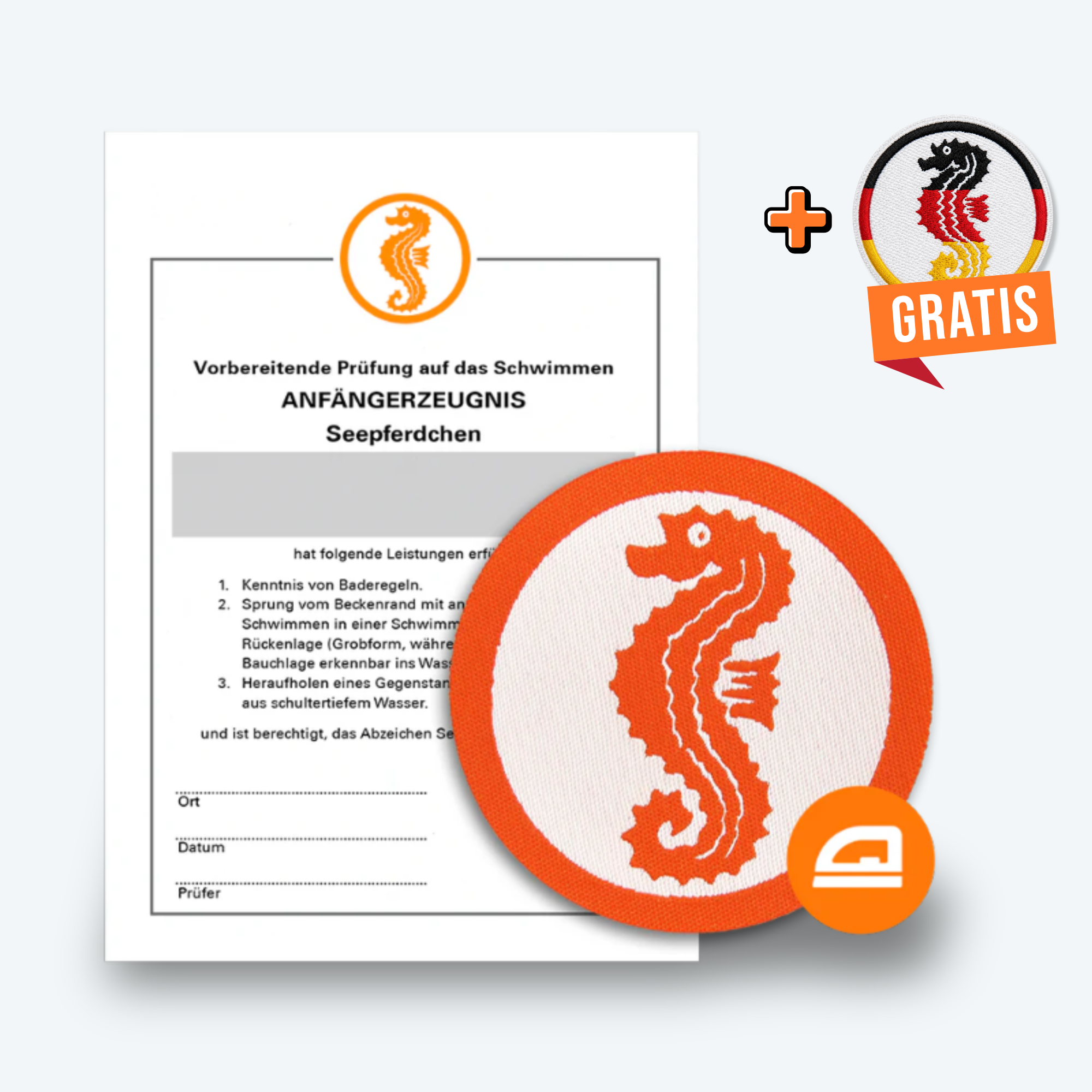
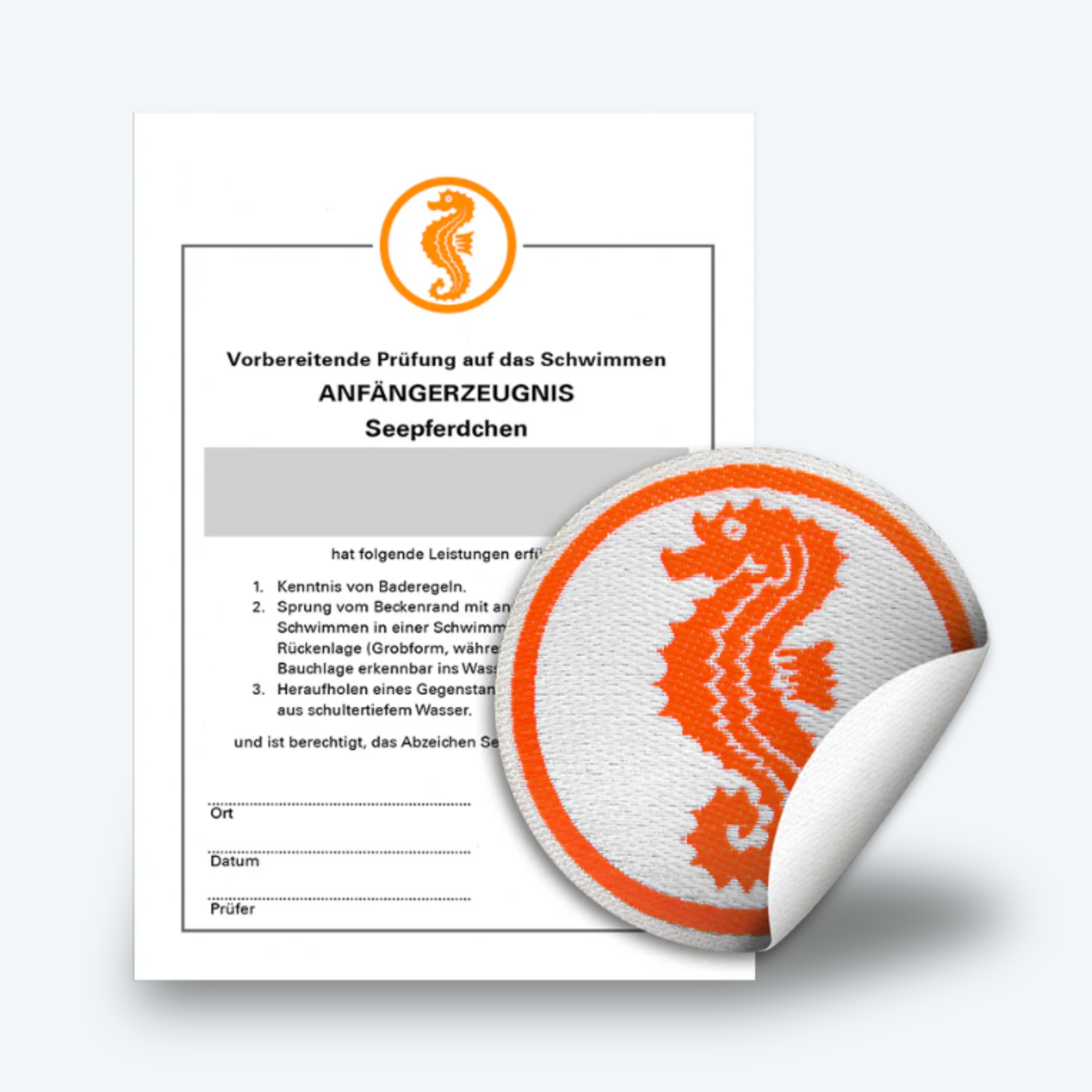
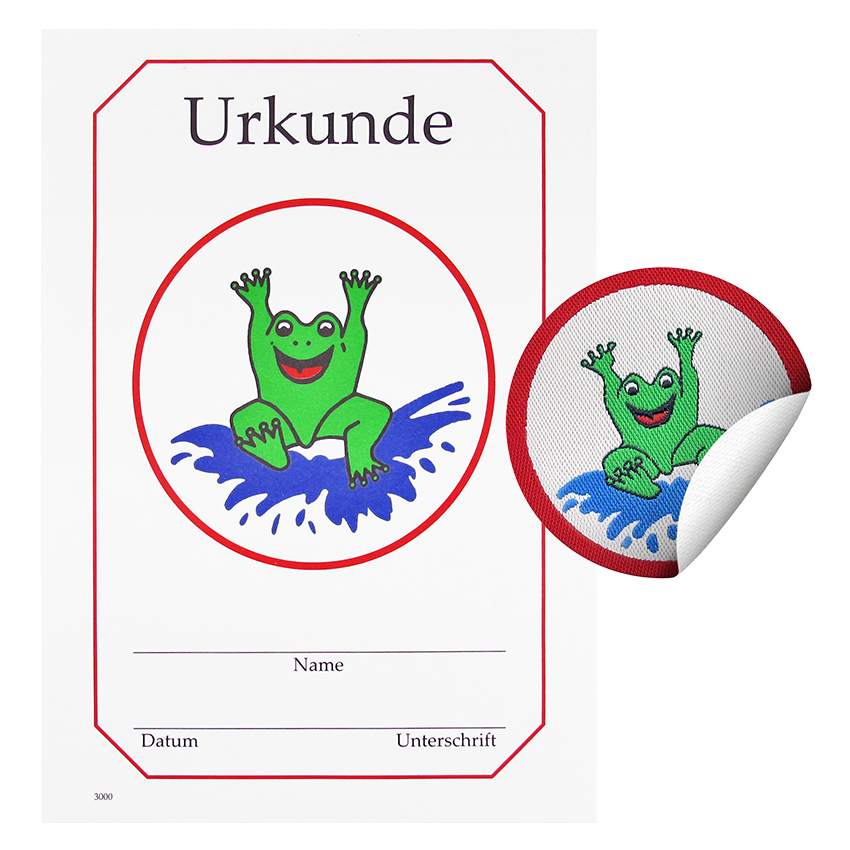
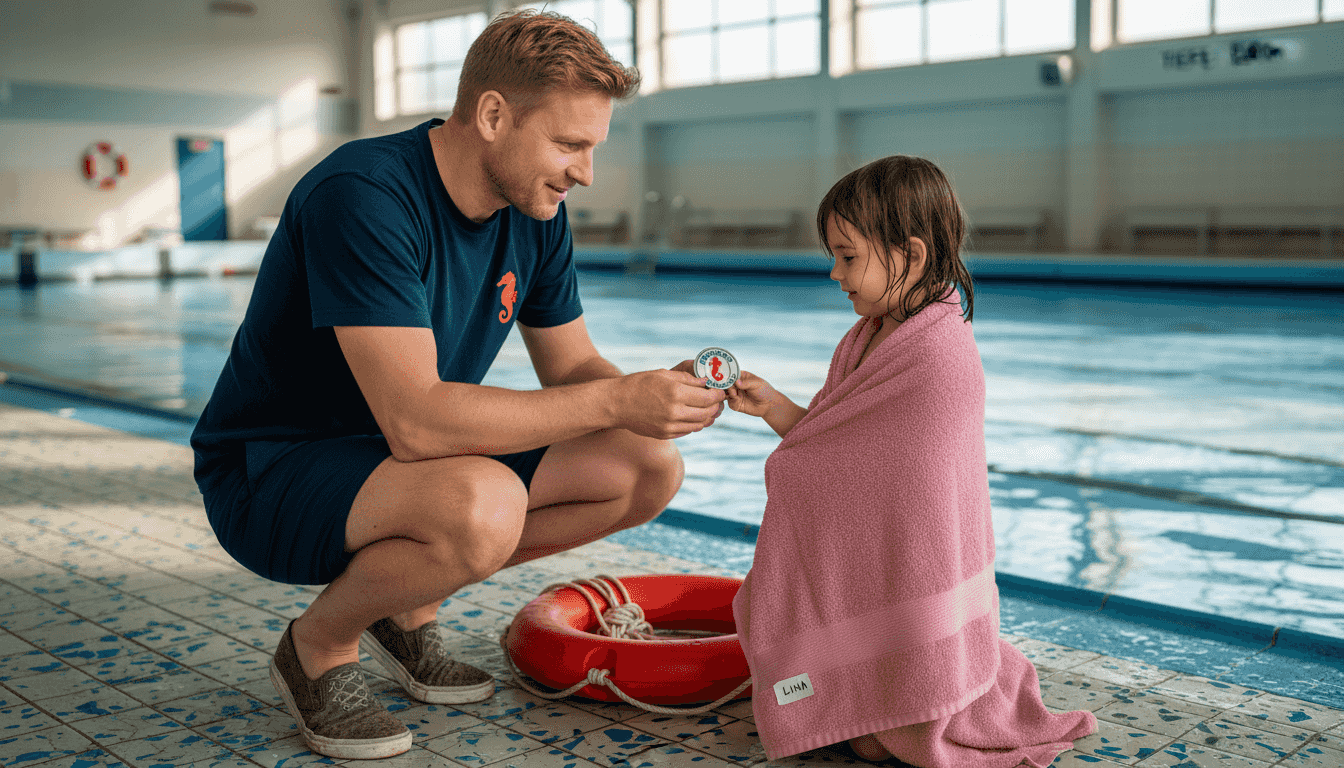
The Seepferdchen, as the first swimming badge in Germany, is an internationally recognized quality seal. Children must swim 25 meters, jump into the water, and retrieve an object from shoulder-deep water. These requirements demonstrate basic swimming ability and water familiarity.
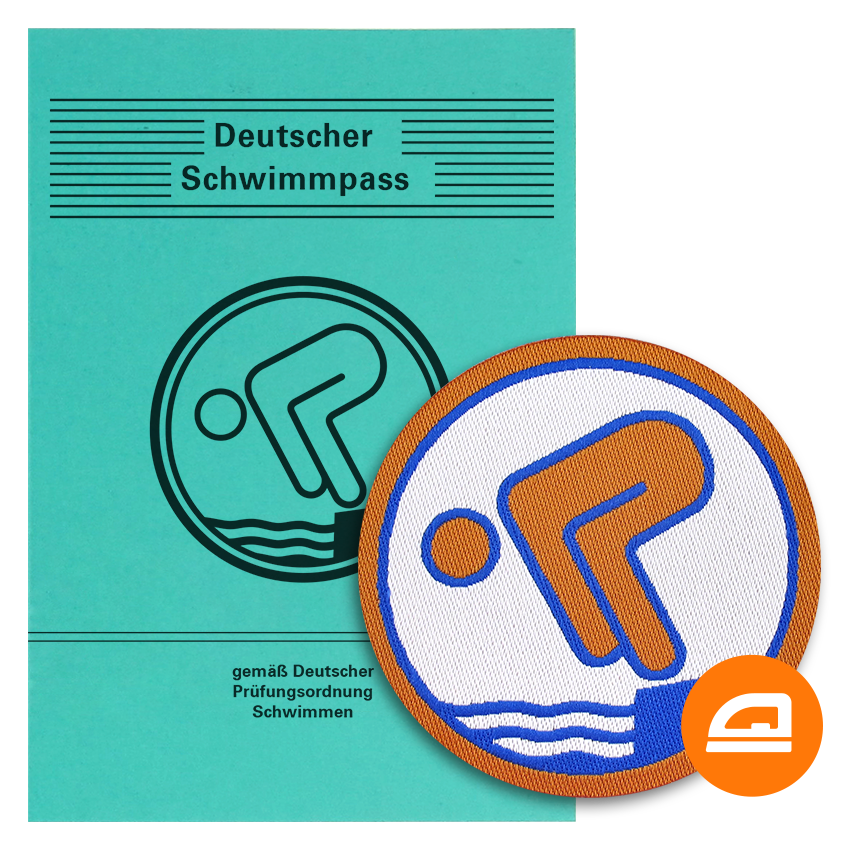
The Youth Swimming Badges build upon this. Bronze requires swimming 200 meters in a maximum of 15 minutes, jumping from the pool edge, and knowledge of swimming rules. Silver increases the distance to 400 meters in 25 minutes, supplemented by deep diving and two different jumps. Gold requires 600 meters in 24 minutes, 50 meters backstroke, and self-rescue knowledge.
The following table provides an overview of the requirements:
| Badge | Main Criteria | International Recognition |
|---|---|---|
| Seepferdchen (Seahorse) | 25m swimming, jump, diving | Widely recognized in Europe |
| Bronze | 200m in 15 min., jump, swimming rules | European Standard |
| Silver | 400m in 25 min., deep diving, 2 jumps | EU norm compliant |
| Gold | 600m in 24 min., 50m backstroke, self-rescue | Highest recognition EU-wide |
Practical examples show the importance of these standards. A family from Munich moves to Austria. The local swimming school accepts the daughter's Bronze badge without further examination because it meets European requirements. Another example: During a holiday course in Spain, the Seepferdchen is recognized as proof of basic knowledge, allowing the child to directly join the appropriate group.
The choice of the right badge depends on your child's age and swimming ability. Further details on all levels can be found in our overview of Bronze, Silver, Gold Swimming Badges.
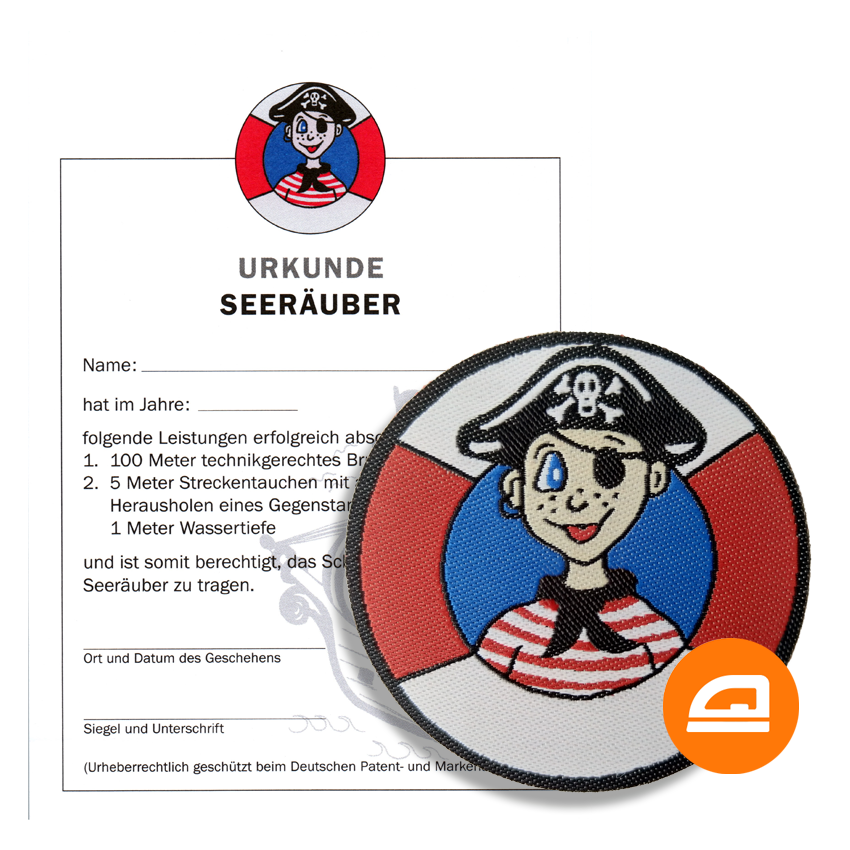
Pro Tip: Choose badges that not only meet recognized standards but are also designed to be child-friendly. Motivating designs encourage joy in learning and pride in achieving goals.
How International Recognition Works: Standards and Norms
International recognition of swimming badges is based on binding standards and collaborations between national associations. The most important European framework is the EN 15288-1 standard. Swimming badges meet the requirements of the European Standard EN 15288-1, which supports their recognition across borders.
This standard specifies what competencies swimming beginners and advanced swimmers must demonstrate. It defines minimum requirements for swimming distances, techniques, and safety aspects. Swimming schools certified according to EN 15288-1 accept badges from other countries, provided they meet the same standard. This builds trust and facilitates families' transitions between countries.
The DLRG and BFS work closely with international associations. Bilateral agreements between Germany and other European countries ensure that German swimming badges are widely recognized. DLRG swimming badges are accepted by many European swimming schools as a minimum standard. These cooperations are based on common examination criteria and regular exchange.
Over 80% of European swimming schools accept DLRG-certified badges as equivalent proof of swimming skills.
Four key factors determine international validity:
- Compliance with the European Standard EN 15288-1
- Official certification by recognized national associations
- Bilateral agreements between countries or swimming organizations
- Transparent documentation of examination requirements and competence levels
Recognition by European swimming schools usually happens automatically if these criteria are met. Outside Europe, however, different standards may apply. In the USA, for example, swimming schools follow the Red Cross or YMCA system, which has different requirements. You can learn more about international differences in swimming badges in our detailed comparison.
Common Misconceptions about the International Recognition of Swimming Badges
Many parents operate under false assumptions when it comes to the validity of German swimming badges. These misconceptions can lead to disappointment or unnecessary additional examinations.
The most common misconception: German swimming badges are valid worldwide. In reality, recognition is usually limited to Europe. Outside the EU, completely different systems such as the American Red Cross or Australian Royal Life Saving may apply. These organizations have their own standards that do not automatically align with German badges.
Another misconception concerns the equivalence of all swimming badges. Not every badge documents the same skills. A Seepferdchen demonstrates basic knowledge, while Gold requires comprehensive technique and endurance. Swimming schools abroad often check which level of competence a badge represents before accepting it.
Some parents believe that all badges available in Germany are officially certified. This is not true. Only badges with a DLRG or BFS seal meet European standards. Private providers without this certification can sell badges that do not have international recognition. Before purchasing, you should therefore always check the certification.
Three central misconceptions at a glance:
- German swimming badges are automatically valid worldwide, not just in Europe.
- All swimming badges document the same skills and competence levels.
- Every badge available in Germany is officially certified and recognized.
Why do these misconceptions arise? Often there is a lack of transparent information about the differences between national systems. In addition, some providers advertise with misleading phrases such as "internationally usable".