
Teaching Children Breaststroke: Step-by-Step Success
Every mother and father wishes to provide their child with safety and joy in the water. Especially for preschoolers, a well-prepared swimming environment with the right aids is the key to positive experiences when learning to swim. By gradually building a supportive atmosphere, child-friendly exercises, and versatile swimming aids, you lay the foundation for more confidence and motivation in the water – ensuring that learning the breaststroke becomes a success for everyone.
Table of Contents
- Step 1: Preparing the Swimming Environment and Equipment
- Step 2: Introducing Basic Water Familiarization Exercises
- Step 3: Explaining and Demonstrating the Breaststroke Technique
- Step 4: Practicing and Supporting Swimming Movements
- Step 5: Reviewing Progress and Motivating with Badges
Quick Summary
| Key Point | Explanation |
|---|---|
| 1. Prepare Environment and Equipment | A safe and inviting swimming environment as well as suitable equipment are crucial for learning success. |
| 2. Make Water Familiarization Playful | Games and exercises strengthen your child's confidence and lower the inhibition threshold for water contact. |
| 3. Explain Breaststroke Technique Clearly | Break down complex movements into simple steps to make the technique understandable for children. |
| 4. Playful Practice of Swimming Movements | Through varied exercises and games, children improve their coordination and enjoyment of swimming. |
| 5. Regularly Review Progress | Swimming badges can document and motivate progress to strengthen self-confidence. |
Step 1: Preparing the Swimming Environment and Equipment
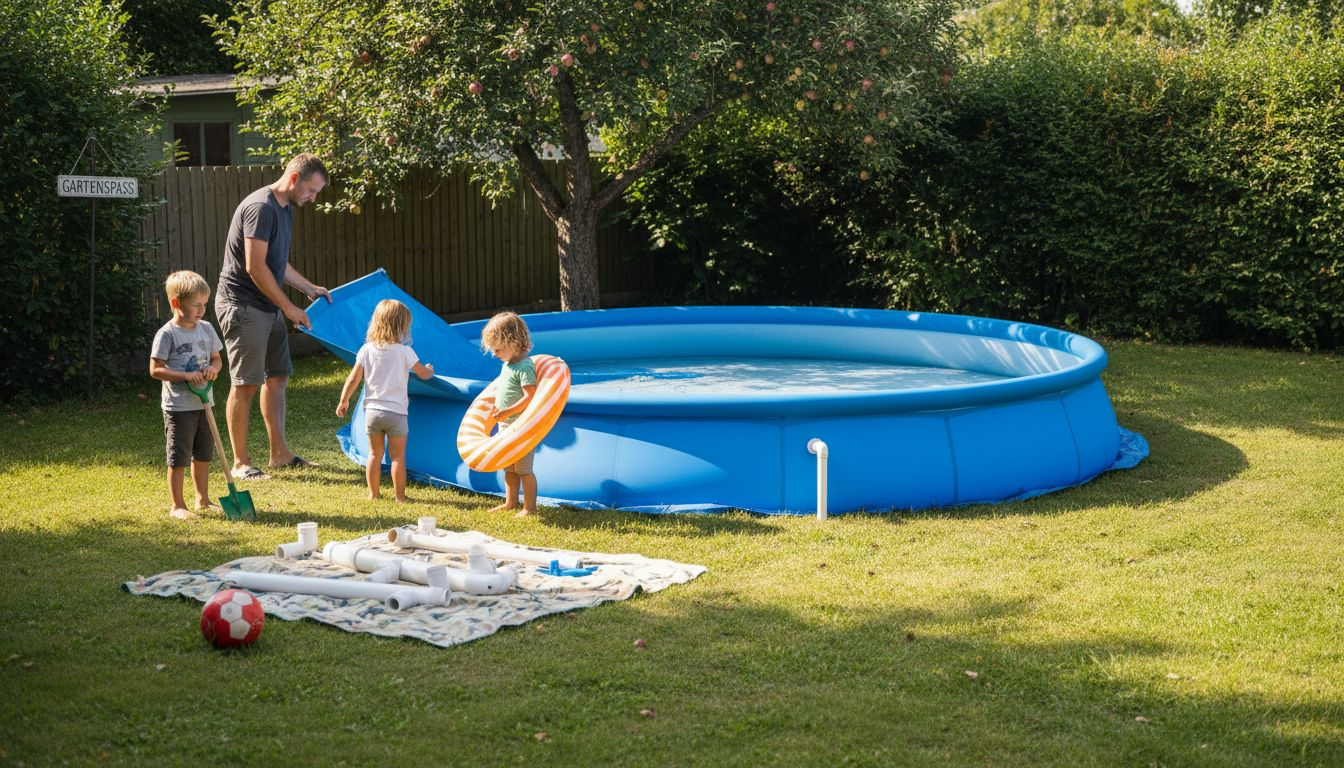
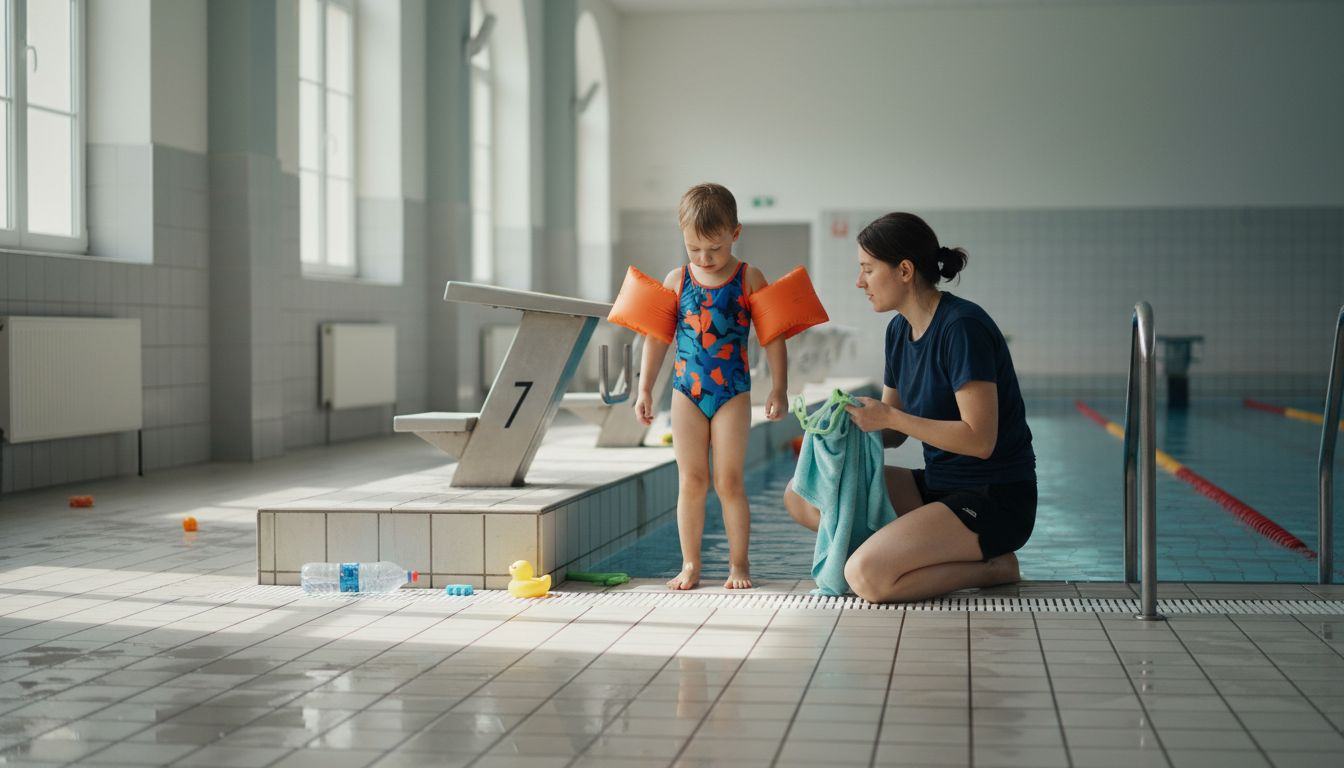
The first step to successful breaststroke instruction begins before entering the water: careful preparation of the swimming environment and the right equipment is crucial. The goal is to create a safe and inviting atmosphere that instills fun and confidence in your child while learning to swim.
For optimal preparation, you should consider the following equipment:
- Appropriate swimwear: Swim trunks or swimsuit made of stretchy material
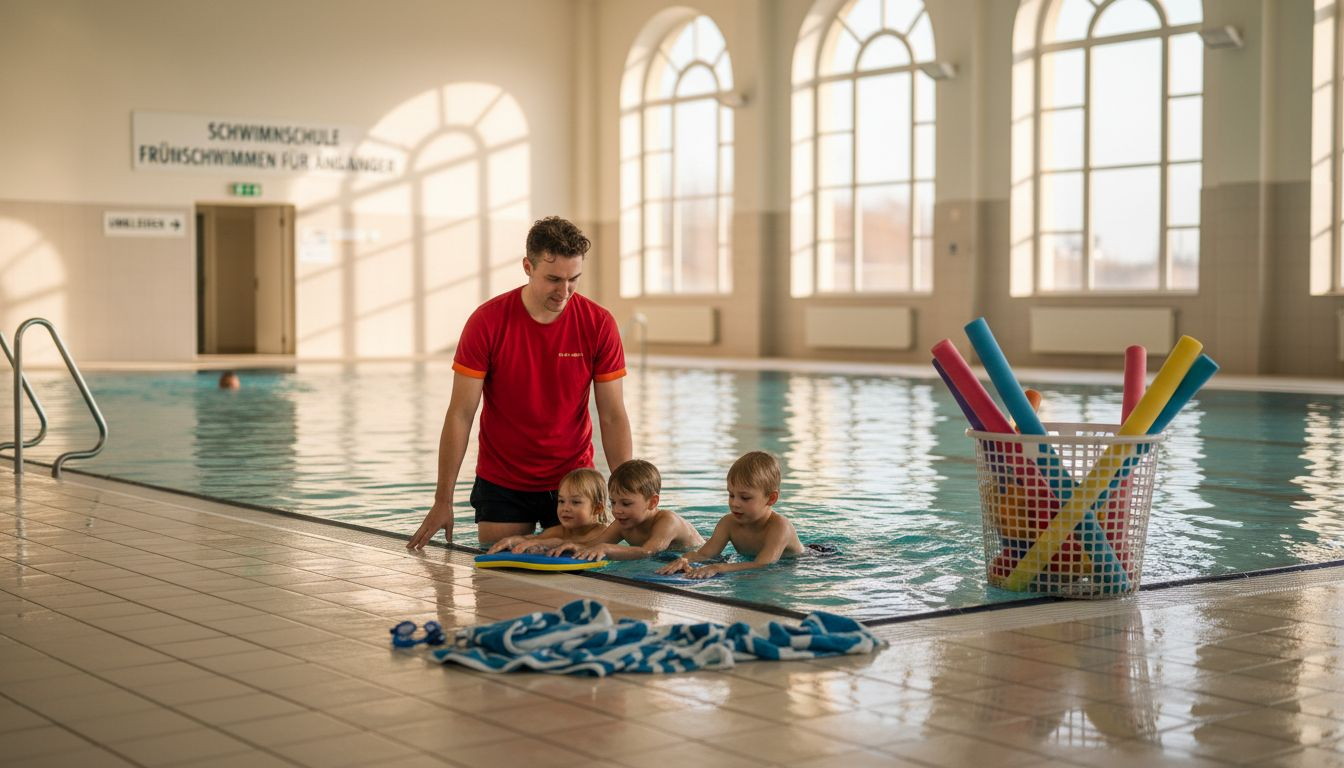
- Swimming aids: Suitable swimming aids such as kickboards and swimming noodles
- Safety equipment: Armbands or swim belts for additional safety
- Towels and change of clothes: Dry and warm clothing after swimming
Selecting the right swimming aids is crucial. They should support the child but never replace direct supervision. Make sure the aids are appropriate for your child's size and developmental stage.
Here is an overview of different swimming aids and their specific benefits:
| Swimming Aid | Promotion of Skills | Age/Weight Recommendation |
|---|---|---|
| Kickboard | Arm strength and coordination | From approx. 4 years, depending on size |
| Swim Noodle | Balance, buoyancy in water | Suitable for all age groups |
| Armbands | Safety during surface contact | Toddlers up to about 6 years |
| Swim Belt | Controlled floating, learning movement | Preschoolers and beginners |
Important: Swimming aids are a support, but not a substitute for parental supervision and professional training.
Carefully prepare the swimming environment. The pool edge should be non-slip, the water temperature pleasant, and the surroundings safe. Make sure you can swim yourself and feel safe in the water.
Pro-Tip: Practice initial water games and movements at the edge of the pool to give your child security and confidence.
Step 2: Introducing Basic Water Familiarization Exercises
The goal of this step is to enable your child to develop a positive and fearless relationship with water. Water familiarization forms the basis for successful swimming lessons and builds confidence in one's own abilities.
There are several effective methods to playfully introduce children to water:
- Face-in-water exercises: Playful blowing bubbles and submersing in the bathtub
- Breathing techniques: Small water games for controlled breath-holding
- Orientation exercises: Collecting objects underwater
- Trust-building measures: Slowly approaching new water experiences
Children learn best through play and fun. Use aids like straws or small toys to spark interest and lower the inhibition threshold for water contact.
Important: Every child has their own pace. Never exert pressure, but create a positive, relaxed atmosphere.
Pay special attention to a safe environment and remain patient. Small successes motivate children and strengthen their self-confidence.
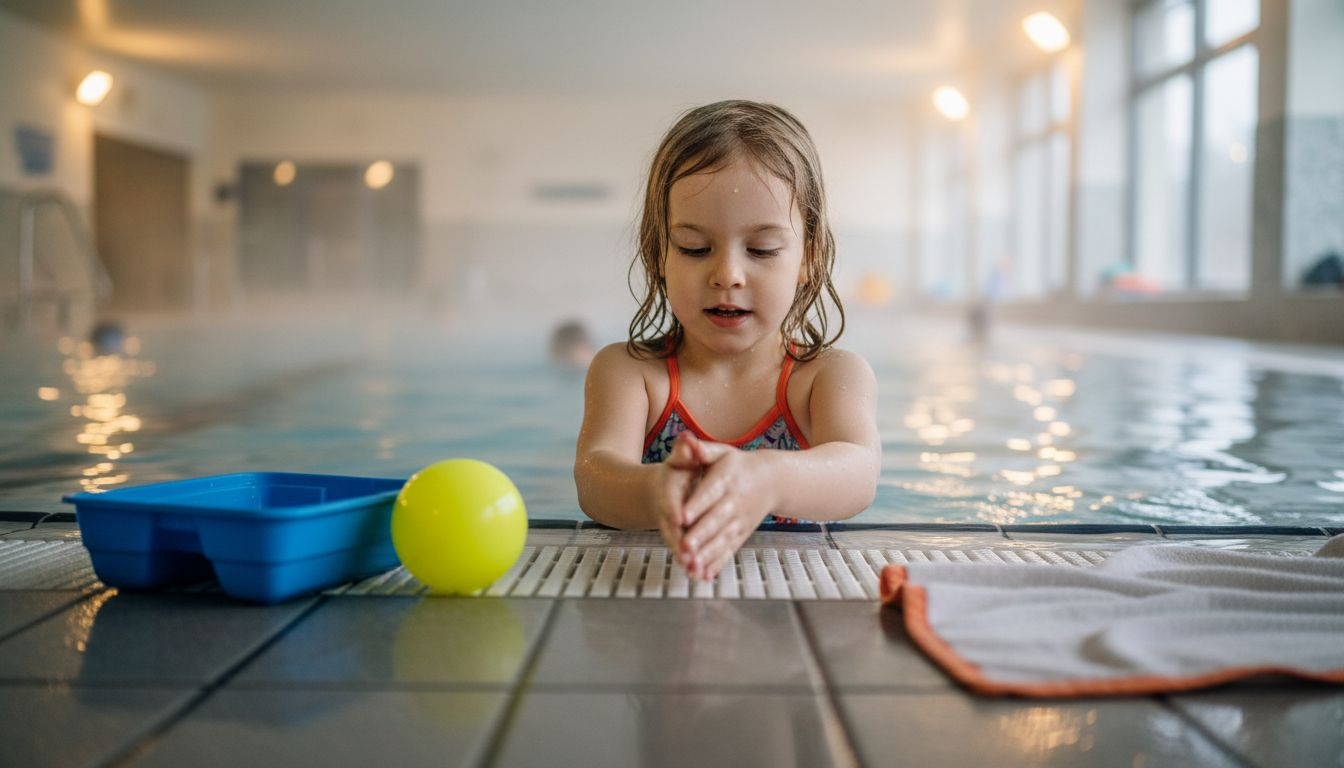
Pro-Tip: Make water familiarization a daily ritual with short, playful exercises that are fun and build trust.
Step 3: Explaining and Demonstrating the Breaststroke Technique
In this section, you will learn how to teach your child the basics of breaststroke technique in a clear and understandable way. The key is to break down complex movements into simple, playful steps.
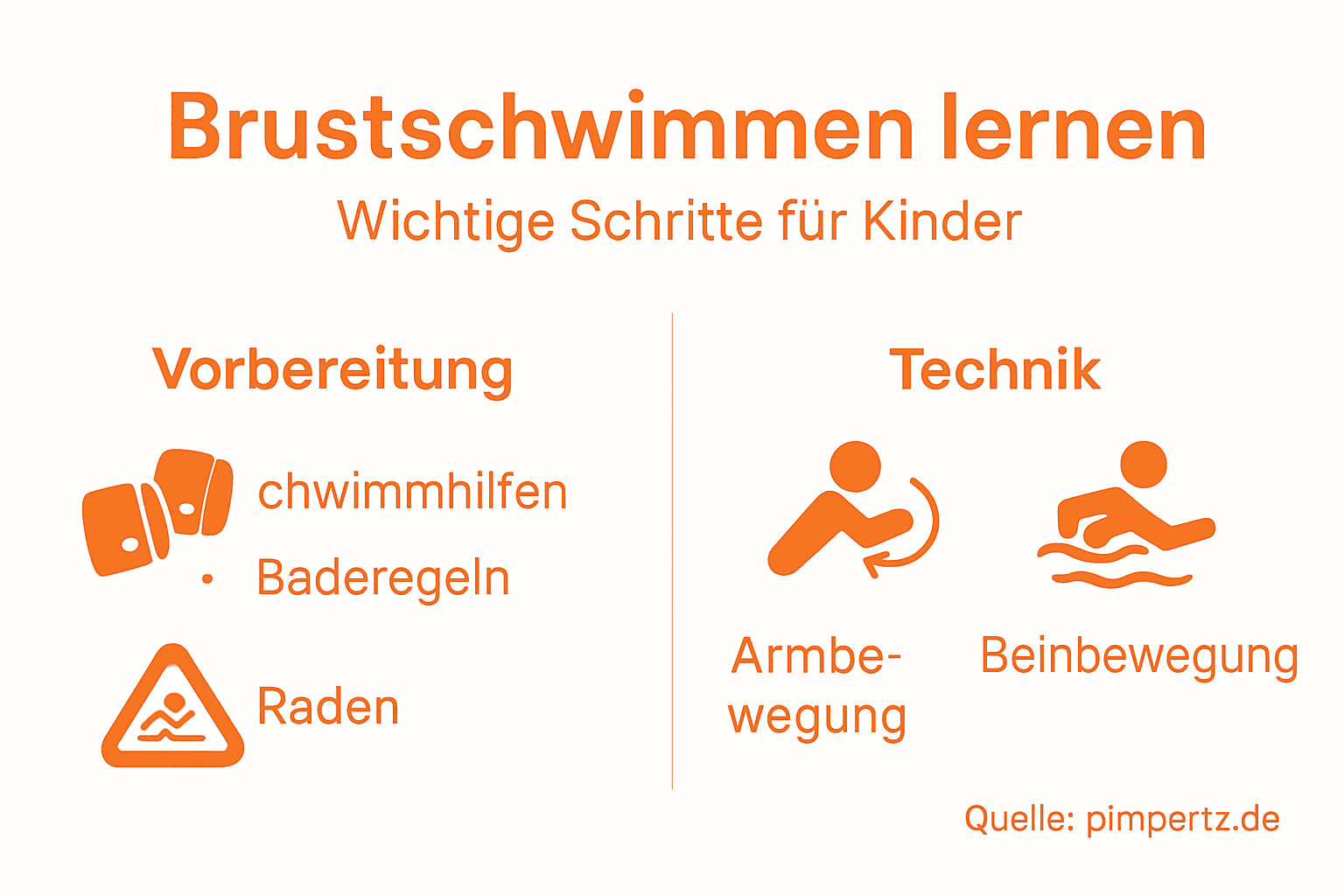
Start with dry exercises to explain the synchronized movement of arms and legs. The most important techniques include:
- Arm movements: Extending, pulling sideways, and bringing together
- Leg movements: Frog-like motion
- Breathing technique: Briefly lifting the head to inhale
- Utilizing water resistance: Efficient propulsion through coordinated movements
First, demonstrate the movements yourself by performing them slowly and exaggeratedly. Explain each step and encourage your child to imitate the movements. Make sure to break down the technique into small, understandable sub-steps.
Important: Patience and positive reinforcement are crucial. Every child learns at their own pace.
Focus on the fun and joy of movement. Small successes motivate children and build confidence in their own abilities.
Pro-Tip: Use comparisons from the animal world—for example, the frog movement—to make swimming movements more tangible and entertaining for children.
Step 4: Practicing and Supporting Swimming Movements
This section is about teaching your child breaststroke movements in a playful and motivating way. The goal is to increase coordination, confidence, and enjoyment of swimming through varied exercises.
Playful swimming drills help children learn the swimming technique step by step:
- Rocket Glide: Pushing off in a Superman position
- Stamp Feet: Practicing external rotation of the feet
- Pizza Frog: Practicing leg kick on the back
- Arm Stroke Exercises: Improving coordination with a kickboard
The most important training methods include:
- Short, intensive exercise units
- Frequent repetition of movements
- Positive reinforcement and encouragement
- Playful competitions for motivation
Important: An adult should always remain within arm's reach and patiently accompany the movements.
Make sure to adapt the exercises to your child's individual abilities and developmental pace. Every small improvement is a success.
Pro-Tip: Conduct the exercises as fun games and reward progress with praise and small tokens to keep motivation high.
Step 5: Reviewing Progress and Motivating with Badges
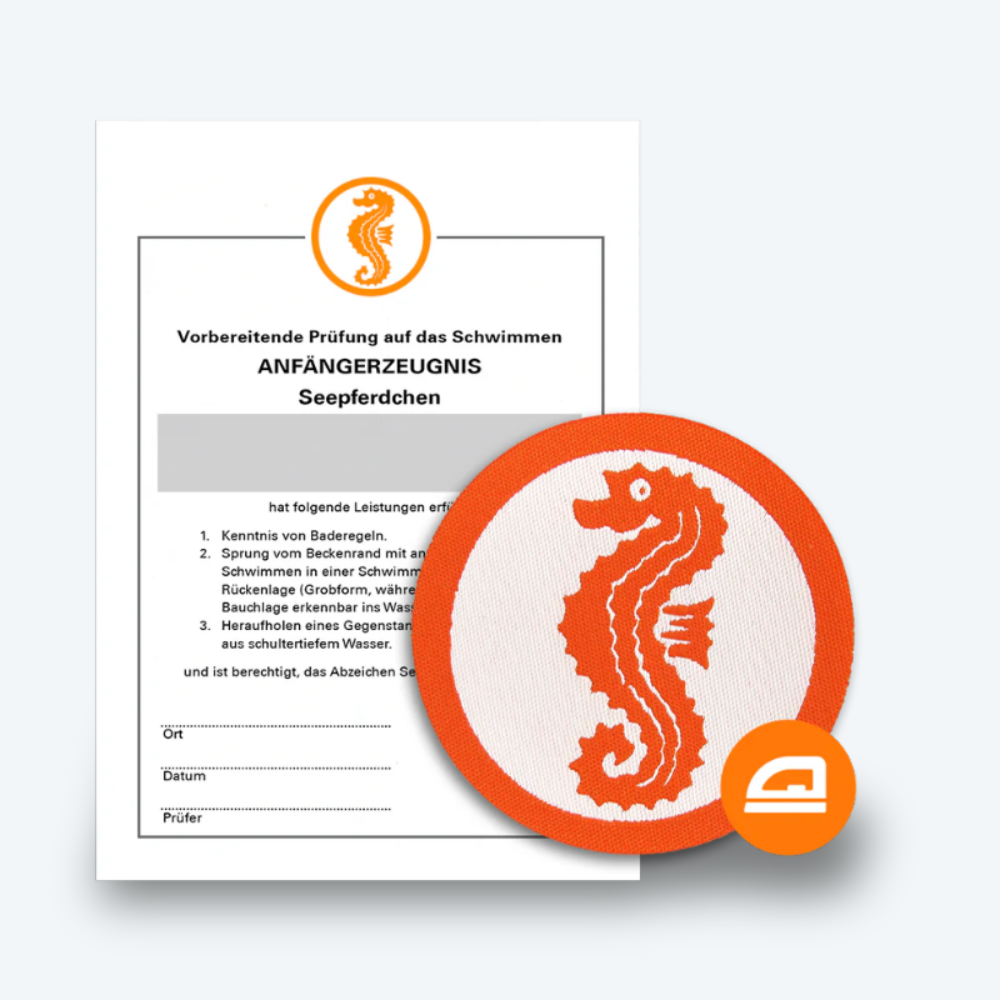
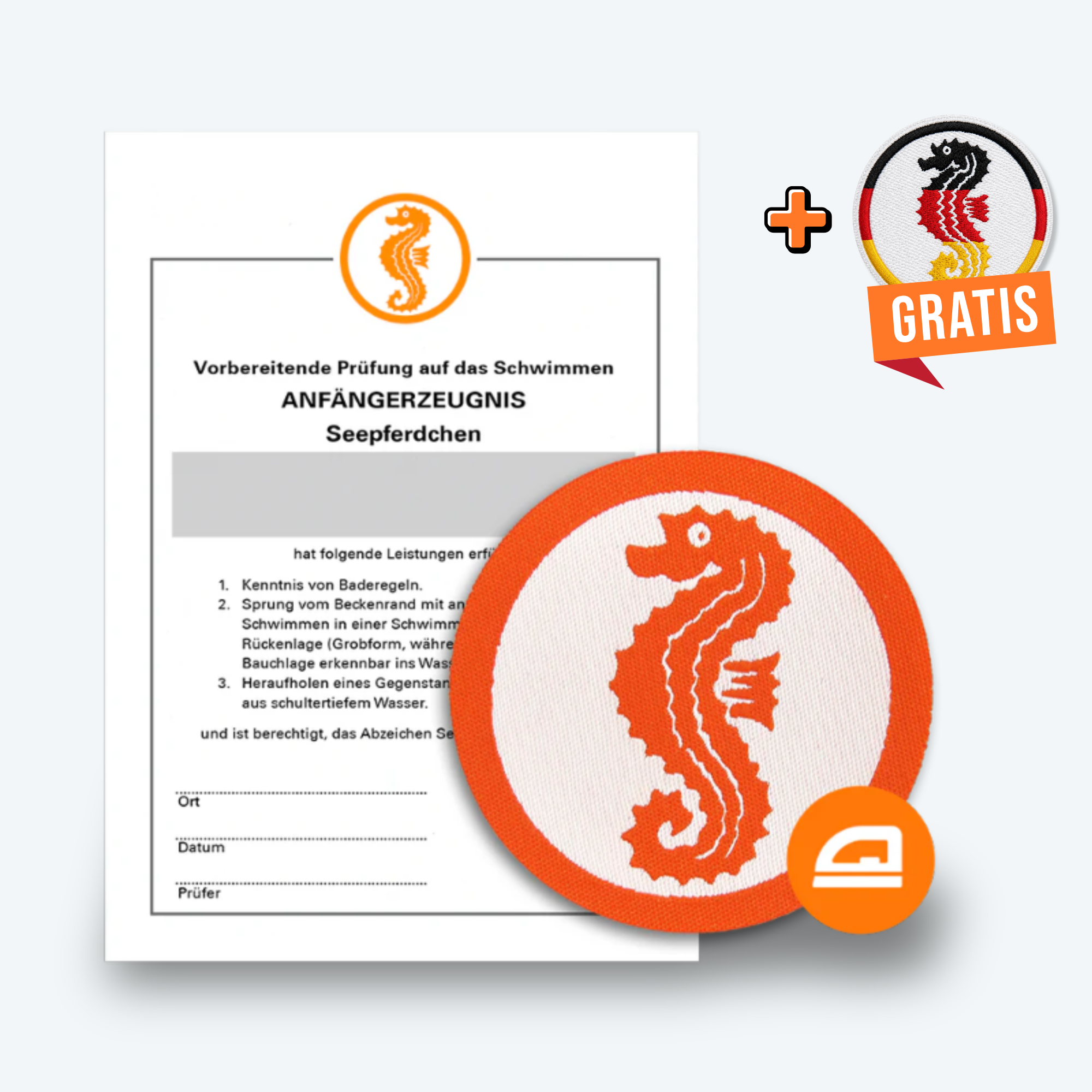
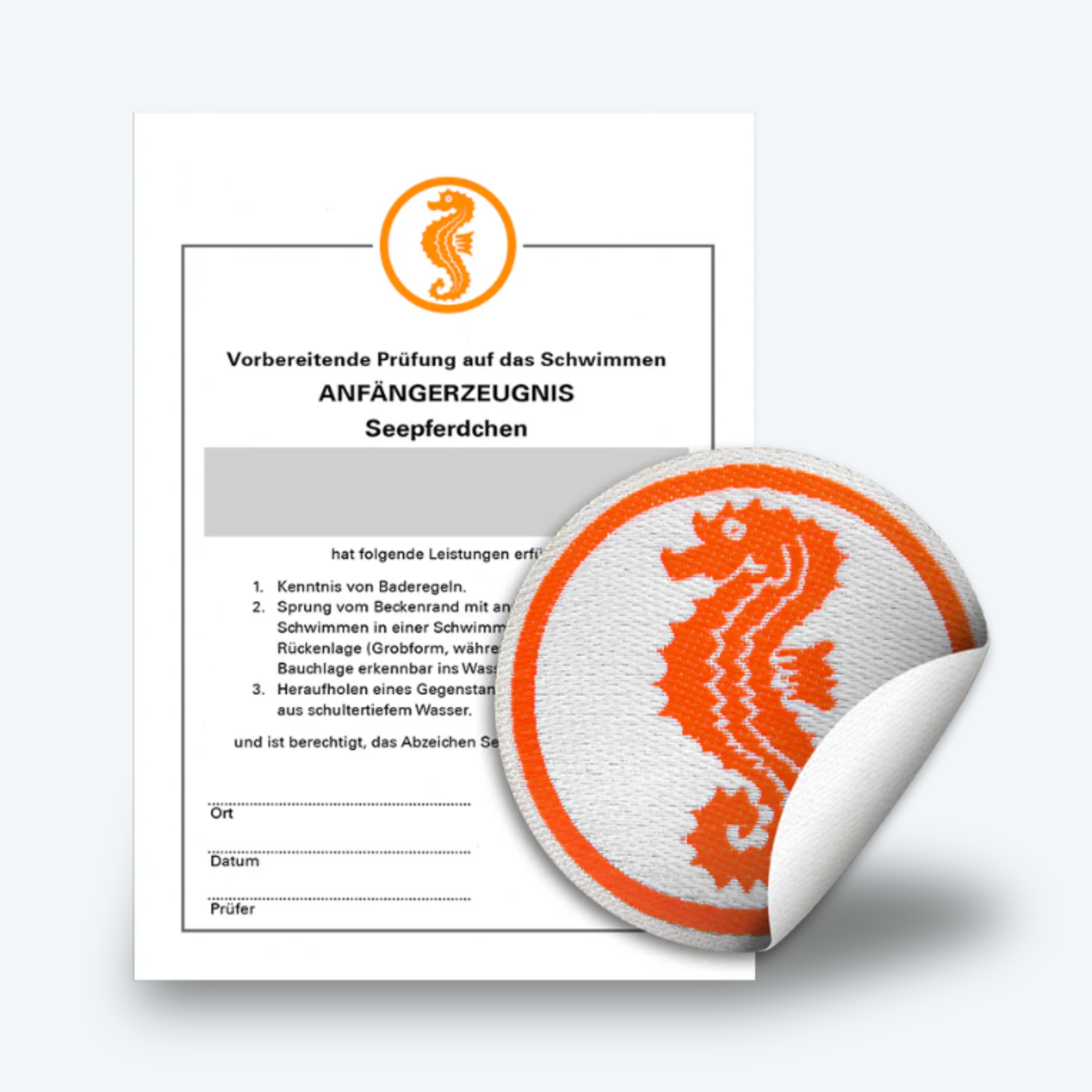
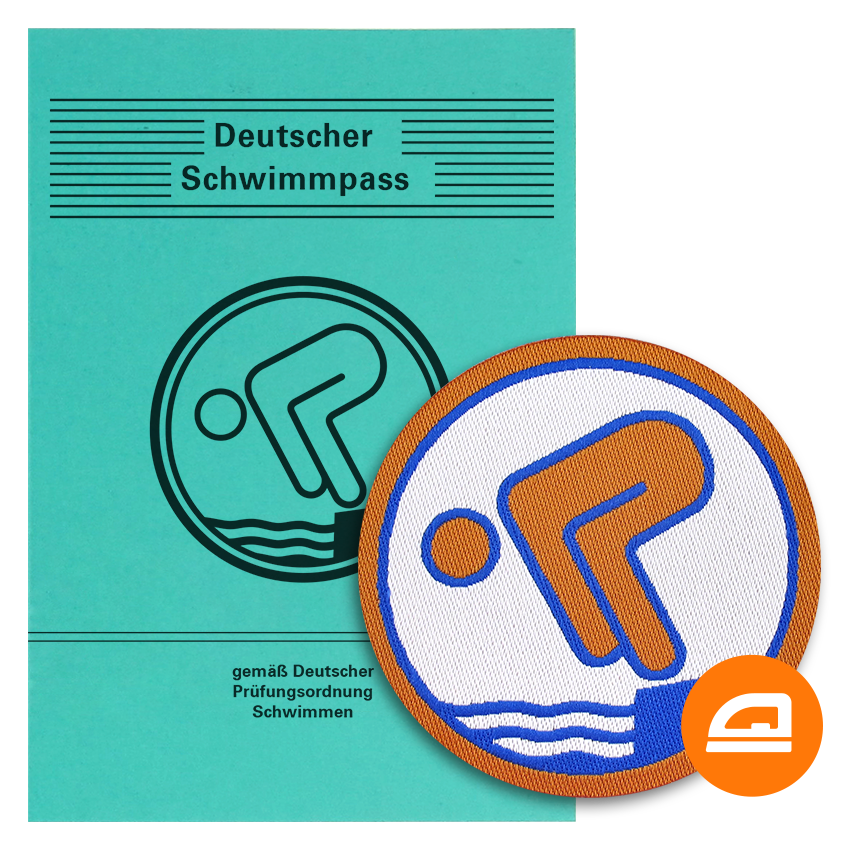
In this section, you will learn how to systematically observe your child's swimming progress and motivate them with official DLRG swimming badges. The goal is to document their swimming journey and inspire your child to further successes.
Swimming badges offer a clear progression structure:
- Seepferdchen (Seahorse): Basic swimming skills
- Bronze: Advanced swimming techniques
- Silver: Advanced water knowledge
- Gold: Complex swimming abilities
Important evaluation criteria include:
The following table shows the most important swimming badges and their requirements:
| Badge | Requirements | Motivational Effect |
|---|---|---|
| Seepferdchen | 25m swimming, jump, diving | First success, great self-confidence |
| Bronze | 200m swimming, diving, jump | Strengthening endurance and technique |
| Silver | 400m swimming, rescue grip | Advanced swimming knowledge |
| Gold | 800m swimming, complex tests | Highest swimming safety, great motivation |
- Safety in water
- Technical execution of movement
- Endurance and coordination
- Knowledge of bathing rules
Important: Each badge is a milestone that generates pride and motivation equally.
Observe progress regularly and provide constructive feedback. Focus on improvements rather than just perfection.
Pro-Tip: Keep a swimming progress diary to visualize developments and celebrate successes together.
Promoting Breaststroke in a Child-Friendly Way with Pimpertz
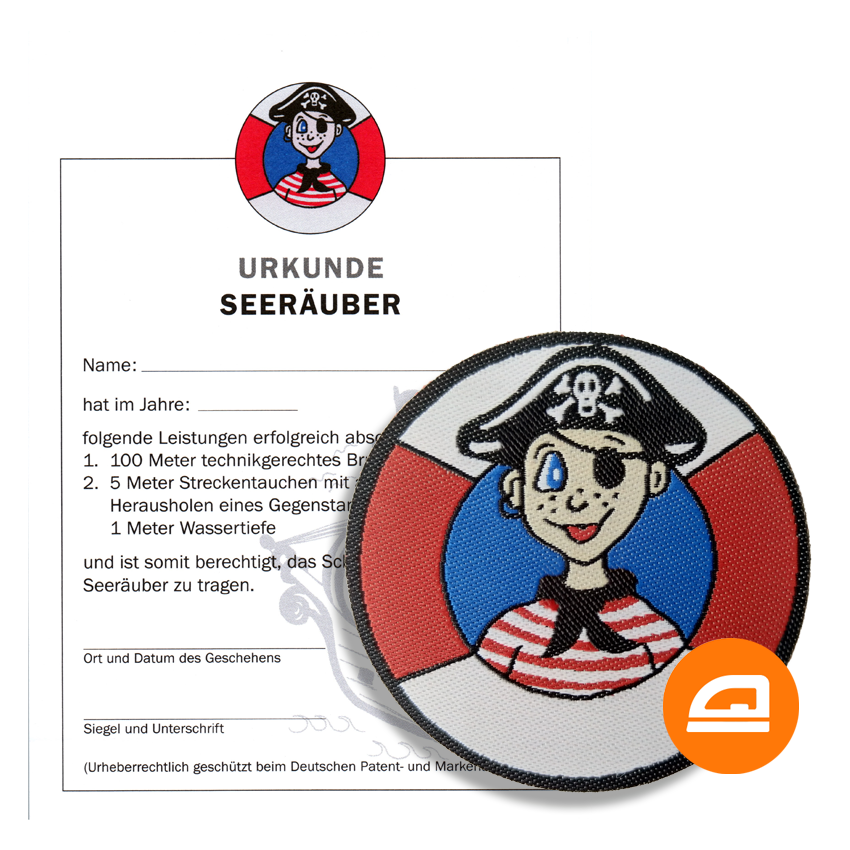
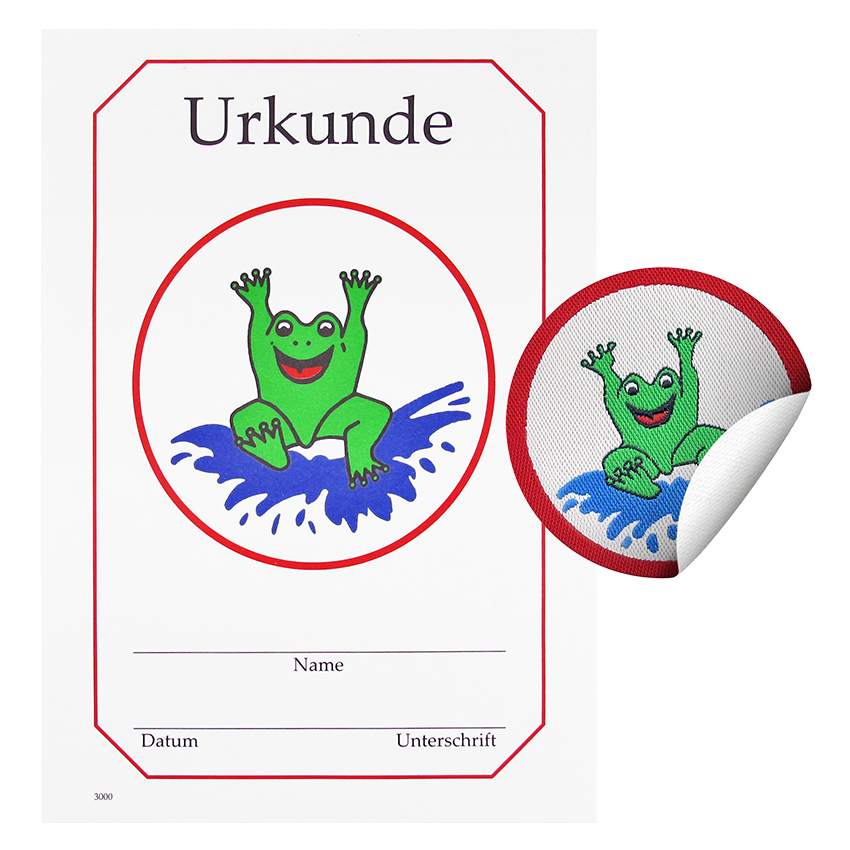
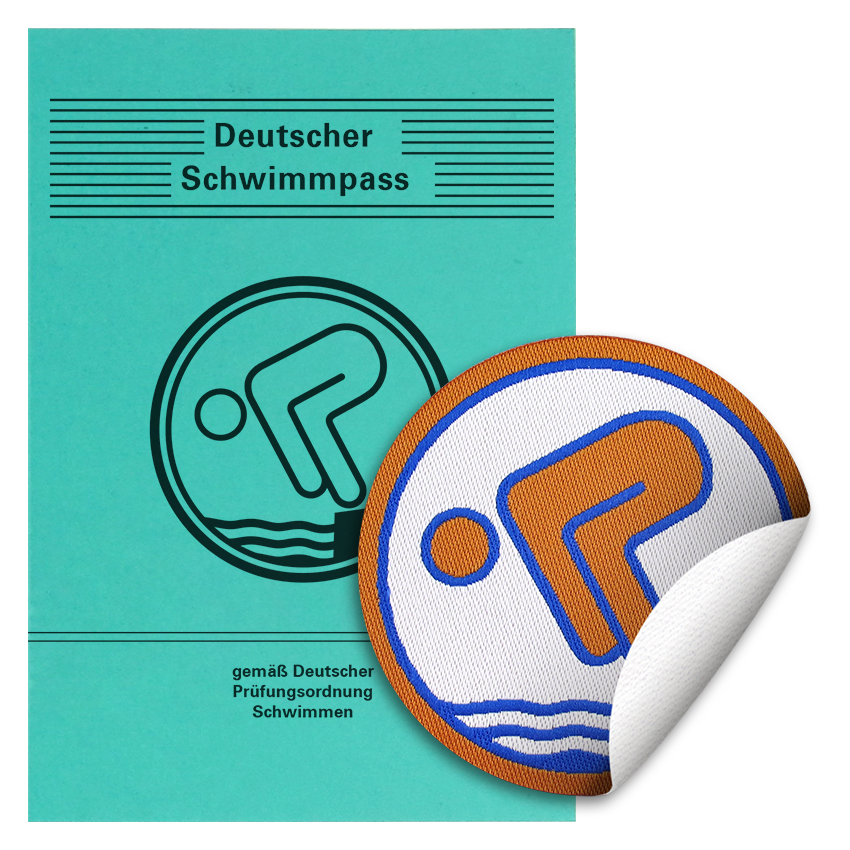
Introducing and practicing breaststroke technique is a significant step towards safe swimming for children. Motivation and visible successes, such as earning the Seahorse or higher DLRG swimming badges, are at the forefront. This is where Pimpertz comes in as your reliable partner for swimming badges and accessories, supporting parents and swimming instructors with original, child-friendly certificates and high-quality badges.
Benefit from over 38 years of experience and our extensive range of personalized sets that make learning to swim visible and tangible. With lightning-fast shipping and first-class service, we enable every small success story to be documented and cherished permanently. Start now and discover the diverse opportunities at Pimpertz to introduce breaststroke to your children with joy and pride. Visit Pimpertz and equip yourself with swimming badges, collector's albums, and personalized gift sets for a successful learning journey.
Seize the chance to make learning progress visible and start today at pimpertz.de with your individual swimming badge and certificate solutions – this way, you playfully foster enthusiasm for swimming and accompany your child on the path to valuable swimming safety.
Frequently Asked Questions
How do I optimally prepare the swimming environment for my child?
Ensure that the pool edge is non-slip and the water temperature is comfortable. Also, prepare the necessary equipment such as swimming aids and towels.
Which swimming aids are best suited for beginners?
For children learning breaststroke, kickboards and swim noodles are particularly effective. Choose aids that match your child's age and size to optimize safety and the learning process.
How can I playfully accustom my child to water?
Introduce simple water games, such as blowing bubbles in the water or collecting objects underwater. Create a relaxed atmosphere so your child can build confidence in their abilities.
What are the most important techniques in breaststroke?
The basic techniques include the synchronized movement of arms and legs, controlled breathing, and the use of water resistance. Break down these movements into small, understandable steps and practice them regularly.
How do I monitor my child's progress in swimming?
Observe swimming abilities and make notes on improvements. Motivate your child by striving for swimming badges to make milestones visible and strengthen self-confidence.
How can I encourage my child's motivation in swimming?
Celebrate small successes and provide positive feedback. Integrate playful competitions or small rewards to maintain interest and enjoyment in swimming.