
Swimming Exercises for Beginners: Learning to Swim Safely Made Easy
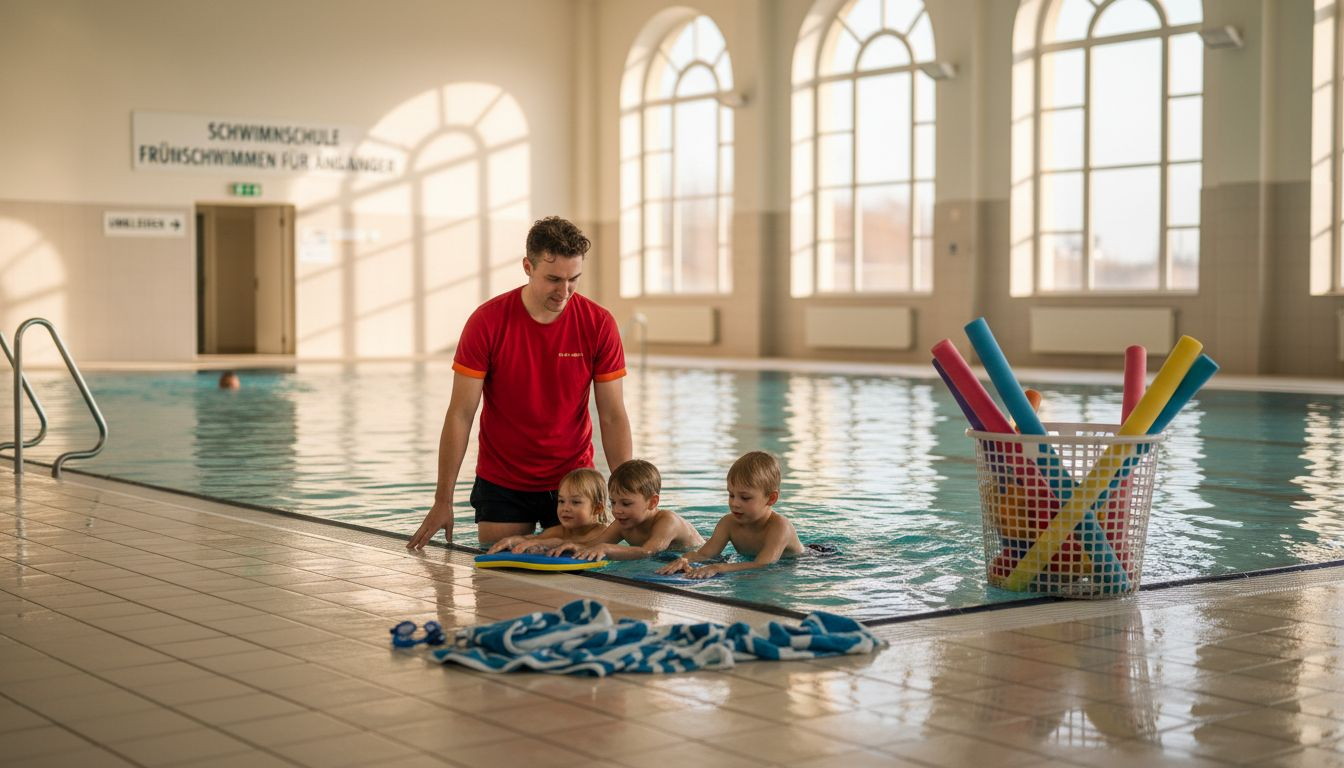
Every family with young children knows the excitement when the first swimming lesson is approaching. Whether you, as parents, want to ensure your child starts optimally equipped and motivated, or if you, as a swimming instructor, are looking for new impulses to introduce beginners to the water, the right preparation makes all the difference. The right swimming equipment and a calm, manageable pool create safety and joy from the very first minute.
Table of Contents
- Step 1: Prepare the right swimming accessories
- Step 2: Choose the ideal entry point
- Step 3: Conduct initial water acclimatization exercises
- Step 4: Practice basic swimming movements
- Step 5: Increase safety through playful tests
- Step 6: Reward learning successes with swimming badges
Quick Summary
| Important Point | Explanation |
|---|---|
| 1. Choose the right equipment | Pay attention to swimwear and accessories, such as swimming goggles and aids, that promote safety and enjoyment of learning. |
| 2. Find the optimal entry point | The ideal location, such as an indoor pool, should offer safety, comfort, and professional guidance. |
| 3. Conduct water acclimatization exercises | Playful exercises help build confidence in the water and reduce fears before swimming begins. |
| 4. Practice basic swimming movements | Focus on essential movements like leg kicks and arm strokes to develop a solid swimming technique. |
| 5. Reward learning successes | Celebrate earning swimming badges to increase motivation and make achievements visible. |
Step 1: Prepare the right swimming accessories
For a successful start to learning to swim, you need the right equipment. This isn't just about simple swimwear, but about well-thought-out accessories that guarantee safety and enjoyment of learning.
Below you will find the most important swimming essentials for beginners:
- Swimming goggles for clear vision underwater
- Swim noodle for support when floating
- Swim fins for improved leg movements
- Kickboard for practicing body posture
- Swim aid/life vest for maximum safety
When assembling your swimming accessories, you should pay particular attention to the appropriate equipment for beginners. Every child and adult has individual needs that must be taken into account.
The right size selection is also important: swimming equipment should fit comfortably, not restrict, and above all guarantee freedom of movement. Swim aids that are too small or too large can hinder learning and even be dangerous.
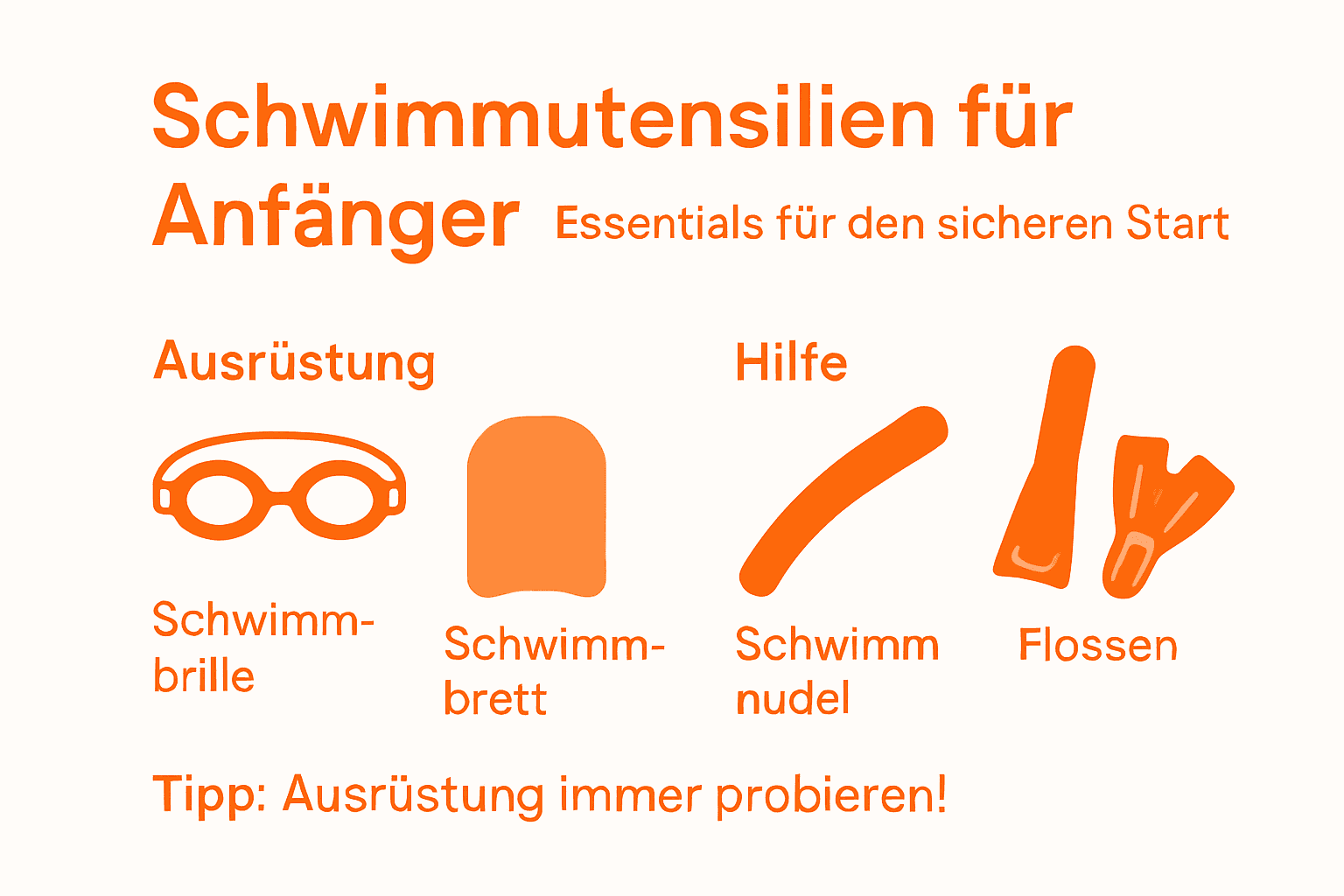
The following table shows a comparison between typical accessories for children and adults when learning to swim:
| Accessory Type | Children: Specifics | Adults: Specifics |
|---|---|---|
| Swimming goggles | Shatterproof, soft material | Adjustable, anti-fog |
| Swim noodle | Colorful, playful | Stable, higher buoyancy |
| Swim fins | Small sizes, flexible foot part | Ergonomic, longer design |
| Kickboard | Extra light, easy to grip | Large surface, robust |
| Swim aid/vest | Certified safety, child-friendly design | Adjustable size, high buoyancy |
The quality of the equipment significantly determines safety and enjoyment of learning to swim.
Pro-Tip: It is best to buy swimming accessories in a specialist shop where you can get expert advice and try on the equipment directly.
Step 2: Choose the ideal entry point
The right place to learn to swim is crucial for your success. It influences not only your learning curve but also your sense of security and motivation. When choosing the perfect entry point, there are several important aspects to consider.
For beginners, we recommend the following swimming environments:
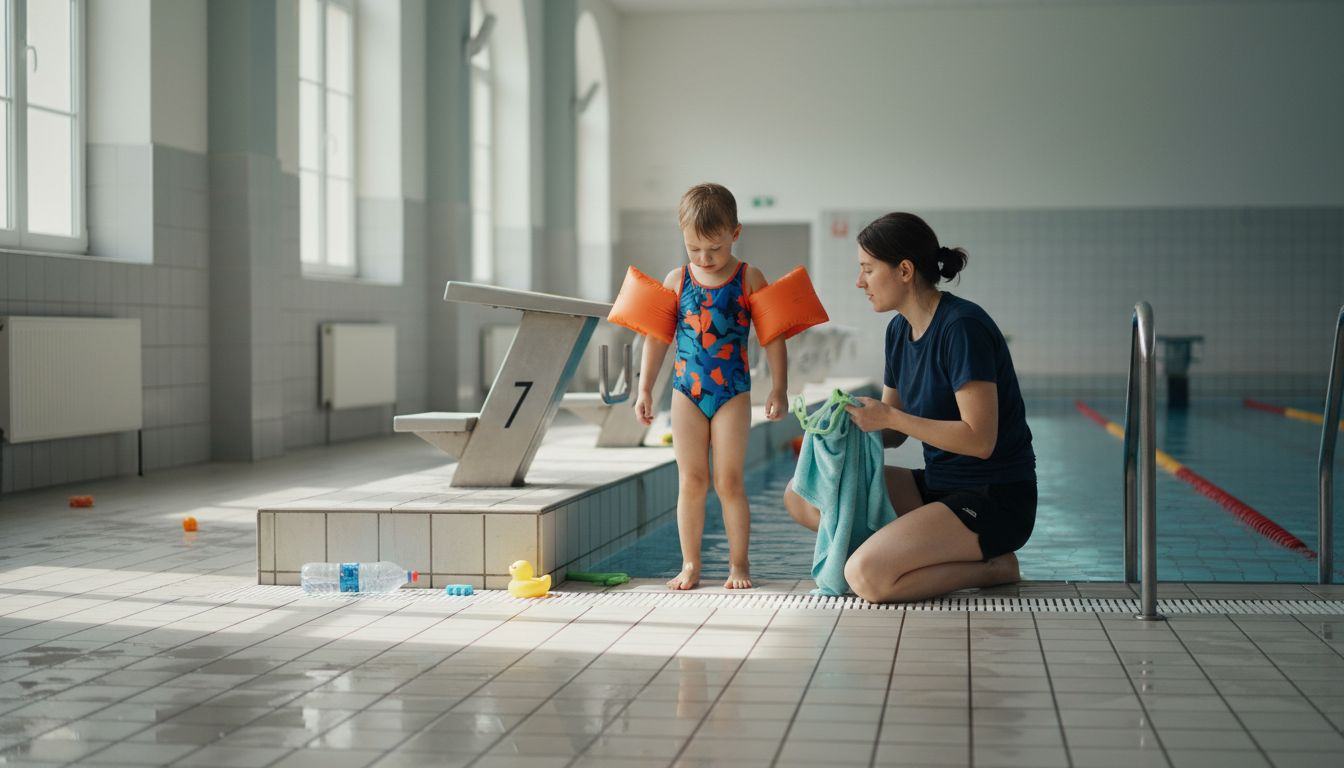
- Indoor pool with constant water level and pool temperature
- Beginner pool with shallow water depth
- Swimming courses with professional guidance
- Warm water areas for more comfort
- Small group courses for individual attention
When making your selection, you should consider proven learning tips for swimming beginners. The environment should offer safety, comfort, and professional support.
A safe and pleasant learning environment is the key to successful swimming instruction.
Different requirements apply to children and adults. While children often need playful and very shallow areas, adults often look for structured courses with targeted instruction.
Pro-Tip: Schedule an appointment to visit the swimming pool beforehand to get a personal impression of the environment.
Step 3: Conduct initial water acclimatization exercises
Water acclimatization is the most important first step in learning to swim. The goal is to build confidence and safety in the water before you learn actual swimming movements. This process helps to reduce fears and develop a positive relationship with the element of water.
For beginners, we recommend the following water acclimatization exercises:
- Water games for relaxation and building trust
- Facial water as a first exercise - gently splashing water on the face
- Diving under with the support of a trusted person
- Floating with the help of swim noodles
- Breathing exercises with controlled breath-holding
When dealing with children, it is especially important to ensure water acclimatization is safe. Proceed patiently and playfully, without exerting pressure.
Trust is the key to successful water acclimatization - not performance pressure.
Different approaches apply to children and adults. While children need more playful methods, adults can proceed more systematically and specifically practice breathing techniques.
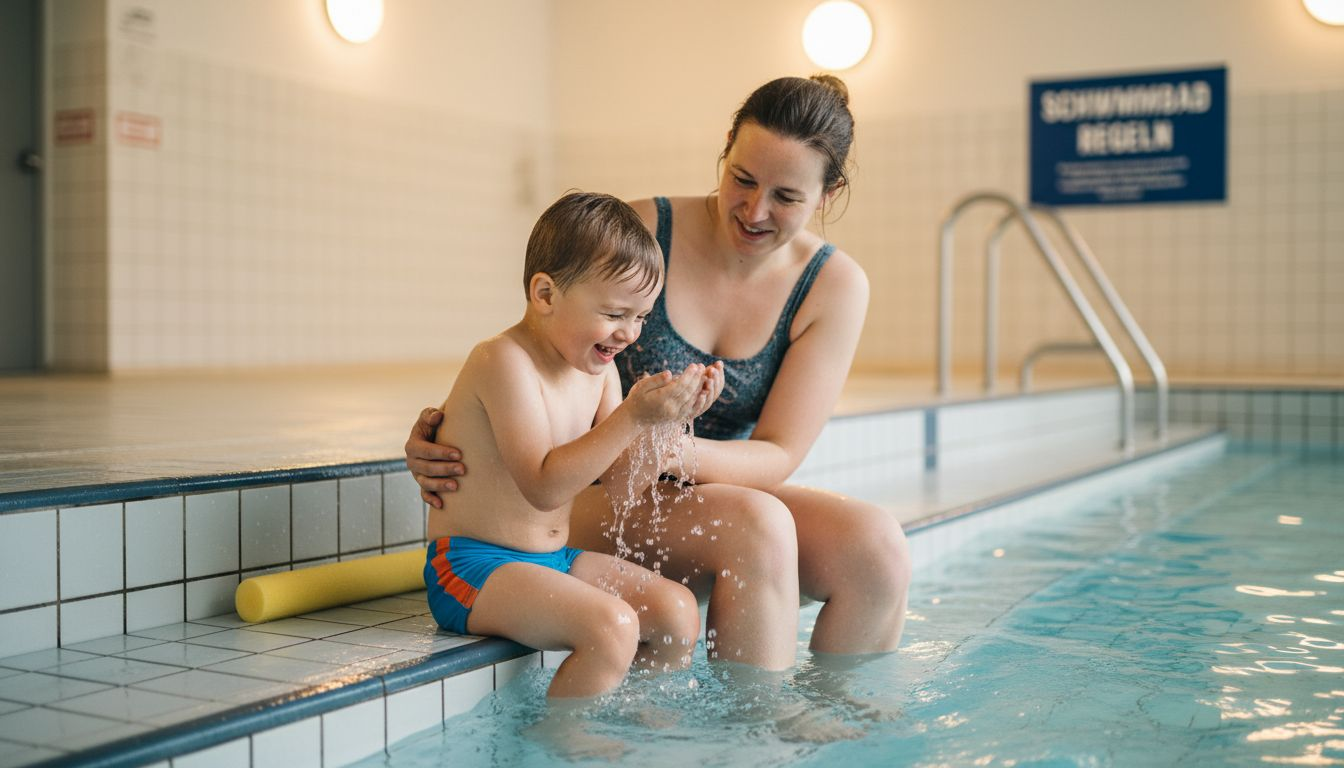
Pro-Tip: Always start in very shallow water, where you have firm ground contact and feel safe.
Step 4: Practice basic swimming movements
Now begins the most exciting part of your swimming journey: learning your first swimming movements. These fundamental techniques form the basis for your future safety and enjoyment in the water. Focus initially on a few, but essential, sequences of movement.
For beginners, we recommend these basic swimming movements:
- Leg kick in a horizontal position
- Arm stroke with water contact
- Breathing technique with sideways head turn
- Body posture stabilization in the water
- Gliding movements for energy efficiency
When learning swimming movements, you should pay particular attention to learning to swim at an older age, as techniques can vary depending on the age group.
The quality of movement is more important than speed.
Different learning approaches apply to children and adults. While children often learn playfully, adults usually need more structured instructions with precise explanations of movements.
Pro-Tip: Practice the movements first at the edge of the pool or in very shallow water to develop a feel for the correct technique.
Step 5: Increase safety through playful tests
Increasing safety in the water means more than just learning swimming movements. It's about building confidence and playfully mastering challenges. With targeted tests, you can systematically improve your skills and expand your water competence.
For effective safety tests, we recommend the following playful exercises:
- Water games for building trust
- Orientation tasks underwater
- Breath control with various challenges
- Floating and gliding without aids
- Emergency reactions in a safe environment
When conducting the tests, you should pay particular attention to children's safety while swimming. Every exercise should take place under supervision and with appropriate support.
Playful learning makes you safe - fun and safety go hand in hand.
For children and adults, the test approaches vary. While children require more playful elements, adults focus more on technical aspects and body control.
Pro-Tip: Always conduct the tests accompanied by an experienced and trusted person and gradually increase the difficulty.
Step 6: Reward learning successes with swimming badges
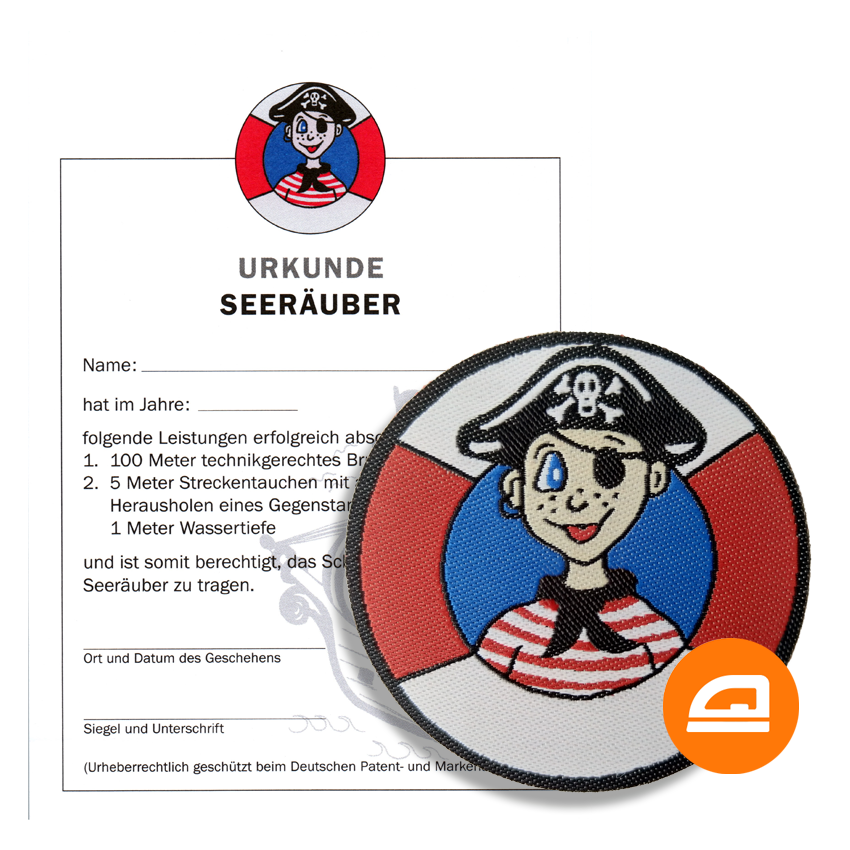
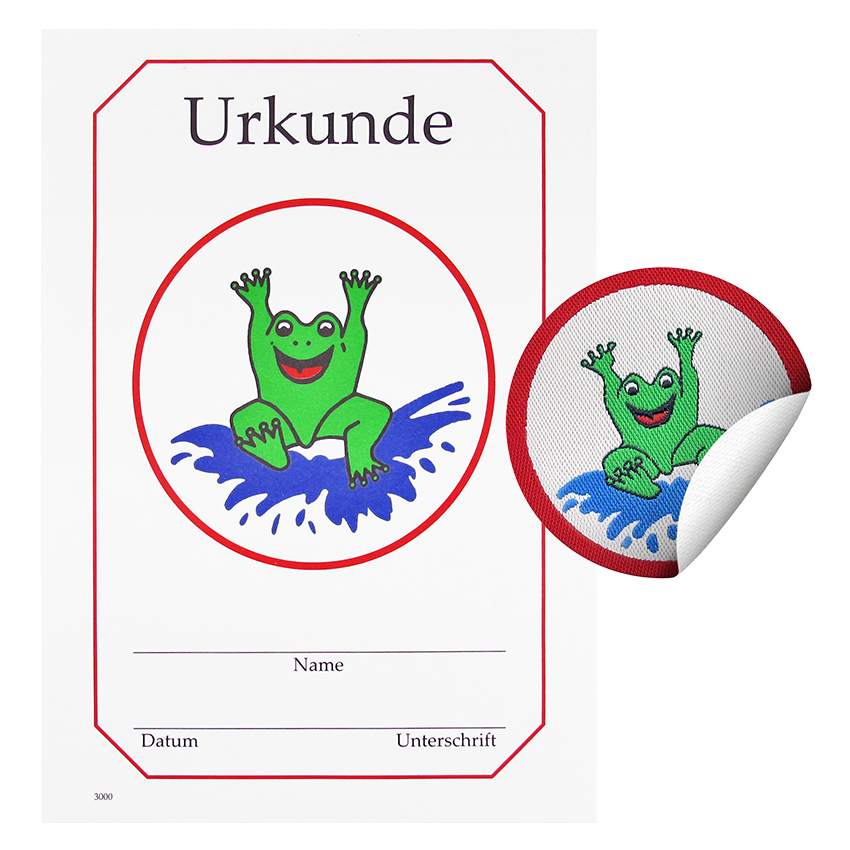
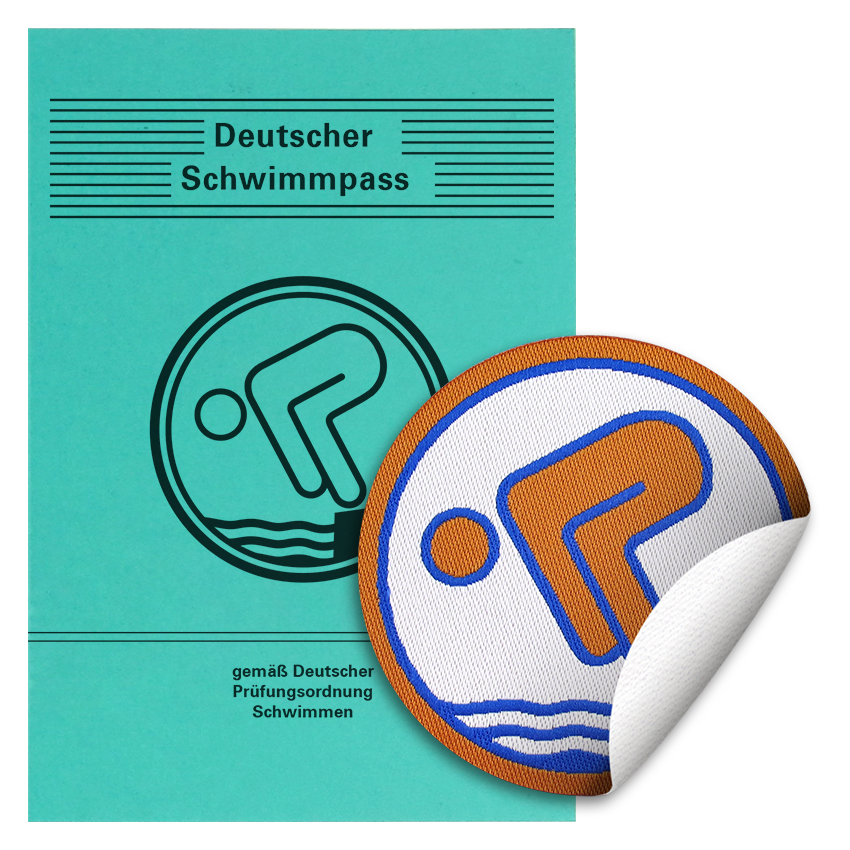
Swimming badges are more than just colorful trinkets - they are important motivational tools that make progress visible and boost self-confidence. Every achieved stage in learning to swim deserves special recognition that inspires children and adults alike.
The most important swimming badges include:
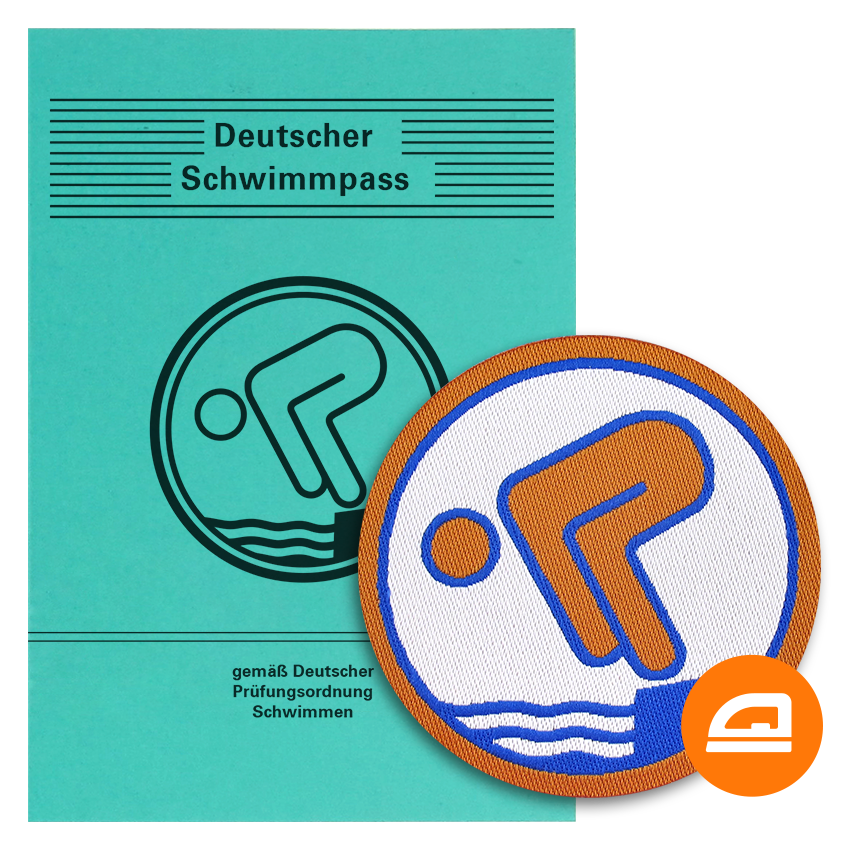
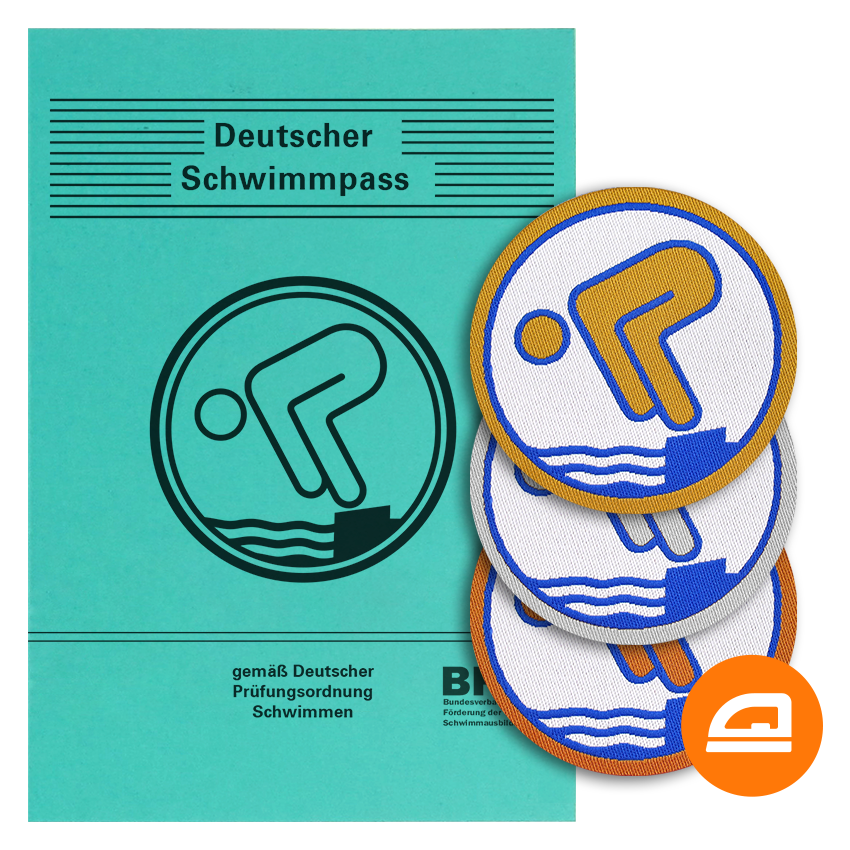
- Bronze badge for first fundamentals
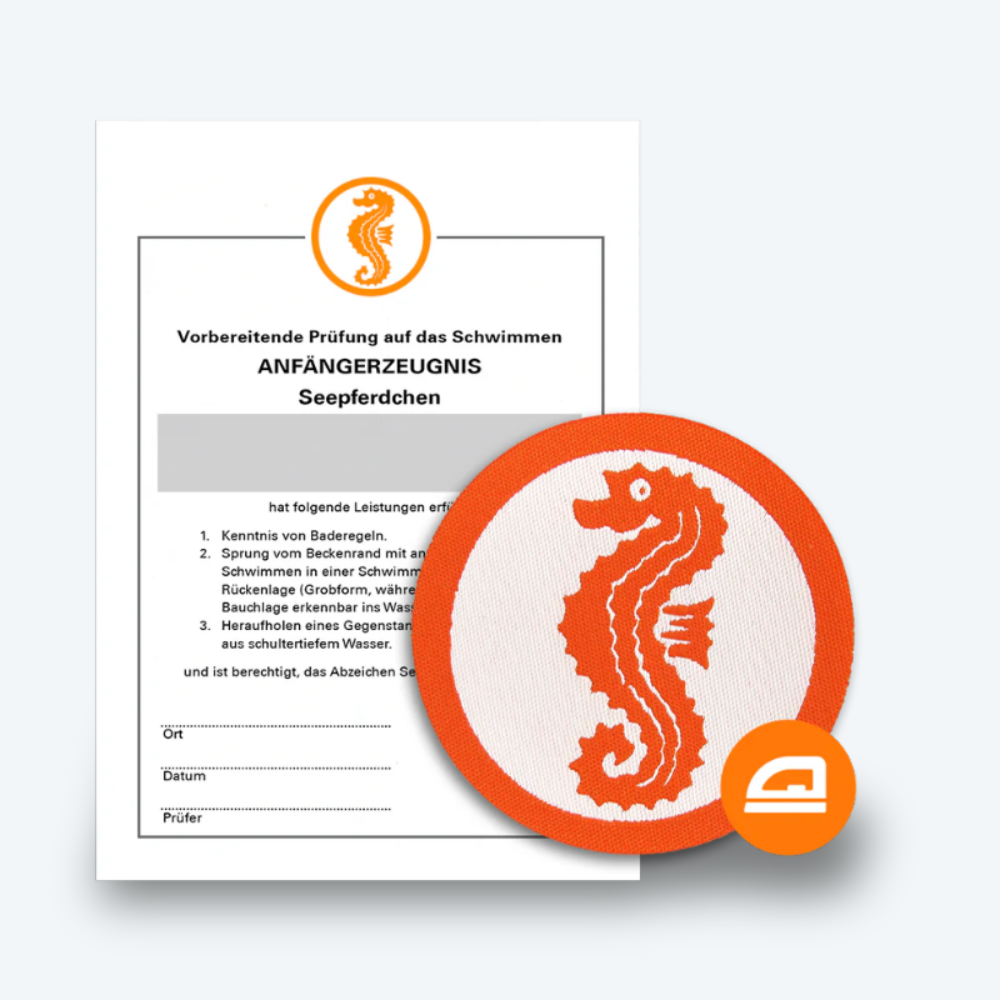
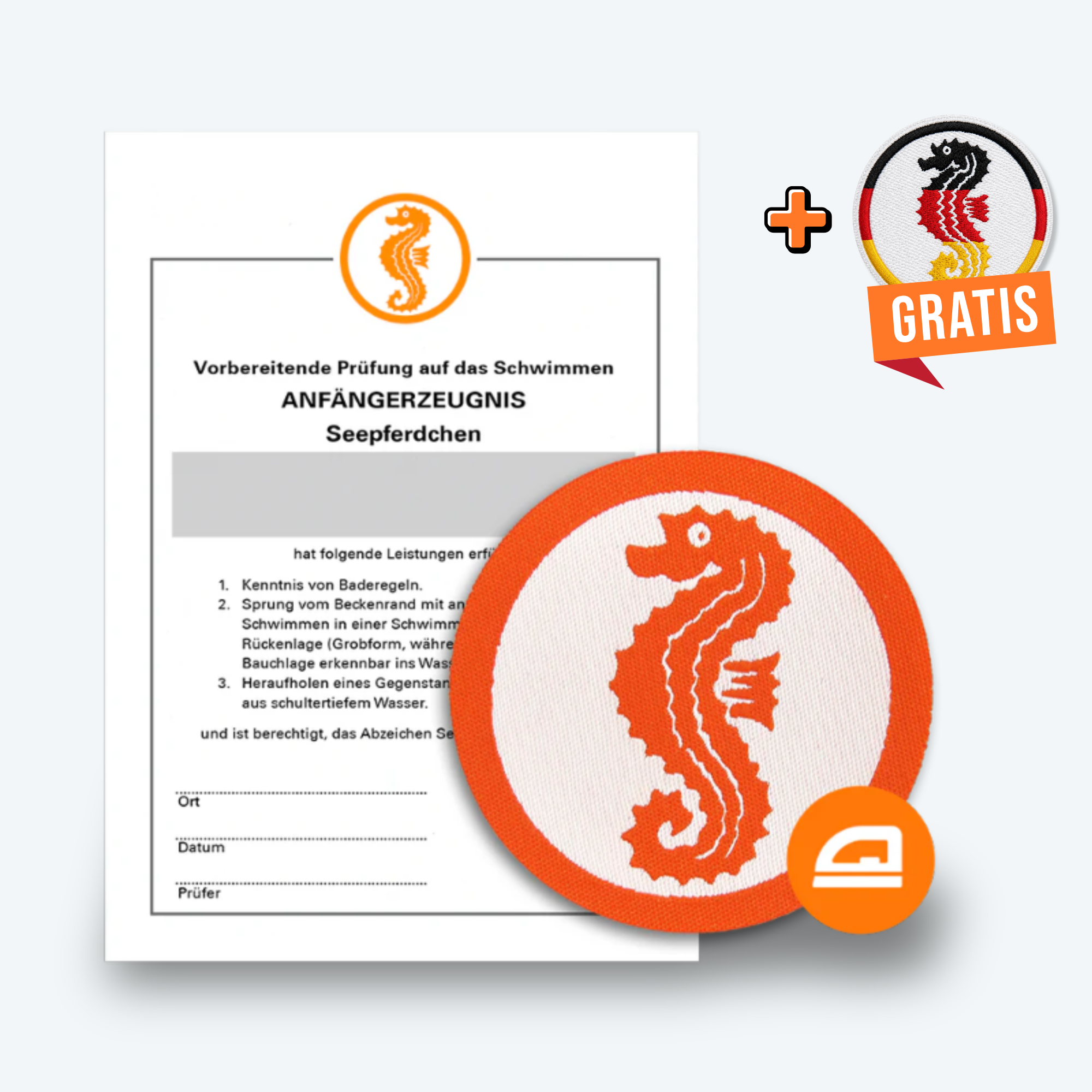
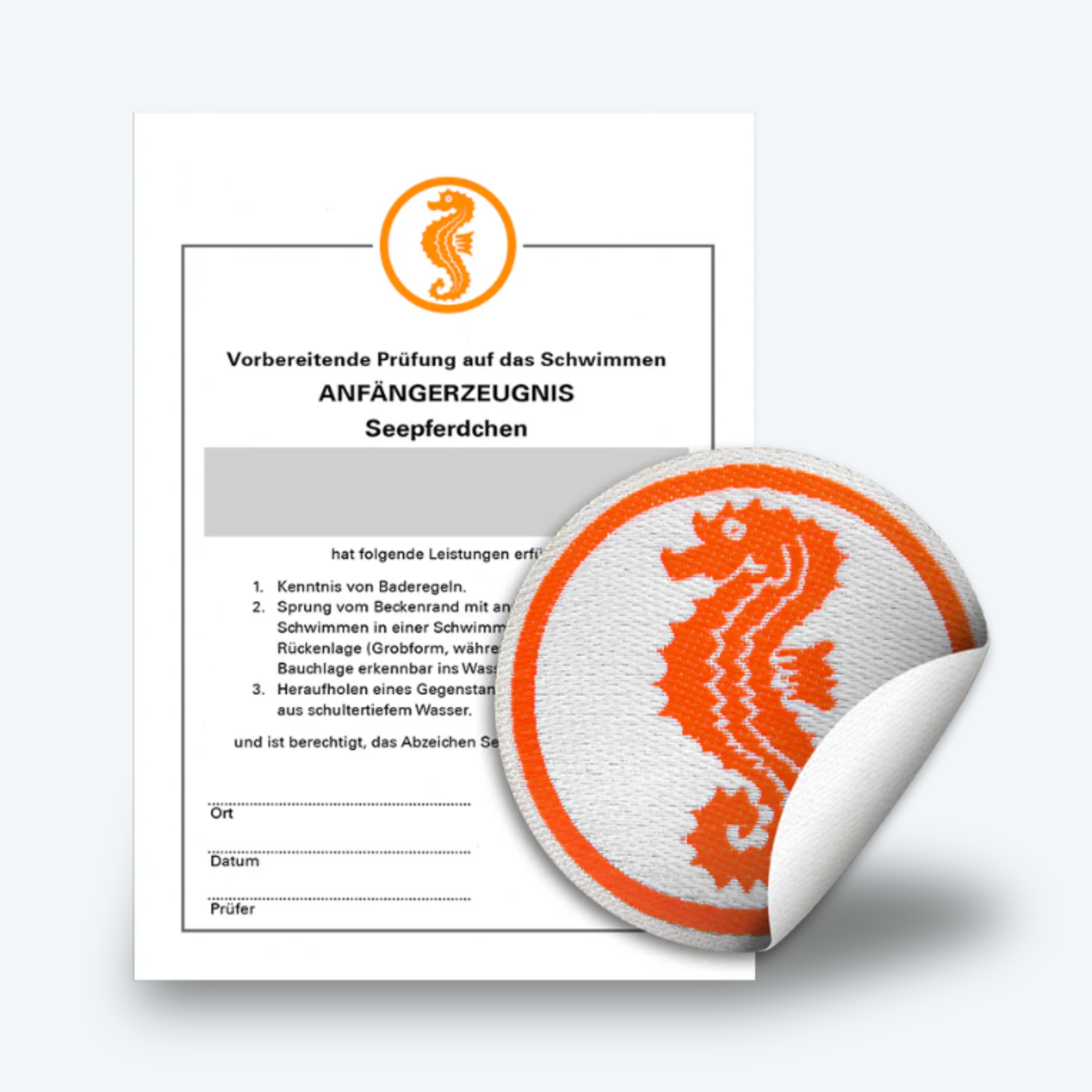
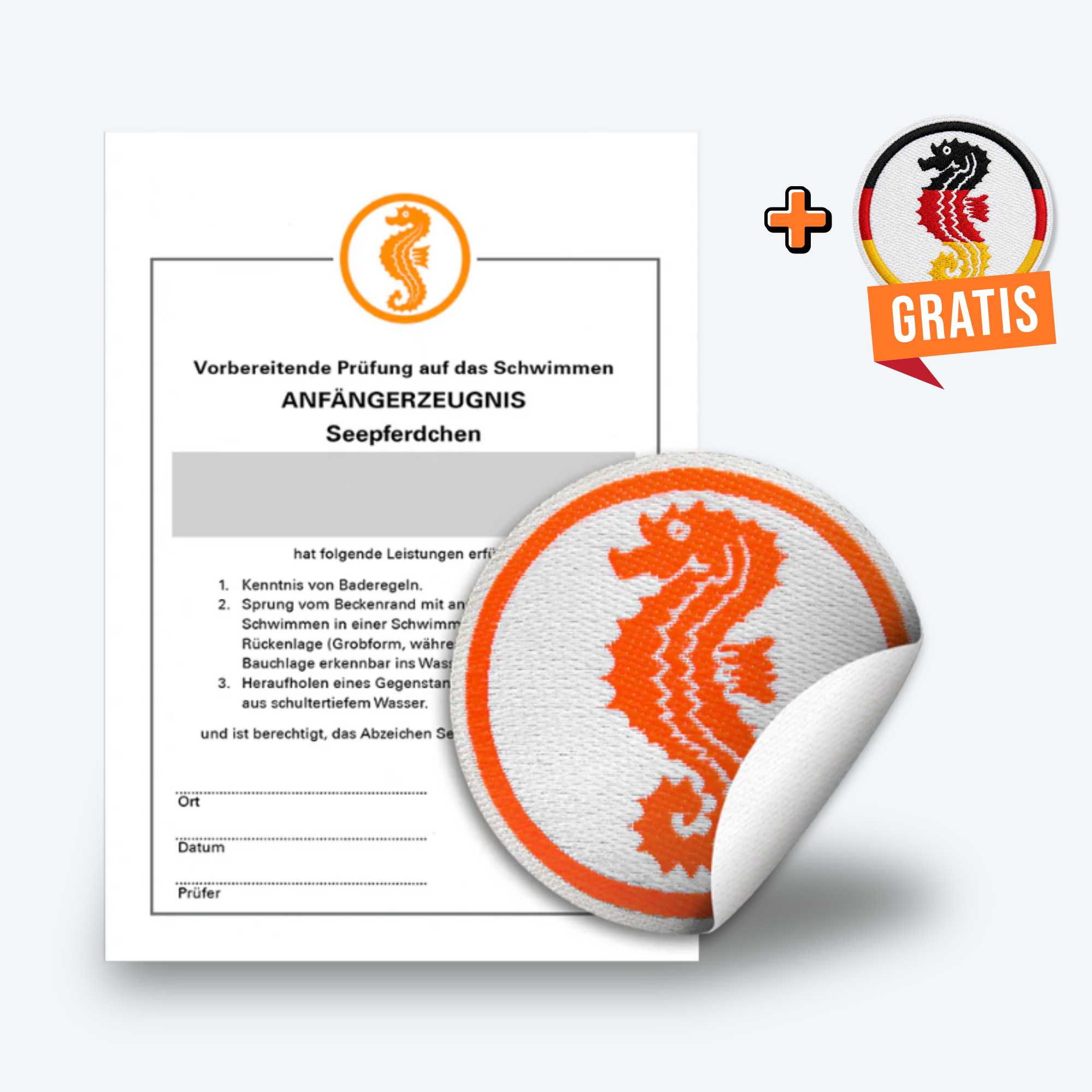
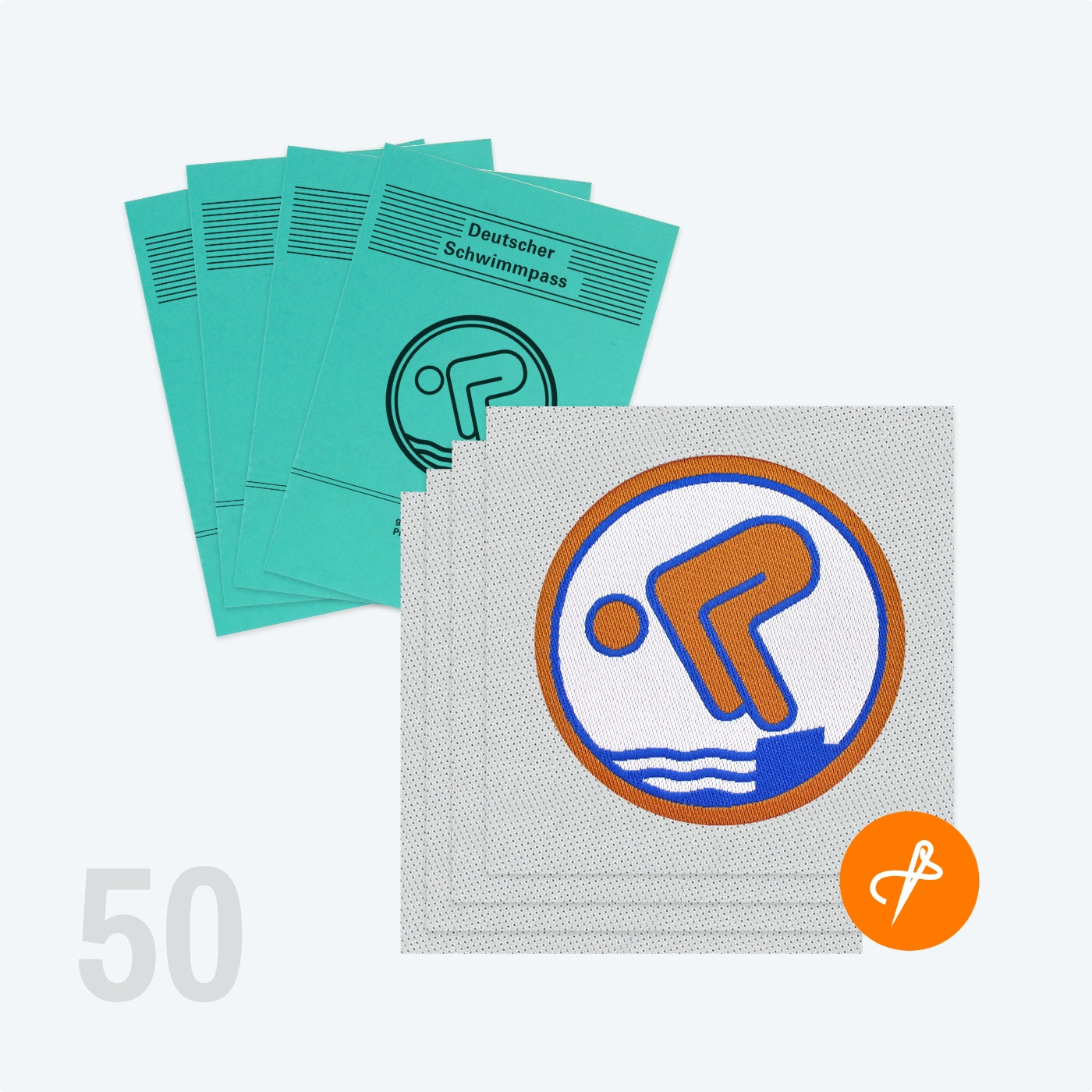
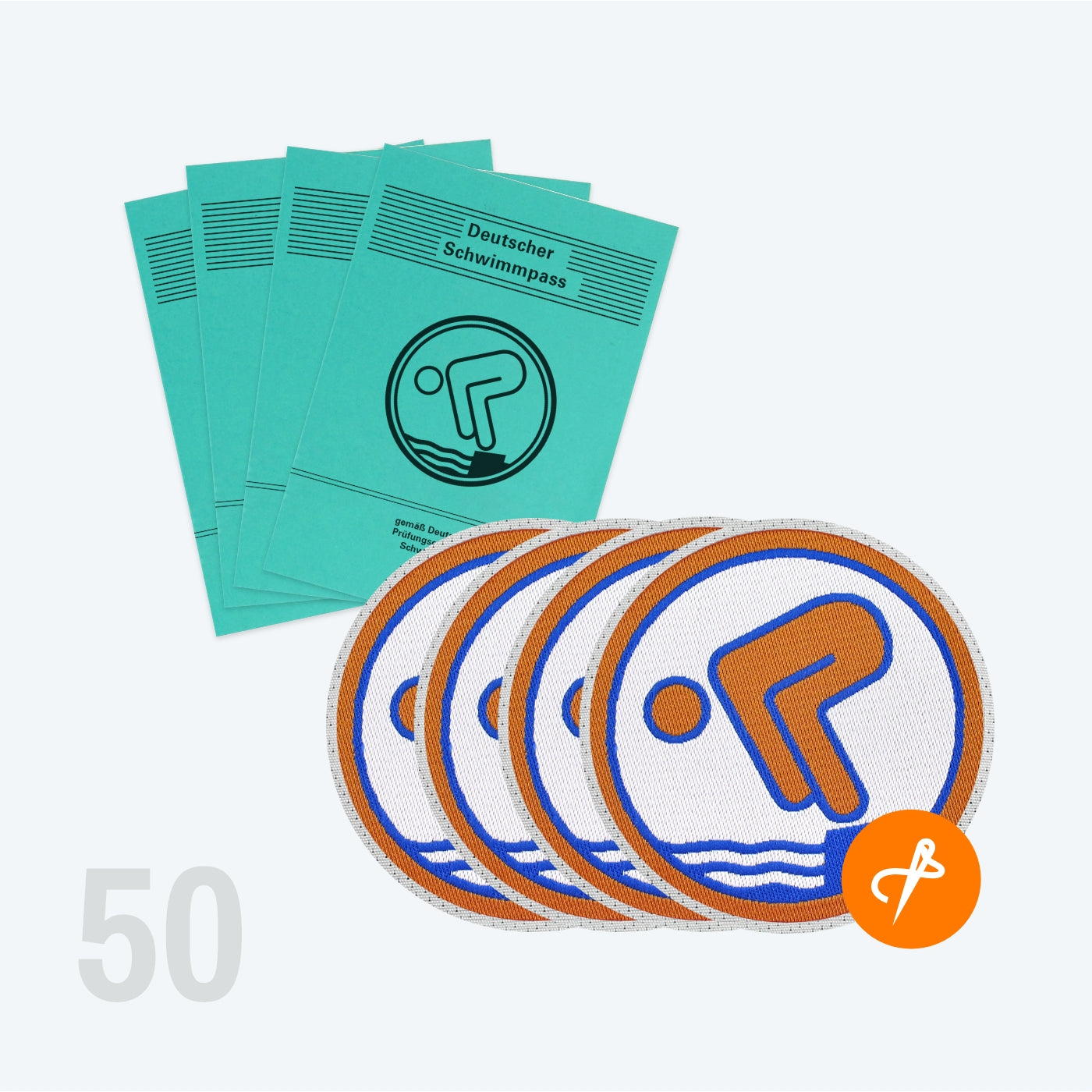
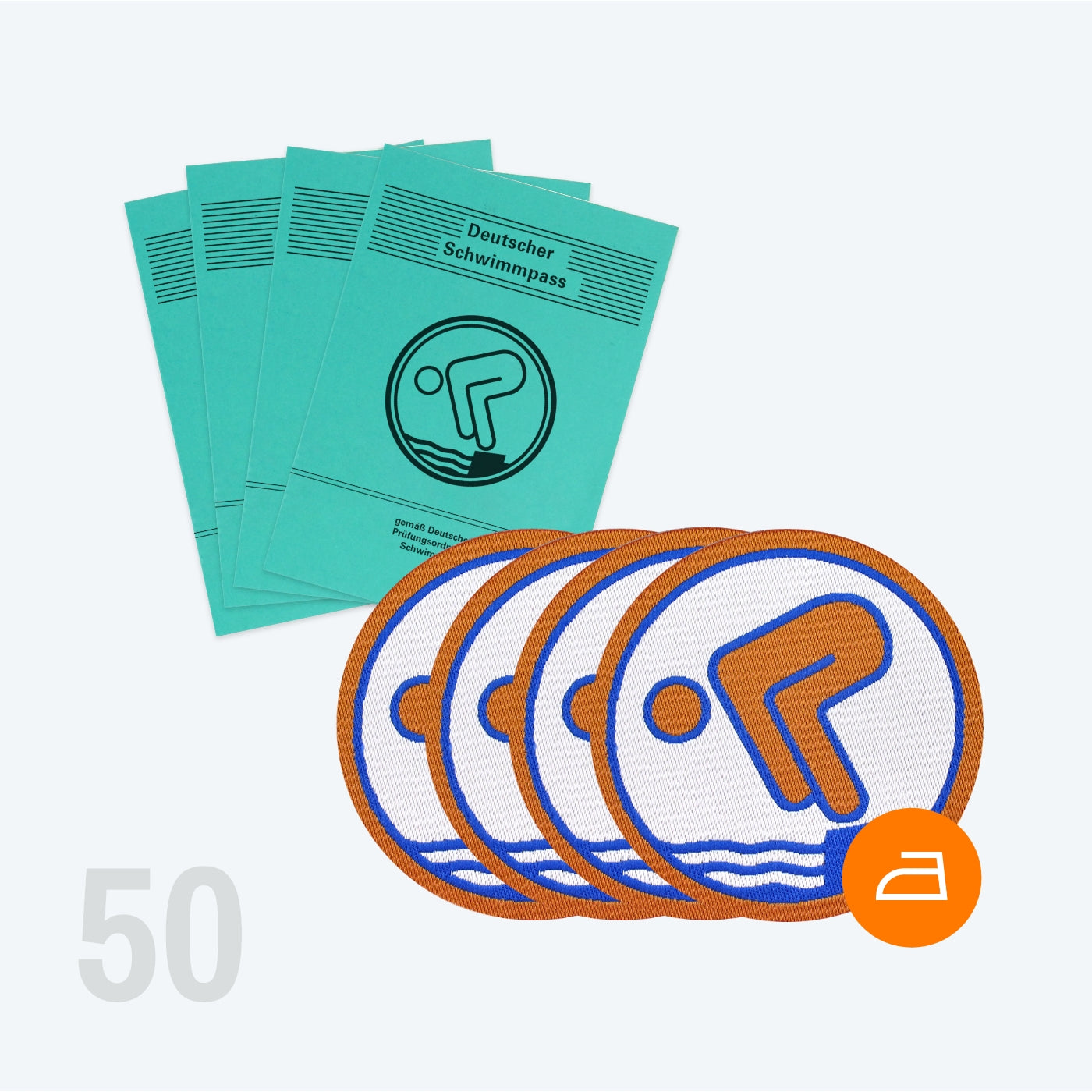
- Seepferdchen (Seahorse) as an entry-level badge
- Silver badge for advanced techniques
- Gold badge for complex swimming skills
- DLRG lifeguard as expert level
When acquiring swimming badges for elementary school children, you should pay close attention to the specific requirements and examination criteria.
Overview of the different swimming badges and their objectives:
| Badge | Requirements | Main Goal |
|---|---|---|
| Seepferdchen | First swimming knowledge | Water acclimatization |
| Bronze | Safe swimming, diving | Consolidate basics |
| Silver | Endurance, technique | Advanced skills |
| Gold | Versatile swimming technique | Peak performance |
| DLRG Lifeguard | Rescue techniques, first aid | Safety and assistance |
A badge is more than a piece of fabric - it is a testament to courage, perseverance, and skill.
For children, badges mean a playful challenge, while adults appreciate them as proof of their acquired skills.
Pro-Tip: Celebrate every badge acquisition with a small surprise to further boost motivation.
Learn to swim with safety and motivation – start now with Pimpertz
Learning the first swimming exercises can be a challenge for many beginners. Often, the right equipment, the right motivation, or a tangible reward for the progress made are missing. This is where Pimpertz comes in – we understand the importance of high-quality swimming accessories and motivating swimming badges for a successful and safe learning process. With certified products that are optimally tailored for beginners, we promote your water acclimatization and support the learning of basic swimming movements from our guide "Swimming Exercises for Beginners".
Benefit from our comprehensive service and our experience as an official partner of the DLRG and the BFS. Discover a large selection of swimming badges & certificates and suitable accessories to make learning successes visible and to shape the swimming journey with joy. Take the opportunity now to get individual advice and gain more safety and fun in the water with our swimming accessories for beginners.
Visit our website at pimpertz.de and start today with high-quality products that support swimming beginners at every stage. Be one step ahead of your swimming goal and celebrate every successful moment with Pimpertz by your side.
Frequently Asked Questions
What are the most important swimming essentials for beginners?
The most important swimming essentials for beginners are swimming goggles, a swim noodle, swim fins, a kickboard, and a swim aid or life vest. This equipment ensures safety and supports learning. Make sure the equipment fits well and is ergonomic to facilitate the learning process.
How do I find the ideal place to learn to swim?
The ideal place to learn to swim should be an indoor pool or a beginner's pool with a constant water level and ideal pool temperature. Visit different swimming pools and choose an environment that offers safety and comfort.
What are effective water acclimatization exercises for beginners?
Effective water acclimatization exercises include water games, splashing water on the face, diving with support, floating with swim noodles, and breathing exercises. Perform these exercises playfully to build confidence in the water.
What basic swimming movements should beginners practice first?
Beginners should start with leg kicks, arm strokes, breathing technique, stabilizing body posture, and gliding. Practice these fundamentals in shallow water to get a feel for the correct technique.
How can I increase my safety in the water through playful tests?
Increase your safety in the water through water games, orientation tasks, breath control, floating without aids, and emergency reactions. Perform each exercise under supervision and gradually increase the difficulty.
Why are swimming badges important for beginners?
Swimming badges are important because they make progress visible and boost self-confidence. Celebrate earning a badge with a small reward to maintain motivation.