

Communication with Children – How Conversations Promote Trust
Every child faces new challenges when learning to swim, and parents wonder how best to support their child. The right communication builds trust and promotes emotional development, as research from educational institutions shows. This article offers practical tips and appreciative communication strategies that help strengthen confidence and motivation in your child's swimming lessons.
Table of Contents
- Understanding Effective Communication with Children
- Using Age-Appropriate Language in Swimming Lessons
- Active Listening and Recognizing Children's Needs
- Strengthening Motivation and Reducing Fears Together
- Avoiding Common Mistakes in Conversations with Children
Key Takeaways
| Point | Details |
|---|---|
| Appreciative Communication | Children should be perceived as independent individuals. Active listening and empathetic responses to their feelings are crucial. |
| Age-Appropriate Approach in Swimming Lessons | Use simple, clear language and adapt communication to the child's developmental stage to build trust and security. |
| Active Listening | Take the time to truly listen to children's needs and reflect their emotions to build a strong bond. |
| Avoiding Common Communication Mistakes | Be careful not to interrupt children and to take their feelings seriously to foster trust and avoid misunderstandings. |
Understanding Effective Communication with Children
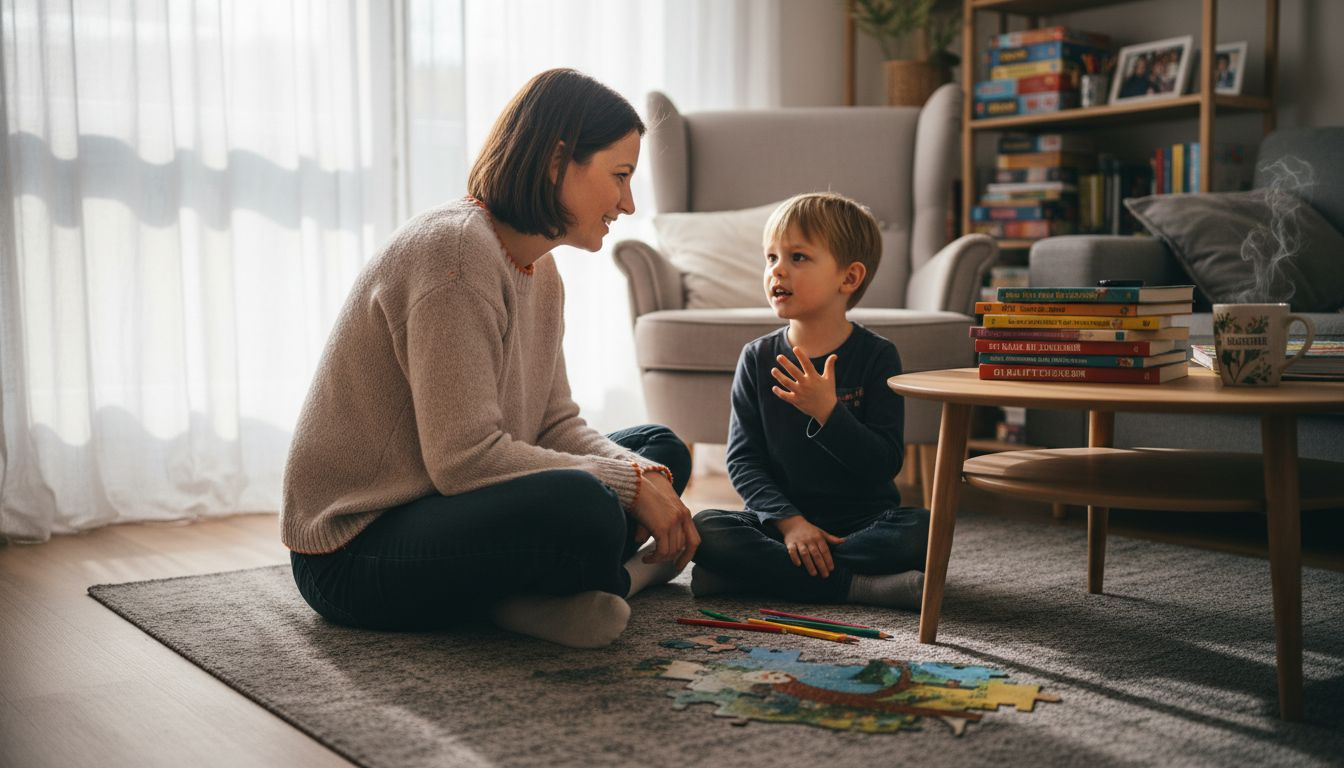
Communication with children is an art that fosters trust, understanding, and emotional development. Research shows that powerful interactions are far more than simple everyday conversations – they form the foundation for a healthy relationship between adults and children.
A central element of effective communication is an appreciative basic attitude. This means perceiving children as independent personalities and taking their feelings and needs seriously. Essential aspects include:
- Active listening
- Empathetic responses to children's emotions
- Respectful communication at eye level
- Authentic and clear messages
Non-violent communication aims to strengthen relationships and resolve conflicts constructively. Communication strategies in educational institutions demonstrate the importance of a positive basic attitude.
The key is not just to talk, but to truly communicate. This means listening attentively to children, understanding their perspective, and treating them with respect. Non-verbal signals such as body posture, eye contact, and tone of voice play a crucial role.
Pro tip: Consciously set aside time each day for attentive and appreciative conversations with your child to build trust and strengthen the relationship.
Using Age-Appropriate Language in Swimming Lessons
The right communication is crucial when children learn to swim. Age-appropriate instructions are key to building trust and making learning processes successful.
When communicating with children in swimming lessons, important principles must be observed:
- Use simple and clear language
- Speak in short, understandable sentences
- Use positive and encouraging phrases
- Demonstrate instructions whenever possible
- Adjust your tone and word choice to the age
The developmental stage plays a crucial role. Young children need different communication strategies than school children. While three-year-olds still require playful and very figurative explanations, six-year-olds can already understand more complex instructions.
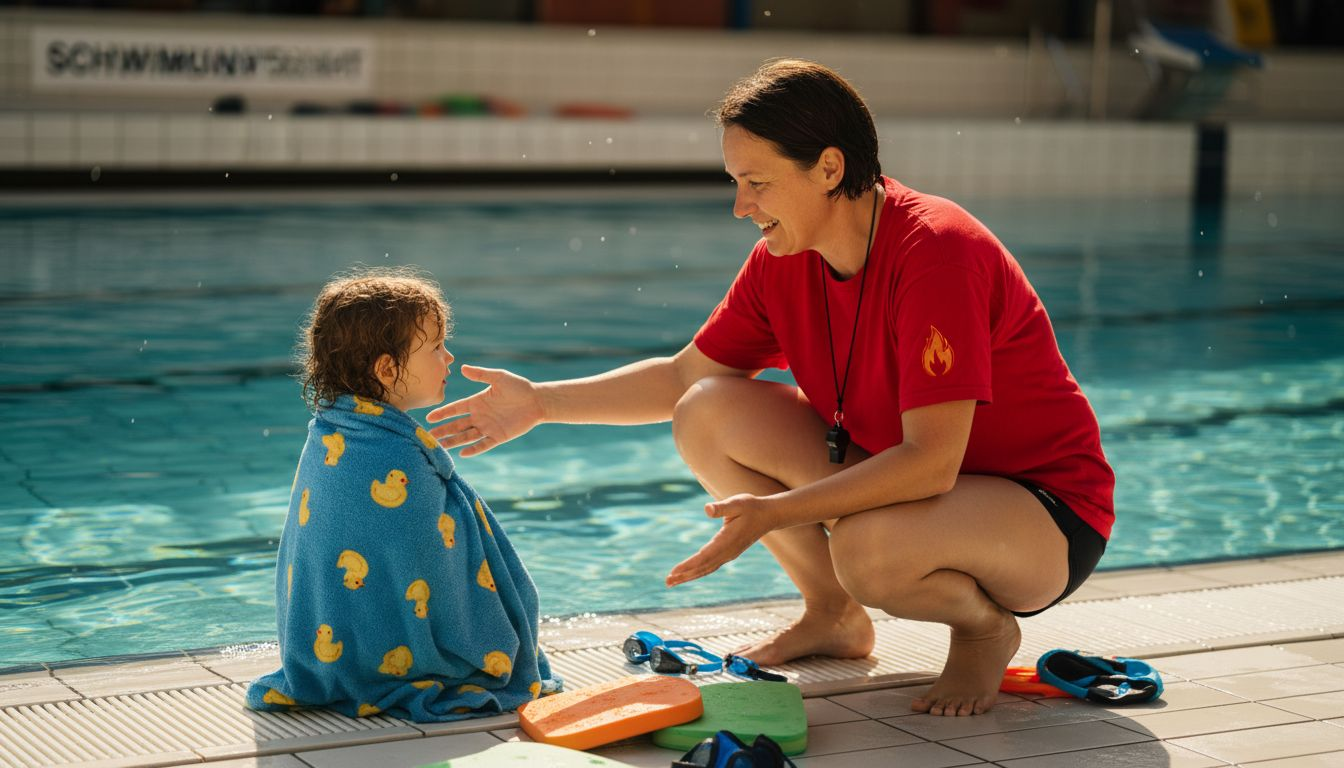
Non-verbal communication is also important. An open body posture, friendly facial expressions, and a patient demeanor convey security and comfort to children. They show: "I am here for you, and together we can do this."
Here is a comparison of communication strategies according to age group in swimming lessons:
| Age Group | Language Style | Explanation Approach | Goal of Communication |
|---|---|---|---|
| Preschoolers (3-5 years) | Simple, playful | Figurative, with examples | Awaken trust and curiosity |
| Primary school children (6-9 years) | Clear, structured | Step-by-step, with justifications | Promote understanding and independence |
| Adolescents (10-14 years) | Precise, respectful | Logical, with co-determination | Strengthen responsibility and motivation |
Pro tip: Vary your communication and carefully observe how children react to different approaches.
Active Listening and Recognizing Children's Needs
Recognizing and understanding children's needs is an art that fosters trust and emotional development. Developmental milestones and communication play a decisive role in this.
Active listening includes several essential components:
- Adopting an attentive body posture
- Maintaining eye contact
- Showing engaged and open gestures
- Reflecting the child's feelings and statements
- Asking follow-up questions and signaling understanding
The non-verbal communication component is particularly significant. Children often communicate more through gestures, facial expressions, and tone of voice than through words. An attentive glance, a gentle touch, or an understanding smile can say more than a thousand words.
In swimming lessons, active listening means perceiving children's individual fears and insecurities. Every child has their own limits and developmental stages that need to be respected and supported.
The following table shows how non-verbal and verbal communication support children's needs when learning to swim:
| Form of Communication | Effect on the Child | Typical Application |
|---|---|---|
| Verbal Communication | Clarity and orientation | Instruction on swimming style |
| Non-verbal Communication | Security and comfort | Smile, open body posture |
| Emotional Support | Motivation and fear reduction | Gentle touch in case of uncertainty |
Pro tip: Take the time to truly listen to your child - not just with your ears, but with your heart.
Strengthening Motivation and Reducing Fears Together
Fears are completely normal in children learning to swim and must be handled sensitively. Positive motivation strategies help build trust and overcome challenges together.
Motivation can be specifically strengthened through various approaches:
- Making small successes visible
- Appreciating individual progress
- Acknowledging fear as a normal process
- Using encouraging words specifically
- Building trust through closeness and security
Emotional support plays a crucial role. Children need to feel that their feelings are taken seriously. An understanding look, an encouraging touch, or an uplifting smile can achieve more than long explanations.
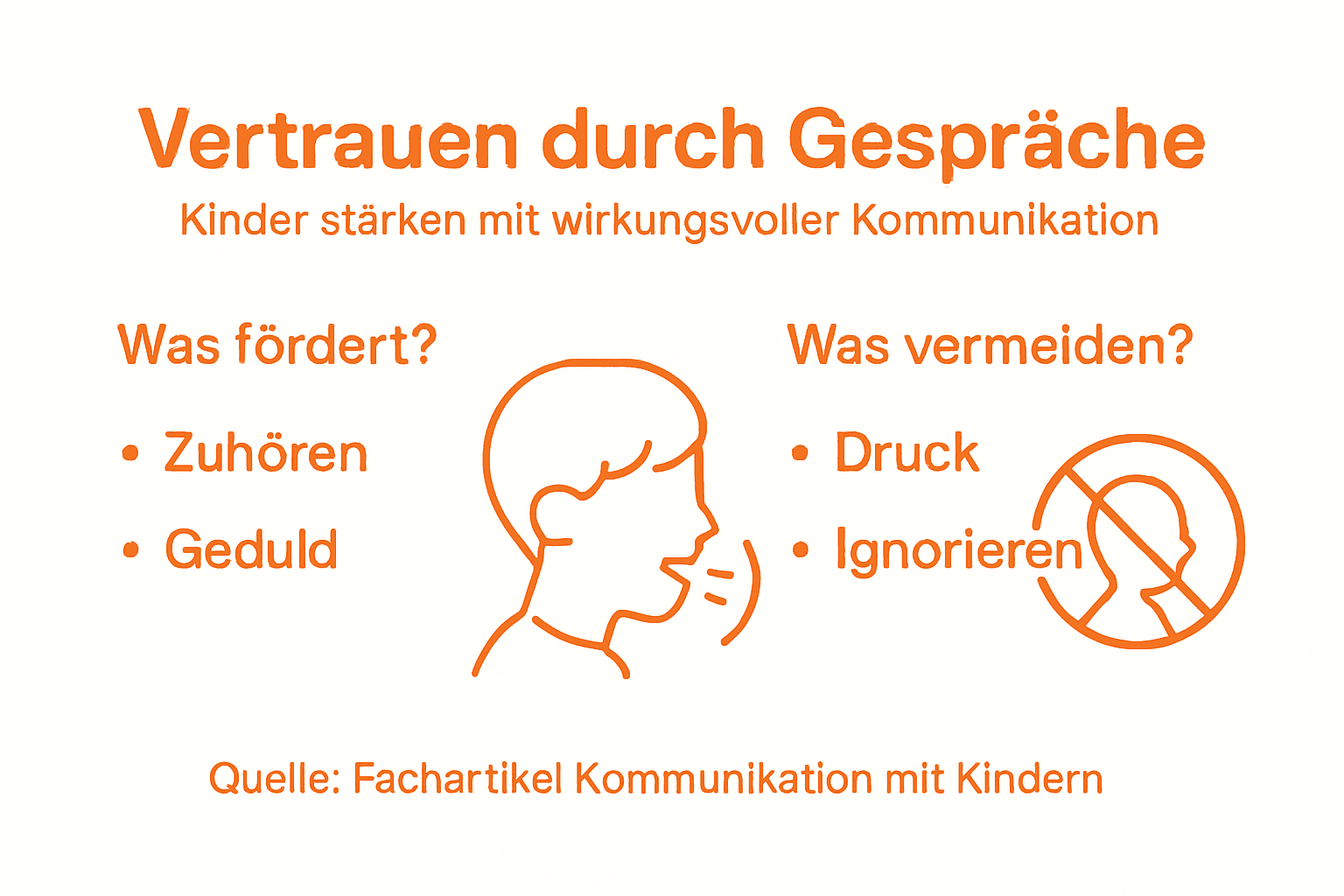
When learning to swim, this means not ignoring fears, but exploring them together. Show your child that fear is a normal reaction and can be overcome together. Set small, achievable goals and celebrate every step forward.
Pro tip: Turn fear into an ally, not an enemy - show your child that courage means continuing despite fear.
Avoiding Common Mistakes in Conversations with Children
Conversations with children require sensitivity and attention. Communication errors can undermine trust, which is why it is important to know and avoid certain pitfalls.
Here are typical communication mistakes you should definitely avoid:
- Interrupting children
- Downplaying or ignoring feelings
- Using complicated technical jargon
- Using an accusatory or critical tone
- Not taking emotional needs seriously
The non-verbal communication component is particularly significant. Children are highly sensitive to body language, tone of voice, and emotional vibrations. A disparaging gesture or a condescending look can do more damage than harsh words.
In swimming lessons, this means communicating with particular caution. Fears and uncertainties must be treated with respect. Avoid phrases like "That's easy" or "Don't be afraid," which devalue the child's feelings.
Pro tip: Really listen to your child - not just with your ears, but with your heart.
Strengthening Trust Through Effective Communication and Child-Friendly Swimming Badges
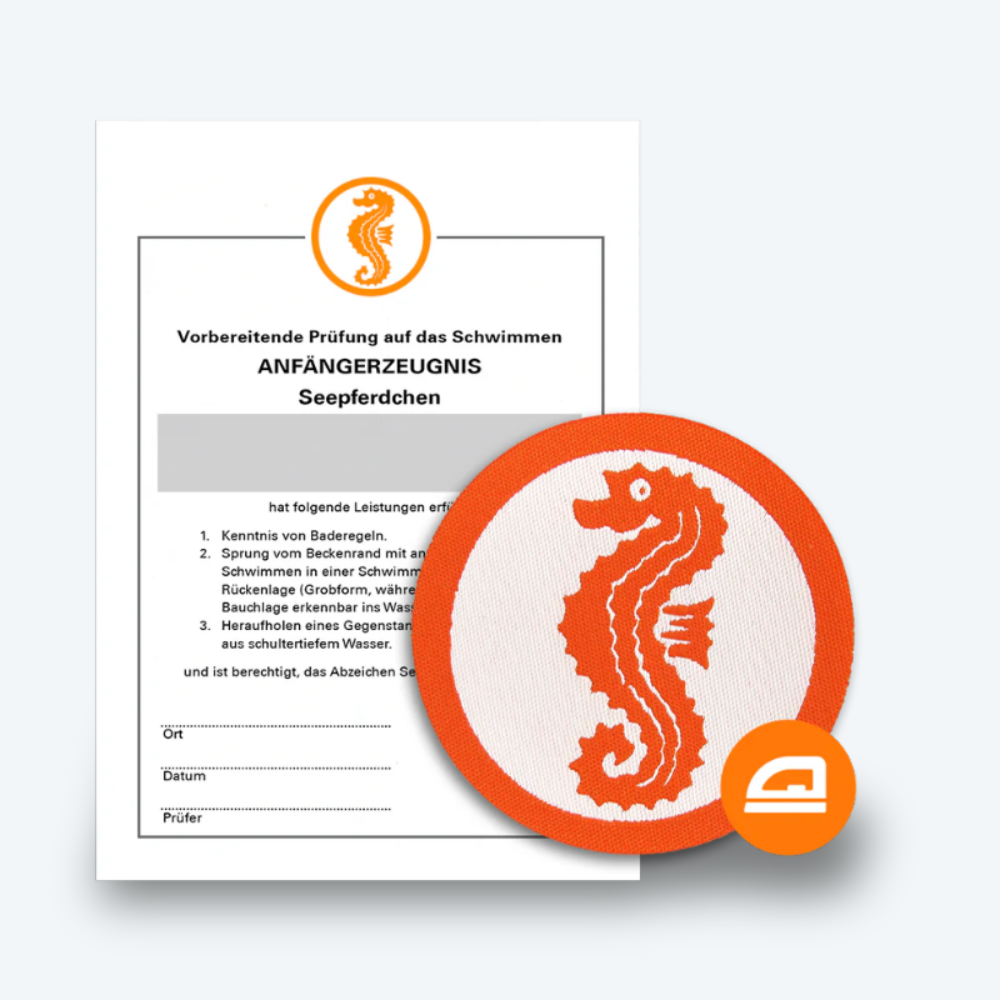
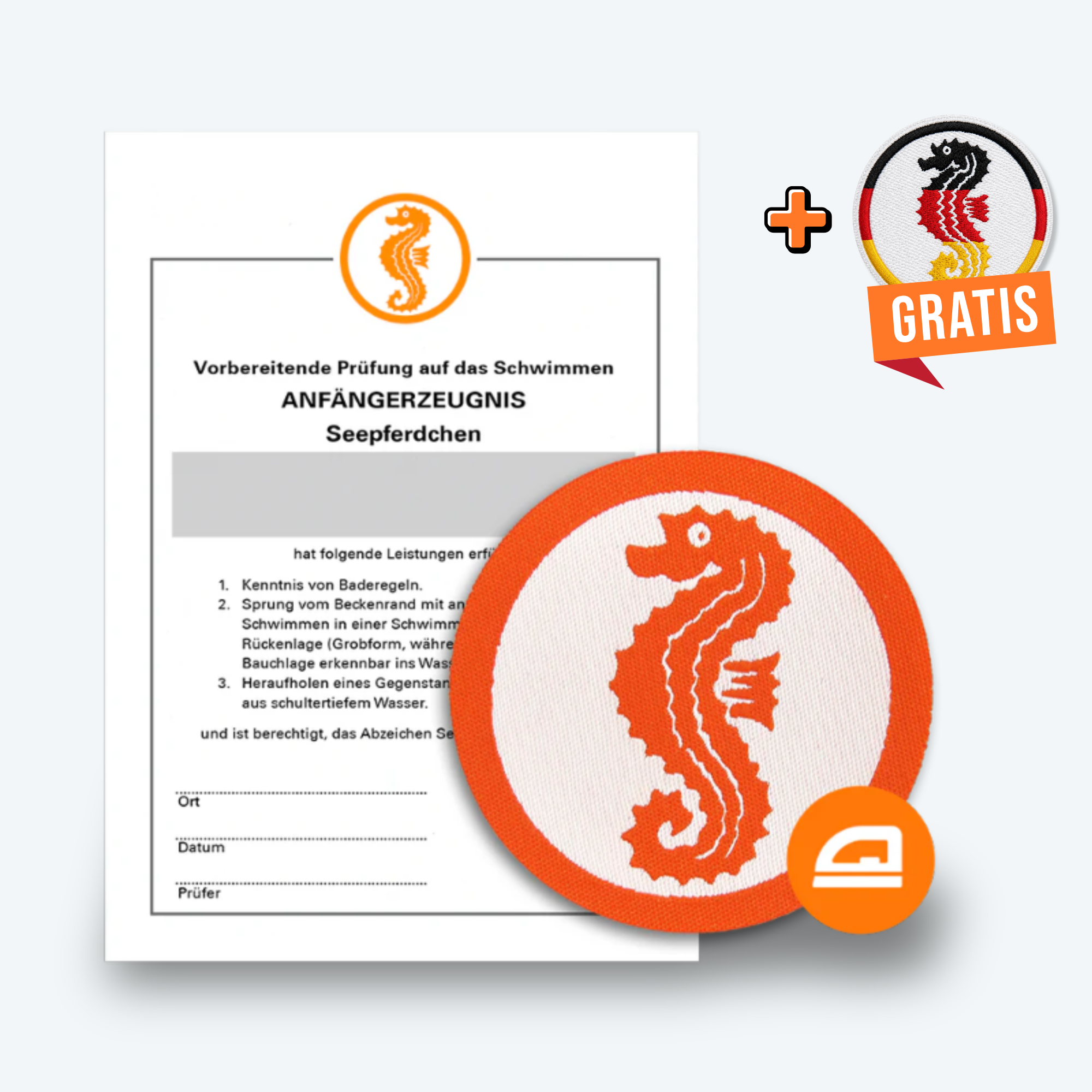
The challenges in communicating with children, such as active listening and empathic handling of fears, as explained in the article, can be ideally combined with motivating symbols and successful learning experiences. Swimming badges and certificates are not just visible recognition – they foster motivation and build trust step by step. Pimpertz supports you with years of expertise and a wide range of child-friendly swimming accessories to create positive learning experiences.
Benefit now from our personalized badge kits and waterproof badge cases for safe and loving successes in swimming lessons. Discover the certified swimming badges and certificates at Pimpertz – your trusted partner with over 38 years of experience. Strengthen your child's confidence through clear communication and visible successes with Pimpertz. Visit us today at pimpertz.de and start together into a motivating swimming future.
Frequently Asked Questions
How can I improve communication with my child?
An appreciative basic attitude, active listening, and respectful communication at eye level are crucial to improving communication with your child. Regularly take time for conversations and show genuine interest in your child's feelings and needs.
What role does non-verbal communication play in interacting with children?
Non-verbal communication, such as body language, facial expressions, and tone of voice, is particularly important because children often communicate more through these signals than through words. An open body posture and a friendly smile can convey security and comfort.
How can I reduce fears in children during swimming lessons?
To reduce fears during swimming lessons, it is important to take them seriously and explore them together. Celebrate small successes, give encouraging feedback, and build trust through closeness and emotional support.
What are common mistakes in communicating with children?
Typical mistakes include interrupting children, downplaying their feelings, or using complicated technical jargon. It is important to communicate empathetically and clearly to avoid damaging the child's trust.