
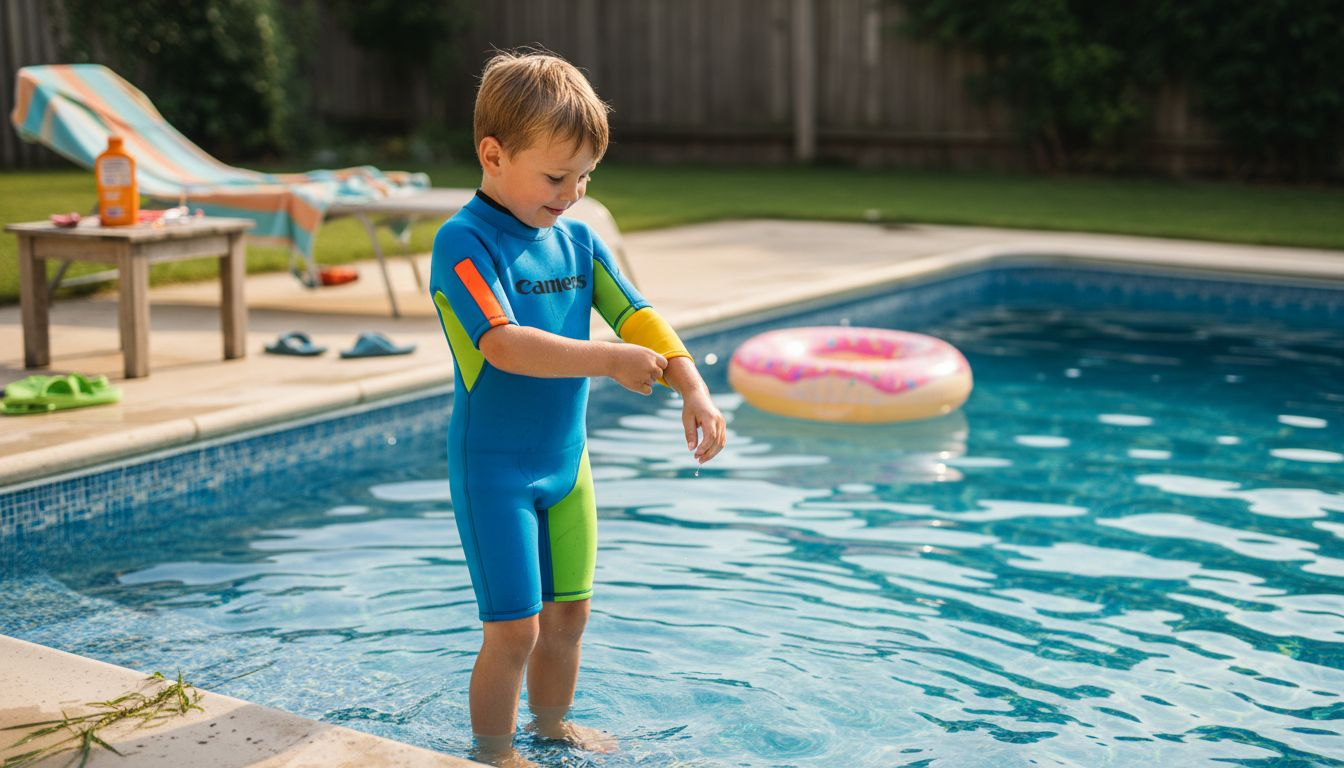
Neoprene Wetsuit Shorty: Protection and Comfort for Children
As soon as swimming lessons or a weekend at the lake begin, many parents in Germany face a question: which suit will best protect my child without restricting their urge to move? A wetsuit shorty offers exactly this balance between thermal protection and freedom of movement, as it was specifically developed for warm water conditions. This introduction shows what really matters in terms of material thickness, comfort and protection, so that water fun remains stress-free.
Table of Contents
- What is a wetsuit shorty?
- Different types and material thicknesses explained
- Thermal protection, buoyancy and freedom of movement
- Size, fit and child-friendly design
- What risks and mistakes should parents avoid?
Key Insights
| Point | Details |
|---|---|
| Wetsuit Shorty | Offers protection and freedom of movement for children in warm waters, ideal for swimming and water sports. |
| Material Thicknesses | Choose the thickness according to the water temperature to ensure optimal thermal protection. |
| Fit | A correct size is crucial; suits that are too tight or too loose impair comfort and safety. |
| Parental Supervision | Wetsuits do not replace the duty of supervision. Parents should always ensure their children's safety in the water. |
What is a wetsuit shorty?
A wetsuit shorty is a special swimwear for children that offers protection and comfort in various water situations. Unlike a full wetsuit, a shorty only covers the thighs and upper arms, allowing maximum freedom of movement.
The main features of a shorty wetsuit are:
- Short legs and short sleeves
- Heat retention for a comfortable body temperature
- Protection against UV radiation
- Flexible material for unrestricted movement
- Lighter and more compact compared to full-body wetsuits
A shorty wetsuit is particularly suitable for warm water conditions and offers children optimal protection when swimming, snorkeling or water sports. It is specially designed for young swimmers to combine fun and safety.
Its function is based on the neoprene material, which stores heat and protects the body from cold. At the same time, the special fit ensures maximum freedom of movement, so children can swim and play unhindered.
The following table summarizes the main differences between shorty and full-body wetsuits for children:
| Feature | Shorty | Full-body suit |
|---|---|---|
| Coverage | Upper arms, thighs | Entire arms and legs |
| Freedom of movement | Very high | Slightly restricted |
| Thermal protection | Medium | High |
| Pack size/weight | Light and compact | Heavier and bulkier |
| Typical use | Warm water, summer | Cold water, extended periods |
Pro tip: When buying a shorty wetsuit, make sure it fits perfectly, neither too tight nor too loose.
Different types and material thicknesses explained
Wetsuits for children are available in different material thicknesses, which vary depending on the water temperature and area of use. The thickness of the material is given in millimeters and largely determines the thermal protection and wearing comfort.
The most important material thicknesses for children's wetsuits include:
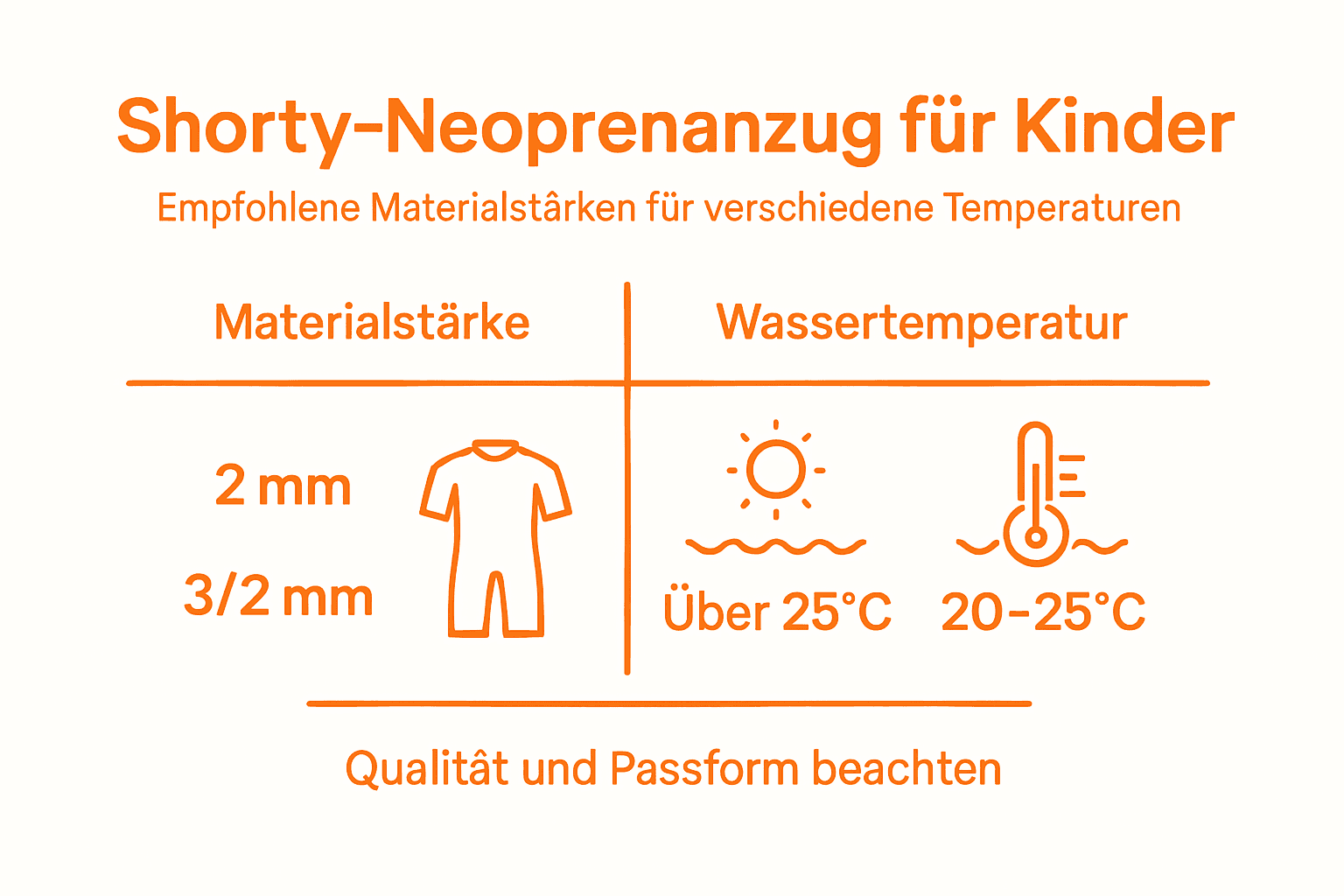
- 2 mm: Ideal for water temperatures above 25 degrees
- 3/2 mm: Suitable for temperatures between 20-25 degrees
- 4/3 mm: Recommended for cooler waters such as the North and Baltic Seas
- 5 mm: Optimal for water areas below 20 degrees
For children's wetsuits, not only the material thickness but also the fit and quality play a decisive role. The material thickness often varies in different body areas to optimally combine freedom of movement and thermal protection.
For parents, this means choosing the right wetsuit according to the activity, water temperature and individual needs of the child. A well-fitting suit prevents heat loss and ensures a pleasant swimming experience.
Pro tip: Measure your child's height and weight before buying a wetsuit to ensure the optimal fit.
The following overview shows the connection between material thickness, water temperature and typical areas of use for children's wetsuits:
| Material thickness | Recommended water temperature | Typical use |
|---|---|---|
| 2 mm | Above 25°C | Swimming in summer, pool |
| 3/2 mm | 20–25°C | Beach holiday, mild climate |
| 4/3 mm | 15–20°C | North Sea/Baltic Sea, spring/autumn |
| 5 mm | Below 20°C | Water sports in spring/autumn, cold waters |
Thermal protection, buoyancy and freedom of movement
The wetsuit shorty is a clever solution for children that combines safety and comfort for water sports. It offers multi-layered protection that goes far beyond simple swimwear.
The most important protective functions include:
- Thermal insulation through air bubbles in the neoprene
- Natural buoyancy due to the material
- Protection against hypothermia
- UV radiation protection
- Minimization of skin irritation in the water
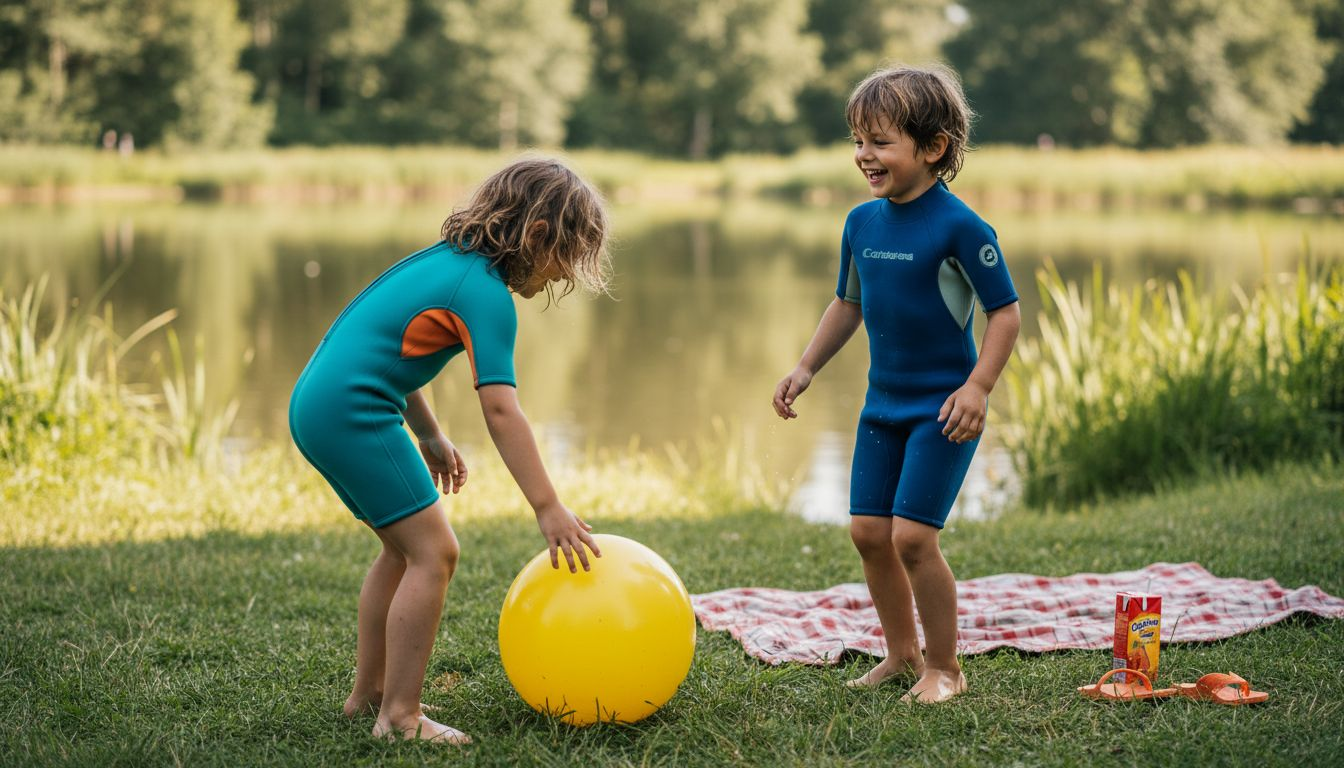
For children's wetsuits, the balance between thermal protection and freedom of movement plays a decisive role. The special material effectively stores body heat without excessively restricting natural mobility.
The design of a shorty allows maximum freedom of movement while protecting important body regions. Short sleeves and legs reduce resistance in the water and allow children unhindered swimming movements.
Pro tip: When choosing, look for a wetsuit that fits snugly but not too tightly to ensure optimal thermal protection and freedom of movement.
Size, fit and child-friendly design
For children's wetsuits, the fit is crucial for comfort and functionality. A perfectly fitting suit ensures optimal thermal protection and maximum freedom of movement.
Important features of a child-friendly wetsuit:
- Flexible front zipper
- Soft, skin-friendly seams
- Adjustable cuffs at arms and legs
- Bright, striking colours for increased visibility
- Robust yet soft material
Child-friendly wetsuits require precise size selection. A snug but not constricting fit ensures optimal heat retention and mobility. Parents should definitely consult the manufacturers' size charts.
Design plays a big role: modern wetsuits consider not only functional aspects but also the preferences and needs of children. Cheerful colors, playful patterns and practical details make the suit a loyal companion for water fun.
Pro tip: Measure your child accurately before purchasing and compare the measurements with the manufacturer's size chart to guarantee the perfect fit.
What risks and mistakes should parents avoid?
When using wetsuits for children, there are some critical mistakes that parents should definitely avoid. The child's safety and comfort are paramount.
The most common risks include:
- Incorrect size selection
- Too loose or too tight a fit
- Overestimation of thermal protection
- Neglect of supervisory duty
- Restriction of swimming movements
Children's wetsuits are not swimming aids and in no way replace parental supervision. A suit that is too loose reduces thermal protection, while a suit that is too tight restricts freedom of movement and can hinder the swimming learning process.
Material quality is also important: inferior wetsuits can tear or cause chafing. Parents should always pay attention to high-quality workmanship and an optimal fit that equally ensures freedom of movement and thermal protection.
Pro tip: Have your child try on the wetsuit before purchasing and look for a seamless, comfortable fit.
The perfect companion for children in the water – More than just a wetsuit
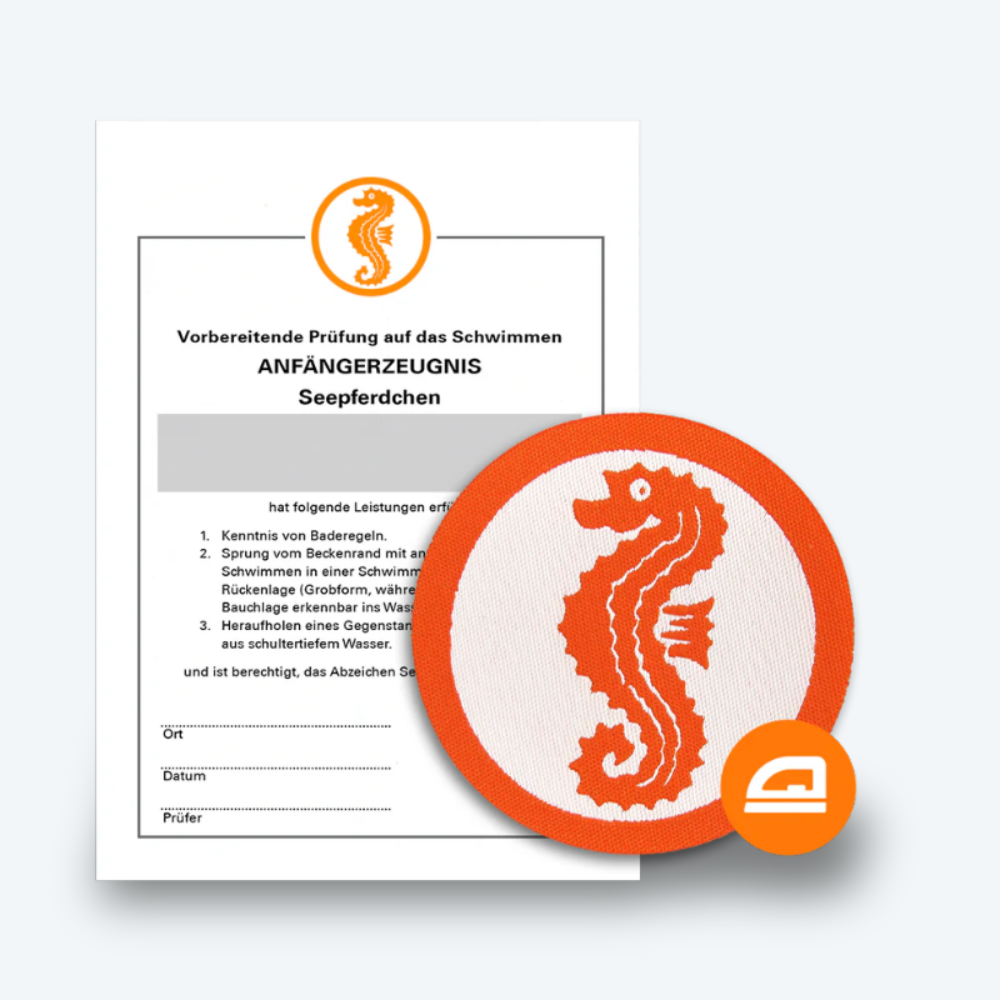
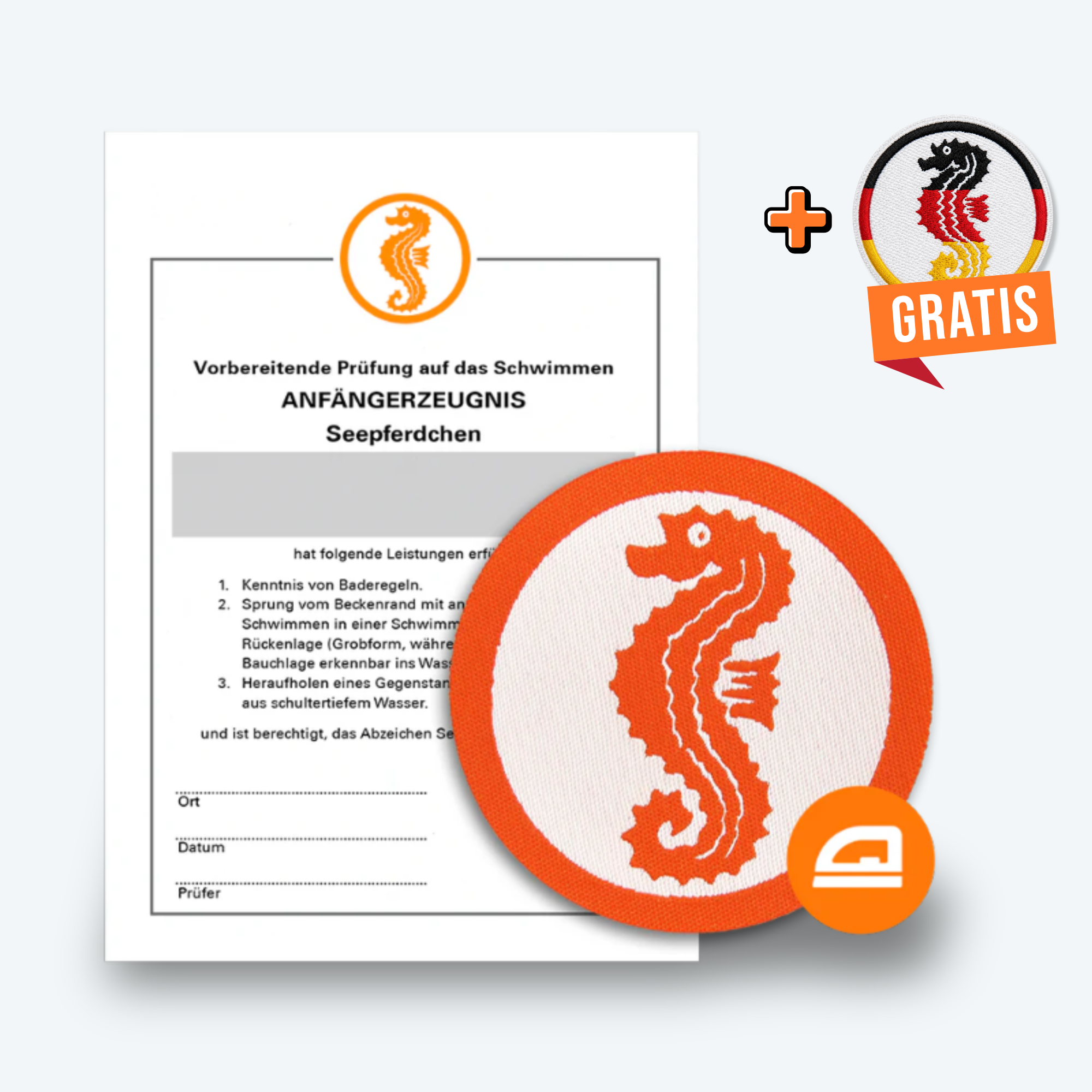
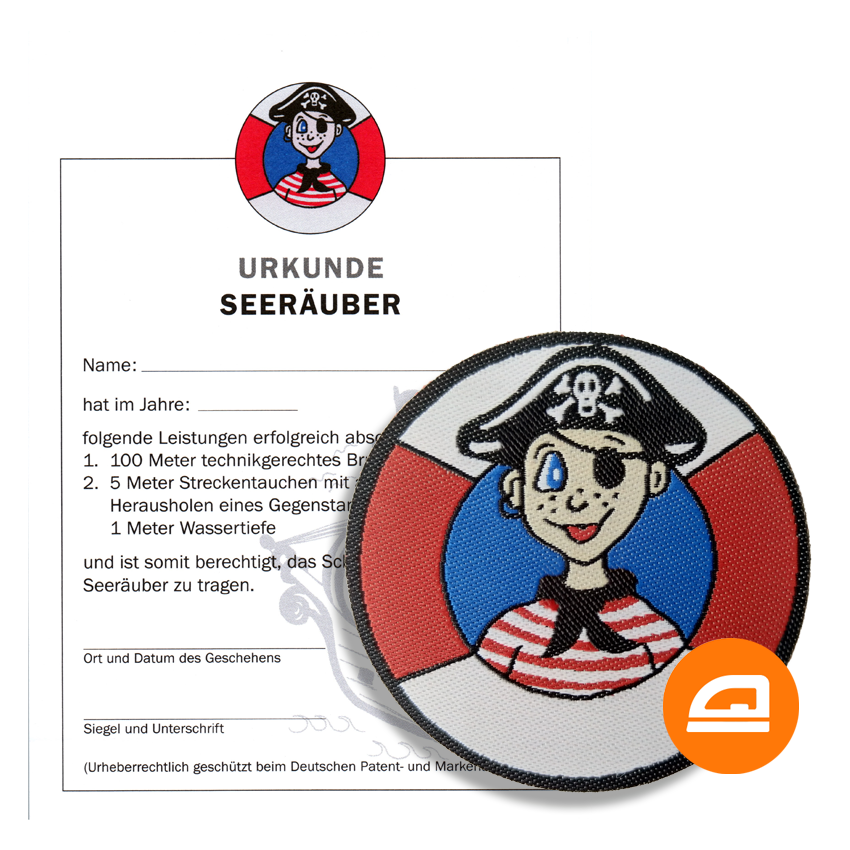
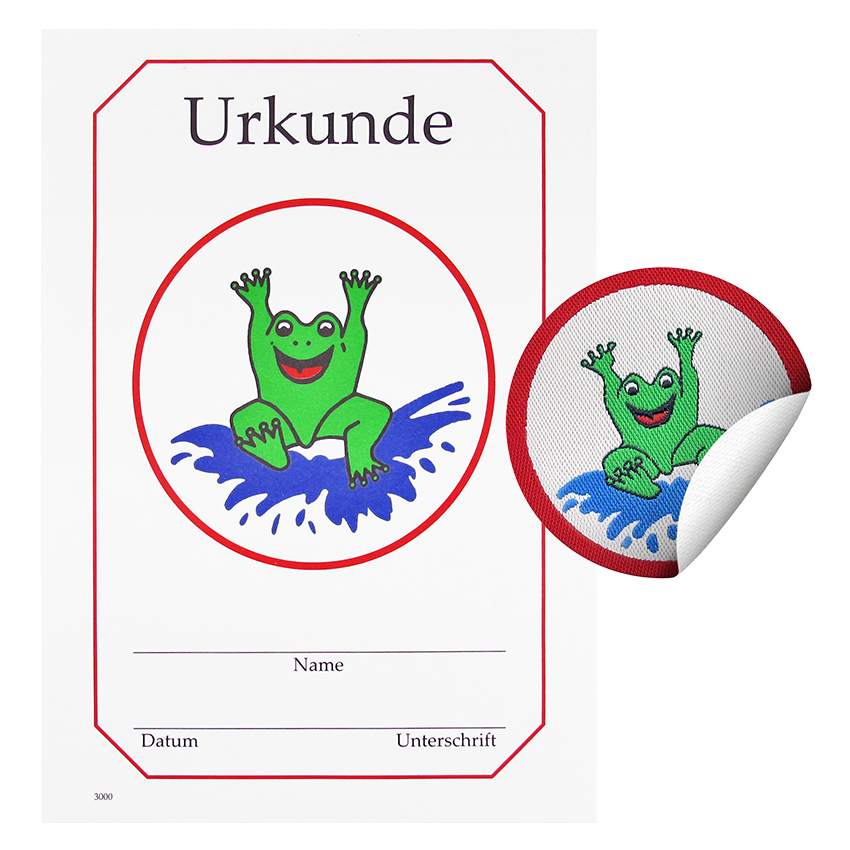
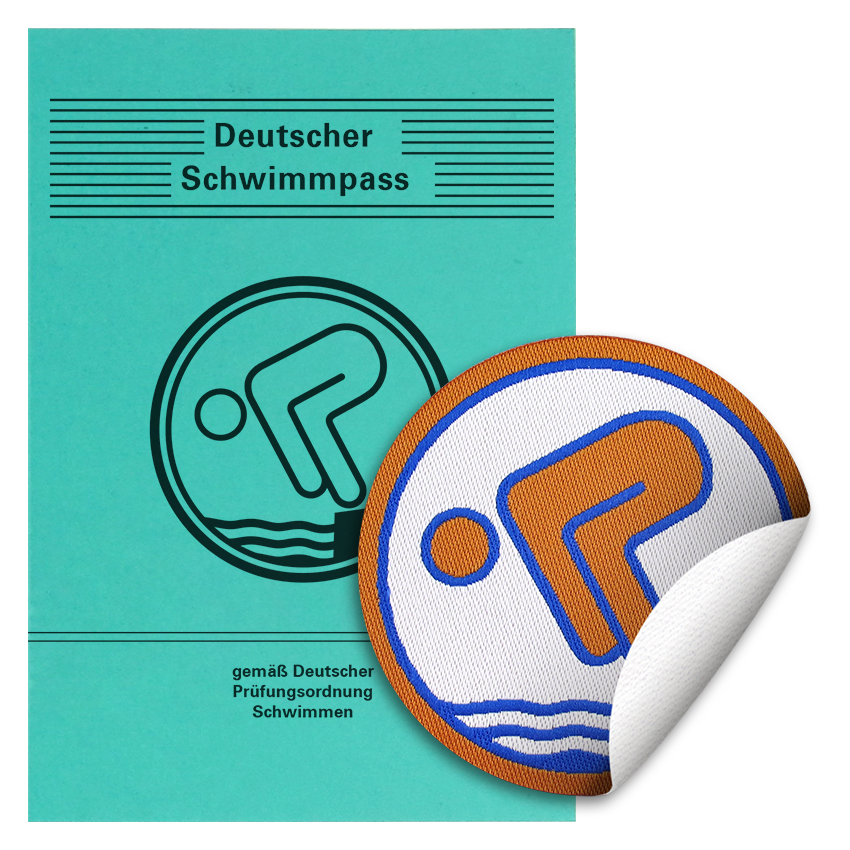
A wetsuit shorty offers children protection and freedom of movement in the water. At the same time, as swimming progress increases, so does the desire for recognition and motivation. This is where Pimpertz comes in: Discover our colorful and child-friendly Pirate Pimpi® swimming badges & certificates, which playfully encourage the joy of swimming. These awards are perfect for celebrating achievements after wearing the wetsuit and strengthening the love for water sports.
Trust in over 38 years of experience and highest quality at Pimpertz. We support parents and swimming instructors with official, motivating swimming badges that are specially tailored to children. Ensure safety, fun and recognition in the water now and get started directly with our exclusive range. Visit us and discover how you can ideally combine swimming fun and achievements.
Frequently Asked Questions
What is a wetsuit shorty?
A wetsuit shorty is a special swimwear for children that only covers the thighs and upper arms to ensure maximum freedom of movement while providing protection from cold and UV radiation.
What material thicknesses are available for shorty wetsuits and for what water temperatures are they suitable?
There are various material thicknesses: 2 mm for over 25 degrees, 3/2 mm for 20–25 degrees, 4/3 mm for 15–20 degrees, and 5 mm for under 20 degrees. The choice depends on the water temperature and intended use.
How important is the fit of a wetsuit for children?
The fit is crucial for comfort and functionality. An optimally fitting suit ensures ideal heat retention and freedom of movement. Suits that are too tight or too loose can impair protection and mobility.
What risks should parents consider when buying a wetsuit for children?
Parents should ensure they choose the correct size to avoid a poor fit, which can reduce thermal protection or restrict freedom of movement. Material quality is also important, as inferior wetsuits can quickly wear out or cause skin irritation.
Recommendation
- Arena Goggles – Protection and Comfort for Children
- Nose Clip for Swimming – More Comfort for Children
- Swimming in the Sea: How Healthy Is It for Children?
- 7 Swimming Accessory Recommendations for Parents and Coaches
- Outdoor Portable Changing Cloak Cover-Ups Instant Shelter Privacy Changing Robe
- Kids Ski Gear Guide | Children’s Skiing Clothes Checklist