












More than 400,000 people drown worldwide each year, according to the WHO, even though many accidents could be prevented by well-trained lifeguards. People near water often unconsciously rely on their professional help and quick reactions. Understanding what truly defines a lifeguard provides insight into a profession where responsibility, expertise, and physical fitness save lives.
Table of Contents
- What is a Lifeguard? Definition and Meaning
- Prerequisites and Physical Requirements
- Training, Exams, and Qualifications
- Areas of Responsibility and Deployment in Detail
- Legal Duties and Responsibilities
- Common Mistakes and Tips for Success
Key Insights
| Point | Details |
|---|---|
| Lifeguard Definition | Lifeguards are skilled professionals specifically trained to rescue individuals in dangerous water situations. |
| Training and Qualifications | Training requires both physical fitness and theoretical knowledge, including first aid skills and water rescue techniques. |
| Areas of Responsibility | Lifeguards monitor swimming areas, conduct rescue operations, and provide first aid to ensure the safety of bathers. |
| Legal Responsibility | Lifeguards bear significant legal responsibility and must ensure they adhere to all safety protocols and undergo regular continuing education. |
What is a Lifeguard? Definition and Meaning
A lifeguard is a specially trained professional who can not only swim but also possesses crucial competencies to rescue people in dangerous situations in and around the water. According to Duden, a lifeguard is a person trained in lifesaving who has the necessary skills to rescue swimmers in distress.
The primary task of a lifeguard goes far beyond ordinary swimming. It includes complex skills such as:
- Recognizing dangerous situations
- Rapid and professional intervention in water accidents
- Performing rescue techniques
- Providing first aid in the water
- Coordinating rescue measures
According to Wikipedia, lifeguards are trained experts who not only possess technical swimming skills but also have profound specialized knowledge to recognize, understand, and professionally manage accidents in and around water. They play a crucial role in preventing accidents and saving lives in bodies of water such as swimming pools, lakes, rivers, and coastal areas.
To become a lifeguard, interested individuals must undergo extensive training and examinations. DLRG Swimming Badges Overview: What You Should Know provides further details on the required qualifications and training standards for aspiring lifeguards. This demanding profession requires not only physical fitness but also mental strength, concentration, and the readiness to act calmly and quickly in dangerous situations.
Prerequisites and Physical Requirements
To become a lifeguard, interested individuals must meet strict physical and professional requirements. Physical fitness plays a crucial role, as lifeguards must react quickly and powerfully in extreme situations. The most important physical prerequisites include:
- Excellent swimming skills
- Endurance and stamina
- Good lung function and breathing capacity
- Quick reaction time
- Mental resilience
The foundation for a lifeguard career is comprehensive swimming badges. Swimming Badge Requirements 2025: Understanding and Explaining provides a detailed overview of the necessary qualification levels.
In addition to physical fitness, theoretical knowledge is essential. Aspiring lifeguards must possess sound first aid knowledge, knowledge of water rescue techniques, and a deep understanding of dangerous situations in the water. Typically, several training stages are completed, which include both practical and theoretical examinations.
The training covers various levels of difficulty and specializations. Applicants must generally be at least 16 years old, demonstrate above-average swimming ability, and successfully pass medical and physical fitness tests. Regular health checks and refresher courses are mandatory to ensure high safety standards in lifesaving.

Training, Exams, and Qualifications
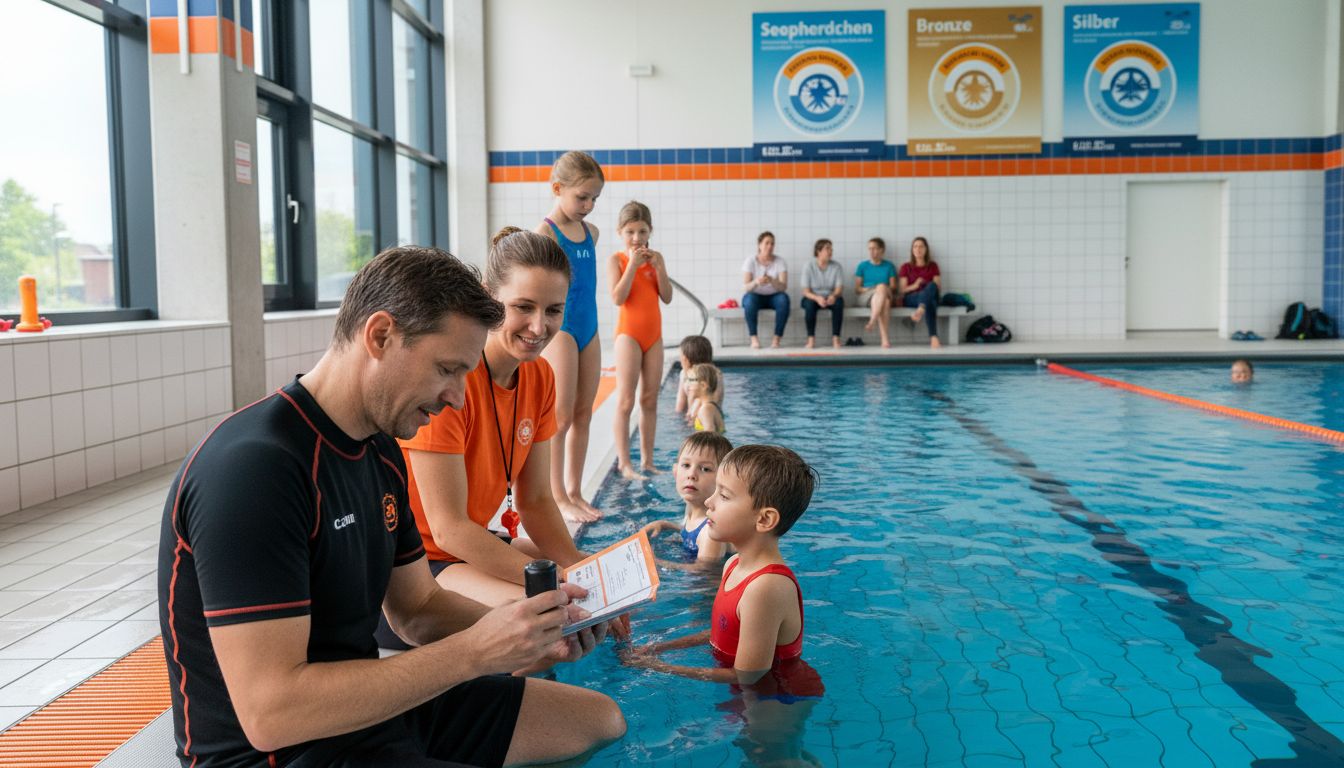
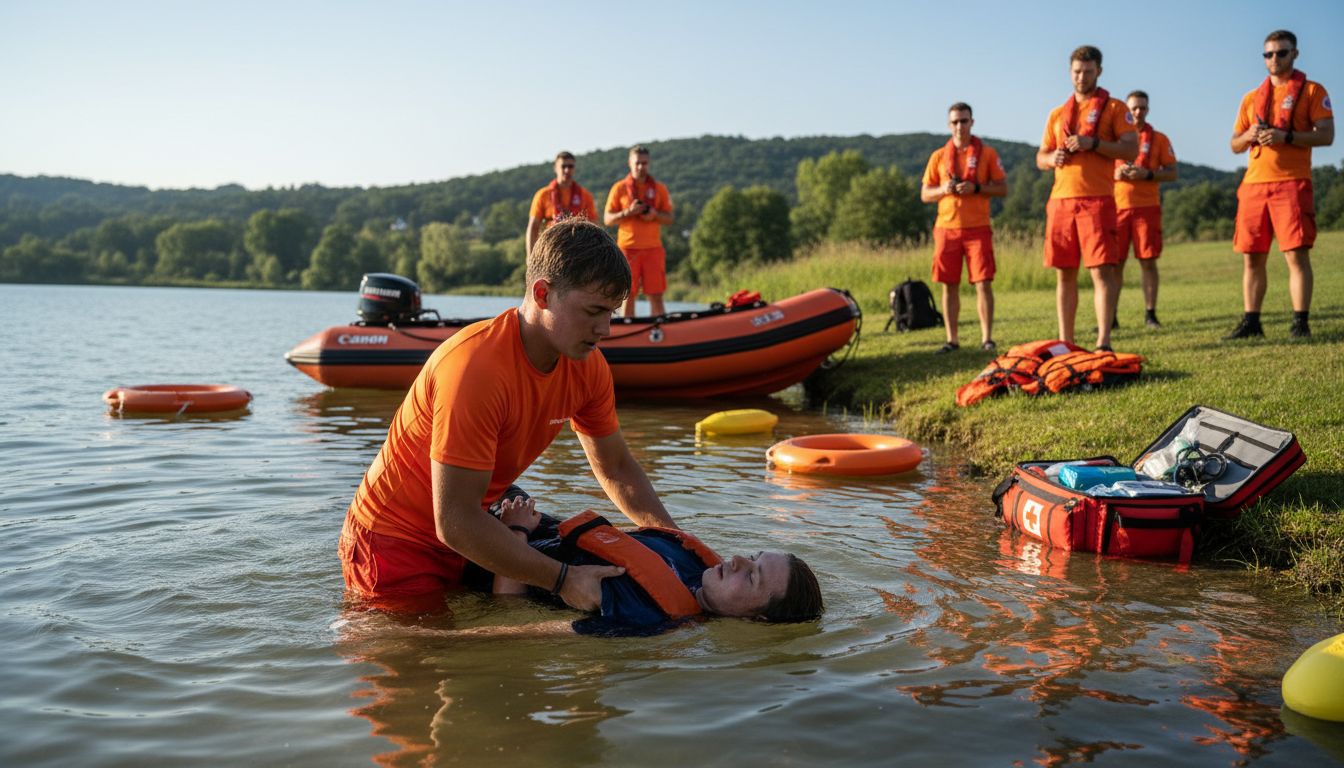
Training to become a lifeguard is a structured and demanding process that includes multiple qualification levels and extensive examinations. Aspiring lifeguards must acquire a complex set of theoretical and practical competencies to meet strict safety standards.
The training path typically divides into the following main stages:
- Basic training with swimming techniques
- First aid courses
- Water rescue techniques
- Theoretical examinations
- Practical rescue drills
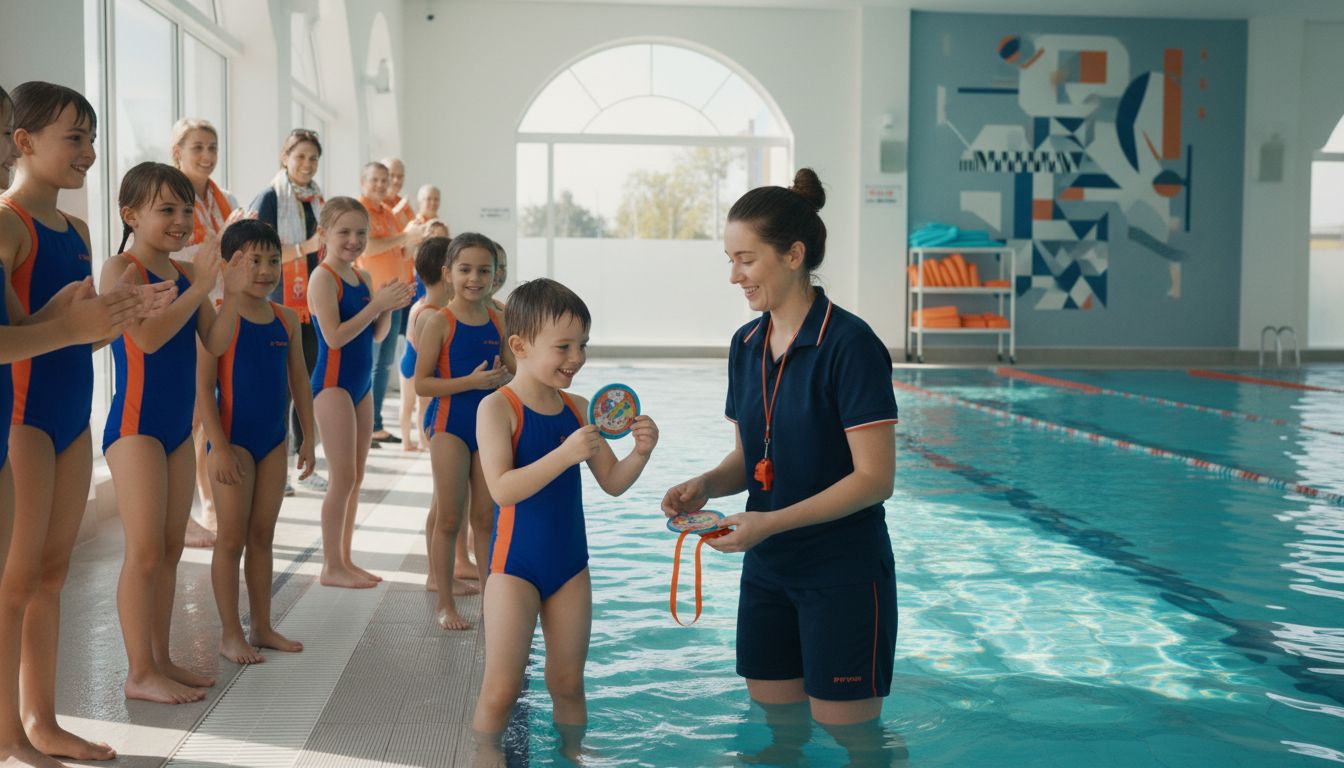
For children and young people, swimming badges form the basis of their training. Primary School Swimming Badges: Understanding, Meaning, and Process offers helpful insight into the early stages of education.
The practical exams are particularly demanding and include realistic rescue scenarios. Lifeguards must demonstrate various rescue techniques under stress, perform resuscitation measures, and professionally handle complex rescue situations. The training concludes with a comprehensive theoretical and practical examination that tests both medical knowledge and physical performance.
Areas of Responsibility and Deployment in Detail
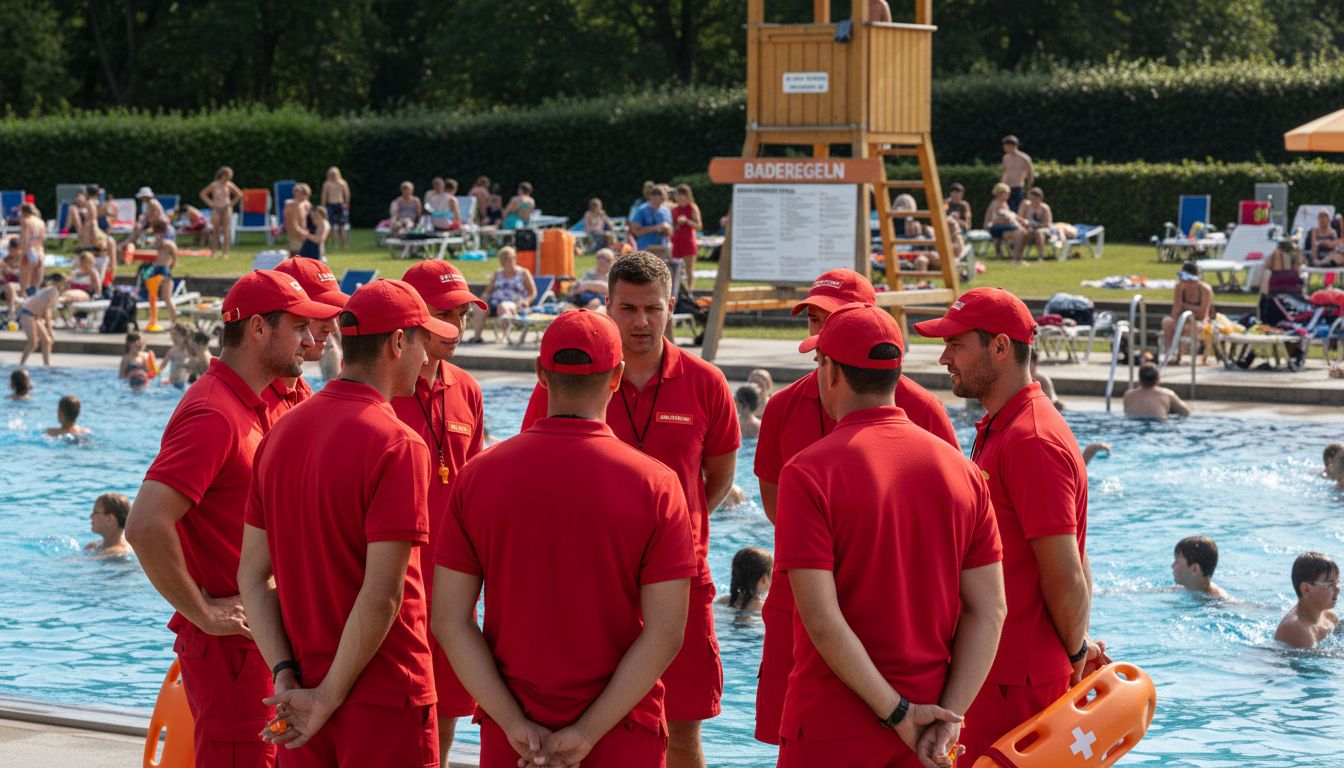
The lifeguard is a versatile profession with a broad spectrum of deployment areas. According to Wikipedia, lifeguards can work in various bodies of water such as lakes, rivers, and coasts, often on a voluntary basis or as seasonal workers in outdoor and indoor swimming pools.
The main areas of responsibility include:
- Monitoring bathing areas
- Prevention of water accidents
- Conducting rescue operations
- Providing first aid
- Advising and educating bathers
In some regions, lifeguards have state-of-the-art equipment. International examples show that they can work with off-road vehicles, rescue boats, and even helicopters to protect swimmers in danger.
In addition to classic deployment locations such as swimming pools and beaches, lifeguards also work in specialized areas. These include water sports events, competitions, safety services on bodies of water, and preventive safety programs in schools and communities. Their commitment significantly contributes to preventing water accidents and protecting human lives.
Legal Duties and Responsibilities
The lifeguard carries immense legal responsibility for the safety and protection of bathers. As international examples show, lifeguards must possess sound knowledge of relevant legislation. Intercommunale Kustreddingsdienst West-Vlaanderen emphasizes that lifeguards are fully responsible for the safety of bathers.
The most important legal duties include:
- Constant vigilance and attention
- Immediate intervention in dangerous situations
- Documentation of incidents
- Adherence to safety protocols
- Regular further training and certification
In the event of damage, lifeguards can be held civilly and criminally liable if they neglect their duty of care. This means that they can be personally held accountable for failing to take rescue measures or for negligent behavior.
The legal requirements are complex and include not only direct rescue but also preventive measures. These include securing dangerous areas, monitoring compliance with bathing rules, and advising bathers on safety aspects. Comprehensive documentation and strict adherence to regulations are essential.
Common Mistakes and Tips for Success
Training to become a lifeguard is demanding and requires utmost concentration and professionalism. Many candidates fail not due to a lack of physical ability, but due to avoidable mental and strategic errors during training and examinations.
Common mistakes that aspiring lifeguards should absolutely avoid:
- Overestimating one's own swimming abilities
- Insufficient preparation for theoretical examinations
- Underestimating mental resilience
- Inadequate first aid knowledge
- Lack of concentration in stressful situations
7 Important Swimming Learning Tips for Parents and Coaches provides helpful basics for mental and physical preparation. A holistic training strategy that considers not only technical skills but also psychological aspects is crucial.
The formula for success for aspiring lifeguards consists of consistent preparation, targeted training, and the ability to act professionally even under stress. Regular simulation exercises, mental training, and a realistic assessment of one's own performance limits are key elements for successful training.
Perfect Preparation for Your Lifeguard Training with Pimpertz
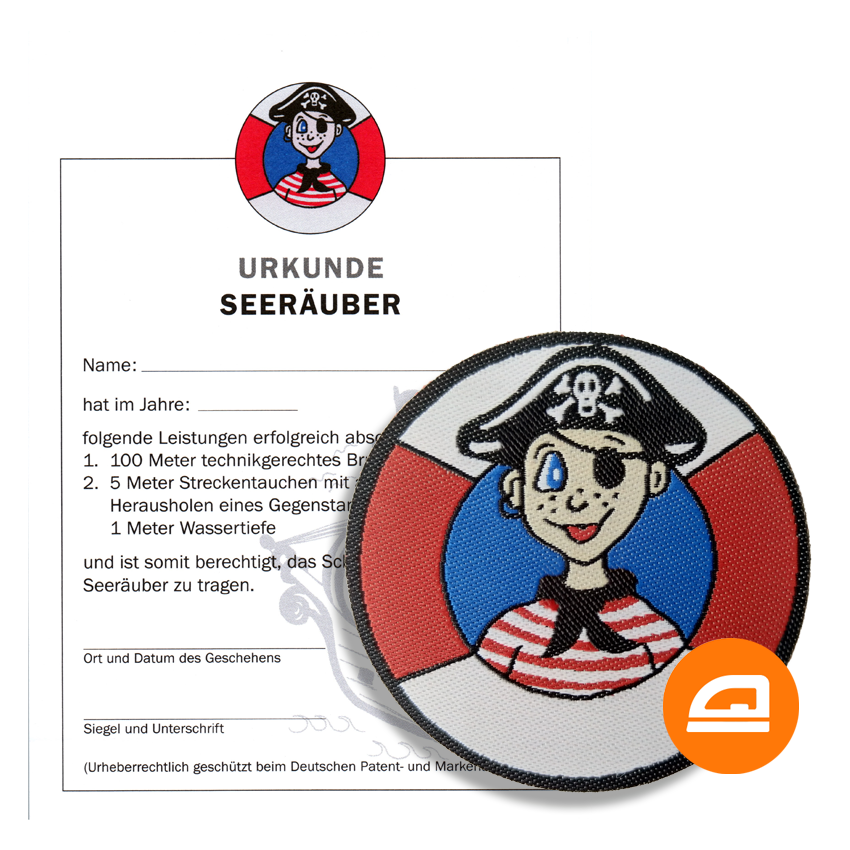
The demands on lifeguards are high and require not only physical fitness but also sound knowledge and reliable materials for training and examination. If you take your swimming badges seriously, such as the Seepferdchen or the youth swimming badge, and want to be optimally prepared, then Pimpertz is the right place for you. Our certified swimming badges and certificates support you in starting your career as a lifeguard professionally and ensure the recognition of your achievements.
Benefit from over 38 years of experience as an official partner of the DLRG and BFS. We offer high-quality, durable badges and practical accessories such as waterproof cases and collector's albums that help you make your successes visible. Rely on quality and service with lightning-fast shipping and personal advice. Visit Pimpertz now and discover our offers on swimming badges. Start your training with optimal equipment and take the decisive step to becoming a qualified lifeguard.
Frequently Asked Questions
What are the prerequisites to become a lifeguard?
To become a lifeguard, interested individuals must be at least 16 years old, demonstrate excellent swimming skills, and pass medical and physical fitness tests.
What physical requirements are important for lifeguards?
Lifeguards need excellent swimming skills, endurance, stamina, and quick reaction time. Good lung function and mental resilience are also crucial.
What training stages does a lifeguard go through?
Training typically includes basic training with swimming techniques, first aid courses, water rescue techniques, as well as theoretical and practical examinations.
What are the main duties of a lifeguard?
The main duties of a lifeguard include monitoring bathing areas, preventing water accidents, conducting rescue operations, and advising bathers.