

The Comprehensive Guide to Swimming Badges for All Ages
Introduction to the World of Swimming Badges
Swimming badges are important milestones for children and adults who want to learn and improve their swimming skills. In swimming lessons, participants are specifically prepared for the requirements of the badges to systematically develop their swimming abilities.
They offer a structured way to learn and improve swimming skills such as front crawl or backstroke. Swimming badges are particularly important for children and early swimmers as they provide motivation and safety.
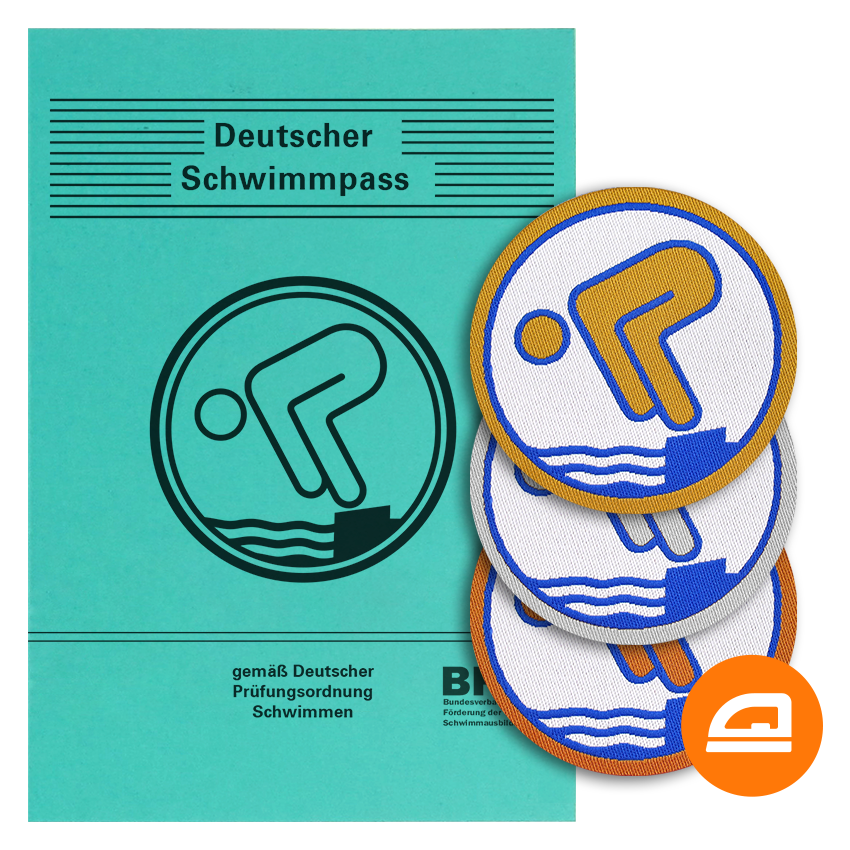
Gold is the highest badge, achieved after Bronze and Silver.
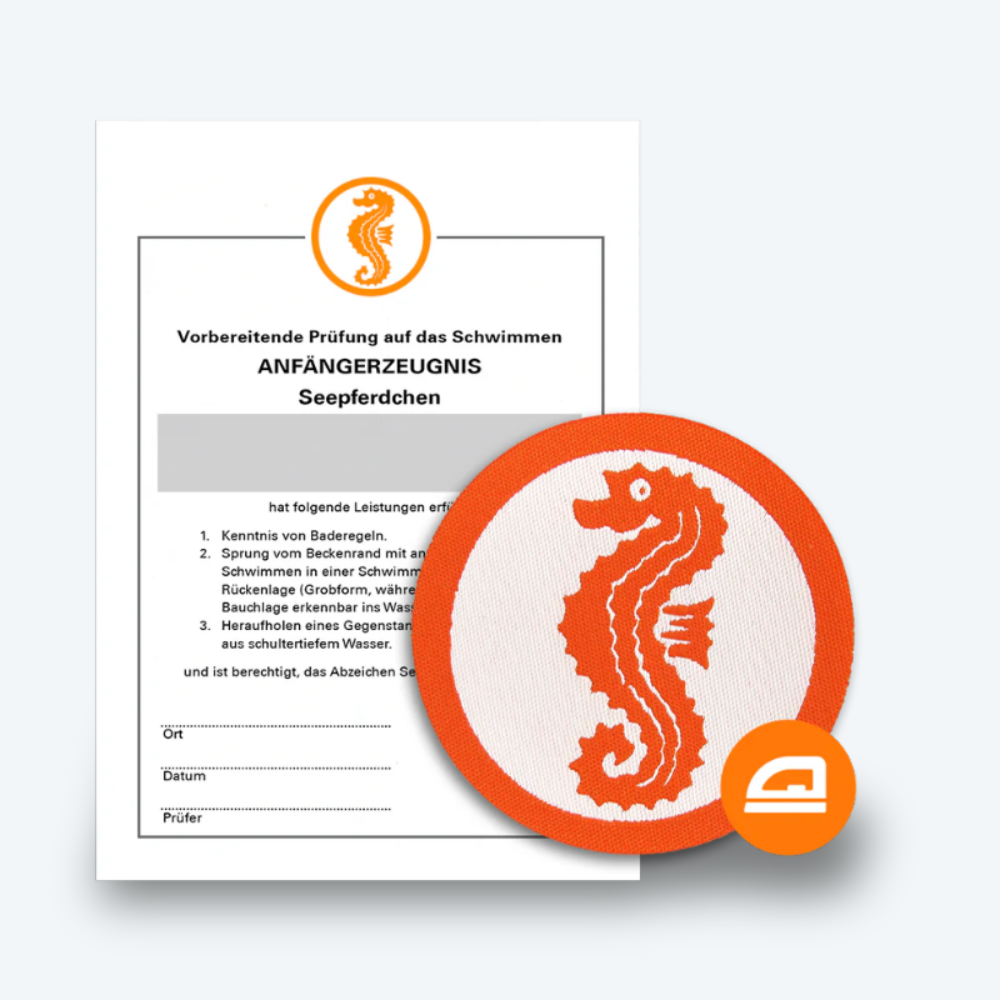
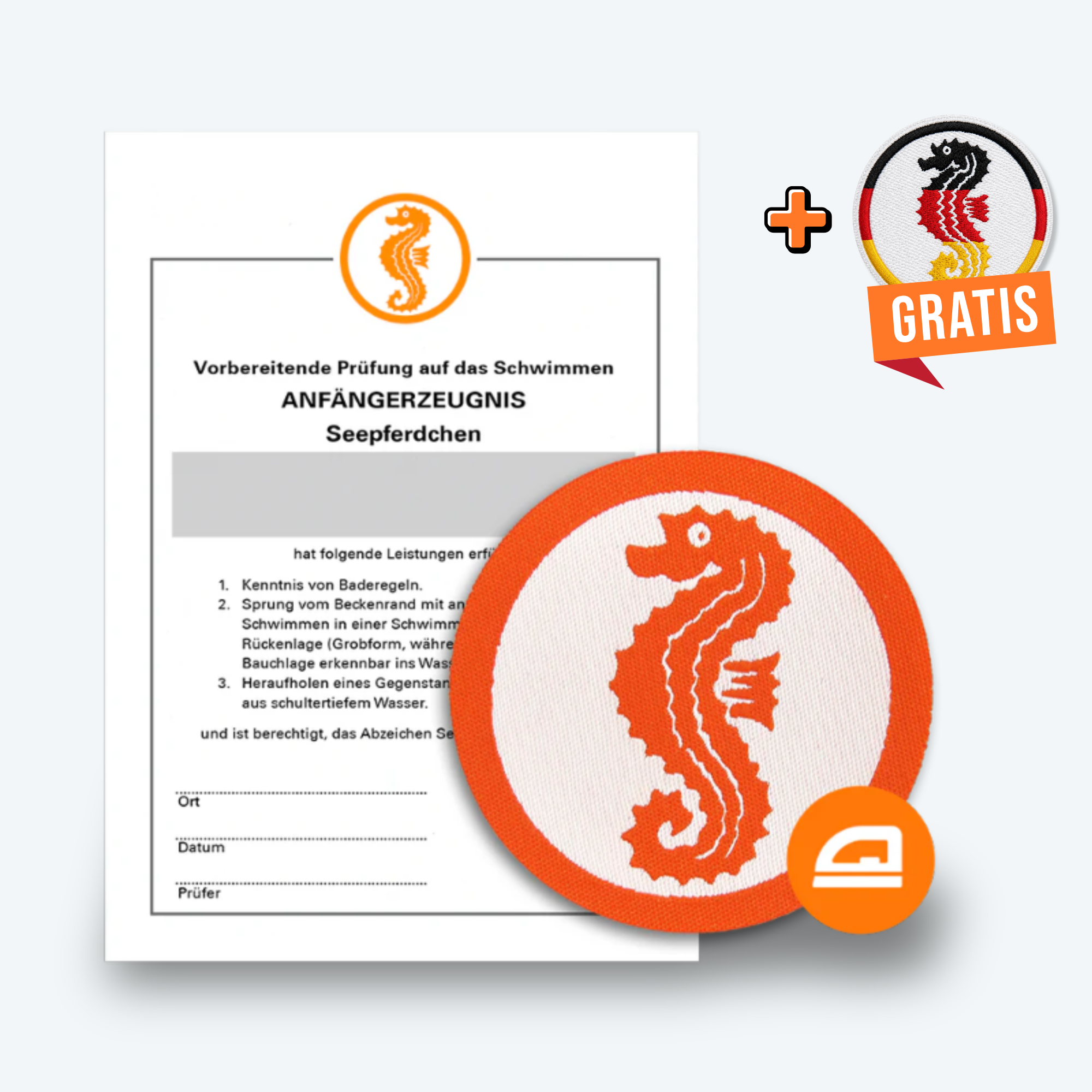
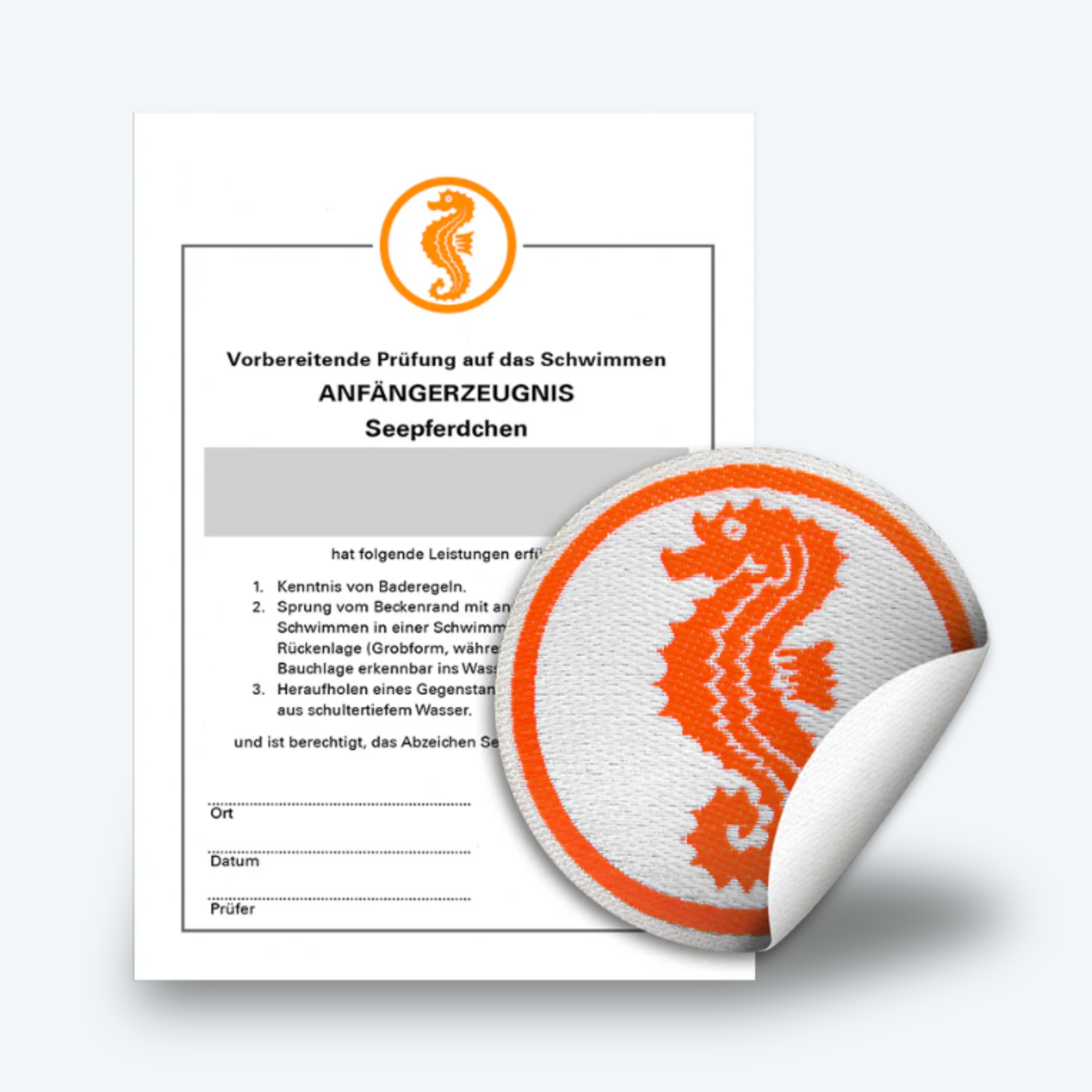
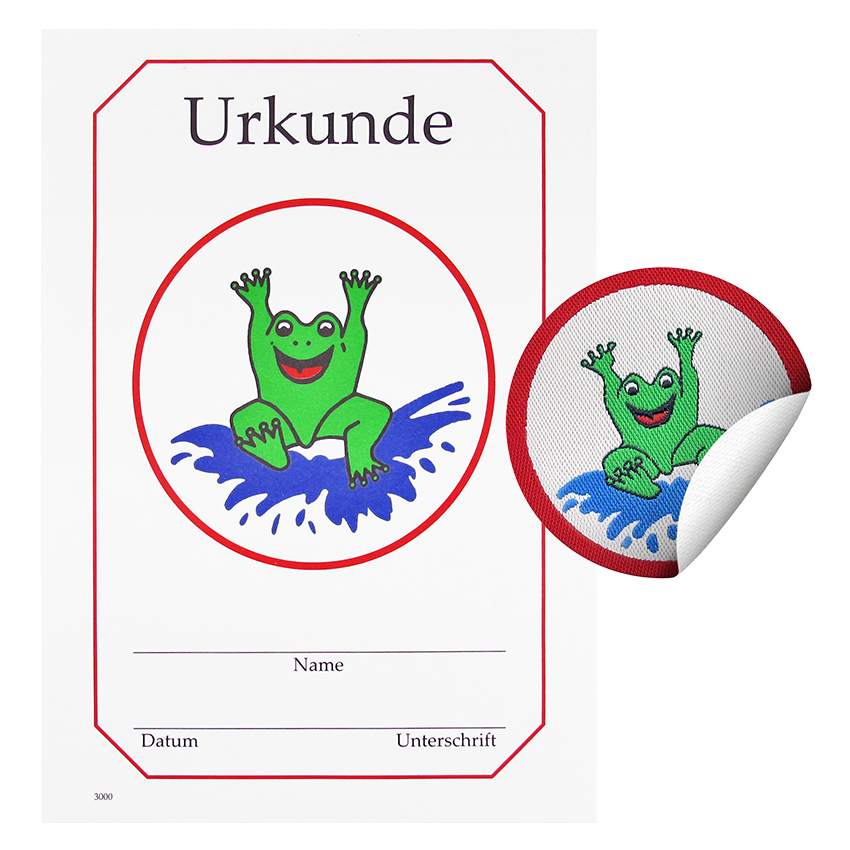
Badges like the Seepferdchen (Seahorse) are the first step to becoming familiar with water and learning basic swimming skills. For early swimmers, there are special badges that reduce fear of water and lay the foundation for further swimming certificates.
The examination regulations define the requirements for each badge, such as a headfirst jump from the edge of the pool.
Advantages of Swimming Badges
-
Swimming badges promote motivation and self-confidence by setting clear goals and milestones.
-
They improve swimming skills and safety in the water by training front crawl or backstroke as well as deep diving from the water surface; they also convey knowledge of swimming rules and self-rescue.
-
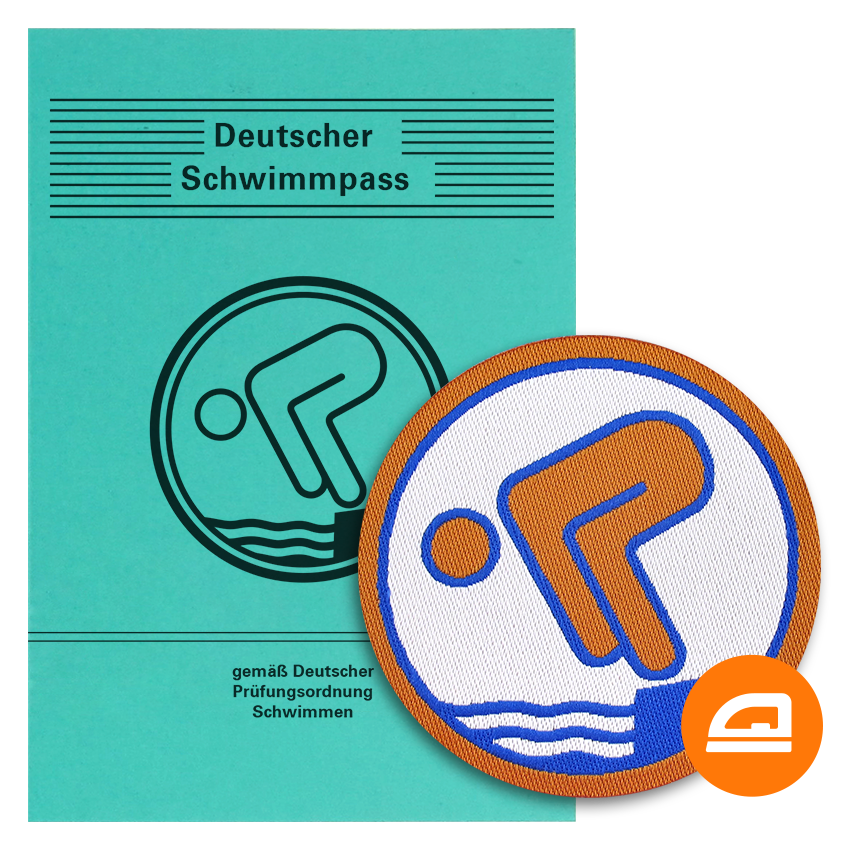
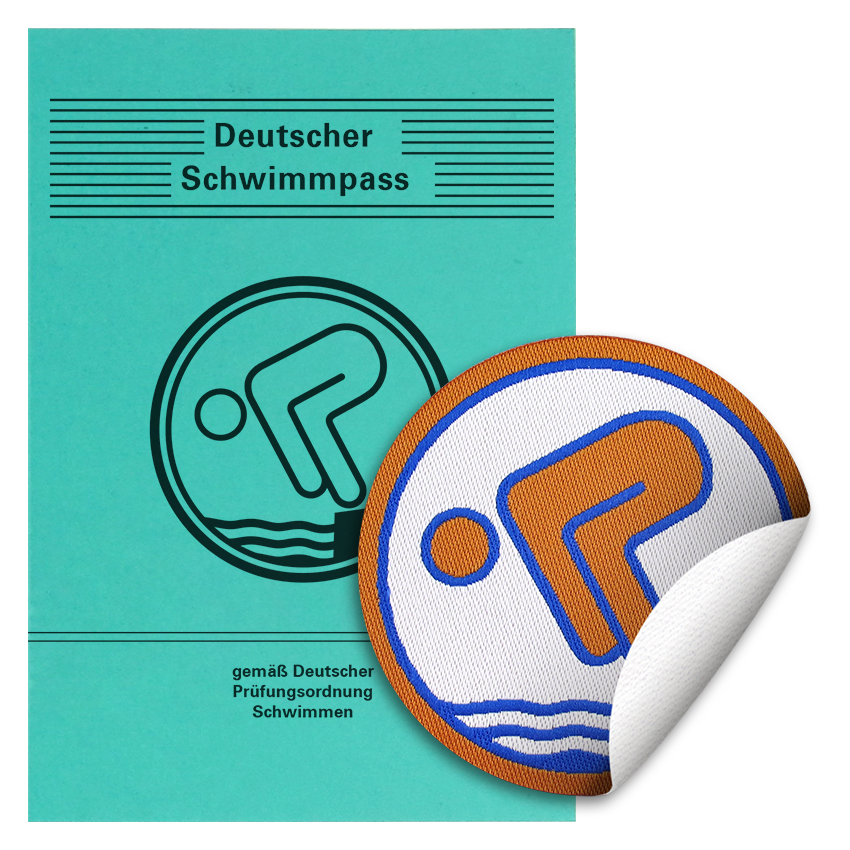
They are part of swimming training and document progress, e.g., in a swimming passport, whereby various swimming styles are specifically developed.
-
They enable swimmers to expand their skills and master new challenges, such as swimming with clothes or lifeguarding.
-
Badges prepare for the Gold badge, the highest level of achievement.
Overview of Swimming Badges in Germany
-
In Germany, there are various swimming badges, such as the Seahorse, Bronze, Silver, and Gold. The German Bronze badge and the Silver badge represent important intermediate steps on the way to the Gold badge and mark progress in swimming training.
-
Each badge has its own requirements and tests, such as a jump from a height of 3 m, jumps from the 1 m board or from a height of 2 m or 2 different heights, with jumps playing a central role for the candidates. Other requirements include a 10 m underwater swim, a dive of approx. 2 m depth, and retrieving an object with the hands from shoulder-deep water.
-
The badges are staggered according to swimming level and ability to enable continuous improvement of swimming skills. These include front crawl, backstroke in a recognizable style (change of body position during swimming), front crawl, and recognizable exhalation into the water. Changing body position is also part of the requirements.
-
The examination regulations govern the requirements for individual badges and ensure the quality of the assessments, e.g., by checking knowledge of swimming rules and assistance in bathing, boating, and ice accidents. Specific time limits (minimum, within 3 minutes) and minimum distances (at least 200 m to be covered) must be observed for the respective badges. Swimming in the lane and on the water surface with retrieval are also part of the examination requirements. Retrieving a small object (e.g., small diving ring) is often used as an example for examination items.
Requirements for Swimming Badges
Seepferdchen (Seahorse) – The Early Swimmer Badge
For the Seahorse, the popular early swimmer badge, the first task is a headfirst jump from the edge of the pool. Candidates then have to swim 25 meters, choosing freely whether to swim front crawl or backstroke. Another criterion is retrieving a small object, such as a diving ring, from shoulder-deep water.
Deutsches Schwimmabzeichen Bronze (German Swimming Badge Bronze) – First Swimming Level
For the German Swimming Badge Bronze, the requirements increase: here, swimmers must swim at least 200 meters, 150 meters of which in front crawl or backstroke, and retrieve an object from the water.
Deutsches Schwimmabzeichen Silber (German Swimming Badge Silver) – Increased Endurance and Technique
For the German Swimming Badge Silver, endurance is further demanded – it involves swimming 400 meters, 300 meters of which in front crawl or backstroke, as well as diving twice approx. 2 m deep from the water surface to retrieve an object.
Deutsches Schwimmabzeichen Gold (German Swimming Badge Gold) – Highest Swimming Performance
The Gold Swimming Badge represents the highest level: candidates must swim 800 meters, 650 meters of which in front crawl or backstroke, and retrieve three small objects from approximately 2 meters water depth.
Preparation for Swimming Badge Examinations with a Focus on Swimming
-
Preparation for swimming badge examinations is important to meet the requirements and receive the award – it begins with the early swimmer and is an important step for every child.
-
Good preparation includes training swimming techniques, such as front crawl or backstroke, as well as practicing examination exercises, such as a jump from a height of 3 m.
-
It is equally important to know the examination regulations and understand the requirements.
-
Preparation can be done through swimming courses or self-training, for example, by swimming in the lane without holding on.
-
Knowledge of swimming rules and assistance in bathing, boating, and ice accidents should also be acquired and practiced.
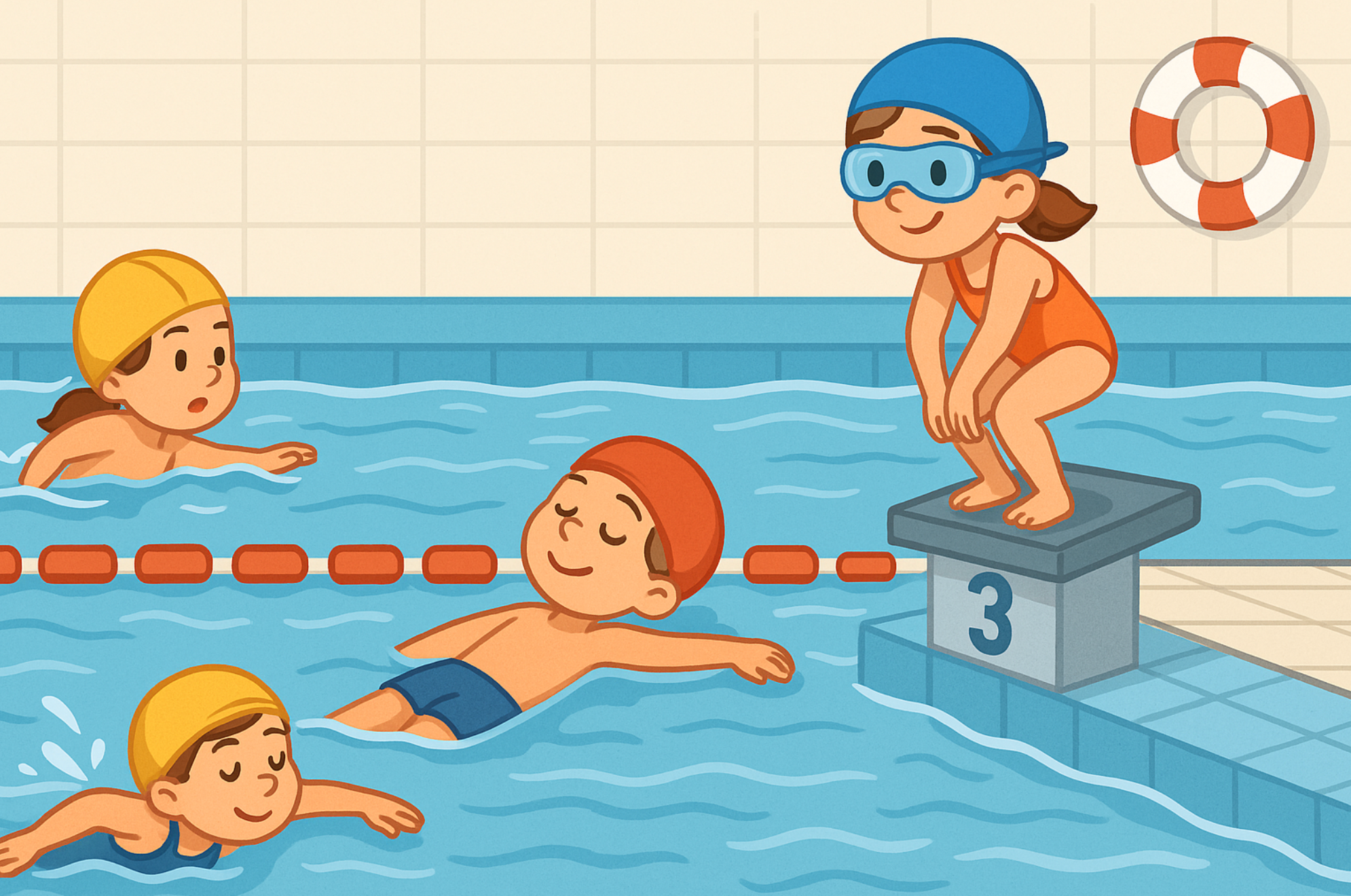
Examination and Issuance of Swimming Badges
The examination for swimming badges is conducted by licensed examiners or recognized organizations. Candidates must complete various tasks, such as swimming front crawl or backstroke, jumping from the edge of the pool, and retrieving objects from the water.
The difficulty varies depending on the badge – from the Seahorse to the German Swimming Badge Bronze and then Gold. After successfully passing, swimmers receive official proof of their swimming skills.
The issuance is a special moment for many, honoring the learned swimming skills, safe movement in the water, and mastery of jumps and diving exercises.
The Highest Swimming Badge: German Swimming Badge Gold
The Gold Swimming Badge is the highest award for swimmers in Germany and stands for outstanding swimming achievements. The examination requires not only excellent endurance but also safe mastery of various swimming techniques. Candidates must swim 800 meters, 650 meters of which in front crawl or backstroke, while maintaining a consistent body position during swimming. Additionally, retrieving three small objects from approximately 2 meters water depth is among the requirements.
The German Swimming Badge is a significant milestone and proves comprehensive knowledge and skills in the water.
International Standards for Swimming Badges and Deep Diving from the Water Surface
-
There are no international standards for swimming badges, but there are organizations that advocate for the harmonization of swimming badges.
-
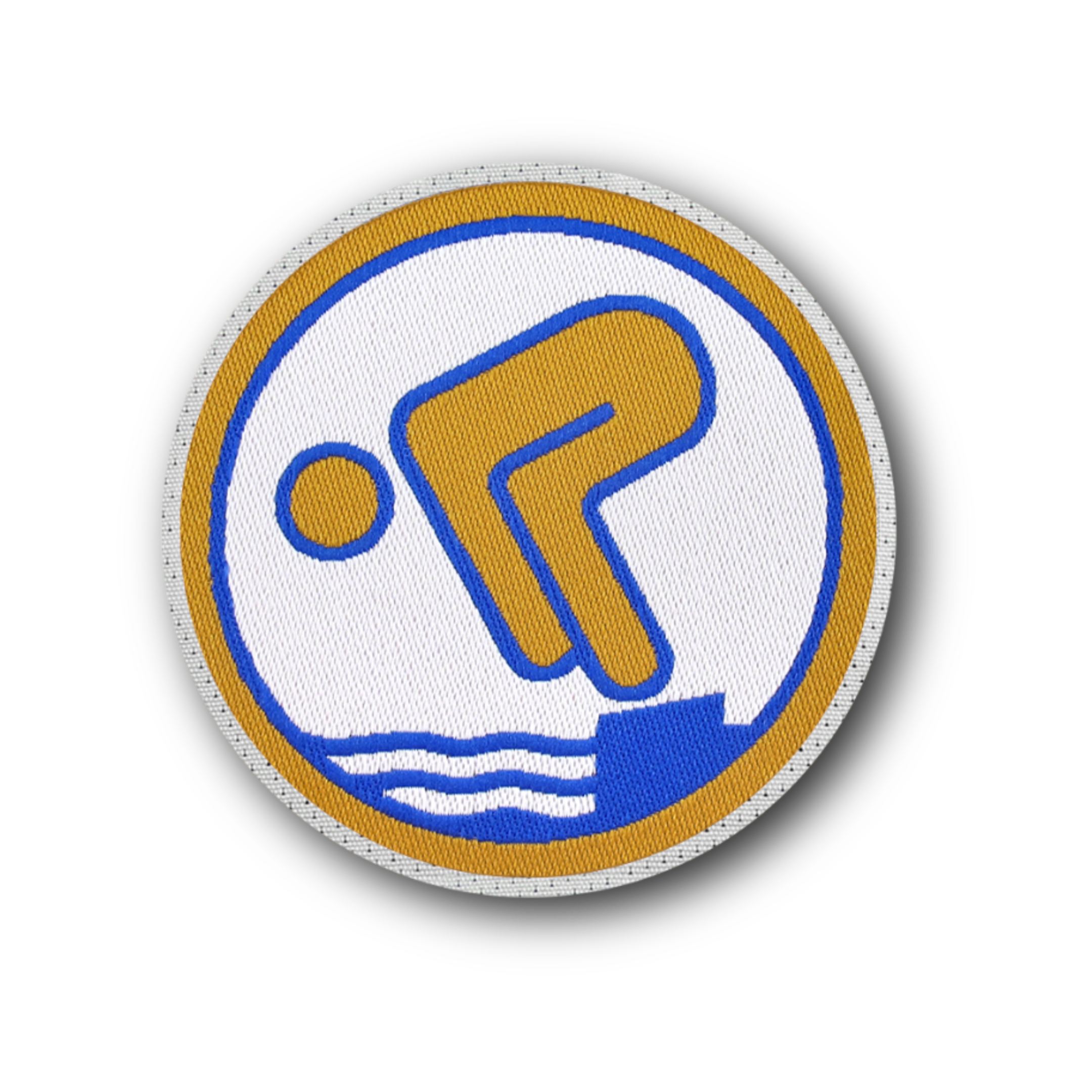
The International Life Saving Federation is an organization that promotes lifeguarding and swimming badges.
-
The organization develops and promotes international standards for swimming badges and lifeguarding, such as the German Swimming Badge Silver.
-
International cooperation is important to ensure the quality of swimming badges and lifeguarding and to document and verify progress.
-
International recognition of swimming badges is also important to promote mobility and to document and verify progress.
Attaching Swimming Badges to Swimwear
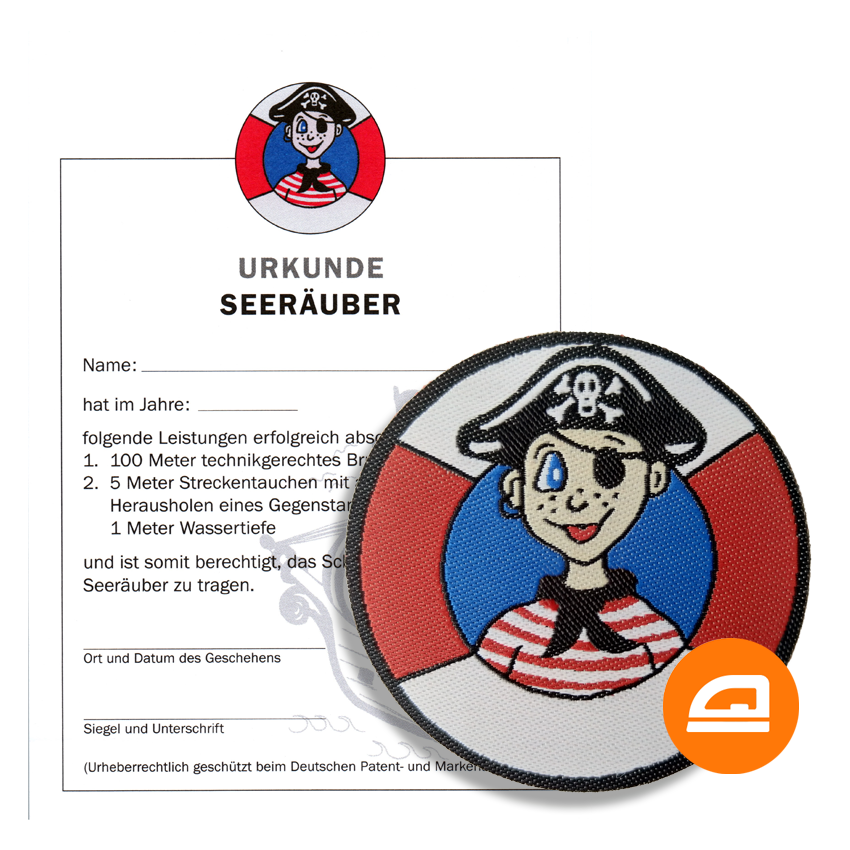
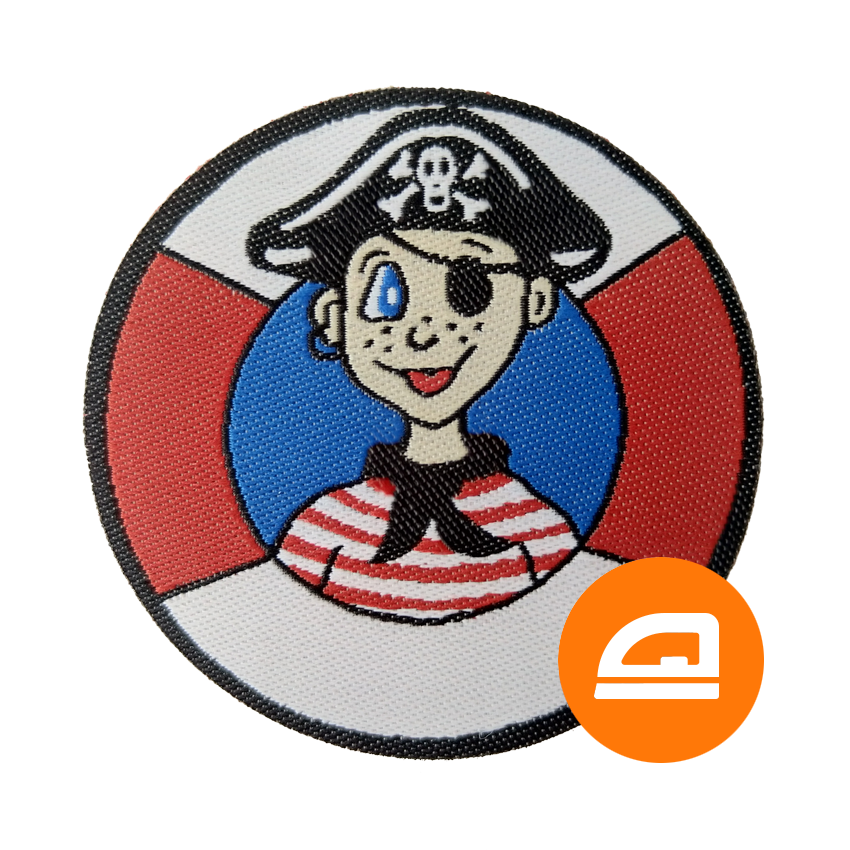
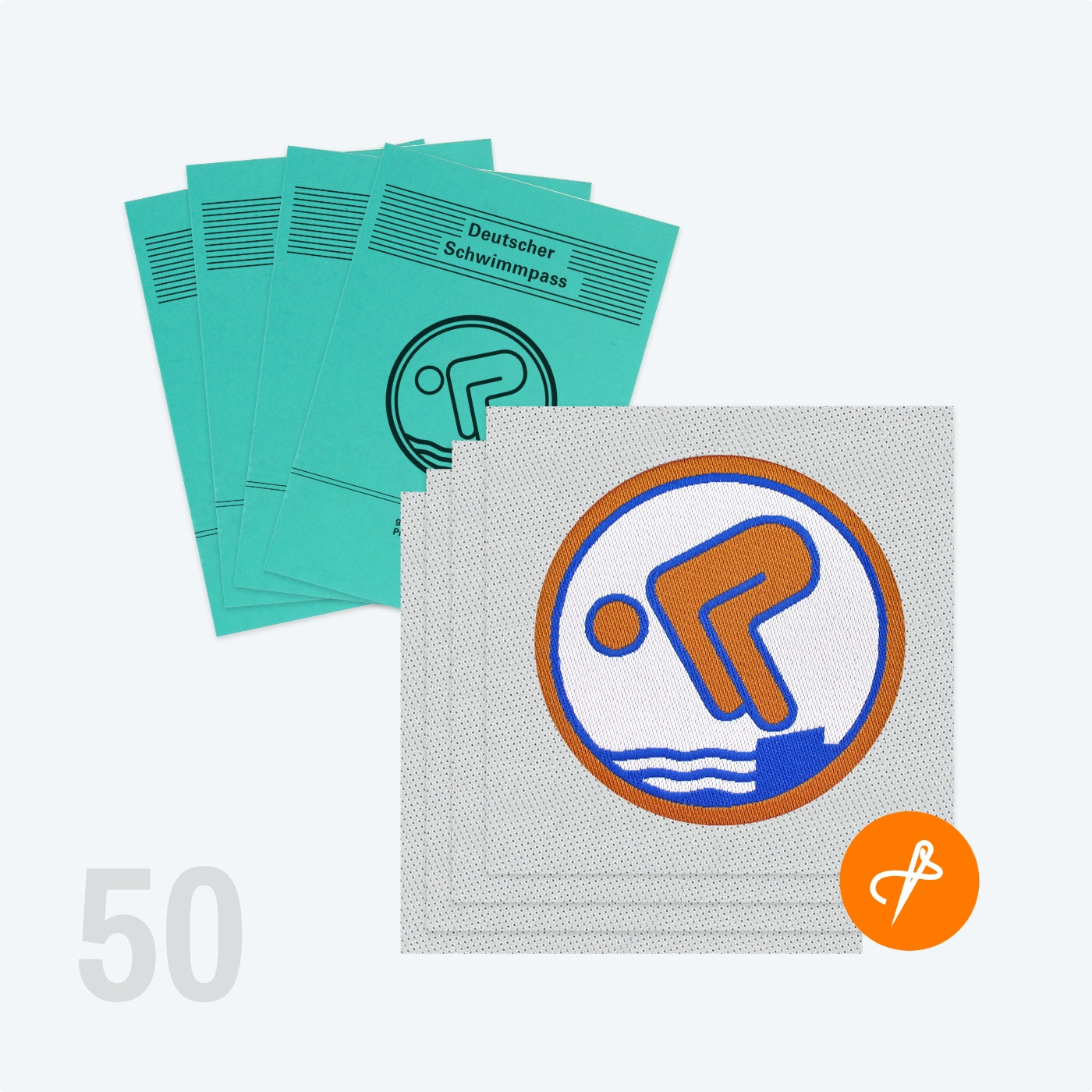
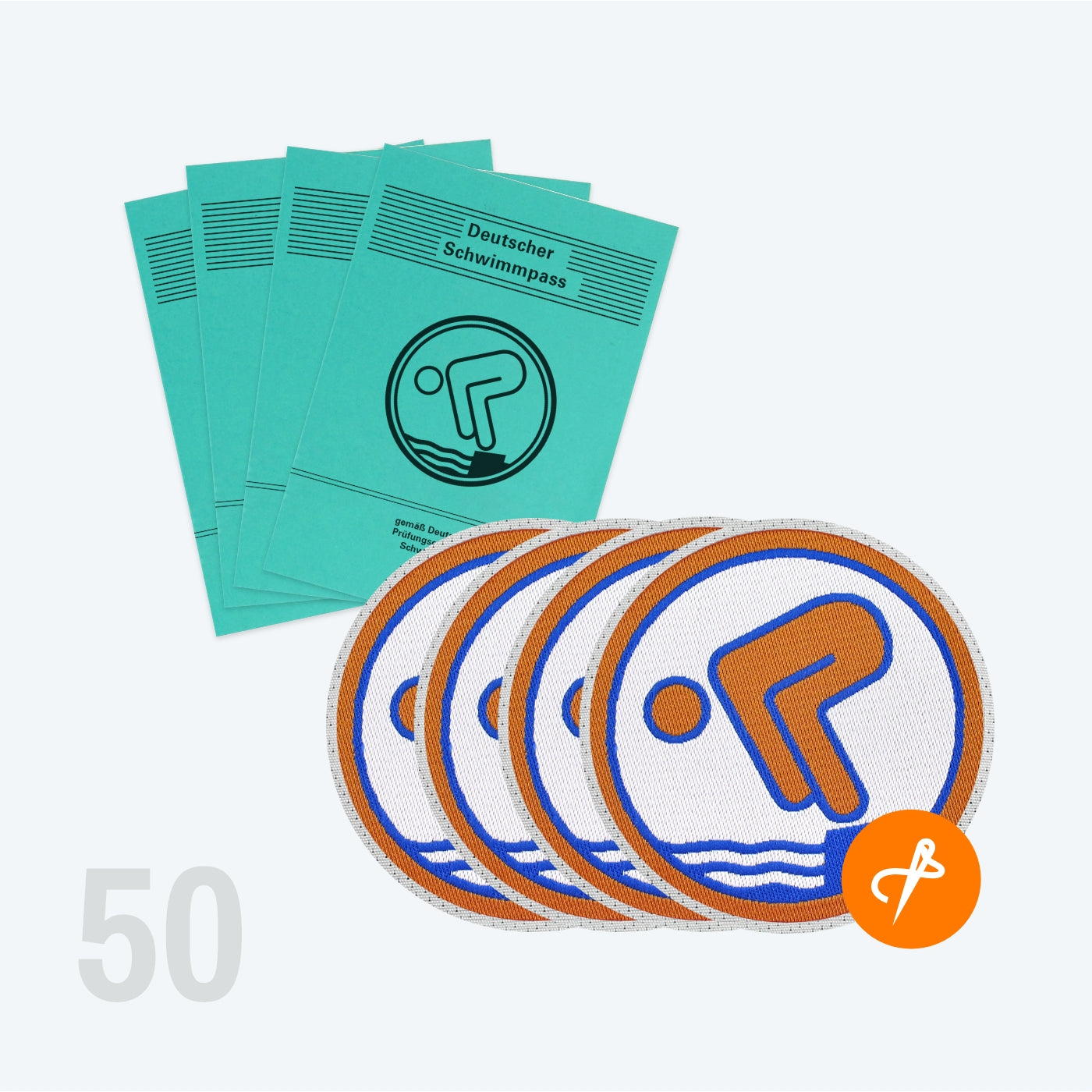
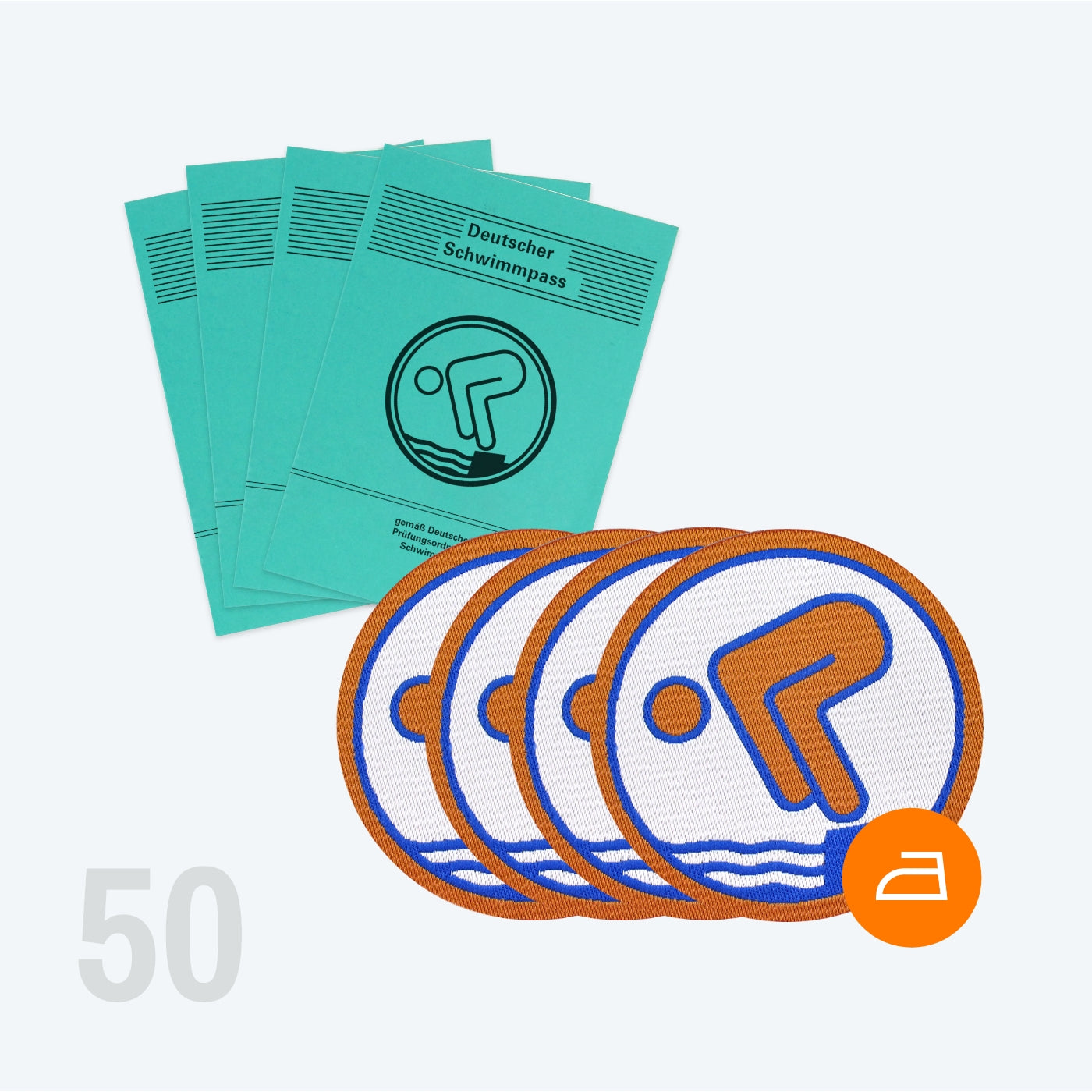
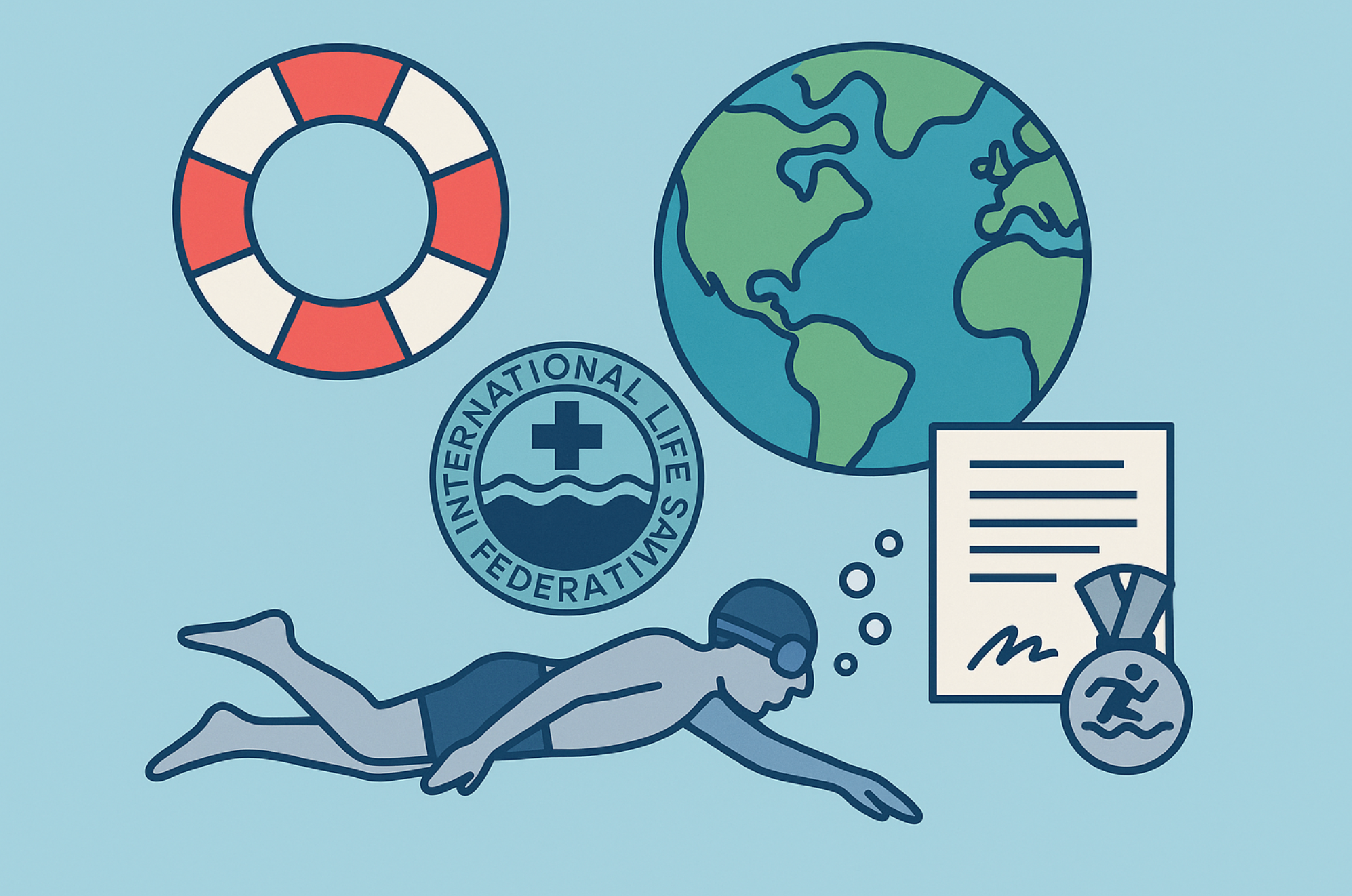
After successfully passing the examination, swimming badges are proudly worn and attached to swimwear. Whether on the chest, sleeve, or swimming trunks – they are a visible sign of achieved swimming performances.
There are various ways to securely attach the badges, for example, by sewing or ironing them on. It is important that they are firmly attached so they are not lost while swimming. This way, young and old can show their swimming successes and always remember their progress.
Headfirst Jump from the Edge of the Pool
Cover 200 m, including 150 m swimming lane in shoulder-deep water (shoulder depth related to headfirst jump from the edge of the pool, 1 m board, or 3 m height), approximately 2 m deep dive from the water surface, retrieve an object, e.g., small diving ring, with hands within 3 minutes. This clearly demonstrates the task of swimming front crawl. In front crawl, recognizable exhalation into the water, twice approximately 2 m, with a change of body position upon immersion.
Conclusion and Outlook
Swimming badges are a central component of swimming education and document acquired skills in the water. The requirements vary depending on the badge and age and promote the development of children and adults alike. Examinations are conducted by qualified examiners, and badges are awarded after successful completion.
A Motivating Story: Max's Journey Through the German Swimming Passport
Once upon a time in Baiersbronn, a picturesque town in Baden-Württemberg, there was a young boy named Max who initially had a great fear of water. His parents, both passionate swimmers, discovered the German Swimming Passport and decided it could be the perfect entry point for him. With great patience, they began preparing Max for the initial requirements, such as pushing off the edge of the pool and diving three times approximately 2 m, which helped him build his confidence. Soon, Max learned underwater swimming with a push-off over 3 m, and he memorized knowledge of swimming rules, which showed him the importance of self-rescue behavior. In his first training sessions, he swam 25 m in a recognizable swimming style and 50 m, always focusing on safe techniques like pushing off the edge of the pool in the water.
As Max progressed, he integrated longer distances into his repertoire: He mastered 50 m breaststroke in a maximum of 1 minute and practiced minutes of swimming, starting with 15 minutes of swimming, then 20 minutes, and finally 30 minutes of swimming to increase his endurance. His coaches praised him for the starting dive and 25 m as well as the starting dive and 50 m, and he learned various jumps from 1 m height, including jumps from 1 m and various jumps from 1 m. Max practiced the tuck jump from the starting block or 1 m height and backstroke with scissor kick without arm action, which strengthened his leg muscles. He also learned pushing or pulling a partner and simple rescue of another person, which helped him take responsibility for others. In an exciting session, he retrieved two objects from the water and swam 10 m underwater with a push-off, always with knowledge of swimming rules in mind.
The breakthrough came when Max aimed for the higher levels of the German Swimming Passport. He swam at least 400 m, 300 m of which front crawl, and later at least 800 m, 650 m of which front crawl and 150 m in other prone positions. Max mastered 100 m swimming, 25 m, and 50 m in various styles, and he integrated the scissor kick without arm action into his backstroke with scissor kick. His training sessions included pool edge and 15 minutes, pool edge and 20 minutes, and pool edge and 30 minutes, and he jumped a maximum of 1 15 minutes after entering the water. Since January 2020, when the regulations of the German Swimming Passport were updated, Max felt even more motivated, as the requirements became more standardized. He practiced breaststroke in a maximum of 1 minute for 50 m breaststroke and learned how to master M swimming in long sessions.
Despite some setbacks, such as fatigue after 20 minutes of swimming or uncertainty when pushing off the edge of the pool, Max persevered. His parents supported him with tips on swimming rules and self-rescue behavior, and soon he even helped friends with simple rescue of another person. In a competition, he swam 650 m front crawl as part of at least 800 m, including a starting dive and 50 m, and celebrated his success with a perfect tuck jump from the starting block. Max's story shows how the German Swimming Passport not only teaches skills like underwater swimming with a push-off or various jumps but also shapes character. Today, in January 2026, Max is a confident teenager who trains other children in Baiersbronn, and he swears by the benefits of the German Swimming Passport – a journey that began with simple 25 m swimming and led to a lifelong passion. If Max could do it, you can too: Start with the German Swimming Passport and discover your strengths in the water!
Further Interesting Facts
Achieving the various swimming badges increases general safety in the water.
The badges can usually be taken in swimming pools with swimming instructors or DLRG/DRK.
The Seahorse is the first official swimming badge children can receive.
The Gold, Silver, and Bronze swimming badges are offered by different organizations.
Silver is often a prerequisite for advanced lifeguarding courses.
For the German Swimming Badge in Bronze, you must jump headfirst from the edge of the pool and swim for 15 minutes, covering at least 200 m.
For the German Swimming Badge in Bronze, you must dive once approx. 2 m deep and retrieve a small object.
For the German Swimming Badge in Silver, you must jump headfirst from the edge of the pool and swim for 20 minutes, covering at least 400 m.
For the German Swimming Badge in Gold, you must jump headfirst from the edge of the pool and swim for 30 minutes, covering at least 800 m.
The examinations for the various swimming badges ensure that certain skills and techniques are mastered before progressing to the next level.
Since January 1, 2020, there is only one swimming badge in Germany and no longer a youth swimming badge.
The differentiation between youth and adult swimming badges was abolished on January 1, 2020.
Until the 1970s, the skull badges were awarded relatively often, but they are rare nowadays.