

Swimming Badges for Schools: A Comprehensive Understanding
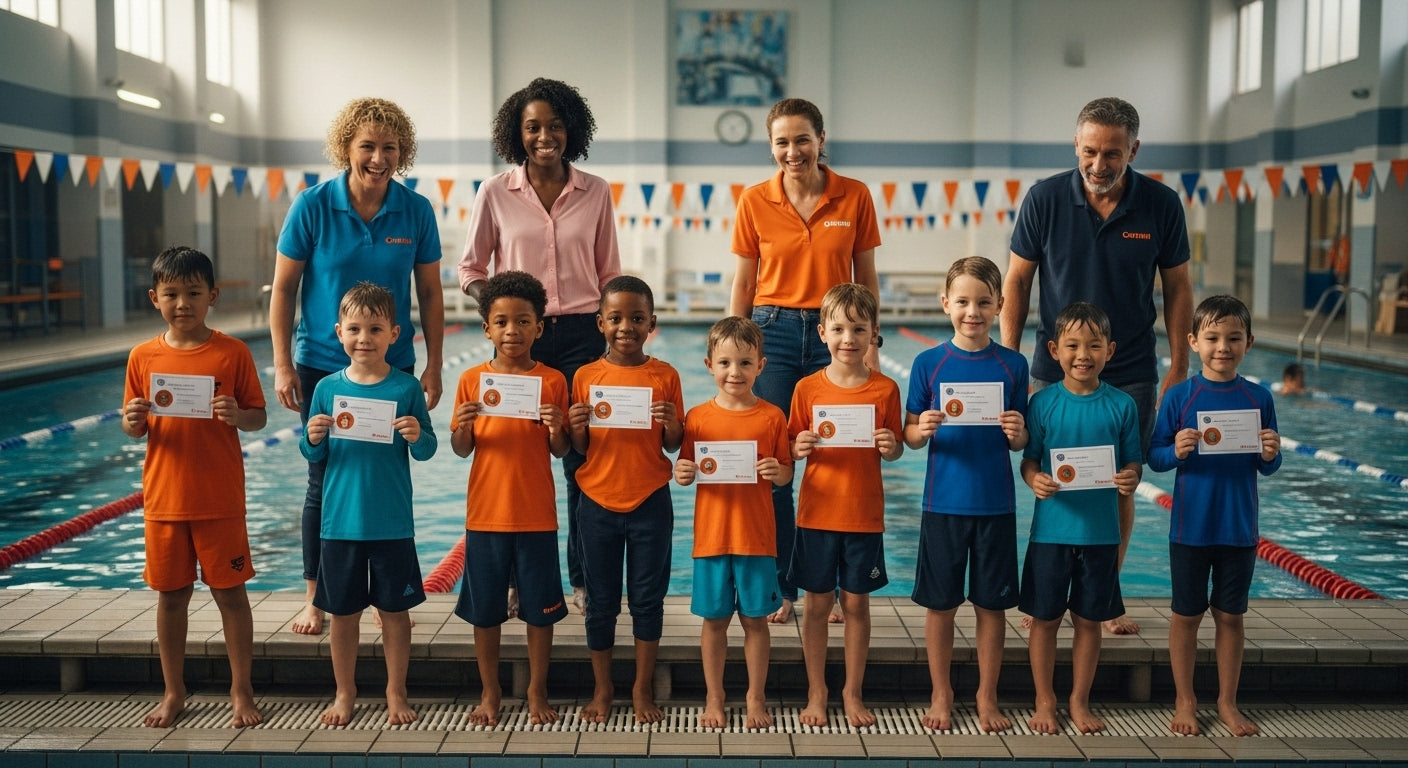
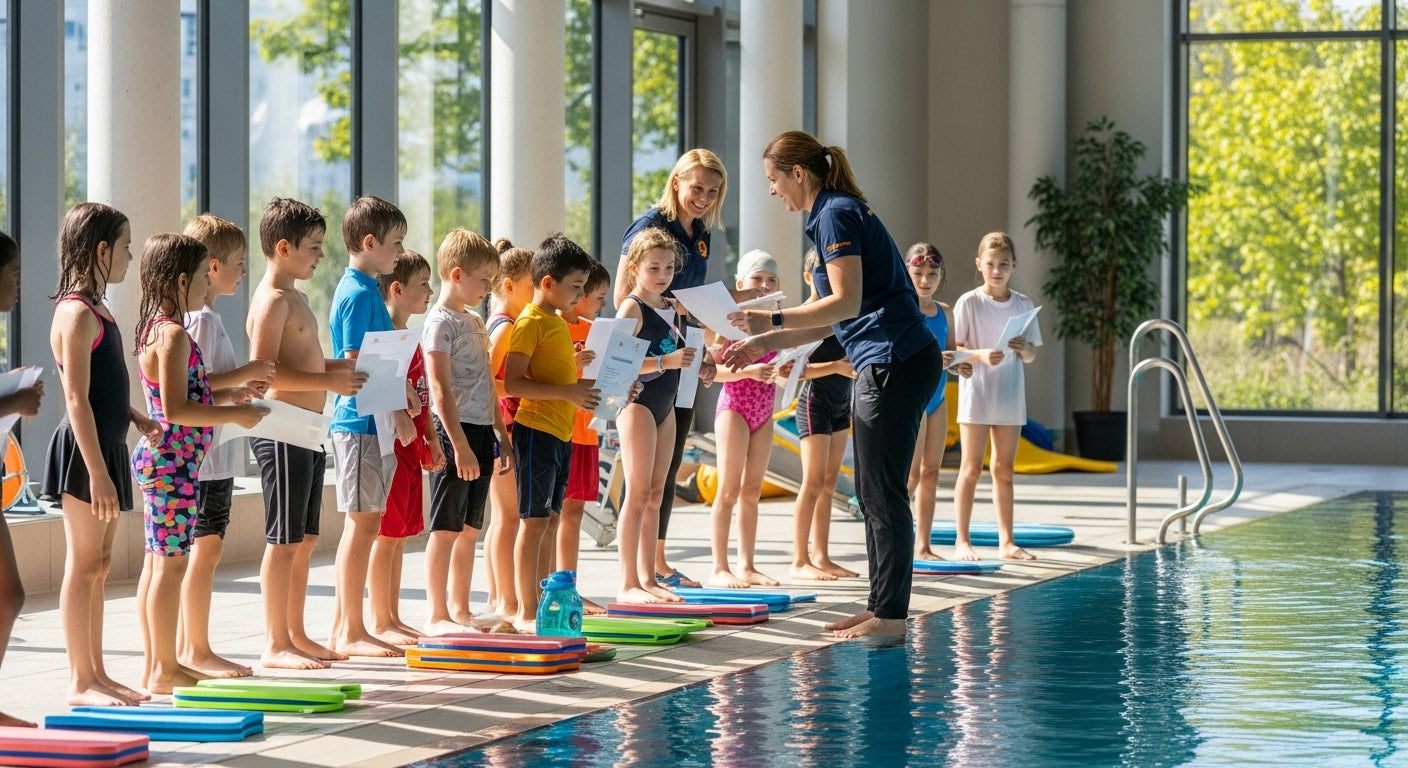
Learning to swim is one of the most important goals in school sports for children, and almost 70 percent of elementary school students achieve at least one swimming badge during their school years. Most people think of a nice badge on a swimsuit. However, the true power of these swimming awards lies elsewhere. Every badge can save lives in an emergency and doesn't just show a skill, but objectively documents how truly safe a child is in the water.
Table of Contents
- What are Swimming Badges for Schools?
- Why are Swimming Badges Important for Schools?
- How do Swimming Badges Work in School Education?
- The Different Types of Swimming Badges and Their Significance
- Swimming Badges as Part of Swim Training and Safety
Quick Overview
| Insight | Explanation |
|---|---|
| Swimming badges document skills. | They show which swimming techniques and safety skills students master. |
| Motivation through awards. | Children are encouraged to improve their swimming skills by achieving badges. |
| Badges ensure water safety. | They demonstrate mastery of basic self-rescue techniques and hazard perception. |
| Pedagogical significance of badges. | Badges promote children's self-confidence, goal orientation, and motor skills. |
| Standardized examination procedures. | A clear structure ensures consistent evaluation and documentation of swimming competencies. |
What are Swimming Badges for Schools?
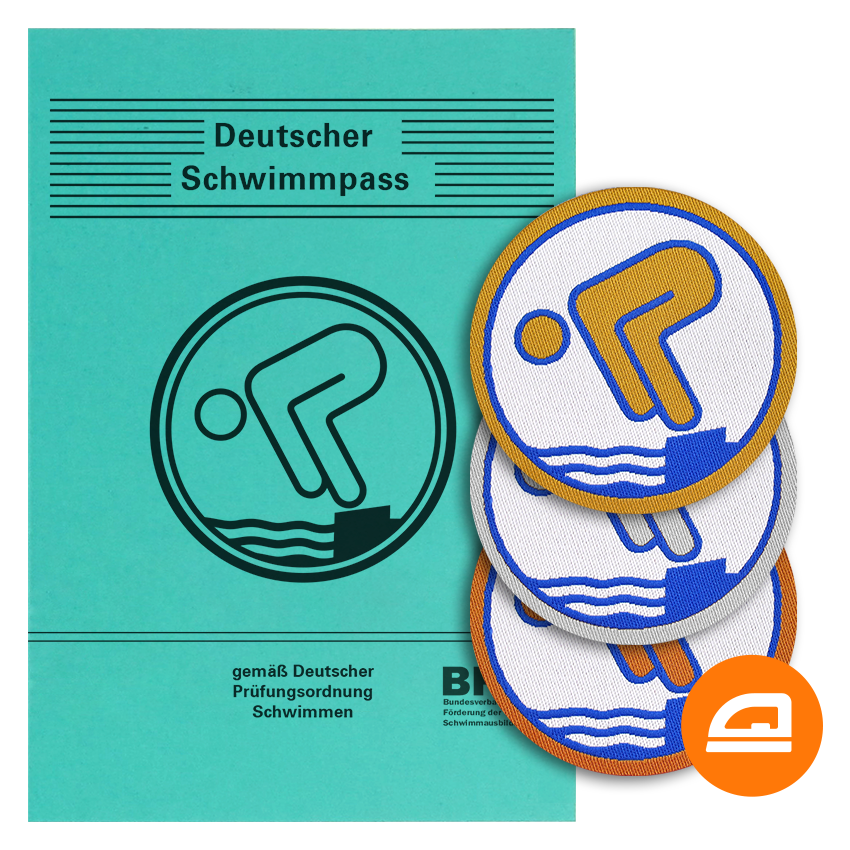
Swimming badges for schools are official documents and awards that document and certify the swimming progress and acquired skills of students in swimming lessons. These badges play a crucial role in swimming education and serve not only as a motivational tool but also as important proof of acquired swimming competencies.
Meaning and Functions of Swimming Badges
Swimming badges have several central functions for schools and students:
- Documentation of swimming skills: They show exactly which swimming techniques and safety skills a student masters.
- Motivation and recognition: Children are encouraged by the badges to continuously improve their swimming skills.
- Safety proof: The badges give parents and teachers confidence about the actual swimming level of the children.
According to the German Swimming Federation, these badges are standardized instruments for systematically recording and evaluating swimming competencies. They are based on defined requirements and examination criteria that are uniform nationwide.
Types of Swimming Badges in Schools
In German schools, various swimming badges exist that represent different levels of competence:
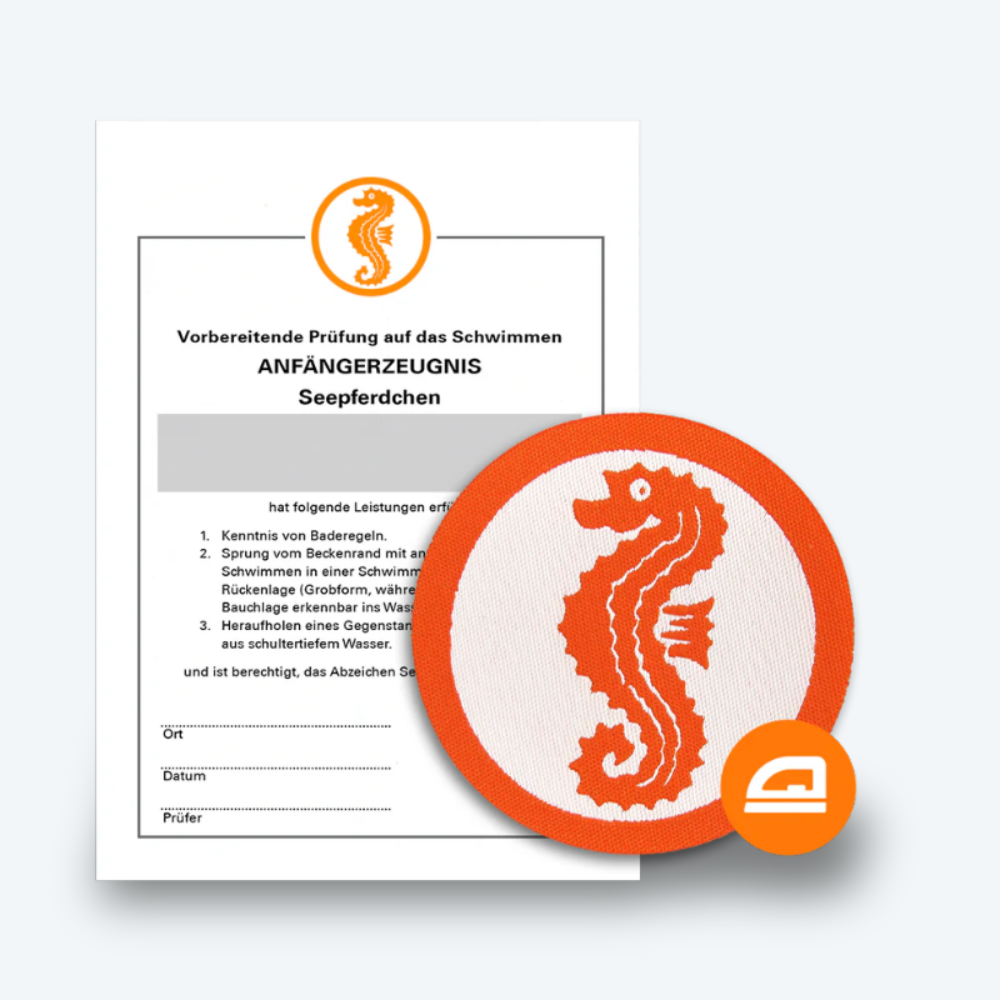
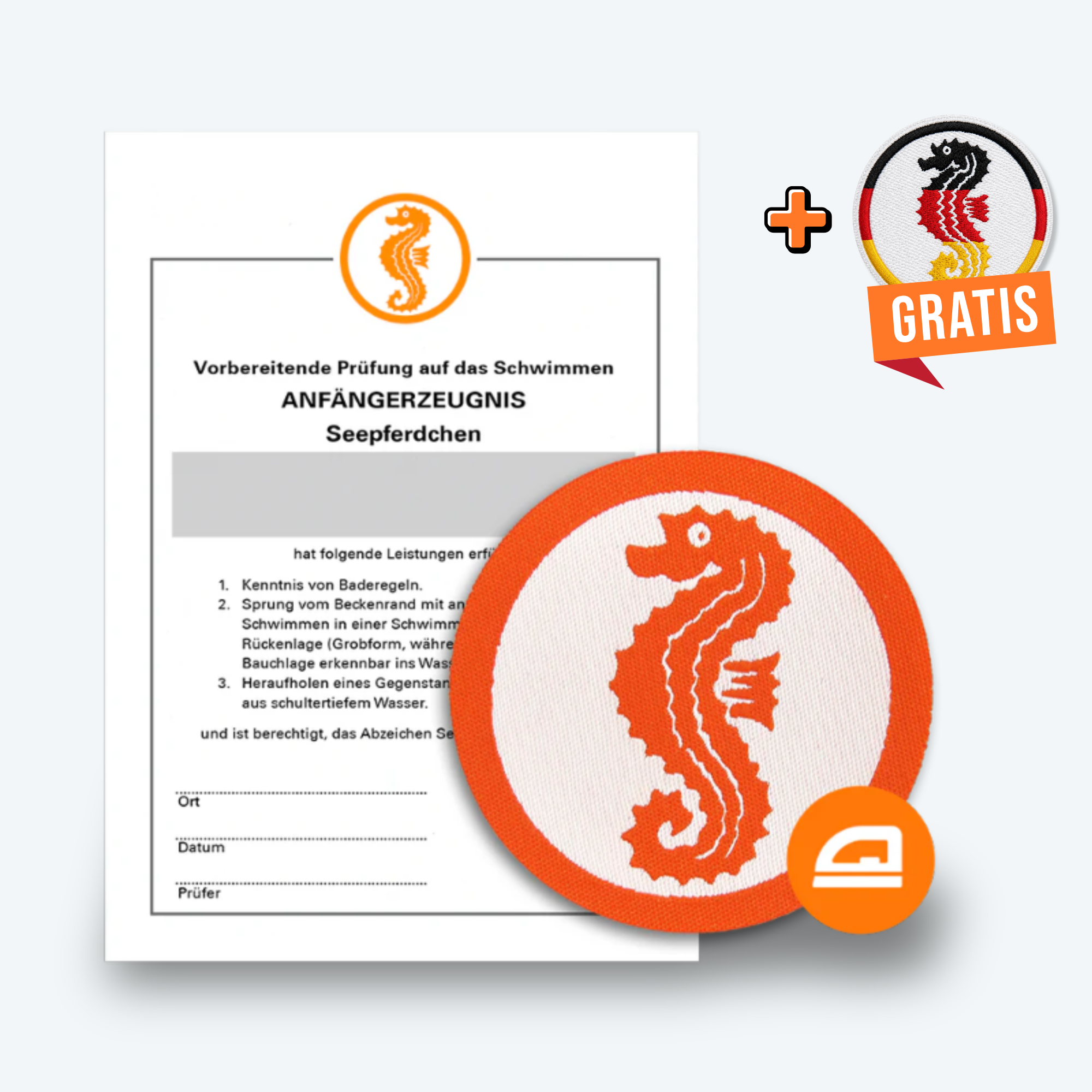
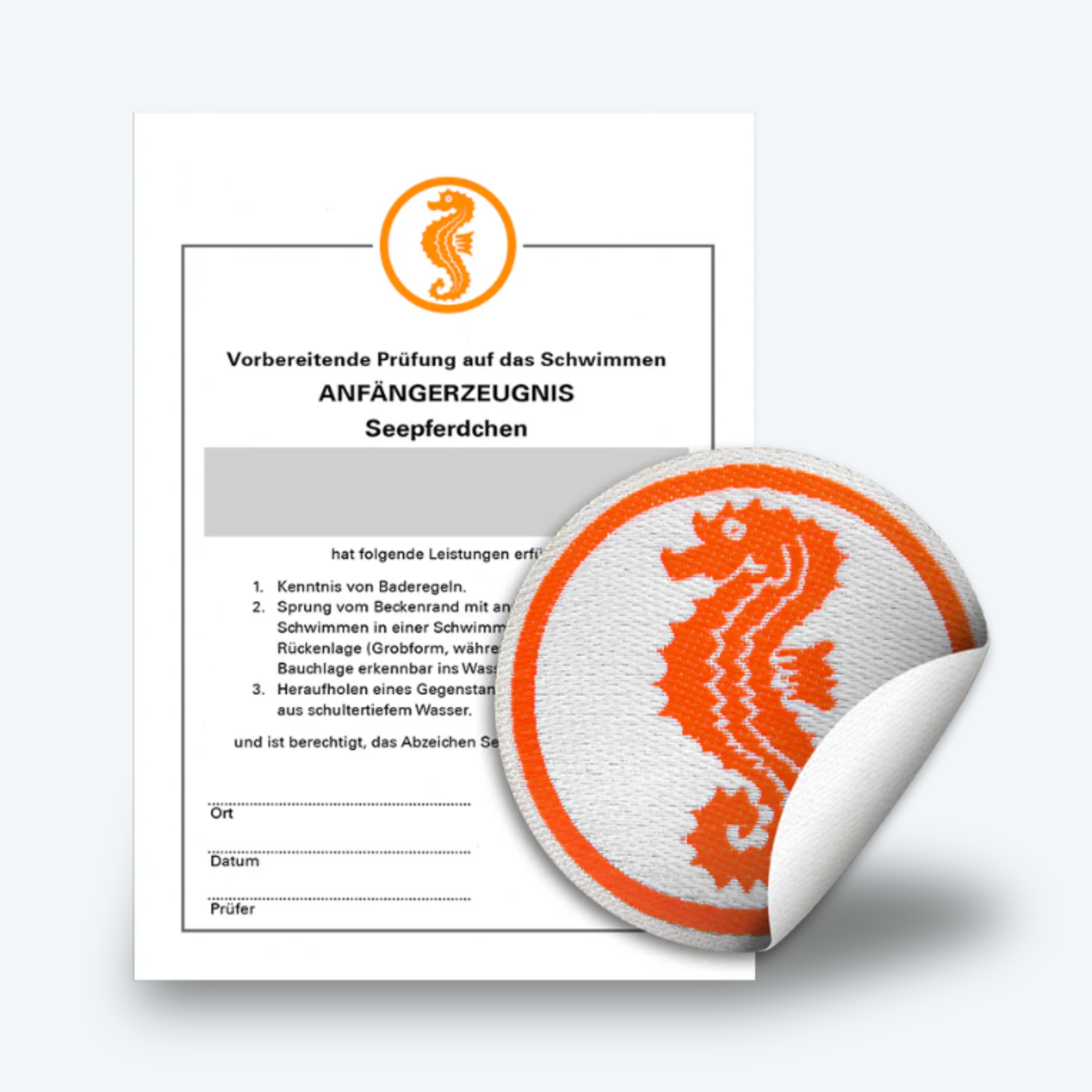
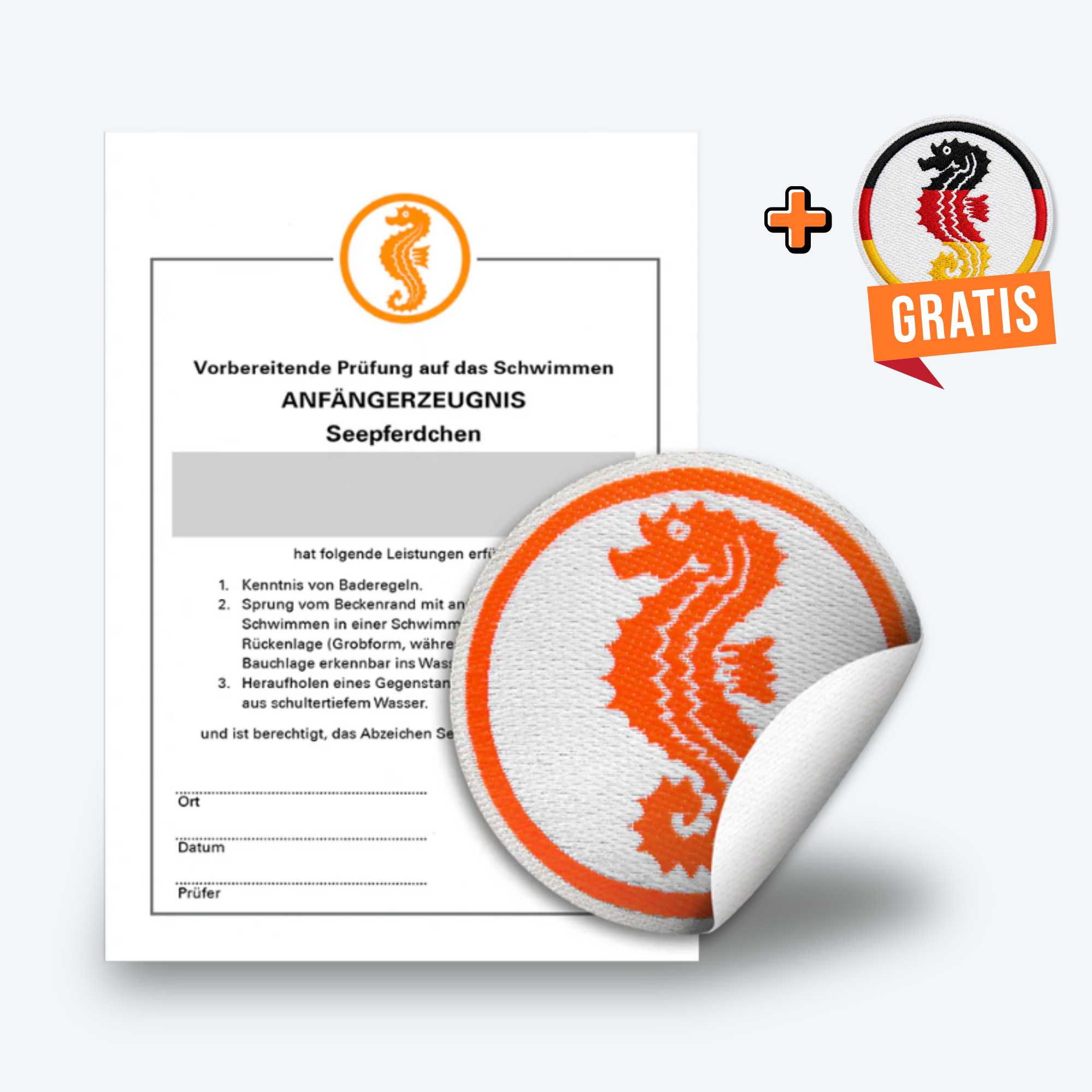
- Seepferdchen (Seahorse): The first badge for beginners, usually for children aged 5-7 years
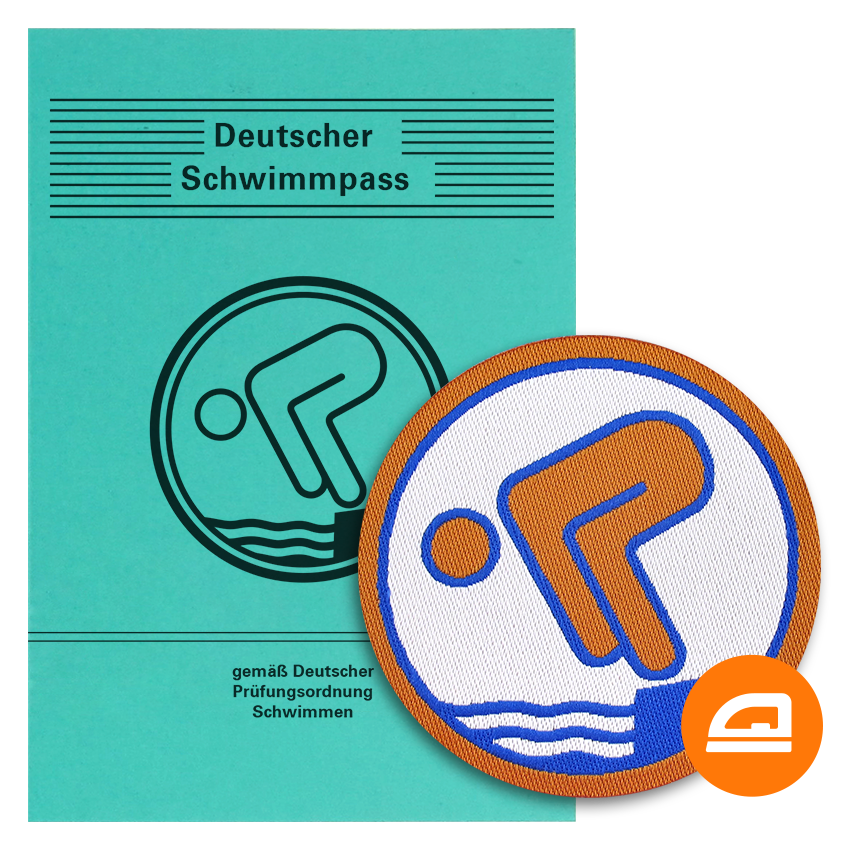
- Bronze: Advanced swimming skills with basic rescue elements
- Silver: Extended swimming techniques and improved safety knowledge
- Gold: Highest level of competence with complex swimming techniques
With our Elementary School Swimming Badges Guide, you can learn more about the specific requirements and meanings of these badges.
The following table provides a compact overview of the most important swimming badges, their typical target group, and the main skills tested.
| Badge | Age Group (recommended) | Main Skills Tested |
|---|---|---|
| Seepferdchen | 5-7 years | Water acclimatization, first swimming strokes, jump from the pool edge |
| Bronze | from 7 years | Endurance (200m swimming), jump, deep diving, first rescue |
| Silver | from 8 years | Longer endurance, various swimming styles, rescue knowledge |
| Gold | from 9 years | Complex swimming techniques, endurance, advanced rescue |
| DLRG Lifeguard | from 12 years | Lifesaving, first aid, challenging rescue techniques |
| Youth/Special | variable | Requirements and techniques adapted to age group |
Why are Swimming Badges Important for Schools?
Swimming badges are far more than just decorative awards. They fulfill a crucial role in the safety, development, and motivation of children in swimming lessons. These official certificates offer a structured approach to evaluating and promoting swimming competencies.
Safety and Lifesaving Skills
The core aspect of swimming badges lies in ensuring water safety. They document that children master basic safety techniques:
- Self-rescue: Ability to stay afloat in case of danger
- Hazard recognition: Understanding potential risks in and around water
- First reactions: Basic rescue measures in emergencies
According to the German Life Saving Society (DLRG), swimming badges are crucial for protecting children's lives and reducing water accidents.
Pedagogical and Developmental Importance
Swimming badges have a profound pedagogical dimension. They promote not only physical but also psychosocial development areas:
-
Self-confidence: Children gain confidence through measurable progress
-
Goal orientation: The badges offer clear development stages
-
Motor development: Systematic improvement of coordination skills
With our FAQ on Swimming Badges, you can learn more about the comprehensive significance of these certificates.
Social and Educational Relevance
Swimming badges go beyond individual development. They are an important building block in education and health prevention:
-
Integration into school curricula as an important component of health education
-
Promotion of a lifelong positive relationship with sports
-
Standardized documentation of swimming competencies
The badges thus bridge individual development and social responsibility for water safety.
How do Swimming Badges Work in School Education?
Swimming badges in school education are a complex system for the systematic evaluation and promotion of swimming competencies. They follow a structured process that comprehensively considers safety, technique, and personal development.
To make the examination process for swimming badges transparent, the following table shows the three central steps of the process in school and swimming lessons.
| Examination Phase | Description |
|---|---|
| Preparation Phase | Intensive technique training, practice of relevant swimming and safety elements |
| Theoretical Examination | Knowledge test: water safety, swimming technique, hazard assessment |
| Practical Examination | Demonstration of learned swimming and safety skills in the water |
Examination System and Evaluation Criteria
The examination system for swimming badges is based on precise and standardized evaluation criteria. Each badge requires fulfilling specific requirements:
- Technical skills: Correct swimming techniques and movement sequences
- Endurance and performance: Swum distances and time requirements
- Safety competencies: Mastery of rescue techniques and hazard assessment
According to the Conference of Ministers of Education and Cultural Affairs, schools must implement these criteria uniformly and transparently.
Implementation and Examination Process
The examination process for swimming badges follows a clear structure:
- Preparation phase: Intensive training and technique instruction
- Theoretical examination: Knowledge of water safety and swimming techniques
- Practical examination: Demonstration of acquired swimming skills
With our DLRG Swimming Badges Overview, you get detailed insights into the examination requirements.
Documentation and Certification
Upon successful completion, students receive an official certificate:
- Official confirmation of achieved swimming competencies
- Individual documentation of the development status
- Motivation for further athletic development
The badges are standardized and issued by recognized associations such as DLRG and BFS to ensure quality and comparability.
The Different Types of Swimming Badges and Their Significance
Swimming badges represent a tiered education system that systematically documents and promotes swimming skills. Each level marks an important developmental step in children's and adolescents' aquatic competence.
Basic Levels of Swimming Badges
The basic levels form the foundation of swim training and are crucial for water safety:

- Seepferdchen (Seahorse): First water acclimatization and basic swimming techniques
- Bronze Badge: Consolidation of swimming techniques and initial safety competencies
- Silver Badge: Advanced swimming skills and improved rescue techniques
According to the German Swimming Federation, these levels represent a systematic progression of water competence.
Advanced and Performance Levels
More challenging badges exist for ambitious swimmers:
- Gold Badge: Highest competence level with complex swimming techniques
- DLRG Lifeguard Badge: Specialized rescue skills
- Competitive Swimmer Categories: For competition-oriented athletes
With our Guide to Swimming Badge Requirements, you get detailed information on the examination criteria.
Special Swimming Badges
Some badges address special swimming and safety aspects:
- Youth Swimming Badges: Age-appropriate developmental stages
- Lifeguard Qualifications: Professional rescue competence
- Specialized Training: Specialized swimming techniques for specific areas
These badges not only document skills but also motivate children and young people to continuously develop their swimming competence.

Swimming Badges as Part of Swim Training and Safety
Swimming badges are far more than just athletic awards. They form a crucial pillar in water safety and swim training, which is specifically aimed at preventing water accidents and developing vital competencies.
Educational Function and Competence Development
Swimming badges pursue a holistic educational approach that goes beyond purely technical skills:
- Motor development: Systematic improvement of coordination skills
- Cognitive training: Development of hazard awareness and risk assessment
- Psychosocial promotion: Strengthening self-confidence and teamwork
According to the Federal Ministry for Family Affairs, Senior Citizens, Women and Youth, such structured educational programs are crucial for the holistic development of children.
Safety Aspects and Water Rescue
Swimming badges play a central role in water rescue and accident prevention:
- Preventive safety: Teaching rescue techniques and hazard recognition
- First aid: Basic knowledge to assist in emergency situations
- Self-rescue skills: Competence for self-rescue in unexpected dangers
With our Guide to Swimming Badge Requirements, you get detailed insights into the safety aspects.
Societal Importance
Swimming badges have an important societal dimension:
- Standardization of swimming competencies
- Promotion of an active and healthy lifestyle
- Integration of water safety into educational curricula
They are not only an individual educational tool but a communal approach to improving water safety and lifesaving competence.
Successfully Implement Swimming Badges in School – with Pimpertz
Many schools face the challenge of reliably proving swimming competencies and sustainably inspiring children to swim. This article shows how important officially certified swimming badges and structured evidence are for motivation and safety in lessons. Pimpertz offers practical and clear solutions for exactly this purpose: Discover our diverse Seestern Stella swimming badges & certificates, which are child-friendly designed and certified by recognized associations. With colorful certificates, robust plaques, and suitable accessories, teachers and schools can make swimming lessons lively and motivating.
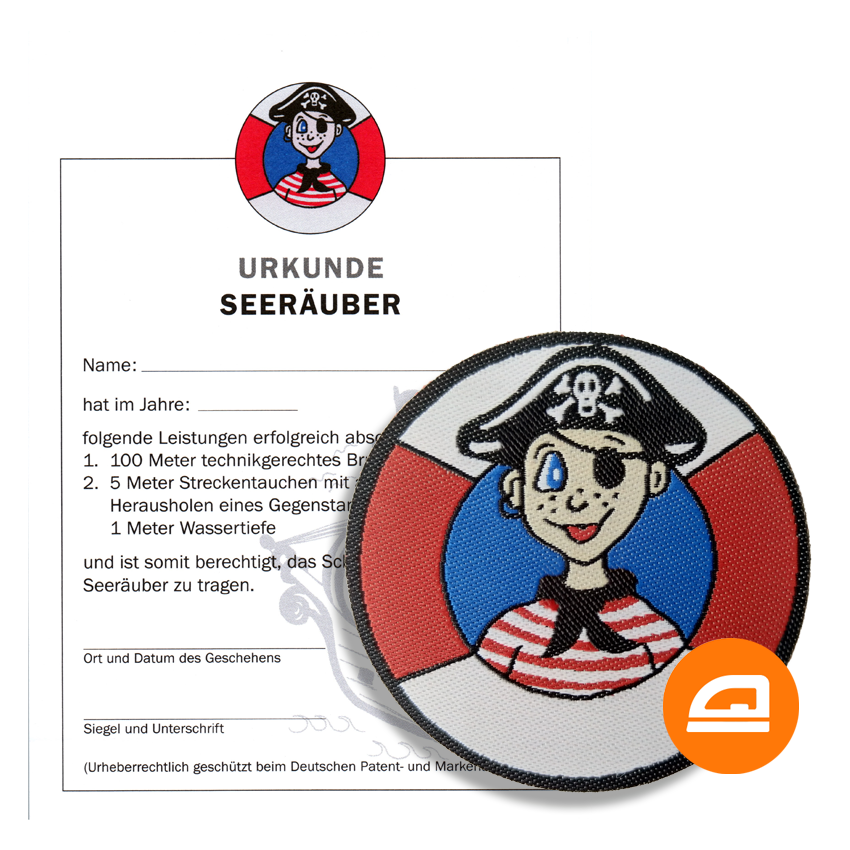
Become active now and create more joy and clarity in badge examinations. Inform yourself directly about our extensive range on pimpertz.de or browse our special offers for Pirat Pimpi® swimming badges & certificates and individual collection sets. Together with Pimpertz, make school swimming safer and more successful – order everything you need today.
Frequently Asked Questions
What are swimming badges for schools?
Swimming badges are official awards that document and certify the swimming progress and acquired skills of students in swimming lessons.
What types of swimming badges are there in schools?
There are various swimming badges such as the Seahorse, Bronze, Silver, and Gold, which represent different swimming skills and safety knowledge.
Why are swimming badges important for children's safety?
Swimming badges ensure water safety by documenting that children possess basic self-rescue skills and hazard awareness in and around water.
How does the examination process for swimming badges in schools work?
The examination process includes a preparation phase with training, followed by a theoretical and practical examination that assesses students' swimming techniques and safety competencies.