
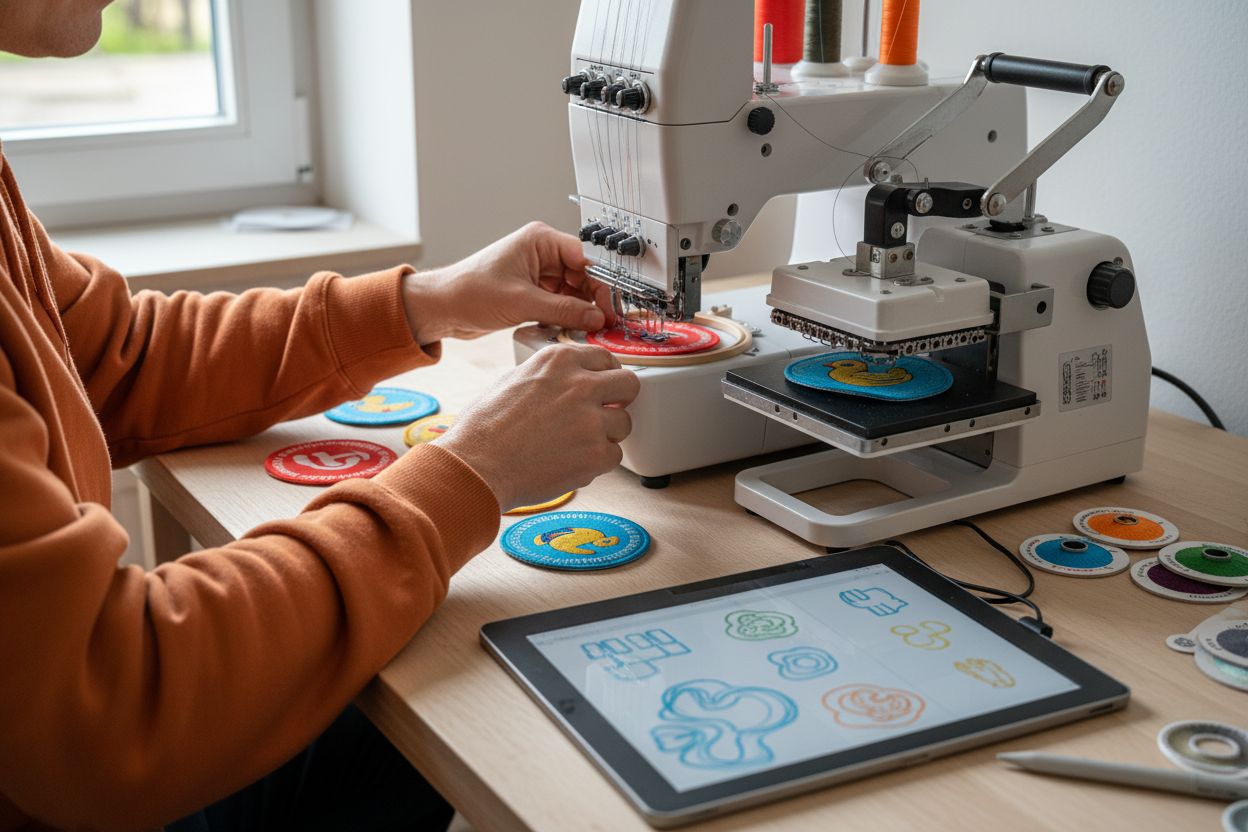
Personalizing Swimming Badges: The Complete Guide
Personalized swimming badges are much more than just small pieces of fabric on a swimsuit. They make children's eyes light up and even give teenagers a boost of ambition. One thing, in particular, is surprising: choosing the right design can increase motivation by up to 40 percent if it suits the target group. This is precisely why it's worth taking a closer look at how individuality and design can make all the difference in swimming badges.
Table of Contents
- Step 1: Define Target Group and Design Options
- Step 2: Select Materials and Tools
- Step 3: Create or Select Personalized Designs
- Step 4: Customize and Produce Swimming Badges
- Step 5: Conduct Final Inspection and Quality Assurance
Quick Summary
| Key Statement | Explanation |
|---|---|
| 1. Analyze the target group carefully | Determine the needs of the target group to optimally align the designs and increase motivation. |
| 2. Choose high-quality materials | Use robust and waterproof materials to ensure the durability and quality of the badges. |
| 3. Utilize professional tools | Invest in high-quality printing equipment and tools for precise and appealing personalization. |
| 4. Design age-appropriate layouts | Ensure that designs match the target group and are both visually appealing and motivating. |
| 5. Conduct a thorough final inspection | Check each badge for quality, details, and correct design to ensure high standards. |
Step 1: Define Target Group and Design Options
Before you begin personalizing swimming badges, you need to carefully analyze two critical aspects: your target group and the available design options. This first step is the key to a successful and appealing personalized swimming badge.
Defining the target group requires a close look at specific needs and preferences. Are you dealing with preschoolers, teenagers in swimming lessons, or adults in competitive swimming groups? Each age group has different design preferences and motivational factors. Young children love colorful, cheerful motifs, while teenagers prefer modern, sporty designs.
When selecting design options, several factors play an important role. According to a study on product differentiation, it is crucial to consider individual preferences. Pay attention to aspects such as color scheme, motif selection, font, and personalization options. A well-thought-out design can significantly increase motivation and enjoyment in swimming.
Also, consider the technical implementation possibilities. Not every design can be implemented equally well on a swimming badge. Choose motifs and graphics that are clearly recognizable and appealing even in a small format. Vector graphics, for example, are excellent because they can be scaled without loss of quality.
To verify your first step, you should be able to answer the following questions:
- Is the design age-appropriate and motivating?
- Does the design meet the expectations of the target group?
- Can the motif be technically implemented without flaws?
After carefully analyzing the target group and design options, you are ready to plan and implement concrete personalization steps.
Step 2: Select Materials and Tools
After a careful target group analysis, the crucial process of material selection for your personalized swimming badges now begins. The right choice of materials and tools is essential for a high-quality and durable end result.
Material selection plays a central role in the production of swimming badges. According to textile industry experts, robust materials such as high-quality embroidered polyester, durable silicone, or weather-resistant metal alloys are particularly suitable. These materials not only guarantee durability but also water resistance and robustness.
For personalization, you need precise tools. Professional equipment includes high-resolution printing devices, textile presses, embroidery machines, or laser engraving machines. The selection depends directly on your desired personalization method. Screen printing, for example, is excellent for large-area, color-intensive designs, while laser engraving allows for precise details on metal badges.
When choosing tools, you should pay attention to quality and compatibility. Invest in professional equipment that meets both your current and future design requirements. Consider factors such as print resolution, color depth, and material compatibility. A universal printing device with various printing modes offers you more flexibility.
Additional materials such as high-quality paints, special textile adhesive tapes, protective films, and cleaning utensils are also part of the basic equipment. These additions ensure the quality and durability of your personalized swimming badges.
Below is a clear table of the most important materials and tools with their areas of application and special features for swimming badges.
| Material/Tool | Purpose/Use | Special Features |
|---|---|---|
| High-quality Polyester | Fabric badges, embroidery | Durable, waterproof |
| Silicone | Modern flexible badges | Hard-wearing, color-intensive |
| Metal alloys | Noble, durable badges | Corrosion-resistant, engravable |
| High-resolution printing device | Precise textile and color printing | Fine details, various modes |
| Textile press / Embroidery machine | Fixing or embroidering badges | Professional processing |
| Laser engraving device | Engraving metal badges | Exact motifs, high precision |
| High-quality paints and adhesive tapes | Finish and durability of fabric badges | UV-resistant, high intensity |
To verify your material selection, I recommend the following checkpoints:
- Are the materials waterproof and durable?
- Do the tools meet the design requirements?
- Can you implement various personalization techniques?
With the right material selection, you have laid the foundation for professional and individual swimming badges.
Step 3: Create or Select Personalized Designs
After careful material selection, the creative process of design creation follows. Here, you transform your ideas into unique, personalized swimming badges that radiate motivation and pride.
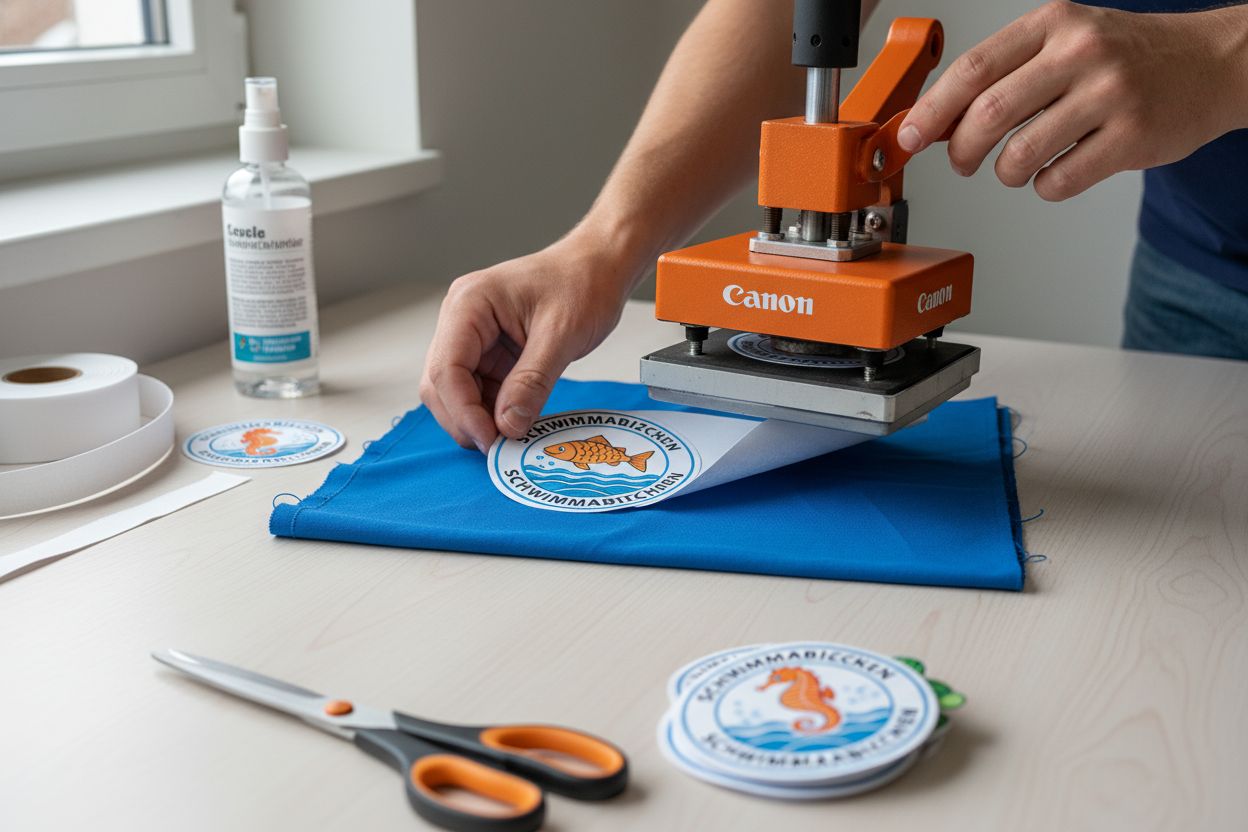
You have two main options: developing your own designs or choosing from professional templates. Self-designed creations offer maximum individuality. Use graphic programs like Adobe Illustrator or free alternatives like Canva to bring your vision to life. Pay attention to high-resolution vector graphics that can be scaled without loss of quality.
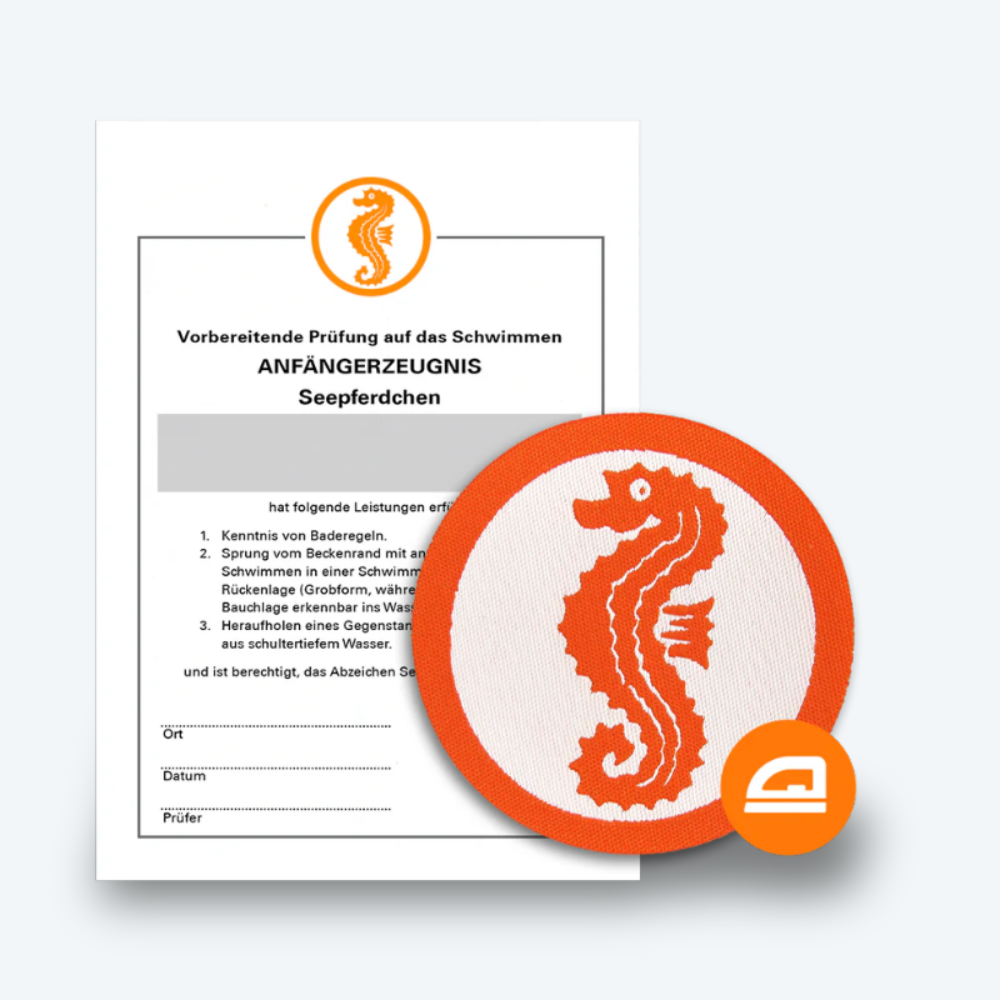
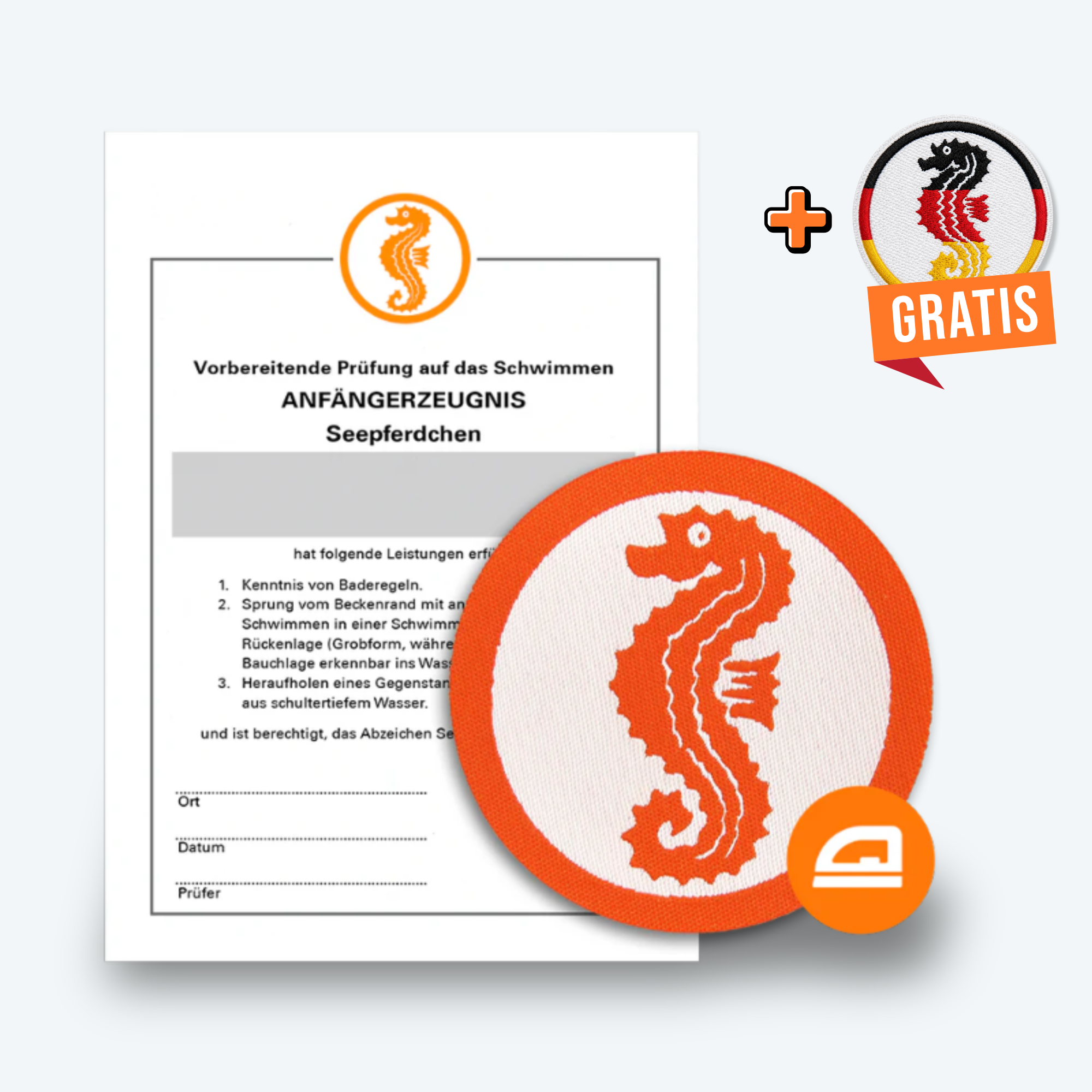
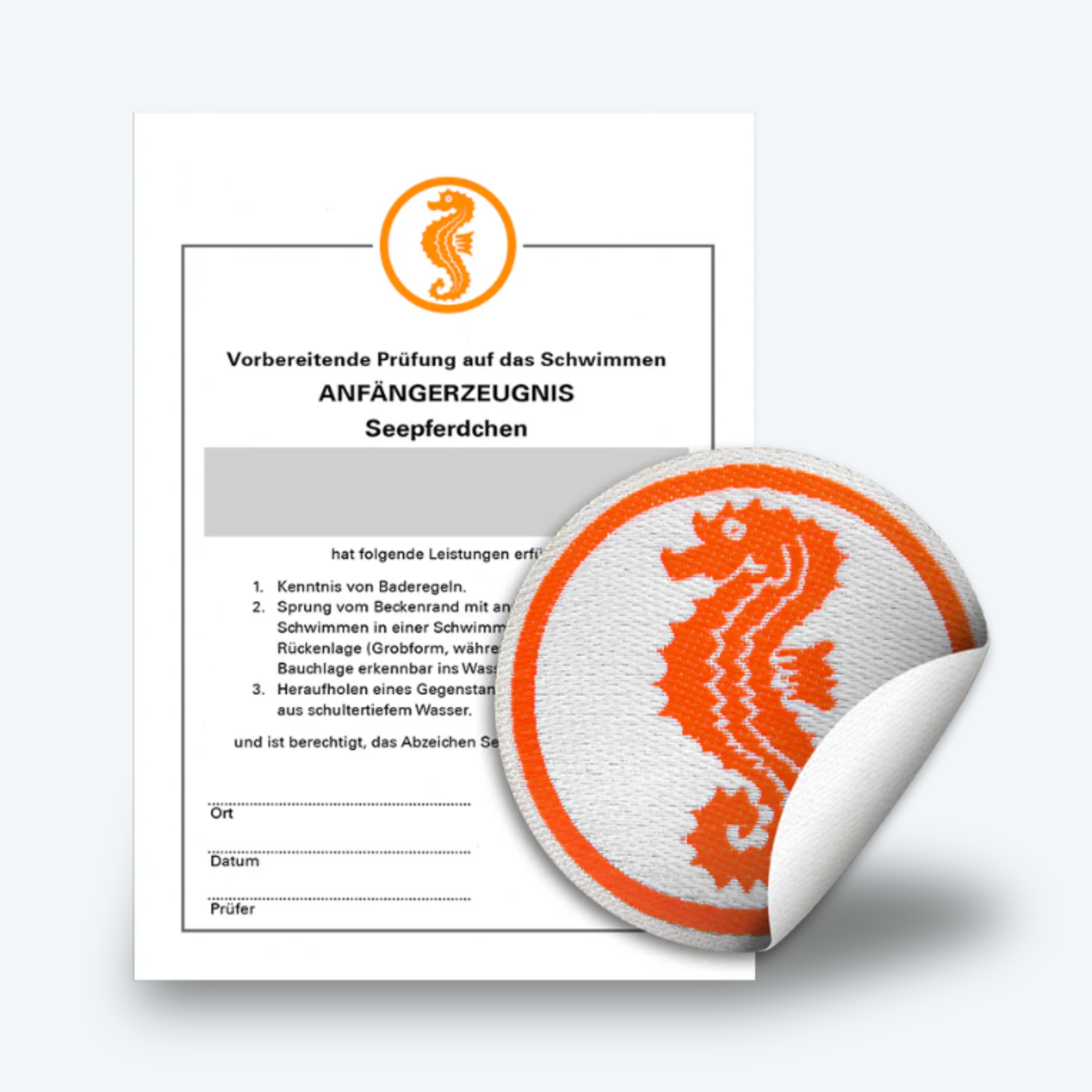
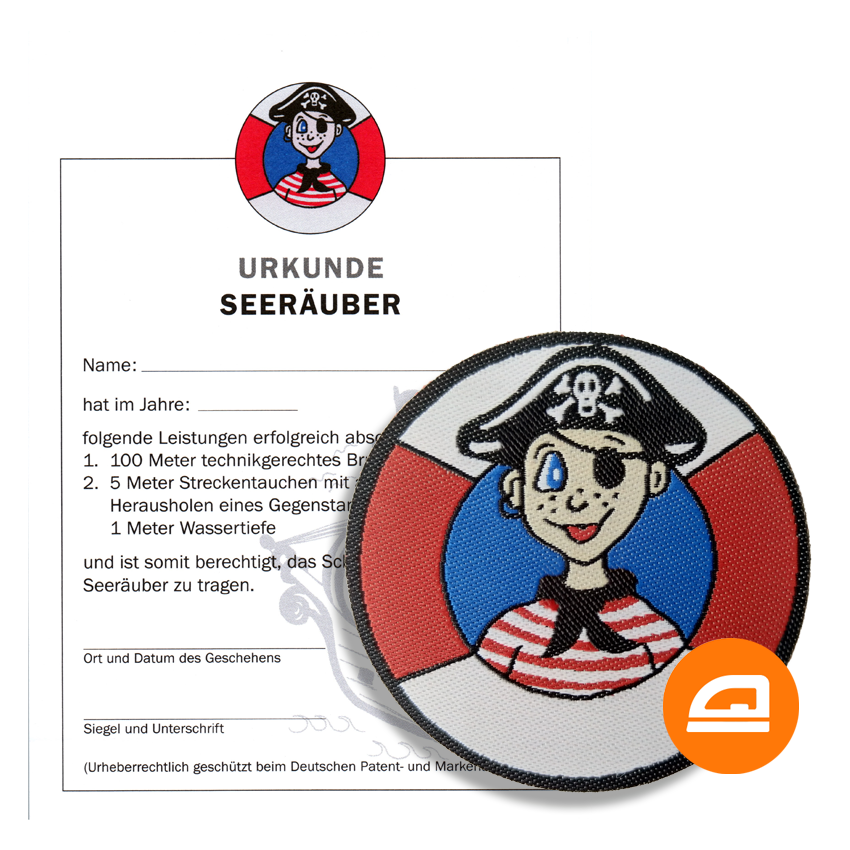
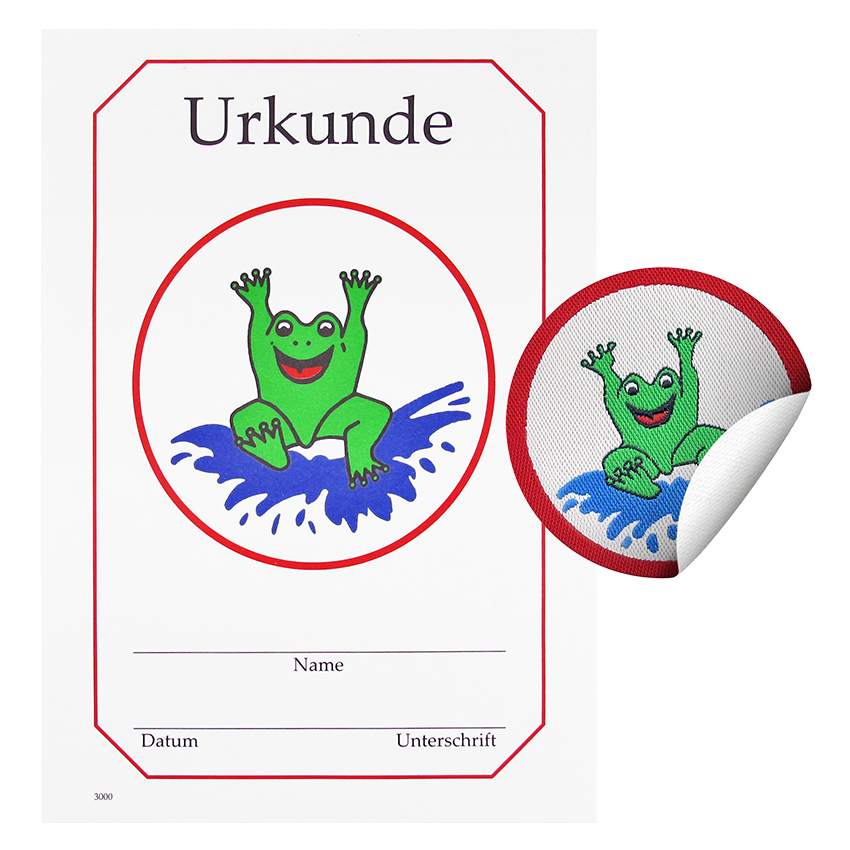
For those less design-savvy, I recommend our collection of pre-designed certificates for swimming courses. These professional templates offer a quick and high-quality solution. Adaptability is key: choose designs that can be individualized with names, dates, or specific achievements.
Technical aspects play a crucial role. Always consider the printability and readability of your design. Avoid excessively small fonts or overly complex graphics that might become indistinguishable on the final badge. A rule of thumb: the design should remain clearly recognizable even in a reduced size.
Also, consider the emotional component. A successful design not only inspires recognition but also motivates future swimming achievements. For children, a colorful, playful design often brings more joy and incentive than a sober badge.
To verify your design selection, I recommend the following criteria:
- Is the design age-appropriate and motivating?
- Can the motif be technically implemented without flaws?
- Are all personal details correctly integrated?
With a well-thought-out, personalized design, you have taken an important step toward motivating and recognizing swimming achievements.
Step 4: Customize and Produce Swimming Badges
After design development, the precise process of customization and production now begins. Here, you transform your creative designs into tangible, high-quality swimming badges.
Personalization is the key to success. First, check all individual details such as names, dates, and specific performance information. Small errors can detract from the overall impression. Use high-quality printing techniques that accurately reproduce fine fonts and complex graphics.
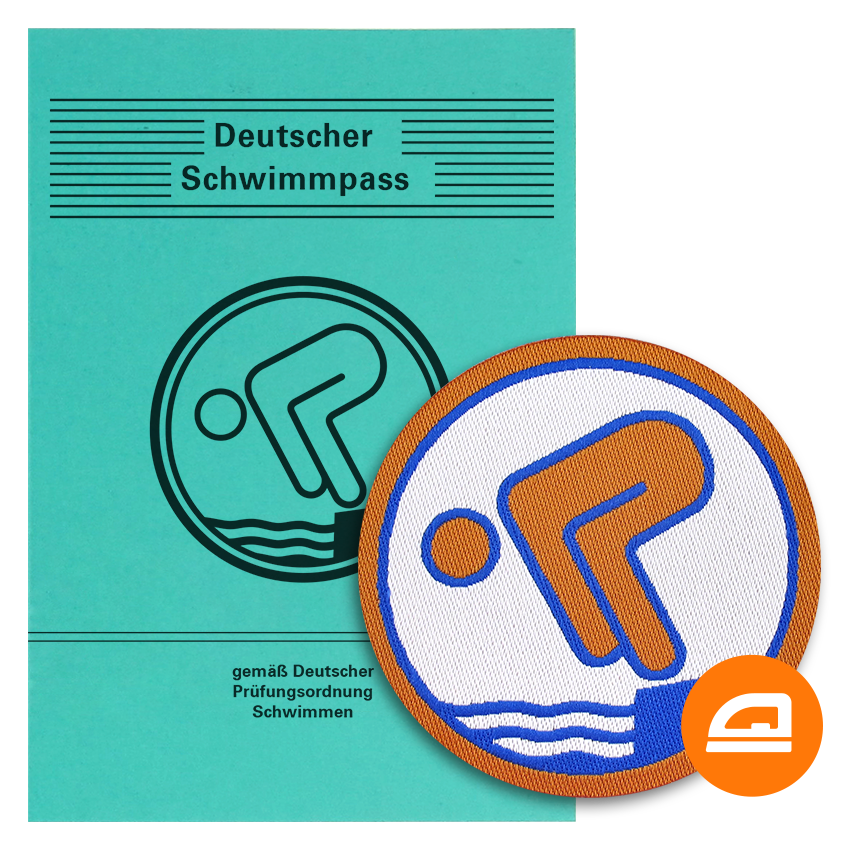
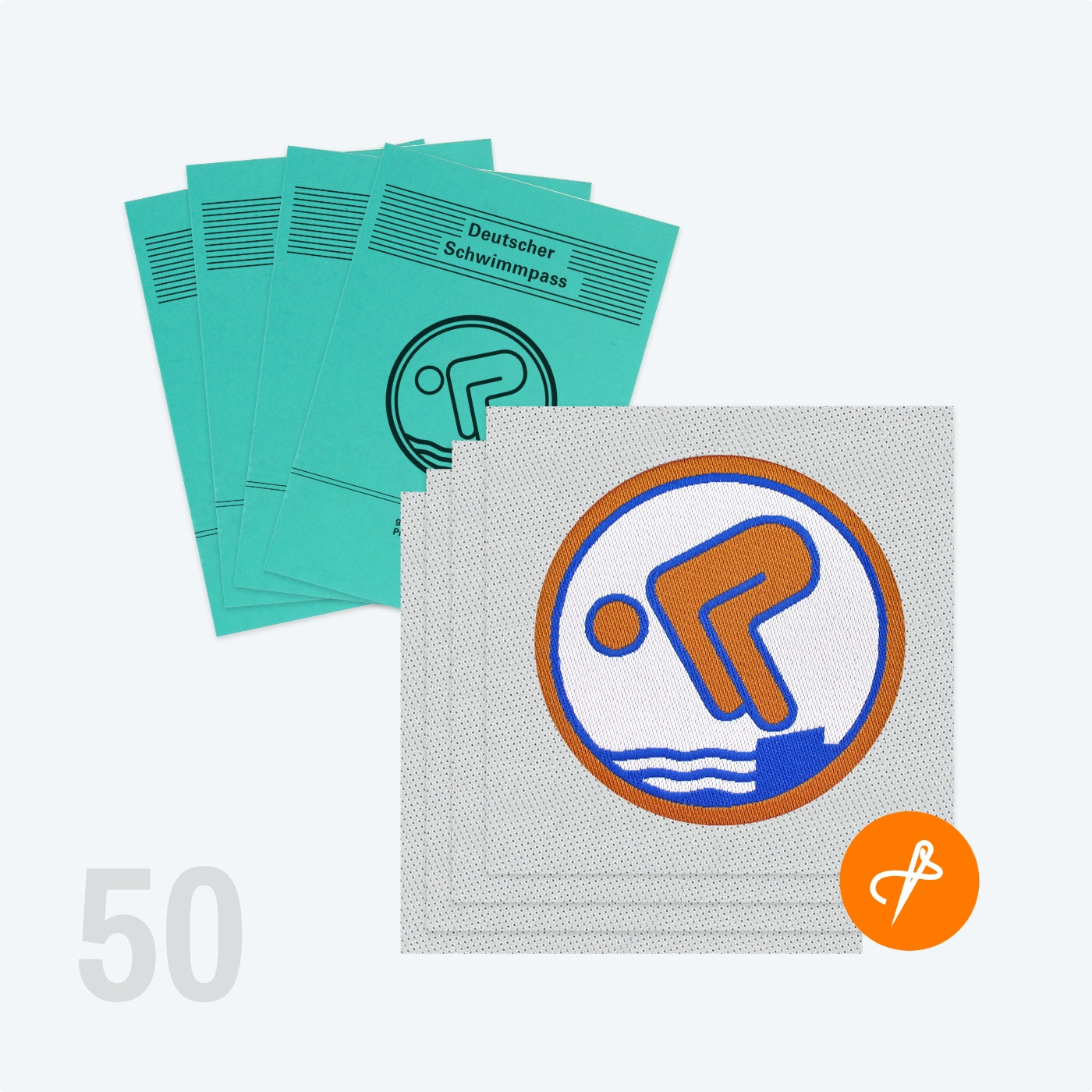
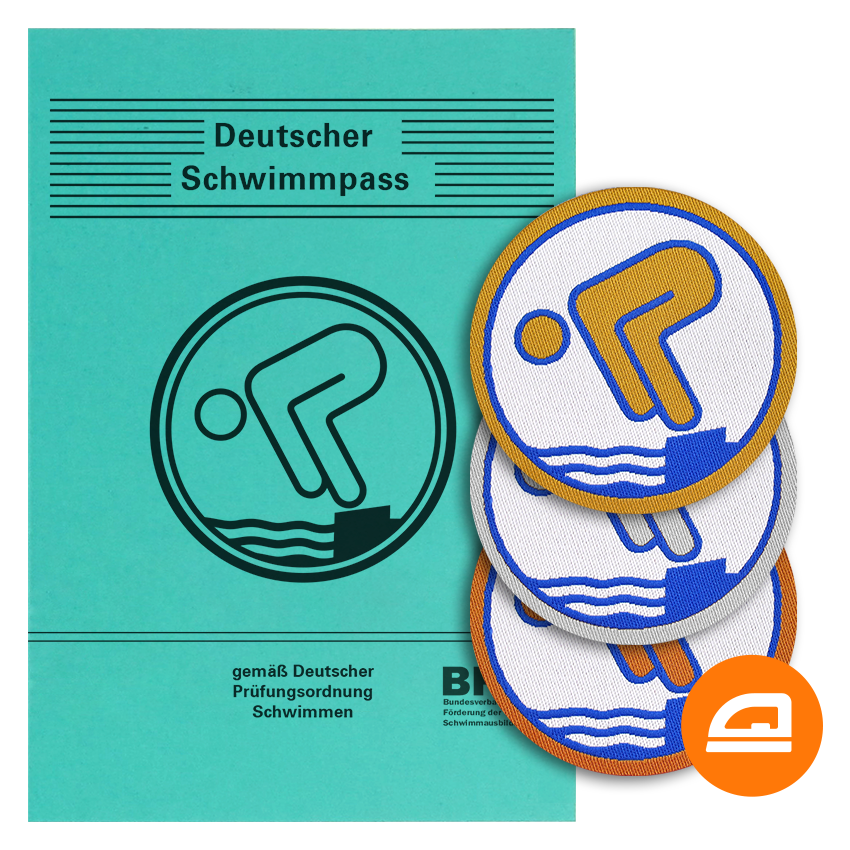
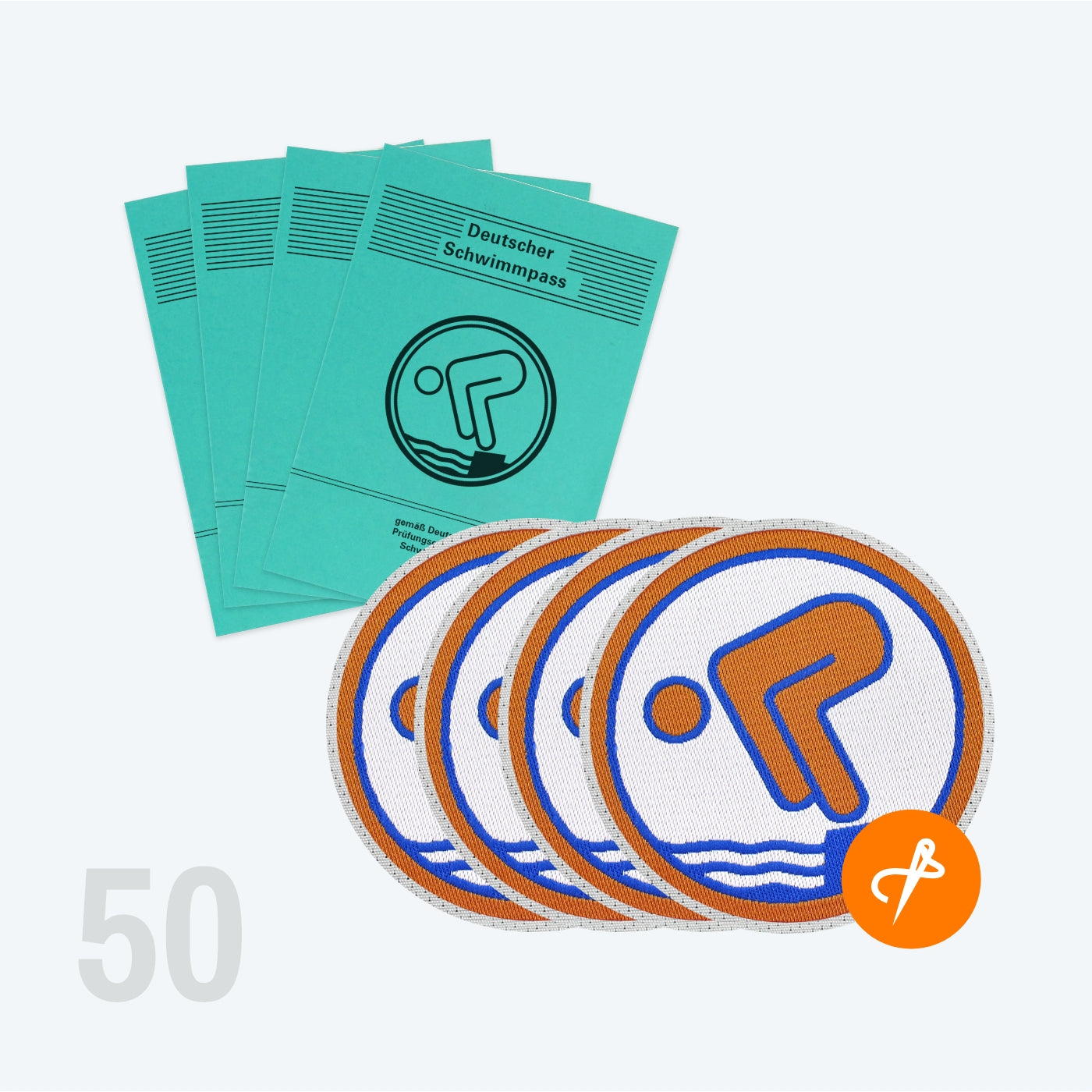
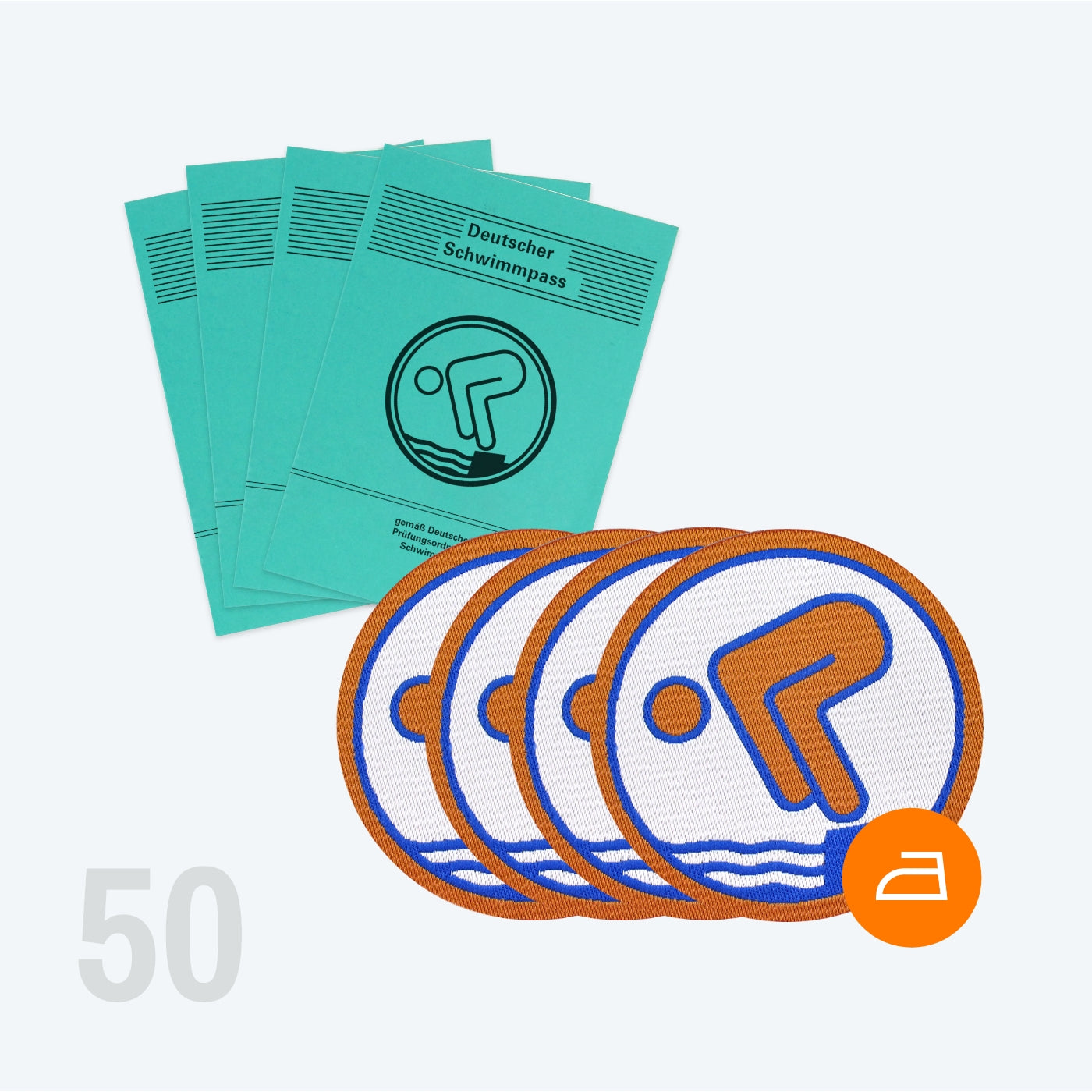
The manufacturing technique depends on your chosen material. For fabric badges, embroidery or ironing on is recommended, while metal badges are often produced by laser engraving or embossing. Our detailed guide to swimming certificates provides additional background information on different types of badges.
Technical precision is crucial. Calibrate your printing equipment before each run. Pay attention to uniform color intensity, sharp contours, and flawless personalization. A test print on an identical material helps to identify potential problems in advance.
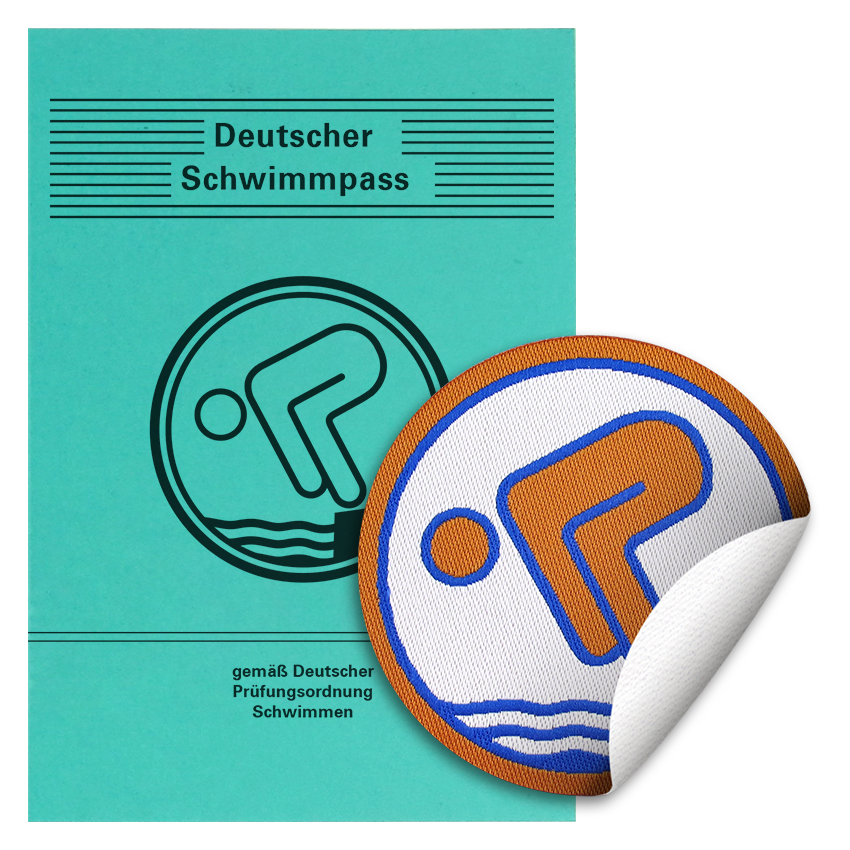
Also, consider legal and normative aspects. Official swimming badges must meet certain quality standards. Ensure that your personalized badges comply with all required certifications and standards, especially if they are used for official swimming tests.
For quality assurance, I recommend the following control steps:
- Is all personal information correct?
- Does the print quality meet the highest standards?
- Does the badge meet all technical requirements?
With careful customization and production, you create personalized swimming badges that honor achievement and motivate.
Step 5: Conduct Final Inspection and Quality Assurance
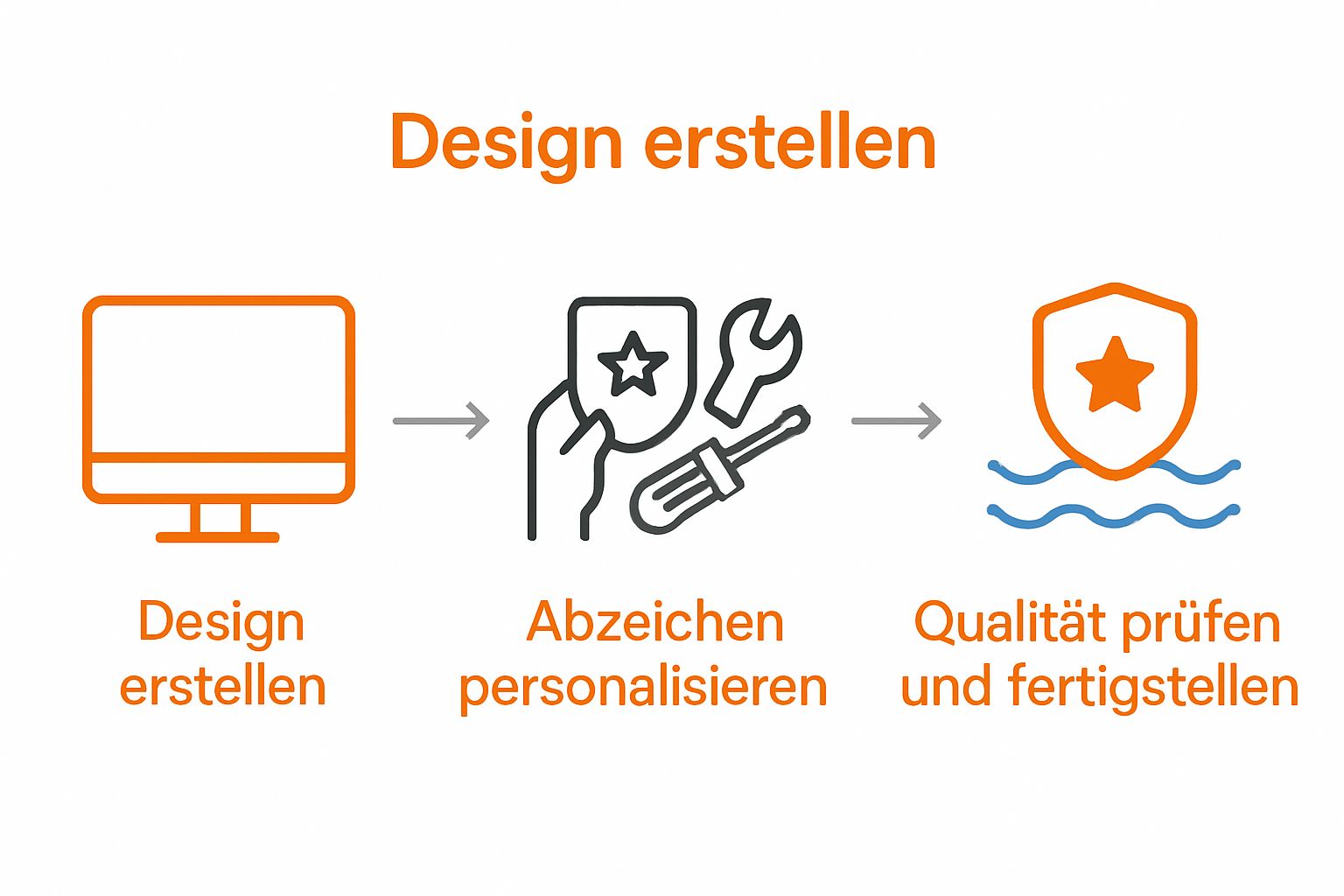
The final step in swimming badge personalization is crucial for a professional end result. A thorough final inspection distinguishes high-quality badges from mediocre ones and ensures the appreciation of achievement.
Visual inspection is the first critical process. Examine each badge individually under good lighting. Pay attention to print quality, color intensity, and the precision of personalization. The slightest inaccuracies can impair the overall impression. Use a magnifying glass or magnifying lamp for detailed close-ups.
The mechanical strength of the badge deserves special attention. Our guide to the swimming badge in primary school emphasizes the importance of robust materials. Conduct tensile strength tests, check seams on fabric badges, and test adhesion on iron-on or stick-on variants.
Water resistance and durability are crucial quality criteria. Simulate swimming and washing conditions through targeted tests. Briefly immerse sample pieces in water, dry them, and check for color changes or material damage. For metal badges, check for corrosion resistance.
Document your quality control systematically. Create an inspection report with remarks on each badge tested. This not only helps prevent errors but also serves as proof of your diligence and professionalism.
For a final check, I recommend the following checkpoints:
- Is all personalized information correct?
- Does the print quality meet the highest standards?
- Is water resistance and mechanical stability ensured?
A careful final inspection guarantees swimming badges that honor achievement, motivate, and bring long-lasting joy.
Below is a checklist for final inspection, summarizing all relevant check points for high-quality, personalized swimming badges.
| Inspection Criterion | Inspection Goal | Recommendation/Remark |
|---|---|---|
| Correct personalization data | Error-free names and individual details | Comparison with original data |
| Print quality & color intensity | Sharp contours, uniform colors | Visual inspection, test print |
| Mechanical stability | Break and tear resistance | Tensile test, seam check |
| Water resistance | Resistance to water and moisture | Brief immersion and check |
| Durability | Retention of shape and color over time | Wash/abrasion test |
| Fulfillment of technical requirements | Compliance with official norms/standards | Checklist of standard specifications |
| Documentation of control | Traceability and quality assurance | Maintain inspection report or notes |
Your Individual Solution for Personalized Swimming Badges
Safe swimming badges that genuinely motivate and bring a proud smile to the faces of both children and teenagers – that was the goal of this guide. Perhaps while reading, you noticed how challenging it can be to harmonize design preferences, materials, and personalization on your own. Especially with official requirements or if you are supervising a larger group, small errors or quality compromises can quickly lead to frustration and diminish success.
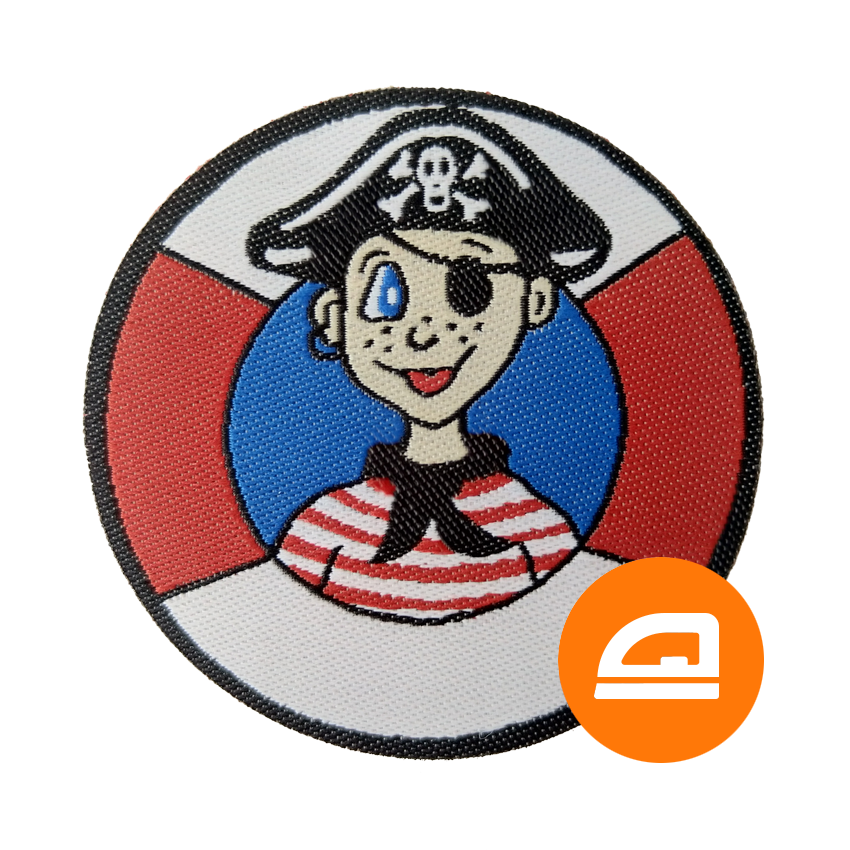
Now, rely on our many years of experience and quality. Discover Seestern Stella Swimming Badges & Certificates and Pirat Pimpi® Swimming Badges & Certificates, specifically developed for various age groups. Use personalized sets and customizable solutions to effectively recognize your participants. Trust Pimpertz as an official partner of DLRG and BFS. Browse now and make your next swimming course even more personal and successful.
Frequently Asked Questions
What are the most important steps for personalizing swimming badges?
The most important steps are: defining the target group and design options, selecting materials and tools, creating or choosing personalized designs, customizing and producing swimming badges, and conducting a final inspection and quality assurance.
Which materials are best suited for the production of swimming badges?
High-quality embroidered polyester, durable silicone, or weather-resistant metal alloys are recommended as they guarantee durability and water resistance.
How do I create an appealing design for a swimming badge?
Use graphic programs like Adobe Illustrator or Canva, and make sure to use high-resolution vector graphics that are easily recognizable even at a smaller size. The design should be age-appropriate and motivating.
What should I consider during the final inspection of swimming badges?
Check each badge for print quality, color intensity, and personal information. Also, conduct tests for mechanical strength and water resistance to ensure quality.