
Silver Swimming Badge: The Ultimate Guide
The Silver Swimming Badge is a central milestone in swimming education. Successfully completing this swimming badge demonstrates that one can swim safely and is ready for more challenging tasks. In this article, you will learn all about the requirements, practical and theoretical content, practical tips for exam preparation, and how the DLRG supports you in this.
What is the Silver Swimming Badge?
The German Silver Swimming Badge builds on the Bronze badge and certifies safe passage through the water. Compared to the Bronze badge, the requirements are higher: longer distances, varied body position while swimming, and additional rescue tasks. This certificate is a prerequisite for many water and rescue courses.

Overview of Prerequisites
To pass the Silver Swimming Badge as a child, you must swim 400 m in a prone or back position, deep dive and retrieve an object, perform a head-first jump from the pool edge, and master rescue techniques. Plan your swimming training early enough to achieve all points.
Swimming distance: 400 m in prone or back position
In the first partial examination, you need to cover 400 m in prone or back position without a break. Pay attention to the change of body position and maintain a steady pace. Learn how to efficiently practice swimming in the lane to progress safely and economically.
Body position while swimming
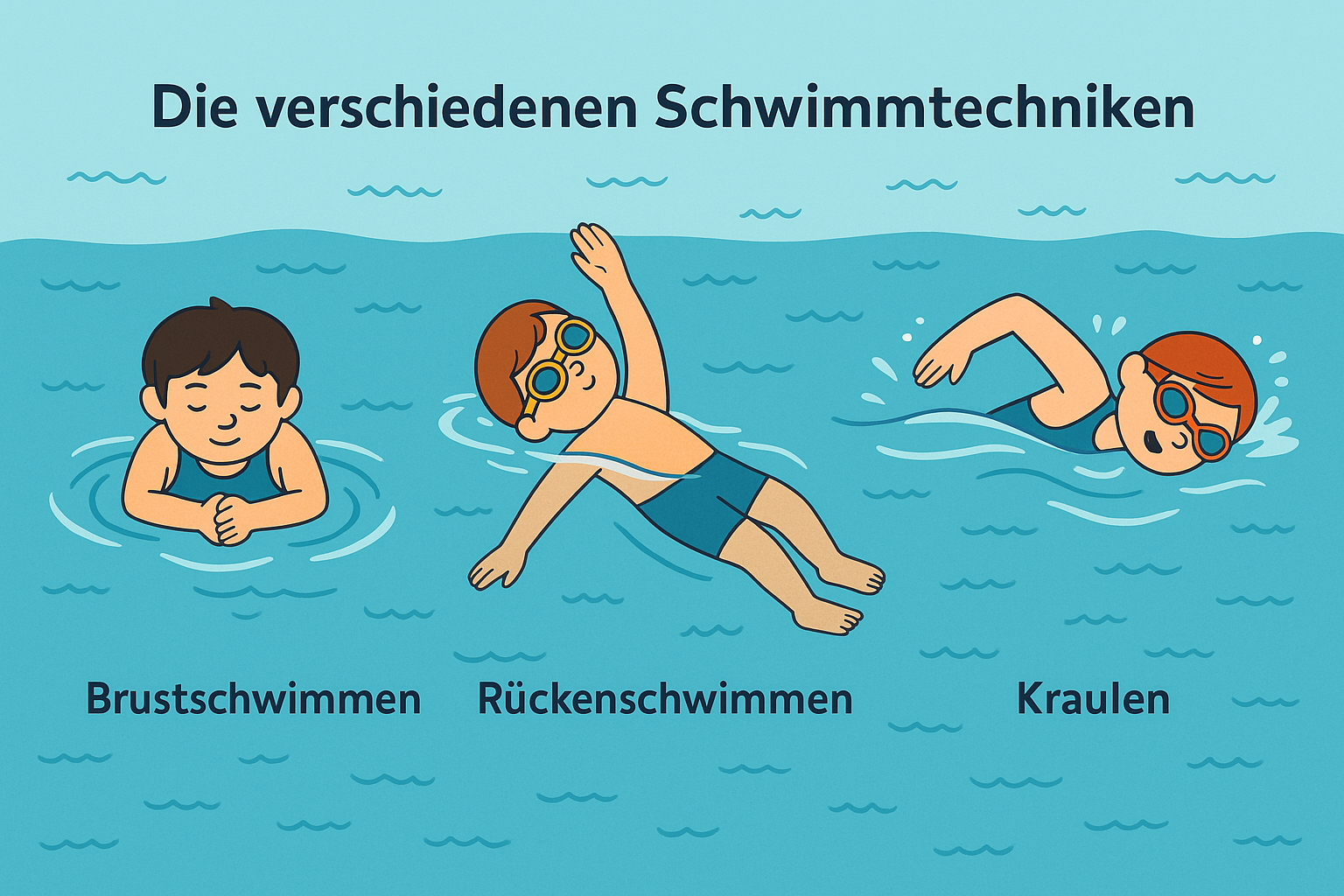
The correct body position while swimming is crucial for speed and endurance. A calm, streamlined body prevents water resistance. Practice actively changing body position between breaststroke and backstroke to achieve maximum efficiency.
Practical Examination Components
The second examination unit combines swimming with deep diving from the water surface and retrieving one object each. In addition, a head-first jump from the pool edge is on the program.
Deep diving and object retrieval from 2 m depth
For the approx. 2 m deep dive, you jump into deep water and retrieve a ring from the bottom. The deep dive from the water surface must be performed quickly—practice twice approx. 2 m several times to gain routine.
Retrieving one object each
After diving, you retrieve one object each, e.g., small diving rings. Repeat this course regularly to gain confidence underwater and easily meet the time limit.
Head-first jump from the pool edge
When performing a head-first jump from the pool edge, posture and pushing off the pool edge are important. Perform the head-first jump from the pool edge cleanly in a back position to secure points. Practice the sequence at least three times per training session.
Rescue and Transport Swimming
The Silver Swimming Badge also includes transport swimming, pushing or pulling a fellow swimmer. Furthermore, you must master how to deal with exhaustion and how to relieve cramps caused by exhaustion to react correctly in an emergency.
Theory: Bathing Rules & Safety
Knowledge of official bathing rules is mandatory. The DLRG not only teaches you safe swimming but also trains you in first aid and accident prevention. Good theoretical support can be found in every swimming course of the DLRG.
The Role of the DLRG
The DLRG organizes examinations for Bronze, Silver, and the German Gold Swimming Badge, trains swimming instructors, and promotes swimming safety. With their courses, you earn the Youth Swimming Badge and seamlessly advance to higher levels such as the Silver Swimming Badge and Gold.
Bronze Badge, Silver, and Gold in Comparison
-
Bronze Badge: Entry level with 200 m in prone or back position, diving to at least 1 m, various jumps from 1 m height.
-
Silver and Gold: For the Silver Swimming Badge, approx. 2 m deep diving is added, while for the Gold Badge, the requirements increase even further.
-
Gold: Rescue and transport swimming, longer distances, extended bathing rules.
Tips for Optimal Exam Preparation
-
Sign up for a swimming course early to practice under supervision.
-
Practice swimming regularly in intervals.
-
Specifically practice the head-first jump from the edge and deep diving from the water surface.
-
Learn how to deal with exhaustion to act correctly in stressful situations.
In-depth Exam Content & Safety Scenarios
Every swimmer should master not only the basic requirements but also special tasks: For example, you practice retrieving an object, e.g., a small diving ring, and thus consolidate your diving technique (object, e.g., small diving ring). Compare your abilities with the criteria of the Bronze Swimming Badge to make progress visible. Especially important is the back position in a recognizable stance. Additionally, the DLRG trains you in dealing with bathing, boat, and ice accidents, so you can make calm and confident decisions in an emergency. And finally, various jumps are part of your repertoire: Practice jumps from 1 m height or 2 different positions so that you can safely dive and jump from any height in the Silver exam.
Common Mistakes & FAQs
Why do I lose energy during 400m swimming?
Pay attention to your rhythm and maintain a fluid body position change.
How many attempts do I have for the swimming exam?
Usually two attempts per part. A clean step in the process ensures success.
Conclusion
With a clear structure, targeted training, and the right swimming course from the DLRG, you will master the requirements of the Silver Swimming Badge with confidence. Stick to the examination procedures, and the swimming badge will be yours!
Special Examinations & Emergency Scenarios
Every swimmer in the swimming pool often has to perform a package jump from the starting block or start with a certain meter of underwater swimming with a push-off. Already in the Bronze Badge, basic acrobatics tasks are practiced, so that every step of your swimming training is seamlessly continued, and you achieve your first successes already in the Seahorse course. The time limits are strict: within 3 minutes, you must complete the underwater swimming stage, but a maximum of 1 minute and 15 seconds is allocated for the entire practical part, including 300 m in prone position and a subsequent three-time approx. 2 m course. After ascending to the water surface and retrieving one exercise point each, you secure a small object, e.g., a small diving ring, before demonstrating your self-rescue behavior. Compulsory exercises also include two different jumps, such as the classic jump from 3 m and training from 3 m height, as well as techniques for the height or two different distance jumps. Completeness is ensured by learning the knowledge of bathing rules to react correctly in an emergency.
Silver Swimming Badge: German Silver Swimming Badge
The Silver Swimming Badge and the German Gold Swimming Badge mark important stages on the path to becoming a safe swimmer. While the Bronze Badge represents the entry into swimming education and requires basic skills such as swimming 200 meters in a prone or back position and various jumps from 1 meter height, the requirements for the Gold Badge go significantly further. Here, longer distances, more demanding jumping techniques, deep diving, and rescue skills are in focus. The Gold Badge not only certifies very good swimming skills but also the readiness and ability to provide help in emergency situations. Together with the Silver Badge, Bronze and Gold form the essential building blocks for comprehensive swimming education and are important prerequisites for advanced lifeguard courses.
Bronze Swimming Badge & German Gold Swimming Badge
The Silver Swimming Badge is an important step for children who want to further develop their swimming skills. Building on the Seahorse and Gold Badge, it not only teaches the ability to swim longer distances safely but also important techniques such as deep diving and various types of jumps, for example, the head-first jump from the pool edge. By acquiring the Silver Badge, children show that they can move safely in the water and know the basic bathing rules. It is thus a crucial milestone on the way to becoming a safe swimmer and optimally prepares for the advanced requirements of the Gold Badge.