
Sports Badge Medicine Ball: Requirements and Tips
Many swimming coaches in Central European clubs face the challenge of bringing variety to dryland training and motivating young swimmers in the long term. The Sports Badge Medicine Ball offers a versatile solution, as the medicine ball throw is more than just a strength test – it promotes explosive power, coordination, and lays the foundation for stronger starts in the water. For those who want to specifically support their swimmers, this discipline provides a proven path to quickly visible successes and measurable performance improvements.
Table of Contents
- Sports Badge Medicine Ball – Meaning and Purpose
- Performance Requirements by Age Group 2026
- Procedure and Correct Throwing Technique in Training
- Avoiding Typical Errors and Safety Aspects
- Material Selection and Organization in the Swimming Club
Key Takeaways
| Point | Details |
|---|---|
| Medicine ball throws promote full-body strength | Regular medicine ball training improves muscle strength, explosive power, and coordination in swimmers. |
| Age-appropriate performance requirements | Medicine ball throw requirements vary by gender and age group to create fair opportunities for all athletes. |
| Optimal technique prevents injuries | Correct throwing technique is crucial to maximize throwing distance and minimize injury risks in training. |
| Organize training efficiently | Good planning of the training area and materials is important to create a safe and professional training environment. |
Sports Badge Medicine Ball – Meaning and Purpose
The medicine ball throw is one of the strength disciplines of the German Sports Badge and is aimed at men and women of all age groups. This exercise measures not only raw muscle strength but also explosive power and coordination. For swimming coaches in Central European clubs, the medicine ball is a valuable addition to water training to holistically develop the athletic performance of young swimmers.
The historical roots of the medicine ball go back a long way. The training device was originally used in boxing training and has since proven to be a universal tool for strengthening the entire body. In the Sports Badge, its versatility is evident: the medicine ball trains not only muscle strength and agility but also reaction time. This makes it ideal for swimmers who need explosive power in their starts and turns.
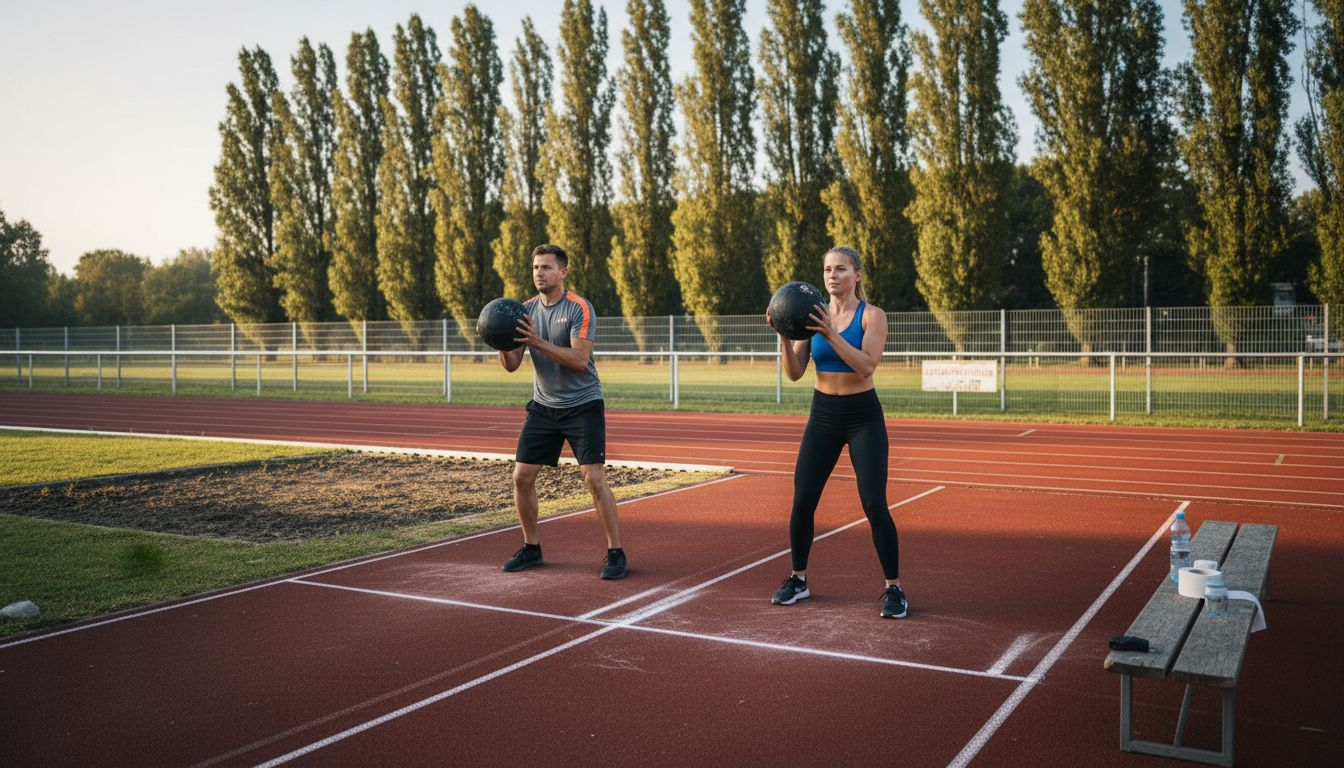
The medicine ball throw is performed two-handed from a defined throwing area, with the distance being measured. A standardized 2 kg medicine ball made of leather, plastic, or rubber is used. The exercise can be performed in various ways, such as a standing or rotational throw. This offers flexibility in training and allows you to adapt the exercise to the individual abilities of your athletes.
If you integrate the Sports Badge Medicine Ball into your training concept, you promote the full-body strength of your swimmers. The explosive power developed during the medicine ball throw directly translates into faster starts and more powerful pushes off the pool wall. At the same time, the badge offers your athletes a concrete goal and an additional motivational factor alongside classic swimming achievements.
Furthermore, the Sports Badge Medicine Ball complements your club's offerings with a quality-tested performance measurement. Your swimmers can document their progress in black and white. With the timely ordered certificate packages and badges from Pimpertz, you can immediately recognize these successes and thus strengthen your members' bond with the club.
Pro Tip: Integrate medicine ball training specifically twice a week into dryland training, combined with jumping exercises and core stability, to achieve maximum transfer effects on swimming performance.
Performance Requirements by Age Group 2026
The performance requirements for the medicine ball throw are not the same for all athletes. The requirements vary by gender and age group and are officially set in the 2026 examination guide. The system is deliberately age-appropriate to take into account the different physical conditions of your swimmers. This ensures young athletes have fair chances to earn the badge.
Specific minimum distances apply to each age group. Those aiming for a bronze performance must achieve different distances than those targeting silver or gold. This makes training both plannable and motivating. Your athletes can work towards concrete goals instead of measuring themselves against unrealistic adult standards.
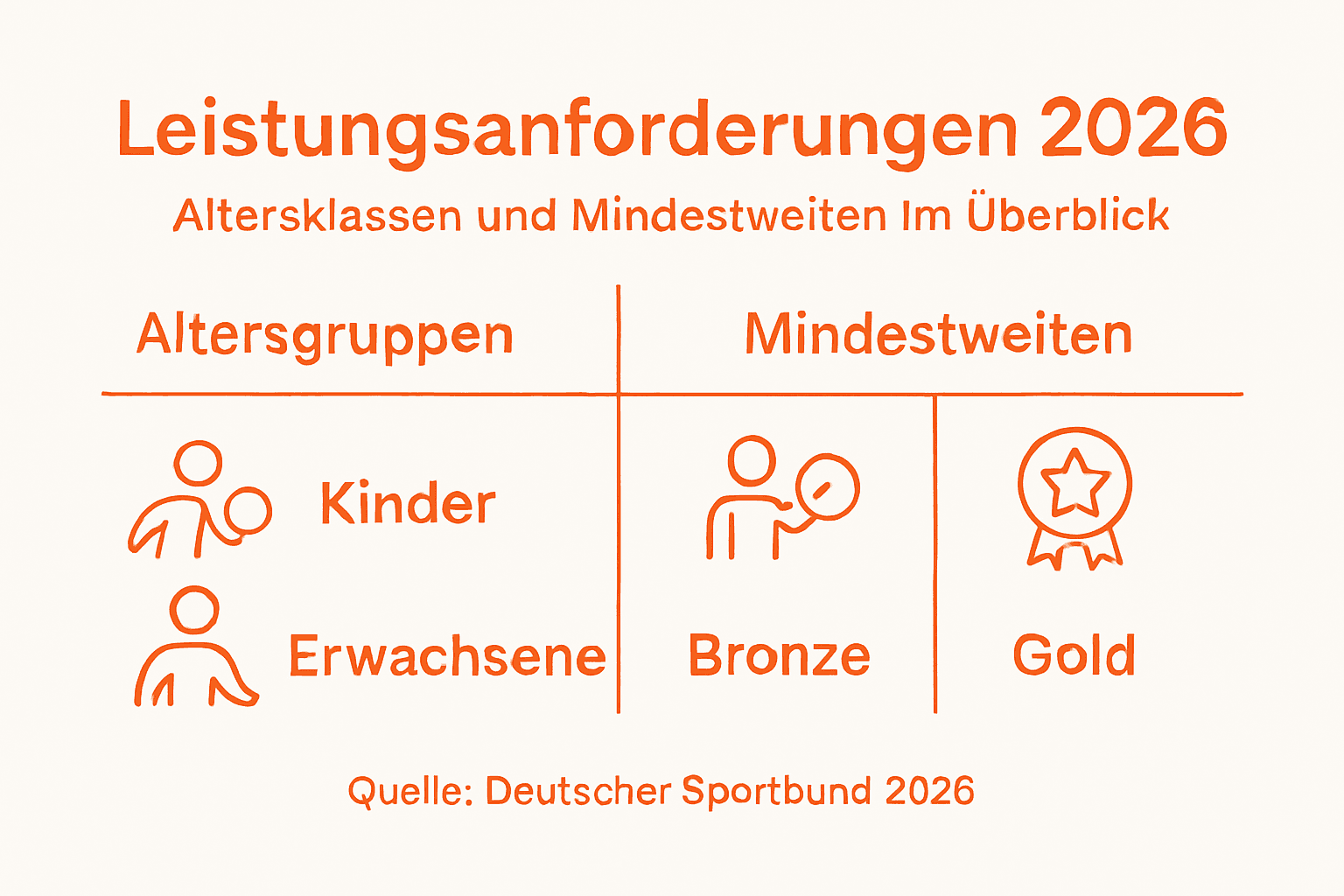
The youngest participants have lower requirements than older adolescents or adults. This takes into account natural physical development and different training histories. A primary school student will expect completely different throwing distances than a 16-year-old. This differentiation creates genuine achievement experiences for all age groups.
With increasing age, the requirements continuously rise. There are graded transitions between individual age groups that reflect natural performance progression. This allows you as a coach to plan realistically and prepare your athletes specifically. The requirements for swimming badges in terms of strength and dryland training follow similar principles of age-based differentiation.
You can find your exact values in the official documents. There, the minimum distances for bronze, silver, and gold are detailed for each age group. Save these tables in your training plan or post them in the club office. This way, you and your athletes always have access to the current standards.
Pro Tip: Create a simple table for your club with the 2026 performance requirements for each age group and update it annually so all coaches and parents know the goals.
Procedure and Correct Throwing Technique in Training
Correct technique in medicine ball throwing is the foundation for successful training sessions. Your athletes must understand that strength alone is not enough. Clean execution of movement protects against injuries and maximizes throwing distance. This should be your primary training goal.
The Basic Position and Body Posture
Your swimmers start with their feet in a parallel stance. The medicine ball is held in front of the chest with bent arms, palms facing inwards. The gaze follows the direction of the throw. The elbows should be positioned slightly below shoulder height to allow for optimal force development. This position is stable and requires no unnecessary movements.
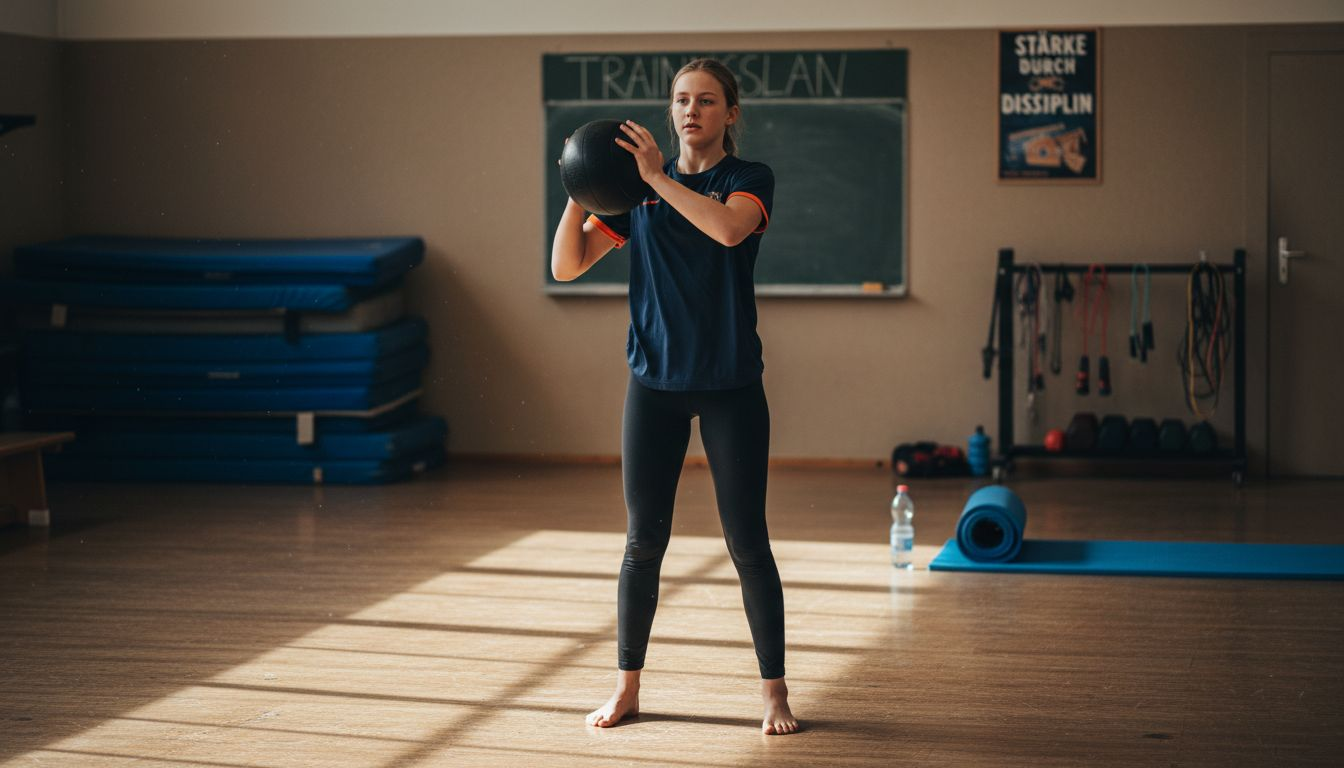
The Push and Arm Extension
During the release, an explosive arm extension occurs forward-upwards or to the side. The power comes from the legs, core, and arms in coordinated cooperation. After the push, the athlete leaves the throwing area backwards in a controlled manner. No backward throw is allowed. This is an important rule that you must consistently enforce.
Training Structure with Progression
Training should be built up step-by-step, starting with dryland exercises without the ball. Your athletes get used to the arm movements and timing. Later, the tilting of the hands to the side is added. Only then do the actual throws with the medicine ball follow. This way, you solidify the technique before injury risks arise.
Safety in Daily Training
Keeping the danger zone clear is absolutely critical. No one should be behind or next to the throwing lane. Clearly mark the training zone. Every athlete must give a clear clearance before their throw. This prevents accidents and demonstrates responsibility. At the same time, you create a professional training atmosphere that even your young swimmers respect.
Pro Tip: Use videos of professional athletes to demonstrate correct throwing technique, and have your athletes regularly film their own throws to quickly identify and correct errors.
Avoiding Typical Errors and Safety Aspects
In medicine ball throwing, errors occur quickly and directly impact performance. The good news: these errors can be avoided with targeted coaching. Your role as a coach is crucial to protect your athletes from injuries and training setbacks.
Most Common Technical Errors
The classic error is stepping over the throwing line. Your athletes must remain behind this line, otherwise, the throw is invalid. Another common error is one-sided throwing posture, where only one side of the body works. This reduces strength and increases the risk of injury. Incorrect technique, such as premature arm extension or lack of core tension, also significantly reduces throwing distance.
This overview of typical training errors and their effects helps with better training planning:
| Type of Error | Impact on Performance | Increased Risk of Injury |
|---|---|---|
| Stepping over the throwing line | Invalid throw, nervousness | No |
| One-sided throwing posture | Loss of power, loss of technique | Yes |
| Lack of core tension | Shorter distance, instability | Yes |
| Insufficient warm-up | Performance drop, cramping | Yes |
| Incorrect arm extension | Imprecise throw, distance suffers | Possible strain |
Safety Distances and Danger Zones
All attendees must be informed of the dangers and maintain a sufficient safety distance. A minimum of 10 meters is required behind and next to the throwing lane, and 3 meters to the sides. Use barrier tape or cones to keep spectators away. A flat, non-slip floor surface prevents slips and falls during throws.
Warm-up and Preparation
Insufficient warm-up is a silent killer in training. Incorrect throwing technique and improper posture often result from inadequate muscle preparation. Begin each session with 10 to 15 minutes of dynamic warm-up. Focus on the shoulder girdle, core, and legs. Core stability is essential. Weak muscles lead to compensatory movements and injuries.
Observation and Guidance
Observe each throw of your athletes carefully. You must immediately recognize and correct small deviations from the correct technique. Give clear, constructive feedback. Avoid providing assistance during the throw itself. Instead, work on technique before or after. This also protects you from potential accidents.
Pro Tip: Create a checklist of the five most important errors and post it in the training area so your assistants and advanced athletes can also focus on corrections.
Material Selection and Organization in the Swimming Club
The right material selection and organization are crucial for successful medicine ball throwing training sessions in your club. With good planning, you create a professional training environment that takes your athletes seriously and motivates them.
The Right Medicine Ball
A 2 kg medicine ball made of leather, plastic, or rubber is the standard for the Sports Badge. The material choice depends on your budget and the training facilities. Leather balls are durable and high-quality but more expensive. Plastic and rubber are cheaper and more hard-wearing. Important: Regularly check the balls for cracks or wear. A damaged ball endangers your athletes.
Here's an overview of the most important selection criteria and differences for medicine balls for the Sports Badge:
| Criterion | Leather | Plastic | Rubber |
|---|---|---|---|
| Price | High (more expensive) | Affordable | Very affordable |
| Durability | Very long-lasting | Good, washable | Robust, flexible |
| Grip | Excellent, non-slip | All-weather suitable | Good, depending on surface |
| Maintenance effort | Regular greasing | Hardly necessary | Hardly necessary |
| Training environment | Indoor/Professionals | Indoor/Outdoor, schools | Clubs, leisure |
Infrastructure for Safe Throws
You need a dedicated throwing area with sufficient space. Clearly mark the throwing line with tape or paint. The safety area must extend at least 10 meters forward and 3 meters to the sides. Use barrier tape or cones to keep spectators away. A flat, non-slip floor surface prevents slips and falls during throws.
Measuring Materials and Documentation
For distance measurement, you will need a tape measure or steel ruler, marked cords, or a steel measuring tape. Document every training performance in a table. These records show your athletes their progress and motivate them for further training sessions. A digital table in spreadsheet programs is practical and easy to manage.
Instruction and Procedure
Clear instructions on safety rules and technical procedures are your fundamental duty. All new athletes must know how to behave in the throwing area. Explain the clearance procedures and why safety is non-negotiable. With regular club events centered around the Sports Badge, you create a structured framework for the assessments.
Budget and Procurement
Calculate your budget realistically. A high-quality medicine ball costs 30 to 100 Euros. Measuring materials are inexpensive. With a little skill, you can apply training markings yourself. With targeted discounts for your club orders, you save on certificates and badges that you need for successful athletes.
Pro Tip: Store your medicine balls in a dry, cool place and check them monthly for damage to ensure they last longer and save your club money in the long run.
Strength and Motivation with the Sports Badge Medicine Ball and Pimpertz
Training for the Sports Badge Medicine Ball demands not only strength and technique but also, above all, the desire for measurable success and visible progress. The age-appropriate requirements and correct throwing technique present clubs and coaches with the challenge of optimally motivating and supporting their athletes. This is where Pimpertz comes in with an extensive range of motivating swimming badges and certificates. Thus, swimming clubs can offer a playful recognition for athletic achievements with the Pirat Pimpi® swimming badges & certificates, further fueling the ambition of young athletes.
Utilize the many years of experience and the official partnership with Pimpertz as a reliable partner for all swimming badges and the appropriate accessories. Now, create even more enthusiasm among your swimmers through personalized awards and give your training progress with demonstrable success in the Sports Badge Medicine Ball the appreciation it deserves. Discover the complete range on pimpertz.de and order your high-quality certificates and badges promptly for your club.
Frequently Asked Questions
What are the requirements for the Sports Badge in medicine ball throwing?
The performance requirements vary by gender and age group, as specified in the 2026 examination guide. Each age group has specific minimum distances to achieve a bronze, silver, or gold performance.
What should the correct technique for medicine ball throwing look like?
Athletes should stand with parallel feet, hold the medicine ball in front of their chest with bent arms, and throw explosively forward-upwards or to the side. Clean execution of movement is important to prevent injuries and maximize throwing distance.
What are the most common errors in medicine ball throwing and how can I avoid them?
Common errors include stepping over the throwing line and a one-sided throwing posture. To prevent injuries and improve technique, athletes should receive regular individual feedback and focus on correct execution.
How often should I integrate medicine ball training into dryland training?
It is recommended to incorporate medicine ball training specifically twice a week into dryland training, combined with jumping exercises and stabilizing core exercises, to maximize swimming performance.