
Inflatable Floats – Safety for Children Swimming
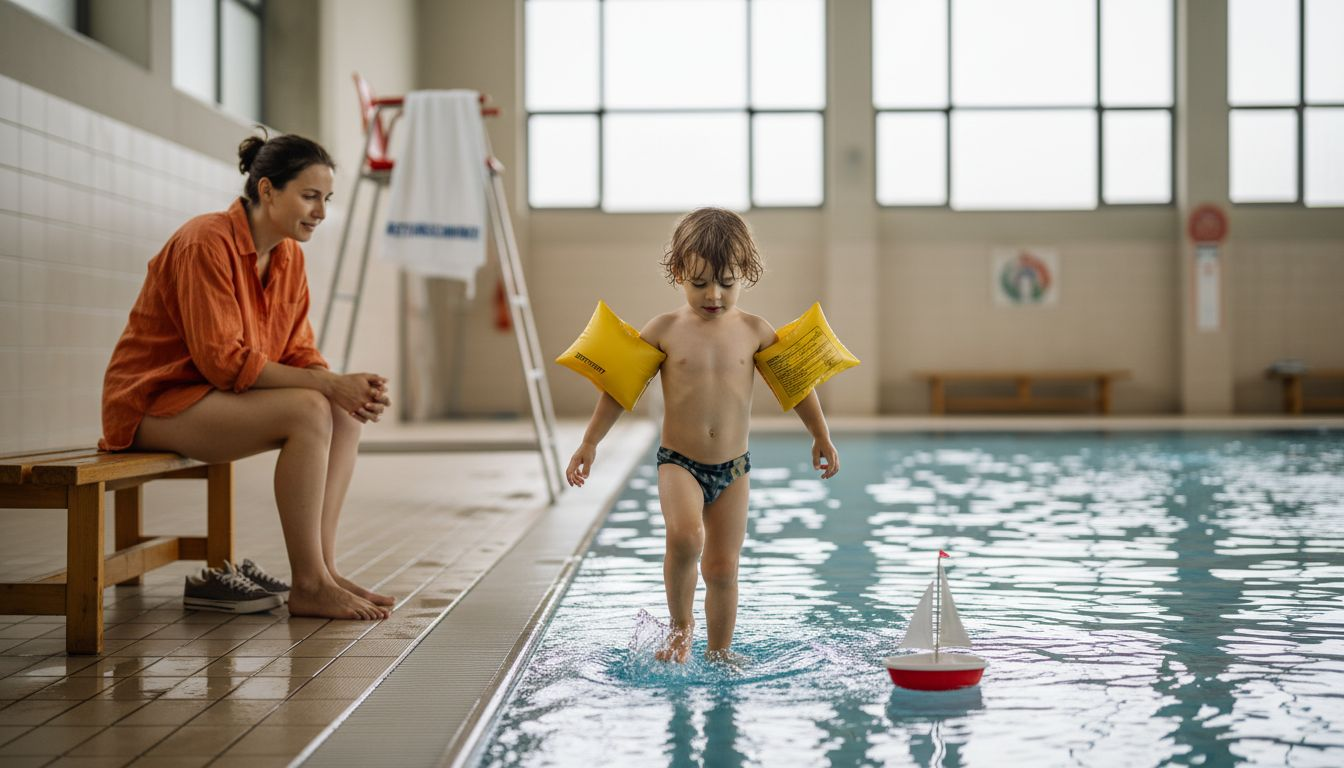
Every trip to the swimming pool presents parents in Germany with a tricky decision: Which inflatable swim aids are really safe for their preschool child? The selection ranges from armbands to colorful swim toys, but there's an often-underestimated difference here. Not every inflatable product offers true swimming support – only swim aids with an EN 13138-1 certificate have tested safety features such as multi-chamber systems and non-return valves. This article shows you how to distinguish between toys and protective equipment and find the right product for your child with peace of mind.
Table of Contents
- Inflatable Swim Aids – What Parents Need to Know
- Types of Inflatable Swim Aids in Comparison
- Genuine Swim Aids According to EN 13138-1
- Inflatable Water Toys: For Play Only
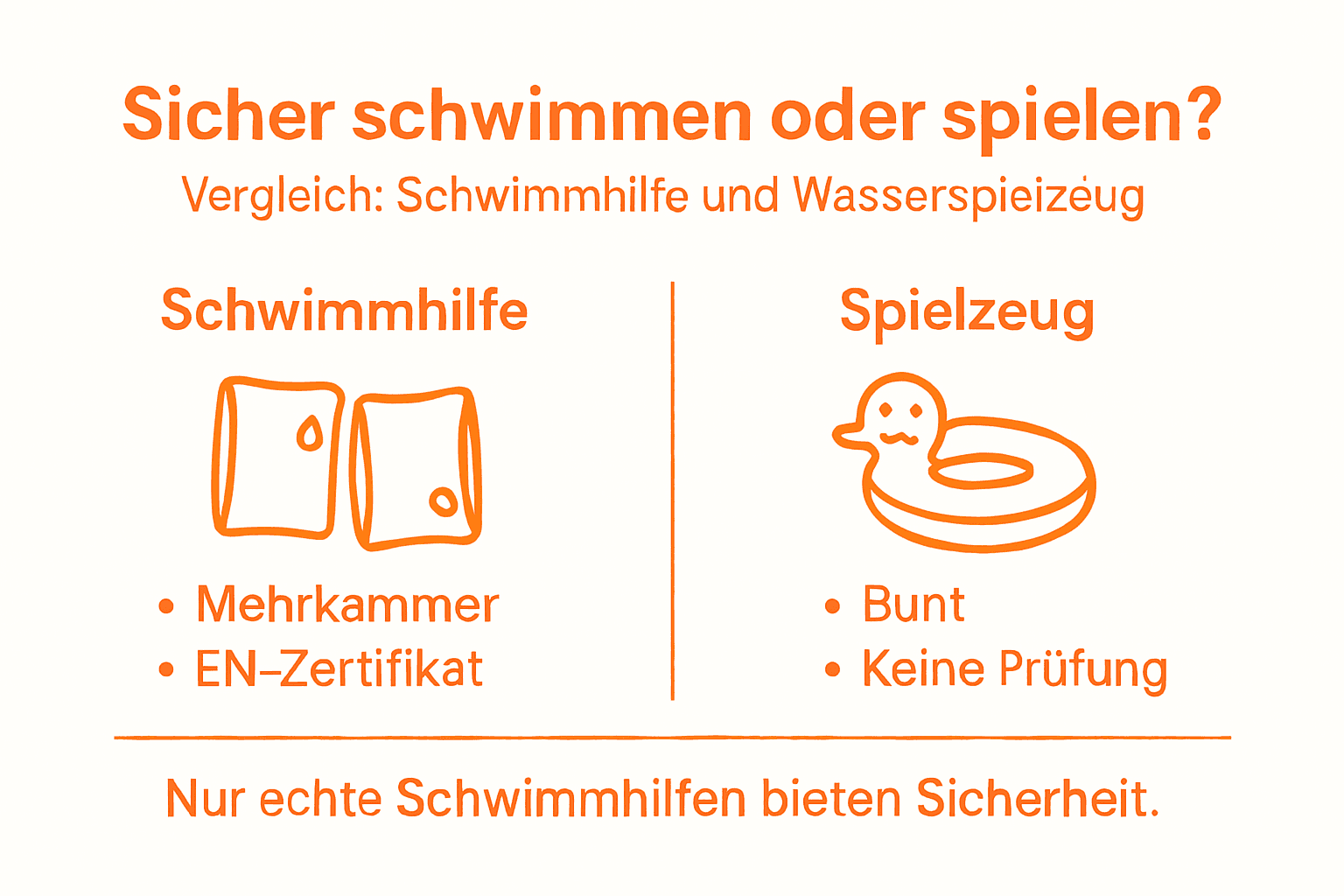
- Comparison Table for Quick Orientation
- Safety Standards and Test Marks in Germany
- The CE Mark and Other Test Marks
- What These Standards Practically Mean
- Tips for Use and Care in Family Life
- Storage and Drying
- Supervision Remains Indispensable
- Maintenance and Storage Checklist
- Avoid Common Mistakes When Buying and Using
- Other Common Buying Mistakes
- Usage Errors Are Just as Dangerous
- Checklist for Error-Free Purchase
Key Insights
| Point | Details |
|---|---|
| Inflatable water toys are not safety solutions | These products are not suitable as swim aids and do not provide reliable safety in the water. |
| Certified swim aids according to EN 13138-1 are necessary | When purchasing, ensure that the swim aid is certified accordingly to guarantee safety. |
| Correct use and care are crucial | Check the swim aid for leaks before use and store it dry to prevent mold growth. |
| Supervision is essential | Even with a swim aid, children should never be unsupervised in the water; constant supervision is required. |
Inflatable Swim Aids – What Parents Need to Know
When you take your preschool child swimming, the question quickly arises: Which swim aid is really safe? The market offers countless inflatable products – colorful flamingos, funny crocodiles, practical armbands. But there's a critical distinction here that many parents aren't aware of. Inflatable water toys are not true swim aids and do not offer your child reliable safety when learning to swim. The TÜV Association explicitly warns against using these toys as swim aids, as they neither provide a buoyancy guarantee nor meet the necessary safety features.
Genuine swim aids are certified according to standard EN 13138-1 and have proven safety features that actually prevent drowning. These features are not a marketing trick – they specifically mean that the product helps a child learn to swim without putting them in danger. Multiple air chambers ensure that even if one is damaged, there is still enough buoyancy. Non-return valves prevent water from entering. Good visibility due to bright colors helps you and other supervisors immediately spot your child. When buying an inflatable swim aid, always check if it offers these safety features of genuine protective equipment. Pay attention to age and weight specifications on the packaging – these are not arbitrary but based on scientific tests.
The most common misconception is that inflatable animals or air mattresses make your children safe in the water. The opposite is true: These toys can give a false sense of security and are even dangerous for toddlers without swimming skills. A child can easily slip off such a toy or accidentally let go of it. Swim toy animals offer no reliable safety when learning to swim. Truly safe alternatives are certified life vests or armbands according to EN 13138-1, which are specifically designed for learning purposes. When purchasing a swim aid, you should take your time to choose the right model. The correct fit is essential – equipment that is too loose will slip, and too tight will restrict movement. If possible, let your child try on the swim aid before buying, or check the exact measurements.
Pro tip: Only buy swim aids with the EN 13138-1 certificate and test the correct fit before the first use in water – your child should be able to move freely in it without the aid slipping.
The following overview shows the most important differences between certified swim aids and ordinary inflatable water toys:
| Criterion | Certified Swim Aid | Inflatable Water Toy |
|---|---|---|
| Testing Standard | EN 13138-1, GS, TÜV | Toy standard, no EN 13138 |
| Buoyancy Guarantee | Guaranteed buoyancy in case of defect | No reliable buoyancy |
| Visibility | Strong signal colors | Often colorful designs without purpose |
| Valves & Multi-chamber | Non-return valves, multi-chamber | Single valves, usually single-chamber |
| Purpose of Use | Learning to swim, safety | Entertainment, no swim training |
Types of Inflatable Swim Aids in Comparison
On the market, you'll find a confusing variety of inflatable products for children in the water. To choose the right product for your child, you should know what types are available and how they differ. The most important distinction is: swim aids for learning versus water toys for playing. Swim aids are certified according to EN 13138-1 and serve the purpose of learning to swim. Water toys like swim animals, flamingos, or air mattresses are purely for play and offer no safety guarantee. This distinction is not academic – it decides your child's safety in the water.
Genuine Swim Aids According to EN 13138-1
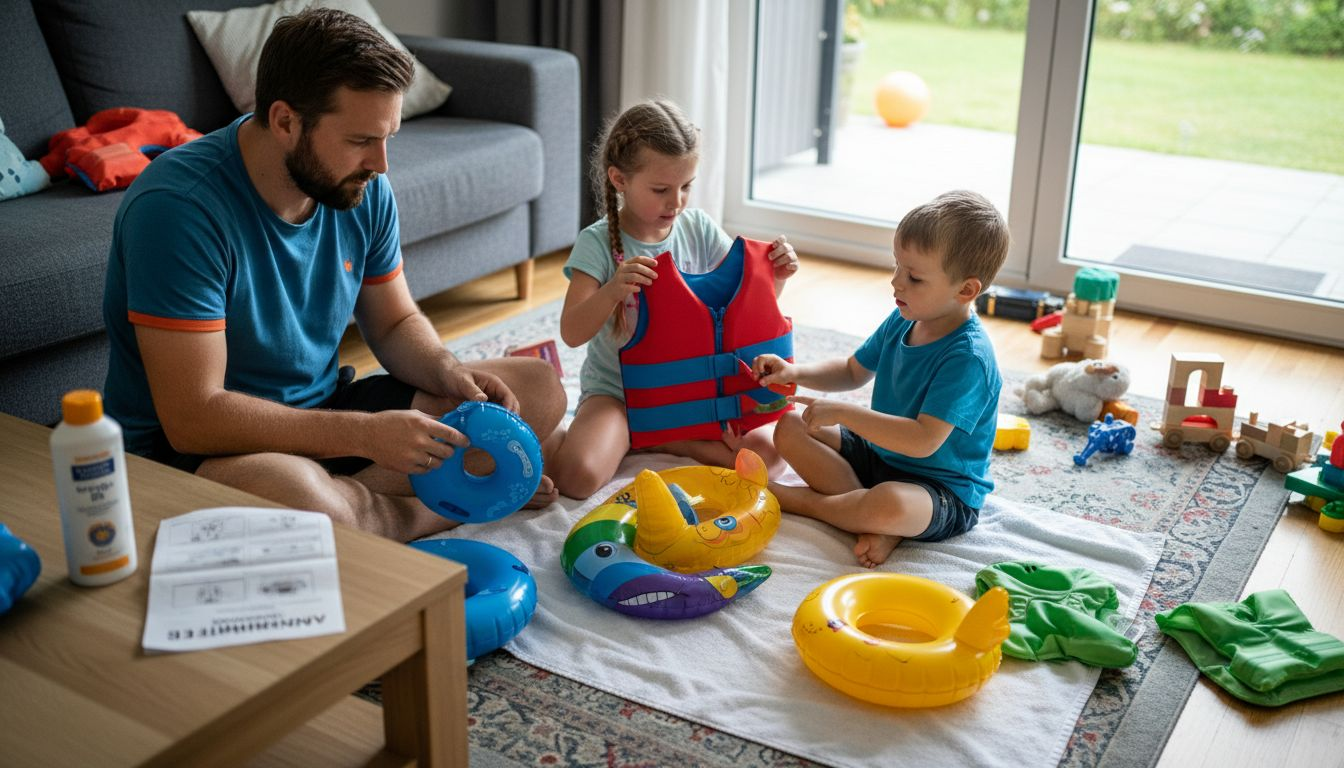
Certified swim aids include several proven types that encompass various kinds of inflatable swim aids for learning:
- Armbands: The classics among swim aids. They are attached to the upper arms and provide lateral buoyancy. Ideal for children from about three years of age who are practicing their first swimming movements.
- Swim vests: Provide all-around buoyancy and enable an upright body position. Particularly safe for younger or unsure children, as they support the entire upper body.
- Swim discs: Worn around the waist and support buoyancy in the torso area. Allow more freedom of movement but require some prior water experience.
- Swim belts: A lighter version for children with more experience who still need a little extra support.
Each of these variations features multi-chamber systems, non-return valves, and is available in bright colors – features completely absent from toys.
Inflatable Water Toys: For Play Only
The opposite extreme consists of colorful inflatable swim animals and other toys that offer no real protective function. They appear harmless and fun but are solely for entertainment. A child can slip off them, lose them, or let them sink. They offer no safety guarantee and are dangerous if parents misuse them as swim aids. These products have their place – but only for children who can already swim and use these toys purely for entertainment.
Comparison Table for Quick Orientation
| Type | Purpose | EN 13138-1 Certificate | Age Group | Safety |
|---|---|---|---|---|
| Armbands | Learning | Yes | From 3 years | Very high |
| Swim vest | Learning | Yes | From 1.5 years | Very high |
| Swim disc | Learning | Yes | From 5 years | High |
| Swim belt | Learning | Yes | From 6 years | High |
| Swim animals/air mattress | Playing | No | Swimmers | Low |
Pro tip: Choose swim aids according to your child's current age and water level, not their target swimming level – the product should fit immediately and provide secure support without pinching or slipping.
Safety Standards and Test Marks in Germany
When you buy an inflatable swim aid, you'll come across various certifications and test marks. But what do they really mean? In Germany, strict safety regulations apply to swim aids, and it's crucial that you know them to avoid endangering your child. The most important standard is EN 13138-1, which all swim learning aids must meet. This standard is not just a name on paper – it describes precise, measurable requirements that are verified by independent institutes. Products that meet this standard have undergone rigorous testing, including leak tests, stability tests, and visibility checks.
The CE Mark and Other Test Marks
The CE mark is the first signal you should look for. It means that the manufacturer has complied with European directives. However, the CE mark alone is not sufficient – it is more of a self-declaration by the manufacturer. Much more significant are the safety features according to EN 13138-1 with test marks such as the GS mark or TÜV mark. These certifications mean that independent testing institutes have actually tested the product and that it meets the requirements. The GS mark stands for "Geprüfte Sicherheit" (Tested Safety) and is a quality mark that parents can trust.
What These Standards Practically Mean
What exactly is checked during these tests? EN 13138-1 stipulates that swim aids must have multi-chamber systems. This means that the swim aid is divided into several separate air chambers. If one chamber is damaged and loses air, the other chambers still provide sufficient buoyancy. A simply inflated water tube would not have this feature. In addition, non-return valves must be present to prevent air from suddenly escaping when the valve is opened. Good visibility is also mandatory – which is why real swim aids come in signal orange or other bright colors. This allows you and other supervisors to immediately spot your child in the water.
Inflatable water toys, on the other hand, are subject to different guidelines. While they must also be safe, for example, regarding sharp edges or toxic materials, they do not guarantee swimming ability or buoyancy safety. Toys are for enjoyment, not for safety when learning to swim. This fundamental difference is crucial for your purchasing decision.
Pro tip: Always check the test mark on the packaging or the product itself when buying – look for the GS mark, TÜV mark, or similar test marks along with the reference to EN 13138-1.
Tips for Use and Care in Family Life
A good swim aid is only safe if you use and care for it correctly. Many parents buy high-quality equipment but then lose patience with maintenance or ignore important safety measures. This is precisely where real safety breaks down. Before your child enters the water, check the swim aid for leaks by inflating it and checking for air bubbles with your hands or underwater. This only takes a few minutes but can prevent a disaster. The correct fit is also crucial – the swim aid must not slip but also not be so tight that it causes discomfort. Regular checks of inflatable swim aids prevent material damage or sudden air loss in the water.
Storage and Drying
After bathing, the most important care phase begins. Wet swim aids stored in damp conditions quickly develop mold and mildew. This is not only unpleasant but also unhygienic for your child's skin. Drying thoroughly after use prevents mold growth and significantly extends the product's lifespan. This specifically means: After each swim, rinse the product with clear water to remove chlorine or salt water, let it dry completely, and then store it in a dark, cool place. Direct sunlight harms the material and can weaken the seams. A dry closet or a bag in the children's room is ideal.
Supervision Remains Indispensable
A central truth that many parents are reluctant to hear: Swim aids never replace supervision. They are training devices, not a guarantee against drowning. Your child should never be unsupervised in the water, even if they are wearing a certified swim aid. Children can stumble, lose their balance, or panic. Always be within reach of your child – not at the edge of the pool, but immediately next to them. This is especially important in the first few weeks when your child is still unsure. Use the swim aid as a tool for learning movements, not as a safety net that could relieve you.
Maintenance and Storage Checklist
To keep track, a simple checklist can help:
- Check for leaks before each use
- Rinse with fresh water after bathing
- Allow to air dry completely (at least 2-3 hours)
- Store in a cool, dark room
- Check monthly for damage, cracks, or discoloration
- Check valves to ensure they move freely
- Check closures and seams for wear
Pro tip: Create a maintenance calendar on your smartphone or as a note on the bathroom mirror to remember regular checks – a minute of effort per week saves a lot of trouble later.
This table summarizes typical maintenance errors and their potential consequences for swim aids:
| Maintenance Error | Impact on Safety |
|---|---|
| No leak check | Unexpected air loss possible |
| Wet storage | Material wear, mold |
| Irregular visual inspection | Overlooked cracks or breaks |
| Storage in the sun | Fading, weakening of material |
| Unchecked valves | Leaks during use |
Avoid Common Mistakes When Buying and Using
Most accidents involving inflatable swim aids are not caused by defective products, but by errors in purchase and use. These errors are avoidable. The biggest and most dangerous mistake is confusing water toys with actual swim aids. Parents see a colorful swim animal in a store, think "That looks safe," and buy it to take their child into the water with it. That is precisely the moment when real danger arises. Inflatable water toys are not swim aids and can lead to life-threatening situations. They offer no buoyancy guarantee, no multi-chamber systems, and no non-return valves. A child can slip off them. A child can lose them. A child can sink.
Other Common Buying Mistakes
Besides this confusion, there are other mistakes that parents regularly make. Many buy a swim aid that matches the intended swimming level, not the current age or weight. The result: the equipment doesn't fit properly. It slips, pinches, or offers too much or too little buoyancy. A swim aid must fit the child as they are now, not as they will be in three months. Another common mistake is ignoring test marks. Some parents buy the first inflatable product they like, without paying attention to the CE mark or GS seal. Even worse: they only rely on the price and think, "Cheap also means safe." This is completely wrong. The safety of a product has nothing to do with its price.
Usage Errors Are Just as Dangerous
Critical errors also occur during use. The most serious error is the illusion of safety. Many parents buy a swim aid and then relax too much. They sit by the pool, talk to other adults, or scroll on their smartphone. The child is wearing a swim aid, after all, they think. False safety due to overestimating inflatable swim aids leads to accident risks. No swim aid replaces your supervision. Children can drown without making a sound. Drowning doesn't look like it's portrayed in movies. It's silent and happens in seconds. Another mistake is underestimating wear and tear. Parents take an old, heavily used swim aid from the basement, put it on the child, and go swimming. They don't check for cracks, damage, or air loss. Material fatigue is invisible.
Checklist for Error-Free Purchase
- Only buy products certified according to EN 13138-1
- Check for GS seal or TÜV mark
- Observe age and weight specifications, do not ignore them
- Try on the swim aid before buying, if possible
- Check condition and workmanship
- Inspect valves and seams
- Read customer reviews, especially critical ones
Pro tip: Do not buy swim aids online, but in a local specialist store where you can try on the equipment and get advice from staff – this small investment of time saves a lot of trouble later.
Safety and Success in Learning to Swim with Pimpertz
The article highlights the importance of genuine swim aids according to EN 13138-1 for children's safety when learning to swim and warns against the risks of inflatable water toys. Parents are therefore looking for tested products that not only protect but also encourage motivation when swimming. This is where Pimpertz comes in, with tested swimming badges and certificates that playfully lead children to success and thus accompany the most important steps on the way to becoming a confident swimmer.
Benefit from over 38 years of experience and trust our official partnerships with DLRG and BFS. Discover our lovingly designed Pirat Pimpi® swimming badges & certificates for more fun and recognition in learning. This not only supports safety through training but also creates proud moments for your children. Visit pimpertz.de now and secure high-quality products with fast delivery and personal advice. Start today and give your child the best chance to learn to swim safely.
Frequently Asked Questions
What are the most important safety features of swim aids for children?
Genuine swim aids should be certified according to standard EN 13138-1, have multiple air chambers for reliable buoyancy, non-return valves to prevent air loss, and strong signal colors for better visibility in the water.
Why are inflatable water toys not safe swim aids?
Inflatable water toys are intended for entertainment and do not offer guaranteed swimming ability or buoyancy safety. They can create a false sense of security and are dangerous for children without swimming skills.
How can I check the safety of a swim aid before use?
Check the swim aid for leaks by inflating it and checking for air bubbles. Also, ensure a correct fit so it doesn't slip or pinch.
How often should I check my swim aid for damage?
It is recommended to check the swim aid for cracks, damage, or material wear before each use. Monthly checks are also useful to ensure that the equipment is in perfect condition.