

How Parents Can Ensure the Recognition of Swimming Badges
Many parents wonder which swimming badges are actually officially recognized and what value they hold for their preschoolers. The variety of badges like "Seepferdchen" (seahorse), "Frosch" (frog), or "Bobby" can seem confusing. This guide clarifies which swimming badges are standardized nationwide, how the tests are conducted, and how you can best support your child on their path to becoming a safe swimmer. You will learn which organizations are behind the official badges, what requirements are set, and how certificates contribute to motivation.
Table of Contents
- Key Points for the Recognition of Swimming Badges
- Official Recognition and Standardization of Swimming Badges
- Presence and Procedure of the Test: How Swimming Badge Tests Work
- Motivation and Role of Swimming Badges in Preschoolers
- Choosing the Right Swimming Badge: Comparison and Recommendations
- Discover Suitable Swimming Badges and Certificates for Your Children
- Frequently Asked Questions about the Recognition of Swimming Badges
Key Insights
| Point | Details |
|---|---|
| Official Standardization | In Germany, DOSB, DSV, DLRG, and BFS regulate swimming badges and ensure nationwide uniform examination standards. |
| Official vs. Unofficial Badges | Official badges like Seepferdchen, Bronze, Silber, and Gold are recognized and tested nationwide, while unofficial badges like Frosch or Bobby serve merely as motivation. |
| Certified Examiners | Only certified examiners, such as lifeguards and licensed coaches, are allowed to conduct official examinations and work according to fixed criteria. |
| Badge Levels and Requirements | Seepferdchen is the entry level, Bronze, Silber, and Gold increase the requirements; Seepferdchen includes jumping into the water, swimming 25 meters, retrieving an object from shoulder-deep water, and knowing the most important swimming rules; Bronze requires jumping from a one-meter height, retrieving an object from two meters depth, and swimming 200 meters in 15 minutes. |
Official Recognition and Standardization of Swimming Badges
In Germany, several umbrella organizations regulate the awarding of swimming badges. The German Olympic Sports Confederation (DOSB), the German Swimming Federation (DSV), the German Life Saving Association (DLRG), and the Federal Association for the Promotion of Swimming Education (BFS) work together to guarantee uniform standards. These associations ensure that examinations are conducted according to identical criteria, regardless of the examination location.
The officially recognized swimming badges include:
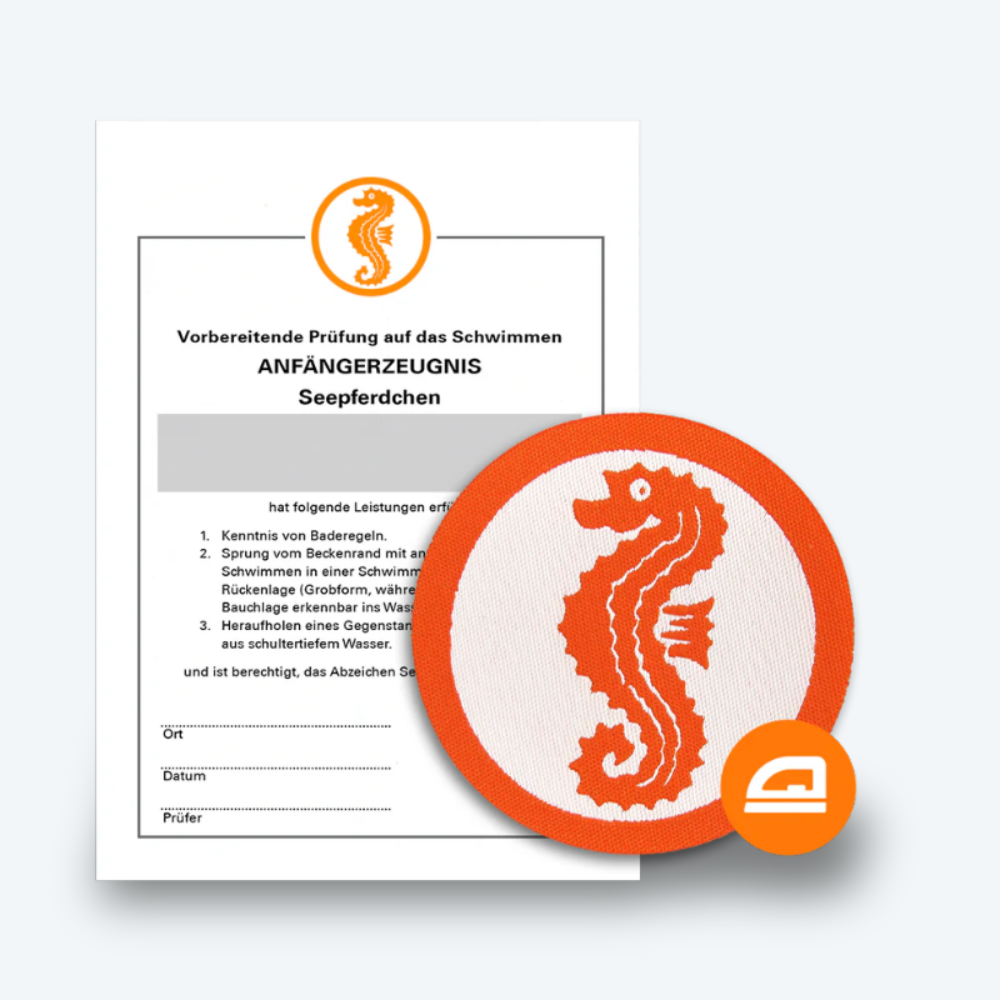
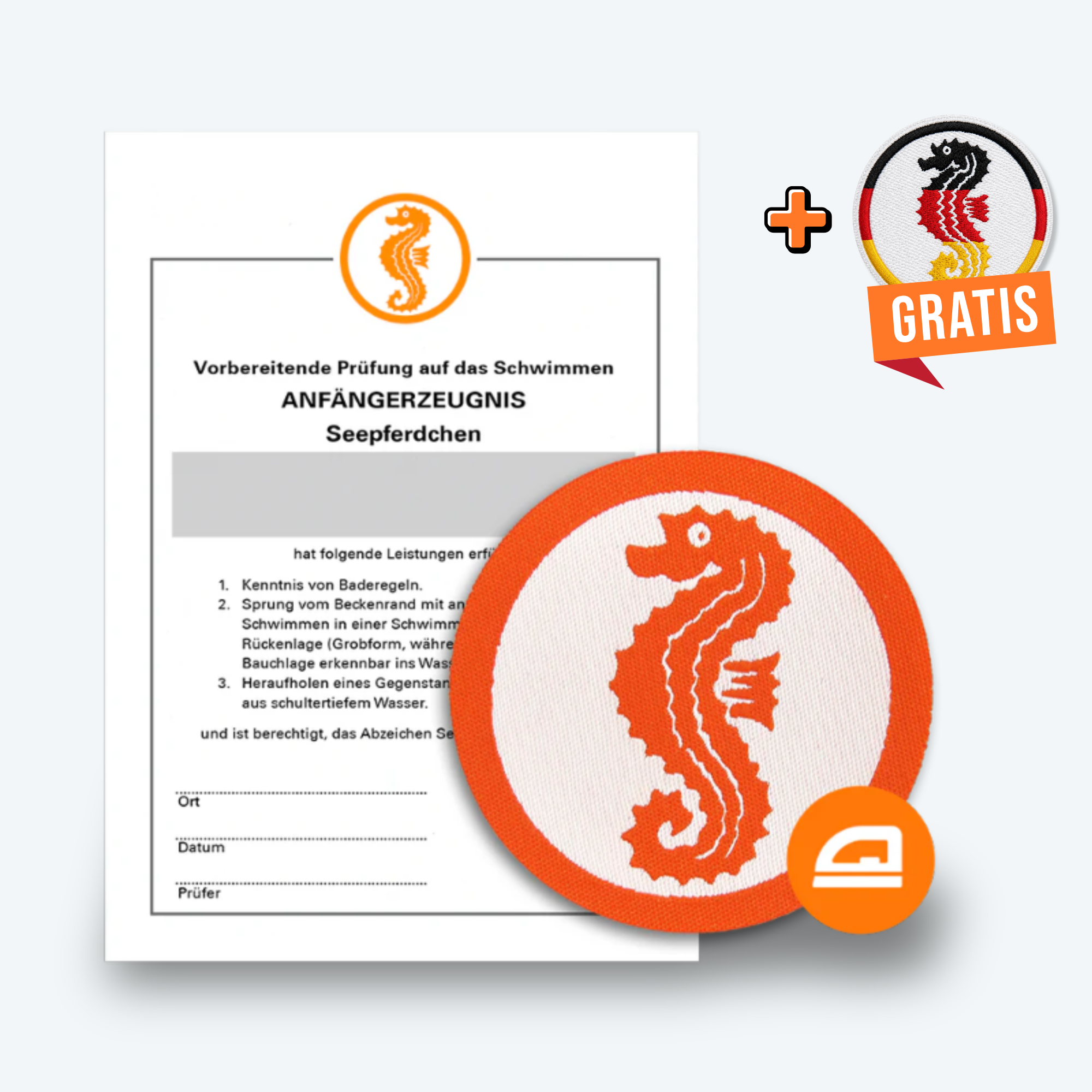
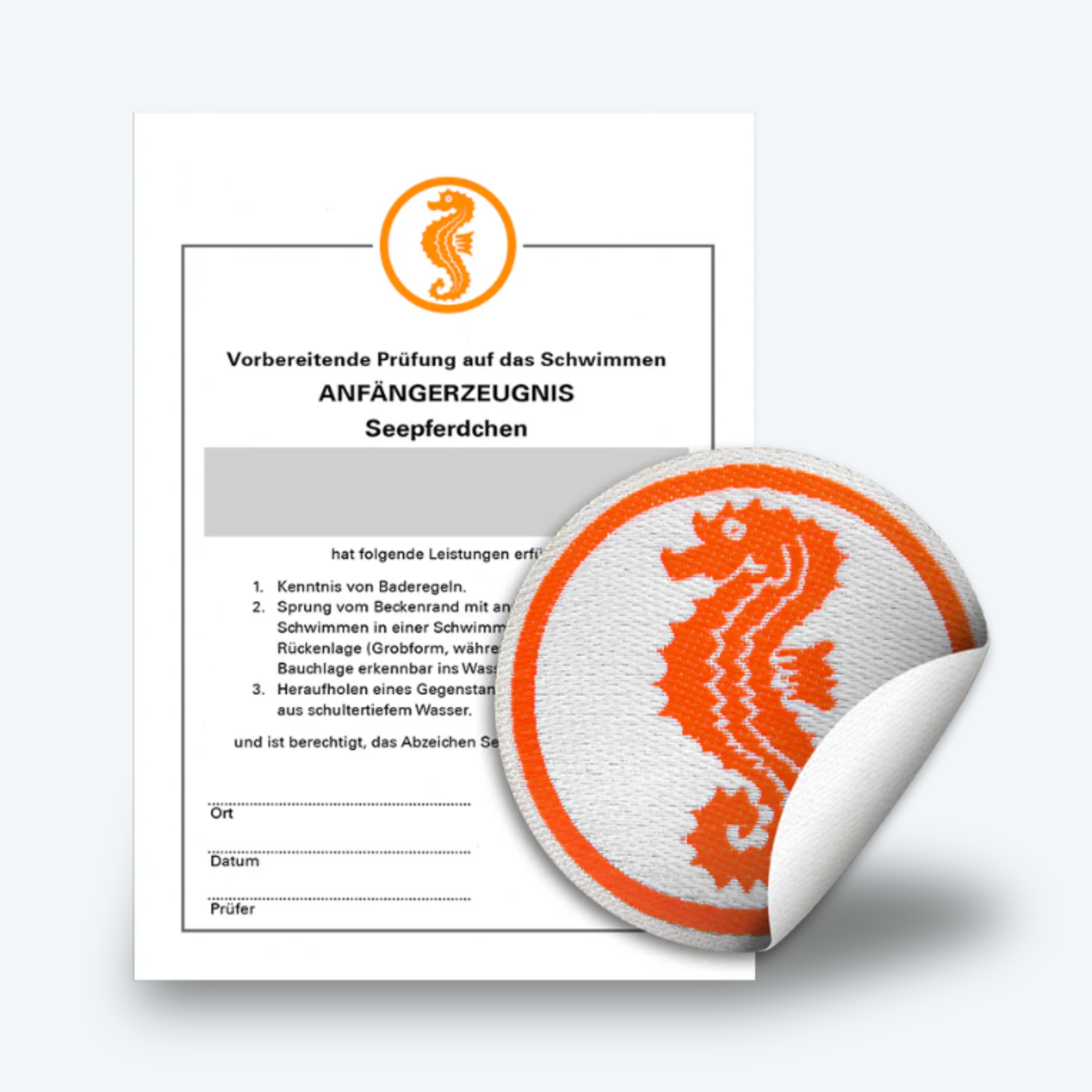
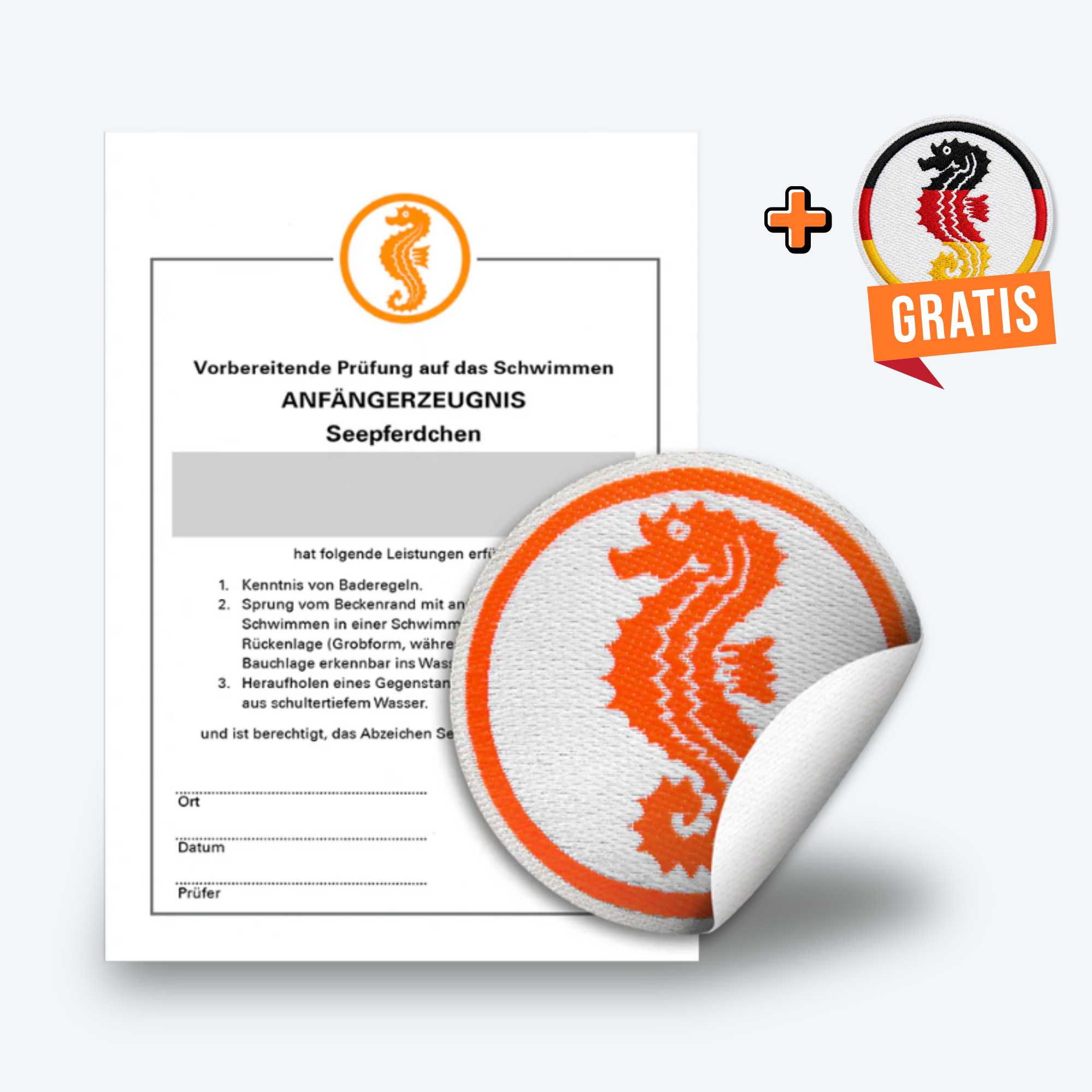
- Seepferdchen (Seahorse): Entry-level badge for swimming beginners
- Bronze (Freischwimmer): Proof of basic swimming safety
- Silber (Silver): Advanced swimming skills with higher requirements
- Gold (Gold): Highest youth swimming badge with demanding achievements
Only examinations conducted by certified examiners are considered official. These examiners undergo special training and are affiliated with swimming federations. Lifeguards, licensed swimming instructors, and club coaches are allowed to award badges after successful certification. Standardization ensures that a Seepferdchen acquired in Munich meets the same requirements as one from Hamburg.
“Swimming badges like Seepferdchen, Bronze, Silber, and Gold are officially recognized by associations such as DOSB, DSV, DLRG, BFS, and are tested nationwide in a standardized manner.” – DOSB Swimming Badge Expert Guide
Unofficial badges like Frosch, Pinguin, or Bobby serve as supplementary motivational aids but have no official recognition by the umbrella organizations. They are often used in swimming schools as intermediate steps to gradually introduce children to official examinations. Parents should ensure that their child ultimately acquires the recognized swimming badges, as only these are nationally valid as proof of swimming ability.
The distinction between official and unofficial badges is particularly important when schools or sports clubs require proof of swimming ability. Only the standardized badges are accepted here. Many swimming schools skillfully combine both systems by initially awarding unofficial badges as intermediate goals and then transitioning to the official Seepferdchen test.
Presence and Procedure of the Test: How Swimming Badge Tests Work
The Seepferdchen test marks the first official milestone for most children. Certified examiners conduct tests and evaluate performance according to defined criteria. The examination takes place in public swimming pools, club pools, or swimming schools.
For the Seepferdchen, children from about 5 years old must meet the following requirements:
- Jump from the pool edge into the water
- Swim 25 meters without a break
- Retrieve an object from shoulder-deep water
- Knowledge of the most important swimming rules
The Bronze badge poses significantly higher demands. Children must complete a package jump or jump from a one-meter height, dive for an object from two meters depth, and swim 200 meters in a maximum of 15 minutes. This includes 150 meters in prone or supine position and 50 meters in the respective other position.
| Badge | Minimum Age | Swimming Distance | Special Features |
|---|---|---|---|
| Seepferdchen | approx. 5 years | 25 meters | Jump, shoulder-deep diving |
| Bronze | approx. 6 years | 200 meters | Deep diving 2m, two swimming strokes |
| Silber | approx. 8 years | 400 meters | Starting jump, three swimming strokes |
| Gold | approx. 9 years | 600 meters | Four swimming strokes, rescue exercise |
Pro-Tip: Prepare your child playfully for the test by discussing swimming rules together and practicing diving during holidays or at the outdoor pool. Avoid performance pressure and celebrate every progress, even if the test doesn't work out the first time.
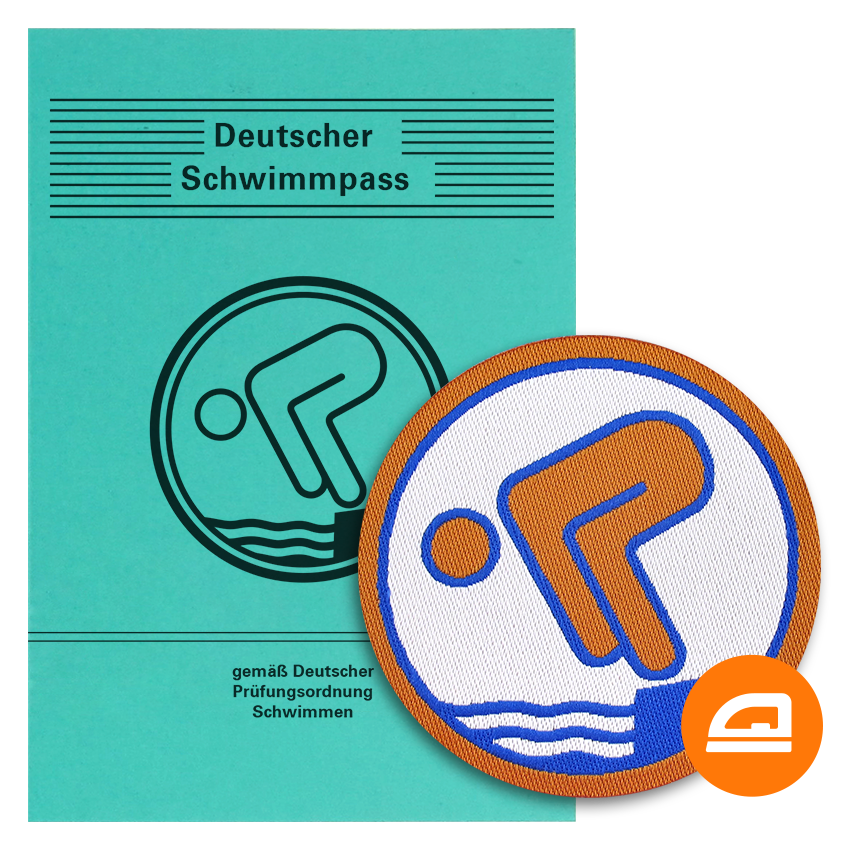
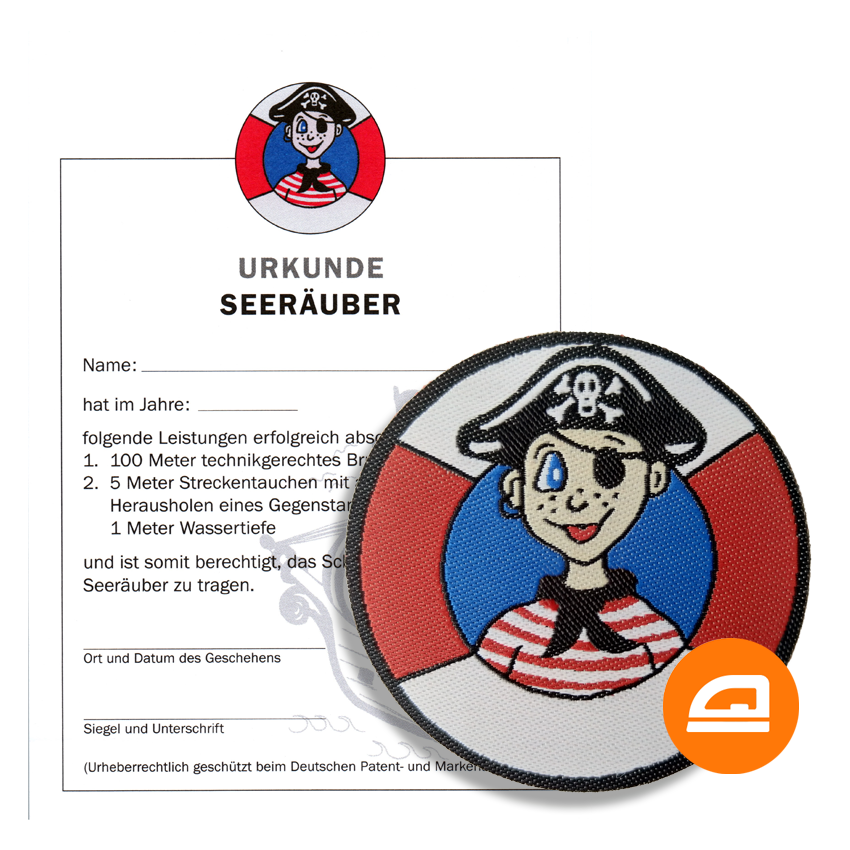
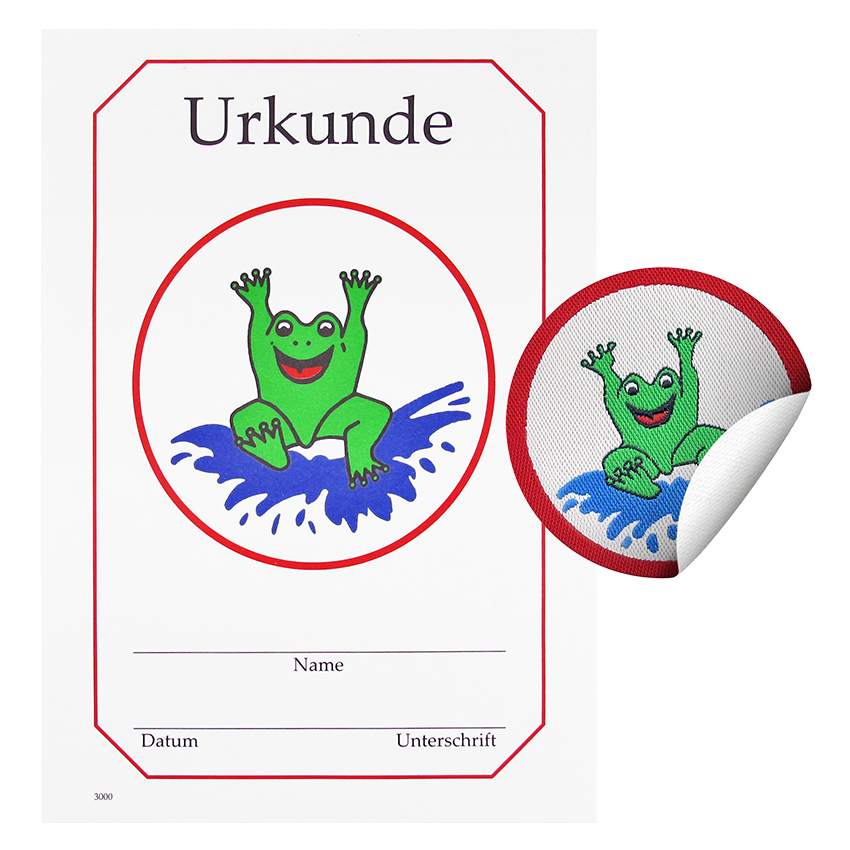
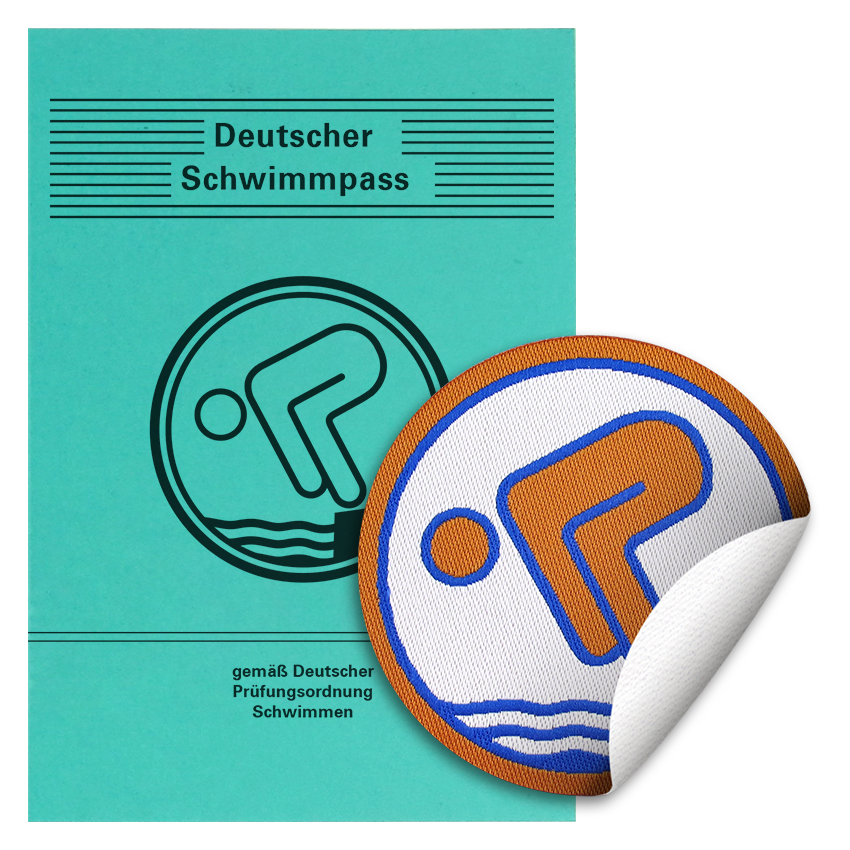
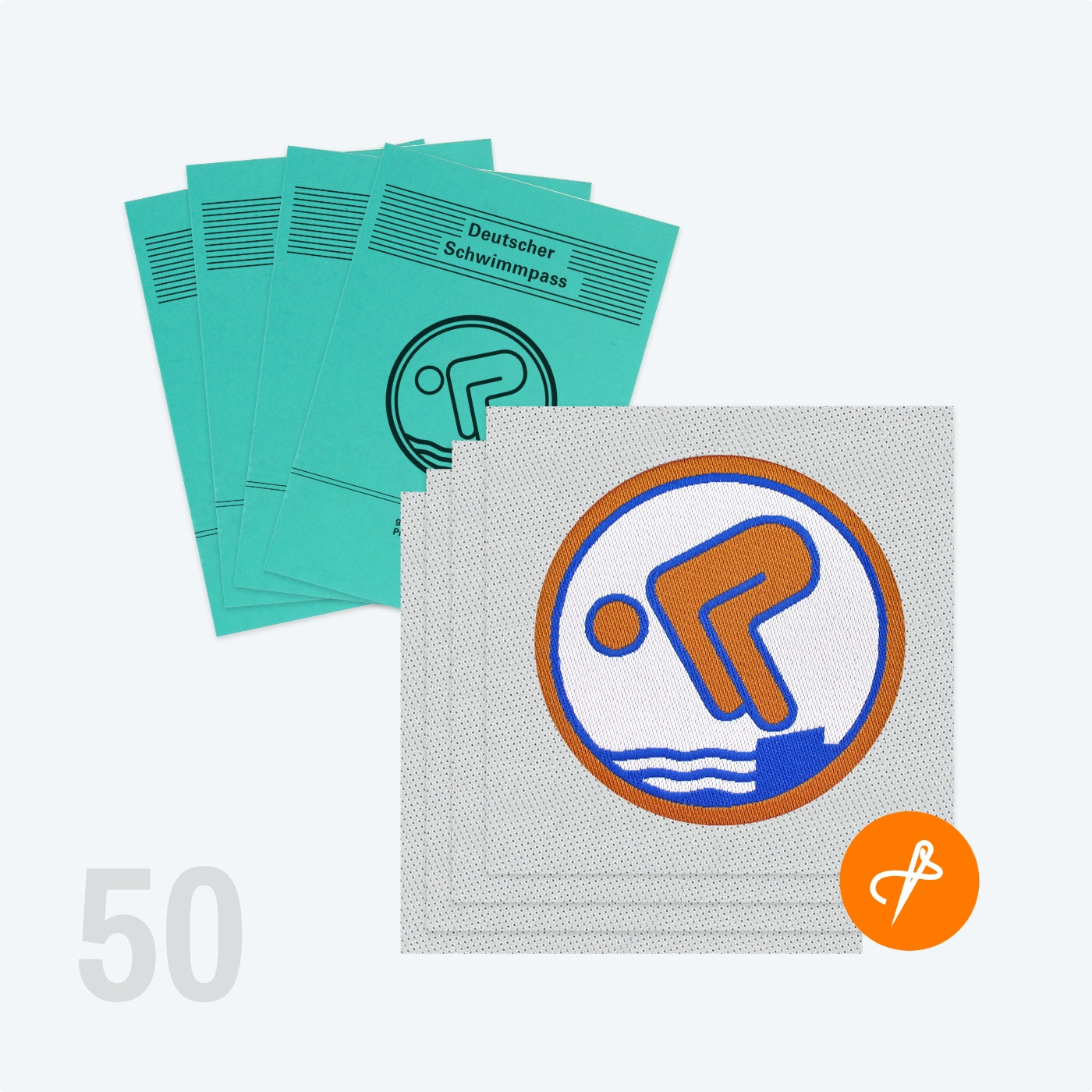
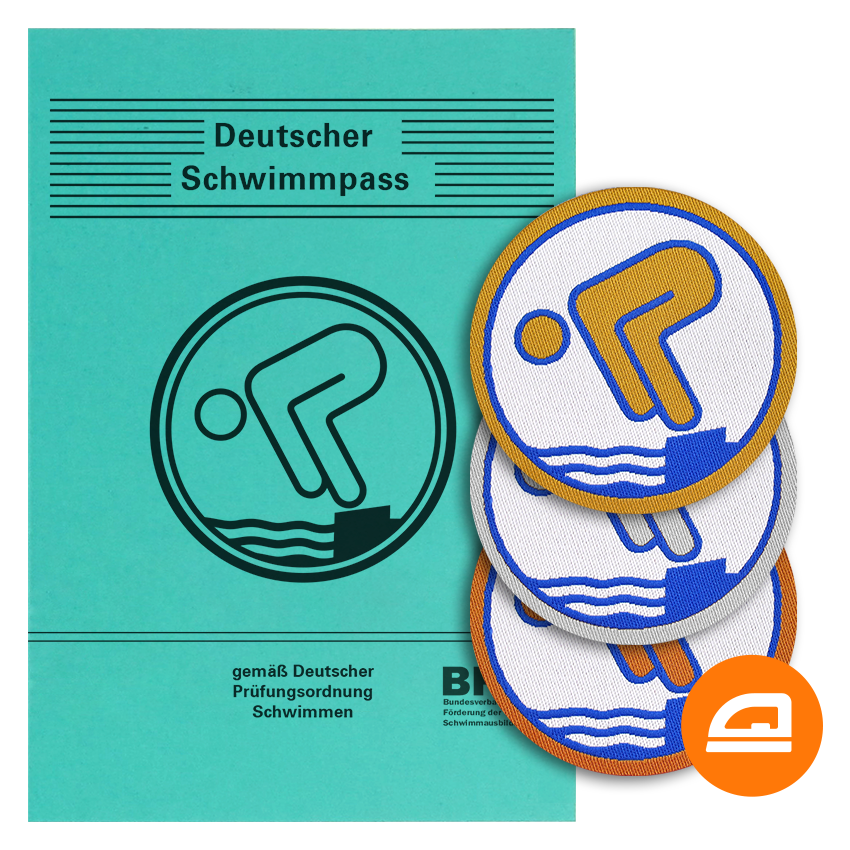
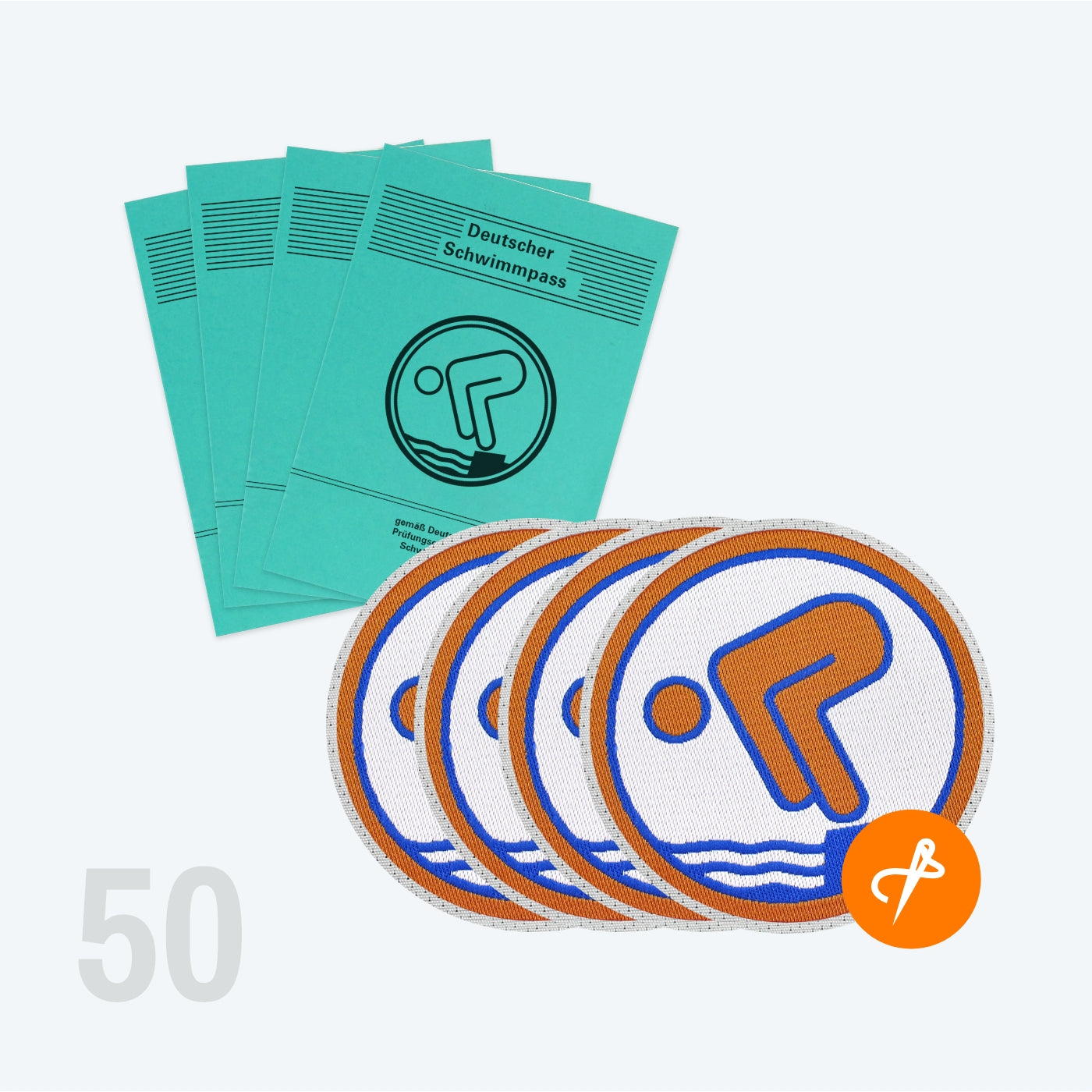
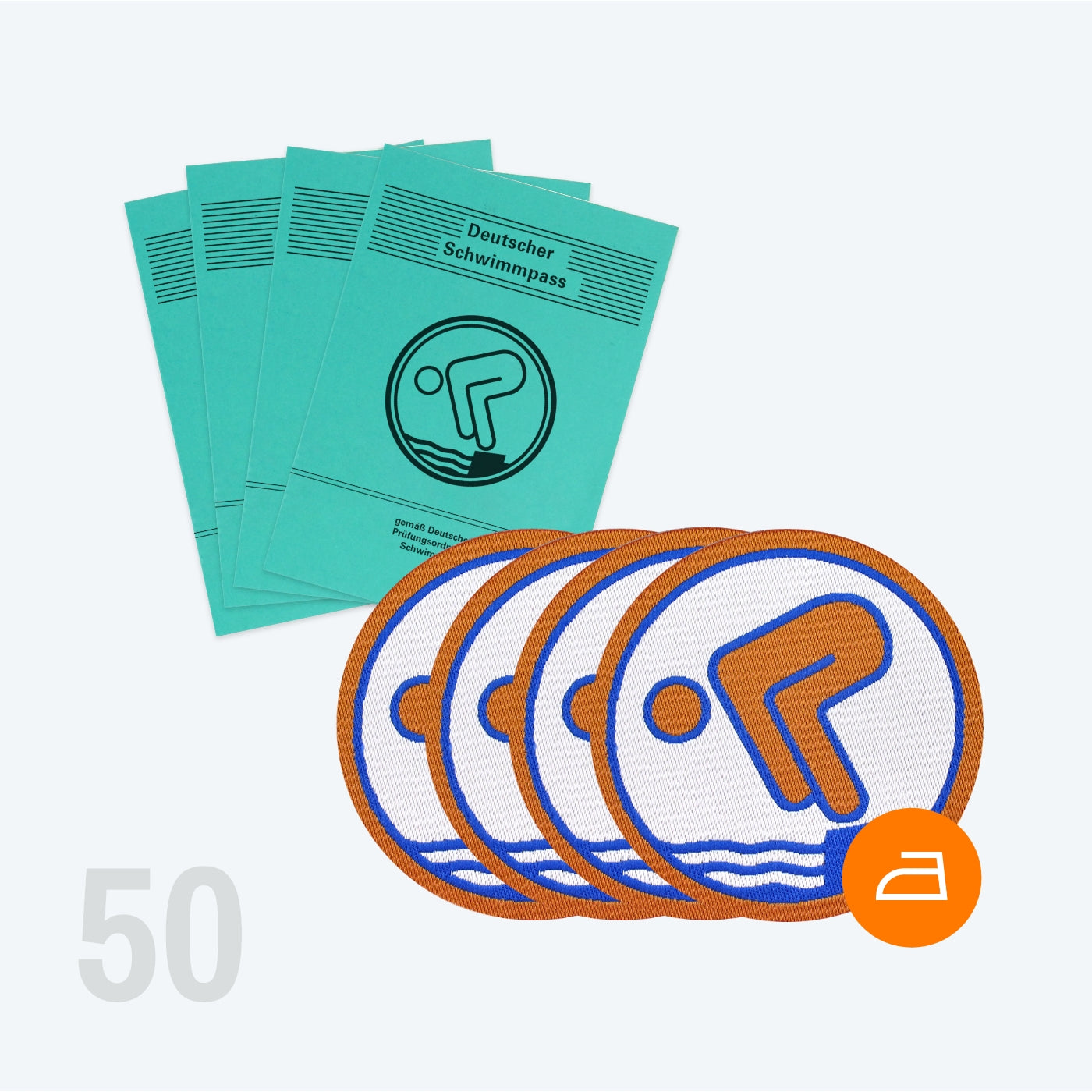
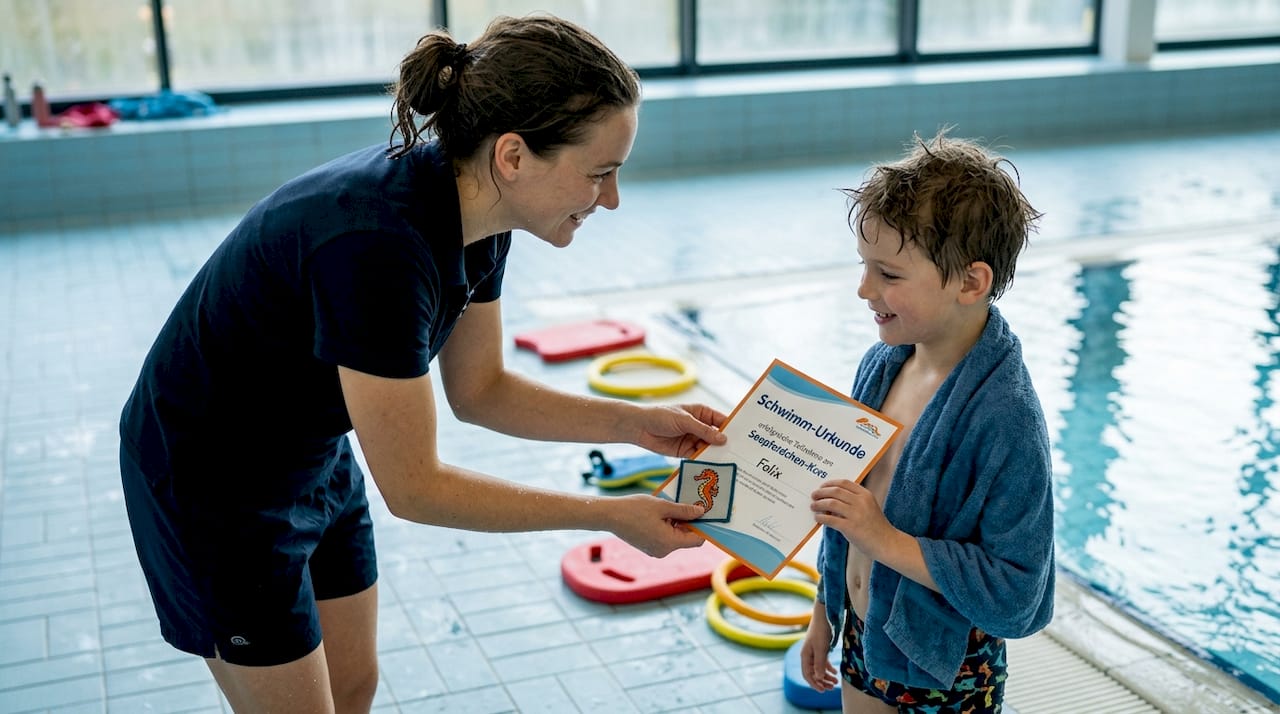
After passing the test, children receive an official certificate, the fabric badge to sew on, and a swimming pass. The swimming pass documents all acquired badges and serves as lifelong proof. Many swimming schools present the awards in small ceremonies, which further boosts the children's pride.
Examination fees vary between 3 and 15 Euros depending on the provider. Some swimming courses already include the examination costs in the course fee, while others charge them separately. Parents should clarify in advance what costs they will incur and whether the certificate and badge are included in the price.
Motivation and Role of Swimming Badges in Preschoolers
The Seepferdchen acts as a powerful motivator for preschoolers. The visible reward in the form of a colorful certificate and a fabric badge makes the learning success tangible. Children can proudly wear the badge on their swimming trunks or hang it at home, which sustainably strengthens their self-confidence.
Psychologically, swimming badges work on the principle of positive reinforcement. Each milestone reached motivates for the next step. Studies show that children with clear goals make progress faster than those without structured reward systems. The badge system creates a learning curve with manageable stages instead of an overwhelming overall task.
Parents can encourage their children's motivation through various approaches:
- Playful preparation in the bathtub or paddling pool
- Joint swimming pool visits as a family activity
- Reward rituals after passing the test (without material pressure)
- Patience with water fears and individual support at their own pace
- Regular participation in swimming courses for continuous progress
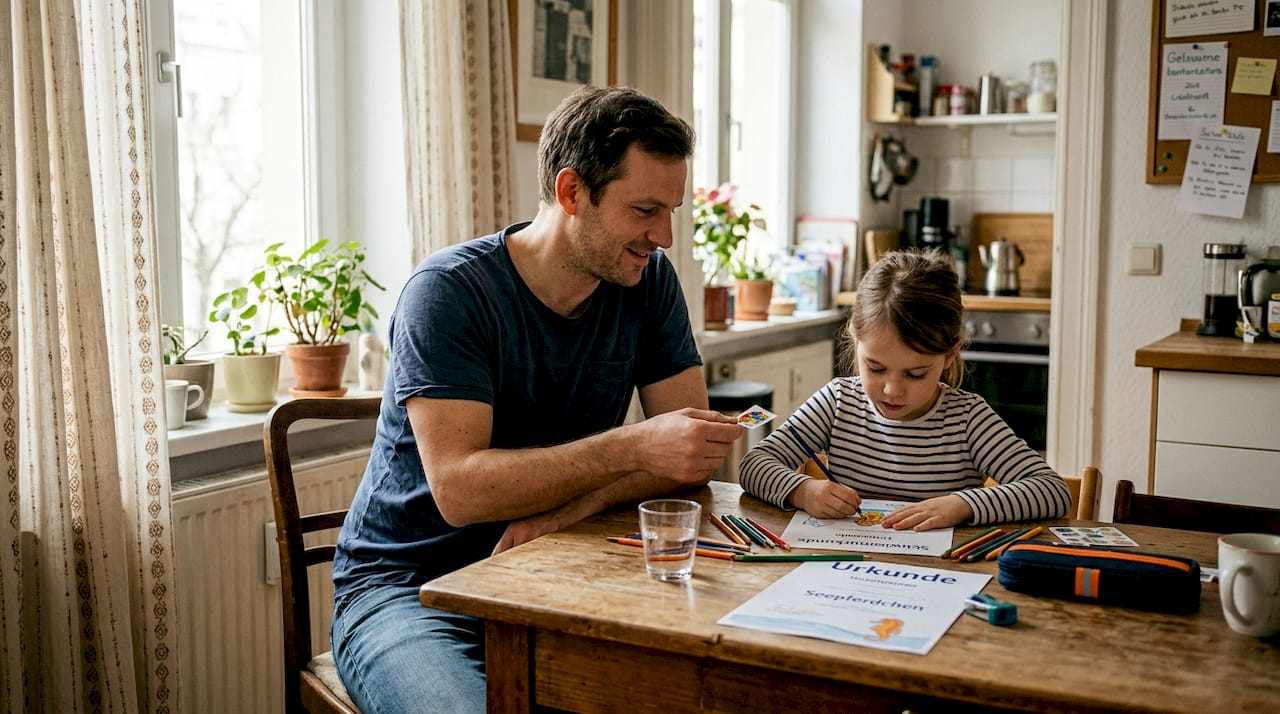
Pro-Tip: Create a small swimming diary with your child, in which progress is recorded. Draw the swimming badges together and note special achievements. This visualizes the learning path and shows the child how far they have already come.
Dealing with setbacks is particularly important. Not every child passes the test on the first attempt. Parents should communicate failures as normal learning steps and focus on the skills already achieved. Another attempt after additional practice usually leads to success and also strengthens frustration tolerance.
The motivation through swimming badges extends beyond learning to swim. Children develop perseverance, learn to set goals, and experience that effort leads to success. These competencies transfer to other areas of life such as school or sports.
Regular swimming courses offer not only technical training but also social benefits. Children learn in a group, cheer each other on, and share successes. Group pressure has a positive effect, as most children want to join in when peers make progress.
Choosing the Right Swimming Badge: Comparison and Recommendations
The choice of the appropriate swimming badge depends on your child's developmental stage and abilities. The Seepferdchen is suitable as a first stage for swimming beginners from about 5 years old. It confirms basic water safety but does not yet make the child a safe swimmer. Many experts emphasize that only the Bronze badge proves true swimming safety.
The Bronze badge, also known as "Freischwimmer" (free swimmer), marks a crucial difference. While the Seepferdchen primarily has a motivational effect, Bronze proves the ability to stay above water for a longer time and to use various swimming techniques. For school trips or club memberships, at least Bronze is often required.
| Badge | Requirements | Age Recommendation | Meaning |
|---|---|---|---|
| Seepferdchen | 25m swim, jump, dive | from 5 years | First milestone, water familiarization |
| Bronze | 200m in 15min, deep diving 2m | from 6 years | Basic swimming safety |
| Silber | 400m in 25min, starting jump, 10m underwater swimming | from 8 years | Advanced technique |
| Gold | 600m in 24min, 50m backstroke, rescue exercise | from 9 years | High swimming competence |
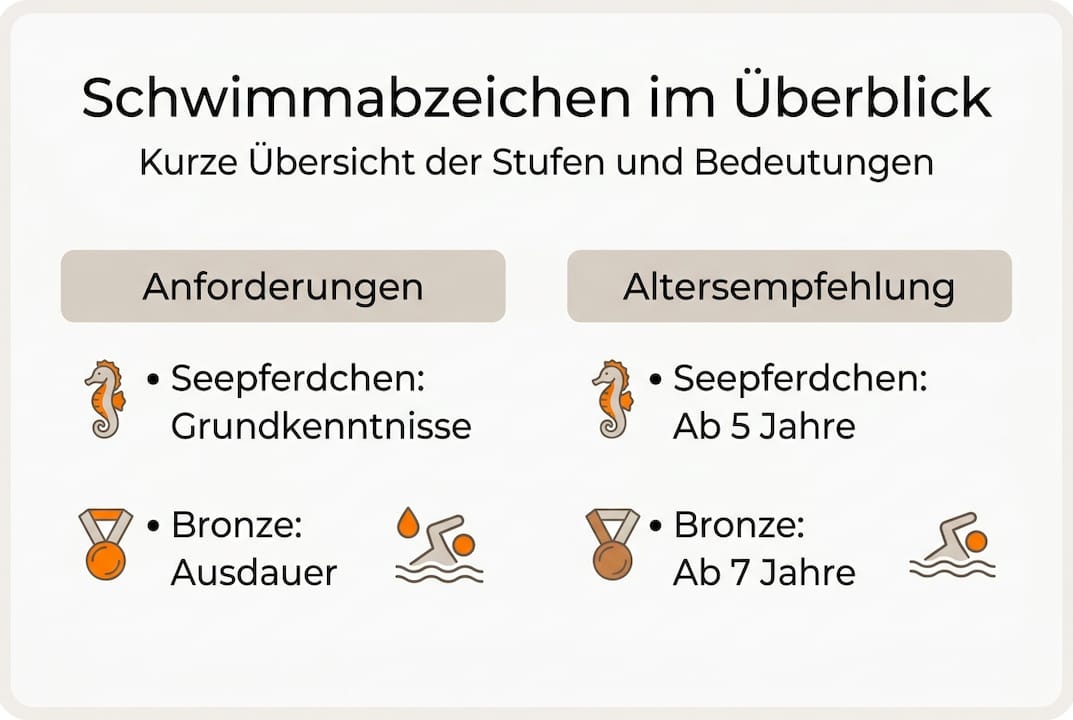
Unofficial badges like Frosch, Pinguin, or Bobby fill the gap between non-swimmer and Seepferdchen. They motivate children through smaller intermediate goals and make the learning process less intimidating. However, they have no official recognition and are not accepted as proof by schools or clubs.
For preschoolers, the following sequence is recommended:
- Water familiarization through playful courses (without badges)
- Unofficial intermediate badges for motivation (optional)
- Seepferdchen as the first official milestone
- Bronze as a goal for elementary school age
The various swimming badges build systematically upon one another. Each badge extends the requirements and leads to more comprehensive water safety. Parents should not overburden their child by skipping badges but respect the natural progression.
Silber and Gold are aimed at advanced swimmers of elementary school age. They require not only longer distances but also technically clean execution of various swimming styles. These badges are ideal for children who pursue swimming as a sport or want to train in clubs.
A common misconception is that the Seepferdchen provides sufficient safety. In fact, many Seepferdchen holders can only swim under ideal conditions. In cold water, with waves, or after falling into the water, the strength for 25 meters is often lacking. Only Bronze provides the endurance and technique for real emergency situations.
Discover Suitable Swimming Badges and Certificates for Your Children
After your child has passed a swimming test, they deserve a high-quality award that honors their success. At Pimpertz, as an official partner of the DLRG and BFS, you will find the complete range of official swimming badges from Bronze to Gold, including a swimming pass. The brilliant colors and durable workmanship ensure that the badges look like new even after years.
For younger swimming beginners, the Bobby swimming badges offer a child-friendly alternative with motivating designs. Complement the fabric badges with professional certificates that you can personalize. For over 38 years, Pimpertz has guaranteed the highest quality and delivers within 1 to 2 business days nationwide in Germany. The easy online ordering makes it simple for parents to find the right products for each milestone and visibly reward their child for their achievements.
Frequently Asked Questions about the Recognition of Swimming Badges
How do I recognize an officially recognized swimming badge?
Official swimming badges are issued by associations such as DOSB, DSV, DLRG, or BFS and bear their logos. The examination must be carried out by certified examiners who are affiliated with these associations. After the examination, you will receive a certificate, a fabric badge, and a swimming pass as proof. Unofficial badges like Frosch or Pinguin do not have a standardized examination procedure.
Who conducts the examinations for swimming badges?
Certified swimming instructors, lifeguards, and club coaches with a special examiner's license conduct the tests. These examiners undergo training with the swimming federations and are authorized to award official badges. The examinations take place in public pools, club pools, or recognized swimming schools. Only badges awarded by licensed examiners are valid nationwide.
Which swimming badges are suitable for preschoolers?
The Seepferdchen is suitable as the first badge for children from about 5 years old. It confirms basic water safety with 25 meters of swimming, a jump, and diving. Unofficial intermediate badges like Bobby or Frosch can motivate younger children. The Bronze badge should be aimed for from 6 years old, as it proves true swimming safety.
How can I motivate my child to swim?
Focus on playful water familiarization without pressure and visibly celebrate every progress with certificates and badges. Regular swimming courses create routine and group dynamics. Create a swimming diary together, in which successes are recorded. Avoid comparisons with other children and respect the individual learning pace. Positive reinforcement is more sustainable than performance pressure.
Where can I buy official certificates and badges?
Official swimming badges and certificates can be purchased from specialized providers such as Pimpertz, who offer certified products as partners of the DLRG and BFS. Many swimming schools and clubs offer the badges directly after the examination. When buying online, you should look for official partnerships and quality seals. Pimpertz guarantees fast delivery within 1 to 2 working days and carries the complete range from Seepferdchen to Gold.


,%20%22Fro...)