

Correctly Understanding the Conformity of DLRG Swimming Badges
Over 60% of elementary school children cannot swim safely, representing an underestimated problem. DLRG swimming badges offer a standardized testing procedure to assess swimming skills and contribute to reducing bathing accidents. This article clarifies what conformity means for DLRG badges and why it is important. You will learn which standards apply, how the different badge levels are structured, and how clubs and schools can successfully implement these standards. With practical tips and clear explanations, you will gain the knowledge to conduct swimming tests safely and in compliance with regulations.
Table of Contents
- Key points on DLRG Swimming Badge Conformity
- What does conformity mean for DLRG swimming badges?
- Overview of DLRG Swimming Badges and their Examination Requirements
- Comparison and Importance of Conformity for Clubs and Schools
- Practical Guide to Ensuring Conformity in DLRG Swimming Tests
- How to Easily Order Official DLRG Swimming Badges
- Frequently Asked Questions
Key Findings
| Point | Details |
|---|---|
| Standardized Examinations | DLRG badges are standardized tests to assess swimming skills and ensure comparable results nationwide. |
| Conformity without DIN | Conformity means adherence to the specified DLRG examination standards, not a DIN standard. |
| Badge Levels | Seepferdchen requires swimming 25 meters, knowing bathing rules, and recovering an object; Bronze requires endurance of 200 meters in 15 minutes, diving two meters deep and retrieving an object, as well as knowledge of bathing rules and water hazards; Silver and Gold build upon these. |
| Implementation in Clubs and Schools | Clubs and schools should know and apply the standards, standardize examination procedures, ensure documentation of results, and review regularly. |
| Safety through Badges | Standardized examination procedures strengthen swimming competence and contribute to reducing bathing accidents. |
What does conformity mean for DLRG swimming badges?
For DLRG swimming badges, conformity does not mean a DIN standard, but the exact adherence to DLRG specifications. The German Life Saving Association sets examination requirements for each badge level. These standards ensure comparability and quality of swimming tests nationwide. Without this standardization, tests would vary and the validity of the badges would be limited.
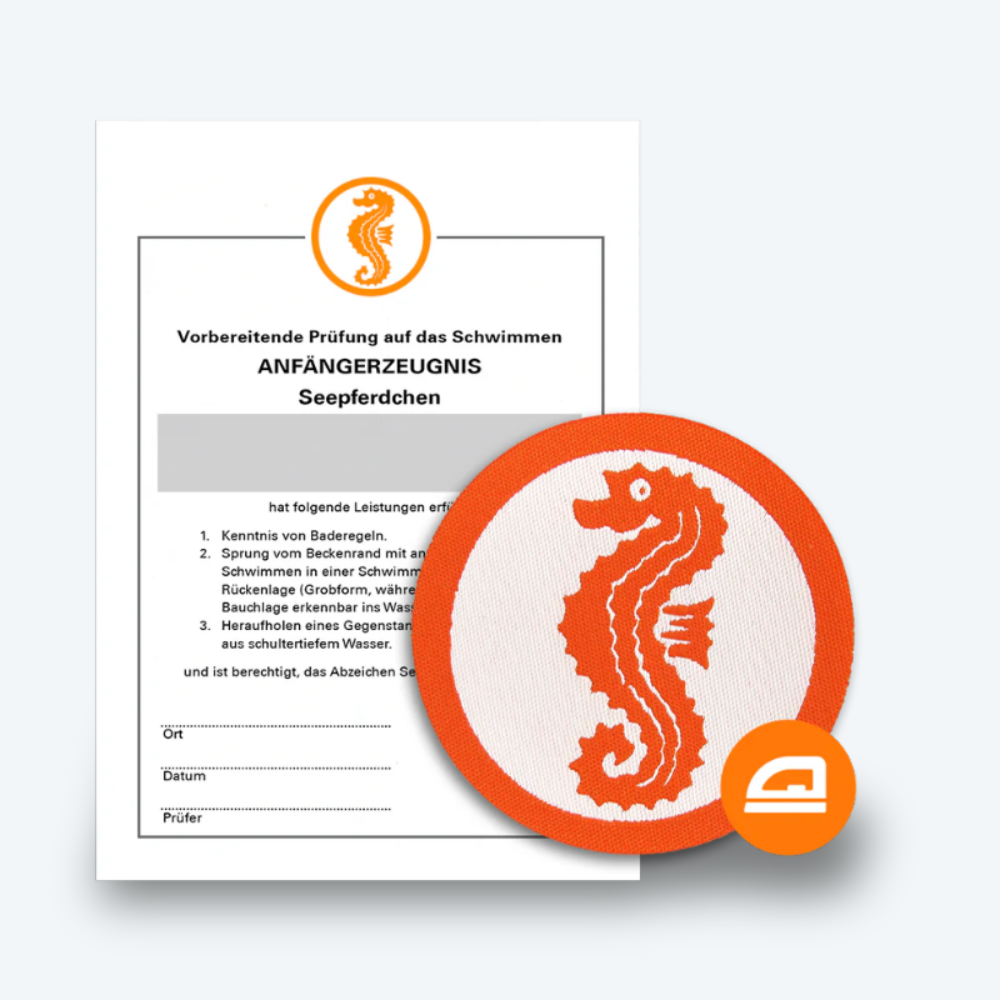
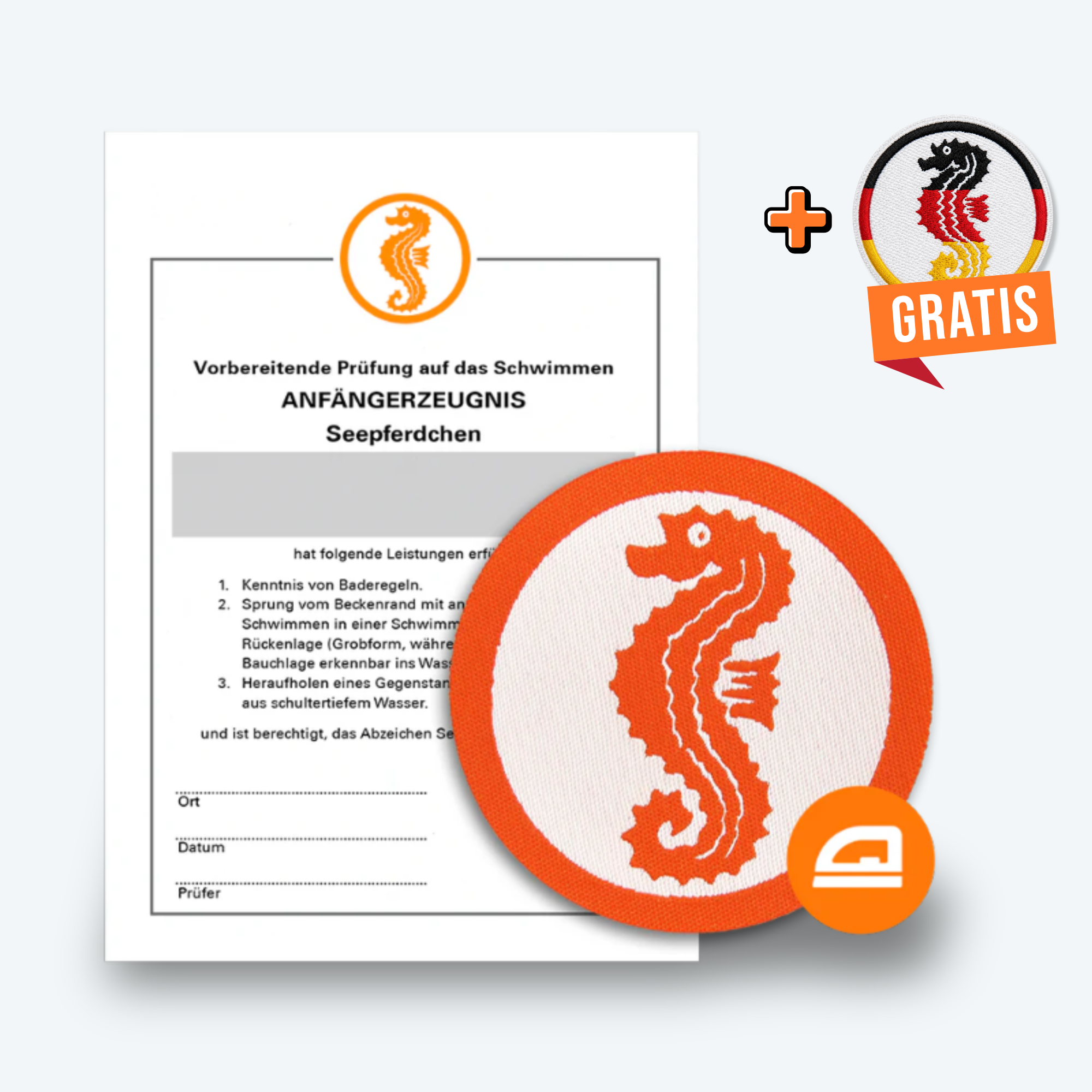
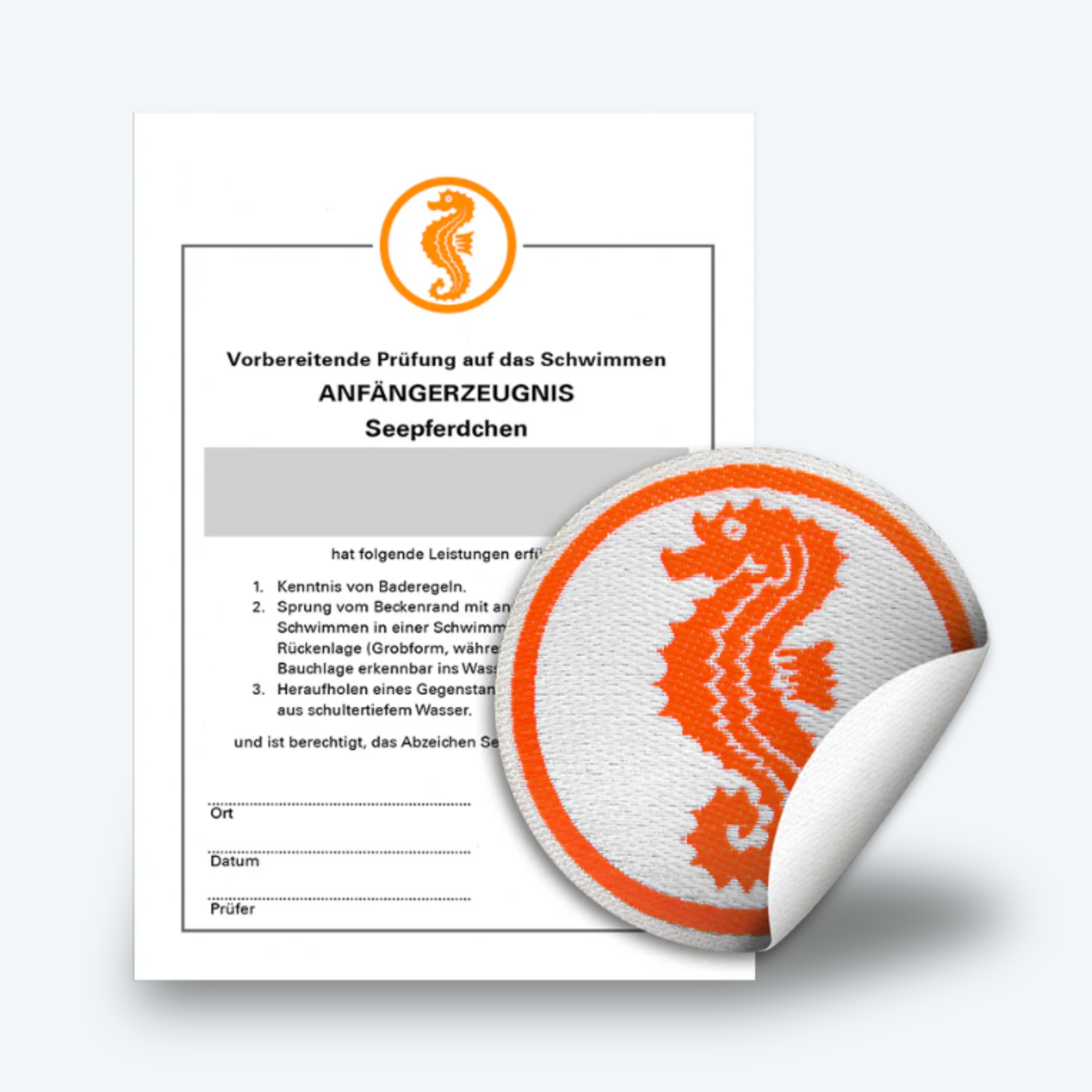
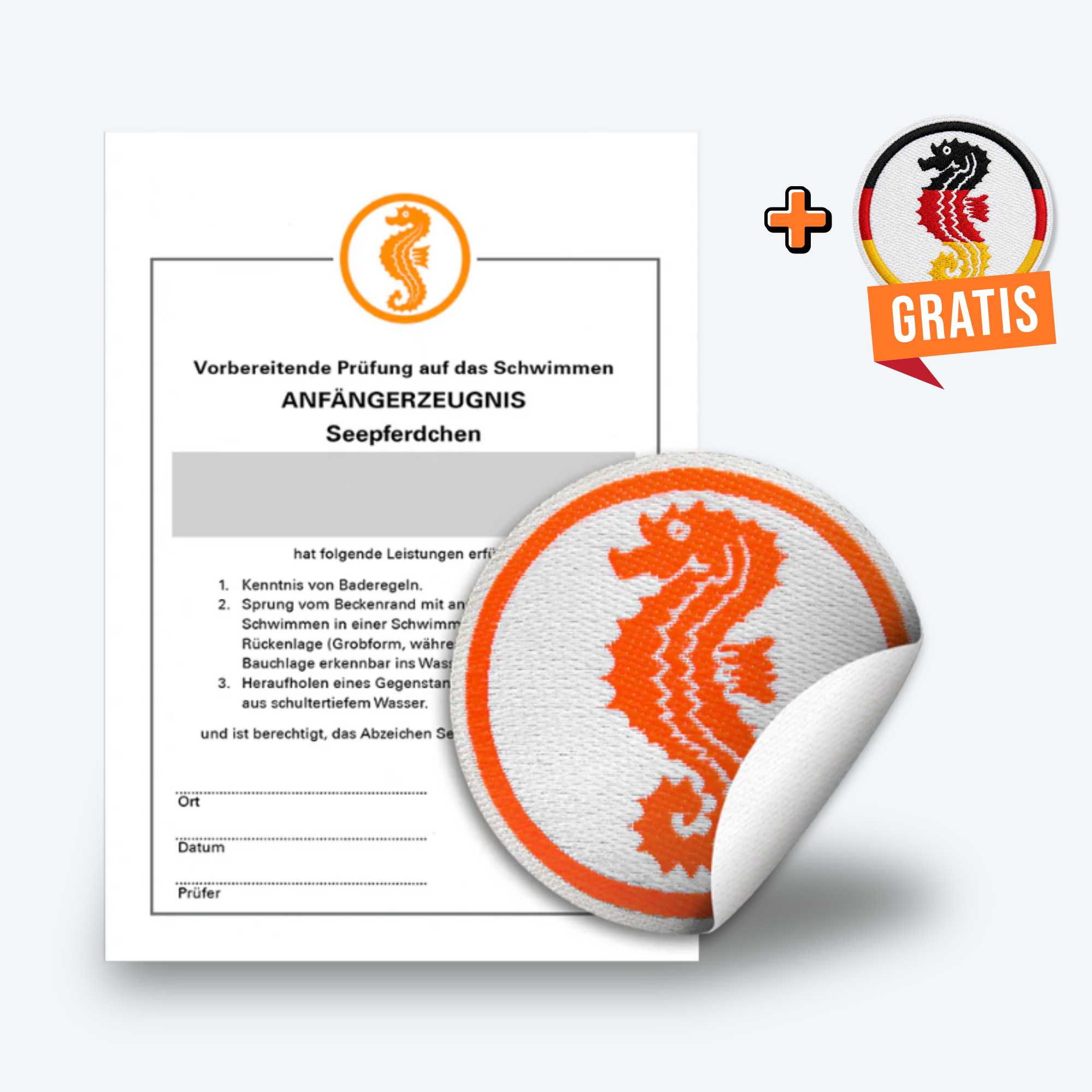
The DLRG defines precise performance criteria for each badge. For the Seepferdchen (Seahorse) badge, for example, children must swim 25 meters and know the bathing rules. For the Bronze badge, endurance and diving skills are added. These clear guidelines enable swimming instructors, parents, and children to assess the skills achieved. Conformity creates trust because everyone knows what a badge signifies.
“Conformity for DLRG swimming badges means complete agreement with the established examination standards of the DLRG. It guarantees that every badge proves the same swimming ability, regardless of where the examination takes place.”
For swimming clubs and schools, adherence to these standards is essential. It ensures legal protection and reliably documents the swimming ability of participants. Examiners must know and apply the DLRG swimming badge overview. Only then can it be ensured that children actually master the required skills.
The most important aspects of conformity include:
- Uniform examination content for each badge level
- Qualified examiners with DLRG training
- Standardized documentation of examination results
- Regular review of examination procedures
This standardization protects children from overestimating their abilities. A Seepferdchen guarantees basic skills, but not safe swimming in open waters. Bronze, however, proves that a child has endurance and safety knowledge. This distinction is vital and only possible through consistent conformity.
Overview of DLRG Swimming Badges and their Examination Requirements
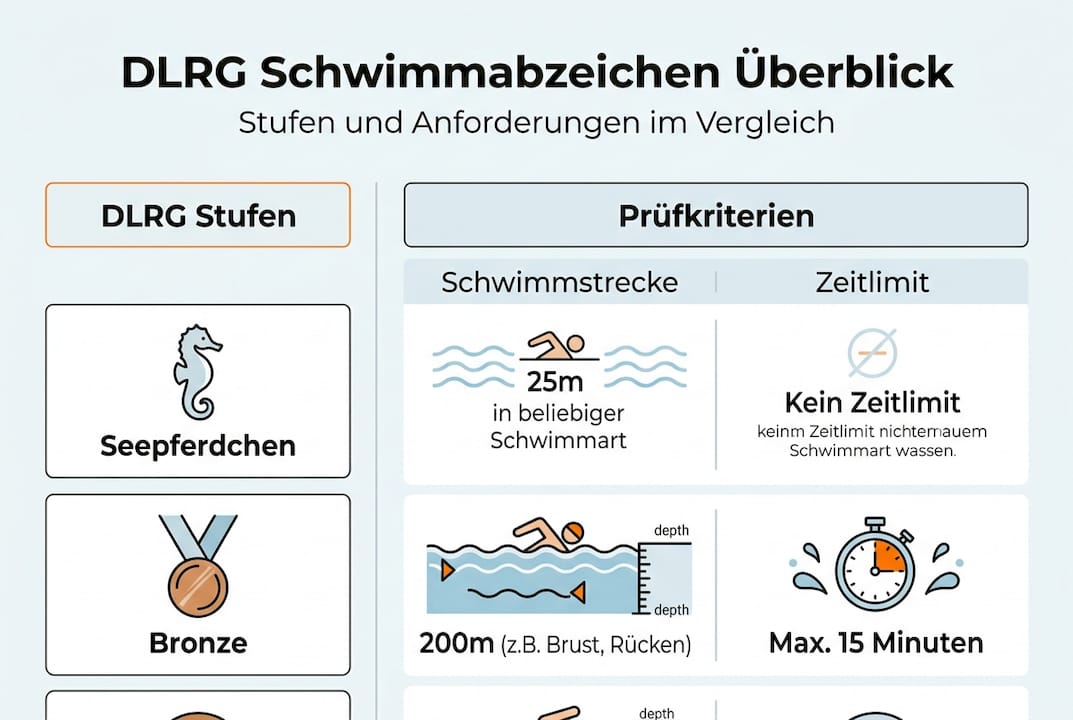
The Seepferdchen is the entry-level badge with minimum requirements. Children must swim 25 meters, retrieve an object, and know the bathing rules. This test is aimed at children aged around six years. It marks the first step towards water safety but does not replace the ability to swim safely.
Bronze requires significantly more endurance and safety. Candidates must swim 200 meters in 15 minutes, dive two meters deep, and retrieve an object. Additionally, knowledge of bathing rules and hazards in the water is tested. Bronze is considered the minimum swimming ability for independent swimming.
| Badge | Swimming Distance | Time Limit | Additional Requirements | Recommended Age |
|---|---|---|---|---|
| Seepferdchen | 25m | None | Jump from the edge of the pool, object recovery | From 6 years |
| Bronze | 200m | 15 Min. | 2m deep dive, jump from 1m height | From 7 years |
| Silver | 400m | 25 Min. | 2x 2m deep dive, jump from 3m height | From 9 years |
| Gold | 600m | 24 Min. | 3m deep dive, 50m transport swimming | From 10 years |
Silver and Gold build on these foundations and test comprehensive swimming and rescue skills. Silver requires 400 meters in 25 minutes and a jump from three meters high. Gold requires 600 meters in 24 minutes as well as 50 meters of transport swimming. These higher levels prepare for lifeguard training and demonstrate true water competency.
The DLRG swimming badges from Bronze to Gold follow a clear structure. Each level systematically expands the requirements. Children learn not only technique but also hazard awareness and rescue skills. This progression motivates and creates realistic learning goals.
Clearly defined requirements ensure concrete learning goals for swimming instructors and students. Examiners can objectively assess progress. Parents understand what skills their child possesses. This transparency makes DLRG badges the nationwide standard.
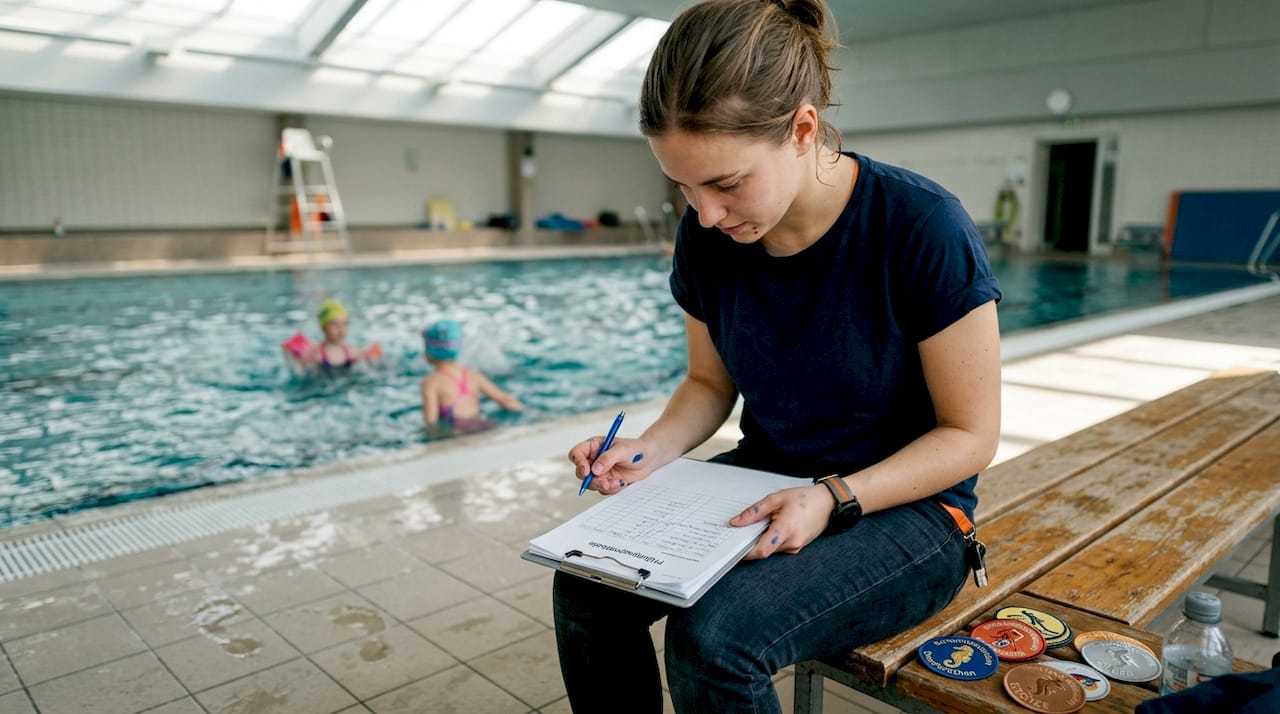
Pro Tip: Pay attention to correct technical execution and safety during the test. A child who completes the distance but swims sloppily should practice more. Technique prevents exhaustion in emergencies and is just as important as endurance.
Comparison and Importance of Conformity for Clubs and Schools
Conformity ensures acceptance and comparability in the examination sector. Schools and clubs can rely on DLRG standards. A Bronze badge from Hamburg means the same as one from Munich. This uniformity is indispensable for documentation and legal protection. Without it, swimming abilities would not be verifiable.
Differences from non-DLRG or local badges are visible in standards and examination handling. Some swimming schools issue their own badges with varying requirements. These are often less demanding or regionally limited. DLRG badges, however, are recognized nationwide and follow uniform criteria. This creates trust among parents and institutions.
| Criterion | DLRG Badge | Local Badges | Club-Specific Badges |
|---|---|---|---|
| Nationwide Recognition | Yes | No | No |
| Standardized Examination | Yes | Partially | Seldom |
| Rescue Skills | Integrated | Variable | Mostly not |
| Legal Protection | High | Low | Low |
| Documentation Value | High | Medium | Low |
For clubs and schools, conformity is important for documentation and accident prevention. In the event of bathing accidents, schools can prove that children possess tested swimming skills. This minimizes liability risks. Clubs benefit from clear training goals and motivated members. Swimming badge days with high success rates, like 96 badges in one day, demonstrate the efficiency of standardized examinations.
The comparison of DLRG swimming badge alternatives highlights the advantages of conformity. DLRG badges are not only recognized but also pedagogically sound. They promote step-by-step skill development. Other systems often lack this structure.
How clubs benefit from DLRG conformity:
- Clear training goals motivate coaches and swimmers
- Nationwide recognition increases the club's attractiveness
- Legal protection through documented standards
- Better accident prevention through realistic skill assessment
- Access to official DLRG materials and training courses
Schools use DLRG badges for swimming lessons and class trips. They reliably document the swimming ability of their students. For excursions to lakes or swimming pools, teachers know which children can swim safely. This information is indispensable for planning activities.
The best swimming badges for clubs are those that combine conformity with motivation. DLRG badges meet both criteria. They are challenging enough to test real skills, but achievable enough to motivate children.
Pro Tip: Ensure regular training for examiners for consistent conformity. Even experienced swimming instructors should complete a refresher course every two years. Standards change, and only trained examiners guarantee uniform assessments.
Practical Guide to Ensuring Conformity in DLRG Swimming Tests
Step-by-step preparation of the examination environment according to DLRG standards is the first step. Examiners must ensure that the swimming pool meets the required conditions. For Bronze, you need a water depth of at least two meters. For Gold, there must be a diving board at three meters high. These requirements are non-negotiable.
How to prepare for a compliant examination:
- Check the examination location against DLRG requirements (water depth, pool length, jumping facilities)
- Provide examination documents and checklists
- Employ qualified examiners with current DLRG training
- Keep rescue equipment and first-aid supplies readily available
- Inform candidates about the procedure and requirements
- Prepare documentation sheets for each badge
- Organize timekeeping and observation posts
Examiners must be trained and equipped with official examination documents. The DLRG offers standardized training for examiners. These courses not only convey the examination content but also pedagogical aspects. A good examiner recognizes when a child is nervous and when they are truly overwhelmed. This distinction is important for fair assessments.
Clear communication of requirements to candidates prevents misunderstandings. Children and parents should know exactly what is required before the exam. Explain the assessment criteria transparently. A child who knows what to expect is less nervous and performs better.
Documentation of results, including avoiding sources of error, is essential. Common practical mistakes:
- Inaccurate timing for endurance distances
- Overlooking technical errors in swimming movements
- Incomplete documentation of examination results
- Lack of review of bathing rules knowledge
- Too lenient assessment out of sympathy for nervous children
The DLRG swimming badge examination procedure provides clear guidelines for every step. Adhere to them, even if it seems time-consuming. Conformity means not taking shortcuts. Every requirement has a safety reason.
Parents benefit from the DLRG swimming test guide to optimally prepare their children. They can practice bathing rules at home and maintain motivation. Well-prepared children pass tests more easily and develop more confidence in the water.
Checklist for compliant examination execution:
- All examiners have valid DLRG qualification
- Examination environment meets technical requirements
- Rescue equipment is ready for use
- Timekeeping is done with calibrated stopwatches
- Documentation is complete and legible
- Candidates have been informed about the procedure
- Assessment is objective according to DLRG criteria
How to Easily Order Official DLRG Swimming Badges
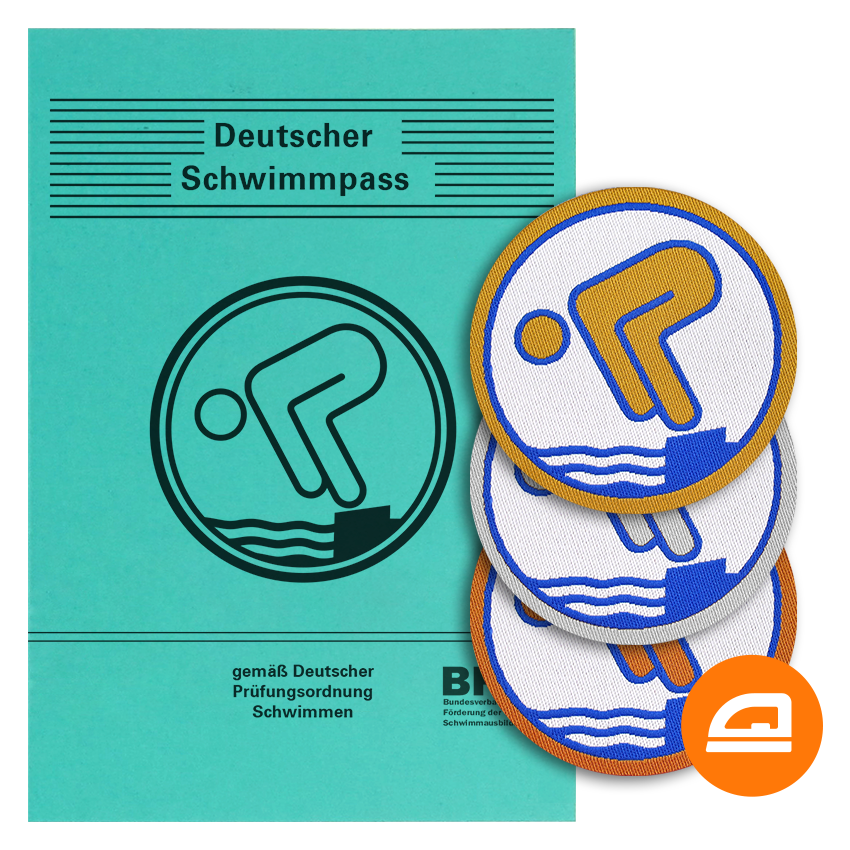
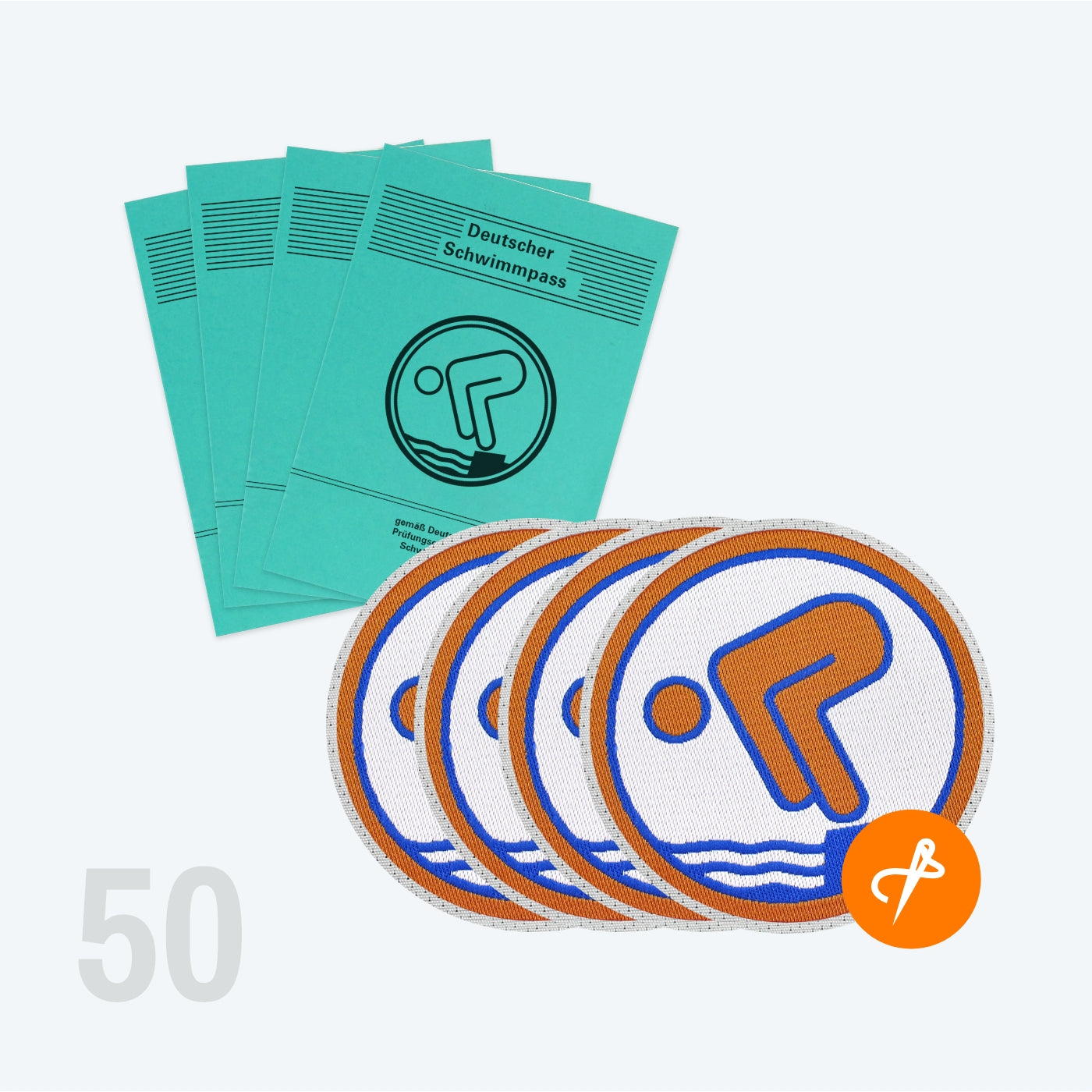
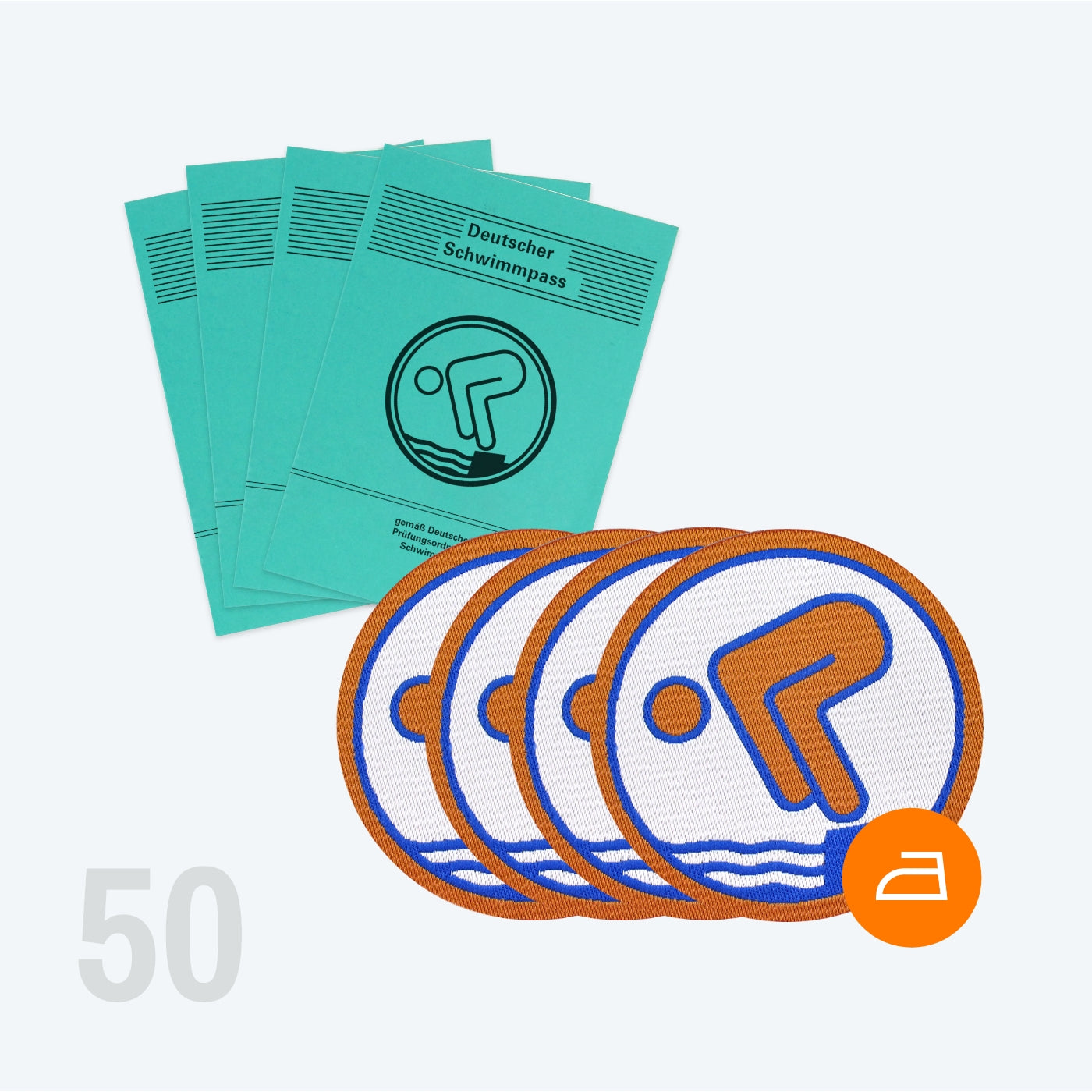
After your swimmers have successfully passed the tests, you will need official DLRG swimming badges to document their achievements. Pimpertz, as an official partner of the DLRG, offers a wide range of badges and certificates for all levels. From Seepferdchen to Gold, you will find Bronze, Silver, and Gold swimming badges of the highest quality.
The ordering process is simple and quick online. You select the required badges, specify the quantity, and receive your order within one to two business days. For clubs and schools, Pimpertz offers bulk discounts and personalized sets. You can also order Seepferdchen certificates directly to duly recognize the children's success.
With over 38 years of experience, Pimpertz guarantees officially recognized quality seals and full regulatory compliance. All swimming badges comply with DLRG standards and are officially certified. This ensures that your swimmers receive genuine, recognized badges that are valid nationwide.
Frequently Asked Questions
What are DLRG swimming badges and how do they work?
DLRG swimming badges are standardized certificates from the German Life Saving Association for proven swimming skills and water safety. They work through clearly defined examinations where swimmers must demonstrate certain distances, diving depths, and knowledge. Each badge, from Seepferdchen to Gold, has its own requirements, which gradually become more difficult. The examinations are conducted and documented by trained DLRG examiners.
What must be observed when ensuring conformity?
When ensuring conformity, certified examiners with current DLRG training are essential. The examination environment must meet the technical requirements, such as water depth and pool length. Official examination procedures must be followed exactly, without shortcuts or simplifications. Documentation must be complete and clearly record all assessment criteria. Regular refresher training for examiners ensures consistent quality.
How do DLRG badges differ from other swimming badges?
DLRG badges are standardized and recognized nationwide, while other badges are often only valid regionally or locally. They focus on rescue skills and safety knowledge, not just swimming technique. The examination standards are uniform and regularly reviewed. Other badges can vary greatly in requirements and assessment and do not offer comparable legal protection. DLRG badges are also pedagogically sound and build systematically upon one another.
At what age can children earn DLRG swimming badges?
Children can earn the Seepferdchen (Seahorse) badge from about six years of age if they meet the motor skills requirements. Bronze is recommended from seven years, as it requires more endurance. Silver and Gold are aimed at children from nine and ten years respectively. The actual age is less decisive than the child's individual development and swimming ability. Some children are ready earlier, others need more time.
How long are DLRG swimming badges valid?
DLRG swimming badges have no formal expiration date and remain valid for life. However, swimming skills should be refreshed regularly, as they can diminish without practice. For certain activities like school trips or summer camps, organizers sometimes require current proof of swimming ability. In such cases, a new examination or refresher may be advisable, even if the badge is formally still valid.