

Where to earn your Seahorse swimming badge: The path to safe swimming
Where can you get a Seepferdchen (Seahorse) swimming badge?
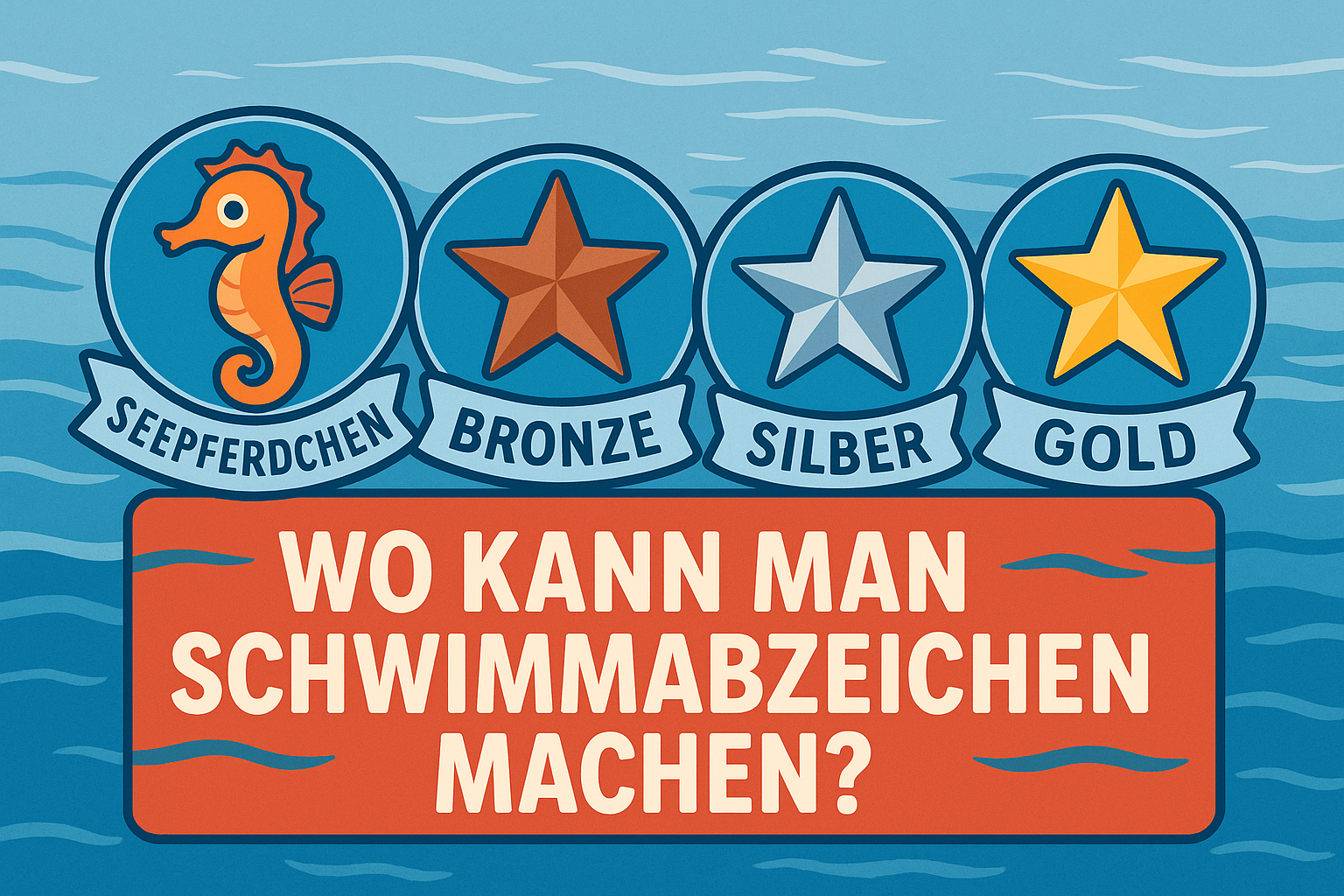
If you're wondering: Where can you get the Seepferdchen badge?, you'll find suitable options in almost every major city. Indoor pools, public swimming pools, private swimming schools, and organizations like the German Life Saving Association (DLRG) offer corresponding swimming courses for children aged four and up. Many schools and kindergartens also cooperate with local providers, thus enabling children to earn the Seepferdchen as part of regular lessons or during the summer holidays.
Choosing the right place for the Seepferdchen course depends on the child, the family's schedule, and the availability of qualified swimming instructors and lifeguards. A personal visit to the facility and a preliminary discussion with the course instructor are recommended to check the quality of the offering and clarify any open questions.
Seepferdchen Swimming Course – the first step into the water
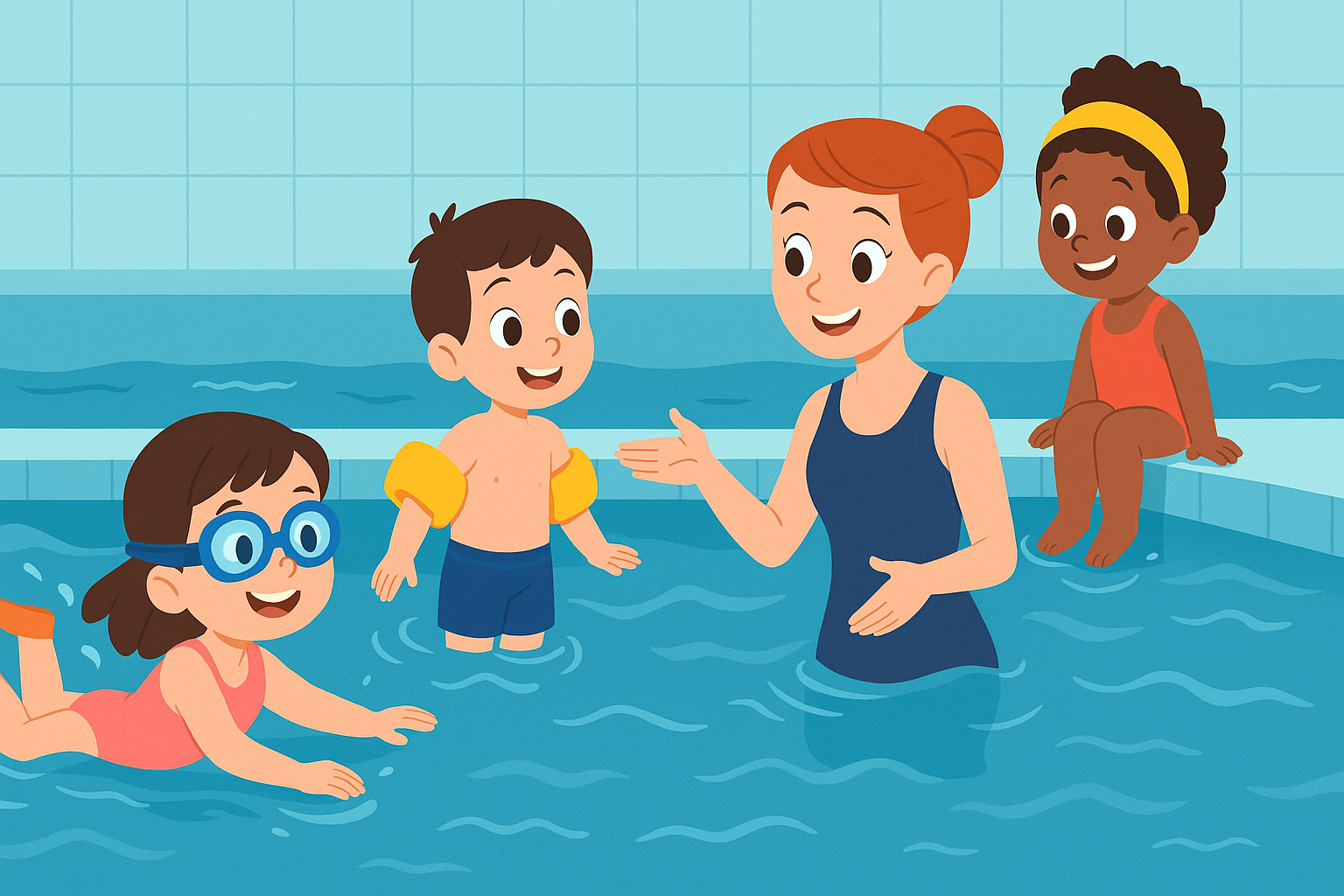
A Seepferdchen course playfully teaches initial swimming techniques, games, safety rules in the water, and the ability to move fearlessly in the water. The units are tailored to the respective age and development of the children. The focus is on fun, motivation, and building self-confidence – playing in the water is an important part of the course and promotes the joy of learning.
Through targeted swimming lessons, which usually take place once or twice a week, children systematically get used to the element of water. They make their first attempts at swimming, performing breaststroke or backstroke, with the focus usually on breaststroke. The goal is to teach swimmers basic techniques and safety in the water. For the course, participants usually only need simple equipment like swimwear; swimming aids are usually provided by the provider and do not need to be purchased separately. For participation in the course, certain prerequisites such as a minimum age and medical fitness must be met.
The right time: When should my child start?
The ideal time to start a Seepferdchen course varies from child to child. The German Life Saving Association (DLRG) recommends introducing children to water playfully from about 4 years of age. At this age, little ones can gain their first swimming experiences and familiarize themselves with the element of water. From about 5 years of age, most children are physically and motorically developed enough to actively participate in a Seepferdchen course.
It's important that your child feels comfortable in the water and enjoys swimming. Some children are ready at four, others need a bit longer to feel secure. Pay attention to your child's signals and don't put pressure on them – the fun in the water should always be the priority. A good Seepferdchen course takes into account the individual age and development of each child and ensures that learning to swim is a positive experience.
The Seepferdchen Badge – a symbol of courage and ability
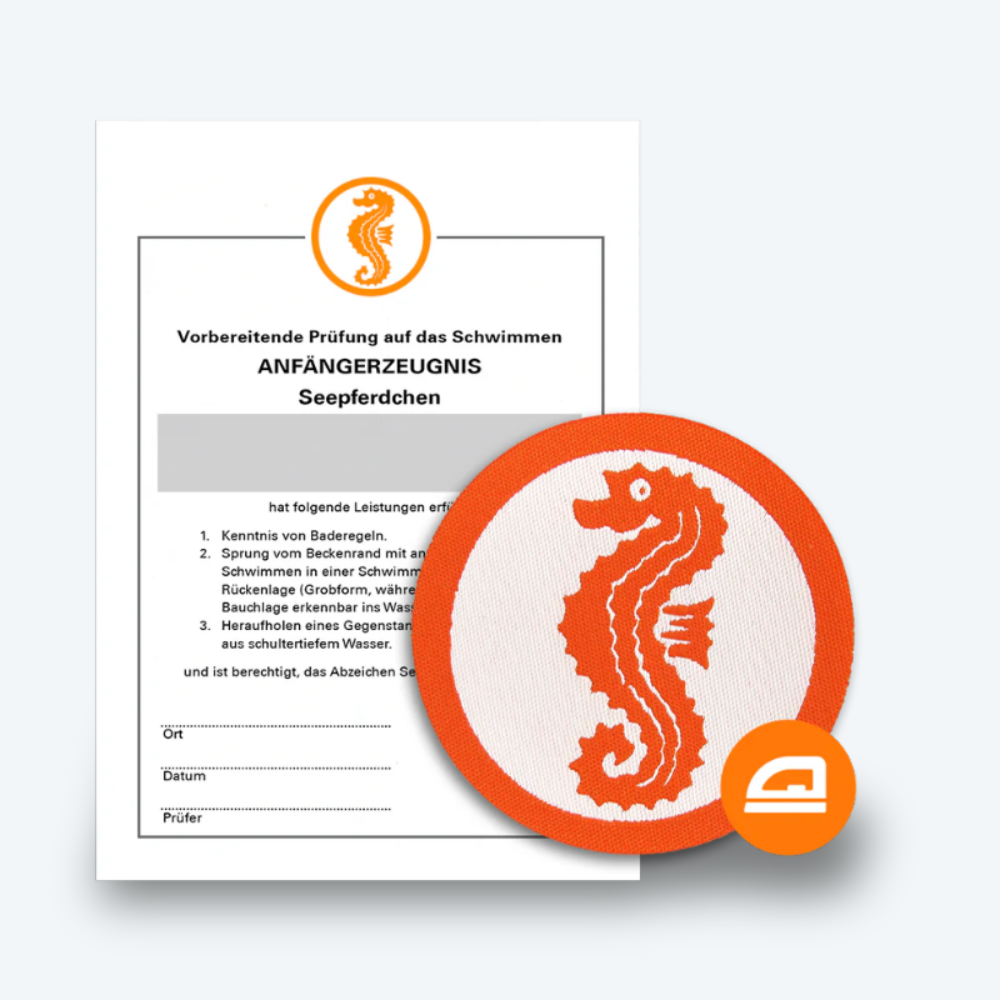
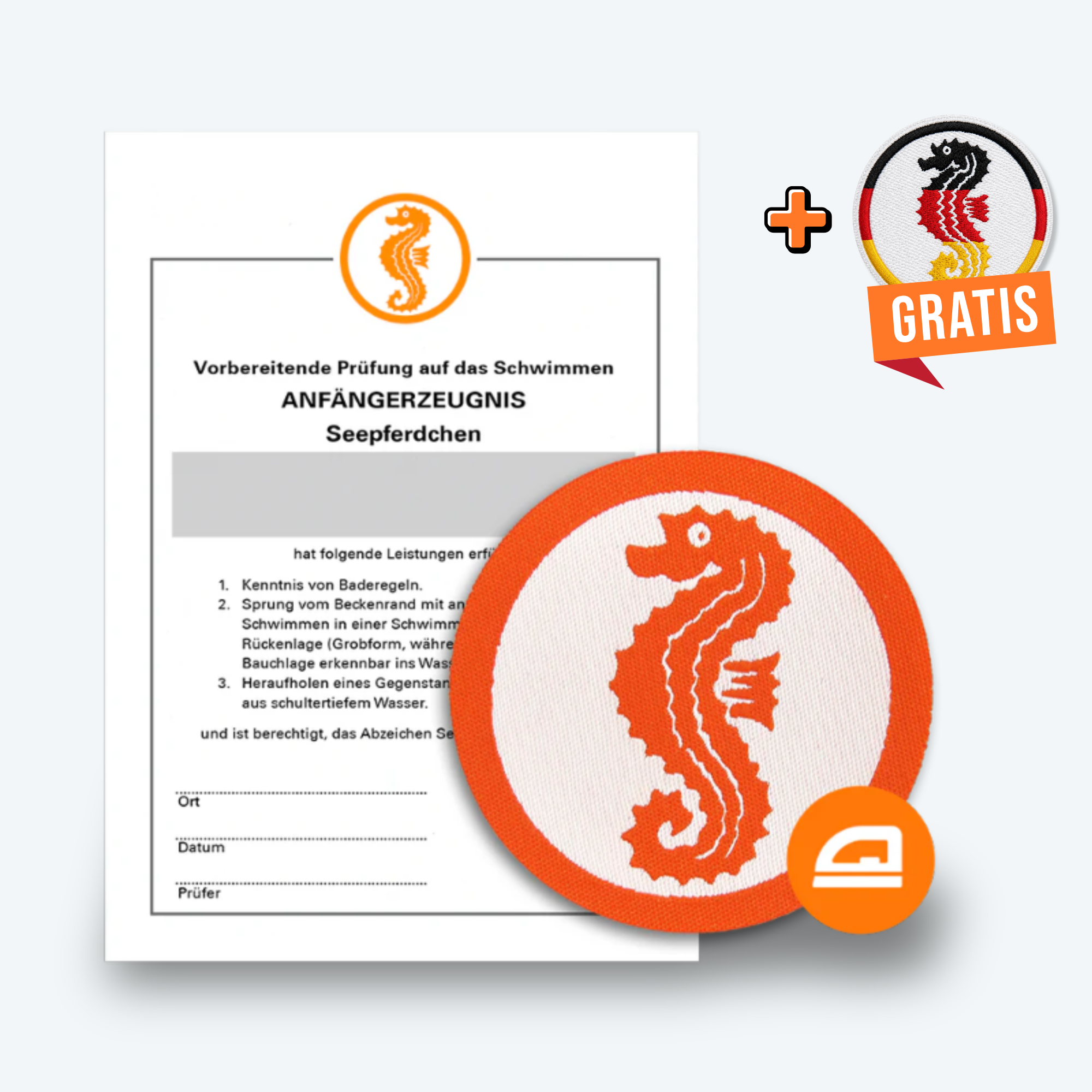
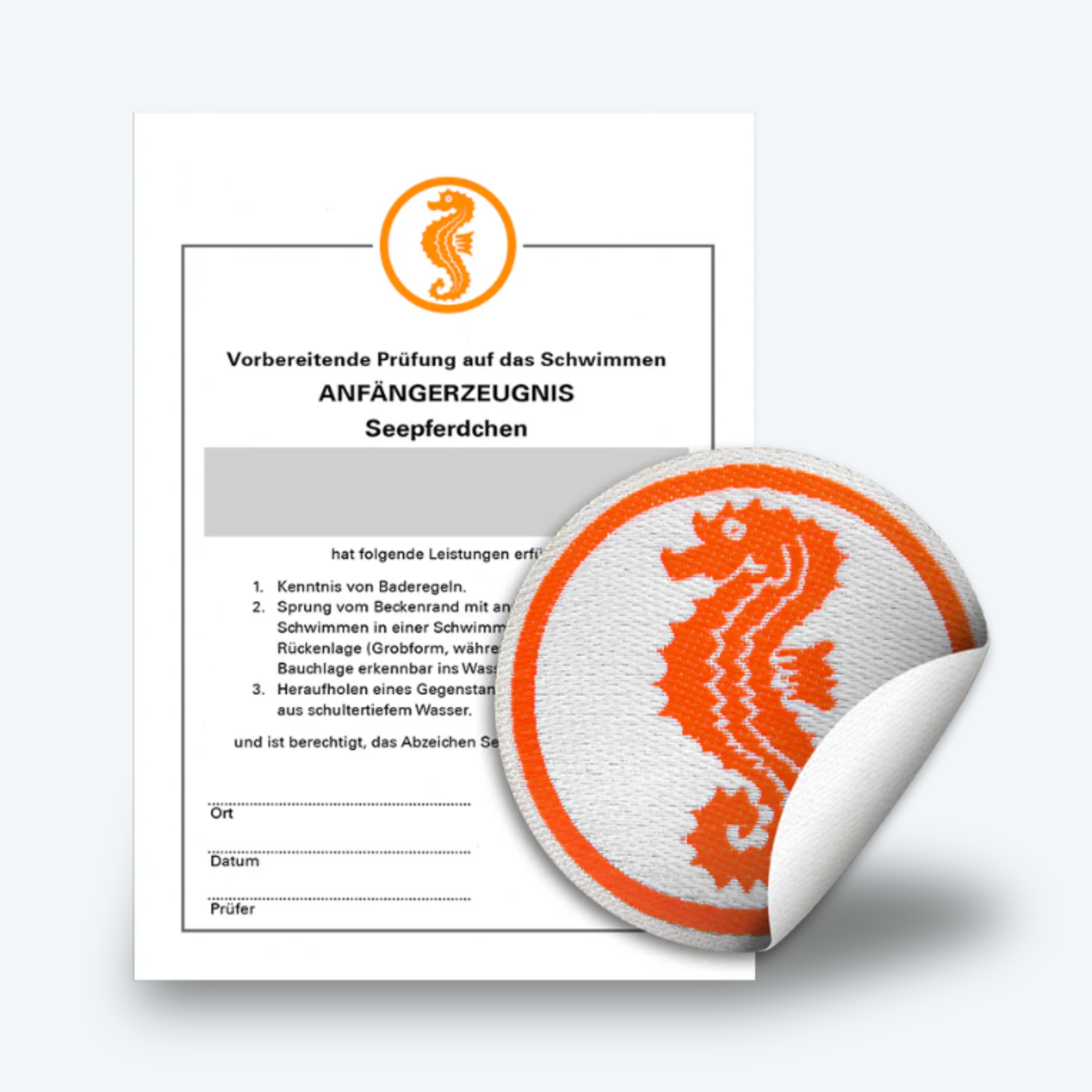
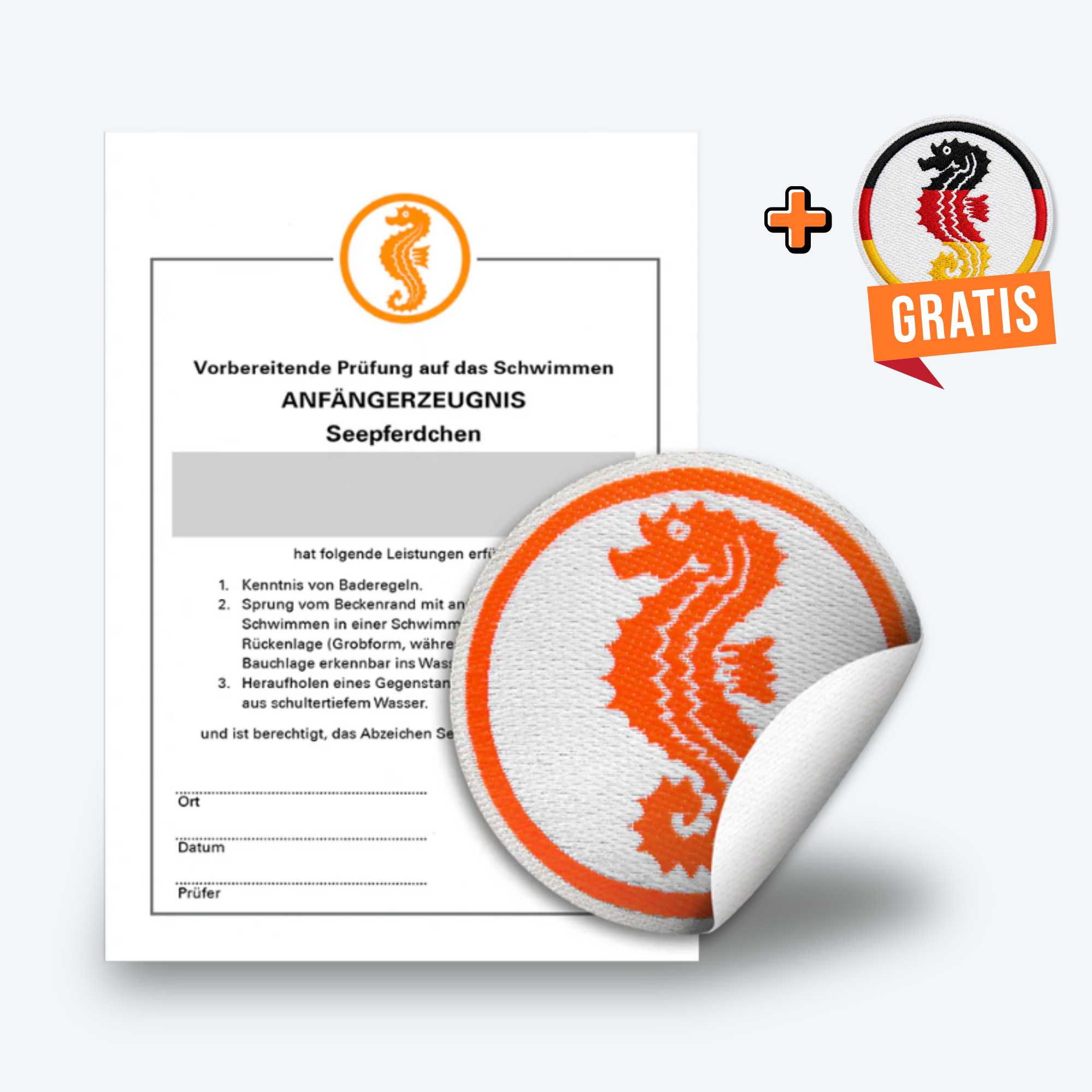
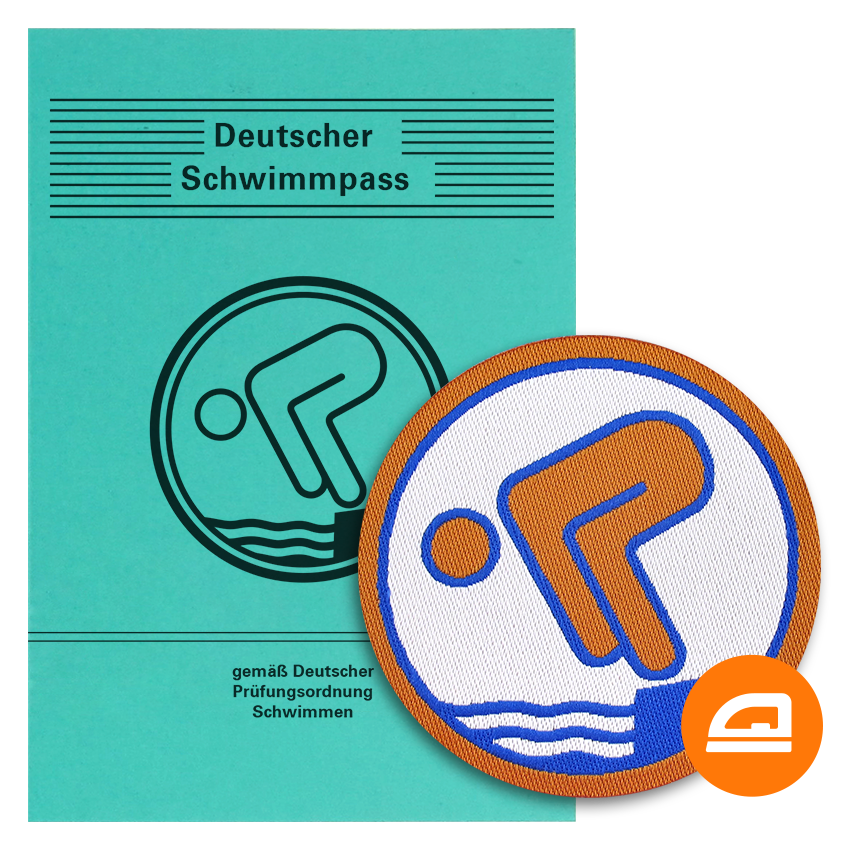
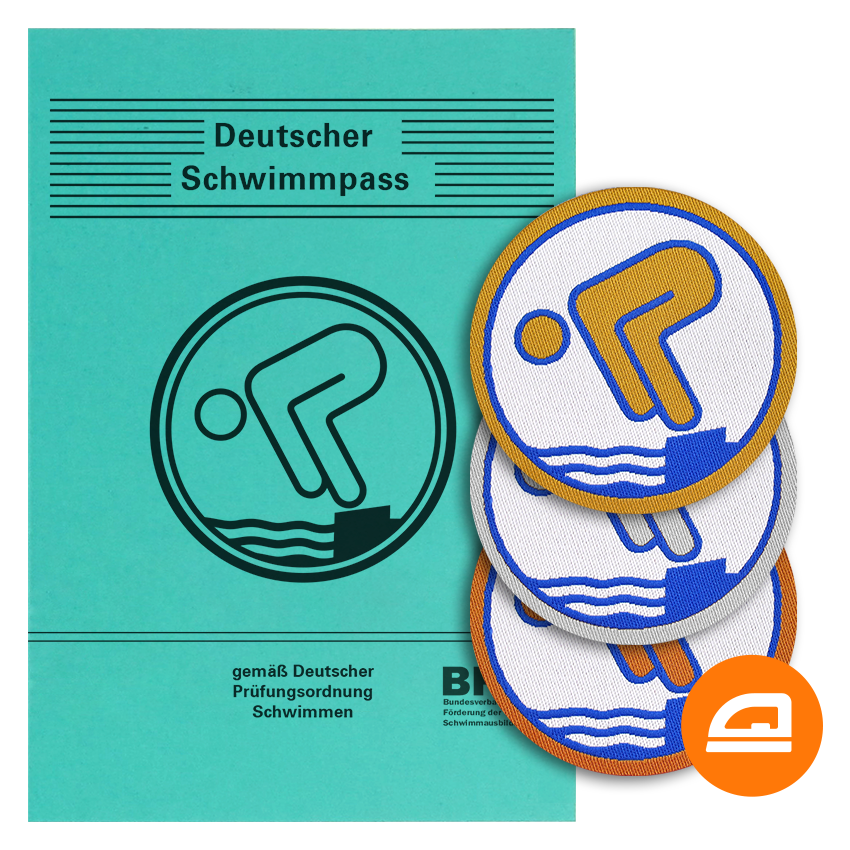
The Seepferdchen badge is more than just a patch – it's a sign of the first real successes in the water. The Seepferdchen is the central topic for children and parents when it comes to learning to swim and the first swimming badges. Children proudly wear the early swimmer's badge on their swimsuit or bathrobe. It shows that they have overcome a major hurdle in learning to swim.
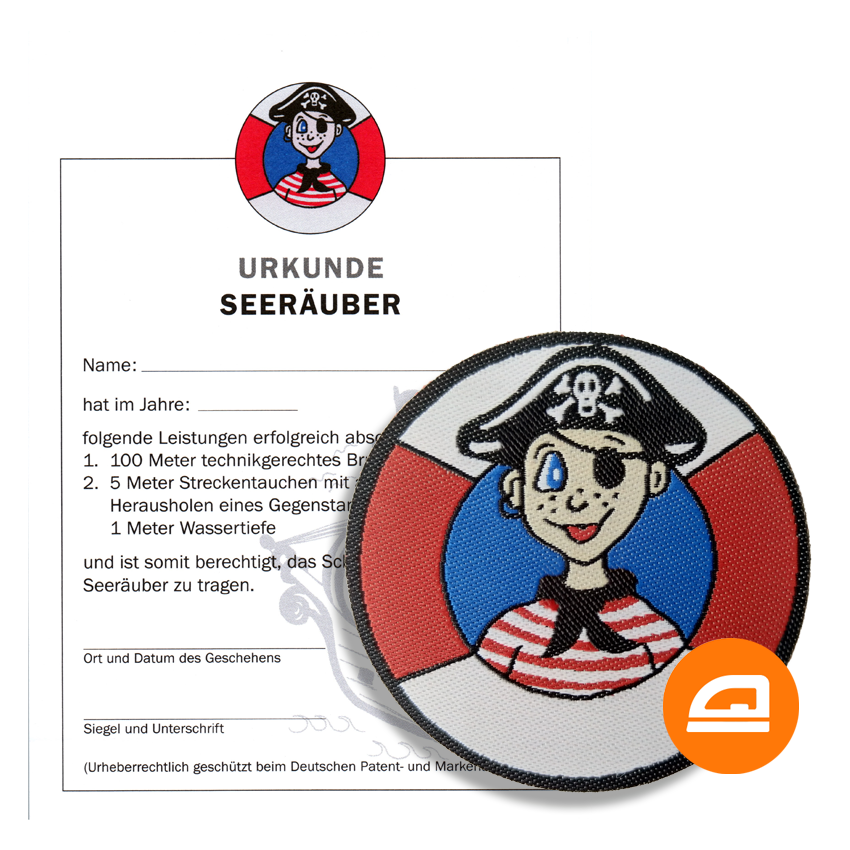
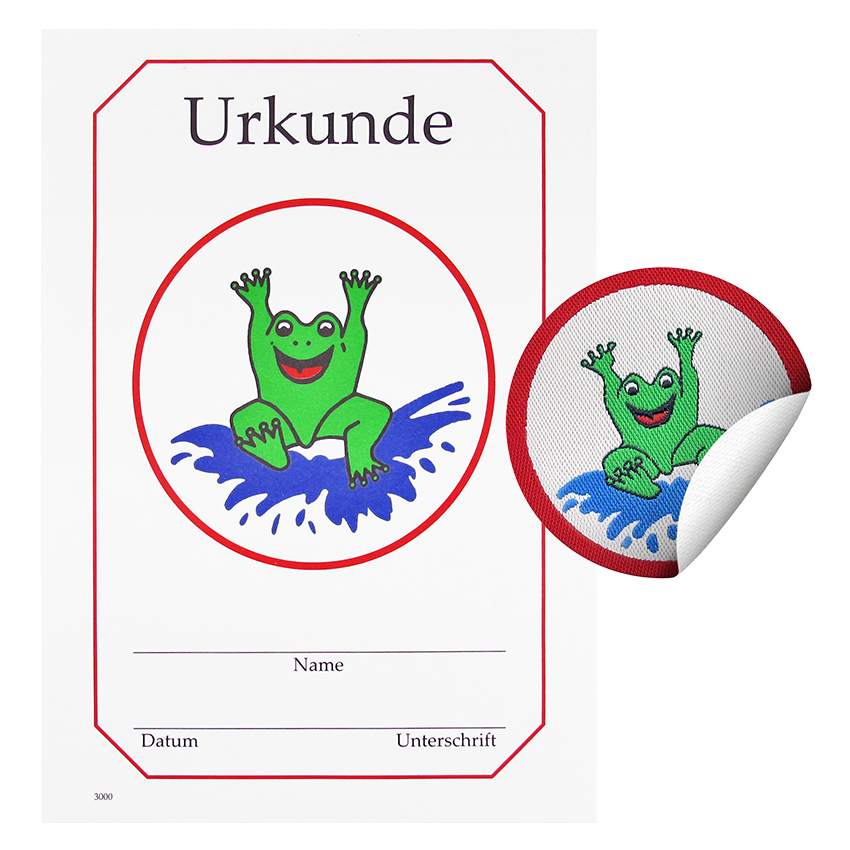
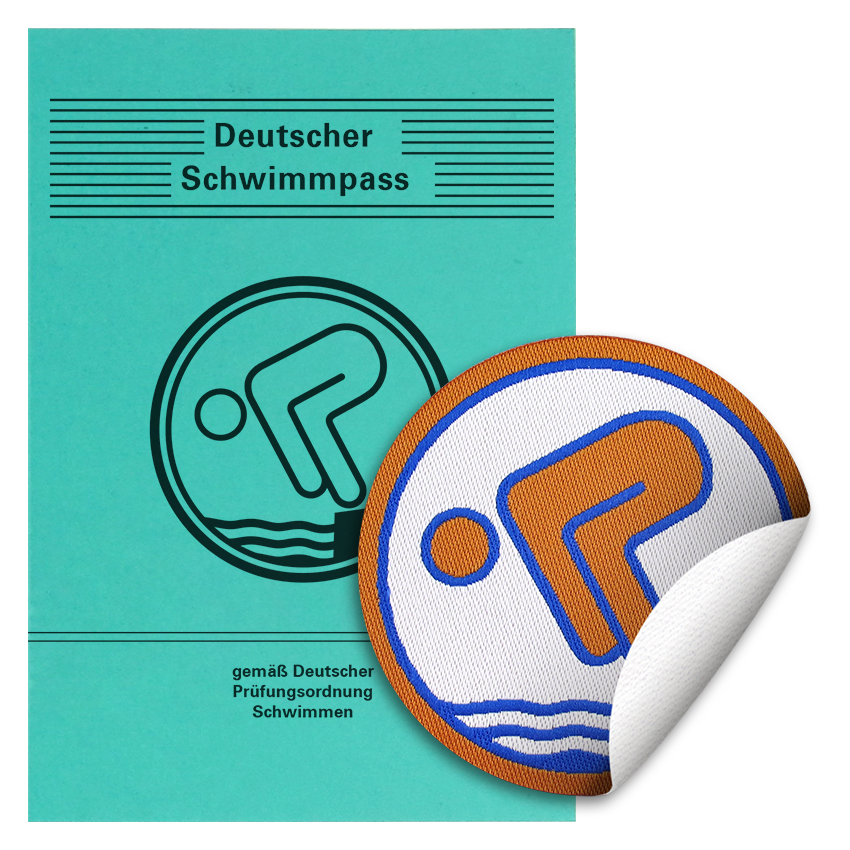
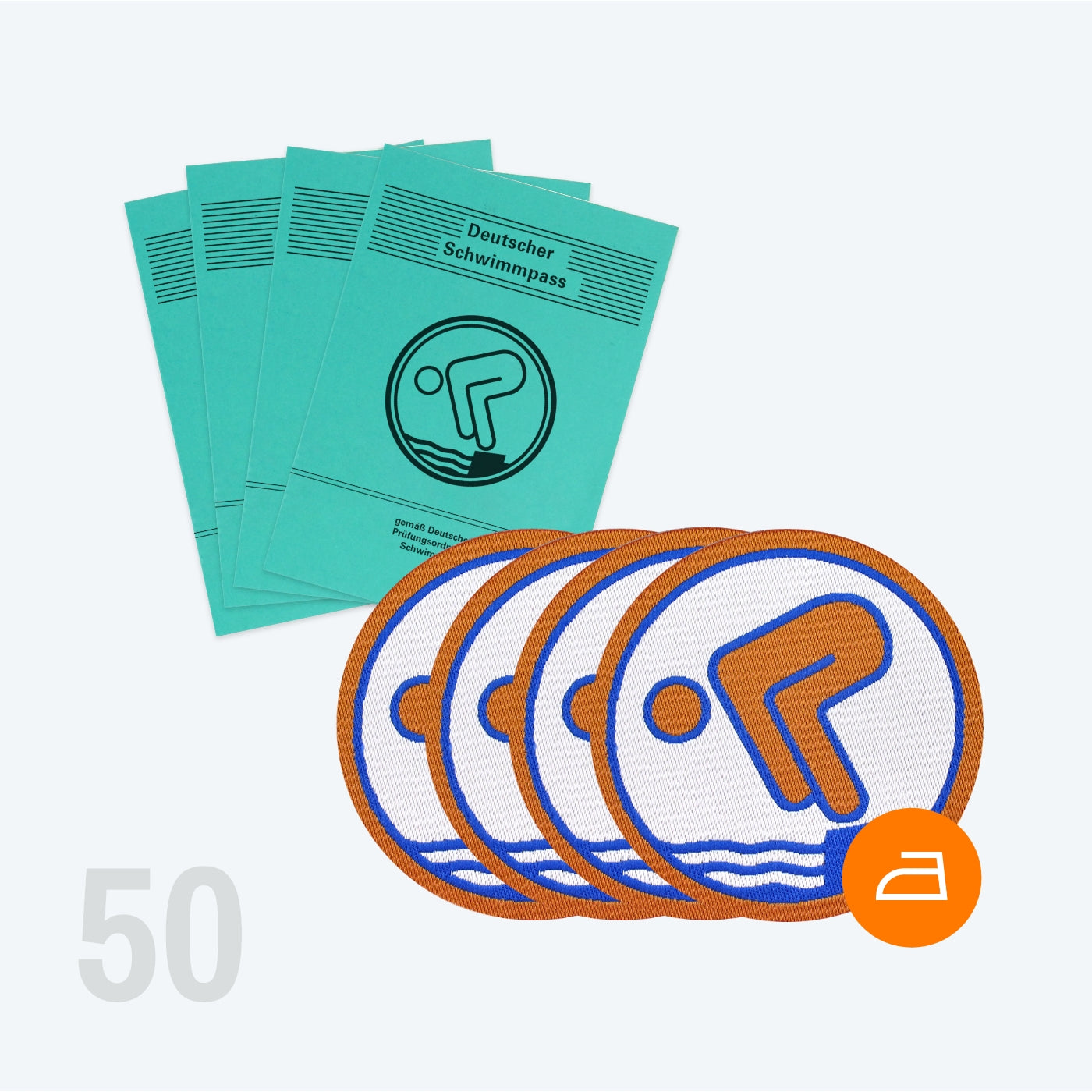
The badge is available in various versions – for sticking, sewing, or ironing on. The Seepferdchen swimming badge with a child-friendly design is particularly popular. It's important that it is officially recognized and that the examination requirements have been met.
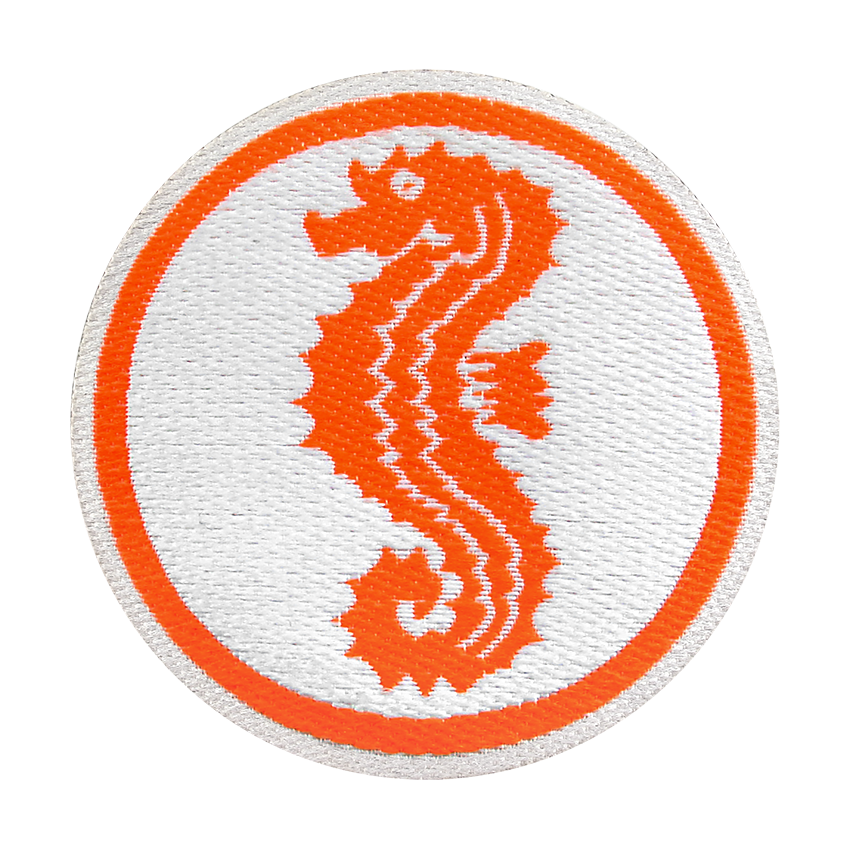
Seepferdchen Swimming Badge: The first milestone
The Seepferdchen swimming badge marks the entry into the world of swimming badges. It shows that a child has mastered basic skills, especially all relevant knowledge to move safely in the water. Many parents are not aware of the official nature of this badge – yet it forms the basis for further swimming qualifications.
The Seepferdchen Test – what awaits the little candidate?
The Seepferdchen test is the highlight of the course. It includes several requirements:
-
25 meters continuously in one swimming stroke (usually breaststroke) in prone or supine position
-
a jump from the edge of the pool
-
retrieving an object with the hands from shoulder-deep water
For children to pass this swimming test, they need not only stamina but also a certain level of confidence in the water. An experienced swimming instructor or lifeguard carefully observes the process and ensures that everything runs according to regulations.
Even if the tasks seem challenging, in practice it's not about perfect technique, but about courage, perseverance, and a safe position in the water. Important: It's no shame not to pass the test on the first attempt – many children succeed on the second or third try.
Silver and Gold – the next levels after Seepferdchen
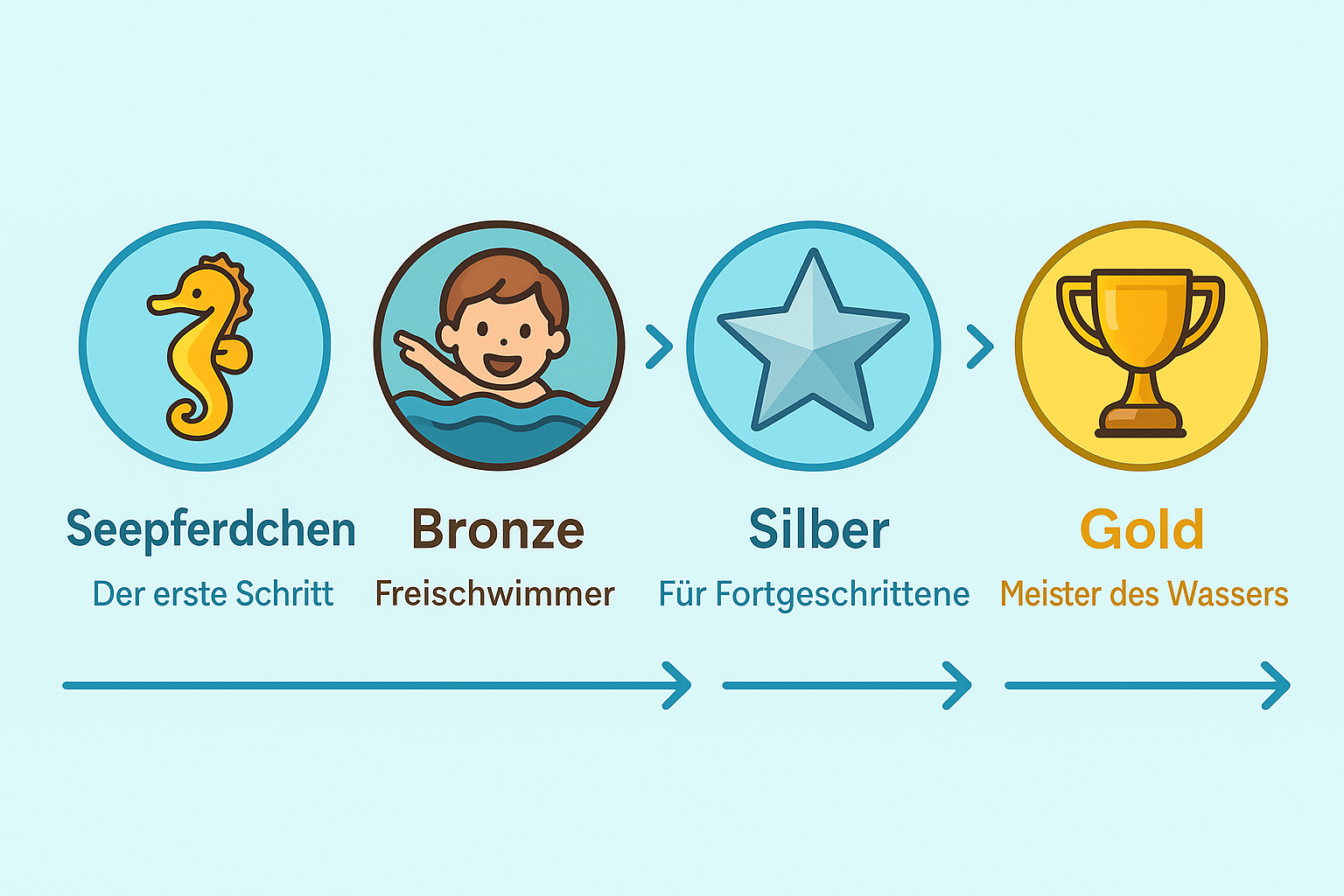
After the Seepferdchen swimming badge, the next logical step is to acquire further swimming badges – for example, Silver and Gold. These badges require a bit more stamina, technique, and rescue skills.
The Silver badge requires, among other things, swimming 400 meters, diving 10 meters, and retrieving objects from a depth of 2 meters. For Gold, children must additionally demonstrate a rescue pull of a person, among other things.
Parents should not force this path – it is important that the child shows interest themselves. Motivation often comes from experiencing what is possible in the water with regular training.
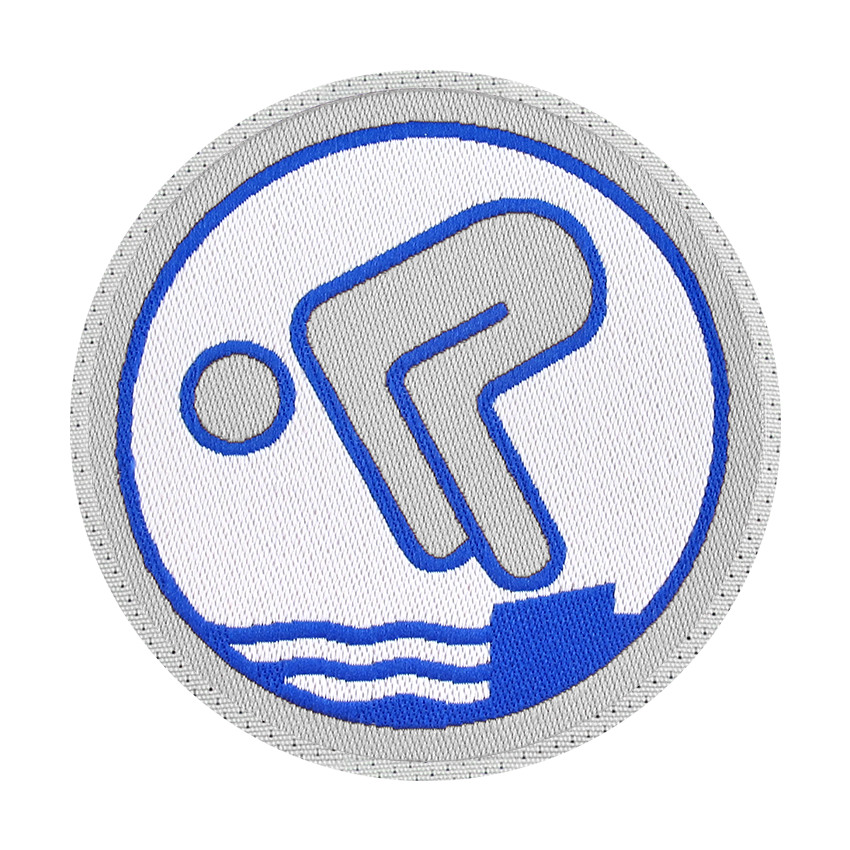
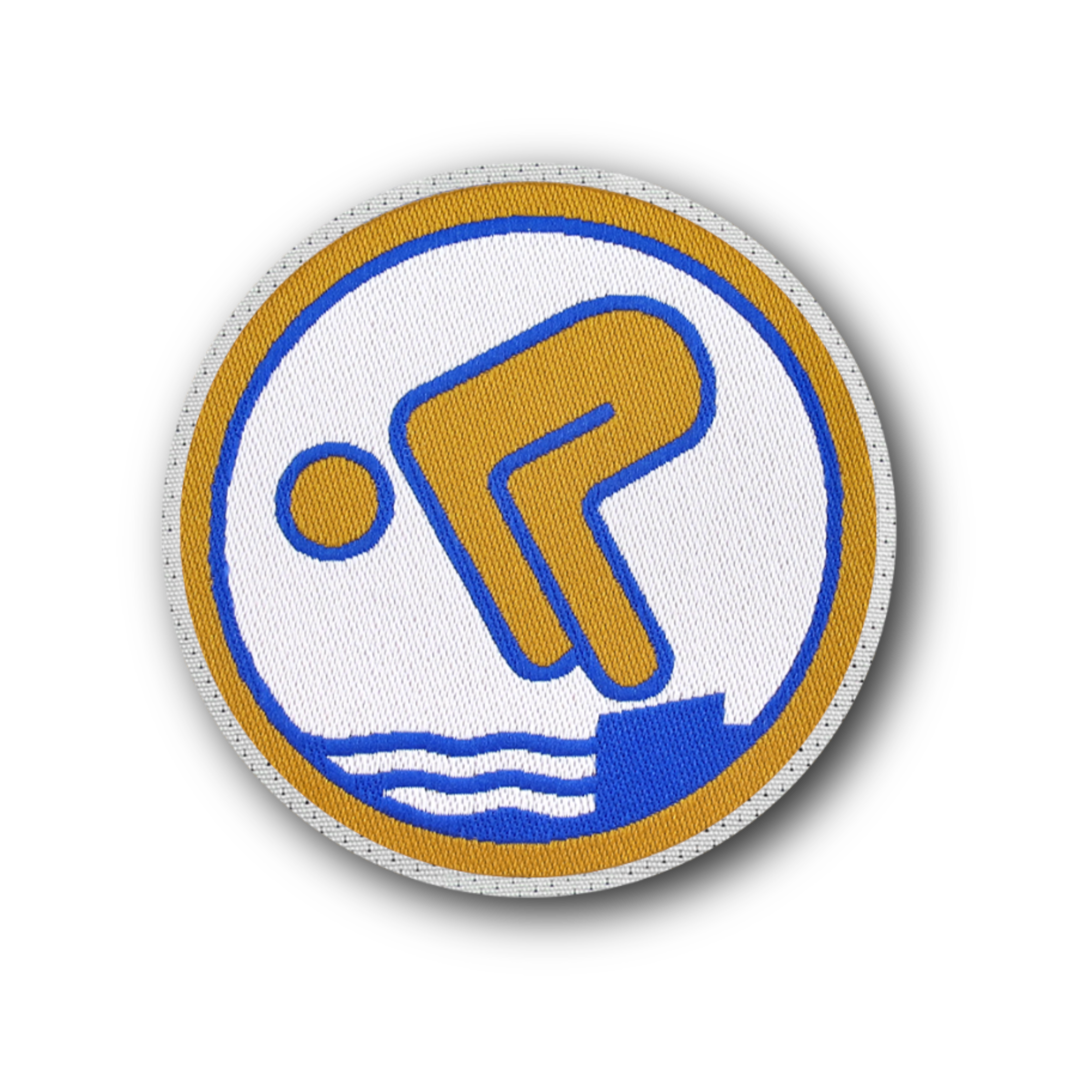
Bronze Swimming Badge – Intermediate Goal for Little Heroes
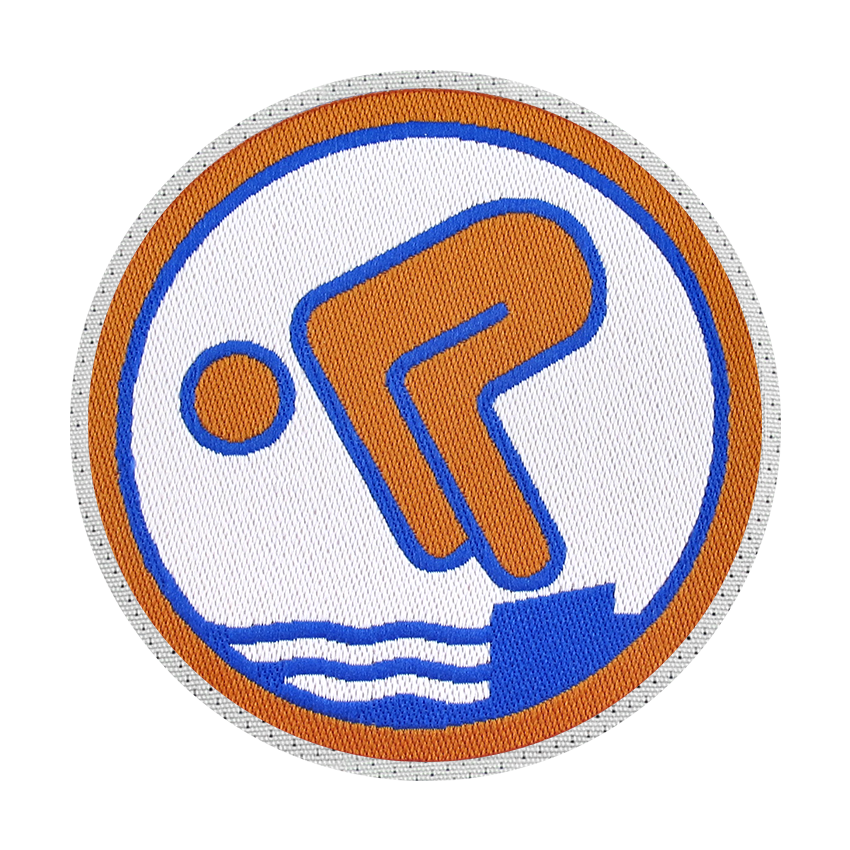
The Bronze swimming badge – also known as "Freischwimmer" (free swimmer) – is the first official swimming badge after the Seepferdchen. It marks a significant leap towards safe swimming.
The requirements are higher: children must swim 200 meters without swimming aids, in backstroke and front crawl, as well as dive deeper and demonstrate a jump from the edge of the pool. Many clubs and schools require the Bronze badge as proof of sufficient swimming competence for class trips or excursions.
Safe Swimming – More Than Just Technique
A child who has passed the Seepferdchen is on their way to becoming a safe swimmer – but is not yet a "safe swimmer." True safety comes from routine, knowledge, water acclimatization, experience, and regular swimming.
Therefore, it is important that children continue to swim regularly after acquiring the Seepferdchen badge – ideally accompanied by adults, lifeguards, or under supervision in the swimming pool.
Parents should not only observe physical abilities but also behavior in the water: Does the child recognize dangers? Does it know its limits?
Comprehensive training also includes knowledge about risks in special situations – such as boat and ice accidents. Children should learn, in an age-appropriate manner, how to behave in such emergencies and which rules must be strictly followed.
Learning to Swim – A Lifelong Gift
Learning to swim is more than just a sport – it's an essential prerequisite for life. The Seepferdchen course lays the foundation for safe, self-determined movement in the water. It not only protects the child but also strengthens self-confidence.
Many parents underestimate the great emotional significance of the Seepferdchen badge for children. It transforms little water enthusiasts into true heroes – with pride, courage, and real ability.
Tips for Parents: How to best support your child
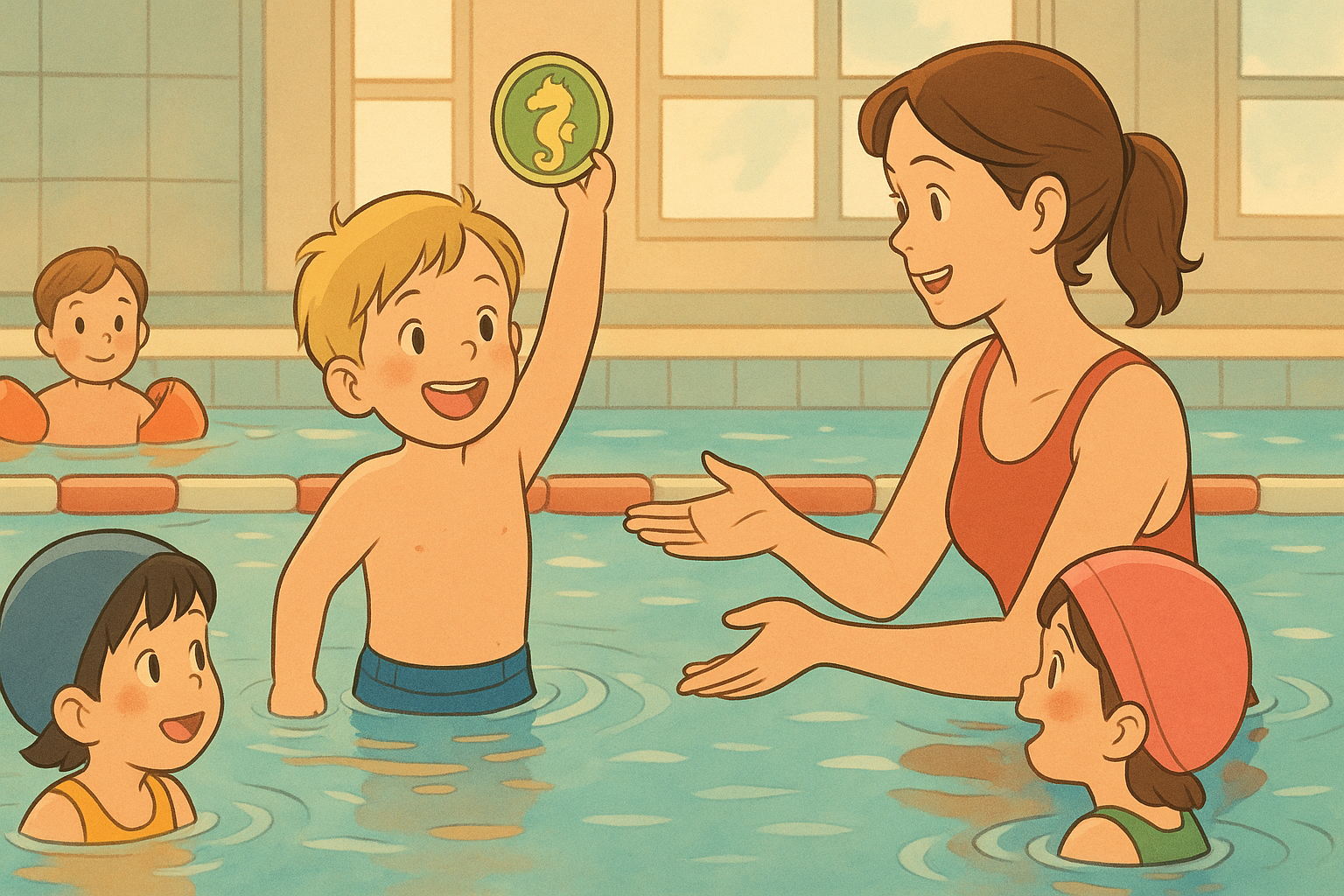
As parents, you can play a crucial role in ensuring your child masters the Seepferdchen course with joy and success. Here are some proven tips on how to optimally support your child on the path to the Seepferdchen badge:
-
Regular visits to the swimming pool: The more often your child is in the water, the more confident they will feel. Joint swimming pool visits strengthen trust and make swimming a natural part of everyday life.
-
Playful exercises: Small games like blowing bubbles, diving for toys, or gliding on the water prepare your child for the requirements of the Seepferdchen course and promote the joy of swimming.
-
Support and encouragement: Praise your child for every step forward – even small successes are important. A positive environment helps to reduce fears and strengthen self-confidence, especially before the test.
-
Communication with the swimming instructor: Regularly exchange information with the swimming instructor to monitor your child's learning progress and address individual needs specifically.
-
Water safety: Make sure your child knows the swimming pool rules and always swims under supervision even after acquiring the Seepferdchen badge. Safety always comes first.
-
Advanced courses: Motivate your child to acquire further swimming badges such as Bronze, Silver, and Gold after the Seepferdchen. This further develops swimming skills and strengthens water safety.
With your support and encouragement, the journey to the Seepferdchen badge will be an unforgettable experience for your child – and lay the foundation for safe swimming and many enjoyable hours in the water.
Courses for all ages – even for adults?
While the Seepferdchen is classically an early swimmer's badge, adults who have never learned to swim can also make their way into the water. Many swimming schools now offer swimming courses for beginners of all ages – a sensible step to reduce fears and develop enjoyment in the water.
Refresher courses are also useful for older or less experienced swimmers, for example, to prepare for a swimming test or simply for more safety.
How long does a Seepferdchen course last?
The duration of a course depends heavily on the swimming training, the child's age, and the group size. Some children only need a few lessons, others several weeks. The decisive factor is not speed, but care and the right support – from parents, course instructors, and, if necessary, school assistants.
Depending on the provider, swimming data is recorded electronically to make progress visible. Modern systems sometimes even use digital data to analyze and specifically promote learning progress.
Conclusion: The Seepferdchen swimming badge as a starting point for more
The Seepferdchen swimming badge is not an end – but a beginning. It is a step on the way to a confident, responsible approach to the element of water. Parents should celebrate this milestone – but also recognize: there is still much to learn.
Regular training, further badges such as Bronze, Silver, and Gold, but also an open approach to fear, limits, and technique are essential for the first Seepferdchen to one day become a safe, strong swimmer.
Buy swimming badges conveniently online
On our website pimpertz.de you will find a large selection of high-quality swimming badges for all levels – from Seepferdchen to the German Gold Swimming Badge. Order easily and securely online and equip your child with the appropriate badges that make swimming progress visible. Take the next step towards becoming a safe swimmer and motivate them to continue with our attractive sew-on patches, stickers, iron-on patches and certificates!

%20swimming%20badge?%0AIf%20you're%20wondering:%C2%A0Where%20can%20you%20get%20the%C2%A0Seepferdchen%20badge?,%20you'll%20find%20suitable%20options%20in%20almost%20every%20major%20city.%20Indoor%20pools,%20pu...)