

Where can you get swimming badges? An overview of the best options
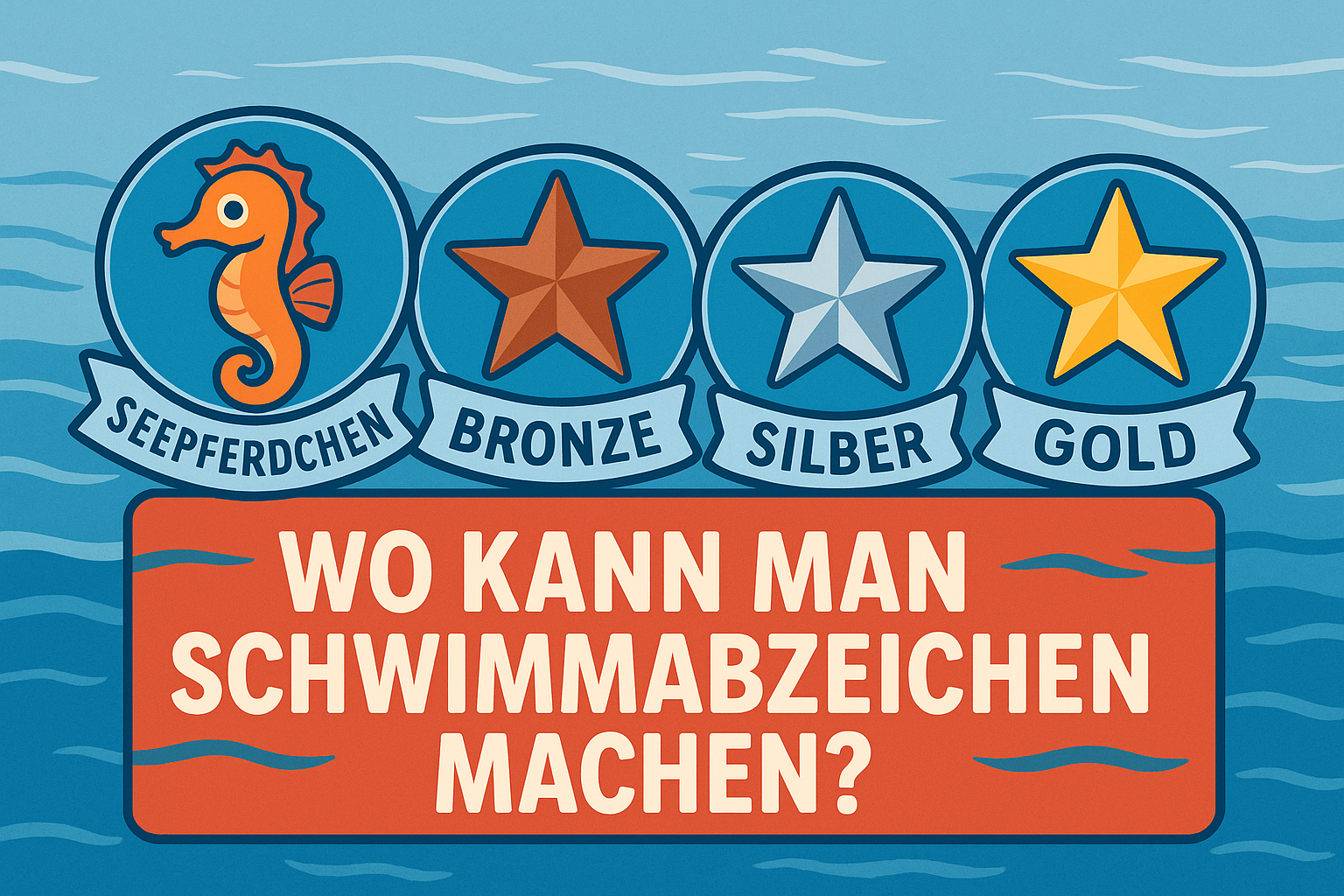
Where can you get swimming badges?
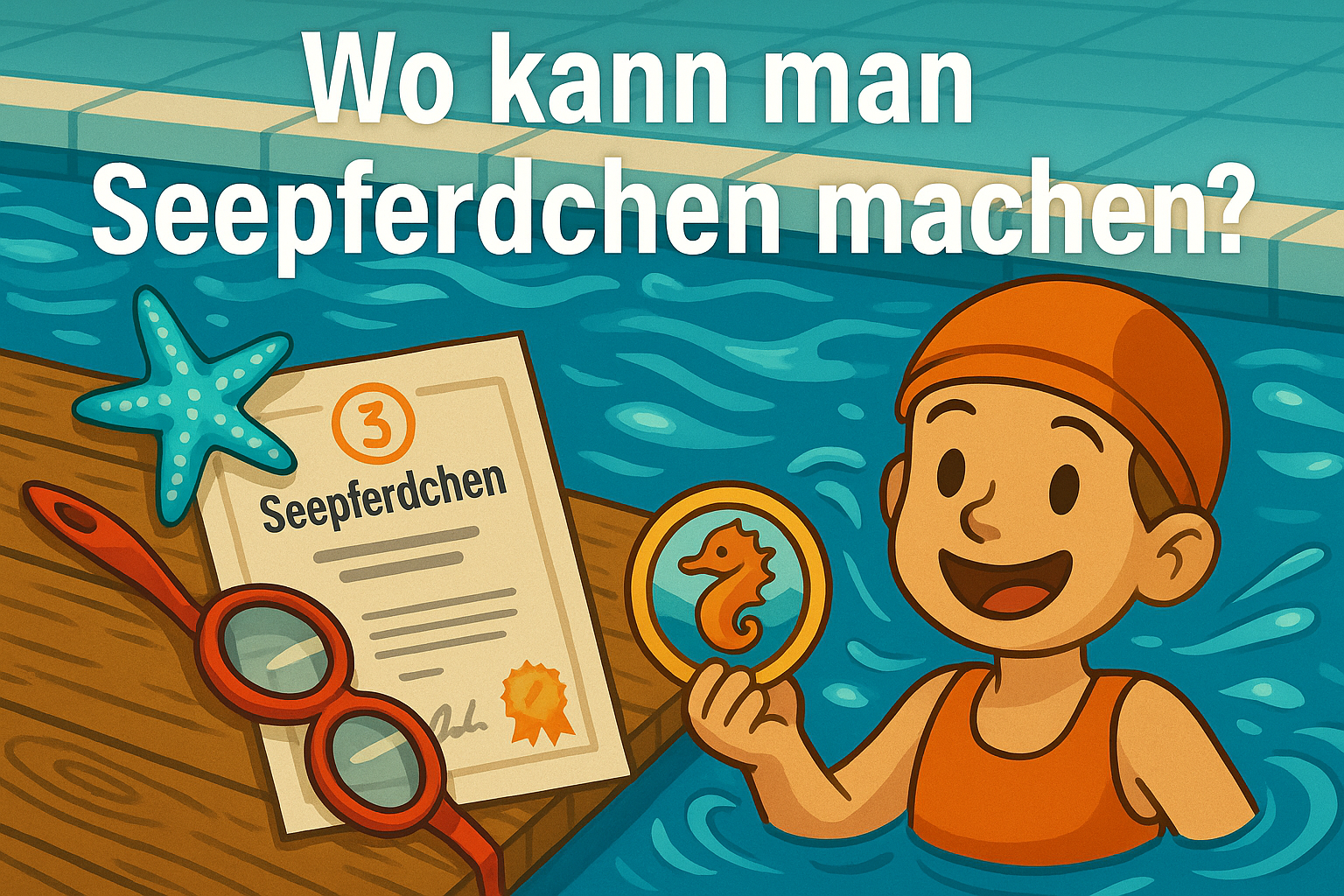
Anyone wondering: Where can you get swimming badges (also known as DSA)?, will find a variety of options – both in public and private sectors. Whether in a municipal swimming pool, at school, or with a swimming club (these places are also referred to as testing centers): Swimming education in Germany is broadly established and accessible to many age groups, and swimming tests for obtaining and acquiring swimming badges are also taken at these locations.
Crucially, it’s not just about the right environment, but also structured swimming instruction that combines safety, technique, and self-rescue. A swimming badge is obtained by successfully passing a swimming test.
Introduction to Swimming Badges
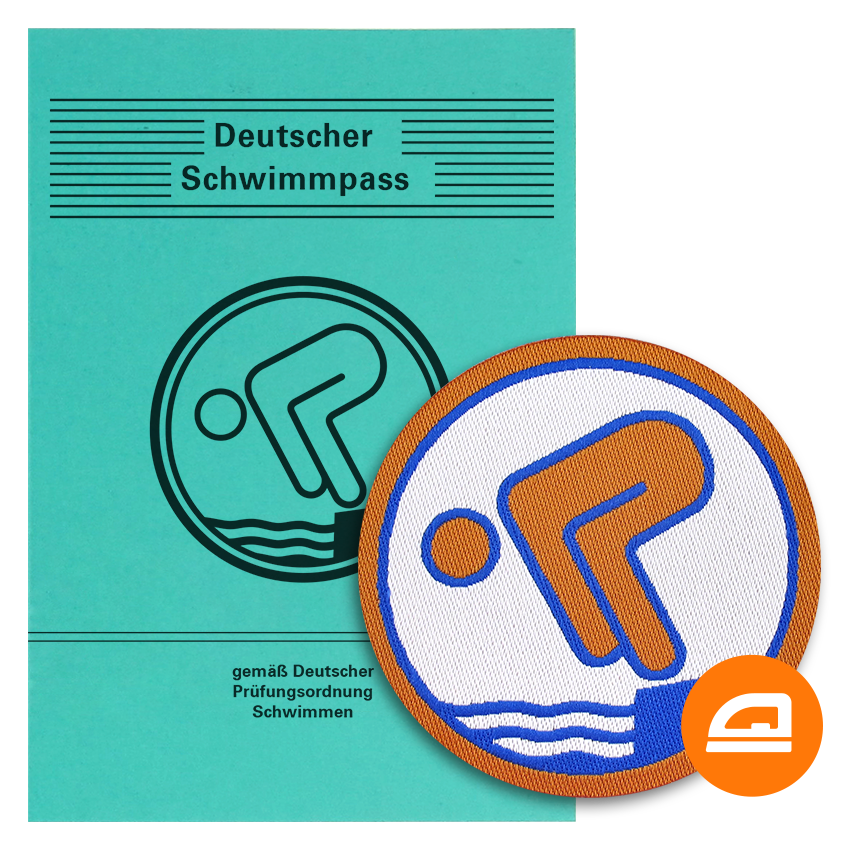
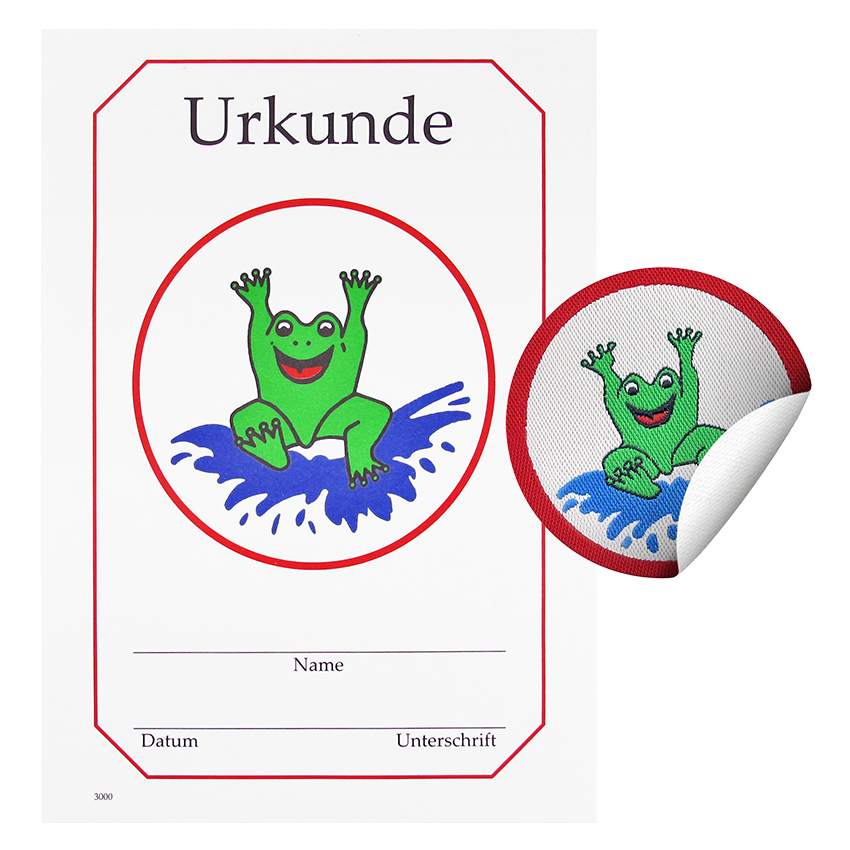
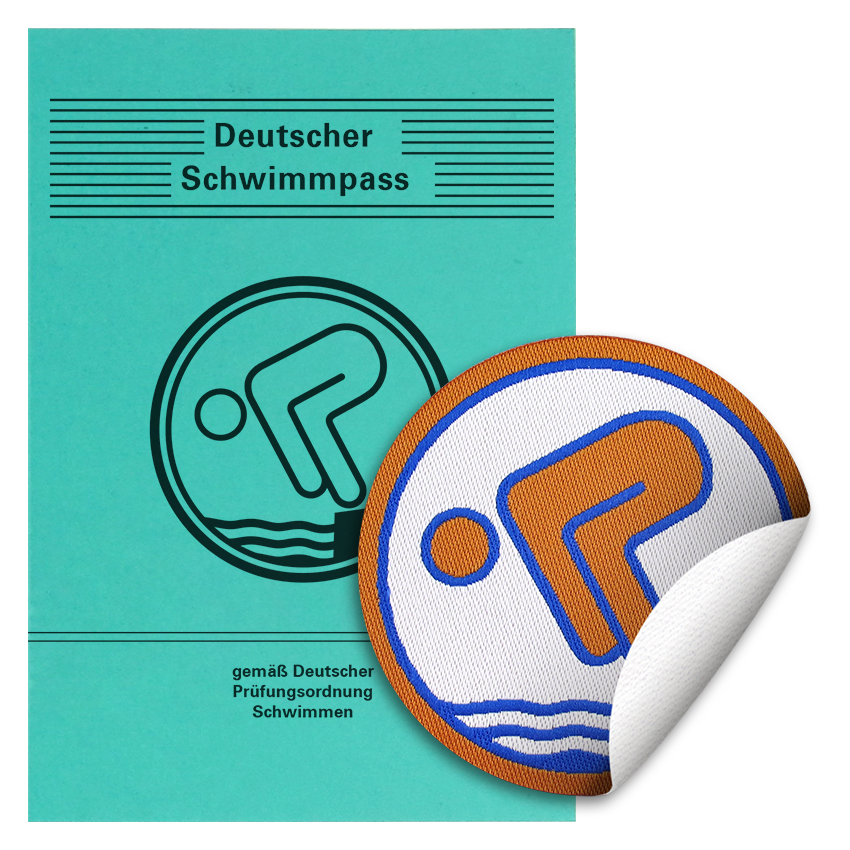
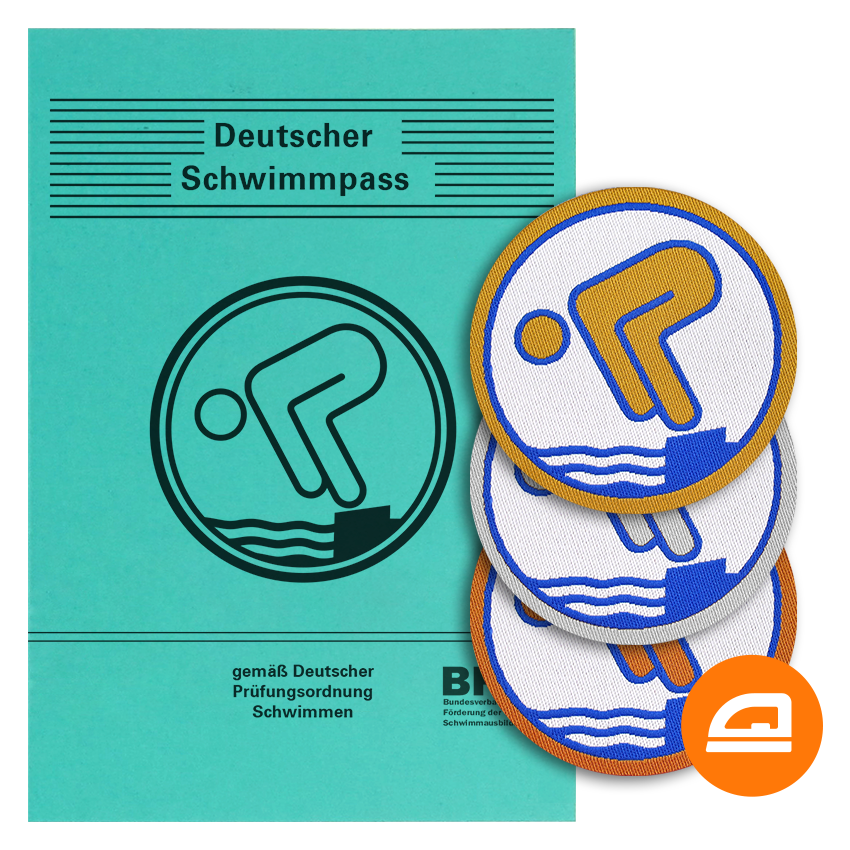
A swimming badge is more than just a patch on a swimsuit – it's an official proof of swimming ability. The badges are graded by difficulty: from the Seepferdchen (Seahorse) to the German Badge. After successfully completing the swimming test, the results are documented in the German swimming pass. Additionally, participants receive a certificate as confirmation of the passed test.
They demonstrate the ability to swim distances, retrieve objects like small diving rings from the deep, or safely perform a headfirst dive from the edge of the pool, with the issuance of the DSA serving as official proof in the German swimming pass. The focus is not only on swimming but also on body position, self-control, and correct behavior in case of bathing, boating, and ice accidents.
Swimming badges for beginners – Early Swimmer Badge
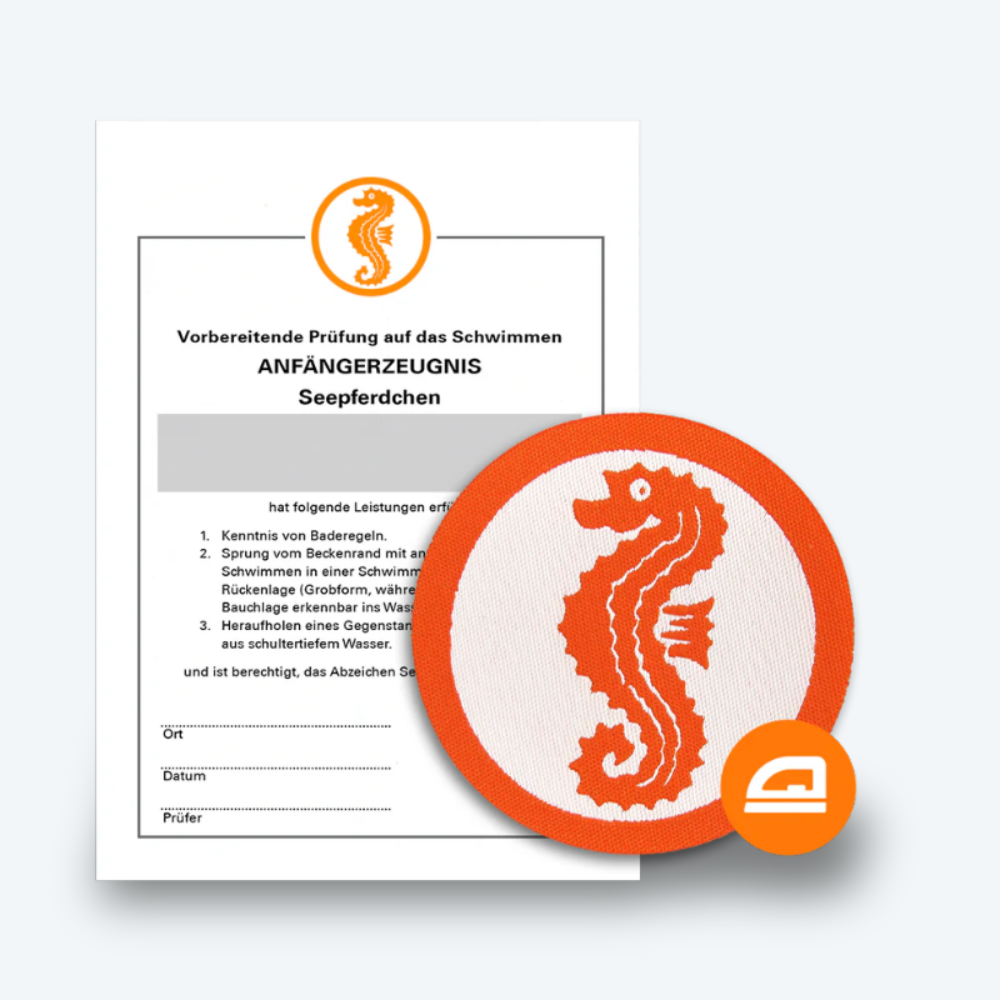
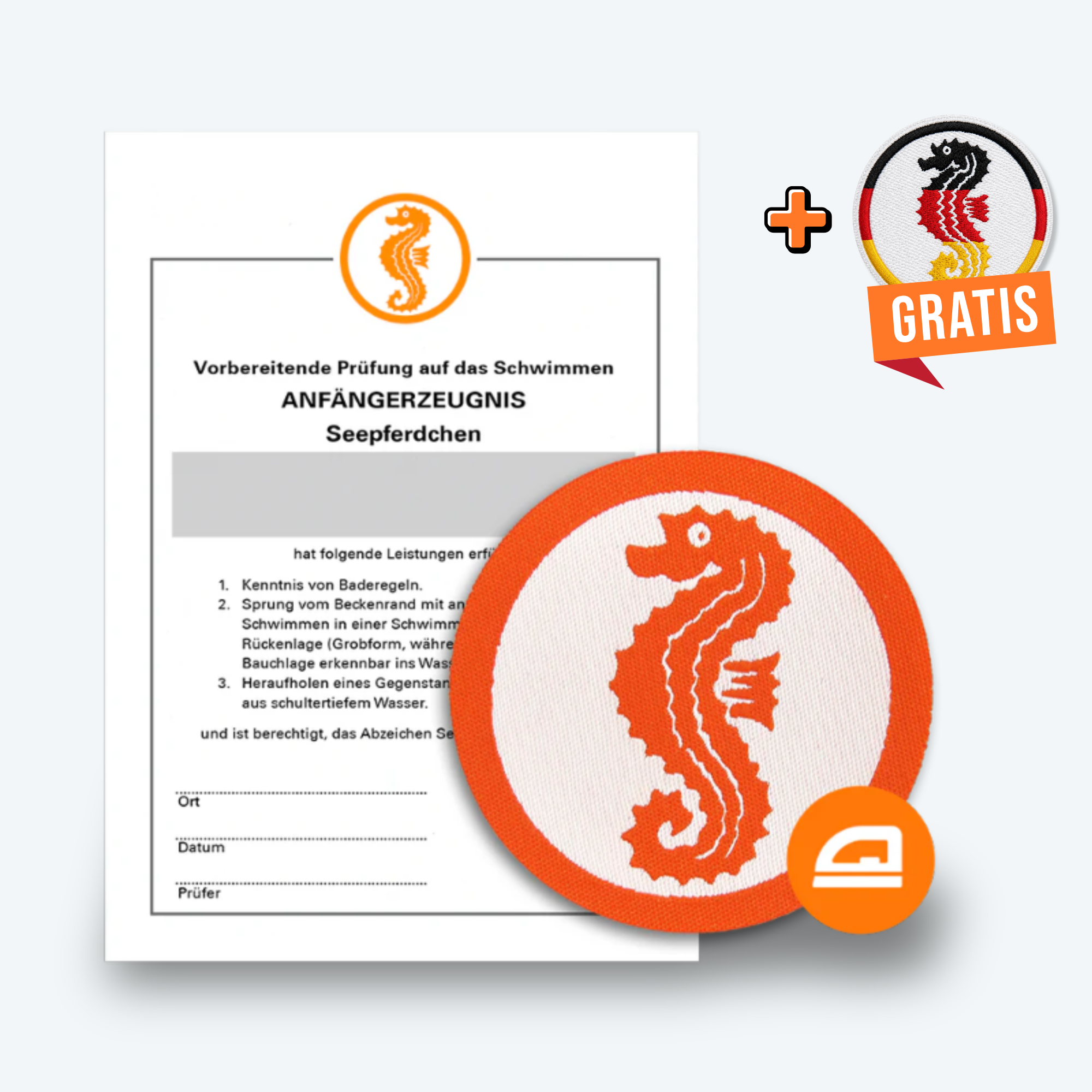
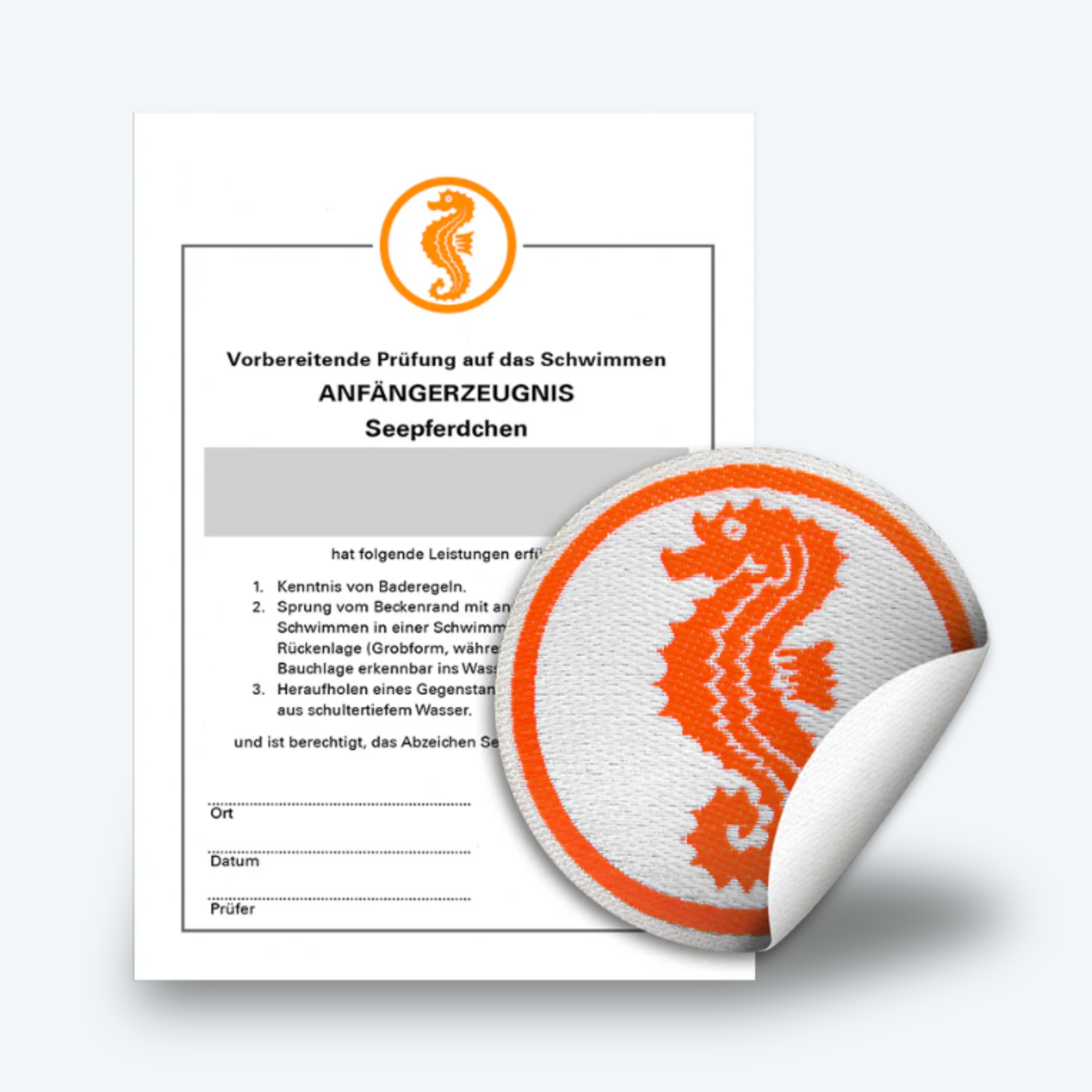
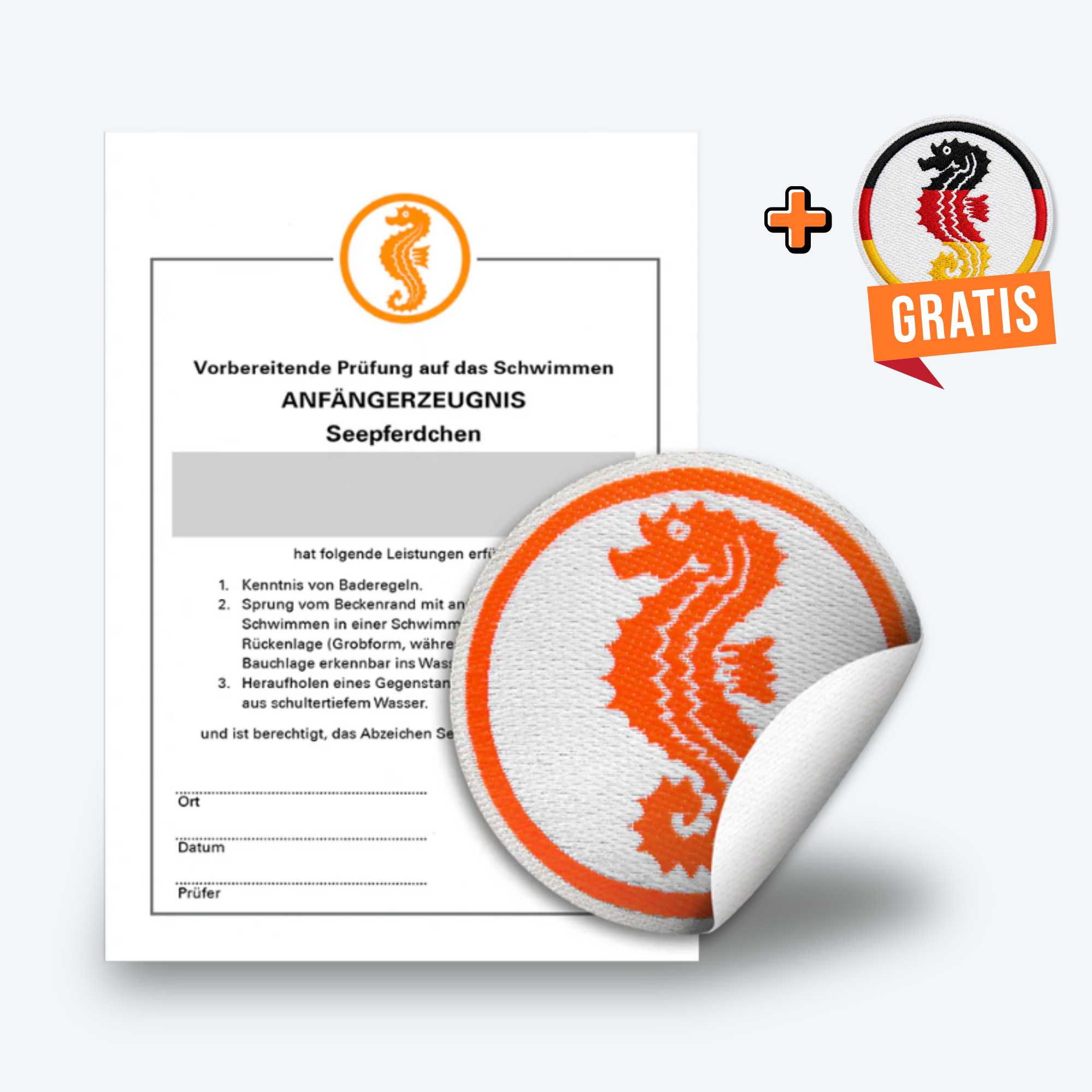
The entry into the world of swimming for many children and also adults begins with the early swimmer badge, better known as the Seepferdchen (Seahorse). This badge marks the first important step on the path to safe swimming and teaches the basic skills necessary for swimming in water. When acquiring the Seepferdchen, participants learn to move safely in a prone or supine position, control their position in the water, and master their first swimming strokes. Another component is retrieving small objects from the water, which promotes diving and coordination.
The Seepferdchen is a motivating entry point and is equally fun for children and adults. However, it is important to know that this badge is not yet proof of safe swimming. Children and adults who only have the Seepferdchen should still be supervised while swimming. Nevertheless, acquiring this first swimming badge is a significant step that builds self-confidence and lays the foundation for all further swimming badges.

Swimming Badges for Beginners - Early Swimmer Badge
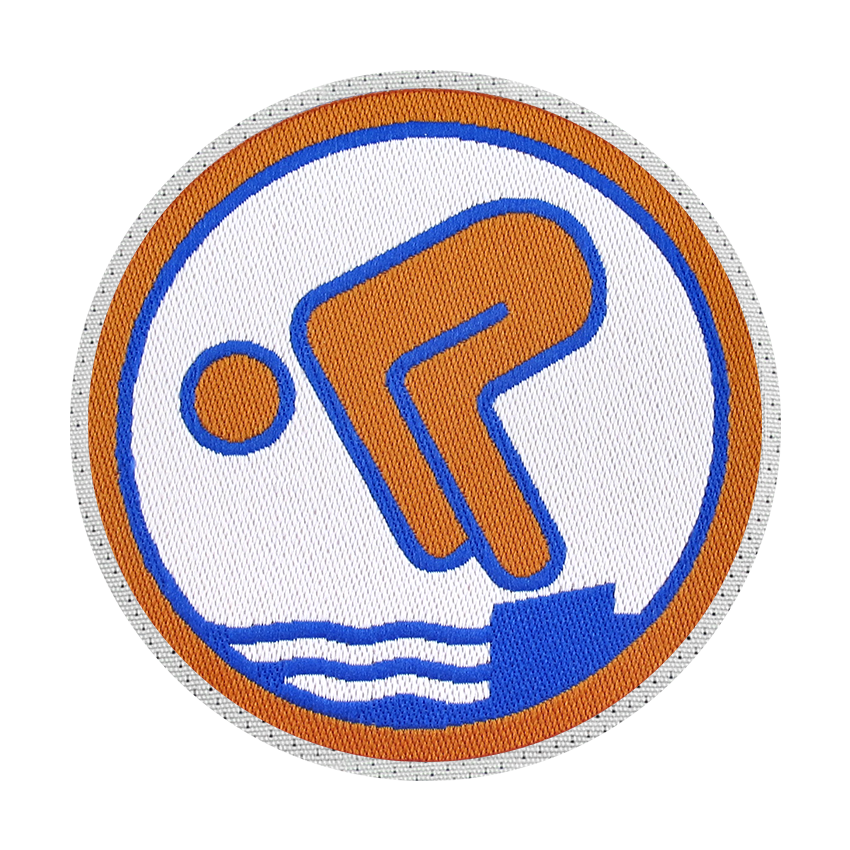
For beginners, everything starts with the Seepferdchen – followed by the German Bronze Swimming Badge. These badges certify basic swimming ability and are often considered the first "real" proof of swimming proficiency.
Important content for beginners:
-
Body position change between prone and supine positions
-
Change of body position in the water
-
simple jumps from the pool edge
-
first basics of self-rescue
Children also learn how to stay above water without a swimming aid, how to retrieve an object from the water surface, and how to swim a lane without holding on.
Requirements for Participation
Before you or your child can take an exam for a swimming badge, there are some basic requirements, also called participation requirements, to consider. For every swimming badge – whether Bronze, Silver, or Gold – it is important that participants safely master basic swimming techniques. This includes swimming in prone or supine positions, safely moving in the water, and retrieving objects from the pool.
As a rule, it is recommended to attend swimming lessons or a course before the exam to specifically train for the requirements. For the Bronze badge, candidates should already be able to swim without a swimming aid and have gained initial experience in diving and jumping. For Silver and Gold, the requirements increase: here, swimmers are expected to cover longer distances in various positions, dive safely, and retrieve objects from the deep.
The minimum age for participation may vary depending on the issuer and course, as do the exact examination contents. Therefore, it is best to inquire in advance at your swimming pool or course provider about the specific requirements for the desired swimming badge. This way, you will be optimally prepared and can approach the exam with fun and confidence.
German Swimming Badges – Bronze, Silver, and Gold
The German swimming badges in Bronze, Silver, and Gold are the official proofs of swimming ability and are recognized nationwide. Each of these swimming badges stands for a specific level of difficulty and places different demands on swimmers. The Bronze badge is the first level and certifies that the holder has basic swimming knowledge and safety in the water. It forms the basis for the advanced badges.
With the Silver and Gold swimming badges, the requirements significantly increase: here, swimmers must swim longer distances, master various swimming styles, and demonstrate their knowledge in theory and practice. These badges are usually acquired by participating in a course and successfully passing an examination, which covers both practical and theoretical knowledge about swimming, bathing rules, and behavior in the water.
The Bronze, Silver, and Gold swimming badges are not only proof of one's swimming ability but also often a prerequisite for participating in advanced swimming courses, swimming competitions, or for access to certain areas in the swimming pool. They are an important step for more safety and self-confidence while swimming – whether in the swimming pool, a lake, or the sea.
German Swimming Badges – Bronze, Silver, and Gold
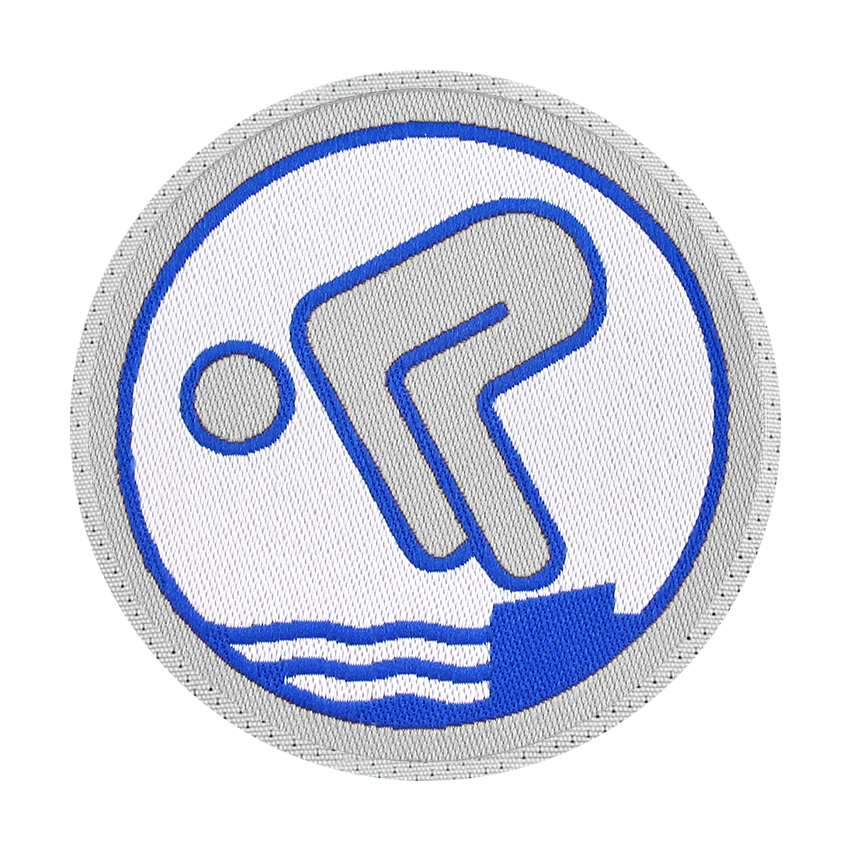
The three classic levels:
-
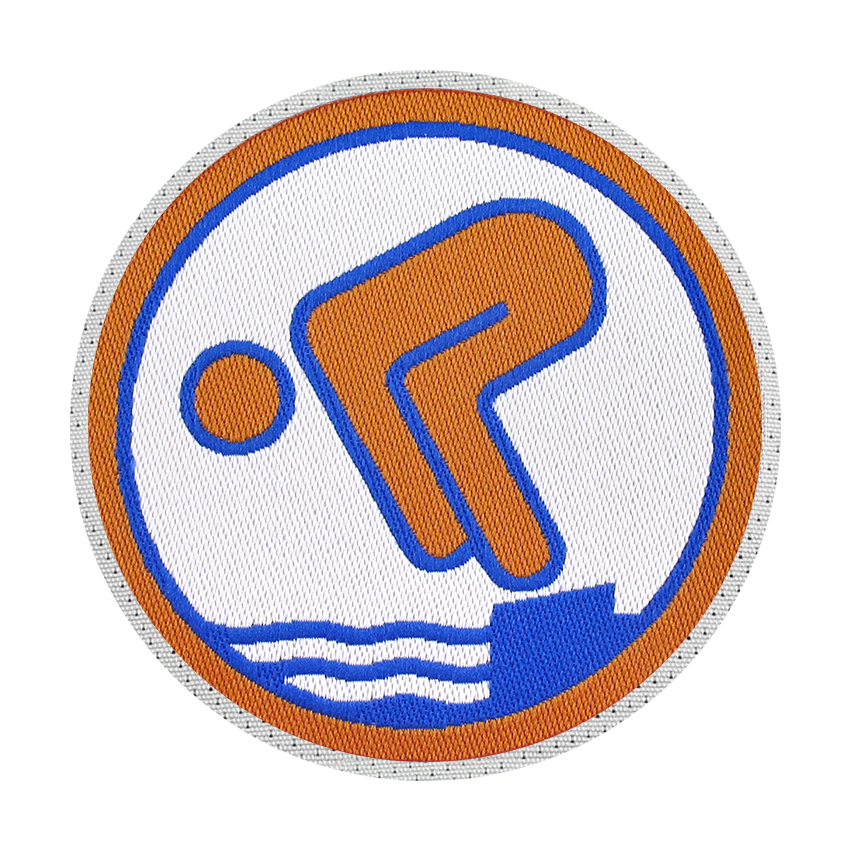
German Swimming Badge Bronze
-
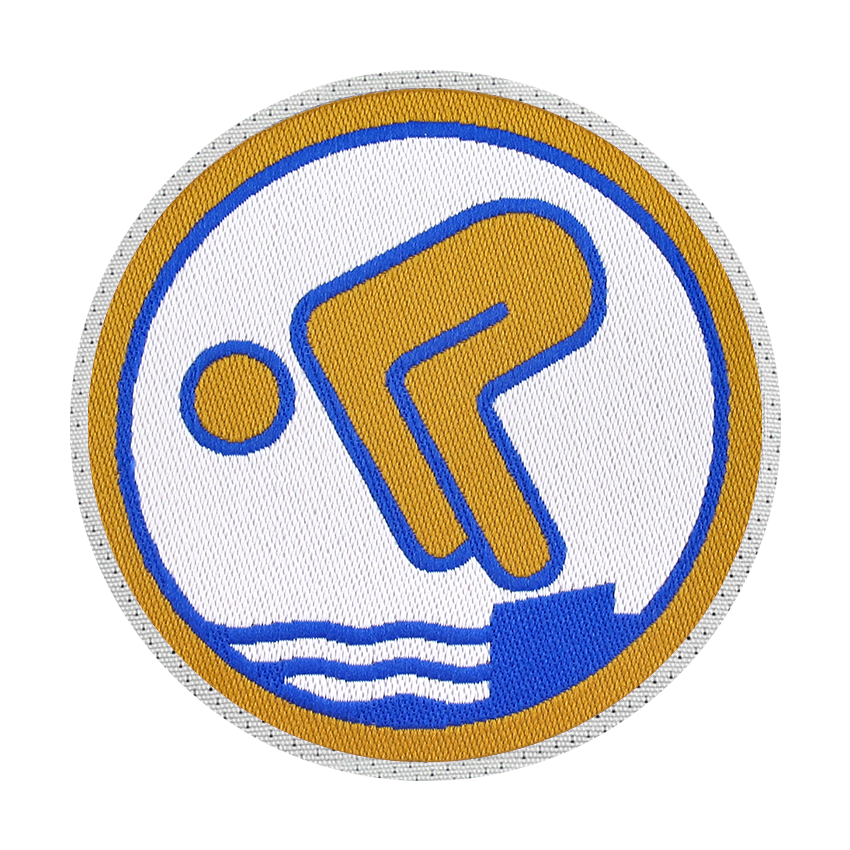
German Swimming Badge Gold
The requirements increase depending on the level:
-
Two deep dives of approximately 2 m from the water surface
-
Jump from 1 m and 3 m height or two different jumps from the same height or two different ones
-
Swimming distances with push-off from the pool edge
-
Supine position in a recognizable body position
-
10 m underwater swimming with push-off
The Gold swimming badge requires not only physical fitness but also knowledge of self-rescue in boat and ice accidents, as well as theoretical questions about bathing rules, emergency behavior, and body position while swimming.
Each of these swimming badges serves as official proof of demonstrated swimming abilities.
Advanced Swimming Badges
Those who venture into advanced swimming badges like the German Swimming Badge Silver or Gold put their swimming skills to the test. Here, it's no longer just about pure swimming, but about comprehensive water competence. Additionally, advanced swimming skills are required to meet the demanding requirements. Swimmers must safely master various swimming styles such as breaststroke, backstroke, and crawl, and cover longer distances without pause or holding on.
The requirements include swimming over 400 meters (Silver) or even at least 800 meters (Gold), part of which must be backstroke with a flutter kick. Diving also plays a significant role: multiple deep dives to approx. 2 meters and retrieving a small object, e.g., a small diving ring, are mandatory. Additionally, various jumps from 1 m and 3 m height are required.
In addition to practice, knowledge is also required: candidates must demonstrate their understanding of bathing rules, lifeguard techniques, and correct behavior in case of exhaustion or cramps. The theoretical examination covers questions on self-rescue as well as bathing, boating, and ice accidents. The German Swimming Badge Gold is the highest badge and shows that the swimmer is not only technically proficient but also safe and responsible in the water. Whoever passes this exam demonstrates endurance, technique, and a high degree of safety – and can be proud of their badge.
Course Content and Preparation
A swimming course – whether for children or teenagers – includes:
-
targeted training of swimming techniques
-
practicing changing body position
-
controlled jumps
-
deep diving from the water surface
-
retrieving an object, e.g., a small diving ring
Many courses also include repetitions such as: three deep dives of approx. 2 m, various jumps from 1 m height, or swimming a lane without holding on.
For optimal preparation for the swimming badges, it is advisable to create an individual training plan.
Examination and Certification
The swimming test for a swimming badge is designed to be practical. The examination procedure is structured into a logical sequence of individual test parts. It is administered by licensed swimming instructors, lifeguards, or trained examiners. The requirements differ depending on the level.
Typical examination components:
-
Jump from 1 m height
-
Swimming without holding on for a certain distance
-
Pushing off from the edge of the pool
-
Deep diving from the water surface
-
Retrieving an object
-
Changing body position
From Silver onwards, a theoretical examination is also required, which includes topics such as bathing rules, behavior in emergencies, self-rescue, and boating and ice accidents.
Self-Rescue & Bathing Rules
A central component of higher swimming badges is the ability to self-rescue. This includes:
-
controlled breathing
-
behavior when tired in the water
-
recognizing and avoiding risks such as bathing, boating, and ice accidents
-
as well as knowledge of self-rescue by calmly floating
-
the imparting of emergency measures to react correctly in an emergency
A central component is self-rescue in boating and ice accidents, which should not only be understood theoretically but also prepared practically. The goal is to remain calm and act appropriately in stressful situations.
Bronze, Silver, and Gold in Comparison
|
Badge |
Swimming Distance |
Diving |
Jump |
Theory |
|---|---|---|---|---|
|
Bronze |
200 m in 15 min. |
2 m |
1 Jump |
– |
|
Silver |
400 m in 20 min. |
2x 2 m |
1 m + 3 m |
✅ |
|
Gold |
600 m in 24 min. |
3x 2 m |
various heights |
✅ with self-rescue |
This table illustrates how the requirements systematically increase – the badges represent different performance levels, from beginner to master of the water.
Providers of Swimming Badge Courses
There are numerous providers where you or your child can get swimming badges :
-
DLRG local groups (German Life Saving Society)
-
Swimming schools
-
Sports clubs
-
Community colleges
-
Public swimming pools
-
occasionally also primary schools and full-day programs
Make sure to choose certified providers to ensure high-quality swimming instruction.
The qualification of the instructors and a structured swimming education that is practical and child-friendly are important.
Tips for Preparation
Anyone preparing for a badge should train regularly – ideally under guidance. Here are some tips:
-
Practice deep diving with small objects (e.g., diving rings)
-
Purposefully change body position (e.g., prone → supine)
-
Familiarize yourself with the bathing rules
-
Familiarize yourself with changing swimming styles
-
Practice underwater swimming (e.g., 10 m with push-off)
Especially for higher badges like Silver or the German Swimming Badge Gold, good fitness is important.
Additionally, it is advisable to attend a special preparatory course to be optimally prepared for the examination.
Outlook: Further Opportunities after the Swimming Badge
After successfully acquiring the Bronze, Silver, and Gold swimming badges, numerous exciting opportunities arise to further develop one's skills in the water. Those who have found joy in swimming can participate in advanced swimming courses to learn new swimming styles or perfect their technique. Training as a lifeguard is also particularly popular, where, in addition to swimming, knowledge of first aid, rescue techniques, and self-rescue is taught – a valuable step for anyone who wants to take responsibility in and around the water.
For ambitious swimmers, swimming competitions offer the chance to measure and further improve their performance against others. Those who wish to pass on their knowledge and skills can train as a swimming instructor or coach and thus teach others how to safely handle water.
A special incentive for experienced endurance swimmers is the "Totenkopf Schwimmabzeichen" (Skull Swimming Badge) – an award for exceptional swimming performance over long distances. Unlike regular swimming badges, this one is solely about the duration of swimming under real conditions. The black Skull Badge is awarded to those who swim for 1 hour without a break. For the silver version, 1.5 hours are required, while the gold Skull Badge is only awarded to those who stay in the water for 2 hours at a stretch. It is often offered by swimming clubs or DLRG local groups and represents a special distinction for endurance, discipline, and mental strength – ideal for anyone who wants to set a sporting goal after achieving Gold.
The swimming badges Bronze, Silver, and Gold are therefore not just a goal, but also the starting point for many other swimming-related activities. They lay the foundation for more safety, new challenges, and lots of fun in the water – and are an important step on the path to becoming a confident swimmer.
Conclusion: Getting a swimming badge is worthwhile!
Swimming badges are a valuable part of swimming education. They give children (and adults) safety, self-confidence – and in an emergency, even the ability to save themselves or others.
The Bronze, Silver, and Gold badges are not just tests – they are milestones on the path to becoming a confident swimmer and also enjoy high recognition in society. And incidentally, they're also fun.
Get informed and get started now!
Do you want to know where you can get swimming badges? Then inquire at your local swimming pool, the DLRG, or online for certified courses in your region.
Tip: Look for providers with good reviews, experienced instructors, and clearly structured course plans – that way, the path to Bronze, Silver, and Gold will truly be enjoyable.
Early registration for desired courses is recommended, as places are often filled quickly.
Buy German Swimming Badges Gold, Silver and Bronze conveniently online
On our website pimpertz.de you will find a large selection of high-quality swimming badges for all levels – from the Seepferdchen to the Gold badge. Our straightforward ordering process in the online shop allows you to quickly and conveniently select and order the desired badges. Order easily and securely online and equip your child with the appropriate badges that make progress in swimming visible. Take the next step on the path to becoming a confident swimmer and motivate with our attractive patches, stickers, iron-ons and certificates to keep going!

?,%20will%20find%20a%20variety%20of%20options%20%E2%80%93%20both%20in%20public%20and%20private%20sectors.%20Whether%20in%20a%20munic...)