
7 Effective Teaching Methods for Swim Schools to Improve Learning Success
Did you know that around 60 percent of children in Germany cannot swim safely when they start school? The joy of water often begins in childhood and shapes future swimming behavior. With playful methods and targeted training, this important skill can be developed not only safely but also with much fun and motivation. Practical tips and creative approaches open new ways to successful water acclimatization and strengthen children's self-confidence.
Quick Summary
| Takeaway | Explanation |
|---|---|
| 1. Playful training promotes water acclimatization | Children develop natural curiosity and joy in the water through creative games and exercises. |
| 2. Structured step-by-step instructions are crucial | A clear learning process reduces fears and promotes controlled progress in learning to swim. |
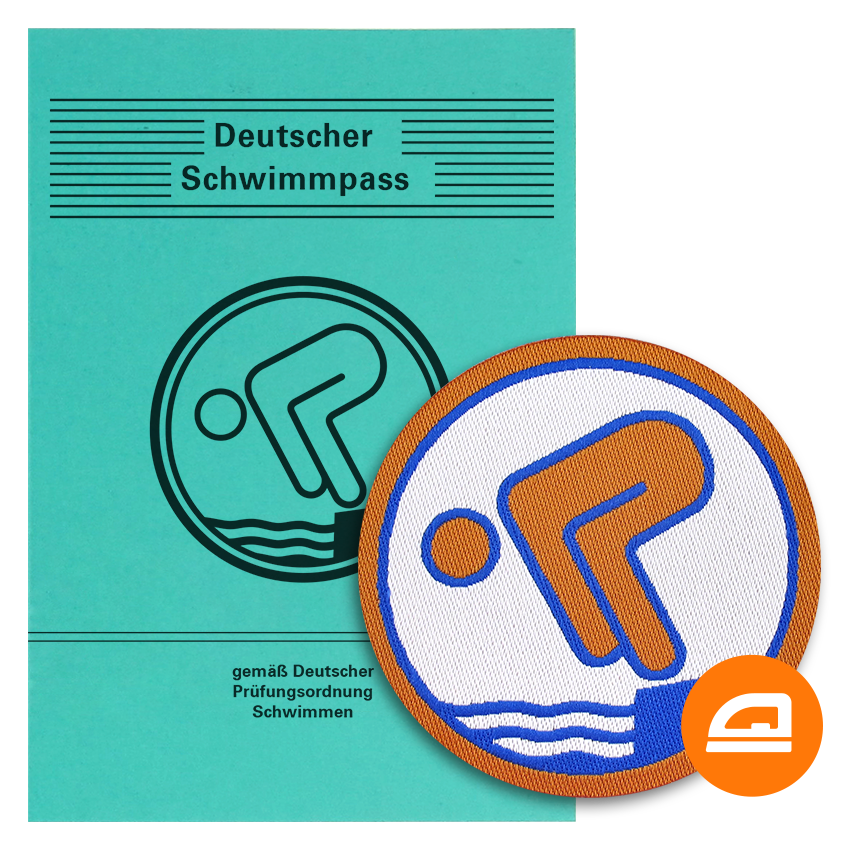
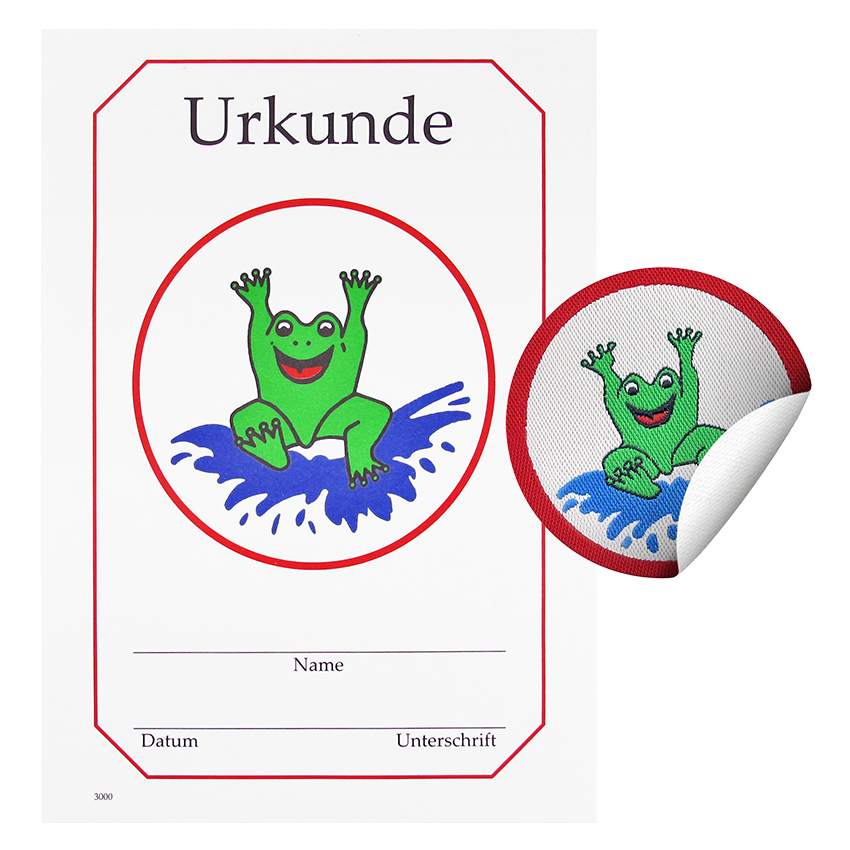
| 3. Positive reinforcement motivates students | Badges and certificates strengthen self-confidence and document progress for children. |
| 4. Group training strengthens social skills | Children learn team spirit and mutual support through joint exercises in the water. |
| 5. Individual support considers learning needs | Adapting exercises to different performance levels enables individual progress and success. |
Table of Contents
- Playful Water Acclimatization Training for Children
- Step-by-Step Guide to Learning to Swim
- Positive Reinforcement with Badges and Certificates
- Group Exercises for Social Competence and Motivation
- Individual Support through Differentiated Tasks
- Use of Learning Aids and Swimming Accessories
- Regular Performance Review and Feedback Discussions
1. Playful Water Acclimatization Training for Children
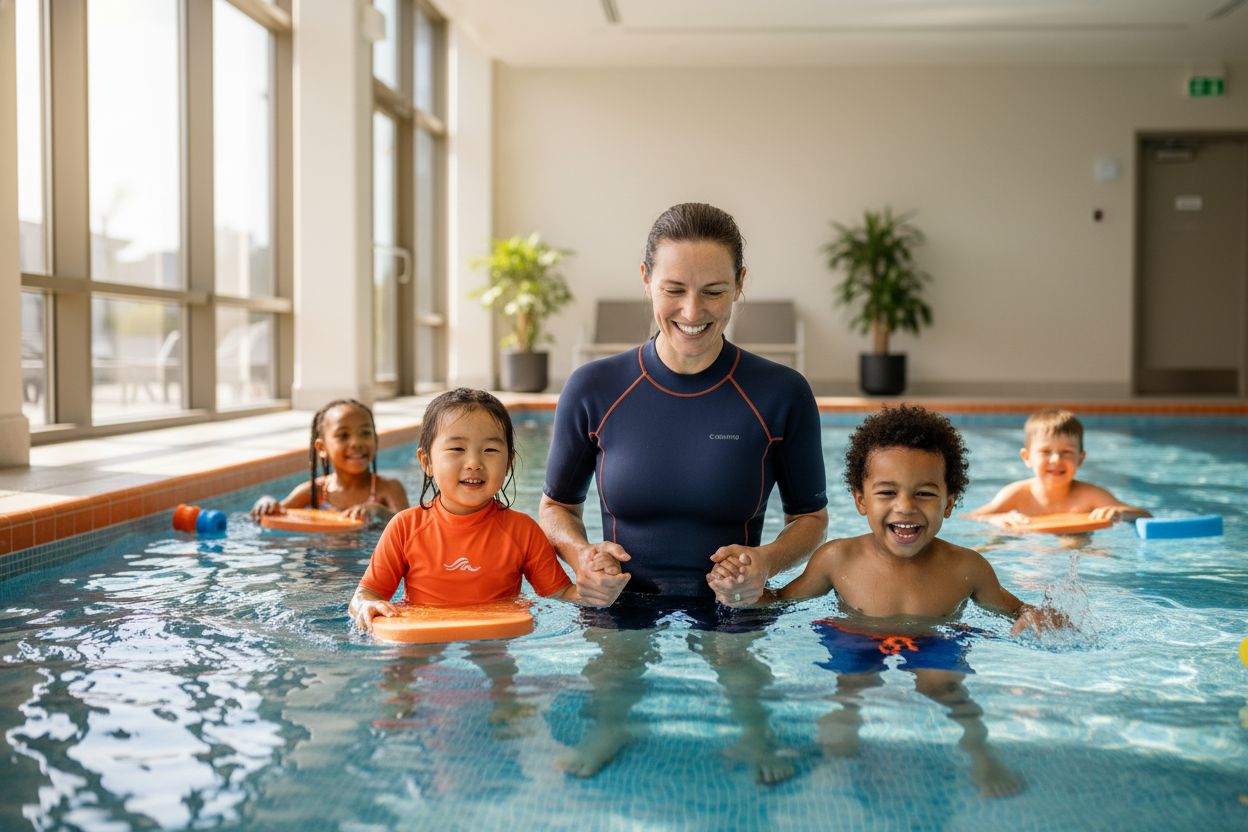
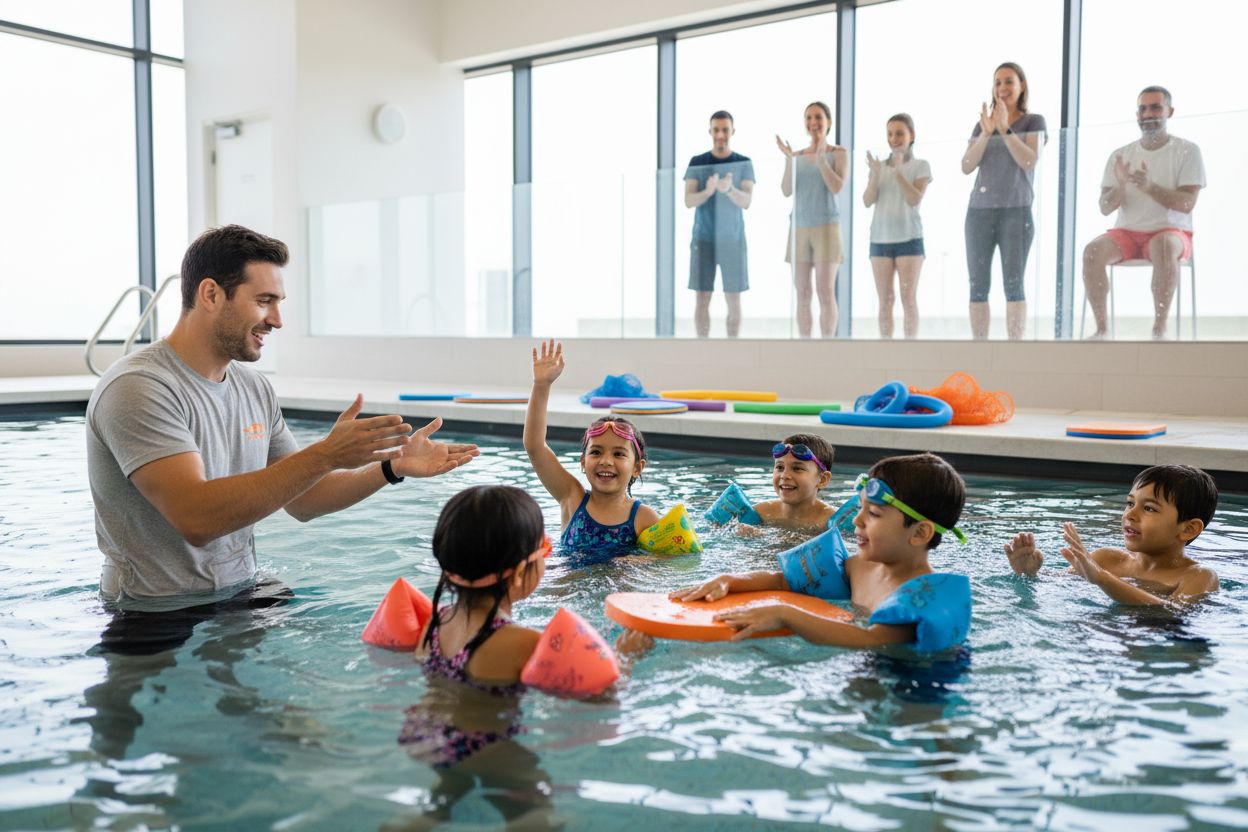
For children, the first encounter with water is crucial. Playful water acclimatization training transforms this initial challenge into an exciting adventure full of joy and discoveries. Unlike traditional swimming lessons, it's not just about technique but about building trust and fun in a new environment.
The goal of playful water acclimatization training is to leverage children's natural curiosity and joy of movement. According to Apotheken Umschau, there are various creative methods to introduce children to water:
- Hop hop hop: Hopping games in shallow water
- Cover yourself with the cloth: Balance and body awareness exercises
- Shared games with parents or swimming instructors
These activities not only help children feel safer in the water but also promote important motor and sensory skills. Children learn playfully to control their body tension, maintain balance, and develop confidence in their own movement abilities.
A positive, relaxed atmosphere is important. Parents and instructors should be patient and acknowledge every small success. Encourage your child to learn at their own pace and to enjoy water games. In our swimming course for 3-year-olds, you will find more details on age-appropriate water acclimatization.
Through this playful approach, learning to swim becomes a positive experience – full of fun, discovery, and growing self-confidence.
2. Step-by-Step Guide to Learning to Swim
Learning to swim is a systematic process that requires precise structure and patient guidance. A step-by-step guide offers children and adults a clear framework and reduces uncertainties during water training.
The basic structure of an effective swimming learning method includes several crucial phases:
- Water familiarity: First contact with the element
- Breathing technique: Learning proper breathing in and above water
- Body posture: Developing a stable swimming position
- Movement techniques: Learning basic swimming styles
- Endurance training: Continuous improvement of swimming skills
Each phase builds systematically on the previous one and enables controlled learning progress. Individual supervision that takes into account the learner's pace and needs is important. An experienced swimming instructor can adapt the steps to personal abilities.
For parents and instructors, a positive motivational culture is recommended. Every small progress should be acknowledged. Fear and overwhelm are the biggest obstacles to learning to swim. Therefore: patience, encouragement, and playful elements are crucial.
In our comprehensive guide to learning to swim, you will find further detailed tips on systematic procedures. The key to success lies in a structured yet motivating learning environment.
3. Positive Reinforcement with Badges and Certificates
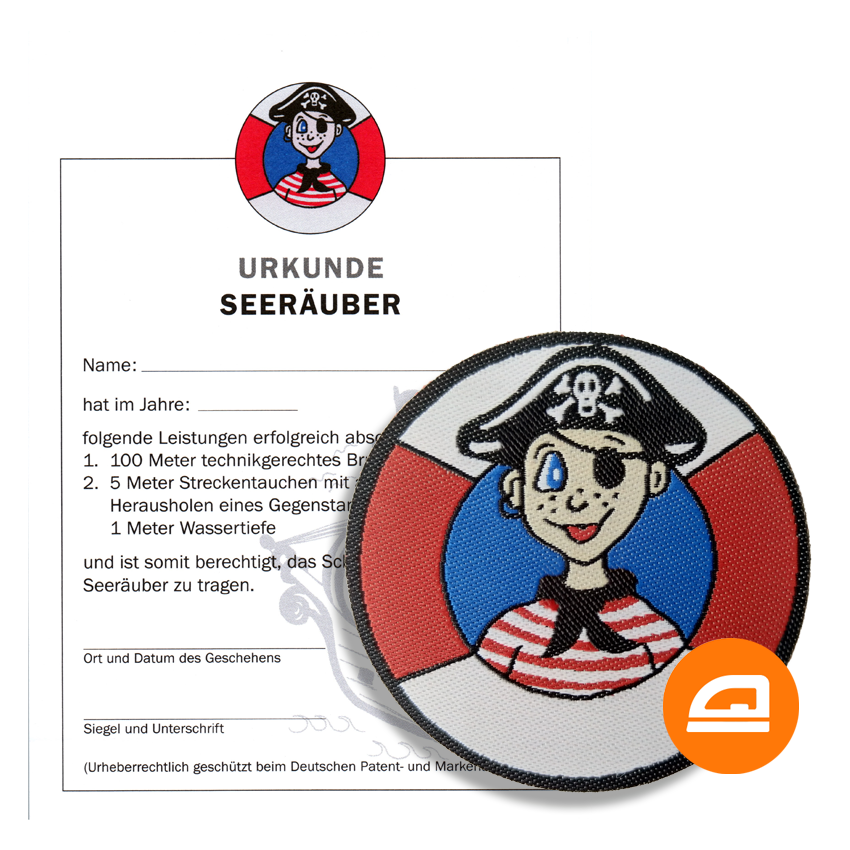
Motivation is the key to learning success. Badges and certificates are more than just paper or metal; they are powerful psychological tools for increasing performance and building self-confidence. Especially with children, these visible markers of success can be incredibly motivating.
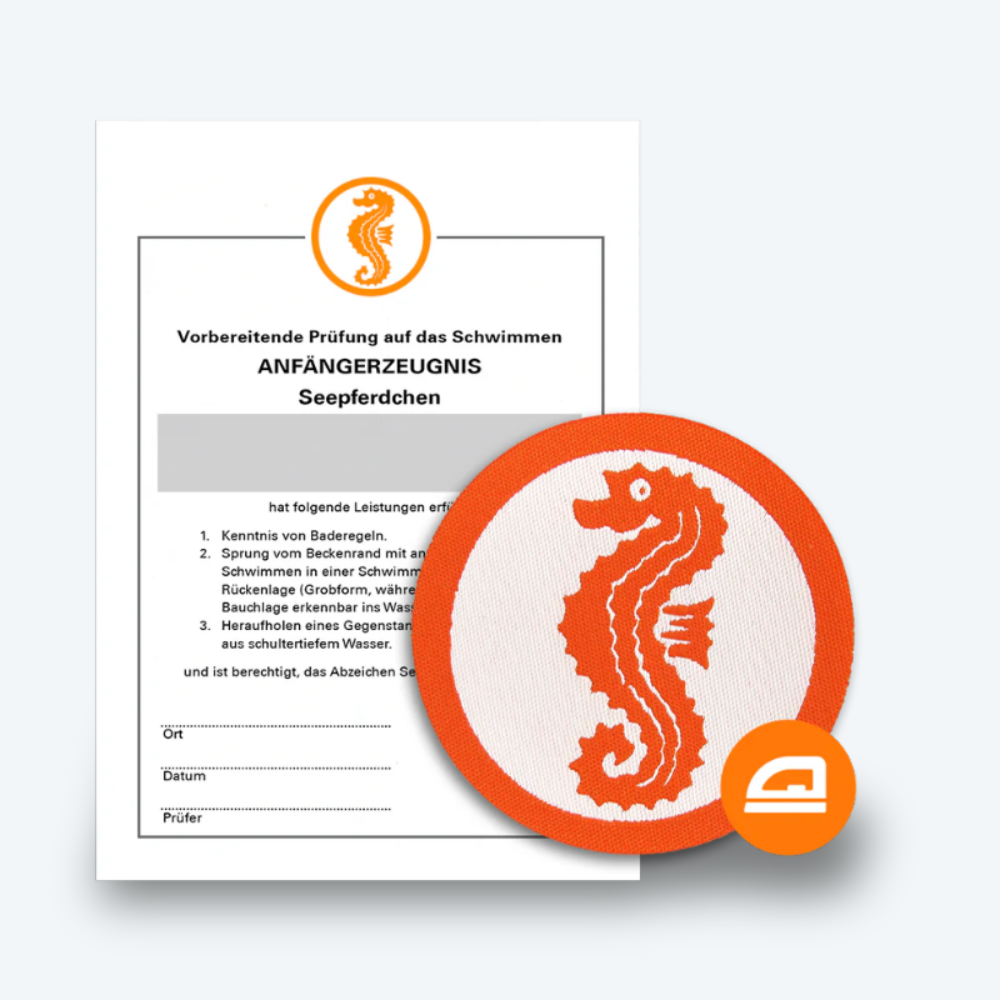
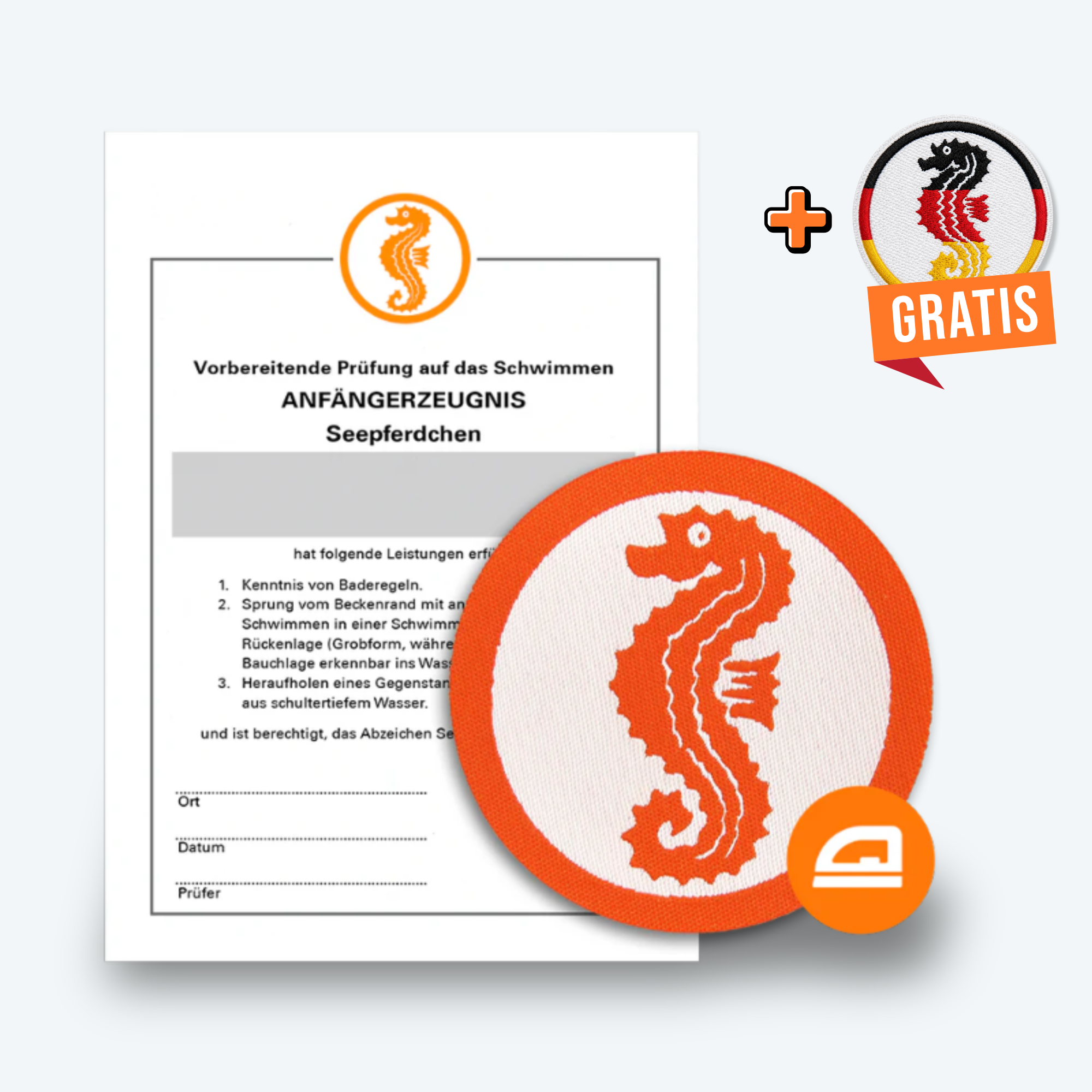
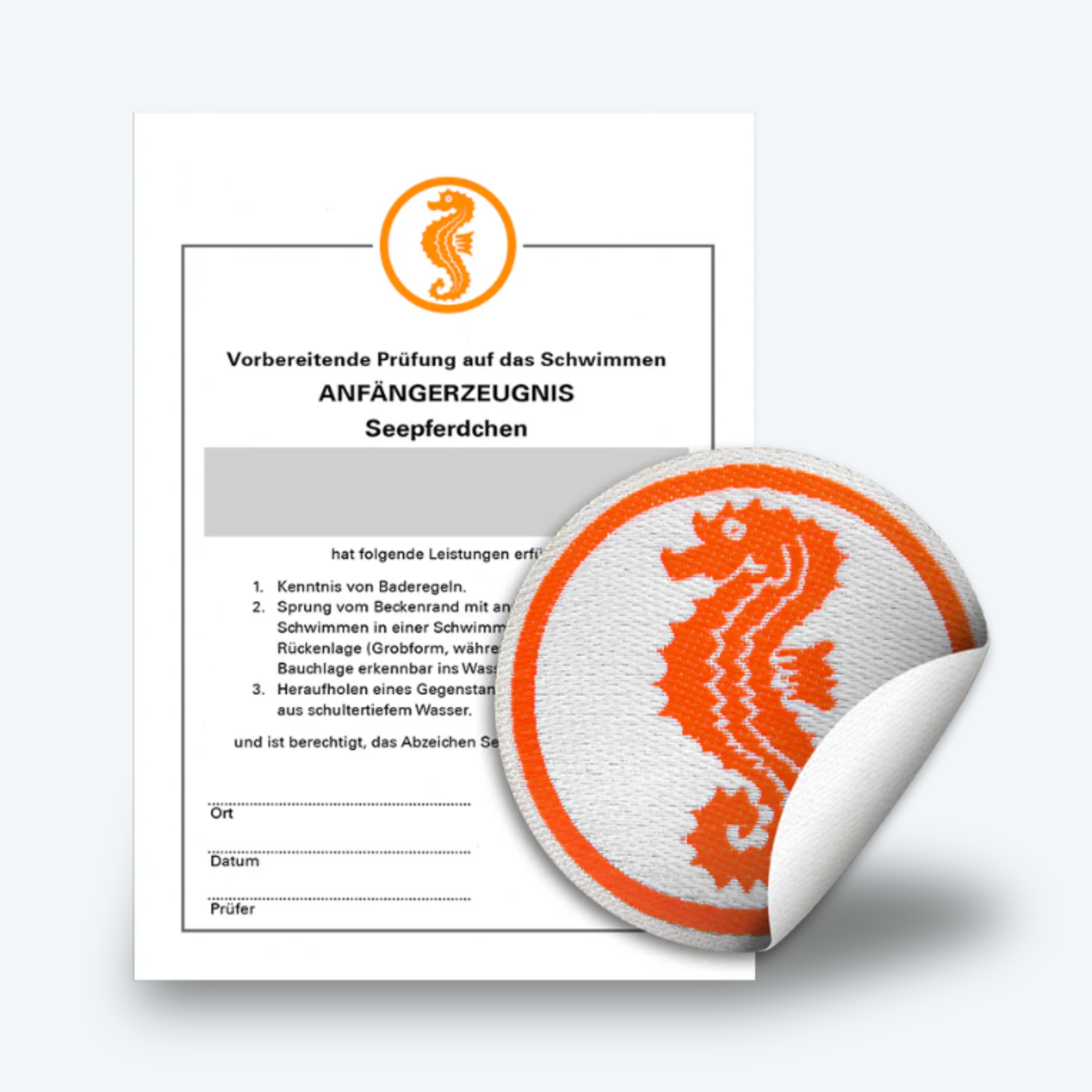
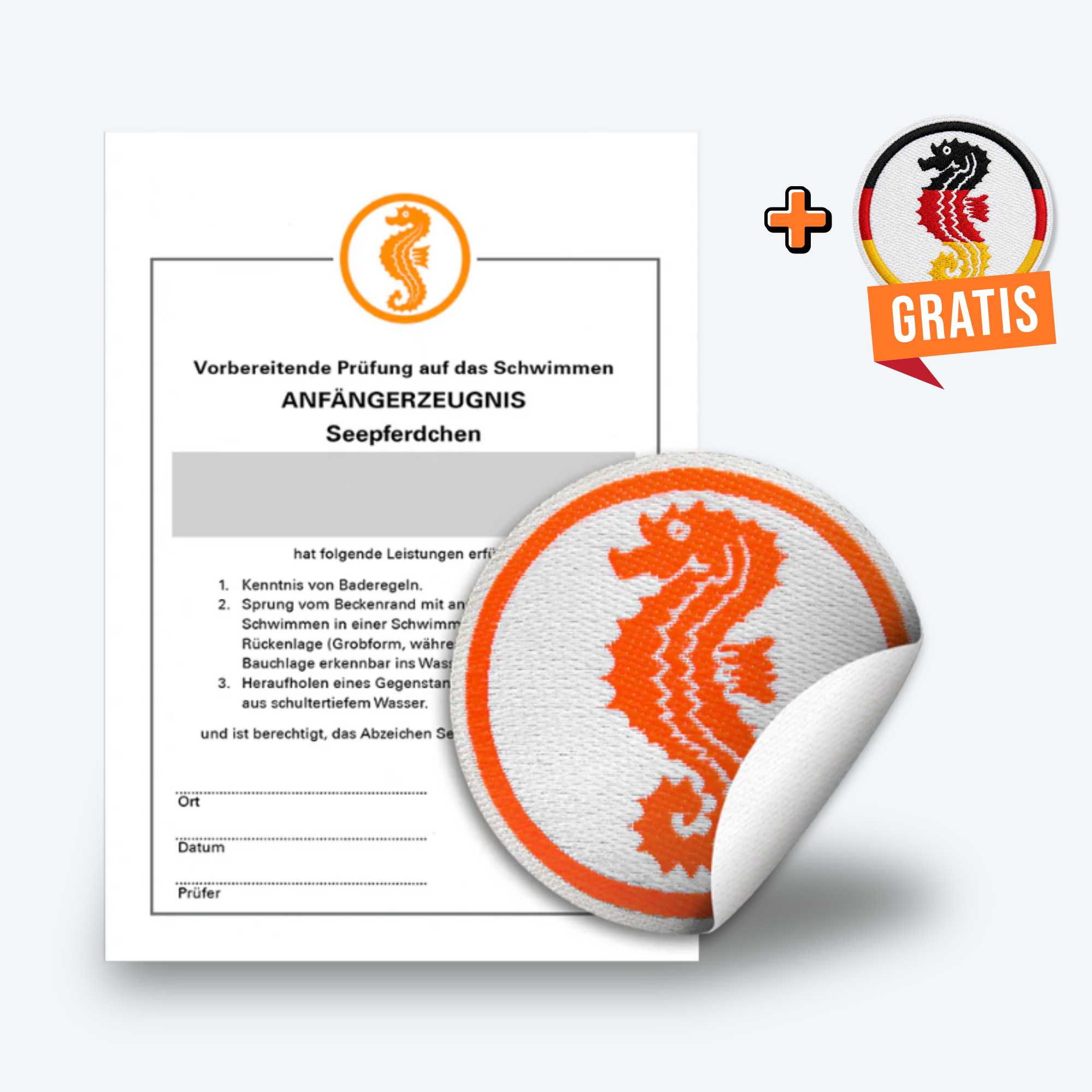
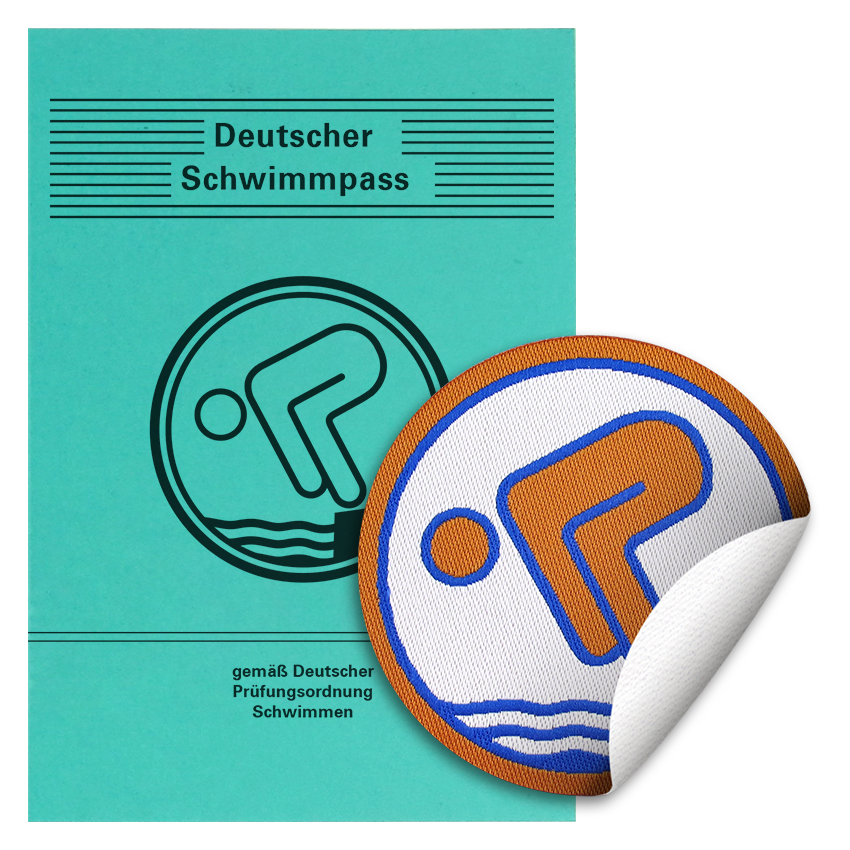
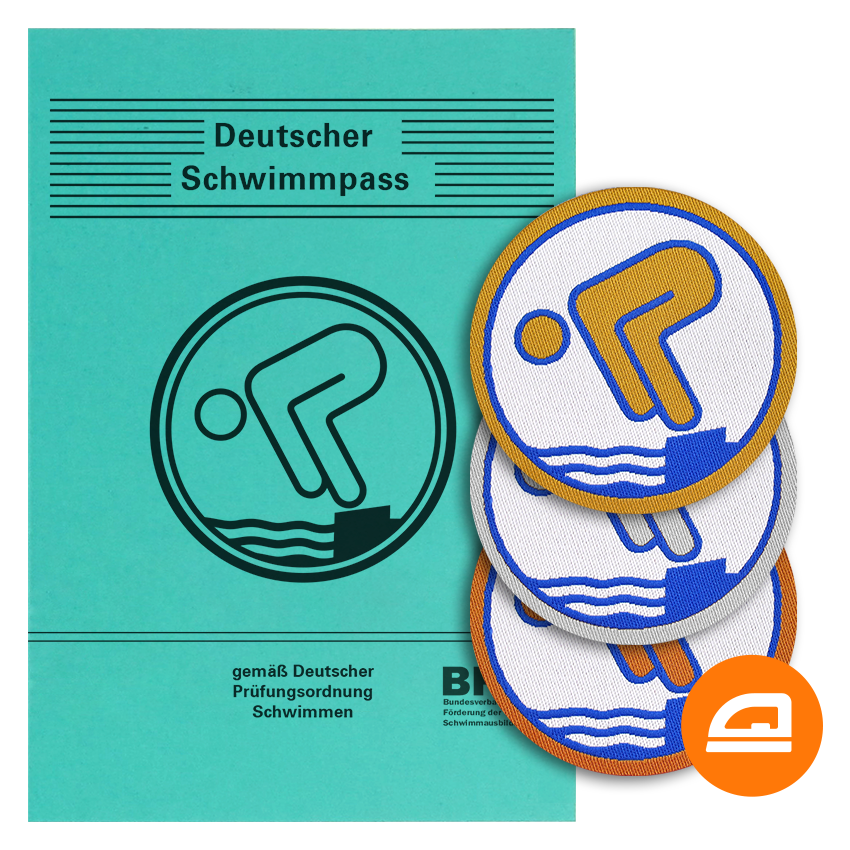
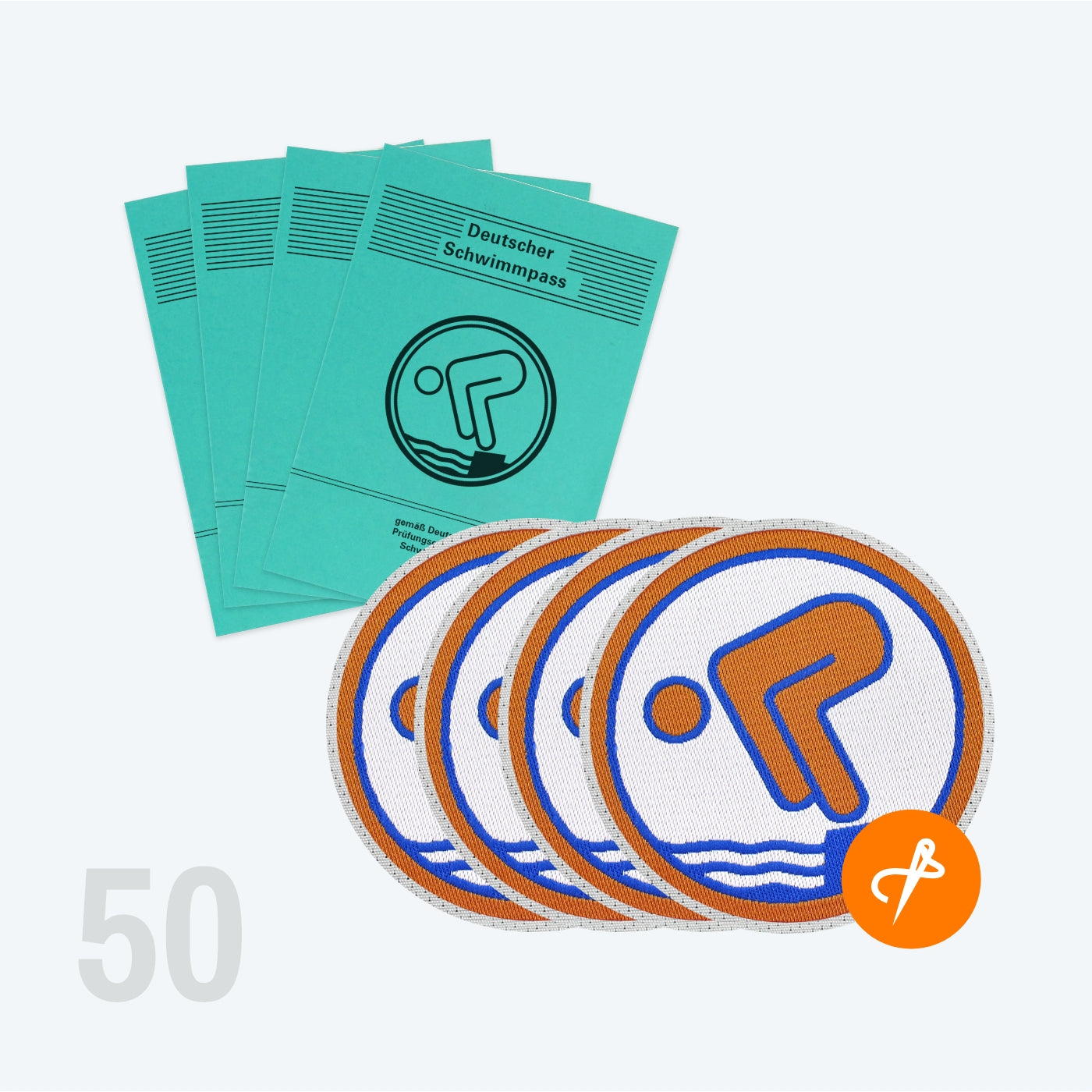
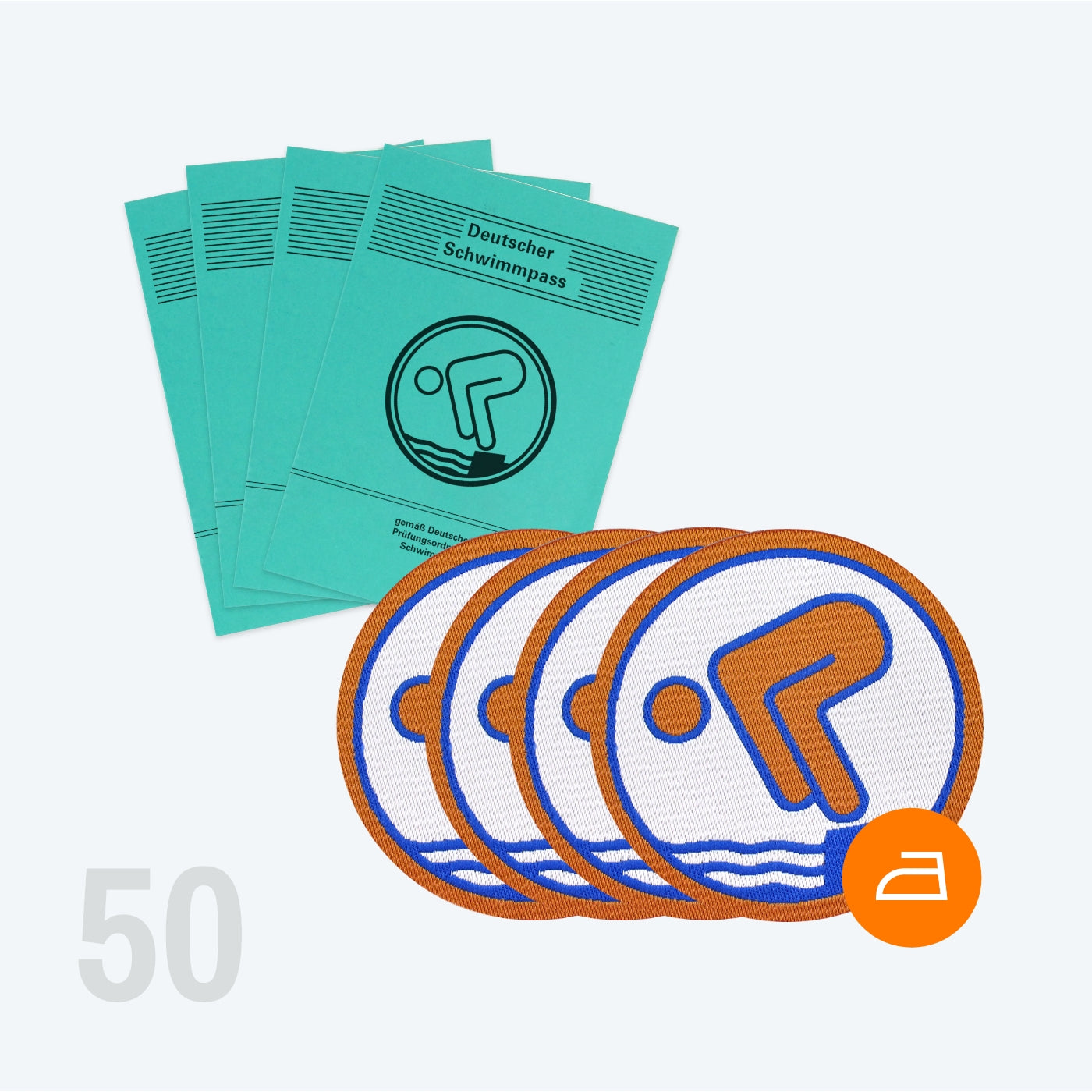
The Seepferdchen badge (German "seahorse" badge for basic swimming skills) is a perfect example of such a motivation booster. As Wikipedia describes, this badge marks a crucial milestone in the swimming process and gives children a sense of real recognition.
The Federal Agency for Civic Education emphasizes that such performance certificates generate positive motivation and serve as part of individual support. Specifically, this means:
- Immediate recognition of progress
- Visible documentation of the learning path
- Strengthening self-confidence
- Incentive for further development
For swimming schools, this represents a strategic opportunity. Through thoughtful recognition strategies, you can not only motivate learners but also retain them long-term with your institution.
In our guide to swimming badges, you will find more details on effectively designing motivational systems. What is important is always an authentic appreciation of individual performance.
4. Group Exercises for Social Competence and Motivation
Learning to swim is more than just an individual skill. It is a social process that requires team spirit, trust, and mutual support. Group exercises are the key not only to developing swimming skills but also to strengthening important social competencies.
According to findings from the Federal Agency for Civic Education, open forms of instruction such as group work specifically foster social skills. In swimming lessons, this specifically means: children learn from each other and with each other, and not just through classic instruction.
Practical group exercises include:
- Partner rescue drills
- Joint water games
- Coordination tasks in small groups
- Mutual motivation activities
- Team challenges with playful elements
The decisive advantage of such exercises lies in the peer learning dynamic. Children motivate each other, overcome fears together, and develop a sense of belonging. A swimming instructor becomes a moderator and supporter in this process.
In our swimming course for 5-year-olds, you will find more ideas for integrating group activities. The goal is clear: learning to swim should be fun and at the same time promote personal and social development.
5. Individual Support through Differentiated Tasks
Every child learns differently – this truism applies especially when learning to swim. A successful swimming school recognizes and respects individual learning needs and adapts its methods accordingly.
According to findings from the Bavarian State Institute for School Quality, internal differentiation means a targeted adaptation of tasks by varying the quantity and difficulty. In swimming lessons, this specifically means: different exercises for different performance levels.
Strategies for individual support include:
- Tasks with varying complexity levels
- Personalized learning goals
- Flexible time frames for practice units
- Different aids and support systems
- Adjustment of instruction intensity
The Federal Agency for Civic Education emphasizes the importance of adaptive teaching methods. A good swimming instructor observes continuously and dynamically adapts their methods. The goal is not uniformity but individual development.
In our swimming course for 4-year-olds, you will find examples of differentiated training approaches. The balance between challenge and overwhelm is always crucial.
6. Use of Learning Aids and Swimming Accessories
Learning aids are not all equal. The targeted and thoughtful use of swimming accessories can either accelerate the learning process or unnecessarily delay it. The right balance and pedagogical strategy are crucial.
The Apotheken Umschau explicitly warns against overestimating certain aids, such as armbands. While these can temporarily provide a sense of security, they can ultimately hinder autonomous swimming learning.
Recommended learning aids for different developmental stages:
- Swim noodles for body posture exercises
- Light kickboards for support
- Special training aids for leg kicks and arm technique
- Water toys to increase motivation
- Supportive swimming vests with reduced buoyancy aid
A progressive strategy is important: aids should be gradually reduced. The goal is always to strengthen the independence and confidence of the swimming students.
In our swimming accessory guide, you will find further detailed recommendations. The key lies in an individually adapted and pedagogically sound use of learning aids.
7. Regular Performance Review and Feedback Discussions
Learning success requires reflection. Regular performance reviews and personal feedback discussions are not just an administrative necessity but the key to the continuous development of swimming students.
The Federal Agency for Civic Education emphasizes the importance of continuous diagnostics. Goal setting and progress measurement go far beyond simple performance evaluation.
Effective feedback strategies include:
- Monthly development talks
- Written learning status reports
- Individual goal agreements
- Transparent performance documentation
- Encouragement and constructive advice
The goal is not only to measure progress but to strengthen motivation and self-confidence. A good swimming instructor understands feedback as a dialogue at eye level.
In our swimming course guide, you will find more methods for effective learning support. The respectful and individual approach always remains decisive.
Below is a comprehensive table summarizing the strategies and approaches for swimming learning and motivation discussed throughout the article.
| Topic | Description & Approaches | Benefits & Results |
|---|---|---|
| Playful Water Acclimatization Training | Leveraging curiosity through creative methods like hopping games and balance exercises | Promotes confidence, motor skills, and fun in the water |
| Step-by-Step Instructions | Systematic learning process including breathing technique and body posture | Controlled learning progress and individual support |
| Positive Reinforcement | Use of badges and certificates | Motivation, recognition of progress, and strengthening of self-confidence |
| Group Exercises | Partner rescue drills and team challenges | Development of social skills and mutual motivation |
| Individual Support | Differentiated tasks according to abilities | Personalized learning goals and avoidance of overwhelm |
| Use of Learning Aids | Use of swim noodles and reduction of aids | Accelerated learning and promotion of independence |
| Performance Review and Feedback | Regular development talks and written learning status reports | Strengthening motivation and self-confidence through targeted feedback |
More Learning Success in Swimming – With Pimpertz, Motivation Becomes Visible
The article topic clearly shows: whether playful water acclimatization or targeted step-by-step instructions – sustainable learning success depends on motivation, positive reinforcement, and pedagogically flexible methods. This is precisely where uncertainties often arise: How do I reward progress individually? How do I create successes that truly inspire and remain visible? The swimming badges, certificates, and targeted feedback systems described in the article are therefore more than mere adornments – they form the emotional backbone for enthusiastic learning and lasting self-confidence.
Transform your next swimming learning successes into significant moments that make children and teams proud. Because at Pimpertz, you will find officially recognized swimming badges, lovingly designed certificates, and versatile swimming accessories for every developmental stage. Benefit from individual advice, practical bundle offers, and lightning-fast shipping for your courses, schools, or clubs. Ensure now that every learning success remains visible – discover all possibilities at https://pimpertz.de and start today with the best materials for real swimming fun and long-term success.
Frequently Asked Questions
How can I effectively design water acclimatization for children?
To effectively design water acclimatization for children, use playful methods such as hopping games in shallow water or balance exercises. Integrate joy and discovery into the lessons so that children feel safe and comfortable.
What steps are part of a structured swimming learning method?
A structured swimming learning method includes several steps: water familiarity, breathing technique, body posture, movement techniques, and endurance training. Address these steps sequentially to set clear goals for children and promote their learning progress.
How can I increase children's motivation when learning to swim?
You can increase children's motivation by using badges or certificates as recognition. These visible successes promote self-confidence and give children the feeling of making progress.
Which group exercises are recommended to promote social skills?
Recommended group exercises include partner rescue drills and shared water games. These foster team spirit and trust among children and make learning a shared experience.
How can I consider individual learning needs in swimming lessons?
Consider individual learning needs by offering different tasks with varying difficulty levels. Adjust the pace and support to give every child the opportunity to learn at their own pace.
What are effective learning aids for swimming beginners?
Effective learning aids for swimming beginners are swim noodles or light kickboards, which help children stabilize their body posture. Be sure to gradually remove the aids to promote independence in the water.