
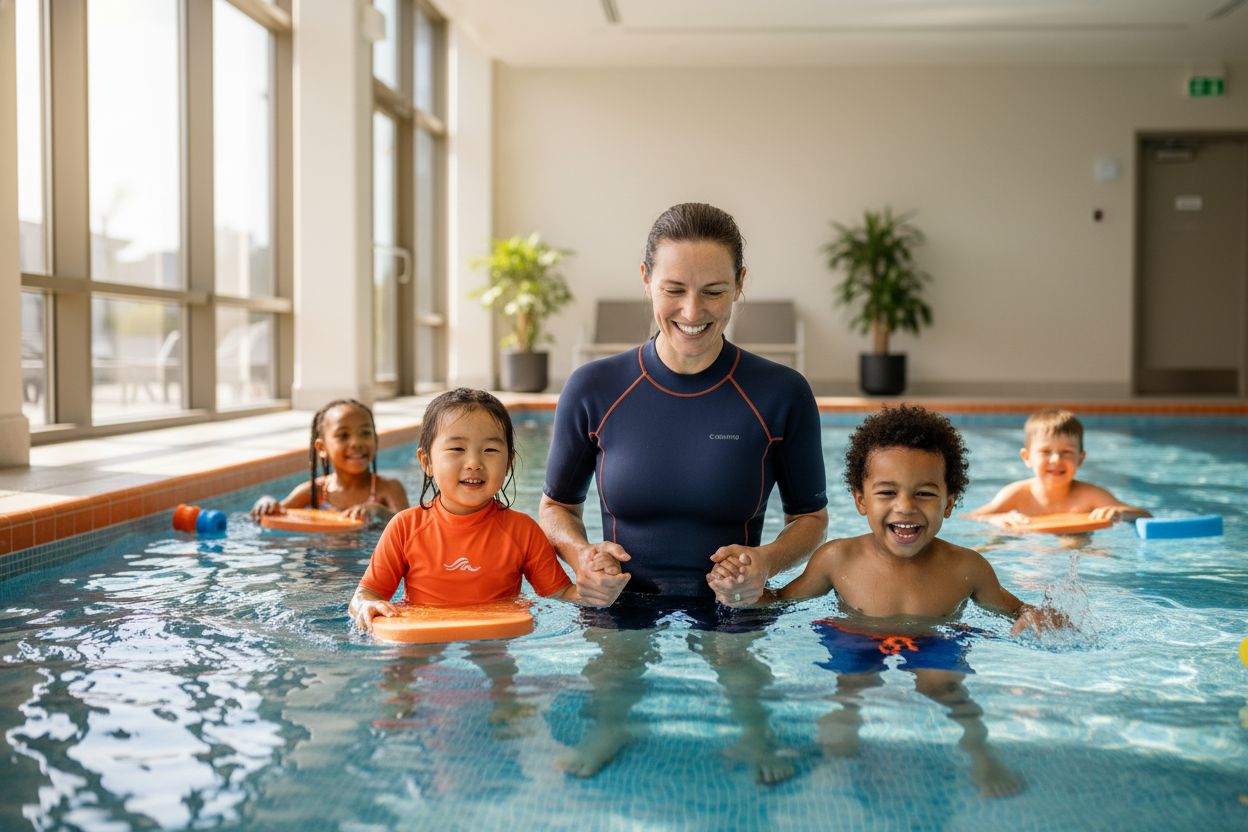
7 Proven Teaching Methods for Swim Schools to Achieve Greater Learning Success
According to the DLRG, about 60 percent of primary school children in Germany cannot swim safely. For parents, learning to swim is more than just a recreational activity; it means protection, self-confidence, and healthy development. With child-friendly methods, the journey from splashing to confident swimming can be achieved step by step and with great joy.
Quick Summary
| Takeaway | Explanation |
|---|---|
| 1. Playful Water Acclimatization without Pressure | Children should be introduced to water through games and positive experiences to reduce fears and gain confidence. |
| 2. Deliberately Acknowledge Individual Progress | Small successes should be documented and appreciated to increase children's motivation in swimming. |
| 3. Teach Safety Techniques Early | Children need to learn basic safety techniques playfully to move safely in the water. |
| 4. Promote Positive Error Correction | Errors should be seen as learning opportunities to strengthen children's self-confidence in swimming. |
| 5. Combination of Group and Individual Lessons | A mix of group and individual lessons allows for more individualized support and social integration during learning. |
Table of Contents
- Child-Friendly Water Acclimatization Through Play
- Deliberately Promote and Acknowledge Individual Progress
- Teach and Practice Safety Techniques Early
- Clear Demonstration of All Swimming Techniques
- Combine Positive Error Correction with Motivation
- Use Badges and Rewards as Learning Incentives
- Sensibly Combine Group and Individual Lessons
1. Child-Friendly Water Acclimatization Through Play
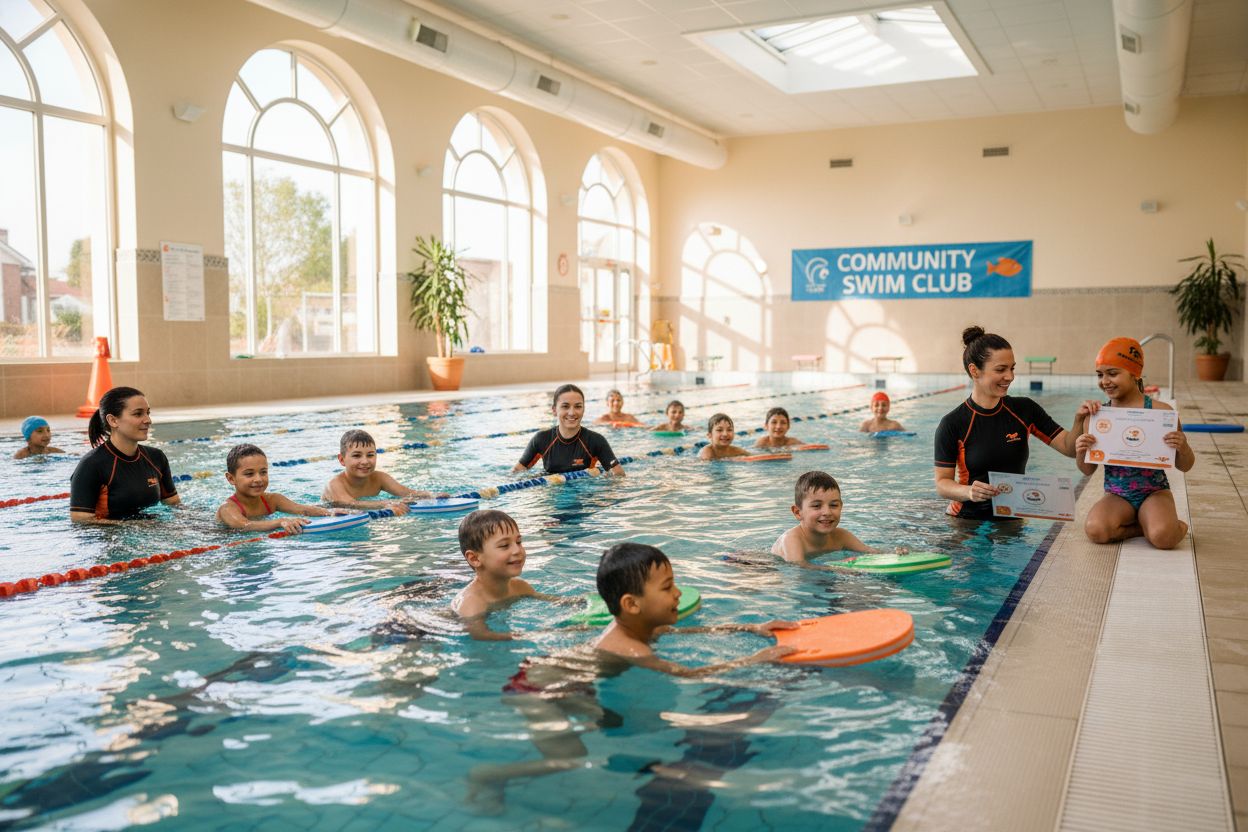
Water acclimatization for children is a crucial phase in learning to swim. Little explorers need a gentle and joyful introduction that perfectly combines fun and safety.
The goal is to reduce natural fears and create positive associations with water. According to the German Life Saving Society (DLRG), this is best achieved through playful activities that instill joy and confidence in children.
Practical exercises for water acclimatization include:
- Shower Party: Playfully dealing with water splashes
- Splashing Concert: Joy of movement in shallow water
- Bubbling and Blowing: Playfully learning breathing rhythm
The challenge is to introduce children to the element of water without pressure. Eltern.de recommends gaining positive experiences at home in the bathtub. Let your child splash, get water on their face, and have their first water experiences.
It is also important to avoid swimming aids during this phase. This way, children learn early to orient themselves independently in the water and to explore their natural movement capabilities.
A secret tip: Make water acclimatization a shared adventure. Be enthusiastic yourself, play along, and show how much fun water can be. Your positive attitude directly transfers to your child.
2. Deliberately Promote and Acknowledge Individual Progress
Every child learns to swim at their own pace and with individual strengths. Targeted support and recognition of personal development are crucial for motivation and learning success.
The Federal Association for the Promotion of Swimming Education has developed standardized badge systems that enable precisely this individual performance measurement. Transparent progress documentation helps children recognize and appreciate their development.
Important strategies for individual support:
- Set small intermediate goals
- Document and visualize progress
- Highlight personal strengths
- Provide individual feedback
Particularly motivating are child-friendly learning techniques such as the playfully learned starfish technique. This method gives children security and self-confidence in the water.
Parents and swimming instructors should focus on positive experiences. Every small step forward deserves recognition and appreciation regardless of the end result.
A tip: Keep a personal progress booklet or a motivation board. Visualized successes increase the joy of learning to swim and provide lasting motivation.
3. Teach and Practice Safety Techniques Early
Safety in water is not a luxury but an absolute necessity for children. Safety techniques learned early can literally save children's lives.
According to a current swimming study on child rescue behavior, many children are potentially at risk of drowning in water. Preventive safety training is therefore crucial.
Key safety techniques include:
- Learning to make an emergency call
- Practicing self-rescue techniques
- Recognizing danger zones in water
- Knowing how to call for help correctly
- Mastering swimming directions
Children must playfully learn how to behave in an emergency. This means practicing techniques such as staying above water, swimming to the edge of the water, and calling for help.
Clear rules and continuous training are particularly important. Parents and swimming instructors should integrate safety exercises into every training session.
A practical tip: Simulate controlled dangerous situations. Let children practice how to remain calm and systematically call for help.
4. Clear Demonstration of All Swimming Techniques
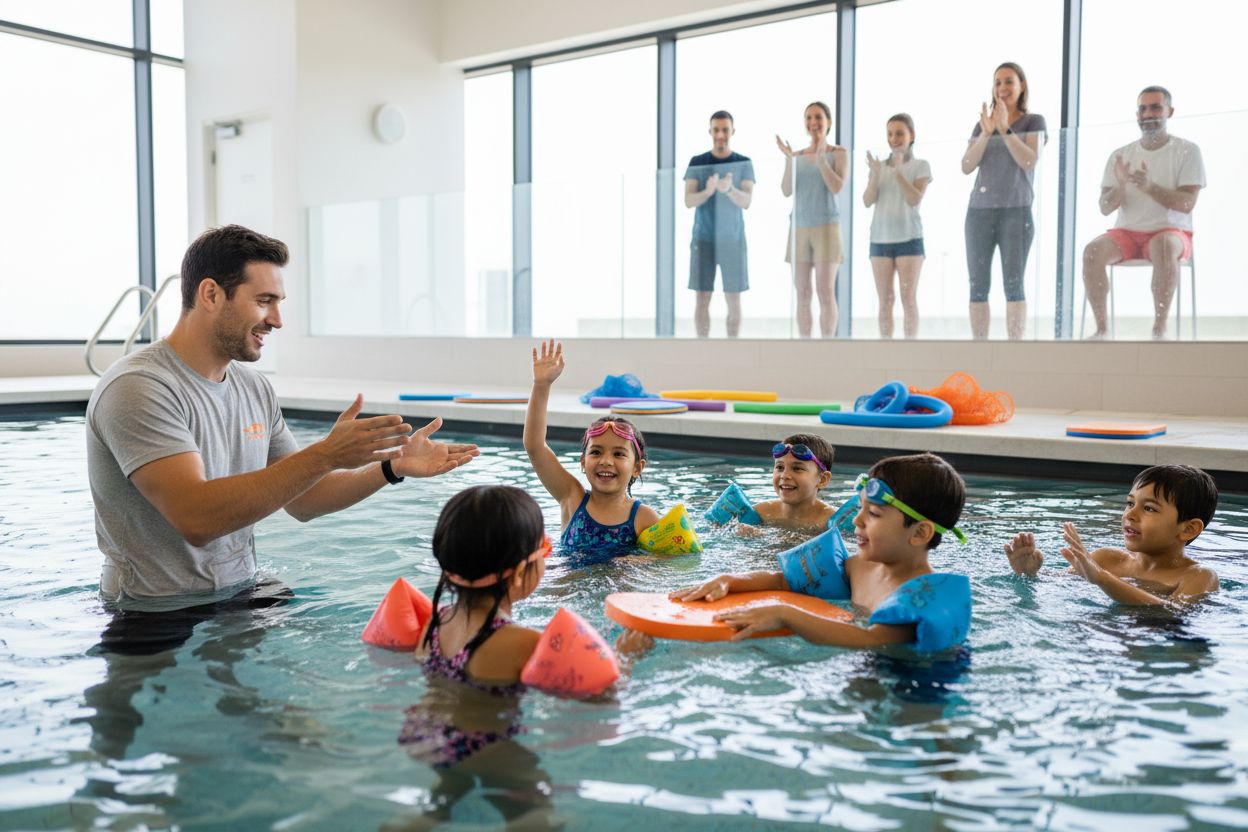
Visual demonstration is key to successful swimming instruction. Children best understand and retain movement sequences through clear and precise demonstrations.
According to swimming lesson recommendations for children, swimming instructors should teach techniques in several steps. Good demonstrations include not only the movement itself but also the underlying principles.
Important swimming techniques to learn:
- Breaststroke
- Backstroke
- Freestyle
- Sidestroke
- Breathing techniques
The Federal Association for the Promotion of Swimming Education emphasizes the importance of standardized examination conditions. This specifically means a uniform visual presentation of swimming techniques.
Practical tips for swimming instructors:
- Demonstrate movements slowly and multiple times
- Encourage children to imitate
- Explain individual movement parts separately
- Give feedback patiently
Crucial is the combination of demonstration and individual support. Every child learns differently and needs their own rhythm.
5. Combine Positive Error Correction with Motivation
Mistakes are not weaknesses but learning opportunities. A constructive error culture can help children learn swimming techniques with joy and self-confidence.
According to expert recommendations for child motivation, swimming instructors should never correct errors disparagingly. Positive feedback is key to learning success.
Strategies for a motivating error culture:
- View errors as learning opportunities
- Provide concrete suggestions for improvement
- Highlight individual progress
- Show patience and understanding
- Appreciate personal strengths
The German Life Saving Society recommends playful exercises in a protected environment. It is important not to push children but to gently guide them.
Practical tip: Praise small progress and show children how they can improve movements. An encouraging atmosphere helps them to embrace challenges with joy.
6. Use Badges and Rewards as Learning Incentives
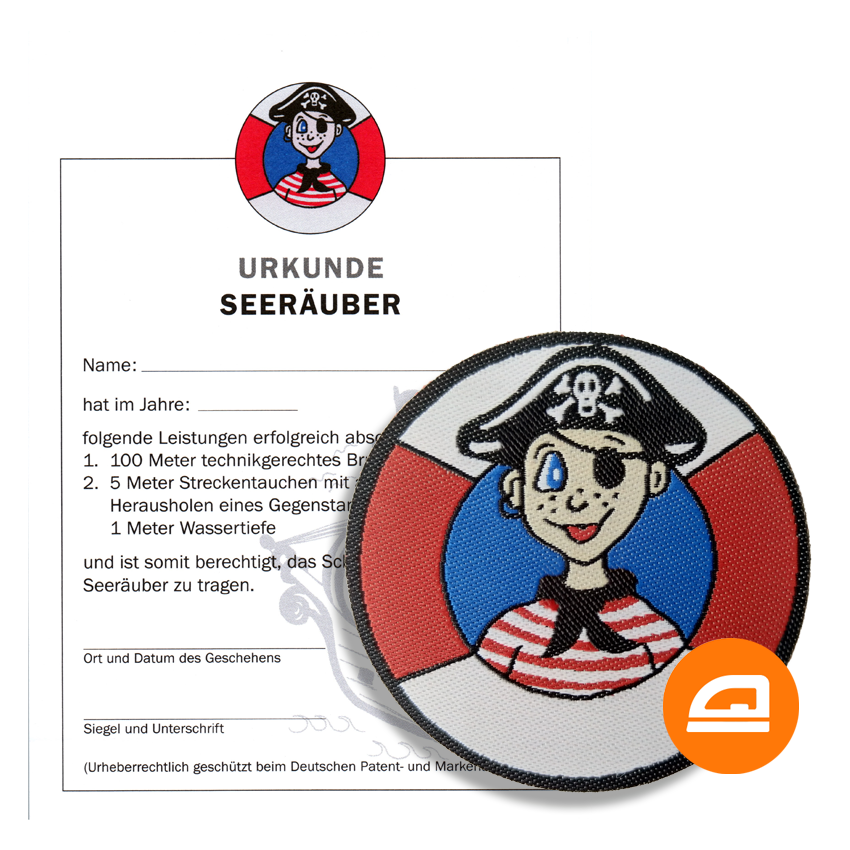
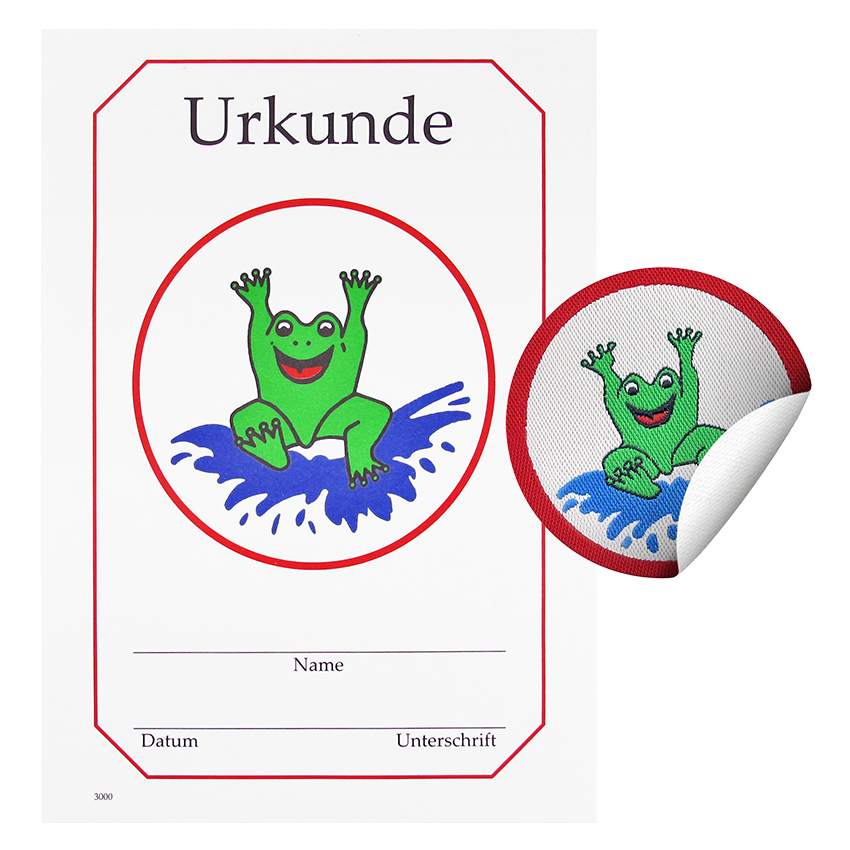
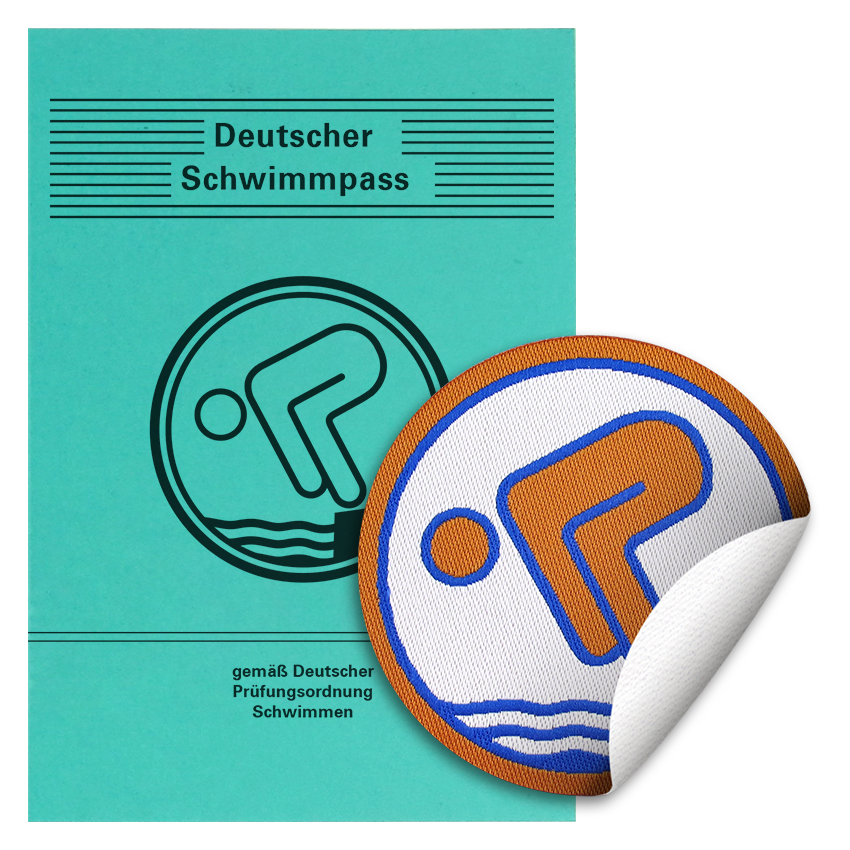
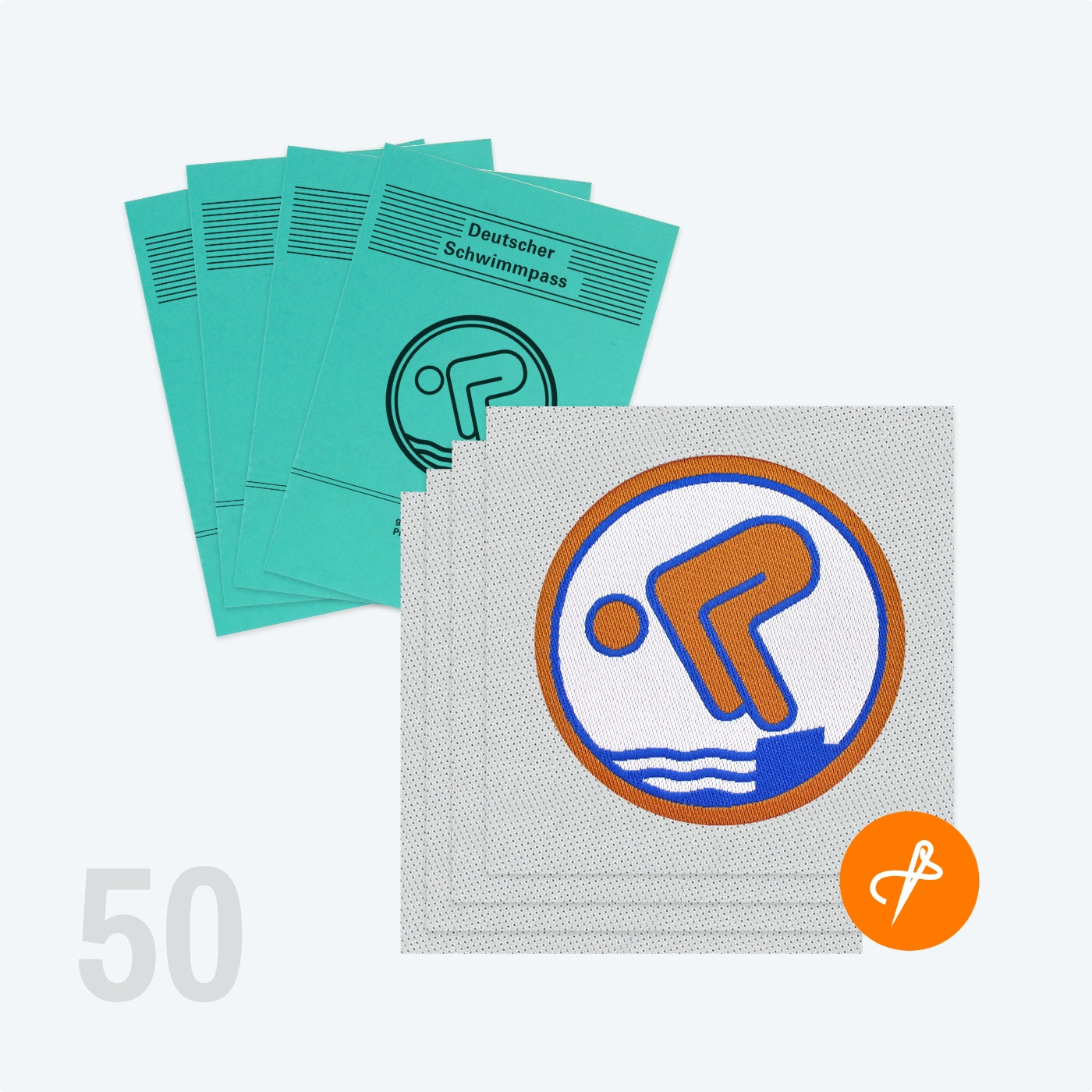
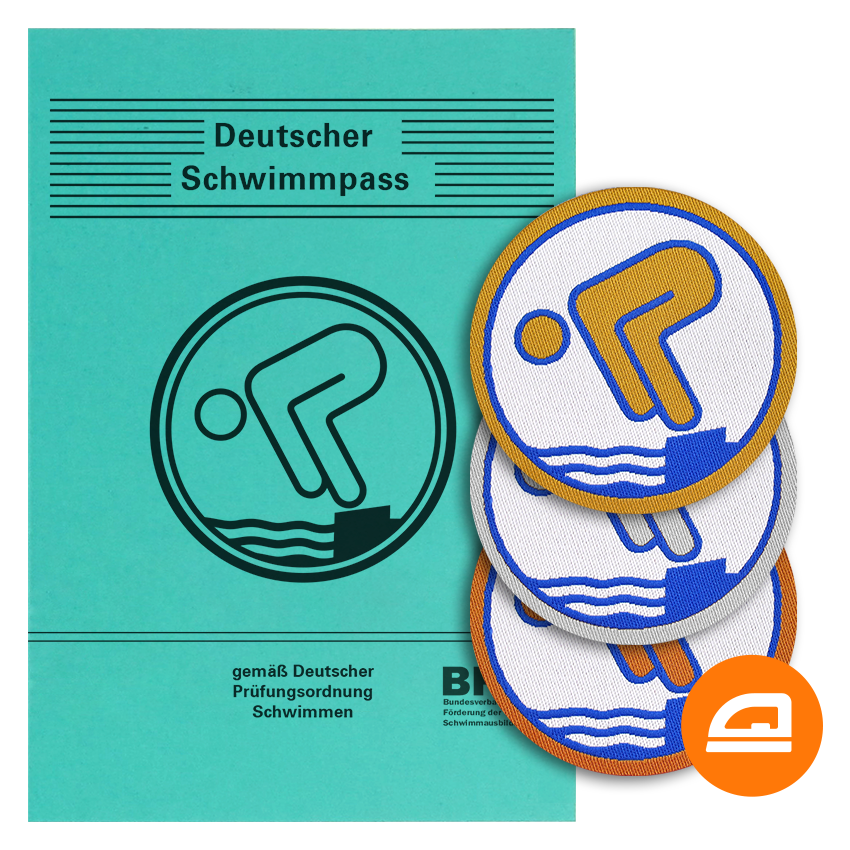
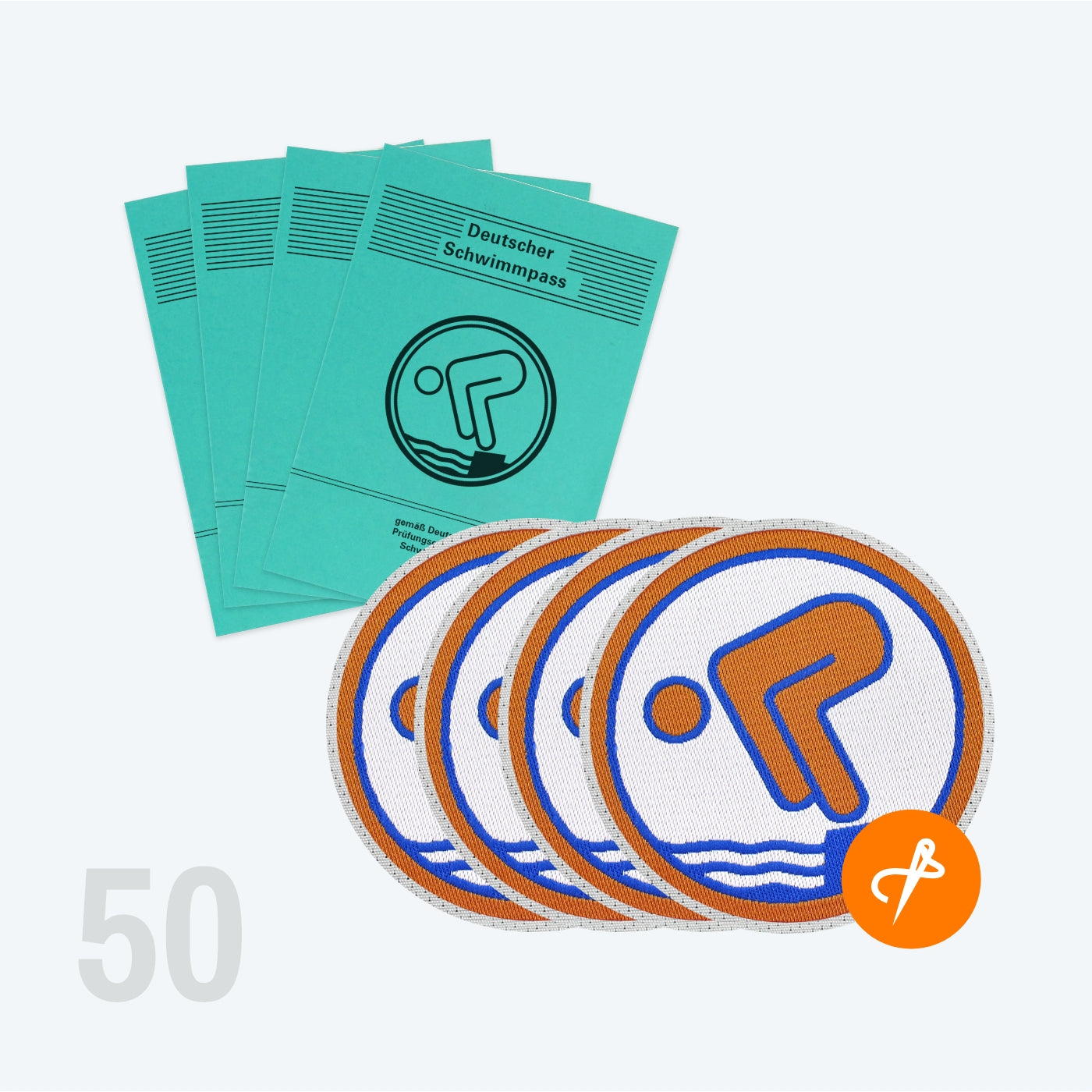
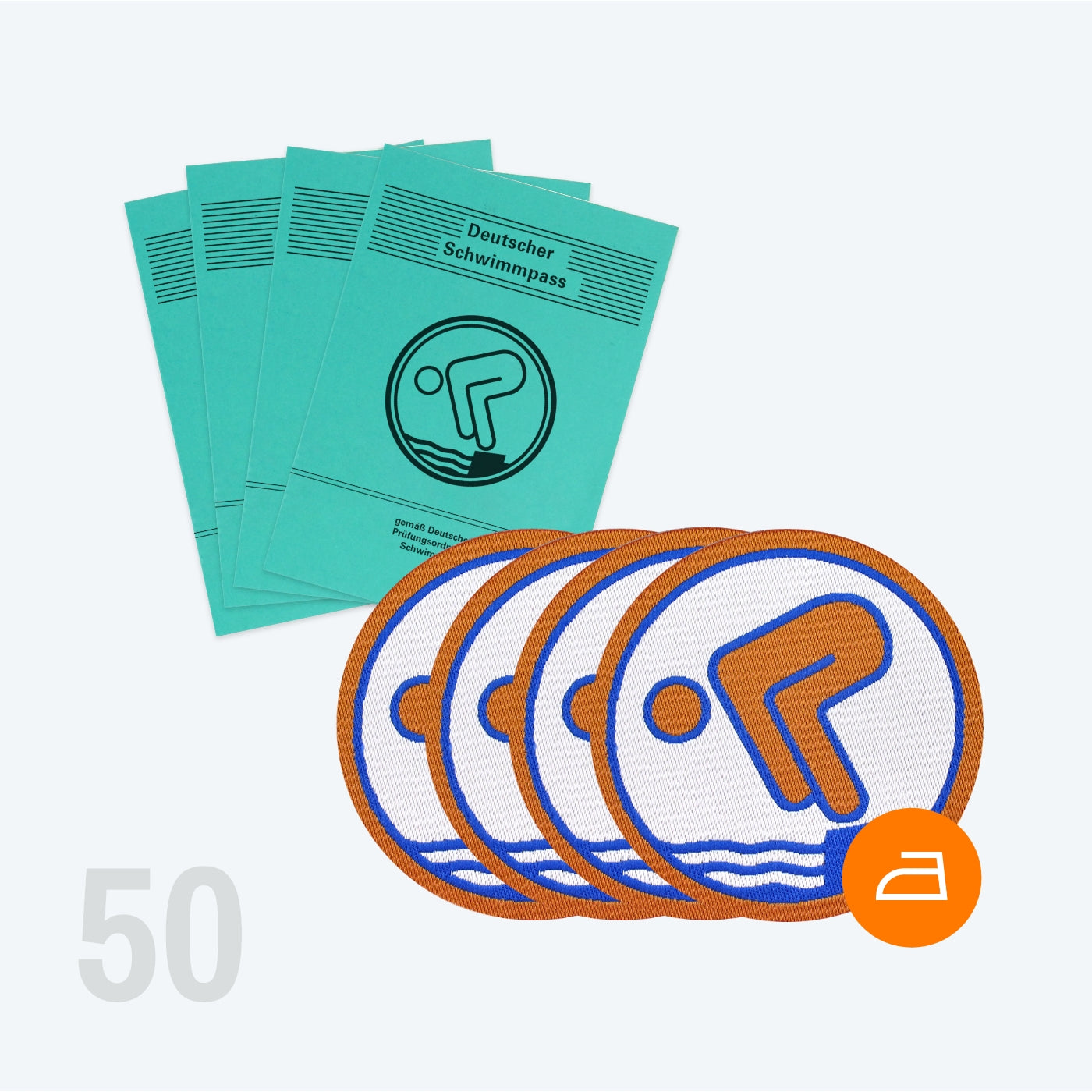
Swimming badges are more than just decorative accessories. They are powerful motivational tools that provide children with goals and orientation in learning to swim.
According to expert recommendations on swimming badges, official badges offer clear developmental stages. Systematic recognition increases learning motivation and self-confidence.
Significant swimming badges in Germany:
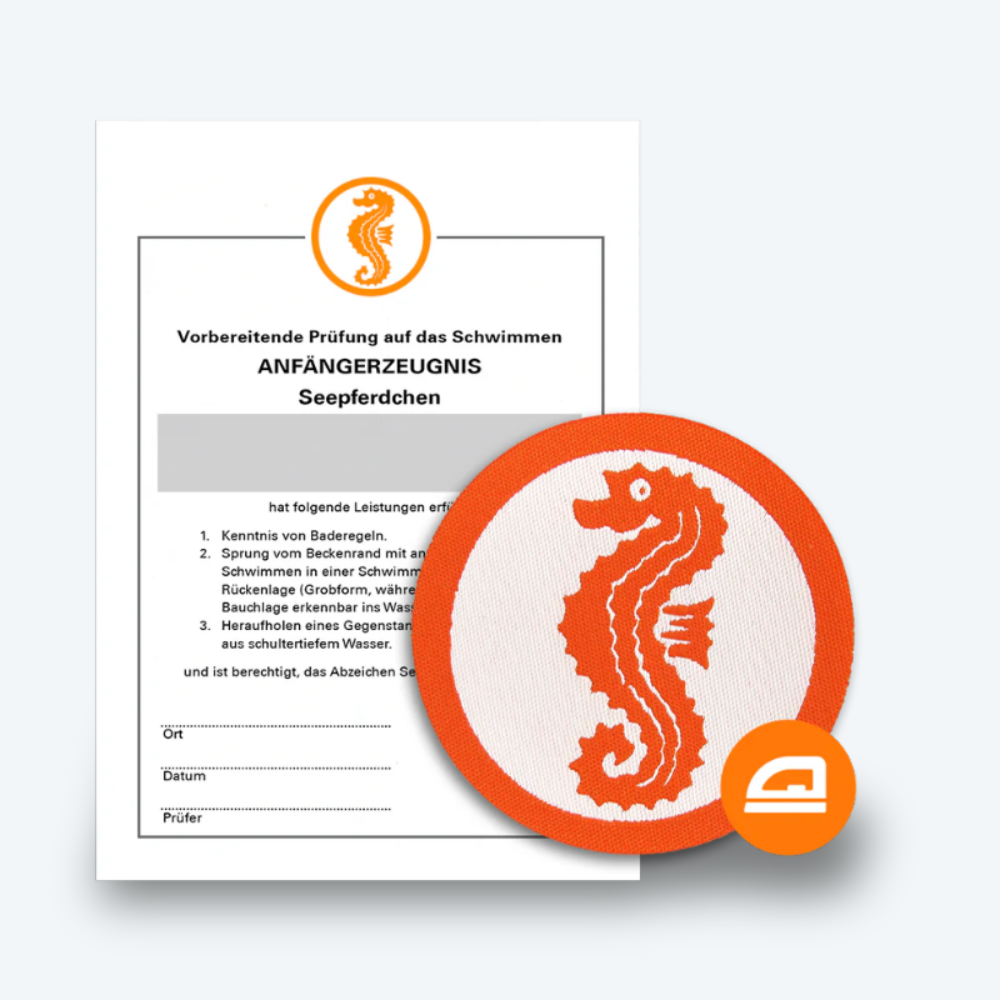
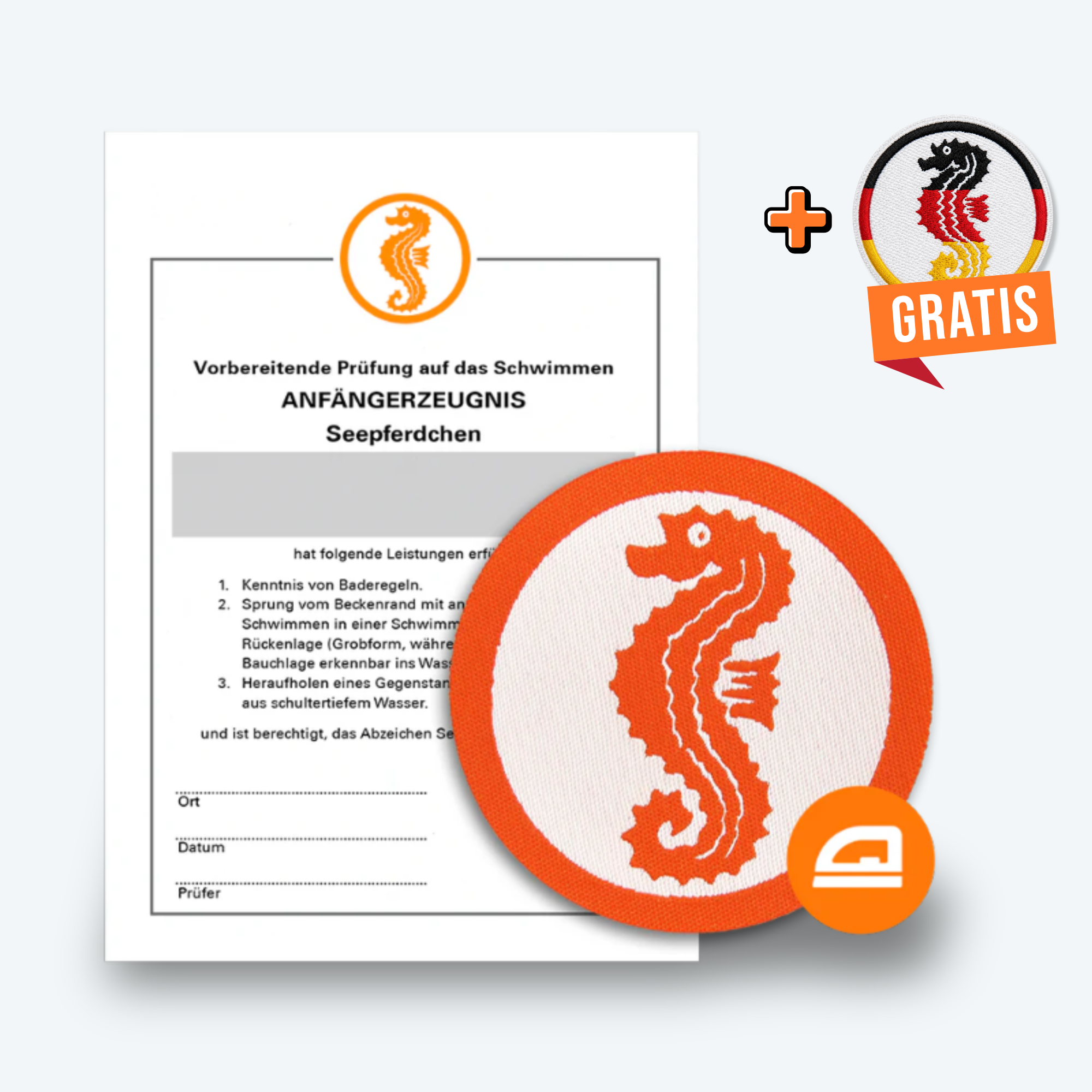
- Seepferdchen (Seahorse): First water safety
- Bronze: Basic swimming skills
- Silver: Advanced techniques
- Gold: Demanding swimming knowledge
The Federal Association for the Promotion of Swimming Education guarantees standardized examination conditions. This creates transparency and trust in performance evaluation.
Practical tips for parents and coaches:
- Use badges as milestones
- Celebrate progress together
- Encourage and praise children
- Appreciate individual development
A secret tip: Make collecting badges an exciting adventure. Every new badge is a milestone on the way to becoming a confident swimmer.
7. Sensibly Combine Group and Individual Lessons
Children learn differently. Flexible swimming instruction that cleverly combines group and individual lessons offers optimal development opportunities.
According to recommendations for swimming lessons, various forms of instruction can be used strategically. Individualized learning approaches enable effective swimming education.
Advantages of different teaching methods:
- Group lessons: Social learning
- Increased motivation through community
- Joint practice and play
- Individual lessons: Targeted addressing of individual needs
Eltern.de emphasizes that individual lessons are particularly valuable for overcoming specific challenges. Children with water fear, for example, benefit from personalized attention.
Practical recommendations:
- Initially group courses for fundamentals
- Individual lessons for special challenges
- Regularly evaluate learning progress
- Flexibly respond to children's needs
A secret tip: Combine both forms of instruction. The mix makes it. Group dynamics and individual support complement each other perfectly.
This table summarizes the main points and strategies for playful water acclimatization for children, promoting individual learning progress, safety exercises, and swimming education methods.
| Topic | Description | Key Strategies |
|---|---|---|
| Water Acclimatization | Gentle introduction to playing and learning in water. | Shower party, splashing concert, bubbling and blowing. |
| Individual Support | Recognition of each child's own learning pace and strengths. | Setting intermediate goals, documenting progress, highlighting individual strengths. |
| Safety Techniques | Early learning of rescue techniques to prevent accidents. | Emergency calls, self-rescue, recognizing danger zones. |
| Swimming Techniques | Visual demonstrations are crucial for learning success. | Slow and repeated movement instructions, promoting imitation. |
| Error Culture | Errors as learning opportunities for improvement. | Constructive feedback, patience, praising progress. |
| Badges as Incentive | Motivational aids to promote swimming. | Seepferdchen (Seahorse), Bronze, Silver, Gold. |
| Teaching Methods | Combination of group and individual lessons for optimal development. | Group lessons for social aspects, individual lessons for individual needs. |
Successfully Accompany Learning to Swim with Pimpertz
You want to teach children not just swimming techniques, but also joy, safety, and lasting motivation. In your daily life as a coach or parent, you face the challenge of making progress visible, overcoming fears, and setting learning incentives. Especially the playful introduction to water, the reward through badges, and the recognition of individual development steps can be crucial for sustainable learning success. The article emphasizes the importance of a positive error culture, individual support, and emotionally valuable achievements.
Give children the sense of achievement they deserve now. Whether original swimming badges and certificates suitable for each mastered examination level or practical accessory and collection sets – at Pimpertz you will find everything parents, swim schools, and clubs need for motivation and reward. Trust in 38 years of experience and implement your new teaching methods targeted. Start today and discover the benefits for your swimming courses at pimpertz.de.
Frequently Asked Questions
What are the best methods for water acclimatization in children?
The best methods for water acclimatization include playful activities such as shower parties and splashing concerts. Start at home with positive experiences in the bathtub to build trust in the water.
How can I promote my child's individual learning progress in swimming lessons?
Set small intermediate goals and document progress to show how your child is developing. Create a personal progress booklet to visualize successes and boost motivation.
What safety practices should I teach my child in the water?
Teach your child basic safety techniques such as making an emergency call and self-rescue techniques. Practice these regularly in child-friendly environments to reinforce what has been learned.
How can I positively correct mistakes when learning to swim?
View mistakes as learning opportunities and provide constructive feedback. Highlight positive progress and show how your child can improve movements.
What role do swimming badges play in the learning process?
Swimming badges provide clear goals and orientation in the learning process. Use them as an incentive and celebrate every success together to foster your child's motivation.
How can I effectively combine group and individual lessons?
Combine group and individual lessons to address your child's social skills and individual needs. Start with group courses and resort to individual lessons when specific challenges arise.
Recommendation
- 7 Important Swimming Learning Tips for Parents and Coaches
- Swimming Lessons from 3: Teaching Children to Swim Safely
- Swimming Lessons for 4-Year-Olds: Learning to Swim Safely for Children
- Swimming Lessons for 5-Year-Olds: Learning to Swim Safely in 2025
- Sales Training Guide: Successful Sales Training Courses