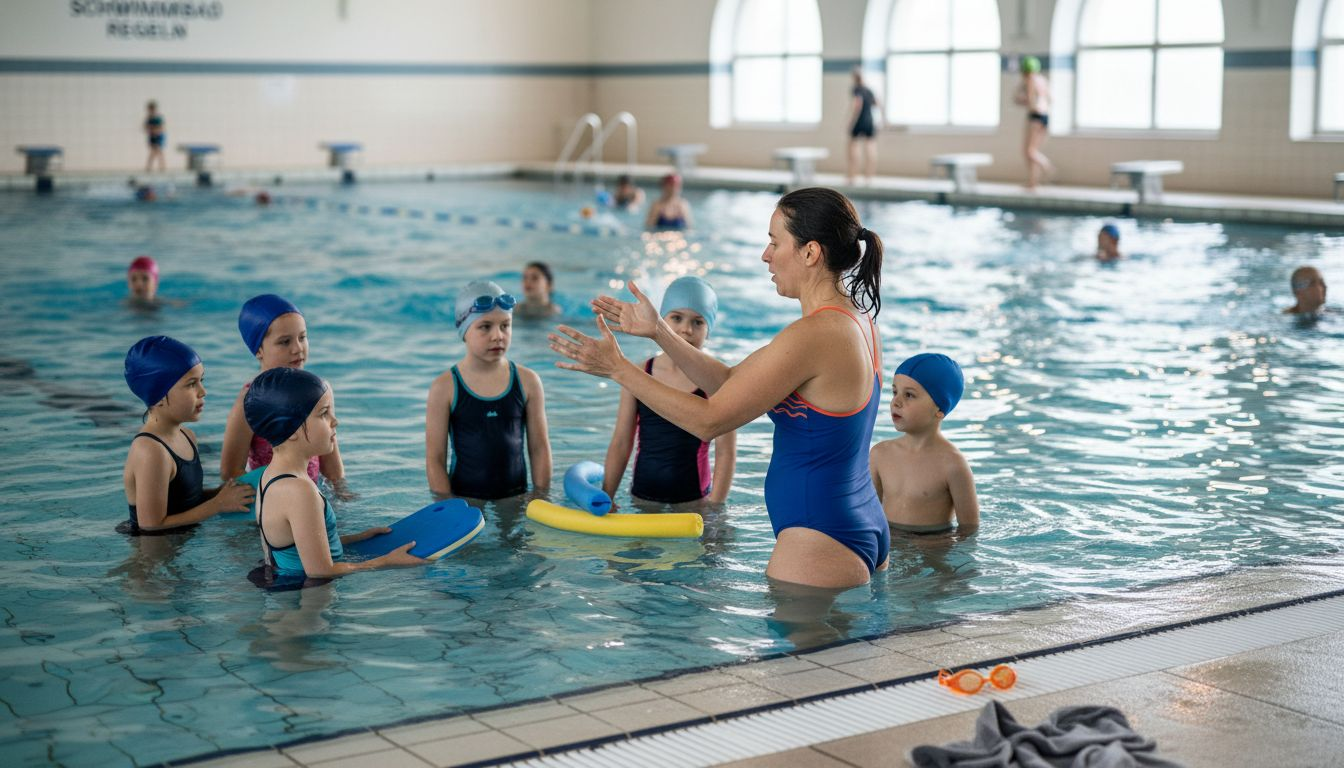


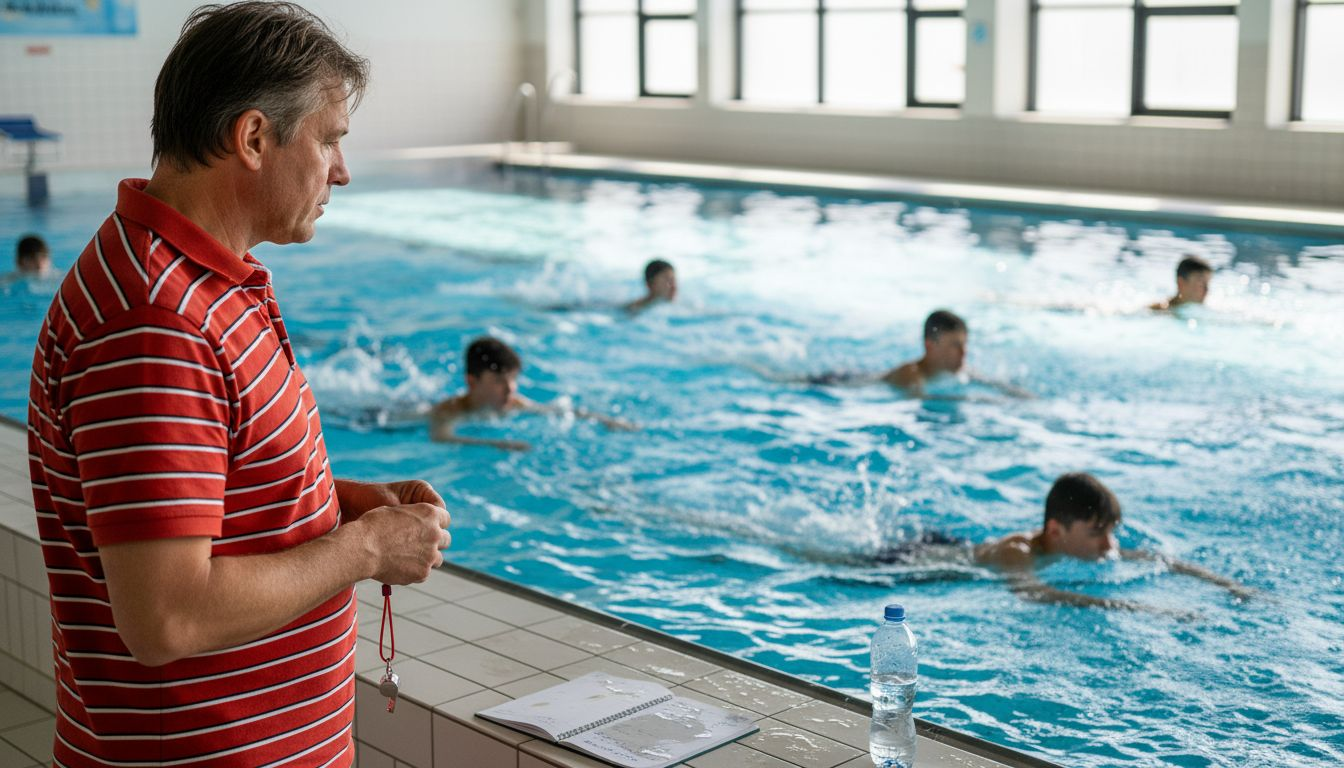
Hardly any swimming technique challenges the body as diversely as the breaststroke. Up to 70 percent of the muscles active in the water are simultaneously involved in the correct breaststroke style – significantly more than in many other sports. For swimming coaches and instructors in Germany, sound knowledge of the muscles used is crucial for targeted technique improvement and injury prevention. Here you will learn how a targeted engagement of the right muscles can significantly enhance your students' learning success.
Table of Contents
- Breaststroke and Primary Muscle Groups Used
- Differences to Other Swimming Styles in Muscle Training
- Physiological Principles and Movement Sequence
- Common Mistakes and Overuse Injuries in Breaststroke
- Practical Tips for Training Design for Students
Key Takeaways
| Point | Details |
|---|---|
| Muscle Groups in Breaststroke | Breaststroke engages the arm muscles, leg muscles, as well as the core and back muscles, making it an effective full-body exercise. |
| Differences to Other Swimming Styles | Compared to crawl and butterfly, breaststroke requires harmonious coordination between arm and leg movements. |
| Technical Challenges | The most common mistakes are due to inefficient synchronization of movements, which can lead to overuse injuries like "swimmer's knee." |
| Training Design | Balanced training, combining dryland exercises and water training, promotes students' technique, coordination, and flexibility. |
Breaststroke and Primary Muscle Groups Used
Breaststroke engages several central muscle groups simultaneously, making this swimming technique a complex and effective full-body exercise. In breaststroke, swimmers activate a variety of muscle groups that ensure coordinated and powerful propulsion in the water.
The arm muscles play a crucial role in breaststroke. During the pull phase, the biceps, triceps, and shoulder muscles are particularly intensely engaged. The arms perform a characteristic movement, initially moving outward and then back to the body's midline, which requires enormous power.
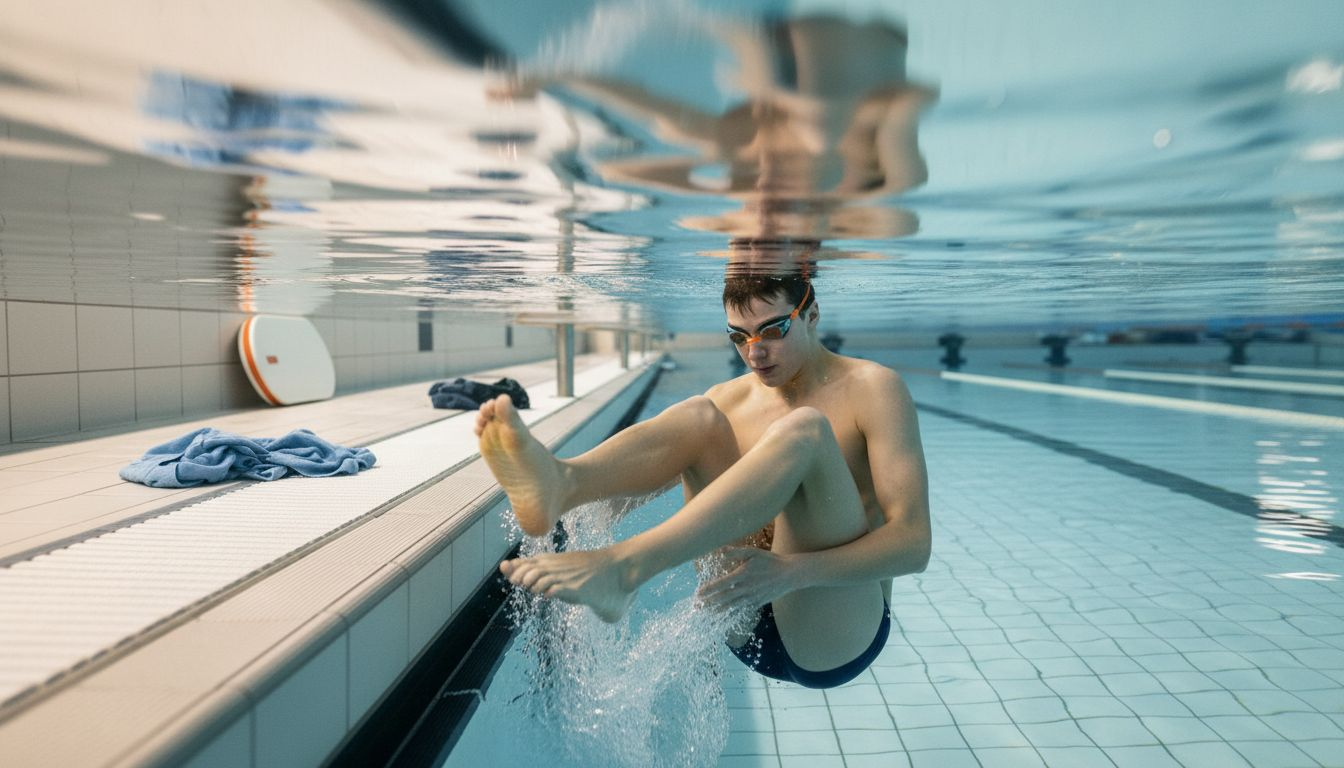
Another important muscle group is the leg muscles. The typical breaststroke kick primarily activates the thigh, calf, and gluteal muscles. These muscles generate crucial propulsion and simultaneously stabilize body posture in the water. The coordination between arm and leg movements also requires strong core and back muscles, which act as a connecting element between the upper and lower body regions.
Pro Tip: When designing training, ensure that all involved muscle groups are specifically promoted, and incorporate balanced strength and flexibility training.
Here is an overview of the muscle groups used in breaststroke:
| Muscle Group | Main Function in Breaststroke | Importance for Swimmers |
|---|---|---|
| Arm Muscles | Propulsion and body position | Power generation and control |
| Leg Muscles | Propulsion through frog kick | Speed and stability |
| Core/Back Muscles | Connecting arm and leg movements | Technique and balance |
| Shoulder Muscles | Supporting arm movement | Mobility and injury prevention |
Differences to Other Swimming Styles in Muscle Training
In swimming, different strokes vary significantly in their muscle activation and biomechanical movement execution. Compared to other swimming techniques such as crawl and butterfly, breaststroke exhibits unique muscle loading patterns that require differentiated training design.
While freestyle swimming represents a dynamic, continuous movement with a strong emphasis on shoulder and arm muscles, breaststroke is characterized by a more symmetrical and technically demanding movement execution. The characteristic frog kick and glide position make breaststroke a more complex swimming technique, in which the leg and core muscles are significantly more engaged.
Muscle activation differs fundamentally: butterfly focuses on explosive upper body movements, backstroke stresses the back muscles differently than breaststroke, and freestyle relies more on rapid alternating movements. Breaststroke, on the other hand, offers a more balanced full-body workout with larger proportions of strength endurance.
Pro Tip: Analyze the specific muscle loads of the different swimming strokes to develop a targeted and effective training concept for your swimming students.
The differences in muscle engagement in various swimming styles are illustrated below:
| Swimming Style | Focus Muscle Activation | Training Goal | Typical Technical Challenge |
|---|---|---|---|
| Breaststroke | Legs and core in focus | Strength endurance and coordination | Synchronization of arms and legs |
| Freestyle | Shoulders and arms dominant | Speed and endurance | Continuous alternating pull |
| Butterfly | Upper body explosively engaged | Maximum power development | Precise timing of overall movement |
| Backstroke | Back and shoulders engaged | Condition and technique | Stabilization of body position |
Physiological Principles and Movement Sequence
The complex movement sequence in breaststroke represents highly precise biomechanical coordination that requires a synchronized sequence of arm and leg movements. The physiological principles are based on a precise interplay of various muscle groups that enable efficient propulsion in the water.
The typical movement cycle begins with an arm pull phase, where the hands are moved forward underwater, followed by a short glide phase for energy optimization. The synchronization of arms and legs is crucial: while the arms perform a parallel movement, the hip joints play a central role in the characteristic frog kick, which generates the main propulsion.
The physiology of breaststroke focuses on the balance between strength and endurance, with particular emphasis on hip and shoulder mobility and controlled breathing playing a decisive role. Breathing technique is a critical element that massively influences the swimmer's energy efficiency and performance.
Pro Tip: Train your swimmers in precise coordination of arm and leg movements to maximize biomechanical efficiency in breaststroke.
Common Mistakes and Overuse Injuries in Breaststroke
Breaststroke carries specific challenges that can lead to recurring technique and overuse errors. The most common problems result from poor body mechanics and insufficient movement coordination, which not only impair swimming efficiency but also increase the risk of injury.
The central source of error lies in insufficient synchronization of arm and leg movements. Swimmers often tend to move either the arms or the legs too dominantly, leading to an inefficient movement sequence. Particularly critical are incorrect foot positions during the frog kick, which not only minimize propulsion but also place excessive strain on the knee and hip joints.
Overuse injuries typically manifest as tendon irritations, especially in the knee – the so-called "swimmer's knee" – as well as pain in the shoulder and neck area. These complaints usually arise from technical deficits such as insufficient body tension, incorrect breathing, or excessive exertion during the swimming movement.

Pro Tip: Conduct regular technique analyses and use video recordings to identify individual movement patterns and develop targeted corrective measures.
Practical Tips for Training Design for Students
Breaststroke training for students requires a systematic and holistic approach that goes far beyond simple swimming movements. The goal is to create a solid technical foundation, develop coordination skills, and simultaneously maintain students' motivation.
Training design should follow a balanced approach that combines dryland exercises and water training. Strengthening exercises for the shoulder, back, and leg muscles form the basis, while specific power exercises support the explosive movement elements of breaststroke. Exercises that improve hip and shoulder flexibility and train the coordination between arm and leg movements are particularly important.
Technique instruction must be progressive and playful, focusing on understanding water feel, pull and push phases, and glide phases. Training sessions should be divided into small, manageable learning sequences that allow students to learn and internalize complex movements step by step.
Pro Tip: Use video feedback and mirror exercises specifically to visually clarify students' movement patterns and point out potential for improvement.
Support Effective Breaststroke Training with Pimpertz
Breaststroke requires swimming instructors to have not only technical know-how but also a deep understanding of the muscle groups used, such as arm, leg, and core muscles. Many coaches face the challenge of optimally fostering their students' coordination, strength, and technical precision. Motivating swimming badges and the right equipment are important tools to make progress visible and increase the joy of learning.
With over 38 years of experience, Pimpertz is your reliable partner for high-quality swimming badges & certificates that are motivating for swimming and technically approved. Combine the theory on muscle groups and technique analyses from the article with our practical materials and benefit from our lightning-fast shipping and friendly service. Experience how targeted rewards and professional accessories effectively complement your swimming lessons for students.
Start now and make your breaststroke training even more efficient with our specially curated offers at pimpertz.de. Discover personalized badge kits and practical accessory sets – for more enthusiasm and sustainable learning success in swimming lessons.
Frequently Asked Questions
Which muscle groups are particularly engaged in breaststroke?
In breaststroke, the arm muscles, leg muscles, as well as the core and back muscles are engaged. These muscle groups ensure effective propulsion in the water and support the technique.
How does strength training for breaststroke differ from other swimming styles?
Compared to freestyle or butterfly, breaststroke focuses on a balanced engagement of the leg and core muscles. This results in a more balanced strength endurance training.
What are common mistakes in breaststroke and how can I avoid them?
Common mistakes include unbalanced movements and insufficient synchronization of arm and leg movements. Regular technique analyses and conscious practice of movement coordination can help avoid these mistakes.
What tips are there for effective breaststroke training?
Effective training should include dryland exercises to strengthen shoulders, back, and legs, as well as specific exercises to improve mobility and coordination of swimming movements. Video feedback can also help refine technique.