
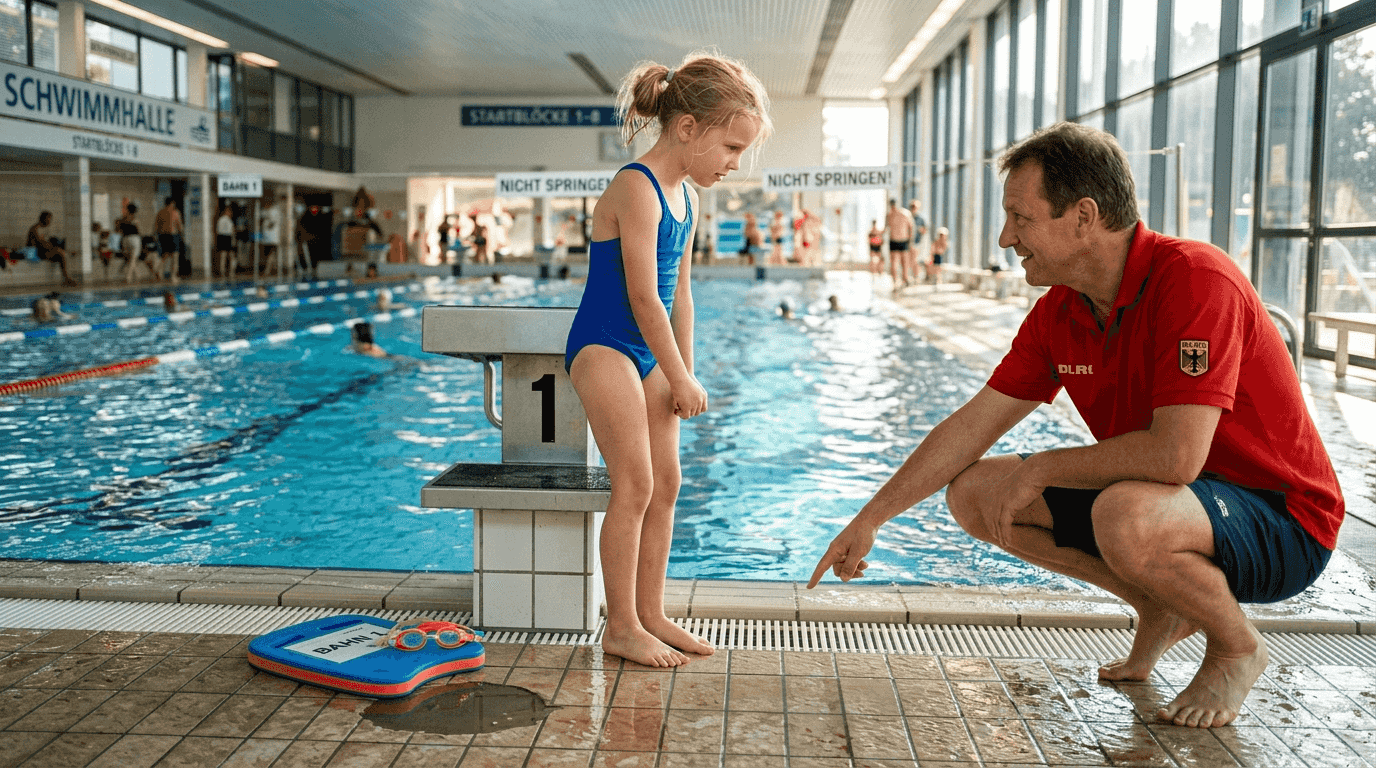
DLRG Test Procedure Explained: How to Pass the Swimming Badge
Many parents believe that DLRG exams are too complicated or too strict for their children. This concern is often unfounded. With the right preparation and a clear understanding of the examination steps, children can successfully master the various swimming badges. This guide explains the DLRG exam process for all levels, from Seepferdchen (Seahorse) to Gold, and provides practical tips for parents and trainers. You will learn about the requirements, how to best prepare children, and how to reduce exam anxiety.
Table of Contents
- The Different DLRG Swimming Badges and Their Exam Requirements
- The Seepferdchen Exam Process: Basics for Children
- Understanding the Exam Process for Advanced Swimming Badges: Bronze, Silver, and Gold
- Tips for Parents and Trainers for Successful Preparation and Execution
- Buy Swimming Badges and Certificates at Pimpertz
- Frequently Asked Questions
Key takeaways
| Point | Details |
|---|---|
| Structured Badges | The DLRG offers swimming badges from Seepferdchen to Gold with increasing requirements for technique and safety. |
| Seepferdchen Basics | The Seepferdchen requires swimming 25 meters, retrieving an object, and knowledge of pool rules for children aged six and above. |
| Higher Badge Requirements | Bronze, Silver, and Gold test longer distances, various swimming styles, as well as lifesaving and first aid skills. |
| Preparation Reduces Failure Rates | Thorough preparation and practice significantly reduce failures, especially for the first badge. |
| Parents and Trainers are Key | Positive reinforcement, regular training, and clear explanations increase success rates and motivation in children. |
The Different DLRG Swimming Badges and Their Exam Requirements
The DLRG structures its swimming badges into several levels, each requiring different skills and knowledge. This clear progression helps children gradually become safer in the water. Understanding the individual requirements makes targeted preparation easier for parents and trainers.
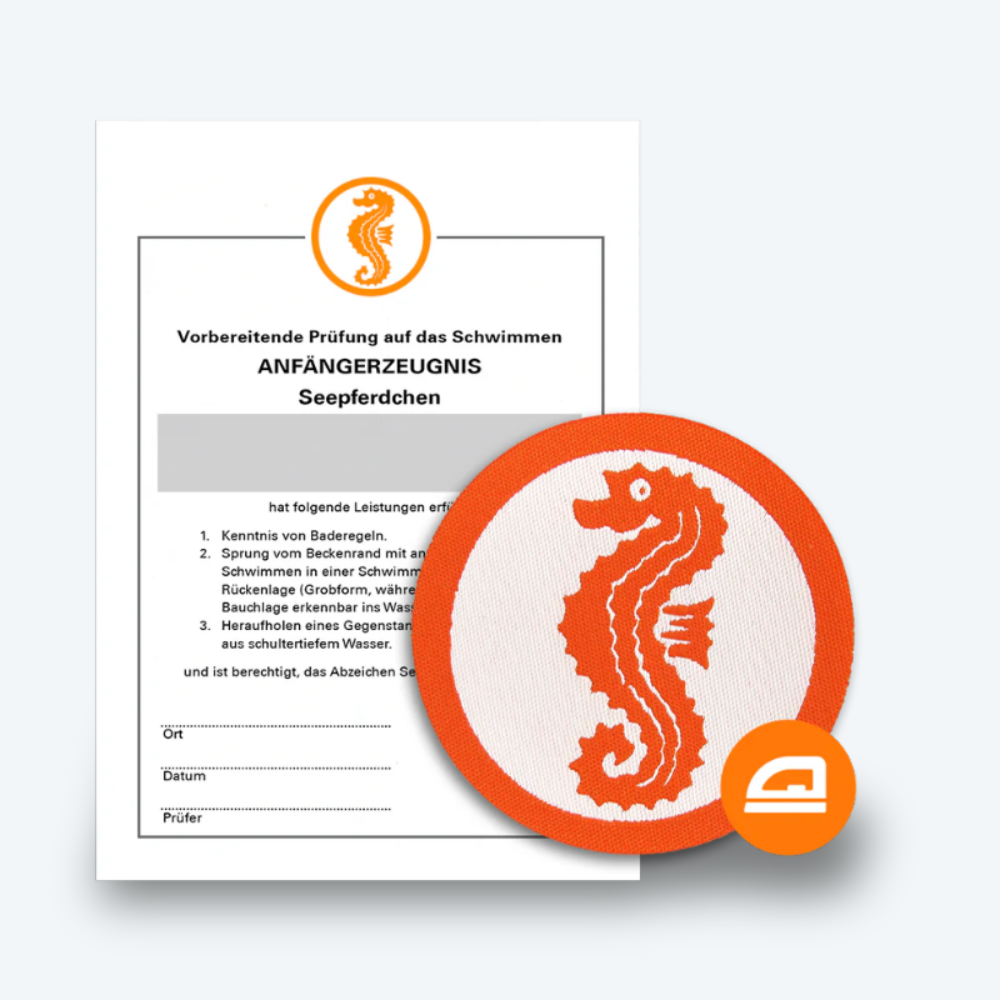
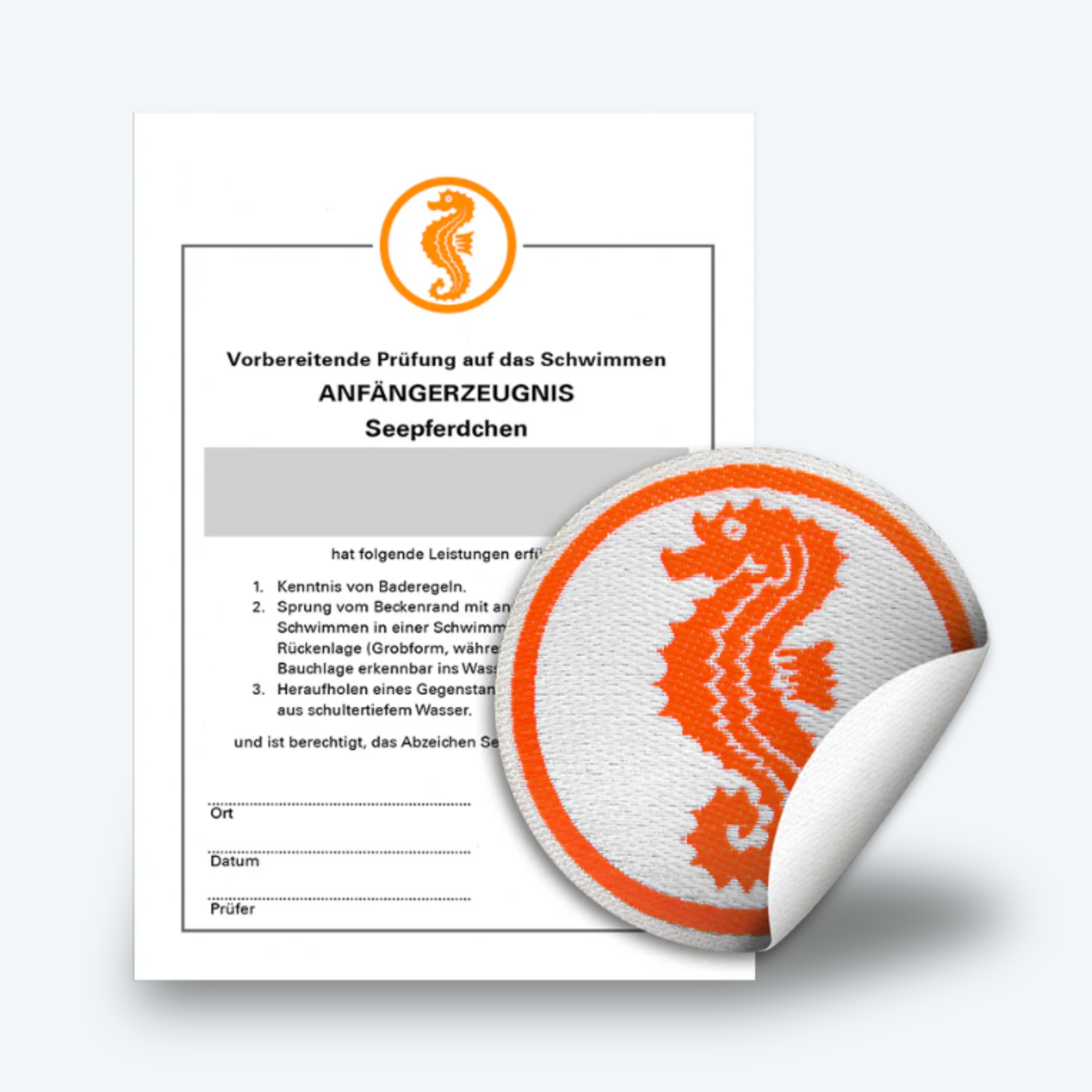
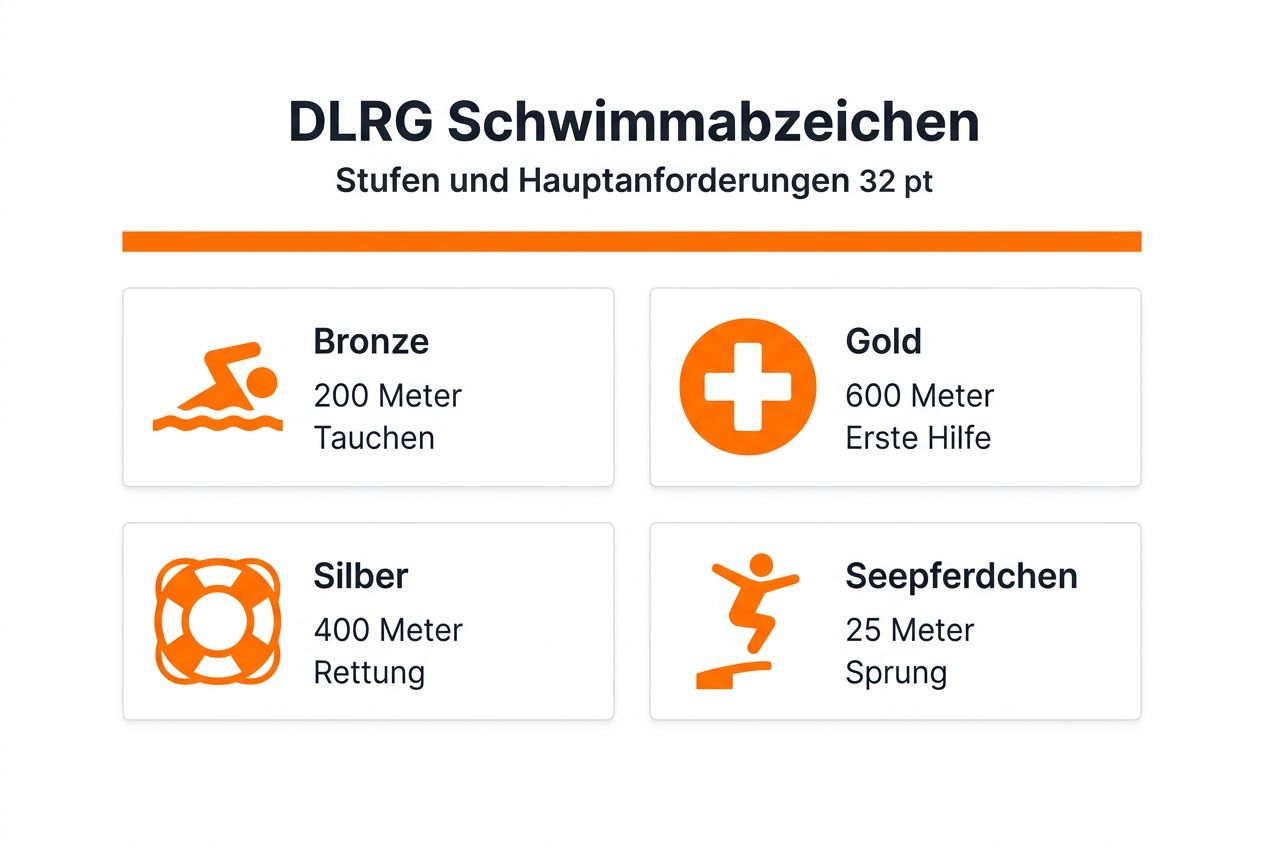
The Seepferdchen (Seahorse) marks the entry level. Children swim 25 meters in any stroke, retrieve an object by diving, and answer questions about pool rules. This badge demonstrates basic water safety but is not yet a complete proof of swimming ability.
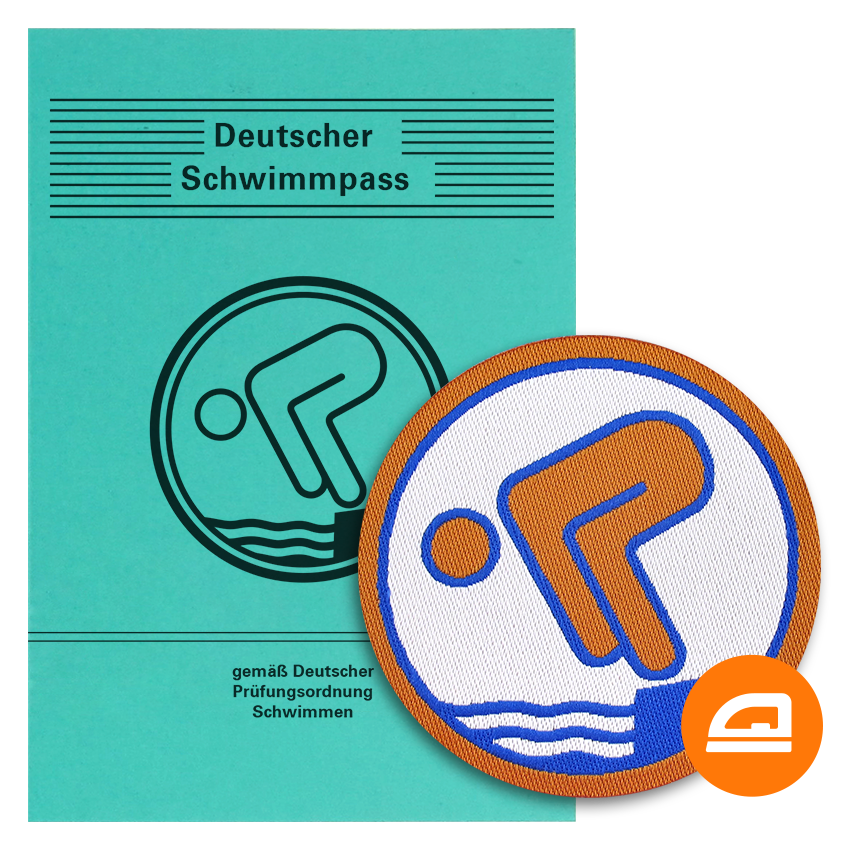
The Bronze badge already requires 200 meters in a maximum of 15 minutes, with at least 25 meters in one swimming style. Additionally, it includes a jump from the pool edge, two dives to retrieve an object from depth, and knowledge of pool rules. Bronze is considered the first real proof of swimming ability.
Silver increases the requirements to 400 meters in a maximum of 25 minutes, including 300 meters in front crawl and 100 meters in backstroke. Children must dive twice from a depth of two meters, swim 10 meters underwater, and perform a jump from a height of three meters. Theoretical knowledge about self-rescue is also tested.
Gold is the highest youth swimming badge. It demands swimming 600 meters in 24 minutes, including 400 meters in front crawl and 200 meters in backstroke. Diving to three meters, 15 meters of underwater swimming, a jump from three meters, and 50 meters of transport swimming are also part of it. The exam also includes knowledge of self-rescue and basic rescue of others.
| Badge | Swimming Distance | Special Requirements | Safety Knowledge |
|---|---|---|---|
| Seepferdchen | 25 meters | Object retrieval, jump from pool edge | Know pool rules |
| Bronze | 200 meters (15 min.) | 2x deep diving, jump from edge | Know pool rules, dangers |
| Silver | 400 meters (25 min.) | 10 meters underwater swimming, jump 3m | Understand self-rescue |
| Gold | 600 meters (24 min.) | 15 meters underwater swimming, 50m transport | Self- and assisted rescue |
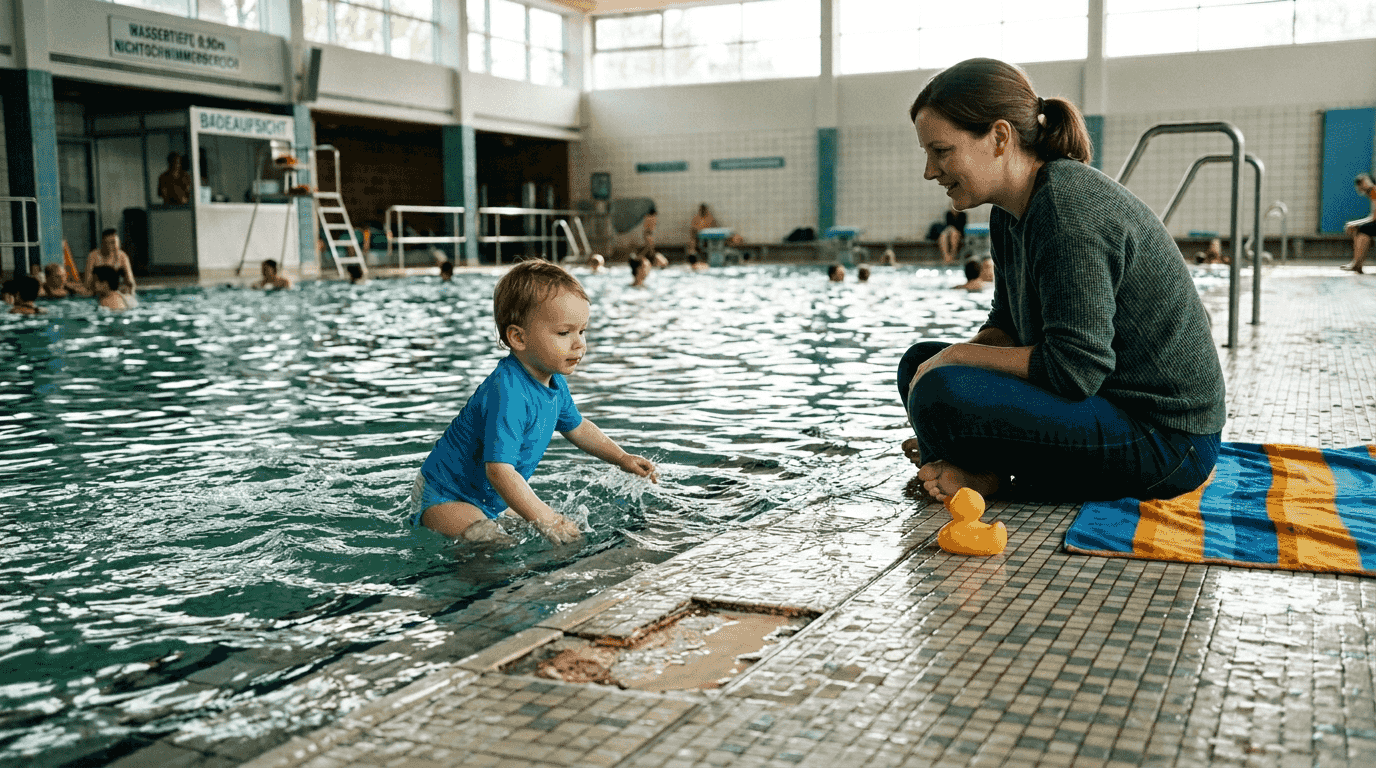
Pro-Tip: Let children playfully get used to diving and jumping even before the Seepferdchen. This significantly reduces anxiety during the exam.
Trainers should ensure that children truly master the basics before moving to the next level. Rushed exams often lead to failures and frustration.
The clear structure of the DLRG badges motivates children to continuously improve. Parents can visualize progress with sticker albums or certificates, which further boosts enthusiasm for swimming.
The Seepferdchen Exam Process: Basics for Children
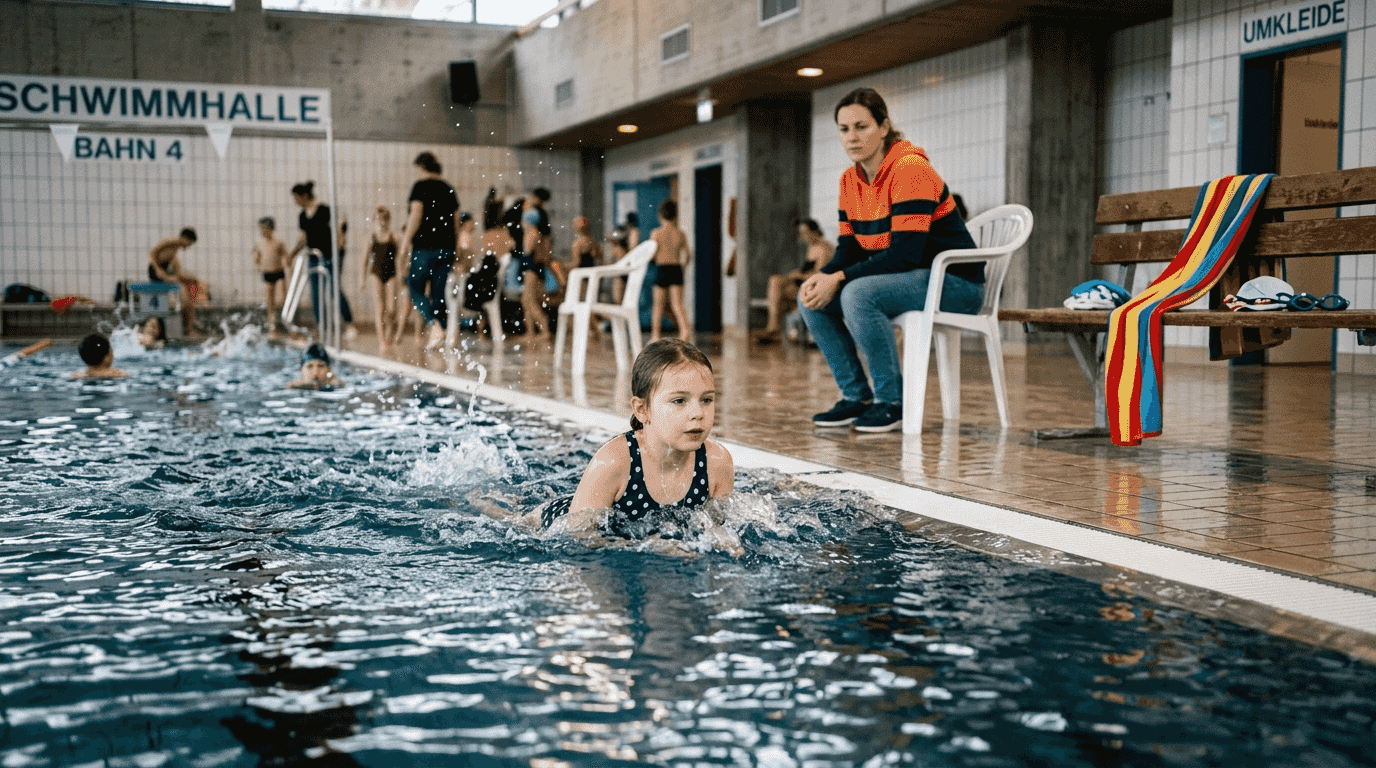
For many children, the Seepferdchen (Seahorse) is the first official swimming exam. The process is simply structured, yet some children fail for avoidable reasons. Nervousness, lack of practice, or unclear expectations often play a role.
The exam consists of three main parts:
- Swimming 25 meters: The child swims in any stroke without interruption. Breaststroke, crawl, or backstroke are allowed, and a combination is also possible.
- Object retrieval: From shoulder-deep water, the child dives to retrieve an object, such as a ring. The child must fully submerge their head.
- Pool rules: The examiner asks oral questions about the most important rules of conduct in and around the water. Children should be able to explain at least three rules confidently.
Many children have difficulty with diving. They don't open their eyes or accidentally inhale. Practice exhaling underwater beforehand in the bathtub or shallow pool. This builds confidence.
Another stumbling block is the distance. 25 meters seems long for beginners. Mentally divide the distance into sections. "Swim to the first lane, then we'll take a short break." This makes the goal seem more achievable.
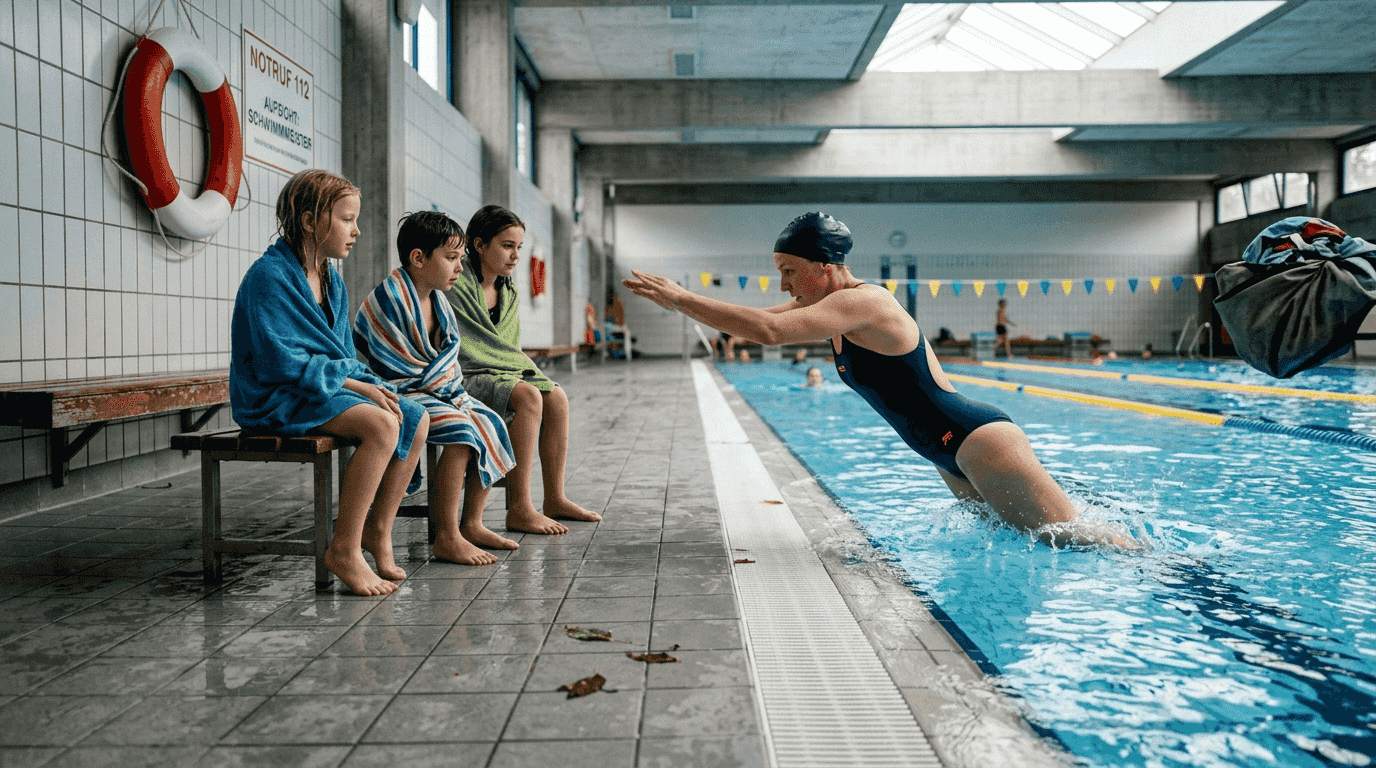
Pro-Tip: Simulate the exam in advance with your child in their usual swimming environment. This reduces excitement on exam day.
Trainers should create a relaxed atmosphere. Pressure and time limits increase anxiety. Praise every progress, even if the exam doesn't succeed on the first try. Many children need two or three attempts until they feel confident enough.
“The most important prerequisite for the Seepferdchen is not perfect technique, but water familiarity and a fearless attitude. Children who enjoy going into the water almost always pass.” – Experienced DLRG Instructor
Parents can help by regularly going swimming with their child, even outside of lessons. Every additional practice session strengthens self-confidence. However, avoid comparisons with other children, as this is demotivating.
After passing the exam, children should be proud to wear their Seepferdchen. An official badge on their swimsuit also motivates them and shows others that the child can already swim.
Understanding the Exam Process for Advanced Swimming Badges: Bronze, Silver, and Gold
While the Seepferdchen (Seahorse) only proves basic swimming ability, the higher badges demand significantly more. Bronze, Silver, and Gold test not only longer distances but also endurance, technique, and safety knowledge. The examination process becomes more complex.
Bronze requires, in addition to swimming 200 meters, two dives from a depth of two meters. Many children underestimate this requirement. Deep diving requires pressure equalization and calm breathing. Practice this gradually at different depths.
An important difference is the time limit. For Bronze, the 200 meters must be completed in a maximum of 15 minutes. This corresponds to a leisurely pace, yet some children lose track of time. Trainers should announce intermediate times.
Silver significantly increases the requirements. The 400 meters in 25 minutes demand real endurance. Additionally, children must swim 10 meters underwater without surfacing. This cannot be trained in two weeks. Regular training over months is necessary.
Gold incorporates rescue techniques and first aid for the first time. Children must demonstrate 50 meters of transport swimming, where they pull a person or object. The theory also becomes more demanding: self-rescue, rescue of others, and behavior in swimming accidents are on the agenda.
| Badge | Distance/Time | Diving | Rescue Elements | Theory |
|---|---|---|---|---|
| Bronze | 200m in 15 min. | 2x from 2m depth | None | Pool rules, dangers |
| Silver | 400m in 25 min. | 10m underwater | None | Self-rescue |
| Gold | 600m in 24 min. | 15m underwater, 3m depth | 50m transport | Self- and assisted rescue |
For all three badges, the swimming technique must be clean. Trainers pay attention to correct arm and leg movements, especially in breaststroke and backstroke. Faulty technique costs strength and time.
Preparation for these exams should last at least three months. Two training sessions per week are ideal. Muscles need time to recover between sessions. Overtraining leads to frustration.
Important preparation tips:
- Train all exam elements regularly, not just shortly before the exam.
- Practice endurance swimming over longer distances than required.
- Integrate diving and jumping into every training session.
- Discuss theoretical content playfully, for example, with quiz questions.
- Completely simulate the exam situation, including timing.
Many swimming clubs offer special preparation courses for Bronze, Silver, and Gold. These courses structure the training optimally and specifically prepare for all requirements.
Parents should have realistic expectations. Not every child is ready for Gold at eight years old. Some need until ten or eleven. Respecting individual development prevents pressure and demotivation.
Tips for Parents and Trainers for Successful Preparation and Execution
Successful exam preparation doesn't start two weeks before, but with the first swimming lesson. Continuous training and positive experiences in the water lay the foundation. Parents and trainers share important responsibility in this.
Regularity beats intensity. Swimming twice a week is more effective than once a month for three hours. This way, children develop muscle memory and a feel for the water. Breaks longer than a week set back progress.
Create an anxiety-free learning environment. Many children have natural fears of deep water or diving. Coercion amplifies these fears. Proceed in small steps. First face in water, then head under, then open eyes.
Pro-Tip: Use diving toys that are only visible underwater. This motivates children to open their eyes and turns diving into a game instead of a chore.
Motivating rewards increase enthusiasm. After each successfully passed exam, the child should receive their badge immediately. Many trainers use stamps or small intermediate goals that mark the path to the main badge.
Parents can support at home without teaching themselves. Talk about pool rules at breakfast. Watch videos of good swimming techniques together. Read books about water safety. This playfully consolidates knowledge.
Exam anxiety is common in children. Explain that the exam is not a punishment, but an opportunity to show what they can do. Even if it doesn't work out the first time, there are always more attempts. Failure is not a drama.
Trainers should communicate clear expectations. Children need to know exactly what is required in the exam. Ambiguity leads to uncertainty. Demonstrate each exercise multiple times and let children ask questions.
Good instructors significantly reduce failure rates through structured training and individual support. Invest in your own further training as a trainer. New methods and didactic approaches improve your success rate.
Progress documentation also motivates. Keep a swimming diary where you note distances covered and techniques mastered. Children then see their own progress in black and white.
Further success factors:
- Celebrate every milestone, not just the passed exam.
- Avoid comparisons with siblings or classmates.
- Be patient if progress is slow.
- Seek professional trainer support if difficulties persist.
- Integrate water safety into everyday life, not just in lessons.
Parents who swim themselves should lead by example. Children imitate what they see. If you swim enthusiastically, that transfers to your child.
Buy Swimming Badges and Certificates at Pimpertz
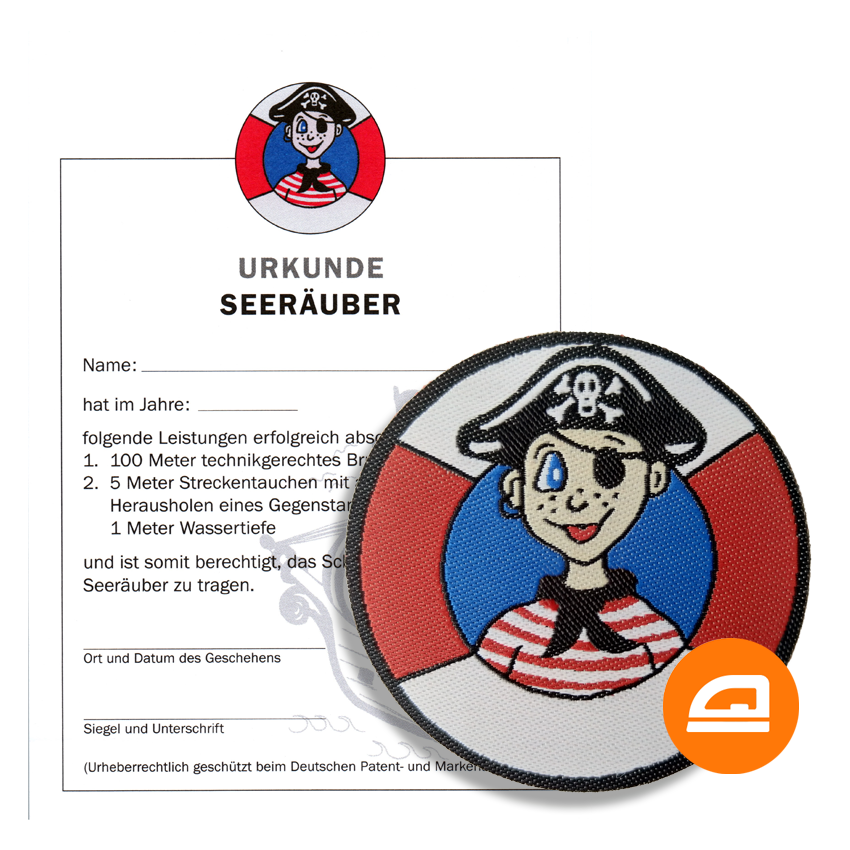
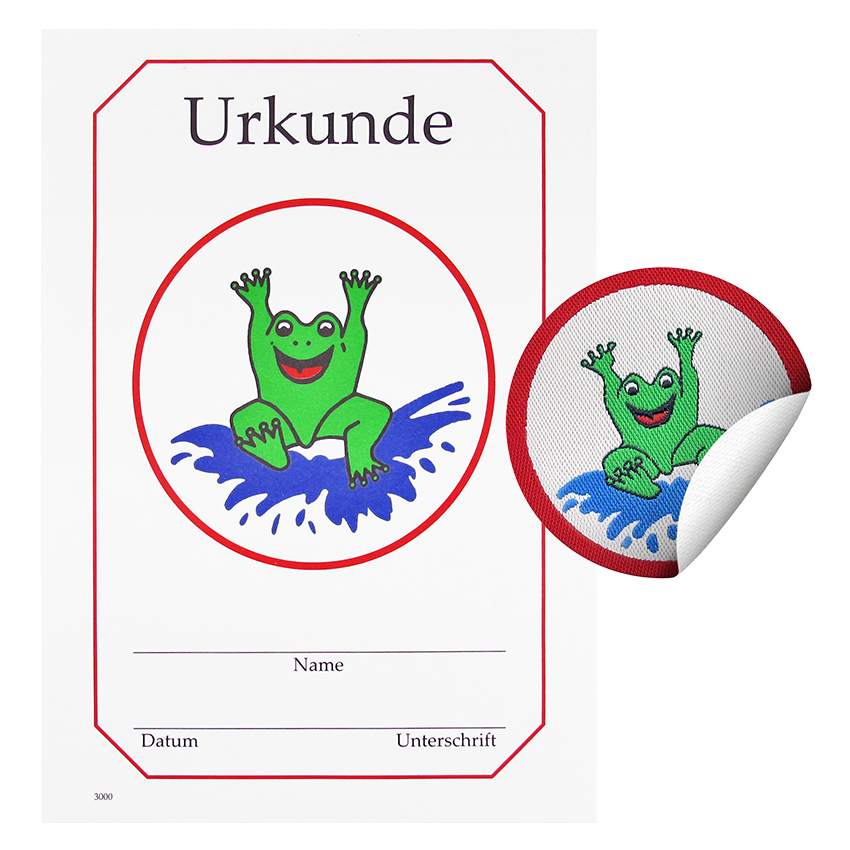
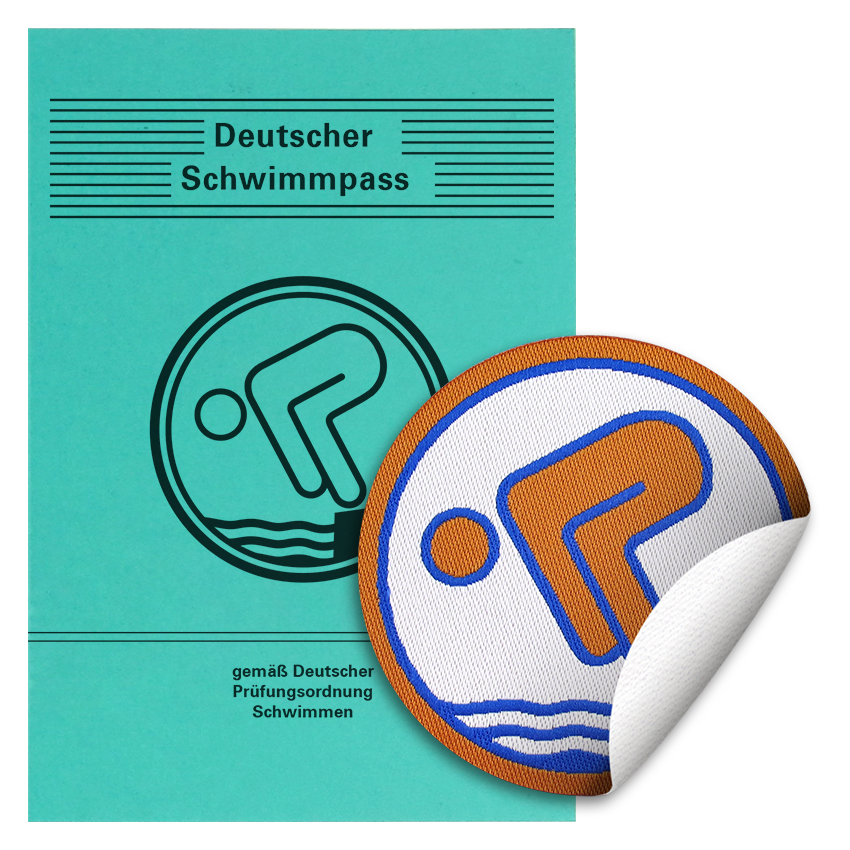
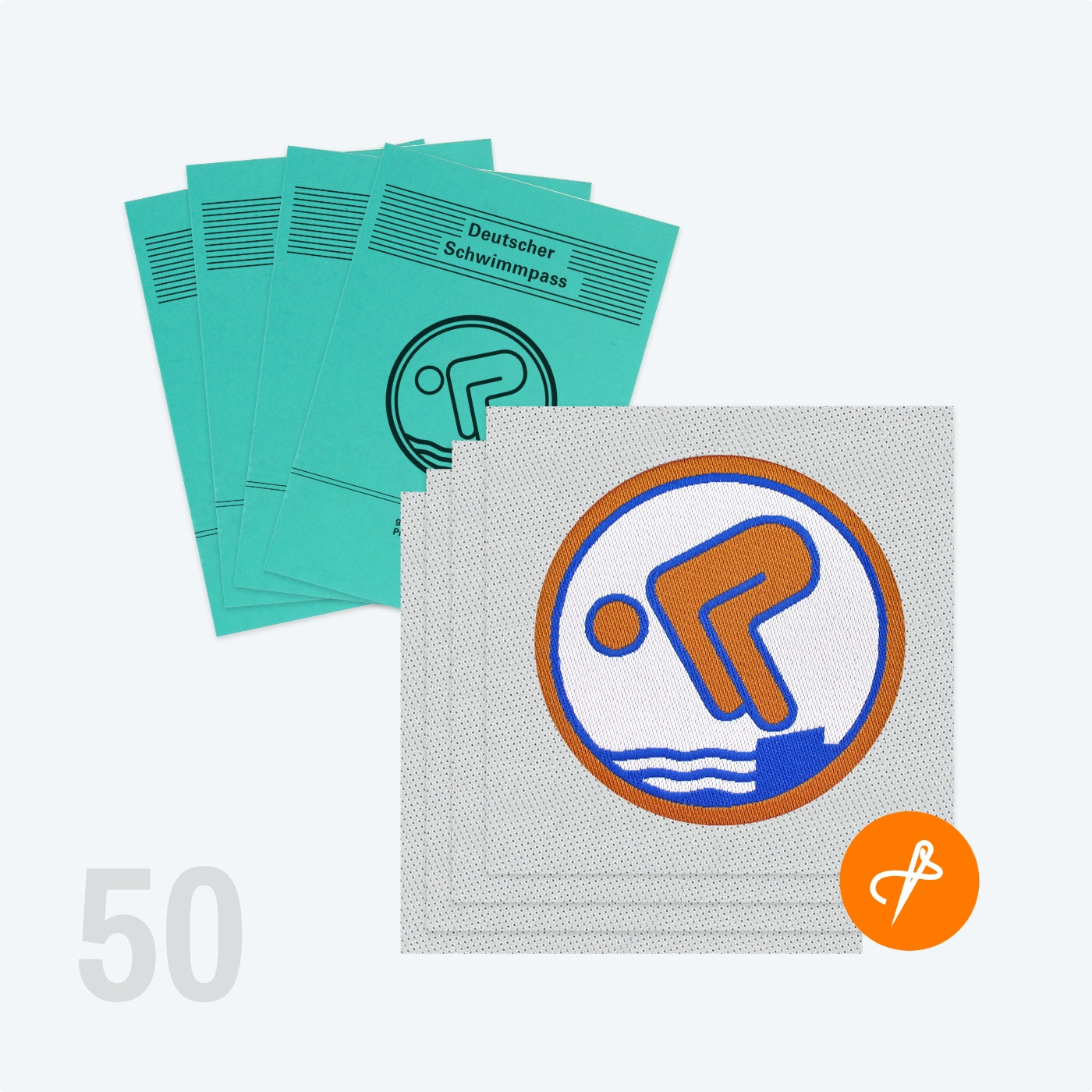
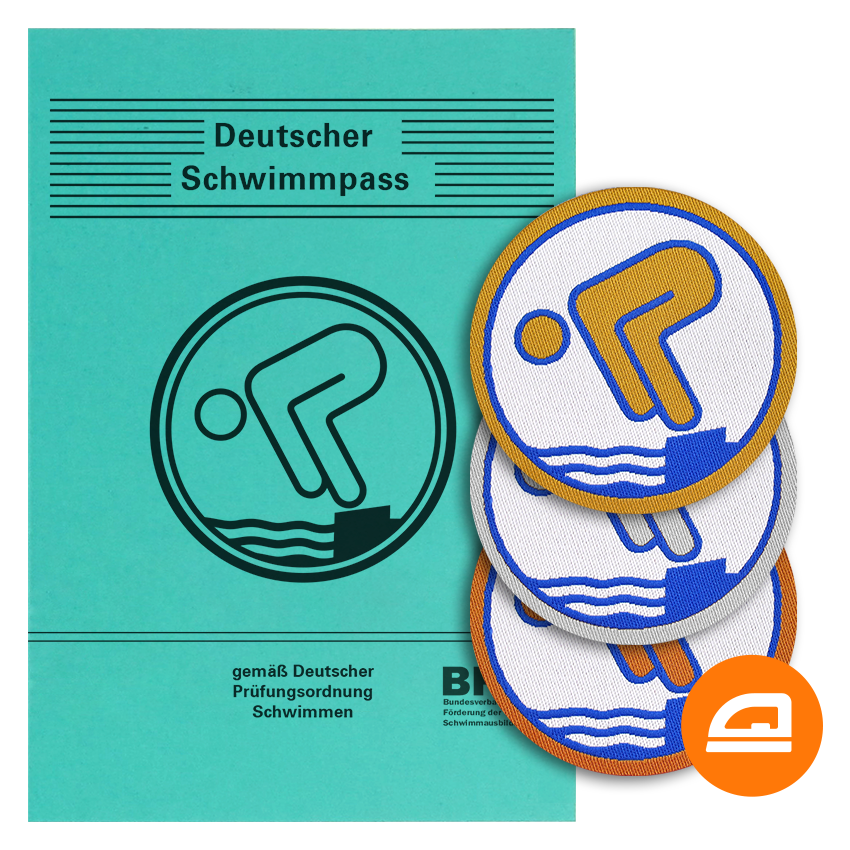
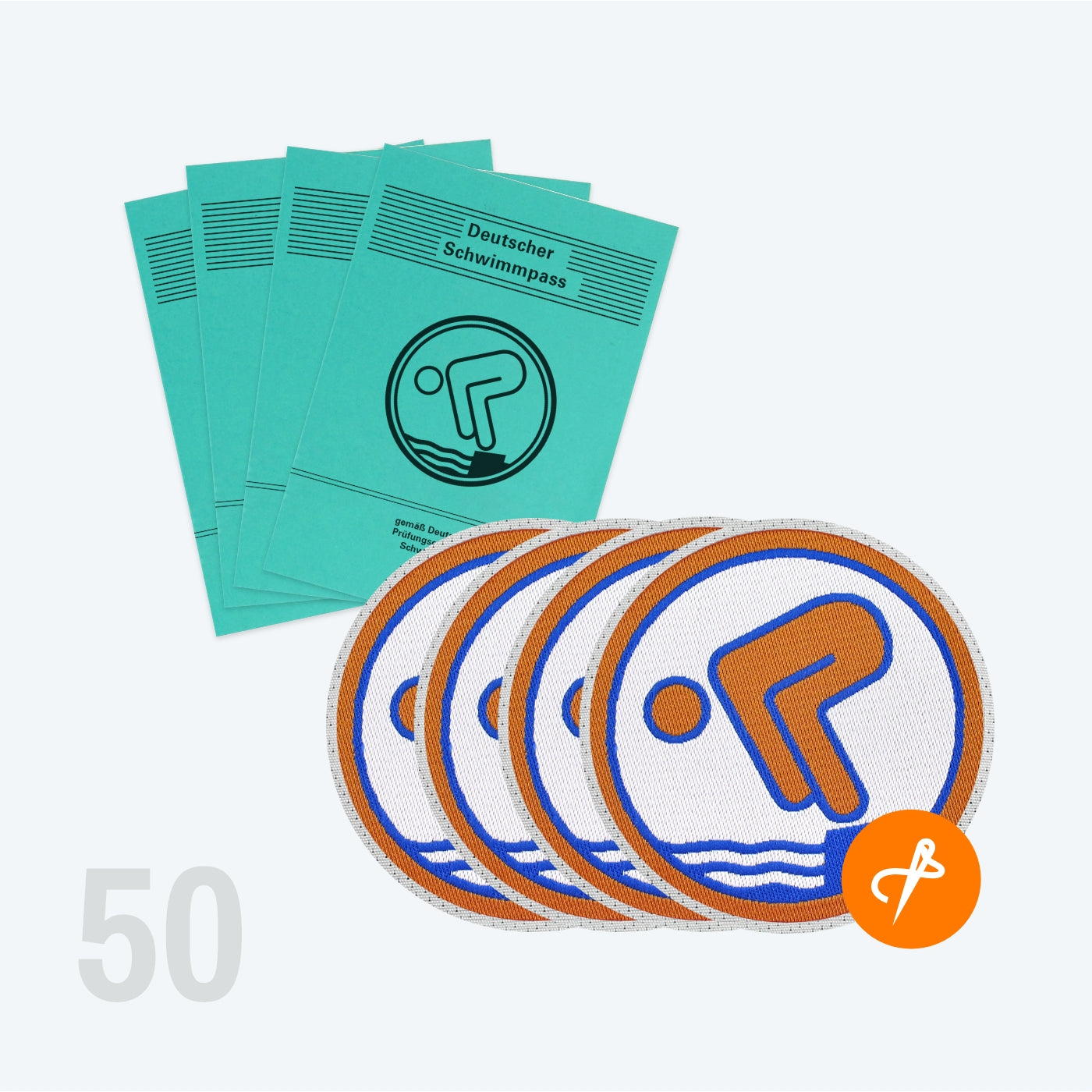
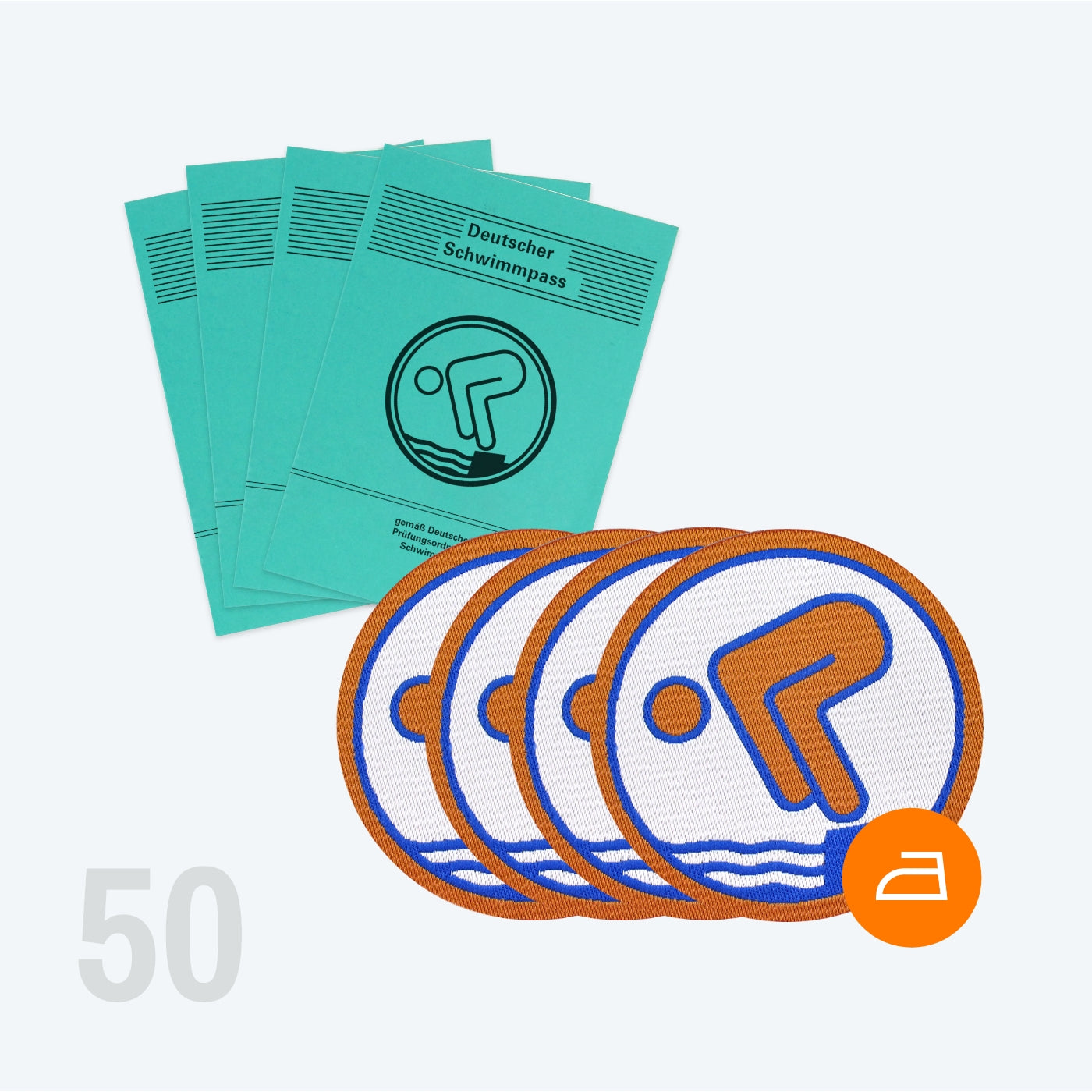
After a successful exam, children deserve recognition. High-quality swimming badges and official certificates make success visible and tangible. As an official DLRG partner, Pimpertz offers the complete range for all performance levels.
From Seepferdchen to Bronze, Silver, and Gold, you will find original certified badges in child-friendly designs. The brilliant colors and durable craftsmanship ensure that badges still look new even after years. Matching certificates complete the recognition.
Swimming clubs and schools benefit from customized bulk orders with attractive discounts. Individual logo embossing and personalized badge kits for groups enable a consistent appearance. Our fast shipping within one to two business days ensures that you are equipped in time for the exam.
Parents can conveniently order Bronze, Silver, and Gold badges online and bring their children the joy of success directly home. Additional accessories like waterproof cases or collector albums make the badge a lasting keepsake.
Frequently Asked Questions
How long does the DLRG exam process for the Seepferdchen take?
The Seepferdchen exam usually takes 10 to 20 minutes, depending on the group size and organization. It includes swimming 25 meters, retrieving an object, and oral questions about pool rules. For larger groups, the total duration may be longer, as each child is examined individually.
What skills are tested in the higher swimming badges?
Higher badges such as Bronze, Silver, and Gold test significantly longer swimming distances in various strokes and within specific time limits. Additionally, deep diving, underwater swimming, and jumps from greater heights are included. From Gold onwards, rescue techniques such as transport swimming and theoretical knowledge in self- and assisted rescue are also tested.
How can parents best prepare their children for the DLRG exams?
Regular practice in supervised swimming pools is the most important preparation. Familiarize your child with all exam elements, especially diving and longer distances. Positive reinforcement and an anxiety-free atmosphere significantly boost self-confidence. Simulate the exam situation beforehand so your child knows what to expect.