

DLRG Swimming Tests Explained: A Guide for Parents 2026
Many parents believe that the Seepferdchen (Seahorse) badge alone is enough to make their children safe in the water. However, this widespread assumption can be deceptive. The DLRG swimming tests encompass a comprehensive system of badges that goes far beyond the first swimming experience, gradually shaping children into competent, safe swimmers. This guide explains the structure, requirements, and importance of all DLRG swimming badges for parents and swimming instructors, so you can optimize your swimming courses and prepare children optimally for every test. You will learn what skills each badge requires, how to train effectively, and why structured training can save lives.
Table of Contents
- What are the DLRG swimming tests and why are they important?
- The different DLRG swimming badges in detail
- Tips for swimming instructors and schools to optimize DLRG courses
- How parents can prepare their children for DLRG swimming tests
- Swimming badges and accessories for every need
- Frequently Asked Questions
Key Takeaways
| Point | Details |
|---|---|
| Badge Progression | DLRG swimming badges range from Seepferdchen to Gold with increasing requirements for technique, endurance, and rescue knowledge. |
| Safety through Structure | Structured swimming courses according to DLRG standards demonstrably reduce the risk of drowning and impart life-saving knowledge. |
| More than Swimming | Tests check not only swimming ability but also water safety, self-rescue, and helping others in emergencies. |
| Resources for Teachers | DLRG provides extensive materials to help swimming instructors design their courses in a compliant and effective manner. |
| Seepferdchen is the Beginning | The Seepferdchen marks the first step but does not replace further training for complete water safety. |
What are the DLRG swimming tests and why are they important?
The German Life Saving Society (DLRG) has developed a multi-stage system that systematically teaches children and young people swimming skills and water safety. DLRG swimming tests assess swimming ability and knowledge of water safety and rescue. This system includes various swimming badges, each with specific requirements that build upon each other.
The spectrum ranges from the Seepferdchen (Seahorse) as an entry point, through the youth swimming badges Bronze, Silver, and Gold, to special lifeguard badges. Each stage not only expands swimming skills but also deepens understanding of dangers in and around water. Children learn to protect themselves and to help others in an emergency.
The importance of this structured training is evident in the statistics. Studies show that drowning is preventable through targeted training, and structured swimming courses significantly reduce the risk. Especially for children between five and ten years old, professional swimming instruction makes a crucial difference.
Core elements of DLRG tests:
- Swimming techniques such as breaststroke, crawl, and backstroke over various distances
- Diving and underwater swimming with increasing depth and length
- Knowledge of bathing rules and behavior in the water
- Self-rescue techniques for exhaustion or cramps
- Basics of external rescue and assistance
For swimming instructors and schools, the DLRG system provides a clear framework. The DLRG test procedure for swimming badges is standardized, ensuring uniform quality of training throughout Germany. Teachers can specifically tailor their courses to the requirements, and parents know exactly what skills their child will acquire at each stage.
Pro Tip: Start water acclimatization before the first swimming lesson. Children introduced to water playfully achieve swimming badges on average 30 percent faster than children without preparation.
The DLRG tests thus serve a dual purpose. They certify acquired skills and simultaneously motivate through visible success. Each badge is a milestone that makes children proud and encourages them to continue learning. For parents, the badges offer orientation and reassurance that their child is on the right path.
The different DLRG swimming badges in detail
The DLRG system is divided into four main levels, each with specific requirements for technique, endurance, and knowledge. Each badge builds on the previous one and systematically expands competencies. Here you will find a detailed overview of each level.
Seepferdchen: The first step
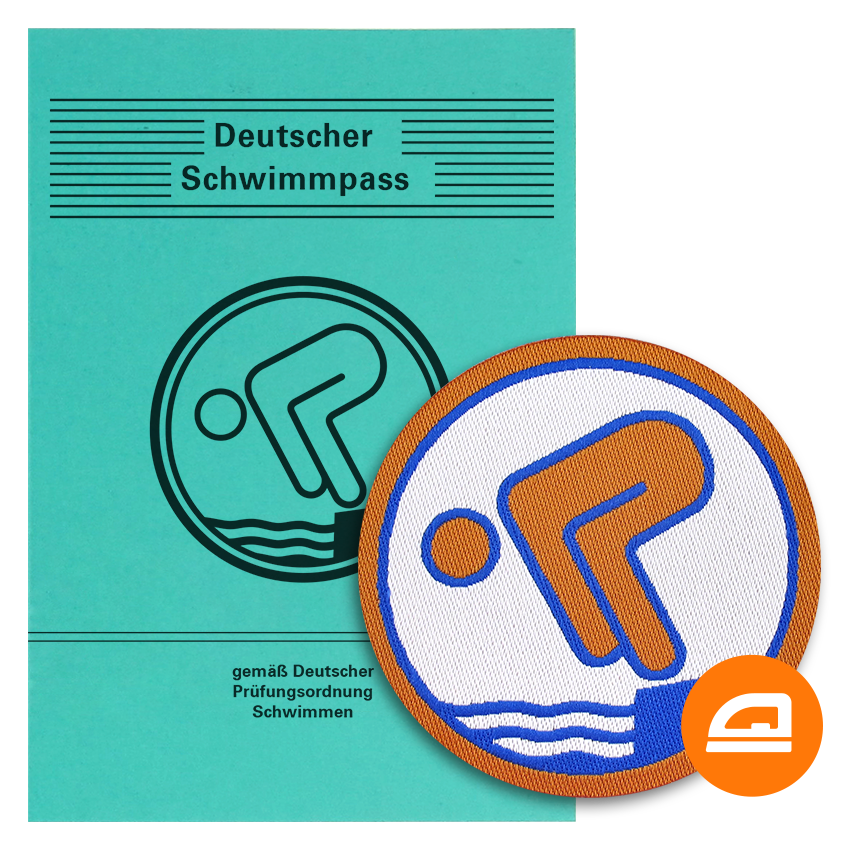
The Seepferdchen swimming badge marks the entry into the world of swimming. Children must swim 25 meters in one stroke without interruption, retrieve an object from shoulder-deep water, and dare to jump into the water from the edge of the pool. In addition, basic bathing rules are tested.
This badge confirms that a child has gained initial swimming experience. However, it does not mean that the child can already swim safely or can go into the water unsupervised. The Seepferdchen is rather a motivation to continue and deepen their skills.
Bronze: Solid foundations
With the youth swimming badge Bronze, the requirements increase significantly. Children swim 200 meters in a maximum of 15 minutes, 150 meters of which are in front crawl and 50 meters in backstroke. They dive twice for an object from approximately two meters deep and jump once from a height of one meter into the water.
The DLRG Bronze test includes swimming distances, diving, and bathing rules. The theoretical part deepens the knowledge of bathing rules and introduces basic self-rescue techniques. Bronze shows that a child has sufficient basic knowledge to move more safely in the swimming pool.
Silver: Advanced skills
The Silver badge requires swimming 400 meters in a maximum of 25 minutes, divided into 300 meters front crawl and 100 meters backstroke. In addition, there is ten meters of underwater swimming, twice deep diving from three meters deep, and a jump from three meters high.
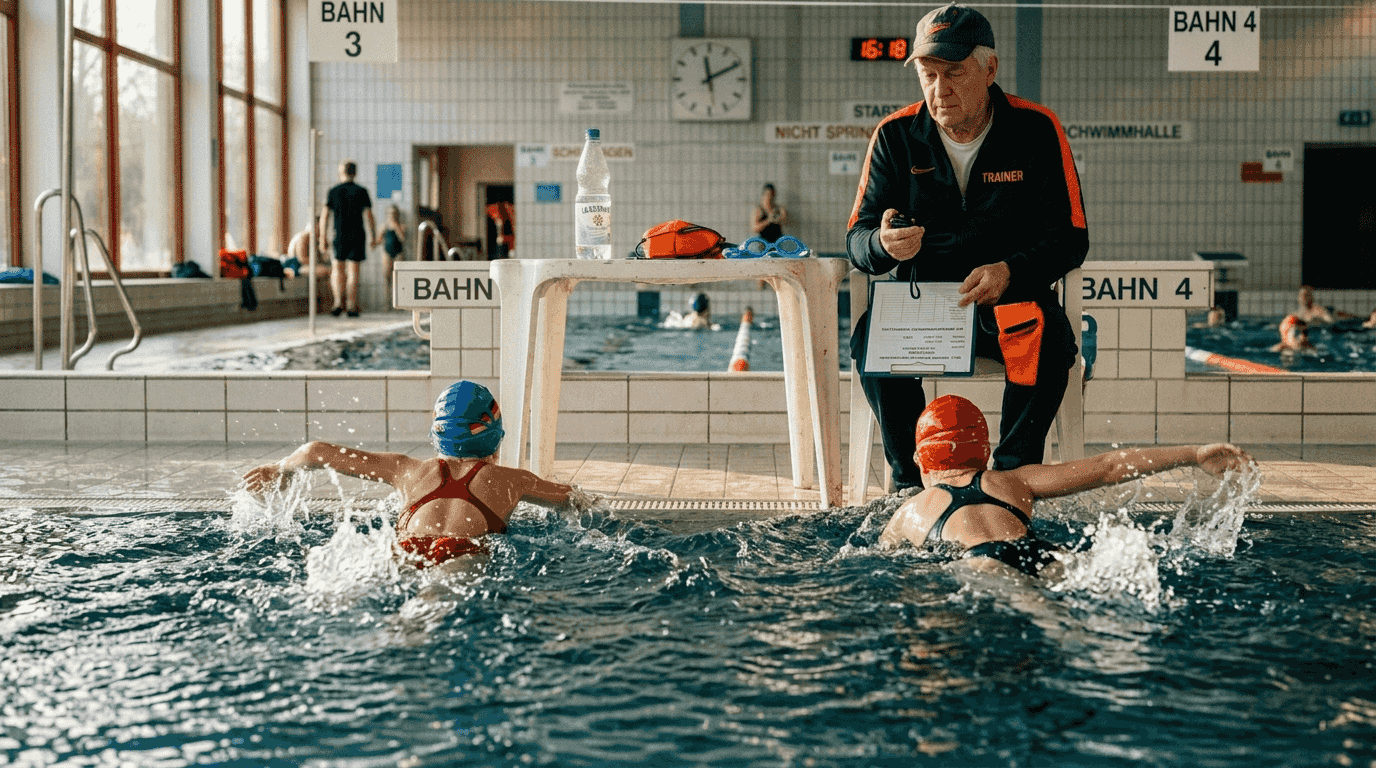
For Silver, the theory also becomes more demanding. Children learn how to behave in case of exhaustion and cramps, better understand the dangers in and around water, and can name simple rescue measures. Silver confirms that a child is an advanced swimmer.
Gold: Mastery and rescue competence
Gold is the highest youth swimming badge and places the greatest demands. Children swim 600 meters in a maximum of 24 minutes, 400 meters of which are breaststroke, 150 meters backstroke, and 50 meters front crawl. They complete 50 meters of transport swimming, dive 15 meters underwater, and retrieve an object three times from approximately two meters deep.
The theoretical part for Gold includes in-depth knowledge of self-rescue and external rescue, first aid, and resuscitation. Children with the Gold badge not only have excellent swimming skills but also sound knowledge to react correctly in emergency situations.
Comparison table of the badges:
| Badge | Swimming Distance | Diving | Theory | Minimum Age |
|---|---|---|---|---|
| Seepferdchen | 25 m | Object from shoulder depth | Basic bathing rules | from 4 years |
| Bronze | 200 m in 15 Min | 2x from 2 m deep | Extended bathing rules | from 6 years |
| Silver | 400 m in 25 Min | 10 m underwater, 2x from 3 m | Self-rescue, dangers | from 8 years |
| Gold | 600 m in 24 Min | 15 m underwater, 3x from 2 m | External rescue, first aid | from 9 years |
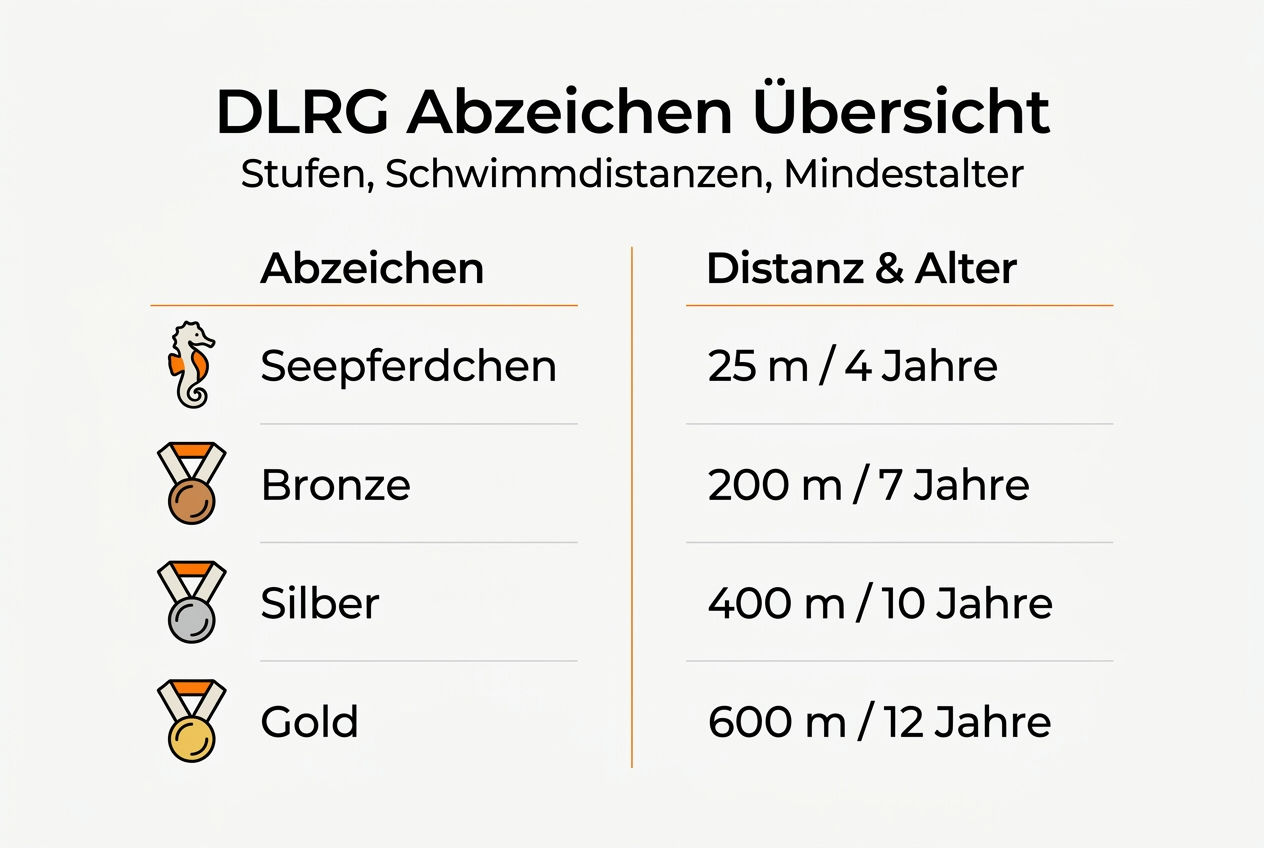
Pro Tip: Allow sufficient training time between badges. Children typically need three to six months of intensive instruction to progress from one level to the next. Rushing leads to frustration and demotivation.
Progression through these badges not only builds competence but also self-confidence. Each new badge is a visible success that makes children proud and motivates them to continue training. For parents and teachers, the clearly defined stages offer a structured way to measure and celebrate progress.
Tips for swimming instructors and schools to optimize DLRG courses
Swimming instructors and schools bear great responsibility. They not only shape swimmers but also impart life-saving skills. To optimally align courses with DLRG standards, it takes more than just good intentions. It requires knowledge of current guidelines, structured planning, and continuous further education.
Know and apply current DLRG guidelines
The DLRG provides resources and training materials for course optimization. These materials are regularly updated to integrate the latest findings from swimming pedagogy and rescue theory. Teachers should inform themselves about changes at least once a year.
Integrate the official curricula into your courses. Each exercise unit should specifically prepare for the requirements of the next examination level. Structure your lessons so that technical training, endurance exercises, and theoretical instruction are balanced. Children learn best when they receive varied yet targeted exercises.
Systematic training and progress monitoring
Set clear milestones for each student. Document progress in swimming technique, endurance, and theoretical knowledge. Regular interim tests help identify weaknesses early and promote targeted development.
Proven training methods:
- Technique training in small groups for individual corrections
- Endurance units with playful elements for motivation
- Simulated examination situations to prepare for emergencies
- Theory units with practical demonstrations at the poolside
- Partner swimming for rescue exercises and social learning
Use modern aids such as underwater cameras or tablets at the poolside to show children their technique. Visual feedback significantly accelerates learning. Children understand mistakes better when they see themselves swimming.
Teach water safety holistically
Swimming technique alone is not enough. Children need to understand why certain rules exist and how to behave in dangerous situations. Integrate water safety into every lesson. Discuss real-life scenarios that children might experience.
Practice self-rescue techniques such as swimming in clothes, removing shoes in the water, or calling for help. These skills can save lives in an emergency. Also, conduct simple rescue exercises where children learn to shout for help to an exhausted swimmer or throw a lifebuoy.
Pro Tip: Organize a parent evening once a quarter to explain the DLRG requirements and show how parents can support at home. Parents who understand the training path promote their children more effectively and reduce pressure from unrealistic expectations.
Further training and exchange
Stay up-to-date through regular training. The DLRG offers special courses for swimming instructors that deepen not only technique but also pedagogy and safety aspects. The path to becoming a DLRG swimming instructor shows what qualifications are needed and how to continuously expand your competence.
Network with other swimming instructors and schools. Exchange of experience brings new ideas and helps to adopt proven methods. Many schools organize joint training days or examination preparations where children practice in larger groups and motivate each other.
Through systematic planning, sound knowledge of DLRG standards, and continuous further training, you create optimal conditions for successful swimming education. Your students will not only collect badges but also develop genuine water safety.
How parents can prepare their children for DLRG swimming tests
Parents play a central role in their children's swimming success. Even if swimming lessons provide the main training, support at home makes the crucial difference between moderate progress and genuine skill. Here are concrete steps you can take as parents.
1. Regular swimming lessons are the basis
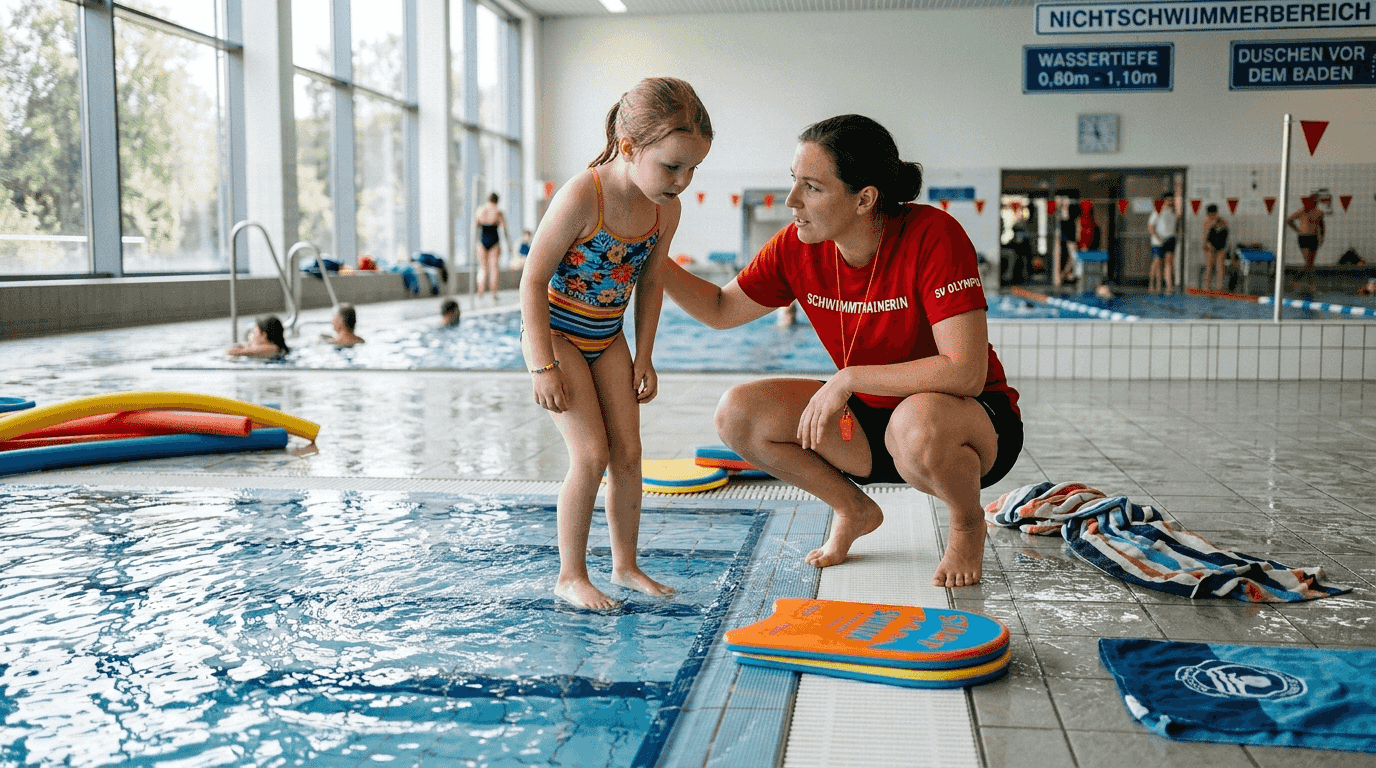
Parents should encourage regular swimming training for better skills and water safety. Consistency is the key to success. Children who swim weekly develop muscle memory and stamina much faster than those with irregular lessons.
Choose a qualified swimming course that operates according to DLRG standards. Inform yourself about the teachers' qualifications and class size. Smaller groups allow for more individual attention and faster progress. Stick with the course, even if your child doesn't feel like it sometimes. Perseverance is part of the learning process.
2. Additional practice at the swimming pool
Visit the swimming pool between classes. Playfully practice the techniques your child learns in class. Let your child show what they can do, and praise every step of progress. Avoid pressure or criticism, as this creates fear and blocks learning.
Make sure your child feels comfortable in the water. Play water games, dive for rings together, or organize small races. Fun in the water is the best motivation. Children who associate swimming with positive experiences learn faster and more sustainably.
3. Discuss and practice water safety rules
Use everyday life to talk about water safety. Explain why you shouldn't swim too far out when visiting the beach. Discuss why running at the edge of the pool is dangerous when visiting the swimming pool. Children understand rules better when they experience the context.
Practice with your child how to behave in emergencies. What do they do if they get a cramp? How do they call for help? These conversations don't have to be dramatic. Treat them as normal preparation, like practicing traffic rules.
4. Motivation through recognition and rewards
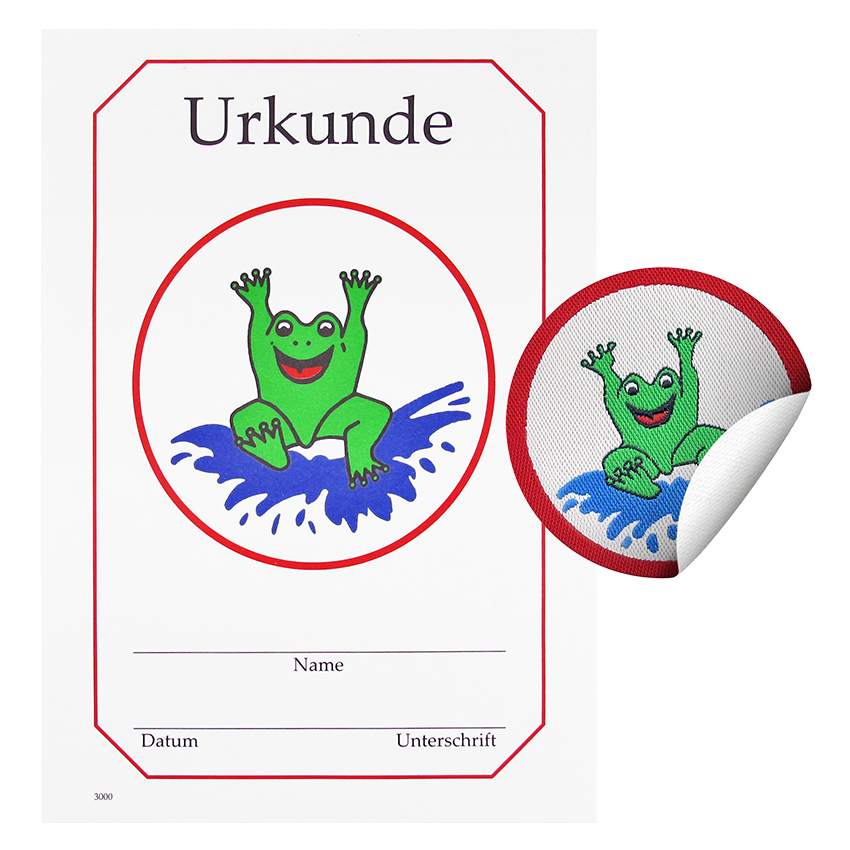
Celebrate every milestone achieved. When your child earns a badge, make an event out of it. Frame the certificate, tell relatives about it, or treat your child to a small reward. Visible recognition boosts self-confidence and the desire to continue.
Set realistic goals. Not every child achieves all badges at the same pace. Respect individual learning speeds and don't compare your child to others. Every step of progress is valuable, no matter how small it seems.
5. Know the test requirements and practice specifically
Familiarize yourself with the requirements of the next test. The test procedure for swimming badges shows exactly what is required. Specifically practice the elements that your child has not yet mastered confidently.
It is particularly helpful to simulate the test situation. Have your child swim the full distance or repeat the diving exercise several times. The more familiar the situation, the more relaxed your child will be in the actual test.
Pro Tip: Invest in good swimming equipment. Well-fitting goggles and comfortable swimwear make training more pleasant. Children who feel comfortable in the water are significantly more motivated to learn.
Through consistent support, positive reinforcement, and targeted practice, you create optimal conditions for your child's swimming success. The time you invest will pay off not only in badges but, above all, in your child's safety and self-confidence in the water.
Swimming badges and accessories for every need
After your child or students have successfully passed a DLRG test, it's time to make the success visible. Official swimming badges and certificates are more than just symbols. They are tangible proofs of acquired skills and strong motivators for the next step.
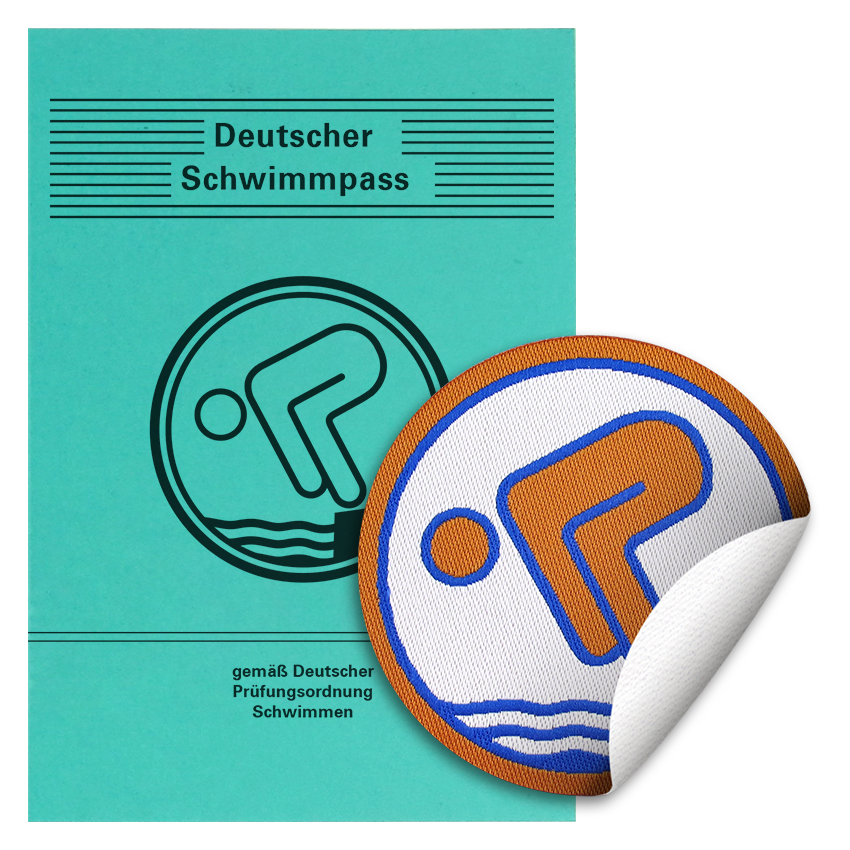
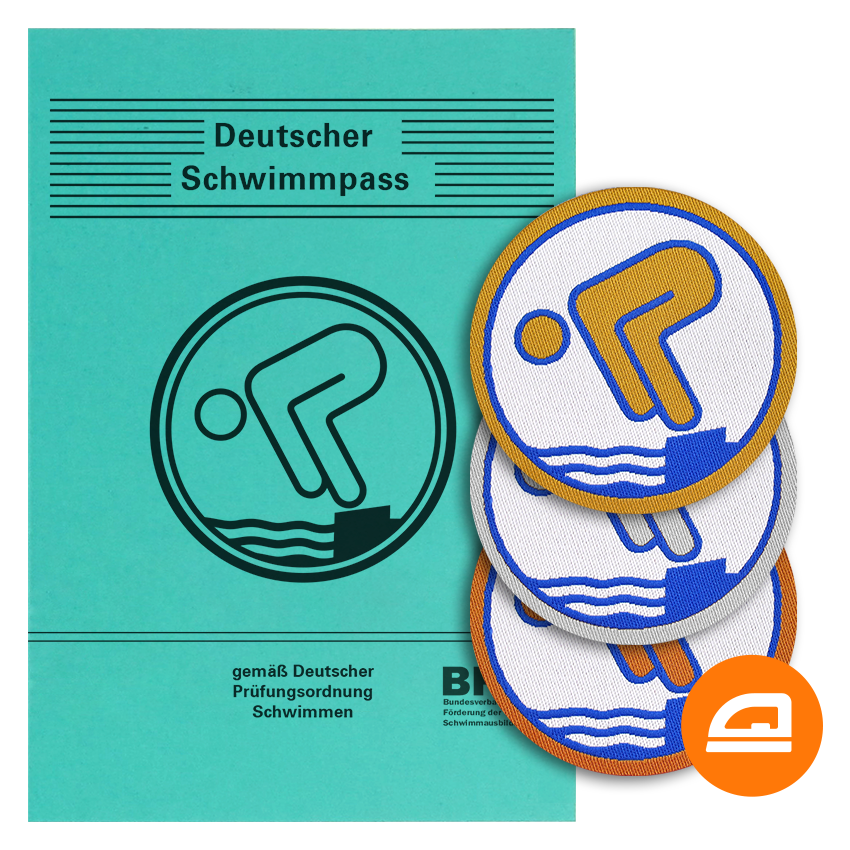
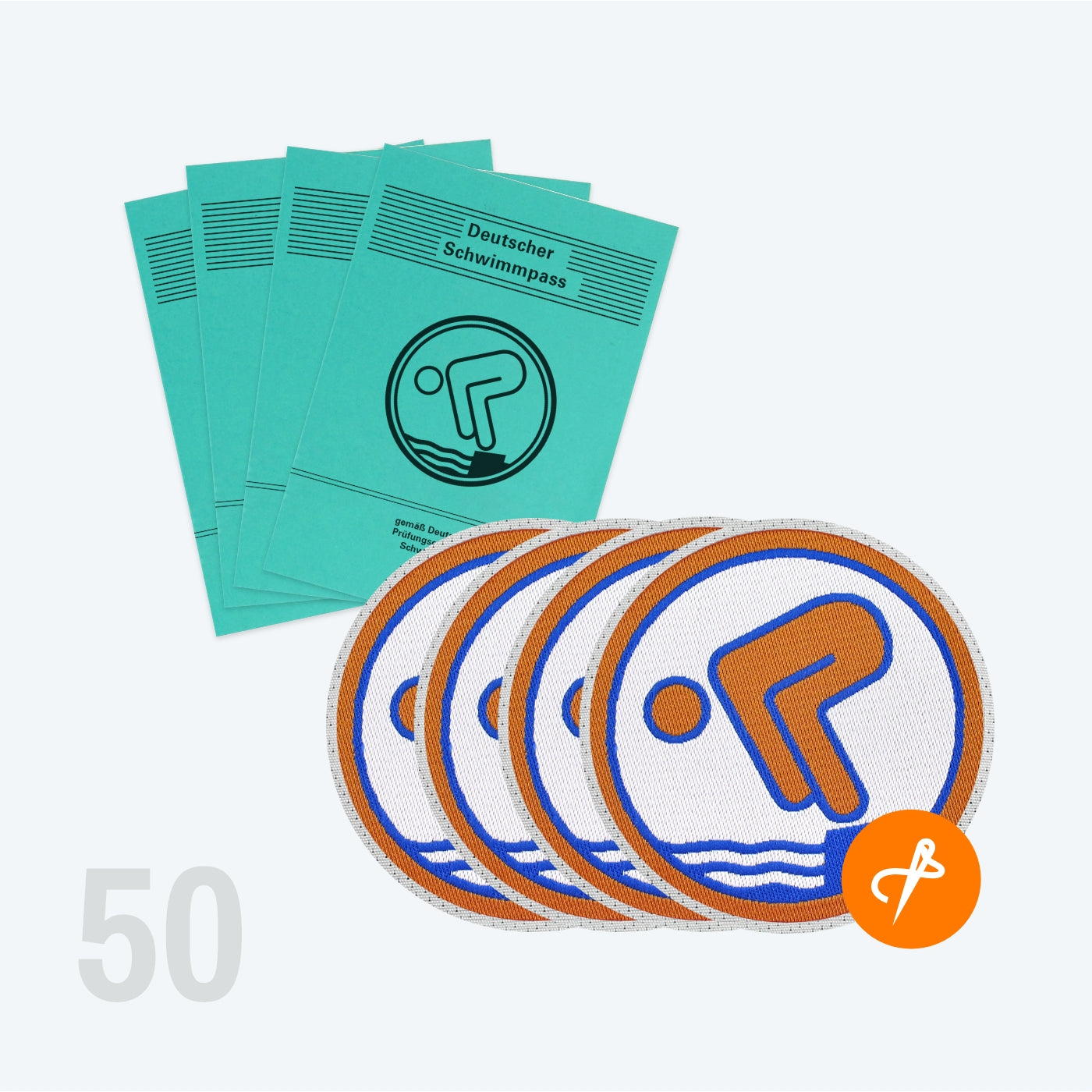
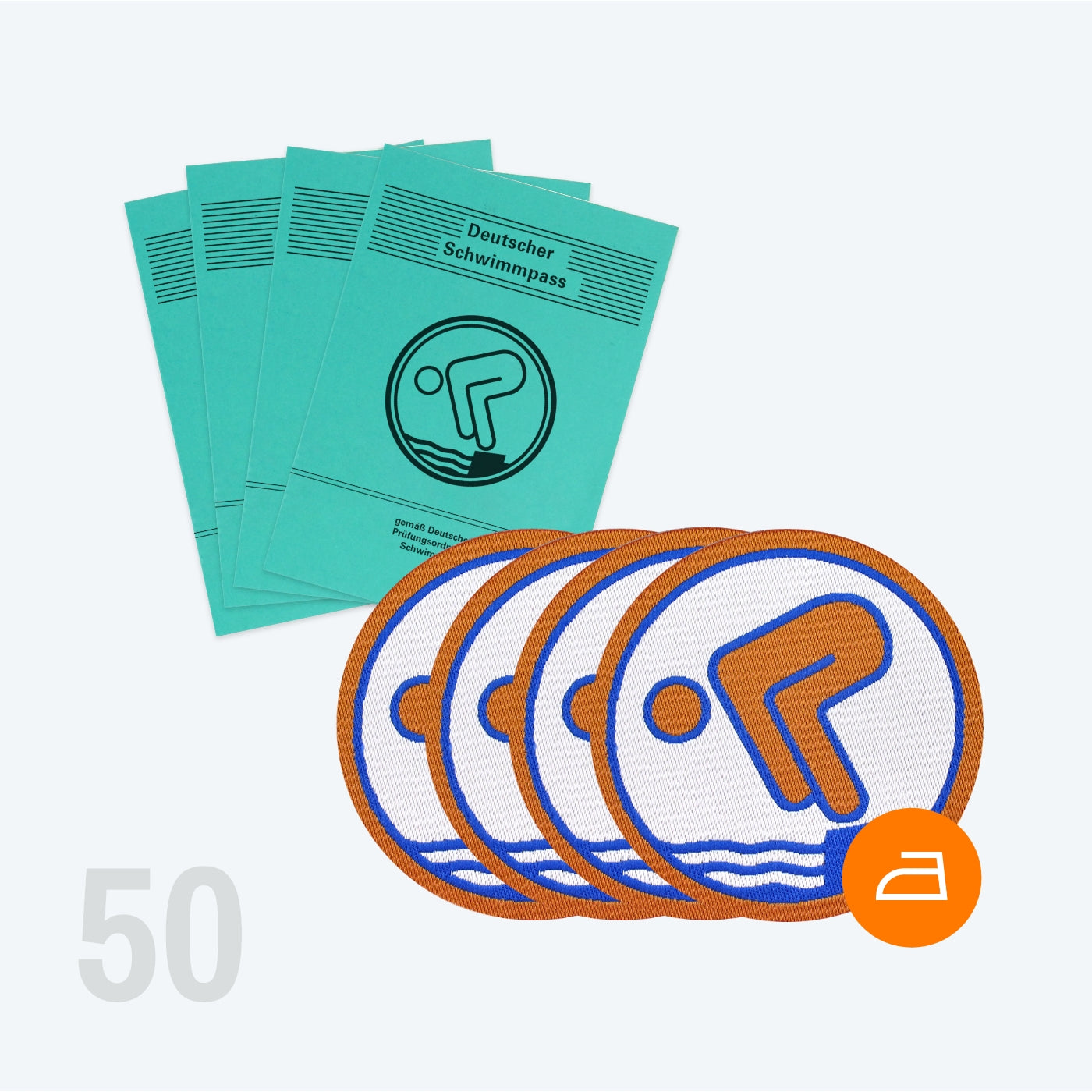
At Pimpertz, you will find the complete range of official swimming badges that comply with DLRG standards. From the first Seepferdchen to the Gold badge, we offer high-quality, durable badges in brilliant colors. Each badge can be sewn onto swimwear or kept in special collection albums.
Supplement the badges with matching certificates that document the success. Our certificates are printed on high-quality paper and can be personalized. Children love to hang their certificates at home or collect them in an album. For swimming schools, we offer bulk packs with attractive discounts.
The right swimming accessories make training more effective and enjoyable. From waterproof cases for badges to collection albums and special gift sets for special occasions. For over 38 years, Pimpertz has stood for quality, fast shipping, and expert advice on swimming badges and accessories.
Frequently Asked Questions
What is the DLRG Seepferdchen and why is it important?
The Seepferdchen is the first swimming badge for children and focuses on basic swimming skills and water safety. Children swim 25 meters, retrieve an object from shoulder-deep water, and learn the most important bathing rules. It marks the entry into structured swimming training and gives children their first sense of achievement in the water. However, the Seepferdchen badge is only the beginning and does not replace further training for complete water safety.
How do the Bronze, Silver, and Gold badges differ?
The badges differ in increasing swimming distances, rescue skills, and theoretical content. Bronze requires swimming 200 meters and basic diving exercises. Silver increases to 400 meters and introduces underwater swimming as well as extended safety rules. Gold demands 600 meters in various swimming styles, complex rescue exercises, and in-depth knowledge of first aid. Each level systematically builds on the previous one and expands both technical skills and safety knowledge. The Gold swimming badge is the highest youth swimming badge and confirms comprehensive swimming competence.
How can swimming instructors design their courses to be DLRG compliant?
Swimming instructors should use official DLRG training materials and guidelines to align their courses with current standards. Regular training keeps instructors up-to-date with the latest in swimming pedagogy and safety regulations. Structure courses so that technique training, endurance exercises, and theoretical instruction are balanced. The path to becoming a DLRG swimming instructor shows what qualifications are required and how continuous training improves teaching quality.
At what age can children start DLRG tests?
Children can start with the Seepferdchen badge as early as four years old if they meet the motor requirements. Most children are ready for the first badge between five and six years old. Bronze is typically possible from six years, Silver from eight, and Gold from nine years. However, the actual age strongly depends on individual development, water acclimatization, and training intensity. More important than age is that children can safely meet the requirements without being overwhelmed.
How long does it take on average to progress from one badge to the next?
The duration varies depending on training intensity and individual conditions. With weekly lessons, children typically need three to six months to progress from one level to the next. From Seepferdchen to Bronze often takes a little longer, as basic techniques need to be consolidated. The time from Bronze to Silver and from Silver to Gold often shortens, as children already have solid foundations. Regular additional practice outside of class can significantly reduce learning time.
%20badge%20alone%20is%20enough%20to%20make%20their%20children%20safe%20in%20the%20water.%20However,%20this%20widespread%20assumption%20can%20be%20deceptive.%20The%20DLRG%20swi...)