
Importance of Swimming Badges for Child Safety 2026
Every year, an average of 20 children under 15 drown in Germany, and more than half of primary school children cannot swim safely. These alarming figures show how urgently parents and swimming instructors need to act. Swimming badges are far more than just colorful patches. They structure the learning process, set clear goals, and motivate children to acquire safe swimming skills step by step. In this article, you will learn why swimming badges play a central role in water safety and how you can effectively use them in swimming lessons and at home.
Table of Contents
- Key Facts on the Importance of Swimming Badges
- The Current Situation of Learning to Swim in Germany
- How Swimming Badges Promote Safety and Motivation
- Initiatives and Future Prospects for Greater Swimming Competence
- Practical Tips for Parents and Swimming Instructors on Using Swimming Badges
- Buy Swimming Badges and Support Children in Learning to Swim
- Frequently Asked Questions About the Importance of Swimming Badges
Key facts on the importance of swimming badges
| Point | Details |
|---|---|
| Drowning risk decreases | Swimming badges reduce the risk of drowning in children by up to 88 percent. |
| Many non-swimmers | Over 50 percent of primary school children in Germany cannot swim safely. |
| Social barriers | Financial and social factors significantly influence access to swimming lessons. |
| Motivation through badges | Tangible goals like Seepferdchen or Bronze increase willingness to learn and perseverance. |
| Quality standards | Coordination between DLRG, DSV, and state authorities ensures uniform training quality. |
The current situation of learning to swim in Germany
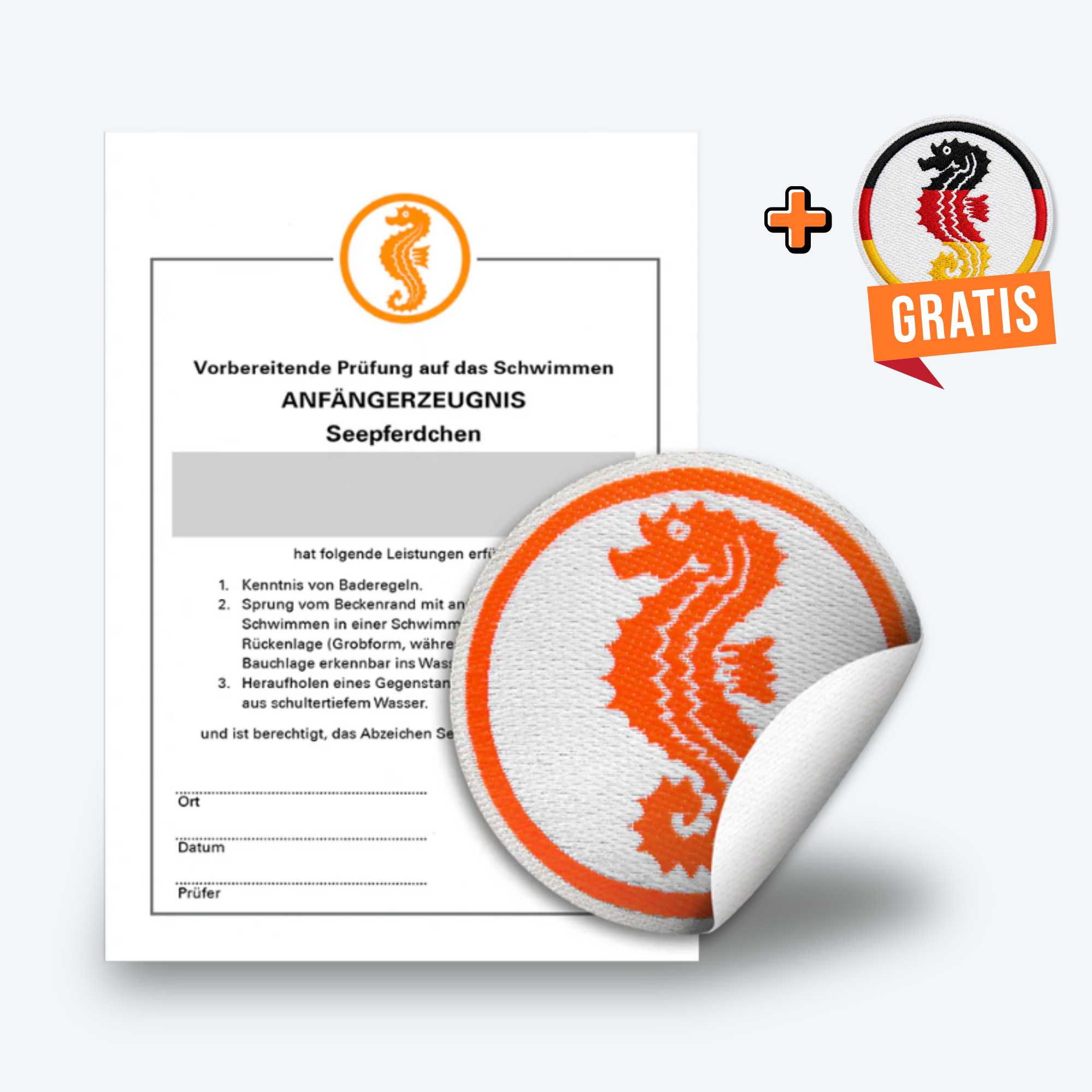
The swimming ability of German children has dramatically worsened in recent years. The DLRG estimates that more than half of children at the end of primary school cannot swim safely. Many parents underestimate the risk. A child who only has the Seepferdchen (seahorse badge) is not yet considered a safe swimmer. Only with the German Swimming Badge Bronze do children achieve a basic level of safety in the water.
Social and financial barriers further exacerbate the situation. Low-income families often do not have access to affordable swimming lessons. Long waiting lists at municipal swimming pools and a shortage of qualified swimming instructors further complicate the situation. The result: more and more children grow up without sufficient water competence.
This significantly increases the risk of drowning accidents. Especially in the summer months, when families are at lakes, rivers, or on vacation by the sea, many children lack the necessary safety. Without structured swimming training, they cannot properly assess dangers. Panic in deep water or overestimating one's own abilities repeatedly lead to tragic accidents.
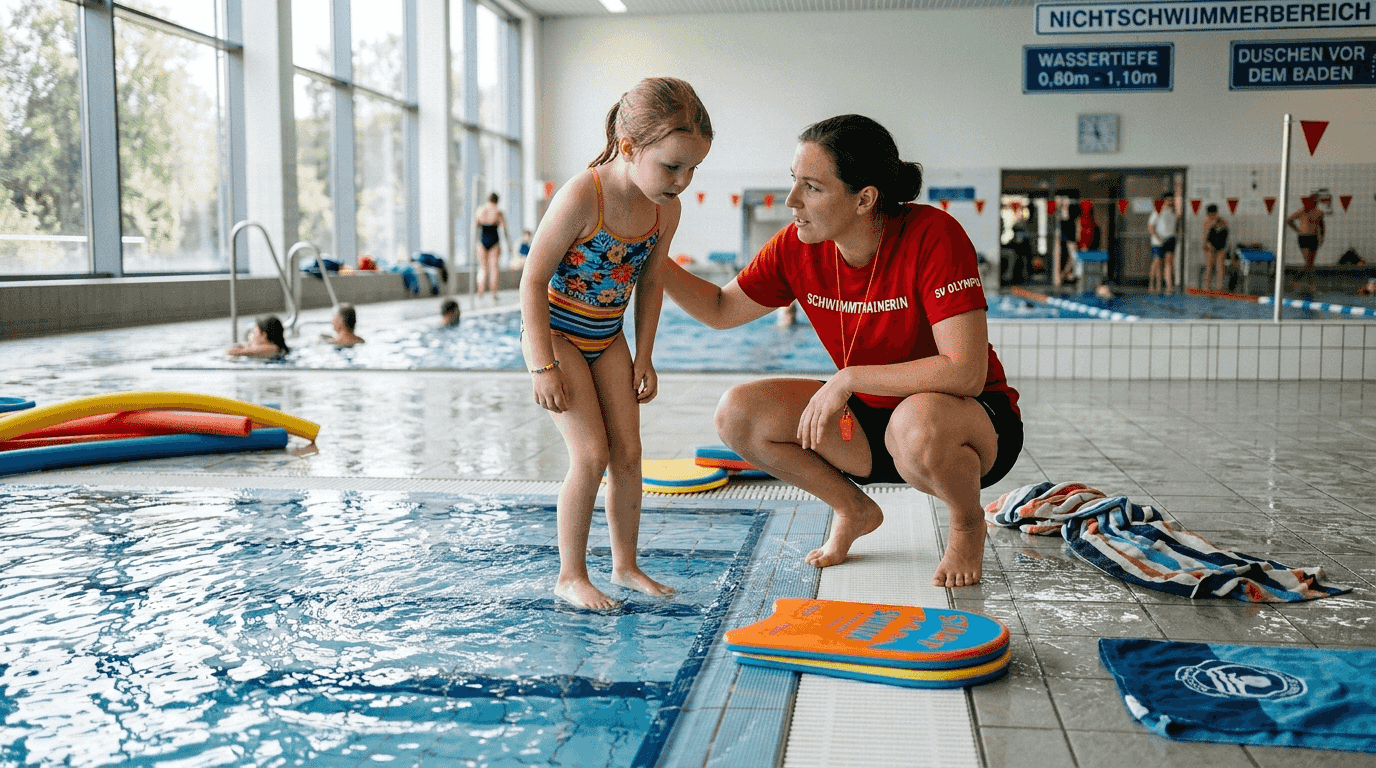
A promising solution is early swimming education, starting already in daycares. Model projects show that preschool children can be playfully introduced to water. Initially, this involves water familiarization and initial swimming movements, not performance pressure. This early promotion lays the foundation for later swimming badges and increases the chances that children can swim safely by school age.
For parents and swimming instructors, this means specifically:
- Start with water familiarization early, ideally in infancy
- Prioritize regular swimming lessons and do not rely solely on school swimming instruction
- Support social initiatives that provide disadvantaged families with access to swimming lessons
- Understand swimming badges in primary school as an important milestone and work towards them specifically
The current situation requires a rethink. Swimming is not a leisure activity, but a life-saving skill. Swimming badges structure this learning process and make progress visible.
How swimming badges promote safety and motivation
Swimming badges are official proofs of achieved swimming abilities, awarded by recognized associations such as the DLRG or the DSV. They document not only technical skills such as breaststroke or diving, but also an understanding of water rules and self-rescue. Each badge marks an important developmental step on the way to becoming a safe swimmer.
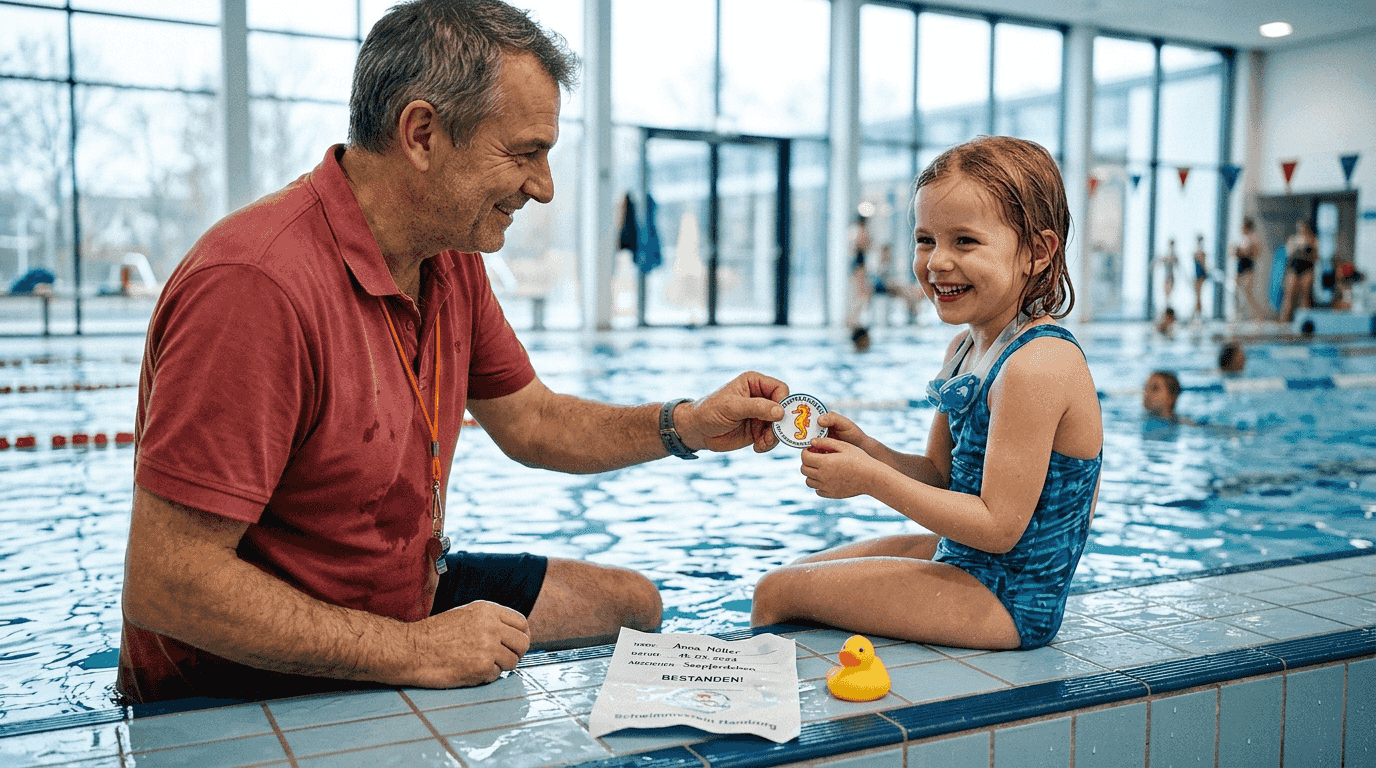
Their importance for water safety can hardly be overstated. Studies show that swimming lessons reduce the risk of drowning by up to 88 percent. Structured programs with clear learning objectives not only teach swimming techniques but also hazard awareness. Children learn to assess their strength, recognize currents, and stay calm in an emergency. These competencies save lives.
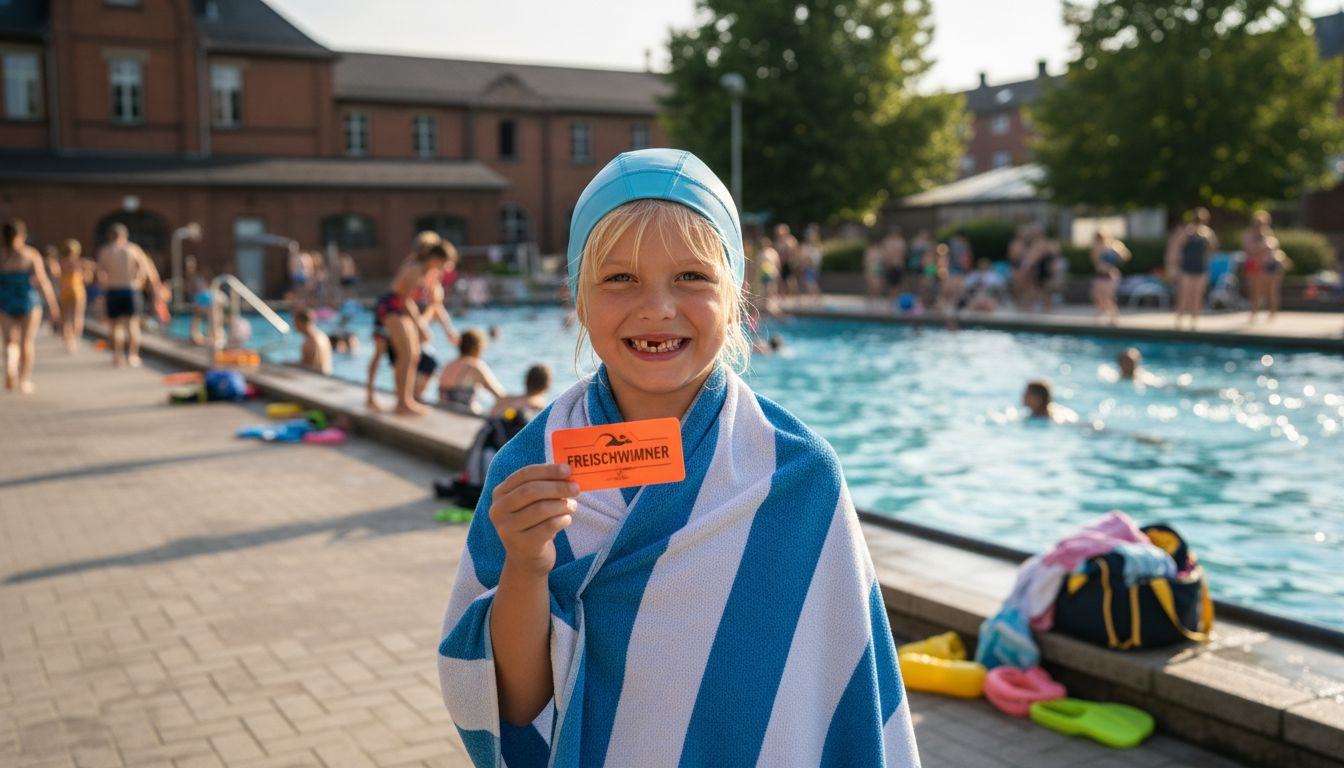
The motivating effect of swimming badges is enormous. Children need tangible goals to stay engaged. A colorful fabric badge on their swimsuit or a certificate on the wall are visible successes they can be proud of. This positive reinforcement mechanism works particularly well with younger children. They see their friends with the Seepferdchen (seahorse badge) and want one themselves. This social incentive drives them to regularly attend swimming lessons and practice.
The willingness to learn increases significantly when children know what they are training for. Instead of abstractly "learning to swim better," they work specifically towards the next badge. Swimming instructors can break down progress into small stages: first swim 25 meters, then jump from the edge of the pool, finally retrieve a ring from two meters deep. Each partial step brings the goal closer and keeps motivation high.
In addition to swimming ability, badge courses teach important water rules. Children learn not to jump into unknown waters, never to swim on a full stomach, and to leave the water immediately during a thunderstorm. These behavioral rules are just as important as the technique itself. A child who can swim perfectly but does not recognize dangers is not safe.
The advantages of official swimming badges go beyond mere safety:
- Standardized tests guarantee comparable performance levels nationwide
- Official recognition by DLRG and DSV builds trust with parents and schools
- Systematic progression from Seepferdchen to Gold promotes continuous learning
- Documentation of skills facilitates placement in advanced courses
Pro Tip: Use the power of positive reinforcement specifically. Celebrate every achieved badge as a real success. Let your child sew on the badge themselves or frame the certificate together. These rituals solidify pride in the achievement and motivate for the next challenge. Over the long term, this builds a positive attitude towards swimming that lasts beyond childhood.
Initiatives and future prospects for greater swimming competence
Improving the swimming ability of German children requires coordinated efforts at all levels. Swimming associations, municipalities, and state authorities must work together to create sustainable structures. Individual swimming lessons are not enough. There is a need for a nationwide system that provides all children, regardless of their social background, with access to qualified swimming training.
The German Swimming Federation has developed concrete proposals. The DSV suggests a competence center and a networking platform to better coordinate quality standards and swimming courses. This central point of contact would connect swimming instructors, share best practices, and establish uniform training guidelines. Digital tools could help to mediate available course places and make waiting lists transparent.
The ambitious goal: by 2035, every child in Germany should be able to swim safely. This goal is achievable, but requires massive investments in infrastructure and personnel. More swimming pools must be built or renovated. The training of swimming instructors must become more attractive, for example through better pay and career opportunities. Schools need reliable time slots in municipal pools.
Concrete steps for implementing this vision include:
- Development of nationwide quality standards for swimming courses and badge examinations
- Establishment of a digital networking platform for swimming instructors, clubs, and parents
- Regular training and certifications for swimming instructors
- Financial support for swimming lessons for low-income families
- Mandatory cooperation between schools and local swimming clubs
- Public campaigns to raise awareness of the importance of swimming ability
The urgency of these measures is highlighted by a quote from the DSV Bundestag hearing in 2022:
Every year, 500,000 children leave primary school without being able to swim safely. Germany can bring this number to zero by 2035 if we act now.
This statement makes it clear: it's not about a nice-to-have, but about a societal responsibility. Swimming is a basic skill like reading or arithmetic. Children who cannot swim are restricted in their participation and exposed to an avoidable risk.
For swimming instructors, these developments open up new perspectives. The demand for qualified instructors is increasing. Anyone who chooses the path to becoming a DLRG swimming instructor invests in a meaningful activity with growing social recognition. At the same time, swimming instructors benefit from better conditions if the proposed initiatives are implemented.
Parents can actively support this development. Get involved in local swimming clubs, approach schools about cooperation, or organize private swimming lessons with other parents. Every initiative counts. The more people put the issue on the agenda, the faster politics will move.
Practical tips for parents and swimming instructors on using swimming badges
The various swimming badges are systematically built upon each other and cover different levels of competence. This table gives you a quick overview of the most common badges and their requirements:
| Badge | Requirements | Meaning |
|---|---|---|
| Seepferdchen | 25m swimming, jump from the pool edge, retrieve object from shoulder-deep water | First swimming ability, not yet a safe swimmer |
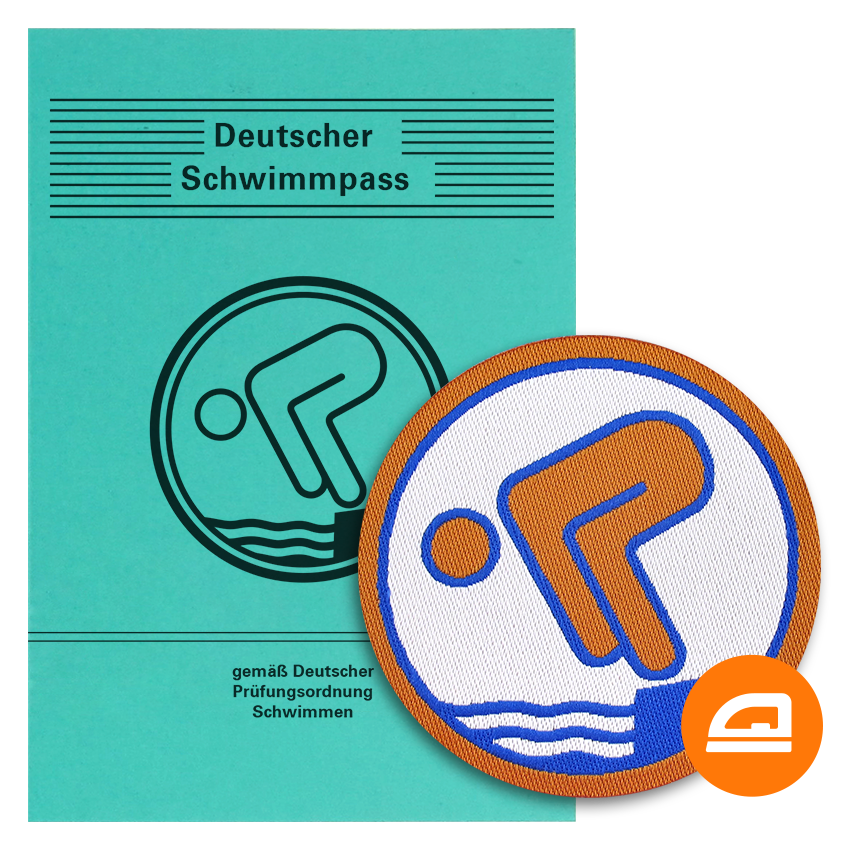
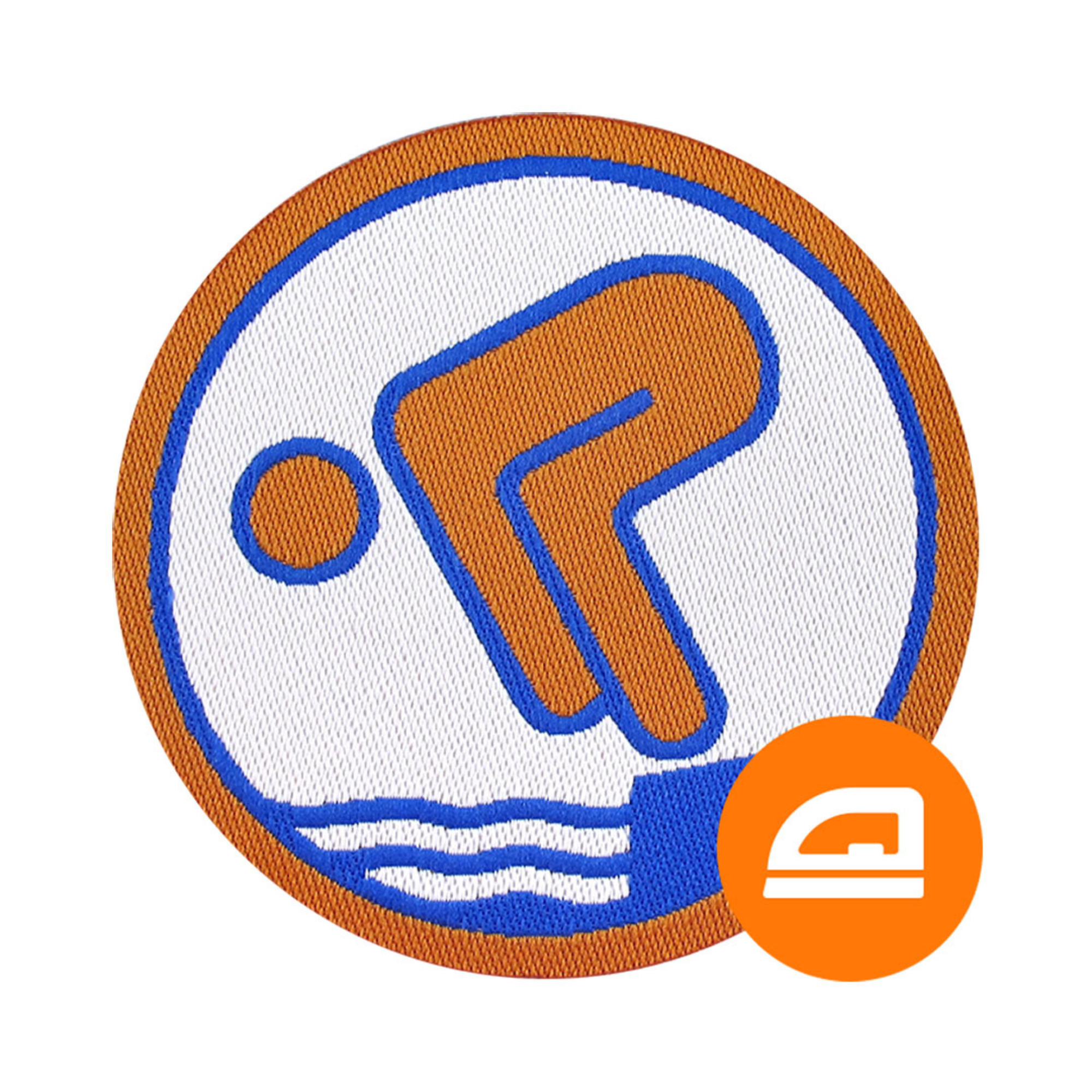
| Bronze | 200m in max. 15 min., jump from 1m height, 2m deep diving, know bathing rules | Basic swimming safety achieved |
| Silver | 400m in max. 25 min., 10m underwater swimming, jump from 3m height, self-rescue | Advanced swimming ability |
| Gold | 600m in max. 24 min., 50m backstroke, deep diving, rescue exercise | Safe mastery of multiple swimming techniques |
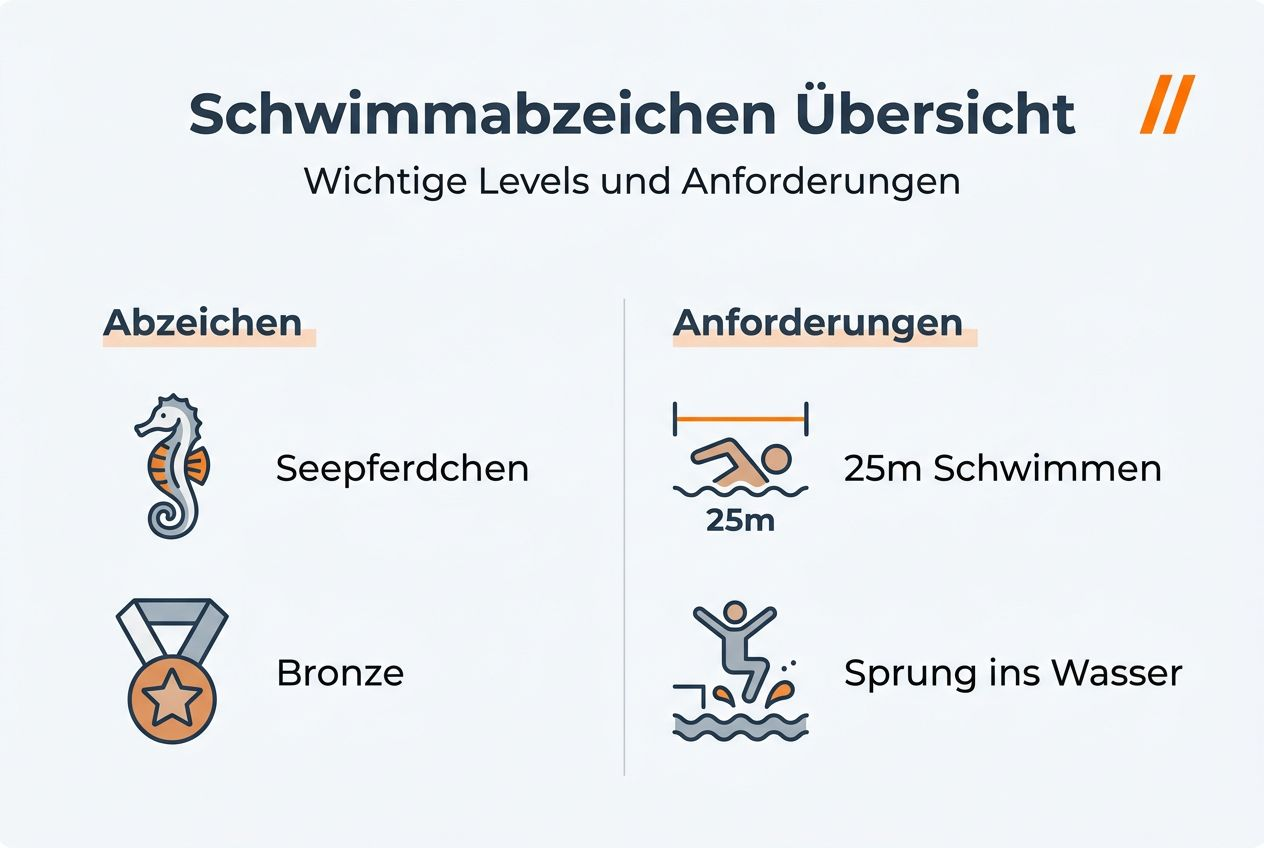
For parents, it is important to understand that the Seepferdchen (seahorse badge) is just the beginning. Many believe their child is safe in the water after earning the Seepferdchen. This is not true. Only with the Bronze badge do children achieve a basic level of safety that allows them to move independently in supervised swimming pools. Until then, constant supervision is essential.
Here's how to best prepare your child for swimming badges:
- Regularity beats intensity: It's better to practice twice a week for 30 minutes than once for two hours
- Introduce playfully: Diving games, races, or water games keep the joy of swimming alive
- Don't instill fear: Avoid phrases like "Be careful not to drown" and instead use positive language
- Be patient: Every child learns at their own pace; comparisons with siblings or friends are demotivating
- Celebrate successes: Even small progress deserves recognition
Children must know and follow water rules to receive the Seepferdchen badge. Practice these rules at home and discuss specific situations. "What do you do if you get a cramp in the water?" or "Why don't we jump into murky waters?" These conversations stick and can save lives in an emergency.
For swimming instructors, swimming badges provide a structured curriculum that simplifies teaching. Take advantage of these benefits:
- Communicate clear learning objectives: Show children at the beginning of the course what skills they will achieve by the badge
- Set intermediate goals: Break down requirements into small stages and celebrate each milestone
- Individual support: Some children need more time for diving, others for endurance swimming; adapt exercises accordingly
- Utilize group dynamics: Let children cheer each other on and celebrate small successes together
- Involve parents: Inform parents regularly about progress and give tips for practicing at home
Pro Tip: Actively involve children in their learning progress. Keep a swimming diary where children record what they accomplished after each lesson. Visualize the path to the next badge with a poster where achieved partial goals are checked off. This self-reflection strengthens their sense of responsibility and intrinsic motivation. Children learn that success comes through continuous effort, not by chance.
Further tips on swimming badges for children can be found in our detailed guide. There you will also learn how to deal with fears and what aids are useful.
Buy swimming badges and support children in learning to swim
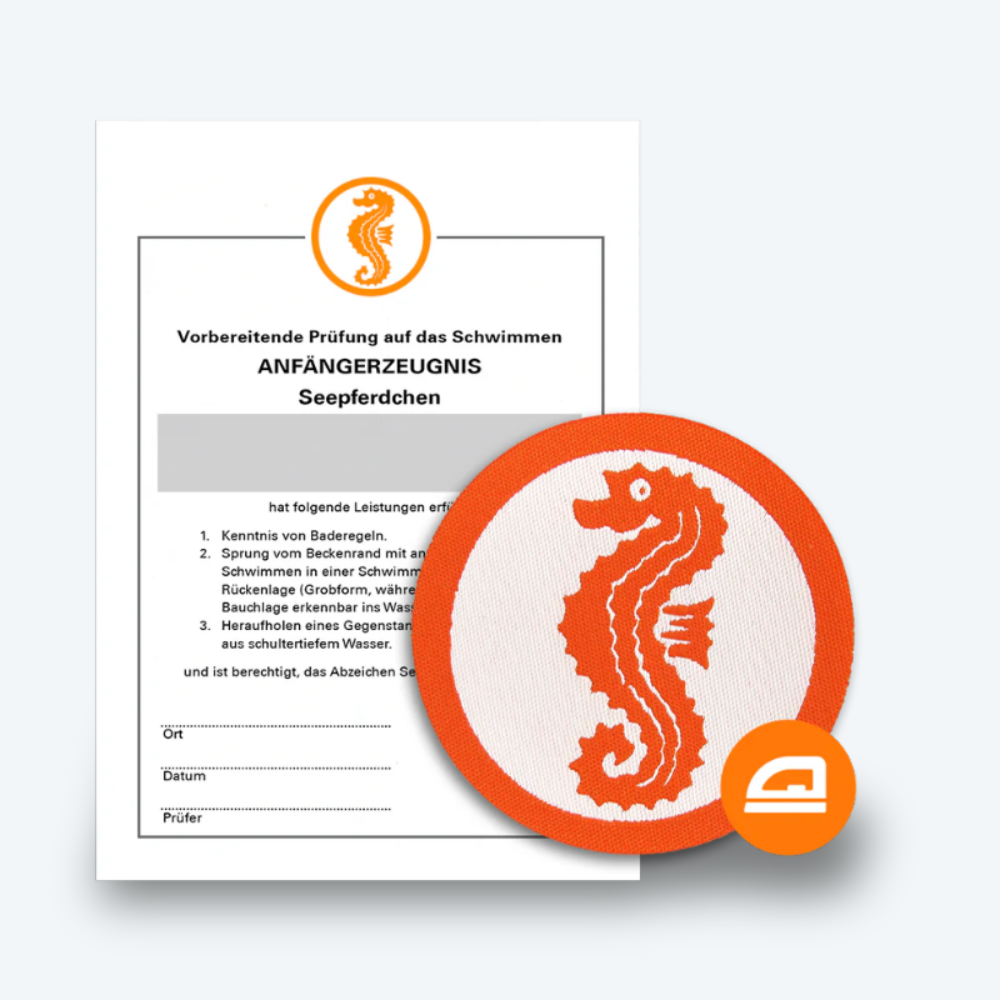
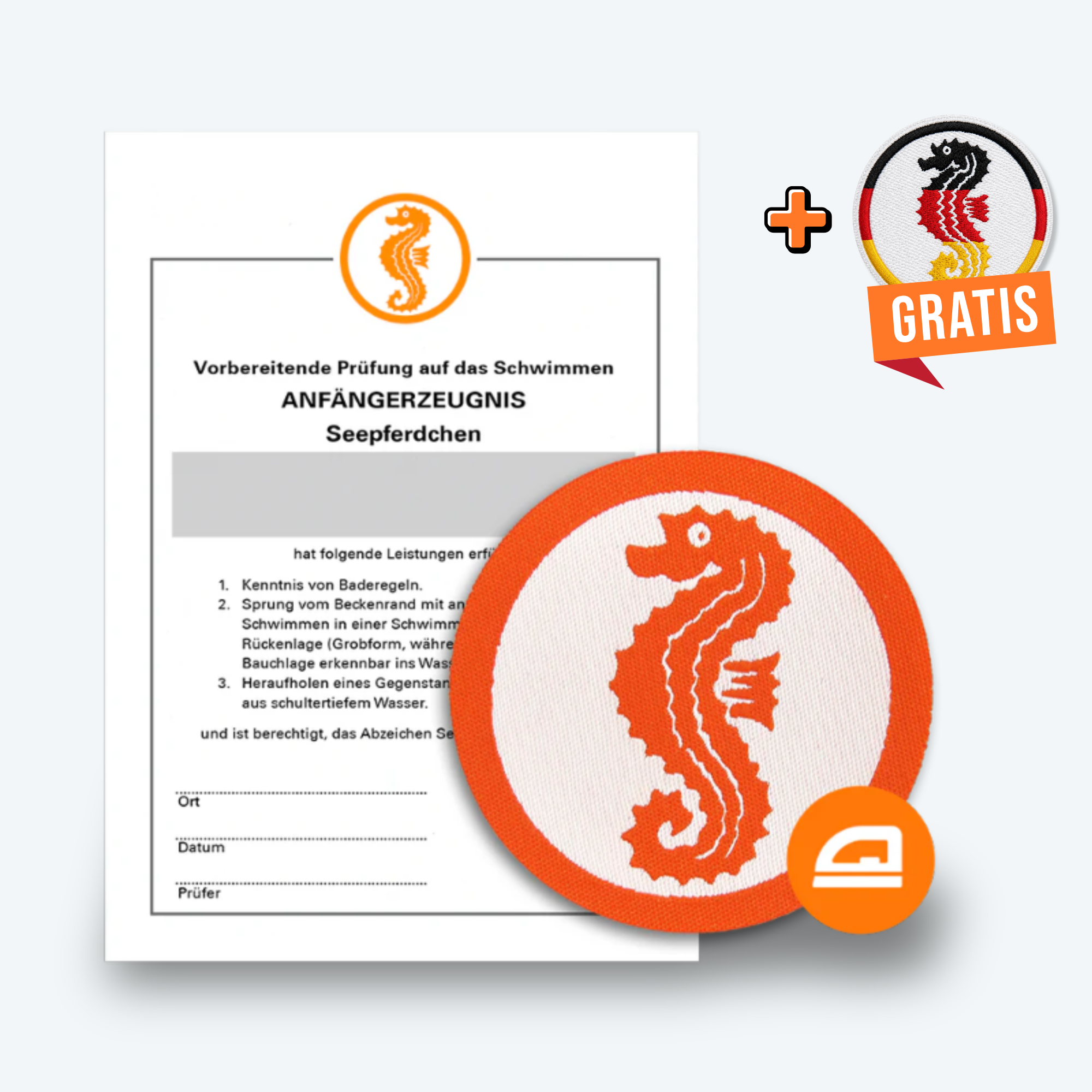
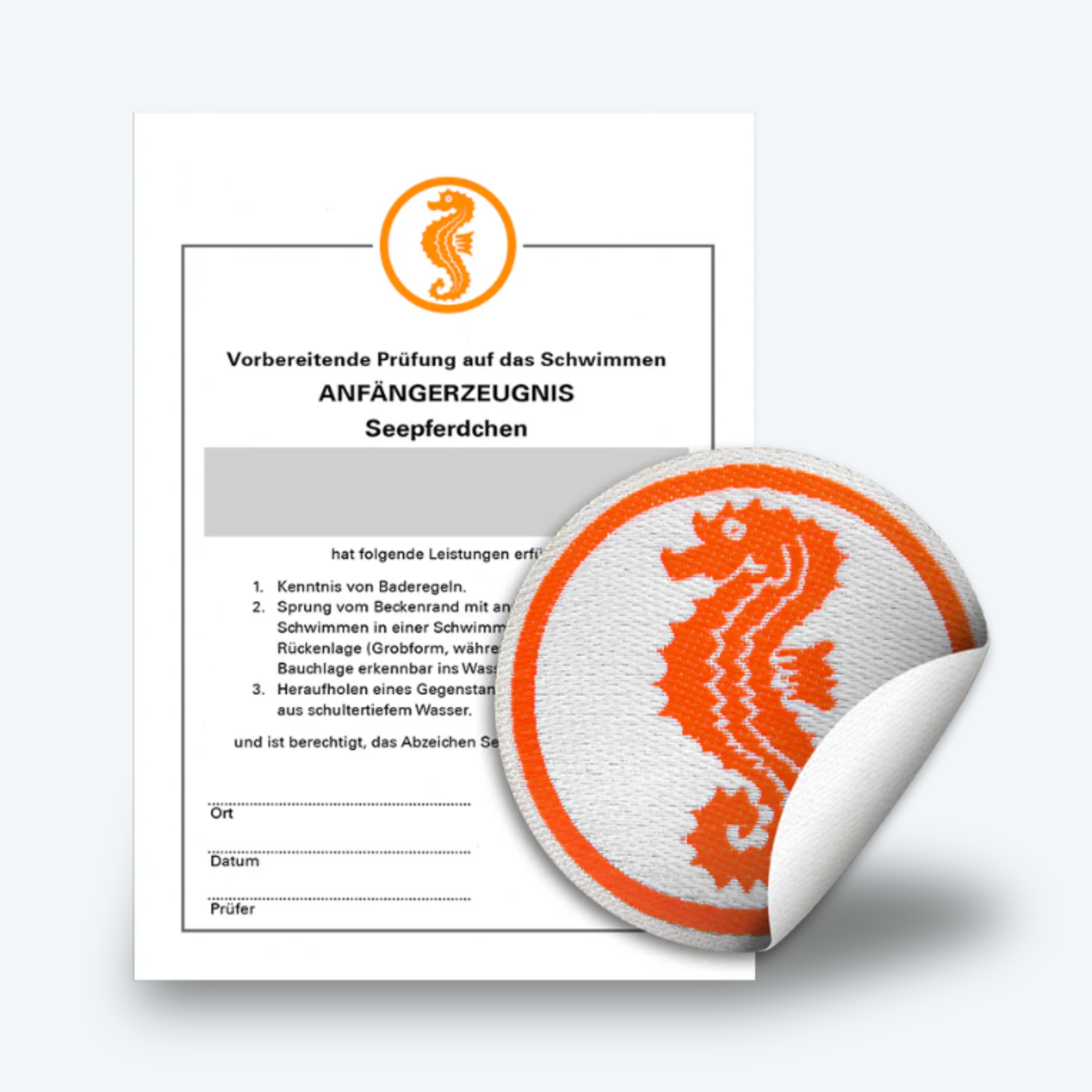
After your child has successfully completed a swimming badge, recognition of this achievement is crucial. High-quality swimming badges and certificates make success tangible and motivate for the next challenge. At Pimpertz, you will find a large selection of officially certified badges that meet the highest quality standards.
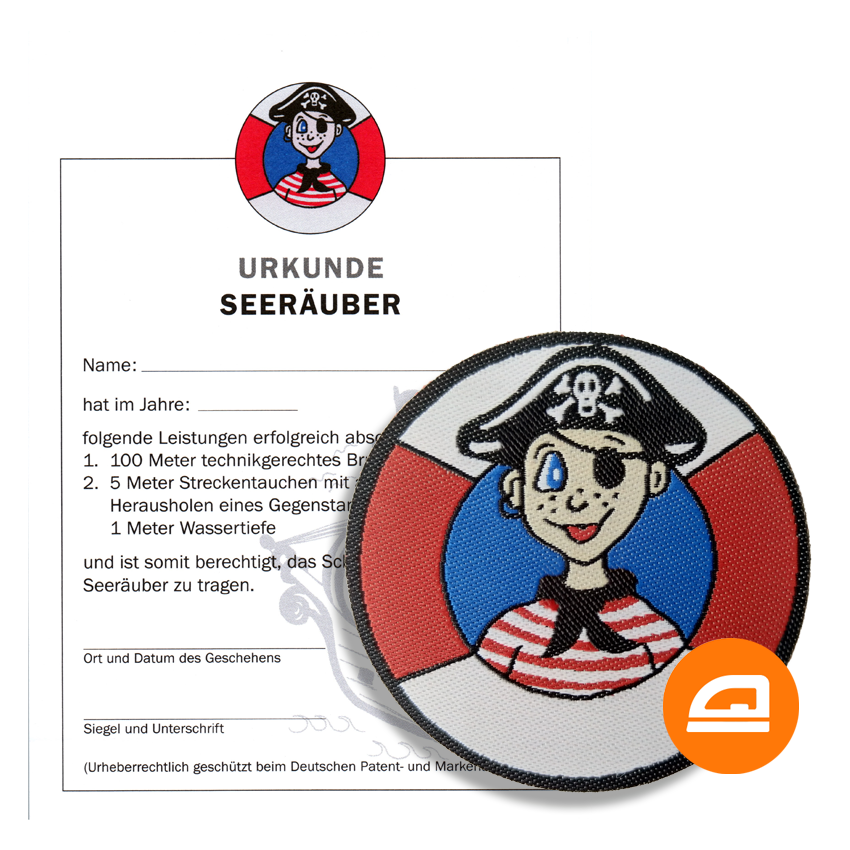
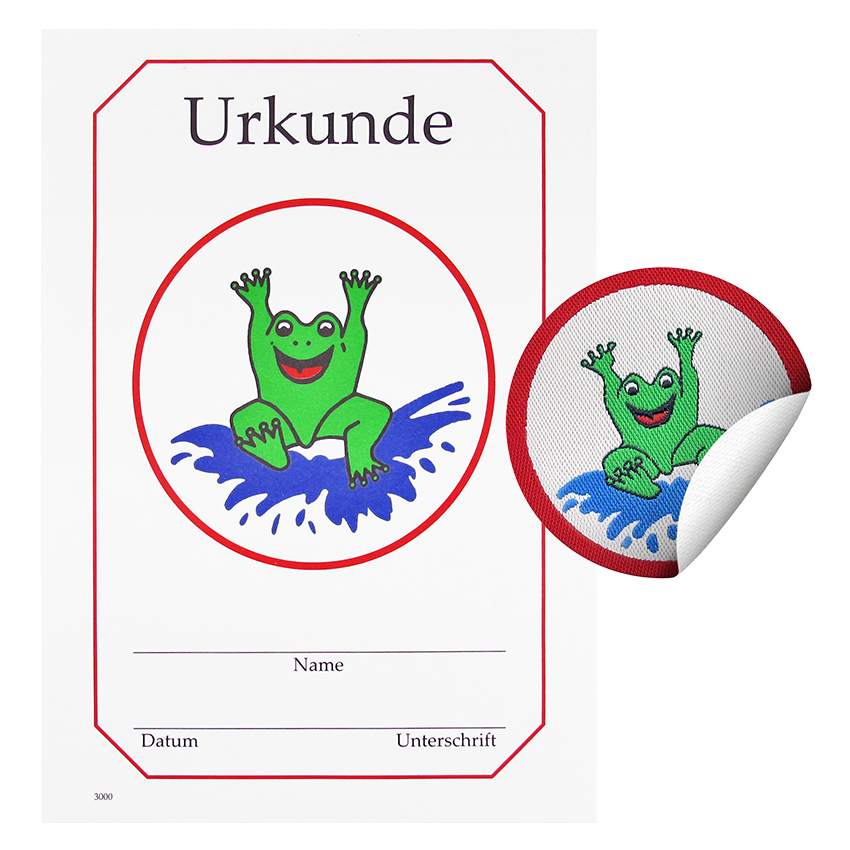
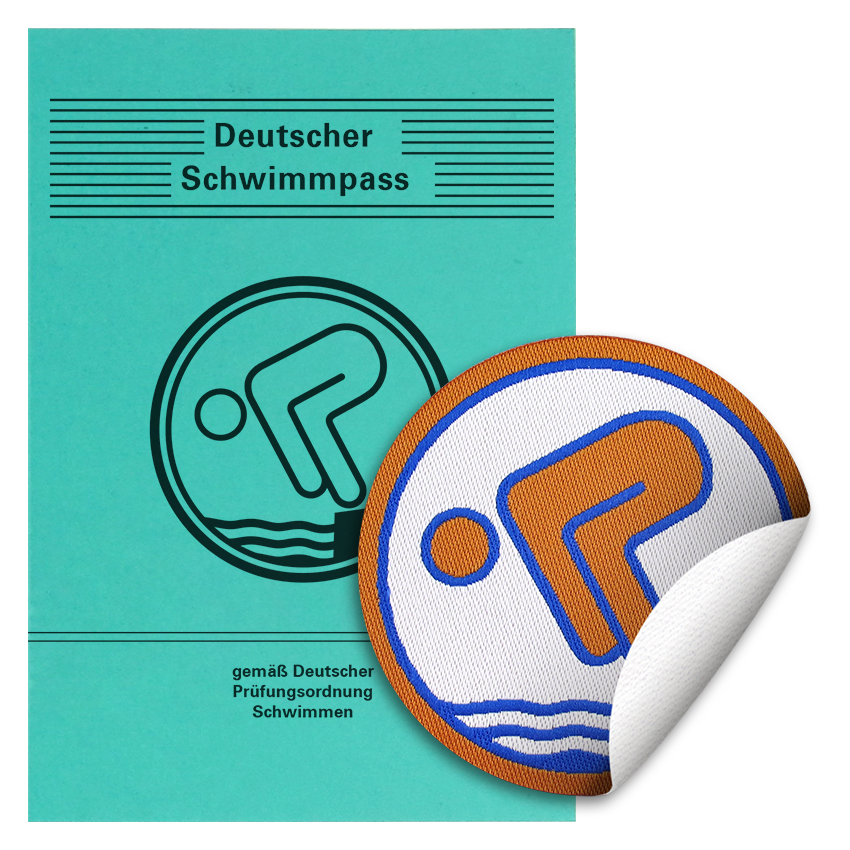
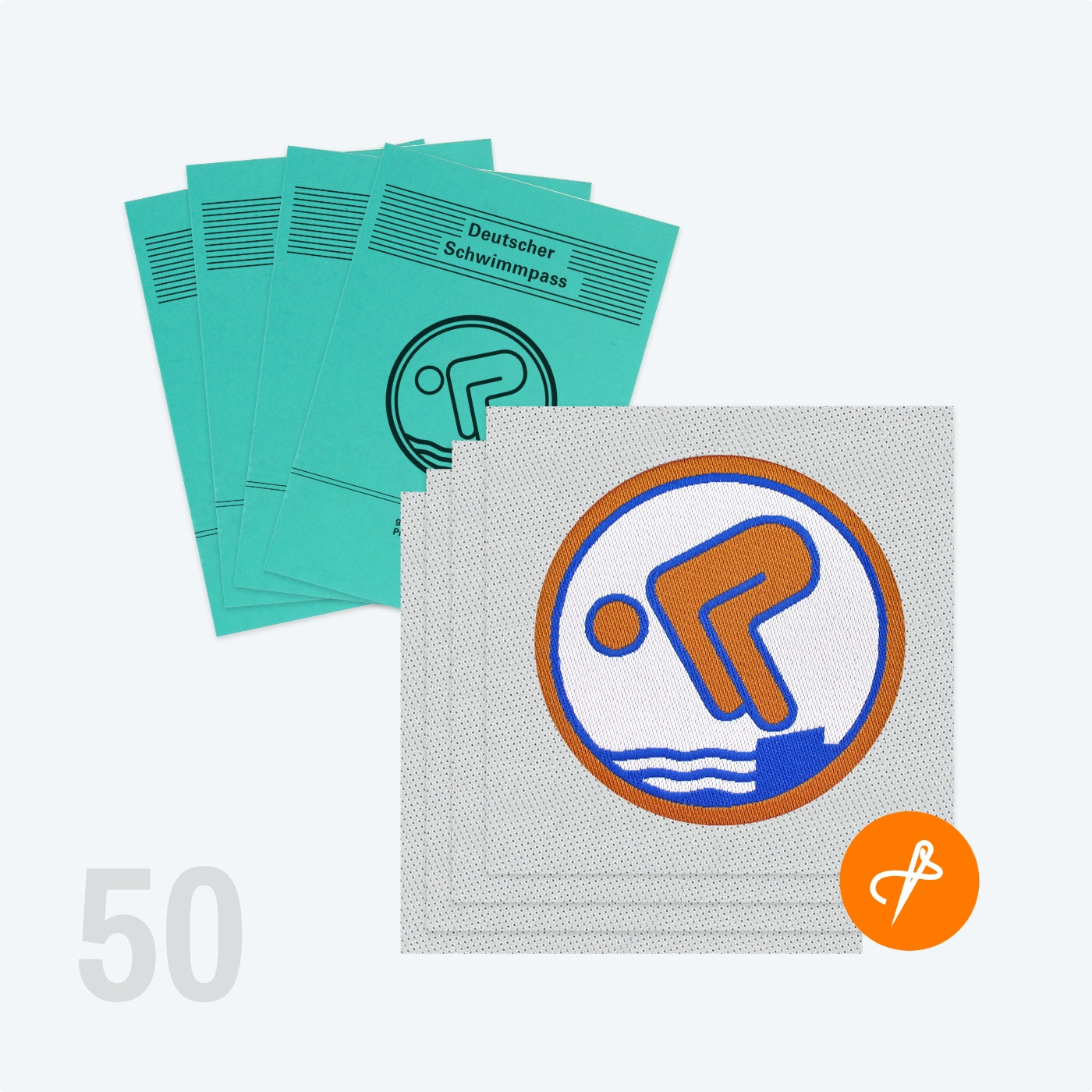
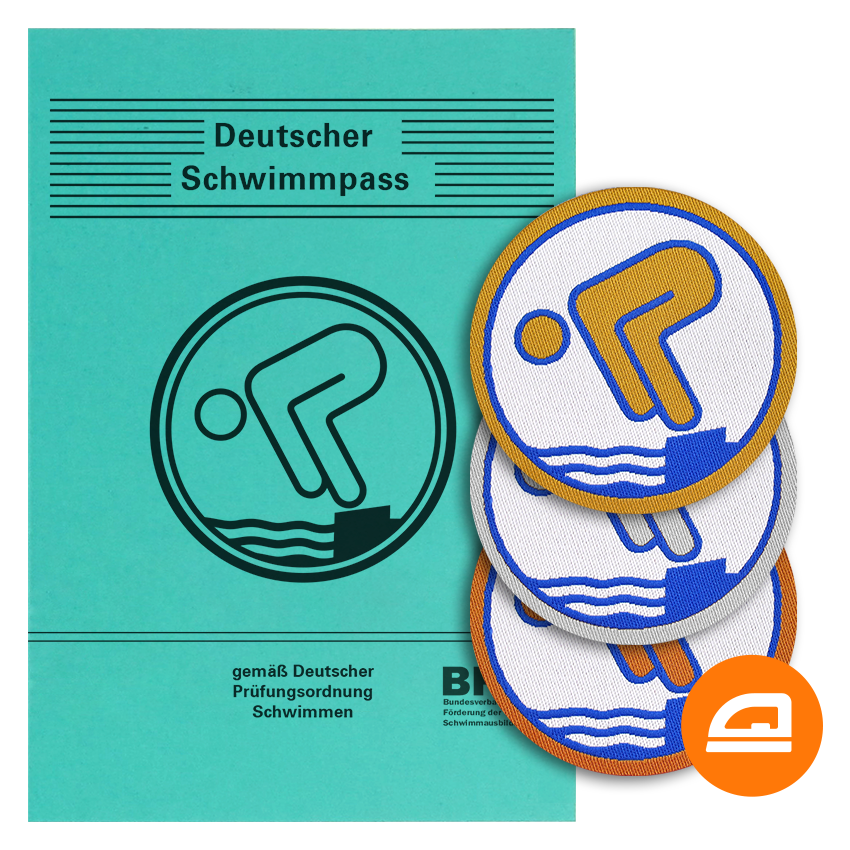
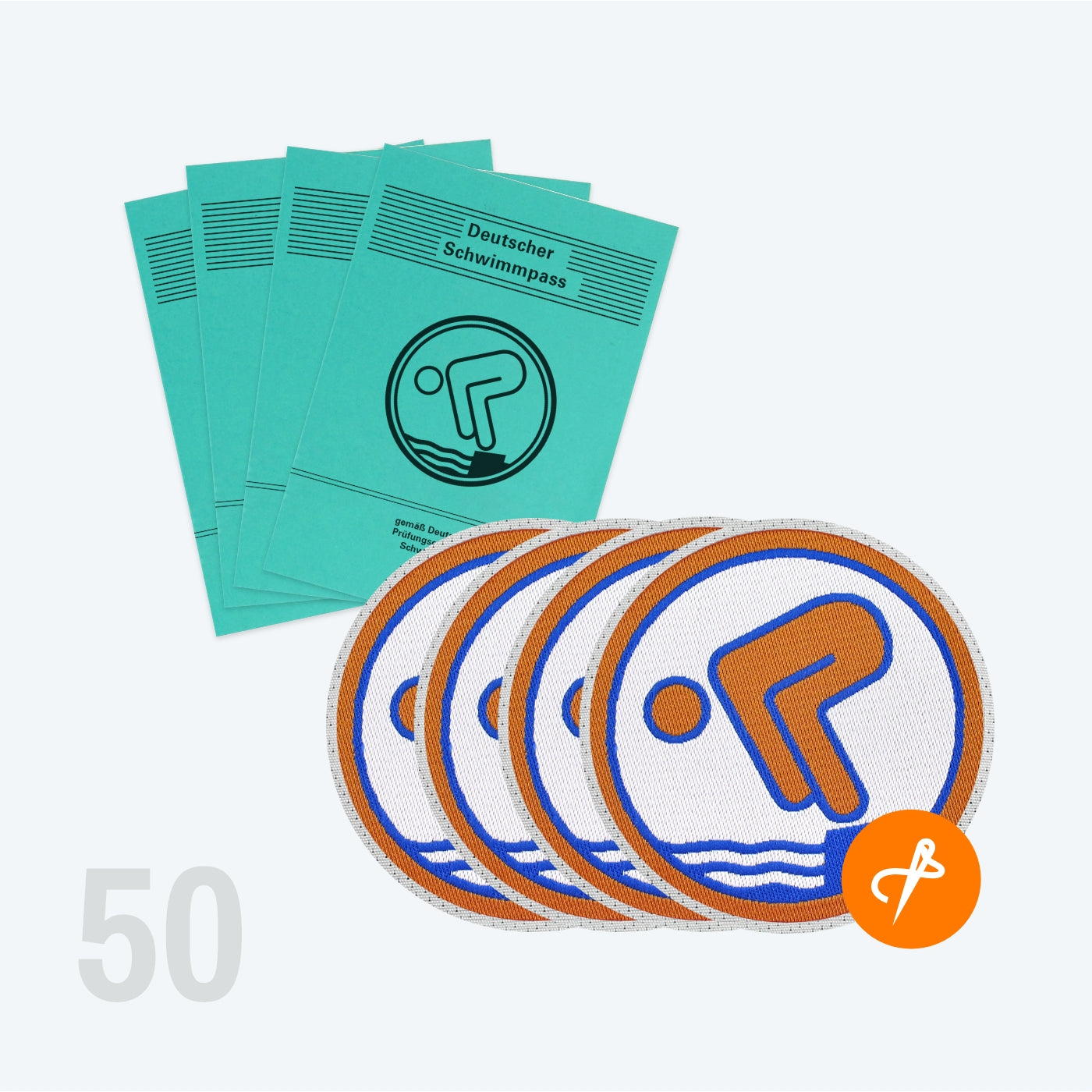
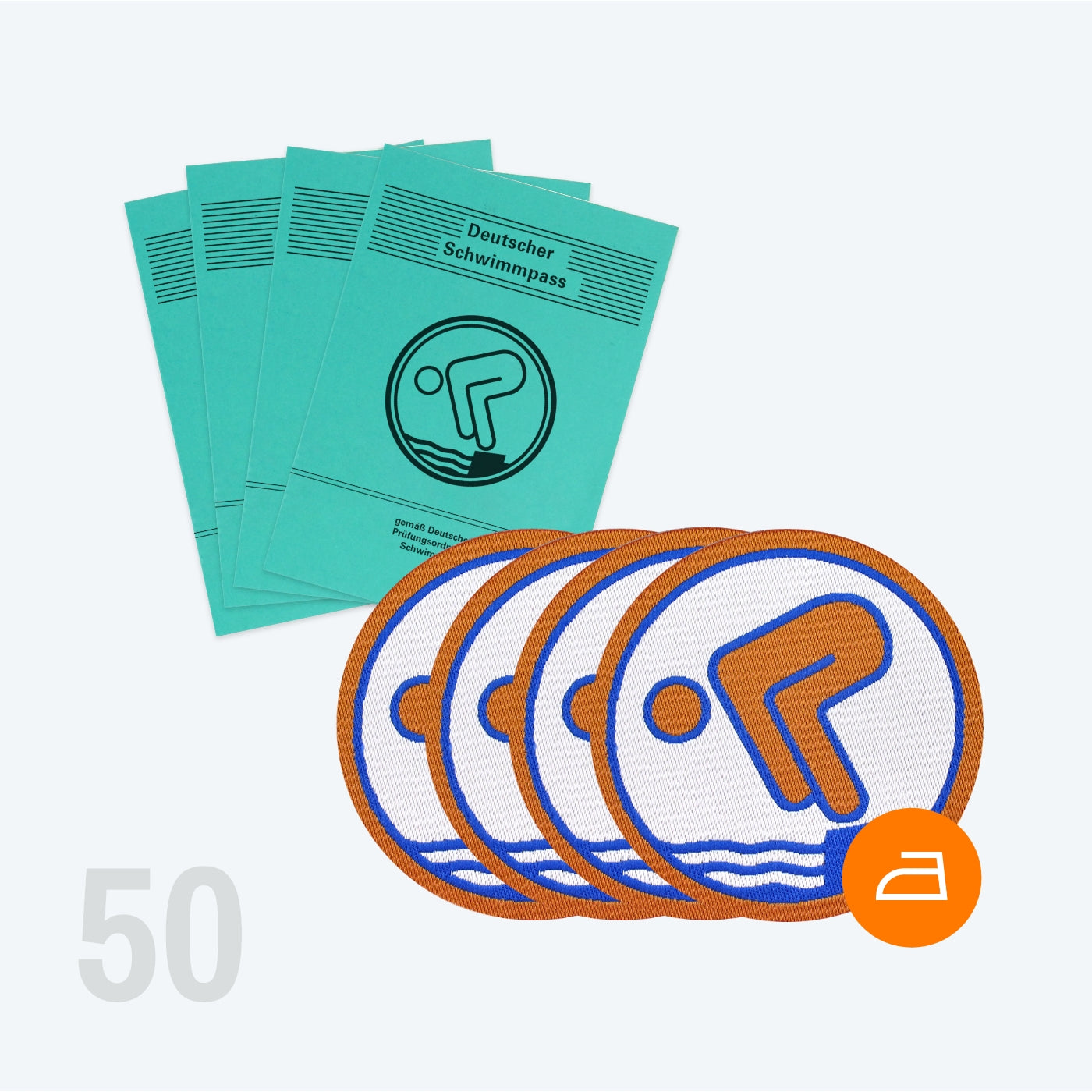
From classic swimming badges to special Bronze, Silver, and Gold badges with swimming passes, and festive Seepferdchen certificates, we offer everything you need to recognize swimming achievements. Swimming instructors appreciate our fast delivery times and the option to order larger quantities for courses and clubs.
The motivation generated by a beautiful badge or an attractively designed certificate should not be underestimated. Children proudly show their successes and work with more enthusiasm towards the next goal. Invest in these small recognitions. They are an important building block for long-term swimming competence and water safety.
Frequently asked questions about the importance of swimming badges
How do swimming badges help with children's water safety?
Swimming badges structure the learning process and set clear, achievable goals. Children not only learn swimming techniques but also water rules and hazard awareness. Studies show that structured swimming lessons reduce the risk of drowning by up to 88 percent. The gradual increase from Seepferdchen (seahorse badge) to Bronze and Gold ensures that children continuously develop their skills and achieve genuine water safety.
What badges are there and what do they mean?
The Seepferdchen (seahorse badge) is the first step and certifies basic swimming ability over 25 meters. Bronze marks the transition to a safe swimmer with 200 meters of endurance and knowledge of bathing rules. Silver and Gold build upon this, requiring longer distances, different swimming techniques, and rescue exercises. Each badge has clearly defined requirements set by DLRG and DSV.
How can parents support their children in learning to swim?
Consistency is key. Visit the swimming pool with your child weekly and practice playfully. Avoid pressure and celebrate small successes. Talk about water rules and explain why safety is important. Find out more about the frequently asked questions about swimming badges for details on individual badges and examination procedures.
Why is early swimming education important?
Children who learn to swim early develop a natural relationship with water and have fewer fears. The younger children start with water familiarization, the easier it is for them to learn swimming techniques later. Early swimming education significantly reduces the risk of drowning and allows children to safely participate in water sports activities. Ideally, water familiarization begins in infancy.
How do swimming badges motivate children?
Children need tangible goals and visible successes. A colorful badge on their swimsuit or a certificate on the wall are concrete rewards for their effort. The social aspect also plays a role: children see that their friends have badges and want to keep up. This combination of personal pride and social incentive keeps the willingness to learn high for months and leads to sustainable swimming skills.