
DLRG & Swim Safety: Training & Badges Explained
Around 60% of elementary school children in Germany are not considered safe swimmers, although many of them already hold a badge. This gap between certificate and actual water safety is not a marginal problem but a societal challenge. The DLRG (Deutsche Lebens-Rettungs-Gesellschaft - German Life Saving Society) has been working for decades to close precisely this gap. Parents, coaches, or club leaders who understand how DLRG training is structured, which badges truly count, and what goes on behind the scenes will make better decisions for children's safety.
Table of Contents
- How the DLRG Shapes Swimming Education in Germany
- The DLRG Swimming Badges: Levels and Requirements at a Glance
- DLRG Methodology: How Courses Are Structured and What Coaches Focus On
- Quality Assurance: Training and Continuous Development of DLRG Coaches
- What Does 'Safe Swimming' Mean? Bronze as a Benchmark for Parents and Clubs
- Swimming Badges, Certificates, and Accessories: Support for Parents and Coaches
- Frequently Asked Questions about DLRG and Swimming
Key Insights
| Point | Details |
|---|---|
| DLRG as a Safety Guarantee | The DLRG plays a central role in training and preventing drowning accidents in Germany. |
| Bronze as a Minimum Standard | The Bronze badge serves as measurable proof of basic swimming ability and should be aimed for by parents and clubs. |
| Qualified Coaches for Trust | All DLRG coaches have extensive qualifications and continuously pursue further training. |
| Motivation Through Badges | Badges and certificates provide lasting motivation for children and make learning progress visible. |
How the DLRG Shapes Swimming Education in Germany
The DLRG is the largest water rescue organization in the world, headquartered in Germany. With over a million members, it is not just an association but a comprehensive safety network. Its core mission: to prevent drowning deaths through education, awareness, and active water rescue.
“The DLRG views swimming education not as a sport, but as life protection. Every child who can swim safely is a potentially saved life.”
The impact is measurable. According to the DLRG's annual report, volunteer helpers saved a total of 1,446 lives in 2024. This number shows how directly training quality and rescue success are linked.
For parents and clubs, this means: a DLRG course is not just any swimming lesson. It follows nationwide uniform standards designed for genuine safety. Those who want to learn more about the different badge levels can find a structured introduction in the DLRG Swimming Badge Overview.
Overview of the most important features of DLRG training:
- Nationwide uniform examination standards for all badge levels
- Volunteer structures with professional coach training
- Combination of practical swimming exercises and theoretical safety knowledge
- Close cooperation with schools, municipalities, and sports clubs
- Focus on prevention rather than reaction
The DLRG Swimming Badges: Levels and Requirements at a Glance
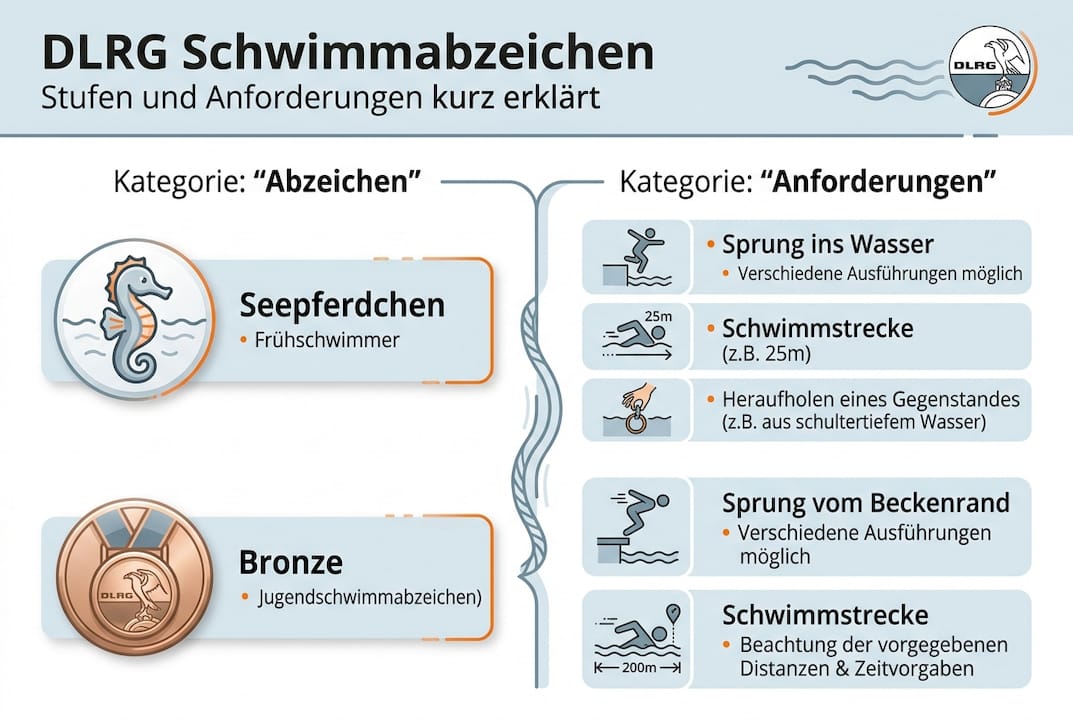
The DLRG's core service is reflected in its badge system. It is level-based, clearly defined, and pedagogically sound. In 2024, the DLRG awarded over 95,000 swimming badges, including 57,601 Seepferdchen (Seahorse) badges alone. These figures demonstrate how central the badge system is for broad-based training.
The official examination requirements clearly distinguish between the Seepferdchen, Bronze, Silver, and Gold levels. Each level builds upon the previous one and increases both the distance and the demands on technique and safety knowledge.
| Badge | Swimming Distance | Special Requirements |
|---|---|---|
| Seepferdchen (Seahorse) | 25 meters | Jump into water, bathing rules |
| Bronze | 200 meters | Diving, jumping, bathing rules |
| Silver | 400 meters | Time limit, jumping, knowledge |
| Gold | 800 meters | Time limit, distance diving, theory |
The badges are not mere symbols. Bronze is recognized nationwide as proof of basic swimming ability. Silver and Gold show that a child can safely operate in the water even under strain. If you want to understand the exact differences in badges, you'll find an understandable explanation there.
The examination always consists of two parts:
- Practical part: Swimming the required distance, jumping from the pool edge, diving
- Theoretical part: Bathing rules, behavior rules around water, basic first aid (from Silver onwards)
For parents who want to prepare their child for the Gold Swimming Badge, it's worth looking at the requirements early. Preparation doesn't start shortly before the exam.
DLRG Methodology: How Courses Are Structured and What Coaches Focus On
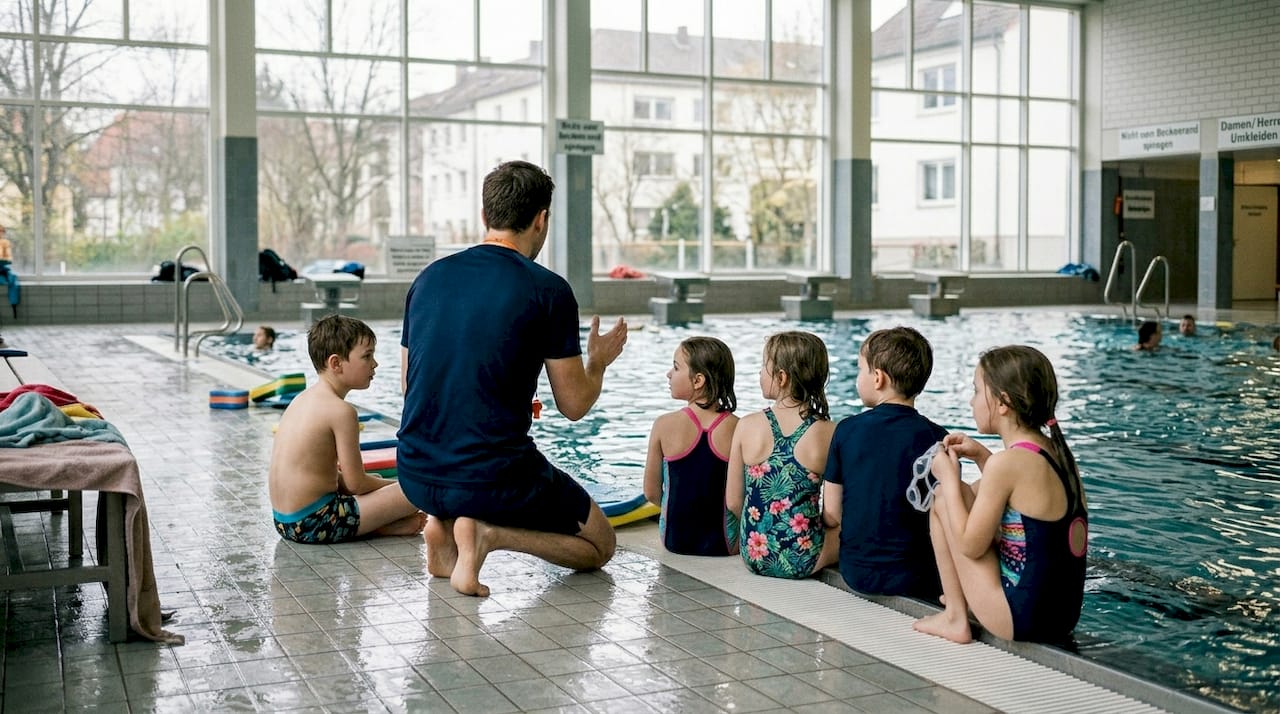
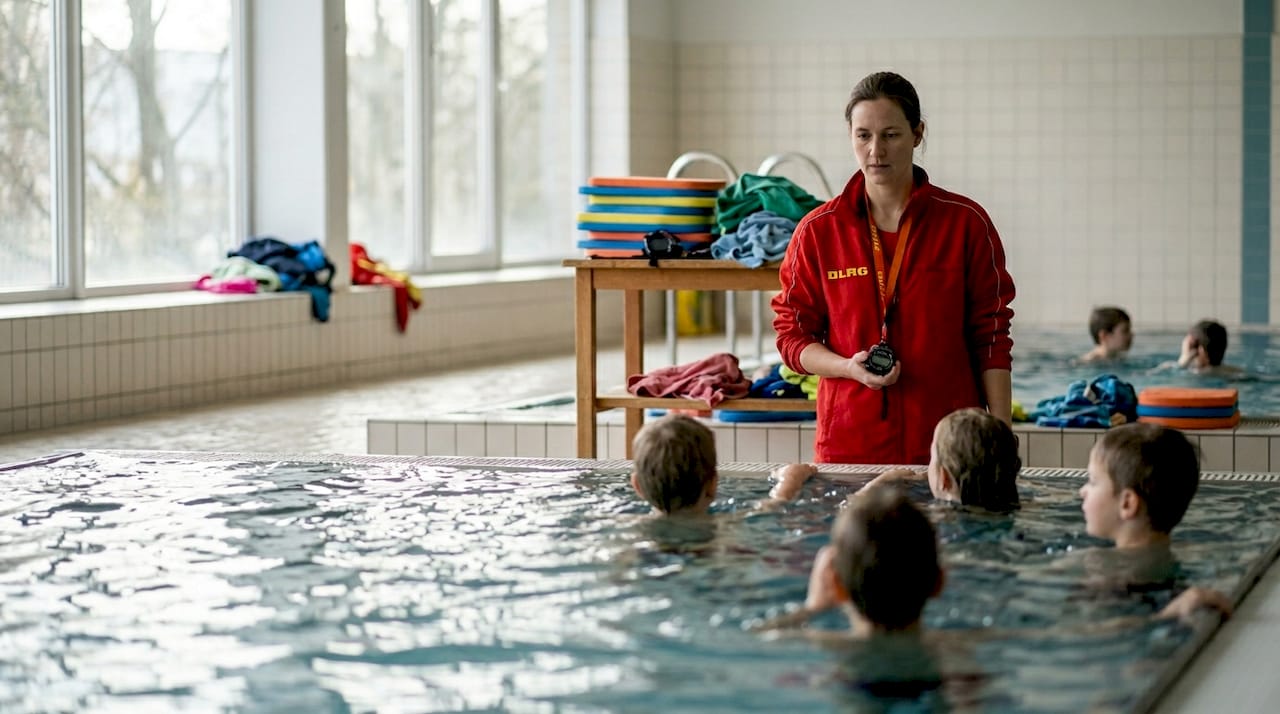
A look behind the scenes reveals why DLRG courses are so effective. The DLRG course structure relies on small groups with a maximum of 6 children per instructor. This is not a coincidence but a pedagogical principle: every child receives individual attention.
Course duration is typically around 12 weeks. An official examination concludes the course. The structure follows a clear pattern:
- Water familiarization and basic training in the first units
- Gradual increase in distance and technique
- Playful elements for motivation and fear reduction
- Regular repetition of safety rules
- Final examination according to DLRG standards
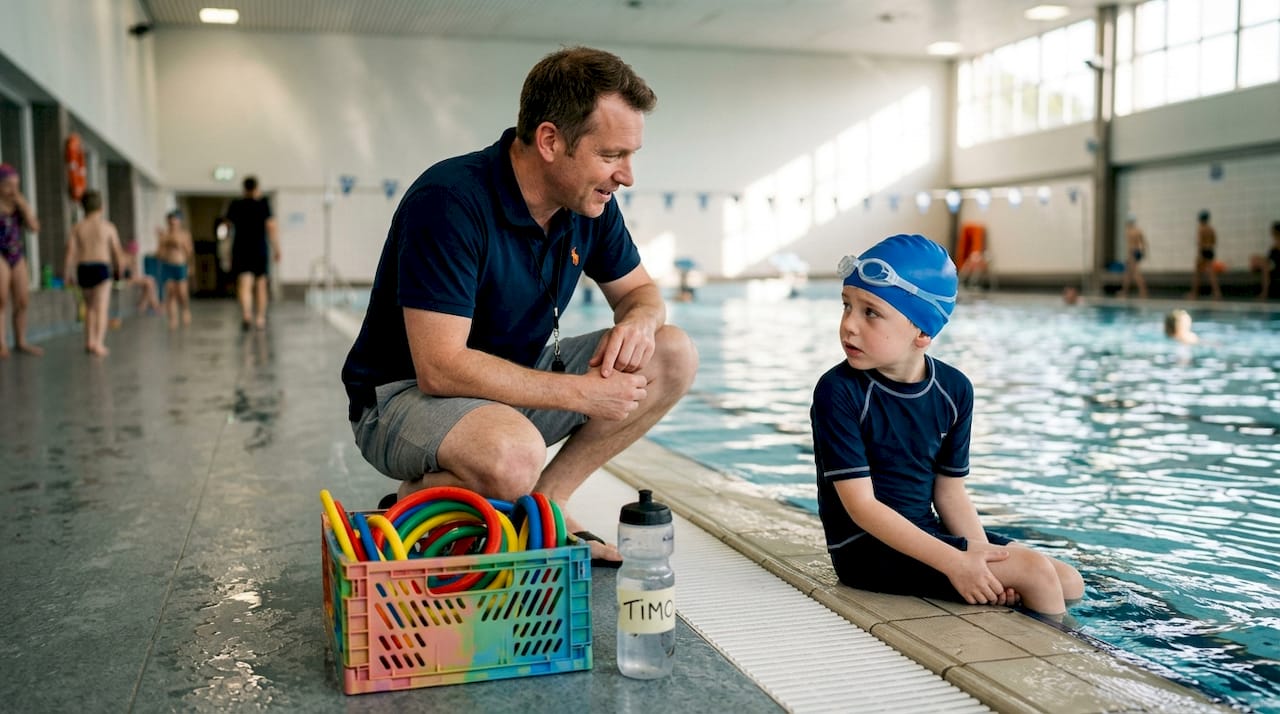
Instructors pay particular attention to children who show fear of water. Playful methods such as diving games or relay races reduce inhibitions without compromising safety standards. If you, as a parent, want to know exactly what happens during the DLRG examination process, you will find a practical overview there.
Pro Tip: Actively accompany your child during the first few weeks of the course. Children whose parents show interest and talk about what they've learned at home make demonstrably faster progress. The Seepferdchen rules can easily be reviewed together at home.
Quality Assurance: Training and Continuous Development of DLRG Coaches
Behind every successful course are qualified instructors. The DLRG has developed a multi-stage training system for this, which places high demands and requires regular further training.
The three main levels of instructor training:
- Assistant: Supports experienced instructors, first practical experience in daily course activities
- Swimming Instructor: Independently leads courses, complete training according to DLRG guidelines
- Trainer: Trains other instructors, highest qualification level
The prerequisites for swimming instructor training are clearly defined. According to the DLRG training standards, candidates must be at least 18 years old, possess the Silver lifeguard badge, a current first-aid course, and 75 learning units are mandatory. Annual continuing education is also required.
“Quality in swimming education begins with instructor qualification. Those who teach must also be able to rescue themselves.”
For club leaders, this is an important point: not everyone who can swim well is officially allowed to teach. Instructor qualifications are documented and verifiable. This protects children and gives parents confidence.
What Does ‘Safe Swimming’ Mean? Bronze as a Benchmark for Parents and Clubs
The term "safe swimming" sounds self-evident, but it isn't. Many children can stay afloat but cannot really operate safely in the water. The DLRG standard is clear: safe swimming means at least 200 meters without a break and without fear, i.e., Bronze level.
| Ability | Seepferdchen | Bronze | Silver | Gold |
|---|---|---|---|---|
| Distance | 25 m | 200 m | 400 m | 800 m |
| Time Limit | No | No | Yes | Yes |
| Diving | No | Yes | Yes | Yes |
| Theory | Bathing rules | Bathing rules | Extended | Complete |
Since about 60% of elementary school children are not safe swimmers, Bronze is not just a goal but a necessity. Clubs and schools should define Bronze as the minimum goal for all children, not an optional extension.
The Swimming Exams Explained for Parents illustrates how parents can realistically assess their children's progress. A Seepferdchen (Seahorse) badge is a good start, but not proof of safety.
Pro Tip: At the next parent meeting, specifically ask about the course objective. If the instructor only names the Seepferdchen as the completion, this is a signal to extend the course or book a follow-up course. The DLRG standards for quality seals provide guidance on the requirements that serious courses must meet.
Swimming Badges, Certificates, and Accessories: Support for Parents and Coaches
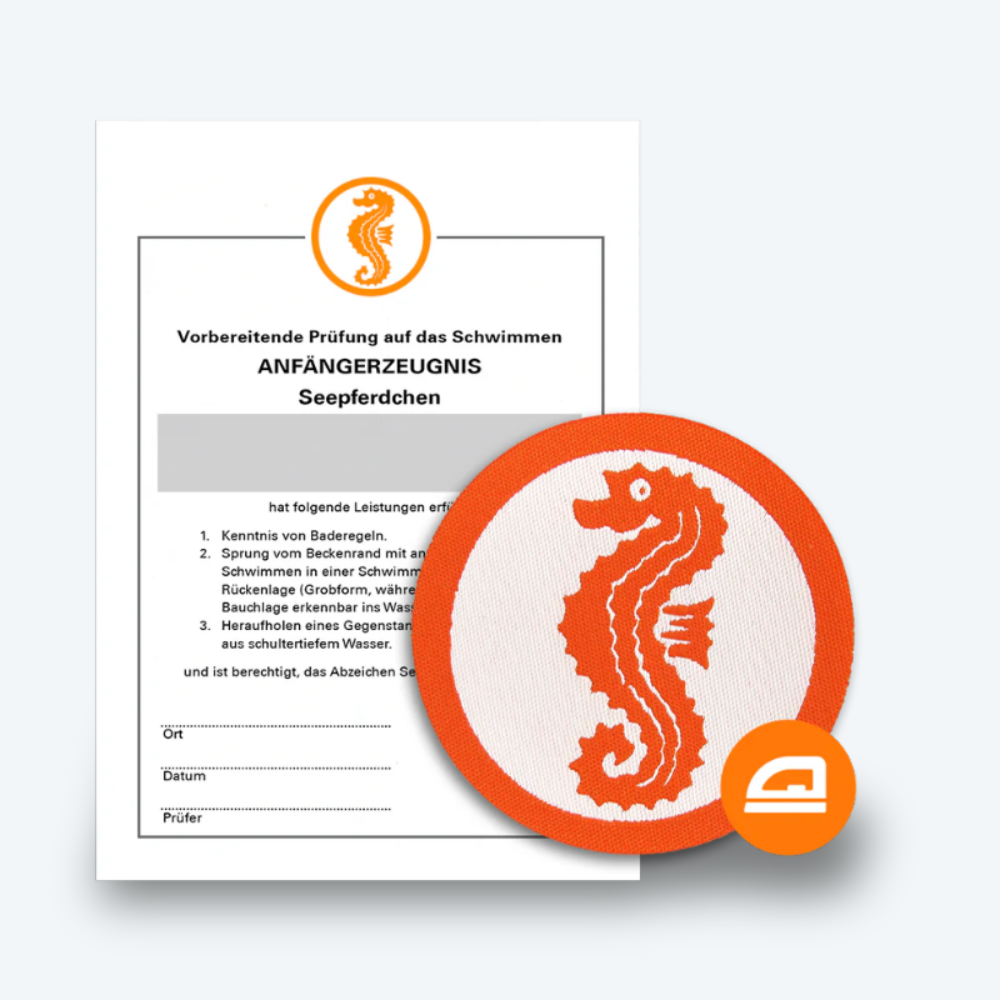
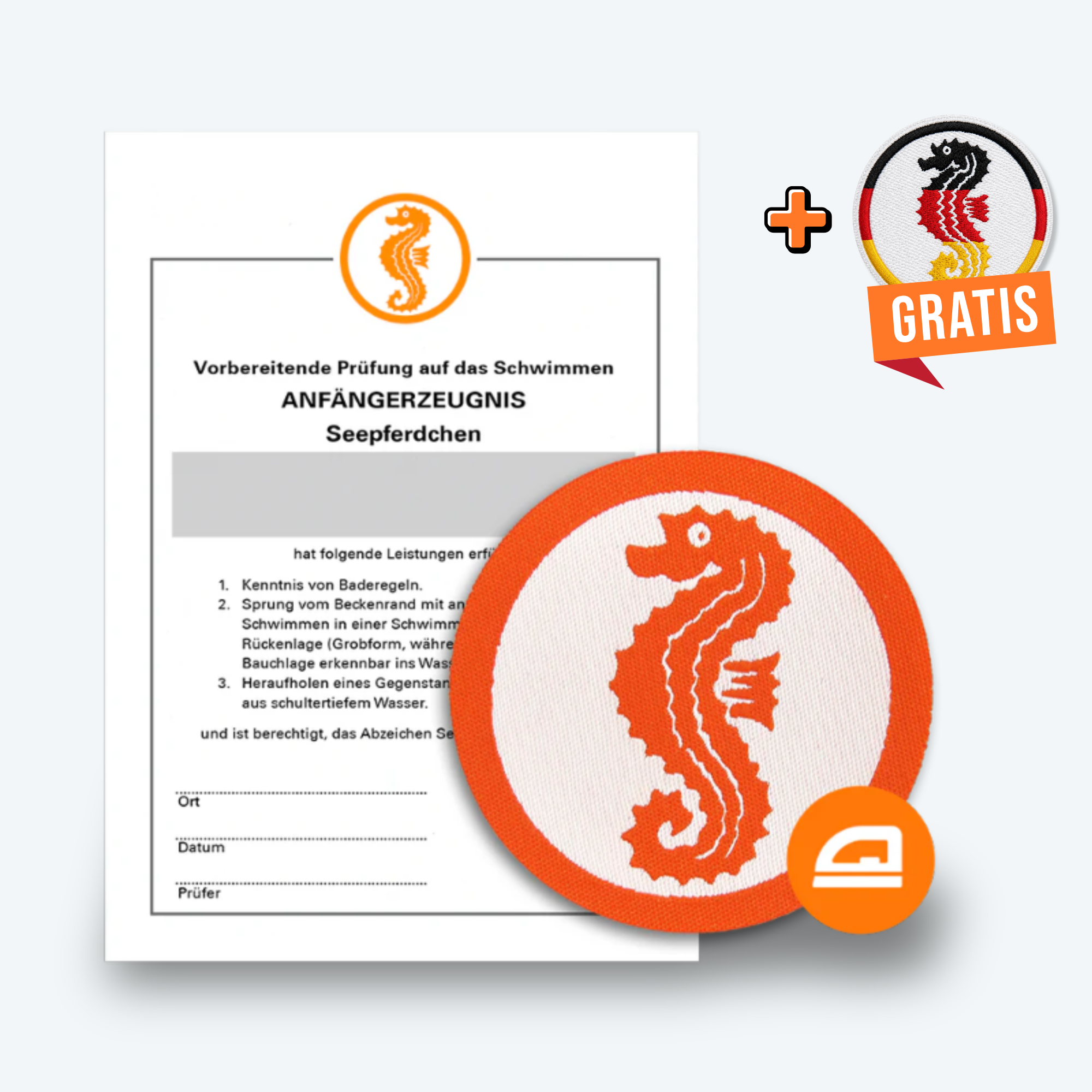
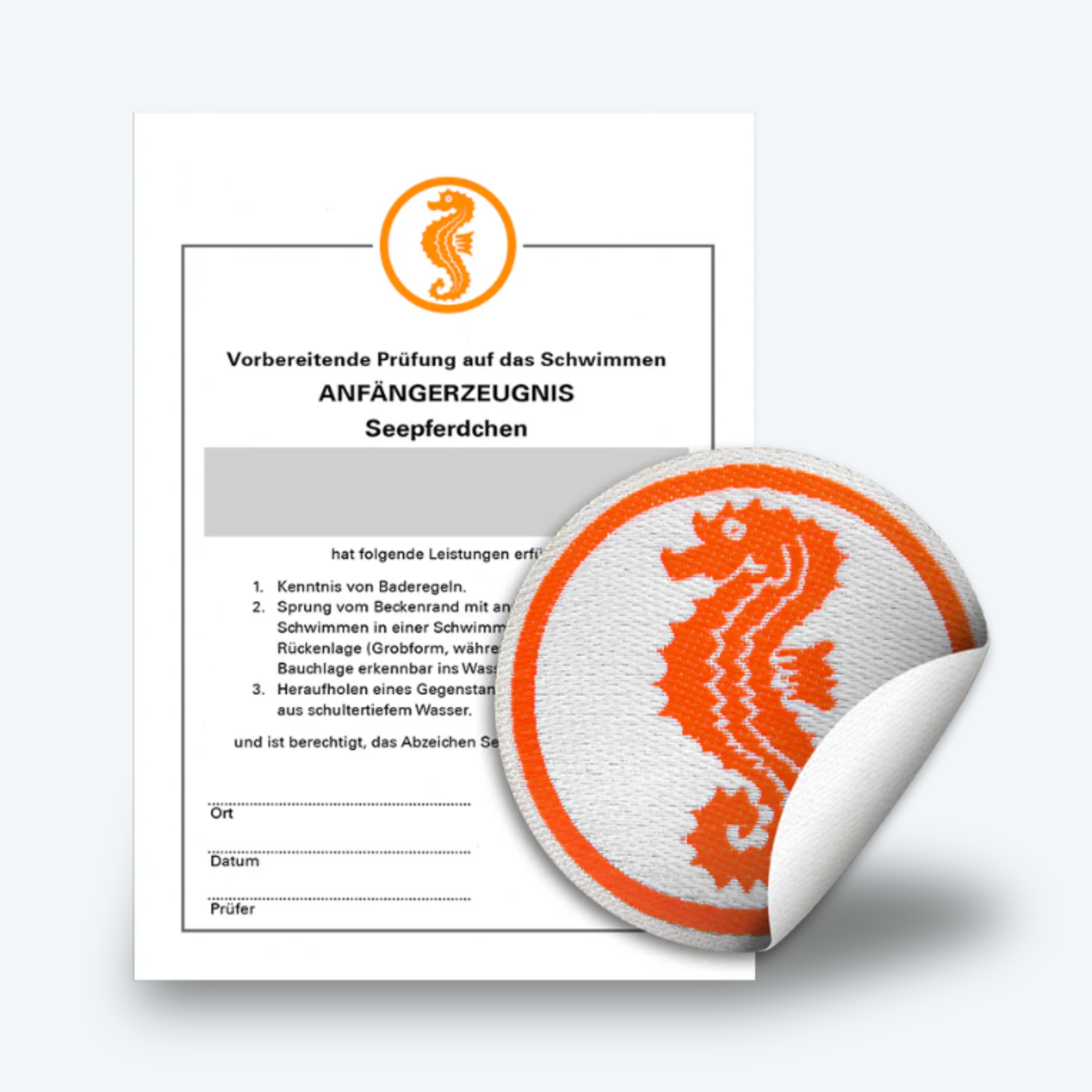
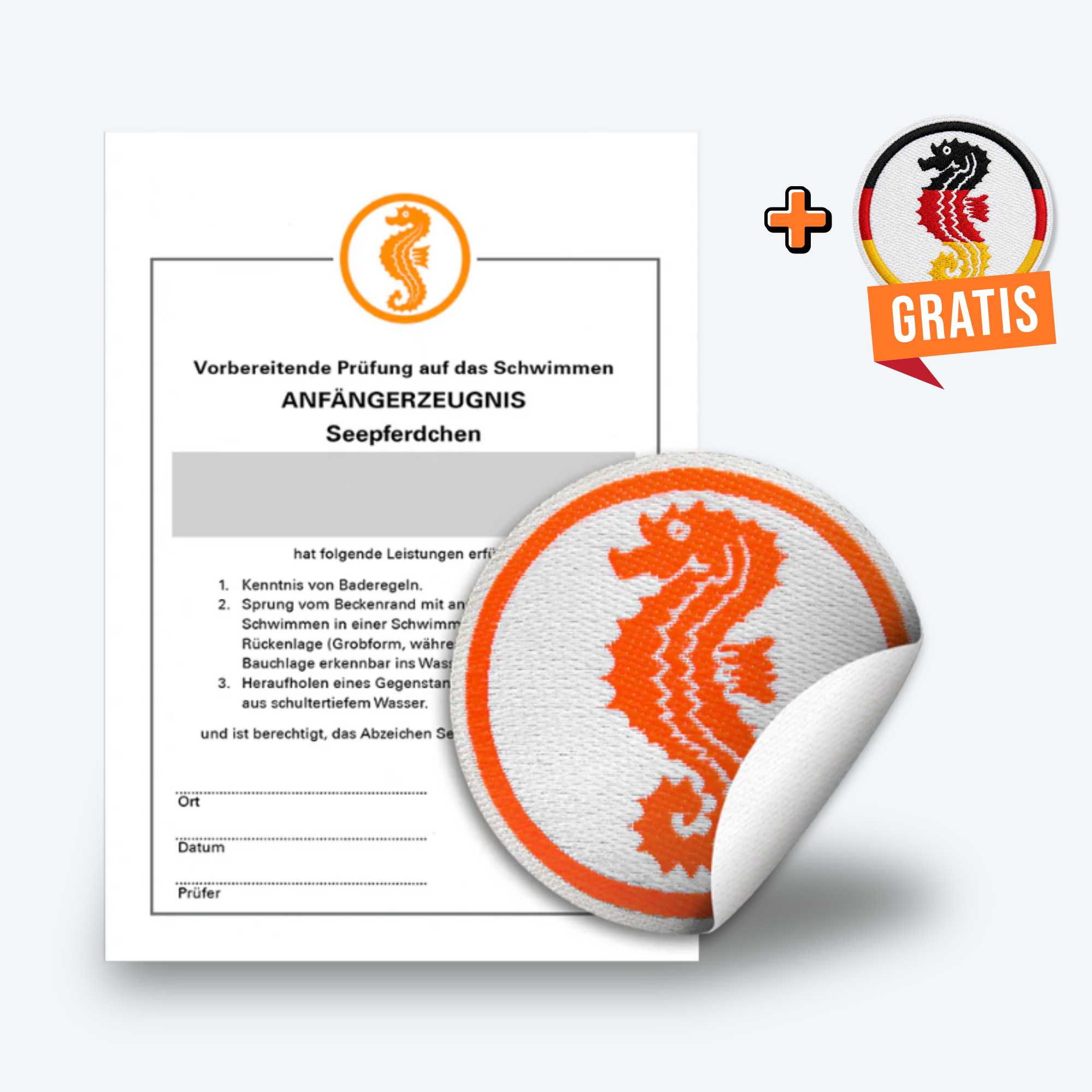
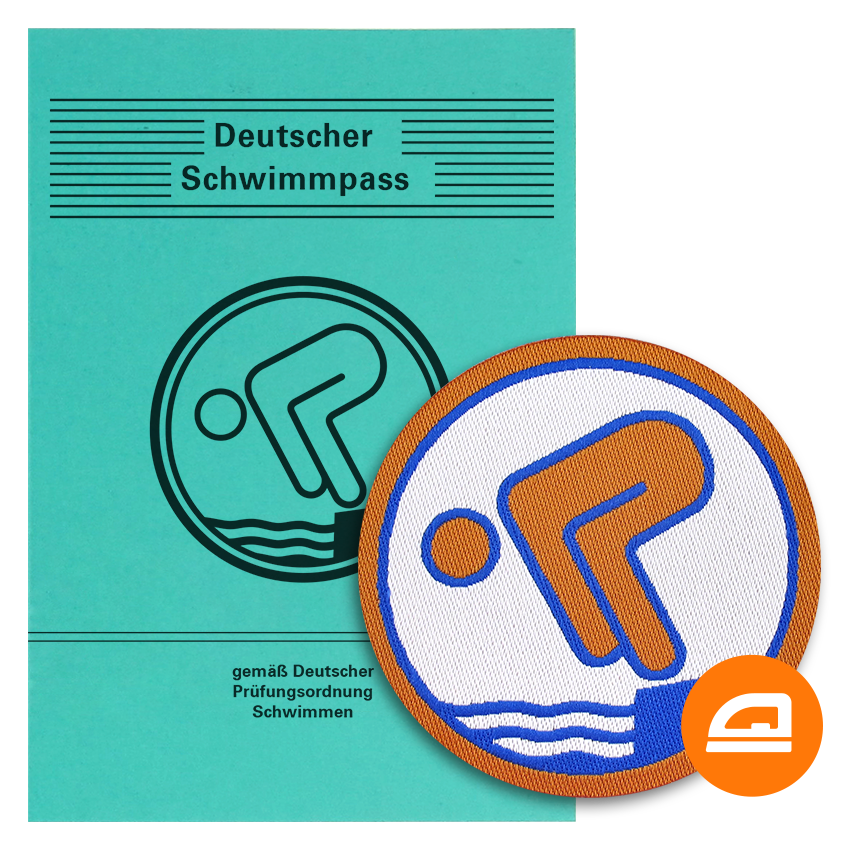
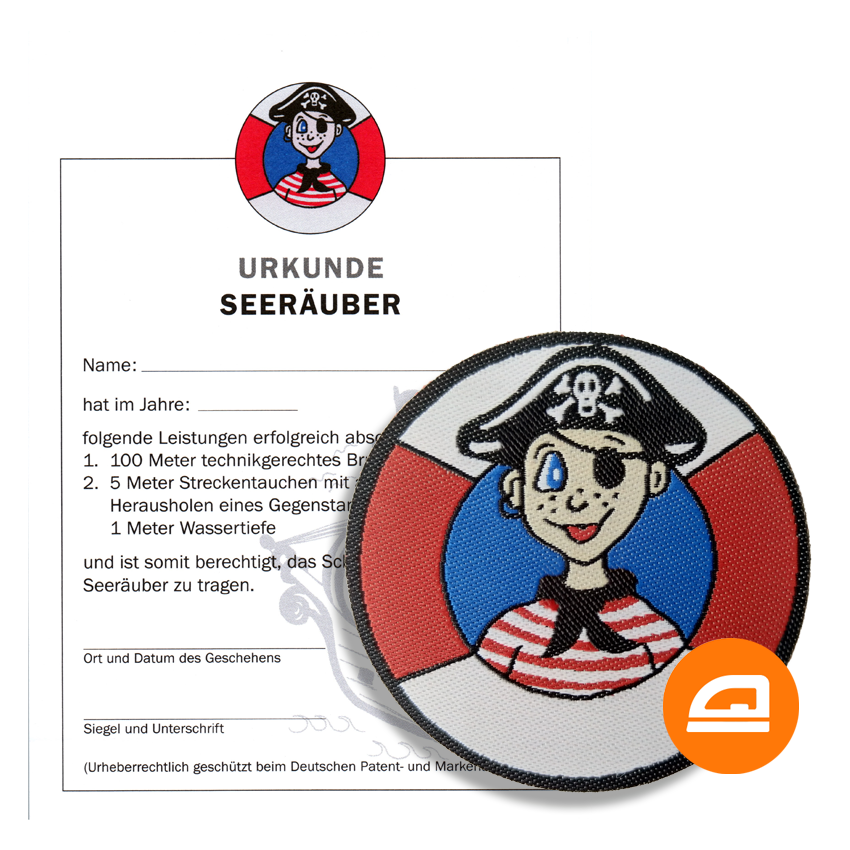
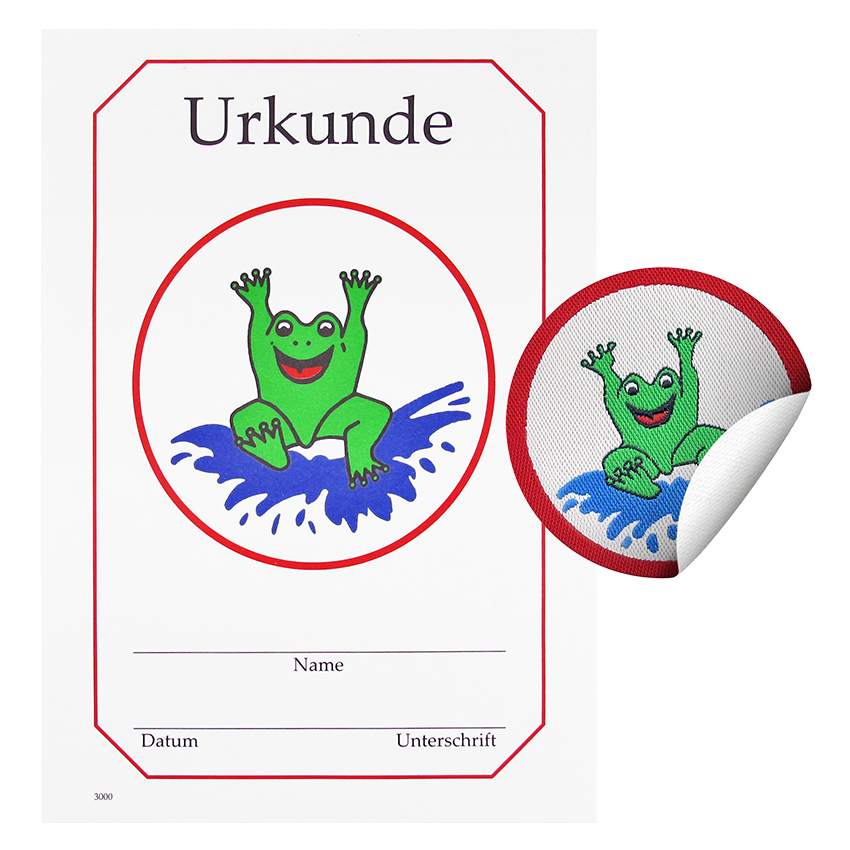
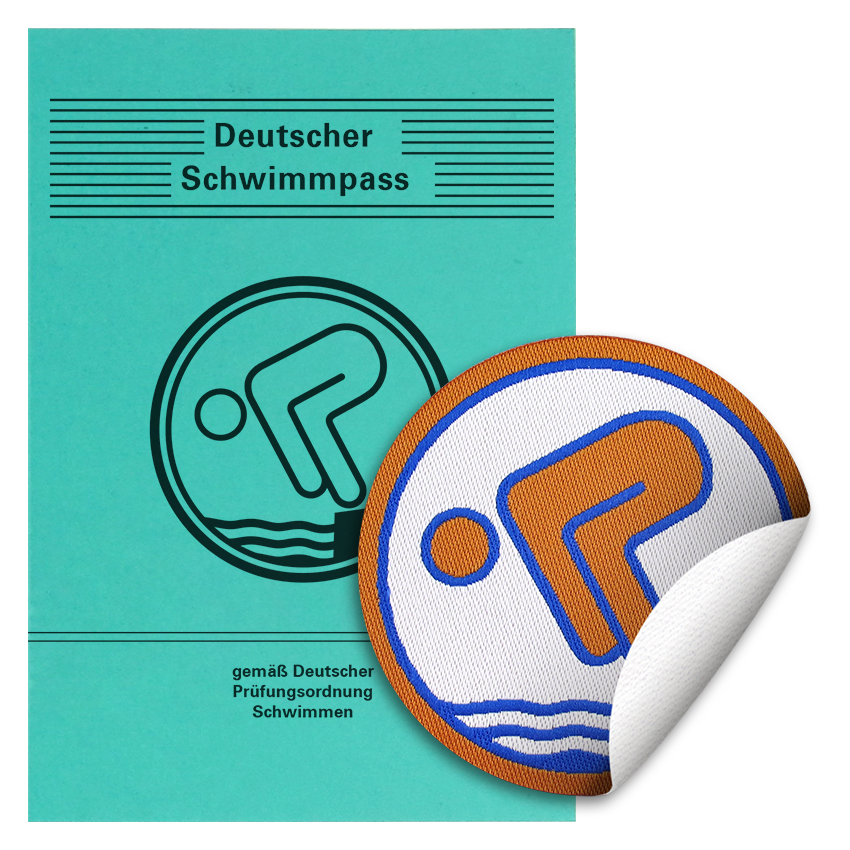
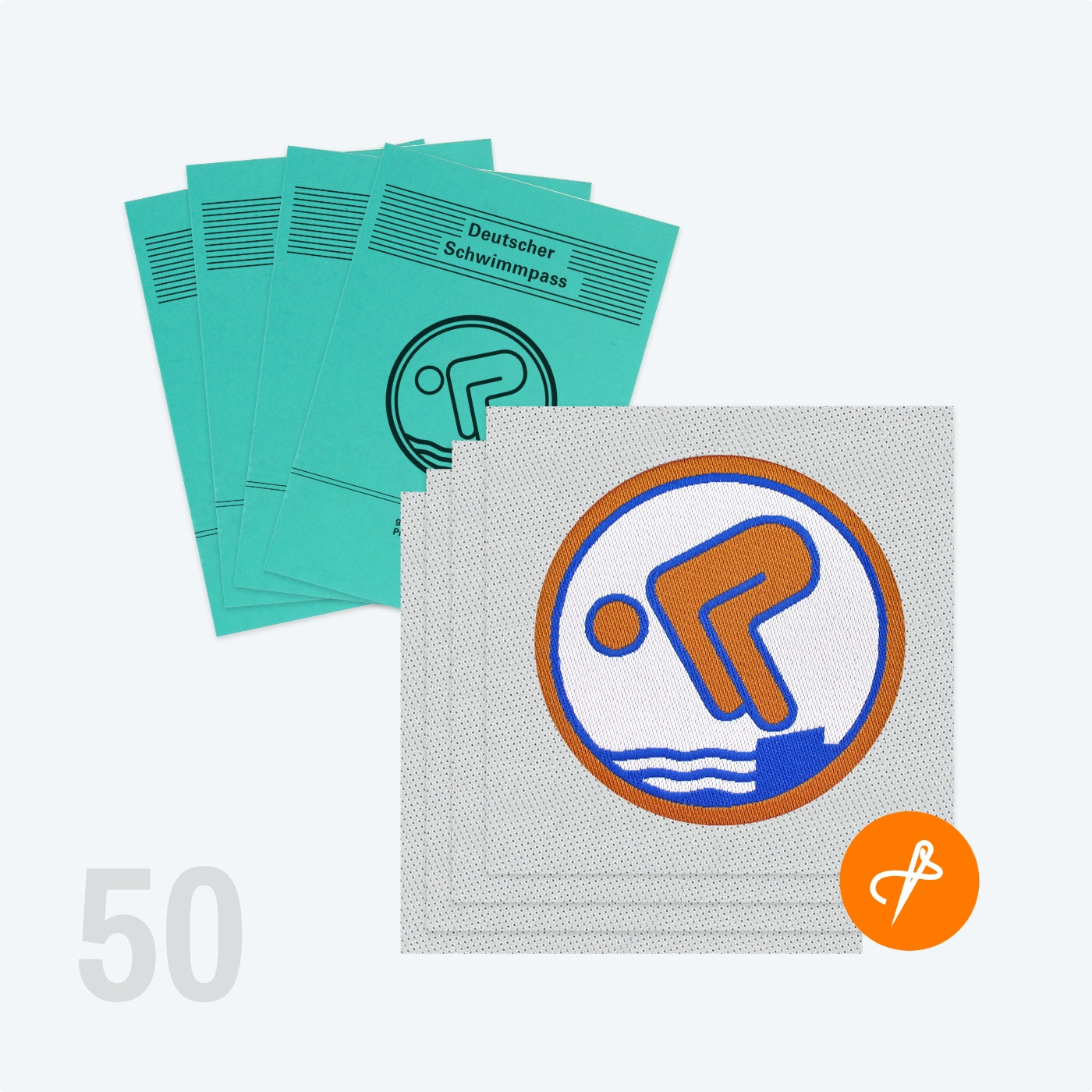
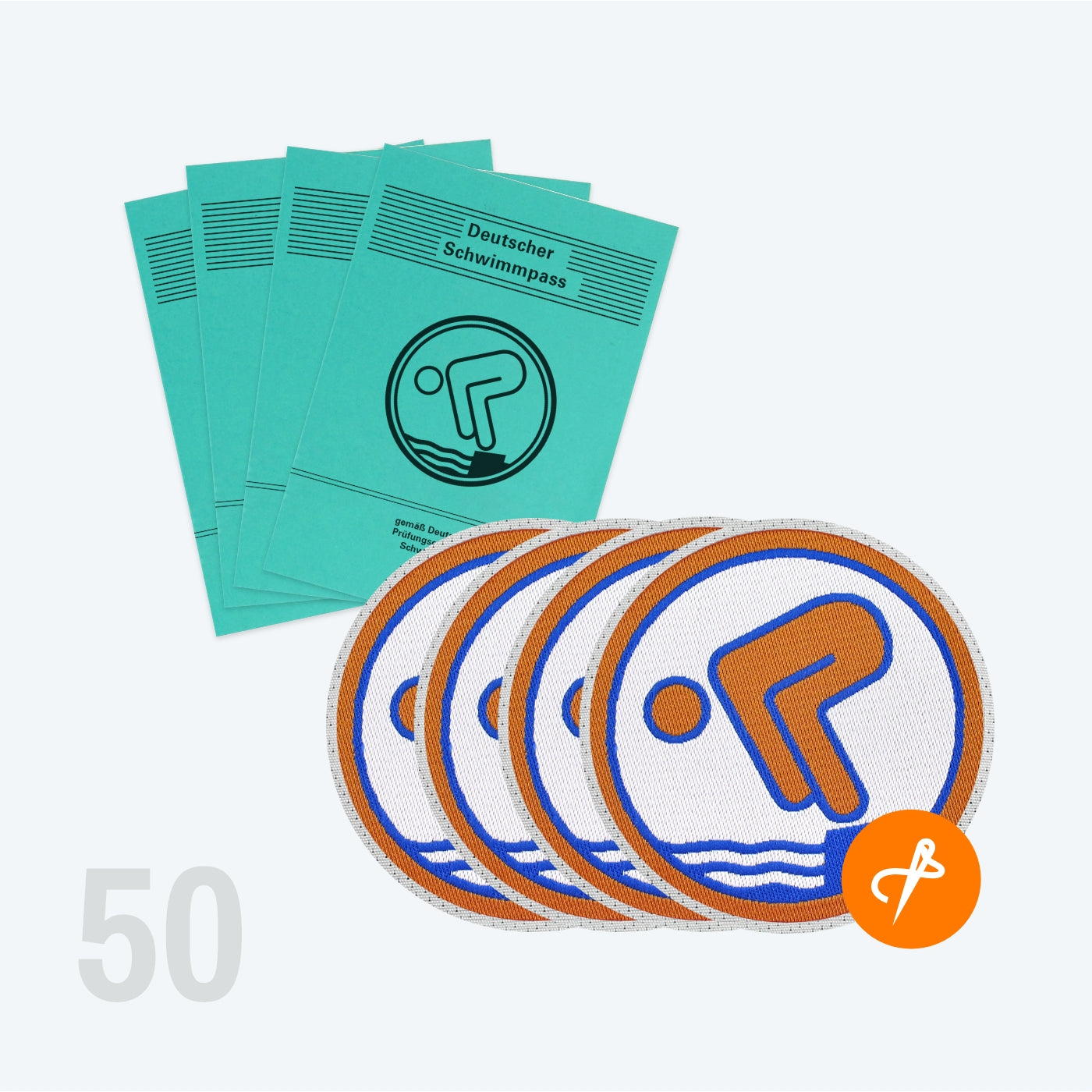
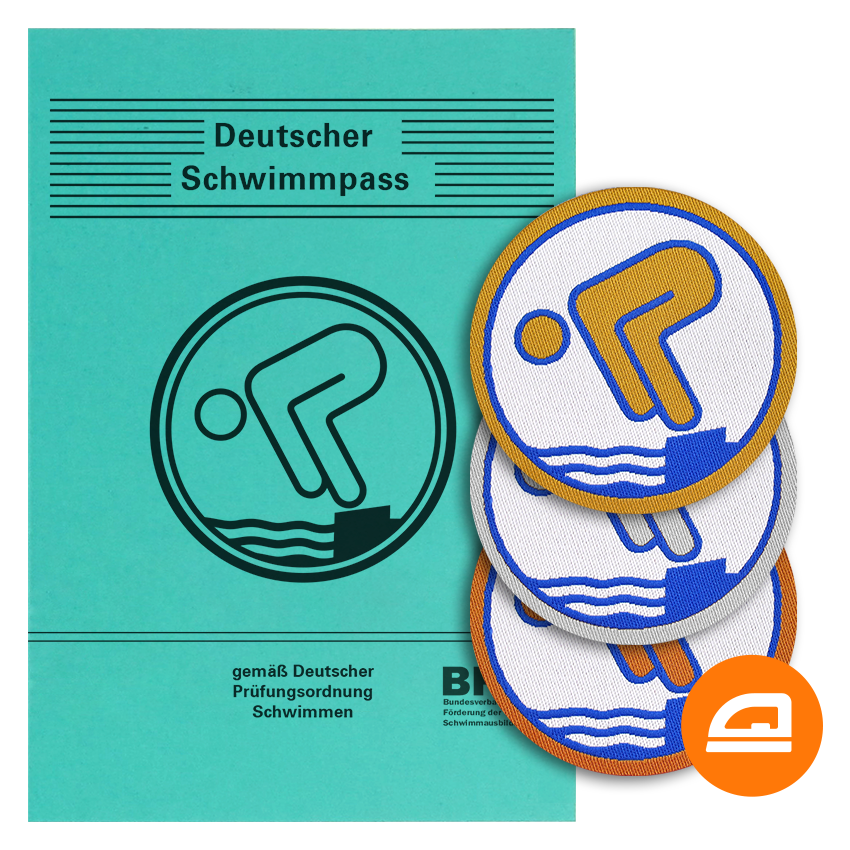
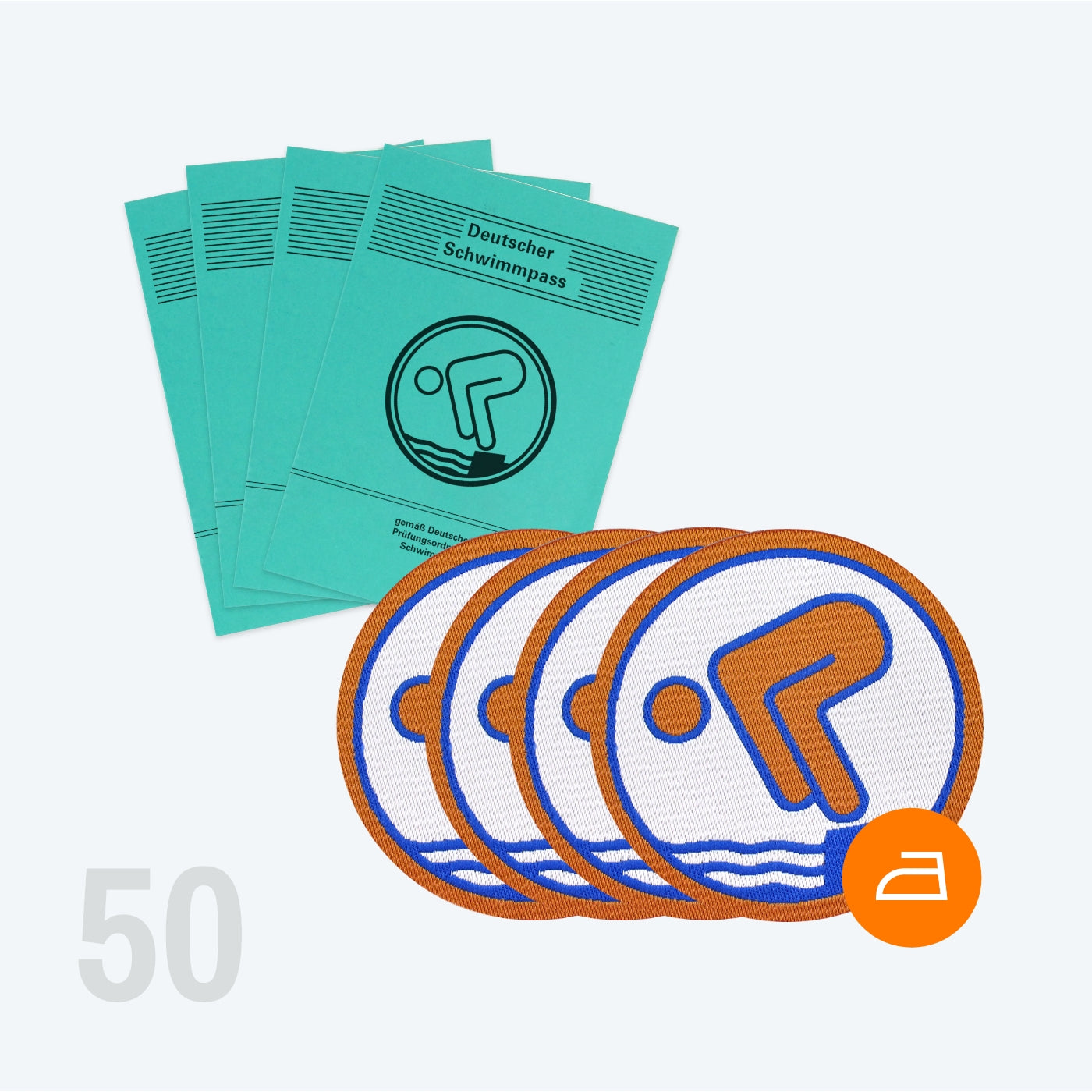
To achieve and celebrate official DLRG standards, the right materials are needed. Pimpertz has been an official partner of the DLRG and BFS for over 38 years, supplying certified badges, certificates, and accessories for all levels. Whether it's a Seepferdchen certificate for initial success or a Gold badge for advanced swimmers: the range covers all levels. Swimming badges from Bronze to Gold are originally certified and available in durable quality. Clubs and schools benefit from bulk orders with discounts and individual logo embossing. Ordering suitable certificates online is quick and easy, with delivery in 1 to 2 business days. Complementary swimming accessories such as collection albums and badge cases complete the offer and make every course success a lasting memory.
Frequently Asked Questions about DLRG and Swimming
What is the real significance of the DLRG Bronze badge?
The Bronze badge is recognized nationwide as a standard for safe swimming in children and is the minimum requirement for many school and club activities involving water.
Who is allowed to lead a DLRG swimming course?
Only trained instructors with a Silver lifeguard badge, current first-aid training, and completed DLRG instructor training are officially permitted to lead courses.
How do DLRG and DSV badges differ?
Both systems complement each other and are mutually recognized, with the DLRG Bronze badge serving as a universal safety standard and being the most commonly required in practice.
How long does a typical DLRG swimming course last?
A DLRG course typically lasts around 12 weeks and takes place in small groups with a maximum of 6 children per instructor.
What requirements must children meet for the Seepferdchen badge?
According to official requirements, children must swim at least 25 meters continuously, jump into the water from the pool edge, and know basic bathing rules.