
Swim Accessories for Classes: Tips for Parents and Coaches
Many parents pack a bag full of aids, armbands, boards, and goggles before the first swimming lesson, believing that more accessories mean more safety. The opposite is often true: some aids are hindering rather than helpful in class. This guide shows parents and swimming instructors what children really need in different course phases, which aids are useful, and which are better left at home. From the first lesson to preparation for the Gold award, there are clear, practical recommendations.
Table of Contents
- The Basic Set for Beginners: What Really Belongs in the Swim Bag
- The Sense and Nonsense of Swimming Aids: Armbands, Vests & Co.
- Accessories for Advanced Swimmers and Swim Badge Preparation
- Official Swim Badges and Accessories for the Examination
- Award-Winning Swim Badges and Accessories for Your Course
- Frequently Asked Questions About Swimming Accessories for Classes
Key Insights
| Point | Details |
|---|---|
| Basic accessories before aids | For a swimming course, basics like swimwear and a towel are more important than swimming aids or goggles. |
| Safety first | Swimming aids should meet all safety standards but never replace supervision and real swimming lessons. |
| Targeted equipping | As their skill level increases, children benefit from selected accessories like a kickboard or pull buoy – always tailored to the course type and badge. |
| No aids in exams | In official badge tests, all aids are prohibited, except for temporary health exemptions. |
The Basic Set for Beginners: What Really Belongs in the Swim Bag
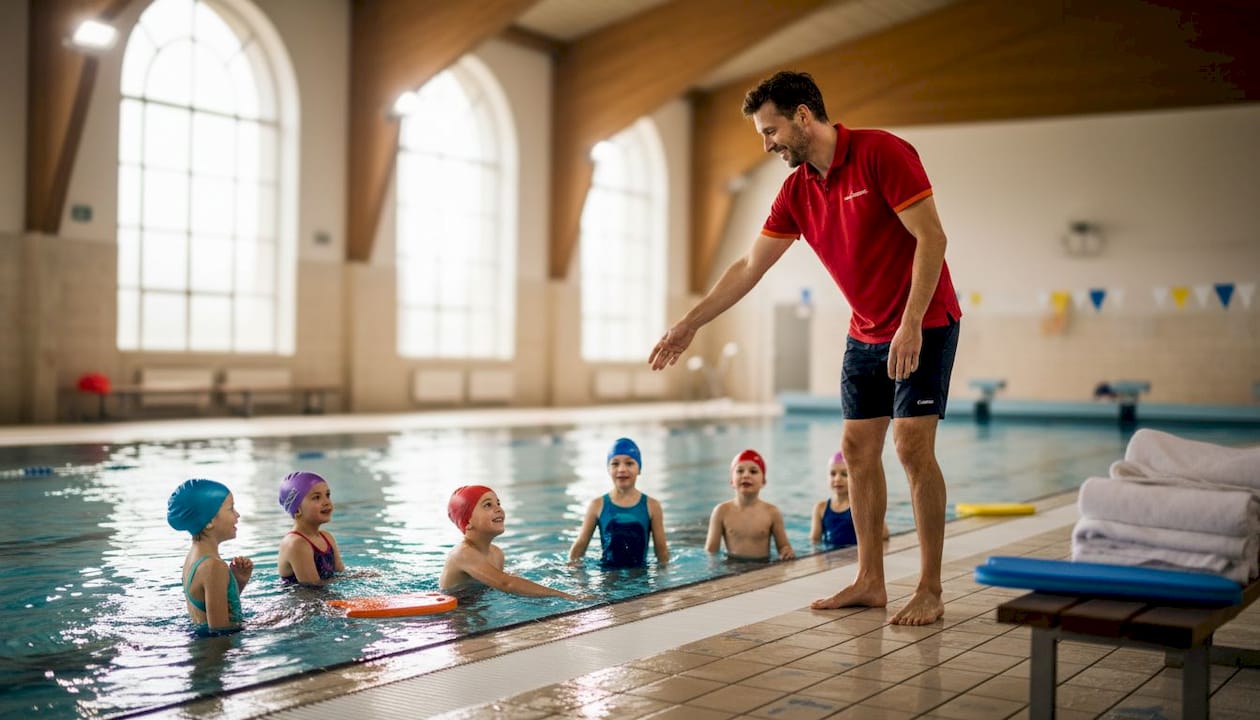
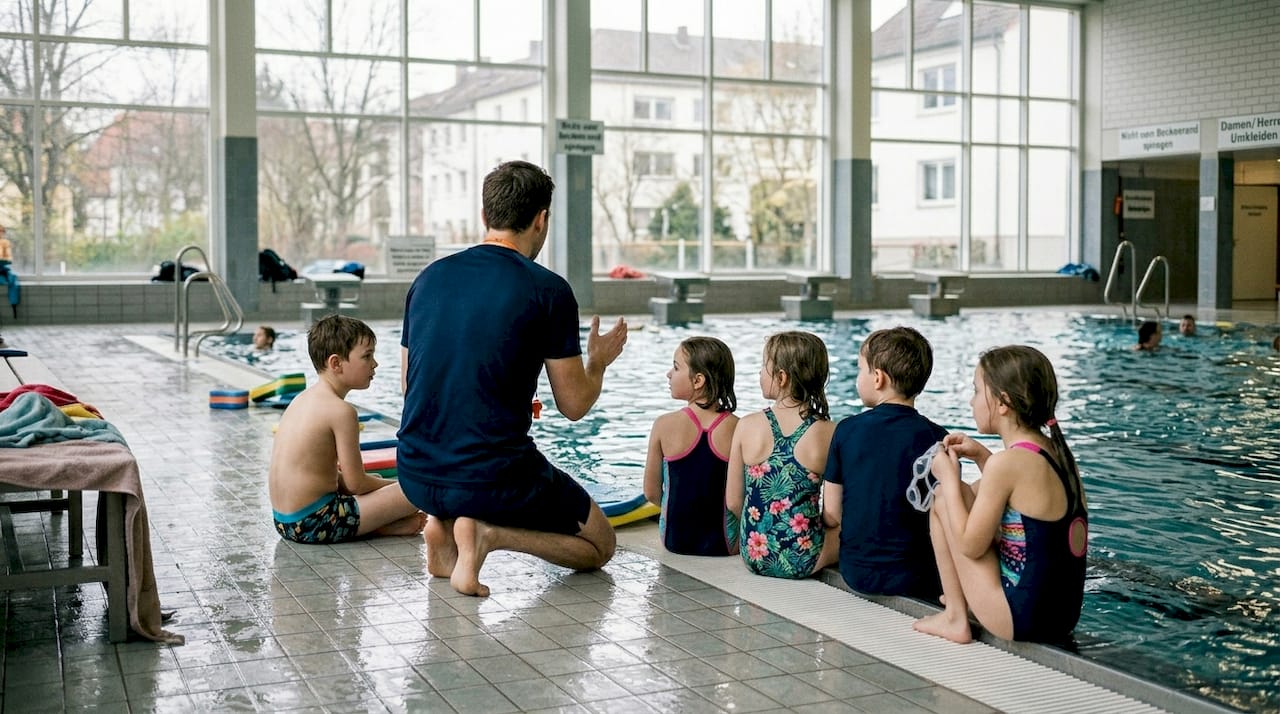
The first swimming lesson is a big step. Children learn to orient themselves in the water, immerse their heads, and feel their natural buoyancy. That's why less is often more. Swimwear, a towel, a bathrobe, and flip-flops are standard and form the indispensable basic set. Swimming aids, however, are counterproductive at this stage because they hinder the blink reflex.
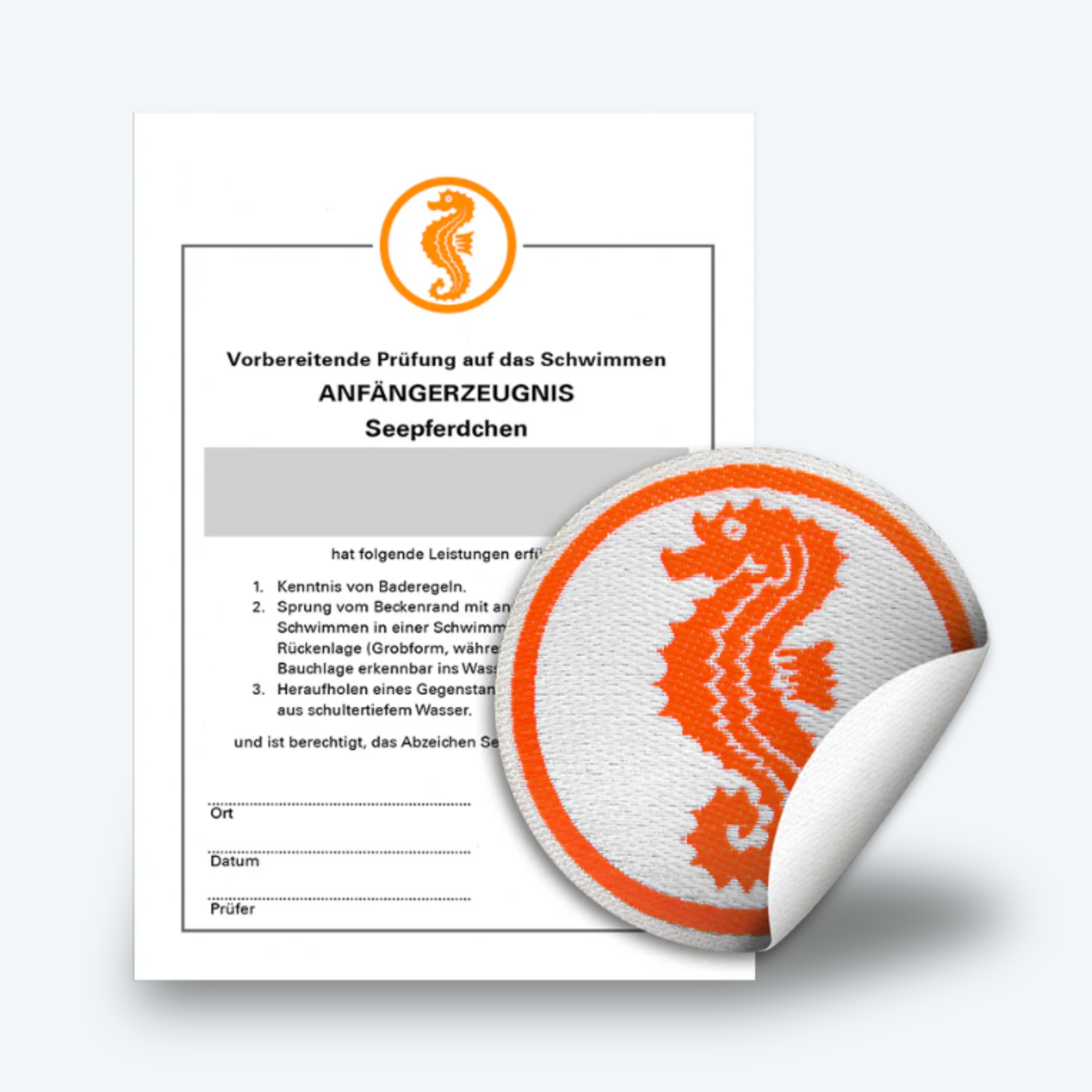
The blink reflex is the ability to automatically close the eyes when submerging and keep the face in the water. Children can only train this reflex without aids because armbands and vests create incorrect posture and prevent the child from ever learning to trust the water. For the Seahorse Swimming Badge entry course, therefore, no swimming aids should be brought.
The complete packing list for beginners:
- Tight-fitting swimsuit or swimming trunks (no loose textiles)
- Large towel or swim poncho
- Bathrobe for waiting time
- Flip-flops against athlete's foot
- Small water bottle
- Light snack (fruit, granola bar) for after the class
- Change of clothes and a plastic bag for wet items
Pro-tip: Always pack a second pair of swim trunks or a second swimsuit. Elastic bands break, fasteners jam, and wet clothes don't dry fast enough in the locker. A spare item saves stress and tears.
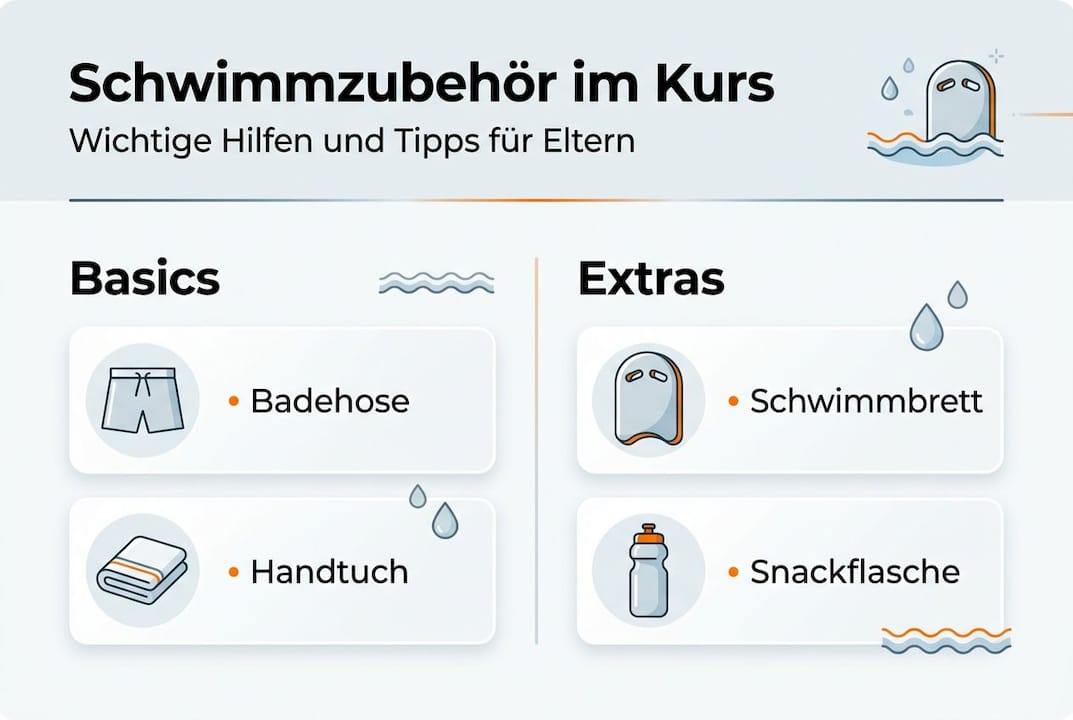
An often forgotten point: snack and water bottle. Swimming costs energy, especially for children. An empty stomach leads to concentration problems, and concentration is crucial for learning to swim. According to Swimming Badge Tips for Children, good preparation significantly improves motivation and learning success.
The Sense and Nonsense of Swimming Aids: Armbands, Vests & Co.
Swimming aids are not inherently bad. They have their place, but not in swimming lessons and not as a substitute for learning to swim. Never use swimming aids as a substitute for learning to swim is the clear recommendation from experts. The difference lies in the context: when splashing around on vacation, a life vest can be useful. In class, it hinders the learning process.
| Aid | Advantage | Disadvantage | Recommendation |
|---|---|---|---|
| Armbands | Inexpensive, widely available | Incorrect posture, hinder arm stroke | Only outside of class |
| Swim vest | High buoyancy, safe | Prevents natural water position | Only as a safety device |
| Swim noodle | Flexible in use | No stable buoyancy | In class under supervision |
| Kickboard | Targeted leg kick training | No full-body engagement | From intermediate level |
When selecting armbands for leisure use, pay attention to the EN 13138 test seal and the GS mark. Stiftung Warentest recommends models made of non-toxic material that can be inflated on both sides, ensuring buoyancy remains in case of air loss.
Important safety criteria for armbands:
- Test seal EN 13138 (European standard for swimming aids)
- GS mark (tested safety)
- Freedom from harmful substances (no PVC with plasticizers)
- Double-chamber system for buoyancy safety
- Age and weight indication on the packaging
Experts from DLRG and DSV emphasize: swimming aids create an upright body posture in the water, which contradicts natural swimming. Children who swim with armbands for a long time almost have to relearn how to swim without aids.
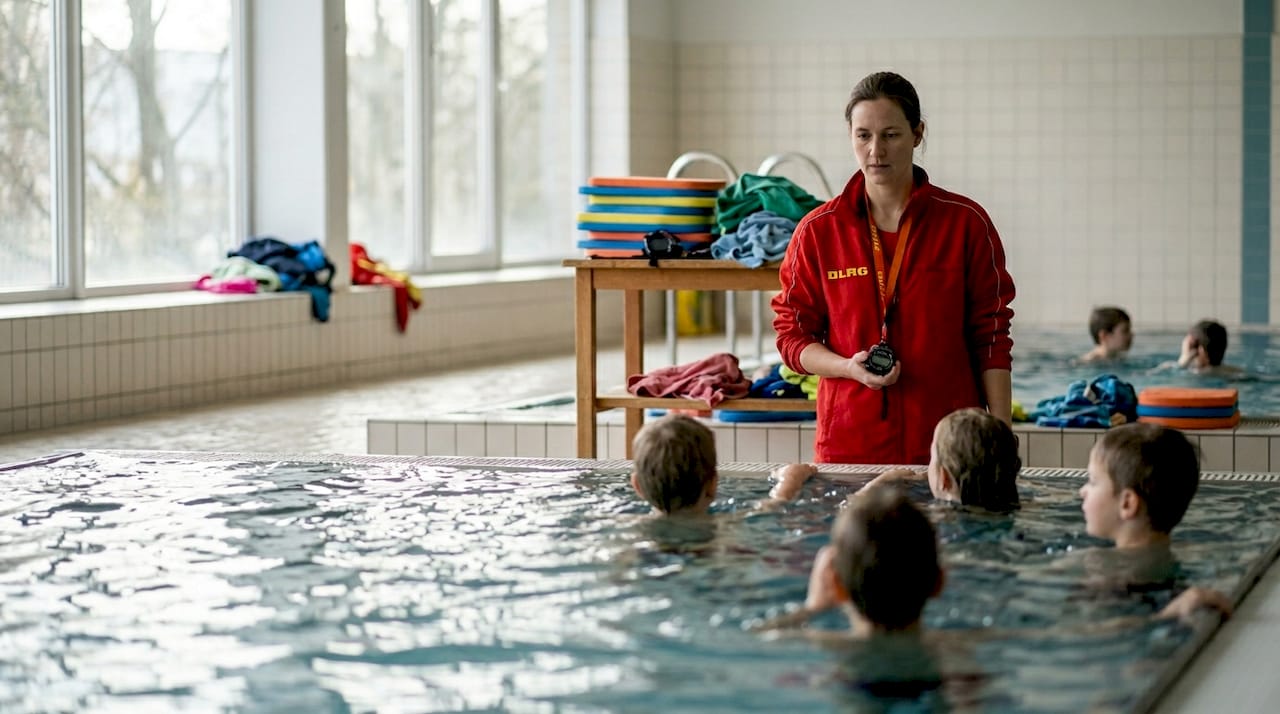
For exercises with and without aids: in class, the swimming instructor decides if and when an aid is used. Parents should respect this decision and not bring their own aids.
Accessories for Advanced Swimmers and Swim Badge Preparation
Those who have already earned the Seahorse badge and are working towards Bronze, Silver, or Gold need different accessories. Now it's about technique, endurance, and efficiency. Classic accessories for advanced courses include kickboard, pull buoy, short fins, and snorkel.
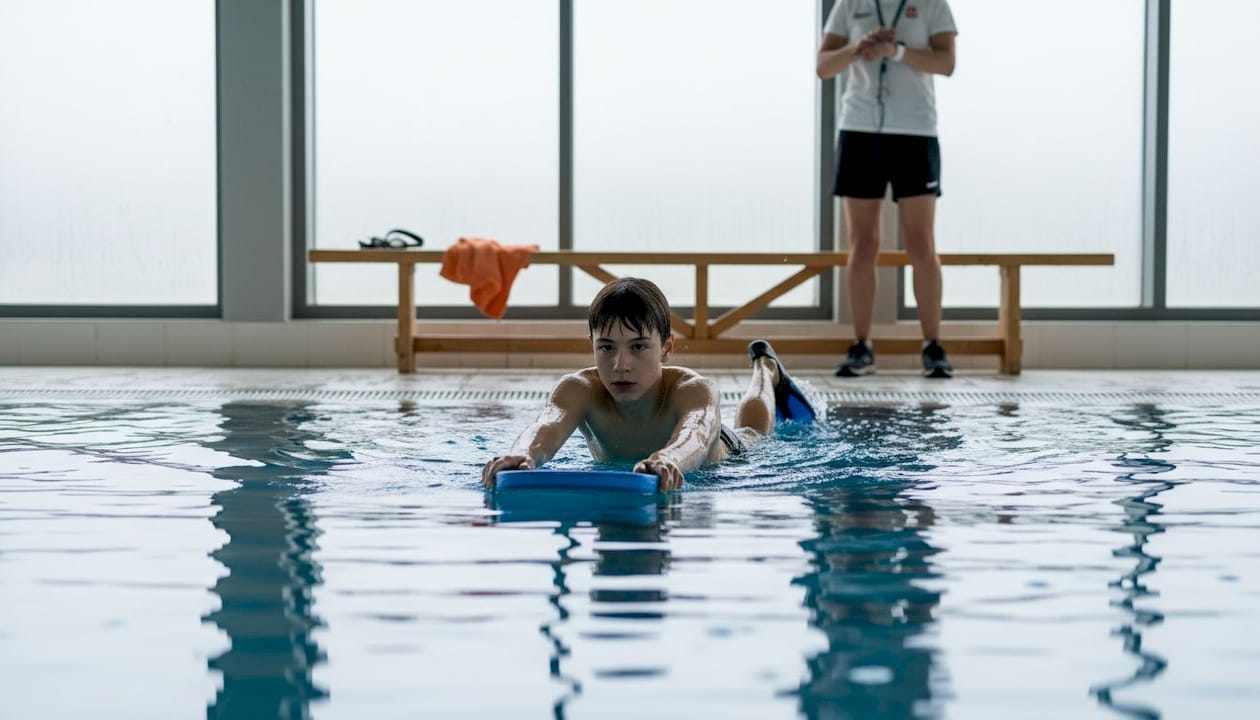
The mechanics behind it are precise: the kickboard isolates the leg kick, allowing children and teenagers to train leg movement without being distracted by arm strokes. The pull buoy does the opposite: it fixes the legs, forcing the swimmer to focus solely on arm strokes. Short fins increase water resistance at the foot and specifically strengthen leg muscles.
| Accessory | Seahorse | Bronze | Silver | Gold |
|---|---|---|---|---|
| Kickboard | No | Yes | Yes | Yes |
| Pull Buoy | No | No | Yes | Yes |
| Short fins | No | Optional | Yes | Yes |
| Snorkel | No | No | Optional | Yes |
| Swim goggles | No | Yes | Yes | Yes |
| Nose clip | No | Optional | Optional | Optional |
The sequence of using accessories is important:
- First, solidify basic technique without aids
- Introduce kickboard for isolated leg kick training
- Add pull buoy for arm stroke training
- Use short fins for strength building and water feel
- Utilize snorkel for technique drills without breathing interruption
- Regularly omit all aids to measure progress
Pro-tip: A snorkel is one of the most underrated training tools. It allows for perfecting arm stroke technique without interrupting the rhythm for breathing. This tool is especially valuable for preparing for the Gold Swim Badge requirements. Nose clips additionally help children who inhale water through their nose.
For Swim Badge Training: accessories are a tool, not a substitute for repetitions. Someone who trains 200 meters of crawl with a kickboard must also be able to swim the same distance without it.
Official Swim Badges and Accessories for the Examination
Different rules apply to examinations than to training. Aids such as armbands are prohibited in examinations, and this applies to all badges. The examination content and the role of swimming accessories are clearly regulated.
Overview of requirements:
- Seahorse: Jump from the pool edge, swim 25 meters, retrieve a ring from the bottom (water depth approx. 80 cm). No aids allowed.
- Bronze: 200 meters in 15 minutes, dive from one meter height, retrieve an object. Swim goggles allowed.
- Silver: 400 meters in 25 minutes, starting dive, knowledge of bathing rules. Swim goggles allowed.
- Gold: 800 meters in 40 minutes, starting dive, underwater swimming. Swim goggles allowed.
Swim goggles are permitted for examinations from Bronze onwards, but not mandatory. For children with chlorine sensitivity, they are a reasonable exception. Important: The blink reflex must still be mastered, as goggles are not permitted for the Seahorse examination.
Checklist for the perfect exam bag:
- Tight-fitting swimsuit or swimming trunks (no loose shorts)
- Swim goggles (from Bronze, well-adjusted and tested beforehand)
- Towel and bathrobe
- Flip-flops
- Water bottle and small snack
- ID or registration confirmation
- Good mood and enough sleep the night before
For the Seahorse Badge requirements, it is especially important: children should practice the examination without goggles so that the examination day does not bring any surprises. Those who know the Bronze Swim Badge Tips know: technique beats equipment.
Award-Winning Swim Badges and Accessories for Your Course
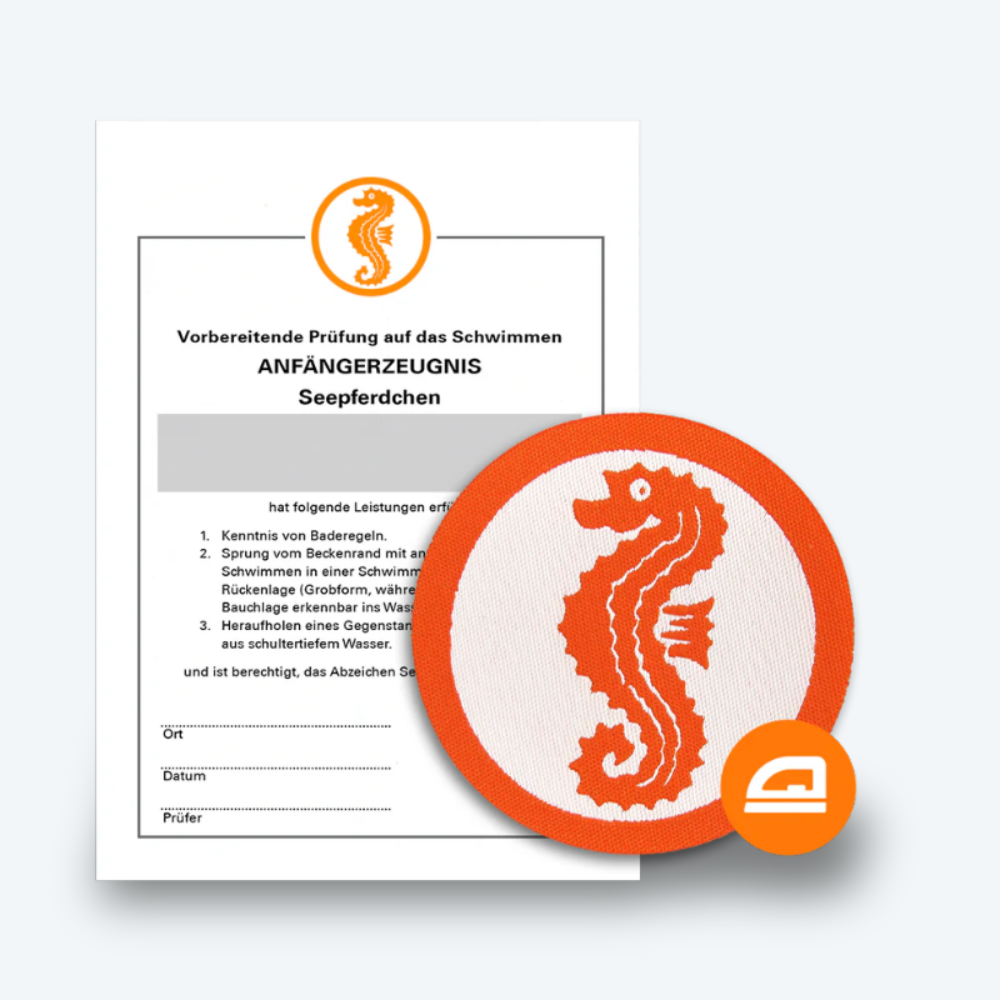
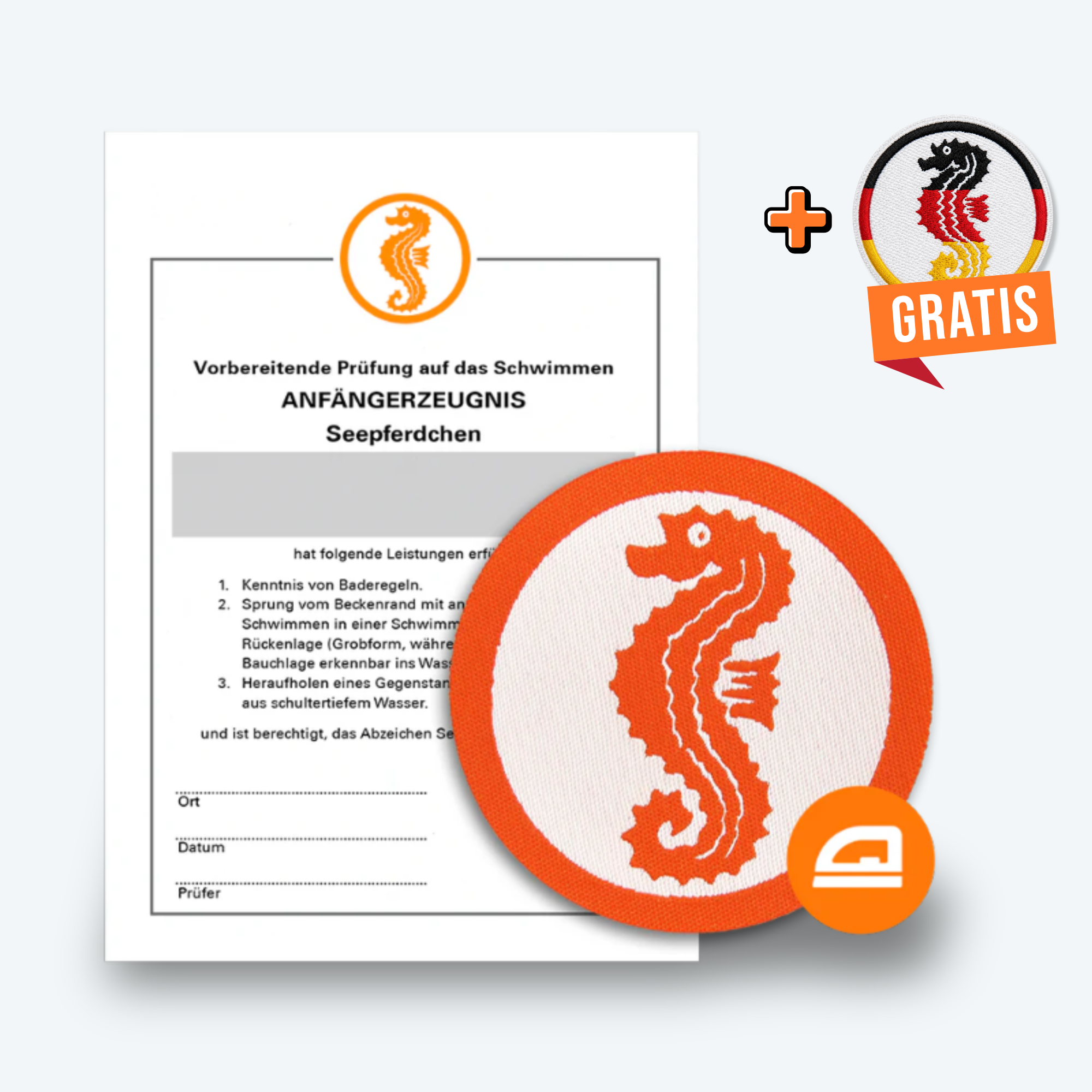
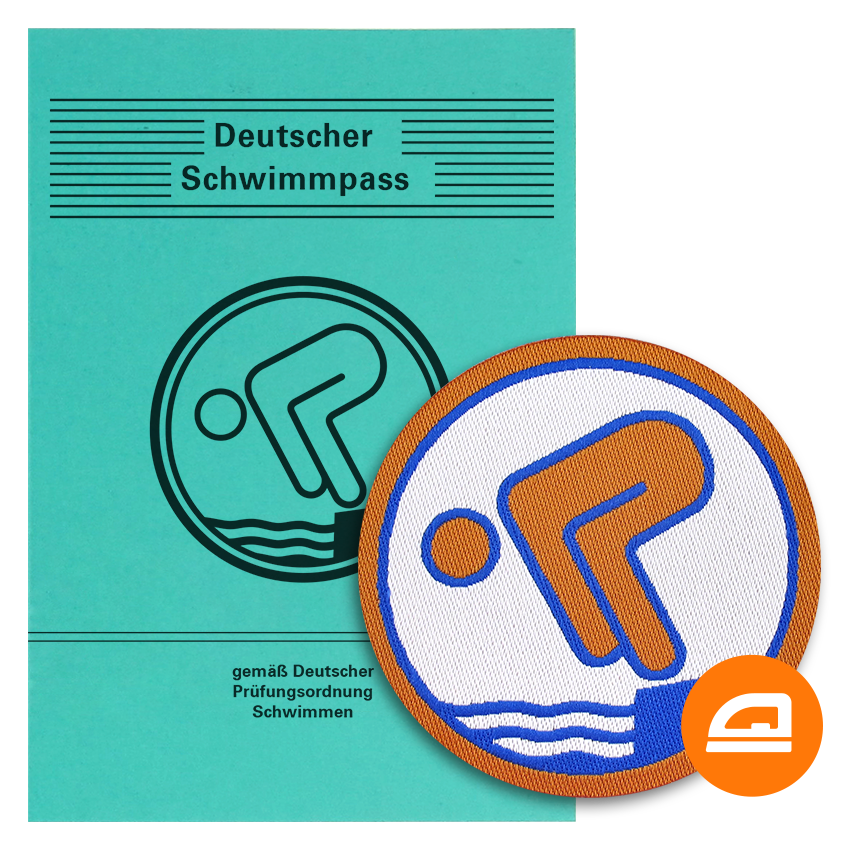
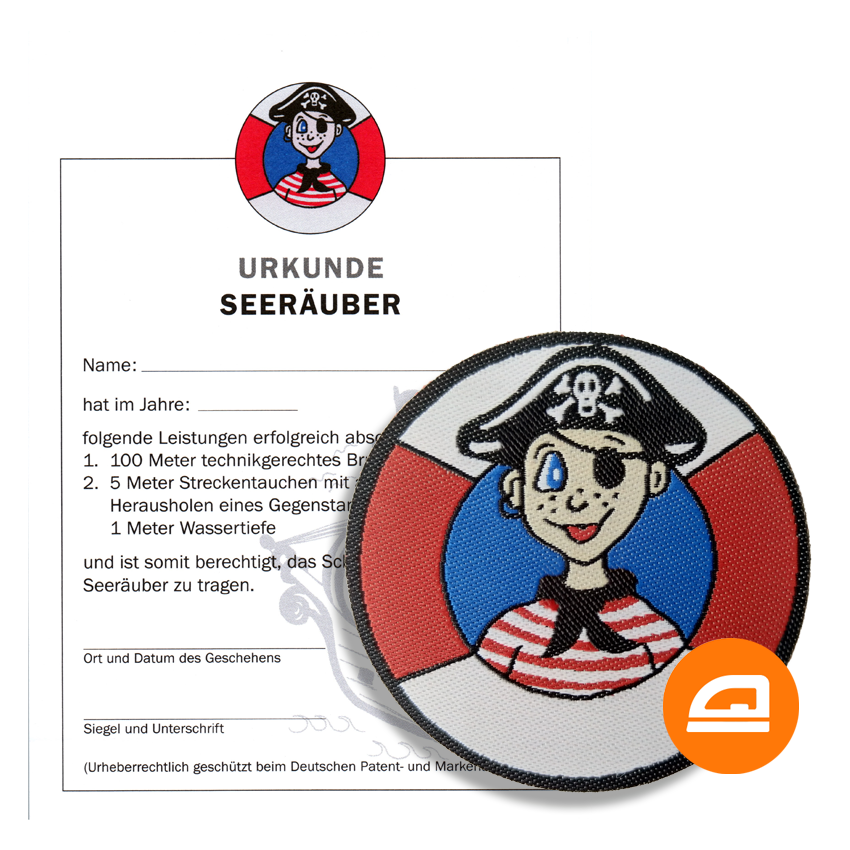
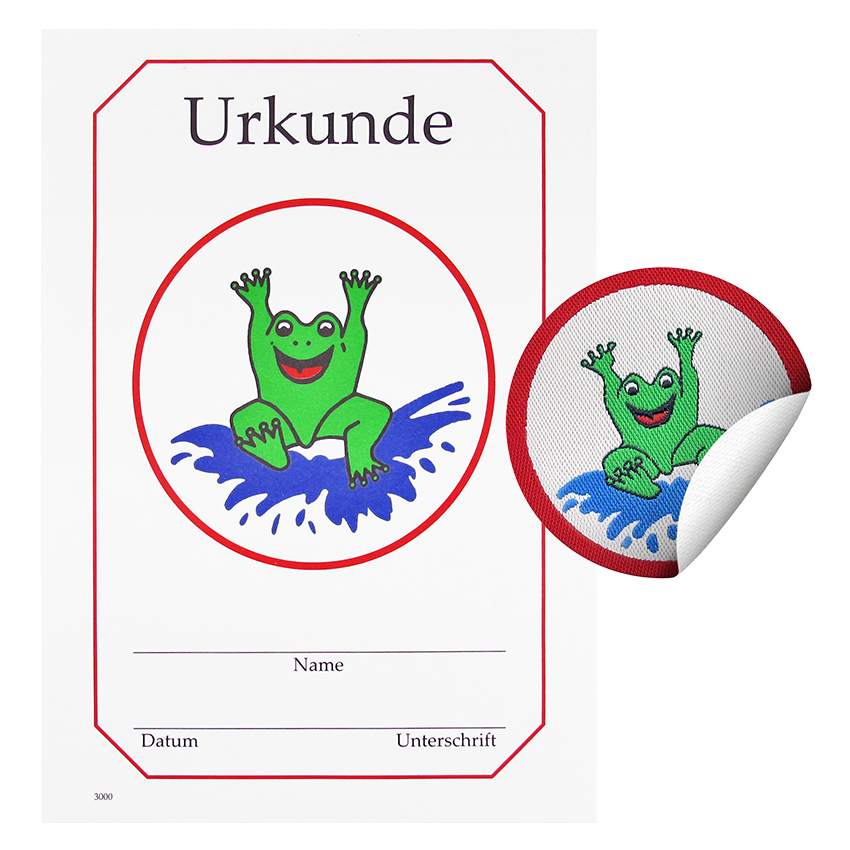
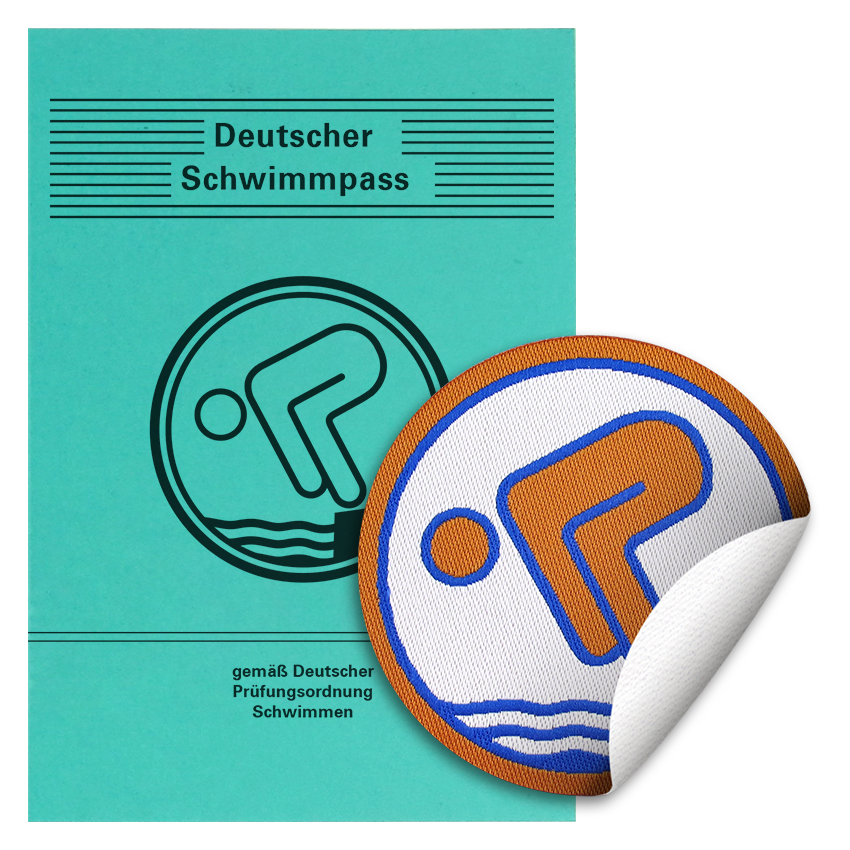
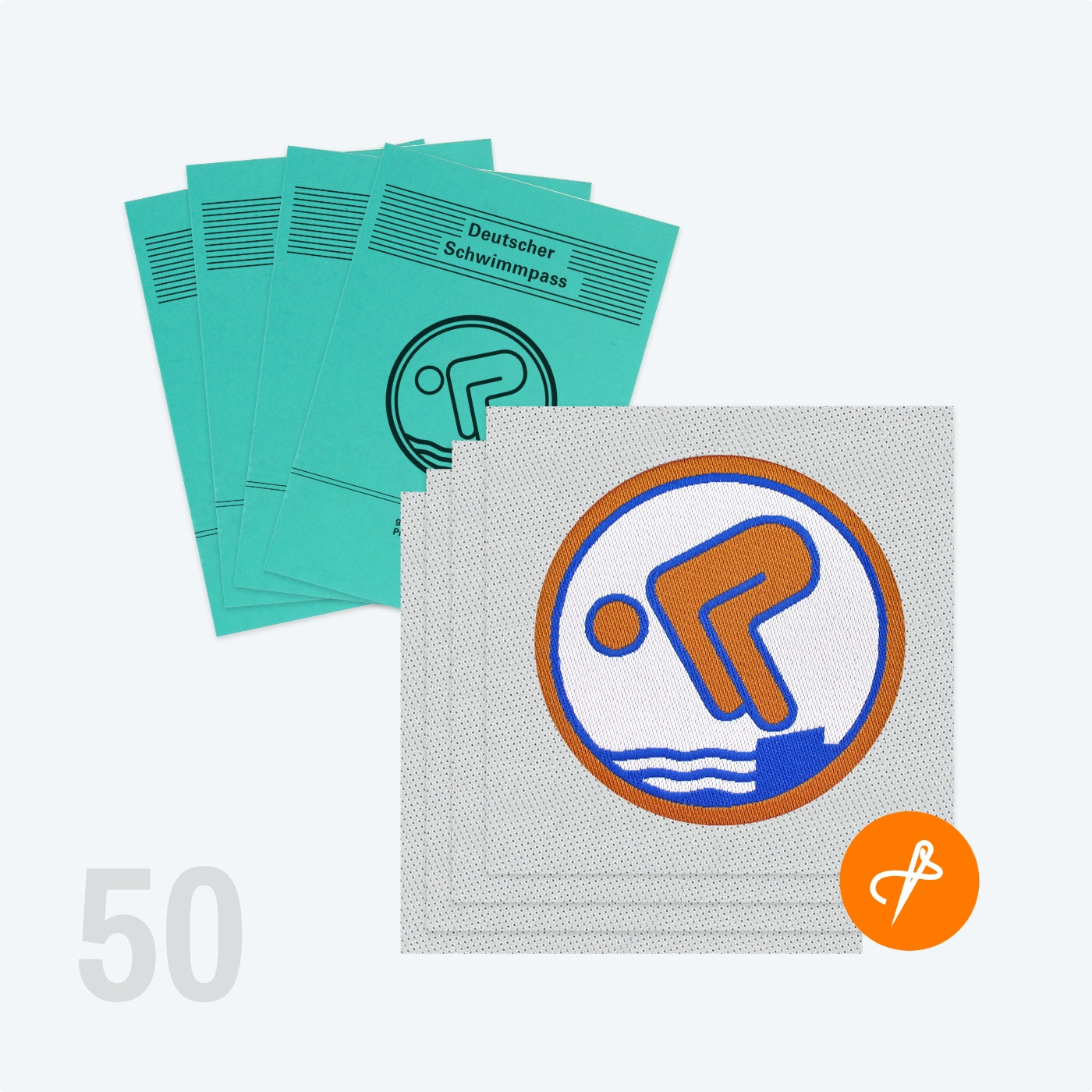
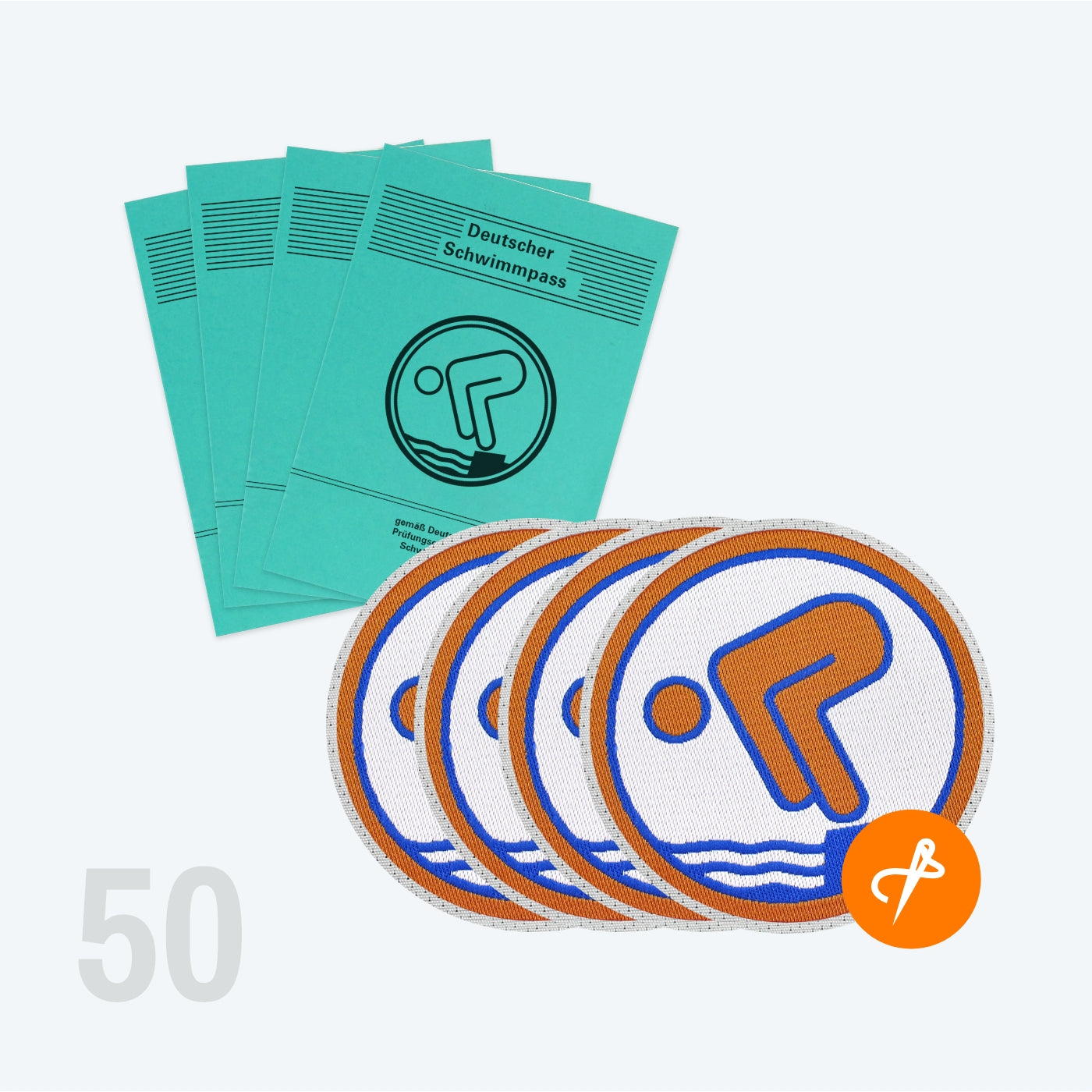
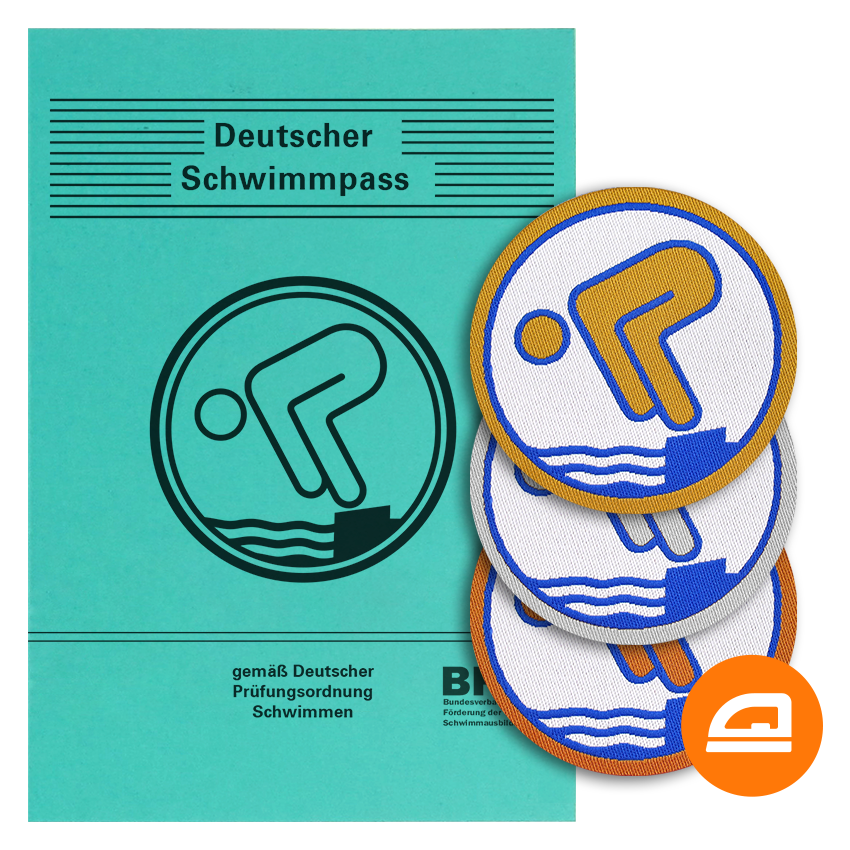
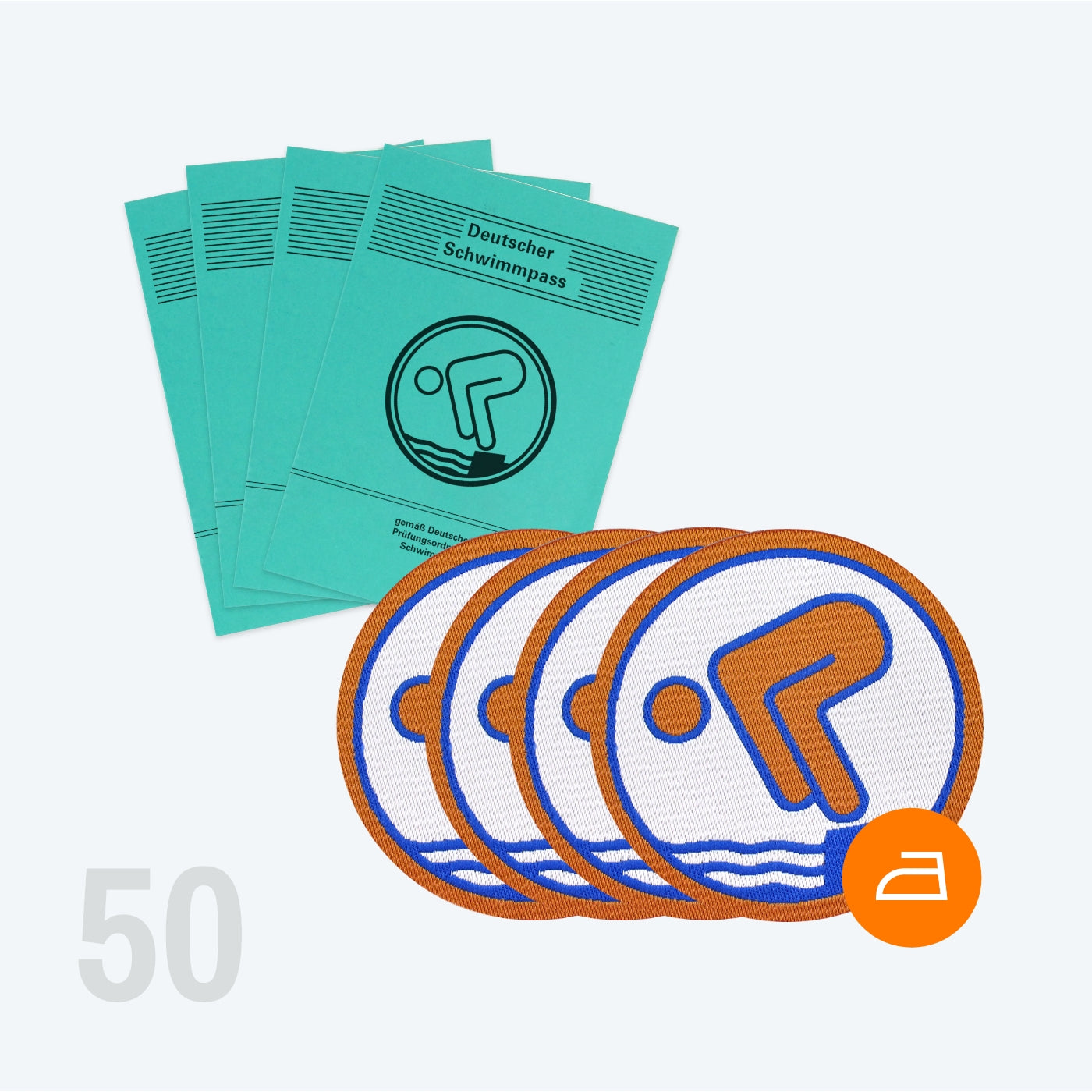
After the exam comes the reward: an official badge that makes success visible. At Buy Swim Badges, parents and swim instructors will find original certified badges, certificates, and plaques for all levels, from Seahorse to Gold. Pimpertz has been an official partner of DLRG and BFS since 1987 and delivers within 1 to 2 business days. For courses and clubs, specially compiled sets are available with discounts and personalization options. The matching swimming accessories for swimming lessons complement the range with high-quality materials for training and exam preparation. All products comply with current safety and quality standards.
Frequently Asked Questions About Swimming Accessories for Classes
Are swimming aids allowed in swimming classes or during examinations?
Aids such as armbands are not allowed in examinations because they hinder the development of natural buoyancy. In class, the swimming instructor decides on a case-by-case basis whether an aid is temporarily useful.
How do I recognize safe armbands?
Stiftung Warentest recommends models with EN 13138 and GS marks, as well as non-toxic material and a double-chamber system. Always pay attention to the indicated age and weight class on the packaging.
Does every child need swim goggles in class?
Swim goggles can be used occasionally after blink reflex training, but are counterproductive in the initial phase. For chlorine problems, goggles can be used specifically from Bronze onwards.
What is particularly recommended for swim badge preparation?
For advanced swimmers: kickboard, pull buoy, short fins, snorkel depending on the training phase. The right accessories depend on the current performance level and the target badge.
Do snacks and drinks need to be in every swim bag?
A healthy snack and water provide energy and concentration, especially during longer course units. A snack and water bottle are part of every swimming course participant's basic set.