





Almost one in four children in Germany shows symptoms of water retention, such as swelling in the legs or hands. This can be a source of worry for parents, especially when their child's health is at stake. Swimming is considered a particularly gentle and effective way to alleviate these symptoms. Getting into the water combines fun with positive effects on circulation and well-being, providing parents with important insights into their child's development.
Table of Contents
- What is Water Retention in Children?
- Why Swimming Affects Water Retention
- Suitable Swimming Styles and Techniques
- Medical Requirements Before Swimming
- Safety Rules for Parents and Children
- Risks and Alternatives to Swimming
Key Takeaways
| Point | Details |
|---|---|
| Water retention is critical | Parents should always consult a doctor for severe or sudden swelling. |
| Swimming has positive effects | Swimming promotes blood circulation and supports lymphatic drainage, which can reduce water retention. |
| Choose suitable swimming techniques | Breaststroke and backstroke are particularly gentle techniques for children with water retention. |
| Observe safety measures | Parents must constantly supervise their children and should avoid distractions such as smartphones. |
What is Water Retention in Children?
Water retention or edema refers to fluid accumulation in body tissues, which can lead to visible swelling in children. According to medical sources, these swellings typically appear on the legs, feet, arms, or hands and can have various possible causes.
The development of water retention can have different reasons. Medical experts identify several key triggers:
- Hormonal changes
- Cardiovascular diseases
- Kidney weakness
- Liver problems
- Medication side effects
- Lymphatic system disorders
The swellings manifest through typical symptoms such as a feeling of tension in the affected tissue, visible swelling, and indentations that remain after finger pressure. Although not every case of water retention is dangerous, parents should seek medical advice for sudden or severe swelling.
Here is an overview of typical causes of water retention and their identifying signs:
| Cause | Typical sign | Possible accompanying symptom |
|---|---|---|
| Hormonal changes | Swelling in arms/legs | Mood swings |
| Kidney weakness | Edema at the ankle | Pale complexion, fatigue |
| Liver problems | Abdominal swelling | Yellowing of the skin |
| Lymphatic system disorder | Unilateral swelling | Tension in the tissue |
| Medication side effect | New swellings | Abnormal urine color |
| Cardiovascular disease | Swelling of the lower legs | Shortness of breath, rapid exhaustion |
Pro Tip: Document the size, appearance, and development of the swelling for a meaningful report to the pediatrician.
Why Swimming Affects Water Retention
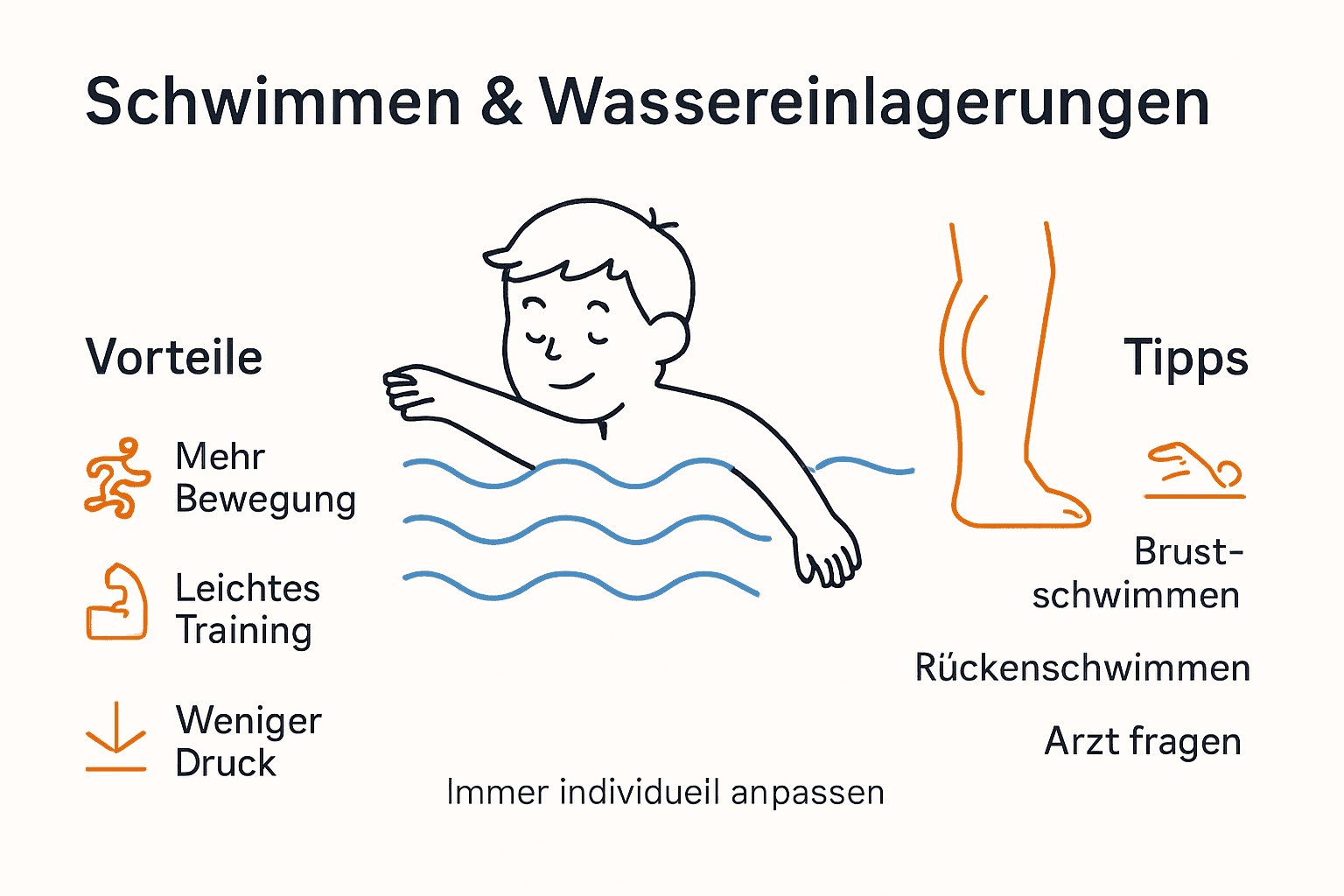
Swimming has remarkable effects on water retention in children. The physical properties of water play a crucial role here. Water pressure and buoyancy support bodily functions on several levels and can positively influence water retention.
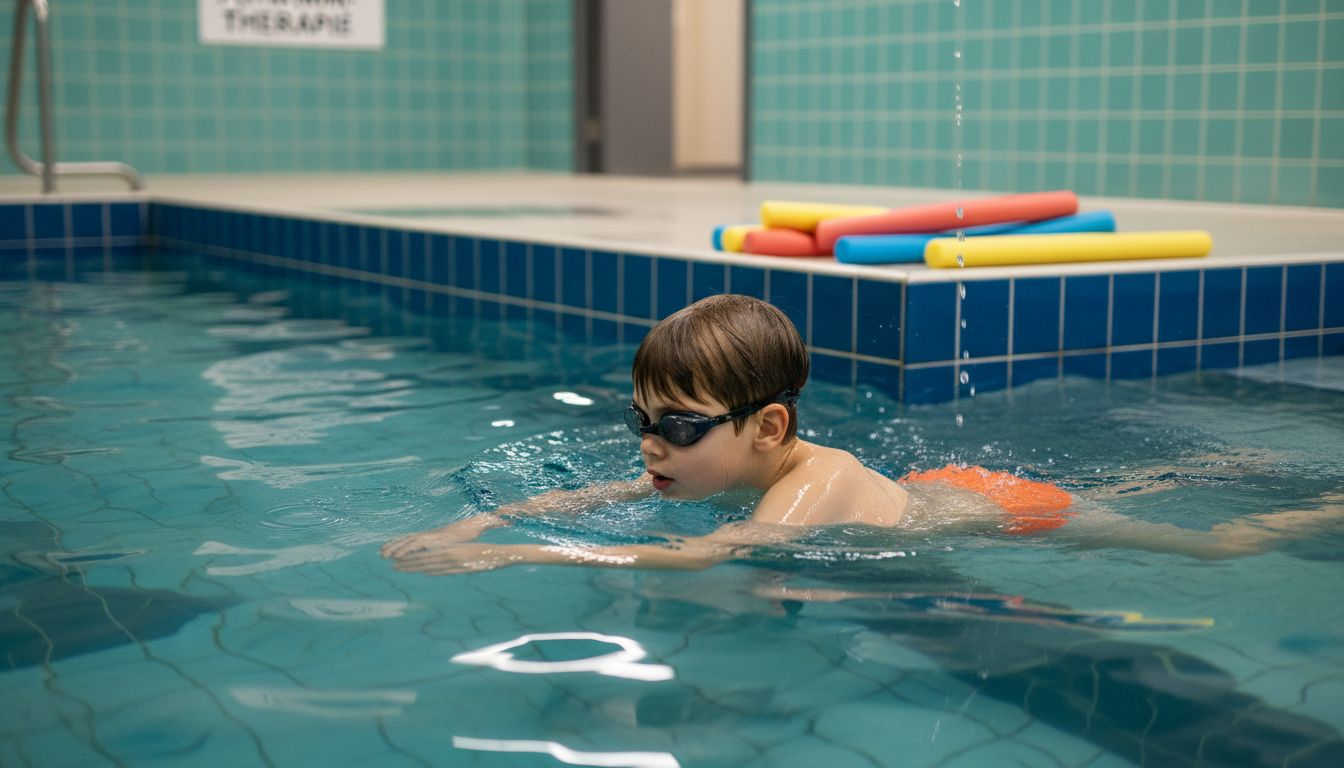
Water pressure during swimming acts like a natural compression and promotes blood circulation. According to swimming experts, about 20% more blood flows into the right side of the heart due to water movement, which stimulates circulation and supports fluid shifts in the body. This improved circulation can help reduce water retention.
Additionally, buoyancy in water provides particular relief for the musculoskeletal system. Children with water retention benefit from the gentle movement, as water pressure creates a kind of natural massage. This massage can improve lymphatic drainage and thus transport excess fluids out of the tissue.
The main benefits of swimming for water retention include:
- Improved blood circulation
- Lymphatic drainage stimulation
- Gentle tissue massage
- Relief of the musculoskeletal system
Pro Tip: Always speak with a pediatrician before starting swimming to determine the best individual exercises for your child.
Suitable Swimming Styles and Techniques
For children with water retention, certain swimming styles are particularly suitable. The right swimming technique can not only increase enjoyment in the water but also promote health and mobility.
The breaststroke is considered the standard technique for children. This swimming style offers several advantages: the head stays above water, breathing is easy, and movements are controlled. For children with water retention, this technique is particularly gentle, as it requires little effort while gently exercising the muscles.
Another recommended technique is the backstroke. This swimming style relieves pressure on the joints and promotes circulation. The back rests relaxed in the water, which can be particularly comfortable for children with water retention. The even movement supports lymphatic drainage and can help reduce swelling.
For beginners and young children, there is also the transitional technique of the dog paddle. This natural swimming movement serves as a bridge to learning systematic swimming techniques:
The following table summarizes common swimming styles for children with water retention and their special features:
| Swimming Style | Special Feature | Suitable for Beginners | Joint Strain |
|---|---|---|---|
| Breaststroke | Head usually above water | Very good | Low |
| Backstroke | Relaxing for the back area | Good | Very low |
| Dog Paddle | Natural movements | Ideal | Minimal |
- Low exertion
- Natural movement sequence
- Good preparation for more complex techniques
Pro Tip: Always start with short swimming sessions and observe how your child reacts to the movement.
Medical Requirements Before Swimming
Before beginning a swimming course for children with water retention, thorough medical preparation is essential. A comprehensive medical examination helps identify potential risks and consider the child's individual needs.
The medical assessment should include several important aspects: a detailed analysis of current water retention, an assessment of mobility, and possible limitations. Children under three years of age require particularly careful consideration, as their motor skills are still developing.
Experts recommend a comprehensive checklist before starting swimming:
- Full medical examination
- Assessment of individual performance capabilities
- Evaluation of possible limitations
- Recommendations for water movement
Swimming activities must always be adapted to the individual needs and health situation of the child. Qualified supervision and a coordinated concept are indispensable.
Pro Tip: Talk to your pediatrician and swimming instructor to develop a customized swimming strategy.
Safety Rules for Parents and Children
Swimming with children requires utmost attention, especially when water retention is present. Safety experts emphasize that children must never be left unsupervised in or near water.
For parents, this specifically means: Full concentration on the child. Smartphones and other distractions are forbidden. Parents must always remain within earshot and sight, especially with children whose mobility is limited by water retention.
The most important safety rules at a glance:
- Constant supervision
- No distractions from electronic devices
- Clear agreements with the child
- Never view swimming aids as a substitute for supervision
- Attend regular swimming lessons
Parents should also know their child's individual abilities. Children without confident swimming skills require particularly intensive care. Early water acclimation and professional swimming lessons are crucial for safety.
Pro Tip: Agree on clear safety rules with your child before each swimming visit and repeat them regularly.
Risks and Alternatives to Swimming
The increasing number of insecure swimmers makes alternative water experiences particularly important for children with water retention. Not every child is immediately able to learn complex swimming techniques, which is why alternative approaches are crucial.
Water familiarization represents a significant alternative to traditional swimming. Educational concepts in childcare facilities show how children can playfully gain their first motor experiences in the water:
- Reducing fear of water
- Developing water confidence
- Gentle movement experiences
- Preparation for later swimming
For children with water retention, particularly gentle alternatives are important. Baby swimming, controlled water play, and therapeutically guided water familiarization can be valuable options. These methods allow for individual adaptation to the child's physical needs.
Pro Tip: Always consult a pediatrician or physiotherapist to find the appropriate water experience for your child.
Making Swimming with Water Retention Safe and Motivating
Water retention in children can limit mobility and requires a particularly sensitive approach to swimming. Parents and swimming instructors are looking for solutions that meet the individual needs of children while promoting motivation and enjoyment in the water. In this article, you have learned how important gentle swimming styles and targeted movements are to support the circulatory and lymphatic systems gently.
This is precisely where Pimpertz comes in as your experienced partner for swimming badges and accessories. We offer not only a large selection of original certified swimming badges and motivating certificates in child-friendly designs, but also practical accessory sets that make swimming lessons a highlight. Parents and clubs benefit from our fast shipping and long-standing partnership with DLRG and BFS. This way, you can provide your child with a perfect start to swimming that guarantees both safety and joy in the water.
Start now with Pimpertz into a healthy and motivating swimming world for your child and optimally support them with swimming despite water retention. Discover our selection and benefit from personal advice and high-quality products for the best swimming lessons.
Frequently Asked Questions
What is water retention in children?
Water retention, also called edema, is fluid accumulation in the tissues, which can lead to swelling. This can have various causes, including hormonal changes, kidney weakness, or cardiovascular diseases.
How can swimming help with water retention?
Swimming promotes blood circulation and stimulates lymphatic drainage. Water pressure acts like a natural compression and can help transport excess fluids out of the tissue.
Which swimming styles are suitable for children with water retention?
Breaststroke and backstroke are particularly suitable, as they are gentle on the joints and promote circulation. Dog paddle can also be a good way for beginners to feel comfortable in the water.
What precautions should parents take before swimming?
Parents should obtain a comprehensive medical examination for their child and consider individual needs when choosing swimming activities. Constant supervision is essential when swimming, especially for children with water retention.


