


Many parents know the problem when everyday life hardly offers enough room for sufficient exercise and their child's weight slowly increases. Swimming is particularly popular in Germany, as it allows children to get effective full-body training without putting a strain on their joints. Swimming burns up to 500 calories per hour, while also teaching important swimming techniques. Understanding which methods work sustainably supports children's health and promotes their self-confidence.
Table of Contents
- What Makes Swimming Ideal for Weight Loss?
- Differences in Swimming Styles and Training Types
- Joint-Friendly Effects and Health Benefits
- Practical Tips: Getting Started Right with Children
- Common Mistakes and How to Avoid Them
Key Takeaways
| Point | Details |
|---|---|
| Effective Weight Loss | Swimming is an excellent sport for weight loss as it offers a full-body workout and increases calorie consumption. |
| Joint-Friendly | Water supports body weight, relieving pressure on joints, making it ideal for overweight children. |
| Versatile Benefits | Beyond weight loss, swimming also improves cardiovascular function and promotes mental health. |
| Gradual Start | Parents should introduce swimming in a playful way, without pressure, to encourage children's motivation. |
What Makes Swimming Ideal for Weight Loss?
Swimming is an exceptionally effective sport for weight loss, which not only helps children reduce weight but also comprehensively promotes their health and physical fitness. Studies show that swimming is a full-body workout that engages almost all muscle groups and allows for particularly high calorie consumption due to water resistance.
The decisive advantage of swimming lies in its gentle impact on the body. Unlike sports with high impact loads such as running, water supports body weight, significantly relieving pressure on the joints. This makes swimming ideal for overweight children, as they can train without pain or risk of injury. Water resistance also creates a natural strength load that builds muscles and boosts metabolism.
The benefits of swimming go far beyond mere weight reduction. It demonstrably improves cardiovascular function and increases overall performance. Children not only develop better fitness but also learn important movement sequences and coordination skills. Motivation increases as they experience progress and improve their swimming techniques.
Pro Tip: Make sure to practice different swimming styles to engage various muscle groups and further support weight loss.
Differences in Swimming Styles and Training Types
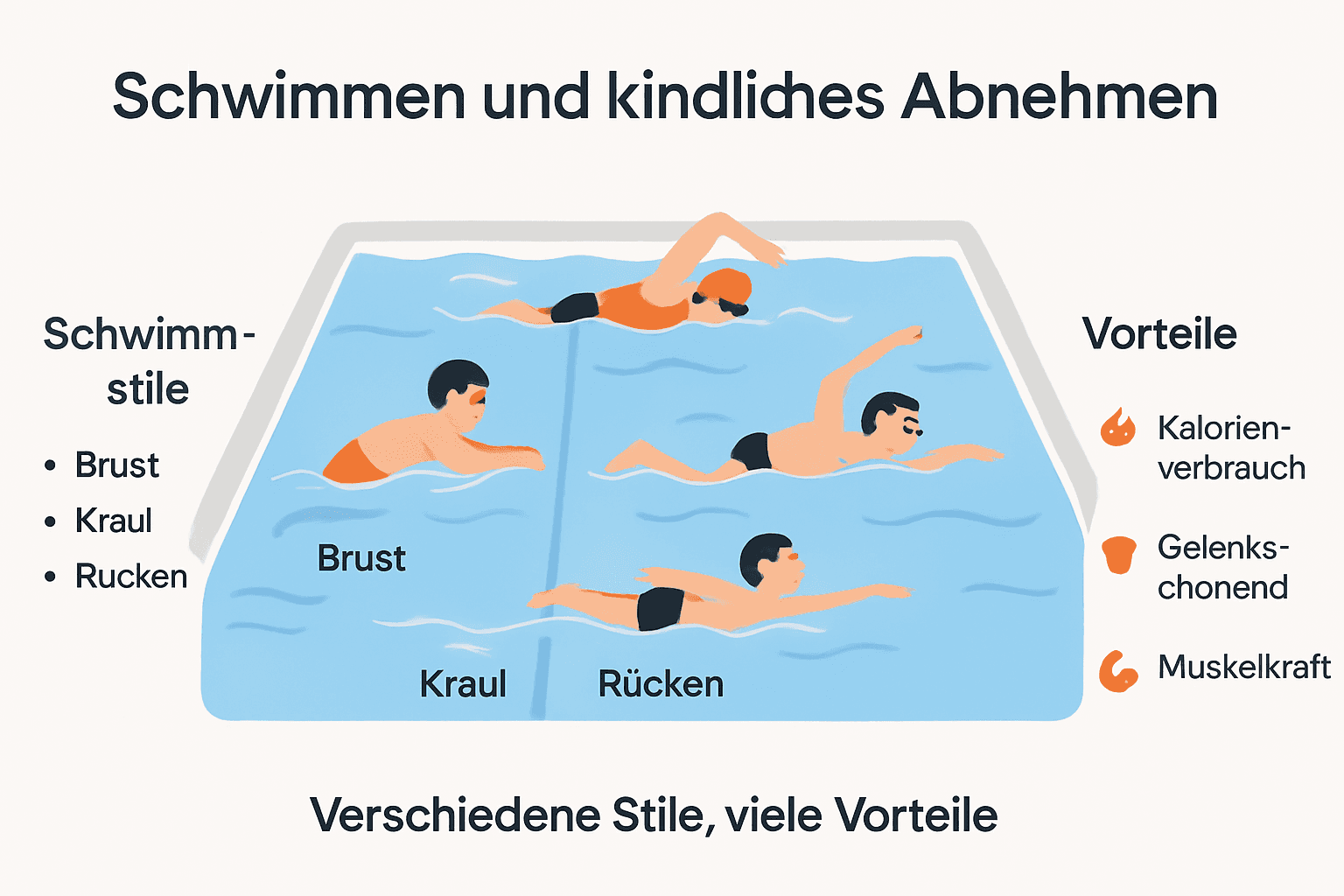
Different swimming styles offer various benefits for children's weight loss and allow for varied training. Each swimming style engages different muscle groups and has its own specific characteristics important for weight management.
Freestyle (Crawl) is considered particularly effective for weight reduction, as it allows for high calorie consumption and trains almost all body muscle groups simultaneously. Breaststroke, on the other hand, is ideal for beginners because it is technically easier to learn and primarily challenges leg and core muscles. Backstroke offers the advantage of being gentle on joints while strengthening back muscles, which can be very important for overweight children.
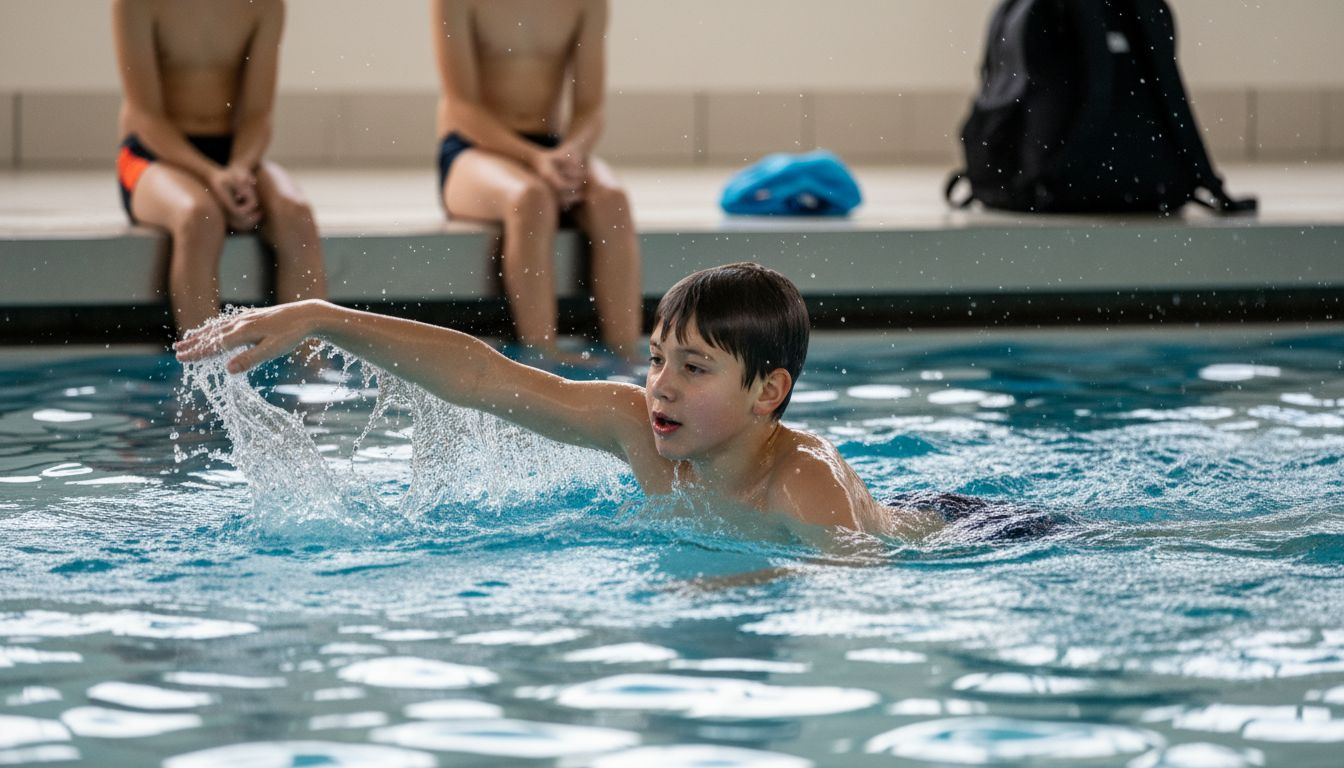
For children with different physical conditions, a varied training approach is recommended. Technique plays a crucial role in all swimming styles to avoid injuries and maximize training effects. The butterfly stroke represents the most demanding discipline, providing an intense full-body workout and is primarily suitable for advanced swimmers.
Pro Tip: Combine different swimming styles in your training to evenly challenge all muscle groups and avoid one-sidedness.
Swimming styles differ in their training effects and requirements:
| Swimming Style | Muscles Engaged | Difficulty | Calorie Consumption |
|---|---|---|---|
| Crawl | Full body, shoulders | High | Very high |
| Breaststroke | Legs, core | Easy | Medium |
| Backstroke | Back, arms | Medium | Medium to high |
| Butterfly Stroke | Entire body musculature | Very high | Extremely high |
Joint-Friendly Effects and Health Benefits
Swimming offers a unique joint-friendly effect, which is particularly valuable for overweight children. The buoyancy of water relieves pressure on the joints, allowing for training without the usual stresses that occur in sports with ground contact.
The health benefits of swimming extend far beyond mere joint relief. The water supports body weight, significantly reducing the strain on joints, making it an ideal sport for people with joint problems. At the same time, the cardiovascular system is strengthened, respiratory muscles are trained, and the entire body musculature is toned. This is particularly important for children who are overweight or have health limitations.
Further positive effects include improved posture, stress reduction, and the promotion of mental health. Swimming can alleviate back pain, improve flexibility, and strengthen children's self-confidence. The gentle yet effective form of training is ideal for holistic physical and mental development.
Pro Tip: Start with short swimming sessions and gradually increase duration and intensity to avoid overstraining the joints.
Here are important health benefits of regular swimming training for children:
| Effect on Health | Description | Specific Benefits for Children |
|---|---|---|
| Joint Protection | Water supports weight | Suitable for overweight individuals |
| Cardiovascular Strengthening | Training of the entire system | Supports endurance building |
| Respiratory Muscles | Intensive breathing training | Improves lung function |
| Stress Reduction | Relaxing effect | Promotes mental health |
Practical Tips: Getting Started Right with Children
The first steps in learning to swim are crucial for children's long-term success and motivation. Parents play a central role by building a positive and fear-free relationship with water and emphasizing the joy of movement.
For beginners, it is advisable to attend swimming lessons specifically tailored for children. These courses offer professional guidance and ensure a safe environment. It is important that children are initially introduced to water in a playful way – without performance pressure and with a lot of patience. Suitable swimming aids can help to provide safety and build confidence.
A step-by-step approach is crucial: start with shallow water, short sessions, and plenty of encouragement. Pay attention to your child's individual needs and fears. Every child has their own pace and should not be compared or put under pressure. The development of water safety and enjoyment of movement has absolute priority over quick progress.
Pro Tip: Make swimming a shared experience and be patient – progress comes naturally with the right motivation.
Common Mistakes and How to Avoid Them
When swimming for weight loss, various mistakes can hinder training success and children's motivation. The challenge is to find a balance between progress and fun without overwhelming the child.
A significant mistake is incorrect technique, which not only reduces training efficiency but also increases the risk of injury. Children should learn correct swimming movements from the beginning, which engage their muscle groups evenly. It is important to respect child-appropriate learning paces and not to build up excessive performance pressure. Overly ambitious goals can quickly destroy the joy of swimming and lead to frustration.
Other common mistakes include neglecting breathing technique, lack of training variation, and insufficient continuity. A balanced training plan that combines different swimming styles and is adapted to individual fitness levels is crucial for sustainable success. Parents should always prioritize their child's motivation and well-being.
Pro Tip: Keep a progress diary where you and your child document successes and enjoyment of swimming – not performance, but joy matters.
Supporting Children to be Healthy and Motivated in Swimming
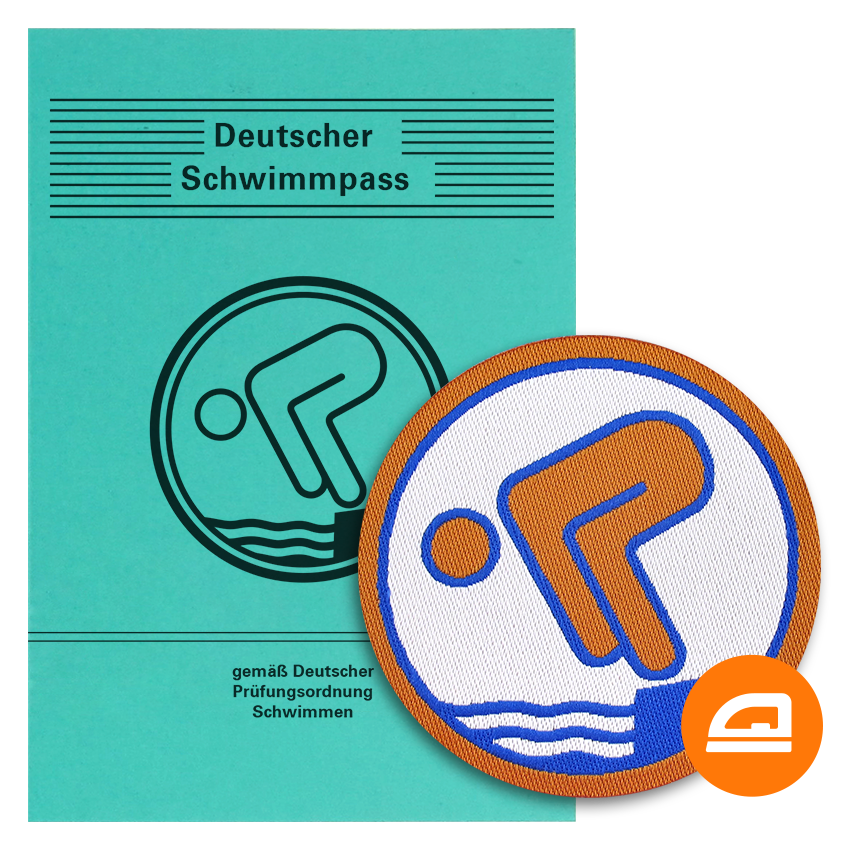
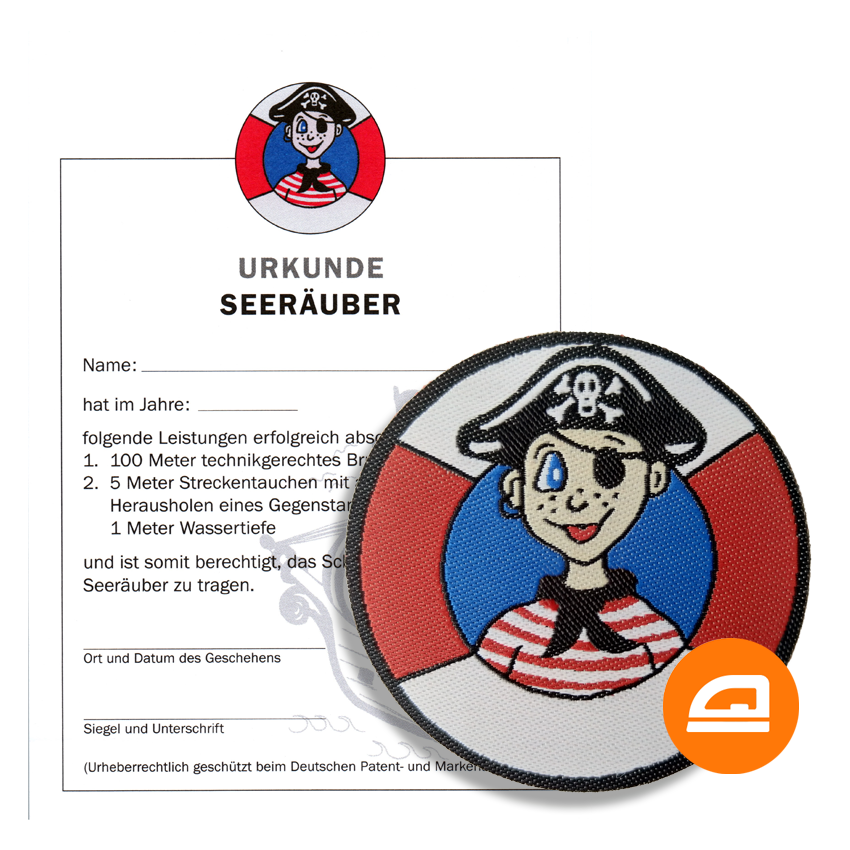
Swimming for weight loss is a great way for children to promote their health and find joy in movement. But especially when it comes to motivation and proper recognition, small successes play a big role. This is where Pimpertz comes in: As an official partner of DLRG and BFS, we offer high-quality and child-friendly swimming badges & certificates that awaken your children's ambition and pride. This makes swimming more than just a sport – it becomes a valuable learning experience.
Benefit from over 38 years of experience and fast shipping times, so your child can soon shine with their first awards. Discover also our diverse accessories & gift sets for playful encouragement in swimming lessons or at home. Start a healthy future for your child now and get everything you need for a successful start in swimming at pimpertz.de – your partner for swimming badges and more.
Frequently Asked Questions
What are the health benefits of swimming for children?
Swimming promotes cardiovascular function, strengthens muscles, improves posture, and can reduce stress. For overweight children, it is particularly gentle on joints and allows for safe exercise.
Which swimming style is most effective for weight loss?
Freestyle (crawl) is considered particularly effective as it leads to high calorie consumption and engages almost all muscle groups simultaneously. However, different styles like breaststroke or backstroke also offer benefits, especially for beginners.
How can I support my child in learning to swim?
Foster a positive relationship with water by attending swimming lessons and doing playful exercises. Patience and understanding are crucial to reducing fears and fostering joy in swimming.
What mistakes should be avoided when swimming with children?
Common mistakes include incorrect technique, lack of variety in training, and excessive performance demands. Make sure to use child-friendly learning methods and focus on fun and safety.


