



Many parents are amazed that children often appear much more relaxed and balanced in the sea than after a visit to the swimming pool. The natural power of saltwater and the special environment offer children health benefits that go far beyond mere swimming training. Seawater supports the immune system and can even noticeably alleviate skin problems. This article shows what makes sea swimming unique and why targeted swimming lessons at the sea are so exciting for families in Central Europe.
Table of Contents
- What makes swimming in the sea unique
- Health benefits of seawater
- Skin, respiration and immune system – special effects
- Risks from currents, animals and water quality
- Safe swimming with children in the open sea
Key Findings
| Point | Details |
|---|---|
| Unique training in the sea | Swimming in the sea offers an effective full-body workout due to the high salt content and natural water resistance. |
| Psychological benefits | Sea swimming promotes relaxation and well-being through the natural environment and sounds of the waves. |
| Health-promoting properties | Seawater supports skin healing, stimulates blood circulation and can alleviate respiratory diseases. |
| Safety precautions for children | Constant supervision and education about dangers are crucial for children's safety in the open sea. |
What makes swimming in the sea unique
Swimming in the sea differs fundamentally from swimming in pools. The high salt content and natural water resistance make this activity an extraordinary full-body workout that challenges and strengthens children on multiple levels. Seawater offers effective training that is also gentle on the joints.
The special features of sea swimming lie primarily in its natural properties. Unlike artificial pools, multiple physical and mental stimuli act on the body here. The salt content of the water increases buoyancy, which makes swimming noticeably easier and gives children more confidence. At the same time, the seawater massages the skin and stimulates circulation.
Another unique aspect is the mental dimension. The sound of the waves, the endless horizon, and weightlessness have a positive effect on one's psychological state. Children experience a form of relaxation and freedom here that is not possible in indoor swimming pools. The natural environment promotes concentration, body awareness, and motor development.
Pro tip: Always pay attention to age-appropriate safety measures when swimming in the sea and let your children swim only under supervision.
Here you can see a comparison of the properties of sea and pool water when swimming:
| Aspect | Swimming in the Sea | Swimming in the Pool |
|---|---|---|
| Buoyancy | Increased by salt content | Lower, due to little salt |
| Nature experience | Waves, wildlife, environment | Artificial facility |
| Health effects | Stimulates circulation and skin | Focus on technique, fewer natural stimuli |
| Mental effect | Relaxation and freedom | Regulation and structure |
Health benefits of seawater
Seawater is a true source of health for children and adults. The minerals in saltwater support the healing of inflammation and skin problems and offer a natural form of therapy with numerous positive effects.
The health benefits are diverse. The high mineral content stimulates blood circulation and strengthens the cardiovascular system. Especially for children with respiratory diseases such as asthma, being in seawater can be extremely beneficial. Salty air and water can alleviate allergic reactions and improve lung function.
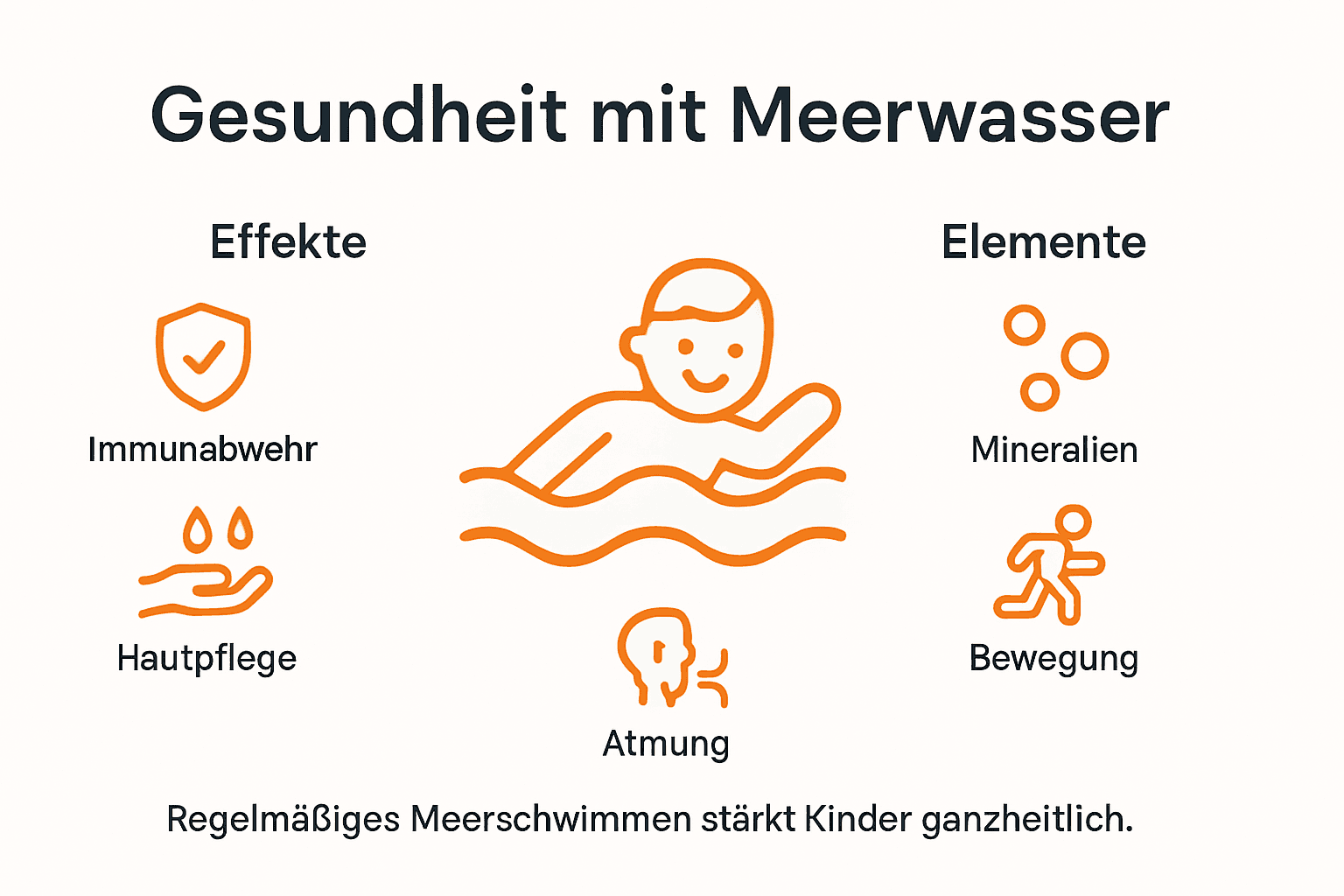
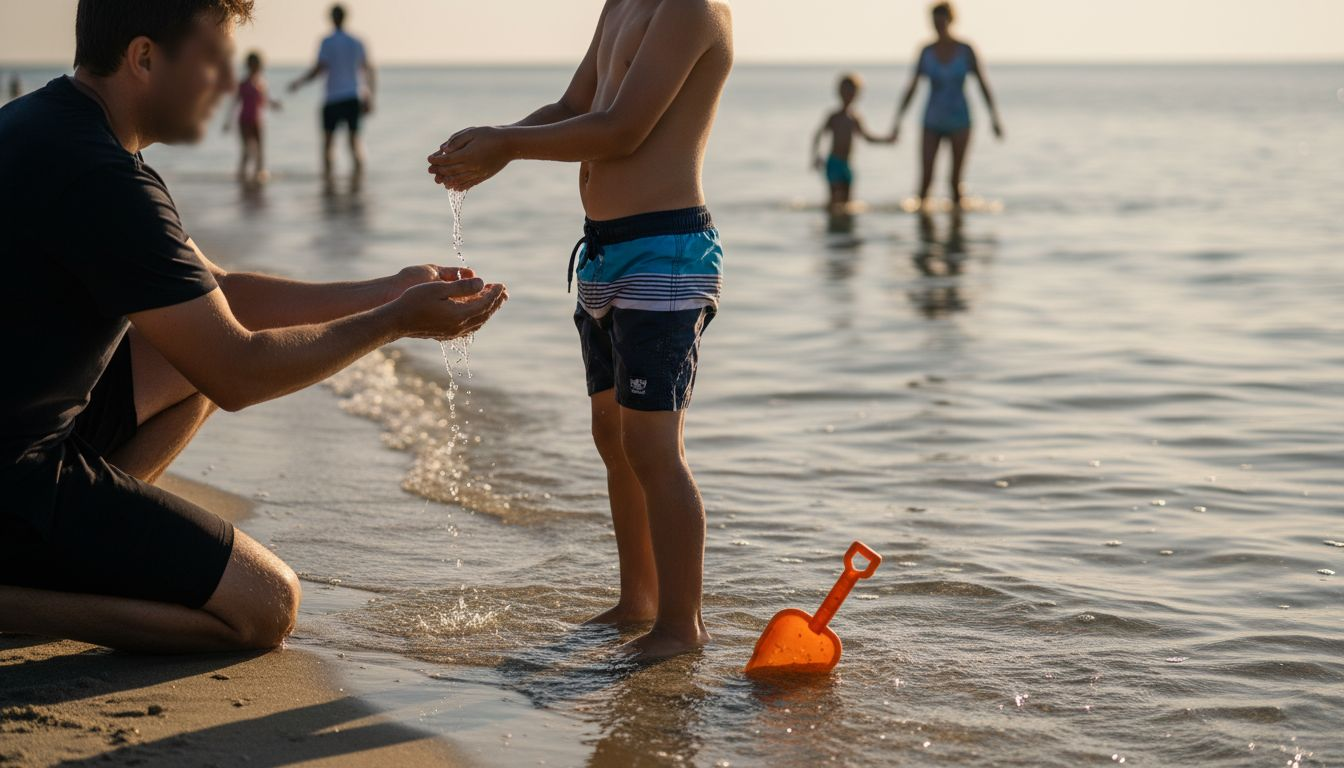
In addition, seawater acts like a natural massage for the skin. The trace elements promote metabolism, support the immune system, and aid in the regeneration of skin tissue. Children who regularly swim in the sea benefit from these holistic health advantages.
Pro-tip: When bathing in seawater, make sure to use sufficient sun protection and hydration to maximize the positive effects.
Skin, Respiration and Immune System – Special Effects
Seawater has a remarkable effect on various body systems. The salty environment stimulates the immune system through complex antioxidant processes, which can particularly benefit children.
For the skin, spending time in seawater is a true blessing. Minerals in seawater strengthen the skin barrier and support natural regeneration processes. Children with sensitive skin or mild skin irritations can especially benefit from the healing properties of saltwater.
The respiratory organs are also positively influenced in a sustainable way. The salty air and deep, controlled breathing while swimming improve lung capacity and can alleviate respiratory diseases such as asthma. The combination of exercise, fresh air, and seawater naturally strengthens the immune system.
Pro-tip: Make sure to thoroughly rinse your child after a sea bath and care for their skin to remove salt residue.
Risks from currents, animals and water quality
Swimming in the sea, besides its many benefits, also harbors specific challenges and dangers. Strong currents can carry swimmers away unnoticed and pose a significant risk, which is why constant vigilance and preparation are crucial.
Encounters with marine creatures can be unexpected. Jellyfish, sea urchins, and other marine animals can cause injuries. Unexpected weather conditions and water currents can quickly make swimming dangerous, so a careful risk assessment is essential before bathing.
Water quality is particularly important. Pollution, bacteria, and harmful substances can pose serious health risks. Parents should therefore always consult local bathing water reports in advance, choose official bathing zones, and pay attention to warning signs or lifeguard notices.
Pro tip: Always check current weather conditions before swimming and only let children into the sea under supervision.
This overview summarizes typical risks of sea swimming and recommended precautions:
| Risk | Description | Precautionary measure |
|---|---|---|
| Currents | Can sweep swimmers away | Only swim in designated areas |
| Marine life | Risk of injury from animals | Visual inspection, heed warning signs |
| Water quality | Pollution, germs | Check water reports, choose bathing zones |
| Weather changes | Sudden waves or wind | Pre-check weather, follow current advisories |
Safe swimming with children in the open sea
Child safety when swimming in the sea requires comprehensive preparation and constant attention. Children should be slowly accustomed to the sea environment and always swim only in shallow areas, with continuous supervision being absolutely necessary.
The basics of water safety must be taught early on. Children need clear rules: never go into the water alone, always stay within sight of parents, and listen to instructions. Life jackets or swimming aids can provide additional safety, but they do not replace direct supervision.
In addition, it is important to educate children about potential dangers. Explain to them the meaning of currents, wave behavior, and how to recognize rescue signs. An age-appropriate understanding of the marine environment helps children act responsibly and recognize risks.
Pro-tip: Before your beach holiday, enroll your children in a swimming course to strengthen their water competence and boost their self-confidence.
Strengthen your children healthily with Pimpertz swimming badges
Swimming in the sea promotes children's health through natural minerals, improved breathing, and strong immune defenses. Safety is essential, especially when swimming in the sea. Parents are therefore looking for ways to give children more self-confidence and competence in the water, while also preparing them for dangers such as currents and marine life.
With Pimpertz, you can optimally support this important health promotion. Our wide range of official and child-friendly swimming badges and certificates motivates children to continuously improve their swimming skills. In addition, we offer practical accessory sets and personalized bundles, so that everything is perfect for swimming courses and families. Trust in over 38 years of experience and the highest quality, so that your child learns to swim safely and confidently in the sea.
Experience how easy it is to promote swimming competence and joy in the water. Start now with official Pimpertz products and create the perfect foundation for healthy swimming in the sea and beyond.
Frequently asked questions
How does swimming in the sea differ from swimming in a pool?
Swimming in the sea differs due to the higher salt content, which increases buoyancy and thus makes swimming easier. In addition, the natural environment of the sea offers a variety of sensory impressions that are missing in a pool.
What are the health benefits of seawater for children?
Seawater has numerous health benefits for children, including strengthening the immune system, improving skin health, and supporting the respiratory system, especially for respiratory diseases such as asthma.
What safety measures should I consider when swimming in the sea with children?
Parents should always supervise their children while swimming, use swimming aids, and educate them about the dangers of currents and marine life. Attending swimming lessons before a beach vacation can also boost children's confidence.
What risks should be considered when swimming in the sea?
Risks when swimming in the sea include strong currents, encounters with marine creatures, and issues with water quality. It is important to check current weather conditions and swim in designated bathing areas.


