
Learning to Swim at 2 Years Old: Safe Training for Toddlers
Every year in Germany, over 300 children drown, many of them under five years old. For parents of a two-year-old, learning to swim often seems like a grand adventure fraught with uncertainties. However, the right swimming environment and age-appropriate accessories build confidence, safety, and joy. This guide compiles current expert recommendations to help you safely introduce your child to water and experience progress with ease.
Table of Contents
- Step 1: Prepare the Right Swimming Environment
- Step 2: Choose Child-Friendly Swimming Accessories
- Step 3: Introduce Gentle Water Acclimation
- Step 4: Guide Simple Swimming Exercises
- Step 5: Review Progress Playfully
Quick Summary
| Important Point | Explanation |
|---|---|
| 1. Choose a water temperature between 32–34°C | This temperature ensures comfort and prevents your child from feeling cold or uncomfortable. |
| 2. Prefer a shallow children's pool | A shallow pool builds confidence and makes water acclimation safe and pleasant. |
| 3. Use swimming noodles or kickboards | These aids provide support without restricting your child's freedom of movement and foster confidence. |
| 4. Perform playful water acclimation | Start with simple, playful activities to build a positive relationship with water. |
| 5. Review progress regularly and playfully | Use small challenges and document successes to encourage motivation and self-confidence. |
Step 1: Prepare the Right Swimming Environment
The right swimming environment is crucial for your two-year-old's water acclimation. The goal is to create a safe and pleasant atmosphere that conveys trust and joy in the water.
Start with water selection. The German Swimming Federation recommends warm water temperatures for toddlers, ideally between 32 and 34 degrees Celsius. This temperature ensures comfort and prevents your child from feeling cold or uncomfortable.
Pay attention to the pool's characteristics. A shallow, rounded children's pool with non-slip areas is ideal. Avoid deep or confusing water zones. Also, encourage your child to initially only move in shallow water and playfully explore the properties of the water.
Pro Tip: Bring familiar toys to give your child a sense of security and distraction.
Here is an overview of important criteria for toddlers' swimming environments:
| Criterion | Meaning for the Child | Practical Recommendation |
|---|---|---|
| Water Temperature | Well-being and Safety | Choose 32–34°C, avoid feeling cold |
| Pool Depth | Noticeable Self-confidence | Prefer shallow children's pool |
| Non-slip Surfaces | Protection against accidents | Use anti-slip areas |
| Toys in Water | Freedom from fear and fun | Bring familiar toys |
Step 2: Choose Child-Friendly Swimming Accessories
For two-year-olds, the right choice of swimming accessories is crucial to enable safe and positive water acclimation. You want to help your child develop confidence and enjoy the water.
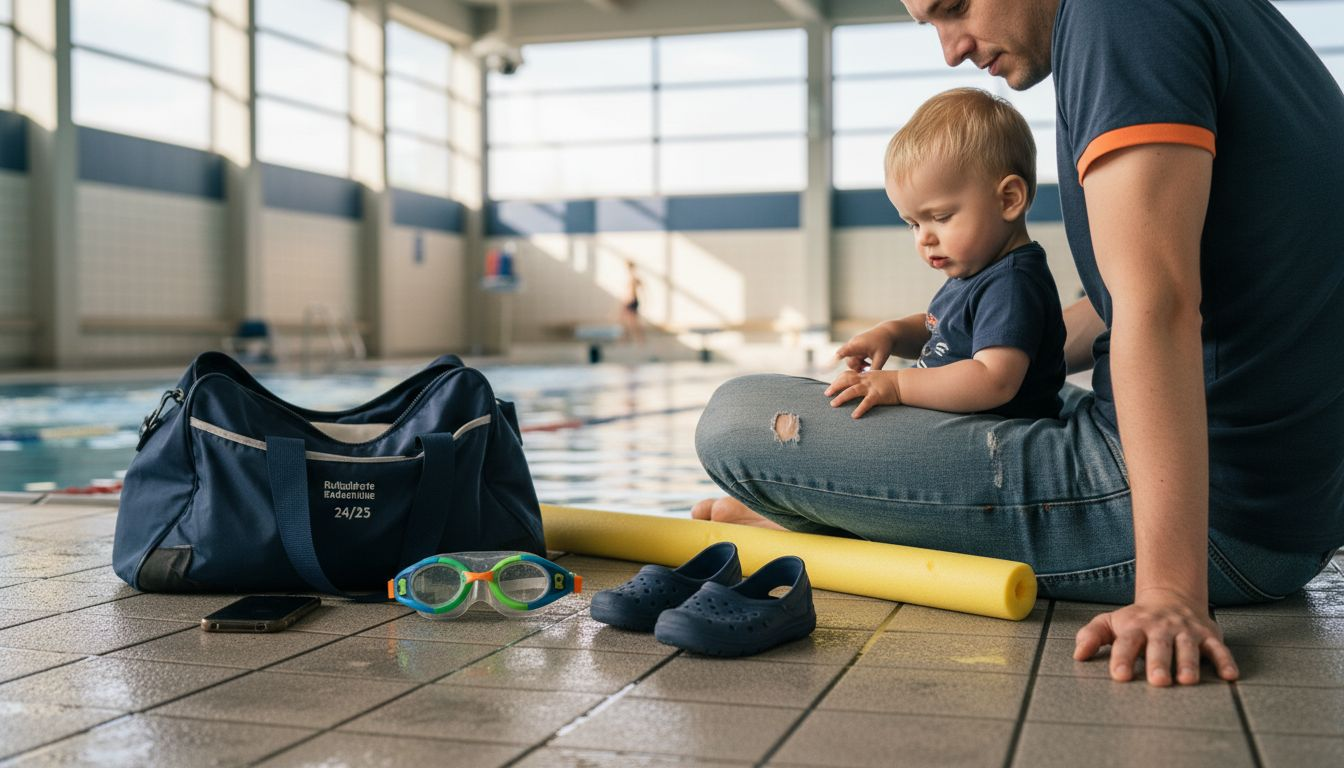
Experts recommend carefully selected swimming aids. Avoid armbands or vests that can hinder the natural feeling of water. Instead, prefer light swimming noodles or kickboards that provide support for your child without restricting their freedom of movement.
When purchasing accessories, pay attention to important criteria such as fit, comfort, and safety. Non-slip swimming shoes protect the feet, and well-fitting swimming goggles prevent water from entering the eyes. Make sure that the accessories are specially designed for small children and do not hinder their urge to move.
Pro Tip: Buy swimming accessories in bright, noticeable colors so you can keep a better eye on your child in the water.
Here is a comparison of the most popular swimming aids for two-year-olds:
| Swimming Aid | Freedom of Movement | Safety Aspect | Recommended for Toddlers |
|---|---|---|---|
| Armbands | Severely restricted | Low control | Rather unsuitable |
| Swim Vest | Restricted | Keeps on surface | Only conditionally suitable |
| Swimming Noodle | High | Requires supervision | Well suited |
| Kickboard | Medium | Supports strokes | Well suited |
Step 3: Introduce Gentle Water Acclimation
Water acclimation is a crucial moment in your two-year-old's development. You want to build a trusting and positive relationship with water, without creating pressure or fear.
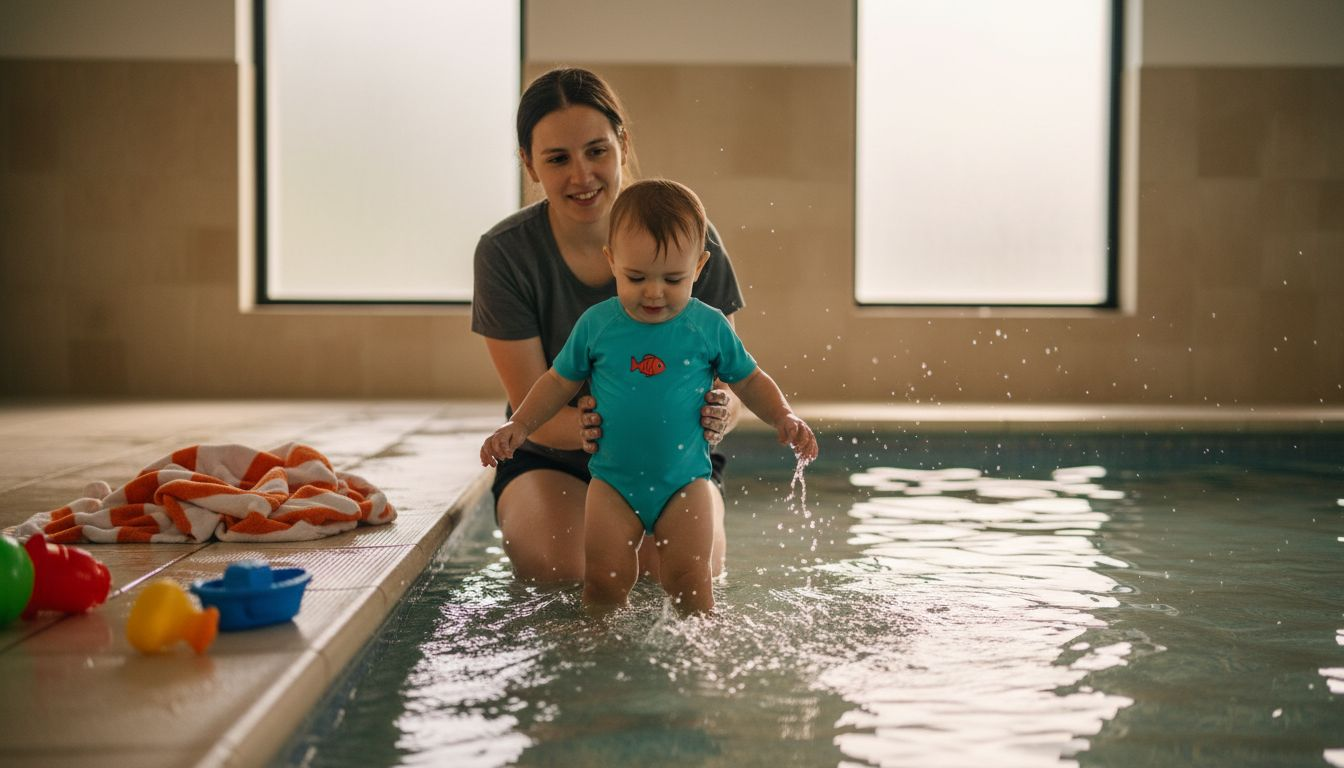
Child-friendly water exercises are key to success. Start with playful activities like blowing bubbles, scooping water, and gentle splashing. Let your child explore and experiment with the water. Show them how to carry water on their back and encourage them to be carried. This helps to build confidence and a sense of buoyancy.
Ensure that every activity is joyful and relaxed. Children immediately sense when parents are tense. Stay calm and patient. Exercises such as gently wetting the face, light submersion, and gentle floating support natural water exploration. It is important that you never push your child, but give them time and space for their own discoveries.
Pro Tip: Sing songs or play small games in the water to create a positive and relaxed atmosphere.
Step 4: Guide Simple Swimming Exercises
For two-year-olds, first swimming exercises are an exciting journey of discovery. The goal is to playfully develop confidence and basic water skills, without pressure or overwhelming.
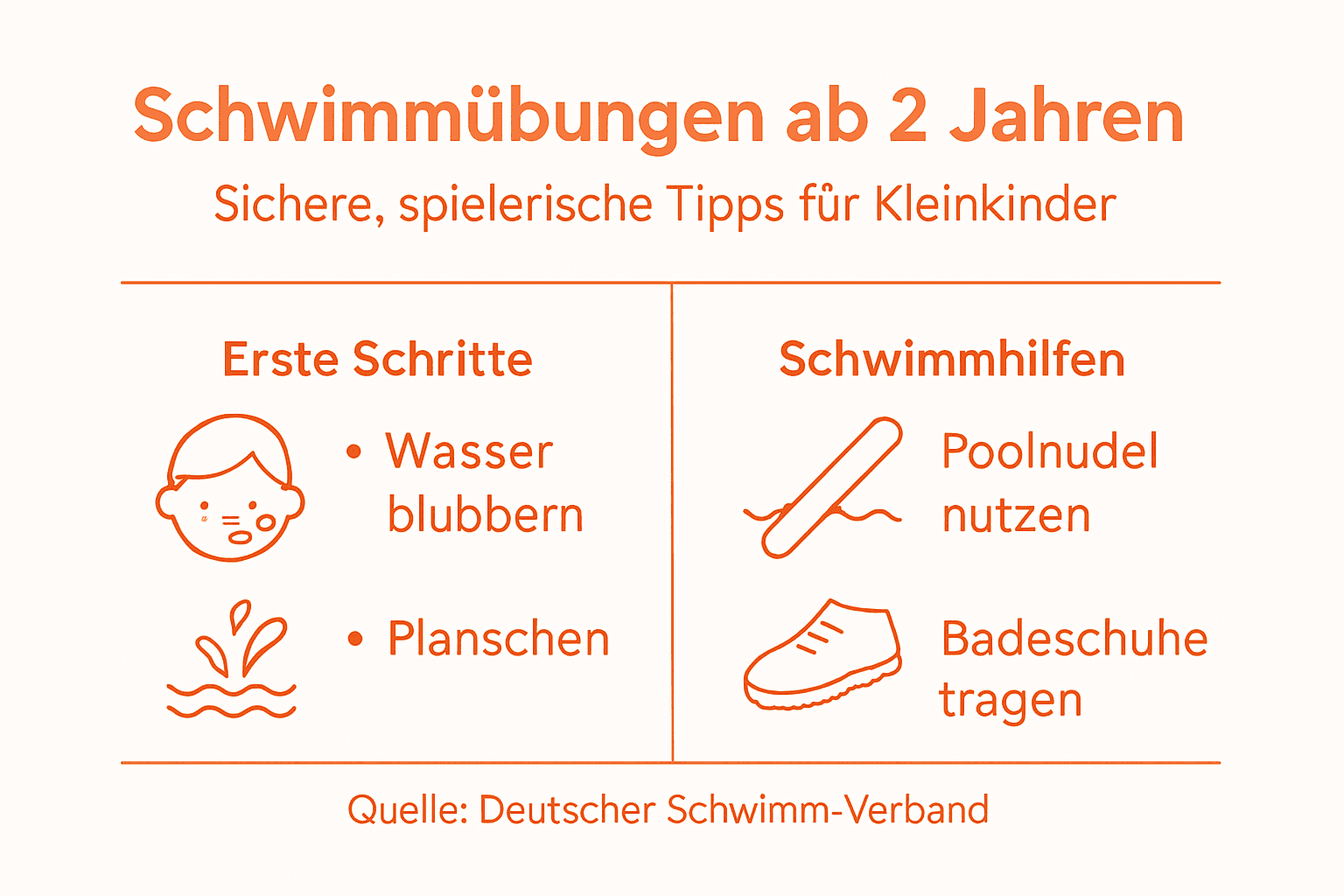
Start with playful swimming exercises that are fun and at the same time promote important skills. First, let your child splash in shallow areas and explore water movements with their hands and feet. Encourage them to grasp and move objects like small balls or water toys. Important basic exercises include exhaling underwater by blowing bubbles, gently submerging the face, and gently gliding with support.
Make sure to break down each exercise into small, manageable steps. Remain patient and positive. Praise every small effort and make the exercises a joyful experience. Show your child how to turn in the water, be carried, and hint at first swimming movements. The main thing is to develop joy and confidence.
Pro Tip: Use colorful swimming noodles or toys as motivational aids and turn each exercise into a small adventure.
Step 5: Review Progress Playfully
Developing swimming skills in two-year-olds is a delicate process that requires much patience and empathy. Your goal is to observe and encourage progress without creating performance pressure.
The German Swimming Federation recommends playful progress checks that strengthen motivation and self-confidence. Use small challenges such as collecting swimming toys underwater, gently gliding with support, or exhaling by blowing bubbles. Make sure to accompany every activity positively and appreciate every small success.
Observe closely, but do not judge. It is important that your child develops joy in the water and gains confidence in their own abilities. Document progress through short video recordings or a swimming diary. This way, you can make developmental steps visible without creating performance pressure.
Pro Tip: Turn progress checks into a joyful game where your child feels safe and loved.
Learning to swim at 2 years old: making it safe and motivating
Learning to swim in toddlerhood is a special challenge that requires a lot of patience and appropriate support. The article emphasizes the importance of gentle water acclimation and suitable swimming accessories for your child's confidence and joy. Safe swimming aids and motivating learning experiences play a central role in long-term success.
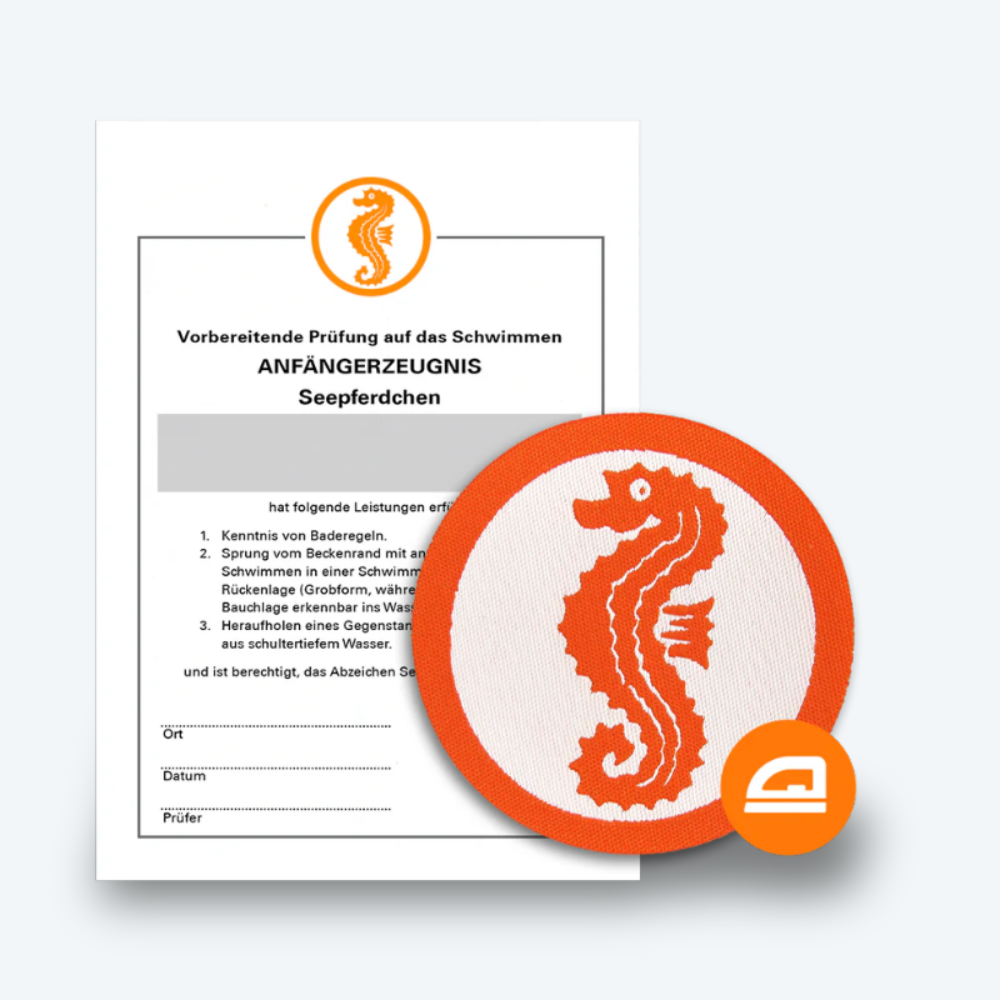
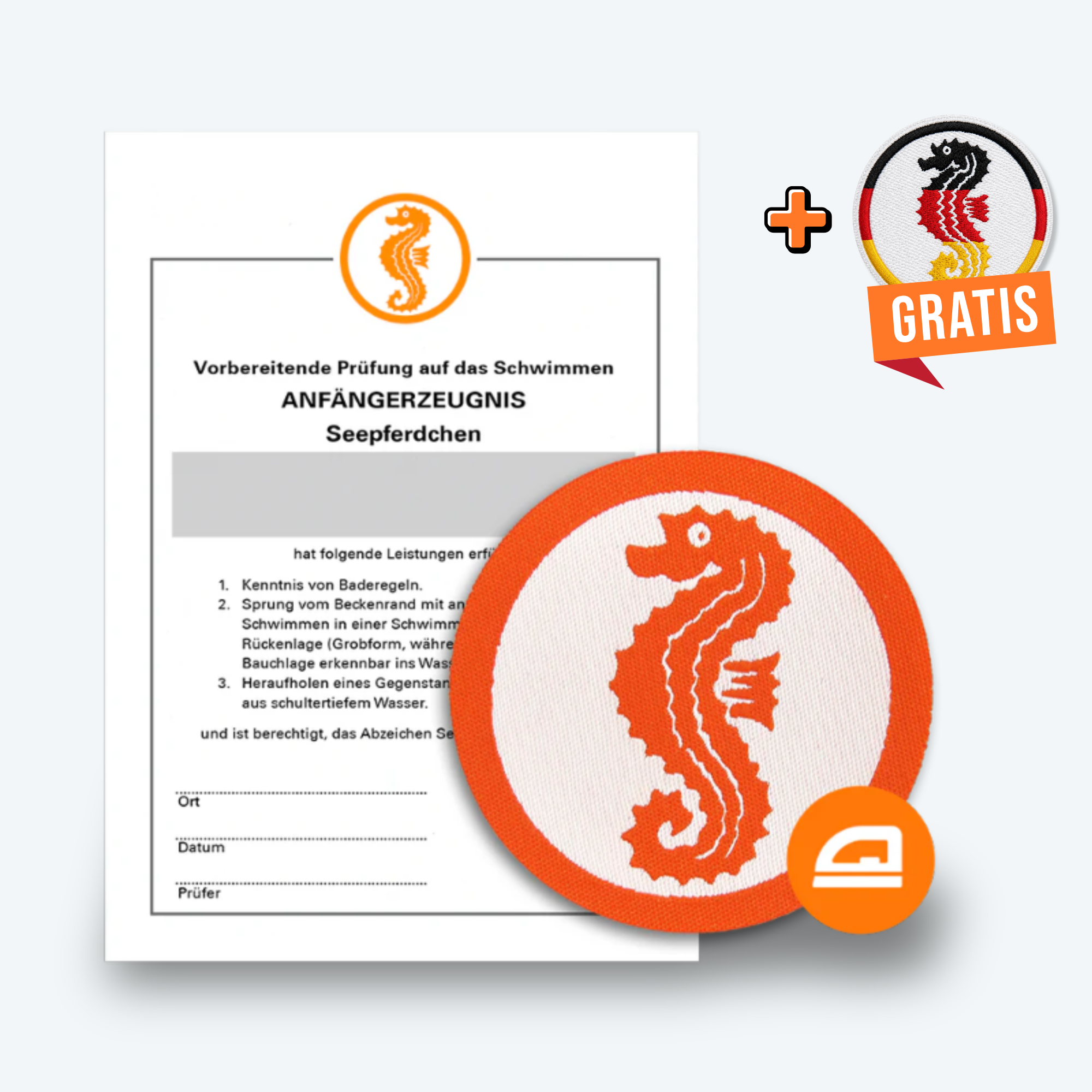
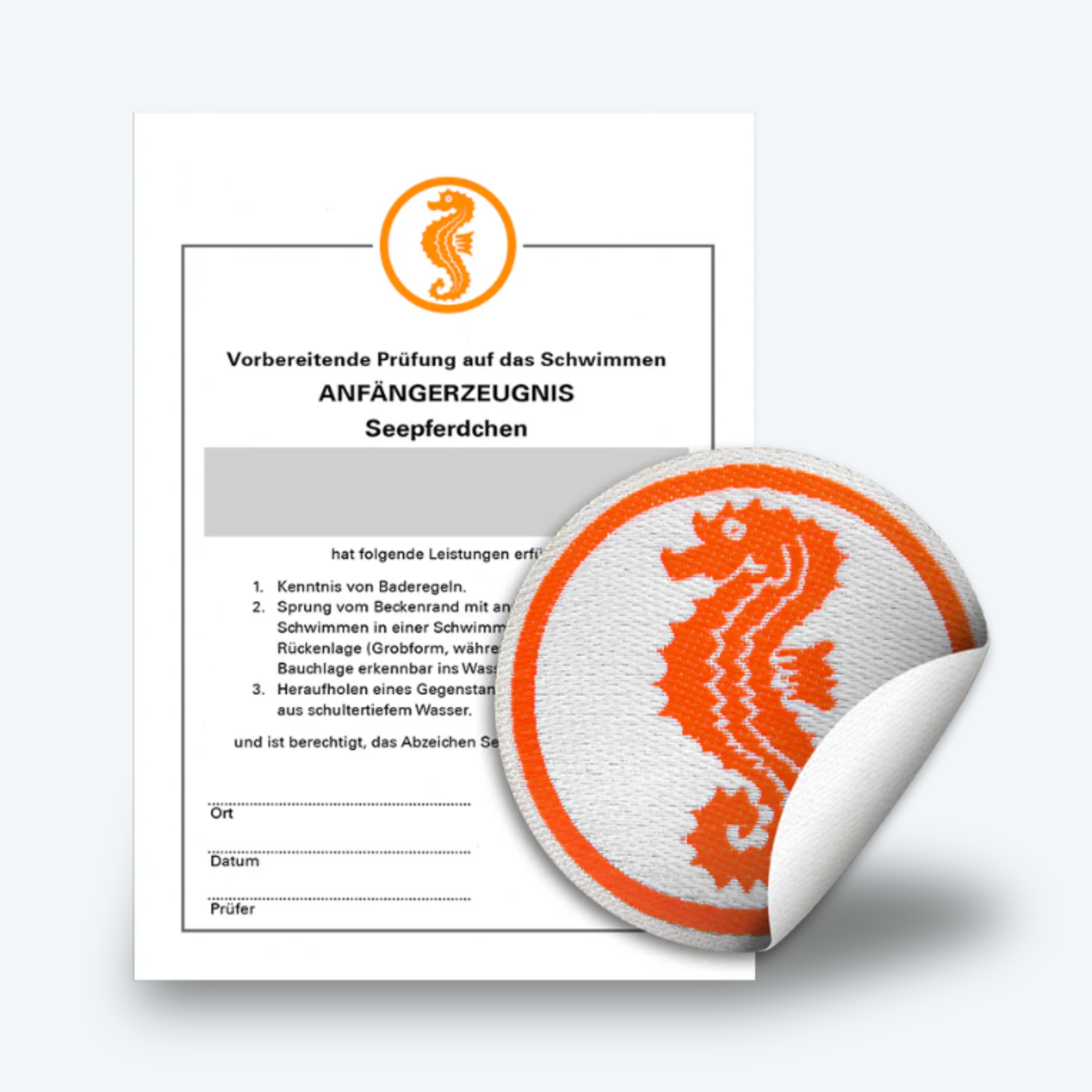
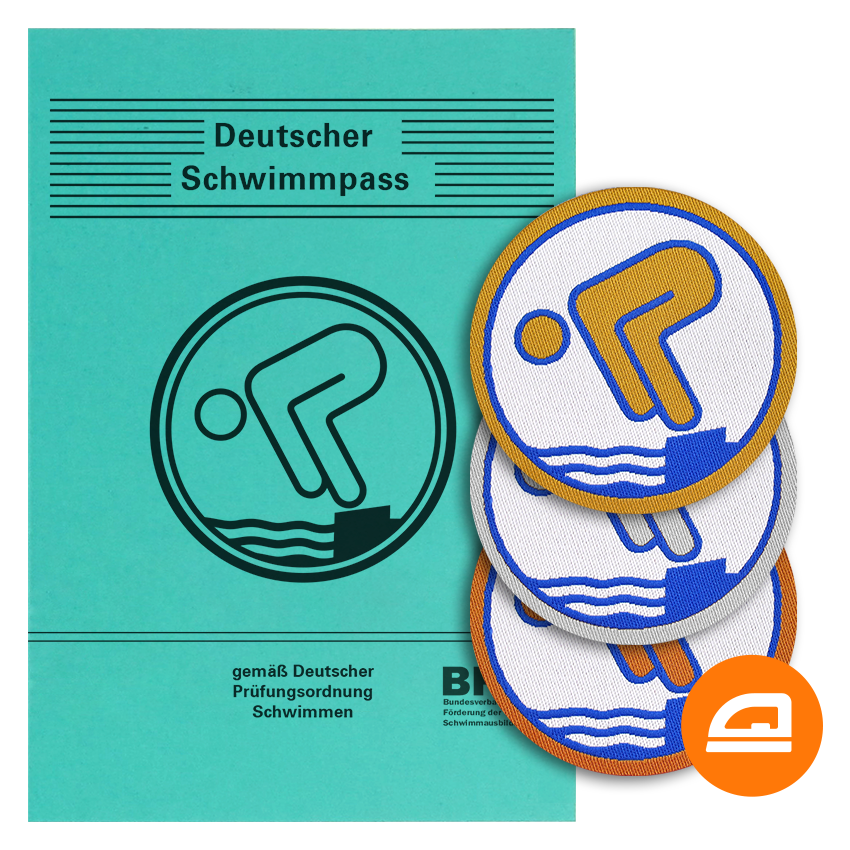
At Pimpertz, parents and swimming instructors will find first-class accessories and original certified swimming badges that are optimally tailored to the needs of toddlers. Use our individual personalization and exclusive bundles to playfully accompany your child's water acclimation and make successes visible. Benefit from 38 years of experience as an official partner of DLRG and BFS and start now with high-quality products that perfectly combine fun and safety. Discover our range and promote your child's water enjoyment with quality and competent advice.
Learn more now and discover the right swimming accessories with Pimpertz swimming badges & accessories. Take the first step for safe water experiences and a lifelong passion for swimming.
Frequently Asked Questions
How do I prepare the swimming environment for my two-year-old?
The swimming environment should be warm and safe. Choose a water temperature of 32–34 degrees Celsius and a shallow, non-slip children's pool. Make sure your child can play with familiar toys in the water to feel more secure.
Which swimming accessories are best for two-year-olds?
Avoid armbands and vests, as they can hinder the natural feeling of water. Instead, use light swimming noodles or kickboards that provide support for your child while allowing freedom of movement.
What activities can I use to acclimate my child to water?
Introduce playful activities such as blowing bubbles, scooping water, and gentle splashing. Let your child explore and experiment with the water without pressure. Play water songs or small games to create a positive atmosphere.
What are basic swimming exercises for toddlers?
Start with simple exercises such as exhaling underwater or gently submerging the face. Encourage your child to grasp small objects in the water and gently glide with support. Keep the exercises playful and positive.
How can I review my child's progress in learning to swim?
Playfully observe progress by introducing small challenges, such as collecting swimming toys. Praise every effort and document progress in a diary or through short videos, without creating performance pressure.