




Swimming for your back – Strong support for children
Many parents worry about their children's backs when romping and playing lead to tension. Especially in preschool age, water activities offer a noticeable advantage, as swimming strengthens core muscles and improves flexibility while protecting joints. Those who focus on swimming-related exercises enable their child to build holistic strength and promote healthy development. This article explains how various swimming styles prevent back pain and what parents should look out for.
Table of Contents
- What Swimming Means for the Back
- How Swimming Strengthens Back Muscles
- Backstroke vs. Other Swimming Styles for Children
- Tips for Safe and Effective Backstroke Swimming
- Common Mistakes and Risks in Back Training
Key Insights
| Point | Details |
|---|---|
| Swimming promotes back health | Regular swimming strengthens back muscles and reduces pain. |
| Joint relief through water | Weightlessness in water relieves joints and vertebrae, reducing the risk of injury. |
| Holistic training | Swimming activates various muscle groups and promotes the healthy development of children's musculoskeletal system. |
| Early intervention | Early swimming can prophylactically counteract postural damage and back problems. |
What Swimming Means for the Back
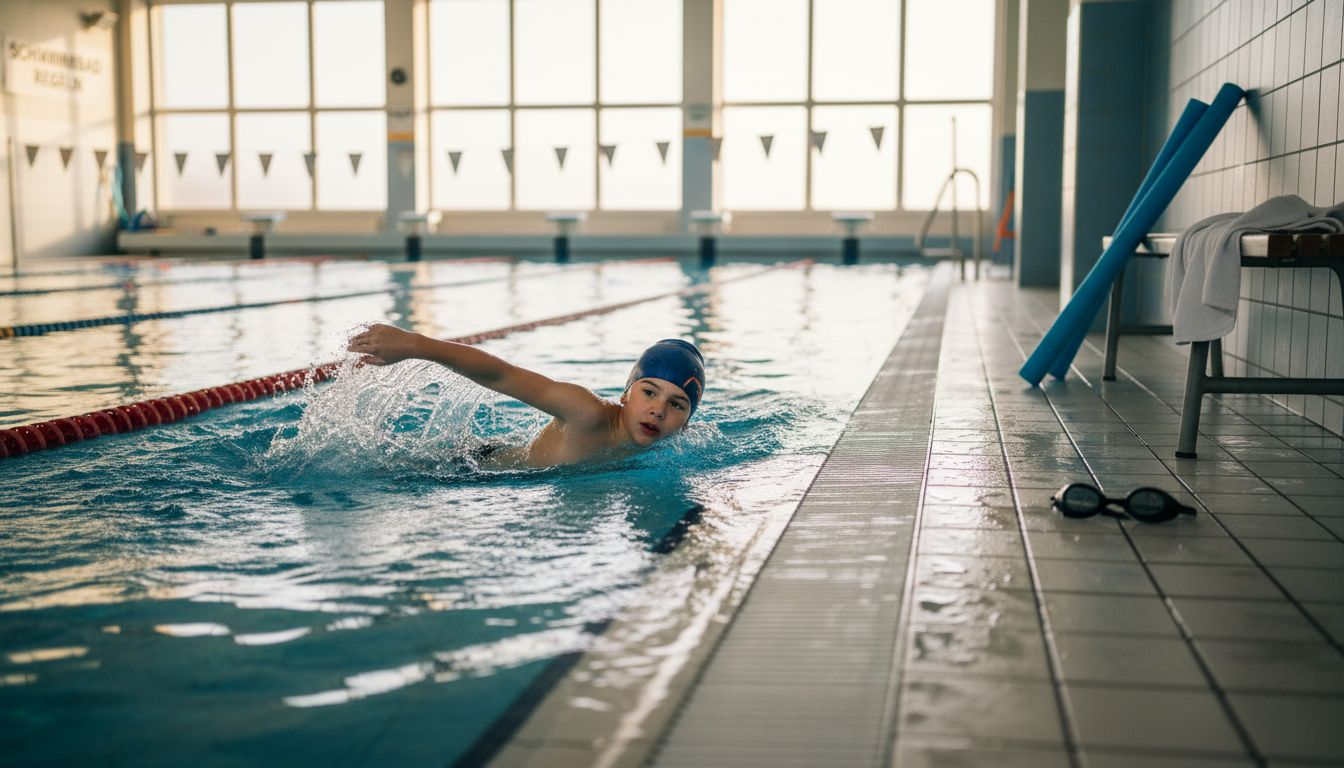
Swimming is an excellent sport for promoting children's back health. Movement in the water offers unique benefits for the spine that are not as comprehensively realized in any other sport. Studies show the positive effects that regular swimming not only strengthens back muscles but can also reduce pain.
Due to weightlessness in the water, joints and vertebrae are relieved, while holistic muscle strengthening takes place. The core muscles are trained particularly effectively, which leads to natural stabilization of the spine. This gentle training method is especially important for children, as it can help prevent postural damage and back problems early on.
During swimming, various muscle groups are activated simultaneously. The back, shoulders, abdomen, and legs work together harmoniously. This coordinated movement not only promotes physical fitness but also supports the healthy development of children's musculoskeletal system. The relief of the spine by water allows for training without joint strain and minimizes the risk of injury.
Below is an overview of the key benefits of swimming for children's back health:
| Benefit for the back | Description | Positive effects |
|---|---|---|
| Joint relief | Water reduces strain | Lower risk of joint damage |
| Full-body workout | Various muscle groups activated | Improved posture |
| Strengthening of core muscles | Intensive exertion in water | More stable spine |
| Reduction of pain | Regular movement in water | Fewer back complaints |
| Prevention of postural damage | Early training in water | Healthier development in childhood |
Pro-Tip: Start swimming lessons early and pay attention to correct swimming technique to maximize the positive effects for the back.
How Swimming Strengthens Back Muscles
Swimming is an outstanding sport to train back muscles holistically and gently. Especially crawl and backstroke swimming effectively activate the entire core and back muscles and improve spinal stability.
Movement in water offers crucial advantages for muscle development. Due to water resistance, all muscle groups must work continuously without being excessively strained. This means that every swimming movement represents a kind of holistic strength training, where back, shoulder, arm, and leg muscles are trained simultaneously. This coordinated movement not only promotes strength but also improves posture and flexibility.
This training method is particularly valuable for children. The floating movement in the water reduces the load on the joints and allows for safe, gentle muscle training. The core muscles are strengthened in such a way that they optimally stabilize the spine and prevent poor posture. The earlier children start swimming, the better they can build up their back muscles and prevent back problems in the long term.
Pro-Tip: When swimming, pay attention to correct technique and vary swimming styles to specifically train different muscle groups.
Backstroke vs. Other Swimming Styles for Children
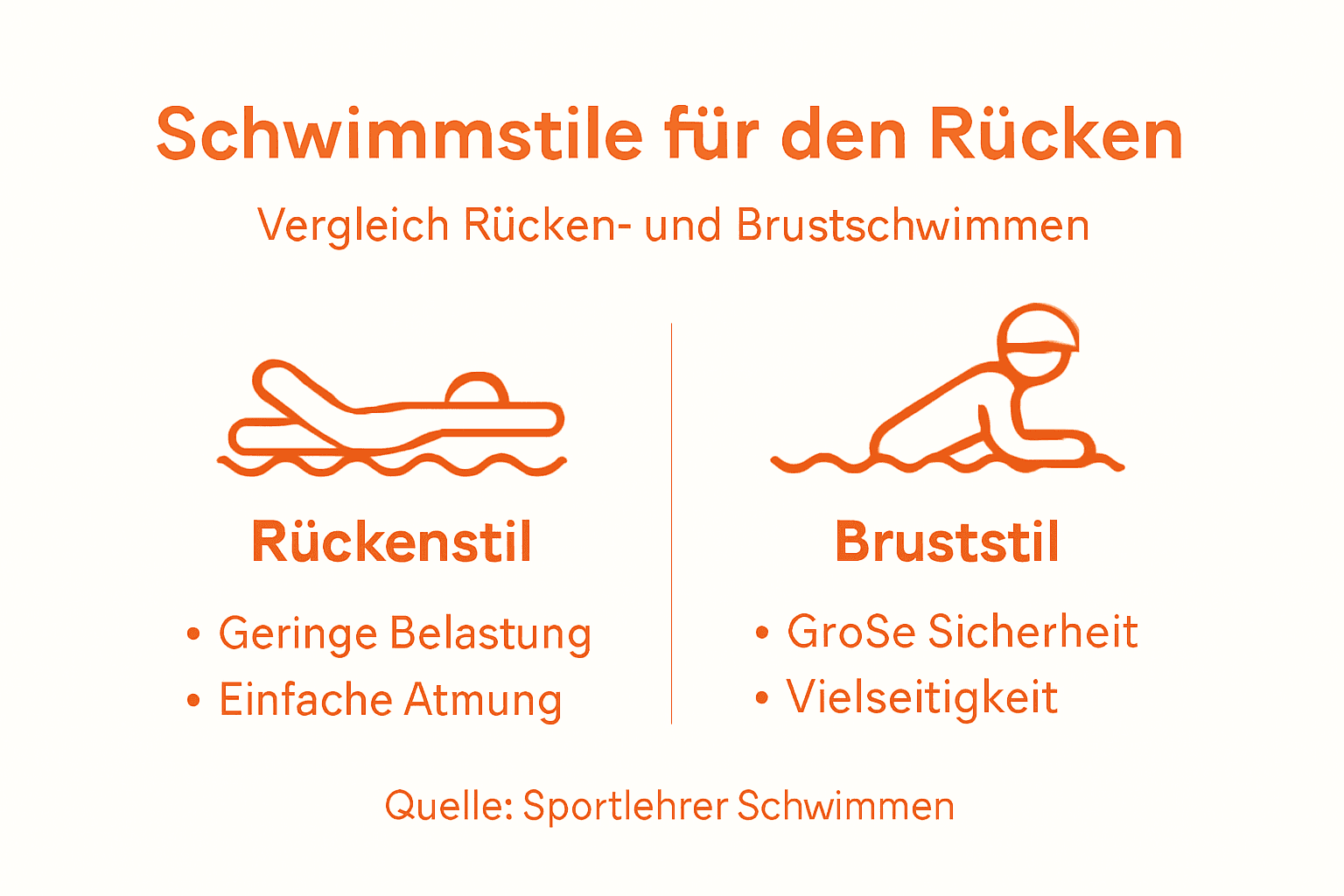
Backstroke holds a special position among swimming styles, especially when it comes to children's development. The back position offers children unique advantages for safety and confidence in the water. Unlike other swimming styles, children can breathe relaxed and keep their faces above water.
Compared to breaststroke or front crawl, backstroke shows significant differences. While breaststroke requires symmetrical movement and front crawl demands complex coordination of arm and leg movements, backstroke allows for more intuitive movement. Children can focus on their posture and stability without the fear of going underwater. This characteristic makes backstroke particularly valuable for beginners and children with low confidence in the water.
For back muscles, backstroke offers specific training benefits. The horizontal body position and consistent leg kick activate the core muscles differently than other swimming styles. Playful exercises like gliding and balance games help children improve their body coordination and balance. These aspects are crucial for healthy back development and can prevent postural damage.
Pro-Tip: Start learning to swim with backstroke to give children confidence and enjoyment in the water.
The following table shows a comparison of the most important swimming styles in terms of back health and child-friendliness:
| Swimming Style | Back Promotion | Beginner-Friendliness | Breathing in Water |
|---|---|---|---|
| Backstroke | Very high due to core activation | Especially suitable for beginners | Easy, as face is above water |
| Breaststroke | Moderate, supports posture | Limited, complex technique | Breathing breaks only with each stroke |
| Front Crawl | High, intensive muscle exertion | Harder to learn for children | Regular face immersion |
| Butterfly | Low for children, high strain | Not suitable for children | High demand on breathing and technique |
Tips for Safe and Effective Backstroke Swimming
Backstroke requires precise technique to maximize the benefits for back health. The correct body posture in the water is crucial for effective training. Make sure the head remains still in the water and the hips are slightly raised to achieve optimal body tension.
The movement technique in backstroke differs fundamentally from other swimming styles. The leg kick should be rhythmic and extended, with the feet staying slightly above the water surface. The arm movements alternate, with one arm sweeping backward while the other is guided upward. This coordinated movement helps to train the back muscles evenly while ensuring efficient propulsion.
It is especially important for children to avoid poor posture. Common mistakes such as a sunken pelvis or a raised head can lead to tension and strain on the spine. Parents and swimming instructors should specifically pay attention to correct posture and playfully teach children the right technique. Regular practice and patient guidance help to develop a safe and effective swimming technique.
Pro-Tip: Practice backstroke technique with kickboards first to improve balance and posture.
Common Mistakes and Risks in Back Training
Backstroke, when performed incorrectly, can do more harm than good. Common technical errors can lead to tension and inefficient training. The most frequently occurring mistake is holding the head too high, which destabilizes body posture and unnecessarily increases water resistance.
For children, the risks must be particularly considered. Incorrect swimming technique can not only impair performance but also have long-term effects on spinal development. Overuse of shoulder joints or uneven muscle strain can lead to postural damage. Injury risks often arise from intensive training without sufficient regeneration and inadequate technical instruction.
To minimize risks, professional guidance is crucial. Swimming instructors can teach children how to position their bodies correctly in the water and perform movements properly. This includes optimal head position, an even leg kick, and balanced arm movement. It is also important to pay attention to body tension and breathing to avoid tension.
Pro-Tip: Have children's technique regularly checked and corrected by a qualified swimming instructor.
Strong Back Through Swimming with Pimpertz – Perfect for Children
The importance of swimming as a full-body workout for healthy back muscles in children is undisputed. If you want to optimally support the benefits of backstroke and targeted core muscle strengthening at home or in a swimming club, you will find exactly the right swimming badges and recognitions at Pimpertz. Our certified products playfully motivate children to improve their technique and to make their progress visible.
Benefit from over 38 years of experience, qualified partnerships with DLRG and BFS, and an extensive range of swimming badges & certificates for every performance level – ideal for successfully accompanying backstroke and other swimming styles. Start now with high-quality awards and accessories to encourage children step by step towards strong support and healthy back development. Visit Pimpertz and discover our exclusive offers for swimming courses, clubs, and families.
Frequently Asked Questions
How does swimming promote children's back health?
Swimming strengthens back muscles and relieves the spine through weightlessness in the water, which prevents postural damage and back pain.
Which swimming styles are best for the back?
Backstroke is particularly recommended as it allows for a relaxed body posture and activation of the core muscles, while front crawl and backstroke are also effective.
What are the benefits of backstroke for children?
Backstroke offers safety because children can breathe easily while their face remains above water. It also promotes self-confidence and stabilizes the spine.
What are the tips for proper backstroke?
Important tips include correct body posture, keeping the head still in the water, and an even leg kick to avoid tension and poor posture.