
Swim Belts for Adults: Instructions for Safe Swim Lessons 2026
Many adults look for safe aids to learn how to swim or improve their technique. The fear of deep water and lack of body control prevent many people from learning to swim. Swimming belts offer a practical solution: they stabilize the upper body, allow free arm and leg movements, and build confidence in the water. This guide shows you how to choose the right swimming belt, use it effectively in lessons, and what coaches and swimming clubs should consider when using them. You will learn everything about materials, methods, and safety aspects for a successful start to swim training.
Table of Contents
- Key Takeaways
- Basics and Materials of Swimming Belts for Adults
- Applications and Methods in Swim Instruction
- Pros and Cons, and Safety Aspects of Swimming Belts
- Selection and Care: Tips for the Optimal Swimming Belt
- Our Recommendations for Swimming Badges and Accessories
- Frequently Asked Questions about Swimming Belts for Adults
Key Takeaways
| Point | Details |
|---|---|
| Stabilization | Swimming belts keep the upper body upright in chest-deep water and facilitate movements. |
| Material | EVA foam and adjustable models offer optimal buoyancy and comfort for different body sizes. |
| Instructional Use | Gradual integration according to individual learning progress promotes confidence and technique development. |
| Limitations | Not suitable for free swimming or for extreme aquaphobia, only for controlled training situations. |
| Quality Features | Chlorine-resistant, ergonomic models with good padding ensure durability and wearing comfort. |
Basics and materials of swimming belts for adults
Swimming belts work on a simple principle: they create buoyancy in the upper body, thus allowing for a natural water position. Unlike life jackets, they only encircle the waist, leaving arms and legs free to move. This design promotes the learning of correct swimming movements without restricting freedom of movement.
The choice of material determines functionality and durability. Swimming belts are made of EVA foam, a closed-cell foam that does not absorb water and provides lasting buoyancy. High-quality models also use neoprene for padding, which increases wearing comfort and prevents chafing. The foam is divided into individual blocks that can be individually adjusted or removed.
There are different types for various applications. Standard belts are suitable for beginners in swim instruction and offer firm buoyancy. Aqua jogging belts with adjustable buoyancy allow progressive adjustment by means of removable foam blocks. Ergonomic variants with anatomically shaped padding adapt better to the body shape and distribute pressure more evenly. For swimming clubs and coaches, models with quick-release systems that allow for quick donning and doffing are recommended.
Pro Tip: When purchasing, pay attention to the number of foam blocks. Models with 4 to 6 individual blocks offer better adjustability than one-piece constructions. This allows you to gradually reduce buoyancy as your swimming skills improve.
The mechanics are simple but effective. Buoyancy lifts the upper body to the water surface and stabilizes the horizontal body position. This allows you to concentrate on arm and leg movements without constantly fighting to stay afloat. Adjustability via buckles or Velcro fasteners ensures a secure fit for various waist sizes. High-quality padding prevents pressure points during longer training sessions.
| Material | Properties | Suitability |
|---|---|---|
| EVA foam | Water-repellent, durable, chlorine-resistant | Standard training, beginners |
| Neoprene padding | Soft, skin-friendly, comfortable | Longer sessions, sensitive skin |
| Adjustable systems | Adaptable, progressively reducible | Advanced, technique training |
High-quality swimming belts are characterized by clean seams, sturdy fasteners, and UV-resistant materials. Cheap models often show cracks in the foam or come apart at the seams after just a few weeks. Invest in branded products specifically designed for swim instruction. More information on suitable swimming accessories can be found here.
Applications and methods in swim instruction
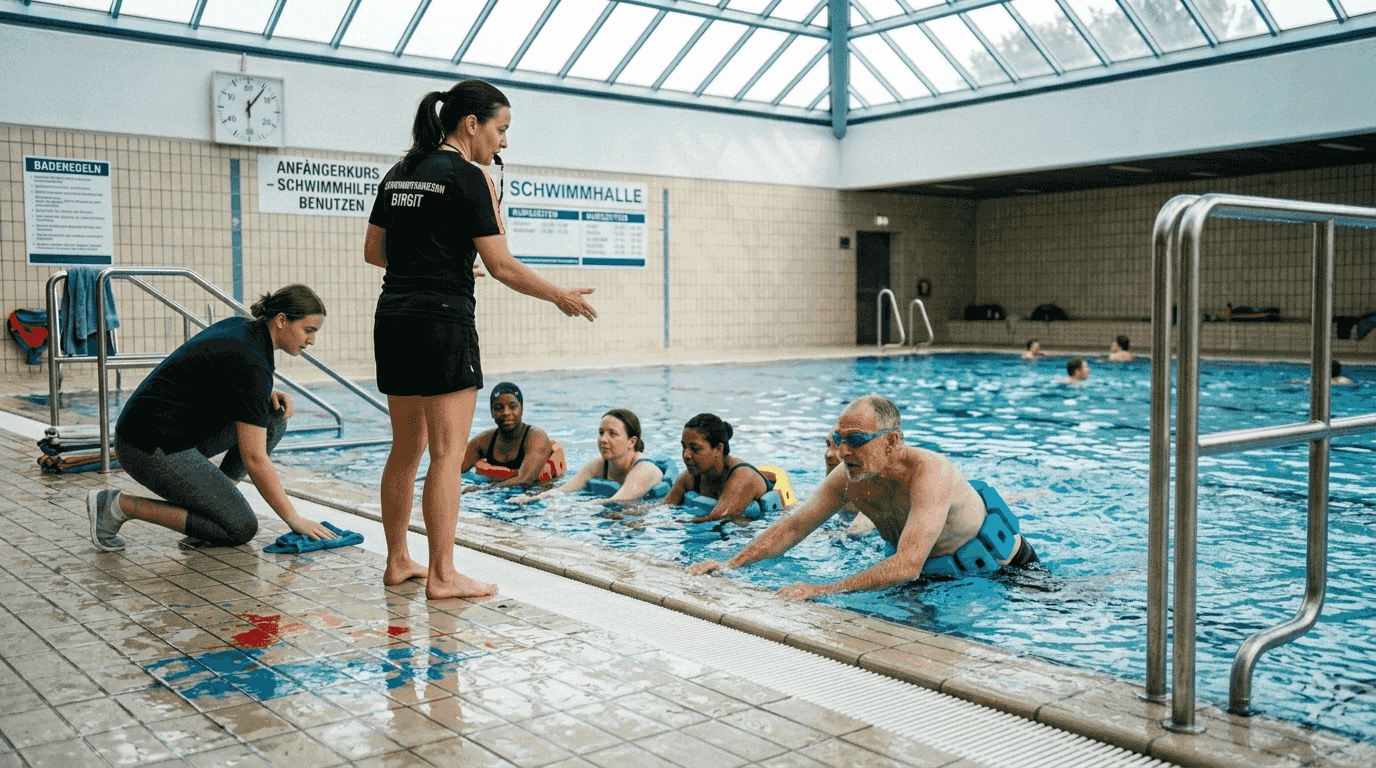
Swimming belts fulfill several pedagogical functions in lessons. They enable safe water familiarization for anxious adults who would not enter deeper water without aids. At the same time, they support technique training by stabilizing the correct body position. Coaches use them specifically to isolate movements and perfect individual swimming styles.
Methodical integration follows a clear step-by-step plan. Start in chest-deep water where learners can stand at any time. First, have participants perform simple gliding exercises with full buoyancy. Gradually increase complexity: first leg kicks, then arm strokes, finally coordinated movements. Gradually reduce buoyancy by removing individual foam blocks. This progressive approach builds confidence and prevents overwhelm.
Swimming belts are suitable for beginners for water familiarization and are often combined with kickboards. This combination allows for isolated leg training while the belt secures the water position. For arm technique, you can use pull buoys between your legs and focus on arm strokes. Fins enhance leg kicks and provide additional propulsion.
Typical instructional steps include:
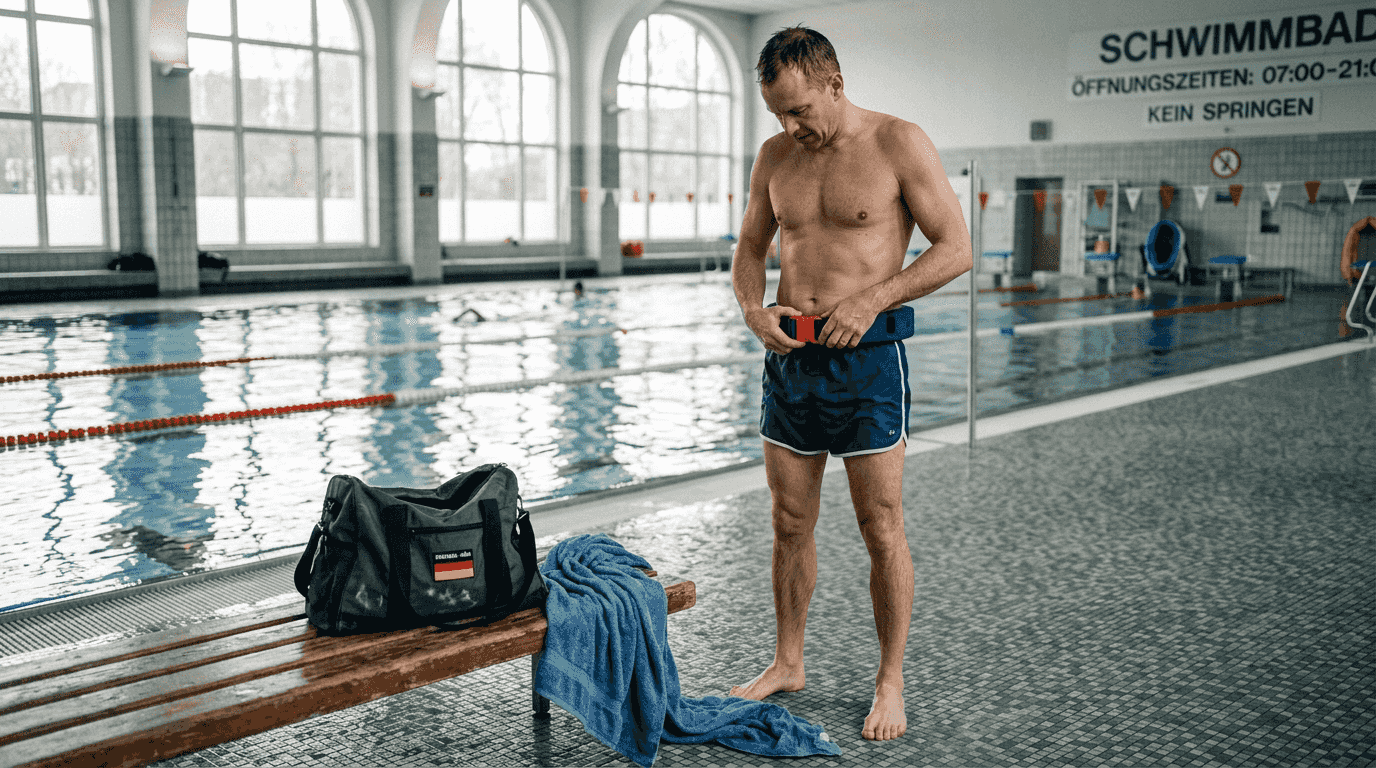
- Put on the belt and check its fit: It should be snug but not cut in or slip.
- Water familiarization with the belt: Walking, jumping, putting face in the water to build confidence.
- Gliding exercises: Pushing off the pool edge and gliding on your stomach, maintaining body tension.
- Practicing leg kicks in isolation: With or without a board, focusing on a steady rhythm.
- Adding arm strokes: Training coordination of breathing and movement.
- Reducing buoyancy: Remove one foam block, repeat exercises.
- Transition without a belt: Swimming short distances without aid, keeping the belt close for safety.
Pro Tip: Document your students' progress accurately. Note when you remove foam blocks and how long participants can swim without a belt. This data motivates and shows concrete learning progress.
For swim coaches, adjustable models are the first choice, as they can be adapted to different body types. In swimming clubs, a set of different sizes is recommended to cover all age groups. Chlorine-resistant materials are indispensable, as the belts are in daily use.
The combination with other teaching methods enhances the learning effect. Video analysis shows participants their body position and movement patterns. Partner exercises promote mutual support and social learning. Playful elements such as relays or obstacle courses make training varied. Further proven swimming teaching methods can be found in our detailed guide.
Individual adaptation is important. Some adults need longer acclimatization phases, others make rapid progress. Do not force anyone to give up the belt too early. At the same time, avoid dependencies: set clear goals for the transition to free swimming. Detailed tips for swimming courses for adults help with lesson planning.
Pros and cons, and safety aspects of swimming belts
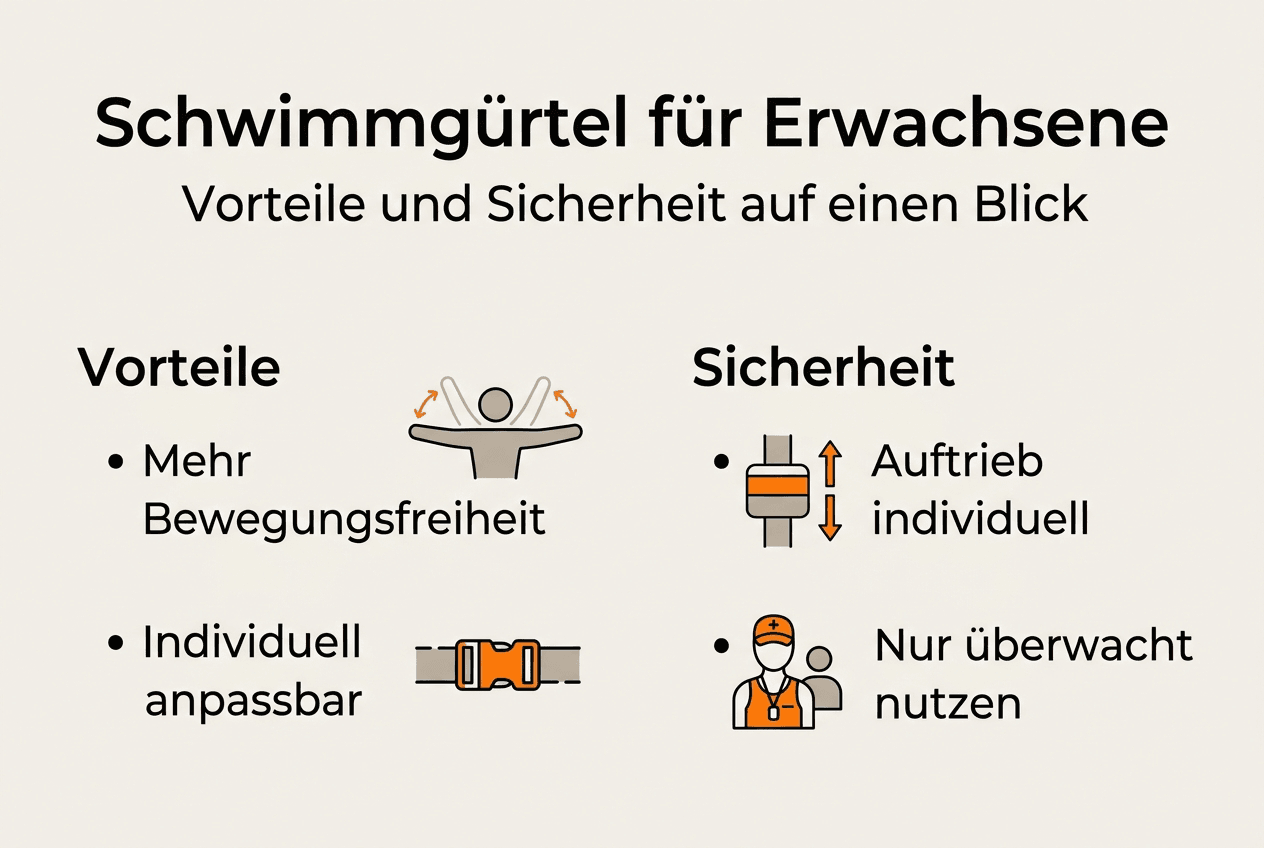
Swimming belts offer numerous advantages for learners and coaches. They allow free movement of arms and legs, which promotes natural swimming movements. Training is gentle on the joints, as buoyancy supports body weight and reduces strain. Their versatility makes them equally suitable for rehabilitation, fitness, and swim instruction. Adults appreciate the inconspicuous appearance compared to arm floats.
Benefits include freedom of movement, joint-friendly training, and versatile applications. Adaptability through removable blocks allows for progressive difficulty increase. They are ideal for aqua fitness and water aerobics, as they allow for intensive exercises without overexertion. Older adults particularly benefit from the gentle cardiovascular training in the water.
Nevertheless, there are limitations. Buoyancy is more limited than with life jackets, which can be problematic for absolute non-swimmers. An acclimatization phase is necessary, as the body position initially feels unusual. Swimming belts are not suitable for free swimming in open waters, but exclusively for controlled training situations. Professional swimmers do not need them as they already master the technique.
Risks arise primarily from incorrect use. Chafing occurs with poor padding or too tight a fit. Material wear due to chlorine or UV radiation reduces safety if belts are not regularly checked. Incorrect donning can lead to slipping during exercise. In cases of severe aquaphobia, swimming belts do not offer sufficient psychological safety; more intensive support and possibly other aids are needed here.
Safety rules for use:
- Only use in chest-deep water where learners can stand at any time.
- Adjust buoyancy individually and never overestimate it.
- Regular material inspection for cracks, loose seams, or defective fasteners.
- Clear explanation of the limitations of the aid.
- Constant supervision by qualified coaches or supervisors.
Experts warn against excessive reliance on swimming aids. The transition to free swimming must be initiated early to develop independent swimming ability. Swimming belts are learning aids, not permanent safety equipment.
Special caution applies to children and uncertain swimmers. They must never be left unsupervised with a swimming belt in the water. The aids do not replace swimming supervision and do not offer protection against drowning. Public pools often have specific rules for swimming aids; inform yourself beforehand.
For people with health limitations, medical consultation is recommended. Cardiovascular diseases, back problems, or skin conditions may require special considerations. Pregnant women should only use swimming belts after consulting their doctor. More information on learning to swim in old age addresses health aspects in detail.
Selection and care: tips for the optimal swimming belt
The right selection begins with a needs analysis. Beginners require maximum buoyancy and easy handling. Advanced users benefit from adjustable models with reducible buoyancy. Coaches should pay attention to durability and easy cleaning. Aqua fitness enthusiasts value comfort during longer sessions.
Important selection criteria in detail:
- Material: EVA foam for standard use, neoprene padding for sensitive skin, chlorine-resistant coatings for continuous use.
- Workmanship: Double seams, reinforced fastening points, high-quality buckles made of plastic or metal.
- Padding: Anatomically shaped, breathable, skin-friendly without harmful substances.
- Adjustability: Wide size range (at least 60-120 cm waist circumference), continuous adjustment, secure fixation.
- Buoyancy adjustment: At least 4 removable blocks, easy handling, even weight distribution.
- Visibility: Bright colors or signal colors for better recognition in water.
Qualities such as comfort and chlorine resistance are crucial for longevity. Cheap models from the Far East often show material fatigue after only a few weeks. Brand-name products cost more but last several years with regular use. Pay attention to manufacturer warranties and test seals.
Pro Tip: If possible, test the belt in the water before purchasing. Some stores or swimming pools offer rental models. This way, you immediately feel whether the fit and buoyancy meet your requirements.
Care instructions significantly extend lifespan. Rinse the belt thoroughly with clear water after each use to remove chlorine and salt residues. Let it air dry, never in direct sunlight or on heaters. Store it flat or hanging in a cool, dry place. Avoid kinks and heavy objects on the belt.
Clean with mild soapy water and a soft sponge. Aggressive cleaners or brushes damage the surface and reduce chlorine resistance. Regularly check seams, fasteners, and foam for damage. Replace defective parts immediately or replace the entire belt if damage is significant.
| Model type | Buoyancy | Comfort | Durability | Price |
|---|---|---|---|---|
| Standard Beginner | High | Medium | 1-2 years | 25-40 € |
| Adjustable Advanced | Variable | High | 2-3 years | 45-70 € |
| Premium Ergonomic | Adjustable | Very high | 3-5 years | 80-120 € |
| Aqua Jogging Pro | Medium-High | Very high | 3-4 years | 60-90 € |
Purchase recommendations depend on the intended use. For occasional private training, standard models are sufficient. Swimming clubs are better off investing in premium versions with quick-release systems. Aqua fitness studios need models that are easy to clean hygienically. Online reviews and test reports provide information on practical suitability.
Pay attention to return policies and exchange options. Not every belt fits every body type. Reputable dealers allow hassle-free exchanges for size or comfort issues. Preferably buy from specialist retailers who offer advice and after-sales service. Further helpful tips for swimming accessory selection support your purchasing decision.
Our recommendations for swimming badges and accessories
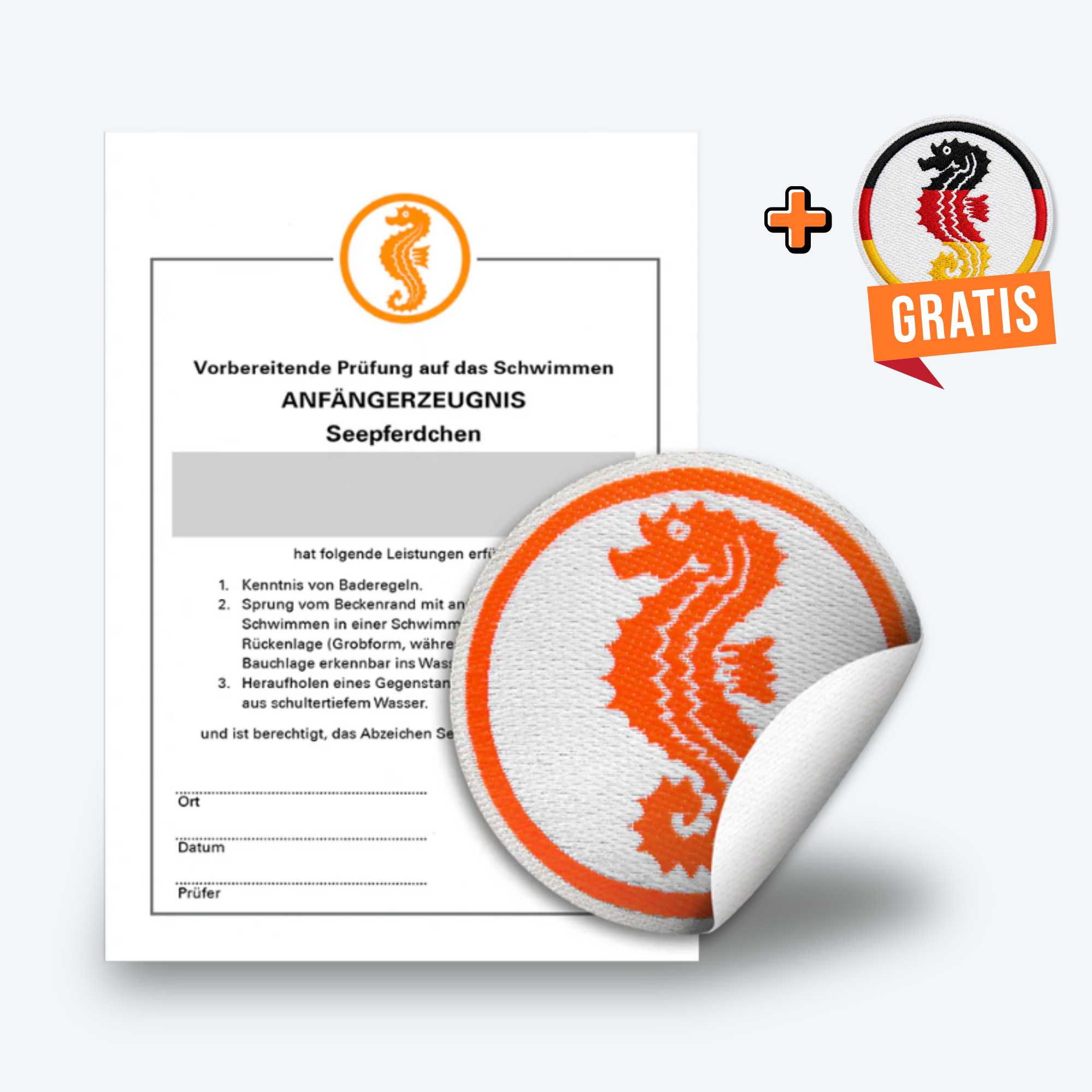
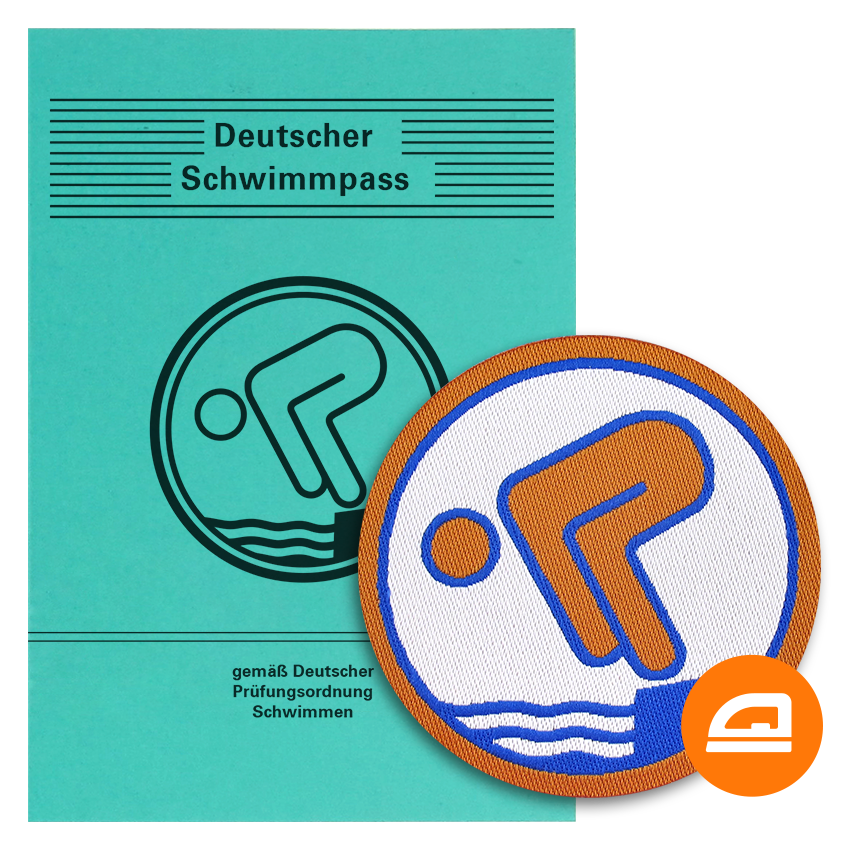
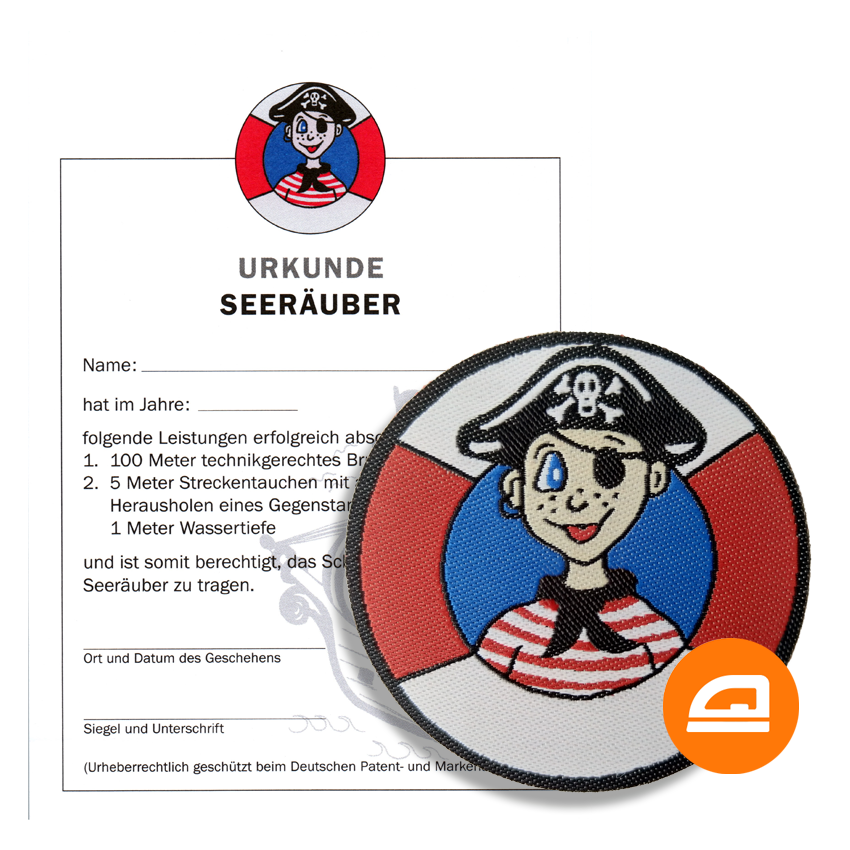
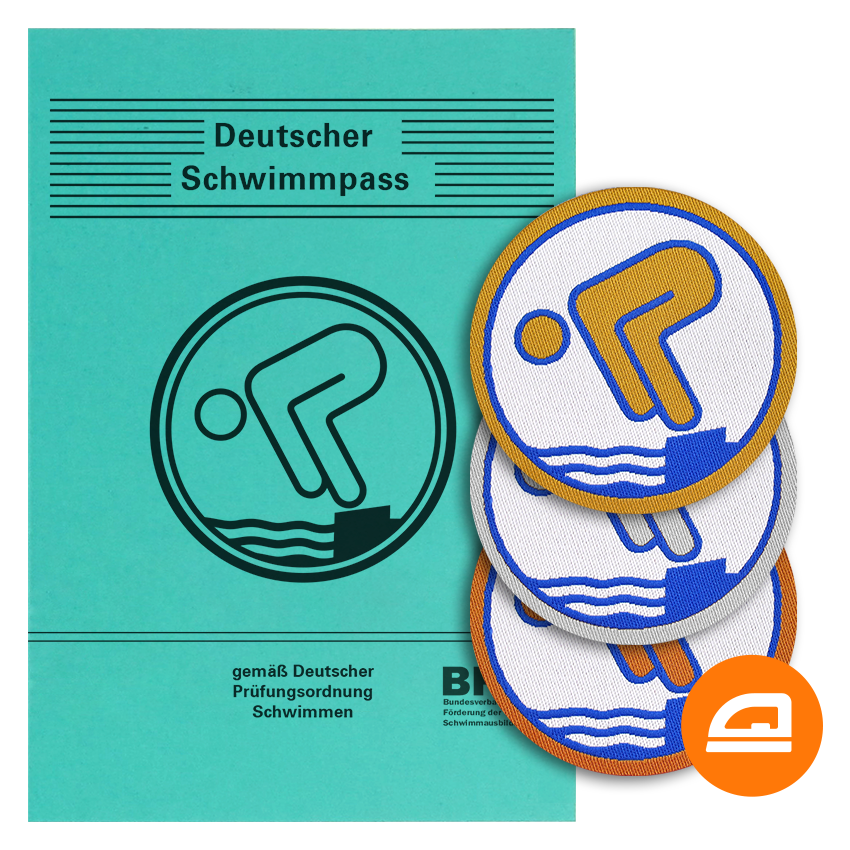
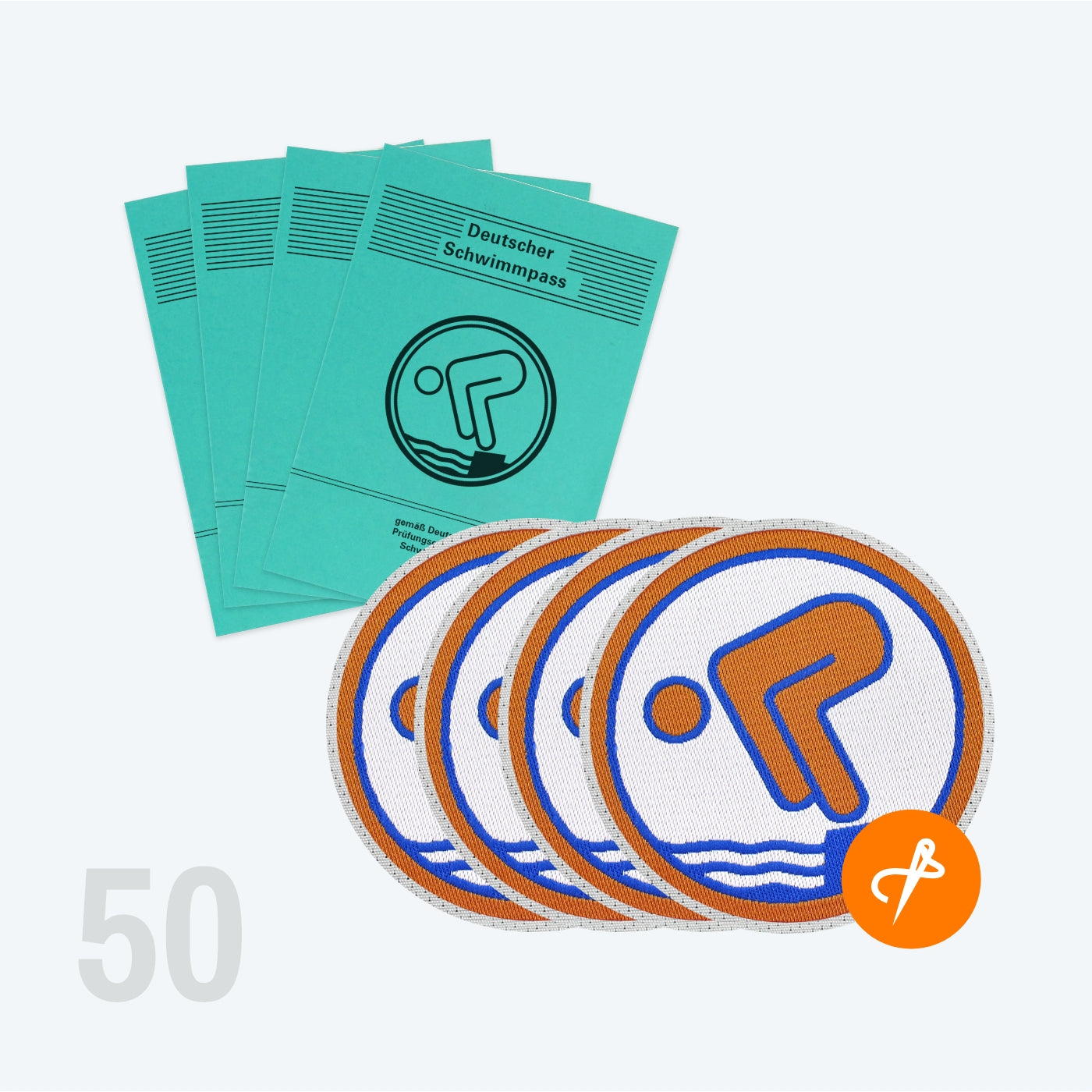
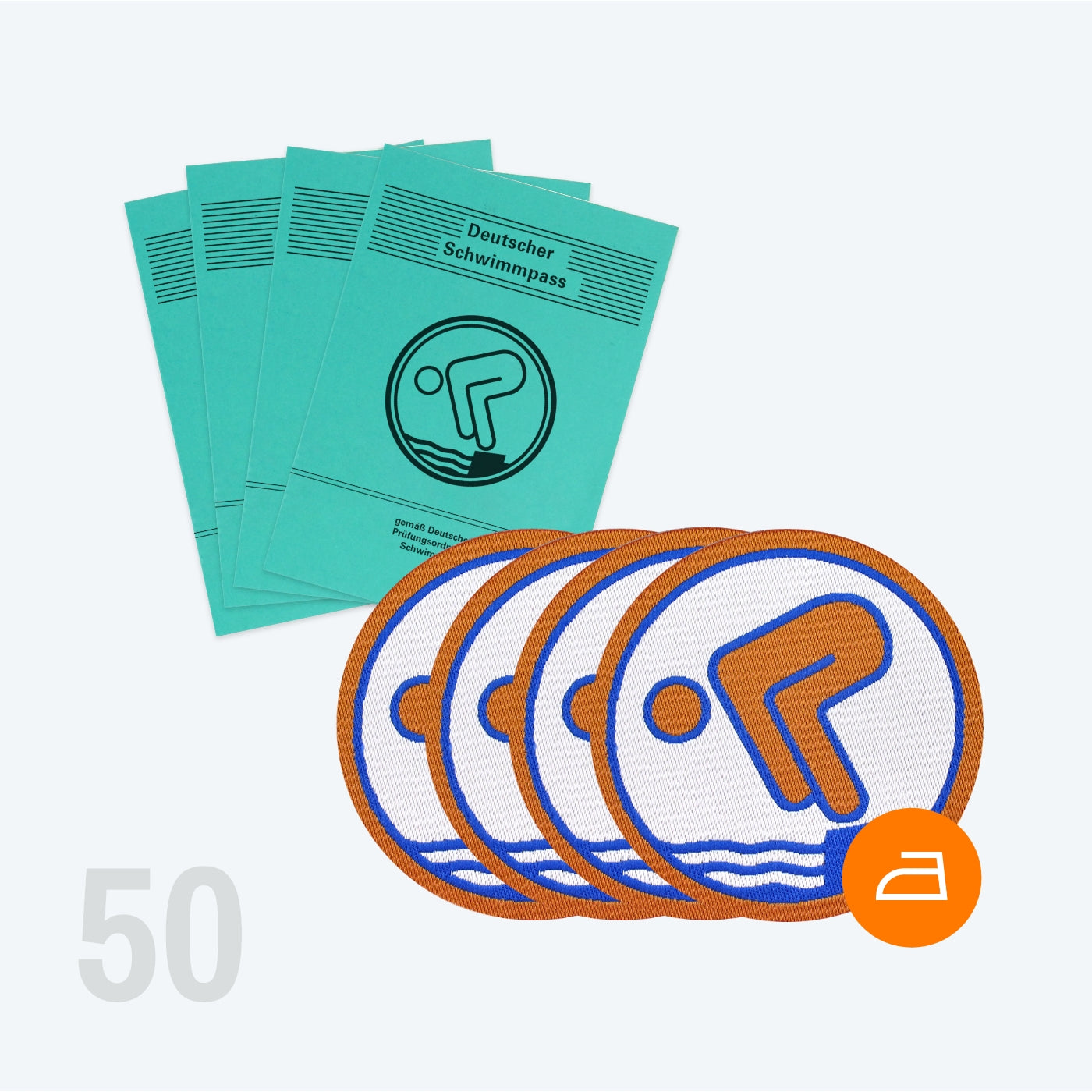
After successful swim training with a swimming belt, recognition is well-deserved. At Pimpertz, you'll find suitable swimming badges to motivate adults and children. From Bronze to Silver to Gold, we offer originally certified badges that make your learning successes visible. Complement your training with high-quality swimming accessories from our range.
For swimming clubs and coaches, we recommend our bundle offers with attractive discounts. Personalized badge kits with your club logo provide additional motivation for your members. The official Seepferdchen certificate and other awards professionally document every training progress. As a partner of DLRG and BFS, we guarantee the highest quality and fast shipping within 1 to 2 business days.
Frequently asked questions about swimming belts for adults
How does a swimming belt differ from a life jacket?
Swimming belts only encircle the waist and leave arms and legs completely free. They offer less buoyancy than life jackets but allow natural swimming movements. Life jackets encircle the entire upper body and provide maximum buoyancy, but restrict freedom of movement. Belts are better suited for swim instruction, while jackets are for safety in open waters.
Can I learn to swim with a swimming belt without becoming dependent?
Yes, if you gradually reduce the buoyancy. Gradually remove individual foam blocks as you feel more confident. Regularly practice short distances without the belt, keeping it close for safety. Set clear goals for transitioning to free swimming. Professional guidance from swim coaches significantly accelerates this process.
How do I properly care for my swimming belt?
Rinse it thoroughly with clear water after each use. Let it air dry, never in direct sunlight. Store it flat or hanging in a cool, dry place. Clean it occasionally with mild soapy water. Regularly check seams and fasteners for damage and replace defective parts immediately.
What water conditions are swimming belts suitable for?
Swimming belts are suitable exclusively for controlled conditions in swimming pools or supervised waters. Use them only in chest-deep water where you can stand at any time. They are unsuitable for open waters, waves, or currents. They also offer insufficient protection in very cold water. Strictly adhere to these restrictions.
Which models are recommended for swim coaches?
Coaches should choose adjustable models with quick-release systems. Chlorine-resistant materials and robust workmanship are indispensable for daily use. Ergonomic variants with good padding increase wearing comfort for course participants. Invest in a set of different sizes for various body types. Premium models with 5 to 6 removable blocks offer maximum adjustment flexibility.
From what age can adults use swimming belts?
Swimming belts are suitable for adults of all ages, as long as there are no health restrictions. Older individuals particularly benefit from joint-friendly training. In case of pre-existing conditions such as cardiovascular problems or back pain, medical consultation is recommended. The belts adapt to various body sizes and waist circumferences through adjustability.