
Swimming Accessories for Children 2026: Safe and Motivating
Many parents believe that any swimming accessories are sufficient for children to learn to swim successfully. However, the reality is different. Child-friendly swimming accessories significantly increase safety and confidence when learning to swim. The right choice of swimming aids, goggles, and motivating certificates makes all the difference between frustration and joy in the water. This guide shows you which accessories your child really needs and how you can reinforce learning success with targeted awards.
Table of Contents
- Key Findings on Swimming Accessories for Children
- Why the Right Swimming Accessories are Crucial for Children
- Overview and Comparison of the Most Important Swimming Accessory Types for Children
- Motivating Certificates and Badges: Why They Support Swimming Lessons
- Practical Tips for Parents: Combining Swimming Accessories and Certificates Sensibly
- Buying Swimming Accessories and Certificates: Our Recommendations
- Frequently Asked Questions about Swimming Accessories for Children
Key Findings on Swimming Accessories for Children
| Point | Details |
|---|---|
| Safety and Fun | The right swimming accessories increase safety and the fun factor when learning. |
| Age-Appropriate Selection | Child-friendly accessories suit the child's age and abilities. |
| Motivating Awards | Certificates support positive learning experiences and encourage regular participation. |
| Quality is Crucial | Equipment should be of high quality and durable. |
| Targeted Combination | Parents should combine swimming lessons and accessories purposefully. |
Why the Right Swimming Accessories are Crucial for Children
Swimming accessories must exactly match your child's age and swimming level. A three-year-old child needs different aids than a seven-year-old. The developmental stage determines what support is needed in the water. Incorrect equipment can hinder the learning process or even be dangerous.
Important basic equipment includes:
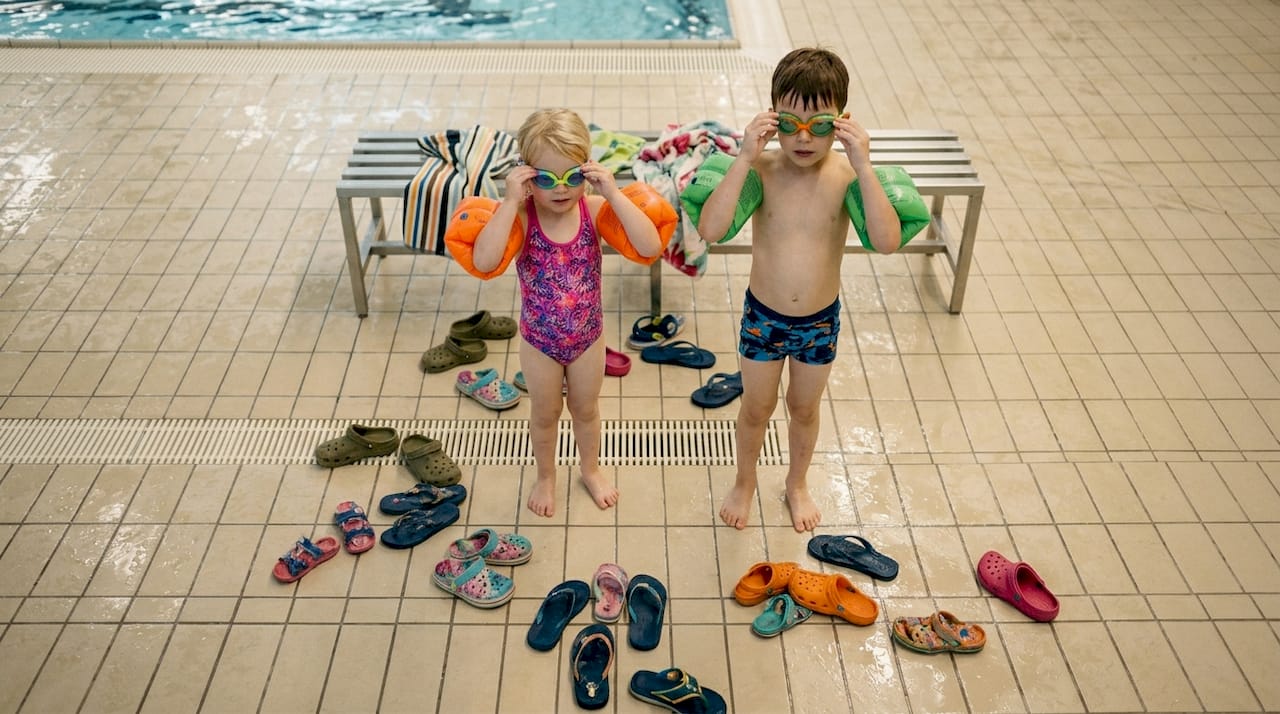
- Armbands for beginners from two years old
- Goggles to protect the eyes
- Pool noodles to promote freedom of movement
- Kickboards for targeted leg training
High-quality material protects against skin irritation and supports natural freedom of movement. Cheap plastic can trigger allergic reactions or become porous after a few weeks. Invest in brand quality that lasts for several swimming seasons. The seams must be smoothly finished to prevent pressure points.
Safety and comfort significantly boost children's motivation and confidence. A child who feels comfortable in the water learns faster and stays engaged longer. Uncomfortable accessories lead to distraction and frustration. The right fit is just as important as functionality.
Parents should check accessories for quality and fit before purchasing. Have your child try on the goggles and check if they fit snugly. Armbands should not be too loose, but also not cut in. Look for test seals such as CE or TÜV.
Pro-Tip: Buy swimming accessories one size larger than currently needed so they fit for the entire season. Children grow quickly, and equipment that is too tight loses its protective function. Try the accessories at home in the bathtub before using them in the swimming pool.
A safe children's swimming goggle prevents irritated eyes and allows for clear vision underwater. This significantly boosts self-confidence. Children who can see underwater lose their fear of diving more quickly.
Overview and Comparison of the Most Important Swimming Accessory Types for Children
Armbands provide light buoyancy for beginners and are ideal for children from two years old. They enable initial swimming movements without the child sinking. Modern models have multiple air chambers for added safety. Learning to swim at 2 years old is significantly facilitated by the targeted use of swimming aids.
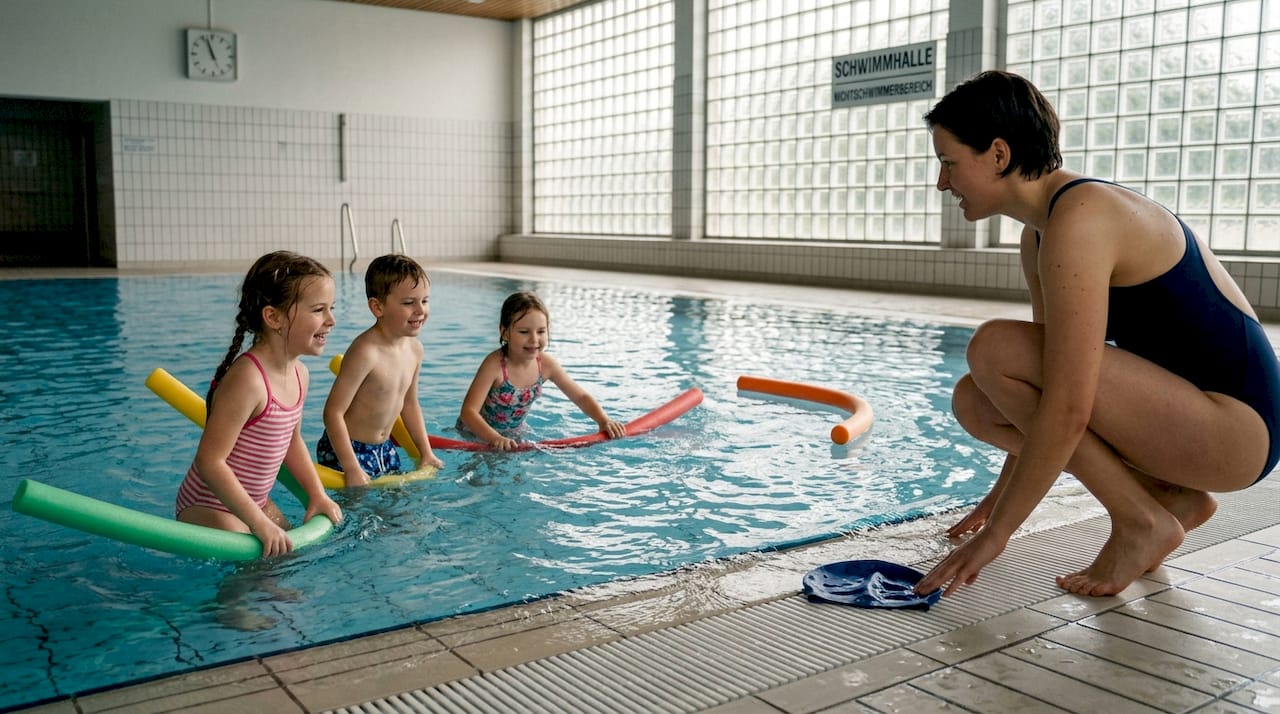
Pool noodles significantly enhance freedom of movement and practice opportunities. Children can experiment with them and try out various swimming techniques. The noodle can be used in many ways: as a buoyancy aid, toy, or training device. It promotes creativity in the water.
Goggles protect the eyes and significantly improve underwater vision. Chlorine strongly irritates sensitive children's eyes. Well-fitting goggles prevent redness and tears after swimming. Choose models with adjustable headbands and soft seals.
Swimming rings are less recommended due to restricted mobility. They fix the child in an unnatural position and prevent the learning of correct swimming movements. Experts advise against inflatable swimming seats, as they convey a false sense of security.
| Accessory | Safety | Age Recommendation | Main Benefit |
|---|---|---|---|
| Armbands | High | 2 to 6 years | Buoyancy for beginners |
| Pool Noodle | Medium | 3 to 10 years | Freedom of movement and play |
| Goggles | Medium | 3 to 12 years | Eye protection and clear vision |
| Kickboard | Medium | 4 to 12 years | Targeted leg training |
| Swimming Ring | Low | Not recommended | Restricted movement |
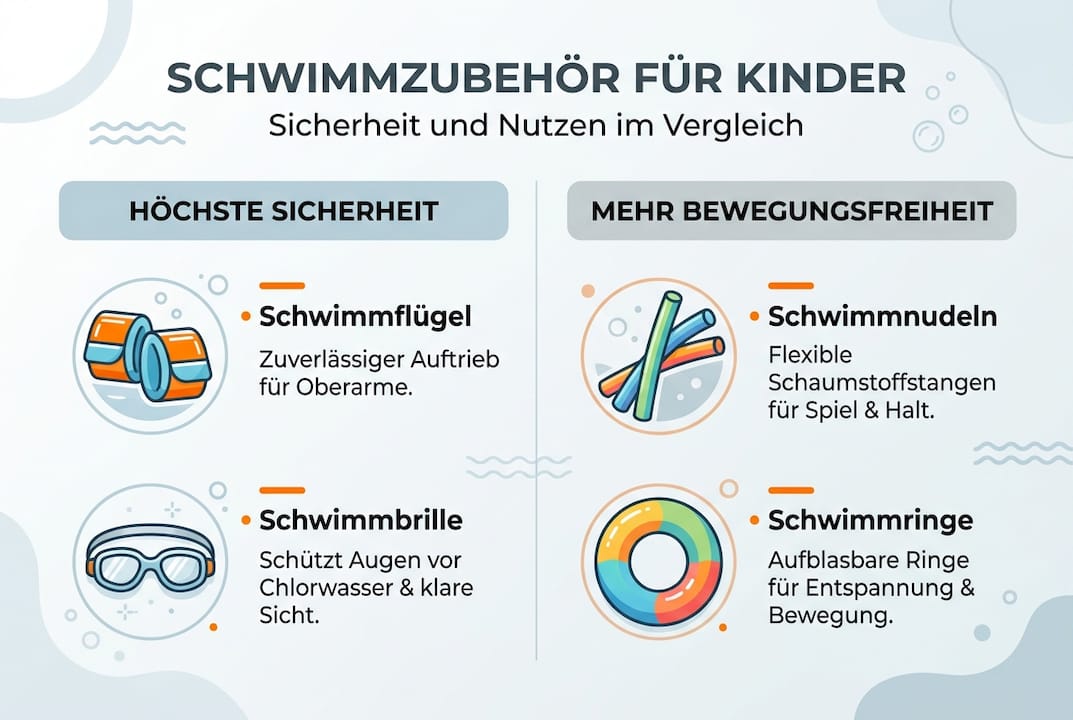
The table clearly shows that armbands offer the highest safety for young beginners. Combine different aids depending on learning progress. A child can start with armbands and later switch to a pool noodle or kickboard.
Ensure that all products comply with European safety standards. Cheap imports from the Far East often do not meet quality standards. It's better to invest a little more in tested brand-name products.
Pro-Tip: Let your child try on various swimming aids in the store before buying. Every child has different preferences. Some like armbands, others feel more comfortable with a pool noodle. The acceptance of the accessories is crucial for learning success.
Motivating Certificates and Badges: Why They Support Swimming Lessons
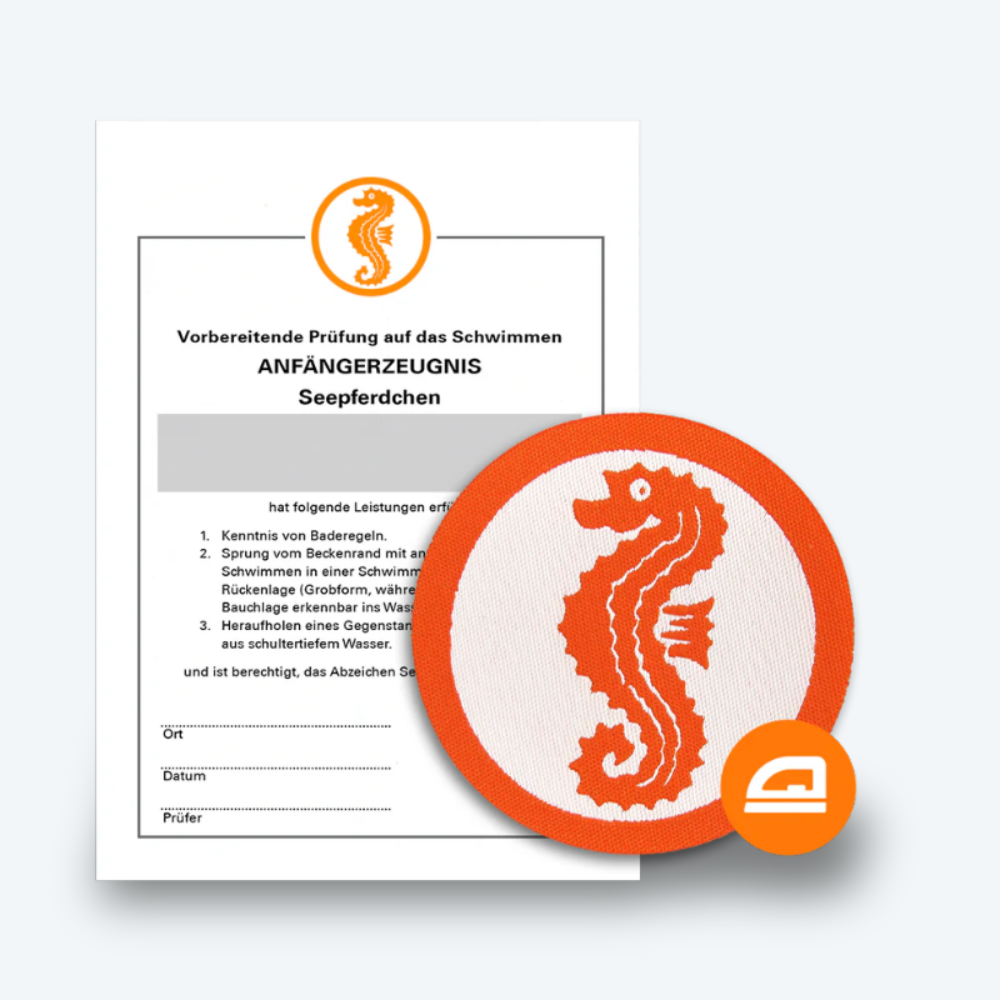
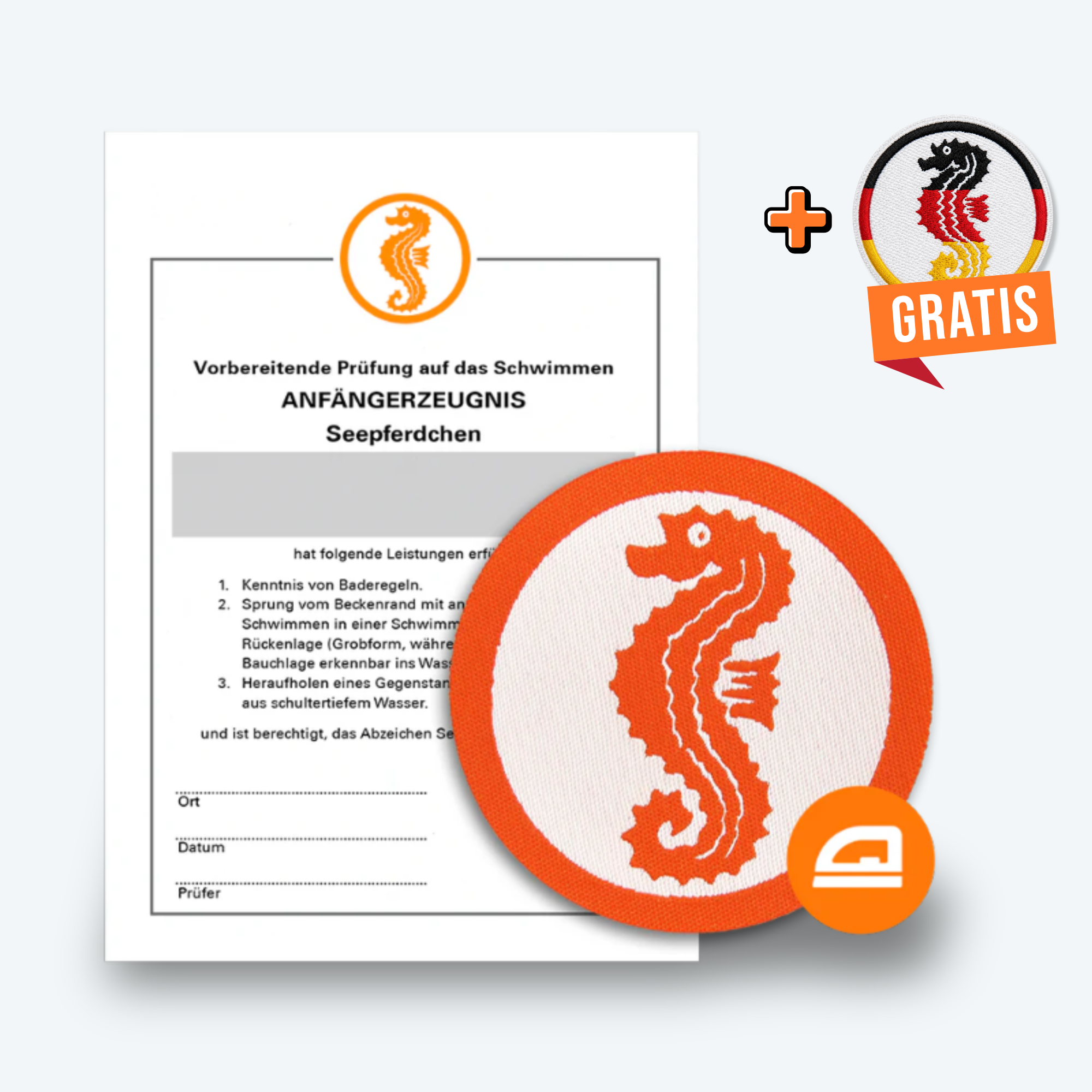
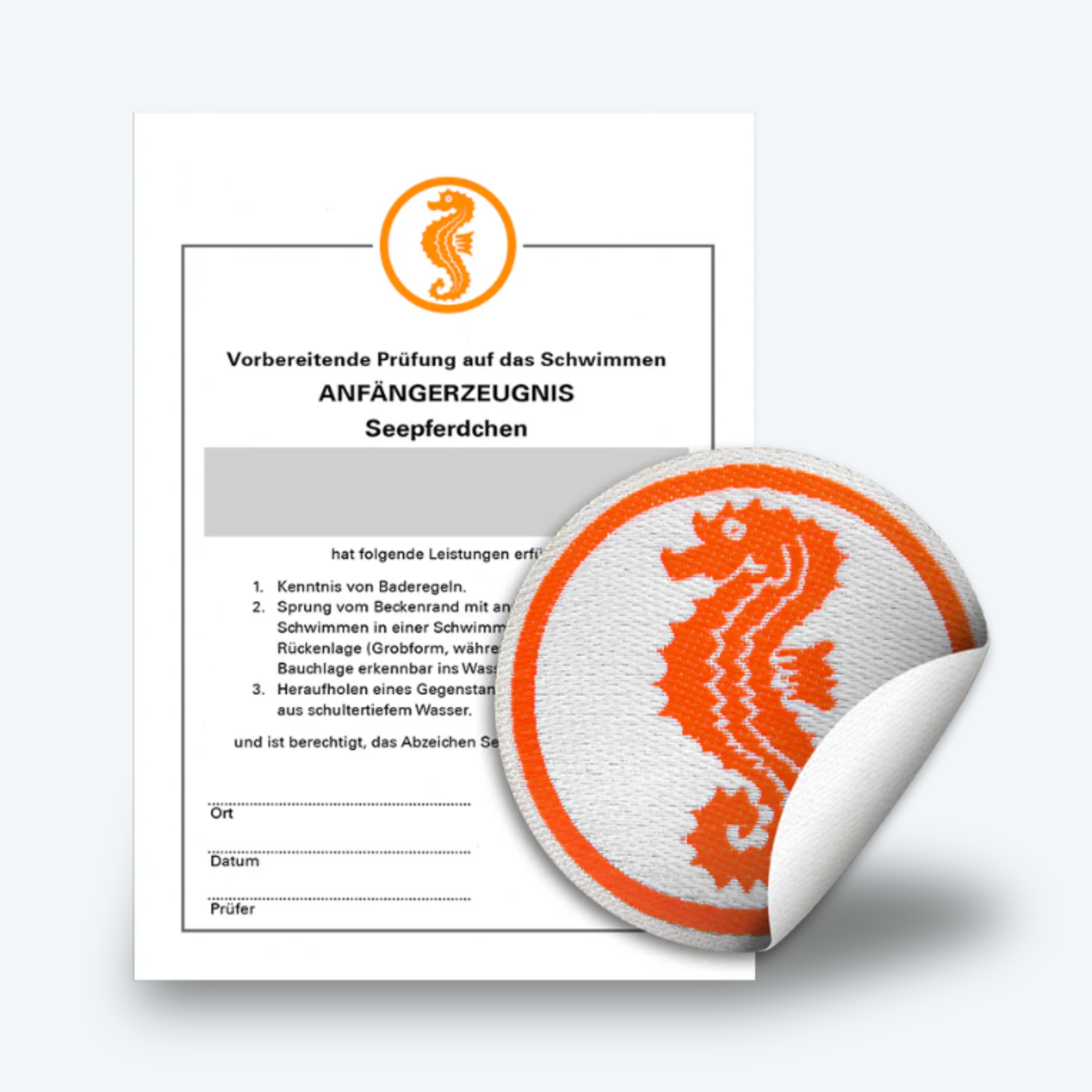
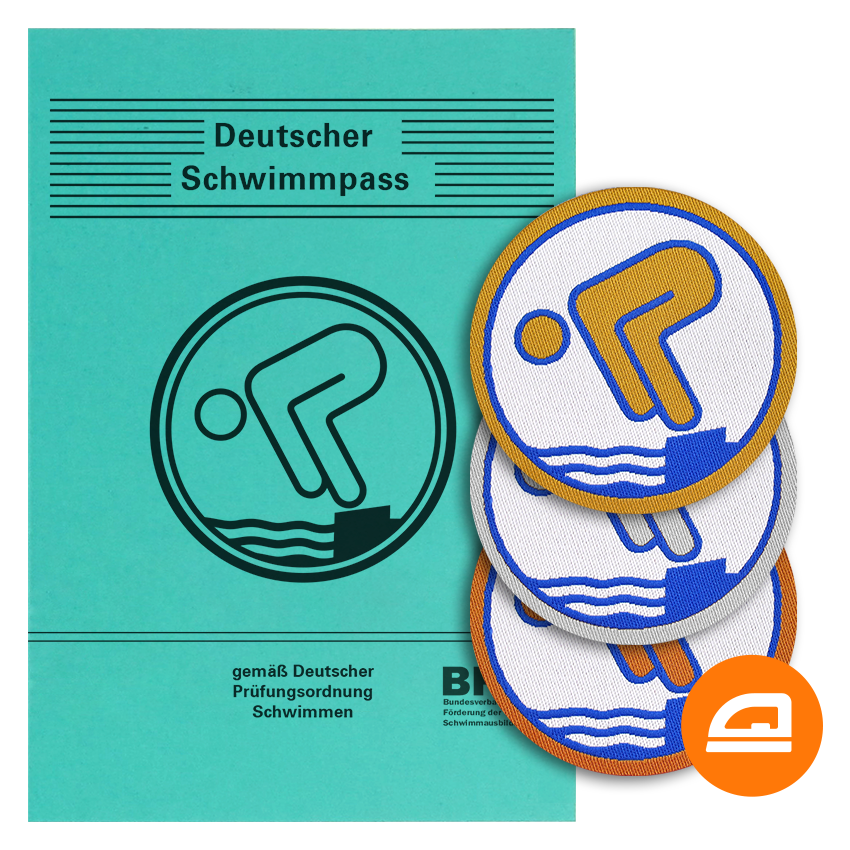
Certificates and badges give children visible recognition for their swimming progress. A child who receives their first badge experiences a moment of pride. This positive reinforcement makes a deep impression. The badge becomes a symbol of skill and perseverance.
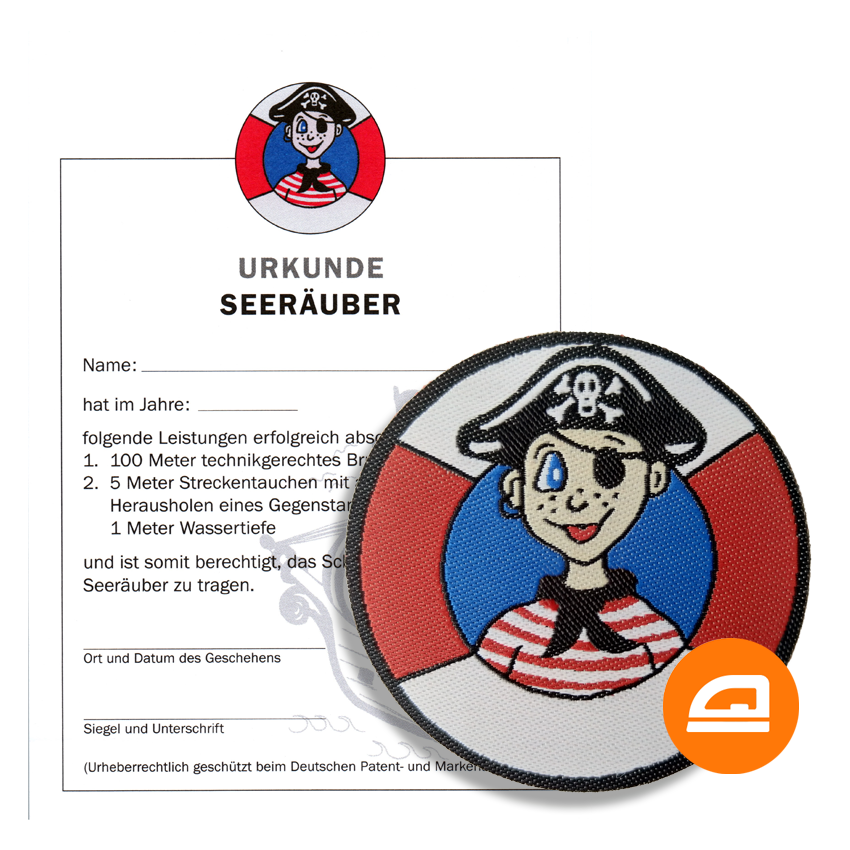
They significantly increase motivation and encourage more regular participation in swimming lessons. Children want to reach the next level. Bobby swimming badges and certificates demonstrably promote joy in learning to swim. The prospect of a new award encourages them, even when an exercise is difficult.
Popular awards include:
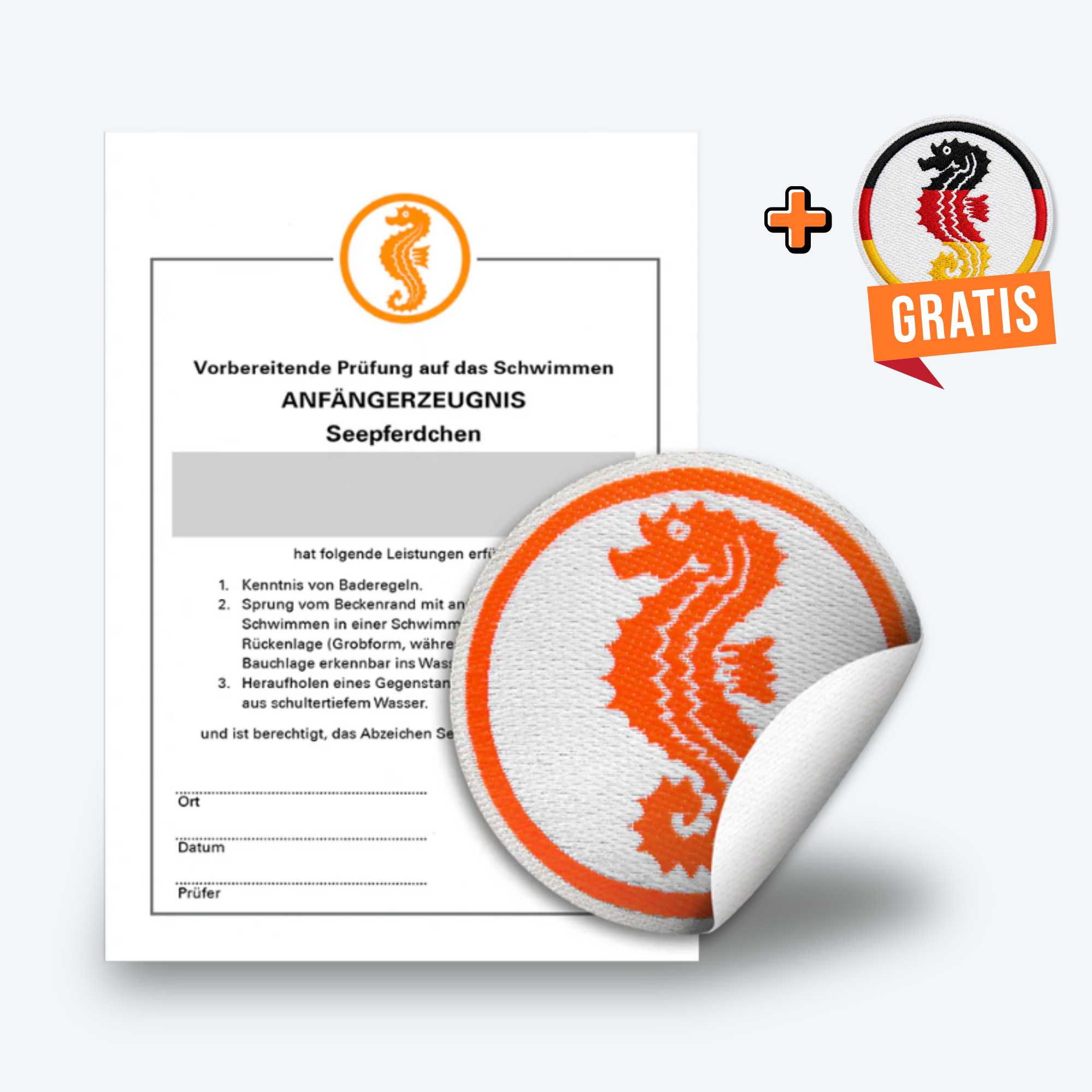
- Seepferdchen (Seahorse) for initial swimming skills
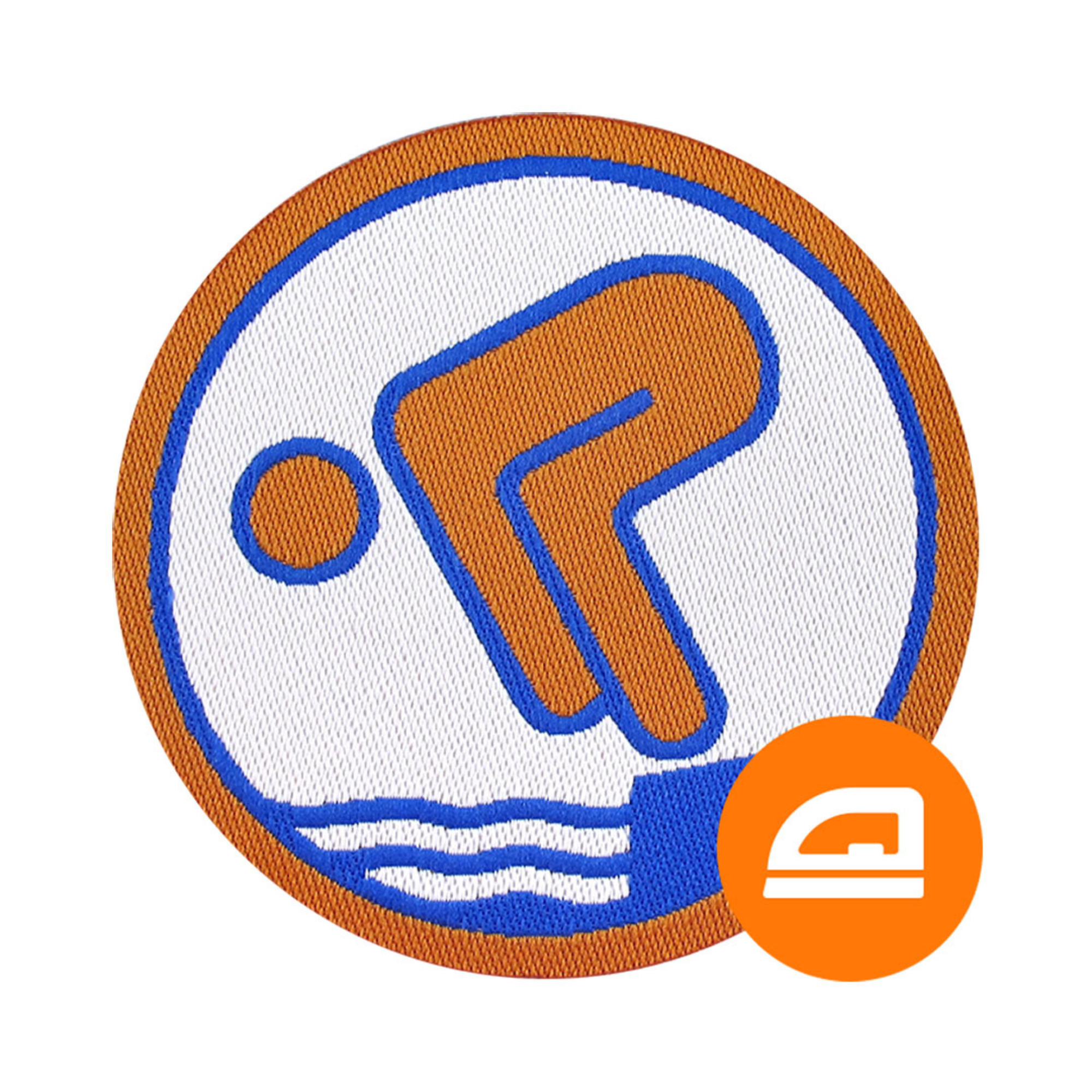
- Bronze for solid basic knowledge
- Silver for advanced techniques
- Gold for comprehensive swimming competence
- Bobby badges for very young beginners
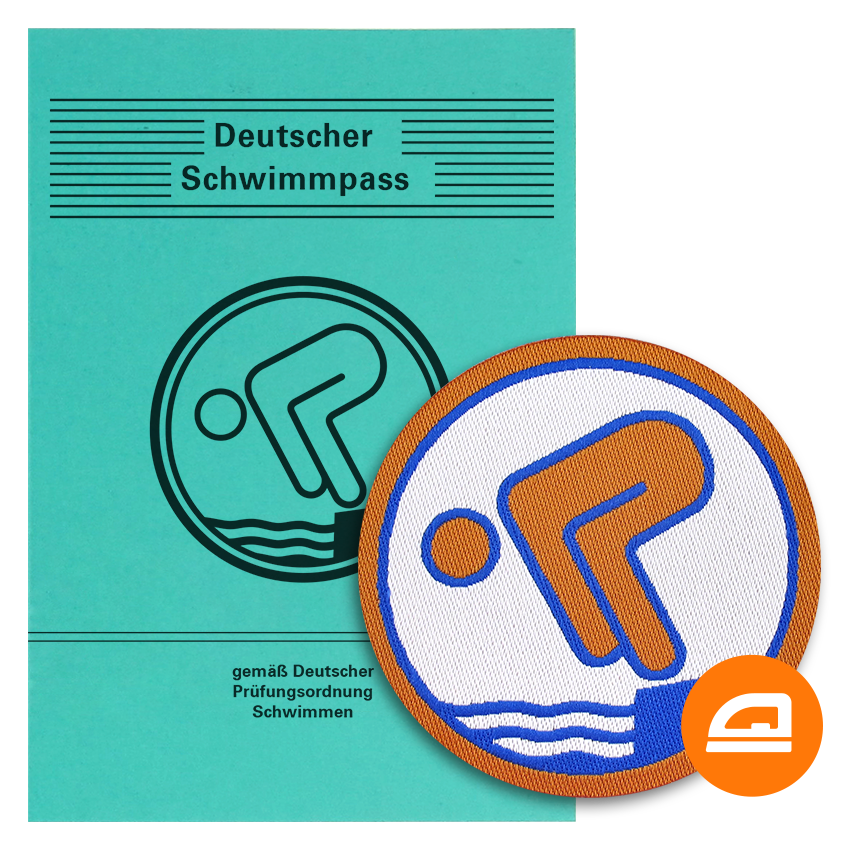
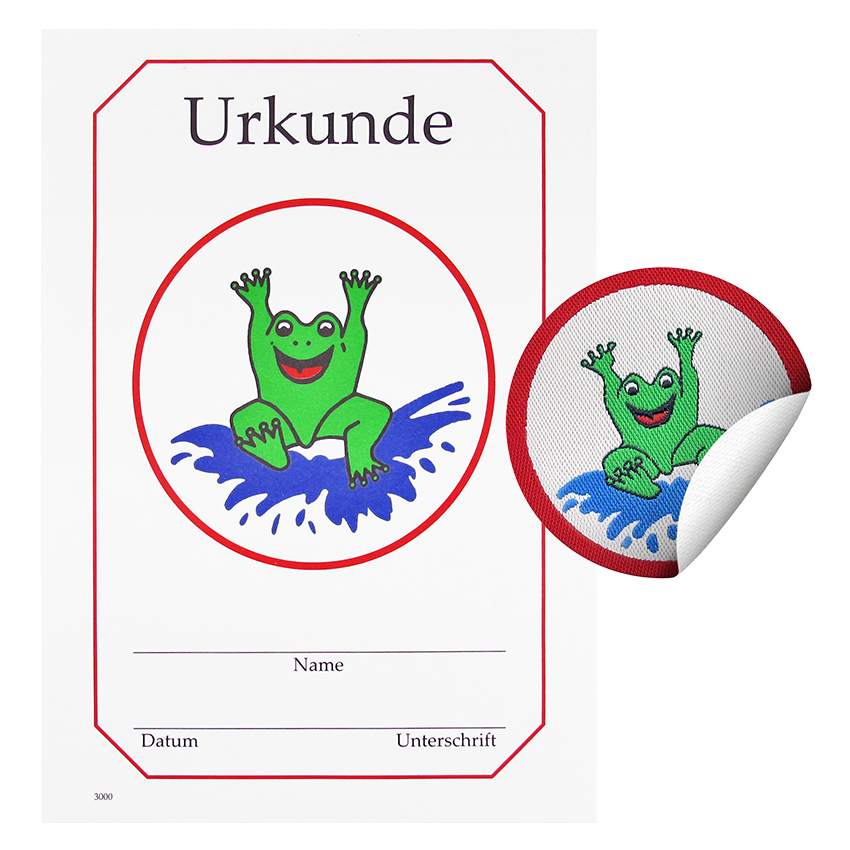
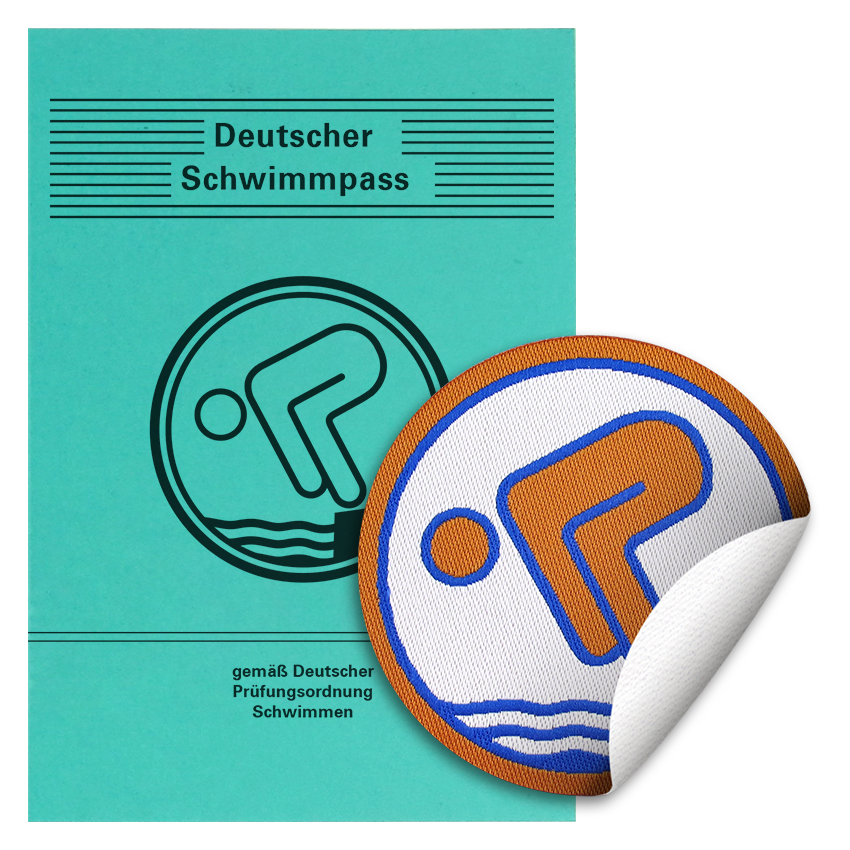
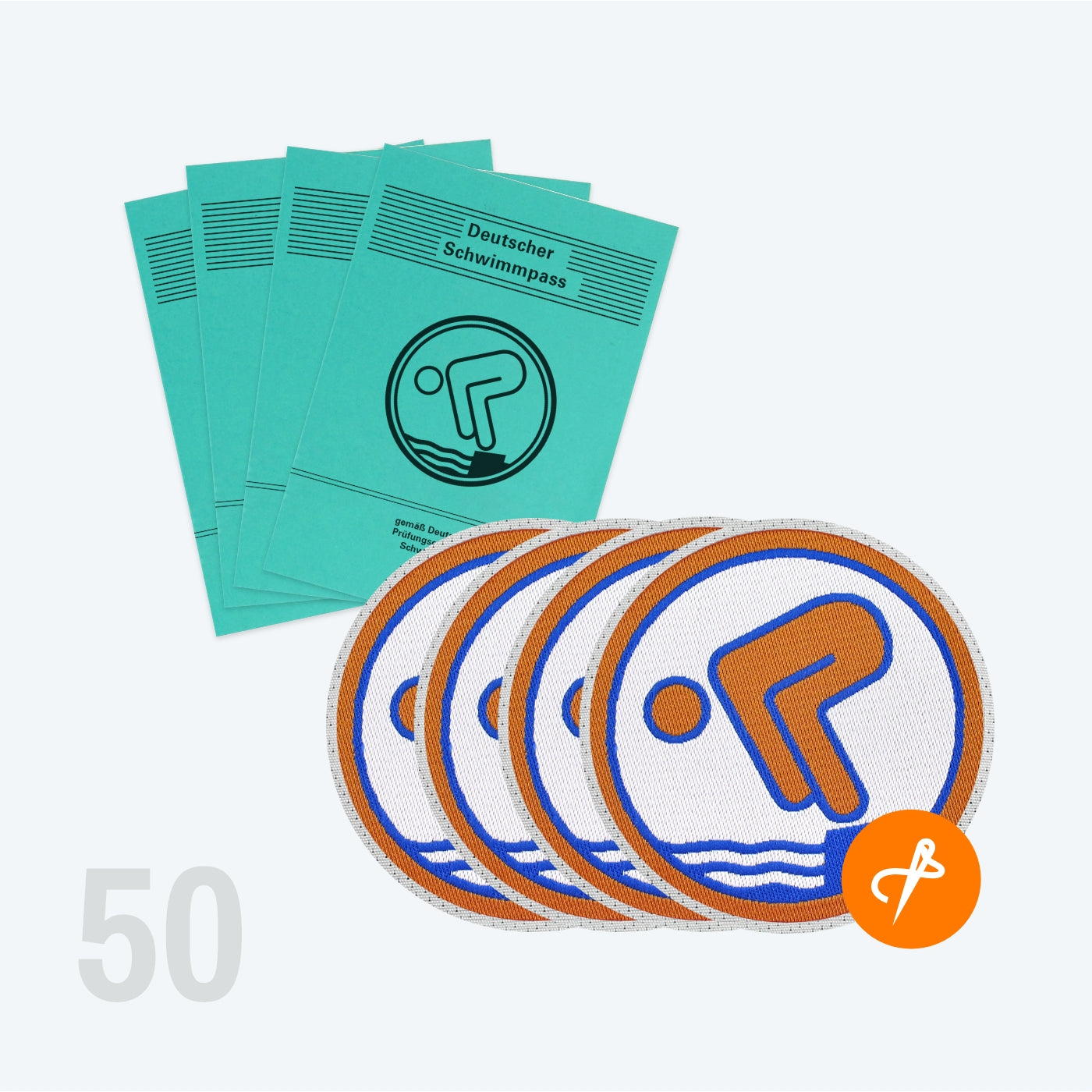
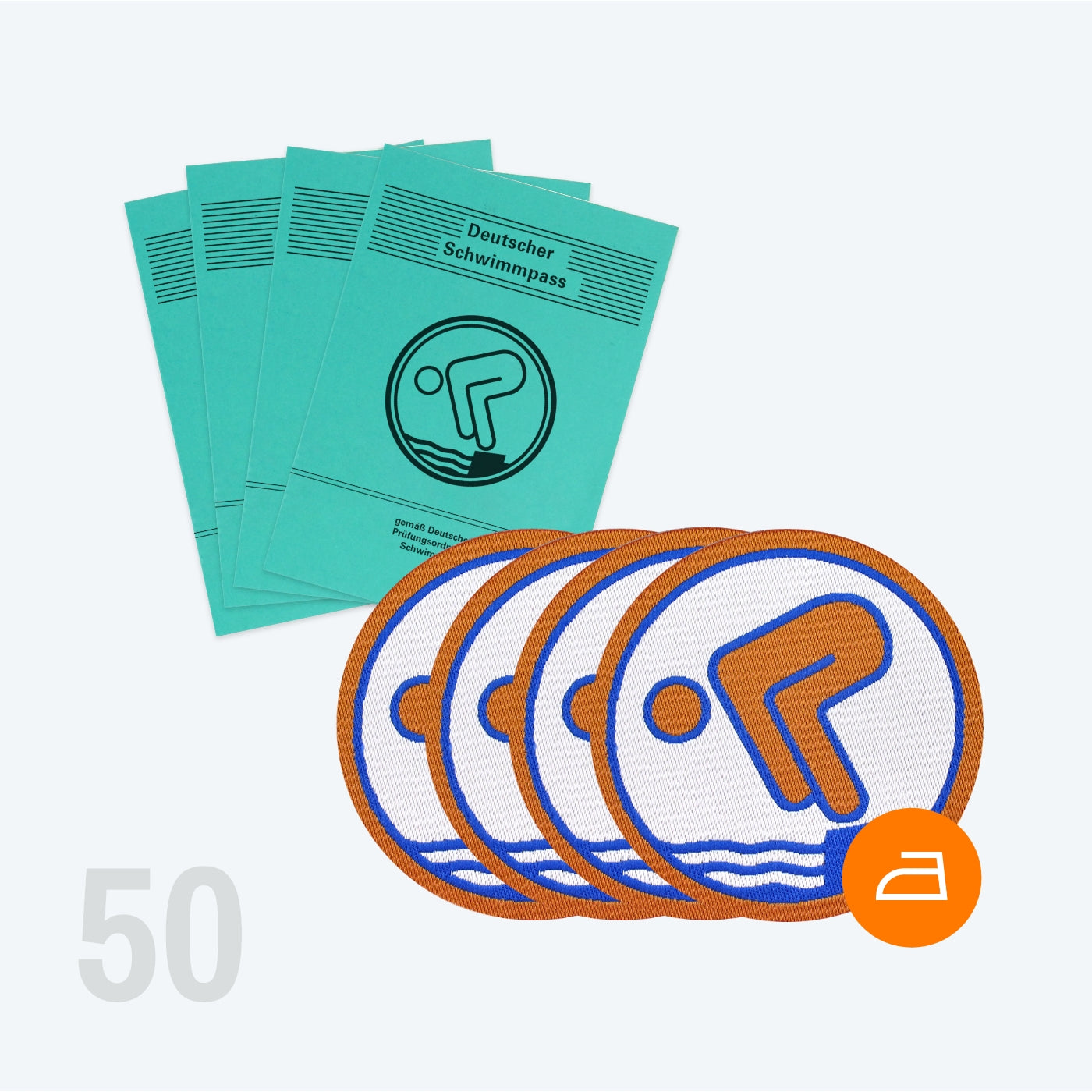
Parents should use certificates specifically as positive reinforcement. Celebrate every milestone appropriately. Hang the Seepferdchen certificate and swimming pass in the child's room. The child sees their achievement daily and feels encouraged.
Certificates work particularly well when presented immediately after the achievement. The connection between effort and reward must be clear. Don't wait weeks for the certificate to arrive. Order in advance or use sets that are immediately available.
Pro-Tip: Present certificates ceremonially in a small ritual to particularly honor the learning success. Invite grandparents or siblings. Take a photo with the certificate. These moments remain in memory and motivate for further challenges. A small celebration after earning the Seepferdchen strengthens the connection between achievement and positive feelings.
Collecting albums for swimming badges help children document their development. They can see at a glance how far they have come. This boosts self-confidence and shows that continuous practice pays off.
Practical Tips for Parents: Combining Swimming Accessories and Certificates Sensibly
Parents should select accessories specifically according to the child's developmental stage. A two-year-old child needs maximum buoyancy aid, while a six-year-old can already train with reduced support. Gradually adjust the equipment. Reduce aids as soon as the child becomes more confident.
Establish regular praise and reward rituals, for example, with certificates after each course section. Swimming courses for children benefit enormously from the targeted combination of suitable swimming accessories and motivating certificates. Set clear milestones: after ten hours, there's the Bobby badge; after twenty, the Seepferdchen.
Always observe safety aspects and adjust accessories if necessary. Before each visit to the swimming pool, check:
- Are the armbands still airtight and undamaged?
- Do the goggles fit correctly and seal properly?
- Does the kickboard have cracks or sharp edges?
- Does the swimwear still fit, or is it too tight?
- Do all fasteners and buckles work perfectly?
Involving children in the selection process significantly strengthens self-confidence and motivation. Let your child choose the color of the armbands. If they can choose between two pairs of goggles, acceptance increases. Children who are allowed to have a say are more likely to wear the equipment.
Pro-Tip: Create a swimming progress plan together with your child, including small goals and suitable rewards. Draw a ladder with different steps. Each step represents a new skill: putting the face in the water, swimming three meters, jumping from the edge of the pool. For each achieved step, there is a sticker or stamp. At the end, the official certificate awaits.
“The combination of practical accessories and positive reinforcement helps with perseverance. Children need both: the right equipment for safety and comfort, and emotional confirmation for their efforts. Without motivation, even well-equipped children quickly lose interest.”
Use waiting times at the swimming pool to talk about progress. Ask your child what went well today. Remind them of what they couldn't do a month ago. This reflection reinforces awareness of their own development.
Reward effort, not just results. A child who has tried very hard deserves recognition, even if they haven't reached the goal yet. This attitude fosters a healthy learning mindset. Setbacks are part of it and are not defeats.
Buying Swimming Accessories and Certificates: Our Recommendations
You now have a clear overview of which swimming accessories your child really needs and how certificates support the learning process. On pimpertz.de, you will find a large selection of child-friendly swimming accessories that meet the highest safety standards. From armbands to goggles to kickboards: everything from a single source.
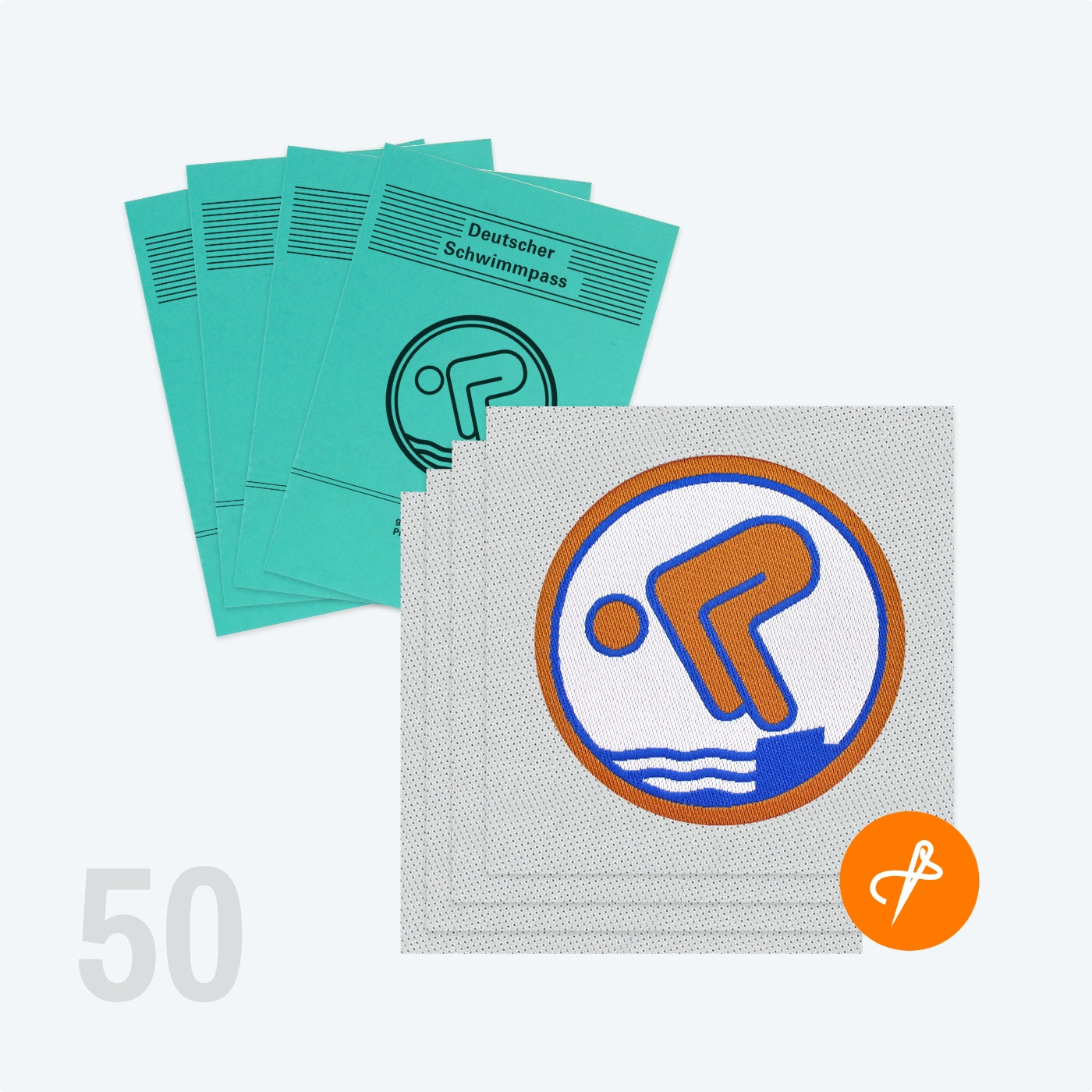
A variety of certificates for children and swimming badges as motivation are immediately available. Order original certified DLRG and BFS awards that are officially recognized. Practical sets combine badges, certificates, and swimming passes for a complete course. For over 38 years, parents, swimming schools, and clubs have trusted our quality and fast shipping.
Frequently Asked Questions about Swimming Accessories for Children
How do I choose the right swimming accessories for my child?
Choose accessories based on your child's age, size, and swimming level. For beginners under four years old, armbands with multiple air chambers are ideal. Older children benefit from pool noodles or kickboards. Pay attention to test seals and let your child try on the accessories before purchasing to check the fit.
From what age are swimming accessories recommended for children?
Swimming accessories make sense from about two years old, when children start water familiarization. Armbands provide safety for initial swimming attempts. Goggles can be used from three years old, as soon as the child tolerates them. Tips on child-friendly swimming accessories help with age-appropriate selection.
Which certificates motivate children the most?
The Seepferdchen badge particularly motivates beginners, as it confirms the first official swimming ability. For younger children, Bobby badges are ideal, recognizing even small progress. Bronze, silver, and gold badges encourage advanced swimmers. It is important that certificates are presented promptly after the achievement.
How often should accessories be checked for safety?
Check swimming accessories for damage before each visit to the swimming pool. Check armbands for air leaks, goggles for cracks in the seal, and kickboards for sharp edges. Replace damaged accessories immediately. A monthly basic inspection of all equipment further increases safety.
Are there combinations of accessories and certificates that work particularly well?
Yes, the combination of armbands for beginners and Bobby certificates after initial successes works excellently. For advanced children, the combination of kickboard training with Seepferdchen or Bronze badges is suitable. Create a progress plan that provides for small rewards after certain practice hours and concludes with official certificates.
Recommendation
- 7 Tips for Child-Friendly Swimming Accessories: Safe & Fun
- 7 Swimming Accessory Recommendations for Parents and Trainers
- Why Learn to Swim? Safety for Children 2026
- Learning to Swim: From What Age? Recommendations 2025
- AquaShield Goggles™ Leak-free children's swimming goggles for 2 - 12yrs – De Baby- en Kinderwinkel