

Swimming course for 2-year-olds: safely encouraging water acclimatization
Many parents wonder when the right time is for the first swimming lesson and how to safely introduce their toddler to water. At two years old, children are in an ideal phase for playful water familiarization, which reduces fears and builds confidence. This guide will show you practically how swimming courses for 2-year-olds are structured, what advantages early water familiarization offers, and what to look out for when choosing a course. You will also learn how to encourage your child's joy in water at home and what role swimming badges play in motivation.
Table of Contents
- Important Information at a Glance
- Why Early Water Familiarization is Important for 2-Year-Olds
- How Swimming Courses for 2-Year-Olds Are Structured
- Tips for Parents: How to Familiarize Your 2-Year-Old Child with Water at Home
- What Parents Should Consider When Choosing a Swimming Course
- Swimming Badges and Swimming Accessories for Little Swimmers
- Frequently Asked Questions about Swimming Courses for 2-Year-Olds
Important Information at a Glance
| Point | Details |
|---|---|
| Early Water Familiarization | Reduces fears and builds confidence in the water through positive experiences |
| Swimming Courses from 2 Years | Playfully focus on basic skills without pressure to perform |
| Parental Accompaniment | Active participation in the water gives children security and comfort |
| Badges as Motivation | Document progress and increase joy in learning |
| Safety Before Technique | Joy in water and safe behavior are prioritized over perfect swimming technique |
Why Early Water Familiarization is Important for 2-Year-Olds
Children benefit from early water familiarization, which reduces anxiety and strengthens water confidence. The earlier toddlers have positive water experiences, the more naturally they develop a healthy relationship with the element of water. This early familiarity forms the basis for later safe swimming and prevents fears from solidifying.
Baby swimming can start as early as three months and creates a valuable experiential base. At this age, babies experience water without fear and enjoy the freedom of movement that the medium offers. Gentle water familiarization in the first months of life positively shapes the child and significantly eases the transition to more structured swimming courses in toddlerhood.
Playful familiarization clearly takes precedence over early technical training. Two-year-old children learn best through play, fun, and discovery, not through formal instructions. If you expose your child to swimming techniques too early, it can create pressure and reduce their natural joy in water. Instead, you should focus on playful exercises that combine movement in the water with joy.
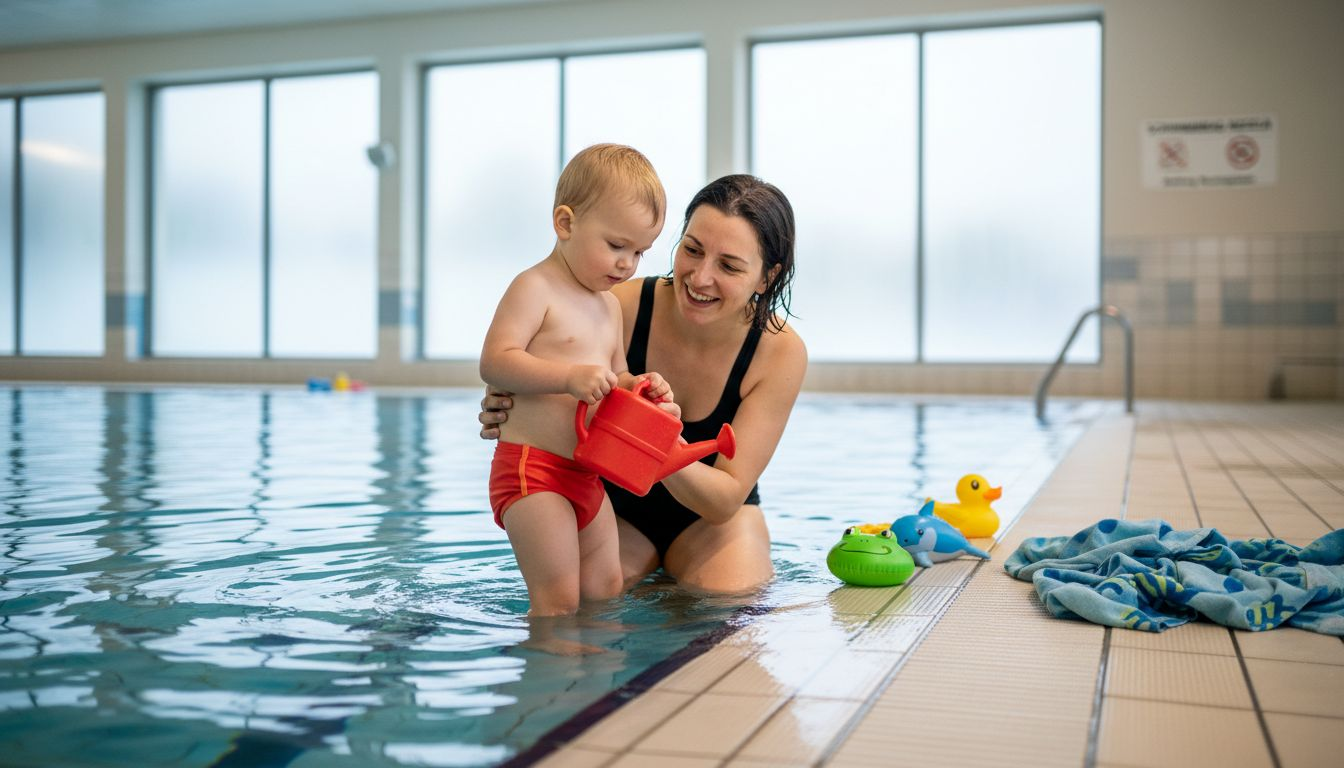
Parental accompaniment creates an indispensable sense of security for toddlers. When you, as a mother or father, are in the water, your child feels protected and safe. This emotional security allows the child to bravely make new experiences and build confidence in their own abilities. Your physical proximity gives the child the support it needs to engage with the unfamiliar element.
Pro Tip: Observe your child's reactions carefully and respect their limits. Some children need longer to build confidence, while others are immediately enthusiastic. Adjust the pace to your child's individual needs instead of comparing them to others.
Important aspects of early water familiarization:
- Create positive associations with water through cheerful games and songs
- Regular short periods in water are more effective than infrequent long sessions
- Physical contact and closeness to parents promote security and courage
- Toys and colorful objects make the water interesting and inviting
- Patience and empathy help avoid fears
More information on children's swimming from 2 years can be found in our detailed guide.
How Swimming Courses for 2-Year-Olds Are Structured
Baby swimming courses for children up to 2 years focus on water familiarization and basic skills with parental accompaniment. These courses are specifically tailored to the developmental stage of toddlers and take into account their short attention span and their need for security and comfort.
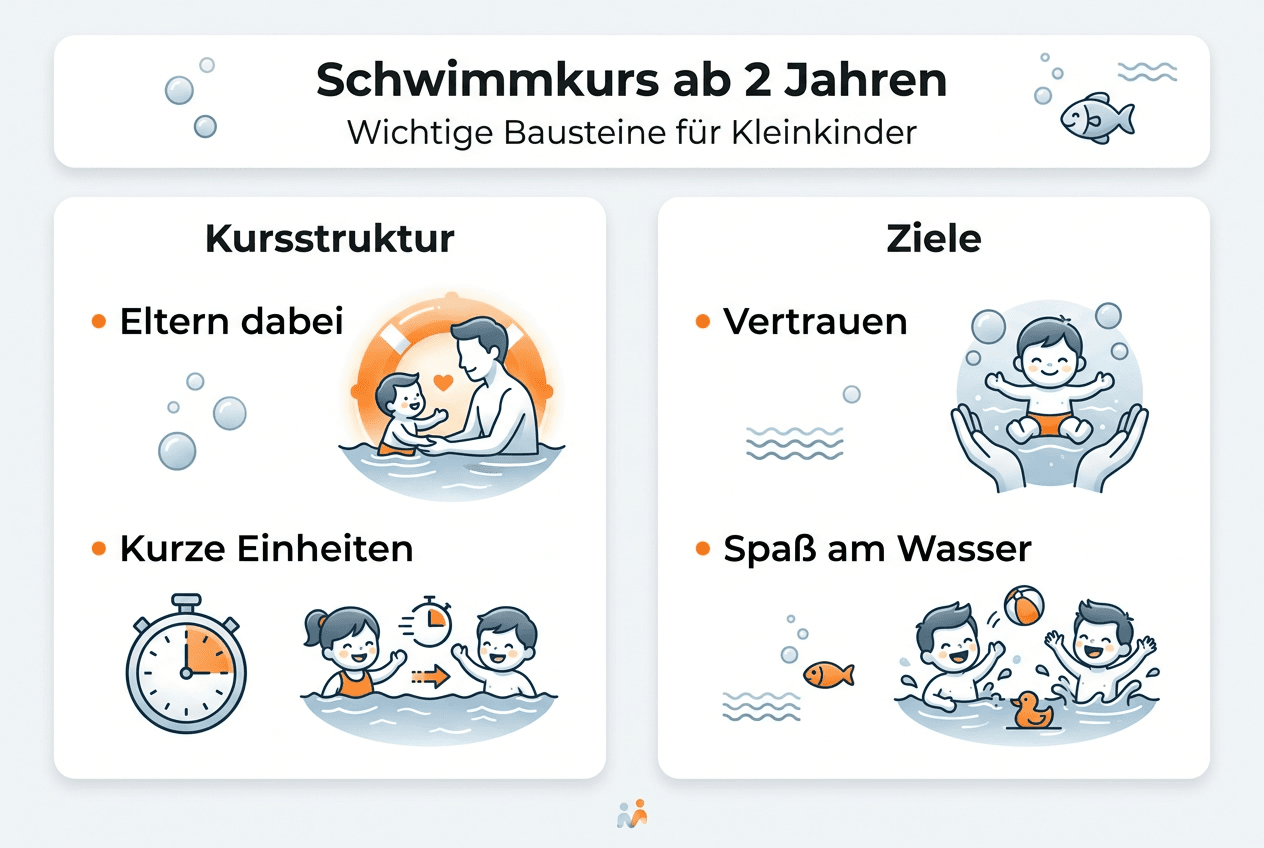
Typical swimming courses usually last 12 to 14 units, each with 45 minutes in the water. This structure allows for continuous learning without overwhelming. The courses usually take place once a week, so children have time to process what they have learned and to gather positive water experiences at home between sessions.
Parents must accompany their children in the water for the entire duration of the course. They are not just passive observers but active participants who practice with their child under the guidance of the instructor. This shared time strengthens the parent-child bond and gives the toddler the necessary security to embrace new challenges.
The main goals of swimming courses for 2-year-olds include:
- Water familiarization through gentle introduction to different water depths
- Development of movement elements such as paddling and kicking
- Promotion of joy in water through playful activities
- Building confidence in one's own abilities in the water
- Teaching basic safety rules in and around water
Performance or technique improvement are deliberately not the focus. Instead, it is about developing a positive attitude towards water. Children should experience water as a friendly element in which they can feel safe and comfortable. Perfect swimming techniques will come later, when physical and cognitive development has progressed accordingly.
Pro Tip: Make sure the water temperature is comfortable for toddlers. Ideally, it should be between 32 and 34 degrees Celsius, so your child does not get cold and can enjoy their time in the water. Cold water can quickly lead to negative associations.
Typical course contents at a glance:
| Activity | Purpose | Duration |
|---|---|---|
| Greeting ritual | Arriving and settling in | 5 minutes |
| Free splashing | Water familiarization and comfort | 10 minutes |
| Guided exercises | Movement elements and coordination | 20 minutes |
| Playtime | Joy and positive experiences | 10 minutes |
The group size should remain manageable, ideally no more than eight parent-child pairs per instructor. This way, the instructor can respond individually to each child and guide parents specifically. Smaller groups also allow more space in the pool, which is especially important for anxious children.
Tips for Parents: How to Familiarize Your 2-Year-Old Child with Water at Home
Playing in the bathtub already creates valuable positive water contact and reduces anxiety. The home bathtub is an ideal place for first water familiarization exercises, as it is familiar and manageable. Here, your child can experiment in a relaxed atmosphere and gain their own experiences.
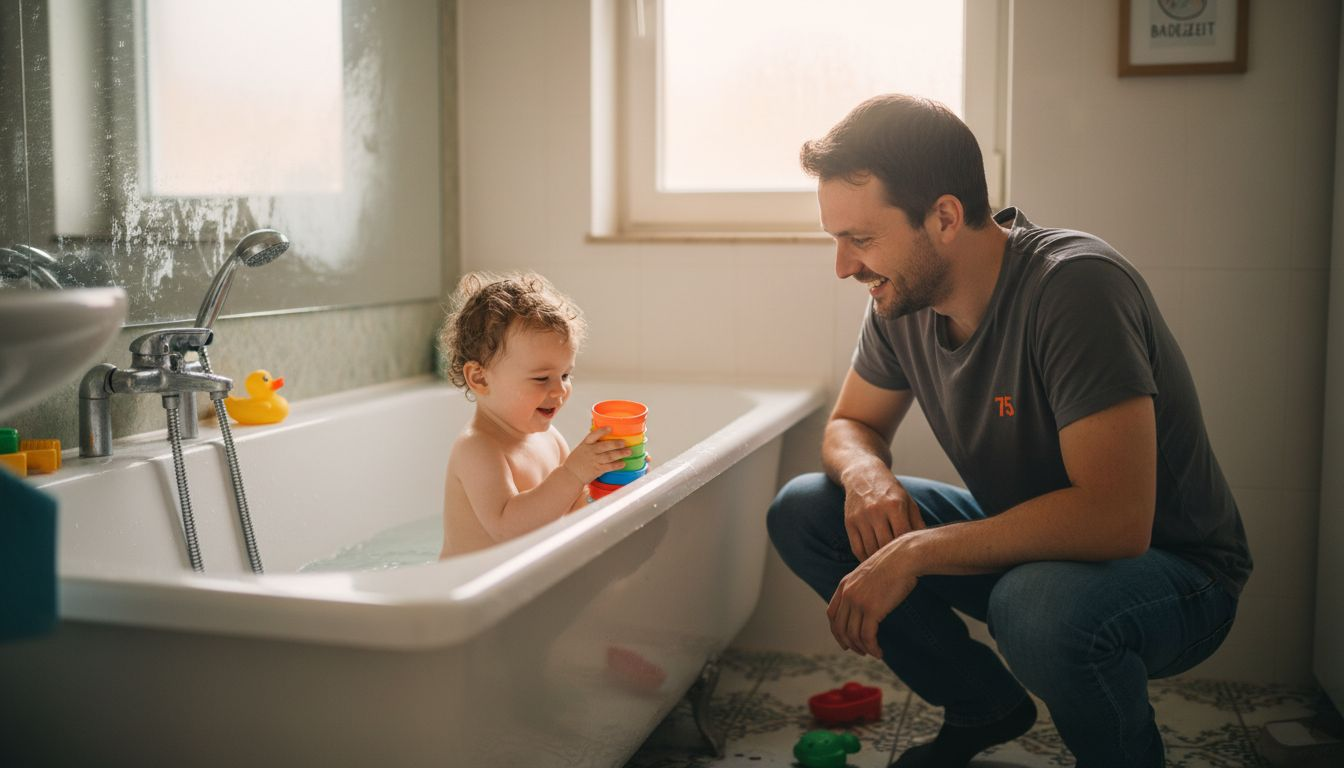
Regular splashing and water games should become part of the daily routine. Let your child pour water with cups, spray with sponges, or let small boats float. These playful activities convey important basics such as buoyancy, water resistance, and movement in the wet element, without your child perceiving it as learning.
Gently familiarize your child's face with water, for example, through singing games. Sing well-known children's songs and gently let water run over their forehead and cheeks. Start with tiny amounts and gradually increase as soon as your child reacts relaxed. Never pour water over their face if your child shows fear or protests.
Short sessions of 10 to 15 minutes are significantly more effective than long training. Toddlers have a limited attention span and get tired quickly. Several short, cheerful water experiences spread throughout the week are more beneficial than one long, strenuous bath time. Always end water time before your child loses interest or starts to get cold.
Always offer your child closeness and security; never force anything against their will. If your child doesn't feel like water activities on a given day, respect that. Coercion leads to negative associations that are difficult to overcome later. Your patience and empathy are the most important tools for successful water familiarization.
Pro Tip: Make bath time a special ritual with fixed routines. Children love routines and feel more secure when they know what's coming next. A bath song, certain toys, or a cozy towel afterward create positive expectations.
Practical exercises for home:
- Water pouring with colorful cups trains hand-eye coordination
- Bubbling and blowing into the water prepares for later exhalation
- Catching floating toys promotes movement in the water
- Bathing together with parents or siblings is fun
- Water toys like watering cans and shovels increase attractiveness
Further practical instructions for safe swimming training at home will help you optimize water familiarization.
What Parents Should Consider When Choosing a Swimming Course
Qualified instructors, small groups, and comprehensive safety measures are crucial for baby swimming courses. The quality of the course largely depends on the training and experience of the instructors. Only well-trained instructors can address the individual needs of toddlers and competently guide parents.
Look for certificates and pedagogical training of the instructors. Reputable swimming schools employ instructors with recognized qualifications such as instructor licenses or special baby swimming certificates. Don't hesitate to ask about the instructor's qualifications and experience before enrolling your child. A good instructor can transparently present their training.
Prefer small course groups for individual attention. In large groups, your child can easily be overlooked and may not receive the attention they need. Ideally, no more than six to eight parent-child pairs should participate per instructor. This allows the instructor to keep an eye on everyone and provide targeted support.
Carefully check the safety concepts and supervision of the swimming school. Are there clear emergency plans? Is rescue equipment readily available? Is the pool supervised by additional staff during the course? These questions should be clarified before enrollment. Safety is an absolute priority, especially for toddlers in the water.
Parental involvement is strongly recommended for courses for 2-year-olds; no sole course supervision. Your child is still too young at this age to be in the water without you. Avoid offers where parents are only expected to watch from the poolside. Active parental participation is a quality characteristic of good baby swimming courses.
Important selection criteria at a glance:
- Certified and experienced instructors with pedagogical competence
- Small group sizes with a maximum of eight participants
- Warm water between 32 and 34 degrees Celsius
- Clear safety concepts and emergency plans
- Parental involvement as an integral part of the course
- Flexible course times and fair cancellation policies
Comparison of different course models:
| Criterion | Baby Swimming | Water Familiarization | Toddler Swimming |
|---|---|---|---|
| Age | 3-12 Months | 1-2 Years | 2-4 Years |
| Parental Involvement | Full | Full | Partial |
| Course Duration | 30 Minutes | 45 Minutes | 45-60 Minutes |
| Focus | Sensory Experience | Water Confidence | Basic Skills |
Inform yourself about quality criteria for baby swimming courses and make a well-founded decision for your child.
Swimming Badges and Swimming Accessories for Little Swimmers
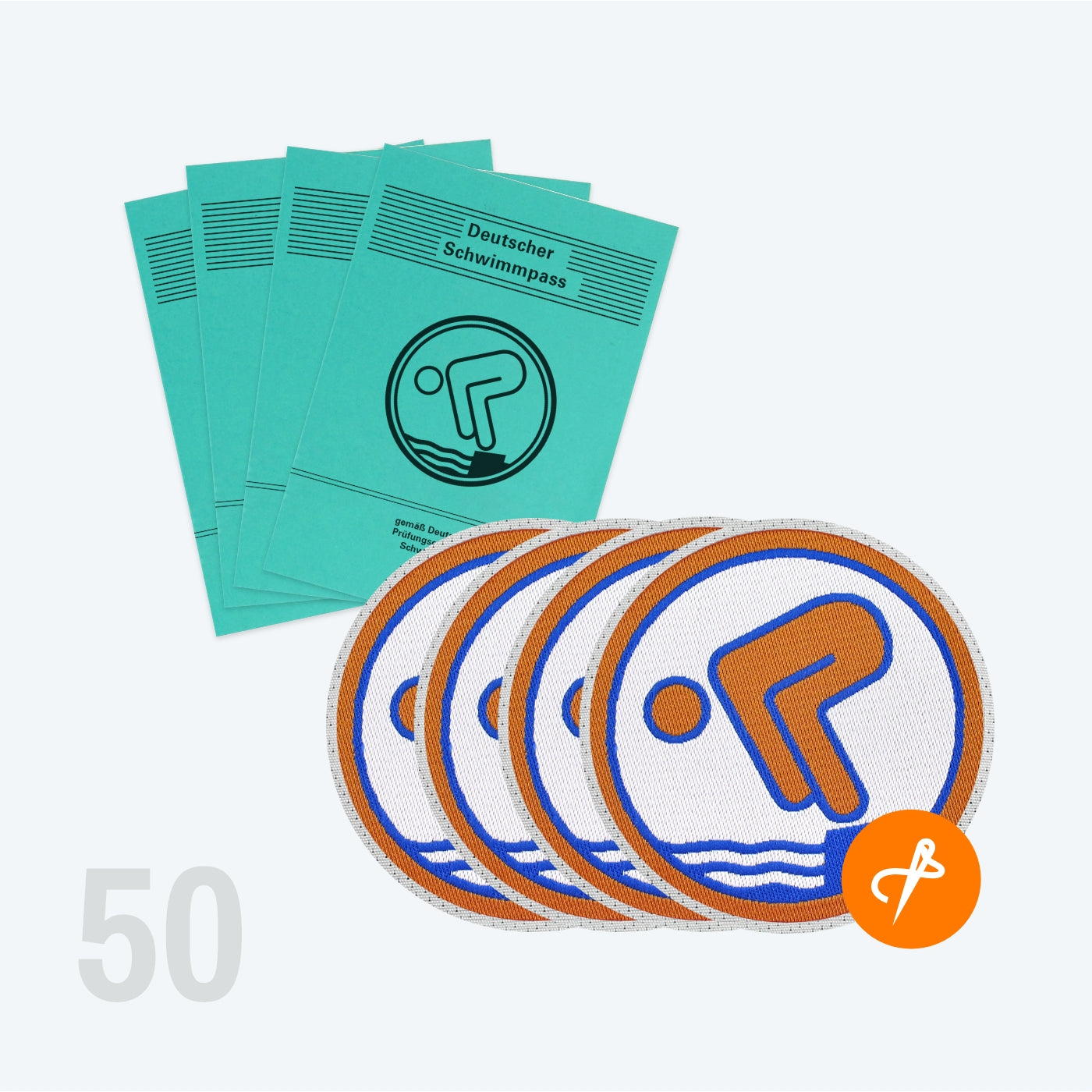
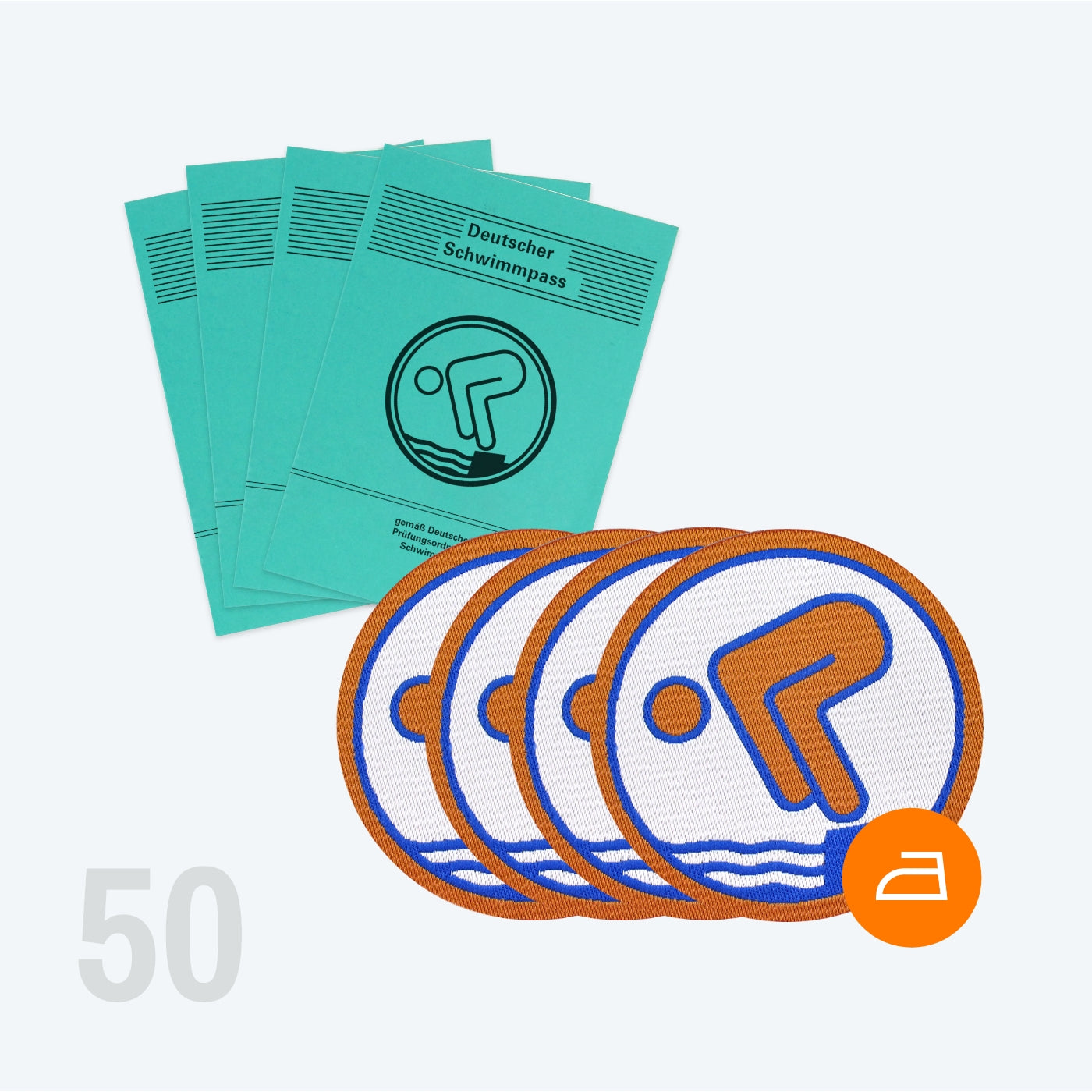
After successful first steps in the water, children are happy to receive recognition for their progress. Swimming badges motivate toddlers enormously and make learning successes visible. At Pimpertz, you will find a large selection of swimming badges from Bobby to Seepferdchen, specifically designed for initial water experiences.
Appropriate swimming accessories such as colorful swimming caps, waterproof tattoos, and collector's albums complete the offer. These products support the learning process and increase anticipation for the next swimming course. Especially the Bobby swimming badge certificates are ideal for the first successes in the water and create lasting memories.
For over 38 years, Pimpertz has stood as an official partner of the DLRG and BFS for the highest quality and fast shipping. All badges are originally certified and designed in child-friendly designs. Motivate your child with high-quality awards that promote pride and joy in learning to swim.
Frequently Asked Questions about Swimming Courses for 2-Year-Olds
From what age is baby swimming advisable?
Baby swimming can start as early as three months, once the navel has completely healed. Early water familiarization creates positive experiences and builds a natural relationship with water. Many swimming schools offer special courses for different age groups that are tailored to the respective developmental stage.
Do 2-year-olds need swimming aids?
Swimming aids like armbands can be useful in controlled situations, but they never replace direct adult supervision. In professional swimming courses for 2-year-olds, parents are in the water and hold their child, so swimming aids are usually not necessary. At home in shallow water, armbands can provide additional security, but they should not lead to a false sense of security.
How long do typical baby swimming courses last?
Standard courses include 12 to 14 units, each with 45 minutes in the water. This structure allows for continuous learning without overwhelming. Courses usually take place once a week, allowing time for processing and home exercises between sessions.
What are the goals of swimming courses for 2-year-olds?
The main goals are water familiarization, building confidence, and joy in water. Children should gain positive experiences and learn basic movement elements such as paddling and kicking. Perfect swimming techniques are deliberately not the focus, as 2-year-olds are not yet developmentally capable of them.
How important is parental accompaniment in the water?
Parental accompaniment is absolutely indispensable for 2-year-olds and a quality characteristic of good courses. Physical closeness gives children security and encourages them to make new experiences. Courses where parents only watch are unsuitable for this age group. More information on the most important factors in children's swimming from 2 years can be found in our guide.
When can children learn to swim properly?
Most children only learn to swim properly from about four to five years of age, when their motor skills are sufficiently developed. However, water familiarization from two years old lays the important foundation for later successful swimming learning. Early positive water experiences significantly ease the transition to technical swimming courses and prevent the development of fear of water.


