



How to Become a Swimming Instructor: Training, Requirements & Career
Every year in Germany, hundreds of people drown because they never properly learned to swim. At the same time, there is a shortage of qualified swimming instructors in swimming pools and clubs who could break this cycle. Those who pursue this profession literally save lives. Whether you want to become a swimming instructor yourself or you're a parent looking for the right course for your child: This article will show you all the important steps, from formal requirements such as a minimum age of 18, DLRG membership, and the Silver Lifesaving Badge, to salary, career opportunities, and practical tips for parents.
Table of Contents
- Why the profession of swimming instructor is currently so in demand
- Requirements: What does a swimming instructor need to bring?
- Training and career paths: Your path to becoming a swimming instructor
- Daily work life: What awaits you as a swimming instructor?
- Earning potential and career opportunities as a swimming instructor
- For parents: How to recognize qualified swimming instructors
- Badges, certificates, and accessories for your path as a swimming instructor
- Frequently asked questions about the swimming instructor profession
Key Insights
| Point | Details |
|---|---|
| Clear requirements | DLRG membership, lifeguard certificate, and first aid course are mandatory for aspiring swimming instructors. |
| Gradual training | The career path includes assistance, advanced courses, and potential specializations. |
| Diverse daily work life | Swimming instructors work with various age groups and experience varied tasks. |
| Good earning and development opportunities | The salary is attractive, and can be increased through further training and additional qualifications. |
| Quality recognizable for parents | DLRG and DSLV certificates stand for safe, high-quality swimming lessons for children. |
Why the profession of swimming instructor is currently so in demand
The demand for swimming instructors has been growing for years, while the supply can barely keep up. More and more indoor pools are closing, courses are overbooked, and waiting lists for children's swimming courses often stretch months into the future. Anyone who completes training as a swimming instructor today usually finds a job immediately.
The profession is far more versatile than many think. Swimming instructors don't just teach children in "Seepferdchen" (Seahorse) courses. They accompany adults who never learned to swim as teenagers, train competitive athletes, and offer water aerobics for seniors. This versatility makes the profession particularly attractive to people who enjoy working with different target groups.
“Swimming is a life-saving skill, not a recreational activity. Those who teach swimming give people a tool that protects them for life.”
The downside: Shift work, seasonality, and physical demands are an integral part of the job. Anyone who knows this and consciously chooses it will be satisfied in the long run. For tips on effective swimming courses, it's worth taking a look at proven practical methods.
The profession is particularly suitable for:
- Sports enthusiasts with an interest in pedagogy
- People who enjoy working in and around water
- Career changers from the sports sector
- Parents who actively want to improve children's safety
Requirements: What does a swimming instructor need to bring?
Before you sign up for training, you must meet certain formal conditions. These are clearly regulated and non-negotiable. The good news: they are easily achievable for most physically active adults.
The most important formal requirements at a glance:
- Minimum age: 18 years
- Membership: Active DLRG membership
- Lifeguard certificate: Silver Lifesaving Badge, maximum 2 years old
- First aid course: Current certificate, not older than 2 years
- Health: No restrictions that prevent working in water
“DLRG membership, the Silver Lifesaving Badge, and a current first aid course are essential.”
In addition to formal requirements, athleticism, pedagogical talent, and observational skills are also crucial. Risk management is not a buzzword but daily practice: a swimming instructor must recognize in a fraction of a second if someone is in trouble.
Pro tip: Renew your lifeguard certificate in good time before registration. Many applicants fail not because of the training itself, but because their certificate has expired. Plan at least 3 months in advance.
Empathy and patience are just as important as swimming technique. Children don't learn according to a fixed schedule, and adults with water phobia need a lot of trust. Those who possess these soft skills will be successful as swimming instructors in the long term. Further details on the requirements for swimming instructors can be found in our detailed guide.
Training and career paths: Your path to becoming a swimming instructor
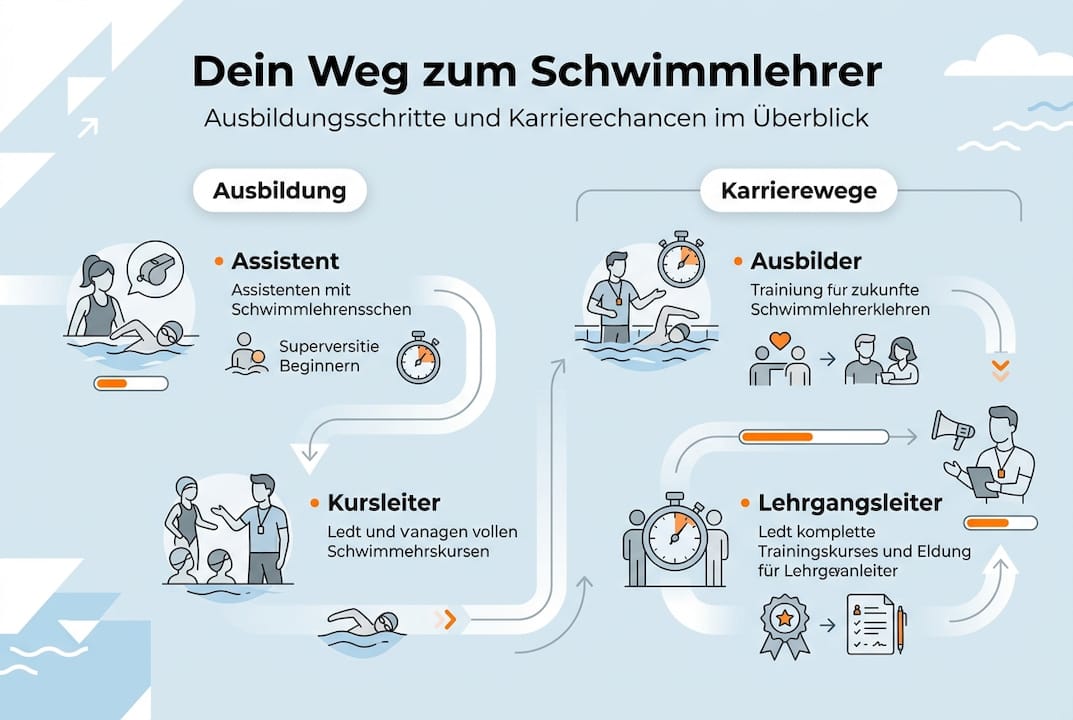
The training to become a swimming instructor is modular. You don't start immediately as a fully qualified instructor, but work your way up step by step. This has a big advantage: you gain practical experience early on before teaching independently.
The typical training levels:
- Assistant: First level, approx. 30 teaching units, support for experienced instructors
- Swimming instructor: Advanced course, total of up to 75 units, independent teaching
- Specialization: Additional qualifications such as water familiarization, lifesaving, or senior sports
- Instructor license renewal: Regular continuing education requirement, usually every 4 years
The training path begins as an assistant and leads through advanced courses to becoming an independent instructor. Those who wish to specialize further will find interesting options at the DSLV: The training to become an instructor for water familiarization is specifically aimed at professionals who want to work with toddlers and infants.
| Training Level | Duration | Special Feature |
|---|---|---|
| Assistant | approx. 30 units | Accompanied by instructor |
| Swimming Instructor | up to 75 units | Independent teaching |
| Water Familiarization Instructor (DSLV) | variable | Specialization for toddlers |
| Further Training | every 4 years | Mandatory for renewal |
Pro tip: Combine the DLRG training with a DSLV certificate. Those who possess both qualifications are significantly more attractive to clubs and private swimming schools and can cover a broader range of courses.
Training usually takes place on weekends, making it easy to combine with work or studies. Online components for theory are becoming increasingly important, but the practical part always remains in the water.
Daily work life: What awaits you as a swimming instructor?
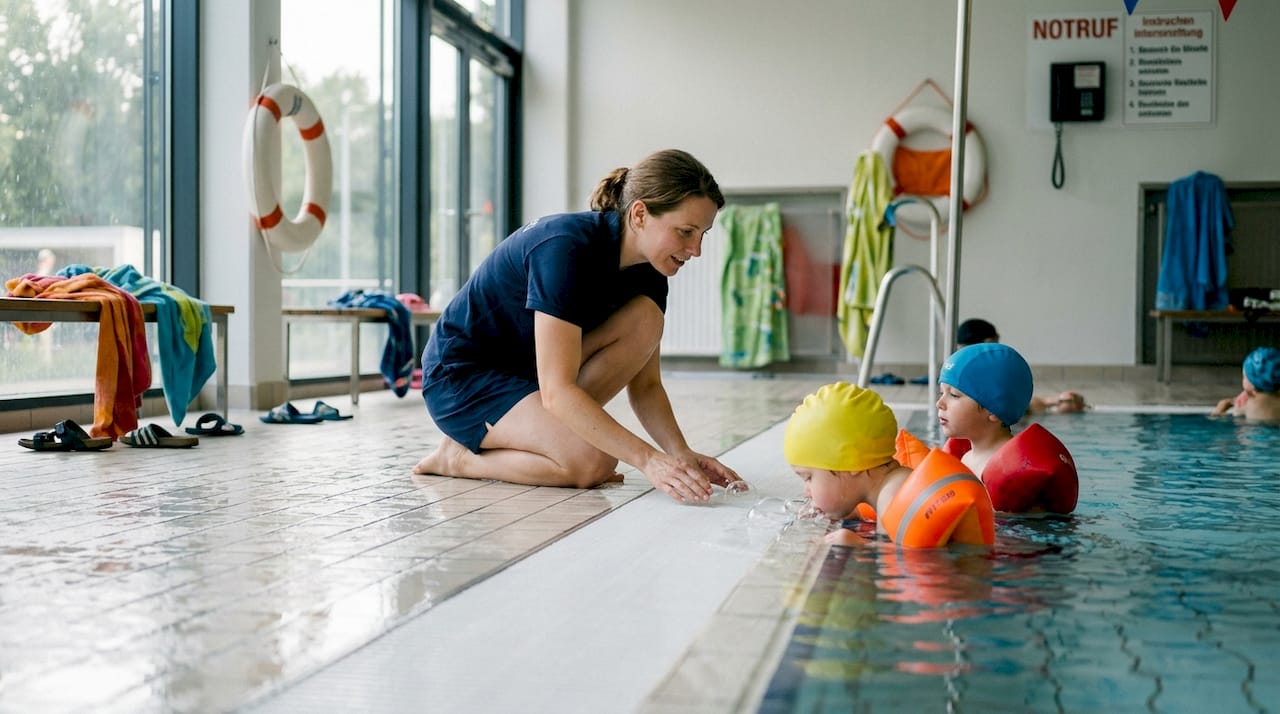
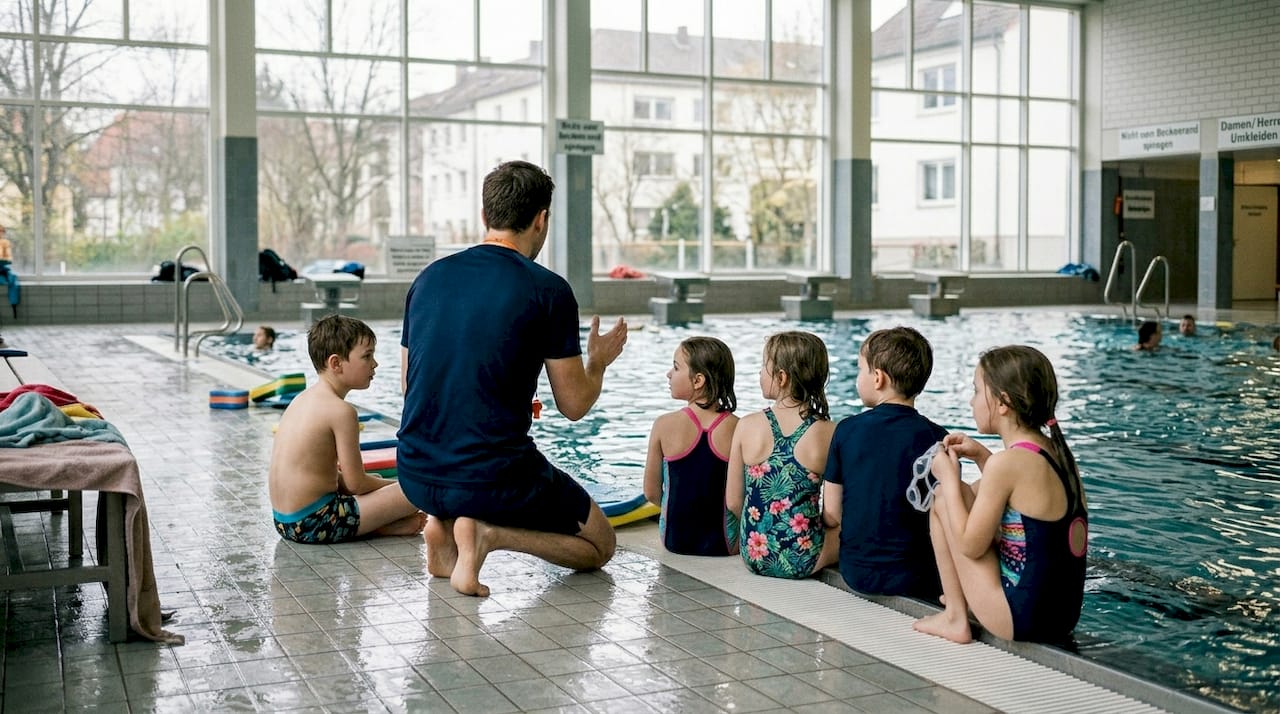
A typical workday as a swimming instructor rarely looks the same. In the morning, you might teach a school class in a beginner's course, in the afternoon a group of adults with aquaphobia, and in the evening you train club swimmers. This variety is for many the biggest plus of the profession.
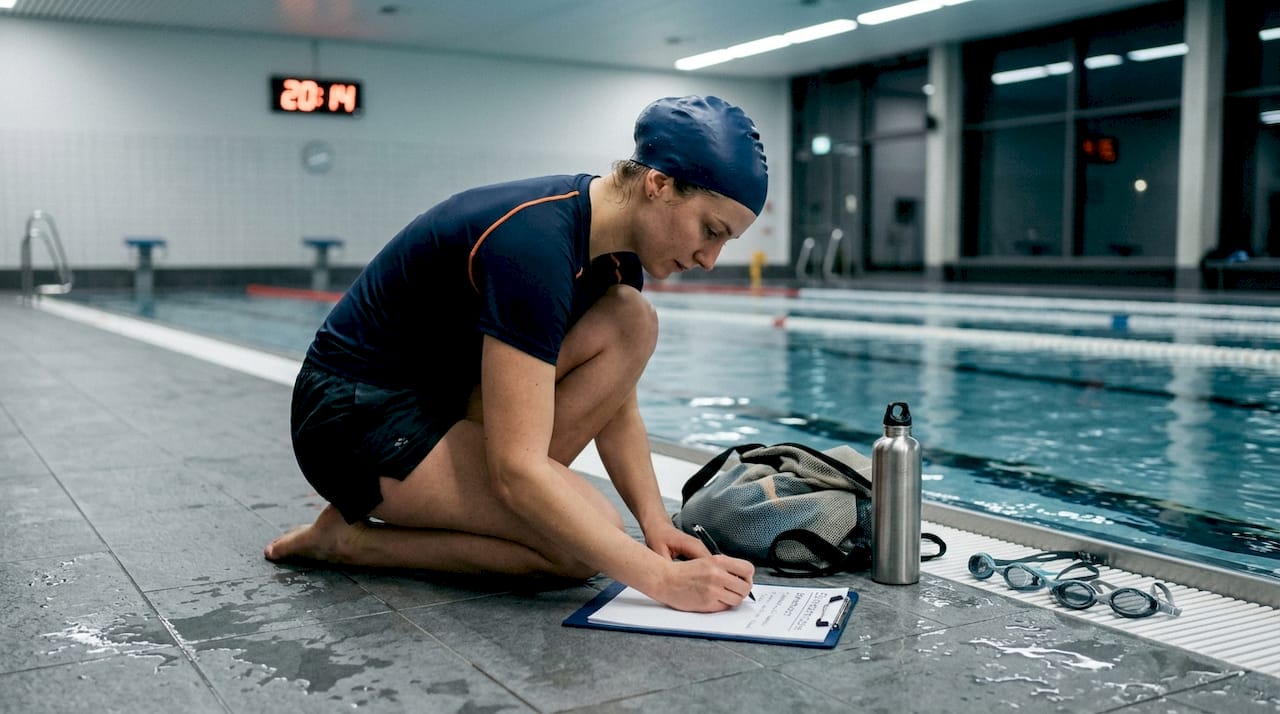
Swimming instructors work with children through seniors and often have shift duties. This means early mornings or late evenings, depending on the facility. During the outdoor pool season from May to September, working hours are particularly intense; in winter, demand sometimes slackens.
Typical tasks in daily work life:
- Planning and conducting swimming courses for various age groups
- Observation and safety supervision in the water
- Documentation of learning progress
- Issuing and managing swimming badges and certificates
- Parent meetings and consultations
“The moment a child swims alone for the first time makes all the challenges of the profession forgotten.”
| Work Area | Target Group | Special Feature |
|---|---|---|
| Children's swimming course | 4 to 10 years | Seahorse, Youth Swimming Badge |
| Adult course | 18+ years | Aquaphobia, basics |
| Senior sports | 60+ years | Aqua fitness, joint protection |
| Performance training | Club athletes | Technique, endurance |
Self-employment is just as possible as employment in the public or private sector. Those who start their own swimming school bear more responsibility but also have more freedom in course design and pricing. For all those who want to teach children to swim, there are proven methods and tips.
Earning potential and career opportunities as a swimming instructor
To be honest: swimming instructors don't get rich. But the profession offers stable employment, meaningful work, and real development opportunities. Those who acquire additional qualifications can significantly increase their salary.
The average gross annual salary is approximately EUR 34,400, with a range from EUR 27,300 to EUR 53,500. Swimming masters, who are additionally responsible for the technical operation of the pool, earn an average of approximately EUR 39,600.
| Job Title | Average gross/year | Range |
|---|---|---|
| Swimming Instructor | approx. 34,400 EUR | 27,300 to 53,500 EUR |
| Swimming Master | approx. 39,600 EUR | 30,000 to 58,000 EUR |
The salary of a swimming instructor largely depends on the federal state, the institution, and experience. In Bavaria and Baden-Württemberg, wages tend to be higher than in East German federal states. Self-employed swimming instructors with their own course offerings can earn significantly more but also bear the entrepreneurial risk.
Pro Tip: Invest early in additional qualifications such as lifeguarding, aqua fitness, or sports pedagogy. Every additional qualification increases your market value and opens new doors, for example, in rehabilitation or competitive sports.
Career-wise, there are clear paths for advancement: from swimming instructor to trainer, then to course leader or a management position in a club. If desired, one can also enter the training of swimming instructors and thus pass on one's own knowledge.
For Parents: How to recognize qualified swimming instructors
As a parent, you want to be sure your child is in good hands. Not everyone who calls themselves a swimming instructor has recognized training. Here are the most important points to look for during the initial consultation.
Certified instructors ensure structured, safe learning and build children's confidence. A DLRG or DSLV certificate is the most important quality feature. Don't hesitate to ask directly; reputable providers will gladly show their credentials.
Checklist for parents during the initial consultation:
- Is proof of a DLRG or DSLV certificate available?
- How large are the course groups? (Ideal: maximum 8 children per instructor)
- Which methods are used for which age groups?
- Are there regular updates on learning progress?
- How are aquaphobia or special needs handled?
- Are swimming badges awarded according to recognized standards?
Also, pay attention to the atmosphere in the course. Children learn better when they feel safe and comfortable. A good swimming instructor creates this atmosphere through calm language, clear instructions, and a lot of patience. For tips on how to find a safe swimming course, we have put together a separate guide.
Badges, certificates, and accessories for your path as a swimming instructor
Whether you are just starting your training or already leading your own course: the right materials make all the difference. Swimming badges and certificates are not just rewards; they are tangible proof of achievement and greatly motivate children to continue.
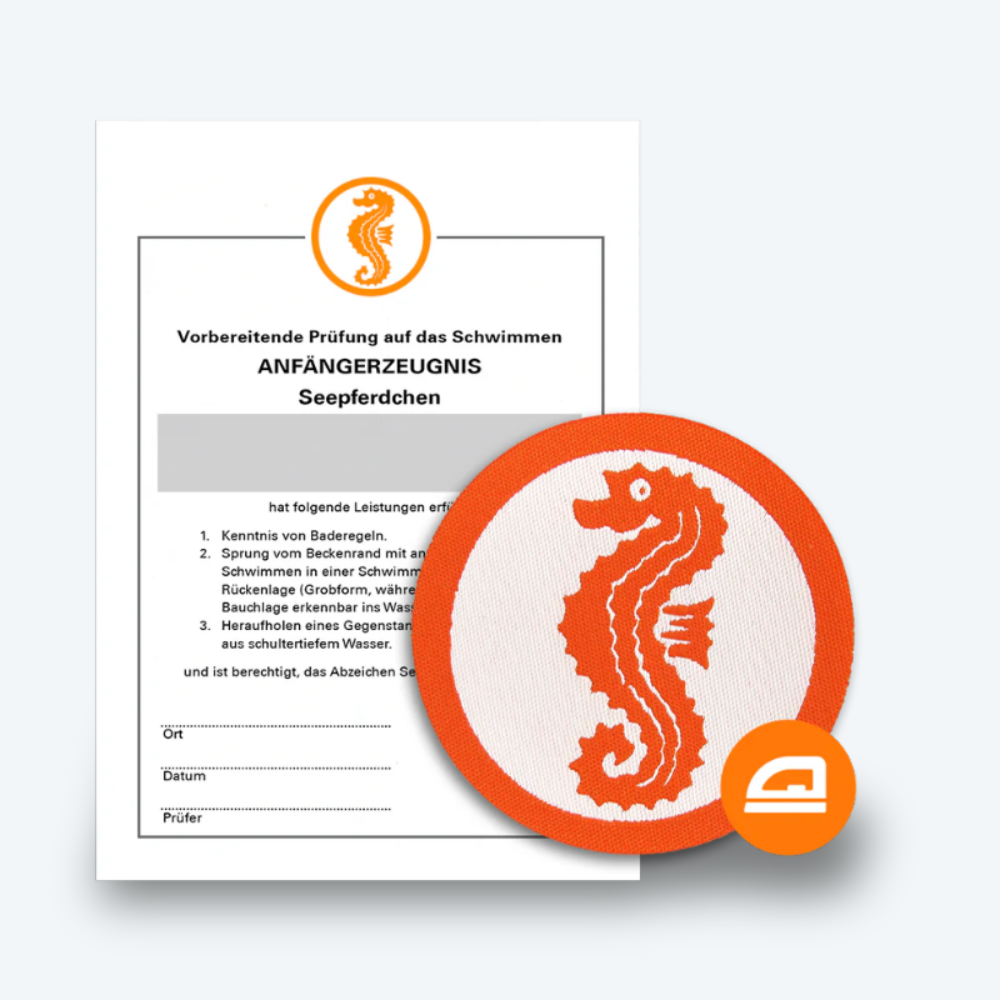
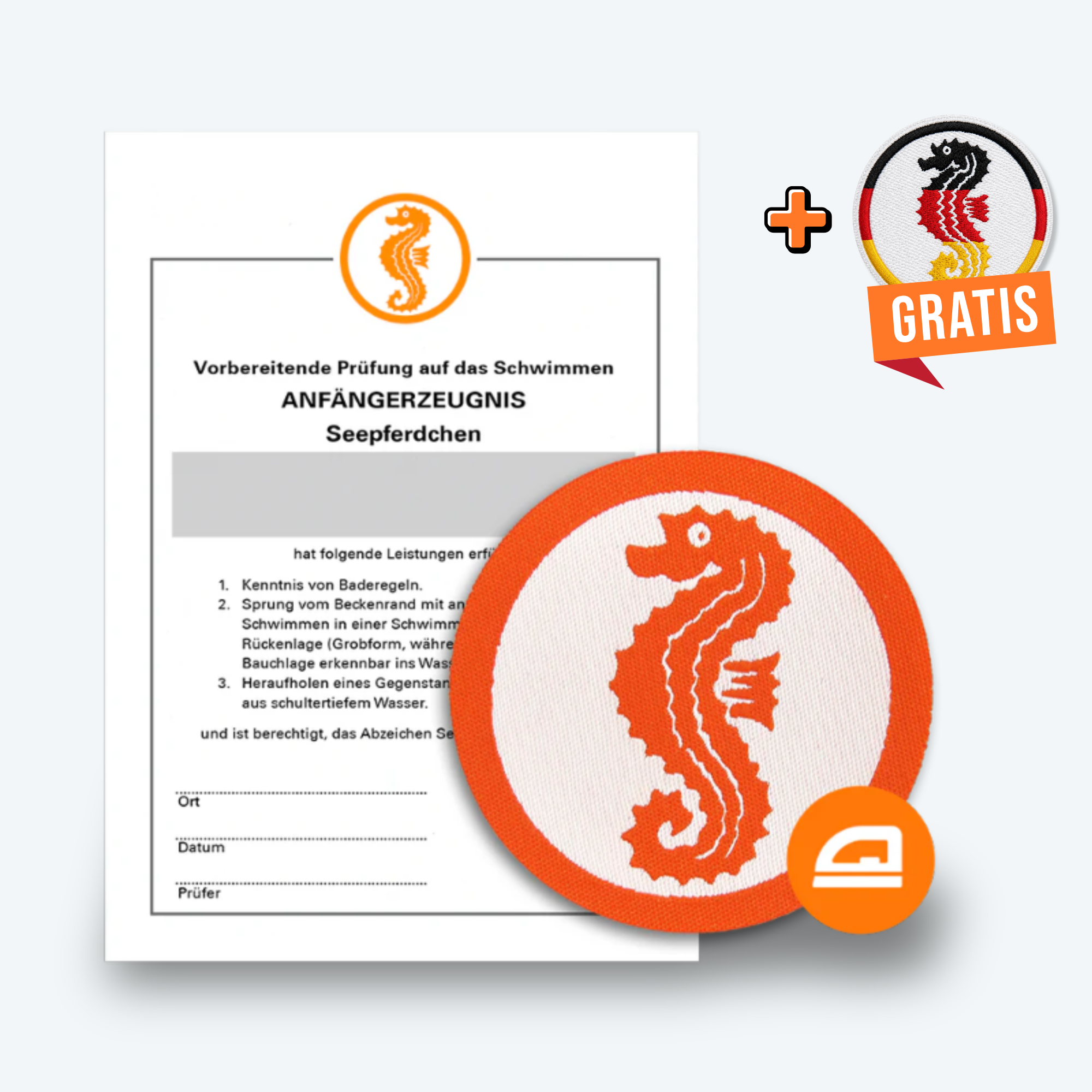
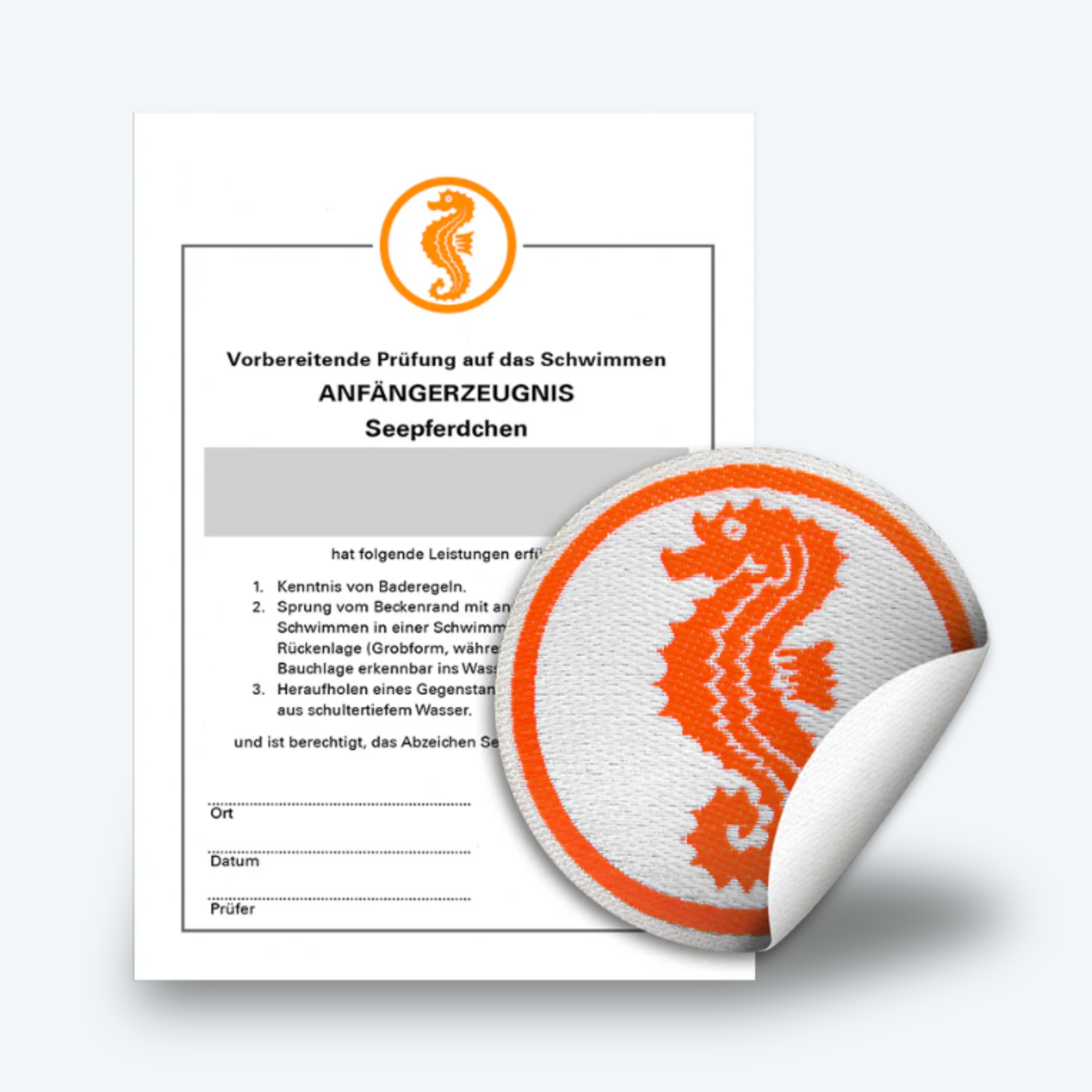
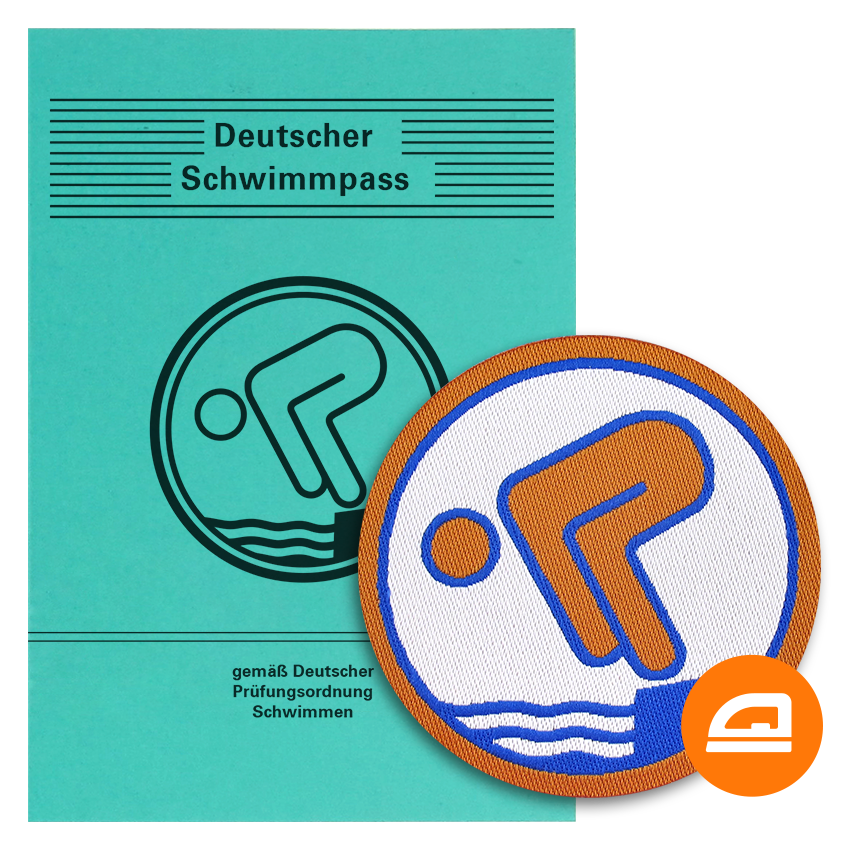
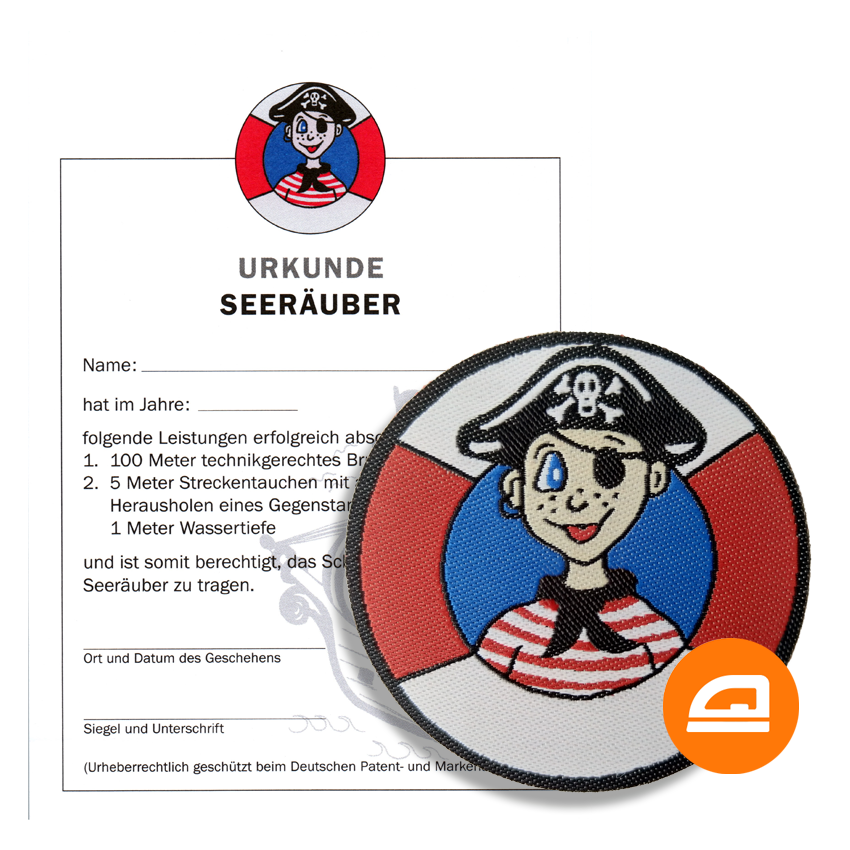
At Pimpertz, as an official DLRG partner, you'll find everything you need for your lessons. From the Seahorse certificate to the Youth Swimming Badge in Gold: All swimming badges at Pimpertz are originally certified and designed in child-friendly styles. For course instructors, there are also practical swimming accessories for courses, from collector albums to badge cases to personalized bundle packages for groups. With over 38 years of experience and express delivery within Germany, Pimpertz is the reliable partner for every swimming instructor.
Frequently asked questions about the swimming instructor profession
How long does the swimming instructor training take?
The basic qualification as an assistant comprises approximately 30 teaching units, while the complete training to become an independent swimming instructor can take up to 75 units.
Is the lifeguard certificate mandatory?
Yes, the DLRG Silver Lifesaving Badge is mandatory for swimming instructor training in Germany and must not be older than 2 years.
What are the possibilities for further training?
You can specialize as a water familiarization instructor (DSLV) or acquire additional qualifications in lifesaving, aqua fitness, or sports pedagogy.
How much does a swimming instructor earn on average?
The average gross salary is about 34,400 EUR per year, with fluctuations depending on the federal state, experience, and additional qualifications.