
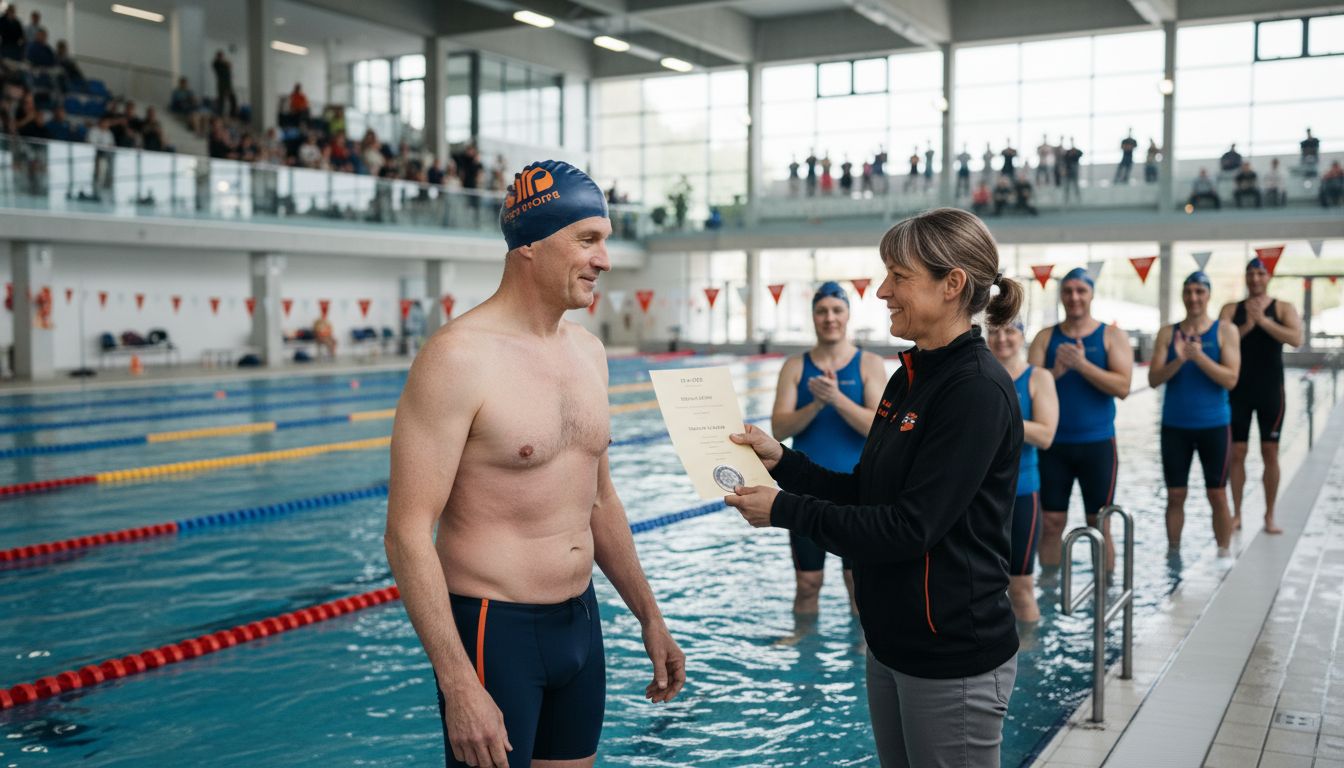
Silver Swimming Badge for Adults: Complete Guide
Only about 40 percent of adults in Germany have a swimming badge. Swimming is not only a popular leisure activity but also saves lives in an emergency. Extending one's skills strengthens personal safety and self-confidence in the water. This overview shows why the Silver Swimming Badge is a real step forward for adult swimmers and what hurdles need to be overcome.
Table of Contents
- What is the Silver Swimming Badge?
- Examination Requirements in Detail
- Differences to Bronze and Gold
- Prerequisites and Age Rules
- Practical Tips for Exam Preparation
Key Takeaways
| Point | Details |
|---|---|
| Advanced Swimming Skills | The Silver Swimming Badge requires proof of at least two swimming techniques over 400 meters and self-rescue techniques. |
| Examination Prerequisites | To obtain the badge, adults must be at least 18 years old and prove their physical fitness with a medical certificate. |
| Preparation is Crucial | A structured training plan that includes technique and endurance training is essential for passing the exam. |
| Difference to other Badges | The Silver Badge has higher requirements than the Bronze Badge but does not have the complexity of the Gold Badge. |
What is the Silver Swimming Badge?
The Silver Swimming Badge is an important milestone in adult swimming education, certifying comprehensive swimming skills and safety knowledge. According to sub-international, this badge confirms “comprehensive swimming skills and knowledge of bathing rules and self-rescue techniques.”
The Silver Swimming Badge goes significantly beyond basic swimming knowledge. Holders of this badge have already acquired advanced skills and can:
- Safely master various swimming techniques
- Demonstrate basic lifeguarding techniques
- Perform complex swimming movements over longer distances
- Know important safety rules in and around the water
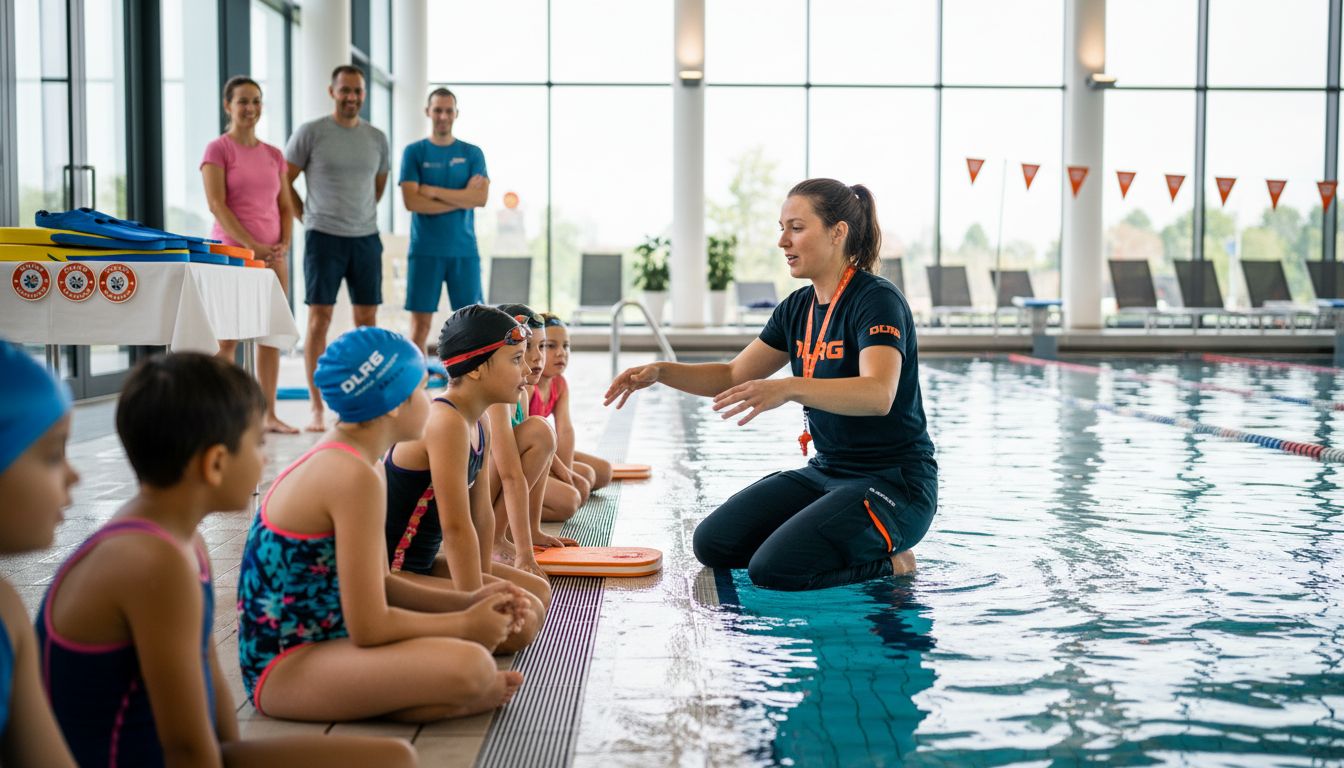
For adults, the Silver Swimming Badge means not only an athletic achievement but also an important step towards water safety. It shows that one has basic swimming skills and can react calmly and competently in an emergency. The DLRG swimming badges offer structured training that leads step by step to the Silver Badge.
Anyone wishing to obtain the Silver Swimming Badge should first improve their basics and undergo targeted training.
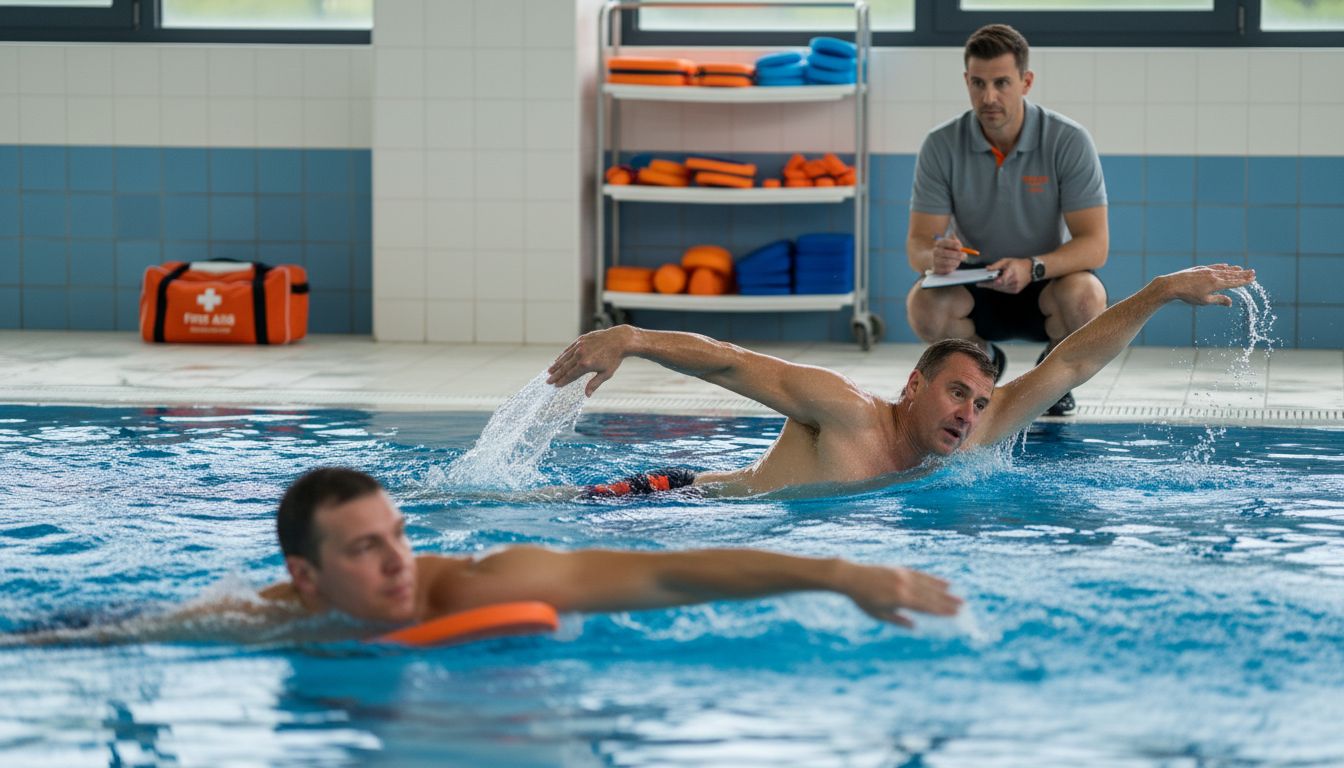 The prerequisites for the Silver Swimming Badge are demanding and require regular training and endurance.
Examination Requirements in Detail
The Silver Swimming Badge places high demands on adults who want to bring their swimming skills to an advanced level. The examination includes several complex elements that demonstrate both technical skills and safety competence.
The examination requirements can be divided into the following main areas:
- Swimming Techniques: Proof of at least two different swimming styles over a distance of 200 meters
- Endurance: Continuous swimming without a break
- Water Safety: Demonstration of self-rescue techniques
- Theoretical Knowledge: Basic bathing rules and safety regulations
Practical skills are particularly important. Candidates must prove that they can not only swim but also remain calm and competent in stressful situations.
The current swimming badge requirements provide helpful guidance for preparation.
The examination itself is conducted and assessed by qualified swimming instructors. They pay particular attention to technique, endurance, and the ability to move safely in the water. Anyone who meets all requirements not only receives the Silver Swimming Badge but also significantly gains water competence and self-confidence.
Differences to Bronze and Gold
The Bronze, Silver, and Gold swimming badges represent a progressive performance scale that becomes increasingly challenging. According to kvguenzburg, these badges differ fundamentally in their requirements.
Here are the main differences at a glance:
Here is a comparison of the most important swimming badges for adults:
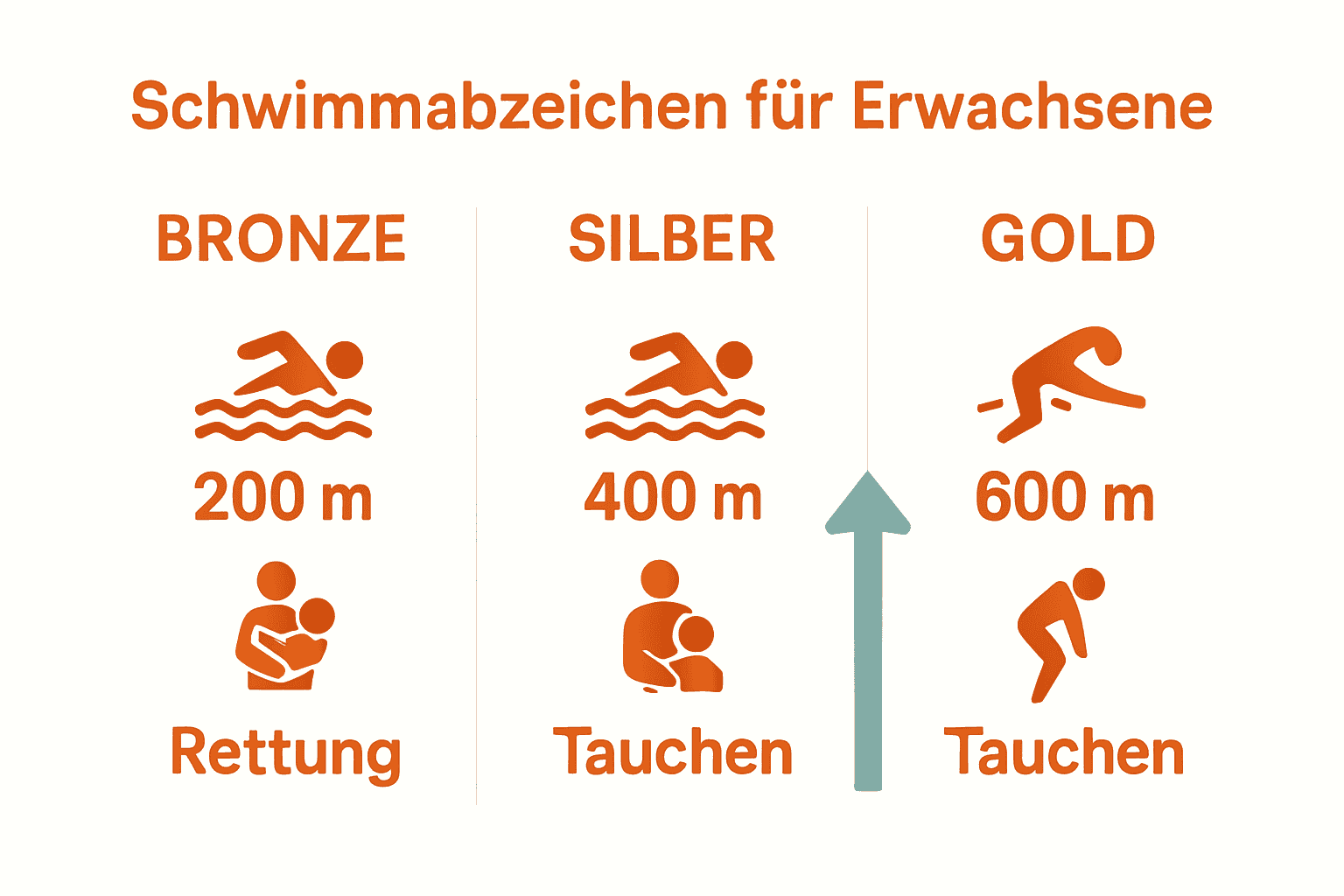
| Badge | Swimming Performance | Requirements | Special Features |
|---|---|---|---|
| Bronze | 200 m Swimming | Basic Techniques | First performance level |
| Silver | 400 m Swimming 200 m Lifesaving Swimming |
Two Techniques Self-rescue Bathing Rules |
Higher Endurance Safety Rules |
| Gold | 1000 m Swimming 300 m Lifesaving Swimming |
Three Techniques Rescue Techniques Deep Diving |
Highest Difficulty Level |
- Bronze Badge: Basic swimming skills
- Silver Badge: Advanced techniques and longer distances
- Gold Badge: Highest performance requirements
Praxistipps confirm that each badge brings more complex challenges. While the Bronze Badge tests basic skills, the Silver Badge already requires more extensive swimming and diving performance.
The Gold Badge represents the ultimate challenge. The Gold Badge for adults includes demanding disciplines such as 1000 m swimming in a maximum of 24 minutes, deep diving, and complex rescue techniques. For ambitious swimmers, it is the pinnacle of their swimming education.
Prerequisites and Age Rules
The Silver Swimming Badge for adults has specific prerequisites that consider both physical abilities and health aspects. According to sub-international, written confirmation of health is a fundamental requirement.
The most important requirements for adults include:
- Proof of physical fitness through a medical certificate
- Minimum age of 18 years
- Proven swimming skills over at least 200 meters
- Mastery of two different swimming techniques
- Basic knowledge of water safety and rescue techniques
Individual preparation is particularly important. Interested individuals should realistically assess their personal fitness and, if necessary, train specifically. The Swimming Badge Primary School offers helpful information for anyone who wants to systematically improve their swimming skills.
For adults over 18, there is no upper age limit. The Silver Swimming Badge can theoretically be obtained by anyone who meets the physical and technical requirements. What is important is the motivation to improve one's swimming skills and take an important step towards water safety.
Practical Tips for Exam Preparation
Preparing for the Silver Swimming Badge requires systematic and targeted training. The formula for success lies in combining targeted technique improvement, regular endurance work, and mental preparation.
Key strategies for successful exam preparation:
- Technique Training: Perfect two different swimming techniques
- Endurance Building: Continuously increase your swimming distances
- Conditioning Training: Supplement swimming sessions with strength exercises
- Mental Preparation: Visualize the examination situations
Learning to swim in old age shows that targeted training is possible at any stage of life. Important is a realistic assessment of one's own abilities and a gradual increase in performance.
A structured training plan is crucial. Start targeted training at least three months before the exam, gradually increase your distances, and integrate water safety exercises. Regular training sessions under professional guidance can significantly increase your chances of success.
Successfully Pass the Silver Swimming Badge with Pimpertz
Do you want to master the Silver Swimming Badge for adults and are looking for reliable and high-quality swimming badge accessories? The goal is clear: safely master advanced swimming techniques and gain confidence in the water. Official badges and certificates, as well as targeted preparation steps, are indispensable. This is where Pimpertz supports you as your experienced partner for swimming badges and official equipment.
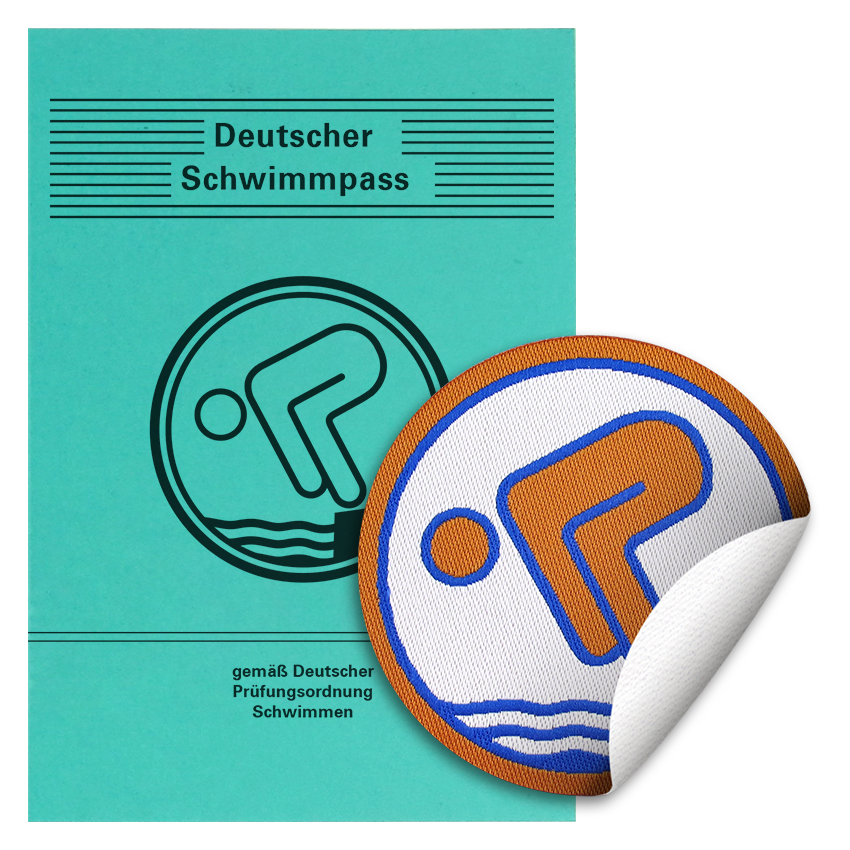
Discover our range of German Swimming Badges Bronze, Silver, Gold, and German Swimming Pass at Pimpertz, with the best quality and fast delivery. Use our diverse accessory products and customizable sets to optimally supplement your exam preparation. Trust in over 38 years of experience and official partnerships with DLRG and BFS.
Start now and secure all important swimming badges and certificates for your next step in swimming. Visit pimpertz.de and find exactly what you need for your Silver examination.
Frequently Asked Questions
What are the prerequisites for the Silver Swimming Badge for adults?
The prerequisites include a medical certificate of health suitability, a minimum age of 18 years, proof of swimming skills over at least 200 meters, mastery of two different swimming techniques, and basic knowledge of water safety and rescue techniques.
What examination requirements must be met to obtain the Silver Swimming Badge?
The examination requires proof of at least two different swimming styles over 200 meters, continuous swimming without a break, demonstration of self-rescue techniques, and basic theoretical knowledge of bathing rules and safety regulations.
How does the Silver Swimming Badge differ from the Bronze and Gold badges?
The Silver Badge requires more sophisticated techniques and longer distances than the Bronze Badge. Compared to the Gold Badge, the requirements for the Silver Badge are less intensive, as the Gold Badge includes additional, more difficult disciplines such as deep diving.
How can I best prepare for the Silver Swimming Badge examination?
Successful preparation requires technique training to improve swimming styles, endurance training to increase swimming distances, conditioning training to strengthen muscles, and mental preparation by visualizing the examination situation.