
Why My Child Didn't Pass the Seahorse Swimming Badge: Tips if Your Child Doesn't Pass the Seahorse
Introduction: The Seahorse Badge as a Milestone in Learning to Swim
Many parents know the situation: their child attended swimming lessons but didn't pass the Seahorse badge. This can be disappointing, but it's no cause for concern. Often, the reasons lie in everyday challenges that can be overcome with the right approach. Positive feedback builds the child's confidence in swimming and motivates them to continue. In this article, we'll explore why a child might not achieve the Seahorse badge, share experiences, and provide practical tips for parents and their children. This way, the journey to the Seahorse badge becomes a positive adventure that is fun and builds self-confidence. However, it's important to note that the Seahorse badge merely shows that a child can swim 25 meters, but it doesn't mean they can swim safely.
Common Causes: Lack of Strength and Endurance in Learning to Swim
One of the main reasons why a child might not achieve the Seahorse badge is a lack of strength. The child needs time to build the necessary muscle strength that is essential for swimming. Without sufficient stamina, they may not be able to complete the required 25 meters. Parents should view this as a normal process and plan targeted exercises to increase strength. Regular training helps overcome this hurdle and achieve the Seahorse badge.
Poor technique in swimming strokes is another problem. Many children don't learn the movements correctly, leading to inefficient swimming. The right way to swim requires practice and guidance from an experienced swimming instructor. If the technique is lacking, the child quickly loses strength and fails to achieve the Seahorse badge. Parents can support at home with simple exercises to improve technique. Swimming technique is crucial for success in the water, not just physical strength.
Too short swimming courses often contribute to a child not achieving the Seahorse badge. In some courses, there isn't enough time for intensive practice, which affects their skills. The child needs repetition to feel confident. An inadequate course can cause frustration, but this can be compensated for by supplementing with private swimming lessons. Individual lessons can be more effective than group lessons, as the instructor has more time for each child. This way, the course becomes a success.
Emotional Barriers: Fear of Water and Lack of Water Acclimation
Fear of water is a common reason why a child might not achieve the Seahorse badge. Many children feel insecure and blocked, which hinders their swimming progress. Gentle water acclimation is crucial for building trust. Regular practice and playfully encouraging water acclimation are important for reducing fears. Parents can start with playful exercises in shallow water to reduce anxiety. With patience, water becomes a friend, and the Seahorse badge gets closer. Submerging the face in water can be practiced gradually by first letting water run over the face.
Lack of practice outside of the course exacerbates these problems. Children quickly forget what they've learned if they don't go to the swimming pool regularly. Regular swimming lessons build skills and reduce fear. Consistent practice is crucial for children to truly learn to swim, not just to get the Seahorse badge. Parents should use everyday opportunities to accustom their child to the water. This fosters a love for swimming, and the Seahorse badge becomes achievable.
In some cases, age plays a role. Younger children need more time for water acclimation. Pressure can be counterproductive and increase anxiety. Individual adaptation of training helps motivate the child. With the right support, children master this phase.
Problems in the Swimming Course: Inadequate Instruction and Course Duration
A rushed swimming course can lead to a child not achieving the Seahorse badge. Often, there is a lack of depth in the instruction to teach proper swimming technique and build strength. The child feels overwhelmed if the course progresses too quickly. Parents should look for small groups to ensure individual attention. This makes the course more effective.
The choice of swimming school is crucial. Not every swimming school offers qualified instruction. A good swimming instructor recognizes weaknesses and adapts the training accordingly. Parents should regularly check their children's swimming progress and offer additional support if necessary. If the course is inadequate, children will fail the test. If necessary, change swimming schools to achieve better results. The 10 rules for safe swimming must be known to obtain the Seahorse badge.
At the end of the course, it often becomes clear whether the child is ready. Many children need additional swimming lessons to pass the test. Parents can observe progress and intervene. With extra training, the Seahorse badge is within reach. Organizations like the DLRG offer helpful courses.
Parents' Experiences: Common Challenges with the Seahorse Badge
Many parents share their experiences of their child not achieving the Seahorse badge. In forums, they report on fear and lack of motivation. These stories show that it's normal and not an isolated case. Sharing helps gather tips and provide encouragement. This makes parents feel less alone. A Seahorse badge is often awarded even though the child does not have the necessary swimming skills.
One post describes how a child failed due to lack of strength. The parents motivated them with fun elements, and it worked on the second attempt. Such experiences inspire others. Share your opinion in communities to help. This strengthens the community.
Other experiences emphasize the role of the swimming instructor. An unmotivated instructor can spoil the fun. Parents recommend paying attention to reviews. With the right instructor, learning to swim becomes a joy. Children thrive and achieve the Seahorse badge.
Specific Difficulties: Focus on Technique and Swimming Strokes
Breaststroke technique is often a stumbling block. Children don't master the swimming strokes correctly, which consumes energy. Targeted practice improves skills. Kicking with the feet and practicing arm strokes while swimming are important techniques that children should master. Parents can support with videos. This turns technique into a strength.
Lack of water acclimation hinders swimming strokes. Children need to feel comfortable in the water to learn. Start with simple exercises in the pool. This builds confidence. With time, children master the strokes.
In the test , the child must retrieve a ring from the bottom. This requires diving and courage. Many fail here due to fear. Retrieving an object from shoulder-deep water is a common exercise that prepares children for the test. Practice playfully to integrate fun. This makes the test easier. Further diving promotes water safety. Important exercises for the Seahorse badge include pushing off the pool edge and swimming on the stomach and back.
Tips for Getting Started: Water Acclimation and First Exercises
Start with water acclimation at home. Splashing and playing reduces fear. Children learn to enjoy the water. Parents should praise to create motivation. This starts learning to swim positively.
Regular visits to the swimming pool are essential. Choose a nearby pool to make it easy. Practice basic skills like kicking. This builds strength and endurance. Children feel safer.
Integrate fun elements like games. This makes training enjoyable. Children forget their fear and learn playfully. Parents can use anything that sparks interest. This makes the Seahorse badge a joyful goal.
Advanced Tips: Practice and Motivation for Children
Increase practice gradually. Focus on building strength through exercises. Children need repetition to make progress. Parents motivate with small rewards. This keeps enthusiasm high.
Choose the right swimming course. Look for small groups and experienced swimming instructors. This improves skills. Continue practicing after the course ends. This ensures success.
Prepare for Bronze as the next step . This motivates after the Seahorse badge. Children see the journey as an adventure. Parents support with information about badges. This creates long-term motivation. Bronze requires more endurance and diving.
Role of Parents: Support and Motivation in Everyday Life
Parents are key to success. Motivate your child without pressure. Praise small progress. This builds self-confidence. Shared swimming sessions strengthen the bond.
Share experiences with other parents. In groups, you'll find tips. This helps solve problems. Every opinion counts. This way, everyone learns from each other.
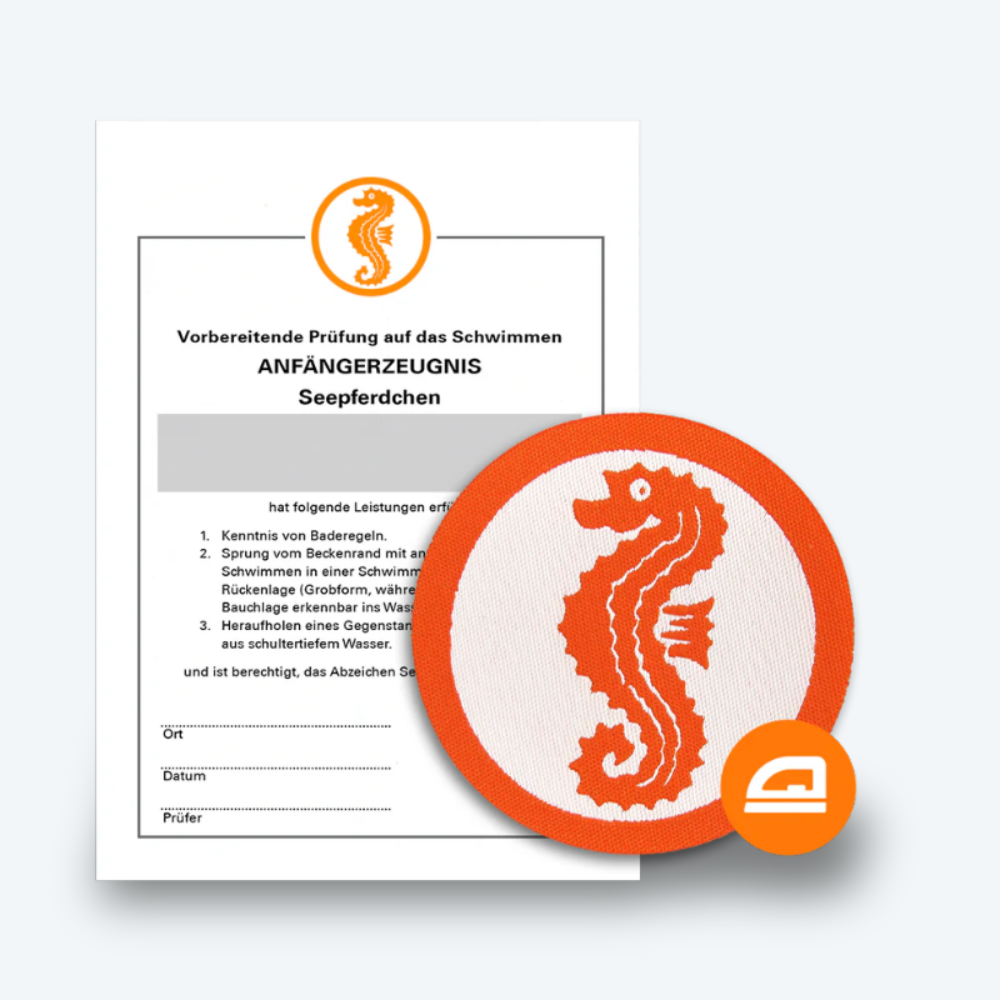
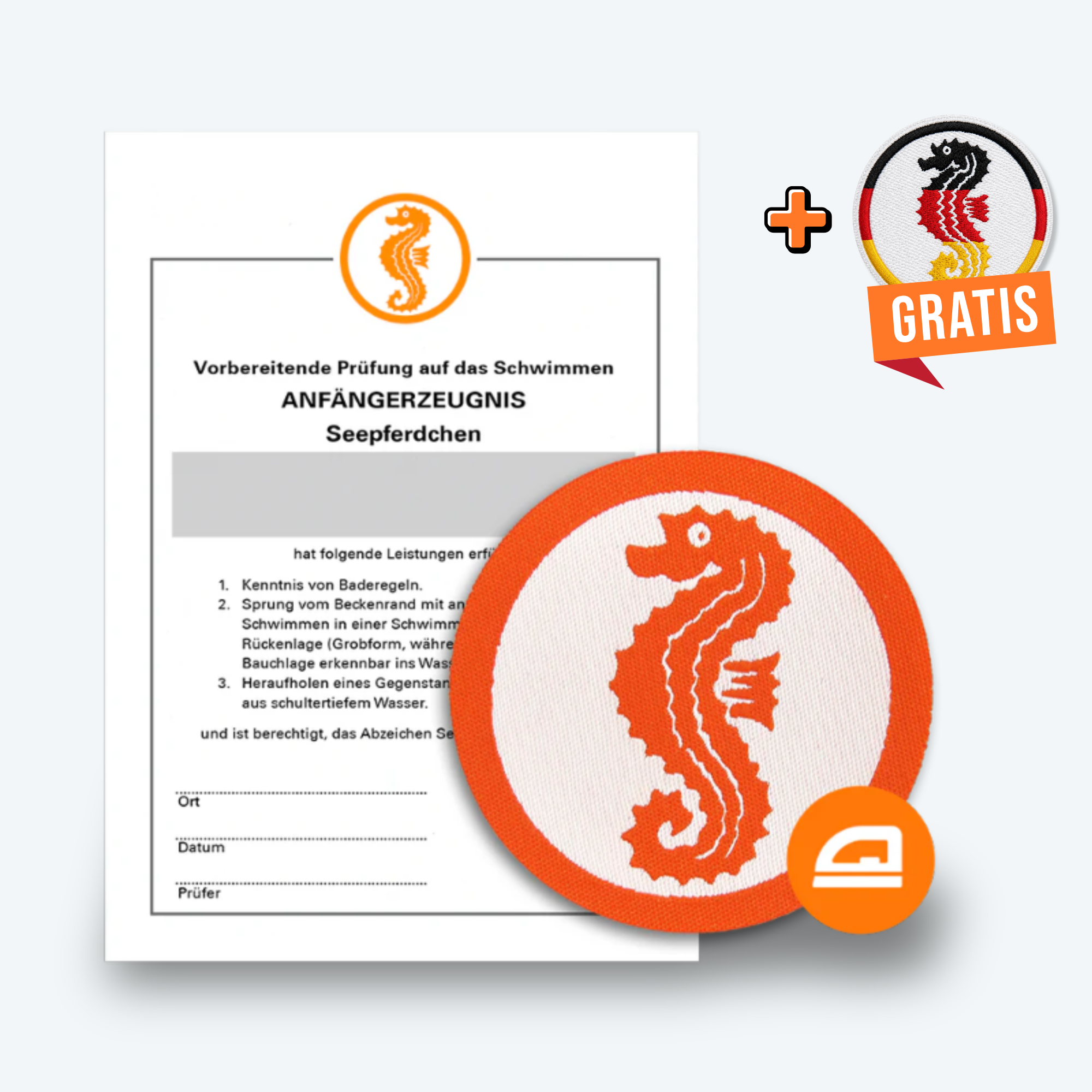
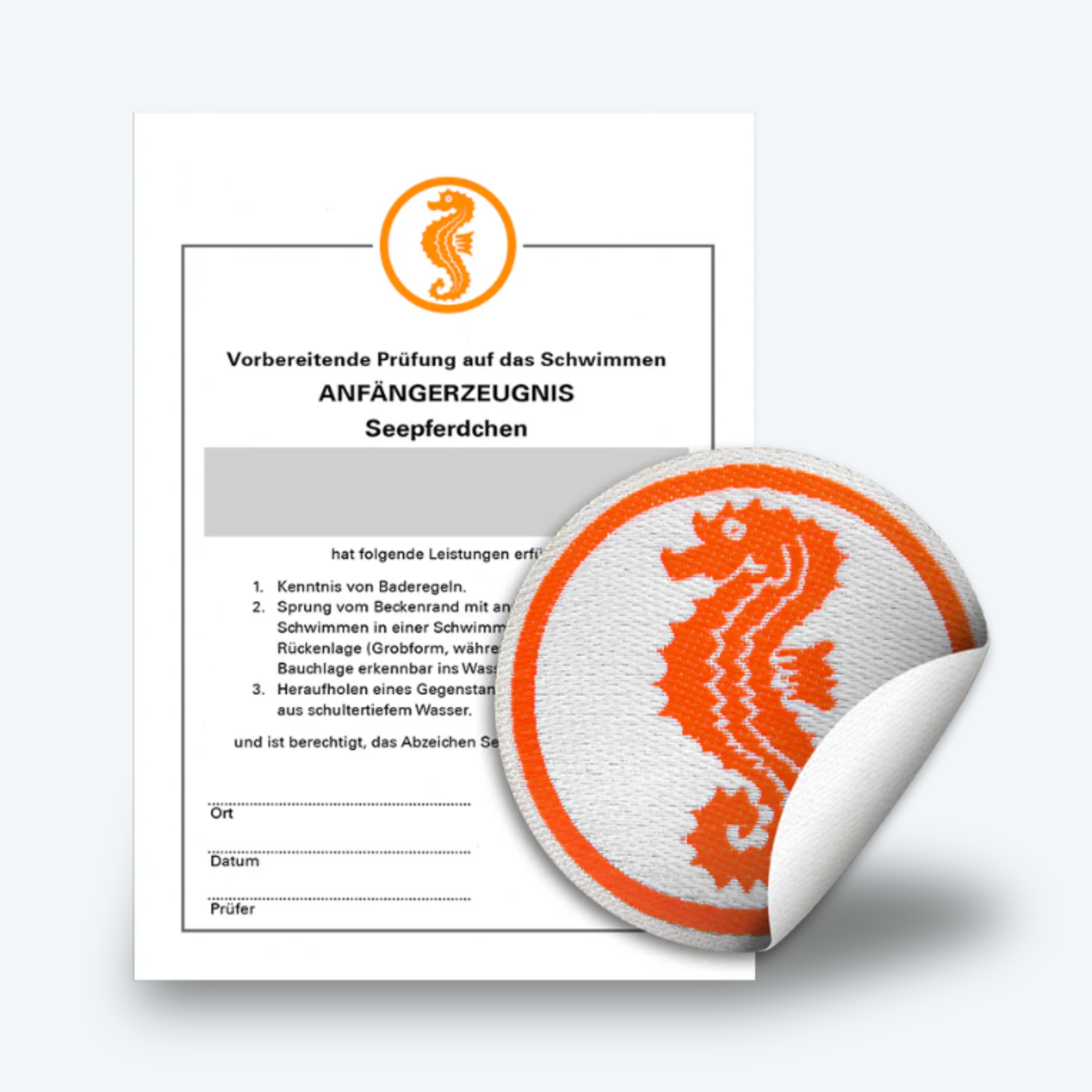
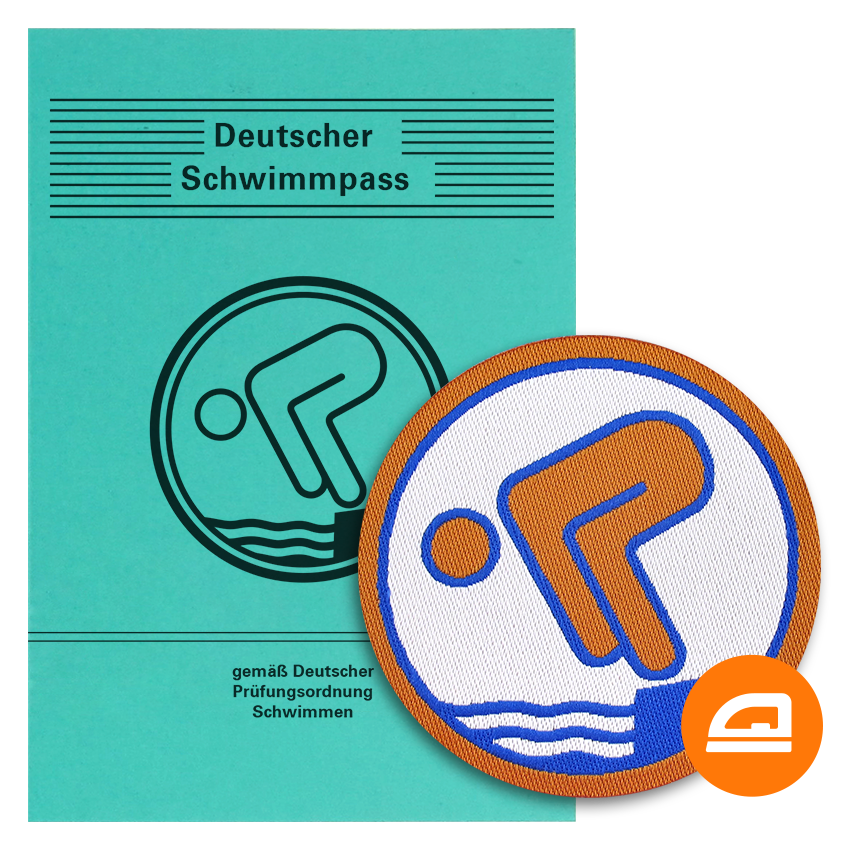
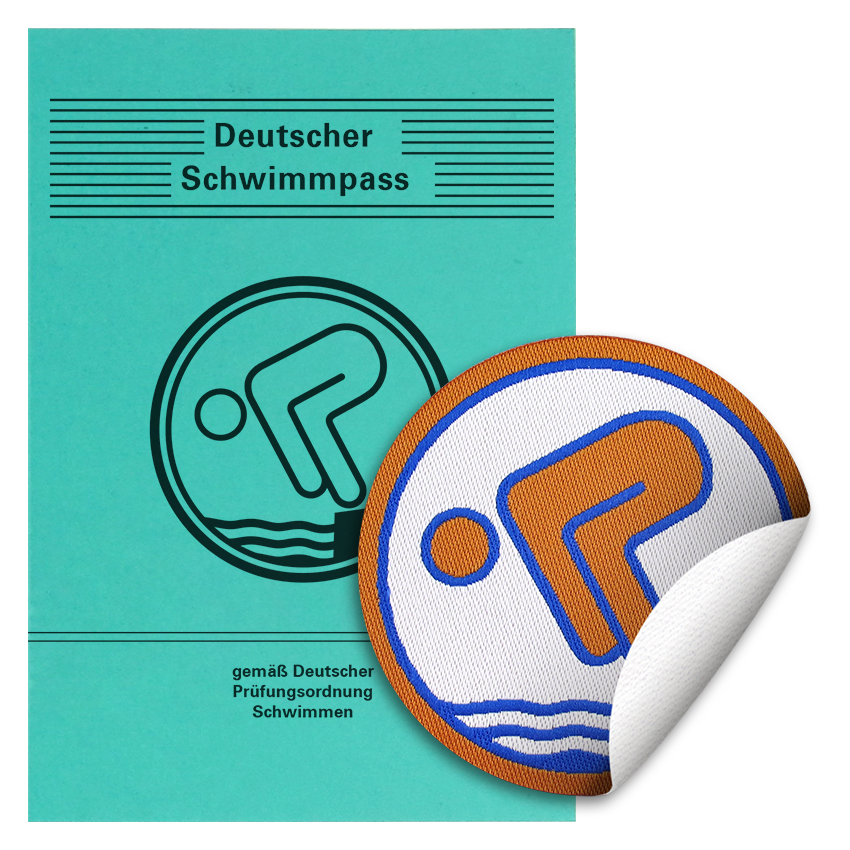
Use resources like patches from pimpertz.de to celebrate successes. This motivates children visually. Order badges for the swimming pass. This makes progress tangible. Plan for Bronze and other badges.
Practical Exercises: At the Pool and at Home
At the pool, practice diving for the ring. This trains skills. Children learn to be underwater. Make it playful. This removes the fear.
At home, simulate exercises. Use the bathtub to promote water acclimation. Parents demonstrate how to swim. This complements the course. Children benefit enormously.
Integrate strength exercises. Simple exercises strengthen muscles. This helps with swimming. Regularity is crucial. This builds endurance.
Avoid Common Mistakes: Pressure and False Expectations
Too much pressure can lead to a child not achieving the Seahorse badge. Let the child learn at their own pace. Fun is paramount. This reduces stress. The child should not be pressured to overcome fears. Success comes naturally.
Choosing the wrong swimming courses is a mistake. Research thoroughly. Good swimming schools make a difference. Parents should gather information. This saves frustration.
Don't give up at the end of the course. If it doesn't work out, keep going. Children learn from failures. This builds resilience. Next time, it will succeed.
Frequently Asked Questions and Answers about the Seahorse Badge
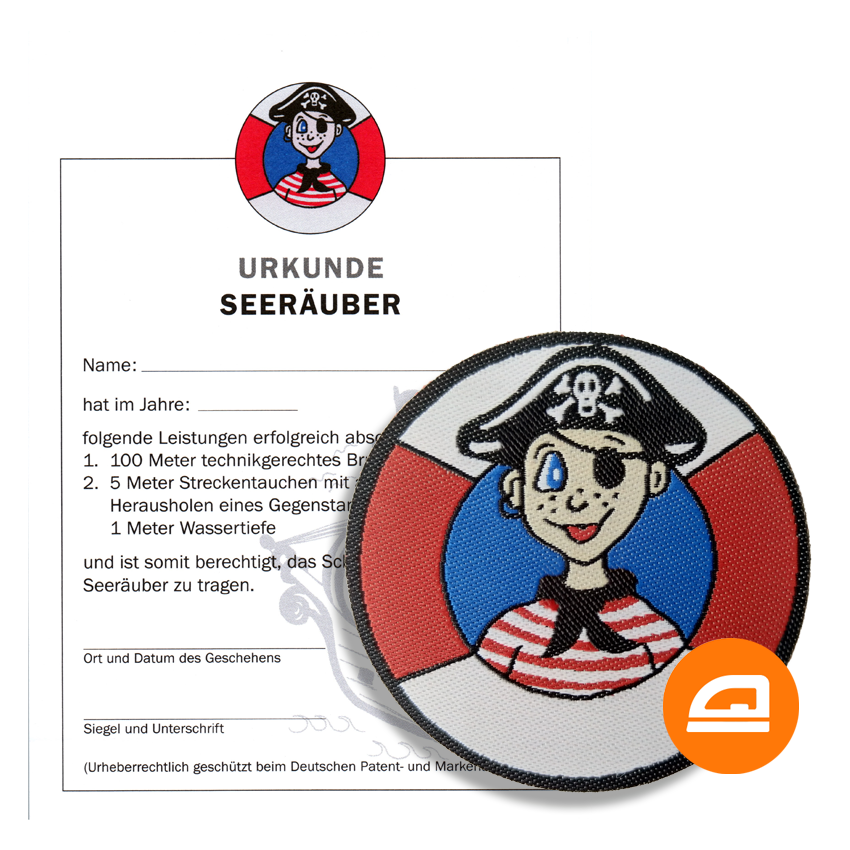
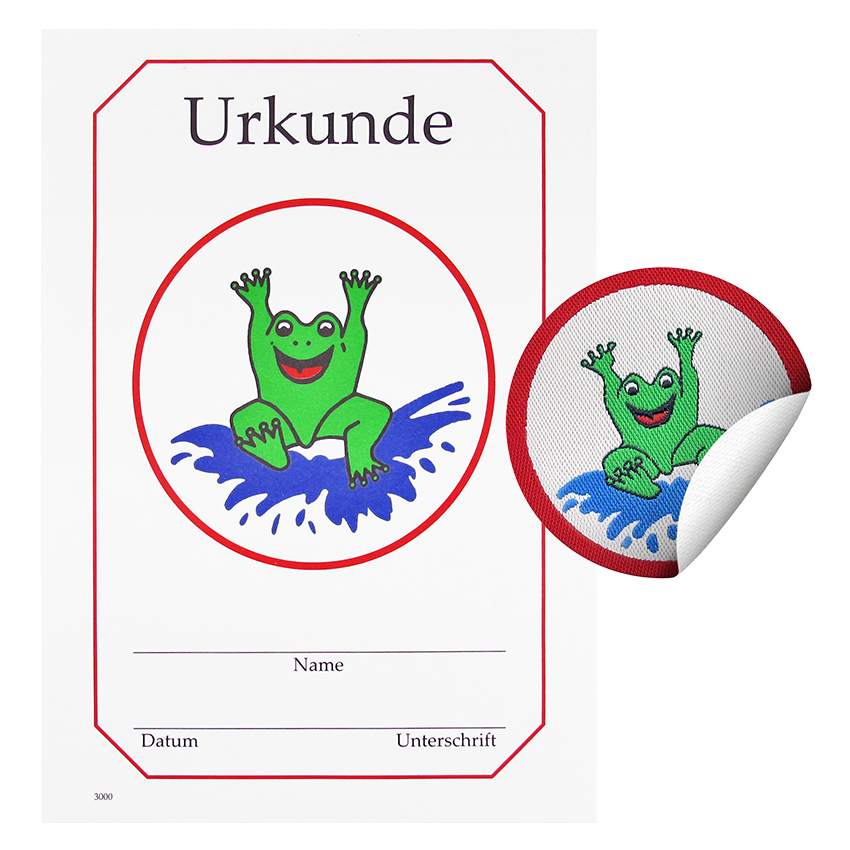
Many parents have questions about the Seahorse badge . A common question is: "What to do if the child didn't get the Seahorse badge?" The answers are: More practice and patience. Another question: "What are the requirements?" Answers: Swim 25 meters, dive for a ring, jump into the water. Another question: "How to motivate?" Answers: With fun and praise. Last question: "Do you need a certificate?" Answers: Yes, the certificate confirms success, along with the badge.
Swimming Lessons at School and Holiday Courses
School swimming can help, but often it's not enough for the Seahorse badge. In school, children learn basic swimming, but individual attention is sometimes lacking. Use holidays for intensive courses. Participation in holiday courses allows for focused practice. This way, the child achieves the Seahorse badge faster.
Tips from the Lifeguard and Swimming Instructor
The lifeguard advises: Pay attention to safety at the edge. The swimming instructor adds: As a beginner, start with simple things. Both recommend practicing topics like swimming style and body position in the water. Something important: Remember the ball for fun. In the world of swimming, there's a place for everyone.
The Certificate and the Swimming Badge: Pure Motivation
The certificate is a highlight after passing. It officially documents the swimming badge. Many children look forward to the certificate and the badge. Buy patches in anticipation. The Bronze swimming badge often follows.
Comments from Forums: Real Situations
In forums, parents share comments about situations where their child didn't achieve the Seahorse badge. One comment: "Our child needed more time." Other comments emphasize the journey. In one case, a change helped. Write a comment to share.
Further Badges: From Seahorse to Bronze
After the Seahorse badge, the Bronze badge beckons. It builds on existing skills. Children learn more challenging techniques. This motivates further. Parents plan the next course. Bronze requires more diving and swimming.
Badges like Bronze require more endurance. Practice specifically. The child will be proud. Celebrate every step. This creates a desire for more.
Resources on ebay.de or amazon.de help. Buy accessories for motivation. This supports the journey.
Conclusion: The Seahorse Course as the Beginning of Safe Swimming for Daughter and Son
The Seahorse badge is important, but not everything. Children should have fun in the water. With these tips , they will succeed. Parents, stay tuned. Success will come.
More information on pimpertz or DLRG pages. Share your experiences. This helps others. Together we are stronger.
Let's end with a motivating story: A mom told how her daughter didn't achieve the Seahorse badge, and not just once; the daughter didn't achieve the Seahorse badge despite all efforts; the daughter didn't achieve the Seahorse badge, but then everything changed; the daughter didn't achieve the Seahorse badge at first, but then that changed. Her son had similar problems. It began at school, where school swimming was an integral part, and swimming lessons were led by the swimming instructor and the lifeguard. The instructor asked a question: "Who wants to learn the swimming style?" The child gave answers, and the instructor asked another question: "Which swimming movements are important?" The answers came quickly, and another question: "How does the body position in the water feel?" The child's thoughts whirled, and the last question: "Ready for the test?" Yes, the answers were positive. The lifeguard commented: "Well done," and his comment motivated. The swimming instructor showed the swimming style, and the swimmer in the group gave tips. During the holidays, participation in swimming courses was crucial; during the holidays, the child learned a lot; during the holidays, they built strength. Both children brought the things, the swimming gear, the toys. The topics of the lessons were diverse, topics like safety, topics like fun. Something special happened, something like a breakthrough, something that changed their thoughts, something that changed everything. The gaze at the ball at the edge of the pool, the gaze at the ring, the gaze at the world of swimming, the wide world. A piece of rubber, a piece of motivation, little by little they learned. In forums, the mom read comments, comments from others, comments that were helpful, comments on similar situations, and she wrote a comment, a comment on the situation, a comment on overcoming. The space in the pool was perfect, the space for practice. In this case, everything helped, and the tests were mastered, the tests at the end of the course, the tests with diving, the tests for the badge. The certificate came, the certificate for the swimming badge, the certificate that made them proud, the certificate the child deserved, the certificate for Bronze. The children in the group, children with similar experiences, children who hadn't achieved the Seahorse badge, children who were motivated, children who practiced, children who made progress, children who had fun, children who built strength, children who learned technique, children who overcame fear, children who developed skills, children who dived, children who swam, children who triumphed, children who inspire, children who learn. The child's development was impressive, the child's fear decreased, the child's insecurity disappeared, the child's lack of strength turned into strength, the child's missing technique became perfect, the child's poor water acclimation became good, the child's weak swimming strokes became strong, the child's fear of diving became courage, the child's problem with the ring was solved, the child's general skills grew, the child's motivation increased, the child's joy grew, the child's desire for swimming increased, the child's self-confidence built up, the child's endurance improved, the child's coordination got better, the child's speed increased, the child's safety in the water grew, the child's fun in training got bigger, the child's progress was visible, the child's success was near, the child's pride was great, the child's bond with the family strengthened, the child's friendships in the course grew, the child's experiences enriched, the child's learning curve was steep, the child's resilience grew, the child's creativity in the water showed, the child's discipline improved, the child's concentration increased, the child's relaxation in the water got better, the child's cooperation with others, the child's independence grew, the child's patience, the child's enthusiasm, the child's curiosity, the child's adaptability, the child's flexibility, the child's balance, the child's rhythm, the child's timing, the child's precision, the child's elegance, the child's energy, the child's vitality, the child's health, the child's well-being, the child's happiness, the child's satisfaction, the child's fulfillment. For children like this, there are many tips, for children with fear, for children with lack of strength, for children in the beginner phase, for children in swimming courses, for children in school, for children during holidays, for children with problems, for children learning to dive, for children retrieving rings, for children aiming for Bronze, for children who want badges, for children improving technique, for children needing water acclimation, for children practicing swimming strokes, for children building skills, for children finding joy, for children with desire, for children seeking fun, for children gaining experience, for children needing training, for children passing tests, for children celebrating course end, for children loving the pool, for children conquering the basin, for children following swimming instructors, for children respecting lifeguards, for children listening to swimming instructors, for children becoming swimmers, for children changing perspective, for children who are beginners, for children using holidays, for children showing participation, for children learning piece by piece, for children bringing all their things, for children discussing topics, for children finding their way, for children mastering position, for children experiencing something, for children changing thoughts, for children using the edge, for children playing with the ball, for children discovering the world, for children reading comments, for children writing comments, for children who have space, for children asking the instructor, for children seeing both sides, for children packing things, for children loving school swimming, for children learning swimming style, for children practicing swimming movements, for children attending swimming lessons, for children aiming for a certificate, for children getting a swimming badge, for children giving answers, for children asking questions. At the end of the course, the daughter bravely dove for the ring and swam the distance. The Seahorse badge became a symbol of overcoming, and the daughter now enjoys swimming with full desire and joy. The son soon followed.
Consistent practice is crucial for children to truly learn to swim, not just to obtain the Seahorse badge. Swimming requires pushing water with the hands while keeping the legs straight. Kicking with the feet and practicing arm strokes while swimming are important techniques.